Logo

Development politics

Bhopinder Singh | New Delhi |

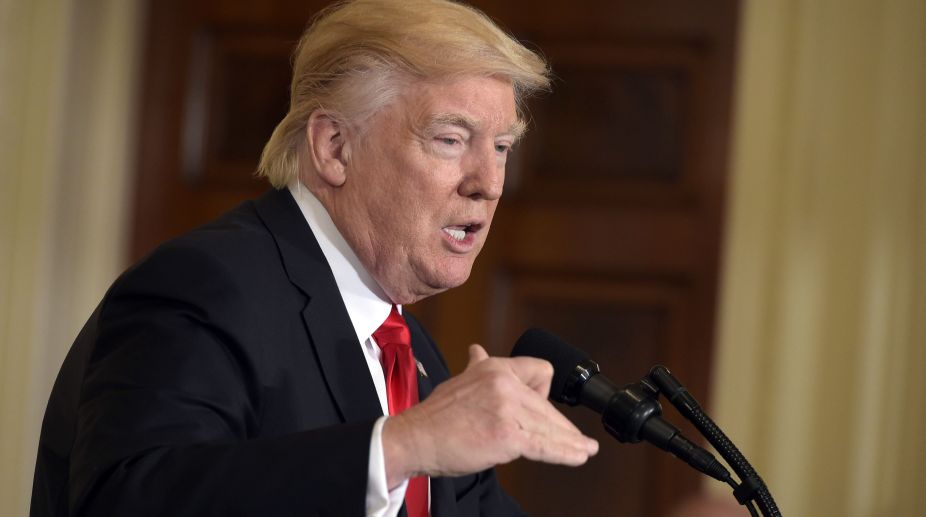
America First’ embodied the framework of Donald Trump’s ‘development’ roadmap for the US economy, polity and narrative. The contours of walking the talk are now emerging from the strategic pointers in the recently released 2018 budget outline, the blueprint to make ‘America Great Again’. Measures for the supposed course-correction in US policy include sharp cuts in sovereign aid (from the Department of State and the US Agency for International Development), bilateral aid allocations, UN contributions, climate change financing, multilateral development banks, funds for health, funds for humanitarian assistance and international food aid ~ all in all, reflective of Trump’s electoral promise of ensuring that the global funding burden would be ‘shared more fairly among members’.
The essence of ‘development’ for the new US regime is rooted in the re-prioritisation of security issues over the more internationalist commitments and welfare funding ~ hence the savings from the proposed cuts are envisaged to boost military spending and finance the border wall with Mexico. The form and dimensions of the ‘America First’ plan are slowly but surely taking shape, even though sane voices are suggesting increasing unrest and instability, should the US persist with the ‘development strategy’ of Trump.
In India, a parallel sentiment was expressed in the successful pitching of the promise of Acche Din by the incumbent government. The initial roadmap included some administrative reforms like doing away with the culture of GoMs (Group of Ministers) and EGoMs (Empowered Group of Ministers) to address policy paralysis, federalising the Centre-State equation by doing away with the cosmos of the Planning Commission, to empowering the entrepreneurial spirit of India by invoking themes like ‘Make in India’, ‘Skill India’, etc. Now, three years into the government’s tenure, irrespective of the verdict and perceptions of the efficacy of the Central government’s initiatives, the centrality of ‘development’ as the most definitive attribute of political one-upmanship and electoral posturing has been firmly established in the country. Competitive ‘development’ politics by various political parties have replaced the traditional sloganeering appeal that was typically rooted in the rote permutations of social-economic-regional-religious domains, as the fundamental raison d’etre of most of the political parties. However, the dimensions of ‘development’ vary and are unique to the country, state and political parties in question, and are usually reflective of the pressing socio-economic challenge facing the geographical expanse.
In Punjab, the first cabinet meeting of the new government and the key decisions taken were reflective of the ‘development’ imperatives besetting Punjab, including a major crackdown on the drug industry, espousing the Punjab perspective on the contentious Sutlej-Yamuna Link canal, agricultural sops like loan waivers and some civic-administrative decisions aimed at expediting and improving civic governance abilities. Similarly, the principal constraint on ‘development’ of Manipur was sought to be addressed by the new government in Imphal with the lifting of the nearly four-month-long, crippling economic blockade, after the successful agreement between the United Naga Council, Manipur Government and the Centre. For once, economic ‘development’ issues are taking precedence over the traditionally emotive and regressive issues that appeal to the basic instincts of diverse denominations in local society, but have virtually no role in the real and sustainable ‘development’ of the area.
Yet, the national challenge is in the seamless integration of individual state ‘development’ agendas into the composite, force-multiplying and nationally-centripetal impact that could ensure the overall development of India. Multiplicity of political agendas of the various ruling parties, contradictory state interests (e.g. SYL canal issue between Punjab and Haryana) and the conflicting ideological considerations of the prevailing political thoughts, often confabulate against the free flow of development initiatives.
Thus, the spirit of the Central Government’s sabka saath, sabka vikas (literally, ‘collective efforts, inclusive growth’) gets mired in the accompanying optics of the choice of the supporting leadership e.g. in Uttar Pradesh. Questions on the ability to deliver ‘inclusive’ and all-pervasive development abound due to certain historical statements made, to the contrary. In an emotionally surcharged environment, polarised society and with the historical backdrop of unhealed civilisational wounds, even the otherwise linear and reasonable logic inherent in lines like, ‘Government has only one religion ~ India first!’, ‘Government has only one book ~ the Constitution’ and ‘The Government must be immersed in only one Bhakti ~ Bharat Bhakti!’, loses its innocence and acquires loaded dimensions, angularities and embedded perceptions.
Democracy is forever churning and auto-correcting as it facilitates topical platforms for the various sections of deprived groups. The societal inequities have given birth to many regional, religious, castiest and even occupation-centric pressure groups which subsequently morph into political entities, vying for their rightful share of the development pie. Often, the yeoman’s service offered by these ‘regional’ parties is under-appreciated for their ability to mainstream, highlight and address the much-needed corrections in the national outlook and governance systems. The phenomenon of AAP has its core appeal in its ability to espouse the invisible, latent and often-ignored socio-economic frustrations in the underbelly of the urbanised clusters ~ the silent and systemically-disabled majority that has been denied its share of opportunities. However, the ability to sustain its political future for a movement-based party like AAP depends on its ability to widen, mature and nuance its administrative outlook, leadership and organisational structure to be able to deliver beyond its initial appeal of ‘disruptive’ positivity.
Politics of ‘development’ in a democratic framework is naturally a slow-burn that necessitates a fine balance between pandering to the electoral appeal of populistic measures, and the equally important, though often-unpalatable, dosage of good economics. The correlation of literacy and the appeal of ‘development’ politics are inter-linked. Hence, states with lower levels of literacy and socio-economic parameters suffer at the altar of abject populism-politics that invariably bleed the coffers dry, besides worsening the future of the state. Therefore, along with increased literacy, a vibrant media, pro-active and effective opposition and an enabled culture of intellectual debate is needed to counter-check any regressive moves by the powers that be. Efforts to stifle a contrarian view must be avoided to ensure that only the most progressive, inclusive and sustainable policies are afforded on the people and the state. Most political parties disagree on the various elements and delivery mechanisms of ‘development’, and often weave in unnecessarily emotional, polarising and non-economic dimensions to dilute the efficacy and purity of ‘development’ politics. However, there has been an undeniable trend towards the competitive appropriation of the ‘development’ agenda and credentials of the various political parties. Increasingly, the conversations are laden with ‘development’ at the heart of political pitches and that can only augur well for India.

(THE WRITER IS LT GEN PVSM, AVSM (RETD), FORMER LT GOVERNOR OF ANDAMAN & NICOBAR ISLANDS & PUDUCHERRY)
Rotors fouled?

Editorial | New Delhi |

Like all finance ministers, Arun Jaitley is adept at selective use of statistics, opinions etc to support his economic management. It is to be hoped that when wearing the “brass hat” of defence minister (even if temporarily) he is more factual than “political”. In that context it is incumbent on the government to present an authentic picture on the status of the arrangement under which some 200 units of the Russian Kamov-226 light helicopter will be produced in India (the initial order) for use by all three wings of the forces. It was with much fanfare that the “make in India” project had been announced five months ago (along with other military acquisitions from Russia); and that was followed up by action to establish a second production-line for choppers in a town near Banglalore, the base of the state-owned Hindustan Aeronautics which the Russians had chosen as their joint-venture partner. Little further progress was reported, now reports suggest that the “deal” has run into turbulence over pricing, and India’s desire to involve a private sector “major” in the joint venture. As with its Tejas LCA development, HAL is of late indicating a preference for functioning as an “integrator”, leaving a fair share of the routine “construction” to a private player willing to make the huge investments involved: which is a key element of the “make in India” drive in the defence-production arena.

What makes the need for clarity so very urgent is that the demand for a light-utility helicopter has been felt for several years, and HAL does not have the capacity to produce enough “numbers” of the various versions of its Advanced Light Helicopter (not that it meets all technical requirements) to satisfy the existing demand ~ estimated at 800 units. Clearly the government needs to look far beyond the Kamov-HAL tie-up. With the Tatas, Reliance and Mahindra industrial houses having entered the aviation sector it might be advisable for them to seek out their foreign partners, work out the nitty-gritty and for the MoD restrict itself to laying down broad technical parameters and fixing the price of the end-product and support services. Private firms enjoy greater flexibility in price-negotiation, they are also better tuned to meeting deadlines. Recent arrangements with the Russians, the long-standing supplier of hardware to the Indian military, seem to have turned problematic: the joint development of a Fifth Generation Fighter Aircraft has been a virtual non-starter, the SU-30 MkI combat jet is suffering from a low serviceability rate. And now the Kamov 226 is running into trouble. It is to be hoped that during the recent Aero-India show the IAF had the chance to take a close look at alternative helicopters: or was the festival at Yelahanka a mere carnival?

A chastened Trump?

Editorial | New Delhi |

Donald Trump is arguably a chastened President in the wake of last week’s congressional hearing on the Russian connection in the US Election 2016. There may be hope yet for empirical assessments ~ concordant with a libertarian democracy ~ with the FBI Director’s resounding presentation, specifically asserting that there is no basis for Trump’s orchestrated claim to have been wiretapped by Barack Obama. In effect, James Comey has challenged the President’s spurious defence of an ugly truth. Indeed, there were two “firsts” at the threshold of the hearing. One, the person at the helm of the national investigation agency has, for the first time, confirmed that the FBI is investigating possible collusion between the Trump campaign and Moscow to influence the outcome of the presidential election. It is pretty much obvious that Comey has reversed gears, having initially refused to comment on the existence of any such investigation. The other striking feature was Comey’s appearance in itself, and in the company of the NSA director, Admiral Michael Rogers ~ described as a remarkable and unprecedented point in US political history. There is little doubt that Trump’s team is under investigation for possibly conniving with a foreign power to make sure that he ~ and not Hillary Clinton ~ would be the next occupant of the White House. Comey repeatedly stressed the “unusual nature” of the electoral involvement of the Kremlin, so unusual indeed that he felt compelled to deviate from the FBI’s tradition of never commenting on ongoing investigations. The credibility of Trump’s tweets on the issue are now open to question; neither the White House nor the Kremlin will readily be able to challenge the revelations of the FBI head. Chiefly that the counter-intelligence investigation into the Trump-Moscow links began in July 2016 and “is still ongoing”; more than one person associated with the Trump campaign is under investigation for links to the Russian government; and that there is no information to support Trump’s claims that he had been wiretapped by the Obama administration. The beans have been spilled no less forcefully by the NSA chief, who has trashed claims that the Obama administration had spied on Trump Tower. Furthermore, the Russian intervention in the election was “unusually loud, as if Moscow did not care about being caught”.

The presence of the directors of both the FBI and NSA and their revelations have made this Congressional hearing an extraordinary event… viewed through the executive/legislative prism or judged by the parameters of foreign policy. With tongue firmly in cheek, the FBI director has been bold enough to rebut President Trump’s claim that he was a victim of McCarthyism ~ “I try very hard not to engage in any-isms of any kind, including McCarthyism.” As the investigation gets under way, suffice it to register that the FBI director sounds more credible and, therefore, convincing than the 45th President of the US.

Exotic destinations for the soul

Asanna | New Delhi |

Bogged down and worn out by the hectic and stressful modern lifestyle, a great getaway to a quiet place, far from the madding crowd, is what most people are dreaming of. Popular tourist hubs get a little too crowded and can add to the stress. People are now looking for new destinations and lesser known places to de-stress and rejuvenate the mind, body and soul. 

Here are a few lesser known, exotic places in Asia one can visit and experience the exhilarating joy and beauty of traveling in the sun. These are quiet places where the sound of silence and nature alone can take away all your weariness. Here, you can be one with nature and feel untold bliss. The names are as exotic as the places! You have to learn to pronouce them in the local twang to get it right.

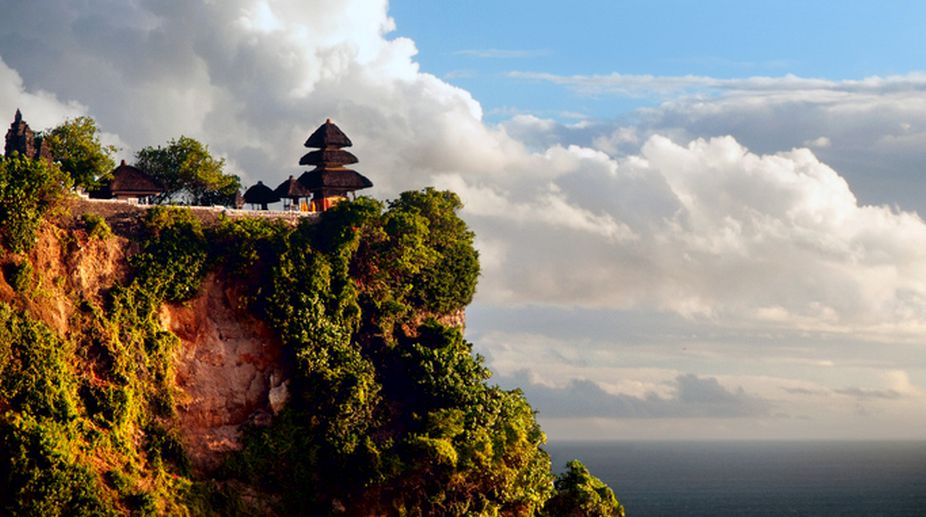
Uluwatu in Indonesia: It houses one of Bali's most important temples, Pura Luhur Uluwatu atop a sort of plateau by the ocean. Apart from the spiritual significance of the place, its amazing limestone cliffs overlooking the ocean below is breathtaking. The travel around its long and pristine coastline is a heavenly experience. 

Nha Trang in Vietnam: Quiet and calm, it is a God-made destination for those who want to get away from crowded places and busy streets of cities. Rich in sea life, it has a serene and beautiful seaside promenade. Peaceful and stunningly beautiful, it gives a feel of what a paradise could be. Drown yourself in the soft white sands and the warm blue sea water, and soak up the silence.

Anuradhapura in Sri Lanka: Travel to this ancient city, one of Buddhism holiest places and enjoy a pilgrim holiday. It is where where Buddha found enlightenment, Travel to this old planned city, with palaces, monasteries and cemeteries dating back to 377BC. Visit the stepped pools and bell-shaped stupas or dagobas and the Archaeological Museum.

Maui in Hawaii: A tiny island, tucked away across the ocean, Maui is a perfect holiday spot. You can surf and wind surf, swim under the waterfall, go scuba diving, snorkeling, golfing and hiking. Watch the magnificent sunrise and majestic sunset from a top a volcano, and more. Kiheii is a must visit while in Maui.

Ngapali in Myanmar: A long, wide open beach with white sand, this could be the place if you are looking for a real time alone holiday. As quiet as could be by the clear blue sea of the Bay of Bengal, with not a soul in sight, you may find a spiritual journey here. While the place remain pristine, there are good places to stay.

Dong Valley in India: Touching three countries–India, China and Myanmar–this small hamlet in Arunachal Pradesh is located in the eastern most corner of the country. From here, you can witness the first sunrise in the country. You can spend a long peaceful holiday here and experience the unique life and culture in this far away part of the country surrounded by nature's beauty.

J&K: Militants attack Minister Abdrabi’s home, cop injured

PTI | Srinagar |

Suspected militants tonight attacked the ancestral residence of Jammu and Kashmir Minister Farooq Abdrabi in South Kashmir Anantnag District, injuring one policeman.

The ultras attacked the residence of Abdrabi, the Minister of State for Hajj and Waqf, at Dooru in Anantnag District and injured a policeman, a police official said.

He said the injured policeman was taken to a hospital here for treatment. Further details of the incident are awaited.

‘Beet’ the heat with turnip drink this summer!

As the sun shines and the heat is back, stay fresh with turnip drink this summer.

SNS | New Delhi |

As the sun shines and the heat is back, quench your thirst, stay fresh and healthy with some truly refreshing turnip drink this summer. This nutritious drink may help to heal many ailments you are suffering. Here are some of the health benefits of turnips you may like to know.

Benefits

Owing to its high water content, turnips are low in calories. So you can grab a drink or more of turnip juice every day.

Turnip is a useful source of Vitamin C. Vitamin C is needed for healthy tissues and skin.

This root vegetable is high in fibre. The fibre helps maintain bowel regularity.

According to studies, the fibre may help prevent rectal and colonic cancer.

Turnip syrup may help relieve asthma and other respiratory problems.

They are also good for the bones.

How to prepare turnip syrup

Turnip syrup is easy to make.

Simply chop the turnips into small cubes and boil them till tender in little water. Add sugar to taste.

How to make turnip drink

Now, for a real sweet refreshing turnip drink, chop the turnips into small pieces, add a cup of red cherries and blend them well. Extract the juice, add little water, refrigerate it and have it nicely chilled. It is as quick as easy as that.

Health experts and nutritionists say that turnip juice has more Vitamin C than orange juice. So it is a real treat for bronchial problems. Some say it can even treat diabetis. Begin your day with turnip drink every day and stay hale and hearty.

Adityanath orders crackdown on food grain, ration mafia

PTI | Lucknow |

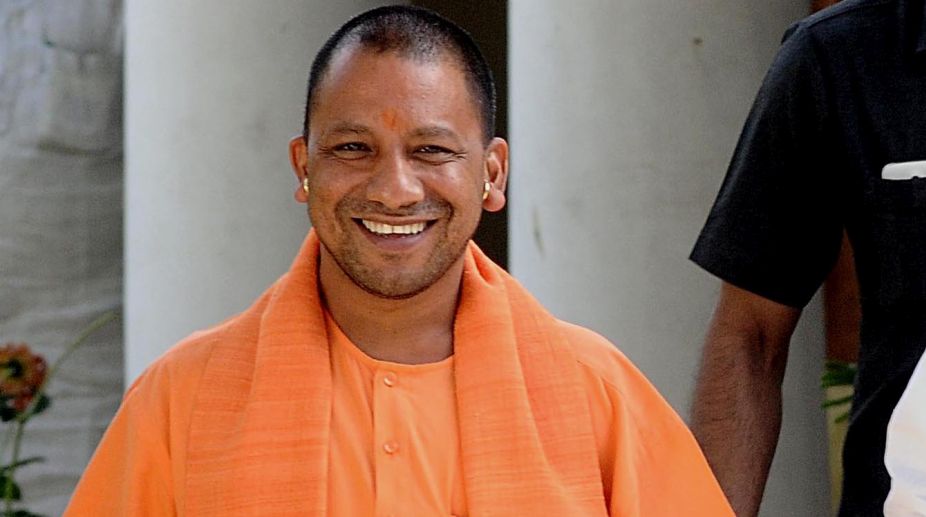
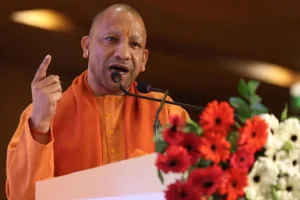
Uttar Pradesh Chief Minister Yogi Adityanath on Sunday ordered strict action against the food grain and ration mafia, while directing the officials to submit reports of closed sugar mills in the state.

"The poor people must be issued ration cards, while stringent action be initiated against the food grain and ration mafia. The superintendents of police and district magistrates must act tough against these mafia through sustained campaigns," he said while chairing a review meeting of officials of Gorakhpur and Basti divisions here.

He directed the officials concerned to submit a report in the next 15 days on the revival of closed sugar mills and repair of those mills which were not functioning properly.

The Chief Minister asked the district magistrates to ensure that the benefits of the government schemes reach the needy.

Aditya Nath also batted for tough action on mining, forest and cattle mafias.

He directed the officials to settle the pending payments of sugarcane farmers in the next 15 days, and prepare a comprehensive strategy in the new sowing season.

The priest-turned-politician also drew the attention of the officials towards denotified tribes and asked them to conduct a survey to gauge whether the tribals have availed the state schemes.

"After the survey, the villages dominated by Van Tangiaa and Musahar (both denotified) should be declared 'revenue villages' so that basic facilities of education, health, drinking water, road, housing, electricity and government ration shops could be provided in these region," he said.

On a stern note, the Chief Minister said contracts for construction work should not be given to any criminal elements.

"If any pressure tactic is used by the criminal elements, it must be brought to the notice of the DMs and SPs immediately and FIRs be registered against these elements," he added.

Gurdaspur Jail inmates rewarded for good behavior during rioting incident

Ranjeet S Jamwal | Chandigarh |

Two days after inmates of Gurdaspur Central Jail went on rampage and  some of them unsuccessfully tried to escape
by breaking a jail wall, the jail authorities have decided to reward majority of inmates who exhibited good behavior during the incident.

The superintendent, Gurdaspur Central jail, Dilbagh Singh said as only about 150 of total 900 inmates were involved in the rioting incident on 24 March, as a goodwill gesture Jail authorities announced several measures for the majority of inmates who exhibited good behavior during the incident.

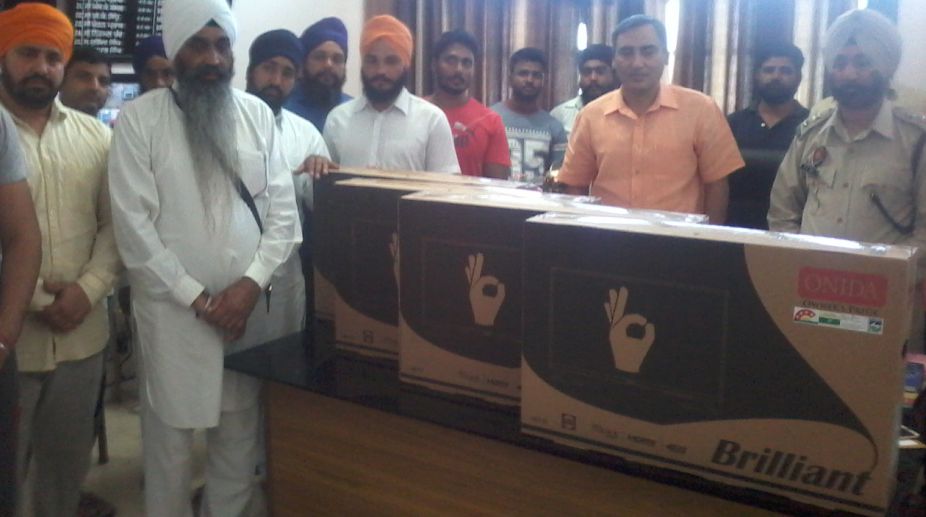
He said inmates of four barracks set an exemplary behavior by sheltering four prison staff members who were stuck up during the disturbance inside the jail and saved them for any physical harm at the hands of the rowdy group, they were awarded four TV sets for their barracks.

More than 25 prisoners who requested their transfer to other prisons for personal reasons were sent to prisons of their convenience or hometown, Singh said.

Bakery unit is approved for establishment for inmates keen on doing factory work.

Computer classes, English classes, Yoga, music and meditation classes are to start next week in the barrack where this disturbance took place as it is now decided to convert that area into activity center, he added.

More than 44 cases of leave were approved for sanction and  inmates were encouraged to enroll for IGNOU Courses in the special enrollment drive on Sunday and about 31 inmates expressed their willingness to enlist for courses.

As a special measure, for this whole week inmates are being provided facility to meet their relatives and special arrangements are made for this.

Meanwhile, the working at Gurdaspur Jail returned to normal and prisoners started their daily routine in usual manner. The doctors team made special rounds of all the barracks and not a single case of even minor injury was reported by any inmate. Several meeting were held with inmates of all barracks and a peace committee was also
constituted with inmates from each barrack and they pledged to prevent any other inmates from indulging in disturbance in prison, the jail superintendent said.

In new academic session, no school bags in 50 Haryana schools

Ranjeet S Jamwal | Chandigarh |

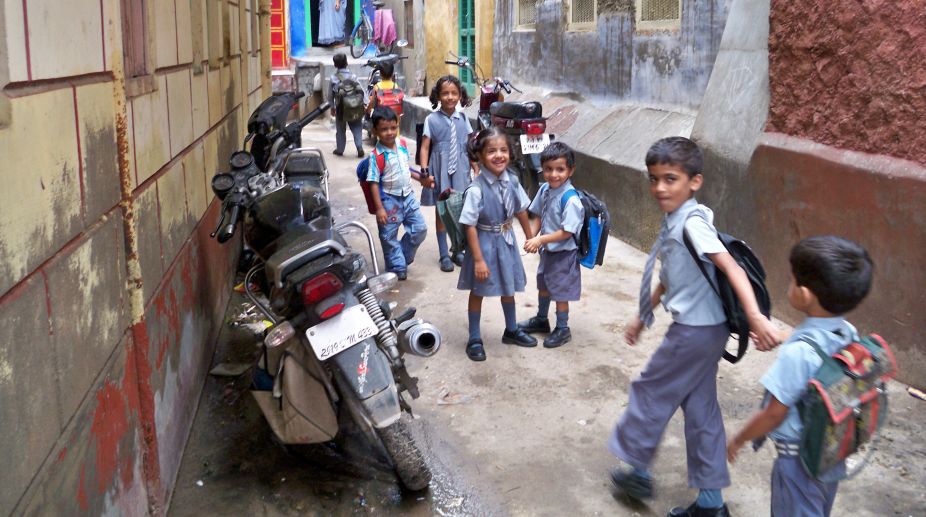
As part of the pilot project, children in 50 Haryana schools will not have to carry their school bags as their
books will be kept in the school.

Haryana education department would implement this new pilot scheme in 50 schools in the ensuing academic session. This scheme would be implemented throughout the state after the success of the pilot project.

This was disclosed by additional chief secretary, school education, PK Das, at division-level workshop of class readiness programme in Kurukshetra on Sunday.

He said that the department was committed towards fostering stress-free and joyful atmosphere in schools so that students may develop further interest in studies. Meting strict punishment out to children is inhuman and would not be tolerated, Das added.

He said that for the last few months, Saturdays were being observed as bag-free Joyful Saturday in schools in the state, which had received overwhelming response. Such programmes not only strengthen teacher-student relationship, but also make the learning atmosphere stress-free, the official said.

He urged teachers to implement the various schemes launched by the department and said that ‘Pravesh Utsav’ should be observed in th schools at the beginning of the academic session. Apart from this, April should be devoted to learning through play under the class readiness programme, Das added.

Confident govt gets bulk of financial business cleared

Deepak Razdan | New Delhi |

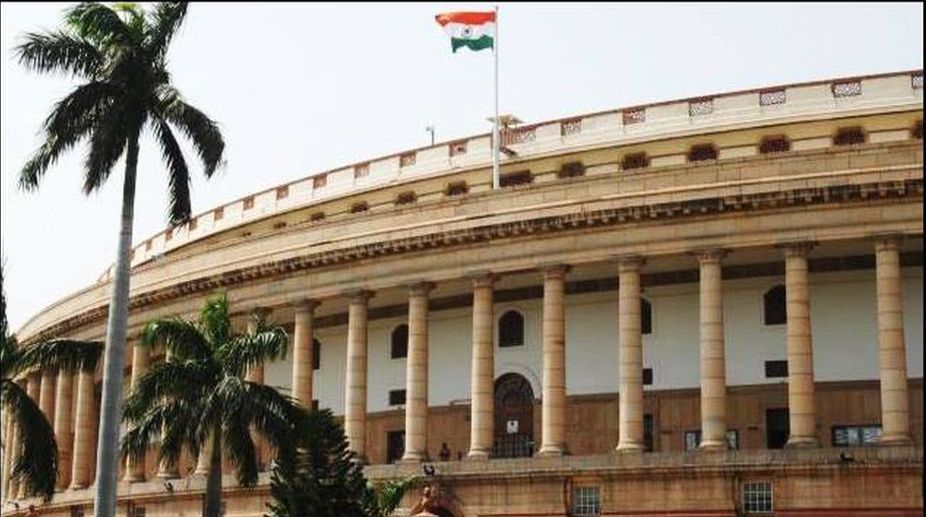
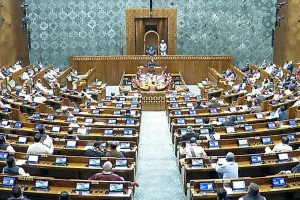
Parliament last week cleared much of its vital Budget Session agenda when the Lok Sabha passed the Finance Bill, 2017, along with two Appropriation Bills, and approved Demands for Grants of Central Ministries. The two Appropriation Bills, which take care of the supplementary demands for 2016-17 and fresh demands for 2017-18, were later returned by the Rajya Sabha, which is slated to take up the Finance Bill, 2017, next week. The debates on the financial business showed the government had gained confidence, and its stand on demonetisation, and efforts for unanimity on Goods and Services Tax laws, were receiving due attention. The Finance Bill was passed by the Lok Sabha on Wednesday along with 29 government amendments, providing for insertion of 38 new clauses and two new schedules in the Bill.

Several members protested the “tagging” of non-tax Bills along with the Finance Bill, with RSP’s N K Premachandran saying “it’s a backdoor legislation,” and that it was “never heard in the history of Indian legislative mechanism.” Speaker Sumitra Mahajan overruled the objections saying rules do permit non-taxation proposals in the Finance Bill.

 Finance Minister Arun Jaitley quoted former Speaker G V Mavalankar and said when a Bill substantially deals with imposition, abolition of tax, etc., the other provisions necessary for the achievement of the Bill’s objectives cannot take away from it the category of Money Bills.

Premachandran argued while the Finance Bill related to financial proposals for a year, the amendments to 40 existing Acts would have permanent impact. Saugata Roy of Trinamul Congress said “let the Finance Bill consist of taxation proposals only”. The amendments linked Aadhaar with the filing of income tax returns. Jaitley said people used several PAN cards to avoid tax; the Aadhaar linkage would prevent that. Cap on cash transactions has been reduced from Rs 3 lakh to Rs 2 lakh. Biju Janata Dal members staged a walk-out on the Aadhaar issue while the Congress left the House as the Government gave no assurance on waiving farm loans.

 Dwelling on the benefits of demonetisation, the Finance Minister told the Lok Sabha that cash deposits after the high currency ban had exposed people with incomes disproportionate to their deposits and they were being sent notices. He told the Rajya Sabha that the demonetisation was a shock necessary for the economy and that the “shadow economy” had received a “big jolt” by the step. Alluding to the BJP’s rich dividends in the recent UP and Uttarakhand polls, the Minister said the decision had proved politically correct also. The Government objective was that cash must not remain a facilitator for crime. Jaitley was heard with silence when he said the tax collections had already exceeded the targets. Replying to the debate on the General Budget and the Appropriation Bills, Jaitley told Elders that the Goods and Services Tax (GST) Council was India’s first federal decision-making body. All its decisions were taken unanimously, and the main Act and its connected laws would usher in a “rule-based” system of indirect taxation. The GST roll-out was planned from 1 July, he said. Prime Minister Narendra Modi was present in the Lok Sabha at the passage of the Finance Bill, and in the Rajya Sabha at the passage of the two Appropriation Bills.

The Upper House had a lively debate on electoral reforms where the

main target was the use of electronic voting machines (EVMs). Although Law Minister Ravi Shankar Prasad was hard put to explain why the government failed to respond to the Election Commission’s demand for paper trail machines for attachment to the EVMs, the Minister silenced the House on the EVMs’ reliability saying “Do you mean to say the EVMs are OK if the BJP loses, and wrong when the party wins”.

Ties with China, Russia won’t affect US relations, says Pakistan

PTI | Washington |

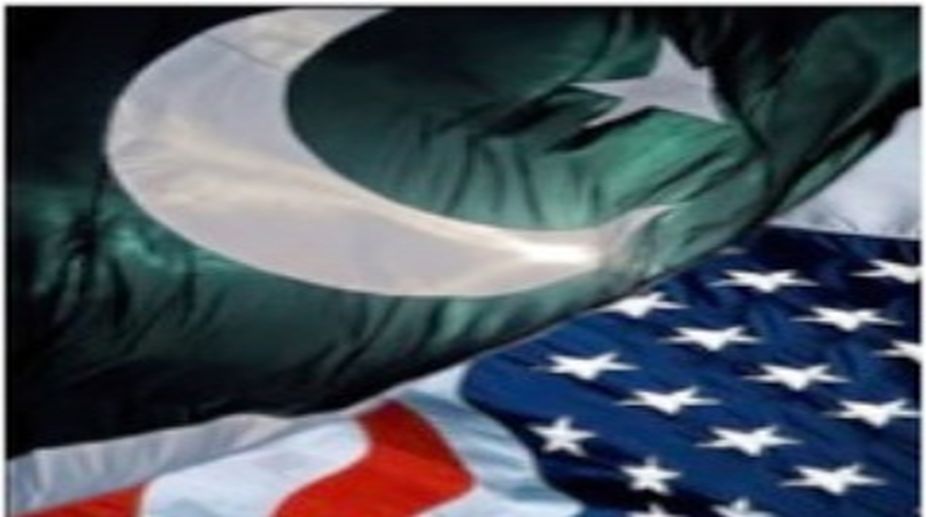
Pakistan's "historic" ties with China and efforts for closer relations with Russia will not have an adverse effect on its traditional partnership with the US, said the new ambassador to the US Aizaz Ahmad Chaudhry.

In his first interaction with the US media after assuming charge of the office this month, Chaudhry said Islamabad's decision to reach out to other nations in the region and its "close historic relations with China should not be seen as a zero-sum game for any country".

During the media interaction on Friday, Chaudhry said Islamabad wanted close ties with the Trump administration because of the two countries' shared goal of defeating militant Islamic State group and Pakistan s strategic role as "a bridge" between the US and China, the Dawn reported.

The creation of Pakistan-China economic zone was already attracting investment interest from the US and Europe, he added.

The ambassador said that Pakistan's overtures towards Russia is aimed at preserving Islamabad's regional interests.

Chaudhry tried to allay concerns about Pakistan-China ties but Paksiatni media reports of his briefing noted that despite such clarifications, this relationship "could be seen as an affront by the Trump White House to Washington s long-standing security and economic partnership with Pakistan," the Dawn said.

He pointed out that there was no military solution to the Afghan problem and the only way out was to have an Afghan-led and Afghan-owned political settlement.

Chaudhry said that relations with Afghanistan were of crucial importance for Islamabad as instability there had a spill-over effect on Pakistan, being an immediate neighbour.

No plans to introduce new denomination notes: RBI

IANS | Kumbakonam (Tamil Nadu) |

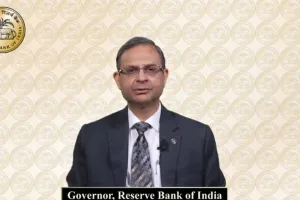
The Reserve Bank of India currently has no plans of introducing new denomination currencies, a senior RBI official said on Sunday.

"Presently RBI has no idea to introduce currencies of new denominations. The central banking institution wants to encourage cashless transactions, which are helpful to the people", RBI Deputy Governor N S Vishwanathan said while speaking at a lecture here on "Credit culture and the financial system".

In this connection, Minister of State for Finance Arjun Ram Meghwal had told Parliament on Friday that the government is not planning to print Rs 5,000 and Rs 10,000 currency notes.

Referring to banks' non-performing assets (NPAs), or bad loans, Vishwanathan said here that these are affecting the income and profit of banks. 

"Banks cannot escape from the responsibility of controlling NPAs in their balance sheets," he said. 

Banks are expected to base their lending decisions on a careful and prudent assessment of the financial position and repaying capacity of the borrower, while credit should be given to only the right people, he added. 

The magnitude of the problem can be guaged from the NPA figures of state-run banks, which at the end of the current fiscal's second quarter that ended in September, rose to Rs.6.3 lakh crore, as compared to Rs.5.5 lakh crore at the end of the first quarter.

Govt refuses to give collegium in writing reasons for judges’ rejection

PTI | New Delhi |

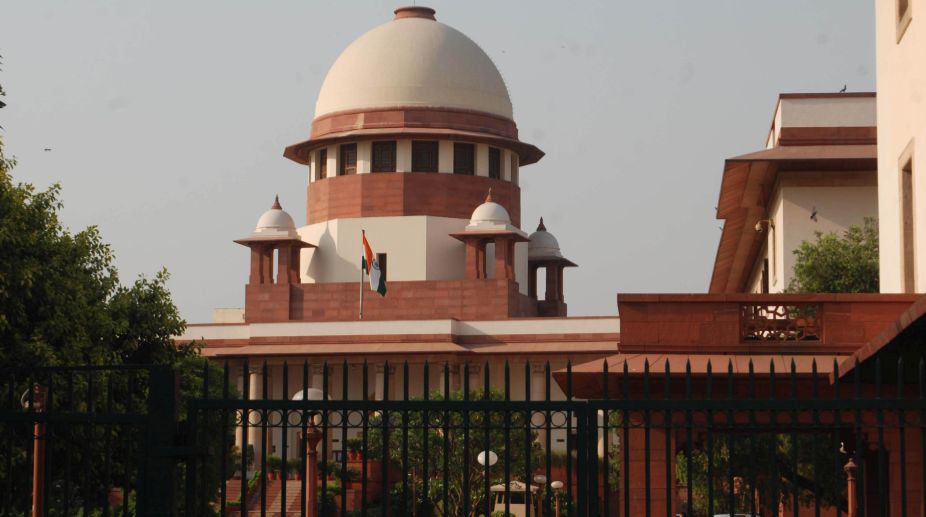
The Supreme Court collegium refused to accept the proposal of the executive's right to reject its recommendation for appointment of a judge on the ground of national security as the government refused to give the reasons for rejection in writing.

Though the government is learnt to have held several rounds of discussion with the Chief Justice of India to convince him to accept the national security clause in the proposed Memorandum of Procedure, it was rejected as the government is learnt to have insisted that it would not give anything in writing if a candidate's name is rejected over national security.

Sources said the government was only willing to share the intelligence report on the concerned candidate with the CJI and not the collegium of five top judges of the apex court.

The collegium, on the other hand, was of the view that if the government gave the reasons in writing, the charges could be verified through independent sources.

Seeking to convince the collegium to accept the national security and public interest clauses, the government had said so far it had not rejected any recommendation on national security issue. It had told the collegium that in the future too, the clause will be invoked sparingly.

But since the government was not ready to give the reasons for rejecting a recommendation on national security consideration, the collegium rejected it.

The body of five senior-most judges of the apex court headed by the Chief Justice of India has made it clear that if the government has objections on the ground of national security and public interest, it will convey the same to the collegium.

The collegium will then take a final call, the sources said.

Since January last, the government and the apex court are trying to finalise the Memorandum of Procedure — a document to guide appointment of judges to the higher judiciary.

While rejecting the National Judicial Appointments Commission Act, the SC had agreed to revise the memorandum of procedure to usher in more transparency in appointment of judges to the SC and HCs.

The new law had sought to overturn the over two-decade- old collegium system where judges appoint judges. It had sought a say for the executive in appointment of judges. The national security clause and the secretariat clause are part of the draft MoP which has been shuttling between the government and the collegium since March 22, 2016.

No out-of-court settlement with Modi, Yogi at helm: BMAC

PTI | Lucknow |

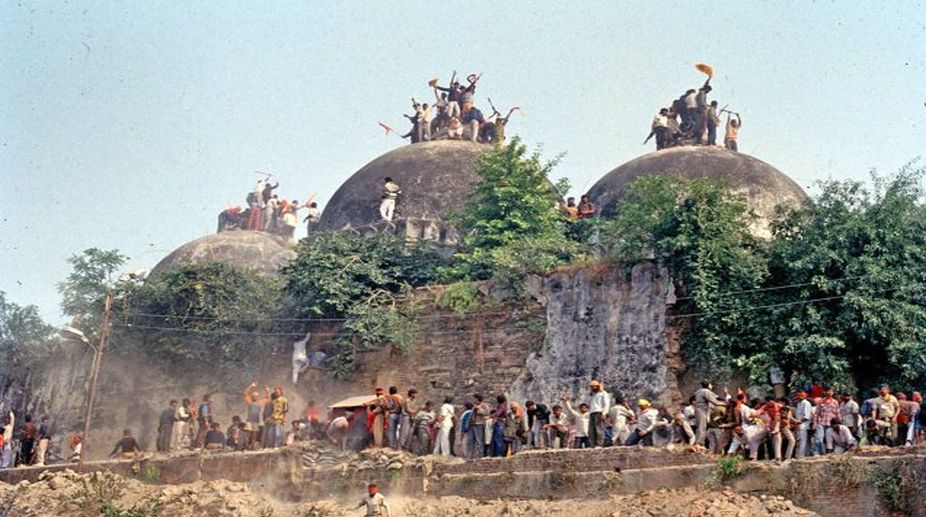
The Babri Masjid Action Committee (BMAC) on Sunday said an out-of-court settlement of the Ayodhya dispute was not possible with Prime Minister Narendra Modi and Uttar Pradesh Chief Minister Aditya Nath Yogi at the helm of affairs.

"With Prime Minister Narendra Modi and Uttar Pradesh Chief Minister Aditya Nath Yogi at the helm of affairs, there is no hope that justice will prevail with the Muslims. Both of them have been BJP workers and supporters of Ram temple movement," BMAC Convenor Zafaryab Jilani said after a meeting of its office bearers here.

Earlier the prime ministers used to be "neutral" on the contentious issue, he said.

Jilani said the solution to the Babri Masjid title suit can be arrived only through the Supreme Court.

The BMAC meeting was held against the backdrop of the apex court recently asking parties involved to sit together and arrive at a consensus on the issue, which has been dragging on for decades.

"Efforts were made in the past for out-of-court settlement, but proved to be futile," Jilani told the meeting.

The BMAC office bearers were also of the view that if the Chief Justice of India or any other judge took an initiative to find a solution to the issue, the Muslims would certainly support the move.

"We are ready if he (CJI) nominates a team for hearing the matter. But out-of-court settlement is not possible. If the SC passes an order in this regard, we will look at it," Jilani had said on March 21, the day the apex court had observed that the matter was "sensitive and sentimental and it is best to settle it amicably."

In a first, Haryana to release vultures bred in captivity

Ranjeet | Chandigarh |

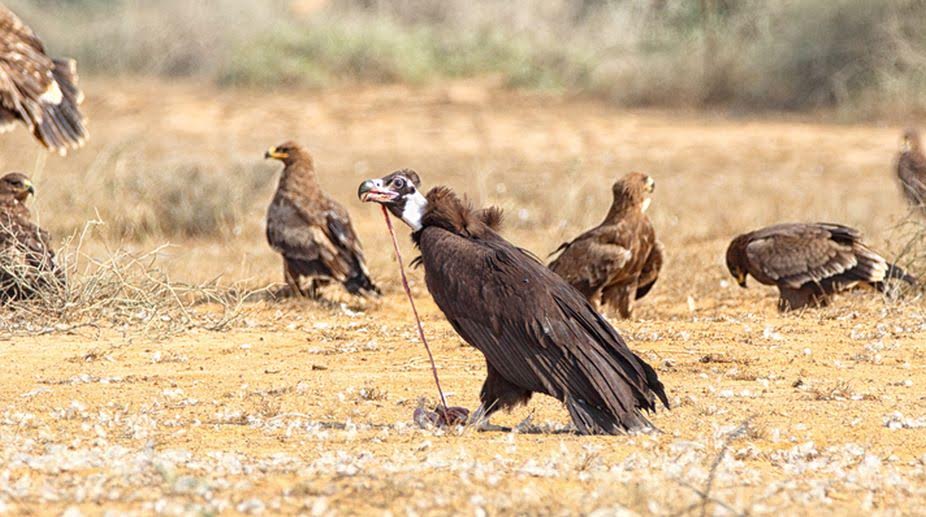
For the first-time in the country, the Haryana forest department is planning to release eight vultures bred in captivity into the wild after obtaining and deploying satellite transmitters, for which permission has already been obtained from the
Central Government.

A spokesman of the forest department said with a view to tracking the endangered vultures after these were released into the wild, the Central government had granted permission for attaching satellite transmitters on them.

Vultures are natural resources of immense ecological, economic, social and religious importance, and act as natural scavengers. However, as their population started declining very rapidly in the 1990s, Haryana became the first state to initiate a programme for their conservation and reintroduction into the wild.

The spokesman said only wing-tags could be put on the birds for identification and one bird could be followed for 45 days. By then, it had successfully started locating food and water and was flying very high into the clouds. This was for the first time that successful reintroduction of vultures into the wild was carried out.

However, it was not possible to follow the birds further because no tracking device was put on them. Therefore, the forest department initiated the process of obtaining permission from department of telecommunications in November, 2015 to put Platform Transmitter Terminals (PTTs) on vultures to help locate them through satellite once they are released into wild.

The forest department, in collaboration with Bombay Natural History Society, established the Jatayu Conservation Breeding Centre at Pinjore in 2001, to save the three critically-endangered resident Gyps species of vultures from possible extinction.

This is the first centre of its kind in Asia and houses 226 birds of the three species, namely White-backed Vulture, Long-billed Vulture and Slender-billed Vulture. The centre has pioneered conservation breeding efforts of these species and has managed to breed the three species for the first time ever. It has mastered the technique of double clutching and artificial incubation and managed to almost double the productivity of vultures.

The centre also helped in finding out the cause of the crash in vulture population in the country. It found that the veterinary drug, diclofenac, was the major cause of the crash in vulture population.

Vultures get exposed to the drug while feeding on the carcass of cattle treated with the drug before death. The centre was able to convince the Government of India to ban the drug for veterinary use in 2006.

Show yourself some love girls, suggests Kalki Koechlin

IANS | Mumbai |

Actress Kalki Koechlin, an avid traveller, considers it important that in between engagements related to work and family, women must take a break from the madness before monotony sets in.

Kalki often takes time off and keeps her daily life lively by indulging in activities that make her happy. In a statement, the Dev D actress has shared tips on what she does to keep herself sane from all the drama that surrounds her life:

* Advocate for yourself: Whether it's in the workplace with your boss or at home, speak up about your wants and your needs. Don't let work eat up on your personal life. Stand up for yourself. Every time someone dumps extra work on you or forces you to do something that you aren't interested in, say ‘No'. Try it. Saying ‘NO' every once in a while actually acts like a detox. Let the world not take you for granted.

* Take small vacations with your girls: Work and family can be quite stressful sometimes and it is important to get away from both before they get on your nerves. At times like these, try and plan small vacations with your gang of girls. Could be a road trip not too far from the city or a slumber party at another friend's place. Trust me, these mini-holidays help you rejuvenate and prepare better for the week ahead.

* Dress your best to boost your confidence: Your attire is directly proportional to your temperament. Beautiful clothes are known to be instant mood up-lifters. Dress up for yourself, look good, feel fantastic and let the world be your oyster.

* Indulge in some ‘me' time: Spend some time with yourself doing things you always wanted to do. Finish the book that you had once started to read but never reached its end. Wear that cute jumpsuit you had bought for a special occasion but never got a chance to flaunt. And instead of spending long hours in the salon to get fuzz-free, switch to shaving. No matter what people say, it is hassle-free and safest on your skin, unlike waxes or creams. Let the mirror on the wall tell you who is the most splendid of them all.

* Accomplish a personal goal: Finish that one scary and difficult task that you've been avoiding. Be it a health check-up or a call to an old friend who you miss, overcome your fear and accomplish a seemingly daunting task. The more difficult it seems, the better. Let your triumph be your gift to yourself.

Haryana’s farm tourism becomes major leisure activity for urban dwellers

Shiv Rawal | Chandigarh |

Come back to nature. With this concept, farm tourism is gaining popularity in Haryana with foreigners and urban dwellers are thronging to the destinations offering a whiff of the countryside.

As per the Haryana Tourism Department, within past few years, the state government in collaboration with the farm owners has come out with more than 20 farm tourist spots offering rural eco-tourism blended with cultural foods, rural adventures and traditional lifestyle.

Apart from non-residential Indians (NRIs) and foreigners, these farm tourism destinations are entertaining a large number of urban citizens especially from National Capital Region (NCR) who often come to these sites to experience local ambience and typical foods.

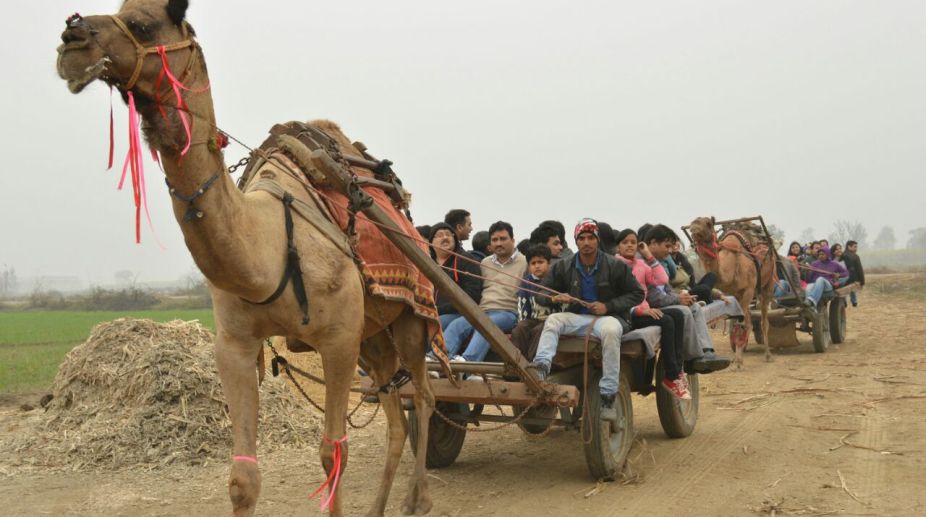
Mainly these farms registered with Tourism Department are located in Haryana’s districts falling in the NCR,  Among the adventures available at these farms are bullock cart ride, horse ride, camel cart ride, tractor ride, cycling, indoor and outdoor games.

Apart from pottery, folk dance, visitors could also enjoy have a glimpse real culture under village walk and agri activities events.

Talking to The Statesman, Rohtak’s Banni Khera farm founder and CEO Kunwar KV Singh Parmar said, “Farm Tourism is a concept that opens new economic opportunities for locals , conservation of ecology-natural habitat, promoting our culture, heritage and traditions and also offers authentic and interactive rural life experience for visitors.”

One side, Farm tourism is bringing people out of urban areas into the countryside, the other hand locals are getting direct economic benefits by getting themselves engaged with such projects, added Singh who after completing his education preferred to go with this community based rural tourism project.

Haryana Tourism director Mukul Kumar told The Statesman that the concept of farm tourism has  got a overwhelmed response from the visitors  especially those city inhabitants who want to get rid of the boredom of urban life and fresh and healthy life our their countryside.

“Through the fascinating concept of farm holidays, Haryana Tourism also takes this opportunity to invite the NRIs to bring their children back to their roots”, he added.

According to the Department, Haryana has become the first state in the country to launch Farm-Tourism.

Other such farms are Lake Point View and Lush Green in Karnal, Awesome farm and Laksh farm Faridabad, Botanix, Thakran farm, Surjivan farm, Vedic Gram Lifestyle farm, Kotwara farm, Golden Turtile, Ananya Green, The Golf Retreat, The Ariisse farm, all in Gurgaon, Pratapgarh farm, Rattangarh farm in Jhajjar, MG farm in Hisar, The Peepal Kothi farm in district Nuh.