Logo

UN chief meets Iraqi leaders to support fight against IS

IANS | Baghdad |

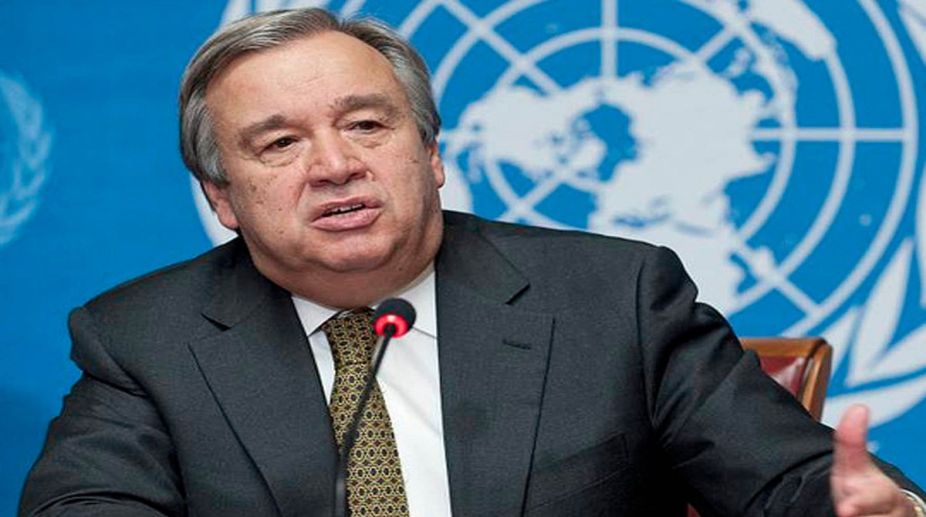
UN Secretary-General Antonio Guterres on Thursday visited Baghdad and met with top Iraqi officials to show support for the Iraq's fight against the Islamic State (IS) militant group.

Iraq is currently facing a growing humanitarian crisis following fierce battles in Mosul.

During his visit, Guterres held a meeting with Iraqi Prime Minister Haider al-Abadi. 

The two reviewed the humanitarian situation and the protection of civilians as the Iraqi forces are fighting to retake control of the western side of Mosul, Xinhua news agency reported.

"The Iraqi people have proved their ability to defeat terrorism and to expel IS militants. We are in the final stage of liberating Mosul and our forces are exerting their utmost efforts to protect the civilians," Abadi said.

Abadi accused IS militants of "intentionally using civilians as human shields, while intensifying their propaganda machine to spread rumours" that Iraqi forces and international aircraft caused casualties among civilians.

He also called on the UN and its Security Council to "issue a resolution to prosecute (IS) for its crimes against civilians."

Guterres expressed support for Iraq's efforts to liberate its territories from IS militants, saying that "our visit to Iraq is to show solidarity at a historic moment, and we hope to liberate Mosul and let normal life return soon."

Guterres also said that he was "extremely encouraged by the commitment that expressed by the Abadi about the protection of civilians during the military operations."

The UN chief asserted the need for the international community to provide relief efforts to about three million Iraqis who were displaced by clashes against the IS, which seized large areas in northern and western part of the country in 2014.

Guterres also met with Iraqi Foreign Minister Ibrahim al-Jaafari and the two sides reviewed "the humanitarian, security and political situations in Iraq as well as the victories of the Iraqi forces against IS," according to a statement by Jaafari's office.

Jaafari stressed on Iraq's call on the international organisation to "adopt a draft to criminalise the terrorist ideology and fight extremism in order to protect the societies from the risk of recruiting their sons in terrorist groups," the statement said.

"Iraq needs a plan similar to Marshall Plan to assist the people of Iraq and to support development to overcome impacts of the war against terrorist gangs," the statement added.

The Marshall Plan was an initiative launched by the US to aid Western Europe to recover from devastation after the World War II.

During his visit, Guterres also met Iraqi President Fuad Masoum and the speaker of the parliament, Salim al-Jubouri, who expressed hope that the international organisation would increase its humanitarian aid in Iraq.

An emerging opportunity

Statesman News Service | New Delhi |

The fast moving world and the extensive industrial developments not only makes our lives simple but also create a vast number of opportunities. Today, there are various scopes explored by the young, yet some unexplored avenues too. One such area is packaging. But due to the paucity of skilled talent in the industry, this profession remains undiscovered. 

The Indian Institute of Packaging offers various short and long term courses in this field. It runs a two year full time post graduate diploma and is eligible for fresh graduates in science or engineering who aspire to make a career in this field. “The Indian packaging industry has not only grown in size and volume, but also in its level of operation. In addition, globalisation has also forced to become more competitive in the overall markets to win major contracts abroad,” said Bidhan Das, deputy director and branch head, Indian Institute of Packaging.

They are involved in various activities like testing and evaluation of packaging materials and packages, consultancy services and research, and other development related. Besides this, they offer training and education in the specific subject. The role of packaging in modern methods of distribution through super markets and malls has therefore, assumed great importance. Thus, the demand of this subject makes the job challenging. 

The institute offers placement opportunities in top brands like ITC, Hindustan Pvt Ltd, Abbott Laboratories, Procter and Gamble, Zydus Cadila, etc, with a minimum package of 5 lakh to 10 lakh per annum to students who successfully complete their two year PGDP.

At the front of research and development, they are involved to the package design and development, formulation of packaging standards, enhancement of shelf life through innovative packaging system. Recently, the institute has filed a patent for the packaging concept where it has packed liquid jaggery in the plastic based laminated collapsible tube to enhance the shelf life from five days to 90 days.

This is a national apex body which was set up in 1966 by the packaging and allied industries and the ministry of commerce with the specific objective of improving the packaging standards in the country. This is an autonomous body working under the administrative control. The main objective is to promote the export market by way of innovative package design and development as well as to upgrade the overall standards of packaging in the country.

It offers an entry level salary bracket of Rs 5 lakh to 8 lakh per annum after a postgraduate diploma. The institute is closely linked with major international packaging organisations world over like the World Packaging Organisation, Asian Packaging Federation, International Trade Centre, and Geneva has been working for the overall growth and development of packaging globally.

Riding the new wave of digitisation

Sayyed Samar Abbas | New Delhi |

India is witnessing a huge increase in the digitalisation way. There are over 462 million internet users and 200 million are active social media users. In 2016, 24.33 per cent of the country’s population accessed via mobile phone and the trend is predicted to grow at 37.36 per cent by 2021. With the internet penetration in such a way, there are immense job opportunities in this field. The digital media is blend of technology and content, including technical skills, artistic skills, analytical and production coordination skills. This includes the career skills which are in demand like digital video, animation, web and graphic designing, social media, video and interactive medium. 

Social media is a form of direct communication between businesses, governments and media sources and their audience. Examples of these tools include Twitter, LinkedIn, Facebook, blogs or regularly-updated websites, YouTube, and Google Plus. India has world’s largest number of Facebook Users with over 195 million users, overtaking US by over million. There are 155 million Monthly Active Users, of which 147 Millions MAUs access Facebook via mobile phones and 73 million users are active daily on mobiles. 70 per cent users are connected to digital multimedia, thus shaping a career to excel in this field. Some specialists start with an associate’s degree or certificate and a Bachelor’s degree is more common as well as knowledge of design software is usually required. 

They are responsible for creating and managing digital-related projects for their organisation, in charge of organising digital resources for media campaigns and presenting their progress and initiatives to executives in other departments. They generate digital media that increases brand loyalty and collaborate with other professionals. They manage functionality of interactive flash files, making sure they work as intended. They maintain web-related media and update existing resources as needed. Some of their major responsibilities include creating online ads, seasonal content, newsletters and calendars. They also have a strong knowledge of advanced graphic design techniques and able to produce media files that help advertise their company and increase sales. They must stay on top of current design trends as well. 

Social media managers are the voice of companies on all the social networking sites. They create and maintain new marketing campaigns, brand promotions or product lines for their company on different sites, monitor progress using web analytic tools and answer directly to social media inquiries, all while using the company’s voice and guidelines. They work with creative people in the company like marketing, public relations, legal, etc, to coordinate their campaigns with other initiatives within a company work to fit in to the overall marketing and promotional goals of the organisation. 
To step into the digital media you’ll need at least a Bachelor’s degree programmes which will provide technical training and allow students to research the applications. Some programmes focus on television or film, while others keep with a broader study of all digital media applications. 

The writer is Director, Institute of Marketing Communications India.

Outside the realm of forensic science

Prateek Bhargava | New Delhi |

With the rise of crime there is an inevitable need for professionals, who not only hold the expertise in deciphering causes and effect of criminal activity, but also are equally adept at strategising for prevention. For long, the discipline of criminology has been subjected to misleading opinions and interpretations. It is a subset of sociology and includes scientific study and their manifestations. It seeks to measure the effectiveness of a society’s response to illegal activity and propose ways to both prevent and address the same. 

Many consider this subject to be same as forensic science and criminal law. It’s not. While the innate focus of forensic science lies on the scientific study of tracing evidence, criminology encompasses a psychological study of behaviour.

A paradigm shift has been observed in criminal jurisprudence, litigation, and sentencing.

The Indian Legal System, once an ardent believer of deterrent sentencing is gradually progressing towards reformative sentencing with a focus on rehabilitation. TiharHaat, a venue for the purchase of products made my inmates of Tihar Jail is an example of the impact, a criminologist can make on punishment. 

Criminologists, in study and in practice make extensive use of precedence in sociology, psychology and law. A background in these disciplines is desired. They are driven with a burning passion to create an impact and to fight crime. A career in criminology is extremely hyped by many popular TV shows like Sherlock, CSI Miami, and Numbers, all of which portray their protagonists as strong analysts, keen observers, ardent researchers, strong and valued individuals. All of this holds true in the real world as well. Research, observation skills, ability to connect the dots, logical reasoning, active visualisation, excellent written, verbal expression, empathy, ability to trigger reformation and a strong sense of character are some of the skills that make for an ace criminologist. 

A student looking to make a career in the adrenaline-pumping discipline needs to be +2 passed with a science or arts background and then move to pursue either a specialised study of criminology or a degree in a more generic subject. University of Pune, Osmania University, Gujarat University, University of Madras, Lok Nayak Jayaprakash Narayan National Institute of Criminology and Forensic Science, and Guru Gobind Singh Indraprastha University are some of the institutions that offer specialised degree programmes in this subject. 

One may also look at pursuing sociology or psychology at the undergraduate level if they don’t want to dive deep into the subject. Delhi University, Punjab University, Ambedkar University, Christ University, and Ashoka University are some of the universities that offer an undergraduate degree in psychology and sociology. 

One may then look at pursuing a graduate degree and allied disciplines. Criminology and law, criminology and forensic science, criminology and psychology, forensic psychology and criminology are some of the popular combinations in India and abroad. The most exciting facet of this study is that its knowledge can be applied to various professions and academic domains in purview of the societal study as a whole. Anthropology, human behaviour, politics and policy formulation are domains which have no direct influence but yet strike a chord somewhere. Not only this a professional determined to make it as an ace criminologist can specialise in subjects like victimology, penology, juvenile justice, and crime investigation.

There are a plethora of opportunities available for professionals in this field. They can make their career as a crime investigator, a counsellor, a medical investigator, a social worker, a rehabilitation specialist, a policy maker, or join the police forces, and law enforcement agencies. They may also explore possibilities with organisations like Central Bureau of Investigation, Research and Analysis Wing, National Human Rights Commission, National Commission for Women, National Commission for Protection of Child Rights, Forensic Labs, and Bureau of Police Research and Development. Professionals who intend to groom young minds can also explore the possibilities in academia. 

Specialised opportunities like those in crime intelligence, law reform, research, international law enforcement and community correction lie abroad, if one wants to move overseas. Irrespective of anyone’s interest, expertise or previous educational background and work experience, there are all sorts of opportunities available in this field. Whether you’re an adrenaline junkie seeking outdoor thrill, or like to work in labs, the chances are you’ll find a fulfilling career in such a broad domain. 

The writer is founder and Chief Executive Officer, Mindler.

Giving nod to Indian goods

Ashwani Mahajan | New Delhi |

After assuming power in May 2014, the Prime Minister Narendra Modi announced key points of his economic policy, of which Make-in-India was an important component. Significantly, rate of growth of industrial production which was more than 15 per cent in 2007-08 dropped to zero and sometimes to negative in the years after 2011-12. Electronics, computer hardware, durable and non durable consumer goods, furniture etc. all were being imported from China or other countries. No new factory was coming up in India and existing ones were also shifting out. Not only that manufacturing was at a standstill, the share of manufacturing in GDP was hardly around 15 per cent.

In May 2014, after the formation of the Modi government, policies like Make in India and Start Up India were announced. In his speech from the Red Fort, Mr Modi said that his policy was to increase industrial production in India. He appealed to companies from around the world to come and start production in India. On the other hand, the government called upon entrepreneurs in India to set up manufacturing in the country and said they would be relieved from various types of red tape. ‘Ease of Doing Business’ would be improved to make the business environment better for new and old entrepreneurs.

For ‘start-ups’, the government assured an enabling environment in terms of facilities, tax exemptions and cooperation. For the first time, there was an effort to increase business on such a large scale. New phrases like Start up, stand up, holding hands etc. were added to the official dictionary.

Although the fruits of these efforts may take some time to come, it cannot be denied that there has been some improvement in the environment for industrial and business development. The new ‘start-ups’ started coming and the government’s attitude was also to provide a ‘holding hand’.

Whereas, the first condition for increasing industrial production is that industries be established, domestic demand for those goods is also a precondition. Unfortunately for the last several years, the import of industrial goods (whether they are consumer goods or producer goods, such as machinery) has been increasing fast. Exports were not increasing at the same pace. However, huge imports also indicate that demand existed in our own country which is an important precondition for industrial output to increase. 

World Trade Organisation (WTO) came into existence in 1995. According to the agreements reached at WTO, commitment was made by all member countries to keep import tariffs low and eliminate all non-tariff barriers which could curb imports. Due to cheap labour, government subsidies and unethical practices, and resulting low prices, Chinese goods started dominating world markets. The impact was also felt on India, and India’s trade deficit with China reached $ 52.7 billion by 2015-16. 

The government is also a big source of demand. At present many imported goods enter the government procurement chain due to many reasons. Suppliers of Chinese goods win tenders due to low prices. According to a rough estimate, government purchases at least Rs 2 trillion (Rs 2 lakh crores) every year. It is therefore necessary that in order to increase production in the country, procurement of items made in India should be preferred by the government. Even before the new economic policy came into force, preference used to be given to small scale industries/ Khadi products. But this was given up after the new economic policy came into force. At the first instance the preference in the purchase was changed to a price preference and subsequently the preference was abated 
gradually.

After the WTO agreements, it was argued that since we are obliged to treat foreign companies/ imports on a similar footing as Indian products, we could not give preference to indigenously produced goods, even from small industries.
Under the ‘Buy American Act 1933’, US-made products are preferred in government procurement in USA. According to WTO rules, if a government gives preference to products made from that country for its own consumption, then it would not be treated as violation of WTO rules. But if a commercial entity is forced to give preference to indigenously produced goods for commercial use or sale, then it would be considered a violation of WTO rules.

In the Jawahar Lal Nehru Solar Mission, when the condition of the use of local solar equipment was imposed by India, the US objected to the same and India lost its case in Dispute Settlement Panel (DSP) and even in the appeal. 
It is clear that if the government gives preference to products made in India for its own requirements, then WTO Agreements are not violated. Even America gives priority to American goods in government procurement. India can do the same and there cannot be a dispute. Recently a committee of Secretaries of the Ministries has made a recommendation to the government that to make the ‘Make in India’ policy successful, the products made in the country should be given preference in government procurement. It is believed that the government will soon announce such a policy and the rules will be issued by the Finance Ministry in this regard.

Significantly, today a large quantity of products is being imported from China and host of other countries and the same gets included in government procurement. It may be assumed that by giving priority to the purchase of products made in the country, the ‘Make in India’ programme can be made successful in the country. Industry is also pleased with such a policy proposal because it will give industry an assured captive market for its goods.
 
The writer is Associate Professor, PGDAV College, University of Delhi, 

Crunch times in Korean peninsula

Ravi Velloor | New Delhi |

Last week’s missile test launch from the east coast of North Korea, deemed a failure by monitoring stations in the South and at the US Pacific Command, underscores the deteriorating situation on the Korean peninsula and heightened panic in Pyongyang’s ruling elite.

That this year’s Foal Eagle and Key Resolve exercises, as the US-South Korean wargames are known, have caused unprecedented consternation in Pyongyang is no secret. It comes as two US aircraft carrier battle groups are in Asian waters and the deployment of B1-B strategic bombers with munitions perfected for tasks such as taking out nuclear assets, or the regime itself.

The US is also rapidly installing the Thaad missile defence system in South Korea, a development that directly affects the strategic balance in that part of the world and worries not just Mr Kim Jong Un, the North’s ruler, but also China, his protector and ally. Russia is uncomfortable as well.

Political statements of the past three months would suggest a moment heading towards a tipping point. The new American President has said North Korea is a “big, big problem and we will deal with that very strongly”. Mr Donald Trump also subsequently sallied forth with his famous tweet: “North Korea just stated that it is in the final stages of developing a nuclear weapon capable of reaching parts of the US. It won’t happen!”

Just last Friday, before he travelled to Beijing, US Secretary of State Rex Tillerson pronounced an end to the American policy of strategic restraint and said a “comprehensive range of capabilities” was being developed to tackle the situation caused by North Korea.

With so much noise, you would have thought that an attack on North Korea’s nuclear capabilities, if not an attempt at regime takedown, is imminent. It most likely is not.

Asia and the world, which waited and watched as Syria comfortably breached the “red lines” set by the Obama administration, should be prepared for deja vu in the time of Mr Trump. Indeed, tweeter Tony Posnanski’s acid response on the President’s Twitter handle to Mr Trump’s “it won’t happen” remark was probably the right question to ask: “Was this over dinner with Kim Jong Un?”

That is because the situation does warrant abundant caution. Bringing down the Kim regime, or launching an attack on North Korean nuclear pods, is no easy matter. For one thing, all those nuclear toys that threaten the South and Japan are not in one place but scattered around. Some are surely underground and others perhaps mounted on rail wagons to ensure they are not sitting ducks.

An equal worry is that there is no clear knowledge of the command and control mechanism employed by Mr Kim. Western news reports that the US managed to penetrate the North’s computer systems to thwart some missile tests would certainly not have been missed in Pyongyang, which would have taken countermeasures. Even if some of it was classic propaganda, delinking control systems would be a natural reaction.

Who knows to what level the power to launch has been devolved, and in what circumstances buttons will be pressed. Besides, a leader who has apparently assassinated his half-brother in the most public of places, using a nerve gas labelled a weapon of mass destruction, orchestrated by an intelligence service that has the guile to recruit foreign nationals as assassins, cannot be taken lightly. Japanese remember the gas attack on the Tokyo subway system in 1995. Mounted by the home-grown Aum Shinrikyo movement, it left 12 dead and affected thousands.

And of course there is also no knowing how China will react. Beijing has always viewed US reluctance to engage Pyongyang as emanating from a strategy of keeping the pot boiling on the Korean peninsula so it can station strategic arms on China’s periphery. Last week, Chinese spokesman Hua Chunying stuck fast to Beijing’s “suspension for suspension” position – that the US cancel the military exercises and the North suspend testing in tandem.

Beijing’s official position is to welcome eventual Korean reunification but it is no secret that while the current generation of South Koreans no longer shares the sentimental attachment to the North of their parents, China cannot chance an unexpected and sudden unification that could potentially see US troops move all the way up to the Yalu River, facing China’s underbelly.

For this reason, despite Beijing’s evident distaste for Mr Kim – high-level contacts between Pyongyang and Beijing are a third of what they used to be during his father Kim Jong Il’s time – they are stuck with each other. Indeed, there is a theory that it deliberately lowered its protection of Mr Kim’s half-brother to assuage his fears that China may betray him in order to placate Mr Trump.

It is fashionable in some quarters to portray Mr Kim as an attention-seeking renegade running an isolated nation mired in poverty and staring at possible regime collapse. Recent remarks on North Korea by Ms Nikki Haley, the US Ambassador to the United Nations, confirm that Washington thinks Mr Kim is not in control of his mind.

Some of this may well be accurate, who knows. Yet, who can deny that Mr Kim has shown surprising resilience and an ability to play a bad hand of cards rather well, skilfully employing brinkmanship while steadily advancing his nuclear programme. Previous Kims have proved durable and have died in their beds. As for rampant poverty, those who think the North’s economy is tottering would find it useful to know that food production in the North last year was significantly higher than in 2015. This is not soup kitchen time, not yet anyway.

This is presumably what Chinese President Xi Jinping and his Foreign Minister Wang Yi educated Mr Tillerson on during his stay in Beijing. Declining to have a posse of accompanying American media, Mr Tillerson has escaped close questioning but there is reason to surmise that he may have struck a deal on Korea with his interlocutors. Foreign Ministry spokesman Ms Hua’s remarks on Wednesday reflect evident Chinese satisfaction: “The two sides arrived at a clear consensus on ensuring a sound development of China-US relations at a new starting point in the spirit of non-conflict, non-confrontation, mutual respect and win-win cooperation.”

What possibly was the “give” on Washington’s part? History may offer a clue.

The 1962 Cuban Missile Crisis was sparked by the Soviet Union installing missiles in Cuba, in the wake of America stationing Jupiter nuclear-tipped missiles in Italy and Turkey. The American naval blockade of Cuba that ensued was lifted only after both sides backed off – it was originally seen as the Soviets having “blinked” and President John F. Kennedy got much credit for his resoluteness at the time. Only years later was it revealed that Mr Kennedy had also agreed to remove the Jupiters. The Thaad anti-missile system is the probable clue here.

But any such deal could offer only temporary respite.

The North’s nuclear weapons programme will not be stopped, even if the US agrees to negotiate. Ambassador Kim In Ryong, North Korea’s Deputy Permanent Representative to the United Nations, is reported to have said that “if the purpose is making us give up our nuclear programme, North Korea is not interested in any kind of dialogue”.

Mr Kim would doubtless have drawn lessons from Mr Trump’s attacks on the Obama administration’s nuclear deal with Iran and stated intention to draw away from it. Indeed, he may reckon his security will be diminished, not enhanced, by standing still on his own programme.

Without rushing in either direction, the US would be wise to keep its options open. And whatever it decides it must keep South Korea fully in the loop, and have its buy-in.

An opportune time for a Korea policy review is perhaps not now, therefore, but after South Korea’s presidential polls.
Badly handled, the result might not be a choreographed Hollywood-style script but more like a Russian novel such as War And Peace, with an untidy ending that does not have all the ends tied up.

The Straits Times/ANN.

Towards ‘Uttam Pradesh’

Tuktuk Ghosh | New Delhi |

With the tediously long-drawn-out carnival of the State elections over and the results ~ stunning in the extreme to some of a particular ideological persuasion ~ sealed  and signed, the old familiar challenge of coming good on promises and delivering on them has made  its inevitably quiet entrance on stage. In the initial rush of things, it remains artfully draped in strong political resolve and magnetically draws soaring expectations. Niggling and lumpy anxieties, apprehensions and fears stand effectively sidelined for the moment. Also forgotten are those hand-wringing gripes of the ECI (Election Commission of India) on inflammatory statements, mixing religion with election campaigns as well as the unchanged, all-conquering vice-like grip of money and muscle power. And it is left to the  Supreme Court to adjudicate in its wisdom, sometime in the near, or distant future, on the purportedly dark and sinister role of the universally acclaimed EVMs (Electronic Voting Machines).
Captain Amarinder Singh, Chief Minister of Punjab, helming the lone Congress victory, after the predictable large-scale shuffling of the bureaucratic pack, got down to business immediately, ordering a crackdown on corruption, setting an amazing three-day deadline of filing of chargesheets and reiterating his determination to end  the debilitating drug menace that had hollowed out the State. Going digital was to be the guiding  mantra to provide the much yearned-for push to transparency, efficiency and accountability. Sound stuff, but nothing very dramatic. Similar announcements came from Trivendra Rawat, first-time Chief Minister of Uttarakhand. However, whetting  the concern-quotient, without obviously intending to, he went public on his Government’s commitment to cow protection in the State. “Our Government will ensure the implementation of the Cow Protection Act that was formulated during the BJP’s previous term in 2007,” he stated in his first formal media address. On the other hand, perhaps caught up in the complexities of managing delicately balanced coalitions, crafted with enviable skill and speed, Manipur and Goa Governments did not seek to make a splash on this score.  As it turned out, they received adverse  publicity and severe lambasting in Parliament, in a measure ~ and for reasons ~ they may not have either anticipated or welcomed.

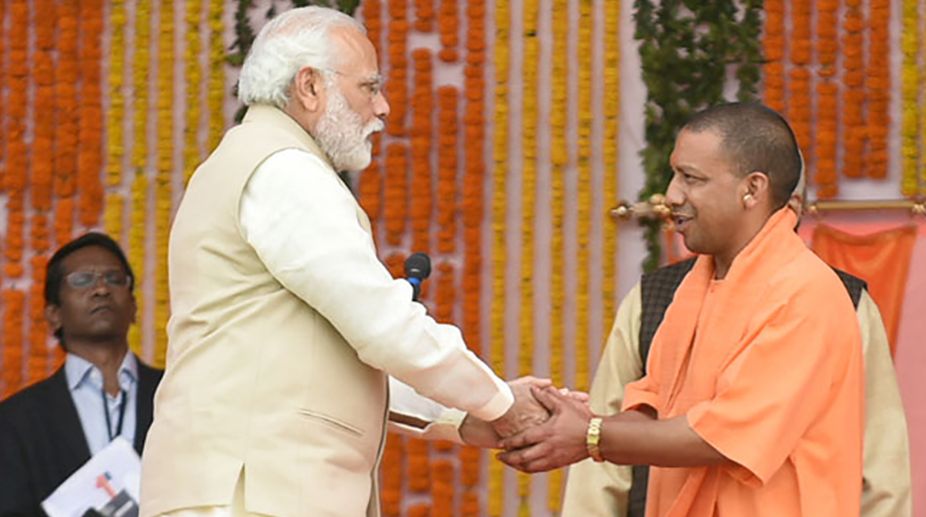
Beating the other States hollow, hands down, not surprisingly though, there has been more than a mega-splash in Uttar Pradesh, the most populous State in the country, where the seven-phase election and its outcome elicited unprecedented and avid interest , going far beyond the mere “political”. It is slated not only to redefine itself, on the strength of the thumping  mandate, described more convincingly as prachand in the local language, in many a fundamental sense but also, boldly enough, to attempt to colour the national trajectory towards 2019 and beyond, to 2024.  Uttam Pradesh is what is  glowingly envisioned. Going by available reports, the political will for realising it could not be more unequivocal. The Chief Minister, Adityanath Yogi, the five-term MP from Gorakhpur, held a meeting with senior officials a day after he took the oath of office and made it clear that the Lok Kalyan Sankalp Patra, 2017, the BJP’s election manifesto, would have to be implemented in letter and spirit. He directed that all the points in the manifesto would have to be taken up with utmost seriousness and stressed that as the majority of the population was dependent on administrative units like thanas and tehsils for the fulfilment of their basic needs, they had to be kept free of all political pressure. There was an equally firm emphasis on putting an immediate end to corruption. Zero tolerance of it was to be the undisputed leitmotif. Officials have been ordered, in a logical follow-up, to disclose details of their assets in a fortnight, with a view to infusing a new work culture and augmented transparency in the State. A promise has been held out that only honest officials would be hand-picked for assignments crucial to the realisation of the people’s verdict. 

Citizens’ Charters are to be drawn up for each Department so that the common man gets the benefit of Government services without any discrimination. Sabka saath, sabka vikaas. Only development, no appeasement.  It could not get more categorical than that.  The key aspects of the Lok Kalyan Sankalp Patra are to be incorporated accordingly in the Budget to be presented shortly. To leave absolutely no room for doubt about the grave consequences of slipping up or faltering, officials have been warned upfront  that penal action would  be initiated  if they failed  to enforce law and order, check cow slaughter, crimes against women and communal flare-ups. In a nutshell, State officials have been put on the highest  alert to perform or be pulverised  professionally.

In UP it is no longer a wishy-washy whine about a wee better implementation of the  tangled concertinas of myriad sarkari schemes and programmes or the hypocritical chant of finally wiping the proverbial tear from the eyes of the utterly deprived, marginalised and eternally  victimised. There is a distinctive clarity and sharpness to the stated resolve. That it has made an impressive mark is as plain as plain can be. Images carried by media of the harried, hassled administrative machinery tying itself in the strangest of knots to report compliance in double quick time to a demanding CM, may evoke derision and scorn and even some faint amusement. That apart, they tell an important story very eloquently indeed. It is quite simply about the dynamic potential and prospects  of realising the people’s  verdict, given the appropriate synchronisation of political and bureaucratic commitment.

Though we never stop crooning about being the world’s largest, most vibrant, functioning democracy, coming good on electoral promises, has not  been rated top priority. It is a disquieting commentary on our recent history  that so many netas have got away with such brazen chicanery for as long as seven decades. The electorate has suffered in numbed, damaged silence . The only sweet revenge has been in unceremoniously unseating them but ~ and here’s the most hurtful catch ~ not before they have been successful in reaping bumper harvests of the most undeserved perks and undreamt of goodies ~ without any compunction whatsoever ~ for themselves and their networks , cloyingly bonded by ties of  blood and/or thuggery. The unimaginably easy democratic clamber up to the high table of privilege in a country which, unfortunately, ranks very low in HDI ( Human Development Index) ~ just to take an indicative  benchmark ~ is patently  unacceptable and has clearly run its course.  

In this new backdrop, which is as yet unfolding, the moot question is will UP create the new model governance ~ moments? Or will there be governance-plus moments to record? Delivering on the mandate may have far-reaching and unintended ramifications, too. The answers are still in the womb of time. Whatever they be, there is no denying that bureaucrats, in particular, the All India Service Officers of the IAS and the IPS, will have to rise to the occasion and play their Constitutionally assigned roles at this remarkably poised juncture.

It is useful to recall a recent Resolution of the Bihar IAS Association ~ of course, in a totally different context ~ which was backed by the Central Association, of how best to respond to “orders” of the political executive.
Resolves and resolutions can ~ and must ~ be synergised to serve better.

Charmless khaki

Editorial | New Delhi |

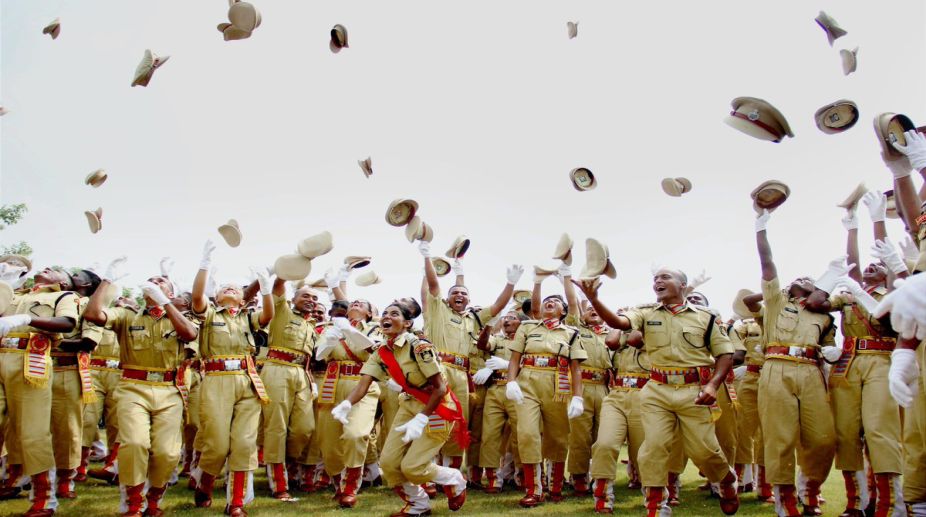
The response at recruitment rallies flatters to deceive. There is no dearth of young people anxious to secure careers in the Central Armed Police Forces (CAPF) ~ retaining them is fast becoming a problem. Information furnished by the home ministry when answering an un-starred question in the Rajya Sabha testifies to a 450 per cent increase in personnel opting for voluntary retirement from the BSF, CRPF, ITBP, CISF, SSB and Assam Rifles in 2016-17. No fewer than 9,065 personnel have moved back to “civilian life” over the last three years. While in 2014-15 the number taking VRS was 5298, it had dropped to 2,105 the next year, but rose again in the last financial year. The attrition has been “plaguing” the 10-lakh strong paramilitary, an official confessed. However, the government’s presently-favoured spin-doctor, Kiren Rijiju, sought to sell Parliament the line that personal and domestic reasons prompted the seeking of VRS. The Elders were also told that apart from VRS, there had been 1187 resignations in 2016-17; 1840 the previous year; and in 2014-15 resignations stood at 1989. According to the minister of state for home affairs, “the CAPF personnel proceed on voluntary retirement and resignation mainly due to personal domestic reasons including children and family issues, health or illness of self or family members”. Some opted for a less-demanding way of life after earning their retirement benefits.

Unshackled by political constraints, senior paramilitary officials point to the stressful working conditions when deployed in J&K, the North-east and the Maoist corridor, where basic creature comforts are in short supply, on sustained election duties, and in situations where securing leave cannot be taken for granted (a frequent cause of suicide/fratricide) and the inevitable contrast in the “compensation package” between the military and paramilitary ~ with the latter having fewer opportunities for “side income” than their counterparts in the local police. Disappointment with the award of the most-recent pay commission, and insufficient promotional avenues are other causes for serious discontent. In a security environment in which the “enemy within” can be as lethal as the external adversary, the need for a contented, high-morale force that is capably-led cannot be over-emphasised. The government’s tendency to gloss over, or cover up, the causes of serious dismay could have long-term implications: clearly there is need for a comprehensive review of all aspects of the CAPF working. Successive pay commissions have failed to satisfy the uniformed community ~ neither those wearing olive-green nor khaki. The role of the CAPF will only increase in coming times ~ particularly since successive governments have failed to tackle the core issues underlying domestic strife, and take the easy way out by treating the unrest in the North-east, Central India and J&K as mere law and order problems.

Racism runs deep

Editorial | New Delhi |

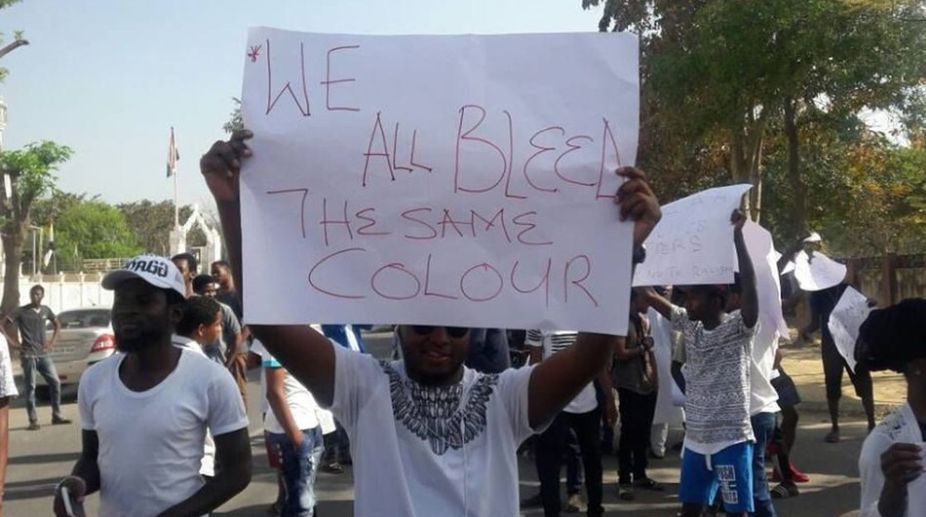
This week’s brutal attack on African students in Greater Noida, Uttar Pradesh, not very far from the national capital, is evidence of a grim reality ~ bigotry and prejudice run deep among a section of Indians. The government acted swiftly to avoid any diplomatic fallout, with Sushma Swaraj immediately contacting new UP Chief Minister Yogi Adityanath who promised to take strict action against the attackers and the police duly made some arrests. But there have been innumerable other incidents of racial targeting such as the brutal attack on a young student from Burundi by drunken youths in Jalandhar some years ago. Yannick Nihangaza was in a coma for two years before passing away. Last year a violent mob in Bengaluru attacked a group of Tanzanians, with the incident threatening to take on ominous dimensions vis-a-vis bilateral ties. What about AAP MLA Somnath Bharti’s infamous midnight raid in 2014 against Nigerian and Ugandan women in Delhi’s Khirki Extension, accusing them of running a drugs and sex racket and allegedly verbally abusing them? The national capital has a poor track record when it comes to such incidents and often reveals its racist underbelly as it did when three African youths were mercilessly beaten up by a mob at a Metro station in October 2014. When Giriraj Singh, a Union minister, said the Congress wouldn’t have elected Sonia Gandhi as its president if she had been Nigerian and faced no action for his crass comment, the only conclusion to be drawn is that racism is par for the course.

Black is certainly not beautiful for Indians as any perusal of matrimonial advertisements would reveal ~ the clamour for fair brides is a nationwide phenomenon. Colour prejudice and gender bias begin at birth; the profusion of fairness creams in the Indian market provides ample proof of the colour-coded reality that is India. Only a sustained campaign right from school level can change this societal mindset. It results in an insularity that targets anything or anyone different from the norm. That is clear from the attitude to people from the north-east. Delhi offers the worst examples of boorish behaviour; be it labelling north-easterners as “chinkies” or harassing young women from the region. This deep-seated prejudice is an anachronism in a country that itself fought imperialism and threw off the colonial yoke after a long struggle. Also, in what reeks of gross hypocrisy, whenever any Indian faces a racist attack abroad there is much anger and outrage in this country. Prime Minister Narendra Modi’s outreach to the African continent will be in vain if the government is unable to ensure the safety and security of the hundreds of Africans studying and working in India. The voices of alienation and fear heard from African students after the latest outrage should ring alarm bells.

Racial attacks in the country cannot be justified : Kurien

Statesman News Service | New Delhi |

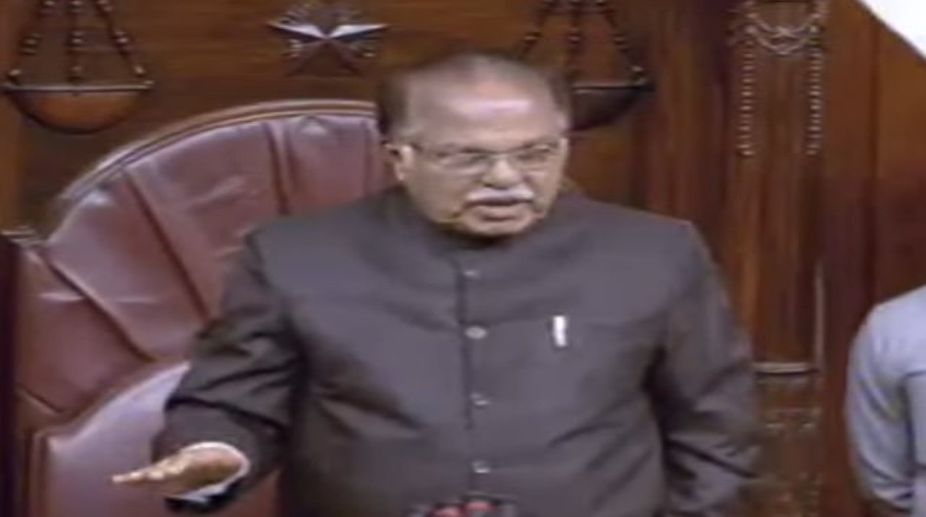
The recent brutal mob attack on Nigerian students in Greater Noida made waves in the Rajya Sabha on Thursday, with the Deputy Chairman P J Kurien himself asking the Centre to take strong action in curbing such "racial attacks" against African nationals in the country.  

Responding to serious concerns expressed by Opposition MPs on this matter during Zero Hour, the external affairs minister Sushma Swaraj assured the Upper House that there will be an impartial probe into the 27 March attack on Nigerian students following which, she added, appropriate action will be taken against the guilty.

Mrs Swaraj said as soon as the incident occurred she sought a report from the UP government and spoke to the UP chief minister Yogi Adityanath who, she added, gave the assurance about an impartial probe into it.

To members' queries, she said it would not be appropriate for her to say more about the incident since its investigation is continuing. She however said the authorities have been on alert to ensure that such incidents do not recur.

"Both incidents are unfortunate. Firstly, a 19 year-old local boy died and thereafter Nigerian students were severely beaten up…On behalf of the Uttar Pradesh CM and myself, I want to assure that there will be impartial probe," Mrs Swaraj said.

She was referring to a young resident of Greater Noida, Manish, who had died due to suspected drug overdose. A section of local residents blamed Africans living in the area for his death and violently went after some Nigerian students whom they spotted while taking out a candle-light protest march on 27 March evening there.  

Mrs Swaraj told the Rajya Sabha that the UP administration was taking steps to maintain law and order and that the injured Nigerian students were being treated in a hospital.

The issue was raised by the JD-U leader Sharad Yadav, which was echoed and endorsed by many members, including the Leader of the Opposition Ghulam Nabi Azad (Congress), Anand Sharma (Congress) and Sitaram Yechury (CPI-M).

Agreeing with them, Deputy Chairman Kurien said : "We  are  condemning  the  racial  attacks  on  Indians  in

other  countries  like  USA  and  Australia,  but  at  the  same  time  racial attacks in our country cannot be justified. The government should be very vigilant. A very strong action should be taken." 

Mr Yadav demanded that both the external affairs and home ministries should take necessary steps in this matter. "We don't want Africans to face discrimination in our country. Steps should be taken on a war-footing. A wrong message is going outside the country," he said.

Mr Sharma said India's goodwill, respect and image were being damaged across the world due to such "racial" attacks on African nationals. He demanded a special cell in the external affairs and home ministries for ensuring their safety and security.

Mr Yechury sought a special resolution in the House on the issue.

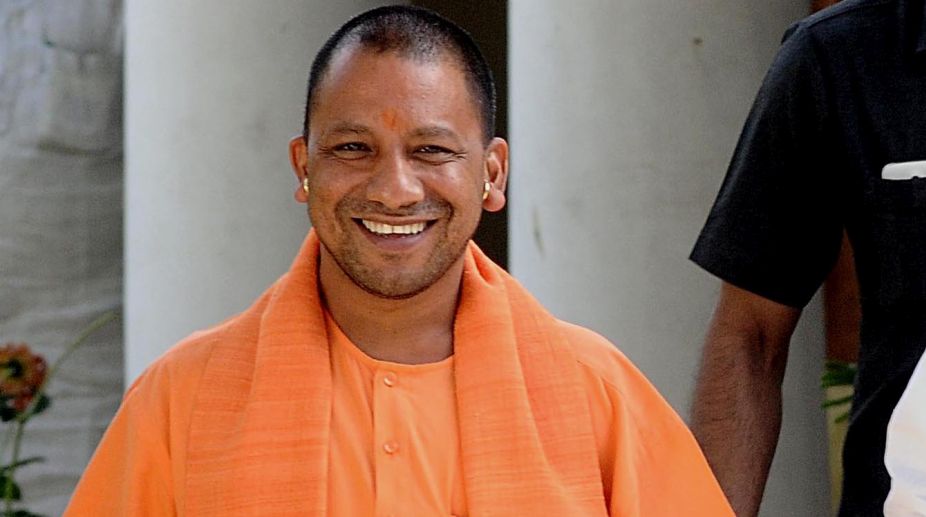
Muslim officer recalls role in Yogi’s journey

Asad Ashraf | New Delhi |

It was on a winter day that advocate Dharmendra walked into the chamber of Shoaib Ahmed Abbasi, the sub -registrar in the Registrar's office at Gorakhpur in Uttar Pradesh, and informed him that Mahant Avaidyanath, the then Mahant of the Gorakhnath Math, wanted him to sign documents in his capacity as the concerned official to declare Yogi Adityanath his successor. The day was 13 February 1997, when the present Chief Minister of Uttar Pradesh was 24 years old.

The sub-registrar was surprised and asked the advocate why he was being made to sign documents as there was a Hindu registrar at the Registrar’s office at Gorakhpur. The advocate replied, “Yogi Avaidyanth personally wants you to sign the paper as he thinks that if a Muslim bears witness to this great tradition and becomes a part of it, it will be in the larger interest of society," recalled Shoaib Ahmed to The Statesman from Gorakhpur.

“I went to the Math following the conversation, where I met the older Mahant Avaidyanath. He explained to me that he wanted to complete the constitutional formalities involved in transferring authority to the younger Yogi, Adityanath. I duly agreed to be a part of this historic process. Soon the older Yogi asked someone to bring Yogi Adityanath to be introduced to us, " said Shoaib.

Describing his first meeting with the present chief minister, Shoaib said, “Yogiji was very boyish then. He looked innocent and soft spoken, he introduced himself to us very modestly. We never anticipated then that this young man would be the chief minister of the most populous state of India."

Shoaib recalled: "When I was made to sign the document, I was full of pride. I told the older Yogi that I will not just sign this but also write in red letters below my signature that I am proud to be a part of this historic transition of authority. And I did that.
“Today, I am so glad Yogi Adityanath has been appointed as the chief minister of the state. I have been getting congratulatory messages from my former colleagues at the department for this. They all probably remember that day. I hope the chief minister will do great service to the people and state of Uttar Pradesh," Shoaib added.

Approval for access to biological resources and sharing of benefits goes online

Statesman News Service | New Delhi |

The National Biodiversity Authority (NBA) has teamed up with the National Informatics Centre (NIC), to launch online filing of applications for access and benefit sharing (ABS) of biological resources. This will enable NBA to adhere to stipulated timelines to process applications of Indian or foreign individuals and entities who wish to access biological resources and associated knowledge of local communities. 

 Under the Biological Diversity Act (2002), if Indian or foreign individuals and entities, such as registered companies, wish to access biological resources and associated knowledge to carry out various activities, prior approval of NBA, or the State Biodiversity Boards is a pre-requisite. 

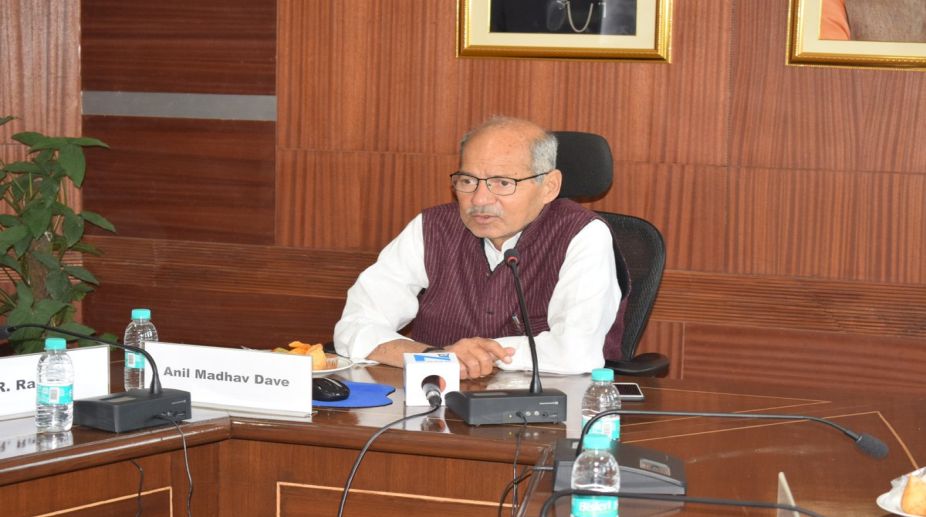
 Launching the online filing of ABS applications through video-conferencing from Chennai, Environment Minister Anil Madhav Dave, emphasised that the meaning of good governance lies in making processes transparent. He hoped that e-governance will be made 100 per cent operational in the near future and all the processes of the Ministry will be made fully transparent. 

 Applications seeking such approval are to be made on the appropriate forms available online at www.nbaindia.org, an official communique said. His online process is user-friendly and has salient features such as editing, reviewing, printing, digital signature, online payment of fee. These features are expected to considerably reduce the processing time of applications.  

The primary factor to be ascertained before filing any application in NBA is to identify whether the applicant is dealing with a biological resource, as defined by the Biological Diversity Act. Applications are scrutinised at different levels, before the Authority decides to grant approval. Till date, over 1,600 applications have been received and 980 applications have been cleared. A total of 440 agreements have been signed by the NBA with the applicants, which is construed as an approval. In the past, a large number of applications could not be processed, as they lacked important information/documents needed for scrutiny.

NBA is a statutory body established under the provisions of the Biological Diversity Act and performs facilitative and advisory functions for the Union government on issues of conservation, sustainable use of biological resources and fair and equitable sharing of benefits arising out of the use of biological resources.

Environment Secretary Ajay Narayan Jha said digital technology must be accessed not only to promote ease of doing business, but also to facilitate transactions for the general public. Mr Jha hoped that NBA will put all the other processes in a digital format, so that the people who used these services are served in a better manner. 

 As part of Digital India policy, Genetic Engineering Approval Committee (GEAC) will also accept online application, which will help in tracking applications and reducing delays.

ABVP stages massive protest against govt in Shimla

Statesman News Service | New Delhi |

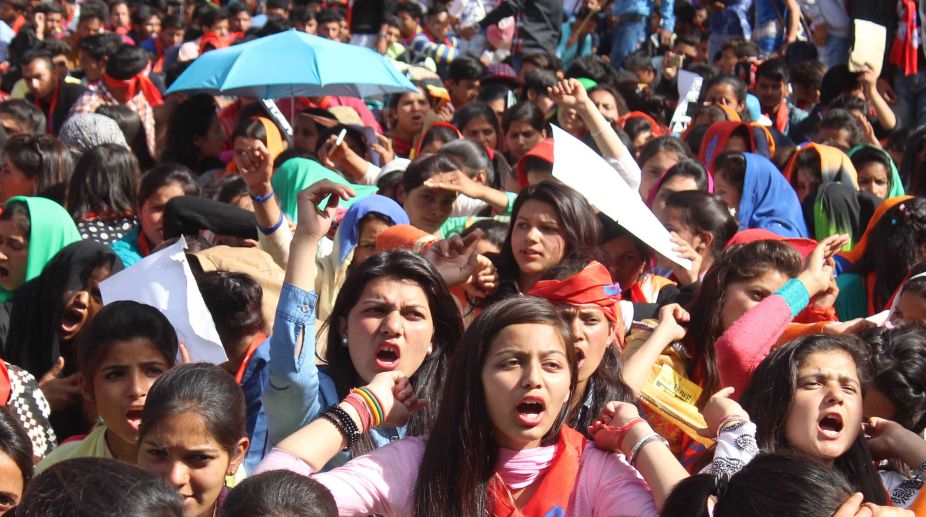
Over 10,000 students belonging to BJP’s student wing Akhil Bharatiya Vidyarthi Parishad (ABVP) from across the state on Thursday staged ‘Akrosh’ rally against the state government in Shimla.

The students were demanding resumption of students' elections, abolition of semester system in colleges under Rashtriya Uchchatar Shiksha Abhiyan (RUSA) and shunning wrong practices of selecting teachers.

Addressing the rally at Shimla, ABVP national general secretary Vinay Bidre said if the systems are causing threats, then the students shouldn’t hesitate from the changing these. “ABVP is not against any party in the country, but we are against the wrong systems imposed on the student community,” he said.

He said that the state government had launched the RUSA education system in colleges in haste which had now become a curse for students. “Neither the students nor the faculty of colleges are acquainted with this system, causing a lot of hardship and inconvenience to students. This system has not been implemented in true spirits and lack of requisite infrastructure has become a bane in government colleges,” he said.

Bidre said that there are lakhs of vacancies in the Higher Education in the country and same is the case with over 100 colleges of the Himachal Pradesh.

He criticised the state government for recruiting teachers without following proper norms to benefit near and dear ones and said the government is enticing unemployed youth with allowances but the youth wants jobs not any unemployment allowance.

He said the private institutions in the state were looting the students by flouting norms and charging exorbitant fees. “The state government should put place a strong system to check the loot of private institutions, but existing Regulatory Commission has become a safe haven for retired employees,” he said, adding only educationists should have been appointed in the commission.

Sidhu launches ‘Peoples Government at their doorsteps’ campaign

Statesman News Service | New Delhi |

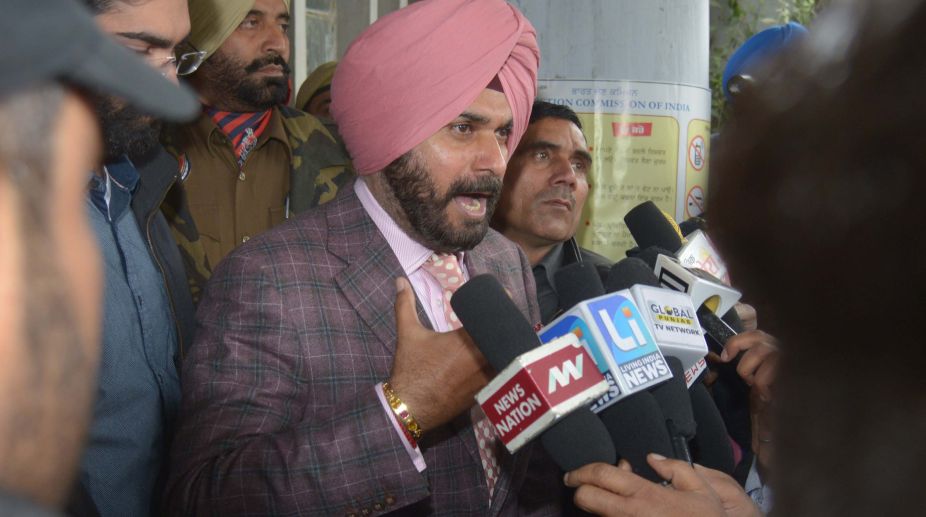
Punjab local bodies minister Navjot Singh Sidhu on Thursday launched a special campaign ‘Peoples Government at their doorsteps’ aimed at connecting people at their doorsteps to understand their problems and make a permanent solution for the same.

Sidhu launched this campaign saying that chief Captain Amarinder Singh has categorically set a mission for all of us to provide hassle free and corruption free atmosphere to the people. He made a surprise visit to Nayan Graon (adjoining Chandigarh)   along with the senior officials of the department and district administration.

The minister also visited the proposed site for the Sewage Treatment Plant (STP) and found proposed site not suitable for the plant being situated near the residential area. He directed the officials to send a proposal of new site for the plant in convenience with the local residents.

During his visit Sidhu gave patient hearing to the local residents and Municipal Councilors besides directing the officials of the Nagar Panchayat to solve all the problems raised by people in a time bound phase. He directed the executive officer (EO) to make plan of all development works which are to be carried out in Nayan Graon in the coming year so that that all development works could be started in time.

The minister reiterated Congress party’s pre poll promise to provide quality services and corruption free system to the people. ‘Corruption and harassment of the people in the hands of Public Servants will not be tolerated at any level’, added Sidhu. Local bodies minister asked the officials to ensure transparency by displaying every detail of ongoing development works on the flex boards. Sidhu said that he would visit towns and cities across the state under this campaign and he will try to solve problems of the people with the participation of local residents.

Helicopter fare for Vaishnodevi slashed

Statesman News Service | New Delhi |

The one way helicopter fare for the holy Vaishnodevi shrine from the base town of Katra has been slashed to Rs.1077 for each passenger.

This was today announced by the chief executive officer of the shrine board, Ajeet Kumar Sahu. The existing fare since the past three years is Rs.1170 and the new fare will be effective from April 1.

Contract for the heli-service has been awarded to the two successful bidders M/s Global Vectra Helicorp Ltd. and M/s Himalayan Heli Services Pvt. Ltd; Sahu added.

Nearly 80 lakh pilgrims visit Vaishnodevi every year and the helicopter service for the mountain shrine has become quite popular.

Constitution bench to hear triple talaq case from 11 May

Statesman News Service | New Delhi |

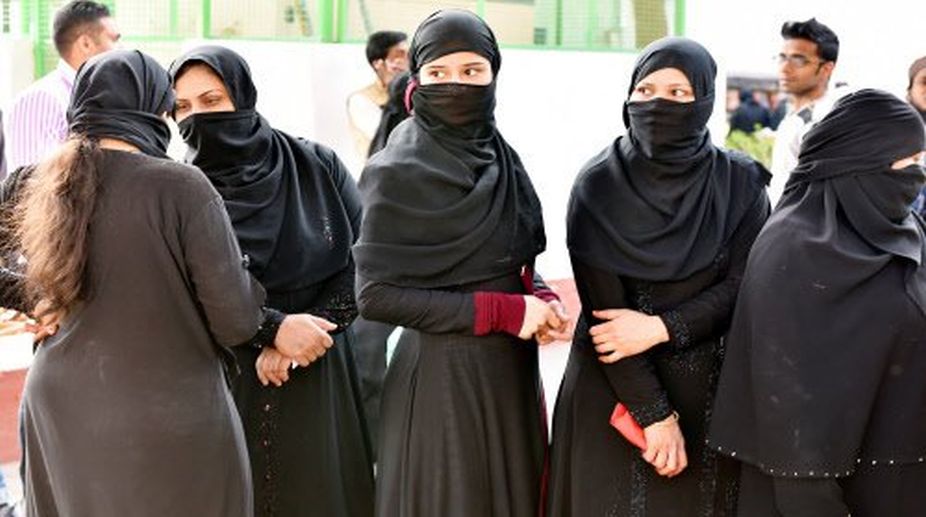
The Supreme Court today said a Constitution bench will hear during the summer vacation the plea challenging the validity of the triple talaq, "nikah halala" and polygamy among Muslims from 11 May.

Initially the hearing would take place on 11 and 12 May and then would continue from 15 to 19 May, said a bench of Chief Justice Jagdish Singh Khehar and Justice D Y Chandrachud.

The Chief Justice said that the hearing could also take place on the weekends ~ 13 and 14 May (Saturday and Sunday) ~ as judges have consented to sit on weekends.

CJI Khehar told the lawyers to draw a time-frame for the arguments, saying that if it could be set during the hearing of the challenge to the National Judicial Appointments Commission (NJAC) Act, why not in this matter. "If time-frame can be fixed in NJAC, then why not in this case," he asked the lawyers.

The apex court on 16 February, while fixing the hearing on triple talaq for today, had asked the lawyers representing the two sides to submit their issues backed by short reasons and judgments that they would be relaying on to the Attorney General.

The court had also urged the lawyers of both sides to split the issues they wished to address among themselves, so that the hearing could be completed within the allotted time.

There were some discussion among the lawyers after CJI Khehar said there would be three Constitution benches that would hold hearing on three important matters ~ triple talaq, Whatsapp and on Assam migrants.

Observing that if the judges were ready to work during the summer vacation, then why not the lawyers, Chief Justice Khehar said: "If we don't do it now, it will not happen for years. (Then) You don't blame us."

Finding that some lawyers were apparently reluctant, he Khehar said: "There is no summer vacation in which I have not sat on a bench to hear matters. You lawyers want to work together, fine. You don't want to work together, fine. We are happy to enjoy vacations."

Senior counsel Kapil Sibal made it clear that he was not comfortable with the simultaneous hearing by three Constitution benches, suggesting that one bench could follow the other.

On 27 March, the All India Muslim Personal Law Board (AIMPLB) told the apex court that the pleas challenging such practices among Muslims were not maintainable as the issues fell outside the realm of judiciary.

The AIMPLB had also said that the validity of Mohammedan Law, founded essentially on the Holy Quran and sources based on it, cannot be tested on the particular provisions of the Constitution.

It had said there was a need for "judicial restraint" before going into constitutional interpretation of these unless such an exercise becomes unavoidable.

The apex court had earlier said it would decide issues pertaining to "legal" aspects of the practices of triple talaq, 'nikah halala' and polygamy among Muslims and would not deal with the question whether divorce under Muslim law needs to be supervised by courts as it falls under the legislative domain.

The Centre, on 7 October last year, had opposed in the Supreme Court the practice of triple talaq, 'nikah halala' and polygamy among Muslims and favoured a relook on grounds like gender equality and secularism.
The apex court had taken suo motu cognizance of the question whether Muslim women faced gender discrimination in the event of divorce or due to other marriages of their husband.

EPF Board decides to extend coverage to welfare scheme workers

Statesman News Service | New Delhi |

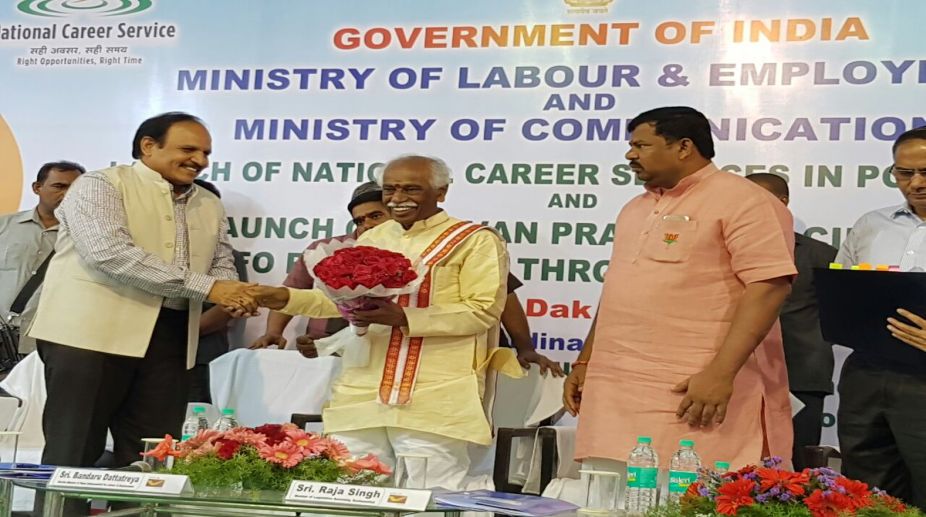
The Central Board of Employees Provident Fund Trustees today met under the chairmanship of Minister of State for Labour and Employment Bandaru Dattatreya and decided to recommend to the Government social security cover under the EPF Organisation to volunteers of  Anganwadi, ASHA, and Mid-Day meal schemes.

The Board took note of the extension of Employees’ Enrolment Campaign (EEC) by the Government for additional three months beginning 1 April 2017. The EEC aims to enroll left out employees and provides incentives to employers in the form of waiver of administrative charges, nominal damages of Re One per annum and waiver of employees share if not deducted.

The Board decided to allow all banks including private sector banks for collecting contributions from employers and making payments to employees in addition to SBI, nationalised banks and payGov platform through direct net banking services. This introduction is expected to bring down the cost for employers for transactions and will facilitate more options for employers/employees to transact with EPFO. For collection of contributions through aggregator, competitive bids may be called for from all banks.

A new eligibility condition for grant of exemption under EPF and MP Act to establishments was approved. To be considered for exemption under the Act, the establishments would henceforth require compliance with EPFO as an un-exempted establishment for a minimum period of 5 years, should employ at least 500 employees and their corpus should be at least Rs 100 crore at the time of seeking an exemption. The Board decided that this rule will apply to prospective establishments and for existing establishments, the matter will be examined separately.