Logo

Heat-stroke

Statesman News Service | New Delhi |

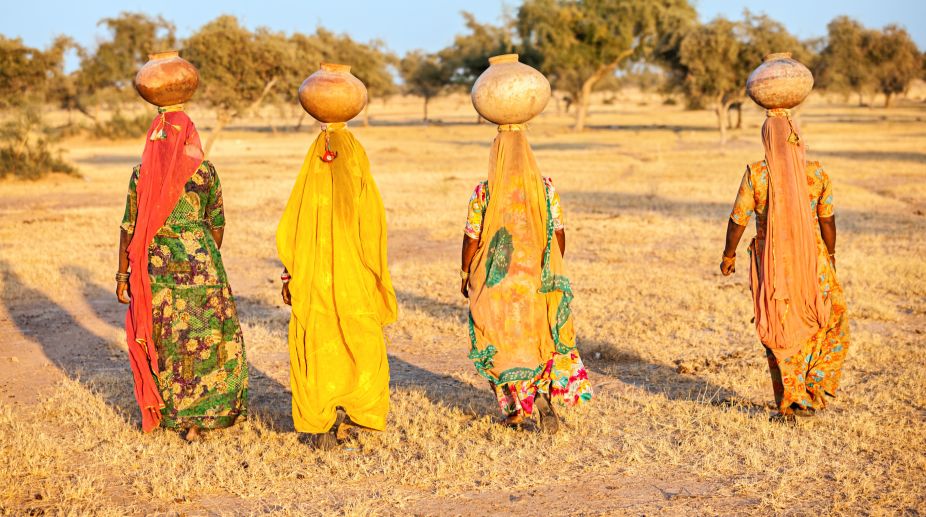
The meteorological department has predicted a severe summer this year and this is already being experienced in many parts of the subcontinent. Drought-like conditions are prevailing in south and central India and farmers are beginning to complain of lack of water and drying crops. In fact, a group of Tamil Nadu farmers are protesting at Jantar Mantar in the Capital. Wearing just a loin cloth and displaying skulls and bones, they claim belonged to dead farmers, who had committed suicide, the farmers are staging an unusual protest.

Intense heat has arrived unseasonably early across India, and no relief is expected in the near future. Weather experts have been warning for months now about the anticipated heat wave. Most of India, they have said, will see high temperatures at above 38 degrees Celcius. Central and western India are expected to experience temperatures in the range of 43-46 degrees Celcius. Dove-tailing the hot conditions will be water scarcity issues. Unfortunately, despite this early warning authorities have taken precious little measures to mitigate the problems.

No thought has been given to drought-proof the most vulnerable sections of society, particularly the rural areas and agricultural belt. There is bound to be a rise in distress signals from farmers. Already in Uttar Pradesh, farmers are clamouring for loan waiver. How the government will meet all these needs, remains to be seen.

The combination of a widespread and long-lasting heat will also significantly raise the threat for heat-related illnesses, such as dehydration, heat-stroke or heat exhaustion. Anyone who must spend time outdoors is at risk. Hospitals and private clinics are already reporting a spurt in the number of patients complaining of these ailments. Perhaps advisories on simple preventive solutions could be given to reduce incidence of heat-related ailments.

The missing potter

Statesman News Service | New Delhi |

Subhash Nagar in West Delhi is not like Jama Masjid though it too has an old-world charm about it, despite being a 1950s refugee colony. The dahi-wallah goes about with a matka (earthenware pot) on his head here also every afternoon for the benefit of those who missed going to the neighbourhood dairy, the gypsies come to all sell their wares and trade glances with roadside romeos while the khatbuna cycles around the galis to mend string cots.

The juice-wallah and surai-seller are there too. So also the leechman, who draws out bad blood from the swollen veins of old fogies. Among these odd characters Sanjay used to be a little boy, fair, chubby and talkative, who sold surais in the marketplace, helped by his comely mother. The earthen goblets came on a cart and were then neatly arranged on the pavement by the two.

In the morning Sanjay used to go to school and after that collect enough coins from the friendly grocer in exchange for Rs.20 notes to meet his customers' demand for small change. Slowly Sanjay became darker, slimmer and taller, but remained a constant feature every summer, even after his widowed mother fell in love with a Bindapur potter, remarried and went away. He heralded the season in early March and winded it up after selling Diwali toys and diyas months later. Then Sanjay went missing.

One vainly looked for him every day and suddenly one evening he was there, wearing jeans, instead of knickers. He had got married in his village, left school ~ "where there was nothing much left to learn", he said, and brought his dainty bride with him to Delhi.

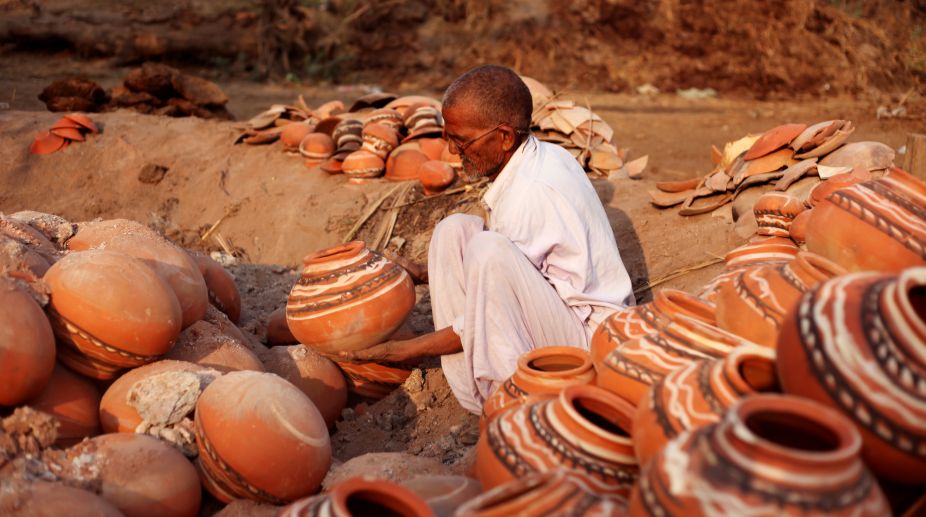
The gossip is that Sanjay escorts 15-year-old Basanti to school so that she could learn to read and write and in the evenings, after operating the potter's wheel, often takes her to see a TV film at a friend's house. One misses Sanjay and hopes he'll return to the market with his endearing, infectious smile. Maybe after the birth of a child to keep company with his mother's newly-born baby.

Trinamool lawmaker slams Bengal opposition for targeting CM

IANS | Diamond Harbour (West Bengal) |

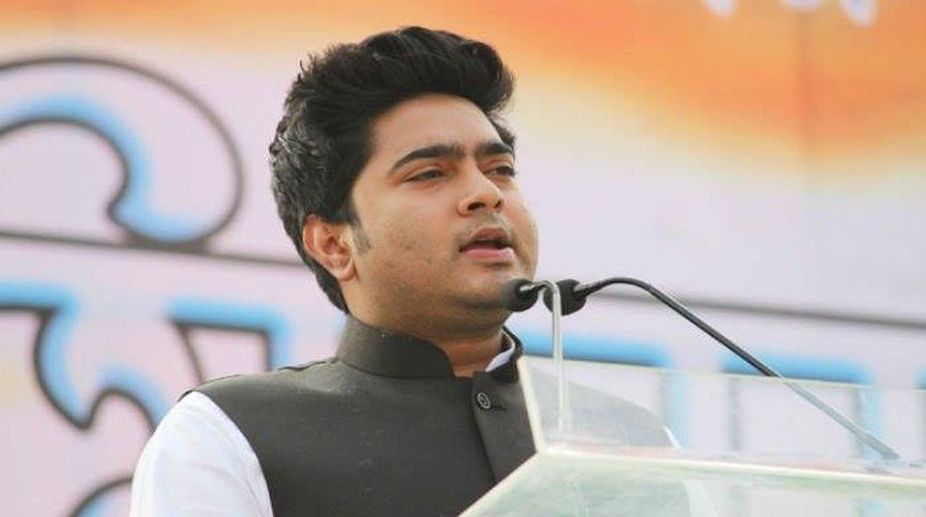
Alleging a conspiracy was afoot to trigger unrest in West Bengal, Trinamool Congress MP Abhishek Banerjee on Sunday slammed the opposition parties for what he said was targeting of Chief Minister Mamata Banerjee.

He said the people of the state will respond democratically to the political attacks by the Communist Party of India-Marxist, the Congress and the Bharatiya Janata Party against the Chief Minister.

"A conspiracy is afoot to incite unrest in Bengal. In the name of development, the Centre is hurting the people of Bengal. It has stopped funds for midday meals, rural employment guarantee scheme and Integrated Child Development Scheme. We will not bow before Delhi," the TMC leader said here.

"The Congress is a party without principles; CPI-M a party without character; and the BJP aimless. They have come together and are attacking Mamata Banerjee. They are using agencies like the Central Bureau of Investigation and Enforcement Directorate to try to threaten the Chief Minister. If the Trinamool Congress is pinched, the people will give a befitting reply democratically," said Abhishek, Trinamool Youth Congress President and Diamond Harbour MP who is Mamata Banerjee's nephew.

Abhishek underwent a surgery for an orbital fracture below the left eye in October, 2016 after his car hit a towing vehicle at Ratanpur, about six km from Singur, on the Durgapur Expressway in Hooghly district.

Transfer order of top civic official invalid: Kiran Bedi

PTI | Puducherry |

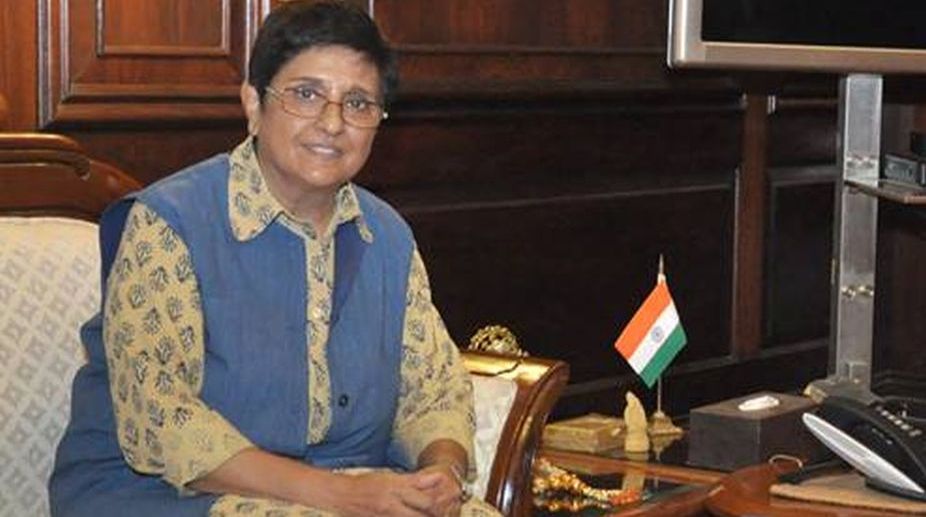
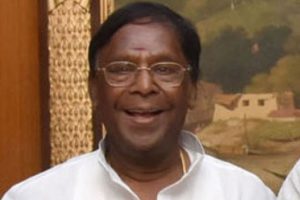
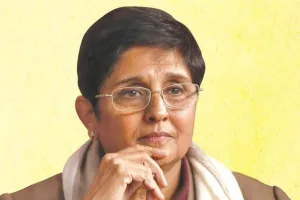
Hours after Chief Minister V Narayanasamy termed the Assembly Speaker's ruling over replacing a top civic official as "final", Lt Governor Kiran Bedi again said the transfer order was invalid.

She said an officer appointed by the Lt Governor can be removed only by the Lt Governor.

"The order of transfer of Municipal Commissioner of Puducherry is not a small administrative routine matter. It is of an officer appointed by the Lt Governor who could be removed only by the Lt Governor," she said in a press release.

She reiterated that the transfer order was invalid.

Bedi said the chief minister was taking responsibility for the transfer order as "he now knows that the chief secretary is vulnerable to departmental action for violation of rules".

She also pointed out that the chief secretary had done so despite her warning through e-mail a day before he issued the order.

Bedi said under the Business Rules, the Legislature is not empowered to make appointments. The chief minister could propose names for transfers and postings but the final decision is of the Lt Governor as per Rule 47, she said.

"There are many of such propositions I have accepted or declined and they are all a matter of record," Bedi said.

"If the chief minister and his ministers have anything to say now, they are free to approach the Government of India or the higher courts and seek clarification," she said.

"As of now I have fulfilled my responsibility as laid down under the rules and also endorsed by the Union Home Ministry," she said.

Narayanasamy had earlier said the ruling was final on replacement of Municipal Commissioner R Chandrasekaran, an issue over which Bedi has locked horns with the government.

Bedi had then too termed as "invalid" the replacement of Chandrasekaran based on a ruling of Speaker V Vaithilingam on March 30 and said she was the "competent authority" on officials' service matters.

The Speaker had ordered replacement of the Commissioner after an opposition AIADMK (Amma) MLA raised a Privilege issue against him. .

British PM gives assurances over Gibraltar ahead of Brexit

IANS | London |

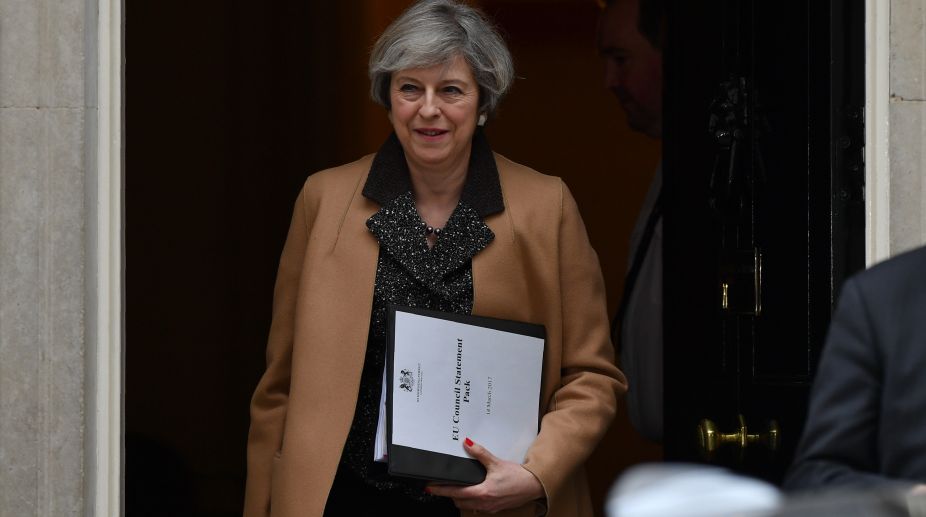
British Prime Minister Theresa May on Sunday gave assurances to Gibraltar Chief Minister Fabian Picardo by phone, to allay concerns that Spain may use its apparent veto power in Brexit negotiations.

It has become one of the early flashpoints in Brexit negotiations which started last week after May triggered Article 50, the process for leaving the European Union, Xinhua news agency reported.

An official spokesman said: "The Prime Minister reiterated our long-standing position that the UK remains steadfastly committed to our support for Gibraltar, its people and its economy."

"The Prime Minister said we will never enter into arrangements under which the people of Gibraltar would pass under the sovereignty of another state against their freely and democratically expressed wishes," said the spokesman.

"She said we remain absolutely dedicated to working with Gibraltar for the best possible outcome on Brexit, and will continue to involve them fully in the process," the spokesman added. 

Gibraltar, located on the southern tip of the Iberian Peninsula at the entrance of the Mediterranean, was ceded to Britain as part of the Treaty of Utrecht in 1713. Spain has persistently sought to regain the tiny southern territory. 

A row has erupted after draft Brexit negotiating guidelines drawn up by the European Council identified future arrangements for Gibraltar, which is home to about 30,000 people as one of its 26 core principles.

That clause has potentially put Britain and Spain on a collision course over the future of this area. 

Israel PM warns enemies at missile defence ceremony

AP | Jerusalem |

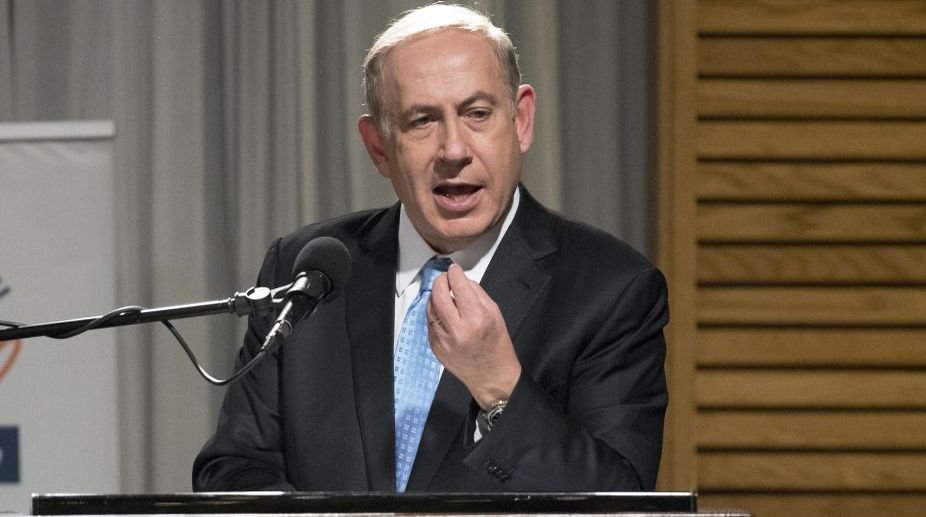
Prime Minister Benjamin Netanyahu is warning Israel's enemies not to test the Jewish state at a ceremony inaugurating a joint US-Israeli missile interceptor.

Netanyahu said on Sunday that defending the home front is of the "utmost importance" and went on to warn "whoever tries to strike us will be hit, those that threaten our existence put themselves in existential danger."

David's Sling, meant to counter medium-range missiles possessed by Iranian-backed Hezbollah militants in Lebanon, officially became operational at the ceremony, the military said.

It marks the completion of the multi-tier system that includes the Arrow, designed to intercept long-range ballistic missiles in the stratosphere with an eye on Iran, and Iron Dome, which defends against short-range rockets from Gaza.

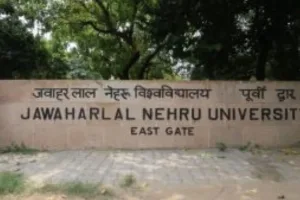
Man arrested for stalking JNU student

PTI | New Delhi |

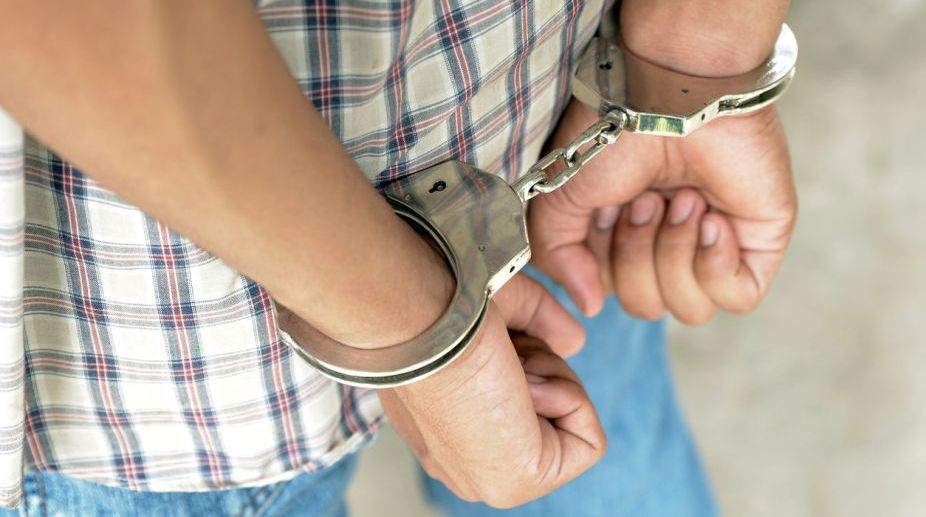
A 26-year-old man has been arrested for allegedly stalking a JNU student, police said todayon Sunday.

The accused, Shailesh Kumar is a resident of Munirka village, and was arrested on Saturday from outside a girls' hostel located inside JNU campus, they added.

A few days back, he had tried to talk to the victim but she refused. Infuriated, he started stalking her.

The victim told the police that he followed her for a fortnight and even came outside her hostel, breaching the security of the college campus.

On finding the accused outside her hostel, she immediately alerted college security. The youth was detained and later handed over to the police.

"On Saturday, we received a PCR call from a girls' hostel in JNU campus about a stalker. A police team reached the spot and arrested him. The arrested person is a college dropout and works at a shop in the locality," a senior police officer said.

Military operations kill 9 in Afghanistan

IANS | Kabul |

Military operations have killed nine civilians in the southern Helmand province of Afghanistan, a local security official said.

"During operations which launched at 2.00 a.m. local time today (Sunday) in Malgir area of Gereshk district, nine civilians including three women, four children and two men were killed," Xinhua news agency quoted the official as saying on condition of anonymity.

The official also added that Afghan and NATO-led Resolute Support forces discovered a weapon cache of Taliban in a house in Malgir area and detonated it due to which one house collapsed due to the blast killing nine members of a family.

Two Taliban militants present in the house were also killed due to the nearby blast, the official said.

Meanwhile, spokesman for provincial government Omar Zawak confirmed the incident but without giving information said, "investigation is underway".

Taliban outfit has also confirmed the death of the two militants.

The poppy growing and militancy-plagued Helmand province has been regarded as a Taliban hotbed in the southern region of Afghanistan. 

Colombian police seize 6.2 tonnes of cocaine

IANS |  Barranquilla (Colombia) |

Colombian police seized 6.2 tonnes of cocaine in the Caribbean port of Barranquilla that were bound for Spain, a minister said.

The drugs, which were ready to be sent to the southern Spanish port of Algeciras, were seized on Saturday from the Clan del Golfo criminal group, Defense Minister Luis Carlos Villegas told reporters here on Sunday.

"The drug was found in a shipment of scrap metal and is the third-largest cocaine seizure made on the Colombian mainland," Efe news quoted him as saying.

"This was a local intelligence operation, whereby we have dealt a major blow to criminal organisations," Villegas said, revealing that in the first three months of this year Colombian authorities have seized 103 tonnes of highly pure cocaine.

The minister added that the seizure was made after authorities captured the man known as "El Mocho", whom he identified as an "important figure within the Clan del Golfo organisation".

Meanwhile, Gen Nieto said that this "is a major blow to the criminal structures of organised bands, affecting the drug trafficking chain".

Colombian President Juan Manuel Santos congratulated the police on his Twitter account.

India to get over 9 lakh tamper-proof EVMs before 2019

IANS | New Delhi |

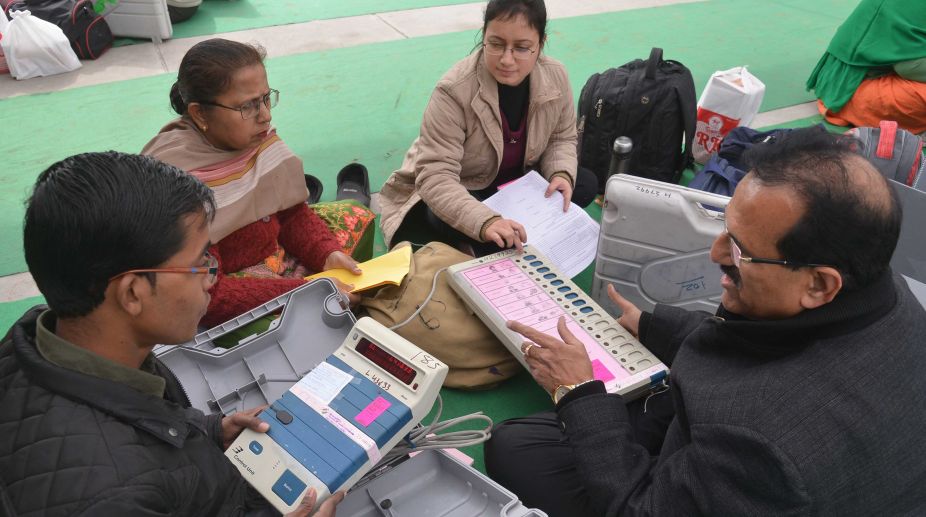
The Election Commission will replace over nine lakh Electronic Voting Machines (EVMs) with advanced M3 machines before the 2019 Lok Sabha polls, the government has informed Parliament.

These machines will become inoperable the moment someone attempts to tamper with them. The new EVMs are likely to be introduced by the end of 2018.

The move comes in the wake of allegations of EVM-tampering by several political leaders in the February-March assembly polls.

While the M3 EVMs are technologically advanced, there is no operational difference between these and other EVMs and they do not affect booth-management system, Minister of State for Law and Justice PP Chaudhary told the Lok Sabha in a written reply earlier this week.

The minister said the Election Commission has decided to replace 9,30,430 EVMs purchased before 2006 in a phased manner before the General Election and simultaneous assembly polls in 2019.

Listing the features of the new M3 EVMs, the Minister said it has a Public Key Interface (PKI)-based mutual authentication between various EVM units for identifying a genuine unit, of authorised manufacturer, in the field to ensure that only genuine EVMs can be used for communication within the network.

"Its design ensures that the EVMs become inoperable the moment an attempt is made to physically open the EVMs," the minister said.

As per the Election Commission, approximately Rs.1,940 crore, excluding taxes, duties and freight charges, will be required for procurement of the said machines.

In another reply, in the Rajya Sabha last week, Chaudhary said the poll panel has informed the government that "they have not procured any electronic voting machine during 2014-15, 2015-16 and 2016-17".

Soon after the results of Uttar Pradesh assembly polls were declared, Bahujan Samaj Party chief Mayawati alleged that the EVMs had been "managed" to favour the Bharatiya Janata Party.

Other opposition parties, including the Congress and the Aam Aadmi Party, sought a probe by the Election Commission after a report about EVM-tampering emanated from an assembly constituency in a bypoll in Madhya Pradesh.

On Saturday, the Congress wrote to the Election Commission, saying the poll panel should revert back to use of paper ballot if political parties are not convinced about the credibility of EVMs.

Delhi Chief Minister Arvind Kejriwal also urged the ECI on Saturday to investigate cases of faulty EVMs to ascertain if they were tampered to favour the BJP in the assembly elections in Manipur, Uttar Pradesh, Uttarakhand, Goa and Punjab.

The Fighter I Adored

Manish Nandy |

Last year, as in many previous years, I sat next to my phone on my birthday at eight in the morning, waiting for a call. I kept waiting. The call never came. I get a few calls from friends and family on my birthday. But I could be certain that a call would come at exactly eight on that day. No mistake. It always came.

Penny Strong was punctilious on that point. She told me that she had the date and time entered in her calendar. No matter wherever she was in the world – she travelled a lot – and whatever the local hour was, she would call on the dot. I first met Penny in Kathmandu. As the consul in the US Embassy, I had rejected the visa application of a young Nepali woman, Luna, who did not meet our criteria: she had no money, scant education, and could not explain why she wanted to go to the US.

The next morning a spirited American woman turned up in my office. She had a foundation that worked for poor children in Nepalese villages, and Luna, a staff member, needed training in Denver. How could I be heartless enough to refuse a visa? I reversed the order.

Three months later she was in my office again. She had brought in a large consignment of books, notebooks, pencils and blackboards for village schools and the customs bosses were demanding excise duty. Since I spoke the local language, I could vigorously argue to customs that the entire lot was for charity and the only beneficiaries would be poor Nepali children. It also helped that I was on first name terms with the Home Minister. The levy was withdrawn.

Penny ran a foundation that focused on women and children of Nepal. She had come to Nepal first as a tourist, but had seen first-hand the misery of women and the malnutrition of small children. She was kind and sympathetic, but she was also resolute and indefatigable.

If I ever made a casual promise to attend a meeting of disabled girls or blind boys, she would make sure I did not renege even if the Heavens fell. She induced me to visit polio-stricken kids and disabled orphans no matter how long my hours were in the consulate. She would call, leave me a million messages, buy me dinner – in short, do anything that would advance the children’s cause an inch.

Initially I resented her multiple calls. My secretary and assistants passed me her messages with a sardonic smile. In time she won us all over. Nobody could question her total sincerity or fierce devotion to the poorest and the most disadvantaged. Nobody could doubt that she would go to any length to bring relief to people whose families had no resources or whose government had no capability to bring them education or healthcare.

She lived in Colorado but visited Nepal four to six times each year and never came empty handed. She would fight her way to the executive suite of major US companies and persuade cynical but affluent fat cats to make huge gifts of exercise books, ballpoint pens, cereals, vitamins and packaged food, then sweet talk transport companies to ship them free to Kathmandu. She would go to major hospital groups and persuade top doctors and dentists to come to Nepal for a fortnight: a week of splendid vacation and, then, – you guessed it – a week of free treatment for Nepali children. She wangled free medicines, solutions and bandages from pharmaceutical companies.

Over time we became friends. We went together on trips, to mountains and monasteries, verdant valleys and towering temples, and also to nightclubs and speakeasies she had spotted while crisscrossing the land. She did not drive – and would not let me drive either, saying facetiously, “you wouldn’t look at me then” – and engaged a young Sherpa chauffeur who drove pell-mell through cattle and crowds, all the while whistling Bollywood tunes. On my monthly visits to the commissary I always gathered supplies of Campari for me and Bristol cream sherry for her. They represented the fuel for our endless discussions, while candles flickered and cast shadows on her fair face during Kathmandu’s usual power outage. And all discussions had to end with the final question: How do we do better for Nepalese children.

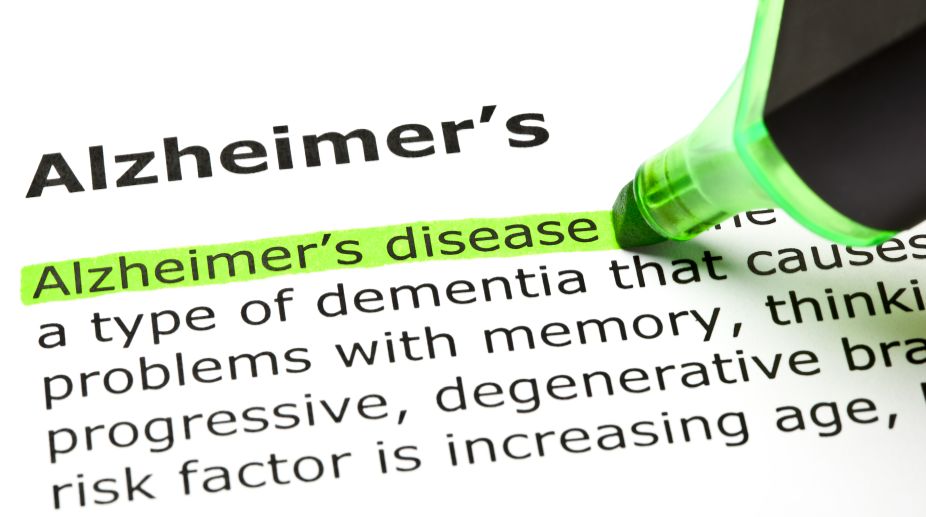
No more of such discussions. Not even a call on my birthday. Just as Nepal’s capital collapsed in one summer’s earthquake, her world collapsed the same year with the implacable advance of Alzheimer’s.

The writer is a Washington-based international development advisor and had worked with the World Bank. 

India’s quest for nuclear power

Armin Rosencranz and Aditya Vora |

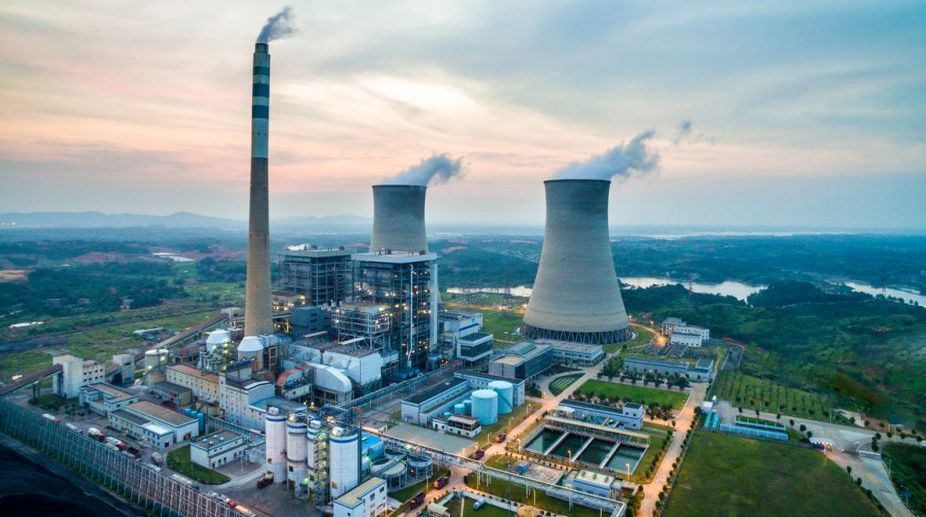
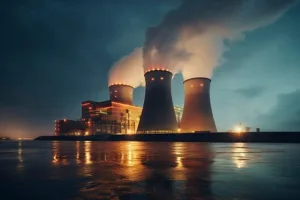
To meet its energy requirement, India is currently looking at new locations to build up its nuclear power production. Nuclear power is currently India’s 5th largest source of electricity after Coal (61 per cent), Natural Gas (7.6 per cent), Hydroelectric (14 per cent), other renewables (14 per cent) and Nuclear (3.5 per cent). India aims to increase the percentage of nuclear power production in the overall energy supply to 9 per cent by 2026. It is part of India's plan to expand nuclear generation capacity to 63 gigawatts by 2032 from 6.8 gigawatts presently.

As of 2016, India has seven nuclear power plants, with an installed capacity of 6.80 GW and producing 34644.45 GWh of electricity. India is planning five more nuclear plants – in Jaitapur in Maharashtra, Kovvada in Andhra Pradesh, Chutka in Madhya Pradesh, Banswara in Rajasthan and Gorakhpur in Haryana. This is expected to generate an additional 4.3 GW of power. The new sites India is looking for are in addition to the already identified sites.

India has had issues about its nuclear energy sites in the past, such as the local protests surrounding the Kudankulam Nuclear Power Plant in Tamil Nadu. It has had to back out of a couple of sites due to these protests. Therefore, the objective of seeking new sites is to have them away from the sea (to prevent another Fukushima disaster) and in distant locations to prevent a huge public uproar. These new sites would supplement the existing list.

In anticipation of these new sites, the Modi Government has been busy signing Civil Nuclear Agreements for the purchase of uranium. In 2014, 2015 and in 2016, India signed agreements with Australia, the UK and Japan respectively for purchase of uranium for manufacturing nuclear power.

Speaking of public uproar, following the Fukushima nuclear disaster in 2011, there was a combined effort to block Indian nuclear projects. These protests gained popularity throughout the country. A couple of protests that have received significant traction in the media are against the French-partnered Jaitapur nuclear project in Maharashtra and the Russian-partnered Kudankulam project in Tamil Nadu. Other proposed power plants have also been halted due to protests. The former chairman of the Atomic Energy Commission of India said in a lecture said that the scheme for the Haripur Nuclear Power Plant in West Bengal has not completely been deleted though appropriate background work was to be a decisive factor in the future of the power plant. However, the lifeline of the power plant is still hanging more than three years after plans were halted.

There have been other such power plants as well, like the Mandla Nuclear Power Project in Madhya Pradesh. This was proposed by the Central Government in 1982. The power plant is located in the catchment area of the Bargi dam on the Narmada River. The compensation received by the local villagers is pennies compared to the prices of land in the area currently. Especially so, as a Hindustan Times report mentioned, a farmer with 20 acres who lost 17 acres for the dam construction now may lose the remaining three acres for the Nuclear Project.

India has been bent on exponentially increasing its energy production. It plans to expand its nuclear energy capacity tenfold. These plans however have been hampered due to delays in construction and suppliers’ concern over the liability laws in India in case of a disaster. To solve the first problem, as mentioned, sites are being picked in places with low populations. As for the liability laws, the law allows for claims from the companies that are setting up the power plant. This has discouraged companies from General Electric to Toshiba from setting up plants.

Toshiba said that it would only set up six reactors in India if there is a change in the nuclear liability law. It cannot be expected to take up the risk of building the new nuclear plants, the company said, following a $6.3 billion write-down. In the US, the Price–Anderson Nuclear Industries Indemnity Act, first passed as early as 1957, restricts liability of nuclear power plant operators. The object of the Act is to partially compensate the plant operators against claims arising from nuclear incidents to ensure that compensation is provided to the public. The Act creates a no-fault insurance-type system with an industry-funded piggy bank of around $12.6 billion (as of 2011). Any claim above this amount is to be covered by the US government.

Nevertheless, India is proceeding with the domestic projects and looking for new sites. It has provisionally selected one site in the state of Haryana that is to be finalised in the next five years. Many Indian companies have shown an interest in collaborating in projects with the GOI monopoly company, the Nuclear Power Corporation of India.

Specifically, the Oil and Natural Gas Corporation of India’s chairman has said that ONGC would be interested in exploring energy production opportunities in the nuclear sector. However, more attention needs to be paid to siting nuclear power plants in places that will not lead to popular resistance. Additionally, if India wants to invite foreign companies, it will have to enact laws like the Price-Anderson Act to reduce the liability that these foreign companies face.

The writers are, respectively, Professor of Law and a student at the Jindal Global Law School, Sonipat. 

The Unthinkability Bias

Madhavi Goradia Divan |

The landslide verdict in Uttar Pradesh has outfoxed most political pundits. The reportage of the elections and predictions that accompanied it shows much of Indian political journalism seems to be living in the “post-truth” world.

The Oxford dictionary designated “post-truth” as the word of 2016 ~ an adjective which means “relating to circumstances in which objective facts are less influential in shaping public opinion than emotional appeals.”

How ridiculously off the mark the predictions for UP were. What went wrong? Is it the failure of news gathering and data from the ground, a duty which the modern media is increasingly abdicating? Is it the over-dependence on social media which political journalists seem to spend a disproportionate amount of time on? Or is it what American journalist, Sean Trende described in the wake of the Brexit reportage which too was off the mark, as the “unthinkability bias” ~ not being able to report the truth simply because you wish it were otherwise.

That unthinkability bias could not have been in greater evidence than in the coverage of the US elections last year when mainstream papers such as the New York Times strongly suggested that the odds in favour of Hilary Clinton were close to 100 per cent.

Among the analysis that were published in the aftermath of the Trump election, was that political experts lack diversity as a group and tend to reinforce their own views. Social media tends to amplify that echo chamber where like-minded people tell one another what they want to hear and do not see the need to engage with the “other”.

That is deeply damaging for media credibility, for free speech and for democracy itself.
The social media gained popularity in India about the time two major media exposes took place in 2010-2011. One was the Paid News report which exposed the involvement of several newspapers in the news for money racket, particularly during election time.

The second was the Radia tapes expose which released tapped phone conversations suggesting that top journalists were brokering deals between politicians and corporate houses. Journalistic credibility was at its nadir.

That is when social media offered an alternative platform for people to vent their ire and unshackle themselves from the monopoly of the mainstream media. While social media must be credited with democratising free speech like never before, it is by no means a substitute to the mainstream or conventional media.

Social media has shown its grave limitations ~ here news gets blurred with opinion, sources cannot be verified and there is no fine line between citizen and journalist. No one can be held to account. The other difficulty with social media is the absence of plurality of opinion and diversity of information, so essential in a democracy.

The media was famously regarded as the “marketplace of ideas” where we must engage with those whose thoughts we disagree with. The social media can be deeply polarising and insular because we need to see and hear only those with whom we are ideologically aligned. There is no real contest of ideas because one is preaching to the already converted. This reinforces an Us vs Them, rather than facilitating an engagement with the “other”.

When a substantial section of the urban youth depend only on social media for news and opinion, they may be turning their backs on the diversity of news and opinion the old-fashioned newspaper provided. But the more dangerous trend is that the mainstream media depends on the social media for news-feeds rather than the other way around. This is not just the easy way out because it saves it the time, trouble and expense of independent news gathering but also a grave dereliction of duty because it denies the public access to credible, truthful information. This is possibly what explains the complete disconnect between political pundits and the ground realities in Uttar Pradesh.

The old-fashioned newspaper may have lost some currency in the wake of the popularity of the social media. But this is only because it has allowed itself to. There is simply no substitute for the credible, truthful, accountable media and we need it like never before  to sift the truth from untruths and half-truths and the grain from the chaff.

Although under our Constitution, the media does not enjoy any higher right to free speech than the ordinary citizen, its freedoms have been staunchly defended by our courts because the media is regarded as a “trustee of the public” determining what ordinary people see or do not see, what they know and do not know. Citizens may voice their views but it is for the media to collect facts, a responsibility that it cannot shrug off or outsource to the citizen. The citizen can turn journalist but the converse is not true. The journalist owes professional duties to the public and must be held to account unlike any other citizen.

Amidst the clamour and cacophony of the social media and all the blur between news and fake news, we need the solid, credible media to reassert itself with independent, objective news gathering, shorn of its “unthinkability bias”. This is now a universal truth that needs to be acknowledged after Brexit, Trump and most recently, UP.

The writer is Advocate, Supreme Court of India and author, Facets of Media Law

The Unthinkability Bias

Madhavi Goradia Divan |

The landslide verdict in Uttar Pradesh has outfoxed most political pundits. The reportage of the elections and predictions that accompanied it shows much of Indian political journalism seems to be living in the “post-truth” world.

The Oxford dictionary designated “post-truth” as the word of 2016 ~ an adjective which means “relating to circumstances in which objective facts are less influential in shaping public opinion than emotional appeals.”

How ridiculously off the mark the predictions for UP were. What went wrong? Is it the failure of news gathering and data from the ground, a duty which the modern media is increasingly abdicating? Is it the over-dependence on social media which political journalists seem to spend a disproportionate amount of time on? Or is it what American journalist, Sean Trende described in the wake of the Brexit reportage which too was off the mark, as the “unthinkability bias” ~ not being able to report the truth simply because you wish it were otherwise.

That unthinkability bias could not have been in greater evidence than in the coverage of the US elections last year when mainstream papers such as the New York Times strongly suggested that the odds in favour of Hilary Clinton were close to 100 per cent.

Among the analysis that were published in the aftermath of the Trump election, was that political experts lack diversity as a group and tend to reinforce their own views. Social media tends to amplify that echo chamber where like-minded people tell one another what they want to hear and do not see the need to engage with the “other”.

That is deeply damaging for media credibility, for free speech and for democracy itself.
The social media gained popularity in India about the time two major media exposes took place in 2010-2011. One was the Paid News report which exposed the involvement of several newspapers in the news for money racket, particularly during election time.

The second was the Radia tapes expose which released tapped phone conversations suggesting that top journalists were brokering deals between politicians and corporate houses. Journalistic credibility was at its nadir.

That is when social media offered an alternative platform for people to vent their ire and unshackle themselves from the monopoly of the mainstream media. While social media must be credited with democratising free speech like never before, it is by no means a substitute to the mainstream or conventional media.

Social media has shown its grave limitations ~ here news gets blurred with opinion, sources cannot be verified and there is no fine line between citizen and journalist. No one can be held to account. The other difficulty with social media is the absence of plurality of opinion and diversity of information, so essential in a democracy.

The media was famously regarded as the “marketplace of ideas” where we must engage with those whose thoughts we disagree with. The social media can be deeply polarising and insular because we need to see and hear only those with whom we are ideologically aligned. There is no real contest of ideas because one is preaching to the already converted. This reinforces an Us vs Them, rather than facilitating an engagement with the “other”.

When a substantial section of the urban youth depend only on social media for news and opinion, they may be turning their backs on the diversity of news and opinion the old-fashioned newspaper provided. But the more dangerous trend is that the mainstream media depends on the social media for news-feeds rather than the other way around. This is not just the easy way out because it saves it the time, trouble and expense of independent news gathering but also a grave dereliction of duty because it denies the public access to credible, truthful information. This is possibly what explains the complete disconnect between political pundits and the ground realities in Uttar Pradesh.

The old-fashioned newspaper may have lost some currency in the wake of the popularity of the social media. But this is only because it has allowed itself to. There is simply no substitute for the credible, truthful, accountable media and we need it like never before  to sift the truth from untruths and half-truths and the grain from the chaff.

Although under our Constitution, the media does not enjoy any higher right to free speech than the ordinary citizen, its freedoms have been staunchly defended by our courts because the media is regarded as a “trustee of the public” determining what ordinary people see or do not see, what they know and do not know. Citizens may voice their views but it is for the media to collect facts, a responsibility that it cannot shrug off or outsource to the citizen. The citizen can turn journalist but the converse is not true. The journalist owes professional duties to the public and must be held to account unlike any other citizen.

Amidst the clamour and cacophony of the social media and all the blur between news and fake news, we need the solid, credible media to reassert itself with independent, objective news gathering, shorn of its “unthinkability bias”. This is now a universal truth that needs to be acknowledged after Brexit, Trump and most recently, UP.

The writer is Advocate, Supreme Court of India and author, Facets of Media Law

Walking a tightrope

Editorial |

On 25 July 1997, the United Front government headed by IK Gujral told Parliament that his government had signed a ceasefire agreement with NSCN-IM leaders (at that time the outfit’s chairman Isak Swu was in Bangkok).

When MPs pressed for details of its terms and conditions, Gujral refused to divulge them. Within two weeks of the ceasefire coming into force (1 August), the NSCN-IM leaders claimed the Centre had agreed “in principle” to include all Naga-inhabited areas of Arunachal Pradesh, Assam and Manipur.

Delhi neither confirmed nor denied this. All this because the contents of the agreement were never made public. Strangely, successive governments did not find it necessary to clear the doubts about the ceasefire jurisdiction and defuse mounting tensions between Nagas and Manipuris.

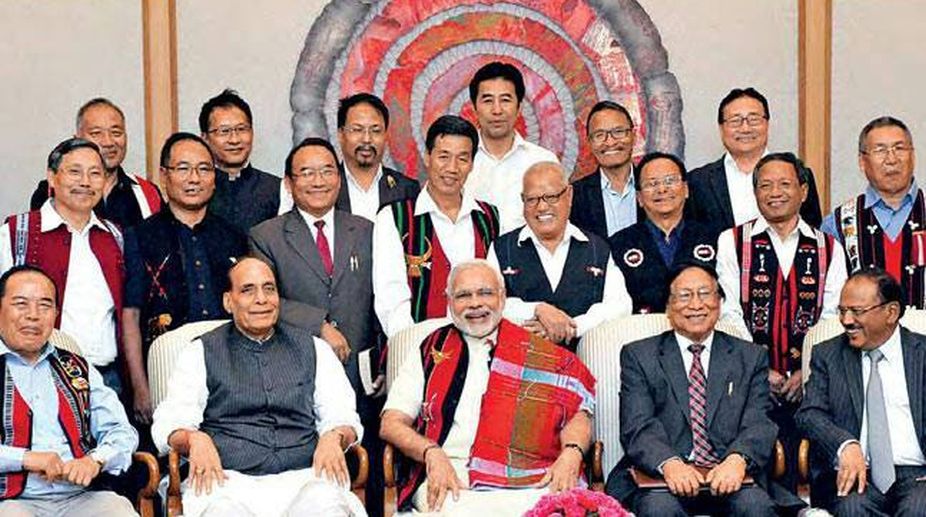
On 3 August 2015, the Narendra Modi government’s interlocutor for negotiations, RN Ravi, signed the “Framework Naga Peace accord” at the Prime Minister’s residence. Then Nagaland chief minister TR Zeliang and some of his colleagues were also present. A historic moment indeed considering that it was achieved after several rounds of talks lasting as long as 18 years. But in this case also the contents were not spelt out, giving rise to suspicion that the Modi government had a trick up its sleeve ~ like acceptance or rejection of the Nagas’ demand for a ‘Greater Nagaland’.

Before the Manipur Assembly election last month, several BJP leaders, including the Prime Minister, visited Imphal, and taking advantage of the “framework” deal, sought Meitei voters’ favours, telling them they need not worry about their territorial integrity being in danger, and convinced them that there was no mention of Naga integration in the “framework” accord.

Muivah, who had been a silent spectator to all this, dropped a bombshell claiming the Centre, in fact, has accepted the outfit’s demand for Greater Nagaland. The Modi government is firm there is no such decision.

Ravi himself has said in no uncertain terms that being the main signatory he knows better and there is no mention of the Nagas’ demand in the “framework” pact.

There is little doubt about finding a solution to what amounts to a political issue ~ it has obviously been taken care of in the “framework” fold ~ but one cannot see a final solution coming without taking into consideration the NSCN-IM's dogged determination to achieve Greater Nagaland. The Modi government finds itself between two stools. And a final decision has to be made sooner or later. So how much longer can the Centre walk the tightrope?

Walking a tightrope

Editorial |

On 25 July 1997, the United Front government headed by IK Gujral told Parliament that his government had signed a ceasefire agreement with NSCN-IM leaders (at that time the outfit’s chairman Isak Swu was in Bangkok).

When MPs pressed for details of its terms and conditions, Gujral refused to divulge them. Within two weeks of the ceasefire coming into force (1 August), the NSCN-IM leaders claimed the Centre had agreed “in principle” to include all Naga-inhabited areas of Arunachal Pradesh, Assam and Manipur.

Delhi neither confirmed nor denied this. All this because the contents of the agreement were never made public. Strangely, successive governments did not find it necessary to clear the doubts about the ceasefire jurisdiction and defuse mounting tensions between Nagas and Manipuris.

On 3 August 2015, the Narendra Modi government’s interlocutor for negotiations, RN Ravi, signed the “Framework Naga Peace accord” at the Prime Minister’s residence. Then Nagaland chief minister TR Zeliang and some of his colleagues were also present. A historic moment indeed considering that it was achieved after several rounds of talks lasting as long as 18 years. But in this case also the contents were not spelt out, giving rise to suspicion that the Modi government had a trick up its sleeve ~ like acceptance or rejection of the Nagas’ demand for a ‘Greater Nagaland’.

Before the Manipur Assembly election last month, several BJP leaders, including the Prime Minister, visited Imphal, and taking advantage of the “framework” deal, sought Meitei voters’ favours, telling them they need not worry about their territorial integrity being in danger, and convinced them that there was no mention of Naga integration in the “framework” accord.

Muivah, who had been a silent spectator to all this, dropped a bombshell claiming the Centre, in fact, has accepted the outfit’s demand for Greater Nagaland. The Modi government is firm there is no such decision.

Ravi himself has said in no uncertain terms that being the main signatory he knows better and there is no mention of the Nagas’ demand in the “framework” pact.

There is little doubt about finding a solution to what amounts to a political issue ~ it has obviously been taken care of in the “framework” fold ~ but one cannot see a final solution coming without taking into consideration the NSCN-IM's dogged determination to achieve Greater Nagaland. The Modi government finds itself between two stools. And a final decision has to be made sooner or later. So how much longer can the Centre walk the tightrope?

Census on learning

Editorial |

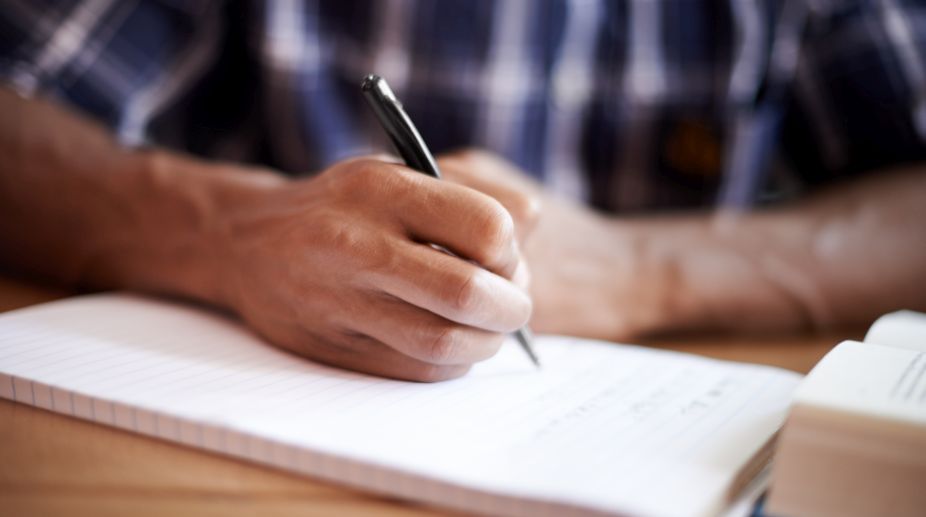
The decision of the National Council for Educational Research and Training to conduct what it calls a “census” on the education system comes amidst the raging controversy over whether the system of examinations should be retained in schools, at any rate till Class VIII.

There can be no quarrel with the move to conduct a “learning competency test” for 200 million children of government and state-aided schools in the Class I-VIII category, with the expressed objective to plug loopholes in the system.

However rational the NCERT’s initiative, it is somewhat at odds with the move to put in place a system of “automatic promotions” up to Class VIII. The praxis of governments, breathless as it is, contradicts that of the NCERT.

While the internal assessment procedure has been or is set to be abjured in most states, the decision of the NCERT ~ as an overarching entity ~ to assess the students’ assimilation of the syllabus in the “first half” of the academic year and “what they have studied in the previous year” ought ideally to come within the purview of any school’s end-of-the-term examinations.

The survey will also assess whether or not the teachers have been able to deliver the praxis of “no exams” till Class VIII affords spurious protection to students and facilitates the evasion of responsibility by teachers.

In point of fact, the NCERT is set to address the evasion of accountability by the schools… and almost invariably at the bidding of governments at the Centre and in the states. As often as not, the educational authorities contend with a turmoil of ideas. The contrived argument ~ to lessen the burden of exams at a tender age ~ holds no water. In many if not most schools, the first examination is held in Class IX.

The scrapping of exams till Class VIII can harm rather than help the student. Which explains the NCERT’s determination to plug the lacuna and significant is the parameter that it has set for the survey ~ the first eight years or the foundational stage of schooling. The previous evaluation had covered around 2.5 lakh students in Classes III, V, VIII, and X (primary, the middle and senior levels).

The scope of the NCERT survey will be focused on what it calls the “minimum expected learning outcome levels”. It will expose the deficiencies in learning as well as teaching. In the net, NCERT will be performing an elementary function that ought to have been discharged at the school level.

Teaching is but one side of the school education coin. Evaluation is no less critical, but which sadly has been accorded the short shrift through automatic promotions for the better part of schooling. While it has been an easy ride for the children, the teachers have skirted a vital responsibility.