Logo

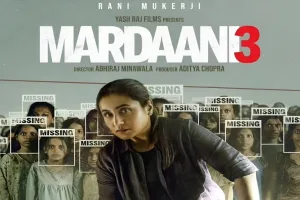
Rani Mukerji begins shoot for comeback movie ‘Hichki’

IANS | Mumbai |

Bollywood actress Rani Mukerji on Tuesday returned to face the camera for her comeback film Hichki.

The announcement was made via a video posted on the social media platforms of production banner Yash Raj Films.

Rani, who sports long hair with waves, is seen with her back to the camera, while she writes: "Shooting starts today."

After her power-packed performance as a policewoman in Mardaani, the actress took time off for motherhood when she had daughter Adira with husband and film producer Aditya Chopra.

Then she wanted to return to do what she loves doing the most.

Coming out under the Yash Raj Films banner, Hichki is being directed by Siddharth P. Malhotra and produced by Maneesh Sharma.

The film will feature Rani in a positive and inspiring story about a woman who turns her biggest weakness into her biggest strength.

In an earlier statement, Rani had said she was on the lookout for a script that would challenge and excite her.

The fact that Hichki came with a positive premise, urged the actress to take it up.

Jamie Vardy almost quit football in 2013: Craig Shakespeare

"Thankfully he didn't go to Ibiza. I think he has made the right decision!"

IANS | London |

Leicester City manager Craig Shakespeare has revealed that start striker Jamie Vardy, who played a starring role in the club's run to the English Premier League (EPL) title last season, almost quit the game in 2013.

According to Shakespeare, Vardy was left disappointed after a poor season in England's second tier after moving to Leicester City from non-league club Fleetwood Town.

"Our job is to support players. Sometimes they do have self-doubt and Jamie would be the first to admit he was going through a rough patch," Shakespeare was quoted as saying by the Independent on Tuesday.

Vardy had scored only five goals that season and wanted to quit football to become a party rep in the Spanish island of Ibiza.

"Myself, Nigel (Pearson) and Steve (Walsh) were here to support him. All we did was told him about his attributes and that we thought he could go on," Shakespeare said.

"We even mentioned then about not only playing in the Premier League but also he had the attributes to play for the national team. We told him we wanted him and believed in him," he added.

"Thankfully he didn't go to Ibiza. I think he has made the right decision!"

That decision certainly proved to be a right one as Leicester City scripted a fairytale during the 2015-16 season by going on to win the EPL for the first time in their history.

Vardy played a crucial role in their run to the title, scoring 24 goals to be the second highest scorer in the EPL alongside Sergio Agüero of Manchester City. His tally was only one goal short of Golden Boot winner Harry Kane of Tottenham Hotspur.

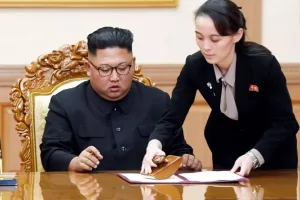
North Korea fires ballistic missile into sea, says Seoul

IANS | Seoul |

North Korea on Wednesday launched a ballistic missile, which flew for some 60 km before falling into the Sea of Japan, the South Korean military said.

The Joint Chiefs of Staff in Seoul confirmed that the missile was launched from Sinpo, South Hamgyong province, eastern North Korea, at 6.40 local time, Efe news reported.

They added that the launch was made from land and not from the sea, ruling out the possibility that it was a ballistic missile launched from a submarine (SLBM), as Pyongyang has launched before from the sea off the coast of Sinpo, where its main centre of development for these projectiles is located.

Seoul and Washington are currently analyzing both the missile type and the possible range of the missile launched by Pyongyang, the Yonhap news agency reported, adding that it was most likely a KN-15 medium range ballistic missile.

This latest launch comes just ahead of US President Donald Trump receiving his Chinese counterpart Xi Jinping in Florida for a meeting which will have North Korea as one of the main topics.

Trump has called on Beijing, Pyongyang's closest ally, to exert more pressure on Kim Jong-un's regime to abandon the development of ballistic missiles and nuclear weapons.

On March 6, the Pyongyang regime launched four medium-range ballistic missiles, three of which landed in Japan's Special Economic Zone, just 200 km off the archipelago's shores, and two other missile tests since then apparently failed.

UN calls emergency meeting over Syrian ‘gas attack’

IANS | United Nations |

The UN Security Council will hold emergency talks on Wednesday after a suspected chemical attack in Syria left over 50 dead and many wounded, a media report said.

The attack on a rebel-held town brought furious international reaction, with the US and other powers blaming the Syrian government for the deaths, the BBC reported.

Officials in Damascus, however, denied using any such weapons.

The attack will overshadow a conference in the Belgian capital Brussels at which 70 donor nations will discuss aid efforts in Syria, the BBC report said.

Delegates want to step up humanitarian access for thousands of civilians trapped by fighting.

The Syrian Civil War has raged for more than six years with still no political solution in sight.

Nearly five million Syrians have fled the country and more than six million are internally displaced, the UN said. More than 250,000 people have been killed.

Wednesday's emergency meeting of the UN Security Council was called by France and the UK as international outrage mounted over the suspected gas attack on Khan Sheikhoun in Idlib province on Tuesday.

Britain's Ambassador to the UN, Matthew Rycroft, described it as "very bad news for peace in Syria", the BBC said.

"This is clearly a war crime and I call on the Security Council members who have previously used their vetoes to defend the indefensible to change their course," he told reporters in New York.

Footage from the scene showed civilians, many of them children, choking and foaming at the mouth.

Witnesses said clinics treating the injured were then targeted by air strikes.

UK-based monitoring group the Syrian Observatory for Human Rights put the death toll at 58, including 11 children.

It was unable to say what chemical was dropped but pro-opposition groups said it was believed to be the nerve agent Sarin.

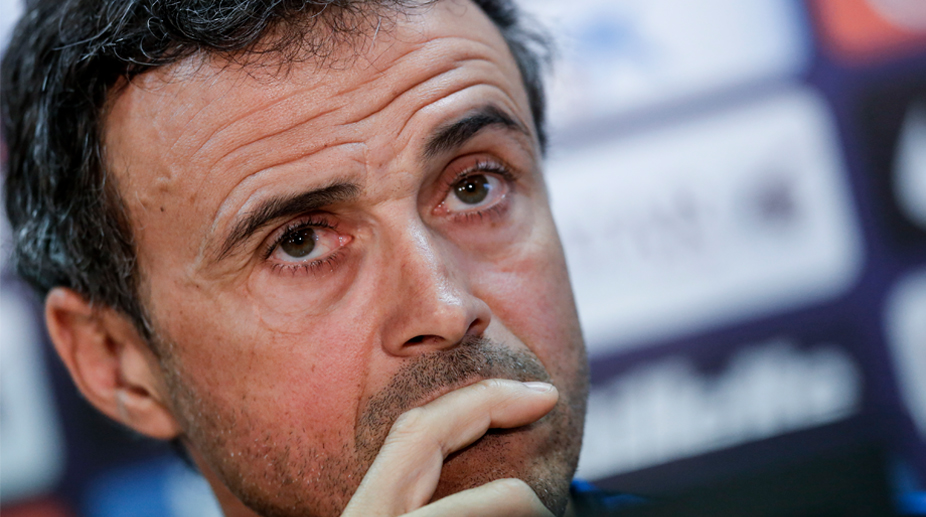
Luis Enrique reveals post-Barcelona plans!

Enrique refused to comment on reports that his current assistant Juan Carlos Unzue may replace him.

IANS | Barcelona |

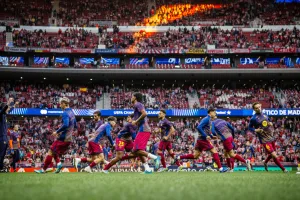
FC Barcelona chief coach Luis Enrique confirmed on Tuesday that he will take a one-year sabbatical after leaving his post as he needs to rest after three seasons with the Catalan football giants.

The coach announced a few weeks ago that he would not renew his contract at Barcelona. During a press conference on the eve of La Liga clash against Sevilla, Luis Enrique acknowledged that he will leave Barcelona, where he has incredible ties with the club's management and players, because he needs to recover, not to join another team, reports Efe.

The coach refused to comment on reports claiming that his current assistant Juan Carlos Unzue may replace him at the bench from June 30.

The coach praised Uruguayan striker Luis Suarez, saying "we have to be grateful for the way he has adapted himself for the good of the team."

Enrique pointed out that midfielder Andres Iniesta had some bad luck due to injuries, but "he's back in top form and training fantastically".

EPL: Zlatan salvages draw for Man United against Everton

Not the result Jose Mourinho wanted but one he will have to settle for!

SNS | New Delhi |

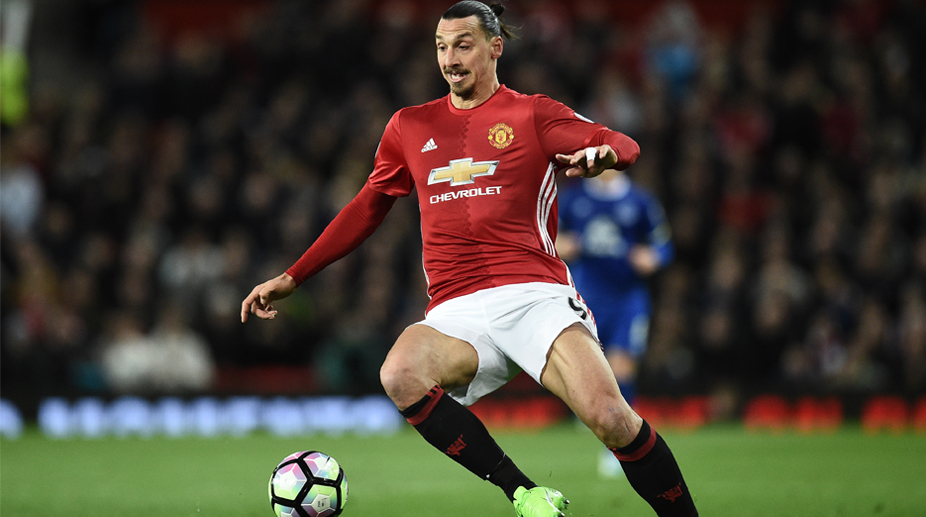
Manchester United’s top-four hopes skidded after an underwhelming 1-1 draw with Everton on Tuesday, Zlatan Ibrahimovic’s 94th minute penalty salvaging a point for the Red Devils in their English Premier League fixture at Old Trafford.

Prior to the game, Jose Mourinho had gone on the record to stat if results against Everton and Sunderland (up next) didn't go in his favour, he would start to focus on the UEFA Europa League.

And after Tuesday, the Portuguese will be even more inclined towards the continental competition, with his side showing plenty of desire but not enough craft to nab the much-needed three points.

Zlatan returned from a three-game suspension to start at centre forward and had Jesse LIngard and Marcus Rashford in support on the wings. Spanish midfielder Ander Herrera also returned from his suspension to start alongside Michael Carrick and Maruoane Felllaini as United looked to cut the gap between themselves and fourth-placed Manchester City to two points. 
Paul Pogba was deemed fit enough to make the bench, but it was Luke Shaw’s presence in the dugout which brought a sigh of relief for the United faithful. The left back had been under severe public criticism by Mourinho and after some clear-the-air talks with his manager, seems to have won a way back into the side.

Everton, having suffered a catastrophic Merseyside Derby defeat on the weekend, brought in Kevin Mirallas and Gareth Barry as manager Ronald Koeman switched back to a familiar 4-3-3 formation.

United dominated the early exchanges and should have gone ahead but Ibrahimovic delayed his shot and allowed the backtracking Ashley Williams to make a superb block. Lingard was next to squander an opportunity, shooting well wide from distance after being afforded time and space to pull the trigger.

The Toffees made the Red Devils pay for their profligacy, with Phil Jagielka scoring a goal most strikers would have been proud of in the 22nd minute. Ashley Williams’ flick on from a corner had found him near the back post with Marcos Rojo for company and with his back to the goal, his options seemed limited. The veteran defender then surprised everyone with a deft back-volley which went between David de Gea’s legs before the Spaniard could even react.

Stung by the goal, United looked to equalise immediately and went close on two occasions before the interval. First, Daley Blind sent in a brilliant free kick which looked destined for the top corner but a sprawling Joel Robles managed to make the save and Herrera could only manage to graze the bar on the rebound from a narrow angle. The Spaniard then went close for the second time when he let loose a venomous left-footed shot from distance but Robles was equal to the task and parried the shot away for a corner.

Mourinho sent on Pogba in the second half as United were desperate to find an equaliser and the Frenchman came close, his header crashing off the bar in the 55th minute with Robles well beaten for once.

Overall, United looked laborious in attack and needed a bit of luck to get the equaliser deep into injury-time. Luke Shaw, on for Ashley Young, didn't get the cleanest of connections on his volley from the edge of the box but it seemed to be going in before Ashley Williams struck a hand out. Referee Neil Swarbrick promptly sent off the defender and awarded United a penalty which was cooly converted by Ibrahimovic, to give United their 12th draw of the season.

United remain in 5th place, four points behind Manchester City but are now in danger of going sixth should Arsenal beat West Ham on Wednesday. Everton can now finally lay their top-four ambitions to rest as they are in seventh place, level on points with Arsenal but have played three games more than the Gunners.

Some respite from heat in Delhi, storm likely on Wednesday

IANS | New Delhi |

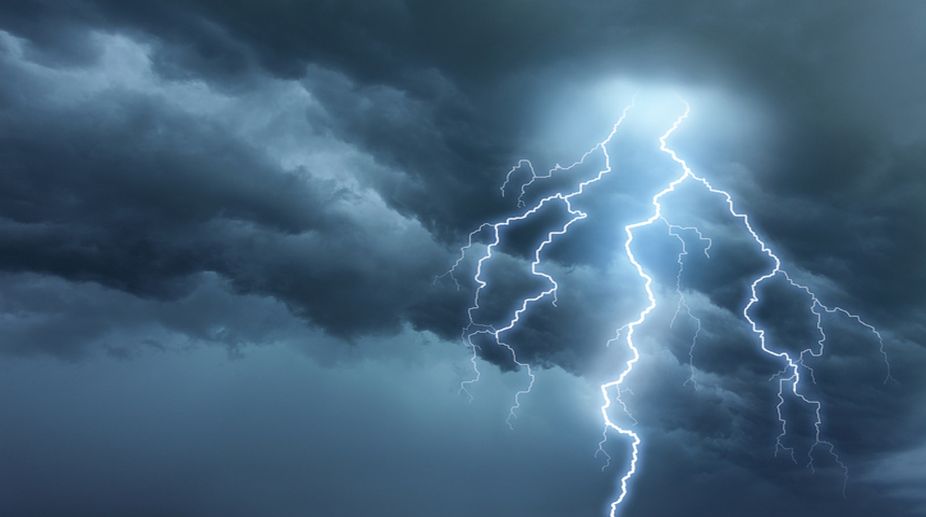
Delhi residents had some relief from rising temperatures of the past few days as mercury dipped amid an overcast sky for major part of Tuesday and light rain in some parts. With a thunderstorm or sandstorm likely on Wednesday, the mercury is expected go down further.

The maximum average temperature on Tuesday was at 36.3 degrees Celsius and minimum 21.8 degrees Celsius. 

The Indian Meteorological Department (IMD) reported drizzles at Lodhi Road and Ridge area on Tuesday. Maximum humidity reached 62 per cent.

It forecast cloudy weather on Wednesday along with rains or dust or thunderstorm.

"Temperature will hover between 23 to 35 degree Celsius," said an IMD official. 

According to private weather forecast agency, Skymet, the reason behind possible rains or sandstorm is the affecting Western Disturbance over Jammu and Kashmir and its induced cyclonic circulation over Central Pakistan and adjoining areas of Punjab and Northwest Rajasthan.

Matter of a simple proof

Chloe Farand | New Delhi |

A retired German man has found the proof to a complex geometry and probability problem that experts have tried to solve for decades, only for his achievement to go largely unnoticed. 

Thomas Royen was reportedly brushing his teeth when he struck upon an idea in July 2014. Then 67 years old, the former statistician for a pharmaceutical company, from Schwalbach am Taunus, a town on the edge of Frankfurt, found the solution to the conjecture, known as the Gaussian Correlation Inequality. But at the time, Royen's cogent solution had gone largely unheralded and is still slowly permeating the scientific community, Quanta Magazine reports.

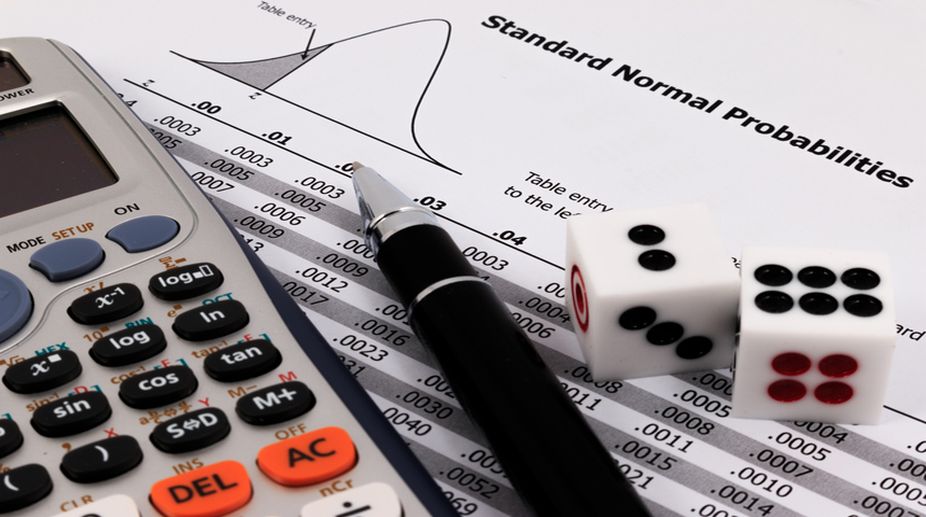
The GCI conjecture originates in the 1950s but was more clearly formulated in the 1972. Since then, scores of mathematicians have unsuccessfully tried to solve it. According to the GCI principle, if two shapes overlap, such as a rectangle and a circle, then the probability of striking one, for example in a game of darts, increases the chances of also striking the other. 

Donald Richards, a statistician at Pennsylvania State University, told the science magazine he had been working on trying to solve the equations for 30 years without success. On the other hand, Royen is not one who has spent most of his life working to explain the conjuncture. His primary aim was to improve statistical formulas for the pharmaceutical industry to make sense of drug trial data. 

While brushing his teeth, it dawned on him that GCI could be analytically explained through statistical formulas. This enabled him to simplify his function and use equations he had worked with all his life. “In mathematics, it occurs frequently that a seemingly difficult special problem can be solved by answering a more general question. 

“The evening of this day, my first draft of the proof was written,” he told Quanta. His answer, compiled in a paper called, “A simple proof of the Gaussian correlation conjecture”, is short and only uses classic mathematical techniques. 
Experts said that any graduate student would be able to follow Royen's argument. And Royen said he hoped the “surprisingly simple proof … might encourage young students to use their own creativity to find new mathematical theorems”, adding that “a very high theoretical level is not always required”. 

The retired statistician wrote up his solution on Microsoft Word rather than using the go-to maths software, LaTeX. He published his findings on the academic preprint website arxiv.org and emailed a copy to Richards, who said he “knew instantly” that the problem had been solved. 

But other experts were dismissive to Royen's claim he had found the solution. False and flawed solutions of the GCI have been floating in recent years. 

Royen reportedly sent his findings to Bo'az Klartag of the Weizmann at the Institute of Science, Tel Aviv University. But his solution arrived in a batch with three other papers and when Klartag found a mistake in one of them, he allegedly overlooked the two others for lack of time. 

With no intentions of bothering with peer reviews and the time-consuming process to get his paper published in top academic journals, Royen's achievement continued to go unrecognised. But the retired man said the “feeling of deep joy and gratitude” that came from finding an important proof has been reward enough. 

“It is like a kind of grace. We can work for a long time on a problem and suddenly an angel – (which) stands here poetically for the mysteries of our neurons – brings a good idea,” he said. 

The Independent.

Control & production

Tapan Kumar Maitra | New Delhi |

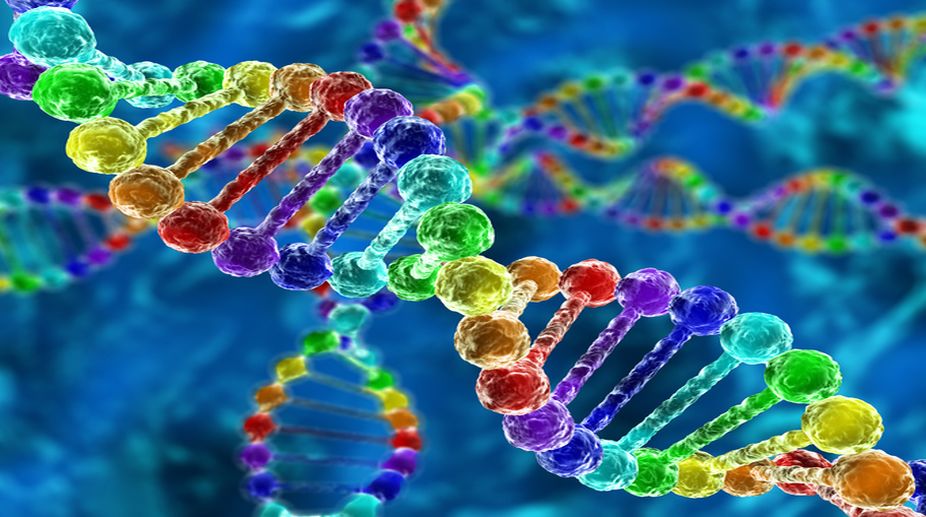
Gene regulation is based on the movement of DNA segments from one location to another within the genome, a process known as DNA rearrangement. Two particularly interesting examples involve the mechanism used by yeast cells to control mating and the mechanism used by vertebrates to produce millions of different antibodies.

In the yeast Saccha-romyces cerevisiae, mating occurs when haploid cells of two different mating types, called   and a, fuse together to form a diploid cell. All haploid cells carry both alleles for mating type, however, a cell’s actual mating phenotype depends on which of the two alleles, alpha or a, is present at a special site in the genome called the Mat locus. Cells frequently switch making type, presumably as a means of maximising opportunities for mating. They do so by moving the alternative allele into the Mat locus. This process of DNA rearrangement is called the cassette mechanism, because the mating-type locus is like a tape deck into which either the alpha or the a “cassette” (allele) can be inserted and “played” (transcribed).

A somewhat different type of DNA rearrangement is used by lymphocytes of the vertebrate immune system for producing antibody molecules. Antibodies are proteins composed of two kinds of polypeptide subunits, called heavy chains and light chains. Vertebrates make millions of different kinds of antibodies, each produced by a different lymphocyte (and its descendants) and each capable of specifically recognising and binding to a different foreign molecule. But this enormous diversity of antibody molecules creates a potential problem — if every antibody molecule were to be encoded by a different gene, virtually all of a person’s DNA would be occupied by the millions of required antibody genes.

Lymphocytes get around this problem by starting with a relatively small number of different DNA segments and rearranging them in various combinations to produce millions of unique antibody genes, each one formed in a different, developing lymphocyte. The rearrangement process involves four kinds of DNA sequences, called V, J, D, and C segments. The C segment codes for a heavy or light chain constant region whose amino acid sequence is the same among different antibodies — the V, J, and D segments together code for variable regions that differ among antibodies and give each one the ability to recognise and bind to a specific type of foreign molecule.

Human antibody heavy chains are constructed from roughly 200 kinds of V segments, more than 20 kinds of D segments, and at least six kinds of J segments. The DNA regions containing the various V, D, and J segments are rearranged during lymphocyte development to randomly bring together one V, one D, and one J segment in each lymphocyte. This random rearrangement allows the immune system to create at least 200 x 20 x 6 = 24,000 different kinds of heavy chain variable regions. 

In a similar fashion, thousands of different kinds of light chain variable regions can also be created (light chains are constructed from their own types of V, J, and C segments; they do not use D segments). Finally, any one of the thousands of different kinds of heavy chains can be assembled with any one of the thousands of different kinds of light chains, creating the possibility of millions of different types of antibodies. The net result is that millions of different antibodies are produced from the human genome by rearranging a few hundred different kinds of V, D, J, and C segments.

The writer is Associate Professor, Head, Department of Botany, Ananda Mohan College, kolkata, and also fellow, Botanical Society of Bengal, and can be contacted at tapanmaitra59@yahoo.co.in.

The Brexit nobody voted for

S Ananthanarayanan | New Delhi |

Much of the British Isles is known to be a mound of chalk, deposited over ancient bedrock and covered with soil, except at Dover and plain of Salisbury, where the whiteness is exposed. A wall of chalk continues eastwards under the English Channel and appears again at Cap Gris Nez, on the French coast. A chalk ridge is understood to have once bridged the channel and theories of how it came to be breached have remained conjectures.  

And in the same week that Prime Minister Theresa May has set in motion the UK’s economic separation from the European Union, Sanjeev Gupta, Jenny S Collier, David Garcia-Moreno, Francesca Oggioni, Alain Trentesaux, Kris Vanneste, Marc De Batist, Thierry Camelbeeck, Graeme Potter, Brigitte Van Vliet-Lanoe and John CR Arthur from institutes in London, Somerset and Surrey in the UK and in Belgium and France report in the journal, Nature Communications, recent improvements in our understanding of how the physical, chalk connection between the British Isles and mainland Europe gave way to the English Channel. “This is Brexit 1.0 — the Brexit nobody voted for,” remarks Gupta of Imperial College, London.

The chalk in the White Cliffs of Dover, extending across the Channel to north-west France, was deposited on the rock below in a warmer world a hundred million years ago, when this part of the Earth was under water. Calcium carbonate, in the shells of single celled algae, the Coccoliths, sank to the bottom of the sea and gradually built up the mound that forms large parts of present day Britain. Rising of the Earth’s crust and recession of sea water into ice sheets when the planet cooled lifted the land mass into view, with the British Isles connected by the chalk ridge with the rest of Europe. And then, during the ice age, 450,000 years ago, the waters receded even more and the entire English Channel was dry, a frozen landscape covered, at best, by sparse shrubbery. 

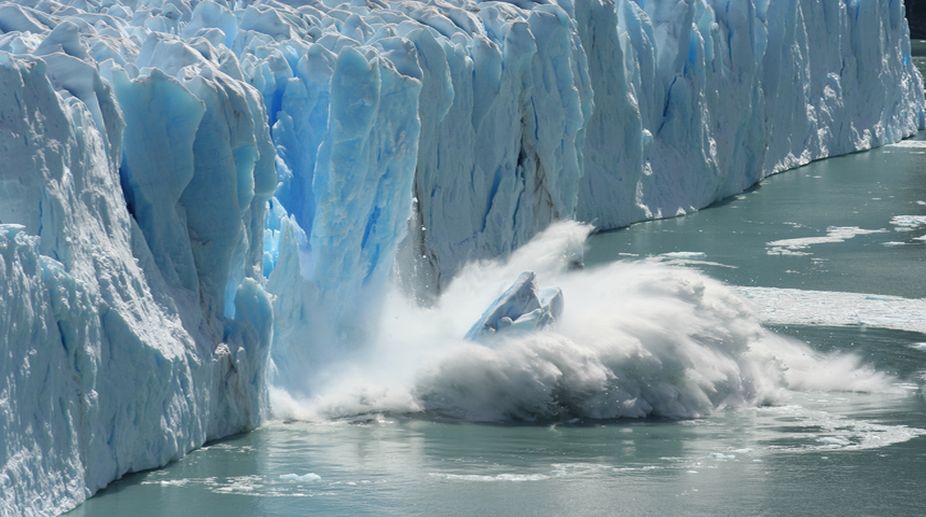
The current understanding of how the chalk ridge was worn down and the now busy waterway, the English Channel, came to be, is that melting of icebergs created a vast pond in the North Sea, and the water was held back from flowing further south by the wall of chalk between Britain and Europe. Continued melt and discharge from rivers, the paper says, led to a spill-over, which breached the wall and released a “mega-flood” into the low lying plain beyond the ridge. There is a network of valleys eroded in the bedrock in centre of the English Channel, which have the signs of “high magnitude flood flows” that have been interpreted as the result of “catastrophic drainage” of the build-up of glacial water, the paper says. 

There are also other models of both less violent and sudden breakdown of the barrier, where the lake to the north of the chalk ridge need not be proposed, or where there are other explanations for the furrows eroded in the downstream channel. The models, however, have not been tested, as there is little detailed data about the geological features of the sea bed in the places where the chalk ridge is considered to have been breached, the paper says.

The first significant bit of information about the Channel seabed was what was discovered when the route for the Channel Tunnel, the undersea rail link between England and France, which runs as deep as 75 metres below the sea bed, was being surveyed. The direct route revealed a set of kilometres-wide depressions in the rock, filled with sand and gravel sediment. How the depressions, which were named Fosse Dangeard (the word, fosse means deep), arose was not understood but the tunnel route had to be changed. An explanation of the depressions being caused by the waterfalls, which is like what has now been found to be the case, was attempted, but dropped for lack of detailed data to support the idea. 

What the authors of the paper in Nature Communications have now done is to collate a great deal of the latest information, from maps of the seabed, geophysical data and maps of the bedrock, obtained by bouncing shock waves off the sea bottom, to piece together an explanation of how the data could all fit together. While the depth map was created using sonar based seabed surveys, the map of the bedrock was created using seismic reflections where vibrations that pass through the seabed get partially reflected when they meet the underlying bedrock. The reflected waves are picked up by an array of sensors and the structure of the reflecting surface can then be worked out.

The depth map of the seabed shows a path of flow, a valley, the Lobourg Channel, which passes through the Dover Strait and into a network of valleys eroded in the bedrock further southwest, the paper says. The continuity of the Lobourg Channel and the eroded network downstream suggests that they form part of the same drainage system. And then, the path of flow, in the central part of the Dover Strait, contains the enigmatic collection of one-to-four kilometres-wide depressions. This group, the Fosse Dangeard, consists of seven main depressions, which go down as far as 140 metres deep, with flank slopes as steep as 15?. Detailed analyses of the orientation, disposition and the nature of sediment with which the depressions are filled indicate that they are plunge pools, drilled into bedrock where kilometre-wide waterfalls landed, just as was suggested by Alec Smith, Bedford College, London, in 1985.  It is difficult to reconcile the depth of these features with any process of formation by flow of water or tidal erosion, the paper says. The depth of erosion, in fact, suggests that the waterfall was from substantial height, the paper adds.

The picture painted is thus of “a huge rock ridge made of chalk joining Britain to France, looking more like the frozen tundra in Siberia than the green environment we know today — a cold world dotted with waterfalls plunging over the iconic white chalk escarpment of the White Cliffs of Dover,” to use the words of Jenny Collier of Imperial College. While this was the landscape of waterfalls is the first stage of the collapse, that explains the depressions in the seabed, it appears that this was the first stage, to be followed by a second, catastrophic breakdown and flood, that explains the erosion of valleys the bedrock downstream. “Perhaps part of the ice sheet broke off, collapsing into the lake, causing a surge that carved a path for the water to cascade off the chalk ridge and an earth tremor weakened the ridge and caused the chalk ridge to collapse,” says Collier.

Improved understanding of how the Dover Strait was opened helps model how northwest European meltwater drained into the north Atlantic. It would also be useful to fix the time of when Britain became isolated from mainland Europe and the early human colonisation of the breakaway island, says the paper.

The writer can be contacted at response@simplescience.in.

Hunt for a new President

Arati R Jerath | New Delhi |

Who will be the next President? Speculation has already started amid Shiv Sena’s mischievous suggestion to nominate RSS chief Mohan Bhagwat. According to BJP circles, Narendra Modi and Amit Shah have begun the exercise to shortlist possible candidates. They have tapped a group of political and non-political persons to come up with names.
Despite its stunning victories in UP and Uttarakhand, the BJP will need the help of allies and some regional parties to elect the next president. It is slightly short of numbers in the electoral college. The choice then has to be someone who is broadly acceptable so that parties like TDP, AIADMK and BJP come on board.

Modi likes to spring surprises and do the unexpected. Atal Behari Vajpayee astonished political circles with his choice of eminent scientist APJ Abdul Kalam as president to succeed K R Narayanan. According to BJP circles, Modi wants to do something similar.

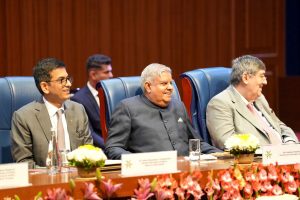
They believe that Modi will choose a non-politician with an impressive body of work in his or her field so that no one can point a finger. Interestingly, they feel that regional considerations will also weigh with the PM. For instance, the BJP’s next thrust areas for political expansion are the south and northeast. It is possible that the choice of both the next president and vice president will be from these regions.

Centre of attraction

BJD MP Jay Panda was the centre of attraction in Parliament last week for his critique of the decline of his party. He wrote an article for an Odia paper which listed what is wrong with the BJD and was obliquely critical of Odisha chief minister Naveen Patnaik for letting down the ideals of the party and not creating a line of succession.

What was interesting was that most of those who came up to Panda to compliment him for speaking his mind about the sorry state of affairs in his party were Congress MPs who too are deeply worried about the drift and leadership crisis in their organization.

When asked why they don’t speak up like Panda, most of them demurred. One said they don’t dare say anything for fear of being thrown out. Another said sarcastically that they are happy with the way things are in the Congress.
Clearly, Congress MPs feel that Panda’s critique of the BJD could have been a critique of the Congress party. No Congress MP dare express it but it is obvious that many are unsure about Rahul Gandhi’s leadership and political skills and would like Sonia Gandhi to create a collective that would take charge of the party with Rahul as a figurehead.

New faces

The BJP’s decision to change most of its sitting corporators in Delhi and fight the municipal polls with a clean slate has its origins in an experiment Modi tried in Gujarat in 2010. That year, the BJP swept the civic elections to win a two-thirds majority in virtually all the municipal bodies.

Two factors contributed to the BJP’s stunning performance in Gujarat in 2010, which far outstripped its victory in 2005. One was Modi’s gamble to field new faces. He replaced almost all sitting corporators and gave tickets to fresh candidates with spotless reputations. The other was to put his personal prestige at stake. He campaigned for the civic election as if it was an assembly poll and made it all about Modi.

Buoyed by the performance in UP, Modi and Shah have decided to adopt the Gujarat model in Delhi. Some 90  per cent of sitting corporators have been denied tickets and replaced with new faces. It seems the party invited applications for the election. Around 40,000 people applied for tickets. The list was whittled down to 3,000 from which the candidates were chosen.

Despite his humiliating experience in the 2015 Delhi assembly polls, in which Arvind Kejriwal’s AAP swept 67 of the 70 seats and reduced the BJP to just 3, Modi is ready to risk his reputation and image once again in the capital even though it’s for a municipal poll. He will lead the BJP’s campaign in Delhi assisted by a star list of ministers and leaders. The motto of the Modi-Shah duo is to win every election, small or big.

Crunch time

CPM general secretary Sitaram Yechury had an embarrassing moment at his press briefing last week. The Railways canteen which provides the snacks and tea for all press conferences in Parliament House served Ramdev’s Patanjali biscuits to the journalists who had gathered to hear Sitaram.

Few have forgotten the strong attack CPM leader Brinda Karat launched against Ramdev some years. She had accused him of using animal bones and other questionable ingredients in his products.

The journalists pounced on Sitaram to ask how he had allowed Patanjali biscuits to be served. The CPM leader smiled in an embarrassed manner and blamed it on the Railways canteen. Interestingly, the biscuits were a copy of the popular Marie biscuits. Ramdev has called his produce Meri instead of Marie!

The logic of a new Bengal district

Aditi Chatterji | New Delhi |

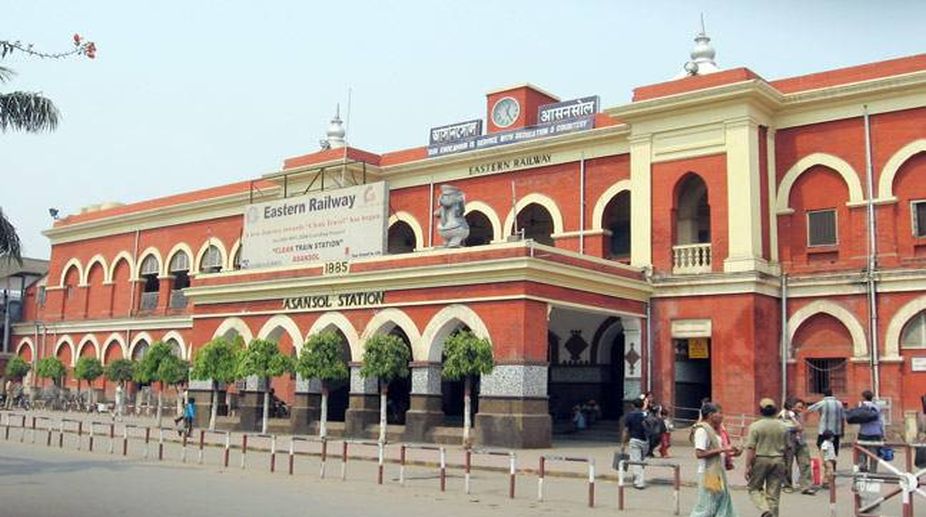
On 25 March 2017, a Kolkata newspaper reported that West Bengal Chief Minister Mamata Banerjee “is all set to inaugurate the newest district of the state – Burdwan Industrial (Asansol-Durgapur) on 7 April, barely two days after inaugurating the new Jhargram district. At a function to be held at the historic Polo Ground in Asansol, she will announce the setting up of the new district. The district administration has already started preparations for her programme. Asansol, the oldest industrial town in the country will become the new district headquarters.”

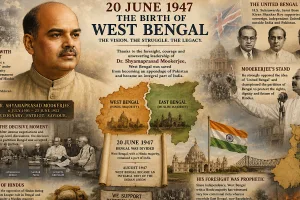
Partition in 1947 saw the rich province of Bengal divided into East Pakistan and West Bengal. Kolkata, once the capital of British India and the “second city of Empire’, declined in significance to the state capital of West Bengal and the next few decades witnessed the loss of power, flight of capital and investment and political turmoil.

The Communist Party of India (Marxist)-led Left Front took over power in 1977 and ruled for 34 years until they were defeated by the Trinamul Congress under Mamata Banerjee in 2011 and virtually routed in 2014. Under the Left Front, the districts of Dinajpur, Medinipur and 24 Parganas were sub-divided into Uttar and Dakshin Dinajpur, Purba and Paschim Medinipur and North and South 24 Parganas.

Under the Trinamul regime, Kalimpong in Darjeeling district was created a separate district last month, consisting of the Kalimpong Municipality and three community development blocks, namely, Kalimpong I, Kalimpong II and Gorubathan. And now the state government is all set to create the newest district by bifurcating Burdwan and consolidating Asansol as a leading district headquarters.

Is the division of West Bengal into smaller and smaller administrative units going to be an effective policy?  Friedrich Ratzel wrote in his ‘Politische Geographie’ of 1897 that the state is an organism attached to the land, which, like other organisms in nature, passes through a developmental cycle. Like natural organisms, states must also grow or die as they cannot stand still.  States were seen to be involved in an ongoing struggle for survival like other natural organisms. The struggle was manifest in the states’ efforts to acquire larger and larger territories as living spaces to support their growing populations – this was the central idea behind the concept of ‘Lebensraum’ (living space), according to R. D. Dikshit writing in 1997.

It may be analysed in the political context of the subdivision of West Bengal into a multiplicity of regional administrative units. The concept of a region is a fundamental one in geography.  A region was defined by Vidal de la Blache as a “domain where many dissimilar beings, artificially brought together, have subsequently adapted themselves to a common existence” while Herbertson defined it as “a complex of land, water, air, plant, animal and man regarded in their special relationships as together constituting a definite, characteristic portion of the earth’s surface.”The earth surface has been classified into several categories. A process closely allied to classification is logical division, where a class is taken as an universe and divided into subclasses based on some logical principle. Instead of seeing similarities, we look for differences; instead of building up, we are involved in breaking down. Divisions are not absolute and should be changed with new information. It is vital to keep updating the regional systems with reviews of data. If an area is to be divided into regions, then all parts of the area must be assigned to one region and each to one region only. Regions of the same order should be based upon the same property. To this should be added that regional boundaries are frequently coalesced with political, economic and social boundaries.

Mousumi Ghosh writes in 2016 that “Asansol city in the western part of the Barddhaman district in West Bengal …is a model of a city which owes its existence to a spatially concentrated mineral deposit, coal.  It is the nodal centre of the vast Raniganj coal belt. Coal is the chief resource which initiated the process of capital circulation in this region…(It) is an important railway junction station in eastern India… Very few cities in India and no other places in West Bengal have such (a) juxtaposition of natural and built space like collieries, agricultural lands, villages as well as very important rail and road networks, junction rail station, basic and heavy industries and different ancillary industries and a bustling trade and transport centre…Asansol has an urban area of 127.87 sq km. The population (was) 475,439 (and) (p)opulation density was 3718 per sq km (in 2001)…(t)he Asansol Municipal Corporation was formed in 1994 by amalgamating Asansol municipality, Asansol blocks and the Burnpur Notified Area. The area of the Raniganj coal field is 1530 sq km…Asansol has an excellent strategic location…in the border region of Bengal and Jharkhand”. 

The Draft Development Plan (2008-2013) of Asansol Municipal Corporation put the population of the Asansol Durgapur Planning Area at 3.2 million (2011), 4 million (2021) and 4.45 million (2025). The larger the population, the greater the need for division, to try to bring about administrative efficiency, create more employment and generate political and economic capital.

The division of Kalimpong from Darjeeling may be seen as a political move to spread socio-economic and socio-cultural development in tricky north Bengal. The division of Barddhaman (formerly Burdwan) is possibly an economic move, as the area of the new district is a treasury with vast income-generating ability, required in the divide and rule tactics of West Bengal.

The writer is Honorary Associate, Centre for Urban Economic Studies, University of Calcutta, Kolkata.

Modi’s gamble in UP

Amulya Ganguli | New Delhi |

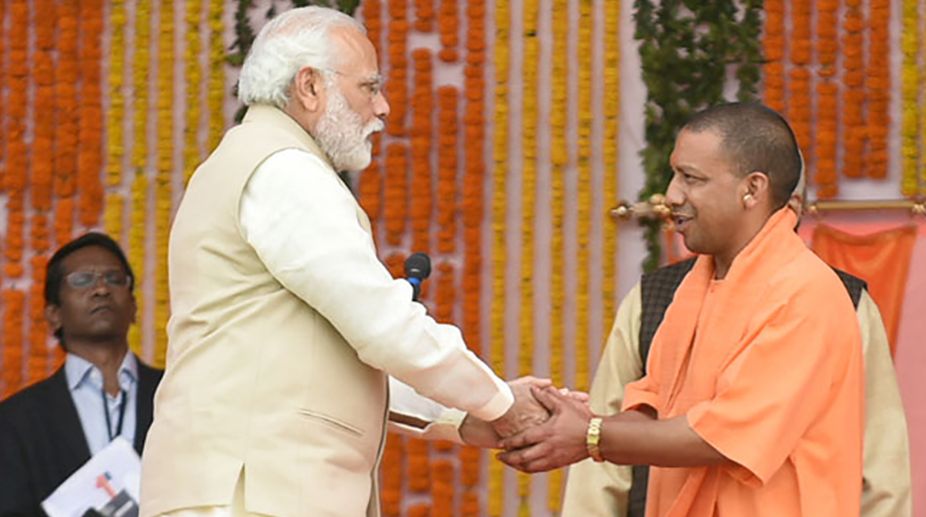
Unlike the diffident and risk-averse Manmohan Singh, Narendra Modi is unquestionably one of the most audacious politicians that India has seen. What is more, he seems to be able to get away with his derring-do. His most courageous gamble was demonetisation which has paid him handsome electoral dividends. Now, he has taken a hugely risky step by approving of the choice of the Hindu hardliner, Yogi Adityanath, as the UP chief minister.

If Modi can pull it off, he will be able to kill two birds with one stone. For one, he can expect a tough outlier who has been outside the “system” till now to crack down on the lawless elements so that the Prime Minister’s dream of making the state an Uttam Pradesh comes true. Secondly, if Yogi can do so on an impartial basis, it will mark the beginning of a new phase in UP’s and the Hindutva camp’s politics.

Most people will keep their fingers crossed on the second point. But judging from what the new chief minister told parliament – he is still an M.P. ~ and at a public meeting in Gorakhpur, where he heads a monastery, about his commitment to Modi’s  sabka saath, sabha vikas  mantra, he is likely to function in a non-partisan manner. Besides, no one can know better than Yogi that if he doesn’t, then all of Modi’s efforts towards vikas and a softening of the saffron brotherhood’s anti-minority image will go for a toss. It is this particular endeavour of the prime minister which will be in focus now. And who better to implement it than the former rabble rouser whose anti-Muslim and anti-Christian diatribes can fill pages of a Google download.

If demonetisation was a surgical strike against the parallel economy, the Yogi’s selection is directed against the RSS-led saffron brotherhood’s nine-decade-old project to convert India into a Hindu rashtra. That doesn’t mean that Modi wants to turn the majoritarian BJP into a carbon copy of the secular Congress.

But it does mean that the ideas which the saffron stalwarts of the past like VD Savarkar and MS Golwalkar advocated about making the minorities second class citizens will no longer enjoy official blessings.

Instead, what Modi wants to ensure is that the government will pursue raj dharma ~ the phrase which Atal Behari Vajpayee used in Modi’s presence in the aftermath of the Gujarat riots of 2002 to highlight the principle of a government’s neutrality.  And Modi presumably expects  Yogi to follow this path as well.

Only time will tell to what extent the latter will be able to suppress what can only be considered his natural, anti-minority instincts. But as a member of the BJP, he must be aware that any move which undermines Modi’s agenda will be politically fatal for the party.

Modi, on the other hand, seems to believe that if he himself can change from being a textbook fascist, as sociologist Ashis Nandy said, or “a modern-day Nero”, as the Supreme Court called him in the context of the Gujarat riots, or a killer of thousands, as Manmohan Singh alleged, to be “an avatar of modernity and progress”, to quote Congress MP, Shashi Tharoor, then so can Yogi. Only time will show whether such a metamorphosis can indeed take place. But any indication that Yogi is no longer an anti-minority hate-monger is bound to be deeply resented by the other hardliners of the Sangh parivar such as the Vishwa Hindu Parishad and the Bajrang Dal. Even the Shiv Sena of the extended saffron brotherhood will feel uneasy for, if anything, the Yogi’s adherence to law and order will mean that the antics of these groups against courting couples on Valentine’s day will no longer be tolerated.

Already, Yogi has told the anti-Romeo squads in UP not to harass boys and girls if they are seen together. He has also said that he will follow the norms laid down by the National Green Tribunal on abattoirs.

These are some of the fallouts which will show whether the Yogi has really changed his spots. For instance, will the Akhil Bharatiya Vidyarthi Parishad (ABVP), the parivar’s student wing, be forced to check its physical intimidation of the “anti-national” Leftist students ? The views of the RSS are not yet known, but it is obvious that the Hindu supremacist outfit  will not be overjoyed with the possibility of one of its poster boys turning over a new leaf.

Modi is apparently following a two-pronged strategy. Even as he had clamped down earlier on Yogi’s ghar wapsi and love jehad campaigns about the reconversion of Muslims back to Hinduism and stopping Hindu-Muslim love affairs, he allowed the RSS chief, Mohan Bhagwat, to address the nation on state-controlled media on Vijayadashami day and filled important institutional posts with RSS nominees who are generally regarded as being unqualified.

The so-called saffronization of education is also continuing apace with the Rajasthan University withdrawing foreign authors from the commerce syllabus and replacing them with the Vedas, the Bhagwad Gita, the writings of Swami Vivekananda and Mahatma Gandhi and courses in yoga to “make the students aware of the great contributions made by the Indian scriptures, religious figures and Indian philosophy”, as a former head of the syllabus revision committee said.

The belief, therefore, that Modi represents modernity and progress is not wholly true. But he does seem to believe in law and order in order to facilitate investments, for which he deserves two cheers.

The writer is a former Assistant Editor, The Statesman.

Scare tactics?

Editorial | New Delhi |

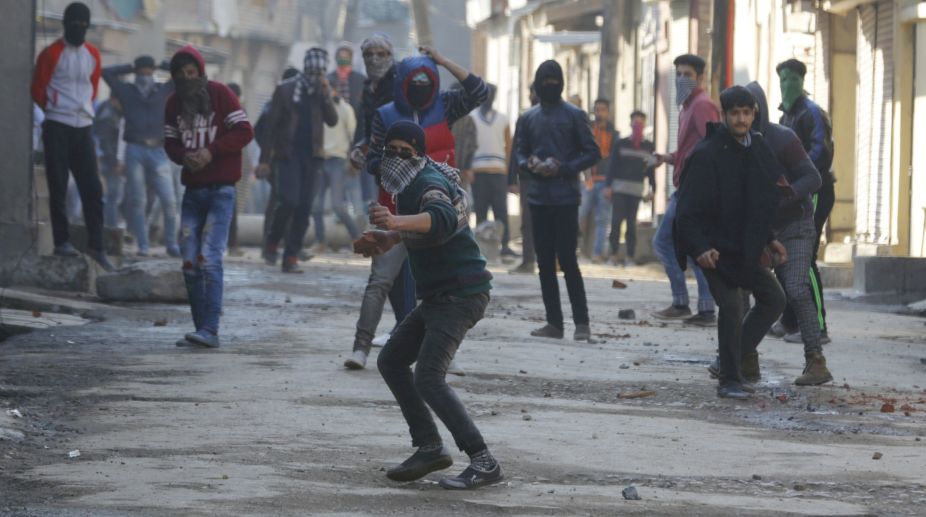
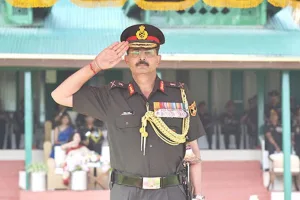
Do our security “leaders” watch too much cable TV? If they did, they would accept that the fright in “Scare Tactics” eventually fizzled out and all ended in a good laugh. Yet it is a different brand of humour that emerges when the bluff is “called”, and the joke is “on” those who tried to scare adversaries into submission ~ often it provokes even more hostility. Weeks back the Army chief warned that his soldiers would go “helter skelter” after Kashmiri youth threw stones to distract the troops on counter-militancy missions. It had as little impact as the much-hyped surgical strikes had on preventing terrorists from using “launch pads” in POK to disrupt normality in the Valley. Now the Director-General of the J&K Police has cautioned those “misguided” young persons that they would be “committing suicide” if they persisted with their harassment of the security forces: even coming up with the profound observation that “a bullet does not know whom it will hit”. Clearly “hurting”, the security forces at large have also made it apparent the they have yet to formulate a strategy that will nullify the “supporting-fire” being extended to militants/terrorists by highly-motivated, perhaps even radicalised, local folk who see themselves getting increasingly involved in the dubious bid for azadi.

The strategy-deficit is not limited to the uniformed community ~ the union home minister has only recently asserted in Parliament that “our security forces are responding the way they are expected to”. Apart from expressing confidence about who will emerge victorious (not mentioning at what cost that victory would be achieved), Mr Rajnath Singh echoed the forces’ charge that those backing the stone-pelters (from across the border?) had made a fine-art of using social media to mobilise the youth within minutes of an anti-militancy operation being initiated ~ another pointer to who held the “strategy trumps”.

There has been little dissipation in the unrest witnessed last June since the killing of Burhan Wani, and there are signs of a “hot summer” in the offing. The state government is truly out of its depths: time was when Mehboobi Mufti wielded some influence with the “azadi agitiators”, but that evaporated when the desire for the gaddi saw her link up with the BJP. And Raisina Hill is too “distant” from the Kashmir Valley to trigger a revised approach,  revive a policy along the lines of what had stamped Atal Bihari  Vajpayee distinct. It requires persons with large hearts to shed the baggage of the past and script a new history ~ not those obsessed with pellet-guns, and who live in a fool’s paradise when jingoistic TV channels slam as “anti-national” all those who recommend a non-military approach to restoring tranquility across the Pir Panjal.

Message to Kremlin

Editorial | New Delhi |

Saint Petersburg in Russia is a long way from Aleppo in Syria.Yet a sinister thread surfaced on Monday when ten people were killed in a Metro explosion in the historical Russian city. Till the morning of Tuesday, no group in Russia had claimed responsibility; this has made confusion worse confounded. Suffice it to register that  more than the Kremlin's intervention in Chechnya, suspicion has  increasingly been riveted to the ISIS in Syria. Is it possible that Moscow's offensive against the Caliphate, most particularly in Aleppo and Damascus, has prompted the Islamists to retaliate?  Monday’s explosion has been described by the Kremlin as the worst act of terror outside southern Russia since a 2011 suicide attack at Moscow’s Domodedovo airport, which killed 37 people. A not dissimilar blast had convulsed the Moscow Underground some years back; the explosion was then ignited by the Black Widows, so-called, of Chechnya. Though the possible involvement of the Chechen rebels cannot readily be ruled out, the number of such attacks has declined  dramatically in recent years.

The demand for Chechen independence isn't as vociferous as it was at least a decade ago; to an extent it has been overshadowed by  Russia's expansionist design in Ukraine. If contemporary geopolitics is any indication, Vladimir Putin's resolve to confront the ISIS in Syria has, as it now turns out, made the scenario decidedly explosive within Russia though he has spoken in favour of a probe into "all variants".  There is significant circumstantial evidence that Russian security services ignored the movement of suspected militants who have left the country for Syria. It was generally presumed that  they would be less of a threat outside Russia than inside.  Furthermore,  many Muslims from the former Soviet republics of Central Asia have reportedly been  radicalised while working on construction sites in Russia. They too have subsequently left for Syria.
President Putin has directed investigators to probe the disaster from "all possible angles ~ accidental, criminal and first of all… terrorist". Further comment must await the outcome of the investigation, yet there is little doubt that he has to countenance a powder-keg  of Russian  adventurism ~ on the side of Bashr al-Assad ~ and fundamentalist fury.  The first is primarily his creation. The risk of a catastrophe was dangerously real ever since the expansionism in Ukraine was followed by adventurism ~ exemplified by bombardment from the skies ~ in Syria.

The slaughter in  Russia's Metro lends a hideous dimension to terrorist strategy in a country  whose public transportation network has been ever so vulnerable. Post the suppression of the Chechen rebellion, the Kremlin's military intervention in Syria has made Russia a potential target for ISIS attacks. This succinctly is Monday's signal from St Petersburg.


St Petersburg metro attacker identified

IANS | Moscow |

A Russian citizen of Kyrgyz origin was identified as the perpetrator of the terror attack that left 14 dead on the St Petersburg metro, Russian authorities announced.

The spokeswoman for the chief Russian investigators Svetlana Petrenko on Tuesday, said the assailant was identified as Akbarzhon Jalilov using genetic analysis and security camera footage of Monday's attack, Efe news reported.

She said criminal investigators found traces of his DNA on the explosive suitcase that had been left behind in the Ploschad Vosstania station, which was deactivated by police before it could be detonated.

On Monday, Jalilov allegedly detonated an explosive on the St Petersburg metro between the central Sennaya Square and Tekhnologichesky Institut stations, killing at least 14 persons and leaving over 50 injured.

The Kyrgyz and Russian Foreign Ministers met on Tuesday in Moscow to discuss the attack.

Abdyldaev said it could not yet be determined whether or not the assailant was a member of the Islamic State terror organization.

The 22-year-old Jalilov, who worked at a garage in St Petersburg, was born in the Central Asian country of Kyrgyzstan, but obtained Russian nationality in 2011.

To prevent further attacks, Russian authorities have reinforced security measures across St Petersburg and Moscow at public transport stations, public buildings, squares, schools and kindergartens.

Railways rope in self-help groups to provide local cuisine on trains

Statesman News Service | New Delhi |

The Railways has roped in self-help groups (SHGs) for providing local cuisine in running trains through station-based e-catering service. 

The Indian Railway Catering and Tourism Corporation Limited (IRCTC), the catering arm of railways, has empanelled nine SHGs to provide authentic regional food cooked in hygienic conditions at 10 stations including Adra, Secunderabad, Vijayawada, Mysore, Ernakulam and Vishahapatnam. 

Passengers of all trains originating or stopping at these stations can avail of the facility of SHG cooked food through e-catering. Currently, 11 lakh meals are served daily in trains across the country out of which private caterers provide the majority of meals. 

The Railways had launched the station-based e-catering facility last year to widen the scope of catering options for train travellers.  The local cuisine scheme was started to encourage self-help groups to participate in the public transporter's catering system and also to provide multiple options for passengers, a senior Railway Ministry official said. 

To begin with, nine SHGs have come forward to provide popular local cuisine at 10 stations and it is expected that more SHGs would join the scheme, he said. Railways has announced a new catering policy with the aim of providing quality food at rail premises and reducing the number of complaints against the existing catering system.  Railways receives about 25 complaints against food quality in a day which are being addressed, the official said. 

The new catering policy envisages separation of cooking from distribution of food on trains and encourages e-catering system. Involvement of SHGs in e-catering provides scope for employment generation and proliferation of the scheme is expected in the days to come.