Logo

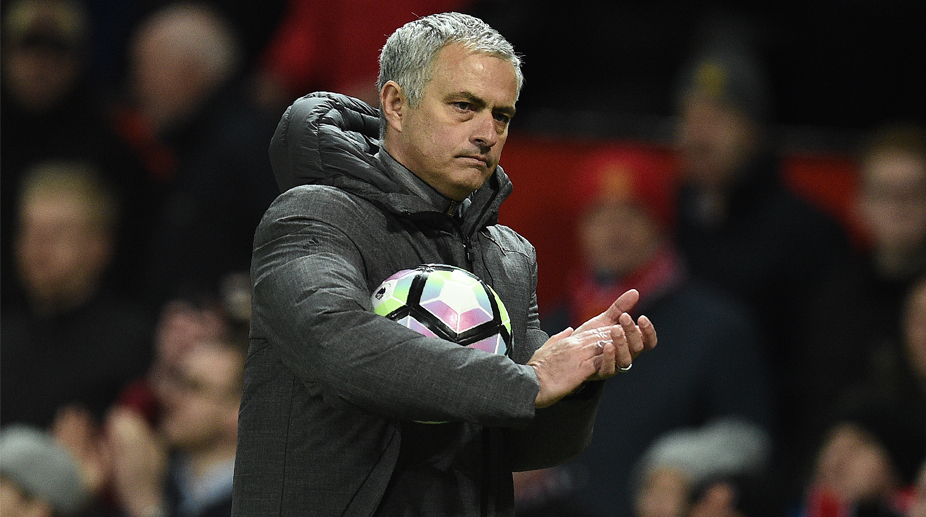
Wayne Rooney still unavailable: Jose Mourinho

"Wayne Rooney is not available and Ashley Young is injured," confirmed Mourinho.

SNS | New Delhi |

Manchester United manager Jose Mourinho has confirmed he will be without five first-team stars for the Red Devils’ English Premier League visit to Sunderland on Saturday, according to a report on the club’s website.

Long-term absentees Phil Jones, Juan Mata and Chris Smalling remain unavailable, while Wayne Rooney and Ashley Young have been deemed unfit to take part in the tie against strugglers Sunderlands.

United captain Rooney has been suffering with sore ankles for a while now, while Young limped out of Tuesday's draw with Everton and was replaced by Luke Shaw in the 65th minute.

"Wayne Rooney is not available and Ashley Young is injured," confirmed Mourinho, when speaking at his pre-match press conference on Friday afternoon.

"[There is] no more news, because [with] Mata, Smalling and Jones you already know that we are speaking about old injuries.”

United’s visit to Sunderland has special significance, as in the opposing dugout will be David Moyes, the man who had an ill-fated term at the helm of the club in the 2013-14 season.

While bottom-ranked Sunderland are favourites to get relegated, United’s top-four hopes are still in the balance and a draw at the Stadium of Light could see them concede defeat in the race for the Champions League spots.

Davis Cup: Kyrgios, Thompson combine to give Australia lead against US

The host nation now needs just one more win for a berth in the semifinals.

IANS | Brisbane |

Jordan Thompson and Nick Kyrgios gave Australia a 2-0 lead over the United States in their Davis Cup tennis quarterfinal tie with hard-fought singles victories here on Friday.

The 79th-ranked Thompson squared off against American No.1 Jack Sock in the first match, played on an outdoor hard court at Pat Rafter Arena in this eastern city, and pulled off a key upset 6-3, 3-6, 7-6 (7-4), 6-4, reports Efe.

The 15th-ranked Sock, who possesses one of tennis' biggest forehands, hit twice as many winners as Thompson off that wing (24 to 12) and controlled his service games for the most part, winning more than 70 percent of both his first-serve and second-serve points.

But Thompson was more opportunistic when he was able to go deep in Sock's service games, converting four of his six break-point chances.

Though slighter of build than his opponent, the Australian also showed surprising power on the serve, throwing down 14 aces to the American's seven.

Friday's second singles match pitted two of tennis' most dominant servers, the 16th-ranked Kyrgios and 23rd-ranked American John Isner.

The Australian had the key edge, however, in the athleticism department and used his all-around game to edge his rival 7-5, 7-6 (7-5), 7-6 (7-5).

Kyrgios had numerous chances to break Isner's serve throughout the match, although both of his service breaks came in the first set. Isner also got his lone service break that set but then did not have a single break-point opportunity over the final two sets.

The Australian went down a mini-break with Isner serving at 5-4 in the final tiebreaker, but he connected on two clutch return of serves to give himself a match point and then clinched the victory with his 20th ace.

"I feel I played well enough to beat a lot of players out there today," Isner was quoted as saying on the Davis Cup's official Web site. "Those two returns at 5-4 and 5-all were pretty high quality and he did it."

The host nation, which has won tennis' premier international team event 28 times, now needs just one more win for a berth in the Davis Cup semifinals.

This quarter-final tie is a battle between the two most successful countries in Davis Cup history, with the Americans having won a record 32 titles, the most recent coming in 2007.

Australia last won the Davis Cup in 2003.

Chris Lynn can take pressure off entire team: Gautam Gambhir

Lynn smacked 93 off just 41 balls at a strike rate of 226.82 against the Gujarat Lions.

IANS | Rajkot |

Kolkata Knight Riders (KKR) captain Gautam Gambhir said if Chris Lynn can keep batting the way he did on Friday against Gujarat Lions, it will take the pressure off other batsmen in the team.

Lynn smacked 93 off just 41 balls at a strike rate of 226.82. The Australian's innings was laced with eight sixes and six fours as KKR marauded to a 10-wicket win over the Lions in the latter's own backyard chasing 184 for victory. 

Gambhir scored 76 off 48 deliveries as the duo's heroics became IPL's highest opening run stand.

"We know what he (Chris Lynn) can do when he is on song," Gambhir said at the post match presentation ceremony.

"We have to give him a longer run. If this is the way he bats, it takes a lot of pressure off the batting line up. Hopefully he can continue his form like this and keep smacking it."

"Lynn can take on any fast bowler in the world right now. Hopefully rest of us can play around him," Gambhir said.

The skipper lauded his bowlers too for restricting a top-heavy Lions batting line up to 183/4 on a pitch that offered little to the bowlers.

"I would like to give a lot of credit to the bowlers. This was a 200 wicket, so restricting a batting line up like Gujarat to 183 is commendable."

Lynn said he would like to continue the momentum, adding he likes the opening slot as the ball comes on to the bat.

"If I can continue this momentum, it will be good for the team. I like the ball coming on (to the bat) and I am used to that. So I am happy," he said.

Losing skipper Suresh Raina, who played well for his unbeaten knock of 68, underlined they have to improve their bowling which lacked teeth on the night to say the least, adding Ravindra Jadeja was sorely missed.

"We need to get better in our bowling department. They played really good cricket shots. We need to learn from here. We missed Jadeja and (Dwayne) Bravo. He (Jadeja) is in form and the No 1 in the world (Tests). Our lack of experience showed especially when you are bowling at the death," Raina said.

Atletico Madrid midfielder Koke robbed at gunpoint!

Koke immediately contacted local police to report the attack.

IANS | Madrid |

Atletico Madrid midfielder Jorge Resurreccion Koke had the worst possible preparation for Saturday's football derby away against Real Madrid when he was robbed at gunpoint, according to reports in the Spanish press on Friday.

The El Mundo newspaper reported that Koke had a watch valued at €70,000 ($74,273) taken from him by an assailant armed with a gun on Thursday evening.

The attack occurred as the player was taking his car from an underground car park in the centre of Madrid around 19:00 hours local time, reports Xinhua news agency.

The robber approached him as he wound down his window to take a ticket from an entry barrier. He threatened the Spain international with his gun and when the player handed over the watch, rode away on a motorcycle.

Koke immediately contacted local police to report the attack.

West Indies vs Pakistan: Hosts win thrilling 1st ODI

Set 309 to win, the West Indies reached the target with one over to spare.

AFP | Providence |

West Indies successfully chased a target of more than 300 for the first time when Jason Mohammed hit an undefeated 91 in a thrilling four-wicket win over Pakistan in the opening ODI.

Set 309 to win, West Indies reached the target with one over to spare in the first of a three-game series at the National Stadium in Guyana on Friday.

Mohammed's runs included three sixes and 11 fours and he shared a key, unbeaten stand of 50 for the seventh wicket with Ashley Nurse (34 off 15 balls). Kieran Powell hit 61.

Pakistan had made 308-5 with 36-year-old Mohammad Hafeez top-scoring with 88 and Shoaib Malik (53) and Ahmed Shehzad also contributing half-centuries (67).

West Indies are seeking a clean sweep of the series to move ahead of Pakistan at number eight in the international rankings.

By the cut-off date of September 30 this year, the top eight teams, including hosts England, will automatically qualify for the 2019 World Cup.

Sadio Mane out for rest of season: Jurgen Klopp

This is a big blow for Liverpool, who are pushing for a top-four finish in the English Premier League.

IANS | Liverpool |

Liverpool head coach Jurgen Klopp on Friday said that forward Sadio Mane will miss the rest of the English football season as the Senegal star will undergo surgery on his injured left knee.

The 24-year-old, who has scored 13 goals in 29 appearances this term, sustained the injury during the second half of Saturday's Merseyside derby victory over Everton.

"Sadio will, we're pretty sure, need surgery. We're not 100 per cent sure when it will happen, but then it is clear his season is over," Klopp said, according to Liverpool FC's website.

"That's what I expected, actually, when I saw the video after the game. I thought he was lucky in this situation that not more happened, but now we are close to the end of the season and that means it will be pretty much impossible that he will play again this season," he added.

"But then he'll have a long break and be ready for next season, so that's the only good news."

This is a big blow for Liverpool, who are pushing for a top-four finish in the English Premier League (EPL). They are currently third in the standings.

Liverpool have already amassed the same number of points this season as they did throughout the whole of 2015-16 (60), with seven matches still to play.

Klopp also insisted that he is not currently bothered about whether qualifying for the Champions League would be a failure.

"We will see what happens. Our opponents are really strong (and) two of the six involved at the moment will not be in the Champions League next year," he said.

"We want to qualify for the Champions League and if you don't then you can think about the reasons for that, but at the moment we don't think about that or why we only have 60 points or why we have already 60 points," the German tactician added.

"The only thing we think is about building a line-up for Stoke City (on Saturday) — and that's a real challenge today, actually — and how we can be as strong as possible there and win the game."

‘Had to unlearn singing’

Statesman News Service | New Delhi |

Actor Ayushmann Khurrana, who is also known for his singing talent, says he had to unlearn singing for his forthcoming film Meri Pyaari Bindu where he is playing the character of an author. Debuting in Bollywood with Vicky Donor in 2012, he has sung numbers like Pani Da Rang, Saadi Galli Aaja, Dil-e-Nadaanamong others. His new film narrates a journey of two characters through incidents and Hindi film songs of different eras. “I think after watching the film, audience will feel very nostalgic. Especially, for moments where they fall in love, childhood memories, singing on favourite songs, getting blank calls on landlines in 1990s when mobile phone was not as popular as today. I think we like to listen to old songs over the new one, till the new song goes into the list of old songs,” said Khurrana. Produced by Yash Raj Films and directed by Akshay Roy, the film releases on 12 May.

A noble effort

Jayasri Mitra | New Delhi |

The National School of Drama, for the last five years, has been searching the roots of Indian culture by organising tribal festivals presenting various tribal troupes from all over India. Ratan Thiyam, globally-reputed theatre personality as well as Chairman of NSD, has just completed hosting such a festival in Tinsukia, Assam as the seventh event of this particular series titled ‘ Adivasi Adibimb’. In fact this project is the brain-child of Thiyam who thinks, quite rightly that our rich tradition of tribal culture is at present in a moribund state. Hence this effort to preserve and protect it.

This time the ‘Adivasi Adibimb’, the three-day National Tribal Festival of Music, Dance and Drama witnessed programmes by 32 troupes from seven states of the North East i.e. Assam, Meghalaya, Arunachal Pradesh, Tripura, Nagaland, Manipur and Mizoram apart from Sikkim and other states of India including West Bengal.

The audience had a grand opportunity to see the dance of Assam’s Mising Bihu, Deuri, Rabha (Goalpara), Bodo dance (Guwahati), very special Jhumur dance (based on Karam Puja) of the tea tribe (Dibrugarh). Arunachal Pradesh’s mountainous region’s Galung Dance (to worship their God for cultivation) was totally different from other tribes.

The host city Tinsukia brought a variety of dance items by different groups. The Limbuguri Tea Estate’s production Odiya Dance had a unique style of presentation while their Santhali dance ‘Dong’ bore a particular mark of the ‘Tea Tribe’.

Meghalaya’s Wangla dance needs specially mention for its inimitable style of performance by Garo Tribes (from Shillong’s Forest Colony) with drum beats and chanting for God’s blessings.

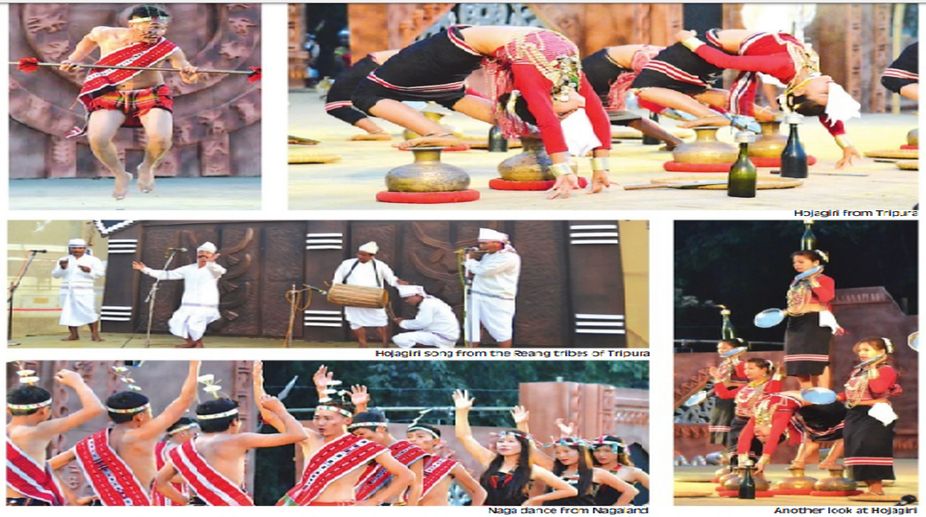
Manipur’s Rongmei Kabui is popular as bee dance, and showed vigorous footwork and sharp, graceful body movements. Tripura’s Hojagiri Dance reminds us of our ‘Kojagori’ rituals. It creates excitement due to its magical exercise of balance by supporting their body on another dancer’s shoulder with weight in hands.

Chakhesang Naga Dance of Dimapur is the very symbol of bravery and courage. The Jharkhand based troupe presented Chhau Dance which was highly entertaining and full of energy. The dancers wearing masks and costume of lions mesmerized the audience by performing martial arts and acrobatics with great agility.

Our very own Santhal dance by Birbhum Blossom Theatre (Director Partha Gupta) was performed with a soothing rhythm while the mesmerizing music of Dhamsa and Madal stole the show. Three separate stages created with clay were for music, dance and drama respectively.

The dramas, ‘Kurbani Bekar Nahi Jayegi’ (Jharkhand) based on the sacrifice of freedom fighter Birsa Munda, and ‘Lamana’ (Manipur) which revolves around suppression on poor Adivasi people showed new techniques and thoughts developed independently outside the influence of our urban theatre. Of great academic interest yet drawing a large audience was a very important seminar session on Tribal Life and Culture.

Academicians and scholars like Anil Saikia, Papiya Roy, Ram Sasoni and Srabanti Choudhuri shared their views on the subject initiated by Ratan Thiyam. The main festival was inaugurated by Mr Ratan Thiyam along with Mr Binod Hazarika and Mr Sanjoy Kishan, the MLAs of the region.

Fitting tribute to a doyen

Statesman News Service | New Delhi |

Jawahar Kala Kendra is presenting an exhibition focused on the work of eminent theatre exponent of India — Ebrahim Alkazi. “The Theatre of E Alkazi” (27 March to 6 May) is a retrospective of his theatre work, spanning a period of 50 years, curated by Amal Allana (Alkazi’s daughter) and designed by Nissar Allana. It was inaugurated as a part of the celebrations of Rajasthan Divas and World Theatre Day and will be on display till 6 May.

“A hushed silence enveloped our home. My father absorbed in the music, eyes shut, a notebook and a well-sharpened pencil are neatly placed in front of him, aligned at a perfect 90-degree angle to the corner of the table. His body, in the pose of Rodin’s ‘Thinker’, is relaxed, but at the same time suffused with a contained energy. Daylight breaks with its soft, pink light, the sound of the sea and the sparrows melt away to be overtaken by the cacophony of best buses. He has been awake since at least 5 am, reading, and has already made himself a pot of tea. In a few moments he will offer a fresh cup to my mother, in bed, a small luxury that she appreciates without fail,” said Amal.

He is a legendary figure of Indian theatre whose remarkable achievements have earned him the Padma Vibhushan, among a vast number of Lifetime Achievement Awards. His story runs parallel to the Independence Movement and the birth of Indian modernism in theatre. He introduced revolutionary ideas in theatre as early as the 1950’s in scenic design, lighting, modern ideas of acting drawing from international traditions and linking these ideas to the performing folk traditions of India. He evolved new training methodologies for student actors, directors and stage designers and spoke of a new ethics and philosophy in theatre.

The exhibition features multiple rooms of rare photographs, objects, archival documents, models of stage sets, using a multi media approach to exposing his vision and ideas. It shows for the first time, Alkazi’s work from the 1940’s and 1950’s that has rarely been seen anywhere in India, and brings a vast treasure of archival material into the public domain.

As a part of the exhibition, a seminar was organised. Participants include eminent theatre personalities like Amal Allana and Hema Singh and also theatre professionals like Ashok Banthia and Vishal Vijay. “We are honoured to have an exhibition of works by E Alkazi at JKK. He is the doyen of theatre who pushed the boundaries of Indian theatre and brought it in line with its international counterparts,” said Pooja Sood, director general, JKK. The exhibition is on display at the refurbished Museum Galleries of Jawahar Kala Kendra, Jaipur. These galleries are equipped with state of the art lighting systems matching international gallery standards.

Ever since its inception, the art and culture hub of JKK has committed to promote multiple types of art. It provides a platform that connects visitors, scholars and art enthusiasts with artists and artisans through a rich programme of exhibitions, music and theatre productions that encompass the culture, history and way of life prevalent in Rajasthan and India.

Laced with glowing imagination

Sandhya Sen | New Delhi |

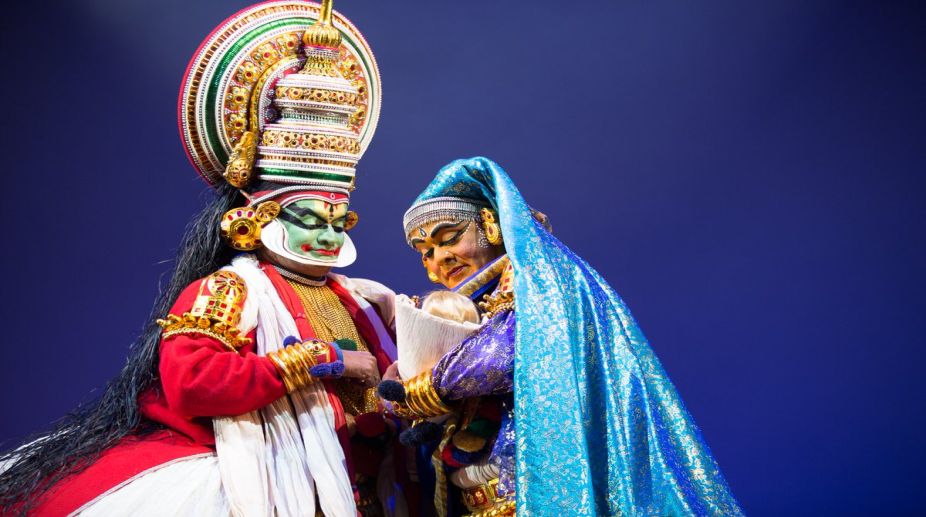
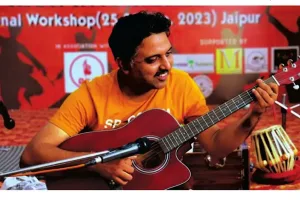
Acultural programme, under the joint auspices of Kalamandalam and Kolkata Kairali Samajam, emerged as a creative production of glowing imagination thanks mainly to the performers, Haridas Alankode and Carina Langfeldt, who are well-trained disciples of Pandit Shiv Kumar Sharma and Thankamani Kutty respectively.

Santoor, with the blending of Hindusthani classical music and the Sufi tradition of Kerala, acquired the role of a solo instrument. Haridas Alankode with rigorous riwaj, proper talim and creative urge exemplified an inspiring performer. His demonstration of Megh was attractive for its elaborate demonstration of alap, jod, jhala and dhrut gat in teental, which were quite in tune with the majestic dignity of the melody. Alankode amply compensated the limitation of the instrument with stroke work of expansive bistar in alap phase and the tanan portion of gat. His command over gayaki anga and laya work had the stamp of his gharana where due stress is put on the thematic gravity. He was duly accompanied on the tabla by Venugopalam.

The Bharatnatyam of Carina Langfeldt drew appreciation for focusing on the structural grace of the Kalamandam gharana under the training of Thankamani Kutty. Starting with Jatiswaram, Carina passed through Natesha Kavutam, Alampu, Shabdam and Shibastakam. Carina's admirable assimilation of Kutty's talim established the literature of the items perfectly.

Kareena’s say about motherhood

Statesman News Service | New Delhi |

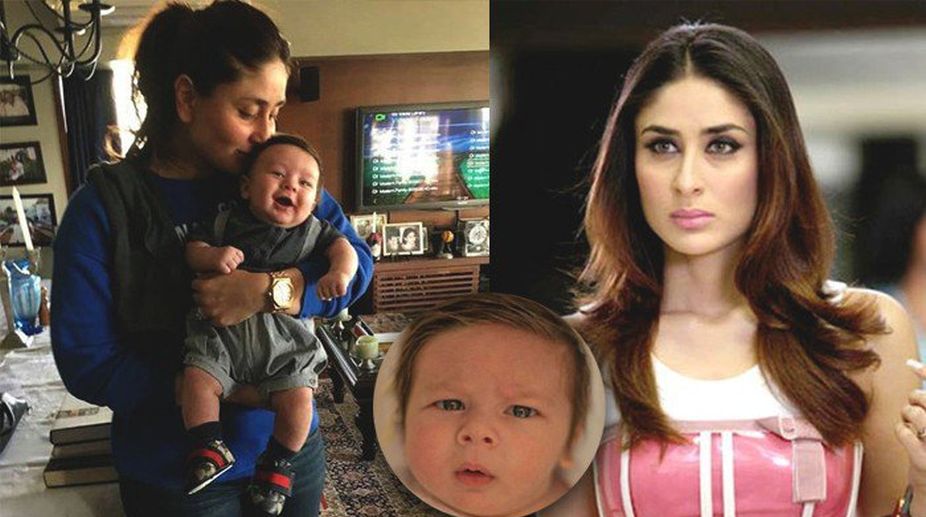
Bollywood actor Kareena Kapoor Khan, who made a comeback on stage soon after she delivered baby boy Taimur Ali Khan, has some really good things to say about motherhood but her notions are a little different from that of her ex Shahid Kapoor’s wife, Mira Rajput. In an interview with a leading daily, she talked extensively about motherhood and how she is dealing with it.

“Yes, I was on my feet a few days after the delivery, but it’s upsetting to have people judge you for it. No one has the right to comment on how I conduct myself or what sort of a mother I am. Everyone seems to have an opinion. Postpartum depression is not a must, right? It’s whimsical to generalise that every woman goes through that phase, almost making it sound like a norm, said Khan.

However, she didn’t mention any names but everything she said looked like a befitting reply to Rajput, whose comment on motherhood became a matter of debate and was trolled incessantly on the social media. She was once in a serious relationship with Shahid Kapoor and their relationship lasted for four years.

Dulcet forever

Mohammad Zia | New Delhi |

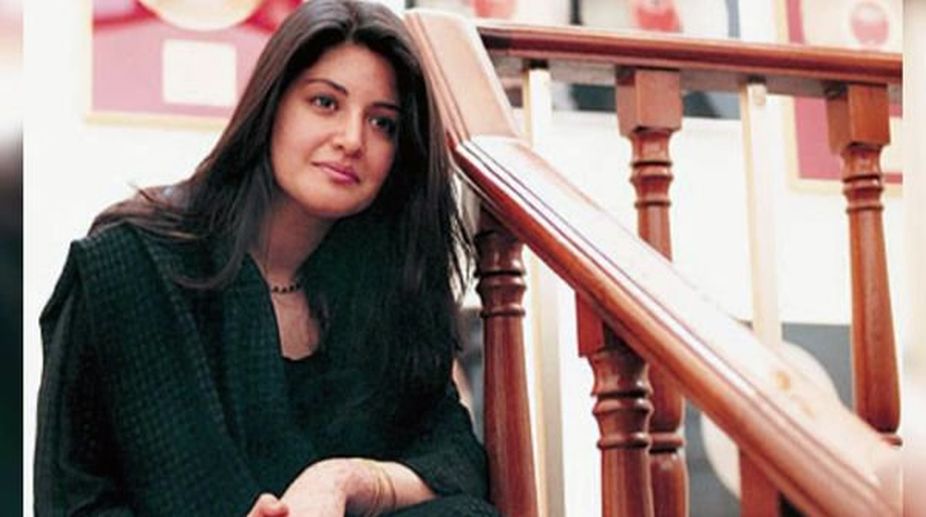
I can’t remember when it was that I first heard Nazia Hassan’s voice. You could say I came out of the womb with the lyrics to Disco Deewane and Aap Jaisa Koi memorised.

I grew up in London more than two decades after she first appeared on the scene. It was here – in London – that her star began to rise.

As I musically came of age some years ago, Nazia’s eclectic sound permeated my taste. In an effort to aurally classify the genres I was exposed to, I wasn’t able to place her in any distinct category. Her brand of pop was unlike the Belinda Carlisle anthems of love on the mixtape my sister and I obsessively listened to, or the Abrar-ul-Haq cassettes my father kept in the car for long road trips.

Her songs bore little resemblance to the Bollywood ballads of the early 2000s and were a world away from the post-Britpop scene that filled my childhood with moody tunes and pensive boy bands.

There was something inherently Pakistani about Nazia and her brother, Zoheb. Yet, there existed an otherworldly element in their music that caught native ears accustomed to Noor Jehan or Farida Khanum completely off-guard.

For me, Nazia existed at a juncture, where the two worlds I occupied, neatly and perfectly, overlapped. She bridged the chasm between my understanding of the old country – that strange and romantic land constantly inhabiting my family’s imagination – and the cultural immediacy of my surroundings at home in Britain.

In life, she was feted as the queen of a new movement in Pakistani music. In death, she continues to inspire.

In a July 1980 interview, Nazia, in reference to her sound, told the Herald, “Yes some people don’t even consider it music; well it’s the kind of the music we dig, take it or leave it. They say classical music is the only real music. Whenever I’m attending a classical music recital, I feel like I’m attending a funeral. You have to sit grim and still – no coughing, no talking lest people think you are being impolite.”

But even more than the music itself, the pair came under attack for offending certain local sensibilities. “See, the thing is, we never pretended to be somebody we were not. We were Pakistani, we were very rooted,” Zoheb says, “It’s just that when we came to London, we imbibed that other culture at the same time. It wasn’t a commercial stint either, like, for the sake of commercialism we were trying to act Western, or trying to do something which was not us. It was us.” Things, however, got out of hand. Effigies were burnt, fatwas were passed. With less going on politically, Zoheb tells me, “(the mullahs) needed a scapegoat situation, and they thought who better than this brother and sister, who the whole nation is watching…(they thought), this will really get people’s interest, and they can twist it and turn it, redirect it to their cause. It was unfortunate, but at the end of the day, you can never put something down which the people themselves want. The masses loved it. They understood it.”

Yet, support and advice came from the man occupying the highest office in the land. “(General Zia) called us at home, and said: ‘Nazia and Zoheb…bachon, aap log nikal jain,’” Zoheb remembers. “We were so young, we hardly knew anything, we were literally babes in the world – not that young, but very naive. So I think he felt a bit protective, and he told us to leave (the country), which I think at that time was the best thing for us to do.”

With fatwas and effigies behind her, Nazia persisted. In this way, she was at the forefront of a culture war, one fought not only between highbrow music aficionados who turned their noses up at fusion music, and those willing to accept the joie de vivre that the two teenagers espoused in their songs, but also one between religious zealots and the rest of the nation, who wholeheartedly embraced her edgy beats.

What was perhaps most striking about the Nazia and Zoheb phenomenon, was the pair’s ability to convey the frustrations, desires, and aspirations of a whole generation of young people growing up in the 1980s.

Within that polarising cultural environment, the two emerged as youth icons – our very own Beatles, minus the crazy haircuts. They were radical, profound, a summation of our potential — who we could be as a nation, and all that we already were.

At the height of their success, the siblings had seven number ones in South America, where they were outselling artists like Duran Duran. In the Soviet Union alone, the two sold almost 250,000 records. When they were signed on by EMI World, the chief executive officer told them, “I can’t understand your music, I can’t understand the language, but it’s selling by the truckloads.”

Nobody could understand the mass appeal of Urdu pop. During the apartheid in South Africa, the pair was one of the first non-white bands to have a song reach number one on the charts. “(We were) invited by some very big companies at the time to sing for Nelson Mandela,” Zoheb tells me. “We didn’t know who he was, but there was a lot of acceptance for this (type of music) worldwide.”

At home, the success of the siblings created not only a sense of newfound respectability towards, and awareness of the music industry as a worthy field, it offered validation to stifled youngsters disillusioned by limited creative opportunities.

Doctors suddenly picked up guitars; bands in urban centers mushroomed. If Nazia and Zoheb can do it, people thought, then so can we. For the first time, “young people felt like they had music of their own,” Zoheb says.

Listening to her music now, one is struck by its timelessness. Telephone Pyar, Koi Nahin, Aankhein Milaney Waley, and countless other songs that the siblings sang together, are best understood as expressions of young love, youthful defiance, staunch individuality. Pakistan and the rest of the world has changed since the 1980s, but there is something hauntingly eternal about the music she created.On the other hand, London, where part of Nazia’s story began, is also her final resting place. The Hendon Cemetery and Crematorium is in a quieter part of the city. It is leafier, suburban, slightly removed from the tachycardia of London’s chaotic heart.

She is buried in the Muslim section here.The headstone reads, “IN LOVING MEMORY OF NAZIA HASSAN – Loving daughter, sister, and mother. Beloved and cherished by millions of people. Died in her youth. August 13th, 2000.”

As we say goodbye, Zoheb tells me that it now feels like everything happened over the course of a few days, that, in hindsight, it was an amazing journey. But there are some things he would change, redo, if given the chance.

“I would bring her back. That’s the first thing I would do,” he says.

Dawn/ANN

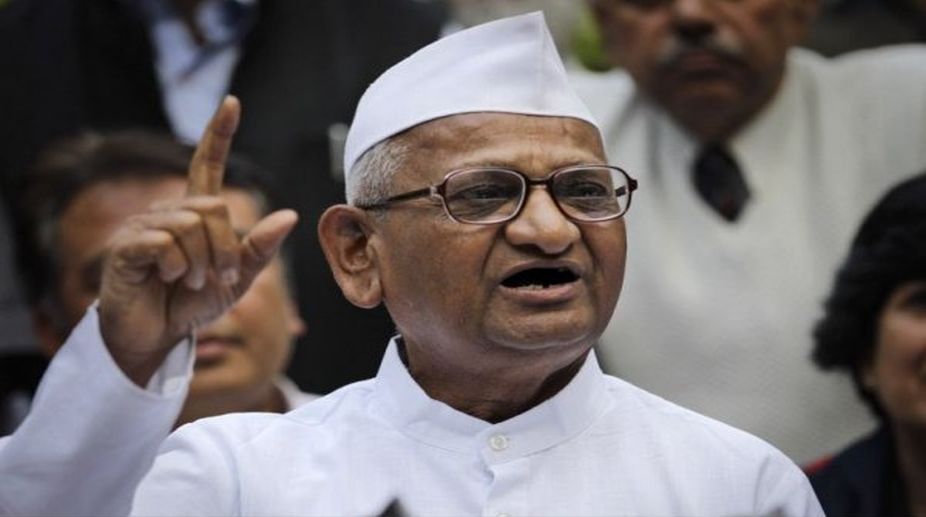
Kejriwal has dashed my hopes: Hazare

PTI | Mumbai |

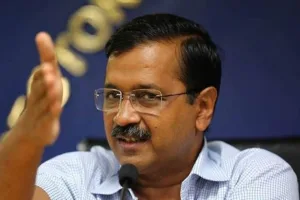
Social activist Anna Hazare today said Delhi Chief Minister Arvind Kejriwal has violated laws and the Constitution, and declared he will never support what the AAP leader has done.

"He (Kejriwal) has dashed all my hopes," Hazare said, reacting to the Shunglu committee report which indicted the Kejriwal's government for bypassing law, nepotism and financial irregularities.

"I am pained by the Shunglu committee report because Arvind was with me in the fight against corruption. I had great hopes from the young and educated Kejriwal and felt that young people like him will create a corruption-free nation," Hazare said in a statement issued at his village Ralegan Siddhi in Ahmednagar district.

"But he has dashed all my hopes," Hazare said, adding he was pained to read about the allegations against Kejriwal in the Shunglu Committee report.

"He was my colleague in the fight against corruption. Then, I felt the educated, new generation could help rid the country of graft. But it was a big dream and it lies shattered," Hazare said.

"When Kejriwal launched the Aam Aadmi Party, it was the Lord who gave me wisdom to keep away (from him) or even my reputation would be ruined," Hazare said.

"Even after he became the chief minister, I never felt a desire to meet him. Now, I understand why he always used to address me as his 'Guru'. The Lord has saved me," the 79-year-old said.

Kejriwal has forgotten all principles in the pursuit of power, Hazare said.

LG cancels office allotment to Aam Aadmi Party

PTI | New Delhi |

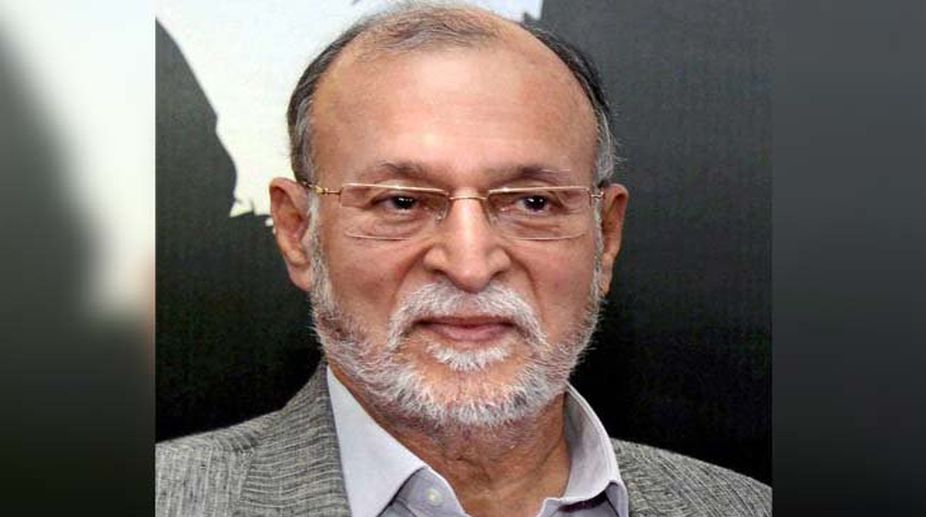
Lt Governor Anil Baijal today cancelled the office allotment to the ruling AAP, stating it was made in "clear violation" of rules, as powers on land in the national capital are vested with the Centre.

Sources in the LG's office told PTI that Baijal had also sought opinion of the Public Works Department on the issue, which gave an opinion that the "accommodation was allotted violating the rules".

"The accommodation allotment to the AAP by the government was in clear violation of laid down rules as powers related to land in Delhi are vested with the Centre," a source said.

The allotment of the accommodation was one of the "irregularities" pointed out by a three-member panel, headed by V K Shunglu, constituted by the then LG Najeeb Jung to examine files related to the decisions taken by the AAP government.

On March 29, Baijal had also directed the Delhi chief secretary to recover Rs 97 crore from the AAP for advertisements projecting Chief Minister Arvind Kejriwal and the party, allegedly in violation of the Supreme Court guidelines.

In November 2015, the AAP government had approved a policy for land allotment to state parties.

The Kejriwal government then alloted a bungalow to the AAP on Rouse Avenue early last year. The bungalow was earlier alloted to Asim Ahmed Khan, the then Delhi Minister, who was sacked over graft charges.

Addressing a rally in Nangloi, Kejriwal said that he and his Cabinet ministers were being targeted by using the CBI.

"The LG and the BJP locked our party office. They want to close our office. They made the CBI raid my office. They only found me as the corrupt person in the country, but found nothing but four mufflers," Kejriwal said.

His deputy Manish Sisoda said his party has waged a war against the corrupt and the struggle would continue even if everything is taken away from them.

Hitting out at the LG and the Centre, senior AAP leader Sanjay Singh said the BJP was not allowing the AAP to work for the people in the national capital.

"I want to know, what is the personal enmity with Aam Aadmi Party? Why is the party being targeted and why this discrimination against us? 

"I want to know whether a party which has got huge mandate from the people and won 67 out of 70 seats cannot have its office in the state?" Singh asked.

He said while the BJP has been alloted a bungalow on the Pant Marg, former LG Jung had also alloted land to the saffron party on DDU Marg, which was orginally earmarked for a school.

The BJP said allotment of an accommodation for office to the AAP was a "criminal breach of trust and illegal encroachment of the property".

"No sanction was taken from the Urban Development Ministry, the authority concerned, before for the move. Land is not a subject for the Delhi government. Even the Delhi government's PWD has flagged the allotment proposal," Vijender Gupta, Leader of Opposition in the Delhi Assembly, said.

"Installation of furniture and electrical fittings made in the government bungalow was turned into party office on public expense. This was against the norms. PWD raised objections, but they were ignored by the Chief Minister," Gupta added.

AAP leader Ashish Khetan said, when "smaller parties" can have offices in the national capital, why can't a state party that has an overwhelming majority in the Delhi Assembly have the same.

Workers urge govt to take over Peerless

Statesman News Service | New Delhi |

More than 200 Peerless employees from all states gathered at Jantar Mantar here under the banner of All India Peerless Employees Union and CITU (Central Industrial Trade Union) to demand the government take over Peerless General Finance and Investment Co Ltd to protect the livelihoods of thousands of officers and field employees.

Earlier, a delegation of Peerless employees, including Nitya Gopal Dutta, working president, Indranil Sengupta, vice-president, and Gautam Chatterjee, general secretary of All India Peerless Employees Union, led by MP Shankar Prasad Dutt met Arjun Meghwal, Minister of State for Finance and handed a memorandum demanding taking over of Peerless. The delegation told The Statesman the minister assured them that he will look into the matter.

Peerless, a premier finance company, had been directed by Reserve Bank of India to stop its deposit taking business from 1 April 2011. The company had been doing this business under the guidance and supervision of RBI since 1987.

Gautam Chatterjee, general secretary of the union, said: “The company used to mobilise small savings from people across the country. So far as the reputation of the company is concerned, Peerless has an impeccable record of paying back more than Rs 20000 crore to its depositors on maturity. Besides Reserve Bank of India has informed honourable Supreme Court of India in 2010 that the finances of the company are very sound , Peerless has deposited 100% of its deposit liability in Public Sector Banks and Government Securities and was running its business as per the RBI guidelines.

“However, Reserve Bank of India issued directive in 2007 to exit from its nature of business and start an alternative business from 01/04/2011, while directing the RBI has completely ignored the advice of the apex court. As a consequence it has resulted in mass loss of employment of thousand of field and office employees of Peerless who were employed in the company," Chatterjee added.

Senior leaders and members of CITU and CPI-M had assembled along with the employees of Peerless. M L Malkotia, CITU treasurer and MPs Shankar Prasad Dutta, Badroddaza Khan and A Sampat expressed their solidarity. Sampath said , “The demands of the employees are very genuine and CPI-M stands with them. We will make sure that we raise the issue in Parliament."

‘So many voices are left unheard’

Ajita Singh | New Delhi |

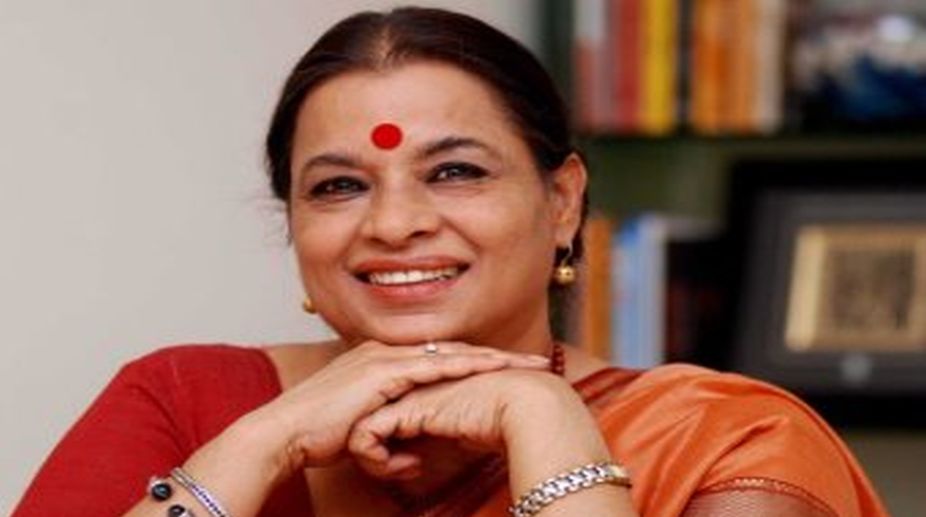
With a mission to empower the women and girls of India, guarantee them their rights and increase understanding of social issues from a gender perspective, Centre for Social Research director Dr Ranjana Kumari has been calling for more representation for women in elected bodies.  In an interview with Ajita Singh, the academician and social activist said elected women’s representatives need to highlight the urgency of passing the Women’s Reservation Bill in Parliament. Excerpts:

Q: The women’s reservation Bill is the longest pending Bill in the history of independent India. Your comment.

A: Yes, the journey has been long. This Bill actually was to be introduced way back in 1996 after the recommendation of the parliamentary committee headed by Geeta Mukherjee. But it was stalled at that time due to a strong protest by male politicians. After 1996, the struggle continued and it was passed by the Upper House (Rajya Sabha) on 9 March 2010. Since then our struggle for passage of the Bill in the Lok Sabha has not ended. It’s unfortunate that so many voices are left unheard and women have been denied the right to equal participation in politics. The serious impediment in tabling the Bill in the Lok Sabha clearly indicates the fear of male politicians in sharing the decision-making power with women.

Q: More women have won in the UP election this time. Your comment.

A: Yes, I have been reading reports that the number of women MLAs in Uttar Pradesh has increased after the polls this year. And that is a very encouraging factor for the alliance that supports the Women’s Reservation Bill. But if you look at the statistics, it’s just a token increase and we still need more representation of women in elected bodies. Also, the elected women representatives need to highlight the Bill in Parliament and reinforce its tabling this time. It’s a fact that women leadership can only be promoted with a united effort. 

Q: What is the present status of the Bill? What are the major hurdles to it?

A:  The Women’s Reservation Bill now demands 33 per cent reservation for women in the Lok Sabha, Rajya Sabha and in all State Legislative Assemblies. The major hurdles have been the indecisiveness of the elected parties who have not been able to strongly push for the passage of this Bill. Also, the lack of political will has deferred its passage.

Q: What is the role of women’s organisations with respect to the Bill? How is the National Alliance for WRB making a 
difference in the ongoing struggle to get the Bill passed?

A: The Alliance for 33% is a group of women’s organisations that are coordinating the campaign to pass the Women’s Reservation Bill.  The group organises lobbying, advocacy activities and public mobilisation in support of the Bill.  The Alliance for 33% has been constantly making efforts to mobilise support for the WRB and to push for it to be tabled in the Lok Sabha and converted into a law.

Q: Who do you think will benefit if WRB is passed in Parliament?

A: It is time that India joins the ranks of leading democracies in its promotion of women’s political leadership. The global average for women in Parliament stands at 22.40 per cent, India stands at a pitiable 103rd place out of 140 countries, with a mere 12 per cent representation of elected women in Parliament and an average of 9 per cent  of female representation in State Assemblies. An increased representation of women is required for social indicators like health and well-being that not only boost economic ones but also reflects a country’s value system. Women’s leadership will highlight concerns related to women’s health and well-being which has been chronically ignored.

Q: How will it change the political landscape of the country?

A: Without collective action on the part of women’s groups, the government will not take responsibility to promote women’s leadership seriously. With a sustained united voice, women will put the issue on the agenda.  Also, with 50 per cent representation at the panchayati raj level, women are now more mobilised and their political aspirations have also grown. Now, they also understand and make their own decisions when it comes to electing a representative. 

Q: How will something like WRB benefit the women of India?

A: Currently, women’s engagement in state and national politics in India remains extremely limited. The Constitution of India, via Articles 325 and 326, guarantees political equality to all men and women. However, because of a range of constraints limiting women’s political influence, political equality has not been achieved. With so few women in governance at this level, the environment in these institutions is unsupportive of women’s growth and engagement and serves to perpetuate their exclusion from the higher levels of political process.

Q: Will more women in governance help create a gender sensitive country?

A: While critics claim that this reservation will only benefit privileged women, they are speaking without any input from the rural communities. To attain true equality of representation in governance structures, women from all spheres must be represented in national and state governance structures at a higher rate. Women’s participation will bring in gender equity and well-balanced governance.

Q: Why is the Women’s Reservation Bill facing resistance?

A: Women often lack support networks, mentoring and skills that help them navigate the political environment. The power lobbies are controlled mostly by men or by those women on whom patriarchy is benevolent. Those in power talk in a language that is categorical in its role play of a society that adheres to gender regressive models and those who quantify power by statistics and vote banks rather than catering to human faces who cast votes that bring people into power.

US officials say military hotline with Russia remains open

AP | Washington |

The United States and Russia will maintain a hotline aimed at preventing midair collisions of their warplanes in Syria, senior US military officials said today, contradicting Moscow's claims that it has suspended the "deconfliction" talks in protest of America's cruise missile strikes on a Syrian air base.

The officials also said they're looking into whether Russia participated in the chemical weapons attack in Syria earlier this week that prompted President Donald Trump's order for a retaliation. They said Russia has failed to control the Syrian government's use of chemical weapons or to account for chemical agents that were supposed to have been eliminated under a 2013 agreement, and may have been complicit in Tuesday's horrifying strike that involved the use of a sarin-like nerve gas.

In Moscow, the Russian government today announced its own swift response to the American intervention against its Arab ally. It said it would cut the hotline that was established after Russia joined Syria's civil war in 2015 to help Syrian President Bashar Assad's government against opposition groups.

The hotline's primary intent is to ensure Russian planes conducting combat missions in Syria's skies don't stumble into an accident or confrontation with aircraft flown by the US-led coalition fighting an Islamic State insurgency in the north of the country.

Foreign Ministry spokeswoman Maria Zakharova reportedly said later today that Moscow would consider reactivating the memorandum with the United States on preventing air incidents in Syria.

"Today, everyone heard the statement of the Defense Ministry, which gave a clear assessment of this step and what motivated it," she was quoted as saying on Russian television station NTV. "We will proceed from the real situation." But the senior US military officials, who weren't authorized to speak publicly on the matter and demanded anonymity, said US-Russian discussions have continued since yesterday's attack on the Syrian military base. They said American officials asked to make sure the military talks would continue, and the Russians said they would.

Pressed on whether the Russians were actively participating in the safety calls, one official said conversations were ongoing.

Neither side had previously expressed an interest in severing the line of communication. Even when the US, under President Barack Obama, briefly halted talks with Russia on a Syrian peace process, both sides maintained the military communications. Eliminating the hotline could enhance the risk of an accident involving the two nuclear powers