Logo

US-Russia relationship may be at an all-time low: Trump

PTI | Washington |

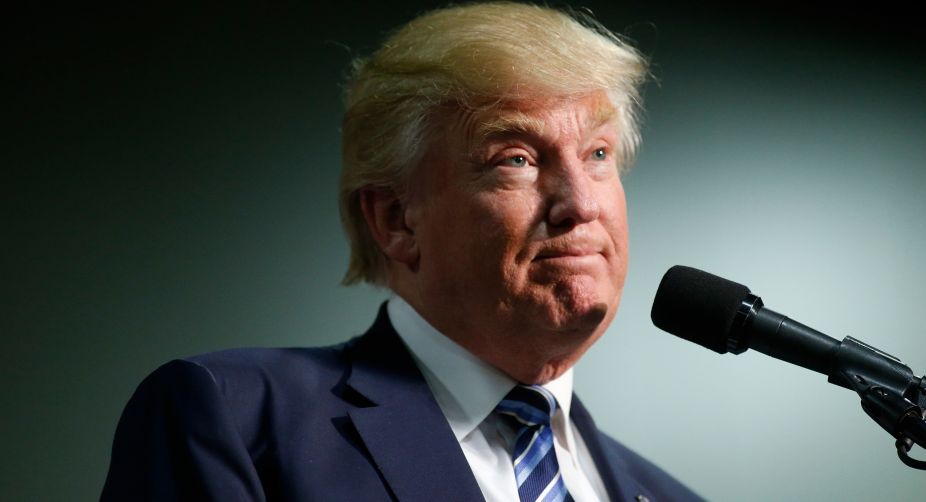
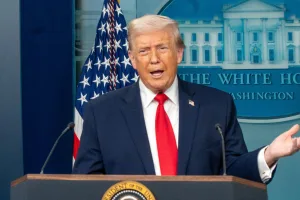
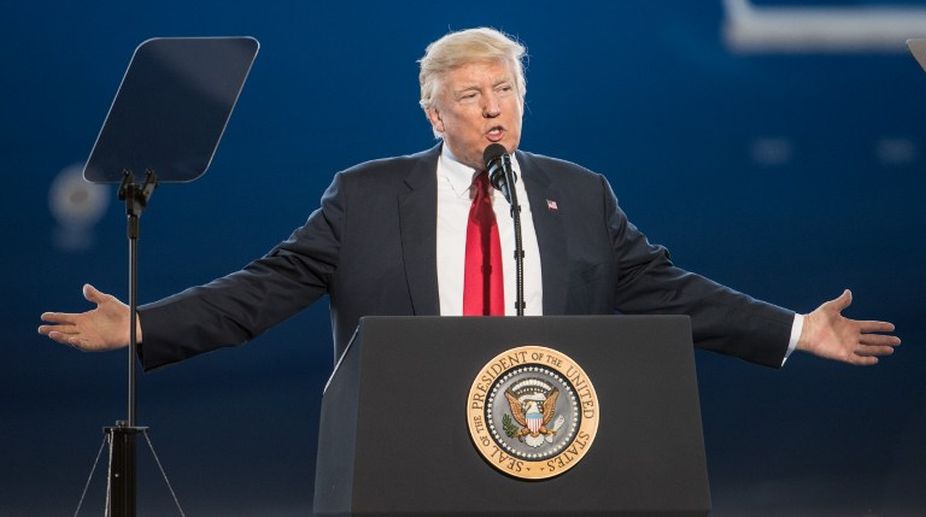
America's relationship with Russia "may be at an all-time low", US President Donald Trump has said, but he hoped that it would be wonderful if the two countries got along.

"It would be wonderful as we were discussing just a little while ago, if NATO and our country could get along with Russia. Right now we're not getting along with Russia at all.

We may be at an all-time low in terms of relationship with Russia, Trump told reporters at a joint White House news conference with the NATO Secretary General Jens Stoltenberg.

"This has built for a long period of time. But we're going to see what happens. Putin is the leader of Russia.

Russia is a strong country. We're a very, very strong country.

We're going to see how that all works out, Trump said.

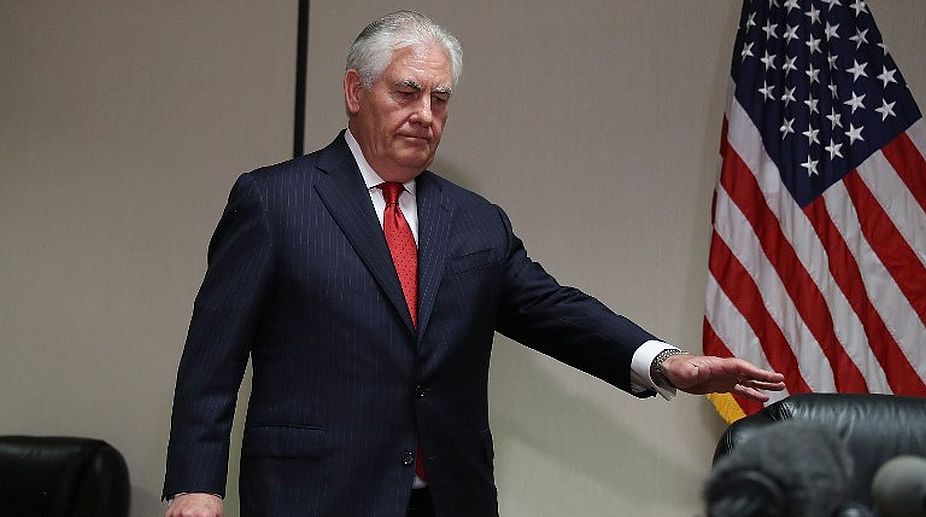
Secretary of State Rex Tillerson has just concluded his maiden visit to Russia during which he met his Russian counterpart and the Russian President Vladimir Putin.

"I'll be speaking in with Rex Tillerson in a little while, calling in. I think he had a very successful meeting in Russia. We'll see. We'll see the end result, which will be in a long period of time perhaps. But the end result is what's most important, not just talk. And I think that based on everything I'm hearing, things went pretty well, maybe better than anticipated, Trump said.

Trump hoped that the European countries would have nothing to fear from Russia.

"I want to just start by saying hopefully they're going to have to fear nothing ultimately. Right now, there is a fear. And there are problems. There's certainly problems. But ultimately, I hope that there won't be a fear and there won't be problems and the world can get along. That would be the ideal situation, he said.

Stoltenberg said NATO and its member countries need to find ways to talk with Russia.

"We believe that the precondition for a political dialogue with Russia is that we are strong and that we are united. That based on that, we can talk to Russia because Russia is our neighbour. Russia is here to stay. So we have to find ways to manage our relationship with Russia, he said.

"I am absolutely certain that the US supports this approach, partly because the United States is contributing with forces to our enhanced presence in the eastern part of the alliance, and also in the southeast of the alliance in Romania.

And the US and the President has clearly expressed that they want dialogue with Russia, but based on unity and strength in the alliance, the NATO chief said.

Stoltenberg said he strongly believes that the only way to deter Russia is to be strong.

"But the only way to avoid a new Cold War, avoid the arms race, and avoid increasing tensions is to continue to engage Russia in a political dialogue and to make sure that what we do is defensive and proportionate in response to a more assertive Russia," he said.

"The most important thing is to have a strong alliance, to stay united and be firm and predictable in our approach to Russia. And that means that we have to invest in our collective defence. That's exactly what we are doing; deploy more troops in eastern part of the alliance; increase the readiness of our forces; and increase defence spending, he said.

Stoltenberg welcomed the very strong message from Trump on the importance of increased defence spending.

"We have started to do this, so we are implementing the biggest reinforcement of our collective defence since the end of the Cold War, providing credible deterrence, he said.

But at the same time, we have to find ways to engage with Russia, to talk with Russia. Because Russia will not go away. Russia will be our biggest neighbour. We have to find ways to live with them and to try and avoid a new Cold War, a new arms race, Stoltenberg said.

Don’t have much at stake: Swara Bhaskar on being frank

IANS | Mumbai |

Actress Swara Bhaskar, who is known for being outspoken about her thoughts, says she is not afraid to speak her mind as "doesn't have much at stake".

"To be brutally honest, I do not have that much at stake. I am not Shah Rukh Khan or Aamir Khan. I don't have crores of endorsements to lose. I don't have the kind of visibility that they do. I don't have lots of property or companies. What will suffer in my case? And I don't think Bollywood is that narrow minded that they would not caste me in a film because of what I think," Swara said.

"My producers sometimes get a little like, 'Swara, can you not say so much?'. So now I have a plan. I will say whatever I want to say until there are two months to the release of my film. Then, I will calm myself and I will only post about my film," she added.

The 29-year-old, who has recently delivered a powerhouse performance in Anaarkali of Aarah, will next be seen on screen in romantic comedy Aapkey Kamrey Mein Koi Rehta Hai, directed by Gaurav S. Sinha.

The actress spoke about this and more in a candid talk for an upcoming episode of Off Centre on CNN-News18. It will aired on Saturday.

Russia, US agree on joint work over Syrian conflict

IANS | Moscow |

Russia and the US on Wednesday agreed to keep on fighting international terrorism and continue discussions on Syrian conflict settlement, despite turbulent bilateral relations and a string of pending disputes between the two countries.

In a news conference following talks with visiting US Secretary of State Rex Tillerson and a two-hour joint meeting with Russian President Vladimir Putin, Russian Foreign Minister Sergei Lavrov said the discussions were fruitful, underlining good prospects for future joint work.

"It has been a long day…The talks were comprehensive, frank and covered the whole spectrum of issues, which are key to our bilateral relations and interaction on the international affairs," Xinhua news agency quoted the Minister as saying.

"With all the existing problems, both objective and artificially created ones, we still have quite a few prospects for joint work. Russia is open to dialogues with the US in different areas, and not only to dialogues but also to joint actions," he added.

Echoing the Russian stance on cooperation, Tillerson said Russia and the US will continue discussions about how to find a solution to the Syrian conflict.

"Foreign Minister Lavrov and I agreed we would consider further proposals made about the way forward in Syria, including consulting with our allies and coalition members." Tillerson said in the news conference.

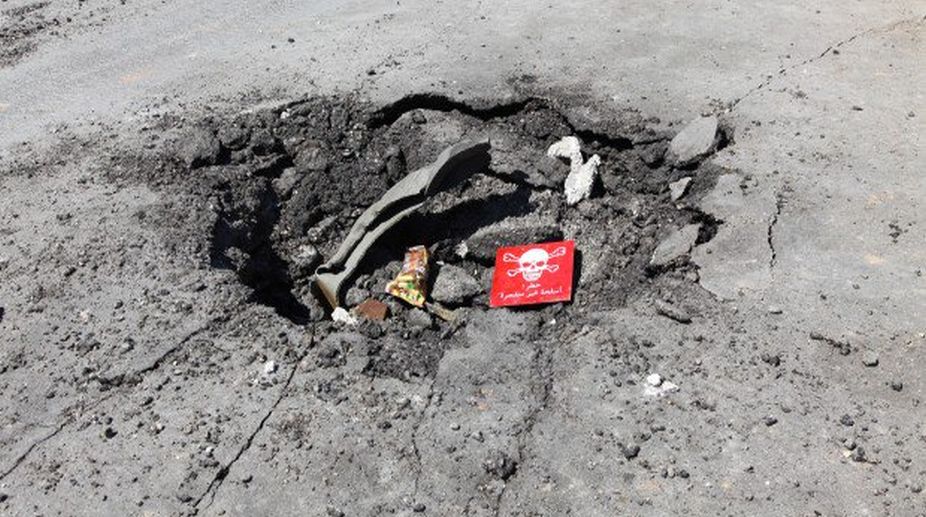
Tensions between Moscow and Washington have further aggravated over Syria after the US missile strike on a Syrian military airfield on Thursday, which it claims to be in response to the alleged Syrian government's chemical weapons attack last Tuesday in Khan Sheikhoun.

Earlier in an interview broadcast on Wednesday before the meeting with Tillerson, Putin said mutual trust between Russia and the US, especially on the military level, had eroded in the first few months of Trump's presidency.

Putin's view was shared by Tillerson who, on the first visit by the Trump cabinet to Russia, said ties between the two countries were at a low point marked by serious distrust.

"There is a low level of trust between our two countries. The world's two foremost nuclear powers cannot have this kind of relationship," he said in the news conference, adding that Moscow and Washington had agreed to establish a working group to identify problems and improve bilateral relations.

With a shared willingness to mend the battered ties, Russia and the US agreed on Wednesday to work together on an investigation of the Syrian chemical weapons attack, although the divergence in their stances have not changed much.

Tillerson reiterated Washington is "quite confident" that the recent chemical attack was planned and executed by Syrian government forces, which involved chlorine bombs and other chemical weapons on more than 50 occasions.

Calling for an "objective and unbiased probe" into the chemical attack in Syria, Lavrov said Russia has no intention to shield anyone responsible for the incident and repeated Russia's view that the Syrian government was not responsible for the attack.

Russia vetoed a UN resolution demanding the Syrian government cooperate with an investigation of the suspected chemical attack, saying that Moscow had consistently expressed its "categorical disagreement" with the draft resolution, which led to further criticism from the West including the US.

"The international community has spoken. Russia now has a lot to prove," US Ambassador Nikki Haley said

It’s a privilege to play army officer: Nimrat Kaur

IANS | Mumbai |

Actress Nimrat Kaur, for whom being in the army was once a "dream profession", says she feels privileged that as an actor, she will get to live a bit of that desire courtesy an upcoming web-series The Test Case.

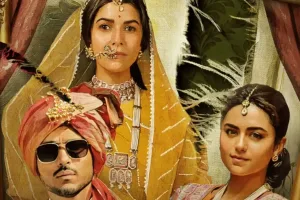
Directed by Nagesh Kukunoor, the web series on ALTBalaji will feature Nimrat as the Indian Army uniform-clad Shikha Sharma. A poster of the show features her in a rugged look with a rifle in her hand. 

The tagline reads: "When terrorists are at your door, will you trust a woman to shoot them down?"

For Nimrat, it's deeply nostalgic.

"It is very close to my heart. I have grown up watching my father put on the uniform and when he gets ready everyday for work, it's a great privilege and an honour to play an army officer as an actor," the actress told.

"Life has come a full circle for me in that sense and it's a dream part which was actually my first dream profession. As a kid growing up, I always wanted to join the army until I realised how difficult it is to be an army officer. Then, I said okay, it's time to have other plans because this is not as easy as it seems," she added.

Nimrat's father was posted in Kashmir. In past interviews to the media, she has said he was in Kashmir when terrorists kidnapped him and terminated him for not conceding to their demands.

No wonder then that the role as an army officer assumes greater significance for The Lunchbox fame actress, who was in the capital to launch the new Audi A3 sedan last week and is here on Thursday to launch The Test Case.

"It's a very important subject where the show is about the first woman officer role in a combat in Indian Army. It's a fictional account based on the ruling that was passed last year that women now can be in combat roles in the Indian armed forces.

"I am very excited about it and very hopeful that it will be loved," she said.

Nimrat has experienced working in the west through TV shows like Homeland and Wayward Pines. Now exploring the web series medium in India is interesting to her.

"I think the advantage of being a part of a web-series which is an online medium is that you don't have the restrictions one would normally have of not being able to depict a certain part of a woman's life or of an individual's life.

"You dona¿t have to worry about the censorship and you can literally depict life as it is. I think that is something that is very important about the story that we will tell. It's going to be a very intimate look at the life of a girl in an environment full of men."

What's next on the Hollywood front?

"Nothing that I can announce right now."

World economy witnessing ‘cheerful spring’: IMF chief

IANS | Brussels |

 The International Monetary Fund (IMF) chief Christine Lagarde said the world economy is witnessing a cheerful "spring", but warned "sword of protectionism" would overshadow trade outlook.

After six years of "disappointing" growth, the world economy is gaining momentum, Lagarde said on Wednesday while addresing an event organised by Brussels-based think tank Bruegel.

According to the IMF chief, for advanced economies, the outlook had improved with stronger manufacturing activity, this upswing was broad-based across countries, including in Europe, although some countries still faced high debt and weaknesses in some banks, Xinhua news agency reported.

The prospects for emerging and developing economies also boded well for global growth, Lagarde said, adding that they have driven the global recovery in recent years and would continue to contribute more than three-quarters of global gross domestic product (GDP) growth in 2017.

"We see a global economy that has a spring in its step, benefiting from sound policy choices in many countries in recent years," Lagarde said.

Her remarks came a few days ahead of the IMF's scheduled release of world economic outlook as well as the Fund's spring meeting when finance ministers and central bankers were expected to meet and discuss world economy in Washington.

"At the same time, there are clear downside risks," Lagarde warned.

"Restricting trade would be a 'self-inflicted wound' that disrupts supply chains, hurts global output, and inflates the prices of production materials and consumer goods," she added.

The IMF chief urged joint efforts to bolster global trade as it promoted innovation-sharing and encouraged firms to invest in new technologies and more efficient business practices.

"Let's build a more resilient and inclusive global economy with sound policies and strong international cooperation," she added.

India trade deal may not be possible: Australia PM Turnbull

IANS | Canberra |

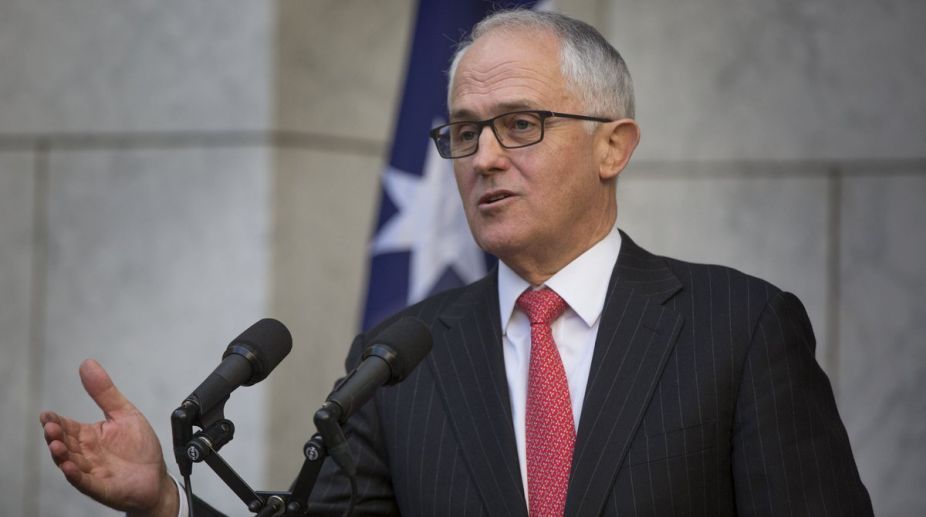
Australian Prime Minister Malcolm Turnbull on Thursday said it might not be possible to reach a free trade deal with New Delhi, despite his and Indian Prime Minister Narendra Modi's attempts to revive talks.

Turnbull visited India earlier this week, meeting with business leaders and politicians in the hope of furthering talks about striking a free trade deal between the two nations.

Turnbull, who returned to Canberra on Thursday following his visits to Mumbai and New Delhi, told the Australian Broadcasting Corporation that, at this point in time, a free trade agreement was not viable.

"It may be that the conclusion will be reached that the parties are too far apart to enable a deal to be reached at this time," Turnbull said.

"The fact is that the Indian offers have not been adequate to date. It has got to be a deal worth doing."

The Prime Minister said while talks would not stop between India and Australia, it would take time for India to internally review its stance on both free trade and protectionism.

"The fact is that there hasn't been enough progress, and so what we've agreed to do is to ensure that our negotiators get back to the table and they identify the respective claims so we can see where they're close, where they're far apart, and the issues that they're not addressing," he said.

"The important thing is that Prime Minister Modi and I have given our prime ministerial direction and leadership and impetus to ensure that the two sides will focus on the 'nitty gritty' of what the free trade agreement would involve."

Meanwhile, Australia has resisted India's push for it to relax some immigration restrictions – including on 457 visas – which would allow greater numbers of Indians to work in Australia, the Australian Broadcasting Corporation reported.

Turnbull refused to be drawn on what had prompted his predecessor Tony Abbott to say in late 2014 a deal could be completed by the end of 2015.

During his visit, Turnbull told business leaders Australia and India's $20 billion two-way trade was "a fraction of what we should aspire to, given the many points of intersection between our economies".

On Wednesday night, the Prime Minister said he was confident that figure would grow, with or without a formal trade deal.

"Modi and I want the matter to be resolved and we have a great economic relationship and it's getting stronger all the time and it will grow whether or not there is a free-trade agreement, but it would obviously be enhanced if there was." 

Didn’t feel bad for not winning National Award, says Alia Bhatt

IANS | Mumbai |

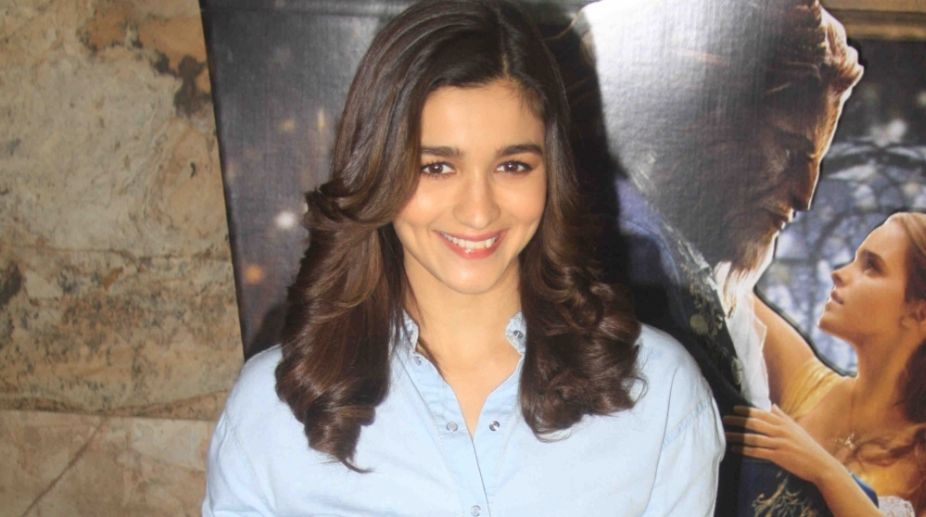
Bollywood actress Alia Bhatt, who was awarded the Lokmat Maharashtrian of the Year Award on Tuesday, says that she did not feel bad for not winning the National Award for Best Actress this year.

Alia's performance in Udta Punjab was received well by critics and audiences alike. At the media interaction after the awards, reporters expressed their sympathy for Alia not getting a National Award.

"Please don't feel bad. I am not going anywhere. There is lot of time. I did not feel bad so even you don't feel bad about it," the Student of the Year actress said.

"It's a moment to celebrate as Hindi and Marathi cinema won so many awards and it's a very big moment to celebrate talent," Alia said.

Expressing her joy on winning the Lokmat Award, Alia said, "It's a great moment. Winning this award shows that you are now in the heart line of your country. So it's great."

Alia was last seen in Badrinath Ki Dulhania, a romantic comedy film directed by Shashank Khaitan and produced by her mentor Karan Johar.

Asked when she would start working for her next film Dragon, she said: "Ranbir is here, I will ask him when he will finish his shooting for 'Dutt' so that we can start the film, I will go and ask for the dates."

Dragon, a superhero film, will see Alia and Ranbir together on screen for the first time. Written and directed by Ayan Mukherji and produced by Karan Johar, it also stars Amitabh Bachchan. 
 

Can mediation really help?

FI Choudhury | New Delhi |

A sense of scepticism is looming over the out-of-court-settlement between the parties on the Ram Janambhoomi-Babri Masjid issue as suggested by the Hon’ble Chief Justice of India. The idea is noble but scepticism finds its ground to the pre-condition suggested by Subramanian Swamy that the Ram Temple should be built at Ram ‘Janmabhoomi’ while the ‘Masjid’ should be on the other side of Sarayu river. A bargain before mediation promises its failure making a way for BJP to pass legislation in Parliament for the construction of Ram temple in Ayodhya, which in fact is easier.

The Ram Janambhoomi-Babri Masjid issue is so trivial that even the Presidential reference seeking the Supreme Court’s opinion under Article 143(1) of the Constitution on whether a Hindu temple or any Hindu religious structure existed prior to the construction of the Babri Masjid was returned unanswered by a five-judge Bench. Several moves in the past to settle the issue through negotiation including one attempt by the Shankaracharya and religious leaders from Muslim community resulted in failure. Muslim organisations, including the Babri Masjid Action Committee are sceptical about the out-of-court settlement because of past experience.

The Ayodhya dispute is mixed with mythology and history. Faith contradicts facts. The issue remained unsolved even after a quarter century after 1992 and when in all elections the Ram temple issue provided oxygen. Religion still works magic in Indian elections and the promise of a Ram temple polarised votes to the aid of BJP to great extent.

Muslims offered namaz in the Babri Masjid till December 1949 when one night idols were clandestinely installed inside the mosque prompting the lodgment of an FIR. A declaratory suit seeking entitlement to visit and worship was filed. As a temporary measure the Civil Court, Faizabad, ordered refraining from removing the idols and interfering with the puja etc. although the rights were in dispute. Thereafter the Nirmohi Akhara filed a suit in 1959 followed by Muslims filling a case in 1961 praying for a declaration regarding the land.

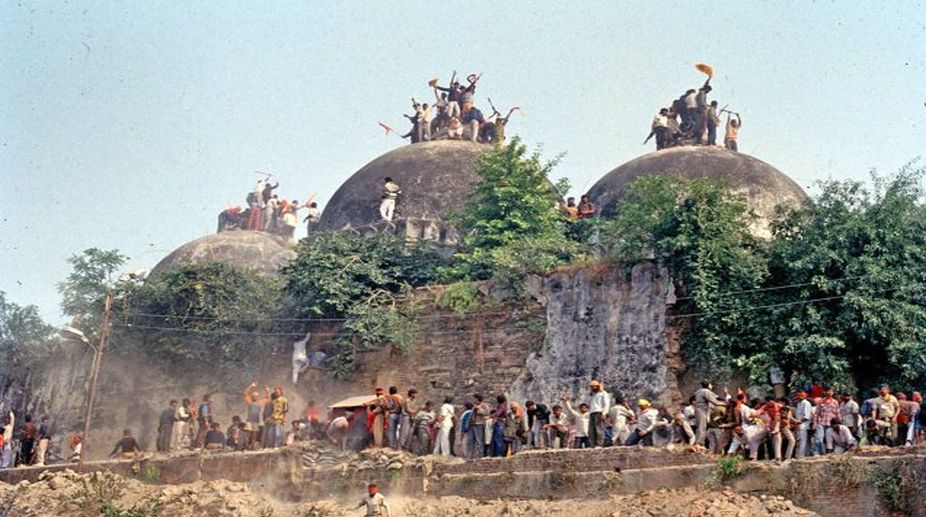
Another suit came to be filed in 1989 by Vishva Hindu Parishad (VHP). Eventually Allahabad High Court ordered that all the suits regarding the dispute be transferred to the High Court. During the pendency of the cases the country witnessed Babri Masjid demolition at the hands of kar sevaks in 1992. After 18 years, the Allahabad High Court (by a 2:1 majority) and without passing judgment on the title of the disputed land partitioned the property into three parts; one-third to Sunni Waqf Board, one-third to Nirmohi Akhara and one-third to Ram Lalla. This resulted in a more complicated legal tussle in which the Supreme Court intervened in 2011. The matter is pending before the Supreme Court wherein the Chief Justice of India proposed to explore an idea of out-ofcourt-settlement through mediation between the parties.

BJP’s spectacular victory in the state of UP and with Yogi Adityanath as the new CM, possibility of construction of the Ram temple at Ayodhya is seemingly high. Yogi Adityanath himself a vocal proponent of the Ram temple belongs to the Gorakhnath Mutt, which has been associated with the Ram temple movement since 1949. This makes the balance tilt towards the one disputing party. The mediation might see a blank as the Ayodhya dispute is not merely a land dispute; it has parallel criminal proceedings in which many prominent BJP leaders are facing charges. The dispute which saw the demolition of the Babri Masjid highlights a problem deeply rooted in religious faith of two communities in the country. Out-of-court-settlement on the title of the disputed land between the two warring religious groups would not per se allow the government to withdraw itself from prosecuting the criminal cases against the prominent BJP leaders, matters which are at an advanced stage of hearing. This may not be a palatable position for the BJP.

Supreme Court’s suggestion has rekindled a debate on Ayodhya dispute. Different interested groups have welcomed the decision of CJI. An exception is the Babri Masjid Action Committee which though it welcomed the move, also expressed its scepticism on the settlement. Given its past history, private negotiation is unlikely to yield results in this sensitive and sentimental matter. Mediation, even if it prompts a solution cannot negate the eruption of fanatism on either side in future. Further, when BJP is at a much advantageous position of passing legislation in the Parliament to erect a Ram temple, mediation seems to be a weak tool to bring peace. Most welcome therefore would be a judicial pronouncement that would not only seal the dispute but also preserve the secular fabric.

The writer is an Advocate-on Record, Supreme Court of India and Life Member, Indian Society of International Law.

A law only in name?

Yogesh Pratap Singh and Sanjeeb Panigrahi | New Delhi |

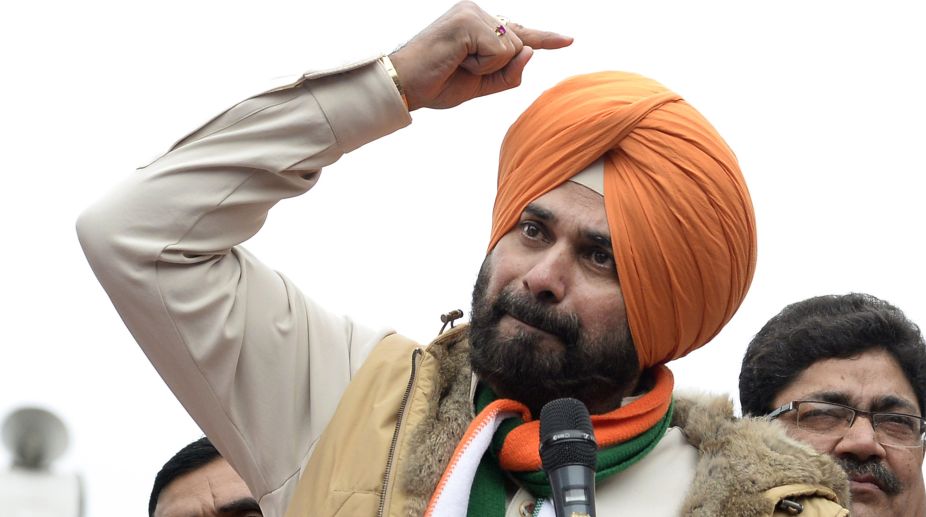
The decision of Mr. Navjot Singh Sidhu to continue to be part of a TV comedy show despite being a Cabinet Minister in Punjab has raised a vexed legal question as to whether a minister while discharging his constitutional duties can be sanctioned to undertake commercial activities for her/his personal gain. Though there is no express legal or constitutional bar on doing so, but participating in a TV show to earn money is still an area of dispute which is directly in conflict with the code of conduct for ministers.

There is no decision of any court in this country, or for that matter, in other jurisdictions where the courts have attempted to regulate the personal conduct of a minister, or have sought to enforce ethical rules of personal behaviour. The inapplicability of the provisions of Office of Profit Law to a Minister would only demonstrate that this law requires a stern surgery.

The Rationale

The idea behind the office of profit – a concept that evolved in England – was to preserve the independence of the legislature by keeping its members away from any temptations from the executive that could come in the way of independent discharge of their duties and to ensure the neutrality and impartiality of MPs in the conduct of public affairs.

Articles 102 (1) and 194 of our Constitution empower Parliament and State Legislatures to declare certain offices under the Union or State governments as exempted from the disqualification. Governments had in past exempted many positions from the purview of this Article for their political convenience.

When dysfunctional laws like Prevention of Corruption Act, Dowry Prohibition Act and the Office of Profit law congregate to create a sluggish and dysfunctional State, the hope of developmental politics evaporates.

If Office of Profit does not apply to Mr. Sidhu because it is a private engagement, then an MP/MLA or a Minister cannot be stopped from becoming a Director of a Public Limited Company in lieu of an attractive salary. But then it would be more honest to abolish the office of profit law altogether, rather than amend it into such anaemic shape that it becomes a non-law.

Minister Already in a Dual Role

In the light of provisions of the Constitution, the Representation of People Act, 1951 as well as the Salary, Allowances and Pension of Members of Parliament Act, 1954, it can be easily argued that membership of Parliament or State Assembly is an ‘office’ in as much as it is a position carrying certain responsibilities which are of a public character and it has an existence independent of the holder of the office.

The words of the Oath or Affirmation – “faithfully discharge the duty upon which I am about to enter” – which is required to be made by a Member of the Legislature show that a Member is required to discharge certain duties after he is sworn in. However, in this respect, when a Member of Parliament or State Legislative Assembly is appointed as Minister, he gets a dual role – these being, firstly as a representative of his or her constituency, and as a representative of the Executive with a much wider ambit and responsibilities.

Engaging himself/herself in any other work for monetary benefits would certainly detract the Minister from his official duties and divert his attention. Mr. Sidhu may be a prodigious personality and be capable of discharging all duties scrupulously but allowing this will open a Pandora’s box.

From 10 am to 5 pm you are a public servant and after 5 pm you are not a public servant seems unfounded. Exceptions may have been created for persons like Dr. Bidhan Chandra Roy, who was conducting free clinics for the poor and provided free public service. But the bizarre logic of Mr. Sidhu that he needs money and doesn’t want to indulge in corruption, and so he should be allowed to work in a comedy show is not justified and raises many questions.

The Code of Conduct

The Code of Conduct evolved by the Union government is very clear that when a person is appointed a MP/MLA/Minister he is not expected to carry out any other business to earn money. The code of conduct evolved by the Union government and the state governments does contain statutory restrictions; but, since the code cannot be treated as law within the meaning of Clauses (2) to (6) of Article 19, the restrictions cannot be enforced by court.

The Andhra Pradesh High Court in Vidadala Harinadhababu vs. N.T. Ramarao, Chief Minister, AIR 1990 AP 20, in a matter quite akin to the instant case, declined to interfere on the ground that the court had no power to enquire into the desirability or otherwise of N.T. Rama Rao’s conduct, nor had it power to restrain him from engaging himself in the said activity – acting.

Conclusion

In a normative Constitution, moral issues must be susceptible of being translated into justiciable legal dispute to avoid this type of complexy. Individual patterns of behaviour or choice cannot be justiciable unless and until they offend any constitutional provision or provision of a statute. Ours being a nascent democracy, conventions and precepts governing the conduct of such high functionaries have not yet fully developed. They need to be developed and preserved at any cost. Though the conventions are rules which define major non-legal rights, powers and obligations of office-holders – the main objective is the-effective working of the machinery of political accountability – they are distinguishable from rules of law though they may be equally important or more important than rules of law. The demand for greater democratic accountability, transparency and political ethics requires public officials not only to act in the public interest but also to show that they are doing so.

The writers are, respectively, Associate Professor of Law, NLU Odisha and an Advocate, Supreme Court of India. The views expressed are personal.

WTO’s future in an insular world

Ashwani Mahajan | New Delhi |

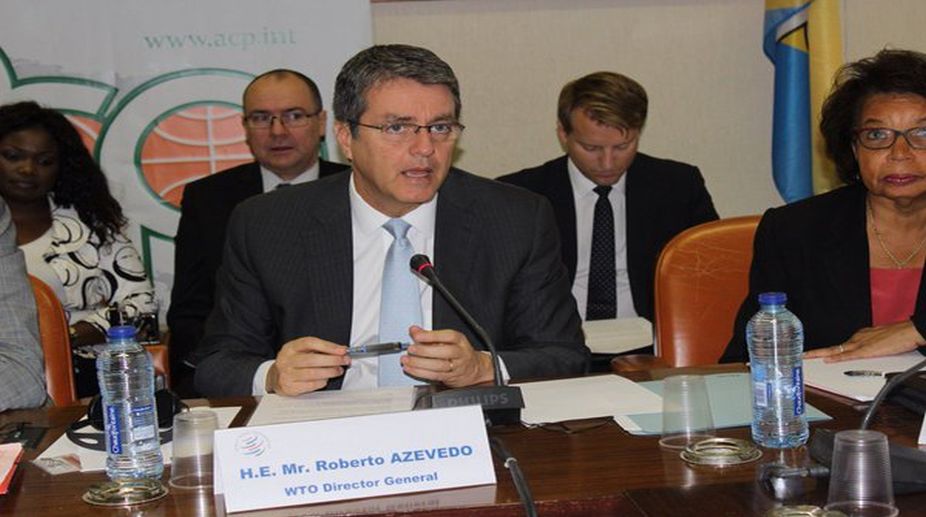
Recently, WTO’s Director General, Roberto Ezvedo, visited India. During one of his meetings with some experts and organizations associated with trade and commerce, he was asked about the WTO’s future, after Trump’s taking over as US President and how he would deal with his ( Trump’s) disenchanting free trade system? His quick response was that if a member nation violates WTO rules, the affected members could make a complaint against the delinquent and on this basis action could be taken under the WTO dispute settlement provisions. The WTO itself cannot take suo moto action.

After the WTO came into existence in 1995, world trade began to be operated under its rule-based system. Tariffs started decreasing and nontariff barriers began to move away. But the effect was not the same on all countries.

Although the reduction of import duties and removal of obstacles had increased trade of all countries, the trade balances of most countries had worsened. Although American industries faced the heat, business of big American corporations continued to grow throughout the world due to the US’s diplomatic influence and economic power. The revenue of the American government was also growing due to this reason, as these corporations were contributing hugely to the public exchequer. The new patent system also benefitted American companies. So, the United States was the main beneficiary of globalisation and WTO. The US dollar also strengthened vis-a-vis other currencies.

However, this honeymoon with globalisation did not last long in the developed world; America and other developed countries started getting disillusioned with globalisation. The participation of these countries in WTO meetings started diminishing and these meetings were also slowly reduced to rituals. After the economic recession since 2007-08, the USA and other developed nations apparently started adopting a conservationist approach.

Last year, in the UK, a referendum took place and Britons decided to part with the European Union (EU). In the meanwhile, Donald Trump started gaining popularity in the United States and was then elected as president of USA. These changes reflected changed attitude of developed countries towards globalisation. Now, whereas Britain is moving towards bilateral agreements after its imminent exit from EU and the US is attempting to impose heavy duty on imports from China. All these developments depict dumping of WTO by the same set of countries that were its fierce supporters.

With America separating itself from the Trans-Pacific Partnership (TPP) and adopting a protectionist approach, it seems the WTO is taking a back seat now. In such a case, when the country that advocated for free trade and multilateral trade agreements the most is withdrawing itself, naturally a debate about the new trade system has sprung up.

With new developments in US and Europe, and changed thinking of the policy makers there, nervousness is quite visible amongst supporters of WTO and globalisation. They are also scared that this trend will accelerate. At the same time, they are busy explaining that the WTO and multilateral trade agreements would ultimately survive. They give three arguments:

First, after the WTO came into existence, the alternative trade system ceased to exist and the biggest change came when China also subscribed to the WTO. Earlier European integration also contributed to strengthening of the WTO. Supporters argue that due to the abandonment of TPP by the US and the absence of any alternative trade system after Brexit, European nations will have to accept the WTO as a readymade forum for trade agreements. In such a situation, WTO will become important again, because this is the only forum for trade negotiations.

The second argument of WTO supporters is that while the United States under Trump’s leadership has decided to impose tariff and nontariff barriers on imports from different countries, the affected member nations of the WTO would complain against US only at WTO forum. And WTO can only effectively curb the protectionist attitude of the US. Therefore, WTO will gain prominence once again and emerge as a more robust institution directing world trade.

Their third argument is that although it is true that regional trade agreements will move forward in Asia and other areas in the near future, this requires a new leadership at the global level. Since there is no such leadership in the world today, nations will again have to turn towards WTO.

These supporters of the WTO say that many countries including India, South Africa, Brazil, China, Australia and Indonesia will come to the rescue of the WTO, because their interests coincide with free trade as nurtured by multilateral agreements.

We have to understand that due to the unemployment, poverty and inequalities in United States, Britain and other parts of the globe (generated by trade-led globalisation), people’s sentiments are getting reflected in an upsurge against globalization. In France too, similar feelings are being revealed. Not only the people, the governments have also started realising that due to free trade, there is not only an imbalance in foreign trade, but industries are shutting down and employment opportunities are eroding due to heavy imports in the name of making available cheap products from China and other countries. Rise of poverty and unemployment is the natural outcome.

Therefore, protection of industries by way of import restrictions is important. Though, supporters of globalisation look upon protectionism with contempt, there is no better way to save employment and industry than protectionism.

The writer is Associate Professor, PGDAV College, University of Delhi.

Has the taming of Trump begun?

Jonathan Eyal | New Delhi |

In all likelihood, United States President Donald Trump views his decision to launch a missile strike against Syria as a one-off event, a singular retaliation for that country’s use of chemical weapons against its own people, rather than the start of a bigger American military involvement in the Middle East.

Still, the Syria missile strike will go down as a seminal event in the history of the Trump presidency. For it represents the first time an isolationist American leader who came to power dismissing all foreign military interventions as follies publicly acknowledged the fact that some military operations are justifiable and that some key international humanitarian values – again, not a favourite Trump concept – are worth fighting for.

And this comes after a number of other, subtler policy changes in the White House which all go in the same direction: towards the creation of a presidency which is less unusual and radical and more conventional than we initially feared.

Dare we say it? Could it be that Mr Trump is being tamed?

The past few months were exhausting, for both America’s friends and foes. First came the shock realisation that the man everyone dismissed as, at best, a comical outsider, ended up holding the keys to the White House. Then came the even more shocking realisation that the newly-elected President actually had every intention of implementing many of the policies he espoused during his electoral campaign.

There was also the gruff, unpredictable personal manner of Mr Trump, which made every contact with him a journey into the unknown, an exercise in psychology as well as diplomacy.

Some leaders, such as Japan’s Shinzo Abe or Britain’s Theresa May, engaged with Mr Trump early, and appear to have established a personal rapport. But others, such as Germany’s Angela Merkel, fell flat on their faces when they tried to engage with America’s new leader.

During her recent meeting in the White House, Chancellor Merkel, who runs Europe’s biggest nation and economy, not only suffered the ignominy of an American President pretending not to notice her offer to shake hands in public, but was also presented by Mr Trump with a “bill” calculating the money Germany allegedly “owed” the US for America’s military protection since World War II. It was the sort of childish prank which did no favours to either Mr Trump’s knowledge of history, or his familiarity with accountancy.

And then, there were the almost daily scandals, the policy flops and the infighting in the White House which proceeded with such fury and created such a bewilderment around the world that it felt as though the Trump administration has been around for ages, when in fact Mr Trump has been in charge for just a quarter of one out of his four-year mandate.

The scandals are still there. But there is also plenty of recent evidence that the administration understands the mess it is in, is prepared to learn from its mistakes and is willing to change both policies and behaviour.

Last week’s removal of Mr Steve Bannon, Mr Trump’s chief strategist, from the National Security Council is one such example; the controversial former fringe journalist with a self-proclaimed mission to destroy what he calls the “administrative state” which apparently includes everyone classified as a liberal, was the generator of many of the administration’s recent disasters, including the half-baked ban against travellers from some Muslim countries.

Yet of equal importance is the fact that Mr Trump reversed his previous decision – also inspired by Mr Bannon – to marginalise the US intelligence chiefs; they are now restored to their position as members of the National Security Council, a step which is not only logical, but which is also guaranteed to improve decision-making in security matters.

Talk of “overhauling the intelligence community”, another pet obsession of Mr Bannon and Mr Michael Flynn, the three-star general who lasted barely 24 days as Mr Trump’s national security adviser, has also mercifully disappeared.

Unlike many other decisions undertaken by the current administration, last Friday’s missile strikes on Syria should serve as textbook examples of an exemplary military mission. The targets were carefully chosen, attention was given to minimising civilian casualties, America’s allies were consulted while its opponents were informed, the operation was precise, the communication with the media short and clear and enough ambiguity is being retained about future US actions so as to keep all enemies on their toes.

Furthermore, some pretty impressive people are now joining the administration. The appointment of General H. R. McMaster as the new national security adviser was received with enthusiasm in most Western capitals, where the military scholar is respected for his strategic foresight and organisational skills.

And while most of the media’s attention concentrated on allegations of supposedly nefarious links between Russia and some White House officials, the Trump administration appointed Dr Fiona Hill as its chief Russia policy adviser. Dr Hill, a Brit by birth, is regarded as one of the best brains on Russia, a woman who commands respect with most governments and think-tanks. Arguably, the current US administration now has access to superior Russian expertise than its predecessors.

What accounts for this transformation? Partly, the self-corrective mechanisms of the American constitutional system. As Mr Trump has discovered, while he enjoys wide discretion on foreign and trade policies, he cannot achieve very much domestically without the support of Congress as well as the acquiescence of judges; hasty presidential decrees and furious tweets in the middle of the night cannot enforce visa bans or reform America’s healthcare system.

Mr Trump was also quickly confronted with the potentially catastrophic implications of his initial plans to recognise Jerusalem as Israel’s capital, discard America’s adherence to Nato or brand China a “currency manipulator”; mercifully, he has refrained from doing all these things. And, as the old saying goes, American presidents don’t search for crises; the crises search for them. He did not intend to spend any time on Syria, but events presented him with an opportunity of differentiating the current administration from the previous one, which stood idly by as the Syrian regime gassed its people.

Besides, it is worth recalling that the portrayal of the Trump administration as a team of weirdos incapable of brewing their own tea, may be a favourite one in the US liberal media but is just wrong. While there are some questionable characters in the administration, there are also some serious heavy-hitters, such as Defence Secretary James Mattis or Secretary of State Rex Tillerson, who managed the recent Syria operation.

Mr Tillerson may be criticised by foreign governments for spending too little on overseas trips and showing no enthusiasm for the shuttle diplomacy of his predecessors. But he has wisely decided that, at least for the moment, his most important job remains at home in Washington, where the State Department needs defending from proposed financial cuts, and where the enduring influence of the diplomats needs to be reasserted.

For both Mr Tillerson and Mr Mattis, the latest Syrian episode was an opportunity to remind their President that there is no substitute for professionalism, and that, in a crisis, it is experience which counts for more than gut instinct.

To be sure, Mr Trump’s process of accommodation to the realities and practicalities of power is still in its infancy. Many lower-rung government positions remain unfilled, because the President insists on vetting candidates, and picks only those he approves of. The infighting within the White House has yet to be resolved. The positions of Ms Ivanka Trump and Mr Jared Kushner, the President’s daughter and son-in-law, still need to be clarified. And Mr Trump himself is unlikely to abandon his image as the perpetual contrarian, the man who simply rejects conventional wisdom, almost regardless of the topic.

Nevertheless, there is no question that the administration knows it needs an overhaul; as a senior official recently put it in language borrowed from Silicon Valley, America is currently run by the “beta White House”, implying that a patched-up version will soon be released.

And that, too, will be entirely in keeping with America’s recent history. For it is by now largely forgotten that both Mr Jimmy Carter and Mr Bill Clinton had a chaotic and largely ineffectual start to their presidencies, and both had to make huge personnel and policy changes within months after coming into office.

Mr Clinton’s makeover worked as intended, launching a presidency which is now largely remembered positively, while Mr Carter’s never recovered from its initial disastrous start.

A message of hope there, but also one of warning for the current President.

The Straits Times/ANN

The chemical attack

Salman Haidar | New Delhi |

The Assad regime in Syria has long been accused of unconscionable severity and cruelty to its opposition. Mr. Assad rules over a divided and fractious country, and his efforts to restrain his opposition have led to severe measures against political dissidents in an ever-escalating cycle. As a result, Syria, a jewel of a country, has been in irremediable turmoil which has only been compounded by ill-judged foreign intervention. Nevertheless, and notwithstanding the rising fundamentalist tide within the region, the regime has been able to retain its hold on power, and to maintain its secular character. The severity of the opposition challenge and the measures adopted by the regime have made it impossible for matters to settle down; the civil war rolls on with no end in sight, and with new groups entering the fray to add fuel to the flames.

The international community has been witness to these events, has deplored them as well it might, but has been unable to do much to bring a halt to the strife. The UN has tried but it has not been granted the necessary authority: ceasefire agreements have repeatedly fallen by the wayside, and the combatants have been able to pursue their aims without being held to account by supra-national pressures and demands. There has been nothing like the coordinated external intervention in Syria that had brought down the Saddam Hussein regime next door in Iraq. Mr. Assad's foes receive support from abroad but not to decisive effect. The result of the battle therefore remains undetermined and there is no present sign of crumbling on either side.
The crisis in Syria took on an unexpected dimension last year when refugees from the war set out for destinations in Europe in quest of peace and safety. This happened at a time when a flood of migrants was headed for Europe from their homes in North Africa and West Asia, driven by economic necessity, and many destitute refugees from Syria were able to join them, slipping across national borders in their journey. A good part of the Syrian population had already become refugees in their own land and in neighbouring countries like Lebanon, and now some of them were headed for the affluent lands of Europe. They were to receive an uncertain welcome as they advanced and this became one of the most pressing public concerns as European countries grappled with their consciences and with the prejudices of some of their citizens to give succour and asylum to the immigrants at their gates.

Meanwhile, the civil war has been prolonged and become more intense as a result of foreign intervention. Russia, a historic friend to Syria and a major power in the vicinity, has been drawn deeper into the struggle and has taken a direct part in it as a principal backer of Mr. Assad, keeping company as it happens with Iran, the inveterate foe of the aggressive anti-Assad militias of the Islamic State (IS). The parameters of this struggle have more than local, or even regional, significance, for ideological factors have become ever more obtrusive in a manner that prefigures the desire of the most implacable elements to bring about global jihad.

The civil war has been marked by a number of atrocities, the most horrifying of these being the use of chemical weapons. There have been many accusations against Syria in past years, which have been denied but not effectively rebutted, and the demand for action against the perpetrators remains strong. The international community, divided though it may be, is greatly exercised and pictures of Syrian children fatally affected by chemical attacks have drawn a horrified reaction. Among the global powers, the USA has been highly condemnatory of Syria but until very recently had refrained from intervening militarily against it. It had seemed at times to be on the verge but was apparently held back by former President Obama, who sensed that his country was in no mood to be drawn into yet another military engagement overseas.

There matters might have remained, for it had seemed likely that President Trump with his well-advertised aversion to external entanglements would not permit his country to be drawn into military engagements abroad. But this proved to be a short-lived expectation. Just a few days ago a shower of US missiles came down on Syria in a dramatic statement of US readiness to intervene as and when it felt it should, turning away from its policy of the previous many years.

The missiles did much damage; more important, the attack changed the parameters of the situation and opened up the possibility of the USA becoming an active participant in the Syrian imbroglio. The display of US military strength and readiness to use it changes many of the assumptions that have hitherto driven policy in and around Syria.

The strike itself, perhaps deliberately, was not a decisive intervention, and it does not appear to be a prelude to further attacks from the air or by ground troops. Nor has it had the effect of destabilizing Mr. Assad regime, but it has put the regime on notice so far as the use of chemical weapons is concerned.

The missile attack has also had the effect of hardening the lines between some of the important players. It had been expected that with Mr. Trump in charge there would be some easing of the US-Russia relationship that had run into difficulty, and the initial signs were encouraging, but after strong Russian criticism of the missile attack the distance between the two countries has stretched further. Iran too, which had cautiously advanced towards a rapprochement with USA, has denounced the attack and the careful work of reconciliation between the two countries seems to have been largely undone. It is an even tougher, harsher setting now in which the Syrian war proceeds.

The newly activist USA seen in Syria is visible elsewhere too. So far as India is concerned, a senior US diplomat's observations on Indo-Pak matters have revived some unwelcome ideas about a US role and if unchecked could affect the currently satisfactory India-US relationship. Elsewhere, too, what may be random observations by US officials have provoked strong reactions and raised questions about US intentions ~ in this context, one can look at North Korea which has felt it necessary to make threatening noises against the USA, which may not be convincing but cannot be ignored as they come from a nuclear armed country.

This combination of events is disturbing to the kind of ordered existence traditionally sought by the international community. Maybe this style of US activism will blow over, to be followed before long by a more restrained method of functioning.

The writer is India’s former Foreign Secretary

Champions League: Cristiano Ronaldo hits brace as Real Madrid trump Bayern Munich

A priceless away victory ensures Los Blancos now have one foot in the semifinals!

Prithviraj Dev | New Delhi |

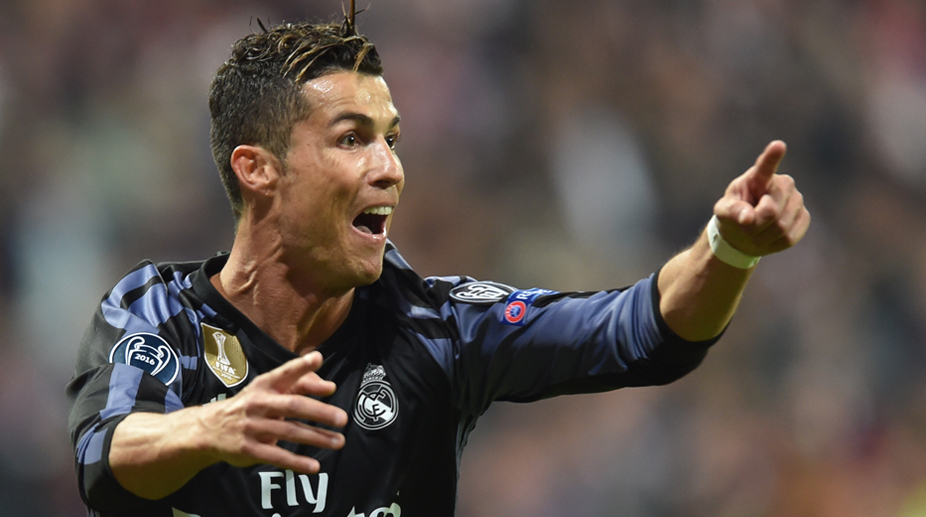
Cristiano Ronaldo returned to form at just the right time, scoring an invaluable brace as holders Real Madrid beat 10-man Bayern Munich 2-1 in the first leg of their UEFA Champions League quarterfinal at the Allianz Arena on Wednesday.

Madrid’s talisman, scoreless in Europe since August 2016, doubled his tally for this season’s continental completion by scoring two goals any striker would be proud of, to put Los Blancos on the brink of reaching the top-four.

Bayern, without their injured striker Robert Lewandowski and defensive stalwart Mats Hummels lined up in a 4-2-3-1 formation with Thomas Muller and Javi Martinez replacing the injured duo.

The visitors were forced into a change of their own, with Nacho partnering Sergio Ramos in the centre of defence as Zinedine Zidane’s men looked to continue their quest of becoming the first team to retain the Champions League since its shift to the current format.

Real had the first chance of the match, Karim Benzema’s header coming off the bar after Manuel Neuer had got a fingertip to it, but after that, it was all Bayern in the first half.

And they took the lead deservedly, Arturo Vidal powering home a header from a Thiago Alcantara cross in the 25th minute. Nacho had been tasked with marking him, but the Chilean shrugged him off to beat Keylor Navas.

Vidal was at the heart of two key instances five minutes apart, which had they gone Bayern’s way, the game would have been over at half time. The first, in the 40th minute saw Vidal send a free header over after some good work from Arjen Robben on the right wing. The second, was much more controversial as match referee Nicola Rizzoli awarded a penalty to Bayern, an incorrect decision as it turned out. Dani Carvajal had not handled Franck Ribery’s shot inside the box, rather it had hit his chest but when Vidal blazed his spot-kick over, the hosts went into the interval with a slender lead.

And the lead evaporated almost immediately in the second half, Ronaldo scoring a well-taken volley from a Carvajal cross in the 47th minute. The Portuguese superstar, largely subdued as were the rest of the ‘BBC’, showcased his world-class quality yet again, requiring only a moment’s lapse of concentration from his opponent’s to turn the things around.

Bayern then hit themselves in the foot, with Javi Martinez getting two yellow cards in a span of three minutes on the hour-mark to shift the momentum firmly in the visitors’ favour.

While initially Neuer was singlehandedly keeping an increasingly-confident Real at bay, Ronaldo and co were not to be denied for long. The 32-year-old showcased his predatory instincts in the 77th minute to score the 100th European goal of his career, beating Bernat to substitute Marco Asensio’s cross.

Real continued to press for a third goal which would effectively kill off the tie and Sergio Ramos thought he had it when his header beat Neuer, only to be dismayed at the linesman raising the offside flag.

The return leg at the Santiago Bernabeu will have to witness a miracle if Bayern are to go through, for overturning a deficit from the home leg is never an easy task in the Champions League, let alone against the holders.

So Carlo Ancelotti will not be happy with the result against his former employers, but one he will have to accept as he seeks to rally his troops after a demoralising loss for the return leg on the 19th of April.

For Zidane, the victory over his former mentor will be sweet but he will have to maintain calm among his side as they enter a crunch period in which they welcome first Bayern then Barcelona at the Bernabeu in a span of few days.

Validate valour

Editorial | New Delhi |

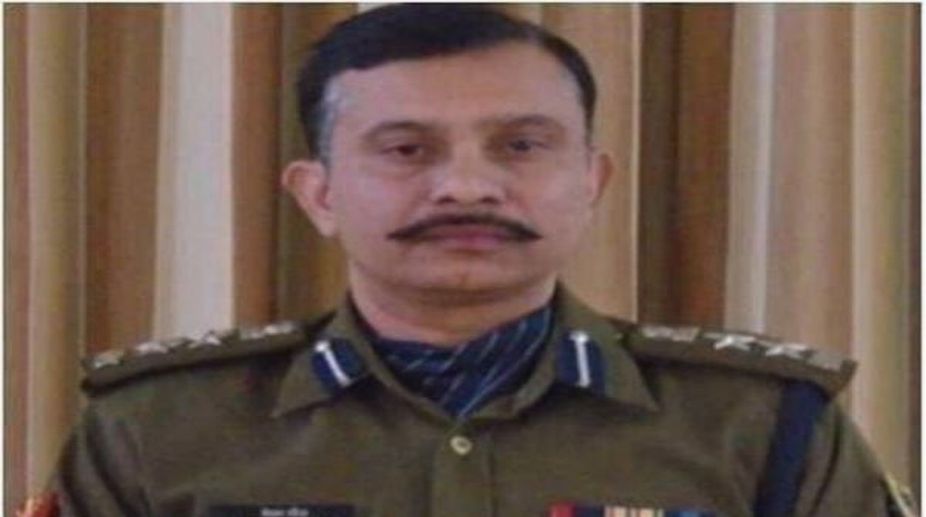
More than merited was every column-centimetre across which the media recently “splashed” the courageous recovery of Mr Chetan Cheetah, a CRPF officer, who after being comatose for 16 days was discharged from hospital ~ after sustaining no fewer than nine bullet wounds in an anti-militancy operation in Hajjan, Jammu and Kashmir, on 16 February. Doctors at the AIIMS, New Delhi, to where he was transferred after preliminary treatment at the Base Hospital in Srinagar, hailed his “steely resolve”, and said it was “nothing short of a miracle” that the Commanding Officer of the paramilitary’s 45th battalion had survived the multiple injuries.

Though one eye has been “saved”, he may lose sight in the other. The dedication of the doctors has been lauded by the home minister, Mr Rajnath Singh, who tweeted “fortune favours the brave”. Like a true warrior, Mr Cheetah has expressed gratitude for the goodwill messages, and made particular mention of the Chief of the Army Staff and the minister of state for home affairs having visited him in hospital: “such moments are unforgettable”. No doubt gallantry awards and other honours will be bestowed upon the man who has done his nation proud, yet as his wife noted, “normality in our lives will return once he wears the uniform and goes to work again”.

That is where the CRPF leadership must step in: assigning Mr Cheetah desk-bound duties may cater to financial and allied needs, but will not fully “compensate” for his willingness to go the extra mile for his country’s cause. The nature of the job could well be restricted by his physical condition, but quality leadership would demand that his exemplary conduct be harnessed to inspire other men and women in uniform to emulate the lofty standards he has set.

Traditionally the military and allied services are rule-bound when it comes to financial rewards for gallantry, distinguished service, etc., ~ the babus who deal with such matters are unable to look beyond “files”, standing orders, formulae, etc. As the cases taken to tribunals and courts suggest, there is limited scope for flexibility and innovative “out-of-the-box” thinking. Heroics are soon forgotten, promotions and postings, indeed longevity of service too, are linked with the evaluation of “medical boards”.

For how long will even those in the CRPF remember the gallantry of men like Chetan Cheetah and the tribute paid to him by ministers, the Army chief, etc? What also goes against the grain ~ in all matters relating to “recognising” the soldier ~ is that the ceremonials are essentially sarkari. When last were Opposition leaders involved in the homage paid to soldiers’ being transported to their native places for the Last Rites? Something is very wrong somewhere.

Alarums and excursions

Editorial | New Delhi |

It isn’t a 21st century version of the Cold War, but there has been a dramatic change in Donald Trump’s dealings with Syria ~ the Russian President’s ally till the other day. The unmistakable tension between Washington and Moscow has surfaced barely six months after the Russian President strained every nerve to get Trump elected and, one is tempted to add, Hillary Clinton defeated. To the astonishing extent that the Kremlin’s game theory marked a momentous reversal of Cold War perceptions, a kind of meddling that has recently been confirmed by the FBI.

The US cruise missile attack on Bashar alAssad’s country has happened in the immediate aftermath of the chemical gas carnage. And the storm clouds were gathering thick and fast last weekend when Russia mobilised its warship, Admiral Grigorovich, in the direction of Syria following the first direct strike by the US on the Assad regime. Subsequent events will bear out whether the sailing of the warship was intended only to be a threat to the US. Suffice it to register that the partners in Election 2016 have now conveyed the impression that they are gearing up for a confrontation over Syria.

Not wholly unrelated to the build-up of tension is the reported suggestion by Assad’s aides to seek the refuge of a bunker. Not that President Trump is overly keen on removing Assad; the US administration has in a bizarre justification described Assad’s rule as “political reality”. We do not know whether the missile strike was intended to unnerve the presidential palace in Damascus. Yet we do know that the nerve gas has had a calamitous effect.

Markedly, the White House has been anxious to present last Friday’s sudden offensive as a “contained response to a specific atrocity”. In a sense, there is a thread that links Barack Obama to Donald Trump. The incumbent is as loath as his predecessor to rock the boat. Indeed, Obama was always unwilling to use military options to remove Assad. Ergo, a regime change in Syria doesn’t appear to be on the US agenda quite yet.

Of course, Trump had a compelling reason to emit a signal ~ after 70 people, notably children, perished in a chemical gas attack. Equally, the sailing of Admiral Grigorovich might serve to bring the curtains on the Trump-Putin bonhomie, which had blossomed with a terribly critical agenda last November.

The Kremlin’s strategic interest in backing the Syrian regime, and its willingness to use every tool at its disposal to support Assad ~ from its jets to its Security Council veto ~ means he is unlikely to be dislodged any time soon. As Simon Jenkins, former Editor of The Times, puts it succinctly in The Guardian ~ President Trump’s emotions have been stirred, but his bombs won’t help Syria.

Manipal University to offer master’s degree in cyber security

IANS | Bengaluru |

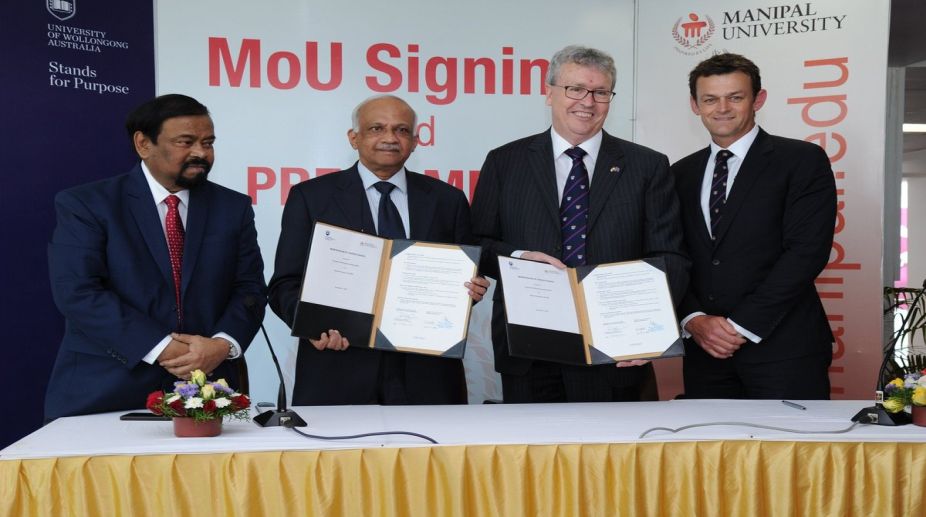
Global Education Services of Manipal University would offer post-graduation course (Master's degree) in cyber security and data sciences from the academic year 2017-2018 at its centre of excellence here, said an official on Wednesday.

The varsity has tied up with Deakin University of Australia to offer the post-graduation courses and short and long-term training programmes in the specialised subjects.

"The tie-up with Deakin ushers an era of education partnership and a strong university relationship," said Manipal University Vice-Chancellor H. Vinod Bhat on the occasion.

The joint agreement was signed by Manipal Group Vice-President A.P. Ramabhadran and Deakin Vice-Chancellor Jane den Hollander here.

The Group's Data Science and Cyber Security Centre of Excellence will be set up soon in the Electronics City on the southern outskirts of this tech hub.

The agreement envisages solving sector specific big data problems, developing knowledge and practices in complex problems and bringing methodological consistency relevant to the Indian context.

"The centre will work with solutions of the pattern recognition and data analytics centre at Deakin to solve analytics challenges faced in healthcare, IT and banking financial services and insurance (BFSI) sectors," said Ramabhadran in a statement.

The centre will also investigate and address problems in key technology areas in the Indian ecosystem spanning health, insurance, banking, security and education.

"The courses are designed to get hands-on experience in sectors like BFSI, IT and manufacturing which are prone to threats," added Hollander.

Cabinet approves local purchase preference policy for oil firms

IANS | New Delhi |

In a bid to promote manufacturing in India, the cabinet on Wednesday approved the domestic purchase preference policy for state-run oil firms that will allow domestic service or product providers to offer a higher bid and still be eligible for the contract.

"Manufacturers/service providers whose quoted price is within 10 per cent of the lowest valid price bid, would be eligible for purchase preference for a stipulated portion of the purchase order, on matching such price," a Petroleum Ministry statement said here.

The preference policy will be applicable for five years.

"A steering committee will oversee implementation, carry out annual review and recommend continuation of the policy from year to year basis," it said.

"Targets of local content (LC) will be stipulated for certain oil and gas business activities," it added.

The cabinet also approved setting up of an Indian Institute of Petroleum and Energy at Visakhapatnam with a capital expenditure of Rs 655.46 crore.