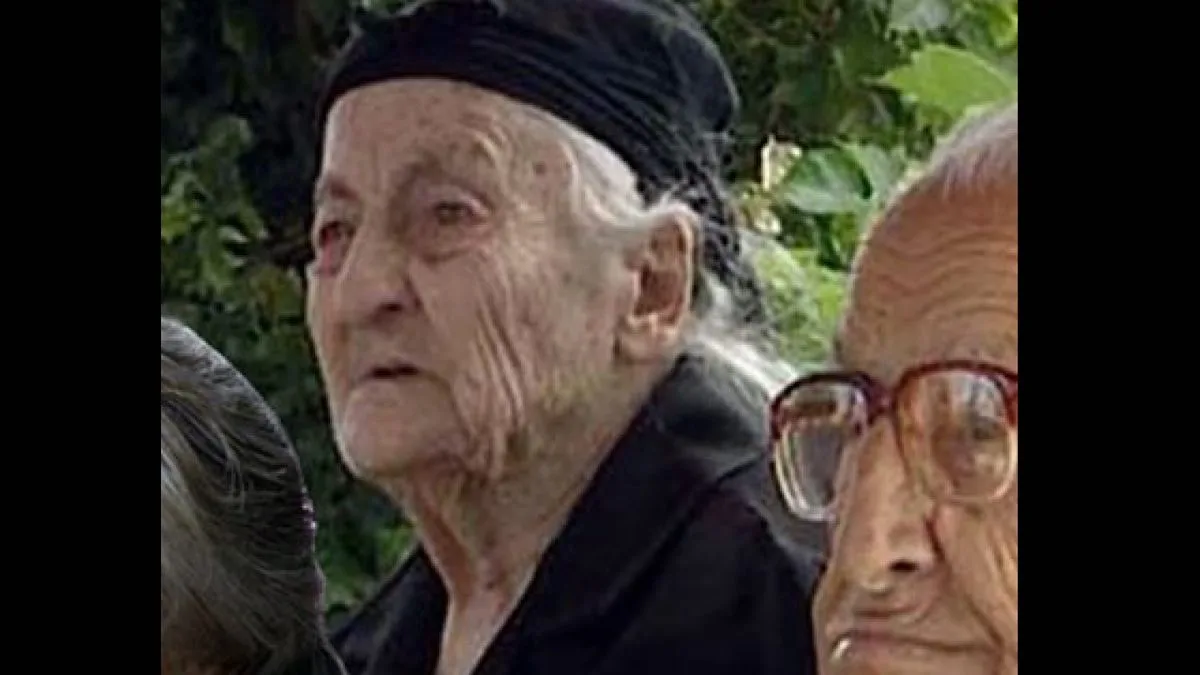
Data from the recently published National Family Health Survey 6 (NFHS 6) shows that India is moving away from being a young country. The notion of demographic dividend probably does not hold for India anymore. The percentage of the population aged 60 and above has increased from 11.8 in 2019-21 (NFHS-5) to 12.9 in 2023-24 (NFHS-6). While Kerala typically dominates the conversation on ageing because of its high proportion of the elderly, West Bengal has quietly recorded the highest surge as its elderly population jumped from 10.9 to 14.1 per cent.
The percentage of elderly population in West Bengal was 7 per cent in 2005-06 and 8.7 per cent in 2015-16. An underexplored and under-reported aspect of Bengal is its advanced stage of demographic transition. This can be a major problem whereby the Total Fertility Rate (TFR) of West Bengal has remained constant at 1.6, whereas generally a TFR of 2.1 is considered a replacement rate for a stable population. If this demographic transition is not at the centre of policy discussions in West Bengal, a crisis can quietly creep up and impact the quality of lives of the residents of the state. A major reason driving the increase in elderly population is the outmigration of the working age population from West Bengal, leaving behind senior citizens.
Advertisement
The Government of West Bengal has often tried to address the problem through welfare schemes which give Rs. 1,000 to citizens above the age of 60. However, the amount is much lower than is required for even basic subsistence, especially in the face of increasing cost of medicines and food. The unprecedented increase in the percentage of the elderly also implies that this would cause strain to the fiscal health of the state. It would be incorrect to assume that the elderly population of West Bengal have all retired from the workforce. Some insights from the Periodic Labour Force Survey 2023-24 can be useful in describing the profile of the elderly of the state – 29.7 per cent of the elderly population is part of the workforce.
Advertisement
Among these, 46.6 per cent of elderly males, and only 10.97 per cent of elderly females are part of the workforce. This could be because the types of jobs available for elderly women are much lower than men. Elderly women are also culturally expected to take care of the family, attend to domestic duties, and care for the children of the family. As working-age children enter the workforce themselves or migrate, elderly women are expected to provide child care and domestic labour. The current generation of elderly women are from a generation where employment was heavily restricted during their youth due to patriarchal social norms.
They may have generally been out of the workforce through their life-cycle. The majority of elderly workers find employment as Skilled Agricultural and Fishery Workers – 48.12 per cent of the elderly population is employed in this activity. Because of the unorganised nature of agricultural employment, there is no fixed retirement age. Further, agriculture often works as a safety net for workers. If workers lose their jobs in construction or retail due to older age, they can come back to work on their family farm. The elderly population continuing to work on agriculture can also be an indicator of the lack of post-retirement savings among them.
The gendered stratification of the elderly labour market is starkly evident across both domestic and entrepreneurial domains. Specifically, elderly women exhibit a disproportionately higher concentration in the category of “unpaid household helper” who generally work without monetary compensation with 19.4 per cent engaged as unpaid domestic helpers compared to 5.49 per cent of their male counterparts. While the majority of the elderly workforce is self- employed as own-account workers, access to independent enterprise remains heavily gendered: 72.16 per cent of elderly men but 57.96 per cent among elderly women. Illiteracy rates among older women in the workforce stand at 36.8 per cent, while the male illiteracy rate is 15.32 per cent.
A concerning statistic for the elderly workforce is that about 90 per cent of the elderly workforce lack any type of social security benefits. This implies that most of them are concentrated in precarious forms of labour. These statistics taken together imply that the elderly in West Bengal are employed in low-skilled and pre c arious agric ulture -base d employment. The high concentration of own-account workers can be interpreted as a sign of self-employment done for the sake of survival rather than dynamic entrepreneurship. Lacking foundational education, older cohorts are often left with no choice but to rely on solo enterprises as a desperate safety net of last resort.
Retirement among the elderly may not be a natural life stage, but rather a luxury which can be accessed by only a few people. In West Bengal, where there is a significant out-migration of the younger generation, the elderly are compelled to depend on remittances from their children who in turn may be in some form of precarious employment elsewhere. The problem requires a solution in the form of social security entitlements which can mitigate the precarity of the elderly of the state, with more attention and recognition given to elderly women of the state.
(The writer is an Assistant Professor in the department of Economics, Christ University, Bengaluru)
Advertisement