Logo

IPL 2017: Ravindra Jadeja targets RPS’ weak nerves on return

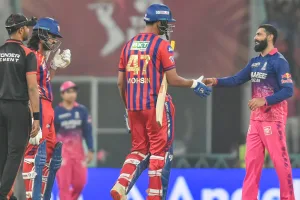
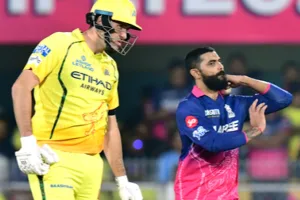
World No.1 Test bowler Ravindra Jadeja is set to return on field after a break of two weeks.

SNS | New Delhi |

World No.1 Test bowler Ravindra Jadeja is set to return on field after a break of two weeks.

The 28-year-old all-rounder will make his first appearance in the ongoing Indian Premier League season 10 when Gujarat Lions host Rising Pune Supergiant at the Saurashtra Cricket Association Stadium in Rajkot on Friday.

Jadeja, who claimed 25 wickets in the recently concluded Border-Gavaskar Trophy, wants to make a thumping start in the IPL 2017 as he is aiming to hit Pune’s weak nerves.

“They (RPS) have a strong batting line-up. We need to identify their weak areas and target those. We need to bowl really well and restrict them to a low total,” Jadeja said as quoted by IPLT20.

Jadeja, however, immediately added that Suresh Raina-led Gujarat are too strong in batting and can chase down any target easily.

“We have a good batting line-up, so even if we have a big target, we’re capable of chasing it down. We need to bat deep and try and save runs in the field too,” he added.

The Lions are struggling as they are placed last in the points tally after losing to Kolkata Knight Riders and Sunrisers Hyderabad.

With the inclusion of Jadeja now, Gujarat will look to break the jinx.

“I always look to contribute as much as I can for the team. My goal has always been to be a utility player who can answer his team’s needs in any circumstances. Whether it is bowling or batting, I want to contribute and fill the gap for the team,” Jadeja added.

In the IPL 2016 season, Jadeja helped Gujarat top the final rankings with eight wickets and 191 runs.

Click here for more stories related to IPL 2017

7,350 people start evacuating 4 Syrian towns

IANS | Damascus |

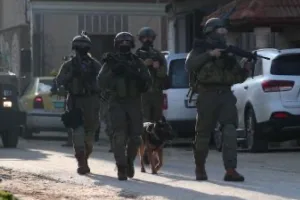
As many as 7,350 people have started evacuating four Syrian towns Friday under a deal concluded between the Syrian government and rebels, a military source said.

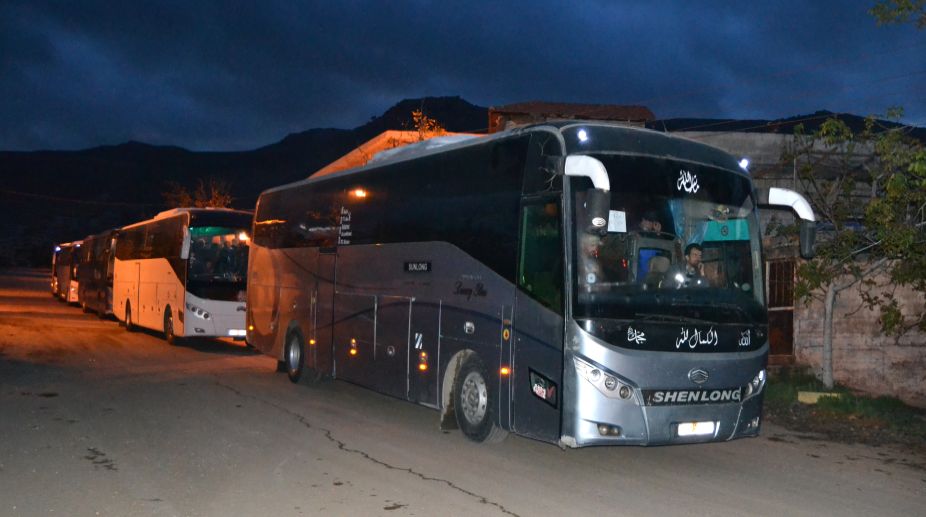
A total of 60 buses carrying around 2,350 rebels and their families evacuated the town of Madaya and nearby areas toward rebel-held areas in the province of Idlib, the source told Xinhu news agency.

In return, around 75 buses and 20 ambulances carrying 5,000 people, including fighters, left the Shia towns of Kafraya and Foa toward government-controlled areas in the city of Aleppo.

The actual implementation of the deal started on Thursday, by a swap of detainees between the rebels and the government forces.

The rebels in Idlib released four children and eight women they kidnapped from Kafraya and Foa, and returned the bodies of eight government forces men in exchange of the release of 19 rebels detained by the pro-government fighters in Kafraya and Foa.

The low-scale swap took place through the Syrian Arab Red Crescent (SARC).

The deal, reached late last month, includes evacuation of rebels and their families from the besieged towns of Madaya and Zabadani, which are under the rebel control northwest of capital Damascus, as well as Kafraya and Foa, both pro-government towns besieged by the rebels.

‘Fear Factor’ revived by MTV, Ludacris tapped as host

IANS | Los Angeles |

MTV is resurrecting Fear Factor as the network has ordered a 12-episode reboot of the 2000s game show, with Ludacris set to host.

The 39-year-old actor/rapper will also executive produce the revival.

The Hollywood Reporter says that the revival will be a little bit different as it now targets Generation Z audience.
It will replace gross-out challenges with more playful games, such as couch surfing at 300 feet and waterlogging personal cellphones.

According to a press release, the 12-episode reboot is inspired by urban legends, popular scary movies, and viral videos from today's cultural zeitgeist, using all of those to push contestants beyond their comfort zones and force them to “take action against some of their biggest stressors.”

The hour-long episodes will feature eight contestants pairing up in four teams of two and facing off for a cash prize.

Original exec producers Anthony Carbone and Kevin Wehrenberg are returning to serve in the same capacity.
“Fear Factor” first ran on NBC from 2001 until 2006. It was revived in 2011, only to be cancelled again in 2012.

Joe Rogan was the original host of the show and returned for the 2011 revival.

The MTV reboot is set to premiere on May 30.

Eight arrested in Pakistan for killing student for blasphemy

IANS | Islamabad |

Pakistani police on Friday arrested eight members of a lynch mob that brutally assaulted two university students — killing one and injuring the other — over alleged blasphemy a day earlier.

An FIR was lodged in Sheikh Maltoon police station in Mardan against 20 suspects, eight of whom were later arrested, Dawn online reported.

The suspects were identified through video footage of the assault, and the police have formed three teams to arrest the remaining suspects, the report said.

On Thursday, Abdul Wali Khan University students Mashal and Abdullah were targeted by the violent mob on the campus premises for allegedly "publishing blasphemous content online". Mashal was killed and Abdullah was injured.

The campus was shut down following the incident and its hostels vacated to avoid any further escalation of violence.

Photo

  • img
  • img
  • img
  • img
  • img
  • img
  • img
  • img
  • img
  • img
  • img

The Adorable Beckhams

The Adorable Beckhams

MORE Photo STORIES

No school holidays on birth anniversaries of personalities in UP

SNS | New Delhi |

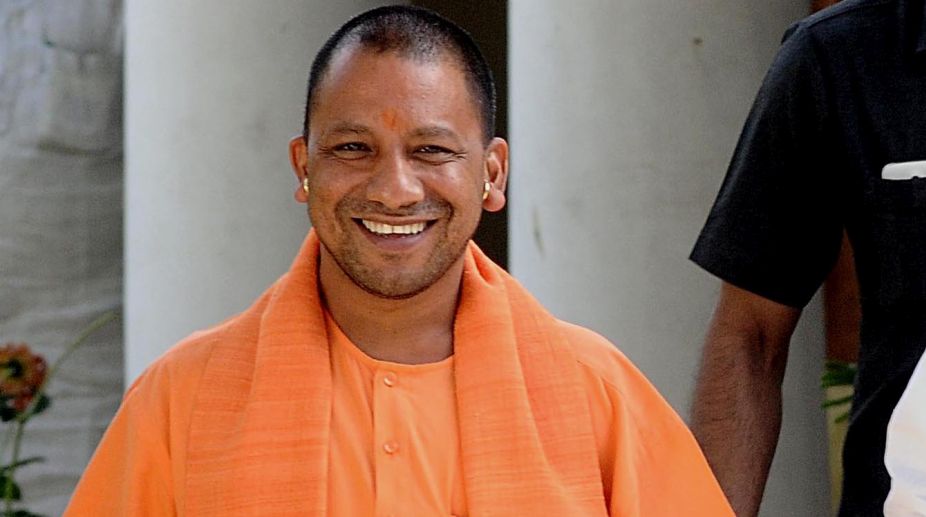
In yet another announcement, Uttar Pradesh Chief Minister Yogi Adityanath on Friday said that schools across the state will not observe any holidays on birth anniversaries of prominent personalities.

“No holiday in schools on birth anniversaries of great personalities, instead children would be taught about them,” Adityanath said.

Adityanath made the announcement after paying tributes to Dr Bhim Rao Ambedkar on his 126th birth anniversary.

Last week, Adityanath said of introducing English in government schools from nursery instead of Class 6.

He also said both traditional and modern systems should prevail in schools.

The chief minister also made an announcement to introduce foreign language from Class 10.

First look of Sushant-Kriti’s ‘Raabta’ unveiled

PTI | Mumbai |

The first look of actors Sushant Singh Rajput and Kriti Sanon's upcoming film Raabta has been revealed.

The actors took to Twitter to share the first look of the movie directed and produced by Dinesh Vijan.

Sushant, who plays Vaibhav in the film, wrote, “I wonder if she felt the same way I did, like there was something more, some unexplainable connection, a #Raabta. #RaabtaFirstLook @kritisanon.”

While Kriti wrote alongside the poster, “Something drew me to him, a connection that i cannot explain… A #Raabta!! #RaabtafirstLook @RaabtaOfficial @itsSSR.”

The poster shows Kriti, who plays Priya, piggybacked on Sushant, where she can be seen kissing the actor on the cheek with him smiling from ear-to-ear.

The film, produced by Bhushan Kumar and presented by T- series and Maddock films, is slated to release on June 9.

Married LGBT adults healthier, happier: Study

IANS | New York |

For years, studies have linked marriage with happiness among heterosexual couples. A new study now shows that the benefits of marriage extend to lesbian, gay, bisexual or transgender (LGBT) couples as well.

In the study, published in the journal The Gerontologist, LGBT participants who were married reported better physical and mental health, more social support and greater financial resources than those who were single. 

For the research, Jayn Goldsen from the University of Washington, and her colleagues used survey data from more than 1,800 LGBT people, aged 50 and older, in locations where gay marriage was already legal in the US in 2014. 

About one-fourth were married, another fourth were in a committed relationship and half were single. 

Married respondents had spent an average of 23 years together, while those in a committed, unmarried relationship had spent an average of 16 years.

Among the study participants, more women were married than men.

Researchers found that, in general, participants in a relationship, whether married or in a long-term partnership, showed better health outcomes than those who were single. 

But those who were married fared even better, both socially and financially, than couples in unmarried, long-term partnerships.

Single LGBT adults were more likely to have a disability; to report lower physical, psychological, social and environmental quality of life; and to have experienced the death of a partner, especially among men, the findings showed.

People were unhappy after Jarnail left Rajouri seat: Kejriwal

PTI | New Delhi |

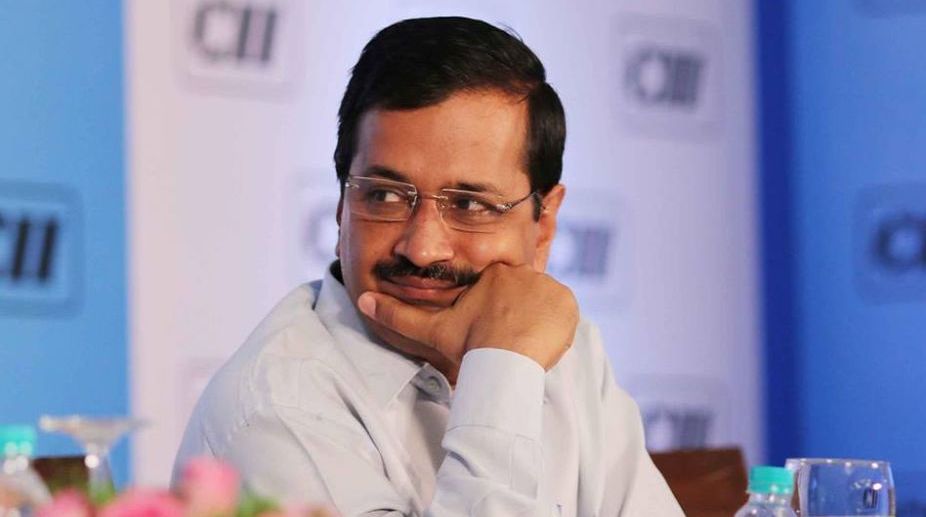
AAP chief Arvind Kejriwal on Friday said the party lost the Rajouri Garden bypoll as people were unhappy over MLA Jarnail Singh leaving the seat to contest Punjab polls but stressed this result would not impact the MCD elections.

"There were several reasons why Jarnail Singh left the seat and went to fight Punjab Assembly elections. He has done a lot for the Sikh community. But the people of Rajouri Garden did not like the fact that he left the seat," he said.

"Even I was getting feedback that the people of the constituency were unhappy over Jarnail leaving in the middle of his term," Kejriwal added.

The Delhi chief minister, however, said that this defeat will have no impact in the Municipal Corporation of Delhi (MCD) elections to be held on April 23.

However, the party's attempts to explain the loss has not gone down well with Jarnail, a journalist-turned-politician, who had shot to fame after hurling a shoe at former Home Minister P Chidambaram during a press conference.

Jarnail has said while it was the party's decision to field him in Punjab, it should also go for a deep and honest introspection.

The AAP on Thursday suffered a humiliating defeat in the Rajouri Garden Assembly bypoll in the national capital. Its candidate Harjeet Singh managed to get only 10,243 votes, less than one-sixth of the total votes polled, and lost deposit.The BJP-SAD joint candidate Manjinder Singh Sirsa bagged 40,602 votes, over 50 per cent of the total votes polled.

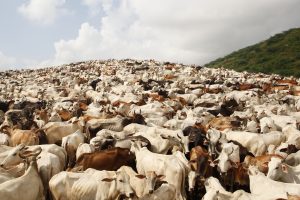
99.38% Indians now live in areas under cow-protection laws

IANS | New Delhi |

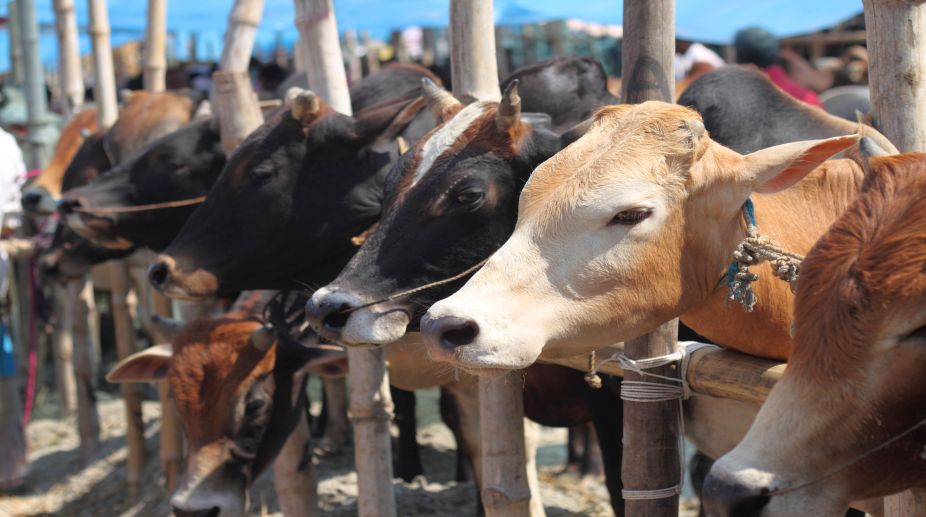
On March 31, the Gujarat assembly amended the state's cow protection laws to extend the maximum sentence for cow slaughter from seven years to a life term and a fine of up to Rs.5 lakh. The amendment made offences under the Gujarat Animal Preservation Act of 1954, which criminalises cow slaughter as well as transportation of cows for slaughter and possession of beef, non-bailable.

Gujarat now holds the mantle of the state with the strictest laws in the country to protect cows, bullocks, bulls and their progeny.

In an analysis of cow protection laws across the country, IndiaSpend found that:

– As of March 2017, cow slaughter has been prohibited in 84 per cent of states and Union territories, which account for 99.38 per cent of the population.

– Laws banning cow slaughter in nearly half of these states are roughly 50 years old, enacted during the tenure of the Congress. The oldest bans on cow slaughter have been in place in Jammu and Kashmir and Manipur, promulgated by their former rulers in 1932 and 1936, respectively.

– After the Congress split in 1969, over 80 per cent of the states that enacted new laws prohibiting cow slaughter did so under a Janata Party or a Bharatiya Janata Party (BJP) government. Cow protection laws enacted or amended over the last 23 years in 10 of 11 states are especially more stringent.

– In 77 per cent or 24 states and Union Territories that prohibit cow slaughter, the offence is cognisable, and in more than half of these (13), it is non-bailable. Under the criminal procedure code, cognisable offences are serious crimes such as murder, rape, dowry deaths and kidnapping. In such cases, the police can make an arrest without a warrant and start investigation without a magistrate's permission.

Cow protection has a long history, dating back to pre-Independence times when it found support from mass organisations such as the Arya Samaj and a personage no less than Mohandas Karamchand Gandhi.

1950-1968: Post-Independence and after India became a republic in 1950, cow protection enthusiasts were reigned in and a ban on cow slaughter was only included as a Directive Principle of State Policy, and not as a fundamental right as its supporters had demanded. Nevertheless, Congress governments enacted laws prohibiting cow slaughter in 15 states and Union Territories, until just before the 1969 Congress party split. The offence was made punishable with a prison term ranging from six months to two years. Madhya Pradesh, with a prison term of three years and a fine of Rs 5,000, had the strictest law of its time, after Jammu and Kashmir.

1977-1979: After a gap of eight years, the enactment of cow protection laws saw a resurgence when the Janata Party, with its Hindu nationalist elements from the Bharatiya Jana Sangh (which later formed the BJP), came to power in 1977 and served a two-year tenure at the country's helm. Laws came into force in Goa and Daman and Diu and the state of Himachal Pradesh under a Janata Party government and Andhra Pradesh under Congress rule. Maharashtra, also under a Congress government, strengthened its cow protection law, replacing the Bombay Animal Preservation Act 1954 in force till then.

1994 to present: Coinciding with a spike in communal conflict across the country in the early 1990s, the promulgation of cow protection laws restarted in 1994, with the introduction of the Delhi Agricultural Cattle Preservation Act. The law made cow slaughter punishable with a five-year prison term and a fine of Rs 10,000 — the strictest of its time after Kashmir. Since then, cow protection laws have been enacted and amended in 11 states, prescribing stricter punishment in 10 of these barring Sikkim (where restrictions and punishment are among the mildest). Nine of these states were ruled by the BJP at the time of enactment or amendment.

Prior to Gujarat's recent amendment, the Muslim-dominated state of Kashmir had the most stringent punishment for cow slaughter. The law was instituted in 1932 under the Ranbir Penal Code, the code introduced during the reign of the Dogra ruler Ranbir Singh, which still applies in the state.

This law makes cow slaughter a cognisable and non-bailable offence punishable with up to 10 years' imprisonment and a penalty of up to five times the value of the bovine killed. Cows are estimated to cost lakhs in Jammu and Kashmir.

In terms of severity of punishment, Haryana comes in third. Enacted in 2015, the Haryana Gauvansh Sanrakshan and Gausamvardhan Act deems cow slaughter a cognisable, non-bailable offence inviting a maximum punishment of 10 years' rigorous imprisonment and a maximum fine of Rs 1 lakh.

In Jharkhand and Uttarakhand too, cow slaughter is punishable with a maximum sentence of 10 years' rigorous imprisonment, but a lower fine of Rs 10,000.

In contrast, restrictions on cow slaughter in Kerala and Sikkim are the mildest. In Kerala, cow slaughter is prohibited in rural areas under the Kerala Panchayat (Slaughter Houses and Meat Stalls) Rules, 1964, and in urban areas as per a 1976 government order, but is allowed if the bovine is over 10 years of age. Offenders are fined Rs 1,000. Similarly, the 2008 Sikkim Police Act prohibits cow slaughter only in public spaces and provides for a monetary penalty only for unsanitary slaughter.

The four states of Arunachal Pradesh, Meghalaya, Mizoram, and Nagaland and the Union Territory of Lakshadweep have no laws related to cow slaughter, according to the central Department of Animal Husbandry, Dairying and Fisheries (DAHD). The document notes that DAHD receives numerous representations for banning cow slaughter across the country and declaring the cow as India's national animal.

The law in Manipur is based on a 1936 darbar resolution proclaimed during the reign of Maharaja Churachand Singh, whose contours are therefore vague — it does not specify, for instance, if cow slaughter is a cognisable and non-bailable offence.


IIT-Kgp, Google tie-up to help computers understand Bengali

IANS | Kolkata |

The Indian Institute of Technology – Kharagpur is working with Google to develop a Bengali treebank to help understand grammatical structure of Bengali texts as well as their meaning, to enhance the online experience of a Bengali language user, a statement said on Friday.

"We are trying to create tools and resources for understanding Bengali. Such tools will enable a far better online experience for a Bengali language user, and better access to the information available in Bengali texts," said Sudeshna Sarkar, Head of the Department of Computer Science and Engineering at IIT – Kgp.

A treebank is a collection of texts in which sentences have been exhaustively annotated with syntactic analyses.

The research will enable the computer to read Bengali documents on the user's behalf and find answers.

Citing an example, Sarkar said: "If you wish to know what are the different flooding events in West Bengal that have been reported in various Bengali newspapers over the past 10 years, the computer can prepare a report for you with dates and locations of the events as well as the steps taken by the government."

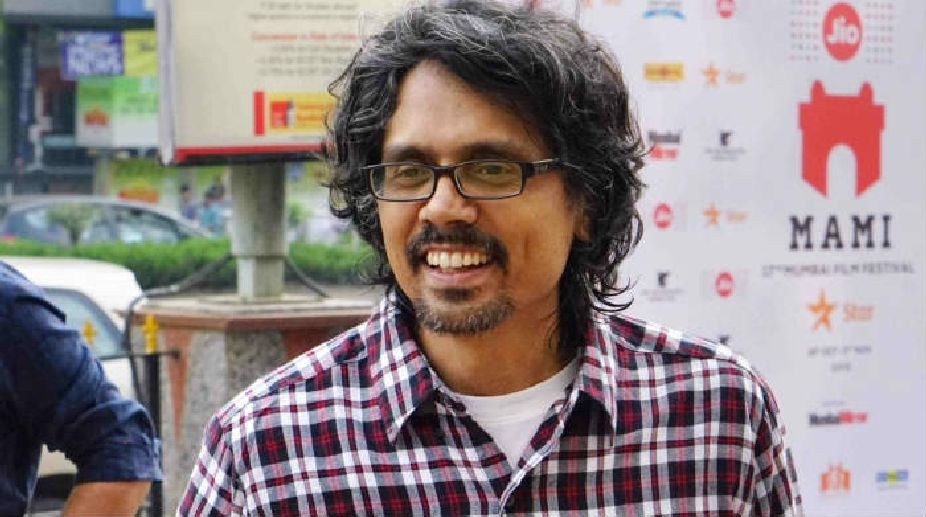
Now confident to make more children’s films: Nagesh Kukunoor

IANS | Mumbai |

A Best Childrens Film honour at the 64th National Film Awards for his movie Dhanak has made Nagesh Kukunoor more confident about directing movies around children.

Known for portraying hard-hitting subjects through his films, Kukunoor said here: "At first, I said that I don't want to make children's films. Then after 15 years, I broke that promise with Dhanak. The children in that film were a joy to work with.

"Now I have the confidence to make more children's films."

Dhanak featured child actors Hetal Gadda and Krrish Chhabria in the lead.

Kukunoor spoke to the media here on Thursday at the launch of Ekta Kapoor's upcoming digital app ALTBalaji, for which he has helmed a web-series titled The Test Case.

Featuring the acclaimed actress Nimrat Kaur in the lead, it will focus on the life of a girl who works her way to take on a combat role in the Indian Army. 

Talking about it, Kukunoor said: "The beauty of filmmaking is that I get to live different lives depending on which story I am doing. I go and invest time in that universe for a long period and that's what makes my job wonderful.

"Ever since I worked with Rannvijay Singha in Mod, I have become very close to his family, which has a lot people belonging to the Indian Army. I want to deal with this subject as honestly as possible."

Nimrat, whose father was in the army, is upbeat about the role. 

On her preparations for the series, she said: "To play this part, I needed to develop endurance, physical strength and that capability to survive under severe conditions. I don't want to cheat myself and use body doubles. I personally felt of portraying this character, who wants to be an army officer."

She said the show was challenging for her. 

"I am not trying to compete with men on the basis of physical strength, but I want to be the strongest version of me. I tried my best to do whatever I could. It's been challenging and the most rewarding experience that I have been through," Nimrat added.

Besides her, the series will also feature veteran actress Juhi Chawla as defence minister.

"The idea was the bring her for a cameo role, but there is a very strong chance that as the series goes on, we might keep writing more scenes for her," Kukunoor said.

"I have worked with Juhi a while back and was looking for some excuse to work with her again. So we cast her as minister," he added.

Punjab, Haryana farmers suffer as crop gets ‘electrocuted’

IANS | Chandigarh |

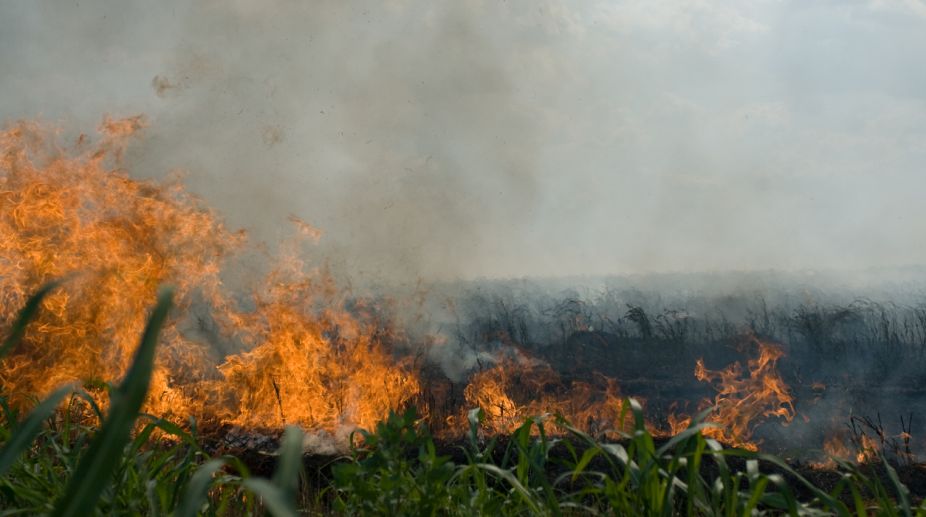
Farmers in the agrarian states of Punjab and Haryana are often blamed for causing environmental and health concerns by burning crop residue but scores of farmers also suffer burning of their crop for no fault of theirs.

Incidents of standing wheat crop being burnt to cinder across hundreds of acres in Punjab and Haryana have come to light in the past 10 days, just ahead of the harvest.

The reason? Short-circuiting of overhead high-tension electricity wires that criss-cross agricultural fields in both states.

In Punjab's Patiala district, for instance, the crop over nearly 200 acres in Kathgarh Chana and Khagta Kalan villages was burnt last week.

"The short-circuit can happen anytime — day or night. While in the daytime, the fire is noticed by someone and steps are taken to control it, at night it can cause extensive damage," farmer Jagir Singh of Patiala district told IANS.

"We had been complaining to the electricity department officials that the loose overhead electricity wires are dangerous, but they have not replaced these on time. This has led to the damage," he added, pointing to his own loss of over Rs 2 lakh.

The Sangrur-Patiala highway was blocked by farmers for some time last week near Sohiyan village after the wheat crop — ripe and ready after four to five months of intense effort — was damaged on five acres of land. The fire was caused by a short-circuit.

"A similar incident took place last year. The authorities failed to replace outdated electricity wires," farmer Balwinder Singh of Jheormajra village pointed out, adding that he was going to harvest the wheat crop when the incident took place.

Officials of the Punjab State Power Corporation Limited (PSPCL) say that they try to replace the defective wires but sometimes the exercise takes time.

"Whenever we get complaints from farmers and village panchayats regarding faulty and loose wires, we try to repair them on priority. However, sometimes a delay occurs and farmers have to suffer," an Executive Engineer with PSPCL told IANS.

Farmers rue the fact that they are forced to fend for themselves as the fire brigade facility is available only in major towns and cities.

"The fire brigade reaches the spot after one hour or even later. By that time, the fire spreads. At times, villagers use local resources to douse the fire," farmer Gurjant Singh of Bathinda district pointed out.

On Wednesday, wheat crop on 23 acres of land of two farmers was damaged in Chugte Khurd village of Bathinda district due to a short-circuit in the overhead electricity wires.

Revenue officials have to calculate the loss suffered by farmers in such incidents so that the authorities can provide some compensation to the farmers.

Green Revolution state Punjab, which occupies just 1.54 per cent of the country's geographical area, contributes nearly 50 per cent of foodgrain to the national kitty. The production in neighbouring Haryana is nearly 40 per cent of that of Punjab.
 

Good Friday observed in Nagaland

PTI | Kohima |

Nagaland on Friday observed Good Friday by holding fast and special services in churches across the Christian dominated state.

Catholic Christians also took out cross march on the occasion.

Shops and other commercial establishments remained closed in major towns of the state.

Meanwhile, believers are also gearing up to hold Easter Sunrise Service or Resurrection of Jesus Christ on Sunday.

On this day, some 2,000 years ago, Jesus Christ was crucified on the cross at Mount Calvary.

AMUSU condemns filing of FIR against students

PTI | Aligarh |

Aligarh Muslim University Students' Union (AMUSU) has condemned the filing of an FIR against some student leaders for participating in a protest march against incidents of violence allegedly involving cow vigilantes.

"Police stand by when innocent farmers and cattle-traders are targeted by armed mobs but lose no time to slap cases against those who are exercising their fundamental right for peaceful protest," AMU students union President Faizul Hasan said condemning the filing FIR on students.

He was referring to the students' march on April 12 where he had said he would "fully support" any move for a national ban on cow slaughter. During the protest, he had also demanded establishing fast track courts to try the cases against those indulging in violence in the name of cow protection.

A case has been filed against 81 students at the civil lines police station for taking out the procession without getting official permission.

Hasan said the students' union will hold a special meeting on Friday to chalk out its course of action in the wake of the "coercive step" taken by the district authorities.

Hasan also said the AMUSU is whole-heartedly behind the ongoing efforts for securing justice of Kulbhushan Jadhav who has been awarded death sentence by a Pakistan military court.

"We strongly condemn the inhumane approach of Pakistan and we want that Prime Minister Modi should not hesitate to use his personal equation with his Pakistani counterpart for securing Jadhav's release," he said.

India-Russia celebrate 70 years of friendship

IANS | New Delhi |

Celebrating 70 years of friendship with Russia, India on Thursday kicked off year-long celebrations of diplomatic relations between the two countries.

The celebrations would be taken to different cities and towns of the country through organised cultural events, business meetings and other activities.

During the launch function here, Indian Council for Cultural Relations (ICCR) President Lokesh Chandra said the last 70 years since independence had been of a "very close friendship", which actually dates back around 200 years.

"We hope that this friendship that we share would continue for years to come," he said.

Joint Secretary (Eurasia) G.V. Srinivas said India was ready to celebrate the festival of friendship in partnership with the Russian community and other stakeholders throughout the coming year.

Indian-origin doctor in US held for child genital mutilation

IANS | Washington |

An Indian-origin female doctor in the US was arrested and charged with performing female genital mutilation on girls as young as six-year-old.

Jumana Nagarwala, 44, was charged with performing the procedure on six- to eight-year old girls at a medical clinic in Livonia, Michigan, reported WXYZ TV channel on Thursday. 

Nagarwala, who is an emergency room physician at a hospital, was investigated after the authorities received a tip-off.

If found guilty, she faces a maximum sentence of life in prison. Female genital mutilation was made illegal in the US in 1996.

According to a criminal complaint, some of the children were brought from out of state for the illegal procedure.

Female Genital Mutilation (FGM) is considered the complete removal or partial removal of the clitoris, known as a clitoridectomy. FGM is internationally recognised as a violation of the human rights of women and girls.

Prosecutors said Nagarwala had performed "horrifying acts of brutality on the most vulnerable victims", according to the report.

Some travelled to her practice from outside the state of Michigan and were told not to talk about the procedure, they added.

Nagarwala appeared in a federal court in Detroit and was remanded in custody.

"Female genital mutilation constitutes a particularly brutal form of violence against women and girls. It is also a serious federal felony in the United States," Acting US Attorney Daniel Lemisch said.

"The practice has no place in modern society and those who perform FGM on minors will be held accountable under federal law."

The US Congress passed a law in 1996 making it illegal to perform genital mutilation or cutting on anyone under 18. Twenty-five US states also have laws prohibiting the practice.

Prosecutors in Michigan said they believe it is the first case of its kind brought under the federal law.

The complaint said federal agents reviewed Nagarwala's telephone records and further investigation revealed that parents of two minor girls had traveled to Michigan.

The girls were later interviewed by a forensic expert and one of the girls said she was told she was coming to Detroit for a "special" girls trip, but after arriving at the hotel, she learned that she and the other girl had to go to the doctor because "our tummies hurt".

The girls had been taken to Nagarwala, who performed the procedure on the girls.

The affidavit, according to reports, also said that many of her victims were from Michigan.