Logo

Top UN court to rule on Ukraine’s case against Russia

AFP | The Hague |

In a key moment for the Ukrainian crisis, the UN's highest court will rule Wednesday on a bid by Kiev to stop Russia allegedly pumping money, arms and troops into the country's war-torn east.

Three years into a bloody conflict that has claimed more than 10,000 lives, Ukraine is urging the International Court of Justice to help bring stability to its volatile east.

Kiev is also calling on The Hague-based court to order Moscow to halt what it calls “racial discrimination” against minority groups in the Russian-occupied Crimea peninsula, particularly against its Tatar population.

The ICJ was set up in 1945 to settle disputes between countries in line with international law.

Ukraine lodged its case in January, accusing Russia of violating the Terrorism Financing Convention and an international treaty against racial discrimination. Moscow rejects the allegations.

In its filing, Ukraine, a former Soviet republic, charged Russia with “sponsoring terrorism” by financing pro-Russian separatists and failing to stop military aid from seeping across the border into eastern Ukraine's Donbas region.

It called on the court's 15 judges to rule that “the Russian Federation bears international responsibility” for “acts of terrorism committed by its proxies in Ukraine”.

These include the shelling and bombing of civilians and the downing of Malaysia Airlines flight MH17, shot down by a Russian-made Buk-missile over eastern Ukraine on July 17, 2014.

Ukraine wants Russia to pay compensation to all civilians caught up in the conflict — one of Europe's bloodiest since the 1990s Balkans wars — as well as to the families of the 298 victims of MH17.

As it can take months for the ICJ to even decide to hear a case, Ukraine also filed an application seeking interim protection measures.
In the interim application, Ukraine is seeking a court order calling on the tribunal to order Russia to refrain from “any action which might aggravate or extend the dispute” or make it more difficult to resolve, including a halt to the funnelling of money, weapons, equipment and personnel into the east.

It also urges the tribunal to order Moscow to control its borders in eastern Ukraine and halt racial discrimination in the Crimea, particularly against the Tatars.

After hearings in March, the ICJ will rule on the interim application on Wednesday.

Moscow has strongly denied Kiev's terrorism claims, saying they were “neither factual nor legal” and argued that the ICJ does not have jurisdiction over the case.

“The Russian Federation complies fully with its obligations under (the) treaties that are now relied upon by Ukraine,” Moscow representative Roman Kolodkin told the court last month.

The drawn-out conflict, in which Russia also annexed Ukraine's southern peninsula of Crimea in March 2014, has pushed ties between Moscow and the West to their lowest point since the Cold War.

Although the ICJ's rulings are binding, the court has no power of its own to enforce them.

That would fall onto the UN Security Council, in which Russia — as a permanent member — wields a veto power.

International relations expert Ko Colijn, a research fellow at the Clingedael Institute thinktank in The Hague, said Moscow was unlikely to be affected by the ruling.

“I expect them to ignore the verdict, whether it's positive or negative,” Colijn said.

Ukrainian Justice Minister Pavlo Petrenko said in a statement on Thursday that immediately after the ruling, Kiev would unveil “new, very interesting evidence” that would refute what he called “many of Russia's lies and Russia's propaganda”.

Drake’s surprise performance at Coachella 2017

IANS | Los Angeles |

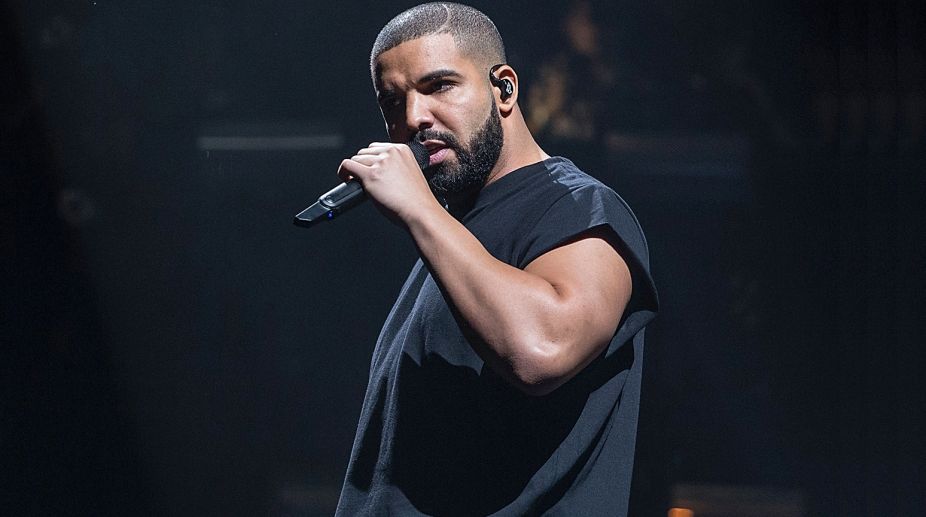
Rapper Drake performed a surprise gig on the second day of Coachella festival here.

Drake stepped out for an unannounced performance during his friend Future's gig on Sunday, reports dailymail.co.uk.

Another highlight of the day was singer Lady Gaga, who replaced pregnant Beyonce Knowles's headline spot.

Gaga enthralled the crowds with her energetic performance at the Empire Polo Club in Indio, California.

Donning black bodysuit, Gaga also debuted her new song "The cure". "My new single 'The cure' is available on iTunes now," she said.

The festival earlier featured performances by Radiohead and Travis Scott.
 

IUML leading in Malappuram by-poll

IANS | Malappuram (Kerala) |

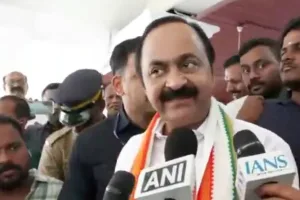
On expected lines, IUML strongman and sitting legislator PK Kunhalikutty got off to an early lead as counting of votes began at the Malappuram Lok Sabha seat on Monday.

Kunhalikutty was leading with over 13,000 votes as counting began at 8 am here.

The total turnout at Malappuram by-election on April 12, was 71.33 per cent.

In second place was Communist Party of India-Marxist's local body member and youth leader M.B. Faizal, while the Bharatiya Janata Party candidate N. Sreeprakash was a distant third.

The re-poll was necessitated after the death of sitting MP and Indian Union Muslim League (IUML) leader E Ahamed.

Malappuram district is the citadel of the IUML and Ahamed won the 2014 polls with a record margin of 1.94 lakh votes.

But during the 2016 assembly elections, the margin of the IUML legislators, who won in all the seven assembly constituencies, came down to 1.18 lakh votes.

The outcome of the poll could well be the first indicator on how well the 10-month-old Pinarayi Vijayan government has functioned.


US Police search for man who live-streamed murder

IANS | Cleveland |

Cleveland police is searching for a man who allegedly killed an elderly man and broadcast the killing on Facebook Live.

The suspect, Steve Stephens, later said in a separate video post that he had killed 13 people and was looking to kill more, BBC reported.

Cleveland police chief Calvin Williams confirmed one killing but said they did not know of any other victims.

Authorities identified the homicide victim as Robert Godwin, 74.

"From what we can tell now, it's just a random person that he picked out. We don't know why," Williams said.

Godwin had just left his children's home after eating an Easter meal and was walking home when he was killed, CNN affiliate WOIO reported.

"We need to bring this to a conclusion — today," Williams said, adding: "There is no need for any further bloodshed in this incident tonight."

The FBI is assisting Cleveland police in the search. Nearly five hours after the shooting, Williams said authorities hadn't had a report of a sighting of Stephens, CNN reported.

Authorities said Stephens is a black male who is 6-feet 1-inch and weighs 244 pounds. He has a full beard.

"What happened today is senseless and if Steve has an issue, he needs to talk to some folks to get that resolved," Williams said.

"He needs to turn himself in so that he can get the help that he needs and he can't keep victimising this community based on his issues," Williams added.

In a statement, a Facebook spokesperson said the shooting was a "horrific crime".

"We do not allow this kind of content on Facebook. We work hard to keep a safe environment on Facebook, and are in touch with law enforcement in emergencies when there are direct threats to physical safety," the statement said.

It is not the first time that a fatal shooting has been captured on Facebook Live. Last June, a man was shot dead while live-streaming a video of himself on the streets of Chicago. In March, an unidentified man was shot 16 times while broadcasting live.

Facebook's live-streaming feature allows anyone to broadcast online in real time. It was launched in 2010 but has become more central to the social network's strategy in recent months.

Recep Tayyip Erdogan wins Turkey referendum

IANS | Ankara |

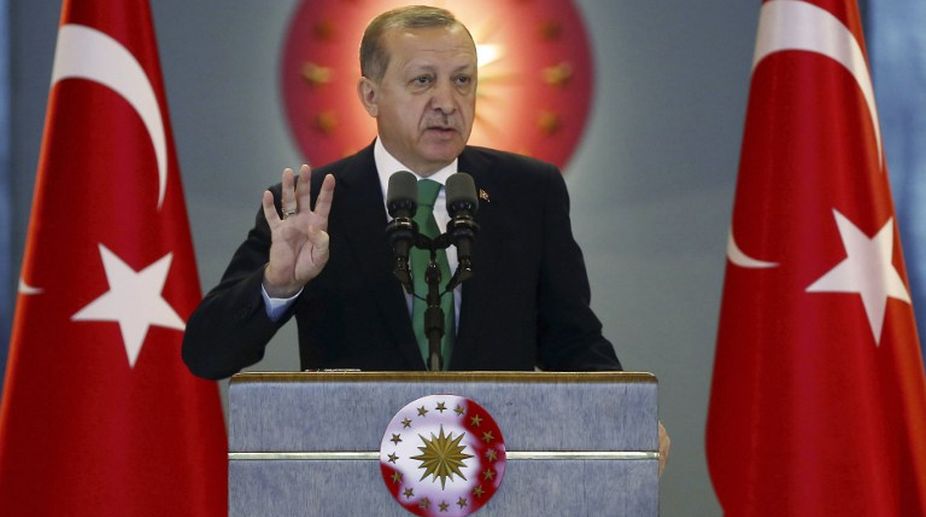
Turkish President Recep Tayyip Erdogan narrowly won a referendum on Sunday to expand presidential powers.

With 99.97 per cent of ballots counted, the "Yes" campaign had won 51.41 per cent and "No" 48.59 per cent, and the electoral board called victory for "Yes", BBC reported. Final referendum results will be released within 11-12 days.

The social-democratic CHP party, the country's main opposition force, which campaigned against the reform, said the Supreme Electoral Board had helped the "Yes" option win. 

CHP spokesman Erdal Aksünger told reporters that the party will challenge the ballots cast at 37 per cent of the precincts because there was "much manipulation" and will demand a recount.

The opposition's chief concern is the statement issued by the board late on Sunday saying that it will consider ballots not previously validated by the electoral precinct authorities to be valid, a move the opposition claims opens the door to manipulation.

"They're saying that ballots and envelopes without the official seal are valid. That's illegal. That means that they can bring votes in from outside," EFE news quoted CHP Vice-President Bülent Tezcan as saying.

The pro-Kurdish Peoples' Democratic Party (HDP) suggested "an indication of a three-four percentage point manipulation of the vote".

"Today, Turkey has made a historic decision on a 200-year-old conflict in its administrative system… Today is the day when a change, a decision to shift to a truly serious administrative system was made," the state-run Anadolu Agency quoted Erdogan as saying in a post-referendum speech at Huber Palace in Istanbul

Erdogan said 25 million "Yes" votes were cast, with a 1.3-million vote margin of victory, according to unofficial results.

Referring to the military coups which marred Turkish politics for decades, including a failed coup attempt in last July, Erdogan said Turkey changed its governmental system through civilian means for the first time in its republic history.

"For the first time in the history of the Republic, we are changing our ruling system through civil politics," Erdogan said,

Deputy Prime Minister Veysi Kaynak said the results were not what they expected. "The 'yes' votes are lower than what we expected, but still they are ahead," Xinhua news agency quoted him as saying.

However, Prime Minister Binali Yildirim said the Turkish nation gave its final word by voting "Yes" in the country's constitutional referendum.

Speaking at the Ankara headquarters of the ruling Justice and Development Party (AKP) Yildirim said: "I thank and express my gratitude to all our citizens who went to the ballot box with a high turnout, and who protected our democracy."

"We have voiced different things to the nation but the nation gave its final world by saying 'Yes'," Anadolu agency quoted him as saying.

Saying that Turkey's new government system would be put into practice in the 2019 general elections, Yildirim said: "Our nation made its choice, and it confirmed the presidential system."

The leader of Turkey's Nationalist Movement Party (MHP) Devlet Bahceli, who supported the "Yes" campaign, said the outcome of the referendum was an "undeniably successful achievement" and should be respected.

"The Turkish people have gone to the polls with a great dignity and decided on shifting to the presidential system of their own free will," Anadolu Agency quoted Devlet Bahceli as saying in a statement.

More than 55 million people in the country were registered to vote, while another 1.3 million Turks cast ballots abroad. 

Sunday's referendum asked voters to choose 'Yes' or 'No' on an 18-article bill that would see the country switch from a parliamentary to a presidential system, 

The draft states that the next presidential and parliamentary elections will be held on November 3, 2019 when Erdogan's current term ends. It sets a limit of two five-year terms for the President. 

It enables the President to directly appoint members of Turkey's top judicial body, top public officials, ministers and assign one or several Vice-Presidents.

It gives the President authority to annul parliament and declare an election. It introduces accountability before law for the President, but makes it more difficult for the President to be referred to the Constitutional Court for trial. 

The election is over: Trump to Tax March protesters

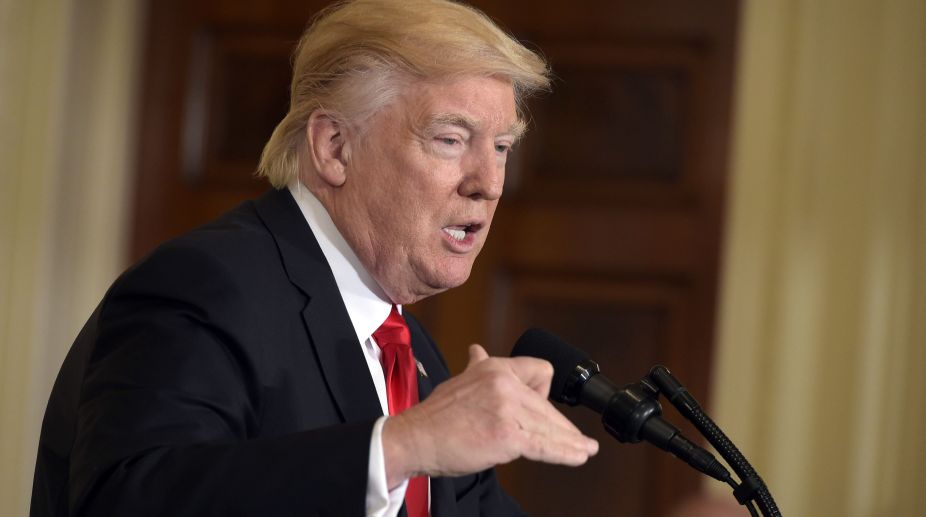
US President Donald Trump on Sunday issued a number of tweets in a bid to downplay Saturday's protests across the country demanding the release of his tax returns.

"Someone should look into who paid for the small organised rallies yesterday (Saturday)," Xinhua news agency quoted Trump as saying in a tweet. "The election is over!"

"I did what was an almost an impossible thing to do for a Republican-easily won the the Electoral College! Now Tax Returns are brought up again?" Trump tweeted minutes earlier.

Demonstrators in dozens of US cities and towns, including Washington D.C., New York, Philadelphia, Chicago and Palm Beach, where Trump was spending Easter Weekend at his resort Mar-a-Lago, marched on Saturday to demand Trump release his tax returns. 

Some rallies were joined by thousands of people. 

During his campaign and after the election victory, the Trump camp repeatedly refused to release Trump's tax returns, saying Trump's tax returns were under audit. However, many tax experts say Trump is not barred from releasing the information during the audit.

While US Presidents are not required to release their tax returns, nearly all US Presidents had voluntarily released them since 1970s.

Shortly after Trump's inauguration in January, Kellyanne Conway, senior counsellor to Trump, told US media that Trump would not release his tax returns, citing voters' indifference to the issue as one of the reasons.

However, multiple polls have found that the majority of Americans want Trump to release his tax returns.

Comedy writer Frank Lesser, whose tweet in January sparked the idea for the Tax March, said the participation in the nationwide marches proves that people want to see Trump's returns.

"We march to demand that the President release his returns, as he has repeatedly promised, but failed, to do," the Tax March website reads. "We march because it is in the best interest of the American people to know what financial entanglements and conflicts of interest our leaders have."

A petition demanding Trump release his tax returns garnered more than 1 million signatures. Many lawmakers, including some Republicans, have also called on Trump to make them public.

IANS | Washington |

Curses come home to roost

Yambem Laba | Imphal |

Sometime in 2010, three former cadres of the Manipur’s People’s Liberation Army were “recruited” by 3 Corps of the Indian Army based at Rangapahar near Dimapur (Nagaland), under its intelligence and surveillance unit that reports to its General Officer Commanding.

The three had apparently been used by this “cloak and dagger” unit for activities that involved extortion, drug- and gun-running, all in the name of counter-insurgency operations under the cover of the Armed Forces (Special Powers) Act.

Then, one day the same year, the Army picked these three up from a place at 7th Mile in Dimapur and took them to Rangapahar where they were allegedly subjected to third-degree methods and, after they were killed, the bodies were dumped in a nearby jungle in Assam’s Karbi Along district. Phijam Manikumar, the brother of one of the victims, Hijam Naobi, reported the matter to the Nagaland police in Dimapur.

A few days later, the Assam police informed their Nagaland counterparts that three bulletriddled bodies had been recovered from a forest in Karbi Anglong. The Nagaland police, in turn, informed the authorities at 3 Corps headquarters, who retaliated that they were immune under the AF(SP)A.

The matter soon reached Army Headquarters when one Major T Ravi Kiran, turned whistleblower and wrote to his superiors at both Eastern Command and Rangapahar stating how, one night, the three Manipuris were shot dead by the Intelligence unit behind their officers’ mess. In his letter, Major Kiran mentioned how Colonel Gopinath Shreekumar, Commanding Officer of the “rogue” unit, was behind the abduction and killing and was assisted by a Major Rubeena Kaur Kheer and a Manipuri officer by the name of Nector.

The grapevine also had it that just five days after the killing, Major Kheer, the alleged “killer lady”, had led the operations to pick up and dispose of the bodies of the three youths. Four Army personnel of the same unit were recommended for gallantry awards for eliminating these three so-called hardcore terrorists.

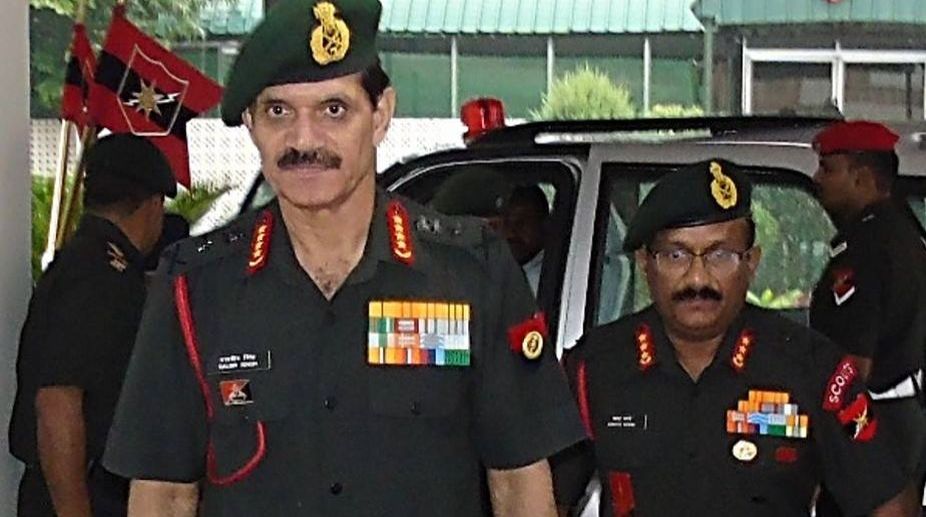
Under pressure from Fort William, 3 Corps then instituted a one-man enquiry headed by the Brigadier-General Ashawani Kumar, which was a mere eyewash since it was done at the behest of Major-General Abhay Krishna, then Brigadier (Operations) HQ, 3-Corps, acting upon the instruction of Lt-General Dalbir Singh Suhag, then GOC 3 Corps, as the “rogue” unit reported directly to him and was answerable for all its acts.

This inquiry was against all established Army norms, given how such a probe can only be conducted through either the Discipline and Vigilance Branch or the Adjutant’s branches of the Army. Peeved at the manner in which 3 Corps was trying to hush up the matter, the Chief of Army Staff imposed a disciplinary and vigilance ban on Lt-Gen Suhag and his future seemed almost doomed. But as luck would have it, after the Supreme Court turned down General VK Singh’s “date of birth” case and he was on his way out, it became clear that General Bikram Singh would be the next Chief of Army Staff, followed by Lt-Gen Suhag.

The first thing General Bikram Singh did upon assuming office as Army Chief was to lift the DV ban on Suhag, who was soon elevated to the post of Army Commander, Eastern Command, and directed his cover-up operations from Fort William.

He then began revenge “surgical strikes”, and unable to reach General VK Singh, who by then had already joined politics, he targeted Brigadier Laiphrakpam Ibotombi Singh, the Manipuri officer who had served the DV Ban notice on him as GOC 3-Corps, by having him placed under a DV Ban on trumped-up charges. The Statesman had earlier carried a three-part story in this regard.

The matter was soon relegated to being a distant memory in the public mind, but not to the family of the late Phijam Naobi. In early 2014, they moved Manipur High Court seeking issuance of a writ in the nature of mandamus or habeas corpus and prayed for the immediate arrest of LtGeneral Suhag, who was by then ViceChief of the Army.

When The Statesman broke this news, the Election Commission took due note and decreed that the post of Army Chief of Staff could be filled only after the 2014 general election. Manipur High Court, however, ruled that since the incident took place in Nagaland, it was only appropriate that the petitioner move Gauhati High Court, and that is what the victim’s brother did.

The matter dragged on as one respondent or the other from the Army side failed to file replies under one pretext or the other. In the meantime, General Suhag became Chief of Army Staff and got into yet another controversy when he deployed Army troops to appease the saffron brigade in a grand show on the banks of the Yamuna river. His objective was simple ~ to acquire a gubernatorial post.

And this became very clear when an Army officer, posting on the social media, remarked on how Suhag was likely to be made the governor of one of the Northeast states and how his “experience” in the region would be beneficial for the country. A barrage of replies forced the Army officer to quit the Facebook theatre.

In the meantime, the matter came up for final hearing before Gauhati High Court and there remain many pertinent questions that beg answers. The first, does an Army inquiry have legal standing as findings of such an investigation have no prima facie evidence? Second, it needs to be pointed out that any inquiry within the Army is conducted by a HQ formation save for a Loss of Classified Document that is made mandatory by the General Staff Branch.

Further, in this case, the one-man inquiry appointed to look into allegations of the complainant of triple homicide committed by fellow officers was ordered by GS Operations Branch, which was the affected party ~ hence the logic of a judge being able to adjudicate on his own conduct! Then there is the question of the Army not having provisions to go into suicide or homicide being a civil offence.

More importantly, this matter involved the killing of civilians. As pertinently, the one-man inquiry officer neither summoned the complainant nor recorded the statement of Major Ravi Kiran, the complainant. Also, no written statement has been given by Lt-Colonel Perumal, then GI(Int), 3 Corps.

It now appears that the direction of the enquiry was aimed at punishing Major Ravi Kiran for “false allegations”’ and for writing directly to the Chief of Army Staff “in disregard of procedures”. However, the one-man inquiry did not issue Major Ravi Kiran any showcause notice simply because the same would not stand in a civil court and also because of the awareness that such a move would be tantamount to the question of murder.

When reports last came in, Gauhati High Court had asked the Nagaland government to submit the post-mortem reports of the three deceased. The influence of 3 Corps also runs in the corridors of the Kohima Secretariat and the high court has given yet one more opportunity for respondents to file their replies.

The bigger question is whether the saffron brigade in power at the Centre considers appointing General Dalbir Singh Suhag ~ technically under investigation for trying to hush up the murder of three innocent citizens by a unit that reported directly to him while he was GOC of 3 Corps. Perhaps God will have washed His hands of the issue were he to be appointed governor of a Northeast state!

The writer is the imphal-based special representative of the statesman.

Accords galore

Rangan Dutta | New Delhi |

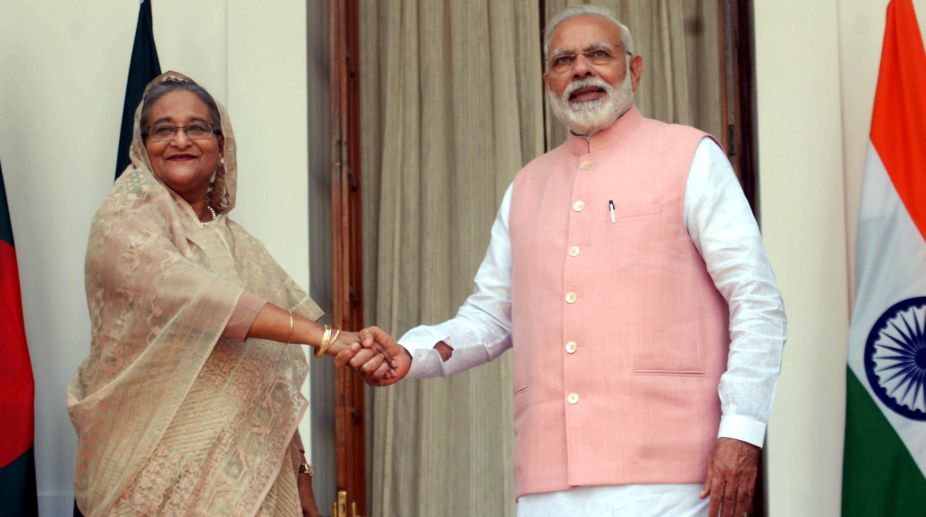
The signing of 22 agreements between Bangladesh and India during the visit of the Prime Minister of Bangladesh early his month and Prime Minister Narendra Modi’s announcement of a concessional line of credit of $ 4.5 billion for projects in Bangladesh, mainly for infrastructure development and a line of credit of $500 million for “defence-related procurement” by Bangladesh — the largest such credit ever extended to any country by India — have been well received in both the countries and hailed as ‘ transformative’ in the Indian media.

In Bangladesh too it was viewed as the beginning of a new phase in the Bangladesh-India bilateral cooperation, which is sure to strengthen sub-regional initiatives, especially the Bay of Bengal Initiative for Multi-sectoral Technical Cooperation and the Bangladesh, Bhutan, India and Nepal initiative.

The joint statement condemning terrorism and the need to take strong measures against states “which support and finance terrorism, provide sanctuary to the terrorists and falsely extol their virtues” clearly points to Pakistan as the source of terror.

A significant feature of the visit is the signing of 14 agreements and memorandums of understanding between Indian private corporates and their Bangladeshi counterparts to enable India’s globally renowned companies like the Adani group to enter into the Bangladesh energy sector. The two Prime Ministers formally launched additional rail and bus services between the two countries.

Do these developments suggest that “geo-economics” is at long last prevailing over some compulsions of cynical geopolitics of South Asia? It is probably too early to think so as the foundation of the democratic “modern” State is still fragile in Bangladesh because the Islamist forces fuelled by outside support hold influence enough to disrupt these bold strategic initiatives founded on the unstated fact that the partition in Eastern India, covering Bengal and Assam was “unnatural” as it ignored the reality of geography and ecology.

Bangladesh is almost entirely a delta, criss-crossed with rivers, rivulets, creeks and bay islands; and a delta doesn’t lend itself to a political division. In fact except Bengal no large delta has been partitioned in the world so far. Thus nature has positioned Bangladesh as a lower riparian country as 54 out of 57 rivers of Bangladesh originate in India and three in Myanmar.

This suggests a spirit of willing accommodation as the only durable basis of a mutually beneficial water sharing arrangement of such rivers since there is neither international law nor a juridical system in place to secure the rights of the lower riparian countries and hence, the only course is bilateral agreement.

Bangladesh is thus endowed with the largest number of “international rivers” as defined by HA Smith in The Economic Use of International Waters in which he propounded the doctrine of riparian rights, which entitles a lower riparian country like Bangladesh to a share of the natural flow of water. Bangladesh enjoys yet another feature of being the only large Islamic country that doesn’t share land borders with another Muslim majority state; and its nearest Muslim neighbour is the multi-ethnic and multireligious Malaysia, far removed from mainstream Islamic states of West Asia.

These facts suggest that future progress of Bangladesh would critically depend on cultivation of liberal and secularist values and institutions of governance that Bangabandhu Sheikh Mujib stood for and not “political Islam”, which will only obstructs development. Faced with the reality of having to live with 57 international rivers, Bangladesh endorsed the 9 July 1997 UN General Assembly Resolution on non-navigable uses of international water courses while China voted against it and India, Israel and Pakistan abstained.

Even though 106 nations did vote for it and the convention is viewed as “codification of customary international law by the International Court of Justice and as a framework for management of international rivers”, it has not been ratified so far.

However, some of its provisions, like the prior intimation to user countries of any interference in any such river systems and consultations, have been adopted as standard practice. Even then as global experience with the Nuclear Non Proliferation Treaty has shown, faced with strong national interest only bilateral negotiations based on the principle of “give and take” work.

And, this could be the only way to resolve not only the Teesta water sharing deal but also other outstanding issues like the construction of a 162.5 metre-high embankment dam at Tipaimukh in Manipur for generating 1500 MW, which Bangladesh fears will adversely affect the flow into the Surma and Kushiara rivers in Bangladesh, apart from causing serious damage to the environment.

One may also note that there was no mention of any thought on the major concern of Assam, namely, the influx of people from Bangladesh. However, Bangladesh must have noted the seriousness with which India is proceeding with the task of constructing 3,400 km of barbed wire fencing and concrete posts to prevent influx and smuggling by setting a timeline for completing the task by 2017. As of now, 222 km of 263 km of Assam’s border with Bangladesh have been fenced and serious efforts are on to seal the border with Assam and Tripura.

Hopefully, these efforts will bear fruit and facilitate expansion of “border haats” along the entire North-east portion of the India-Bangladesh border, and especially in Meghalaya as it shares 443 km of border with Bangladesh, crucial for trade and development of tribes.

It is not widely known that the partition badly divided the Khasi and Garo tribes as many of them found themselves on the “other side” and thus expansion of border trade might reunite the tribes on bonds of trade and cultural exchange. In a way, border fencing is symbolic — it is India’s rejection of any neo-Wahabi form of Islam and determination to stop its spread emanating from Eastern Bengal as it did in the early 19th century when Wahabis from this very region, then known as “Farazis” went all the way to the North West Frontiers to fight the forces of Maharaja Ranjit Singh as documented in William Hunter’s seminal work, The Indian Mussalmans.

But not anymore, as a rapidlymodernising Bangladesh is essential for development of the Bay of Bengal region. And this geopolitical advantage and importance that Bangladesh holds are what Pakistan cannot have as it has mortgaged its future to volatile lands of oil and sectarian violence to her West.

Bangladesh, on the other hand, gave the world the “Grameen” model of women-led self-help groups movement and the credit-based income generation programme, which triggered broad-based social development, raised female literacy, life expectancy at birth, brought down the birth rate, ensured women’s participation in the economy and, improved sanitation and water supply to the extent that the country today is largely an “open defecationfree” country.

This dynamics enabled Bangladesh to climb up in the UN Human Development Index to the 139th rank and her economy, growing at 7.1 per cent over the last eight years, which the IMF reckoned as the second fastest even when the Foreign Direct Investment was limited to $ 2.2 billion only.

Expansion of trade with India is therefore critical for Bangladesh, which has grown to $ 6.5 billion though Bangladesh exports are hovering around $ 500 to 700 million. The real constraint on growth of merchandise exports is poor infrastructure, which stands in the way of Bangladesh emerging as a new Asian hub of low-cost manufacturing as rising labour costs in China might induce Chinese firms to move elsewhere as costs are less and labour productivity comparable.

To overcome this, Bangladesh needs infrastructure investment of $ 20 million annually till 2030 “to take advantage of her demographic dividend and cheap labour costs” as stressed by Sheikh Hasina.

In this scenario the inking of 14 agreements with Indian companies entailing private investment of about $ 9 billion during the visit and her promise of allocating 100 special economic zones to Indian companies should be truly reckoned as “transformative”. Its outcome, however, will depend on how effectively the state and the civil society of Bangladesh counter political Islam. Herein lies the challenge to realise Sheikh Mujib’s idea of a secular, socialist and democratic Bangladesh.

The writer is a retired ias officer of the assammeghalaya cadre and has served as a scientific consultant in the office of the principal scientific advisor to the government of india

Where balance brings good health

Sarah Berry | New Delhi |

"To keep the body in good health is a duty…otherwise we shall not be able to keep our mind strong and clear." Nothing could describe the importance of good health better than these words of the Buddha.

In today's fast-paced time and age, we do a lot to keep ourselves healthy as we understand the value of good health ~ physical, mental and emotional. Though prevention is better than cure, in case we fall ill, various forms of medicine are available, with solutions ~ short and long-term.

One form of medicine which traces its roots back thousands of years, is the Tibetan form of medicine. Dr Tenzin Thaye, Men-TseeKhang (Tibetan Medical and Astro. Institute of His Holiness the Dalai Lama) reveals more: "Building on the knowledge of the ancestors to treat various ailments using different plants, herbs and remedies, as well as the exchange with different forms of medicines across the world like India, China, Greece and many other countries, resulted in the compilation of one book, which serves as the basis of Tibetan medicine ~ the Four Tantras."

The core principle of Tibetan medicine is that the human body, as also the universe, is a combination of five elements ~ Earth, Water, Fire, Air and Space, with ‘balance’ being the key. Therefore, the body, disease and remedies are all inter-connected.

Dr Thaye elaborates, “For example, if the fire element is predominant in an individual it may lead to fever, for which the remedy would be based on the enhancement of the Earth and Water elements.

Vice versa, if the digestive system is affected, the need to enhance the fire element stands. While making the medicines, blessings are invoked and energies from the moon or sun are ‘drawn’, based on the kind of medication and its purpose.”

A thorough knowledge of plants, herbs, associated rules and regulations and so many other dimensions are studied. So what is the secret behind a healthy body, mind and spirit? “Prevention is better than cure. Always. The idea is not to just hand out pills; the idea is to support medicine with education ~ be it applicable to lifestyle, diet or the thought process.”

He adds, “Depression, for example, is not only a challenge faced by the mind, but also the body and vice versa, as there is a deep connect between both. Stress is again caused by lifestyle and dietary habits. What is stress? It is actually trapped energy waiting to be released.

Understanding the self and the other are very important and this comes with retrospection and reflection. “Besides, meditation is another important tool. How should one meditate is a common question. However, there is no standard way. Each individual has to discover his or her own method.

This can even be a combination of different paths. Focussing on the breath is one of the common ways of meditation, besides many others. Even diseases like cancer have found cures in Tibetan medicine. “Initially, the patient has carried forward treatments like radiotherapy and chemotherapy, but long-term solutions have been found in herbal medicine.

The answer lies in positive thinking, consumption of organic and natural foods and healthy proportions of exercise or physical movement.” Behind every profession there is an inspiration. What was DrThaye's? He smiles, as he recalls, "In my childhood I saw a lot of interaction with medicine, in some form or the other. The little bags of medicine were, especially, very intriguing to me.

“After studying medicine in Tibet, I came to Dharamsala for further studies. It is, here, that I became a monk. I have travelled extensively across India and have been more than satisfied with my choice of profession and my journey." Any 'magic potion' for healthy living? DrThaye smiles and says "Balance."

Down the Silk Road came new melodies

Sarah Berry | New Delhi |

Even the words 'Silk Route' or 'Silk Road' call to mind a tactile experience like touching a Banarasi saree or sipping on a piping hot chai among nomadic shepherds in remote mountains." These words by Hans Utter, who holds a doctorate in Ethnomusicology from Ohio State University and is the winner of 16 national and international awards, take the audience on a nostalgic journey of a bygone era.

The Silk Route represents a journey through time and space interconnecting diverse cultures in an unimaginable fashion, resulting in a potpourri of exotic influences imprinted through permutations and combinations.

The route extended from East Asia all the way to England, from outer Mongolia to Java and Sumatra, from Samarkand to Istanbul, connecting not only East to West, but also urban and nomadic peoples. Utter's deep interest in the Silk Route has been prompted by his study of the language, culture and history of Hindustani music.

He learnt Persian in order to study manuscripts on music written from the 12th century onwards. Subsequently, he studied language in Tajikistan and became fascinated with the parallels between the music systems of Central Asia and those of the Indian sub-continent.

Beginning in 1993, Utter lived in India, studying with some of the great masters of Indian classical music, including Ustad Shujaat Khan, Pt Arvind Parikh, amongst other masters.

Talking about his experience in India, in connection with his lectures (in Delhi at the India International centre), he remarks that though he did not have any time for sight-seeing, his journey through the cities of Delhi, Guwahati and Mumbai were enriching, as he found the spaces interesting and dynamic.

His talks were received with keen interest so much that at times the number of questions led to extension of his lectures by almost an hour! Utter's explanation on the influence of the Silk Route is fascinating when he explains how it had a relatively large impact on Indian culture, especially in the fields of North Indian music and dance forms, as well as languages such as Urdu and the poetry of writers such as Amir Khusrau and Mirza Ghalib.

Did you know that the poetic form of the ghazal originally came from the Arabian Peninsula, but has become a central feature of Indian music and literary culture? There are many other examples, such as the sitar, which developed as a fusion between Indian instruments and the seetar (three strings) found in Central Asia and Turkey.

Vice versa, Indian culture has also influenced many parts of the world through the Silk Route, including the spread of Buddhism. Besides music, how does he feel this important route influenced world cultures ~for example, when applied to languages and costumes? Utter explains, "This route helped to develop various distinct language groups that have common features like Dari, Tajik as well as Urdu, along with various Turkic languages.

Many different styles of dress, fabrics, and types of jewellery became known throughout the world, the influence of which can be seen till today." Like many things in life, what, according to Utter, has been the lessons learnt from this important development in history? He concludes on a philosophical note: "The Silk Route shows us that it is possible to have interactions with various cultures, belief systems and social orders without the destruction of unique local traditions."

Yesteryear Eastertides

Statesman News Service | New Delhi |

Eastertide in Delhi was the last community celebration by the resident British before most of them went home to Old Blighty or to the hills, with Simla being the favoured destination.

The Kashmere Gate area was the centre of activities, with St James' Church drawing a large congregation since the Cathedral Church of the Redemption had not come up in New Delhi then and the Viceroy and his aides were among those who attended the Easter Week services there on the four main days, Palm Sunday, Maundy Thursday, Good Friday and Easter Sunday, when the big party was held on the lawn.

Bishop Thomas Valpy French of Lahore, once on a visit during transit to his diocese, remarked that it reminded him of a typical English country church gathering. Bishop French died at the Cape of Good Hope while returning to England and was probably buried at sea but is still remembered as a pioneer of the Church Missionary Society.

One of his children was born in the Agra Fort during the Uprising of 1857. That was after Easter, a particularly painful one for the pregnant Mrs French. At the Catholic church of St Mary's, Easter celebrations had an Italian flavour.

The church had been rebuilt, after its demolition in 1857, by Father Keegan with substantial help from the Dominga family, who owned a lot of property in parts of Delhi and at their matriarch's Mughalbestowed estate near Okhla, where later Masigarh came up and Christians uprooted from Raisina during the building of new Delhi were resettled.

The Italian influence on Easter festivities continued up to 1935, when the newly-built Sacred Heart Cathedral came to be headed by Irish Archbishop Mulligan. Talking about those times, Georgie's father, the old sacristan, used to recall the bringing of Holy Oils from the Agra Cathedral, made on Maundy Thursday, for use in ceremonies throughout the year. Along with them, plain Zaitoon-ka-tail, or olive oil, was also brought.

It was not extracted from the olive trees near Akbar's Chruch but imported from Italy. Once the vessel containing some Holy Oil got spilt and the sacristan had to be sent back to bring some more by the parish priest, Fr Luke.

The tableau of the Garden of Gethsemane (where Christ was arrested) set up in the church, however, smelt more of Italy than of Jerusalem, said one parishioner in 1958. If memory serves right, his name was Augustine and he used to live in Mor Sarai, after which St Mary's was also known as Mor Sarai-ka-Girja.

The Faiz Nehar

Statesman News Service | New Delhi |

L ooking at the chaotic traffic in Chandni Chowk, who would believe that a canal used to flow through it up to the 19th century! The site, which once boasted of a clock tower, was marked by a huge tank of red sandstone fed by the canal.

It was constructed by Firoz Shah Tughlak in the mid-14th century and was 30 kos, or 75 miles long. In the 17th century Shah Jahan lengthened it another 75 miles and made it flow through Chandni Chowk.

It was originally known as Faiz Nehar (after Faizullah, the minister, who was in charge of the project during Firoz's reign, though some say it was so named to denote that it was a canal meant for the welfare of the people).

Shah Jahan made part of the canal flow into the Red Fort, where it merged with the Nehar-e-Behest, the stream of water lifted up from the Jamuna that flowed through the Rang Mahal in the fort. The other part, known as Nehar Saadat Khan, named after Shah Jahan's minister, flowed through Daryaganj before eventually joining the Jamuna.

The canal, which originated in present-day Haryana, was actually an aqueduct, when it flowed through Chandni Chowk, and also used to water Sahibabad, or Begam Bagh, laid by Jahanara Begum, the emperor's elder daughter.

On either side of the canal were shady neem and peepul trees and shops of jewellers, fruit sellers, sweet sellers and cloth merchants. When the ladies of the Mughal harem came, the atmosphere was truly enchanted.

Some say they came from the fort in boats and that one of them fell into the canal and nearly got drowned. Faiz Nehar was closed after the Mutiny of 1857 as it began to stink because of the bodies dumped into it by the avenging British.

However, the causeway could be seen right up to the closing years of the 19th century, after which it was levelled up and the division of the road done away with for free flow of the increasing traffic. Now the Nehar is just a distant memory.

Coping with wayward minds

Manish Nandy |

The elegant dinner was interrupted by a piercing scream. Earlier in the evening I had asked about uncle Deep, a livewire conversationalist who liked me, and was told that he was unwell.

My host ran to see the reason, and I came out on the corridor. A loud stream of obscenities followed screams. Before anyone could stop me, I advanced and had glimpse of an inconceivable scene.

Uncle Deep, naked except for a diaper and chained to a bedpost, was foaming at the mouth as he yelled one foul word after another. Later the family apologetically explained that Uncle Deep periodically ‘goes off the handle’ and has to be shackled for his own safety.

Barin was a college friend who had gone on to become a doctor and eventually the chief of a hospital’s pathology department. Whenever I visited the town where he lived with his wife Mila and two daughters, we had a drink together and a long conversation.

A strange thing happened last year when Mila told me he wasn’t well and she would rather not have me come to meet him. When I asked what was wrong with him, she was evasive. When I asked other friends, I found Barin had stopped working or Mila had started barring all friends.

Apparently he acted strangely, talked incoherently and did not recognize old friends. The third experience was with my cousin, Ranjit, an able journalist who enjoyed a good reputation both in his newspaper group and in professional circles.

He covered business news and was as diligent as he was knowledgeable about emerging commercial trends. When I didn’t hear from him for two months, I thought it was unusual and went to see him. A voluble man he had suddenly turned taciturn and responded to all my overtures in monosyllables.

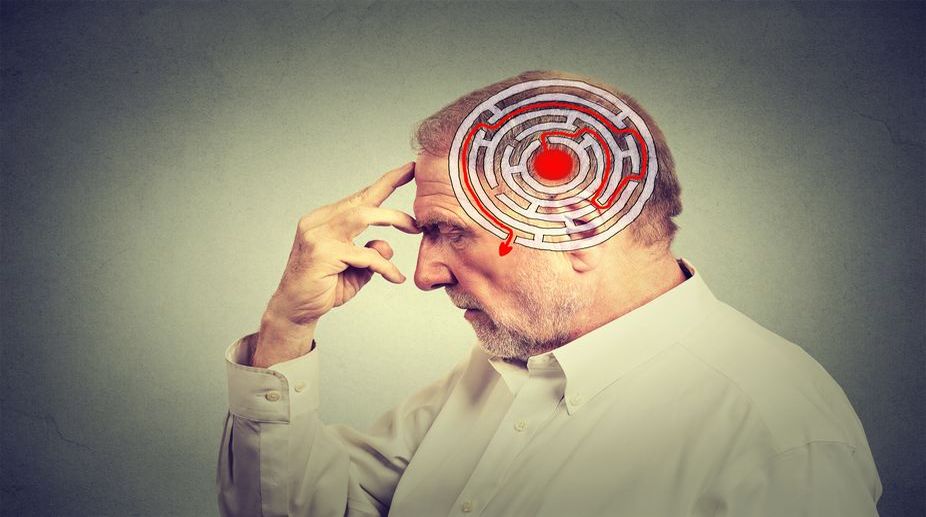
His brother called it ‘a streak of depression,’ but after he was taken to a specialist at my insistence, it was diagnosed as the onset of dementia. The toll of Alzheimer’s is extensive: it claims a victim nearly one every minute.

Forty seven million people worldwide have Alzheimer’s, costing $700 billion each year; the figure is expected to double in twenty years. After heart attack and cancer it is the biggest killer. There is no cure and no prevention.

There are a couple of expensive drugs that can marginally modify the havoc, but there is nothing to fight the disease. Imagine this insidious blight attacking your father, mother, brother or sister (women seem statistically more vulnerable) – or yourself.

Day by painful day, it will shrink and atrophy your brain tissue. The first thing to go will be your memory: you will start by forgetting little things and end up by failing to recognize your wife and your own face. You will lose money and valuables; then you will get lost yourself, because you can’t find your own home.

Then you will start losing your mental functions, those that make you human. You will lose your language, reasoning capacity, any kind of systematic thinking. You will forfeit the ability to do any step-by-step thing, like dressing or feeding yourself, and become fully dependent on others.
Then will come hallucinations, delusions and paranoia, resulting in impulsive and offensive behavior. The ultimate stage is when you are confined to bed as your body starts shutting down. What makes it worse, as my experience shows, is that the whole phenomenon of dementia is wrapped in misunderstanding, shame and sheer ignorance.

Few families have the vast coping skills, extensive support network and huge caregiving stamina and budget needed to deal with an Alzheimer patient. Even fewer have a basic knowledge of the way the disease can change a person’s behavior and make him or her seem uncooperative, resistant, stubborn or just monstrous.

Family members then try to isolate and hide the person, aggravating the victim’s physical and mental decline. Some even shackle and confine the patients like animals, shorn of all dignity, ostensibly for their own safety. Given the growing threat of dementia that hangs over us all, the first step may be to know something about Alzheimer’s, its symptoms and consequences.

We could learn how to identify the signs, when to consult a specialist, and why we need a strategy for coping and care-giving. It may be a little better than to chain your mother or brother in a back room or cling to the vulgar fiction that they are possessed by a malevolent devil.

The writer is a Washington-based international development advisor and had worked with the World Bank. He can be reached at mnandy@gmail.com

Challenge of reviving India’s great rivers

Armin Rosencranz and Aman Gupta |

India is experiencing an acute water crisis. Over the last two decades, this crisis has caused widespread agrarian distress, disrupted the rural economy, and rendered countless farmers distraught, leading a number into suicide.

The water crisis has its roots in extensive deforestation, proliferation of bore wells, rampant urbanisation, and unplanned development, which has wreaked havoc with the hydrological cycle, leading to the deterioration of many rivers.

As per the World Resources Institute, 54 per cent of India faces extremely high water stress. India’s groundwater depletion is one of the worst in the world. It is disheartening to see the deteriorating state of rivers in India, a civilization that reveres its water bodies and holds the virtue of sustenance in the highest regard.

Various water bodies across India, especially in the states of Maharashtra and Karnataka, have dried up owing to the disturbed hydrological cycle, the release of untreated effluents and unsustainable water use patterns.

The holy river Ganga, which many in India refer to as ‘Ganga Maa’ or ‘Mother Ganga’, has been among the top priorities of Prime Minister Narendra Modi since his election in 2014. The Ministry of Water Resources, River Development & Ganga Rejuvenation is responsible for overseeing the clean-up of the river.

Namami Gange was approved as a flagship programme by the union government in june 2014. With a budget outlay of Rs.20,000 crore, it was to accomplish effective abatement of pollution, conservation and rejuvenation of the river Ganga.

Despite the major steps and a strong government focus on cleaning up the Ganga, we are yet to see results. As per a recent report of the Central Pollution Control Board, Ganga receives 3,048 million litres of waste water per day. Disposal of industrial and domestic sewage effluent, directly by drains or indirectly through tributaries, has been the chief cause for the high levels of pollution.

The newly appointed Chief Minister of Uttar Pradesh, Yogi Adityanath, recently met the Union Minister for Water Resources, River Development and Ganga Rejuvenation, Uma Bharti, to discuss the required cooperation for Ganga rejuvenation.

Adityanath indicated that the state would take up necessary action to speed up the work, saying that since the largest stretch of the river passes through Uttar Pradesh, it is the responsibility of the state to clean up the river. A recent ruling by the Uttarakhand high court recognised rivers Ganga and Yamuna as living legal entities.

Although the ruling may encounter operational challenges, it is being hailed as a much required precedent in India. Environmentalists believe that since the ruling resonates with the civilisational ethos of the land, it will lay the foundation of responsible environmental reforms and engage the community.

The coming to power of new governments in Uttar Pradesh and Uttarakhand, coupled with this recent ruling, should reinvigorate India’s hopes of reviving its water bodies. However, before grand projects are completed and big promises are fulfilled, small steps need to be undertaken immediately.

River rejuvenation offers a sustainable solution to many of India's water problems but requires technical planning, community engagement, grass-roots leadership, efficient project management and responsible social audit for feedback.

The current government structures lack the required integration to address the problem of ‘dying rivers’ as each department works in isolation, necessitating a nodal agency through which all schemes can be implemented in tandem.

This creates room for civil society to step in. Various civil society organizations are already working for this cause by acting as the required nodal agencies and providing services that make it possible for the government to undertake river rejuvenation projects.

Dr. Lingaraju Yale (a renowned geologist and member of the National Committee on Integrated Mission for Sustainable Development, Indian Space Research Organization) has developed a scientific methodology that is being used in some of the ongoing river rejuvenation projects with active involvement of civil society organisations.

These projects are based on a river basin framework. Remote sensing and geographic information systems (GIS) are used to analyse information relating to geology, geomorphology, lithology, lineaments, soil type and drainage network, and detailed action plans are accordingly designed.

Various civil society agencies and government departments come together to conduct capacity building and training programs for various stakeholders, and to ensure proper implementation. These projects are unique on the social front as well. They create community leaders and 'barefoot technicians' who act as trustworthy channels for last-mile delivery.

One such project has been selected for a national award by the Ministry of Rural Development (MoRD), Govt. of India, and has been recommended as a national model. This project was implemented under the Mahatma Gandhi National Rural Employment Guarantee Act, 2005 (MGNREGA), in partnership with the central government, state government and civil society organizations.

The project spans 5,500 square kilometres of watershed, covering three districts and 1097 villages. In a span of just two years, 6.8 lakh+ man days have been generated, 28000+ people have benefited by employment under MGNREGA, 4500+ have been trained on water conservation, and 1000+ farmers have been enrolled as members of the Farmer Producers Organisation.

Representatives from a civil society organization say that the core belief is to transform individuals and communities into ‘agents of change’, and effectively work with all key stakeholders, including the government, to catalyse a silent grassroots movement.

The writers are, respectively, Professor of Law, Jindal Global University, Sonipat and Co-Founder and Program Director, Vision India Foundation.

Inherently abusive

Sankar Sen |

A military court in Pakistan has sentenced to death a former Indian Navy officer, Kulbhushan Jadhav, for espionage and subversive activities. In a sharp reaction, India has said that if the execution takes place, it would be regarded as a case of “pre-medictated murder.”

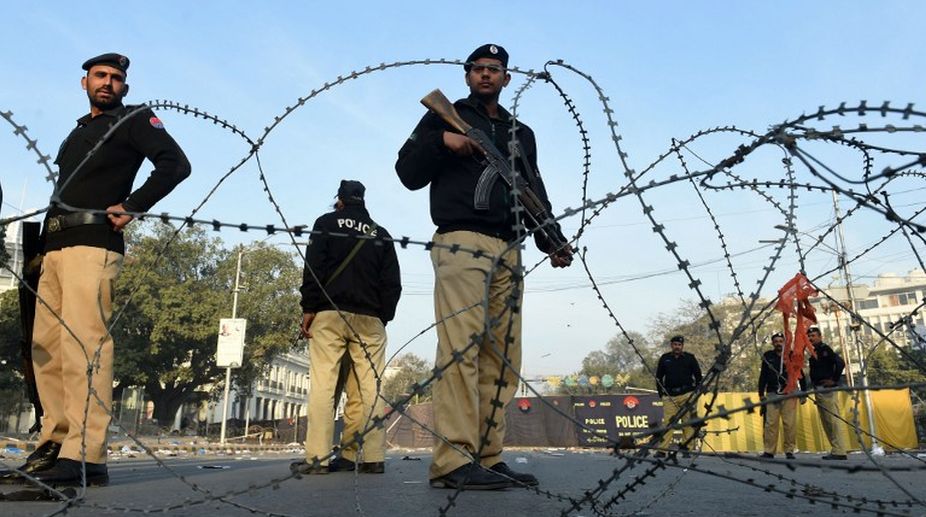
Jadhav’s case brings into sharp focus the functioning of military courts in Pakistan. In a strongly-worded statement, Amnesty International has described these courts as an “inherently abusive system that rides roughshod over international standards.”
In 2015, Pakistan’s Parliament had legalized military court trials of terror suspects for a period of two years. This happened in the wake of the terrorist attack on an Army Public School (APS) in Peshawar, resulting in the killing of 144 people, mostly children.
The 21st Amendment to the Constitution, which created the military courts, was initially viewed with skepticism and was opposed by different parties. The Constitutional Amendment permitted the Pakistan Army Act (PAA) to extend its jurisdiction for speedy trial of cases for specified acts, and provided a constitutional cover with a sunset clause of two years from its date of enactment.
However, the military courts, gradually, have firmly entrenched themselves in Pakistan’s criminal justice system. Pakistan’s Supreme Court approved the previous Constitutional Amendment in August 2015, deeming it to be within the purview of Parliament to amend the law so long as military trials were subject to judicial review.

An article in Dawn (21 February 2017) by Reema Omer states that since February 2015, a total of 274 individuals have been convicted in military courts. So far, the army has sentenced 161 individuals to death, twelve of whom have been executed and 169 have been given jail terms, mostly life sentences.

There are about eleven military courts that have been set up across Pakistan ~ three in Khyber Pakhtoonwaha (KP), three in Punjab, two in Sindh and one in Baluchistan. The Pakistan Army has claimed that the cases were dealt with in accordance with the due process of law in the military courts, and such trials have had a positive effect on curbing terrorist activities.

Both these claims do not stand scrutiny. Human Rights groups and legal experts have documented, in detail, how military trials of civilian terrorism suspects, pursuant to the 21st Amendment, have fallen far short of due processes. in restraining terrorist violence.

The fact that cases pile up in the courts of law has emboldened the terrorists. Some of the offences for which military courts can try civilians are: attacking military officers or installations; kidnapping for ransom; possessing and storing explosives and firearms, creating terror and insecurity in Pakistan and waging war against the State.

However, trials in the military courts are far from transparent, and very often they are not fair. Normally judges have a duty to explain the reasoning behind their verdicts. But in many cases, this is not being done. Families of the military court convicts remain ignorant of the essential findings of the cases since the trials are closed to the families of the accused.

Even the National Commission for Human Rights in Pakistan was not given access to observe the trials. Moreover, the suspects are often defended by military officers and not civilian lawyers. The army takes the plea that the accused persons often willingly forego their right to engage civilian lawyers.

It strains credulity to accept such a claim. One of the cornerstones of a fair trial is the provision of providing the accused with a detailed judgment at the conclusion of the trial. There is no guarantee that such a document will be made available by military courts.

The confession rate in the military courts is also very high. According to a statement issued by ISPF (media wing of the army), 135 out of 144 people convicted have confessed to the charges. This confession rate of more than 90 per cent is disturbing and raises the suspicion that confessions are often obtained through questionable and coercive methods.

The International Commission of Jurists (ICJ), in a briefing paper published in 2016, held that the Pakistani government and military authorities have failed to make the trials in the courts, fair and transparent. The right to appeal is the essential component of a free and fair trial.

Military court convicts do not enjoy the option to appeal in civilian courts. According to the Pakistan Army Act (PAA), those convicted by military courts can only appeal in the military appellate tribunals.

However, convicts can have decisions of military courts reviewed by civilian courts under the PAA. Indeed, reinstating military courts, according to Human Rights Watch, would violate Pakistan’s international human rights obligations. Article 14 of the International Covenant on Civilian Political Rights, which Pakistan ratified in 2010, guarantees to everybody the right to timely trial by a competent, independent and impartial tribunal.

The Human Rights Committee, an international expert body authorized to monitor compliance with the Covenant, stated that civilians should be tried by military courts only under “exceptional circumstances that generally afford full due process.”

The claim that the military courts have been instrumental in reducing the threat of terrorism is unsustainable. Terrorist violence in Pakistan is going on unabated. Very often, innocent civilians are the targets. The contention that terrorists were incapacitated from carrying out further attacks because of speedy trial and conviction in military courts is difficult to sustain.

Military courts have convicted people whose cases were pending in ordinary criminal courts, or antiterrorism courts and transferred to them for trial. People have been detained at interrogation centres under FATA (Federally Administered Territorial Areas) and other undisclosed locations.

A dispassionate assessment of the performance of the courts would show that they have been instrumental in wanton violation of human rights and subversion of the rule of law in Pakistan. Terrorism in this country is the creation of the Army, which has been nurturing many of the militant groups.

They have served to help the army to further strengthen its position in the country and thus weaken the criminal justice system. Indeed, the 21st Amendment to the Constitution has been a failure but the Government, under the pressure of the army, has acquiesced in the continuation of the military courts for another two years.

Indeed, Pakistan is the only country in South Asia to allow the military to try civilians. Denying citizens a fair trial is not the way to solve Pakistan’s complex security challenges. The proper response to militant activities is to strengthen the civilian courts and uphold the rule of law.

The writer, senior fellow of the Institute of Social Sciences, had served as Director-General, National Human Rights Commission, and of the National Police Academy.

Optics in Bengal

Editorial |

An assembly by-election in a rural constituency would not have been of much moment were it not for the striking psephological swing, as evident in West Bengal’s Contai South constituency.

By any reckoning, the victory of the Trinamul candidate, Chandrima Bhattacharya, with a margin of 42,526 votes has strengthened the party’s fort, given the three percentage-point increase in the voteshare in comparison with the verdict in 2016.

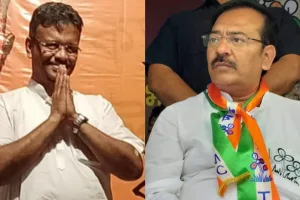
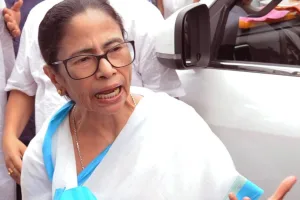
The other critical facet is the decimation of the CPI-M in an East Midnapore segment that was once its bastion. Whether or not the party’s potential and/or traditional voters have switched their preference to the Bharatiya Janata Party ~ as Mamata Banerjee claims and Biman Bose affirms ~ can only be speculated upon at this juncture.

Suffice it to register that the Marxists will have to contend with a 24-percentage point decline in electoral support. As critical as the Trinamul victory is the fairly spectacular surge in support for the BJP ~ from a vote-share of 8.76 per cent in the Assembly election last year to 30.97 per cent now.

Even its critics will readily concede that the approximaterly 22 per cent surge in the span of a year is nothing short of remarkable. In the net, the saffronite party is the runner-up, and the Left will have to accept that it has finished the race in the also-ran category. In terms of optics, the BJP is the winner.

From zero representation in the assembly till a few years back, the party will now emerge as a strong contender for the position of a pivotal Opposition entity. If Contai South is held up as a case-study, the BJP has registered quite a surge from its position of a fringe player in Bengal’s electoral stakes.

Having said that, it is early days to speculate whether the BJP will be able to graduate to the position of the state’s principal Opposition party. But the process towards a possible “graduation degree” has predictably been viewed with consternation by the CPI-M.

There is little doubt that Banerjee’s social sector schemes ~ notably Sabuj Sathi, Kanyashree, and cycles for school students ~ have yielded dividend at the hustings. And the pitch has been reinforced if her whirlwind visits over the past few weeks to the districts of North and South Bengal are any indication.

Suffice it to register that the patron-client relationship has benefited Trinamul, as it once did the CPI-M through the panchayati raj and Operation Barga. For now, the ascendancy of the BJP, if on a limited scale, lends a new dimension to West Bengal politics.

Elections aside, its performance on Ram Navami was suitably robust. But it would be premature to imagine that Bengal politics is set to be redefined. Unpredictable is the swing of the pendulum.

Army cracking?

Editorial |

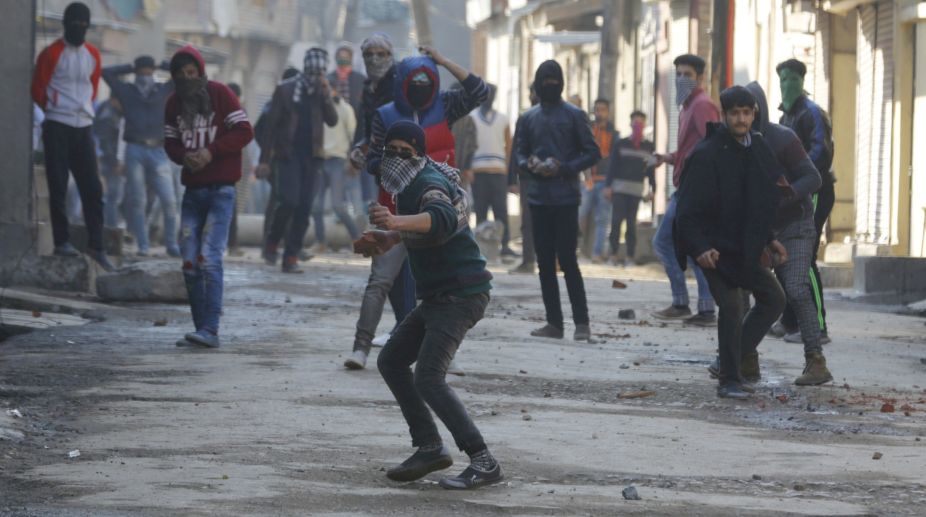
When the Army chief issued his rather controversial “warning” to stone-pelters in the Kashmir Valley, was it an early symptom of a frustrated force abandoning one of its most cherished professional traditions ~ the capacity to refuse to be provoked into rash action?

Precisely two months from the day of his “talking tough”, a video has gone viral of Rashtriya Rifles personnel lashing an alleged trouble-maker to the bonnet of a jeep to serve as human shield, parading him through several villages, and asking miscreants to stone “one of their own”.

That the Army authorities, both in Srinagar and New Delhi, refrained from immediately condemning the incident and initiating corrective action points to their being somewhat sympathetic to an act of indiscipline and brutality that must bring shame to all those who wear the uniform, regardless of its colour.

Any linking of that outrageous action, reportedly “supervised” by an officer, to other videos in circulation showing paramilitary personnel on election duty being harassed by the “locals” will only confirm apprehensions that several members of the security forces have “accepted” that they are fighting a losing battle: hence acting to settle scores, and reducing to ridicule the high reputation the forces, the Army in particular, had sustained even when conducting the most arduous of duties.

Events over the last eight or nine months add weight to the contention that the forces have now become part of the problem rather than part of the solution. The implications are ominous, both politically and diplomatically. The soldiers are not entirely to blame for the “cracking up”.

The governments in both Srinagar and New Delhi have left them out on a limb, tasking them to resolve a situation for which a military solution is not possible. While previous governments, of all political hues, did attempt political initiatives ~ the Vajpayee administration’s efforts were truly sterling ~ under Mr Narendra Modi the accent has been on “muscle”.

And though chief minister Mehbooba Mufti ostensibly favours dialogue, she had made no positive moves (maybe because she is hamstrung by her alliance partner) and the situation on the ground is one over which the state government is fast losing control. The PDP-NC quarrel only complicates matters, blame-games will not help when people have lost faith ~ as election fiascos underscore.

Opinion is divided over whether a spell of Governor’s Rule will “cool” the crisis: provided Raisina Hill has the moral courage to accept the extent of the deterioration. Massive majorities in a couple of Assemblies, manipulated success in a couple of others are no compensation for a government coming close to “losing” the only “minorities-dominated state” in the nation. That is the self-inflicted “burden” Modi sarkar is having to bear.