Logo

Taliban ‘governor’, 21 other militants killed in Afghan raid

IANS | Kabul |

At least 22 militants, including Taliban's "Governor" for Baghlan, were killed when Afghan security forces carried out an operation in this northern province, the Defence Ministry said on Wednesday.

"On specific intelligence inputs, the army launched an operation in Dand-e-Ghuri district of Baghlan province on Tuesday night. Three others were held," Xinhua news agency quoted a Defence Ministry statement as saying.

A dozen helicopters and US aircraft participated in the raid, Khaama Press reported.

Maulawi Helel alias Lal Mohammad was among the killed, the statement said.

The security forces seized one AK-47 and two rounds of pistol during the operation.

Baghlan as well as neighbouring Kunduz and Takhar provinces have been the scene of heavy clashes over the past couple of months as Taliban has been trying to challenge the government forces in the once relatively peaceful region.

According to sources, the operation was carried out when the Taliban was preparing for a big attack to overrun Baghlan.

BJP to lodge complaint against ‘vested interest’ group

IANS | Shillong |

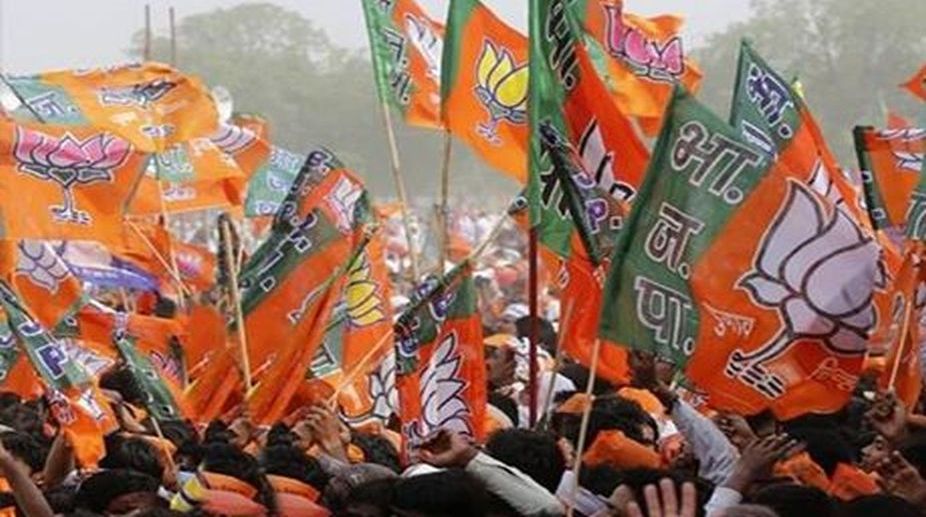
The BJP will lodge a police complaint against "vested interest" groups labeling it on social media as an "anti-Christian party", a leader from the BJP's Meghalaya unit said on Wednesday.

"We will see that false propaganda will not be allowed. We will submit complaints to the state police department and central intelligence agencies and demand action against the vested interest groups," state BJP Vice President John Antonious Lyngdoh said.

The Bharatiya Janata Party leaders on Tuesday took stock of the propaganda circulated on the social media by "vested interest" groups, which they said was tarnishing the party's image before the Christian minorities.

"In the past few days, some vested interest groups have been circulating misinformation on social media that the BJP is anti-Christian, and if it comes to power, churches will be dismantled and Christians will not be allowed to worship freely," Lyngdoh, who is also an active church leader, said.

With its ambitious "Mission 40" for the elections to the 60-member Meghalaya assembly, the BJP has decided to go it alone for the 2018 assembly polls in this Christian-majority state.

"We will appeal to the voters to allow the BJP to prove itself as a party that works against corruption and provides good governance. I can assure you that there will be no discrimination. India is a secular country. Therefore, we appeal to the people to give us a chance," Lyngdoh added.
 

‘AMU founder supported ban on cow slaughter’

PTI | Aligarh |

Founder of the Aligarh Muslim University, Sir Syed Ahmad Khan, batted for a ban on cow slaughter and personally stopped the sacrifice of a cow at the University hostel on the occasion of Eid, according to prominent Urdu writer Rahat Abrar.

The educationist felt that Muslims should give up cow slaughter to maintain peace with Hindus, said Abrar, who is presently Director of the Urdu Academy, AMU, while addressing a gathering at the ongoing bicentenary birth celebrations of Sir Syed Ahmad Khan in the University.

Abrar said that in an article on this subject, Sir Syed had written, "If prohibition of cow sacrifice can bring peace and friendship among the Hindus and the Muslims, it would be wrong on the part of the Muslims not to relinquish this right .

Abrar was speaking at the release of his latest Urdu work on Sir Syed titled "Sir Syed Aur Unke Ma asreen" (Sir Syed and His Contemporaries).

Abrar said there is a recorded incident according to which during the early days of MAO College (previous name of AMU) when cow sacrifice was prevalent all over the country, Sir Syed came to learn that some students had purchased a cow for the purpose of sacrifice on the occasion of Eid-ul-Adha.

Sir Syed was very upset on receiving this news and personally rushed to the hostel where the cow had been kept.

He immediately took possession of the cow and did not allow the animal to be sacrificed, Abrar said.

Abrar said that from the days of Sir Syed beef has never been served in any of the AMU hostels and the staple diet of non-vegetarian students has been buffalo meat.

Abrar, who has authored three books on the Aligarh Movement, pointed out that his present work was in a way different from traditional biographies of Sir Syed Ahmad Khan because it probes Sir Syed's relationship with some of the most prominent Hindu social leaders of his time.

Abrar said that most historians have not touched upon Sir Syed's close association with Swami Dayanand Saraswati, Arya Samaj founder, Raja Ram Mohan Roy, Sir Surendranath Banerjee, Lala Lajpat Rai, Raja Shiv Prasad of Banaras, Bhartendu Harishchandra and Raja Shambhu Narayan.

Abrar quoted a letter of Lala Lajpat Rai, who informed Sir Syed that "his father considered Sir Syed Ahmad Khan as a nineteenth century prophet .

Abrar said that in 1897, Sir Syed published an article in Aligarh Institute Gazette of June 12 lauding the efforts of Muslims of Bareilly who voluntarily gave up cow slaughter on the occasion of Eid-ul-Adha in deference to the sentiments of the Hindus.

Abrar said that contrary to some of the critics of Sir Syed Ahmad Khan, the founder of the AMU never lost any opportunity till his last days for promoting India's pluralistic ethos.

He did so despite the fact that he was sorely disappointed after the outbreak of the bitter Hindi-Urdu controversy in the United Provinces in the late 1860s

With Yogi in driver’s seat, Modi’s Varanasi back in focus

IANS | Lucknow |

Having been cold-shouldered by the previous Samajwadi Party regime, it is now Advantage Varanasi as the new Bharatiya Janata Party (BJP) government has put Prime Minister Narendra Modi's parliamentary constituency back on the front burner.

Despite concerted efforts by Modi at the Centre, the city, considered one of the oldest in the world, did not see the promised makeover from Kashi to Kyoto because of the "step-motherly" treatment meted out by the Akhilesh Yadav government. But things are changing now that the BJP is in power in the state.

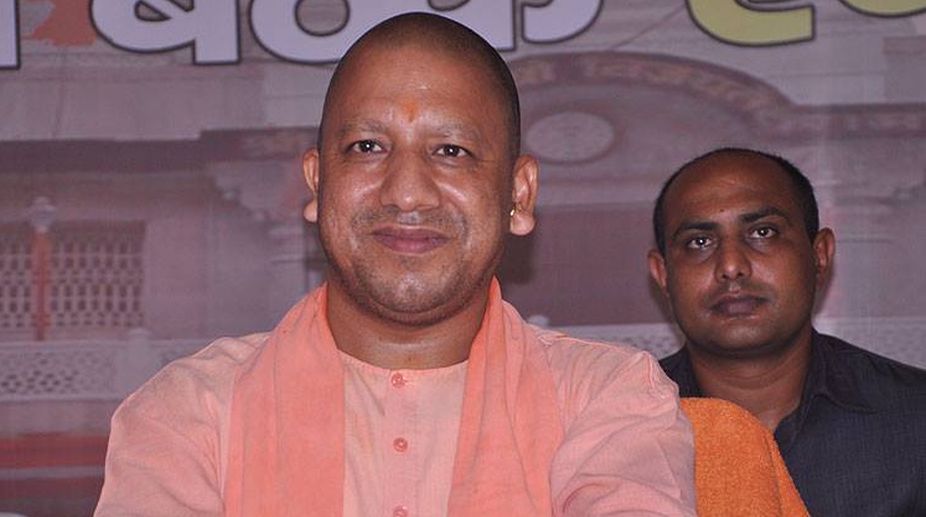
According to officials, Chief Minister Yogi Adityanath spends 30 minutes daily to take stock of development projects in Kashi. He has also given oversight of these projects to a two-minister group, and has himself held a review of works initiated in the past two years.

Modi, soon after his victory in 2014, had promised to turn Kashi into Kyoto, the Japanese city known for its mix of ancient and modern. But a non-BJP government in the state and the resultant lack of coordination meant that what the Centre proposed, the state disposed.

That change is in the air became evident as Adityanath dispatched state Urban Development Minister Suresh Khanna to Varanasi on April 15 to track progress on projects in the city, and said that "if need be", he himself would "assess the situation on the ground". 

According to one official, the Chief Minister has asked bureaucrats to ensure completion of work on some projects within three months. "At a recent meeting, he observed that work in Varanasi and neighbouring areas was slow in ratio to the funds allocated by the Union government," the official said.

The projects rolled out in Varanasi come under various departments, including urban development, power, tourism, public works, housing, and irrigation. There are also some under the Varanasi Development Authority and the National Highways Authority of India (NHAI).

An ambitious roads project to link eight districts to Varanasi has been stuck as compensation was not paid to farmers whose lands were acquired. The Divisional Commissioner of Varanasi has now been asked to ensure distribution of money in Ghazipur, Varanasi and Jaunpur at special compensation camps. 

The road projects — Varanasi-Gorakhpur, Varanasi-Lucknow and a ring road — fall under the NHAI and the Akhilesh Yadav government had done precious little to get things moving, an official contended. 

Work on under-construction bridges — expected to ease the city's chaotic traffic — is now on a June 30 deadline and Adityanath has asked the Uttar Pradesh Bridge Corporation to ensure adequate workforce is provided.

The Public Works Department (PWD) has been sanctioned Rs 90 lakh for completion of an under-construction road overbridge (ROB) at Maduadeeh and for shifting of a sewer line from there. Again, the deadline is June 30. 

Similarly, those working on the 1,710 metre flyover linking Chaika Ghat to Lahartara have been asked to finsih work by March 2018.

Adityanath has also okayed a proposal for a five-km four-lane road between Shivpur-Lahartara (Phulwaria) and a bridge on the Varuna river at Kuniya Ghat. Another project, worth Rs 88 crore, will build dividers on all roads and re-layer surfaces to make them dust free.

A Detailed Project Report (DPR) for multi-level parking lots in Kashi has also been sought. These structures will be made by the municipal corporation in the first phase and the PWD in the second phase. The Divisional Commissioner has been authorised to adopt a PPP model for this project.

Given the city's drinking water problem, Adityanath has ordered a probe of works undertaken by the Jal Nigam under the Jawaharlal Nehru National Urban Renewal Mission (JNNURM). The Nigam had constructed 23 overhead tanks and branch lines without a feeder line to link these. While over Rs 500 crore has already been spent on this project, the people of Varanasi are yet to benefit.

Clearly, if the new Chief Minister walks his tough talk, the people of Varanasi may well be lucky enough to see "acche din".


ISRO set for 1st developmental flight of ”game-changer” rocket

PTI | Hyderabad |

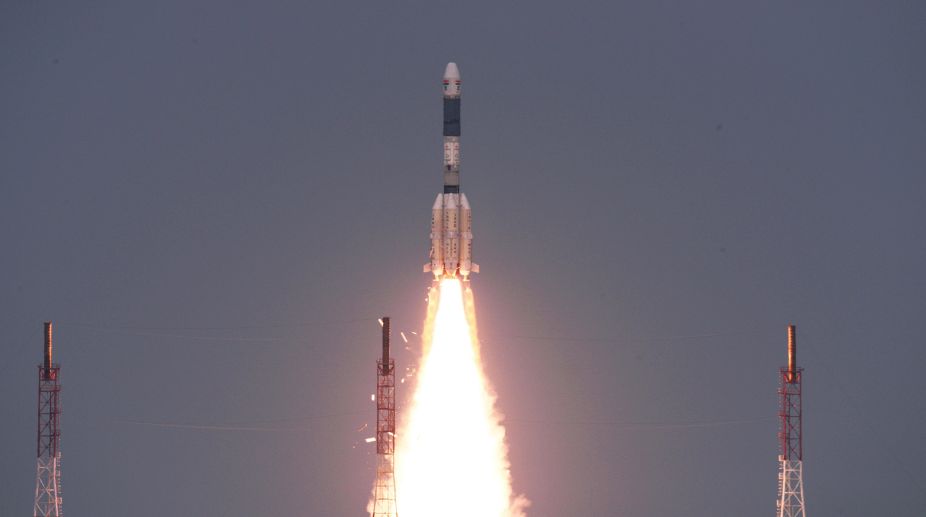
Indian Space Research Organisation plans to undertake the first developmental flight of a “game-changer” rocket capable of launching four-ton class of satellites from Sriharikota spaceport next month, says its Chairman A S Kiran Kumar.

ISRO rockets (launch vehicles) at present have the capability to launch satellites up to 2.2 tons; it depends on international launchers to orbit satellites heavier than that.

“Next month, we have scheduled the launch of GSLV-Mk III-D1”, Kiran Kumar said.

The Bengaluru-headquartered space agency plans to undertake the second developmental flight within a year.

“By the time two developmental flights are over, we will be working towards making more launches so that it (GSLV-Mk III) becomes operational”, he said.

ISRO views operationalisation of this rocket as a “game-changer” for it, he said.

“Once we build our own four tonne capacity, we will be able to significantly reduce our launch from outside; then we are also looking at building satellites within that four-tonne capacity, so that you can do all the launches within the country,” Kiran Kumar said.

The GSLV-Mk III-D1 launcher would carry GSAT-19 satellite which has a mass of 3200 kg.

The satellite would carry Ka and Ku band payload along with a Geostationary Radiation Spectrometer (GRASP) payload to monitor and study the nature of the charged particles and influence of space radiation on spacecraft and electronic components.

The satellite would employ advanced spacecraft technologies including bus subsystem experiments in electrical propulsion system, indigenous Li ion battery and indigenous bus bars for power distribution, among others.

ISRO set for 1st developmental flight of ”game-changer” rocket

PTI | Hyderabad |

Indian Space Research Organisation plans to undertake the first developmental flight of a “game-changer” rocket capable of launching four-ton class of satellites from Sriharikota spaceport next month, says its Chairman A S Kiran Kumar.

ISRO rockets (launch vehicles) at present have the capability to launch satellites up to 2.2 tons; it depends on international launchers to orbit satellites heavier than that.

“Next month, we have scheduled the launch of GSLV-Mk III-D1”, Kiran Kumar said.

The Bengaluru-headquartered space agency plans to undertake the second developmental flight within a year.

“By the time two developmental flights are over, we will be working towards making more launches so that it (GSLV-Mk III) becomes operational”, he said.

ISRO views operationalisation of this rocket as a “game-changer” for it, he said.

“Once we build our own four tonne capacity, we will be able to significantly reduce our launch from outside; then we are also looking at building satellites within that four-tonne capacity, so that you can do all the launches within the country,” Kiran Kumar said.

The GSLV-Mk III-D1 launcher would carry GSAT-19 satellite which has a mass of 3200 kg.

The satellite would carry Ka and Ku band payload along with a Geostationary Radiation Spectrometer (GRASP) payload to monitor and study the nature of the charged particles and influence of space radiation on spacecraft and electronic components.

The satellite would employ advanced spacecraft technologies including bus subsystem experiments in electrical propulsion system, indigenous Li ion battery and indigenous bus bars for power distribution, among others.

Delhi ex-minister appears in court in fake degree case

IANS | New Delhi |

Delhi's former Law Minister Jitender Singh Tomar on Wednesday appeared before a local court in connection with a fake degree case.

Tomar appeared before Additional Chief Metropolitan Magistrate (ACMM) Sandeep Garg, who directed the Delhi Police to supply chargesheet and other documents to the former Law Minister.

Last month, the court had summoned 13 people, including Tomar, in connection with the case.

Of them, 12 accused appeared before the court while one moved a plea seeking exemption from personal appearance, which was granted by the court.

The accused also moved their bail application, which the court listed for further hearing on May 17.

The Delhi Police have chargesheeted Tomar and others under relevant sections for cheating, forgery and abetment of criminal conspiracy, among other charges.

Tomar was arrested on June 9, 2015, and was granted bail on July 23, 2015.

An FIR was lodged in June 2015 against Tomar.

China to launch first cargo spacecraft

IANS | Beijing |

China will on Thursday launch its first cargo spacecraft Tianzhou-1 from the Wenchang Space Launch Centre in Hainan province, it was announced on Wednesday.

The Centre on Tuesday conducted the final rehearsal covering all systems involved in the launch such as the rocket, spacecraft, launching site and testing, control and communication systems, Xinhua news agency reported.

Before the rehearsal, staff finished testing the rocket's hermeticity and its power and electric systems. The rehearsal showed that all the systems were working well and the technical conditions were good.

It is the first cargo ship independently developed by China and is expected to dock with the orbiting Tiangong-2 space lab and conduct in-orbit refueling.

The cargo spacecraft will also carry out space experiments, including one on non-Newtonian gravitation, before falling back to the earth.
 

No liquor shops near religious places: Yogi tells UP officials 

PTI | Lucknow |

Uttar Pradesh Chief Minister Yogi Adityanath on Wednesday warned state officials of action if the ban on liquor shops in important religious places like Ayodhya, Vrindavan, Chitrakoot and Deva Sharif was not strictly implemented.

In a meeting with officials of the Excise Department, he also directed that a new excise policy be chalked out with a view to increase the state's revenue.

"Strict action will be initiated against officials in case total prohibition was not imposed around religious places and officials responsible will be punished," the chief minister warned officials during the meeting held late last night.

Adityanath directed officials that the 8,544 liquor shops whose location has to be changed following a Supreme Court order banning liquor sale along highways should be allowed to open only at a prescribed distance from schools, places of worship, hospitals and populated areas.

There should be total prohibition in the one kilometre area around Kanshi Vishvanath Temple in Varanasi, Krishna Janmasthan in Mathura and Sangam in Allahabad, he said.

Adityanath also told the Excise Department officials to chalk out on priority, a new excise policy with a view to increasing revenue.

Tripura gets national award for record food production

IANS | Agartala |

The Union Ministry of Agriculture and Farmers Welfare has selected Tripura for the Krishi Karman Award 2015-16 for commendable increase in food grain production in small category states.

Tripura gets this national award for the second time. The Northeastern state first received the award in the 2009-10 fiscal.

"We have received a communication from… the ministry that Tripura has been selected for the Krishi Karman Award for 2015-16…," Tripura Agriculture Minister Aghore Debbarma said.

An official of Tripura's Agriculture Department, quoting the ministry letter, said that for total food grain production, Tamil Nadu gets the award in large category (production more than 10 million tonnes), Himachal Pradesh in medium category (1 to 10 million tonnes) and Tripura in small category (less than 1 million tonnes).

Each award-winning state would receive a trophy, a citation and cash award of Rs.5 crore at a function in New Delhi.

According to the official document, Tripura produced 825,000 tonnes of food grain in 2016, and had been implementing a "perspective plan" to achieve self-sufficiency in food grain within the next few years.

"Tripura has also increased the food grain productivity from 973 kg per hectare in 1972 (when Tripura became a fullfledged state) to 2,946 kg per hectare in 2016," the document added.

The mountainous northeastern state targets to produce 935,000 tonnes of food grain in 2017.

Under the Krishi Karman Award, another Northeastern state, Meghalaya, too gets commendation prize for total food grain production and would receive Rs.1 crore.

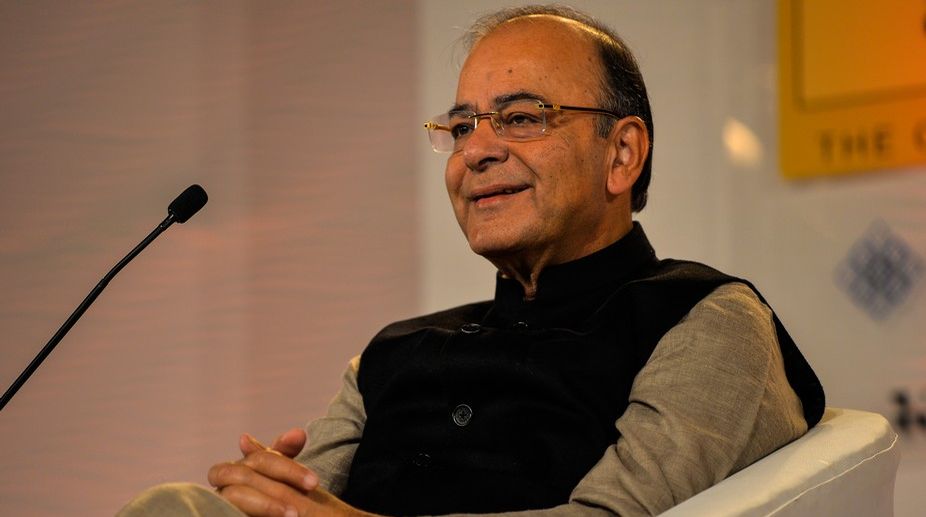
Babri order: Jaitley rules out Uma Bharti’s resignation

PTI | New Delhi |

Union minister Arun Jaitley on Wednesday virtually ruled out resignation of Uma Bharti from the Cabinet following the Supreme Court order in Babri Masjid demolition case and described as "hypothetical" the possibility of the ruling having any bearing in selection of candidates for presidential and vice presidential polls.

"This case is going on since 1993. Somehow it is going on and no new situation has arisen. So the situation which was prevailing will continue," he told reporters.

He was asked whether the ruling would mean resignation of Bharti, the Minister for Water Resources, River Development and Ganga Rejuvenation, from the Union Cabinet and Kalyan Singh as Rajasthan Governor.

Top BJP leaders L K Advani, M M Joshi and Bharti will be tried for criminal conspiracy in the 1992 Babri Masjid demolition case as the Supreme Court today allowed the CBI plea to restore the charge against them.

The apex court, however, noted that Rajasthan Governor Singh enjoys Constitutional immunity and can be tried only after he ceases to hold the office. Singh was the chief minister of Uttar Pradesh in 1992.

Asked whether Singh and Bharti should resign following the charge sheet in the case, Jaitley shot back saying if that is the criteria then some of the current Congress Chief Ministers will have to quit.

"There have been ministers, there have been deputy prime ministers… If charge sheet is the rule (to resign), then just calculate, how many Congress chief ministers will (have to go)," he said.

When asked whether today's apex court ruling will impact selection of candidates for the posts of president and vice president, Jaitley merely said "it is hypothetical." 

While the term of President Pranab Mukherjee is coming to an end on July 24, the term of Vice President Hamid Ansari ends on August 10.

There have been talks that BJP veterans Advani and Joshi could be considered as possible candidates for the two top constitutional posts. But there has been no official word so far from ruling NDA.

Massive super-Jupiter exoplanet discovered

PTI | Tokyo |

Astronomers have found a new exoplanet about three times more massive than Jupiter, orbiting a star 21,000 light years away from Earth.

The massive exoplanet, designated MOA-2016-BLG-227Lb, was discovered by researchers led by Naoki Koshimoto of the Osaka University in Japan using the gravitational microlensing technique.

Gravitational microlensing is a method of detecting new extrasolar planets circling their parent stars relatively closely.
The microlensing event was detected in May last year, using the 1.8 m MOA-II telescope at the University of Canterbury Mt John Observatory in New Zealand.

Subsequent observations allowed detection of the new planet and to determine its basic parameters.

The team found that MOA-2016-BLG-227Lb is a super-Jupiter planet with the mass of about 2.8 Jupiter masses.
The parent star is located in the galactic bulge. Its mass is estimated to be around 0.29 solar masses.

MOA-2016-BLG-227Lb orbits its host at a distance of about 1.67 astronomical unit (AU), 'Phys.org' reported.
Radius of both the objects and orbital period of the planet are yet to be determined, researchers said.

“Our analysis excludes the possibility that the host star is a G-dwarf, leading us to a robust conclusion that the planet MOA-2016-BLG-227Lb is a super-Jupiter mass planet orbiting an M or K-dwarf star likely located in the Galactic bulge,” the researchers said.

Textile mills in Uttar Pradesh to reopen: Satish Mahana

IANS | Lucknow |

A dialogue is on between Uttar Pradesh and the central governments to reopen textile mills in the state, Industrial Development Minister Satish Mahana said on Tuesday.

"The state government is alive to the needs and problems of the industrialists and will extend all possible cooperation in activating the closed textiles mills," Mahana said.

He said the Minister of State Suresh Rana met union Textiles Minister Smriti Irani in New Delhi on Monday and requested her to initiate the process to restart the closed textile mills in the state.

A plan to revive the mills, he said, would soon be prepared.

PM Modi to launch Udan from Shimla on April 27

Statesman News Service | Shimla |

Prime Minister, Narendra Modi is launching the ambitious ‘Udan’, regional connectivity scheme for small towns in the country, from Shimla on April 27.

Modi will later address a BJP rally on the Ridge in Shimla, according to state Bharatiya Janta Party (BJP) chief, Satpal Singh Satti.

“The Prime Minister’s rally will gear up the BJP rank and file in Himachal in the election year,” said Satti. Modi had addressed his first rally in Himachal Pradesh as Prime Minister in Mandi in October, 2016, when he came for the inauguration of three hydro projects.

'Udan’ will facilitate air flight between Delhi and Shimla on subsidised fare on fixed number of seats.

The customers will have to pay Rs.2,500 for one hour flight, while the remaining fare would be borne by the Central government, under this scheme.

‘Udan’ includes Delhi-Kullu flight as well in Himachal Pradesh, among 16 routes in all in the country. The air connectivity to Shimla was scrapped five years ago for some technical problems with the Jubbarhatti airport.

For the past six months, the tourist destination was witness to non-scheduled flights, as private companies in the business found flights between Delhi and Shimla as a loss making venture.

The state government had been continuously moving the Centre to provide regular air connectivity to Shimla, as it was a major issue hampering tourism to the Queen of Hills.

Recently, Union health minister, JP Nadda, who is from Himachal Pradesh had also taken it up with the Union Minister for Civil Aviation recently along with MPs, wherein the assurance had come that low air fare flights would start from Himachal Pradesh.


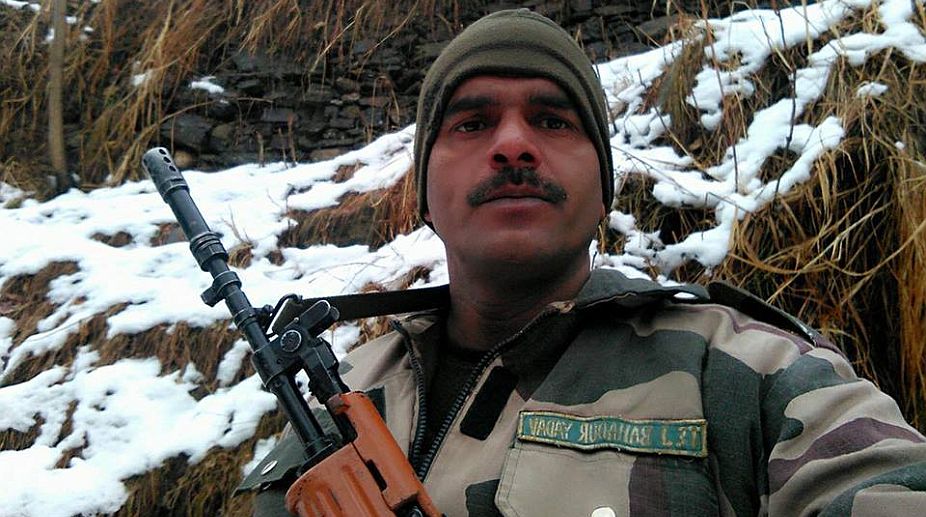
BSF dismisses Tej Bahadur Yadav from service

SNS | New Delhi |

In the wake of the complaint about poor food posted on social media, Border Security Forces (BSF) jawan Tej Bahadur Yadav was on Wednesday dismissed from the service.

“The action of dismissal of the jawan has been taken under the Border Security Force Act that is applicable to all the personnel serving in the paramilitary force,” a senior officer was quoted as saying by a news agency.

“Yadav has been found guilty on certain charges of indiscipline, including uploading the said video in violation of laid down procedures and rules. He has an option to appeal against the verdict within three months time,” he added.

Bahadur's dismissal came after a court of inquiry found that he had damaged the image of the BSF when he uploaded the video clip on social media.

Earlier in January, Yadav had landed in controversy when he posted a video on social media, complaining about the poor quality of food being served to jawans.

In another video, Yadav had alleged that he is being mentally tortured and that his attempt to post the first video was to bring to light the alleged prevailing corruption in his organisation.

First detailed global Internet atlas developed

PTI | Washington |

Scientists have developed the first global Internet Atlas – including a detailed map of the internet's physical structure in India – an advance that could help guard the infrastucture from terrorism or extreme weather events.

Despite the internet-dependent nature of our world, a thorough understanding of the internet's physical makeup has only recently emerged through Internet Atlas developed by researchers from University of Wisconsin-Madison in the US and their collaborators.

“Internet is in a constant state of flux and mapping is really important to understand the evolution of the Internet,” Ramakrishnan Durairajan, a PhD candidate at the University of Wisconsin-Madison said.

“No single service provider can offer an authoritative perspective on the structure of the Internet,” Durairajan said.
While average users rarely think of these elements, things like submarine cables – buried below the ocean floor – run between continents to enable communication.

Data centres in buildings all over the world are packed with servers storing many types of data. Traffic exchange occurs between different service providers at internet exchange points.

Though these and other elements may be out of sight for the average user, they are crucial pieces of the physical infrastructure that billions of people rely on.

“We have over 1,200 maps worldwide including India. All the data are connected using web search,” said Durairajan.

“From maps that we have in our repository I'd say we have fibre running across almost all the states in India. However, connectivity could be improved in the north-western and north-eastern regions,” he added.

Mapping the physical internet helps stakeholders boost performance and guard against a number of threats, from terrorism to extreme weather events like hurricanes.

“A lot of infrastructure is by major right-of-ways, like railroad lines,” said Paul Barford, Professor of Computer Sciences at University of Wisconsin-Madison in the US, meaning that an event like a train derailment could end up disrupting internet communications.

“The question of 'how does mapping contribute to security?' is one of our fundamental concerns,” said Ramakrishnan Durairajan, PhD candidate at the University of Wisconsin-Madison.

The project has helped direct attention to the problem of shared risk. Physical infrastructure is commonly shared by multiple networking entities, so damage to any particular piece of infrastructure can impact more than one entity.
“There is a lot of infrastructure sharing happening in the Internet today,” said Durairajan.

“Many service providers do this to save deployment costs by signing leases with other service providers,” he said.

“This infrastructure sharing leads to a problem called 'shared risk': physical conduits shared by many service providers are at an inherently risky situation since damage to those conduits will affect many several providers,” he said.

Much of the data used to create the Internet Atlas comes from publicly available information, such as what internet service providers publish on their websites.

Other data has taken more legwork to uncover, such as combing through mundane items like local permits for laying cables, researchers said.

The team is looking to enhance the maps even further and share their work so it can be deployed by others to boost network performance and security.

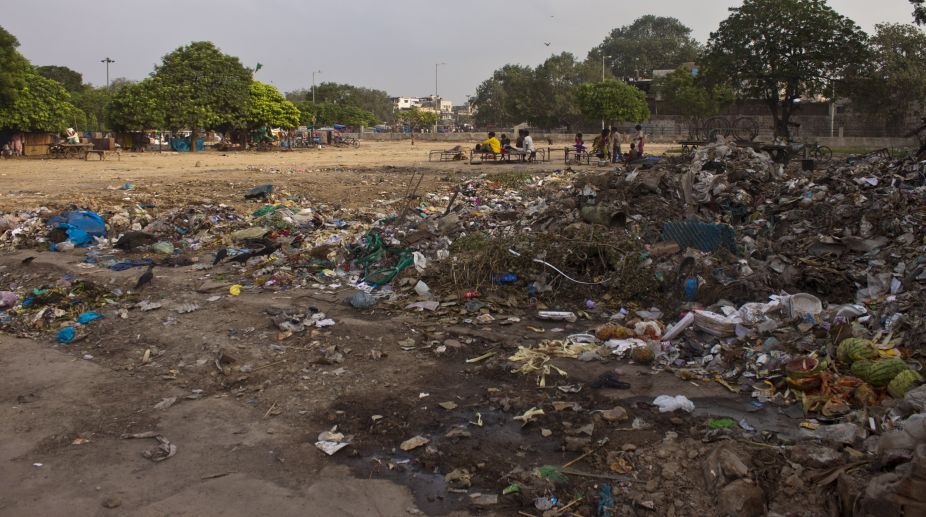
Sri Lanka garbage dump collapse toll is 32

IANS | Colombo |

The death toll from a garbage dump collapse in Sri Lanka on Wednesday rose to 32. Eight persons remain missing.

The Sri Lankan Disaster Management Centre said search and rescue work was on at the Meethotamulla garbage dumping site, Xinhua news agency reported.

Several houses were buried after the massive garbage mountain collapsed on April 14. A fire also broke out at the site and the Air Force was deployed to douse the flame.

Residents have been protesting over the months, urging the authorities to move the garbage to another location.

The government said there would be no more dumping of garbage at Meethotamulla. President Maithripala Sirisena has told officials to give maximum relief to the affected people.