Logo

Iran nuclear deal a failure, says US

PTI | Washington |

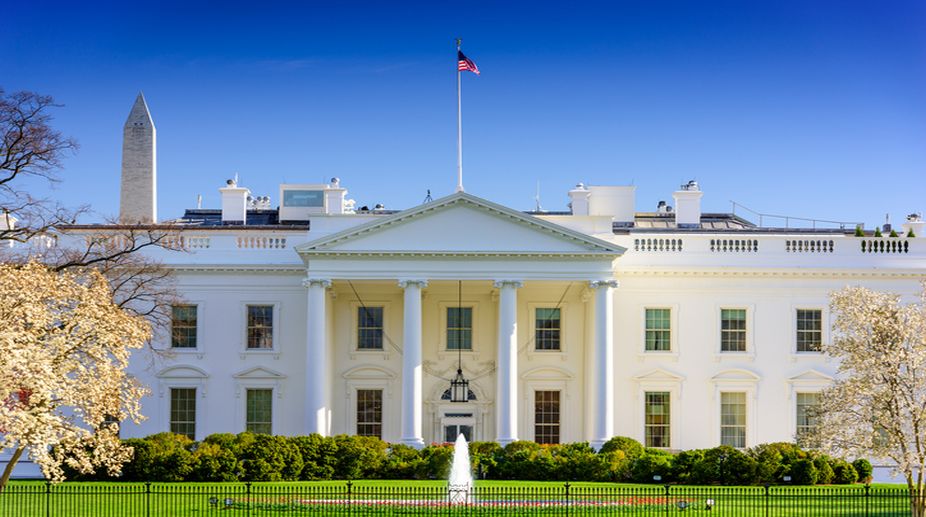
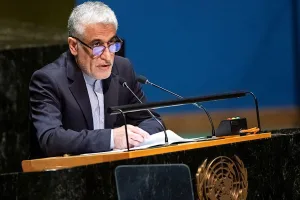
Secretary of State Rex Tillerson has termed the Obama-era nuclear deal with Iran a failure, and said the US is carrying out a comprehensive review of its policy towards the country.

Tillerson said the deal fails to achieve the objective of a non-nuclear Iran and only “delays” its goal of becoming a nuclear state.

“This deal represents the same failed approach of the past that brought us to the current imminent threat we face from North Korea. The Trump administration has no intention of passing the buck to a future administration on Iran,” he said at a hurriedly convened press briefing yesterday.

Tillerson's comments came a day after the Trump administration notified Congress that Iran is complying with the 2015 nuclear deal negotiated by former President Barack Obama, and it has extended the sanctions relief given to the Islamic country in exchange for curbs on its atomic programme.

However, in a letter to Speaker of the House Paul Ryan, Tillerson said the administration has ordered an inter-agency review of whether the suspension of sanctions was in the US' national security interests. He also described the country as a “leading state sponsor of terror”.

Reiterating the charge yesterday, Tillerson said Iran's provocative actions threaten the United States, the region and the world.

The Trump administration is currently conducting a “comprehensive review” of Iran policy, he said.

“An unchecked Iran has the potential to travel the same path as North Korea and take the world along with it. The United States is keen to avoid a second piece of evidence that strategic patience is a failed approach,” he said.

He also levelled a series of accusations at Iran — intensifying multiple conflicts including the one in Syria, undermining US interests in several countries, continuing to support attacks against Israel, and sponsoring cyber and terror attacks across the world.

“Iran's nuclear ambitions are a grave risk to international peace and security,” the secretary of state said.

The six powers that negotiated the 2015 nuclear deal — the US, China, Russia, France, Germany and the UK, with the involvement from the European Union — set aside Iran's alleged support for terrorism in order to get a deal guaranteeing that the country would not be able to build a nuclear weapon for a decade and would remain under the eye of UN weapons inspectors.

In February, Trump had described the nuclear deal with Iran as “the worst” agreement ever negotiated, calling the Islamic Republic the number one terrorist state in the world.

Israeli Prime Minister Benjamin Netanyahu had criticised the deal. He said in July of 2015 that “Iran is going to receive a sure path to nuclear weapons.”

Former US President Barack Obama had said the deal would make the world safer and more secure. He had said in January of 2016 after the deal was implemented that “Iran will not get its hands on a nuclear bomb.”

Iran has defended its nuclear programme as purely civilian.
 

Rupee down 13 paise against dollar in early trade

PTI | Mumbai |

The rupee lost 13 paise against the dollar to 64.71 in early trade on Thursday on the Interbank Foreign Exchange due to appreciation of the US currency overseas.

Increased demand for the dollar from importers also put pressure on the rupee.

Dealers attributed the rupee's fall to dollar gains against other currencies overseas but a higher opening of the domestic equity market capped the fall.

On April 19, the rupee had gained 5 paise to close at 64.58 a dollar on fresh selling of the American currency by banks and exporters.

Meanwhile, the BSE benchmark Sensex rose 63.57 points, or 0.22 per cent, at 29,400 in early trade on Thursday.

Kim Kardashian trolled for calling flu ‘a great diet’

IANS | Los Angeles |

Reality TV star Kim Kardashian became a victim of online trolling after she said that flu is a "great diet".

Kim was accused of spreading unhelpful ideas about body image to her young followers, reports telegraph.co.uk.

She wrote on Twitter on Wednesday that she was "happy" she had contracted the virus as it had helped her lose weight.

"The flu can be an amazing diet. So happy it came in time for the Met (Ball). Six lbs down," Kim tweeted.

Kim's thoughts didn't go well with some of her followers, who criticised her over the micro-blogging site.

"Influenza can be a life threatening condition! Get annual flu shot," one user wrote.

Another Twitter user said: "Did Kim really say the flu is an amazing diet? What type of airhead believes that."

"Now imagine saying that to your daughter after she gets sick…," one follower said.

Another added: "It sends dangerous messages and supports not being healthy as a valid weight loss technique. But I wonder why eating disorders are so common".
 

UN envoy: No jobs for millions without new education funds

AP | United Nations |

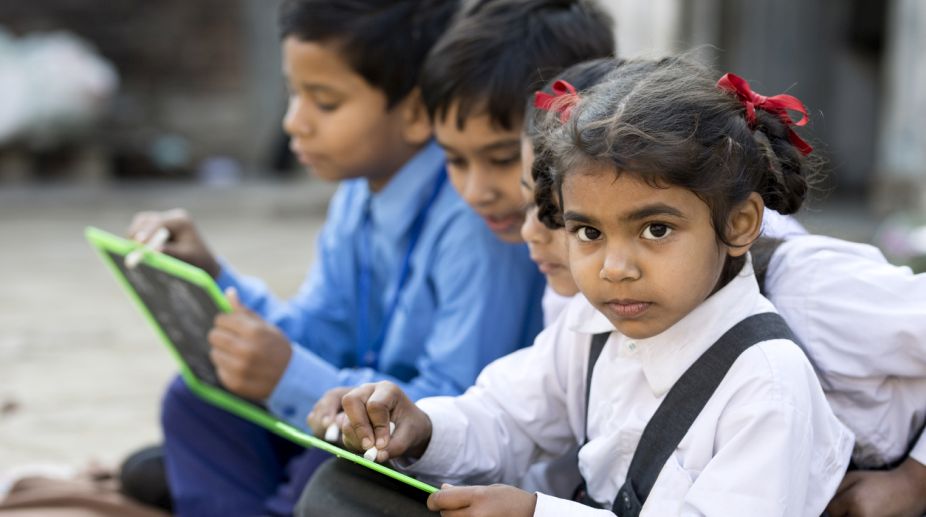
The UN special envoy for education warned that years of neglect have left 260 million children out of school and another 400 million functionally illiterate and if a better way isn't found to finance education more than 800 million young people will leave school without the skills to get a job in 2030.

Gordon Brown told a press conference that this represents half the world's 1.6 billion children.

If action isn't taken now, he said, the UN goal of ensuring that every child has a quality secondary school education by 2030 won't be met, even in 2050 or in 2100.

Brown proposed the creation of a new International Finance Facility for Education which he said would unlock nearly USD 10 billion annually for new investments in education and would help achieve the UN goal by 2030.

Under the proposed facility, he said developing countries will be asked to sign a compact with donors to raise the educational outcome for students to the level of the top 25 per cent of best performing countries in the world, and to increase their investment in education from the current 4 per cent average of national income to 5.8 per cent.

In return, Brown said donor countries will raise the share of their aid budget earmarked for education from 10 per cent to 15 per cent and provide new guarantees to multilateral development banks enabling them to increase their support for education.

Brown explained that education aid at the moment amounts to about USD 12 billion annually, "so we're effectively trying to double education aid." 

If the new facility could get USD 2 billion of guarantees from countries including current donors, and if they can back that up by USD 2 billion in grants "to buy down loans and convert them into credits," he said, "then we could …

increase education expenditure for that investment by about 9 billion to USD 9.5 billion a year." 

Brown said if this kind of funding isn't found, "then millions of children will remain on the streets rather than in schools." 

"And girls will be the majority of those who lose out on education, and in conflict zones the vast majority of children will not have the chance of education," he said.

Brown strongly backed a new inquiry on "Protecting Children in Conflict" sponsored by Save The Children and the children's charity Theirworld being announced this week at the United Nations.

It will look at the adequacy and effectiveness of existing international laws and their enforcement, and consider what may be done to strengthen them and bring the perpetrators of atrocities against children to justice, he said.

"We want to find out, for example, whether there's a case for an international criminal court for children's cases," he said. 

After scrapping 457 visa, Australia unveils tougher citizenship laws

PTI | Melbourne |

Announcing sweeping changes to Australia's citizenship laws, Prime Minister Malcolm Turnbull on Thursday unveiled tighter requirements for new applicants, a move that follows the scrapping of the 457 visa program for foreign workers.

Under the new reforms, the applicants must be permanent residents for at least four years — – three years longer than at present — and must be committed to embrace “Australian values”.

Prospective citizens will have to pass a standalone English test that will focus heavily on respect for women and children, with possible questions about child marriage, female genital mutilation and domestic violence.

The test will have questions assessing an applicant's understanding of and commitment to shared Australian values and responsibilities, Turnbull said.

The number of times an applicant can fail the citizenship test has been restricted to three. At present the test has no such restriction. Apart from this, an automatic fail for applicants who cheat during the citizenship test has been introduced.

Unveiling the changes, Turnbull stressed that Australian citizenship was a “privilege” that should be “cherished”.

He said citizenship would only be granted to those who support Australian values, respect the country's laws and “want to work hard by integrating and contributing to an even better Australia”.

“Citizenship is at the heart of our national identity. It is the foundation of our democracy. We must ensure that our citizenship program is conducted in our national interest,” he added.

The Australian Prime Minister also stressed that English language proficiency was essential for economic participation and integration into the Australian community and social cohesion.

“Any conduct that is inconsistent with Australian values will be considered as part of this process,” he said.

“Criminal activity, including family violence or involvement in organised crime, is thoroughly inconsistent with Australian values.”

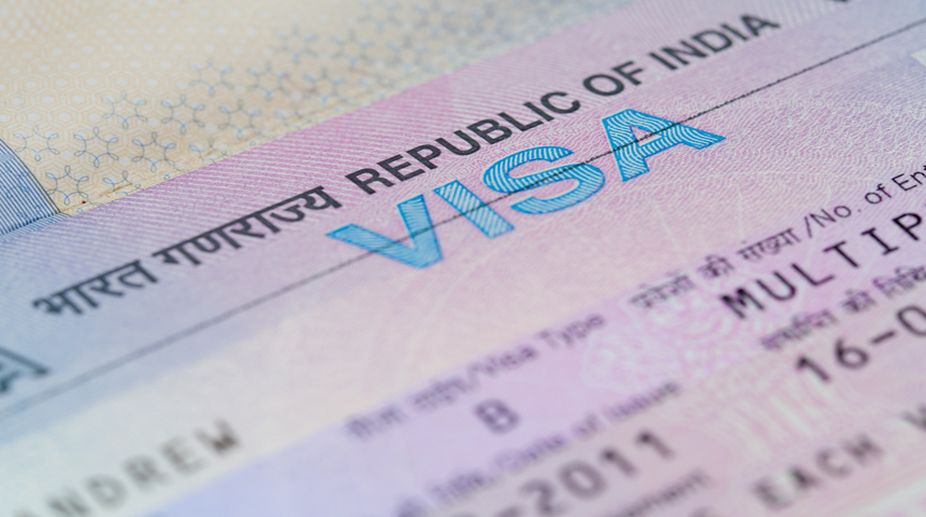
The move comes after Australia announced it would abolish the popular 457 work visa used by over 95,000 foreign workers — a majority of them Indians — to tackle the growing unemployment in the country and replace it with a new programme requiring higher English-language proficiency and job skills.

The programme allows business to employ foreign workers for a period up to four years in skilled jobs where there is a shortage of Australian workers.


India contributes $250,000 to UN election assistance programme

IANS | United Nations |

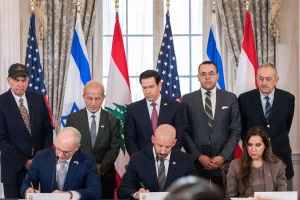
India has made a quarter-million-dollar contribution to the UN programme for helping countries to hold elections and develop their electoral systems.

Eenam Gambhir, a First Secretary in India's Mission to the UN, presented the cheque to Kyoko Shiotani, Chief of the Office of the Under-Secretary-General at the UN Department of Political Affairs, on Tuesday.

This is the second Indian contribution of $250,000 to the programmes for electoral assistance and capacity building. The first was made in 2012.

Through the Election Assistance Division set up in 1991, the UN has helped over 100 countries with their elections.

The division principally provides technical assistance for organising and conducting elections. 

But it has also sent observers to ensure the integrity of elections at the request of the General Assembly or the Security Council, and even organised elections in Cambodia and Timor-Leste.

Scientists discover super-Earth that could harbour life

IANS | London |

An international team of astronomers has discovered a so-called "super-Earth" that could contain liquid water, a situation that would make it a very good candidate for harbouring life.

Super-Earth is a rocky, temperate planet orbiting a red dwarf star, Efe news agency reported.

In an article published on Wednesday in Nature magazine, the scientists say that the distant planet, dubbed LHS 1140b, is orbiting an M class red dwarf star a little smaller and dimmer than the Sun but the most common type of star in our galaxy.

The super-Earth and its parent star are located in the constellation Cetus, the Whale, 39 light years from the Sun, thus — relatively speaking — putting it in our galactic "neighbourhood," according to Felipe Murgas, the coauthor of the study and a researcher with Spain's Canary Islands Institute of Astrophysics.

The study's main author, Jason Dittmann, with the Harvard-Smithsonian Centre for Astrophysics, said that this is the "most interesting" exoplanet that he's seen in the last decade.

The new planet was discovered thanks to the MEarth-South telescope network devoted exclusively to seeking out exo-planets.

The MEarth-South instruments enabled scientists to measure the planet's diameter and, using the HARPS spectrograph at the LaSilla ESO Observatory in Chile, they also were able to measure its mass, density and orbital period.

According to the measurements, LHS 1140b has a diameter 1.4 times that of Earth and a mass 6.6 times that of our own planet.

But more important than that are the climatological conditions, and its orbital distance from its star puts LHS 1140b in the "habitable zone" – thus meaning that the planet's surface temperature allows water to exist in all three of its states: liquid, solid and as a gas.

Whether there is actually water on the planet or not depends on the composition of its atmosphere and other factors, including the presence of a magnetic field, such as the one Earth has, but the most important thing is for the planet to "fulfil the requirements to have water," which means that it must be in its star's habitable zone, Murgas said.

Regarding the age of the planet, the authors of the study said that it probably formed in a manner similar to Earth and its star is probably 5 billion years old, about the same age as the Sun, although the age of M-class stars is hard to determine for a variety of factors, the Spanish researcher added.

In the coming decades, LHS 1140b is sure to be investigated much more intensively, an ongoing project for the powerful next-generation telescopes, including the James Webb instrument and the E-ELT device, which will be installed in Chile and — within a few years — will be able to study the system and try to detect its atmosphere, along with other characteristics.

Excellence award

Statesman News Service | New Delhi |

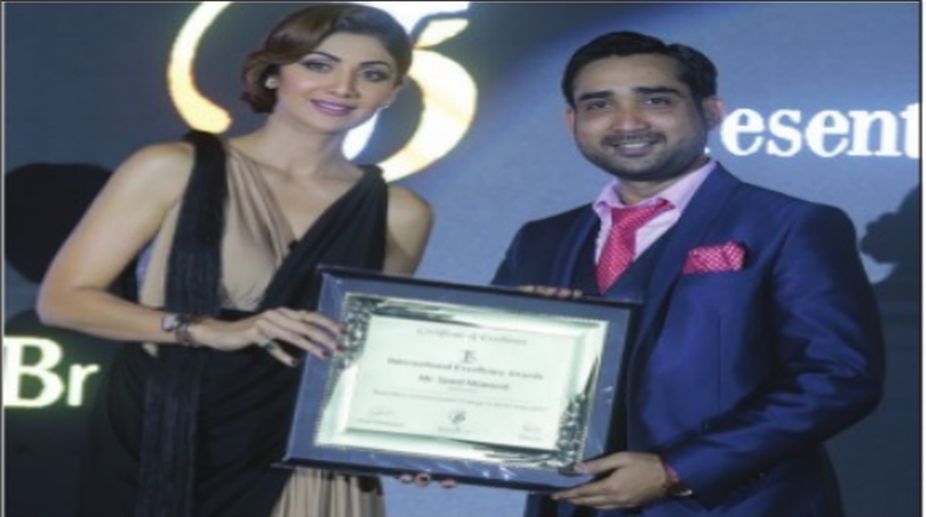
Media institute of Delhi Heritage Institute of Management and Communication (HIMCOM) was conferred with Best Media Academy award at the International Excellence Awards Ceremony held on 20 March in Goa. Actress Shilpa Shetty Kundra was the chief guest at the event hosted by actor Rithvik Dhanjani. Syed Masood, managing director of HIMCOM, received the award. Syed Masood said, "I am grateful to receive the award that is only due to the hard work of our faculty, administration, students and of course parents." Heritage Institute of Management provides practical training to students in the field of journalism and mass communication. HIMCOM, Delhi, has been set up to offer contemporary credible and relevant media education. It offers courses like Bachelor Degree in Mass Communication, Masters in Mass Communication, PG Diploma in Mass Communication, Diploma in Videography and Diploma in Video Editing.

Solo Art

Statesman News Service | New Delhi |

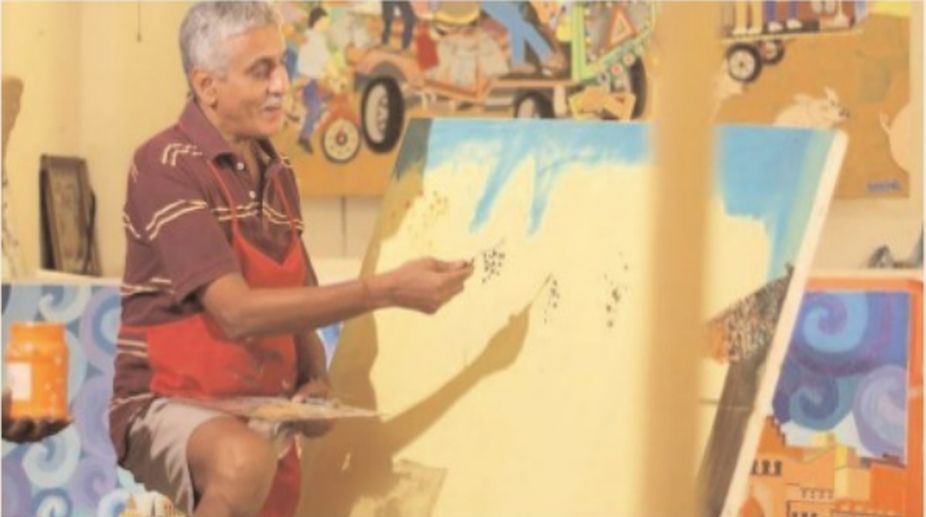
Being a passionate art lover, Indian artist Sailesh Kumar Sanghvi is all set to showcase his solo art exhibition in the Capital. Broadly categorised into two sections ~ The Dances of India and Elan,the exposition will display the artist's acrylic canvas collages and paper collage.

In the first section, titled The Dances of India, the artist would bring out the multiple facets of the varied Indian dance forms through his acrylic canvas collage such as Bhangra, Kathakali and Dandiya-Raas. The finer aspects of the varied dance styles that he was deeply impressed with during his visits to those places, across the country will be focused on.

These works are delineated in vibrant colours and bright hues with special attention to the dancer's costumes and embellishments, reflecting a mood of celebration and festivity. The painting also equally highlights the audience and the drama unfolding around as much as they do on the central performer and the accompanying musicians, depicting the "completeness" of the act in a sense.

The second section, Élan, consists of paper collages depicting the lifestyle of the common Indian and cultural dimensions in India, through paintings on modern city life to ghats of Banaras and Haridwar. These works are imbued with inner vitality and truth of interpretation of both inner life and outer behaviour of the common Indian man.

The self-taught artist has always been experimental in his art practice. Always ready to try innovative ideas, he ventured into collage using the nouvelle art practice of working with canvas, pasted on a canvas, stretched on a board. These works, which are on a monumental scale, require patience and are time consuming to create.

Inspired by Gerhard Richter and Raja Ravi Verma, Sanghvi paints in different mediums and style. Besides, his work includes both abstract and a collage collection, wherein it almost takes six to eight months to complete one painting, says the artist. The medium of canvas acrylic collage is quite unusual and is well received by Indian art lovers.

The exhibition is scheduled to begin from 21 April and will go on till 30 April at the Bikaner House, Pandara Road, in the Capital.

Issue of compatibility

Mamta Singh | New Delhi |

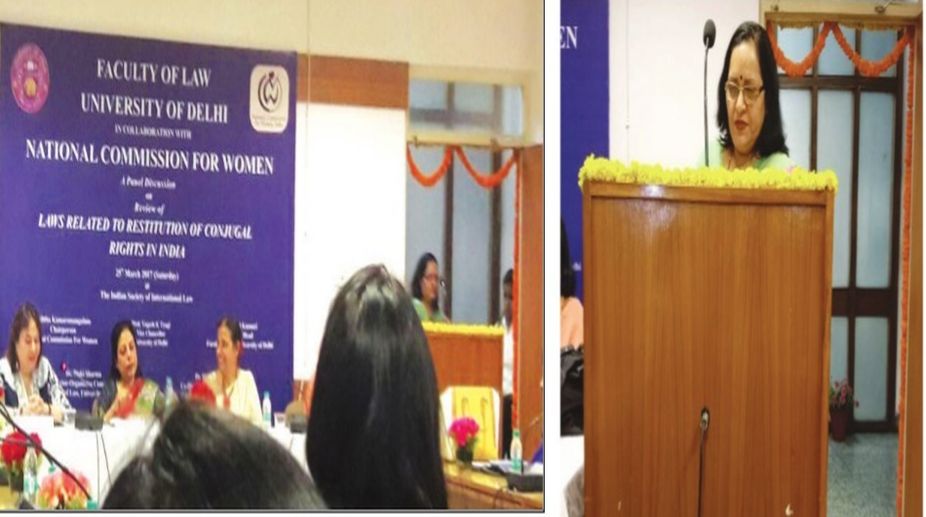
Eminent women lawyers and the National Commission for Women (NCW) have pitched for a review of the law on Restitution of Conjugal Rights and sought equal rights for both spouses. "Today, with changing society, the concept of marriage is also changing. People are having long distance relationship, they have their own independent identity, they keep relations as and when required but it is a matter of consent of both the parties for a healthy relationship," said Delhi High Court Justice Mukta Gupta.

Gupta was speaking at a panel discussion on Review of laws Related to Restitution of Conjugal Rights, recently conducted by Faculty of Law, Delhi University, in collaboration with the NCW, at the Indian society of International Laws. Underlining the drawbacks of the controversial section, while terming it as "totally redundant", she said, "Right to privacy and right to freedom, as enshrined in Article 21 and 19 of the Constitution respectively, should be ensured to the couple also as each one is the individual identity and their sentiments, emotions need to be respected for a harmonious relationship."

"In today’s scenario it is necessary that it should be accepted that in marital relationship, the emphasis is on the temperamental compatibility of the spouses," she said. These days we are seeing that couples taking autonomous decisions are sharing a very healthy and long lasting relationship rather than the bonded one where one couple is forced to act on the dictates of another, she added.

She also asked for the ommission of Section 9 of the Hindu Marriage Act (HMA), 1955 that gives the aggrieved spouse rights to apply under the Restitution of Conjugal Rights (Right to Stay) if the other spouse has withdrawn from their society without giving a reasonable excuse. "This is high time we recognised the rights of each of the individuals. We not only need to abolish Section 9 but also respect the individuality of both the parties," the Justice noted.

The session raised key questions related to marriage and sought to know if marriage was a union or is it the husband claiming property rights over his wife. The panel discussed as to how marriage could be reconciled by forced sex.

Additional Solicitor General in the Supreme Court, Pinki Anand, who was also one of the key speakers, questioned the relevance of Section 9 of the HMA. "Section 9 is used as a tool whose object is not matrimonial relief as such," Anand said. At the end, she said, people cannot be "compelled to live together" in a relationship, which is "intrinsically private" in nature where the state "should not interfere".

Dr Pinki Sharma, director of the panel discussion, along with co-director Shaveta Gagneja, apprised that review of RCR in India was under a proposal approved and funded by the National Commission for Women.

Led by the NCW Joint Secretary Vandana Gupta, the panel's welcome note was delivered by Ved Kumari, Head and Dean of the Faculty of Law, University of Delhi, The daylong event saw deliberations made by multidisciplinary thought leaders.

Hues of Indian poetry

Kunal Roy | New Delhi |

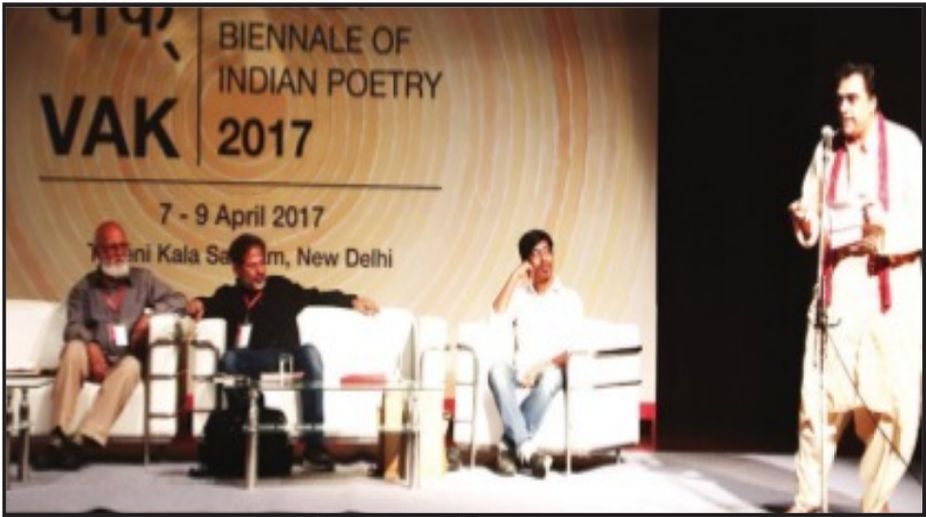
Poetry is a discipline over which a poet's morality, cognitive and civilised selves exert little control and thus making the poem, innate and true. A poet's conscience is not a prescribed societal conscience. Nobody can become a good poet without surrendering to its form. The best poetry involves selfconfrontation. Exploring the different hues of Indian poetry, its history, relevance and importance, Vak, a festival organised at the Triveni Kala Sangam, talked and discussed the plethora of hidden meanings and importance of Indian poetry.

Thiyam, one of India's most influential and important theatre practitioners, brought his unique stage presence by the reading of Ground without Surface. The poem, which reflects the predominance of Manipur as the physical and aesthetic foundation in his work, speaks to both "restive earth and bewildered soul".

"It seems the moon's leaking like my thoughts… On a starless night… Don't know how long I shall live pretending I'm wise. Today, before God truly… History and time, I want to sacrifice both so that I can earn even if only a little virtue. The ear hears many moaning voices… It's been long since the ground has been missing beneath my feet," he read.

Citing the relevance of poetry and its role in establishing the freedom of speech in the country, Malayalam poet K Satchidanandan said , "Poets have the right to disturb and agitate by challenging the status quo. The freedom to disturb and agitate is one of the most important rights a poet has, especially in the history we find ourselves living in today. Poetry is the freedom to conceive, to create alternative worlds, different ways of seeing, going beyond reality to escape it. Or perhaps even oppose the real and inhabit other realities. Poets need the freedom to relate to the world on their own terms, to respond to world events, situations and contexts in their own ways and to use language as they see fit". Satchidandan is one of the 45 participating poets at the discussion.

Describing disciplines like poetry, music and the arts, Ashis Nandy , a celebrated socio-cultural analyst said,"A poet's conscience is not a prescribed societal conscience. Nobody can become a good poet without surrendering to its form. The best poetry involves self-confrontation. It is not only an expression of the self, but a method to deal with the anti-self within. "In writing poetry, the poet's morality does not matter very much. The greatpoet will automatically inject primitive ethical considerations into his or her poetry. A subversive element in itself, poetry can't be socialised or silenced. Its values are acquired biologically".

The biennale of Indian poetry, organised at the Triveni Kala Sangam, began with the recitation of poems in Odia, Tamil, Assamese, Manipuri and Kashmiri. Renowned poets like Haraprasad Das (Odia), Nilim Kumar (Assamese), Salma (Tamil), Ratan Thiyam (Manipuri) and Majrooh Rashid (Kashmiri) set the tone and mood at the festival with their recitation. Prior to the readings, noted Hindustani classical singer Bhuvanesh Komkali vocalised a set of Bhaktisonnets and compositions .The threeday celebration of verse witnessed 40 invited poets, who read their works spread across 15 languages over more than 10 sesssions.

"It is hoped that the Biennale will bring forth the vibrant and furious creativity; the dynamic imagination; the plurality of visions, styles and idioms; the surprising resonances and disturbing memories; the darings and aesthetic risks; the merging of time with the timeless; the immediacy and urgency; the socio-cultural and political reach of contemporary poetry of India in its full range and complexity," said eminent Hindi poet Ashok Vajpeyi.

Unparalleled journey

Nivedita R | New Delhi |

Being touted as one of the most successful golfers of all time, Tiger Woods has been World Number one for the most successive weeks and for the greatest number of times for any golfer. He has been in the top position for 281 consecutive weeks. He has also broken numerous golf records in his career. Needless to say, he took the golf world by storm as he is the youngest ever player to become World Number one. He has won 105 tournaments, 79 of those on the PGA Tour, including Masters Tournaments, US Opens, British Opens and PGA championships. Besides, Woods has been named PGA Player of the Year 11 times.

However, he has had an unprecedented career since becoming a professional golfer in the late summer of 1996. Speaking about his experiences and coming out as being extremely open and candid, the ace golfer reveals many of his never-beforeheard stories and dispels previous misconceptions in his biography titled Unprecedented: The Masters and Me. He had a rough terrain to tackle through his journey, with different injuries, changes in the game, as well as being married, having kids and getting publicly divorced.

Woods, along with his co-author Lorne Rubenstein, gives insights about his lifelong physical and mental preparation for the tournament, his transition from amateur to professional status and the gripping shot-by-shot details of how he turned a tough first round into a Masters win for the ages. Leading up to the 1997 Masters Tournament, 21- year-old Tiger Woods was already one of the world's most scrutinised and talked about professional athletes, yet his exhilarating win and historic margin of victory astonished the golf world and instantaneously catapulted him to stardom. To mark the 20th anniversary of his historic US Masters victory, Woods reflects for the first time on his record setting win, and how it changed his life and the game of golf, forever.

The exceptional golfer's biography takes the reader through his relationship with the game, the Masters Tournament and those close to him, including his father Earl. After his win of two of his first eight PGA Tour events as a professional, which qualified him to play the 1997 PGA Tour full-time, the hype, surrounding him by the end of 1996, and his selection into the Masters, was intense. "I was having trouble handling all the attention. Writers followed me when I walked to my car. Television cameras were in my face. I was being asked personal questions that had nothing to do with golf. That was the deal, and I realised I'd better adjust quickly," the golfer writes in his memoir.

He added, "This was my new life as a professional, and there were plenty of perks, such as the Nike deal that I'd signed, flying on private airplanes and, 10 years later, flying in my own airplane. But more than anything, I loved golf and competing. I needed to cope with the magnifying glass trained on me all the time. I found it stifling at times, but as Arnold Palmer told me, the attention was going to be there, and it would be unrelenting." Woods has also spoken about his relationship over the years with Arnold Palmer, also fondly known as The King in the golf world, whom he would consider as his father figure after his father had died in 2006.

Tiger Woods shared an exquisitely emotional bond with his father, Earl. He writes, "My dad knew me so well, and he knew how to say the right thing at the right time. After we lost him in 2006, I missed that the most. I knew him really well too. We could get on each other and talk about anything we wanted. He had made sure from when I was a kid that he didn't talk down to me, and he went so far as to lean down to my height when I was a little guy, something I do with my children Sam and Charlie." "My dad," writes Woods, "always told me to play only for myself."

Speaking about his Masters win, he gushed, "I started to appreciate what winning the Masters had done for me. I had won three PGA Tour events before the Masters and gotten into the Tour Championship the previous October. In winning the Masters, though, I got job security for the next decade."

Besides, he was also surrounded by various controversies including his cases of "infidelity". "As I look back, at the age of 41, at my first Masters win, much has happened since that memorable Sunday in April 1997. My daughter, Sam, born 2007, and son, Charlie, born 2009, are the lights of my life. Their mother, Elin Nordegren, and I were so much in love when we married in 2004. But I betrayed her. My dishonesty andselfishness caused her intense pain. Elin and I tried to repair the damage I had done, but we couldn't. My regret will last a lifetime," inscribes Woods in his memoir.

A review by Nivedita R

Exploring hidden gems

Pradeep Chamaria | New Delhi |

Goa has a magnetic charm that draws a visitor to return again and again. I've been there earlier, but when an opportunity to discover the unexplored Goa on Honda's new bike, the NAVi, came my way, I could not resist it. Though this is not the right season ~ very hot and sultry ~ to be in Goa, I was soon on my way.

Goa is a fascinating destination known for its tranquil beaches, nightlife, adventure sports and cuisine. But it still has a lot of unexplored side, which is untouched by many. The best way to explore these areas is on a two wheeler, exploring at one's leisure.

Goa Hunt 2017, which was organised by Goa Tourism Development Corporation, in association with Honda Motorcycle and Scooter India, was a fun and adventure activity. Goa is a biker's haven, allowing one to explore some hidden gems. My adventure ride took me to these places:

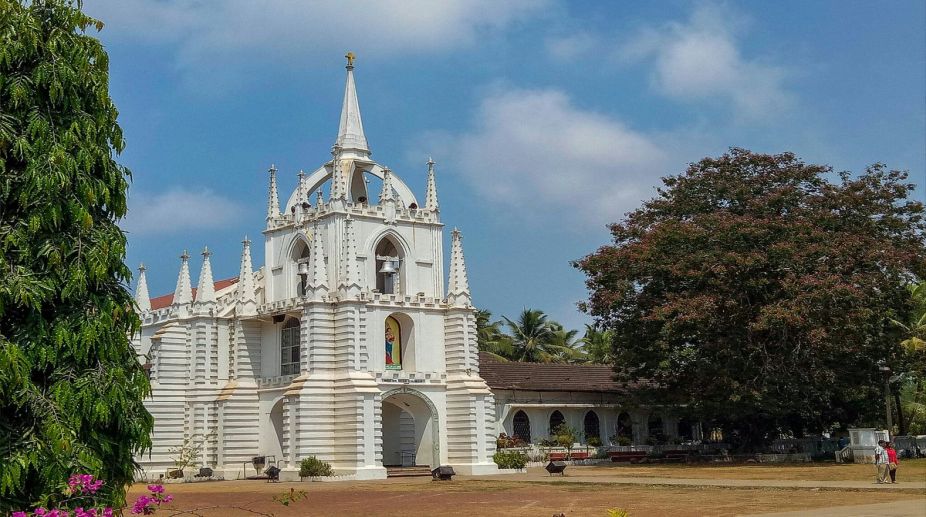
Mae De Deus Church is one of the finest churches in Goa. Built in 1873, it offers a breathtaking sight. At first look it appears to be a fairy tale structure, white in colour and with a unique charm. The church's Gothic-styled architecture is one of its kind. It houses the miraculous statue of Mae de Deus (Mother of God), which was brought from the ruins of the convent of Mae de Deus in Old Goa.

I arrived at the church after it was closed and so could not go inside. But whatever interior was visible from outside, including the beautiful altar, looked fabulous. The entire atmosphere was peaceful. The priest informed me that this church was built with the help of contributions from the locals, which makes it more important for them.

Mapusa Fruit market was our next stop. Though the market operates through the week, we were lucky to be there on the weekly Haat day. Several local farmers had bought their produce to the Haat. As I bought cashew fruit and some local black berries, I interacted with the farmers.

Fontanhas is where the rich Portuguese settled down. All the brightly-coloured houses spoke of the affluence and luxury enjoyed in those times. A colourful well with roosters on its four pillars made a pretty picture. A small corner with three houses painted in bright colours of pink, blue and golden also caught my eye.

Dona Paulo is where the two Goan rivers, Mandovi and Zuari, meet the Arabian Sea. It has a magnificent view of Marmugao Harbour. This romantic location was where the fight sequence in Bollywood movie Singham was shot. A major part of yesteryear chart buster Ek Duuje Ke Liye was also shot here.

On a rocky, hammer shaped headland, I was searching for a mystery and found the two statues, known as the Dona Paula Sculpture. I also came across two young girls who gushed, "Goa is a scenic, beautiful place full of energy and it is a clean state."

I also visited and explored the ruins of the Cabo Fort, which was built in 1540, and the 180-year-old English cemetery, which houses the memorial tomb of Dona Paula de Menezes with her story engraved on the tombstone. I also happened to watch a lot of water sports such as waterscooter, para sailing and motor boat rides.

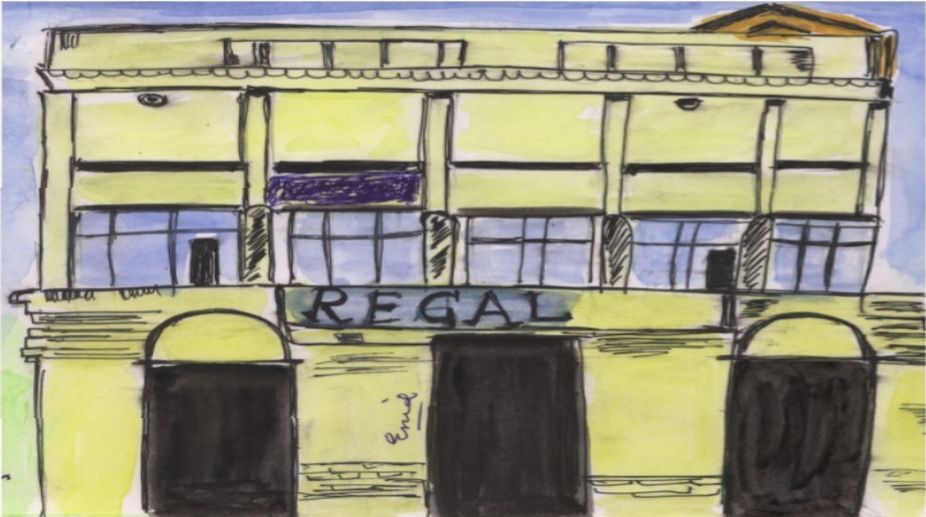
Some Regal memories and the last hurrah

R V Smith | New Delhi |

Regal finally closed down after screeningMera Naam Jokerand Sangam as its last hurrah. Regal and Rivoli were two cinema halls in Connaught place that attracted a lot of spectators, both old and young. On Sunday it was mostly students, who crowded there but Regal had an edge over its rivals, which included Odeon and Plaza. One memory of the Cinema house that lingers is about Mahrani Gayatri Devi of Jaipur, who came to see a repeat show of Gone With the Wind there. Like that the premiere of the film, released in 1939, was held at Regal also but subsequently too it was shown over the years.

It was in 1972 that the Maharani and some members of the Jaipur royal family came to watch the Clarke Gable-Scarlett O'Hara starrer. The reason was that Clarke Gable had some time back descrbed her as second of the 10 most beautiful women of the world (an honour recently re-earned by Priyanka Chopra). After the show one tried to speak to Gayatri Devi despite the security surrounding her. She did pause for a minute to answer the question about what she thought of the comment. "It's very flattering," she replied and walked away, looking ever so grand in her voile sari and fancy slippers, her hair blowing in the autumn breeze. Another memory is about the screening of The Robe (1953). The film concerned the robe worn by Christ and of how it had become the prized possession of an elite Jewish family after his crucifixion.

The Christian community of Delhi trooped to Regal with then Archbishop Joseph Fernandes leading them. The nuns of Jesus and Mary Convent came with their rosaries and throughout the show one could hear "Pater Nostas"and "Ave Marias" being recited by some of the more orthodox until the Rev Mother asked them to pipe down as the others in the audience were getting disturbed.

When a Raj Kapoor film was being screened, the actor's father Prithviraj Kapoor, an MP then, came straight from Parliament House to see it. Dressed in kurta-pyjama, he looked the perfect picture of health. A boy from among crowd that had collected outside told another, "See Awara's father." The elder Kapoor turned around and shouted at the boy to shut up. At the same remark in Bombay, he had slapped someone tight for his insolence. He made it clear that he was the father of Raj Kapoor but certainly not of a vagabond (Awara).

During the screening of Satyam Shivam Sundaram, starring Raj Kapoor's younger brother, Shashi Kapoor and Zeenat Aman, Mubarak Khan, a filmbuff from the Walled City of Delhi, couldn't help pinching towards the vivacious actress and pinching her while she and the hero were being showered with marigold petals. Zeenat screamed, looking around for the culprit but he had dissapeared into the crowd. Shashi Kapoor was red with anger and asked the crowd to behave or they would go back. Just then policemen moved in and forced everyone without tickets to retreat across the road, where they stood clapping, waving and wolfwhistling in the green patch now partly occupied by Palika Bazar.

For Bobby, released in 1973, the crowds were to be seen to be believed at Regal. The film starred Raj Kapoor's son, Rishi Kapoor as Raja and Dimple Kapadia, screen daughter of a Goan fish merchant played by Prem Nath. Students from St Stephen's College, Hindu College, Kirorimal College and other educational institutions of Delhi, like Lady Shri Ram College for women and Jesus and Mary College, were there in the huge crowd. The rumour was that Dimple Kapadia was actually Raj Kapoor's daughter, adopted by a wealthy Bombay family. The college girls took exception to such remarks and asked the boys to behave or go home and leave them in peace. This had a salutary effect and no more rumours were heard after that.

There are many stories of Regal's glorious past, including those when Jawaharlal Nehru, Lord Mountbatten, Rajendra Prasad and Indira Gandhi graced the prestigious cinema hall with their presence, but lesser mortals too added lustre to the cinema hall.

The late South Indian dance and music criric of The Statesman, Subdudu, once recalled that Vyjayanthimala attended a show when Sangamwas making waves and sat engrossed, especially during the playing of the song featuring her and Rajendra Kumar ("Har dil jo pyar karega wo gana gayega…"). For Raj Kapoor it was his favourite theatre in Delhi because of its association with father Prithviraj Kapoor, whose plays were enacted there after Regal took over Majestic Cinema in Chandni Chowk, where the first theatrical performances used to be held. For one show there, when Sohrab Modi and his troupe took Delhi by storm, even the dhobis are said to have sold their bullock carts to buy tickets and witness the NaachGaana they earlier watched at the kothas of dancing girls in Chawri Bazar. Haji Zahoor, who died in 1982, used to recall that he had in his younger days heard Zohra Bai Ambalewali singing at Majestic in the second decade of the 20th century. Regal came up in 1932 when New Delhi was being built and the contractor for the new Capital, Sir Sobha Singh, made over his plot of land to family friend Wazir Dayal, chief executive engineer of CPWD. One remembers Masood Alam of Nai Basti, who used to catch the morning train from Raja-ki-Mandi Station for Delhi, instead of going to college, to see the first-day-firstshow at Regal. He would return late in the evening and next day tell his college friends what an enjoyable experience he had had. Another Agra film-buff, Mohammad Ali used to see the evening show at Regal and return by the night train, which reached Agra early morning. He was an MA English Literature student at St John's and quite unlike one too. Wearing pyjama-kameez, with short (Rungroot-cut) hair, tall, dark and thin sans sophistication, he was nevertheless sold out on movies, both Indian and foreign, like Gone With The Wind, which was first premièred at Regal and repeated at shows later.

One morning one found Mohammad Ali washing his face at the public tap of Agra Fort station without soap and towel. He had just come back from Delhi after watching The Robe, showing at Regal. Ali wiped his face on someone's petticoat hanging out to dry in the still faint sunlight. He passed his hand over his hair (no need for a comb) and headed for a chai shop. Believe it or not, there couldn't have been a more devoted lover of Regal. He later became an English lecturer in a new garb. But his association with Regal continued as he was seen with his wife and kid there one evening long ago.

When there was a strike at The Statesman in the 1970s, in which the staff of the lunch room also joined, subeditors and reporters used to walk in a procession to Regal building to have lunch at Standard Restaurant, housed above the cinema hall. One day a junior sub Amit Mukherjee did not return to duty. It seems after quaffing off a pint of Rosa Rum (costing just Rs 5 then) he settled down in Regal to watch the afternoon show of Rajnigandha. He had confided to colleagues that he had fallen in love with the heroine Vidya Sinha ("as sweet as the night flowers") and was thinking of proposing to her. But that afternoon he dozed off mid-film and returned to office, still dazed after 6 p.m. when the Dak edition, for which he had to make the sports page, was about to be released. Somebody, of course, had deputised for him though he nearly got sacked for his irresponsible behaviour. Whether Amit proposed to Vidya is hard to tell but he left his job and went away to Faridabad, where he became an alcoholic and was found dead one morning.

Another interesting story about love for Regal concerns Amjad, son of a hotel proprietor of Jama Masjid, who didn't watch films in nearby Jagat Cinema but at Regal with his girlfriend, a nurse in Ram Manohar Lohia (then Willingdon) Hospital, where he couldn't be recognised, and have a good time in the box reserved for lovey-dovey couples.


Triple talaq and myopic leaders

Firoz Bakht Ahmed | New Delhi |

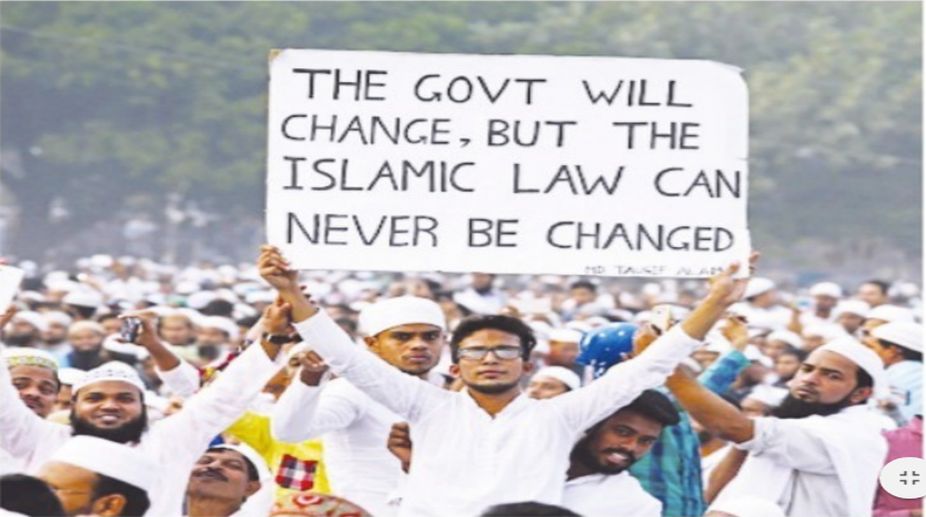
Espousing the cause of triple talaq at their two-day Lucknow meet recently, the All India Muslim Personal Law Board (AIMPLB) president, Maulana Rabey Hasan Nadvi, warned the state not to interfere. Simultaneously, Narendra Modi, the Prime Minister, while addressing the BJP national executive at Bhubaneshwar, firmly stated, “When we speak of social justice, our Muslim sisters too should get justice. We do not want to challenge the Islamic law but we are dead against the exploitation of our Muslim sisters.” Modi’s intention is clear – that no Muslim woman must be deprived by men; that the rights of equality and justice given to her by Islam and the Holy Quran are not taken away by the men.

Modi has rightly spoken about doing away with the suppression of Muslim women via triple talaq thrice in a sitting. This is in keeping with his agenda of equality and equanimity as per his slogan of development for all. Most Muslims agree that they do not require such bodies as AIMPLB but would gladly accept the ones that address and find solutions to their educational, economic and social backwardness.

Muslim men were punished for divorcing women by Hazrat Umar, Hazrat Ibn-e-Tymia and the Sahabas (followers of Prophet Muhammed). Modi is in favour of strengthening the right spirit of Islam through the law of the land without interfering in Sharia law.

Though considered sinful, the triple divorce is unfortunately legally enforceable in Sunni Hanafi law. Since vast majority of Muslims in India follow Sunni Hanafi law, many Muslim women become victims of this innovated form of divorce and hence they are now taking the help of the apex court. It is not mentioned in the Holy Quran and is blasphemous. To Prophet Muhammad, divorce was the most repugnant.

The travesty with clerics is that they crumple the otherwise broad principles of Islam into myopic ones for their political ends by taking the entire community for a ride. They are responsible for bringing Islam into the ambit of mockery by the media and others. It is high time they follow Islam in its true spirit and stop threatening law makers.

The AIMPLB feels it is its right to dictate terms and espouse views on issues that extend from the public domain of Indian Muslims to the privacy of their bedroom. Stoke a controversy involving the community and the usual suspects start emerging from the murky and infested woodwork of the AIMPLB. So the wise men constituting the board have once again jumped to the conclusion that the government is out to deprive Muslims of their personal Sharia rights as enshrined in the Constitution of India. In doing so, they have closed their eyes to the fact that 92.2 per cent Muslim women are against the dreaded and un-Islamic triple talaq in one sitting.

It must be pointed out here that the Law Commission is working in the right direction, as it has asked for inputs from all the other religions with the sole intention of uplifting the lot of women. The UCC (Uniform Civil Code) has nothing against Islam or Sharia rather its very first point coincides with what the Quran says – that men and women be given equal rights. It's only the injustice meted out to Muslim women by their men that will be corrected by the UCC and that too in the spirit envisaged by Islam. Indeed, the UCC, as per the Islamic order, will strengthen the right procedure of triple talaq from talaq-e-bidat (triple talaq in one sitting) to talaq-ehusna (talaq in three months allowing a possibility of patch up).

It is sad that the so-called Muslim leaders and clerics, are creating a fuss over a non-issue. The AIMPLB is at the vanguard of the battle to ensure that women of the community continue to suffer bias and are deprived of the protection they should get through provisions in the Constitution that provide for equality and non-discrimination. The Board, it would seem, wants them to remain at the mercy of the patriarchal set-up manned by sundry clerics with their own interpretation of the Holy Quran. These self-appointed custodians of Indian Muslims, who just wait for an opportunity to lock horns with the government and cry hoarse, have found in the present triple talaq controversy a way to make their otherwise diminished presence felt.

Triple talaq and Uniform Civil Code are two separate issues. Personal laws cannot claim supremacy over the rights granted to individuals by the Constitution. All that AIMPLB has managed is tarnish the image of Indian Muslims. The media quotes the most negative statements of the Board and these are taken as reflecting the views of the community. The truth is that an average Muslim is not governed by what the Board says. The reality is that Muslims need no personal law boards. They would rather prefer focus on issues like education, unemployment, economic and social backwardness. The time has come the community itself shoulders the burden of coming into the mainstream.

For a start, most Hindus make up their mind about Muslims on the basis of the faces from the community they see on TV and the voices they hear in the media. The people covered by the media are invariably 80-plus-year-old men insisting on the status quo on triple talaq and other issues. These men (women not seen!) seem to come from antediluvian times.

They are a set of disgruntled, disorganised and divided individuals. Their convulsions over issues like triple talaq, family planning, nikahnama, polygamy, etc. are cases in point. If the law board members are told of reforms in talaq, polygamy or family planning in 22 countries like Pakistan (Family Law Ordinance), Iran or Indonesia, they dismiss them saying they don’t follow examples set by these countries. Religious but moderate people in the community believe that the community has to address issues like birth control in its own interest.

Indian Muslims face multiple problems, possibly more than any other prominent religious group in our secular sovereign republic. Some of the baggage they carry is owing to the way in which the majority community views them. In fact, many of the notions are negative, inaccurate, retrogressive, made up of half-truths, propaganda, outright lies some of which are trumped up. The other baggage is a result of their own inaction and the lip service they have paid to opportunistic interlocutors and so-called leaders.

Without closely studying the Uniform Civil Code, no serious effort will be possible to begin an ambitious national project of reconstruction of religious thought in Islam by Indian Muslims. Perhaps this can be done by dedicating ourselves with greater vigour to realizing Iqbal’s dream of a renaissance in Islamic culture. And the first step must be taken by the Indian Muslims themselves sans any personal law boards.

The writer is a commentator on social issues and a grandnephew of Maulana Azad. The views expressed are his own.

Justice denied to undertrials

R.D. Sharma | New Delhi |

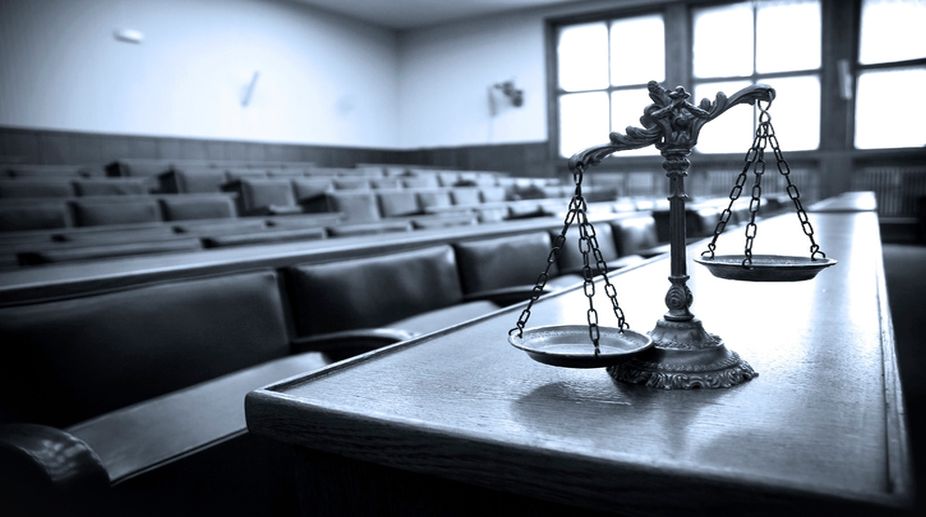
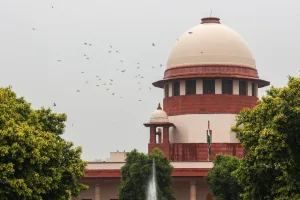
“Right to speedy trial is a part of the fundamental right and an undertrial cannot be kept in jail for long”, ruled the Supreme Court (SC) recently while directing trial courts to decide bail applications within a week of their filing. A bench headed by Justice AK Goel also fixed a two-week time-frame for all high courts to dispose of such matters. The apex court issued a series of directions to speed up the criminal justice delivery system saying, “Deprivation of personal liberty without ensuring speedy trial is not in sync with Article 21 of the Constitution (right to life and personal liberty).”

Adherence to time-frame should be a criterion while high courts prepare annual confidential reports of trial court judges, the SC observed. Magistrates should conclude cases where accused are in custody in six months, while a sessions court should do so in two years. Simultaneously, it asked the lower judiciary to dispose of all five-year-old criminal cases by the year-end.

Judges often say that bail is the rule and jail is an exception. This may be true in theoretical parlance but not in the practical sense. Those who are affluent and have both money and muscle power can afford bail easily, whereas the weak, poor and vulnerable rot in overcrowded jails for long. How did film star Salman Khan in the high profile Mumbai hitand-run case, Satyam convict Ramalinga Raju and many top politicians from Bihar, Uttar Pradesh and Tamil Nadu manage to secure bail without any problem.

Such instances strengthen the public perception that our judicial system is pro-rich and anti-poor. Jail and not bail still continue to be the norm in respect of the poor. Needless to say that out of an estimated 4.18 lakh prisoners in the country, 67 per cent are undertrials. About 65 per cent of them spend three months to five years in jail before securing bail. Those who are finally acquitted end up paying for a crime they had never committed. This dismal state of justice is usually attributed to the shortage of judges and infrastructure.

Even the amended provision of Section 436A of the Code of Criminal Procedure, which entitles those undertrial prisoners who have completed half of their likely jail term to bail on personal bond, could not be of much help to them for want of its proper enforcement. As a result jails are getting more and more overcrowded across the country. At the same time, overcrowding has its adverse effects. Housing petty offenders with hardened criminals due to space problem can even turn them into hardened criminals in a short span. Many gangsters recruit members of their criminal gangs out of these redeemable offenders. Overcrowding hampers efforts to check the inflow of drugs inside jails, maintain discipline and provide food, clothing and health-care to inmates.

As far back as 6 September 2014, a Supreme Court bench of Chief Justice RM Lodha and Justices Kurian and RF Nariman had asked the Centre for a roadmap for fast-tracking the criminal justice system as well as directed the lower judiciary to depute judges and magistrates to hold court in jails and release undertrials. But its directions have not been complied with.

While an overburdened judiciary is a major cause for the delay in justice, other shortcomings in the criminal justice system too require urgent attention. Police and prison officials, for example, often fail to fulfill their roles leading to long delays in trials. That most of the undertrials come from disadvantaged social groups like minority communities and Dalits is common knowledge. Illiteracy, lack of resources and awareness are some other problems and constraints. Hostile police and prison authorities are rarely of any help to them despite the SC’s several rulings for a quick bail and fair trial in their case.

The bail norms in our country are often violated as there is no uniform, object and clear set of rules to guide judges in taking decisions. It is the sole discretionary power of the judge to grant bail. The Law Ministry has now approached the Law Commission to review the existing bail provisions on the lines of the United Kingdom (UK) and the United States (US) to cut down judicial discretion. In the UK if a court withholds bail, it is required to give reasons for doing so. Likewise, in the US, an accused has the right to bail unless there are sufficient reasons for not granting it.

The overall aim should be to bring parity between the rich and the poor so far as the right to bail is concerned. All should be equal before law as per Article 14 of the Constitution (Equality before law). The government ought to be committed to ensure that every accused gets a fair trial and speedy justice. A law should always be based on logic and common sense. Any arbitrariness in executing it is undesirable.

It goes without saying that tackling the problem of undertrials is the joint responsibility of the Centre, state governments and the judiciary. They too have fundamental rights to life and speedy trial of their cases like other citizens. The judiciary must now dispose of their cases expeditiously. Police must file their case papers in courts well in time to avoid any delay in their release. Free legal aid should be made available to them to meet the ends of justice. The sooner this is done, the better it will be for administration of the criminal justice system.

It is not as if these measures have not been suggested before. However, the callous attitude of authorities and contempt for the law have hampered justice being meted out to this class of prisoners. If there is one area where judicial activism must find strong expression, it would be in ordering exemplary punishment and heavy fines on those officials who come to violate the human rights of undertrials and disobey the apex court’s order on setting them free. Their release would not only help ease pressure on our correctional homes but also help in creating better conditions there.

The writer is an Advocate, Supreme Court of India and Delhi High Court.

Minorities under attack in Pakistan

Shantanu Mukharji | New Delhi |

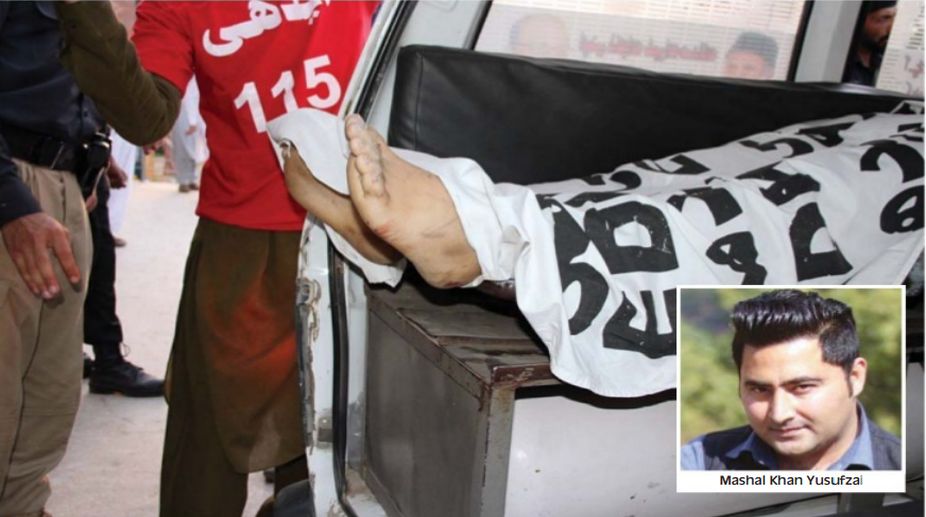
Prime Minister Nawaz Sharif’s hollow claims (March 14) that in Pakistan all faiths enjoy equal rights under the Constitution fell flat when a 23-yearold student, Mashal, a member of the minority Ahmediya sect was lynched to death by a frenzied mob inside the campus of Abdul Wali Khan University in Khyber Pakhtunwa (KP) province last week on mere suspicion that he had championed the cause of Ahmediyas.

The attack was most inhuman as the perpetrators kept kicking the lifeless body displaying high level of intolerance and brutality. Before he was lynched and shot, Mashal was forced to recite Quranic verses and made to hurl abuses on the Ahmediya sect. This sensational killing and its ripple effects have exposed Pakistani claims of protecting their minorities. It’s also evident that there are visible signs of state complicity in such hate killings.

Earlier, a new wave of persecution and killings of Ahmediyas came to the fore after an Islamabad High Court Judge, Shaukat Siddiqui, described by many as a bigot and hate monger, took a position on religious matters of an individual. Religious extremism penetrating the judiciary is a very disturbing development and diminishes chances of ensuring minority security.

Siddiqui was the judge who had described Constable Mumtaz Qadri as Ghazi (hero and holy warrior for upholding the teachings of Islam). Qadri had assassinated his minister Salman Taseer whom as a bodyguard he was supposed to protect. It’s unthinkable that a sitting judge would label a killer a hero and a martyr (Qadri was later executed).

Sadly, the judiciary in Pakistan has not been able to keep itself away from the profound impact of growing extremism. Human rights watchers recommend a foolproof system be set in place to check and occasionally scrutinise the fairness of the justice system so that it does not stay unbridled and awards sentences with fairness and without bias.

In the absence of any monitoring, Siddiqui continues to try cases of alleged blasphemy and he is directing the authorities to ban accused persons’ accounts on Facebook, Twitter and the internet confirming the extent of intolerance Pakistan is reeling under. Ahmediyas remain harassed and ostracised in Pakistani society and continue to suffer humiliation and intimidation at the hands of the religious extremists. Emboldened by the indifference of the establishment and the apathy of the majority, several members of the Ahmediya community have been gunned down in the recent past. A prominent member of the sect and lawyer of renown, Malik Saleem Latif was shot dead in Nankana Sahib and soon after a 68-year-old social activist Ashfaq Ahmed was shot dead in cold blood in Lahore on April 7.

The atrocities don’t end here. Minorities are gripped by fear and uncertainty and there are no evident signs of any let up at least in the foreseeable future. Against this backdrop, it does not augur well for the Pakistani polity or its intelligence and security agencies to point fingers at India for its alleged highhandedness in Kashmir. Its sustained propaganda blitz against India merits a natural death as atrocities in Pakistan’s own backyard deserve to be highlighted and exposed before the international community and human rights groups.

The writer is a retired IPS officer and a security analyst and writes on security-related issues. The views expressed are personal.