Logo

Bitten by the espionage bug

Kuldip Nayar | New Delhi |

One bug which has bitten both India and Pakistan and now Bangladesh is espionage. Anyone who visits from the neighbouring country is considered a spy until proven otherwise. It really depends on the External and Home ministries whether a particular person will be let off. But it is the police force that is an arbiter. And it goes without saying that the sentence awarded to the person would be life time imprisonment or death.

Normally, the court decides the sentence. However, the case in Pakistan is different because it is ruled by the military. Still the Civil Courts have their role depending upon local military commanders. They in fact have the last word. Even the death sentence is awarded by them. The question of evidence arises but it again depends on local military commanders.

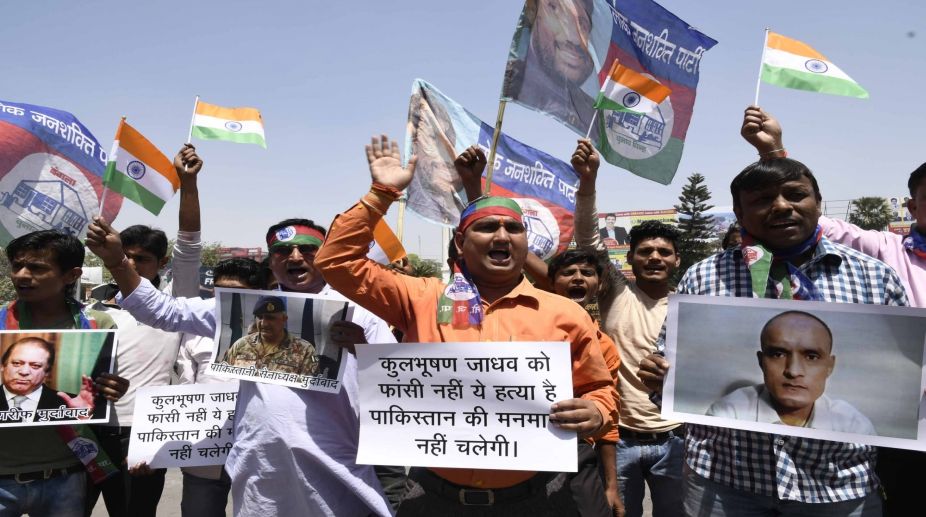
Dawn from Karachi has reported how Jadhav, an Indian businessman, was sentenced to death. “Indian RAW Agent/Naval officer 41558Z Commander Kulbhushan Sudhir Jadhav alias Hussein Mubarak Patel was arrested on March 3, 2016 through a Counter Intelligence Operation from Mashkel, Balochistan, for his involvement in espionage and sabotage activities against Pakistan. The spy has been tried through Field General Court Martial (FGCM) under Pakistan Army Act (PAA) and awarded death sentence,” the military’s public affairs wing, ISPR, announced on Monday.

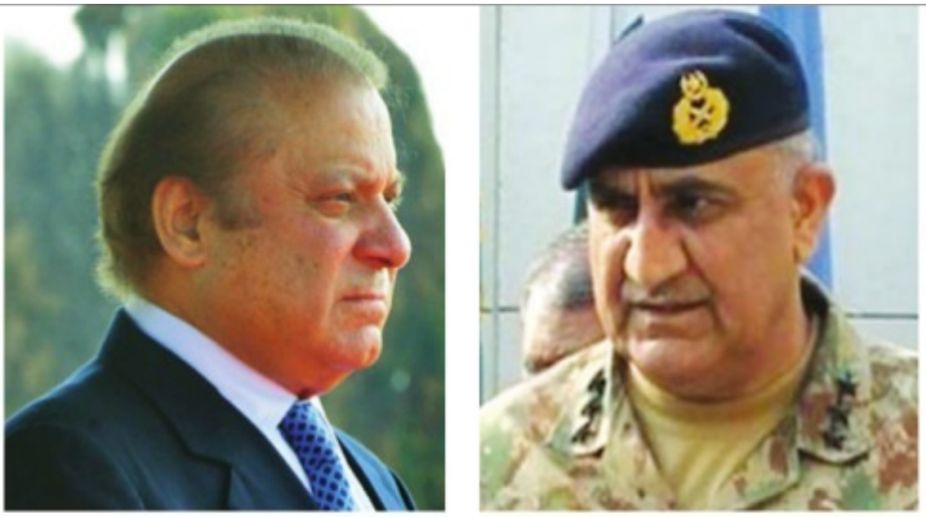
Sartaj Aziz, Advisor on Foreign Affairs to Prime Minister Nawaz Sharif has admitted that there was little evidence to convict but other things, he says, add up to prove Jadhav’s involvement in espionage. In any case, Sartaj Aziz’s words are adequate. Pakistan has submitted the relevant papers to the Secretary General of the UN. It believes that the verdict, if he at all delivers one, would be in favour of Islamabad.

Indeed, it is hell for a person who visits a neighbouring country. He or she is pursued by the Intelligence department wherever he goes. Even a shopkeeper is questioned as if he is party to the buyer’s selection of the shop. Markets want buyers from a neighbouring country because they spend a lot of money. But the questioning by the police deters them. I recall that once a Pakistani who picked me up from the airport was upset by the police car that followed us. He stopped his car and asked his pursuer why he was following him. In reply, the man said that he was not to blame. He was doing what his superior had asked him to do. My friend, who was a leading editor, knew the military superiors. The result was that the car pursuing us increased the distance but it did not give up following us.

Assume that Jadhav was a spy of sorts but what could he have spied. Technology has advanced so much that with a satellite you can read from the air even the digits painted on a car number plate. Therefore, Jadhav’s guilt would be considered Pakistan’s revenge for some other deed.

The Pakistan announcement did not say when the trial would commence and how long it would continue before the verdict was handed down. In the case of Jadhav, the announcement mentioned that the sentencing had been ratified by Chief of the Army Staff Gen Qamar Javed Bajwa. It has not been spelled out why and on what ground.

Since Pakistan has denied even consular access after as many as 14 requests, it is difficult to know the reason for death sentence to Jadhav. Foreign Minister Sushma Swaraj has warned that if the sentence to Jadhav is carried out, it would be an unfriendly act. The recent surgical strike should be a warning. New Delhi can go to any extent.

Both India and Pakistan should sit across the table and decide matters between them once for all. Kashmir may be separated from other problems and discussed separately. There is no reason why the two countries cannot do business or set up joint ventures. In fact, goodwill would be generated if they could only ease the visa facilities for tourists to begin with. Unofficial trade which is going on at the borders can be allowed to increase. Official trade would bring in all kind of problems because both countries have a long list of grievances against each other.

Prime Minister Nawaz Sharif said recently that there was no reason why India and Pakistan could not live as friendly countries. The fact of partition is seventy years old and the wounds inflicted by both sides is a painful story. One million people were killed in the forced migration, the biggest in the world. Thirty to forty million people had to find new homes because they did not feel safe at their places after partition.

Jadhav is not the last person to face death sentence by military tribunal which sets a new precedent, of trial of civilians by a military court. Apparently, political parties are not happy and they have tried to abolish military courts. The matter came up before the Pakistan National Assembly only a few days ago. There was fierce opposition from democratic and liberal parties. But unfortunately the military had the last word and tribunals have come to acquire a legal sanction.

Since Pakistan has a large say in SAARC it may be prudent for other countries in the region to discuss some kind of common market and ways to establish even unofficial methods for trade and business. At present business through Dubai is large but expensive. Agreed that Kashmir is a running sore, but some ways should be found other than pelting stones to sort out the problem. Too much emphasis on the Islamic aspect is encouraging only the communal parties and postponing the solution.

Jadhav’s sentence has become another problem between the two countries. The efforts should be on how to lessen such instances of sentences-at-will. There are not conducive to peace in the region.

The writer is a noted journalist columnist and commentator.
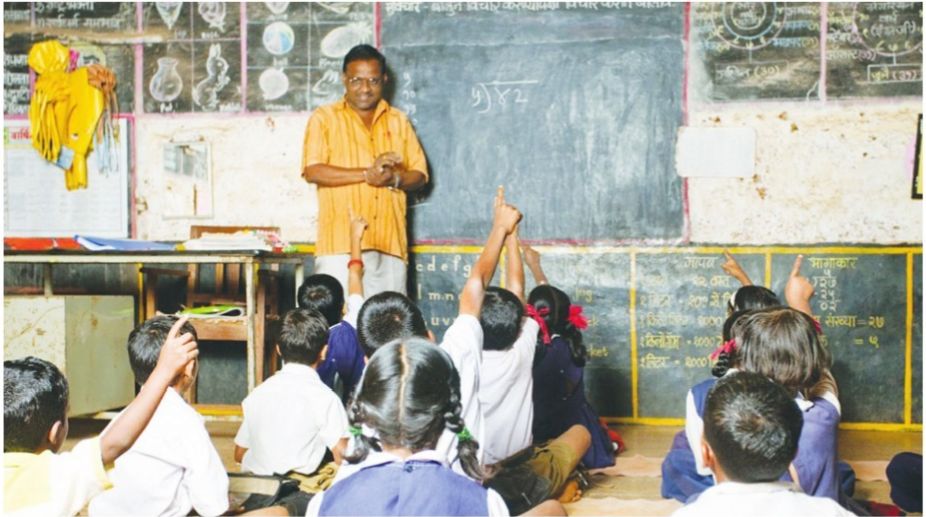
Restore Socrates to the classroom

Sachidananda Mohanty | New Delhi |

We often hear of the crisis in education and identify the usual suspects: uncaring parents, a mercenary and indifferent state, commercial-minded private institutions, powerful industrial empires that try to save their souls by the creation of educational wings proudly sporting their names and lineages, teacher-politicians and their patrons, grant-giving bodies that do not discharge their responsibility adequately or ensure enough accountability. We seldom hear of the real crisis, the crisis at the heart of education, namely the crisis in teaching and the battle in the classroom.

Many of us think that the crisis in education will go away if we were to take timely measures. After all, we celebrate Teacher’s Day; colleges and universities boast UGC scales; we do have academic staff colleges, and the number of national institutions devoted to research, policy planning and accreditation in higher education are increasing day by day. And yet, we keep hearing of the crisis in education every now and then.

The crisis in teaching in contemporary India is compounded by various factors. Such factors however are not integral to the crisis I have in mind. The researcher who disdains classroom teaching as an avoidable distraction and merrily flies around the national and international seminar circuit, the pedogogist who refuses to read or study anything new in the field and follows the slogan ‘old is gold,’ the teacher who thinks that educational innovation and syllabi reforms, indeed lesson planning and course completions, are plainly unnecessary to his/her creative genius are equally part of the problem, but they are not endemic to the problem.

We must fathom greater depths in order to find the real causes when we think of the many ways we can be good teachers in the next millennia. Certainly, mastery of the newer approaches, ICT driven educational technologies, the use of digital media and so on can help. They are necessary but not sufficient conditions for effective dissemination of knowledge in the classroom context.

The real crisis of teaching is the crisis in the classroom. The crisis may be dramatised by the choice between two models essentially; the Socratic model (Socrates taught: ‘know thy self ’) and the model of Macaulay. Macaulay, the English educationist had famously decried native languages and education in colonial India and advocated English education instead; sadly we are, for the most, part following his footsteps].

Whatever else we may have done, none of the educational plans from the ‘Wood’s Despatch’, to Macaulay’s Minutes, the major educational commission chaired by luminaries like Dr. S. Radhakrishnan and Dr. D.S.Kothari have done enough regarding the ongoing debate. Socrates remains a symbol to whom we pay lip service, a dream and a mantra. Ivan Illich’s goal of deschooling society remains only an ideal. Sri Aurobindo’s important proposition in the essay ‘A system of National Education’ in the first decade of the 20th century that the first principle of all true learning is that nothing can be taught, the teacher is not an instructor; he is a friend and a guide, remains an elusive and utopian aim and the Mother’s radical view of ‘No school’ in the Auroville experiment is far too idealistic, disconnected from the real world.

The best teaching it seems to me cannot take place in the absence of a radical revision of pedagogy and the art of teaching in the classroom.

The time haloed lecture method, sanctified by Thomas Gradgrind of Charles Dicken’s Hard Times must give way to the teacher as a fellow enquirer and not a repository of knowledge and wisdom. Verbal narcissism of the teacher before a captive audience, the learning with a notebook or an I Pad and the teacher at the podium must be replaced by real dialogues in the class room where problems and issues are articulated, discussed and debated in a respectful but egalitarian manner with the teacher as a facilitator. Thanks to the decline in reading habits and the ever present Google and Wikipedia, even the lecture method has lost much of its sheen.
The Socratic Method must begin early, right from the elementary level with the curiosity of the child kindled. Knowledge must not be regimented by disciplinary boundaries. The teacher must discover himself or herself as a Renaissance personality who treats all provinces of learning as his or her own, ethically endowed and intellectually empowered. Such a teacher is an example both in words and deeds. Collegiality is a creed and a necessity both to the colleagues in the field and to the learners that are under his/ her charge. When examples are set, evils like plagiarism will be a thing of the past.

The real crisis is indeed the crisis in the classroom. The next decades will witness the crisis in sharper focus. We must change our pedagogy quickly. By restoring Socrates to the class room, we can aspire to be effective teachers. We need to look within and put the house in order even as we ask for institutional changes and meaningful interventions from outside. Unless we can come up with this new teaching protocol in the classroom, all reforms will remain a chimera.

The writer is Professor and former Head, Department of English at the University of Hyderabad. Currently, he is the Vice Chancellor of the Central University of Orissa at Koraput.

Poisoned atmosphere

Salman Haidar | New Delhi |

The recent events involving charges of spying between India and Pakistan have further poisoned the atmosphere and sharpened the confrontation between the two countries. The Indian national at the centre of the event was picked up by the Pakistani security agencies as a supposed spy and, having been subjected to trial by a Pak military court, has been sentenced to suffer the ultimate punishment of the death penalty. He languishes in military detention and as there is only a short period of appeal before the sentence is carried out, tensions are rising. The fate of the prisoner is the overwhelming Indian concern and every effort is being made by New Delhi to stave off the sentence and bring him home.

Mr Kulbhushan Jadhav, the individual now under threat, is a former Indian naval officer who has lived in Iran for a number of years after retiring from his naval career. He established a business enterprise in Iran and became a regular visitor there, which may have registered with Pak intelligence owing to habitual suspicion of outsiders in its border area, so he was picked up by intelligence officials in Pakistan’s province of Baluchistan and accused of spying for India and inciting disorder. Baluchistan is a restive place and needs no push from outside to rise up in revolt; this is a long-standing issue within Pakistan where a simmering uprising has been in progress for decades, with occasional flare-ups, testifying to the tenacity of local Baluch sentiment.

The endemic trouble in the area has made the authorities touchy and all too ready to look for scapegoats. As it is, Indo-Pak relations are at a nadir and unprotected Indian nationals in the Pak border areas are vulnerable to the machinations of the security agencies. Whatever the provocation, and responding perhaps to the disturbed local situation, Pakistan decided to swoop on Mr. Jadhav, arrest him, and incarcerate him on charges of spying. Such events happen from time to time in the constantly surcharged Indo-Pak atmosphere, but in this case Pakistan took the unusual step of committing the prisoner to military detention and placing him under the jurisdiction of a military court. This court, following summary military procedures, has rapidly tried and condemned him, without disclosing much about the charges or the procedures, and to the horror of all who have been witness to the proceedings, has condemned Mr. Jadhav to be executed.

This sentence has created outrage in India. To make matters worse, Pakistan has refused consular access for the prisoner, which is a routine matter even when the most serious accusations are levelled. Pakistan has claimed that there has been a full confession and that in cases of alleged espionage consular access may be denied but this is an unconvincing and perfunctory response. Even though the civilian head of the Pak foreign office has tried to explain the rationale for this severity, the strong impression remains that the Pakistan army has taken the initiative and insists on having its way. And once the army insists, the civilian authorities can do little to restrain it.

In these circumstances, the attempt to avert the looming tragedy requires concerted effort to rally the international community and press Pakistan to back off from the disastrous course on which it has embarked. As it is, there is growing international resistance to capital punishment, and almost all of Europe has abolished the death sentence, even in wartime let alone in conditions of relative normalcy. This global change of sentiment is something that every country, and Pakistan in particular, will have to reckon with before contemplating any extreme measures, and India is not alone in calling for the sentence to be rescinded.

As is inevitable in such a situation, there is a rising demand in India to reduce even further its very limited contact with Pakistan. During the recent period of strain some of the channels of bilateral exchange have been cut back or brought to a halt, like the cross-border trading arrangements. Now further restrictions have been placed on the already greatly diminished people-to people movement between the two countries. It would not be surprising if further steps were to follow, for in the present condition of high indignation, and with the threatened penalty against an Indian national looming, the hope of some sort of limited normality seems likely to recede even further.

A crisis like the present one brings into focus the need for regular communication between opposing sides in order to maintain a measure of equilibrium and do whatever is possible not to let matters move out of control. It was a sign of the need for quiet diplomatic conversation that the Indian High Commissioner in Islamabad is reported to have asked for a meeting with the Pak Foreign Secretary a few days ago. What happened subsequently has not been publicly revealed though India’s concerns at Mr. Jadhav’s treatment and denial of consular access to him must surely have been discussed. This diplomatic initiative at a time of disturbed relations shows that India continues to make every effort to secure the safety of the prisoner and bring him back home. This is a tough challenge for both countries, India to save its national now under threat, and Pakistan to find an acceptable way out of a situation created by its aggressive military establishment.

While concerns about Mr. Jadhav remain intense, India has also been involved in broader diplomatic exchanges with USA on bilateral and regional affairs. The US NSA Gen. McMaster has been on a tour of Afghanistan, Pakistan and India, in the course of which he met India’s PM and other senior personalities in New Delhi. This was an occasion to reaffirm the progress in India-US relations and to envisage further favourable developments. As this was the first visit at this high level from the new US Administration, it set the tone for subsequent exchanges that will no doubt follow before long, including a visit to Washington by India’s PM later in the year. It also seemed to indicate a regional approach by USA to many matters of great interest to India. India’s overwhelming current concern is with the welfare of Mr. Jadhav, and the McMaster visit would have provided a suitable setting to press Pakistan in the matter.

Over the longer run there is need for India to develop support for its own regional priorities and to strengthen its outreach within its neighbourhood. Incidents like Pakistan’s unconscionable treatment of Mr. Jadhav should not be permitted to overshadow New Delhi’s regional diplomacy, even while dealing with the inescapable priority of assuring his safety and welfare.

The writer is India’s former Foreign Secretary.

May’s Law

Editorial | New Delhi |

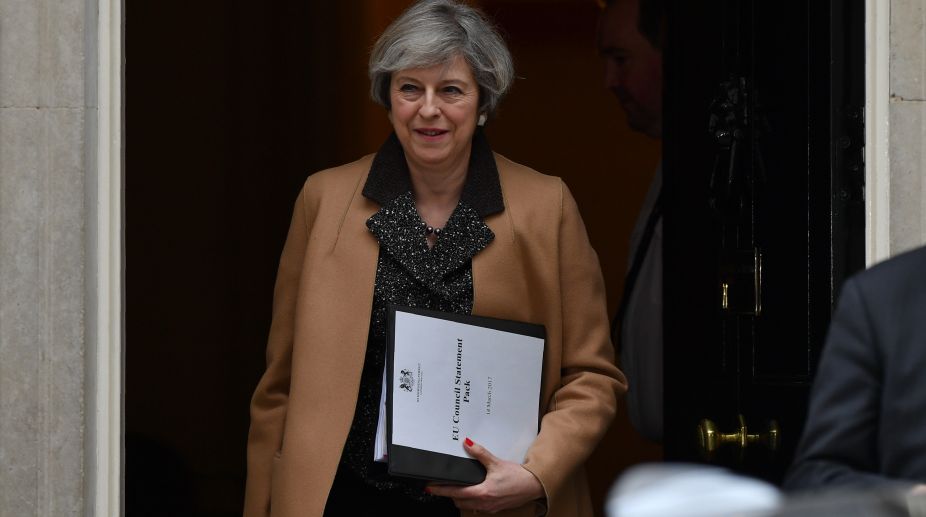
Theresa May has stunned Britain by calling a general election on 8 June, the second in two years and a year after the referendum on the European Union. Brexit has now turned out to be the benchmark of her success or otherwise as the Conservative Prime Minister of Britain. Her entry into 10 Downing Street was fortuitous in itself, and her tenure since last July has been rocked by a singular issue. It is pretty obvious that the decision to call a snap general election stems from her anxiety to secure a convincing parliamentary majority before the full consequences of Brexit become clear to voters.

The campaign between now and the first week of June and still more important the result will almost certainly have far-reaching consequences not just for the government’s policies over the next five years, but for Brexit, for the Labour party and for the union with Scotland too. Ms May’s call for another election is almost a renewal of the mandate post the referendum on 23 June last year. On Wednesday, she won the House of Commons approval for another general election with an overwhelming margin ~ 522 in favour and 13 against.

The legislative sanction for another election lends more power to her elbow. Over the past year, the process towards Brexit has lunged from one uncertainty to another, not least the resignation of Britain’s envoy to the EU and the conditions set by the Supreme Court, chiefly the concurrence of the Lords. Ergo, the renewed tryst with democracy on 8 June is essentially intended to be a renewal of the mandate on Brexit. Every vote for the Conservatives makes it harder “to stop me getting the job done”, she said. Every vote “will make me stronger” in the Brexit negotiations. The two-third majority empowers her to call an election within the Fixed Term Parliamentary Act.

For all the expressions of profound optimism, the sudden development in Britain has thrown up constitutional questions. The Prime Minister has called an election that the country does not need. Not that there has been a surge in the prospects of Labour or the LibDems since two summers ago when they were trounced by the Tories. Labour has clearly acquiesced in the decision, almost impervious to the Conservative strategy or to its potential impact.

Ignored amidst the nation’s obsessive concern with Brexit and the Tory handling of the negotiations, two profound constitutional issues have been overshadowed ~ the desirability of fixed-term Parliaments and of stopping Prime Ministers from calling what many regard as opportunist elections. From the referendum to a surprise election, Ms May has betrayed a touching faith in the people ~ “It is time to put our fate in the hands of the people and let the people decide.” They will once again in another seven weeks.

Justice levels

Editorial | New Delhi |

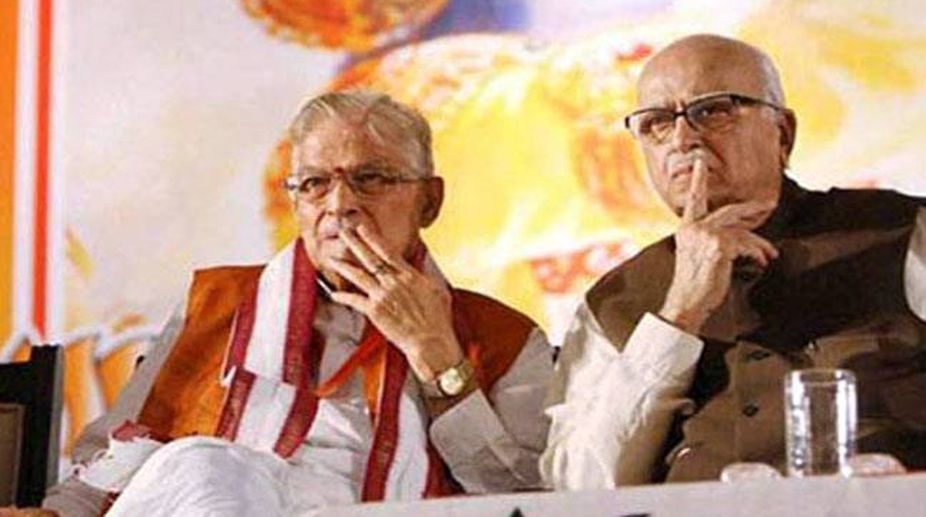
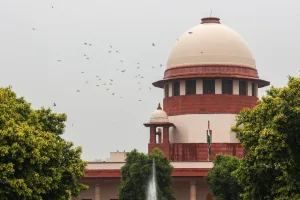
The attempt to extract political mileage was ephemeral. Whatever the advocates of the BJP-led government sought to project following a British court’s initiating extradition action against Vijay Mallya soon dissipated into irrelevance when the Indian apex court resurrected the conspiracy charges against top BJP leaders for the vandalism at the Babari Masjid 25 years ago. It is a national shame both ways: criminal action against a fugitive from justice becoming a political football, and the self-inflicted own goal the BJP scored when dragging religion into politics. Both cases are far from nearing judicial conclusion, but it would be fair to conclude that the revival of the case against LK Advani, Murli Manohar Joshi, Uma Bharati and others is potentially more damaging than the dethroning of the self-styled ‘king of good times’. For while the latter might deter crooked businessmen from swindling public money, the former indicts the calculated infusion of religion into politics ~ provided that at least one set of politicians find their conscience pricked by the strong words used by their Lordships PC Ghose and Rohinton Nariman.

“This court has the power, nay the duty, to do complete justice in a case when found necessary. In the present case, crimes which shake the secular fabric of the Constitution of India have allegedly been committed 25 years ago,” they said, proceeding to prescribe stringent guidelines for the trial process. Not surprisingly, the BJP sought to put on a brave front, Uma Bharati openly declaring she was prepared to be hanged, but deep down it must know that public opinion is slowly building up ~ despite election verdicts suggesting otherwise ~ against its Hindutva politicking, of which the razing of the “disputed structure” at Ayodhya was a visible first step.

As of now there appears to be no “threat” to Uma’ continuing in ministerial office nor Kalyan Singh’s occupation of the Raj Bhawan in Jaipur, but even by Modi-Shah standards it would be brazen for Advani and Joshi to be “pushed” for the high constitutional positions falling vacant a few months hence ~ well before the deadline the Supreme Court has set for concluding the trial in Ayodhya. It might appear ridiculous and humorous for Lalu Prasad to aver that Modi “activated” the CBI to ensure that Advani and Joshi remained out to pasture, but such is the degree of intrigue in contemporary politics that nothing can be ruled out.

What can be ruled “in” is that despite what Arun Jaitley may have achieved on a recent visit to the UK, it would be quite a complicated process to “bring Mallya back”. A common message sent out by the men in black robes is that neither religion nor criminality must determine the course of political activity. Is India “listening”?

Rolls-Royce opens defence engineering centre at Bengaluru

IANS |

British engine major Rolls-Royce on Thursday opened a defence Service Delivery Centre (SDC) to offer localised engineering support to Indian forces, said a company statement.

According to the statement, the SDC will offer localised engineering support to improve frontline capability of the Indian Air Force (IAF) and the Indian Navy (IN) aircraft, and of the Hindustan Aeronautics Ltd (HAL).

"The aim is to deliver the optimum support possible to over 750 aircraft engines which power the Indian armed forces," Rolls-Royce said.

The SDC, co-located with the Rolls-Royce Engineering Centre, will also have the capability to support new engine fleets.

The centre was inaugurated by Dominic McAllister, British Deputy High Commissioner, Bengaluru. Rolls-Royce's President for Indian and South Asia Kishore Jayaraman and Lee Doherty, Senior Vice President – Defence, Asia Pacific, were also present on the occasion.

In his address, Lee Doherty said: "The opening of our first Service Delivery Centre in India demonstrates our commitment to be closer to our customers… With a highly skilled team, fully trained in engineering services, supply chain and operational support, we will continue to provide maximum engine readiness and availability."

Calling it a "new chapter" in the relationship with India, Jayaraman said: "The opening of this Service Delivery Centre marks the beginning of a new chapter in the strong partnership that has existed for over eight decades between India and Rolls-Royce."

"It demonstrates our commitment to support India's growth capabilities by encouraging knowledge transfer, building highly skilled teams and developing the Indian aerospace ecosystem," he added.

The centre will also support HAL through supply chain management with improved in-country support for manufacturing, assembly and test and repair capabilities.

The SDC will also be the base from which field service representatives can be dispatched to frontline bases, subject to contract coverage, to provide on-ground technical support.

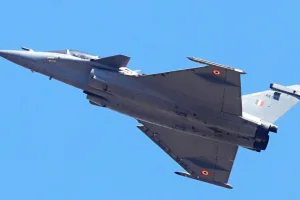
India operates Rolls-Royce's Adour engine, which powers both Hawk Advanced Jet Trainer and Jaguar combat aircraft; Gnome engine, which powers the Sea King helicopters; and the Dart, which powers the Avro aircraft (HS748).

Sheila disappointed with Delhi Congress chief’s style of working

IANS | New Delhi |

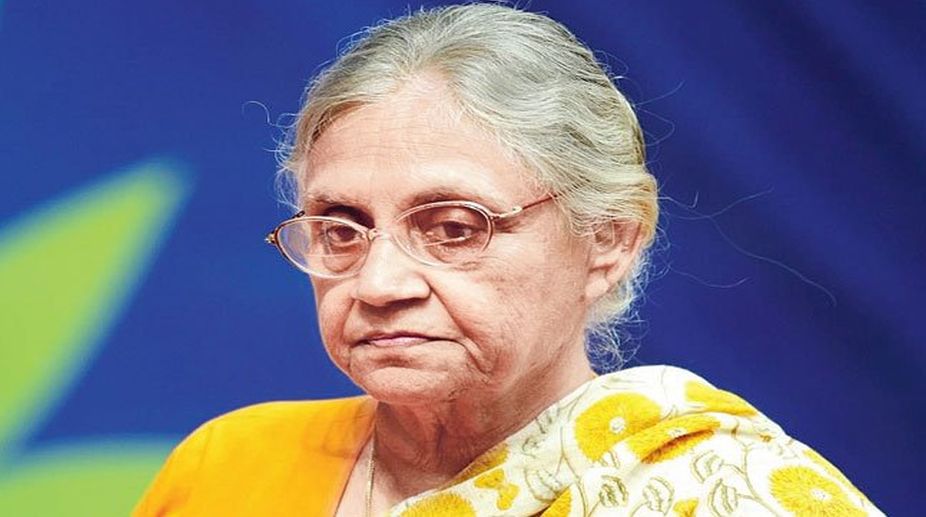
Former Delhi Chief Minister Sheila Dikshit on Thursday hit out at Delhi Congress Chief Ajay Maken, saying she was disappointed with his style of functioning, as he "does not consult and reach out to party workers".

"I am disappointed with Ajay Maken that he does not consult (with anyone), he does not reach out to anybody. In democratic politics, most important thing is reaching out," Dikshit told IANS on being asked why she thought senior leaders in the party were not happy with Delhi Congress chief.

In a setback to the Congress ahead of the April 23 civic polls, former Delhi Congress chief Arvinder Singh Lovely and former Youth Congress leader Amit Malik quit the party and joined the BJP on Tuesday.

Barkha Singh on Thursday quit as the party's women's wing chief in Delhi. She also hit out at Vice President Rahul Gandhi and Ajay Maken.

On being told that if she had campaigned in Delhi for the MCD elections, it would have been better for the Congress, she said: "That's for the party to decide."

Asked if the party had invited her, she replied "No. They could have, that's up to them, if they decide not to, then I don't have anything to say at all. I have never campaigned for MCD elections."

Asked if she was miffed with Delhi Congress' functioning, she said: "I am not angry with the party, I just want the party to be a little more active and a little more inclusive."

Earlier, on April 3, former Delhi legislator Amrish Gautam quit the Congress and joined the BJP, while former Congress Minister A.K. Walia threatened to quit over distribution of party tickets for the April 23 civic polls in Delhi.

"Walia also raised concerns, but he went back on it. Asked if he was quitting, she said: "Not to my knowledge".

Asked about Congress' prospects in MCD elections, she said: "MCD has been ruled by the BJP for the past 10 years. It has been a very absysmal performance. The city is looking dirty and all the things that are responsibility of the municipality has not been fulfilled."

"The AAP also is in trouble because it hasn't impressed the people of Delhi with the work that it has done and the Shunglu Committee report has damaged its reputation very severly. So, under these circumstances the Congress should do well. Congress has a good record of administration," she added.

Vice President to visit Armenia, Poland in October

IANS | New Delhi |

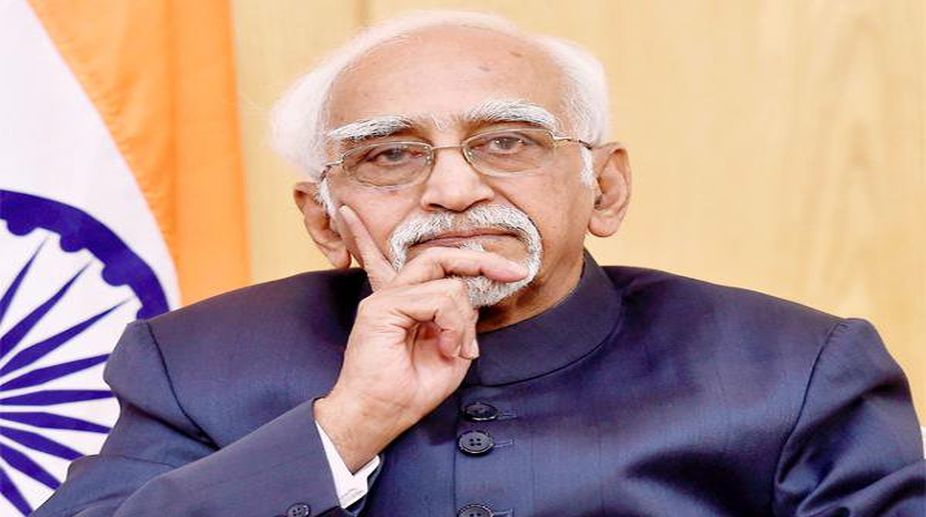
Vice President Hamid Ansari will go on a four-day visit to Armenia and Poland from October 25 to 28, said an official on Thursday.

"He will spend two days, i.e., 25-26 in Yerevan (Armenia), where he will have meetings with the President, the Prime Minister as well as the Foreign Minister," said Preeti Saran, Secretary (East), Ministry of External Affairs.

"In second lap, he will be in Poland. He will reach on 26th evening and spend there the next two days," she said.

During his Poland trip, Ansari will inaugurate a business seminar and deliver a lecture at the University of Warsaw.

He will also inaugurate Indian embassy chancery-cum-residential complex.

"It is being inaugurated at the 60th anniversary of establishment of our embassy in Warsaw," the official said.

He will be accompanied by his wife Salma Ansari and a multi-party delegation comprising Union Minister of State for Small, Medium and Micro Industries Giriraj Singh as well four MPs — Sitaram Yechury, D.P. Tripathi, Vivek Tankha and Thupstan Chhewang.

This is Ansari's first visit to both Armenia and Poland.

Police probing fake Facebook account of Tripura Governor

IANS | Agartala |

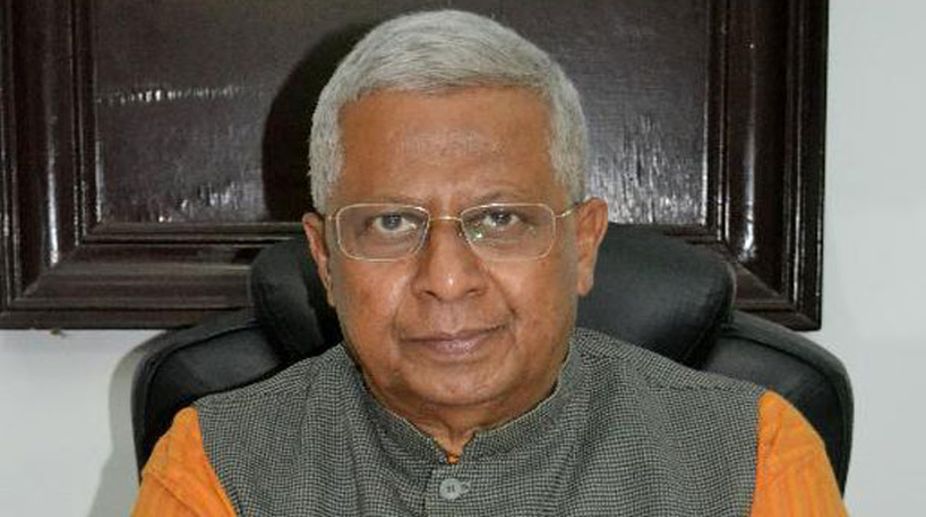
The Tripura Police has launched a probe into the opening of a fake Facebook account in the name of state Governor Tathagata Roy, a police official said here on Thursday.

"Raj Bhavan officials filed a case here with the police on late Wednesday. Police began inquiry under the Information Technology Act in connection with the fake Facebook account in the name of Governor Tathagata Roy," a police official said.

He said: "The Tripura Police has a wing of cyber crime. We believe that we will soon get a breakthrough into the offence."

Police found that many concocted postings were made on the bogus Facebook account urging people to apply for government jobs against payment.

"A Professor of Calcutta University on Wednesday first informed about the fake Facebook account of the Governor. Then the Governor asked the Raj Bhavan officials to file a case in this regard," a Raj Bhavan official said, adding that the Governor was well-conversant with social media platforms.

Earlier in 2014 and 2016, a fake Facebook account was opened in the name of Chief Minister Manik Sarkar.

Committee formed to enhance IGIA’s airside capacity

Statesman News Service | New Delhi |

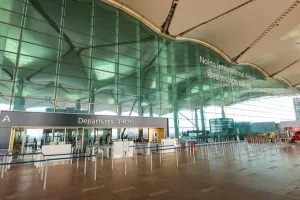
The central government on Thursday said it has constituted a committee which will work out modalities to enhance the airside capacity at the Indira Gandhi International Airport (IGIA) here.

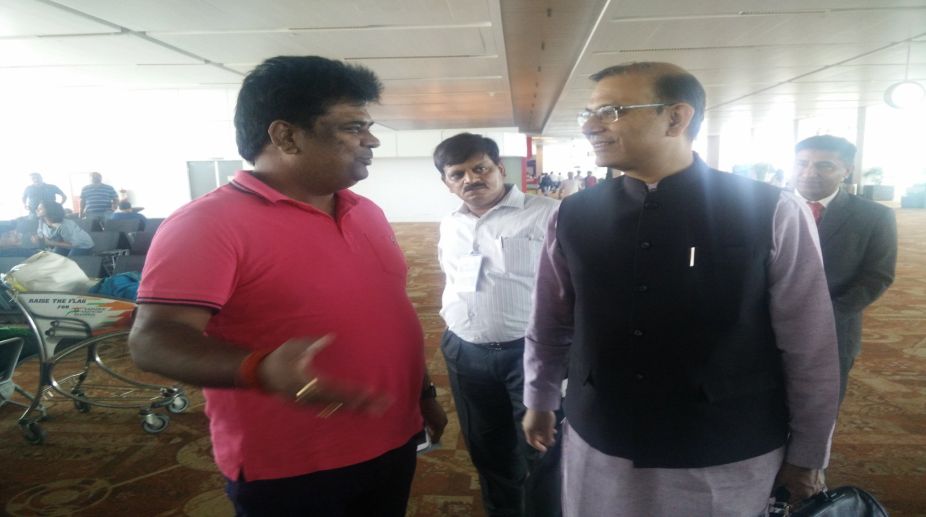
According to Minister of State for Civil Aviation Jayant Sinha, the "Flight Operations Committee" will work out the modalities for the expansion of the airside capacity or the number of air traffic movements.

"The committee will have all the stakeholders. It will meet every month to work out ways in which the capacity can be increased. We are looking at expanding the airside capacity by 10 per cent per schedule," Sinha said.

The ministry envisaged that the committee would facilitate close cooperation among various stakeholders including air traffic control, airlines and airport operator to increase the capacity.

Currently, the peak airside capacity at Delhi's IGI airport, which has three functional runways, stands at 67 movements per hour.

The minister pointed out that capacity is being planned to be increased from the current 67 to 95 movements per hour at peak time in the next three years.

The capacity is expected to rise by 10 per cent to around 72 to 73 movements per hour by the end of 2017.

Sinha elaborated that with the increase in airside capacity, it is expected that the passenger movement at the IGI airport would also rise from the current 60 million to about 90 million annually.

On the expansion of terminal passenger handling capacity, the minister disclosed plans to shift operations from Terminal 1 to Terminal 2, after which capacity at Terminal 1 will be expanded. The plans also includes construction of a Terminal 4.

Besides, the ministry will soon come out with a new master plan for expansion of airside and terminal capacity at the airport.

IPL 2017: Jos Buttler’s T20-best knock helps Mumbai continue winning momentum

Buttler's blazing 37-ball 77 were well-decorated by five sixes and seven boundaries.

SNS | New Delhi |

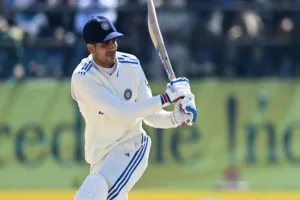
Riding on a swashbuckling knock of 77 runs by Jos Buttler, his highest in T20 cricket, Mumbai Indians outclassed Kings XI Punjab by eight wickets to register their fifth consecutive victory in the ongoing IPL 2017.

Conversely, Hashim Amla's maiden IPL century went in vain as Punjab suffered their fourth defeat on the trot, at the Holkar Stadium in Indore on Thursday.

Chasing a huge target of 199 runs, Mumbai made a swift start as the opening pair of Parthiv Patel (37) and Buttler scored 82 runs in the batting powerplay, highest ever in the cash-rich league.

Buttler's blazing 37-ball 77 were well-decorated by five sixes and seven boundaries.

Orange cap holder Nitish Rana picked the right pulse after the dismissal of Patel and continued the explosive trend. He scored unbeaten 64 runs off 34 balls, completing highest 255 runs from six matches.

Pinch-hitter Hardik Pandya chipped in by hitting 15 runs off just four balls with a six and two boundaries.

Mohit Sharma and Marcus Stoinis were the only successful bowlers in the KXIP camp as they dismissed Buttler and Patel respectively.

Earlier, one of the most underrated players featuring in the season, Hashim Amla proved his worth as he smashed his maiden IPL century to lift KXIP to a mammoth score of 198/4.

The 34-year-old batsman hit six sixes and eight boundaries in his illustrious 60-ball knock.

Mumbai skipper Rohit Sharma's call to bowl first after winning the toss backfired him as besides opener Amla, KXIP captain Glenn Maxwell and Shaun Marsh also contributed 40 and 26 runs respectively to help Punjab pile a big total.

Pacer Mitchell McClenaghan led Mumbai's bowling attack, claiming two big wickets in the shape of March and Marcus Stoinis (1). 

Krunal Pandya and Jasprit Bumrah chipped in by taking the scalp of Wriddhiman Saha (11) and Maxwell respectively.

Sri Lankan PM to visit India ahead of Modi visit

IANS | New Delhi |

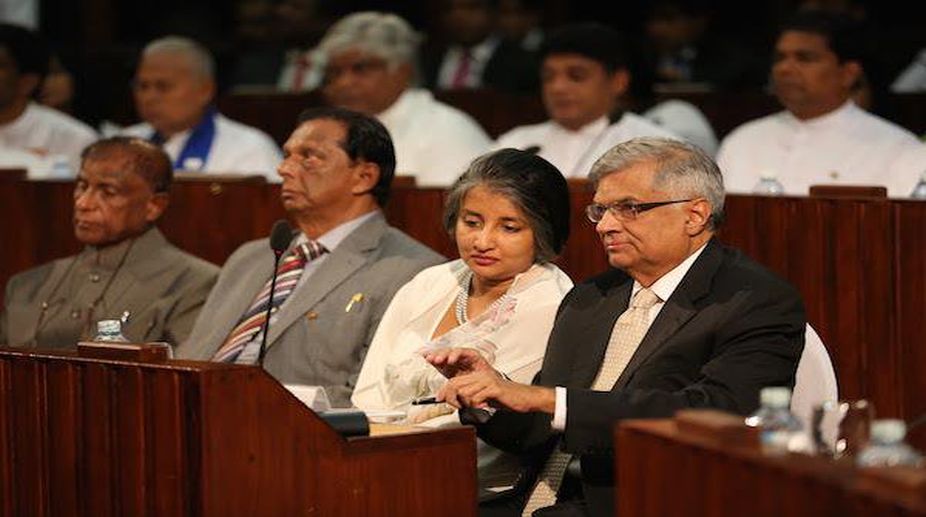
Sri Lankan Prime Minister Ranil Wickremesinghe will be visiting India from April 25-29, ahead of Prime Minister Narendra Modis scheduled visit in the island nation next month for the Vesak Day celebrations.

Modi will inaugurate the 14th United Nations Day of Vesak celebration in Sri Lanka on May 12, an important Buddhist festival.

The Vesak festival would be held from May 12 to 14. The opening ceremony would be held at Bandaranaike Memorial International Conference Hall (BMICH), while the closing ceremony will be held in Kandy.

Several countries have been invited for the UN Day of Vesak celebration in Sri Lanka, which is being held under the theme ‘Buddha's Teachings, Social Justice and Sustainable World Peace.

The celebration are being held in Sri Lanka for the first time in 13 years.

Prime Minister Modi will be hosting a luncheon meeting with Wickremesinghe here on April 26.

External Affairs Minister Sushma Swaraj, Home Minister Rajnath Singh and Minister of Road Transport and Highways and Shipping Nitin Gadkari will call on the Sri Lankan leader.

Last year, Ranil was on on a three-day official visit to India from October 4-6 to attend the opening plenary of the India Economic Summit.

During the visit, both countries are likely to discuss the dispute over fishing activities in the Palk Bay and cooperation in the shipping and port sector.

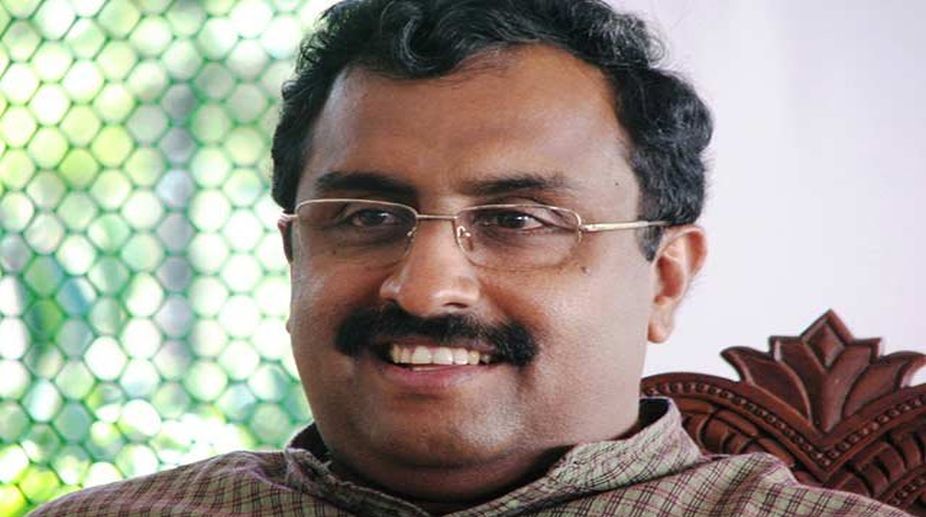
Everything is fair in love and war: Ram Madhav on Kashmir situation

IANS | New Delhi |

The idea of using a Kashmiri man as a human shield against angry stonepelters in Kashmir by a young army officer was the right thing as everything is fair in love and war, BJP National General Secretary Ram Madhav said on Thursday.

"There would have been huge amount of loss of human life. He (Army Major) tried to avoid that… One can try and take a moral position on what he did was right or wrong. In a war and love, everything is fair," Madhav told CNN-News18 in an interview.

"In this particular case, the young Major was left with two options: one was to allow the mob to lynch 50 civilians and closely equal number of security forces personnel there and the other option before him was to indulge in indiscriminate firing. I compliment that Major for not allowing both these things to happen," he said.

Madhav said politicians should refrain from making such reckless comments as made by a BJP minister in Kashmir that bullets were the only way to deal with protesters.

"I disagree with this statement of the minister. Politicians better leave these matters to security forces. They know how to handle the situations," he said.
He said those who talk about human rights were not "lily white" themselves.

"Those who talk about human rights, what they do all over the world is known to everybody. What America is doing, what Russia is doing? Let them stop giving lectures about human rights… We are not bothered about what world thinks about us today," the BJP leader said.

Agreeing that there was definitely a change in the situation in the Valley, which was a concern for all, Madhav said that BJP would have to take its responsibility.

"There is definitely a change in the situation in the Valley. Now we are the ruling party. We cannot go and blame somebody else. We are a ruling party in the state, we are the ruling party at the Centre. We have to take the responsibility for it and we have to try and improve the situation," he said.

He denied that the BJP's alliance with People's Democratic Party (PDP) had become a liability.

"We are there, we are together with a purpose and our purpose is to provide good governance in the state. Our government of both parties are striving utmost to deliver. Situation is difficult but such situations have been there in the Valley so many times before," Madhav said.

However, he added that the situation was not due to Kashmiris' grievances alone and had an external factor, too.

"Nobody is closing eyes to the grievances of the people. But if you try to tell me that everything that the youngsters are doing in the Valley is because of grievances alone, I disagree with you. There is a large amount of propaganda mainly sponsored by our neighbouring country that is responsible for this kind of raised tempers leading to these situations," he said.

He also said there was no reason to smell a rat in the Assam government's population control policy.

"The government said here is a proposal by which I want my state's population to be contained. Where is the question of Hindu, Muslim, Sikh, Christian, Buddhist? It is applicable to all," he said.

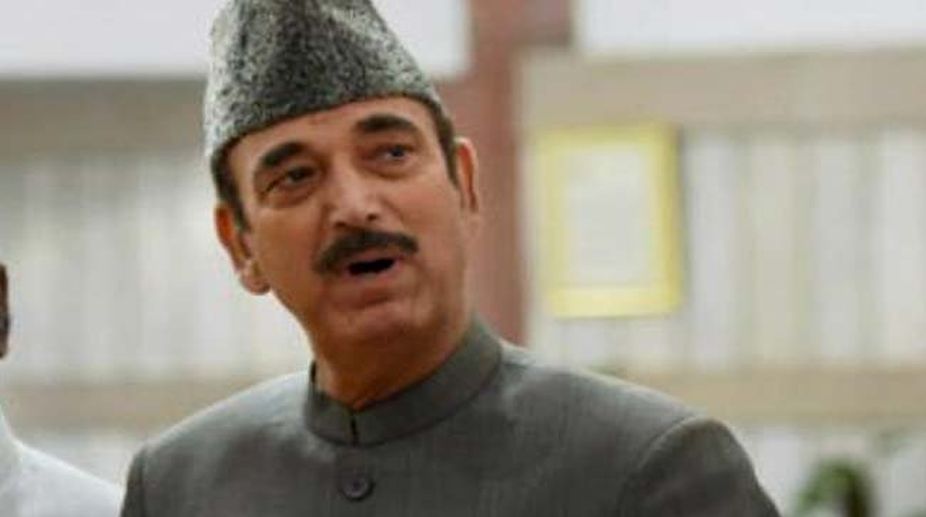
Azad alleges ‘foul play’ behind Doda blaze

Statesman News Service | New Delhi |

The Leader of the Opposition in the Rajya Sabha, Ghulam Nabi Azad on Thursday alleged "foul play" behind the Wednesday night's devastating blaze at Bhatyas in Doda district of Jammu and Kashmir in which about 45 shops had reportedly been gutted.       

Expressing his shock over this incident, the senior Congress leader Azad expressed "serious doubts" about the cause of fire, stressing that this was the second such incident there over the last seven days.

The former J & K chief minister Azad said several fire incidents have occurred in that area in recent days, alleging that there seemed to be a "deep conspiracy" and that "some organisation" was behind these incidents.

"Some powder like inflammable substance was seen at the site of fire. This has given room to suspicion of a foul play. Authorities must look into the causes of repeated fire incidents at this particular site," Azad said.

Urging the J & K administration to provide urgent help and financial assistance to the victims of such devastating fire incidents, Azad also demanded that an "immediate inquiry must be conducted to uncover the mystery of such fire incidents taking place in a particular area."

Noting that the destruction due to the blaze could have been restricted in the affected belt in Doda if proper fire-fighting equipment and facilities had been there, Azad demanded that they should be ensured for areas like Gawari, Bathri, Kahara, Malikpora, Gandoh and Bhatyas in J & K.

No plan to cut back VIP security: Naidu

Statesman News Service | New Delhi |

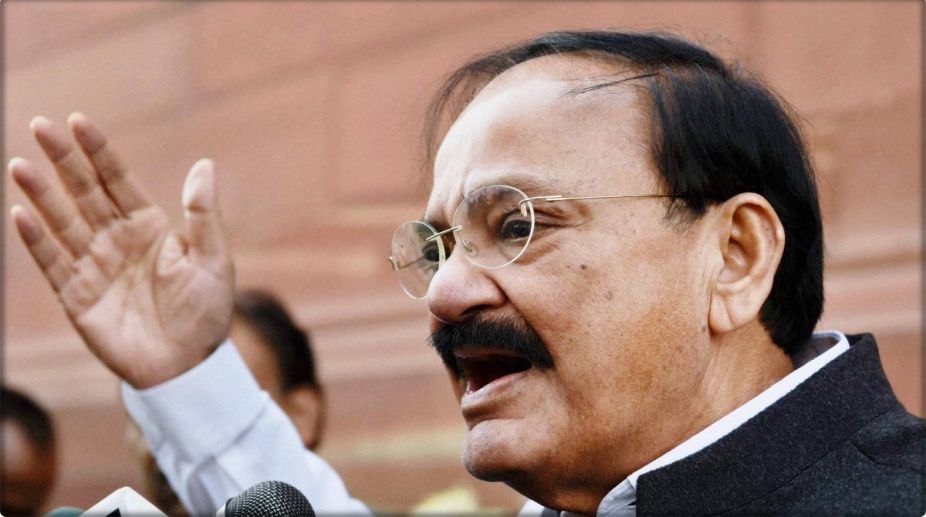
A day after the government announced the decision to do away with red beacon lights for VIP vehicles including that of President, Vice President, Prime Minister, Chief Justice of India, Union ministers, chief ministers and top government officials, Information and Broadcasting Minister M Venkaiah Naidu Thursday said the government has no plans to cut back on security to VIPs.

“With regard to security, it is necessary in the interest of the country because important people have to be protected. Otherwise, there is no preferential treatment,” Naidu told reporters after inaugurating a workshop on Instagram for government employees engaged in social media communications.

About the Centre’s decision to put an end to the VIP culture, he said: “Everybody is a VIP and that is the philosophy of our government.” Though it is a small initiative, it sends a message that every person should be treated equally, he said. Naidu hoped that state governments will also shun the use of beacons or they will face the wrath of the people.

On a query about the Ram Janmabhoomi-Babri Masjid dispute, the minister said the case has been going on for so many years and there is nothing new in that. He did not elaborate on what could be the impact on the BJP of the Supreme Court ruling that senior party leaders will be tried in the Babri Masjid demolition case.

Flight handling at Delhi airport can see 50% increase: Study

Statesman News Service | New Delhi |

The capacity of flight-handling at Delhi Airport can be increased by 50 per cent in the next three years as per studies conducted by NATS, UK's leading provider of air traffic control services. It has said the airport can handle 95 air movements against the present 67 air movements per hour.

With Terminal 1 functioning beyond its capacity at present, the ministry has decided to shift all domestic airlines to Terminal 2 for the time being. In the mean time, Terminal 1 is all set to be reconfigured with the addition of more departure gates. By adding more departure gates, T1 will be able to handle up to 30 million passengers.

Minister of State for Civil Aviation Jayant Sinha said there is a balance between airside capacity and terminal side capacity. “But, terminal side capacity will need to be increased with time as the number of flights increases,” said Sinha. He said NATS is projecting an increase of terminal capacity by 30 million passengers from the current 60 million passengers.

Sinha also said a new terminal, T4, can be constructed and T3 can be expanded. At the same time, a new construction will replace Terminal 2. "T2 may be razed down to construct the new building of Terminal 2 as soon as all the domestic airlines shift again to T1," said Sinha.

A decision has also been taken by the Ministry of Civil Aviation to form a Flight Operations Committee (FOC) which will be headed by the Delhi Airport. FOC will deliberate on addition of slots for flights in each schedule at the Delhi Airport. Sinha said at least 10 per cent more flights is expected in the winter schedule.

Govt to meet LPG connections target before time

Statesman News Service | New Delhi |

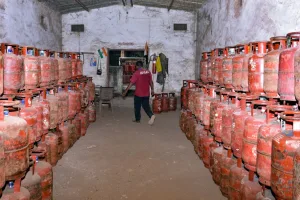
With 3.25 crore new domestic LPG connections released in 2016-17, the government is likely to meet its target of 5 crore new LPG connections a year before schedule.

Prime Minister Narendra Modi had launched his ambitious PM Ujjawala Yojana (PMUJ) in May 2016 to give five crore LPG connections to BPL families, preferably women, in three years.

Within 100 days of its launch nearly 50 lakh connections were issued in rural areas and the number crossed two crore by the end of this fiscal year. “Initially the target to issue 5 crore connections in three years appeared hard to achieve, but if the momentum continues, government is likely to meet its target well before time ~ maybe a year ahead its target,” said a senior officer of the Petroleum Ministry.

The release of 3.25 crore new LPG connections in a year is the highest ever and it has increased the national LPG coverage to nearly 78.8 %. At present, there are over 19.88 crore active consumers. As per PMUY scheme, a woman member of a BPL family would be given support of Rs 1600 for an LPG connection. Centre has allocated Rs 8000 towards implementation of the scheme.