Logo

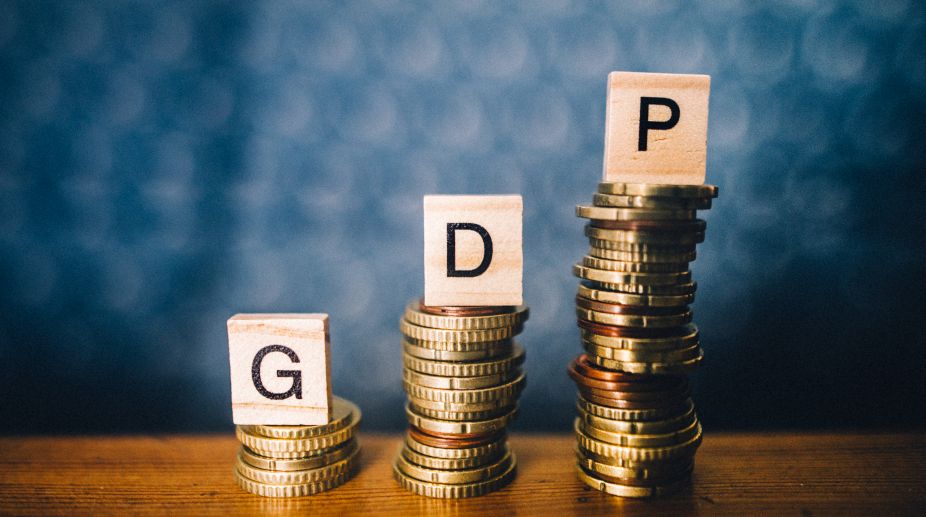
India Inc expects 2017-18 GDP growth to be above 6.5%

IANS | New Delhi |

India Inc expects the country’s 2017-18 economic growth to be above the 6.5 per cent-mark due to a favourable base effect.

Its reactions came after the estimate of national income for 2017-18, released by the Central Statistics Office (CSO), showed that implementation of GST and subsequent slowdown in the manufacturing sector was expected to drag down the country’s growth rate to 6.5 per cent from 7.1 per cent achieved in 2016-17.

“While this gives the impression of a downturn, in reality, growth has bottomed out in the first quarter of the current year and is now on a recovery. It is possible that this number will be revised up once more data is available for the third and fourth quarter of the year,” said CII Director General Chandrajit Banerjee.

“It is heartening that gross fixed capital formation is on a recovery path, as a turnaround in investments is imperative for a sustained recovery to take hold.”

According to Aditi Nayar, Principal Economist at ICRA: “The advance estimates for the full year have been based on limited data, which would be available for a period of 6-9 months for different sectors.

“Therefore, they are not fully factoring in the expected pickup in growth in the later months of FY2018, related to a favourable base effect and a ‘catch up’ following the subdued growth momentum in H1 FY2018.”

“Accordingly, the advance estimates for GDP and GVA growth appear to be understating economic expansion for FY2018, in our view.”

The data disclosed that sectors like ‘public administration, defence and other services’, ‘Trade, hotels, transport, communication and services related to broadcasting’, ‘electricity, gas, water supply and other utility services’ and ‘financial, real estate and professional services’ registered a growth rate of over 7 per cent.

On the other hand, growth in the ‘agriculture, forestry and fishing’, ‘mining and quarrying’, ‘manufacturing’ and ‘construction’ sectors “is estimated to be 2.1 per cent (from 4.9 per cent), 2.9 per cent (from 1.8 per cent), 4.6 per cent (from 7.9 per cent) and 3.6 per cent (from 1.7 per cent)”, respectively.

The CSO used the first seven-month data of 2017-18 to extrapolate figures for the full fiscal.

“Since these estimates are based on data till November 2017, it has not captured the latest up-tick in the vehicle sales and the improvement in the steel and cement sectors; we expect the final numbers to be revised upwards as and when they happen,” said Arun Thukral, Managing Director and CEO, Axis Securities.

“Given the tepid growth estimates from agriculture, it gives us a feeling that the budget 2018 will have a higher focus on agriculture and rural economy. And as the estimates are missing the RBI expectations, the central bank is likely to pause in its next policy meeting in February 2018.”

Anis Chakravarty, Lead Economist, Deloitte, said the estimate for yearly GDP showed that the growth momentum was expected to improve in the coming quarters in line with expectations and signals from leading indicators.

“As such, for a broad based recovery the rural economy needs to recover and we can expect the upcoming budget to focus on alleviating some of the stress in the rural economy and concentrating on measures to augment the flow of credit in the economy,” said Chakravarty.
Numbers prove there is an economic slowdown: P Chidambaram

IANS | New Delhi |

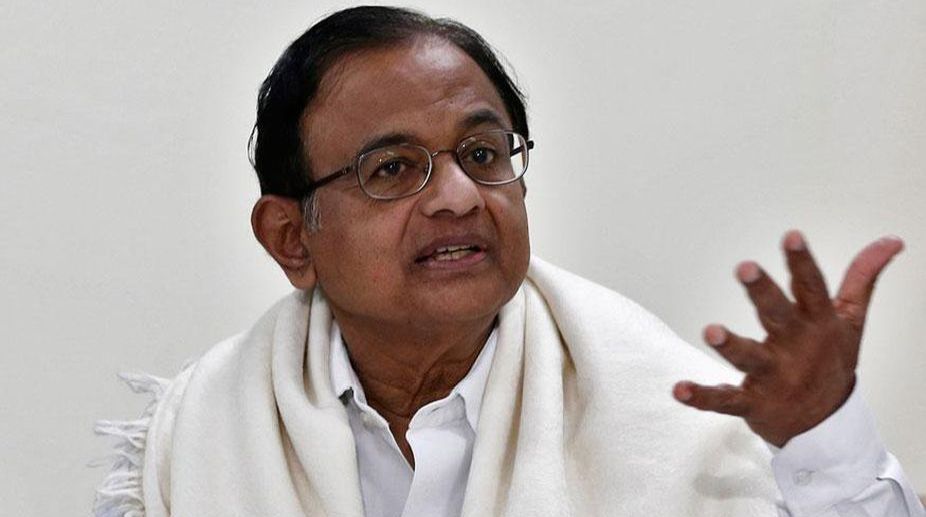
Congress leader P. Chidambaram on Friday targeted the Modi government over the estimated GDP growth of 6.5 per cent in 2017-18, saying the numbers prove there is “a slowdown”.

In a series of tweets, the former Union Finance Minister asked how will the government create “promised two crore jobs” in 2017-18 in a slowdown and asked if it will continue to claim that India’s growth is robust.

“Our fears and warnings have proved true. GDP growth in 2015-16, 2016-17 and 2017-18 (est) is 8.0, 7.1 and 6.5. These numbers prove there is a slowdown.

“Will government continue to claim that India’s growth rate is robust? In a slowdown, how will jobs be created? And how will the promised 2 crore jobs per year be created?”

The former Finance Minister hoped the government will bend to do solid work instead of making tall claims.

“It is time government stops making tall claims and bends down to do solid work,” he said.

The official data showed on Friday that implementation of Goods and Services Tax and subsequent slowdown in the manufacturing sector is expected to drag down India’s growth to 6.5 per cent in 2017-18.

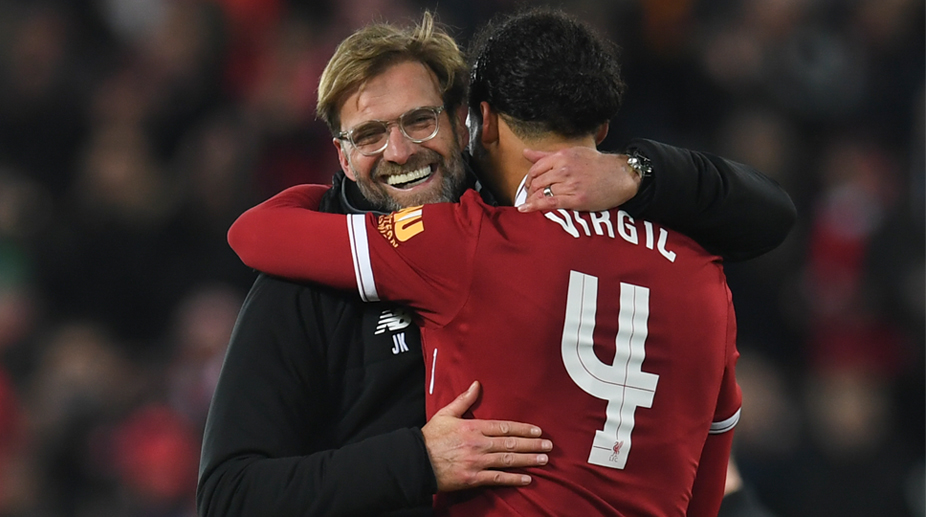
FA Cup: Debutant Virgil van Dijk settles 230th Merseyside Derby as Liverpool progress

The Reds join arch-rivals Manchester United in the fourth round of the FA Cup!

SNS | New Delhi |

Liverpool centre-back Virgil van Dijk had a debut to remember as the £75 million-signing headed in a 83rd minute winner to ensure the Reds beat Merseyside rivals Everton 2-1 in their FA Cup third round tie at Anfield on Friday night.

Gylfi Sigurdsson had scored a classic counter-attack in the 67th-minute to cancel out James Milner’s controversial first-half penalty and as full-time neared, the home fans feared an energy-sapping replay was on the cards.

Must read: Arsene Wenger reacts to Theo Walcott, Pierre-Emerick Aubameyang rumours

Bereft of their two most in-form forwards—Mohamed Salah and Philippe Coutinho— Liverpool dominated the game from the off but lacked that vital cutting edge with Adam Lallana, in particular, looking rusty in attack.

And after van Dijk had missed an easy headed chance, it seemed like a second consecutive draw between the two rivals was imminent, but the Dutchman had other ideas and as Alex Oxlade-Chamberlain swung in a corner with seven minutes remaining, the 6’4 defender rose highest to head home.

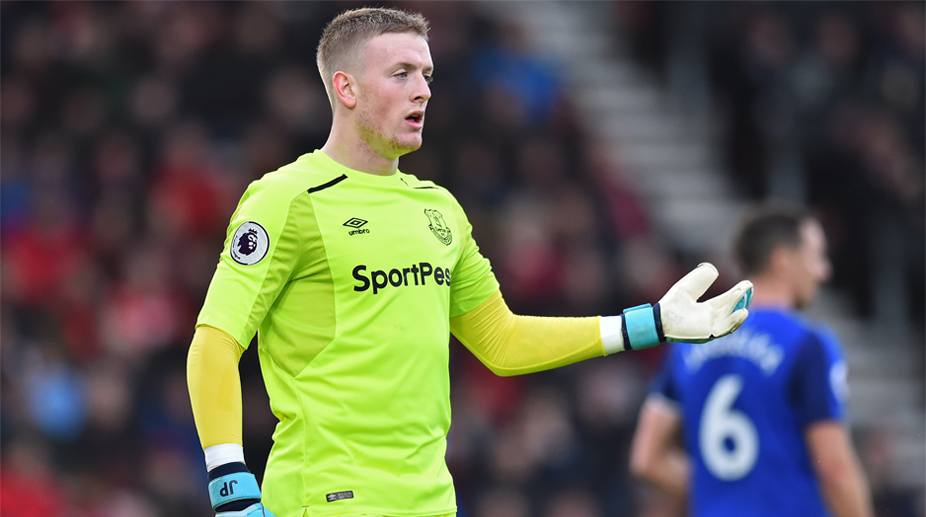
Everton keeper Jordan Pickford, who has been in superb form this season, was culpable of an error, coming out but getting beaten by an opposition player to the ball and the Toffees never truly looked like they would equalise for a second time in the tie.

Don’t miss: Chelsea sign Everton hotshot Ross Barkley for £15m

Liverpool join arch-rivals Manchester United, who edged Derby County 2-0 in the other third round tie be played on Friday night, in the fourth round now.

Earlier, Everton had begun the tie on a bright manner, with Yannick Bolasie causing a few problems for Liverpool on the flank but the Reds would take the lead via contentious circumstances.

Adam Lallana went down in the box after being the subject of close marking by Everton defender Mason Holgate and replays suggested the midfielder had gone down a tad easily.
The redoubtable James Milner stepped up and sent his effort straight down the middle while Pickford dived to his left to open the scoring 10 minutes from half-time.

Must read: Arsenal manager Arsene Wenger banned for 3 games after outburst

Everton had it all to do in the second-half and against the run of play, equalised but their goal had no element of luck towards it. Yannick Bolasie, substitute Ademeloa Lookman and Phil Jagielka of all people, were all involved in the build-up which saw Gylfi Sigurdsson arrive at the right place and right time to stroke home.

Big Sam’s Toffees have lost their last three games (all competitions) on the bounce and will look to pick themselves up as they travel to Tottenham Hotspur on January 13 for a Premier League clash next.

Liverpool have a massive clash with leaders Manchester City to prepare for and Jurgen Klopp’s men will be looking to get revenge for their 5-0 mauling at the hands of the Sky Blues earlier in the season when the sides clash at Anfield on January 14.

Higher education enrolment up

Statesman News Service | New Delhi |

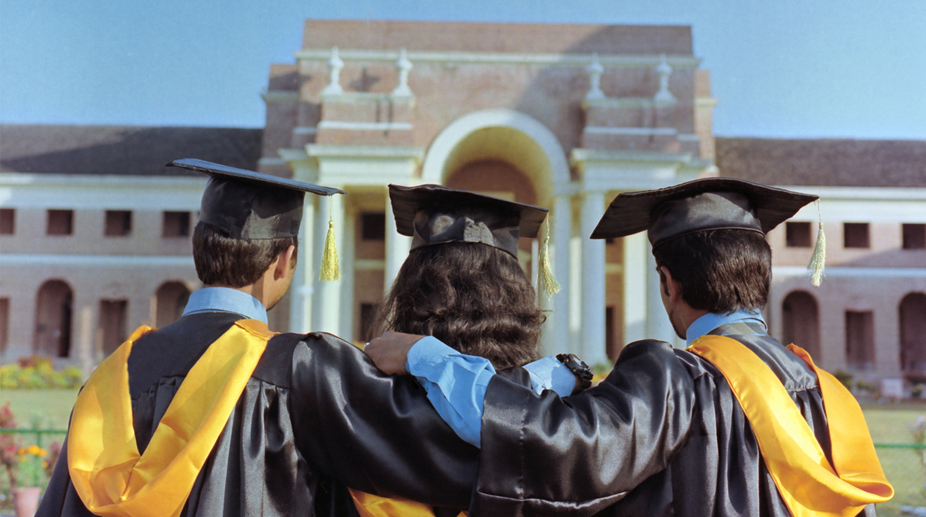
Gross Enrolment Ratio or GER in higher education has registered an increase from 24.5 per cent in 2015-16 to 25.2 per cent in 2016-17, according to the latest edition of the All India Survey of Higher Education (AISHE) launched by Union human resource development (HRD) minister Prakash Javadekar on Friday.

However, GER for Dalits remained less at 21.1 per cent and for tribals it was even lower at 15.4 per cent. GER is a statistical measure for determining the number of students enrolled in undergraduate, postgraduate and research level studies within the country and is expressed as a percentage of the population. It is calculated for those in the age group of 18-23 years.
India aims to attain a GER of 30 per cent by 2020, it’s still much behind many countries, including China.

Tamil Nadu has the highest GER in the country at 46.9 per cent, which is higher than the national average. Bihar’s poor show continues with just 14.9 per cent of its eligible population pursuing higher education.

For those enrolling in regular courses in institutions which are under the Ministry, the Pupil Teacher Ratio is 19. Citing this as a good indication, the report said Pupil Teacher Ratio is more than 50 in Bihar, Delhi and Jharkhand. Female participation in professional courses is lower in comparison to academic courses at both undergraduate and post graduate levels. The gap is higher in enrollment in professional courses in private institutions, it said.

There were 864 universities in the country last year compared to 799 in 2015-16. In Uttar Pradesh and Gujarat, the number of institutes, including central universities and deemed universities among others, is the highest at 72 and 62, respectively.

As has been the case in the past, states in south India have higher college density, which is defined as the number of colleges per lakh eligible population. The college density in the top three states is 49 in Puducherry, 59 in Telangana and 53 in Karnataka.

Bihar, Jharkhand and West Bengal, on the other hand, are at the bottom of the pile with seven, eight and 11 colleges, respectively for every one lakh students in the state.
Although the Ministry is intent on improving the world ranking of its institutions, there is a marginal improvement in the number of foreign students studying in the country from 45,424 in 2015-16 to 47,575 in 2016-17.

Cong names Goutam Basu for Noapara Assembly bypoll

Statesman News Service | Kolkata |

After a humiliating defeat in the Sabang Assembly by-election, a despondent mood prevails in the state Congress as its leadership anounced Goutam Basu as the candidate for Noapara Assembly bypoll.

On the other hand, having already announced their nominees, both Trinamul Congress and CPI-M have started their election campaign.

While the name of Basu, a councillor of Garulia municipality, was doing the rounds for weeks as the Congress nominee, there has not been any official annoucement from Bidhan Bhavan, the state Congress headquarters.

Lack of coordination was palpable in the Congress camp as even after leader of the Oppostion, Abdul Mannan, is learnt to have sent the names of his candidates of preference, he told reporters that he would go by PCC president Adhir Chowdhury’s decision.

The preparation for the election is markedly absent in Congress, even as its political rivals are way ahead in campaigning, a senior leader said. It was up to the PCC chief to take the final call in this matter after the AICC nod, but the delay will adversly affect our efforts to reach out to the voters, he said.

Moreover, the delay has dismayed the party rank and file, a senior leader said. Given the fact that the seat was won by Madhusudan Ghosh last year as a nominee of the Congress-Left Front electoral, the Congress nominee has a tough task ahead in this triangular electoral battle.

With the Front having announced its candidate, the Congress can no longer bank upon the support of some of the voters who supported its nominee last year.

Meanwhile, some senior Congress leaders admitted the party activists in Noapara will not be able to go into election mode as soon as the party nominee is announced.

The delay in naming the party nominee have slackened the organisational structure of Congress in Noapara where the election victory had rejuvented it last year. The delay has denied the party an opportunity to offer its rivals a neck to neck electoral battle.

Mamata’s NRC remark insult to Constitution, SC: Kailash

Statesman News Service | Kolkata |

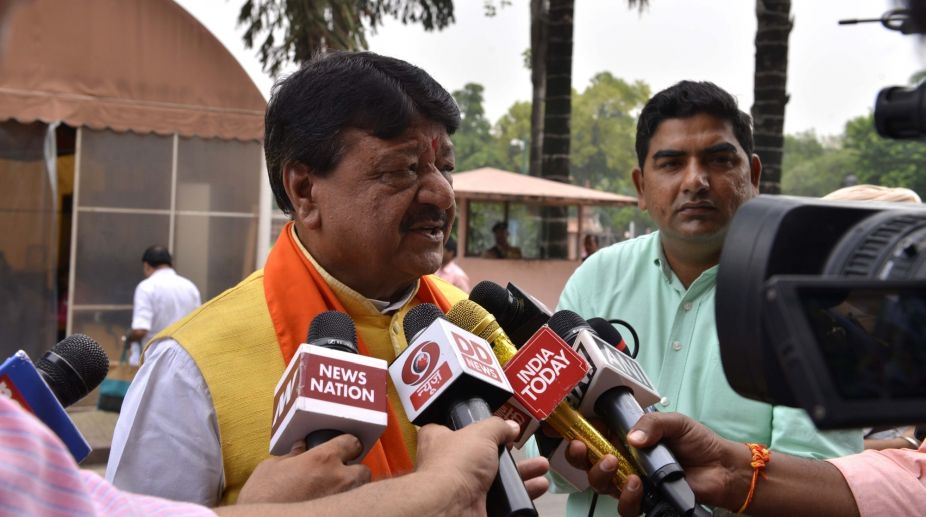
BJP national general secretary and the West Bengal observer Kailash Vijayvargiya today criticized chief minister Mamata Banerjee for her remarks on the updating of the National Register of Citizens in Assam.

Issuing a statement, Mr Vijayvargiya said Miss Banerjee had insulted the Constitution and the Supreme Court with her remarks on the NRC in Assam. Her comment was part of her “sinister political motives”, he said.

“The NRC is being updated in Assam after consultation with all stakeholders, communities, political parties and outfits. Such comments are not only an insult to the Constitution and Supreme Court but also against the spirit of the federal structure of our country,” Vijayvergiya said.

During a public meeting at Ahmedpur on Thursday, Miss banerjee had accused the BJP-led Central government of “hatching a conspiracy” to drive out Bengalis from Assam by excluding their names from the first draft of the NRC, published on the midnight of 31 December.

Mr Vijayvargiya accused Miss Banerjee-led Trinamul Congress of sponsoring cross-border infiltration into the state just to reap “political benefits” out of it.

The NRC of 1951 is being updated in Assam ~ now ruled by its first-ever BJP government ~ under the supervision of the Supreme Court to identify original residents of the state in order to check illegal immigration.

Referring to Miss Banerjee’s continuous protests against various policies of the Narendra Modi government, BJP’s national secretary urged her not to interfere in matters related to other states.
“The Assam government is competent enough to protect its citizens. Bengal CM should concentrate on her own state and stop playing politics on each and every issue,” he said.

The Assam police had on Thursday filed a case against Miss Banerjee on complaints over her claim that the Centre plotted conspiracy to drive Bengalis out of Assam with the state’s NRC that is being updated.

Trinamul secretary general Partha Chatterjee, however, said police cases would not stop the Trinamul supremo from fighting for the cause of the Bengalis. “We are aware of old tricks being played to drive out Bengalis from Assam. If Bengalis face any trouble there then our party will not be a mute spectator,” he said.

The BJP accused Miss Mamata of trying to make an “issue out of an non-issue,” to reap political dividends. The BJP-led government in Assam had condemned chief minister Banerjee’s statement, saying it was “derogatory, insulting to the people of Assam and against the Constitution as well as the spirit of the Supreme Court.

Too many faces for CM post in TN

Statesman News Service | Chennai |

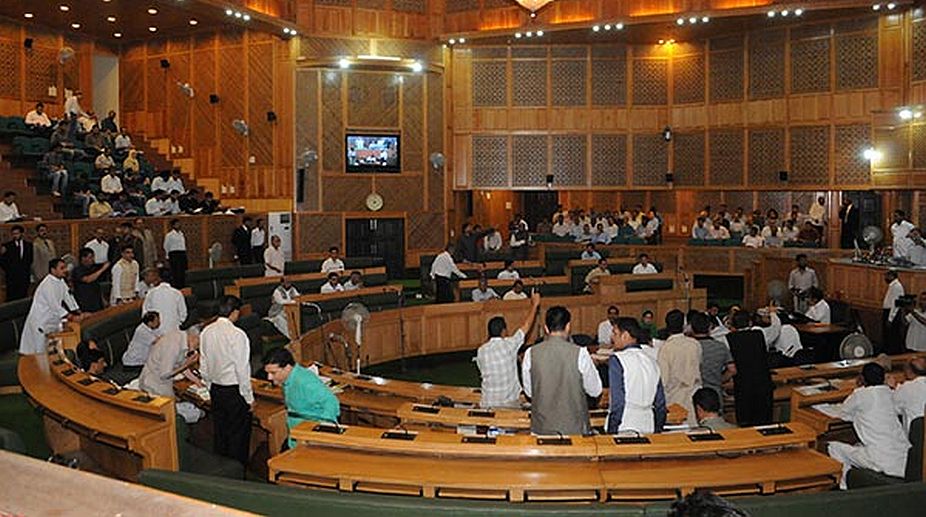
With superstar Rajnikanth already having announced that he will launch a political party and Kamal Haasan hinting at launching one for some time now, Tamil Nadu which already has several prominent chief ministerial aspirants, now have more strong personalities taking the political plunge this New Year, even though Assembly election is more than three years ahead.

Tamil Nadu politics which had moved aroundformer chief ministers late J Jayalalithaa of the AIADMK and M Karunanidhi of the DMK is flooded with almost a dozen of chief ministerial aspirants with matinee idols like Rajnikanth, Kamal Haasan and Vishal plunging into political field.

The AIADMK in its ruling and rebel factions itself has many chief ministerial aspirants that include deputy chief minister O Panneerselvam(former chief minister), Lok Sabha deputy speaker Thambi Durai and also TTV Dinakaran, nephew of the jailed VK Sasikala, former aide to Jayalalithaa. The current chief minister Edapppadi K Palaniswamy cannot think about a lesser profile from now onwards.

Though party’s working president M K Stalin is an almost sure contender if DMK came to power in the next election, he has a series of hurdles to cross from within the family.

Following the acquittal of Kanimozhi and A Raja of all charges in the 2G Spectrum case, there has been demand from Rajathi Ammal that her daughter be elevated to a prime position in the DMK on account of the hardships faced by her.

M K Alagiri, the Madurai based son of Karunanidhi, will always be a threat to Stalin’s candidature considering the fact that DMK has not won any election without the cooperation of Alagiri who wields considerable influence in southern Tamil Nadu.

Another aspirant Anbumani Ramadoss, son of S Ramadoss, the founder of PMK, was projected as the party’s chief ministerial candidate during the 2016 Assembly election. But the PMK could not win even a single seat including Ambumani’s.

DMDK leader and former matinee idol Vijayakanth was the chief ministerial candidate of the People’s Welfare Front, a third alternative formed by VCK, the Lefts, the MDMK and the TMC, which is a non entity now. Not only that Vijayakanth forfeited his security in the Virudachalam constituency while the PWF failed to win in any of the 234 seats it contested.

While political observers have scoffed at the political plans of Rajinikanth, they are yet to make any remarks on the political dreams of Kamal Haassan.

There are strong doubts about the stability of the Edappady Palaniswamy government because of the internal fights in the AIADMK. The 2018 session of the legislature begins on Monday and the ruling party has just 111 MLAs in their kitty in the house which has an effective strength of 234.

If the Madras High Court which is hearing the batch of petitions filed by the 18 AIADMK MLAs disqualified by the Speaker (for their representation to the then Governor Vidhyasagar Rao withdrawing support to Palaniswamy), the government may lose majority in the House. Then the voters have abundant choices, including several matinee idols.

Delhi to host first-ever Parl conference of PIOs

Statesman News Service | New Delhi |

India will host the first-ever conference of serving Members of Parliaments and mayors of Indian origin from across the globe on 9 January to further strengthen its diaspora connect.
Prime Minister Narendra Modi will inaugurate ‘‘PIO Parliamentarians’ Conference’’ on the day earmarked to celebrate the return of the most respected Pravasi Bharatiya ~ Mahatma Gandhi to India from South Africa in 1915.

As many as 141 PIO lawmakers and mayors of 23 countries will participate in the conference, where representatives from each country will share their experience and expectations of the
India connect, senior officials of the External Affairs Ministry said at a media briefing on Friday.

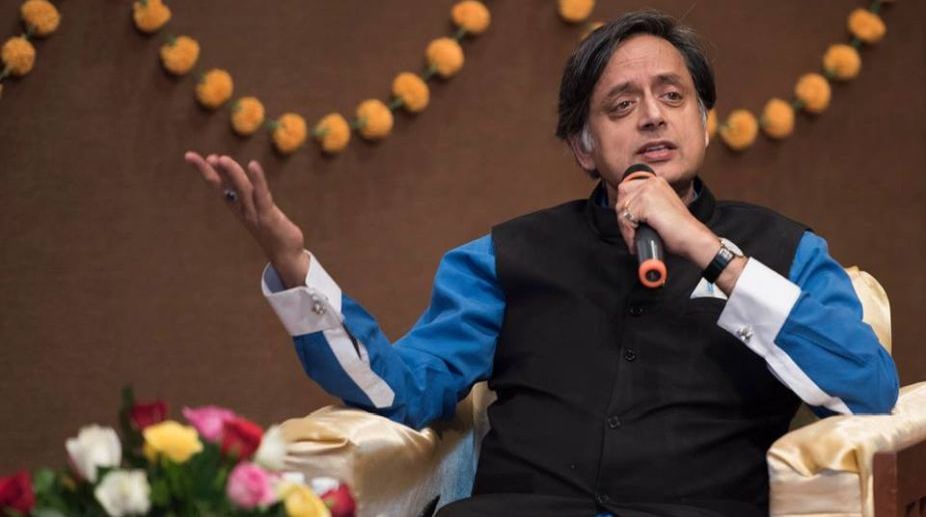
The first thematic session will focus on ‘PIO parliamentarians ~ journey of struggle to Parliament’ with former minister of state for external affairs Shashi Tharoor as special guest.

The second session will be on ‘Resurgent India ~ role of PIO parliamentarians’ with minister for parliamentary affairs Ananth Kumar as special guest.

Vice-President Venkaiah Naidu will address the valedictory session while Sushma Swaraj will host dinner for delegates.

“In the long term we will see how this diaspora family could contribute to furthering bilateral relations and people to people ties,” said Dnyaneshwar Mulay, secretary, Consular Passport
Visa and Overseas Indian Affairs.

Guyana with 20 MPs and 3 mayors will have the largest representation, followed by Trinidad and Tobago with 16 MPs and 4 mayors. Fifteen lawmakers and one PIO mayor from UK and 5 MPs from Canada will also attend the conference.

Parl panel for resumption of Indo-Pak talks

Statesman News Service | New Delhi |

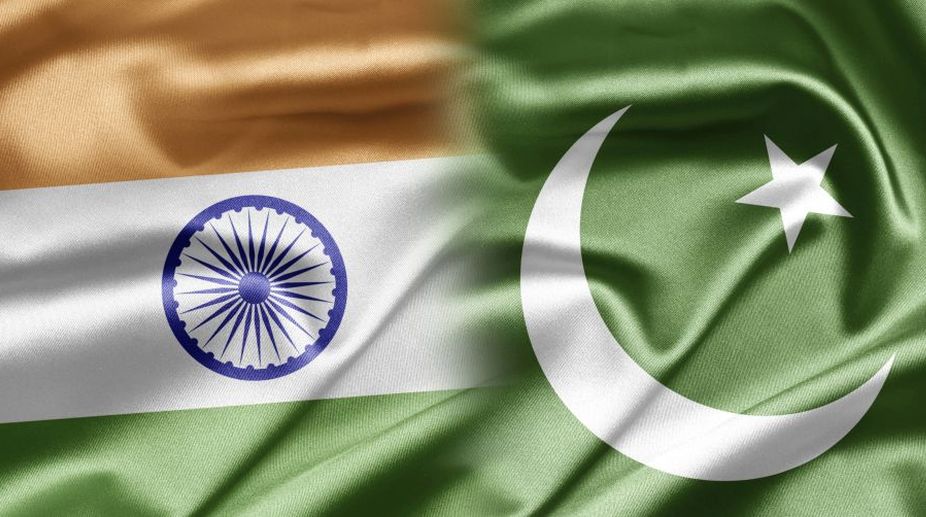
The Parliamentary Committee on External Affairs has favoured the revival of dialogue between India and Pakistan keeping in view bilateral ties in their entirety and geo-political realities.
“Four wars, multiple crises, mutual distrust and hostility have marred the relationship between India and Pakistan. Despite the geographical contiguity, historical linkages and cultural bonds, differences have always prevailed over similarities, making durable peace a distant dream,” the committee, headed by Congress MP and former minister of state for external affairs Shashi Tharoor, said in its 19th report on ‘Indo-Pak Relations’ tabled in both Houses of Parliament on Friday.

It observed that given the complexity of bilateral relationship, there would invariably be disagreement over the nature and terms of the engagement process. Therefore, it recommended an incremental approach to such a resumption of the dialogue process by starting with less contentious issues. Such an approach could begin with encouraging people-to-people contacts and enhancing bilateral trade.

“It is a fact that by neither publicly accepting nor acting against terrorism emanating from its soil, Pakistan has displayed its unwillingness to create a conducive environment for improving bilateral ties.

However, this should not deter the Government of India from taking steps from its side so that the situation of stalemate does not linger,” it added.
The high-powered panel said Pakistan needed to show intent and conviction to abide by its 2004 commitment of not allowing its territory to be used for anti-India activities.
India should adopt a strategic approach to mount international pressure and influence on Pakistan to act against terrorist organisations operating from its soil, it said.

Baba Ramdev aims at making Patanjali bigger

Statesman News Service | Dehradun |

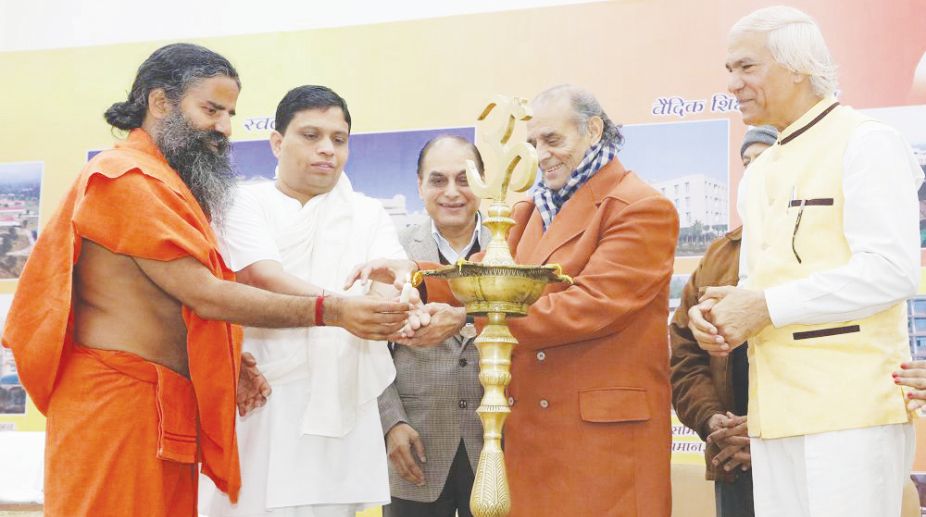
Yoga Guru Baba Ramdev has big plans for the Patanjali Yogpeeth, including developing it as a bigger education centre than Nalanda and Takshshila.

Ramdev also plans to make charitable endowments of Rs 1 lakh crore in the near future. He said his company has contributed about Rs 11,000 crore to charity and aims at making a higher contribution for social welfare and other causes.

Ramdev is working on making Patanjali Yogpeeth a major centre for education. Speaking at the 23rd foundation day of the Yogpeeth at Haridwar on Friday, he said, “In the next 10-15 years Patanjali Yogpeeth will become a bigger education centre than Nalanda and Takshshila, where one lakh students will study. The construction of ‘Vidhya Sankul’ is going on and it will get ready by mid 2018. It can accommodate 10,000 students.”

Ramdev mocked at the 50 food parks which were opened with Central government subsidy. “There is no trace of the 50 food parks, whereas Patanjali Yogpeeth has opened the biggest food park of the world. That’s why Patanjali is rated as the most trusted brand in the FMGC category among 11,000 companies,” he said.

FA Cup: Lineups, team news revealed for Liverpool vs Everton

Liverpool centre-back Virgil van Dijk starts for the first time since his blockbuster move!

SNS | New Delhi |

Liverpool host Merseyside rivals Everton in a FA Cup third round fixture at Anfield on Friday night and their respective managers have revealed the lineups for the mega clash.


Virgil van Dijk, the world’s most expensive defender, starts for the first time since his £75 million pound move earlier in this week and the Dutchman partners Joel Matip in a four-man defence with Joe Gomez and Andy Robertson on the flanks while Loris Karius starts in goal.

Must read: Jurgen Klopp calls on Anfield to act as 12th man in Merseyside Derby

James Milner, Emre Can and Alex Oxlade-Chamberlain feature in the middle of the park behind a front three of Adam Lallana, Sadio Mane and Roberto Firmino.

As expected, the injured duo of Mohamed Salah and Philippe Coutinho miss out, but Liverpool are still the fancied team and are widely tipped to progress.


Everton are trotting out in a 4-3-3 formation, with Jordan Pickford retaining his place between the sticks, behind a back-four of Mason Holgate, Phil Jagielka, Jonjoe Kenny and Cuco Martina.

Wayne Rooney starts in midfield alongside Morgan Schneiderlin and James McCarthy while Yannick Bolasie, Gylfi Sigurdsson and Dominic Calvert-Lewin start up top for Sam Allardyce’s men.

Don’t miss: Chelsea sign Everton hotshot Ross Barkley for £15m

The 230th Merseyside Derby is expected to be a fiery one, with Liverpool looking to blow away their crosstown rivals while the Toffees will seek to clinch a smash and grab by soaking up the pressure and hitting the Reds on the counter.

Also read: Sam Allardyce insists Everton will play for win against Liverpool at Anfield

Liverpool: Karius, Gomez, Matip, Van Dijk, Robertson, Milner, Can, Oxlade-Chamberlain, Lallana, Mane and Firmino.


Everton: Pickford, Kenny, Martina, Holgate, Jagielka (c), Schneiderlin, McCarthy, Rooney, Bolasie, Sigurdsson and Calvert-Lewin.

Match kicks off at 7.55 PM GMT/01.25 AM IST

Kathmandu chaos all over Nepal

Sujeev Shakya |

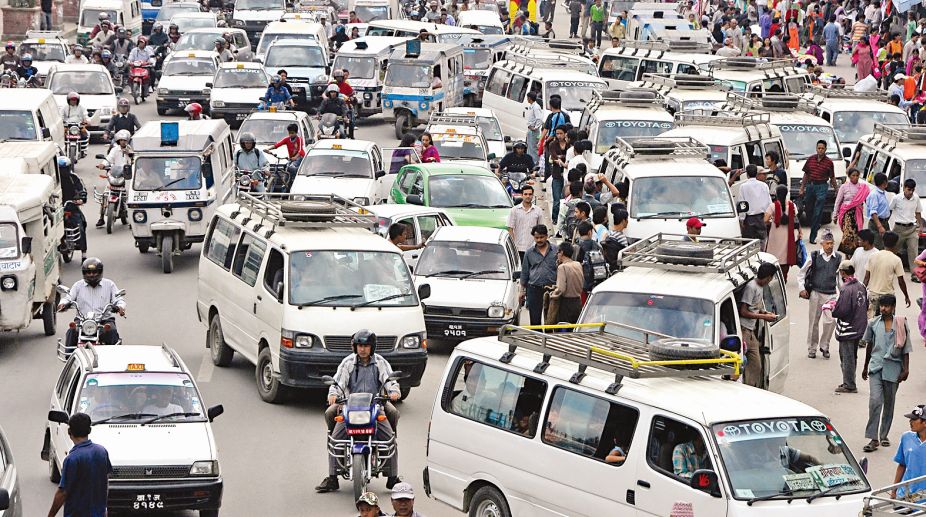
On a whirlwind road trip across many cities in Western Nepal, one can find a lot of similarities with Kathmandu, the capital. Although construction is booming, the roads are dug up without a timeframe for when they will be re-laid, and houses are built in an unplanned manner. It’s as if the road conditions are accepted as long as there is enough space for motorcycles to pass through, never mind ambulances or fire engines.

Ugly hoarding boards jostle with each other; and, if there is anything that unites Nepal visually, it is the presence of massive boards advertising alcoholic beverages everywhere. It is sad to see that people have aspirations to consume and build in the same manner as folks in Kathmandu, even in the most remote of areas. Ugly banquet halls or party palaces, shopping centres that resemble garbage centres from afar, shops occupying most of sidewalks, two-wheelers and four-wheelers parked on the streets in a haphazard manner – it is easy to not react to all these as we can blame politics and politicians for all this chaos.

My colleague Samriddhi Pant, who joined us recently after her studies in Singapore, had some interesting insights to share as we crossed the border from Nepalgunj to Rupaidiha in India. Her thoughts were that Kathmandu resembles a border town in terms of how the shop-fronts and houses are built. We discussed quite a bit on this topic. Yes, perhaps the commonality in how Nepal now looks across cities and towns is that it is just an aggregation of border towns. Historically, in all trading cities, it used to be shop-fronts lined up on the main street or thoroughfare through which travellers, including traders, passed by. With limited roads, the shops and houses ‘on High Street’ commanded a premium. Temples and resting places were built along these routes.
In the 20th century, with automobiles proliferating worldwide, the roads that automobiles could use became the key trading routes. These were routes where vehicles would be parked and travellers would spend a night at roadside inns, eat at the eateries.

The replication of the trading route and border town mindset in Kathmandu is visible in the encroachment of all open spaces, compounded by the lack of sense to have parking lots that can accommodate the rising flow of cars. Traditional Newa architecture, prevalent in the Valley before the days of horse carriage and automobile, did focus on community living and community spaces. However, this was destroyed as everyone wanted to claim every inch of land in a market where land prices continue to skyrocket each year.

Border towns do not believe in open spaces. Everyone is absorbed in the myopia of the moment – with people in transit conducting business with the like-minded in a jostle. Never is it about long-term planning. And this mindset has become contagious. Even in the industrial estates all over Nepal that are basically capturing high value land at low lease rentals, the concept is about just having a row of establishments.

Travelling across Nepal, every municipality or village council seems to find it very easy to build what look like temporary structures on river beds, disputed land and land without papers. The business of just replicating border towns and trading streets has been quite easy, it seems. Far away from the beautiful postcard pictures of the seventies, towns and cities in the past 40 years have started to look alike in their ugliness.

Two of the other common sights in Nepal are the tipper trucks that carry extracted natural resources and ferry them, and the bulldozers that are deployed to extract resources in the name of building roads. River beds are contracted out for low amounts to people who are either politicians turned into business persons or business persons turned into politicians. These contactors then engage in extensive extraction, depleting river beds. Stretches of roads are destroyed by the heavily loaded tippers that enjoy impunity from prosecution by police and other agencies as the cartels that operate the business and transport vehicles have tremendous political clout.

In a country where we are never concerned about the source of our construction materials, these issues never become a point of public discourse. Extensive extraction facilities crated on river beds are creating irreparable damage, but of course, putting up ‘Open Defecation Free Zone’ signage is easier to work on and get engaged with rather than such bigger issues. The world as we know it has been built on natural resources extracted; there is no debate on that. But regulation on extraction methods is something that needs more public discourse as well as policy framework. The proper implementation of the framework drawn is important, too.

In two generations, Nepal, like many other countries, has moved quickly in integrating itself to the ever globalising world, but the key question to ask is whether our sense and sensibilities are also moving forward. Travelling by air, bikes, and cars or in busses, communicating with our gadgets, eating out at eateries and restaurants, shopping in large format stores, watching movies in halls that have best of technologies, attending programmes including concerts etc are all the amenities to have reached the common Nepali – in just the past three decades. However, we are yet to get to learn basic ways to deal with situations.

Comments coming from the Tourism sector single out Chinese and Indian tourists as the most difficult ones to handle. And now, Nepalis are getting on to this list. Money can buy space in hotels and restaurants, tickets to the cinema, mobile phones and recharge cards but one has to invest in good behaviour as well. Otherwise, the identity of a country gets associated with all the things you don’t want it to be associated with. So perhaps 2018 will be a good year to focus on how we improve the sense and sensibilities around simple things like driving or parking etiquette, behaviour at restaurants, hotels, stores and cinema halls and many other daily activities. Surely, we don’t need to sort out the political situation first to achieve this!

‘A turbulent transition state’

Statesman News Service |

As head of The Energy and Resources Institute (TERI) Dr Ajay Mathur exudes energy in more senses than one. Energy is also his area of specialisation.

Mathur, the Director General of TERI, is also a member of the Prime Minister’s Council on Climate Change. In his former role as Director General of the Bureau of Energy Efficiency (BEE), he was responsible for bringing energy efficiency into homes, offices and factories, through initiatives such as the star labelling programme for appliances, the Energy Conservation Building Code, and the Perform, Achieve and Trade programme for energy-intensive industries.

He has been a key Indian climate-change negotiator and was also the Indian spokesperson at the 2015 climate negotiations in Paris. He recently joined the global group of industrial, financial and think-tank leaders to co-chair an Energy Transitions Commission, which will suggest ways for companies and countries to move towards climate-friendly energy futures.

Mathur spoke to ASHA RAMACHANDRAN on the energy issues plaguing India, given the country’s commitment to move towards renewable energy and its commitment at the Paris Climate Change Summit in December 2016. Excerpts:

Q: On the energy front are we moving forward because we often appear to be moving in circles?
A: We are clearly in a turbulent transition state which means we know that change is happening but we don’t know the next challenge. And the next challenge gets thrown at you some day. And that also reflects the feeling that we are working in different directions. The long-term prognosis is that, even today, the newest rates that we have for solar electricity show that it costs less than coal-based electricity at Rs 2.44 per unit. And coal is Rs 3.50.

Q: Then where is the catch?
A: But solar is available only when there is sunshine. And the peak electricity demand we have is at 11 p.m. Therefore, we need to have coal plants. How else will we get electricity at 11 p.m.? But if I start buying electricity from solar during the day, the coal plants operate for a shorter period of time. So the coal electricity becomes expensive. This is the current dilemma. This is not helped by the fact that over the past few years, we have built up more coal-based power plants than we can buy electricity.

The total installed capacity is to the tune of 330 GW. And the highest amount of electricity sold is 165-167 GW. Coal alone is 190 GW. Most of this capacity has been put up in the last few years. Most of these companies have taken bank loans. They can’t sell electricity, they can’t pay back the loans. The bank does not have money to lend. So growth is suffering. So it’s very important that coal sector starts functioning.

Q: How about renewable energy?
A: If we want prices of renewables to continue to drop, we have to continue to make sure that we have newer bids and tenders so that there is a certainty in the renewable industry. So there is clearly a tension at this point of time.
As we move ahead, by 2020-21, coal power plants will be operating at a power plant load factor of 60-65 per cent or so. At that plant load factor they should be able to meet their financial obligations. That is the next challenge.

Once we come there, as far as coal-based electricity is concerned, I have already paid the fixed cost. Now, if I have to buy electricity from them I only have to pay the variable cost, which is less than Rs 1.50. So, it’s better to pay Rs 1.50-2 to get coal electricity instead of paying Rs 2.44 and get solar energy. So, it is important to get the solar electricity price to about Rs 1.50. Then the distribution companies will become indifferent whether they buy electricity from coal plants or solar plants.

Q: What does that mean for the consumer?
A: Demand is still growing in India. The coal power plants that exist ~ 330 GW ~ will start operating at 75-80 per cent plant load factor. Now the company has more electricity and says, should I add more coal or should I add solar. If I’m getting solar at Rs 1.50-2 and coal at about Rs 2 ex-cost, or Rs 1.50 variable cost, I’ll invest in solar energy. So if solar energy is able to reach a price of Rs 1.50 by 2020-25 we will see that additional capacity that is installed would come from solar.

Q: But solar power is available only during the day. What happens at night?
A: The only way to address this is to have a system that stores electricity generated during the day and provides it at night. The cheapest form is hydro pump storage. So, we’ll probably have 8-12 GW of pumped hydro that is available.

Q: After that?
A: Then we will have to go in for something more expensive like batteries. Today, if you set up a system with solar and batteries, the cost is around Rs 11-12 per kilowatt hour. But in the newest bids this is fast coming down to Rs 9. If by 2025, the price of solar goes down to Rs 1.50 and price of batteries goes down from Rs 6 to Rs 3, we’ll have electricity that costs less than Rs 5.
Now we’re in an interesting situation. If I build new coal plants with new environmental norms, I’ll produce electricity at Rs 5. And if I’m able to halve the cost of batteries, I’ll be able to also produce solar electricity at Rs 4.50-5. Therefore, when we set up new plants, the preference will be for solar plus batteries.

Q: Even in climate change negotiations, there is a strong stress on solar power.
A: Yes. But first, it is important that price of solar falls to half of where it is today ~ from Rs 2.40 to Rs 1.50. The price of batteries must fall to half over the next 10 years. If we are able to do that ~ it’s not easy ~ then we may see no more investment in coal plants. Those which are under construction will be constructed but no more new investment.

Quality for all

Rudrashis Datta |

In a workshop on quality education held in March-April 2015 at Busan, South Korea, by the ‘Global Education First Initiative’, under the auspices of the UN Secretary General, a teacher from Argentina recounted her attempt to promote career education in her institution. She said: “In my institution, parents of students came to the classroom once a month to talk to us about their careers. The events brought the community together, and helped provide students with career education which was not imparted systematically to students.” The anecdote was well-received by the stakeholders present not merely because of its innovative nature but because of its potential ability to overcome the challenges of higher education by converting these institutions into community learning and interaction centres.

The challenge to ensure both quality and quantity in higher education is has emerged the world over. Students can contribute to the socio-economic needs of the country once their higher education is formally complete. While there is general unanimity among all stakeholders on the need to improve quality, our educational scenario has three special characteristics which make it difficult to adopt mechanisms on quality that are modelled on developed nations. The first is the inter-relationship of educational levels in the country. We have been following what they call a “chain continuation system” that is strictly followed with a structured primary, secondary and higher secondary system. Any scope of lateral entry to higher education without the mandatory minimum of twelve years of schooling is not allowed as a matter of policy. This quality of higher education therefore rests on the quality of school education. The admission to centres of higher education through compromised schooling standards can render quality control ineffective.

One major reason for the rather indifferent quality of higher education in India is the poor skill attainment during the twelve years of schooling. No wonder the World Conference on Higher Education held in 1998 under the aegis of UNESCO declared under Article 3 that “Higher education institutions must be viewed as, and must also work within themselves to be a part of and encourage, a seamless system starting with early childhood and primary education and continuing through life. The higher education system must work in active partnership with parents, schools, students, socio-economic groups and communities. Secondary education should not only prepare qualified candidates for access to higher education by developing the capacity to learn on a broad basis but also open the way to active life by providing training on a wide range of jobs.”

The second challenge to the quality of higher education is the limited geographical reach of such institutions. While the current concept of “infrastructural augmentation” in the education scenario is limited to an increase in investment on tangible assets, such as classrooms or advanced teaching aids, a holistic assessment of the special requirements of diverse backgrounds of learners is largely neglected. The framing of the curriculum is typically urban-centric, and a large section of learners are forced to compromise academic tastes and interests while attempting to fit into pre-determined higher education modules.

The third challenge is a skewed distribution of manpower to teach and administer higher education institutions, with the best in quality and efficiency limited to the geographical reaches of metro-cities and large urban centres.

Steps have been taken over the past few decades to address these three critical anomalies, but its effectiveness still eludes us. Attempts to overhaul school education through compulsory training of teachers, setting up of model schools in backward districts, enforcing effective evaluation of skill development of school learners through continuous and comprehensive evaluation systems have failed to make the desired impact. The reason is lack of coordination in the framing of policy and implementation by the states and the Centre.

The scrapping of detention as a matter of policy in schools without matching progress in the evaluation of learners have ensured that millions of school children without basic school-level skills have ‘passed’ and entered the higher education institutions. Such students are a drag on the quality of higher education. It is a universally recognised principle that the no-detention system in schools can only work when the evaluation and remedial framework function in tandem with due seriousness and efficiency.

As regards the skewed distribution of quality manpower and infrastructure in higher education, the usual remedy of setting up of such institutions in rural areas has not been effective. This is due to the obvious disconnect between the prospective learners’ background and the urban-centric curriculum framework adopted in such institutions. Learners in remotely situated areas have been forced to adopt learning systems and standards which are removed from their interests, inclination, and sometimes, even ethos. The obvious consequence is a half-hearted participation in the higher education process, resulting in dropouts from higher education institutions and attaining degrees without the desired skill-sets required for effective participation as socio-economically active individuals.
One innovative course to circumvent such disparities is to introduce a nationally admissible choice-based framework that would cater to both core educational subjects as well as specialised academic and vocational areas. This is how Australia, Canada and China could overcome vast disparities in terms of higher education. These countries adopted a choice-based curriculum at the national level a decade back, and the fact that many higher educational institutions there routinely rank among the best reaffirms the viability of choice-based curricula framework in countries with vast diversities in geography, languages, and culture.

An area that is critical to higher education, which our policy-makers still have to grapple with and for which there are no readily available and tested models internationally, is to correct the skewed patronage of general and vocational streams among learners. The 2014 Survey of Higher Education, conducted nationally, points to the fact that nearly 90 per cent of school pass-outs enter the general streams in colleges and a single-digit per cent actually volunteer for vocational and technical education, thereby resulting in a critical shortage of technical manpower and burdening the system with an overwhelming number of general stream graduates with limited and unemployable skill sets. This is unlike most developing and developed countries where the popularity of vocational stream courses far out-run general stream courses in terms of popularity and learner interest.

While we have made some progress in assessment and accreditation of higher education institutions through the objective assessment criteria over the past decade, a review of the funds disbursed to such accredited institutions in accordance with their assessment grades, reveals that a disproportionate amount earmarked for higher education are diverted to institutions with suitable infrastructure. This is reflected in their higher assessment grades, leaving institutions with a challenged infrastructure and poorer assessment grades with little financial support to correct and remedy areas of quality. If quality has to be assured with equity, funds meant for higher education ought to be disbursed to geographically remote and financially challenged institutions.
Neglecting areas which cry out for resource-support would lead to another crisis in higher education that we can well do without, because the international higher education scenario has already evolved an ‘equity of quality’ mechanism from an ‘assurance of quality’ regime in contemporary higher education.

The writer is Assistant Professor in English, Pritilata Waddedar Mahavidyalaya, Nadia in West Bengal.

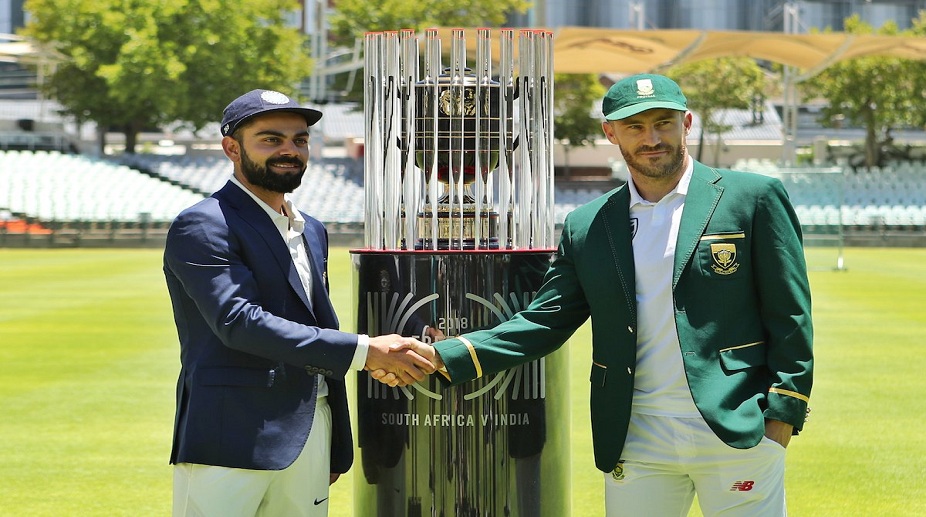
India vs South Africa first Test – Day 1 scoreboard

Following is the scorecard of Day 1 of the first cricket Test between India and South Africa at Newlands here on Friday.

IANS | Cape Town |

Following is the scorecard of Day 1 of the first cricket Test between India and South Africa at Newlands here on Friday.

South Africa (1st Innings):
Dean Elgar c Saha b Bhuvneshwar 0
Aiden Markram lbw b Bhuvneshwar 5
Hashim Amla c Saha b Bhuvneshwar 3
AB de Villiers b Bumrah 65
Faf du Plessis c Saha b Hardik Pandya 62
Quinton de Kock c Saha b Bhuvneshwar 43
Vernon Philander b Shami 23
Keshav Maharaj run out (Ashwin) 35
Kagiso Rabada c Saha b Ashwin 26
Dale Steyn not out 16
Morne Morkel lbw b Ashwin 2
Extras (b 2, lb 3, w 0, nb 1, p 0) 6
Total (all out, in 73.1 Ov) 286

Fall of Wickets: 0-1 (Dean Elgar, 0.3), 7-2 (Aiden Markram, 2.6), 12-3 (Hashim Amla, 4.5), 126-4 (AB de Villiers, 32.6), 142-5 (Faf du Plessis, 35.5), 202-6 (Quinton de Kock, 44.5), 221-7 (Vernon Philander, 50.2), 258-8 (Keshav Maharaj, 62.2), 280-9 (Kagiso Rabada, 69.3), 286-10 (Morne Morkel, 73.1)

Bowling: Bhuvneshwar Kumar 19-4-87-4, Mohammed Shami 16-6-47-1, Jasprit Bumrah 19-1-73-1, Hardik Pandya 12-1-53-1, Ravichandran Ashwin 7.1-1-21-2

India 1st Innings:
Murali Vijay c Elgar b Philander 1
Shikhar Dhawan c & b Steyn 16
Cheteshwar Pujara batting 5
Virat Kohli c de Kock b Morne Morkel 5
Rohit Sharma batting 0
Extras (b 0, lb 1, w 0, nb 0, p 0) 1
Total (in 11 Ov) 28 for 3

Fall of Wickets: 16-1 (Murali Vijay, 4.4), 18-2 (Shikhar Dhawan, 5.2), 27-3 (Virat Kohli, 8.1)

Bowling: Vernon Philander 4-1-13-1, Dale Steyn 4-1-13-1, Morne Morkel 2-2-0-1, Kagiso Rabada 1-0-1-0.

Shabaash Shashi

Editorial |

The “grey matter” was never in doubt, proficiency in language-skills and flourish in delivery exhibited on several occasions in and beyond Parliament, yet in popular perception Shashi Tharoor was often seen as something of a “smart Alec”. That image, probably skewed, has been substantially erased by the role the Lok Sabha member representing Thiruvananthapuram played in putting an end to an unseemly controversy: facilitating a Class XII student to take his “board” examinations, and a Class XI girl to resume her studies. The controversy had arisen when the boy gave the girl what he claimed was a congratulatory hug after a musical performance, but the authorities of St Thomas Central School, Mukkolakkal, interpreted the incident very differently. There was little “innocent” to the gesture they deemed and both students were suspended. Appeals were preferred to the education department, and eventually the issue taken to the High Court. A needless mess and one that raised counter-queries about liberal social norms and the need for maintaining discipline in educational institutions. Matters were likely to snowball into ugly confrontation until Tharoor brokered a settlement at a meeting of the students, their parents and the school management. The victims/culprits will be permitted to pursue their academic interests, the school would hope its discipline-message ~ which was judicially endorsed ~ will have an exemplary deterrent effect.

The incident raises the large question of whether students in higher classes should be required to adhere to “parade-ground” norms of yesteryear. Times are changing and the “divide” between boy and girl students is being obliterated. Yet at what age-level can the revised thinking be deemed “acceptable”: students in many schools come from different social backgrounds and no common yardstick can be easily laid down. What about the impact of less-stringent mores on younger students? The teachers’ community could have an entirely different “take”, it is in the direct firing line when discipline breaks down. Those formulating the national education policy are now required to look far beyond the “three Rs”, their outlook must be progressive rather than regressive ~ inculcating healthy relations between adolescent boys and girls. Their understanding one another might actually have a positive fall-out on eve-teasing, crime against women etc. Tharoor did not seem to have broached those tricky issues, though his liberal outlook is unquestioned. What marks distinct his role in resolving the controversy is that as an MP he used his good offices to address a social problem, and it is unlikely that political dividends will accrue to him. That is the point ~ MPs are not just political entities, they could serve as social leaders too, act as a bridge across the many ills that divide society. An MP could opt to become a father-figure ~ though Tharoor is too young at heart to savour that description.

Missile-buy ‘spiked’

Editorial |

Forgive the relapse, for sentimental reasons, to journalistic jargon of yesteryear: to the days of “hard copy” when an item deemed unworthy of publication was thrust on a metal spike ~ a sign of rejection. Pardon also the pun on the name of the Israeli anti-tank guided missile which India has opted against purchasing although the matter had been progressed to so advanced a stage that initial work had begun at an industrial unit in Hyderabad where the Spike missile was to be domestically produced. Scrapping defence deals is nothing new in India ~ during UPA-rule it had become virtually standard practice as AK Antony had placed higher emphasis on his personal squeaky clean image than military preparedness ~ but the junking of the $ 500 million plan to enhance the efficacy of the Armoured Corps is unique in that no allegations of kickbacks etc have surfaced. Whether buying 131 Barak surface-to-air missiles to protect warships against sea-skimming missiles suffices to compensate the Israeli principal (both Barak and Spike hail from the same stable) is not easy to determine: it hopes to revive the deal during the Israeli prime minister’s upcoming visit. Once again has India’s credibility as a reliable defence “customer” come under the scanner.

At first glance there might be cause for satisfaction, some pride too perhaps, that a less-expensive indigenous anti-tanks missile system is being preferred over the Spike. That argument would have been more convincing had top Army experts articulated such a professional evaluation. In the absence of any such public endorsement a feeling could spread ~ in military circles anyway ~ that once again the interests of the soldier are being sacrificed at the altar of “indigenisation”. The ‘Nag’ series of anti-tank missiles have a poor reputation, the latest version has yet to “sell” itself to the troops. This could be another chapter in the story that takes in the MBT Arjun, INSAS rifle, and some critics would contend the Tejas LCA too. It is an open secret that the state-run defence production units ~ the DRDO, Ordnance Factory Board, HAL etc ~ are very apprehensive over the comparative ease with which new-found economic prosperity makes “got-abroad” military hardware available to the forces, and have been working overtime to boost the prospects of their own products. That is perhaps understandable; what is not acceptable is that the “industry” ~ for long a monopoly catering to a sellers’ market ~ has done little to make itself competitive, in both economic and technological terms. To avoid the soldier feeling short-changed, the Army would do well to have the domestic anti-tank missile evaluated and certified afresh ~ statements from the minister, ministry, scientists and bureaucrats will not suffice. A soldier’s life is too precious to be “spiked”.