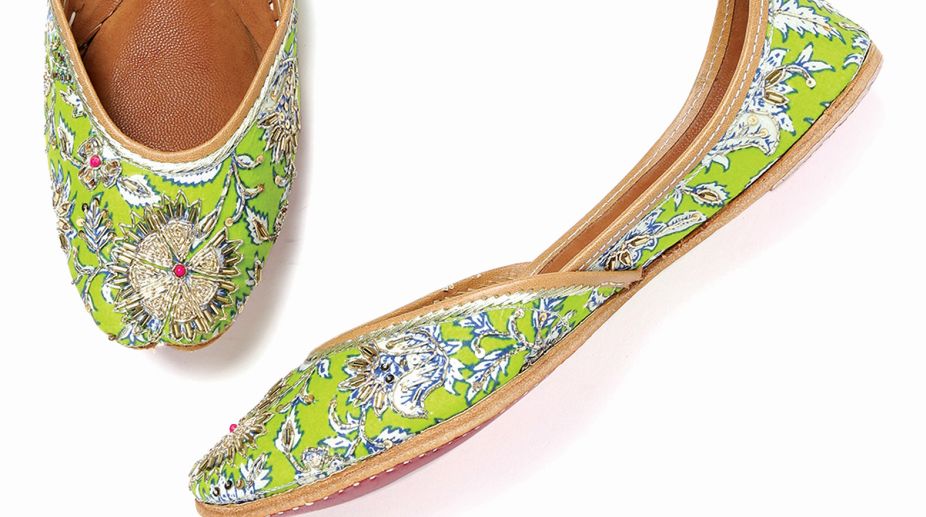
AKS unveiled its latest collection of handcrafted Mojris which are colourful and elegant. Accentuated by the immaculate artisans of Jaipur, these beautifully handcrafted mojris evoke a fine balance in tradition and modernity. These ethnic printed beauties have embroidery, katdana, sequins, mirrors, pom-poms, coins and ghungroos. An exquisite collection of the handcrafted Mojris is up for grabs at price ranges between Rs1799-2999 at www.myntra.com
Colourful and elegant
footwear

Winter collection

Monte Carlo
Monte Carlo launched its winter collection for men, women and twins. It features apparels in bright colours, head turning designs and bold prints for customers looking out for trendy options to keep themselves stylish as well as warm this winter.
The range for men includes jackets, coats, trench coats, tracksuits, socks and Nehru Jackets to classics like sweaters, mufflers and sweatshirts. For women, trendy jackets, coats, sweatshirts, capes, shrugs, ponchos, shawls and stoles are available in bewitching colours. The collection for twins includes sweaters, sweatshirts, jackets, denims and tracksuits in lively prints.
Luxuria, a special premium collection for men and women, has also been unveiled this season. For men, it includes sweaters, jackets, waistcoats and blazers and for women, it has a wide range of cardigans and shrugs.
For beautiful skin

Aveeno Daily Moisturizing Lotion
Aveeno brings a range of body lotions enriched with oats for naturally beautiful skin. Aveeno Daily Moisturizing Lotion for Normal to Dry Skin nourishes the dry skin with significant improvement in two weeks. The lotion comes in 354 ml for Rs 850.
Aveeno Skin Relief Moisturizing Lotion for Extra Dry and Sensitive Skin is fast absorbing and starts to work immediately to nourish and restore essential moisture. Formulated with oat oil and shea butter, this lotion provides moisturisation for 24 hours. It is available in 354 ml for Rs1195. Both the products are clinically proven.



Get gorgeous

MRS IRANI

Q. I am trying to lose weight – about eight kg -but I am finding it difficult although I am eating less and having a low fat diet. Can you please tell me where I am going wrong?
S.K. Basu Jamshedpur
What happens is this – when fat is taken out of food products to make them low fat, they lose a lot of their taste as fat gives flavour. As a result manufacturers add another product to make it taste good and this is usually adding more sugar or salt. Low fat foods never taste as good and do not satisfy our taste buds and as a result you will want to eat something else.

Q. I am in my late sixties and am getting stressed out because I am starting to show signs of ageing. Please inform me what I can do on a daily basis to slow this down. I am desperate. So please reply fast.
Shinjini, Mumbai
There are certain changes you have to make in your lifestyle that will help to some extent. A correct lifestyle is important so start by making changes in your diet. Have soya proteins, green leafy vegetables, fresh and dry fruits. Make sure you get six to seven hours of sleep every night .Yoga and aerobic exercises will certainly help by increasing skin circulation and also the body’s immunity system.

Q. I am 42 years old lady and now my nails are getting softer and breaking easily. What to do about this problem?
Shanta Singh, Kolkata
It would be due to lack of calcium .So do increase the amount of this mineral in your diet – have more milk and milk products. Also give your nails an oil massage at night. Soak your nails in any pure oil that has been warmed – for about 10 minutes. Then with a piece of cotton wool dap away the excess oil around the ages of the nail. Leave on all night. Applying a nail hardner regularly on the nails will help prevent them from breaking easily.


Marvels on the road
These are machines that excel not only in comfort, luxury and safety, but also in performance. Here are three cars that ‘new age’ CEOs would love to drive.
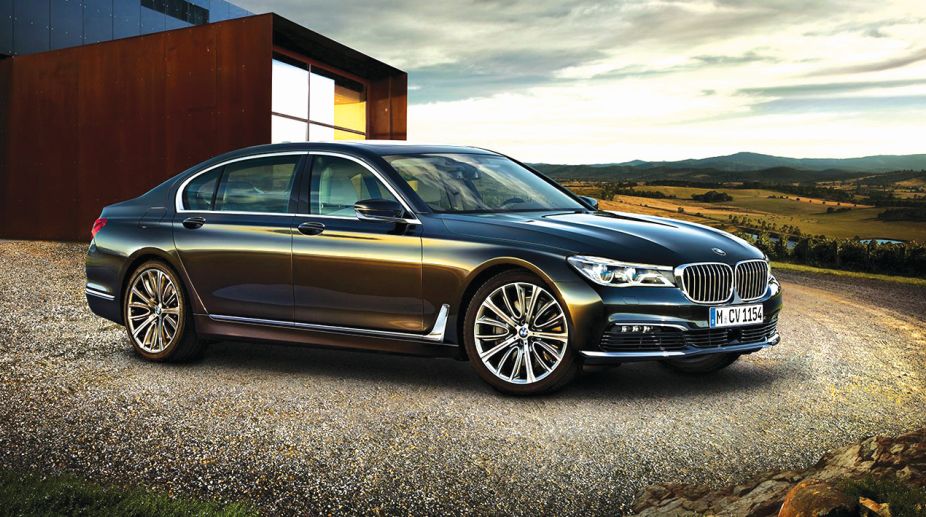
IT firm gifts employees BMW cars
Think of a CEO and the first image that comes to mind is of a sharply dressed, grey-haired, man who is chauffeured around in a luxury limo, right? Well, you won’t be too wrong if you’re imagining a business magnet from the 90s or earlier. Things have drastically changed in the past few years, thanks to the tech revolution – the advent of internet age and the e-commerce boom in particular. Small and young startups blowing up in valuations to overtake century-old multinationals don’t surprise anyone anymore.
Understandably, all this has brought down the average age of CEOs, top business owners and successful entrepreneurs by a big margin. Just to give you an idea, there are 56 billionaires in the world right now who are aged below 40. Now, you won’t expect these young guns, those with a taste for fast cars, to be stuck at the backseats all the time. They would rather want themselves behind the wheel of an exciting driver-focused car. Machines that not only in excel in comfort, luxury and safety but also in performance. Here’s our list of three such cars we think CEOs would love to drive:

BMW 7 Series
First on our list is BMW’s flagship full-size luxury car, and to which you might say: “but, a lot of CEOs already use the 7 Series, so why specially talk about it.” Well, this list is about cars CEO’s will love to drive and not be chauffeured around in, and the new BMW 7 Series is as much a brilliant driver’s car as it is an uncompromised luxury limo. The sixth-generation 7 Series, when it entered into production in the second half of 2015, surpassed everyone’s expectations by vastly improving upon its predecessor. Filled to the brim with all the latest tech and every possible creature comfort, BMW really went to town on the flagship model to beat its arch rival, the Mercedes S-Class. Passengers in the rear seat experience outstanding refinement, rolling comfort and isolation from the world outside. But we are more interested in the driving dynamics of the car and, in fact, BMW has made the 7 Series more driver-focused than ever. While the German automaker offers many engine options, but the range-topping M760Li xDrive is what any motoring enthusiast will truly want. The V12 engine churns out 592bhp which is enough to propel the full-size luxury sedan from zero to 60mph in just 3.9 seconds. BMW claims a top speed of 330 kmh – move away supercars; we have a stunning luxury sleeper car on our hands!

Maserati GranTurismo
Designed by the famous Italian car design firm Pininfarina, the Maserati GT is one the most beautiful two-door coupes on sale currently. The four-seat GT car has been on sale since 2007, but the design hasn’t aged at all. Sharing Ferrari’s 4.7-liter V8 engine, the Maserati GT’s 453bhp is channeled to the rear-wheels through a ZF 6-speed automatic transmission. It can go from zero to 62mph in 4.7 seconds and hit a top speed of 188mph. But beyond its impressive performance, the GT also offers brilliant driving dynamics and ride comfort. The cabin isn’t as cramped as other sports coupes and is wrapped in top quality leather with excellent stitching which makes the interior look really nice. If you want a slight more practical Ferrari with a more affordable price-tag, Maserati GT is the car for you.

Porsche Panamera
The original Panamera wasn’t the prettiest looking car, and Porsche received a lot of criticism for that, but the design has evolved a lot over the years – the latest avatar which is the 2018 Panamera is actually quite nice to look at. The Panamera is that one car which can handle like the iconic 911 and has enough room to comfortably seat four passengers. The Panamera is in fact the car people should buy rather than those pretentious sports SUVs. And who can imagine that you can get that kind of performance from a turbo diesel? The V8 diesel Porsche can outrun some really capable performance cars including BMW M5. And the diesel unit is so refined that it can trick most people into believing that it’s a gas-powered car. But for those who need more performance, Porsche has a 550hp twin-turbo 4.0-liter V8 with a supercar-rivaling 3.6-second 0-100 km/hr time. And all that performance is offered without compromising on the creature comforts. The new Bentley Continental GT shares a lot of its underpinnings and parts with the Panamera, which tell a lot about how brilliant a car it really is.
Foods with multiple benefits
What you eat can be as important and helpful as the serums and creams you apply on your skin.

(Photo Source: Getty Images)
There are foods. Then there are super foods. And then there are some that overpower these two categories. We call them magical foods- the ones that you can both eat and apply on your skin. Yes, that’s true! These food items not only help you maintain a healthy weight but also let you flaunt a smooth and healthy skin.
In fact, what you eat can be as important and helpful as the serums and creams you apply on your skin.
Here are a few magical foods you should get your hands on now

Strawberries
This cute little fruit is loaded with Vitamin C that fights free radicals that damage cells and break down collagen, leading to wrinkles. We suggest that you pick yummy strawberry smoothies once in a while for better hydration. Or you can simply apply them on your face to look young and fresh.

Pomegranate
This magical fruit is the most antioxidant- rich fruit. It has more inflammatory-fighting antioxidant. All you need to do is eat some fresh pomegranate or apply it on your skin to remove dead skin cells.

Green tea
This magical drink has inflammation fighting antioxidants. Make a habit to sip 3 cups of green tea in a day for an antioxidant boost. You can also chill damp tea bags in the fridge and put on eyes as green tea contains tannins, which act as an astringent when applied to skin and help reduce puffiness.

YOGURT
Yogurt is made by bacterial fermentation of milk, a process that boosts digestive health as it produces the same bacteria found in the gut. The lactic acid in yogurt helps in dissolving dead skin and tightens pores. You can both eat it and apply it on your skin.

Honey
Honey is antibacterial and full of antioxidants. It helps in fighting acne and slows down aging. It also helps in bringing back the moisture to the skin.
Over to You
You can easily find these magical foods in your kitchen and home. What you do with them and how you make the most of them is your choice. If used properly, they can do wonders to your skin, health and body. All you need to do is to be aware of these little wonders in your home and the benefits they have in store for you.
And it’s important to eat today for tomorrow but it’s also very important to act today for tomorrow.
So, go to your kitchen now, look for these magical foods and make the most of them.

‘Security is peace of mind’
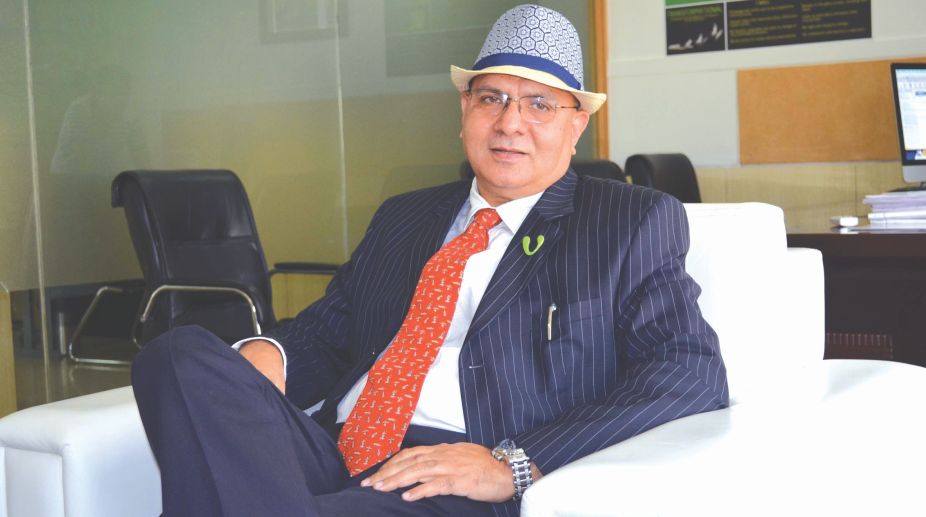
Arvind Bali
A noted name in the telecom sector, Videocon has rolled out their new range of entry level and pocket friendly CCTV solution known as the Eco Series. The CEO of the company, namely, Arvind Bali, talks on this new venture and gives an insight into the current security and surveillance market.
Q What prompted your shift in attention from telecom to surveillance?
After exiting mobility business and losing heavily, we started looking at business opportunities which are among the growth industries, synergic to our existing business lines, did not require any capex investment, and most importantly are self sustaining i.e. profitable from the word go. Having explored various opportunities, we found security and surveillance business to be one of the lines that fit the bill. Videocon is a strong brand in consumer durables and appliances with over 17 manufacturing units across the country; R&D centres worldwide and also assures a strong distribution network. All these factors synergise with the security and surveillance business and hence there is no incremental investment for us.
Q What according to you is security?
While the literal meaning of security is the state or sense of being free from any kind of threats, this can apply to people and their possessions, valuable items, assets, organisations, infrastructure or even a nation. It is the prevention and protection of self and others’ items from deliberate or unnatural occurrences. However, for me, the simple meaning of security is peace of mind.
QHow will this new range of Videocon WallCams improve the security of a household?
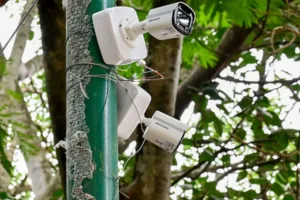
We have recently rolled out our new range of CCTV product and solutions known as the Eco Series, which is an entry level, pocket friendly CCTV solution for retail segment comprising of household part and small commercial establishments (shops and offices) to reach out the masses. The product range is aimed at making CCTV solution affordable to retail segment and kill their perception of CCTV being an expensive solution. The eco series range starts at a never before price point of Rs 4999 for a set of four cameras (two indoor and two outdoor) and a DVR for live view and recording. The solution comes with a convenience of plug and play, and bundled with many features such as remote viewing on smartphone, alarms etc.
We have seen that CCTV solution acts as a deterrent to curb crime, generally the anti social elements keep away from premises which are secured through video surveillance. I think this small investment will go a long way to improve security of household.
Q What is your strategy in sustaining the reasonable rates of the CCTVs that Videocon claims to provide?
All our products are “Make in India”, which gives us an edge in terms of price. We have our own design and R&D centre in Japan, Korea, China and India which helps us use our internal resources and reduce the prices on new product development. Further, this is a growing business and with the launch of eco series, our volumes are going up. This will give us an economy of scale and help sustain prices in the long run.
Q Are there any new features that we can expect from this new range of eco series?
Yes. We will keep adding more features and product lines to our eco series range. To start with, we will be adding lost cost IP based cube cams, video door phones, and a range of sensors and alarms for home use among others.
Q How will the Vodafone 4G solution contribute toward an enhanced technology?
We recently partnered with Vodafone to launch the first of its kind 4G bundled CCTV solution that includes 4G enabled vehicle surveillance kit and stand-alone 4G enabled outdoor/indoor CCTV cameras, both with a 4G sim slot to support 4G connectivity. We understand that seamless connectivity for the devices is the key for any Internet of things based solution. This solution can be installed in moving/mobile vehicles and one no longer needs to be stationed at one place or be dependent on network/Wi-Fi enabled places. This will make video surveillance practically ubiquitous, and CCTV being one of the most important aspects of connected devices, will see a sea of change in the way it is used.
Q What is the potential CCTV surveillance market in the country at present?
As per the available market research, the current video surveillance market of approximate Rs 3650 Cr is 55 per cent of the overall Rs 6600 Crore security and surveillance market and is projected to grow at a compound annual growth rate of 26 per cent and reach Rs 9150 crore by 2021, which is 2.5 times the current market size. The growth will be driven by households, including small commercial establishment segments. We, however, foresee the market to cross Rs15,000 crore by 2021 which is a whopping little more than four times the growth of the current market size.
Inside ‘Brother Nation’
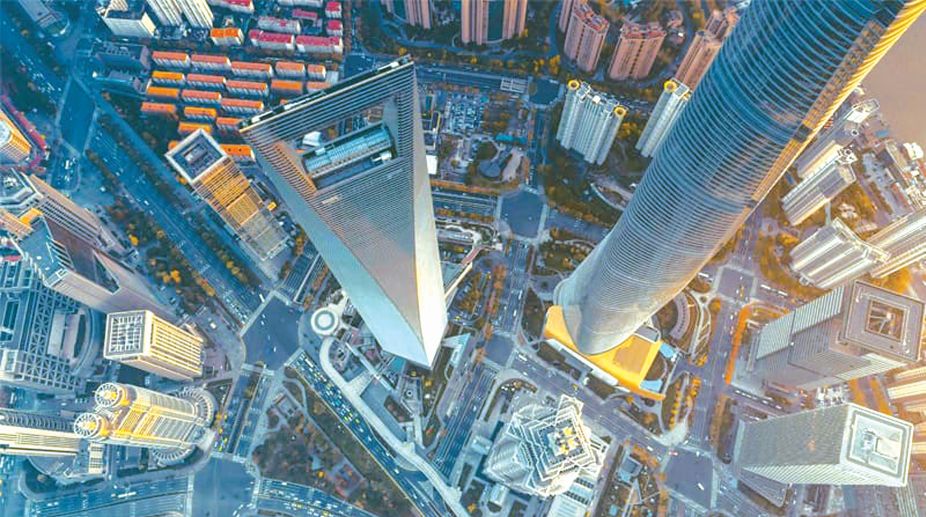
The building that is shaped like a bottle opener
I used to tutor at a community college in downtown New York that catered to an immigrant population. My Chinese students, on learning my nationality, would smile and say knowingly, “Brother nation” or “Best friends.” The warmth was infectious and I’d respond in kind, the state-sponsored friendship a balm during a busy workday in a relentlessly busy city. Naturally, then, I pounced at the opportunity to visit ‘Brother Nation’ this past October. It was to become the latest of the father-daughter trips that, since I was 10, the pair of us have indulged in.
But Brother or not, Pakistani tourists visiting China are permitted to travel only in groups “arranged through a qualified local travel agency.” And so our father-daughter trip of two came to encompass 78. And just as well: our brothers couldn’t understand a word we said, or the other way around.
We were utterly beholden to our guides. Brother or not, we were required to show our passports to check-in at hotels and board local trains. Though, earlier in Beijing, our guide kindly stroked our egos by saying that when the strict security at Mao’s mausoleum saw our green passports, they’d be “nice” (an incorrect assumption ultimately, as one of our party managed to get detained there).
On a breezy late evening, one of the guides, Alice, tells us matter-of-factly, “Shanghai is the future of China.” Standing on the deck of a cruise boat making its languid way along the Huangpu River, it doesn’t seem like a controversial statement: the illuminated skyscrapers studding the river’s bank cost the city one million yuan per day to light up the sky. But Alice deals primarily in hyperbole, and continues, “Better than London … Better than New York!”
The Huangpu, which divides Shanghai into its eastern and western districts, makes a literal symbolic divide: British colonial era buildings, including a clock tower reminiscent of Big Ben, line one side of the river; on the other, new China’s skyscrapers house its banks, offices and five-star hotels.
Each tower boasts a different roof; some slanted, some domed, some spired, some curved, and my personal favourite – one shaped like a bottle opener. The skyscrapers along the Bund, as the central waterfront area is known, are by law restricted in height. Capped at 36 floors, this, in Shanghai, is considered restraint.
In 1958, when Mao launched his Great Leap Forward campaign for rapid industrialisation, he pledged to “surpass Britain in 15 years.” Though the plan produced worthless steel and snuffed out 45 million lives, Alice has plenty to feel smug about on this balmy evening.
Amid the grandeur, it’s nice to notice that Shanghai shares our desi penchant for silly names. Inside the Oriental Pearl TV Tower, a 469-metre structure which looks like a futuristic rendition of the Eiffel Tower, exists an eatery called The Pearl Oriental Coca Cola Happy Restaurant!
Twenty-five short years ago, none of it was here. The area along the Huangpu’s eastern bank, known as Pudong, was little more than soggy farmland. In the late 1970s, when Shanghai’s population was at a mere six million (today it hovers around 25 million), the Chinese government decided to turn the city into an economic zone, in part due to its proximity to Hong Kong, as well as its temperate climate.
Since the 1990s, when construction began, the city has developed at breakneck speed. Our guides have reminded us more than once that China is a communist country, but Shanghai is a capitalist’s dream. Overpasses five levels into the sky carry gleaming cars high above the land. Streets seem like highways, train stations like airports (of which Shanghai has two).
Development by its nature doesn’t take everyone with it. In the uncompromising light of day the next morning after the river cruise, I see squat, dishevelled blocks of two-storey housing huddled together in plain view of the high-rises. They seem almost like dormitories, with several doors opening out to a long balcony.
The windows of some are broken; the muddied white paint is peeling. Even bits of the roofs look partially caved in. What can be discerned of the insides seems sparse and simple. “Very bad housing,” Alice informs us. “Many families on one floor, all sharing a bathroom or a kitchen.” Another guide, Jeffrey, later remarks, “In China, people don’t laugh at you for being poor, they laugh at you for being lazy.”
The residents do not want to leave. Though they would receive some measure of compensation for doing so, the government would relocate them to a distant suburb of the city, far away from their lives. And it isn’t only the old, low-income families that struggle for space in this ever-growing city.
Most people have to commute an hour-and-a-half to work each morning to the city’s hub – buying a flat in a high-rise in a coveted part of town costs about 20,000 US dollars per square foot, according to Alice. Since the Communist Party owns all the land, “buying” really means entering into a 70-year-lease, the longest available.
And yet, having done away with the messiness of democracy, China has lifted more people out of poverty — and fast —than anywhere else in the world. And it’s culturally evident it likes its cash: the frog symbolises wealth. The money dragon, most auspicious of symbols, only eats gold but “doesn’t go to toilet”, hoarding the riches in its belly instead. The concept of feng shui (literally meaning wind-water, together implying scenery), began with the business community, who believed that arranging their homes a certain way would invite economic prosperity.
Xinyuan Market strips Chinese commerce of its romanticism and cuts to the chase. It is Shanghai’s biggest “fake market”, a multi-storied labyrinthine shopping mall housing stall upon stall of luxury knock-offs of fairly good quality. Like our own shopkeepers at Zainab Market who will break into French, Russian, Spanish, as necessary, these salesmen enthusiastically bark prices, pitches, compliments or pleas at my father and me in English. They pull at our shirts as we walk away, grab our sleeves, beg us to punch in a final offer on their calculators before gasping at our tightfistedness.
A common tactic is to exclaim “Don’t be angry!” should one refuse the initial price (in general, one pays between 10 to 30 percent of the asking). This flusters the customer, who feels obliged to defend himself and suddenly finds himself in a position of weakness. We have been warned, however, and my father diligently shouts back, “You don’t be angry!”
“Me, I’m not angry!” a woman selling coats exclaims, tugging at his arm.
“But why are you so angry?” He is enjoying himself. “Me? No, no!”
Later on, he makes a friend. Before closing the deal, the short, 30-something shopkeeper smacks him approvingly on the behind. As we leave, three faux luxury handbags in tow, he shakes my hand and says, “Your father – he a good man.”
Talking money, the universal language, we are for the first time understood in this foreign city. Alice shuttles the lot of us out, equipped with the one Urdu word she needs to do her job – “Chalo! Chalo!” [Come! Come!] A chorus of shopkeepers return the chant, “Chalo!” and wave us out.
Later, we are taken to a “real” market – Nanjing Street, 27 metres of pedestrian shopping. International chains like H&M and Zara and Hugo Boss line the streets. We could be anywhere, Oxford Street or Herald Square. The only difference is the Japanese-inspired street fashion, girls in thigh-high socks and pigtails flashing ‘V’ signs at smart phones.
We are bored, but consumerism is a part of the deal. Though the trip to Nanjing Street isn’t mandatory, other shopping excursions have been – by law, as foreigners we were required to visit a pearl factory and tea retailer in Beijing, a jade factory in Xi’ian and a silk factory here in Shanghai.
In each case, an attractive young woman explains the art of cultivation, whether of pearls from oysters or silk from worms, inviting us to touch the un-spun silk or dead oyster shell. Then the (considerably less charming) sales assistants swoop in and the exchange begins. For my part, the factories were a useful, if extended, opportunity for a bathroom break.
On my last day, I am given a respite from concrete and commerce. Sitting in the Yuyuan Gardens, in the old city, I have time to reflect on my brief time with our new friends-not-masters. Originally completed in 1577 by a government official as a peaceful place for his parents to enjoy old age, it’s various pagodas, rockeries and ponds are a testament to filial love.
Watching the white and orange carp swim by, I decide that I’d prefer licking Chinese boots to Arab ones. At the very least, we’d save our birds. It simply wasn’t fair being a security state without any of the shiny stuff this one had. I sensed a great cultural shift coming, and soon after I return to Karachi I see the proof: in an old book store in Defence I find Feng Shui for Cats, “the first book to consider the subject from the all-important feline view.”
Dawn/ ANN

Telangana Guv, Cong engage in ugly spat
NARASIMHAN_G
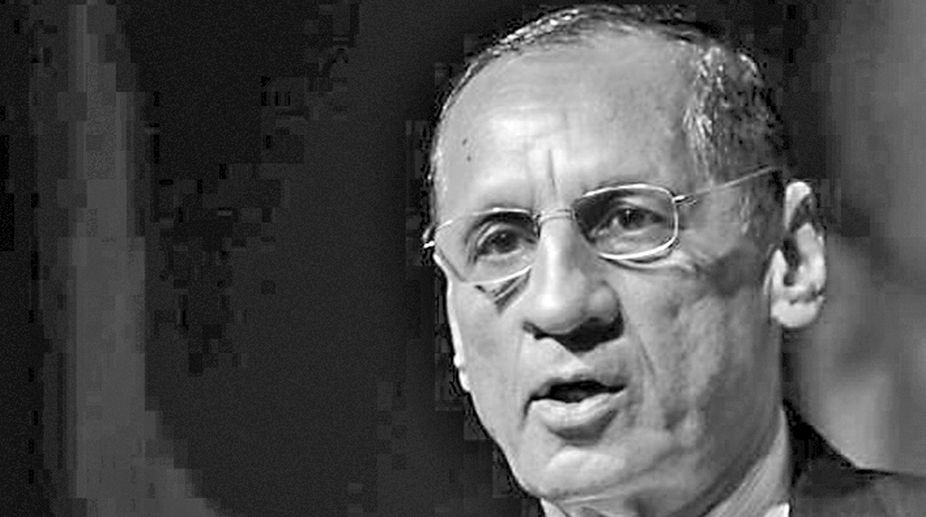
Telangana governor ESL Narasimhan and a Congress delegation led by TPCC president N Uttam Kumar Reddy got engaged in an heated argument today, in a manner probably unprecedented in the Raj Bhavan’s history.
The Congress gave two representations ~ one on sand mafia and the other on the arrest of Dalit leader, Manda Krishna.
When the Congress told the governor that sand mafias are active in Sircilla, home district of chief minister K Chandrashekar Rao’s son and municipal administration minister KT Rama Rao, Mr Narasimhan asked the delegation not to name the minister.
To this Mr Reddy snapped back saying, “You cannot dictate me what to speak”. He then drew the attention of the governor to the killing of a village revenue assistant (VRA) yesterday. The governor said according to information available to him, the victim was not a VRA. Mr Reddy then asked him whether the mafia had the license to kill a common man.
Mr Narasimhan said this new year everyone should resolve to be truthful and stay away from false propaganda. The meeting then turned worse. Top Congress leaders who were part of the delegation, were reticent to explain what went wrong last evening, but began opening up late last night.
Former MP S Satyanarayana told Mr Narasimhan that he is not a headmaster speaking to students and that he is duty bound to listen to the delegation’s grievances and take their representation. Mr Narasimhan threatened to leave and told the leaders to “control that fellow” (S Satyanarayana). TPCC vice-president Mr Mallu Ravi shouted, “What the hell do you mean?”
Mr Reddy attempted to calm down the situation and told the governor that killing of any human being is unacceptable, whether he is a VRA or not.
An infuriated Mr Narasimhan asked what job a politician had with a dead body.
The Congress hit back saying that the governor is enjoying the post due to the “mercy” of former Congress chief Sonia Gandhi and Congress leader Manmohan Singh, who had appointed him. They said he is ‘worse than a TRS worker’ and that he has become ‘a stooge’ of the state government.
Later in the evening, the governor and Mr Reddy sought to play down the episode. A Raj Bhavan communiqué said it was a “cordial meeting” and that the “neutrality and the dignity of the Raj Bhavan would be maintained”. Mr Reddy issued a Press release confining himself to the
issues and made no reference to the spat.

Stock market indices rise for the fifth week
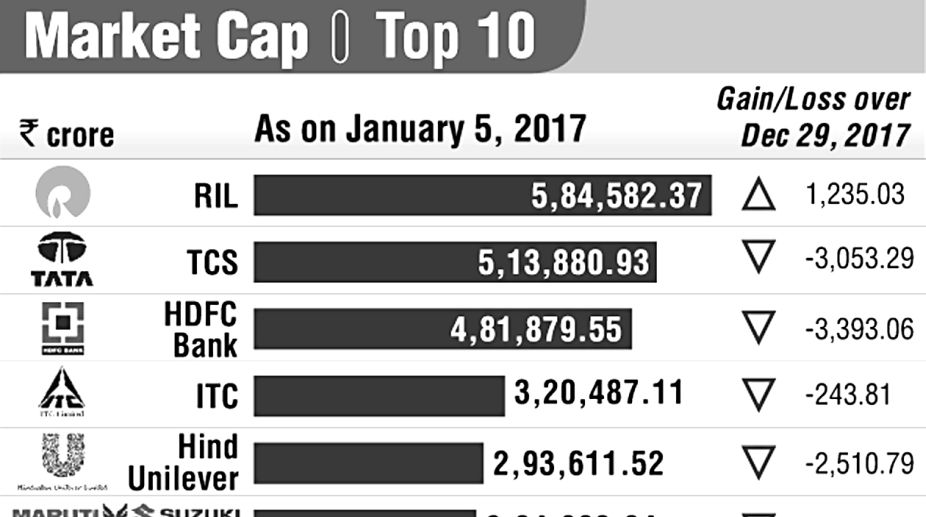
Stock market
Extending gains for the fifth consecutive week, the key Indian equity indices closed the first week of the new year at fresh highs, riding on positive global cues, along with inflow of foreign funds and healthy domestic macro-data.
Although the benchmark indices started off the week on a slightly weak note, the barometer 30-scrip Sensitive Index (Sensex) closed trade at a fresh level of 34,153.85 points on the last trading day (5 January).
It rose by 97.02 points or 0.28 per cent from its previous week’s close at 34,056.83 points. The Sensex also touched a new intra-day high of 34,188.85 points.
On the same day, the wider Nifty-50 of the National Stock Exchange (NSE) scaled a record intra-day high of 10,566.10 points.
The index closed trade at a fresh high of 10,558.85 points, up 28.15 points or 0.26 per cent from its previous week’s close at 10,530.70 points.
“The week gone by saw the Nifty surging higher. It was the fifth consecutive week of gains for the Nifty,” Mr Deepak Jasani, head ~ retail research, HDFC Securities, said.
“Sectorally, the top gainers were the metal, infra, media and pharma indices. The top losers were the auto, IT and PSU bank indices,” he added.
On the currency front, the rupee strengthened by 50 paise to close at 63.37 against the US dollar from its last week’s close at 63.87.
“Indian equity benchmarks rose to record highs with the NSE Nifty-50 Index closing above the 10,555 level for first time. Strong global cues and impressive domestic economic data boosted market sentiments,” Mr Arpit Jain, AVP at Arihant Capital Markets, said.
“Moreover, FIIs (foreign institutional investors) were net buyers of nearly Rs 10 billion in the last three days, which had a positive sentiment in the market. Monthly auto sales numbers and December’s manufacturing data signalling revival also helped,” Mr Jain added.
Data released early during the week showed that robust demand, along with low base effect and end of season discount offers, led to automobile manufacturers reporting healthy sales figures for December 2017. On the investment front, provisional figures from the stock exchanges showed that FIIs turned net buyers and purchased scrips worth Rs 1,738.44 crore.
However, domestic investors divested funds worth Rs 936.44 crore during the week.
Figures from the National Securities Depository (NSDL) revealed that foreign portfolio investors invested in equities worth Rs 1,618.27 crore, or $254.14 million, during 1-5 January.
Mr Vinod Nair, head of research, Geojit Financial Services, said: “Despite positive December auto sales numbers, market started-off year on a weak note. Market was contemplating a risk posed by the likely populist agenda which may hurt the fiscal consolidation target earlier set by the government.”
But by the last two trading days, metals outperformed on expectation of strong earnings growth, supported by firm global base metal prices whereas auto stocks witnessed profit booking after the recent run, he said.
Mr Nair added that favourable global cues due to strong US jobs data and improvement in domestic services Purchasing Managers’ Index (PMI) data for December helped the market move out of the subdued phase of trading.
Data released during market hours on Thursday revealed that the seasonally adjusted Nikkei India Services PMI Business Activity Index registered an overall increase from 48.5 in November to 50.9 in December on the back of new orders and easing of inflationary pressures.
The top weekly Sensex gainers were: Coal India (up 5.99 per cent at Rs 278.75); Yes Bank (up 5.71 per cent at Rs 333.05); Tata Steel (up 5.17 per cent at Rs 770.30); Adani Ports (up 4.89 per cent at Rs 424.45); and Larsen and Toubro (up 4.58 per cent at Rs 1,314.50).
The losers were: Maruti Suzuki (down 3.06 per cent at Rs 9,434.05); Infosys (down 2.62 per cent at Rs 1,012.10); Bajaj Auto (down 1.37 per cent at Rs 3,277.55); Hero MotoCorp (down 1.24 per cent at Rs 3,739.30); and Wipro (down 1.16 per cent at Rs 309.75).
Engg graduates get few internships in PSUs
Engg graduates
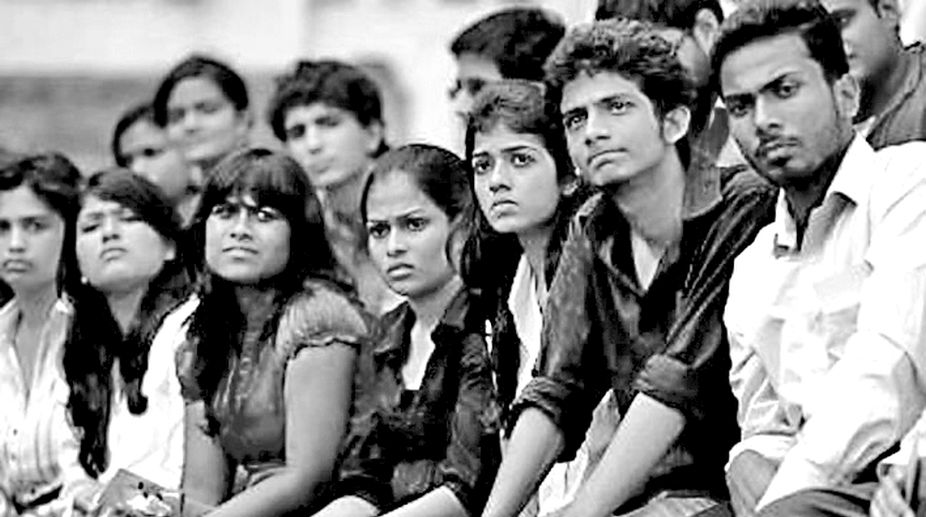
Even as the government is intent on developing skills of unemployed youth through schemes like Pradhan Mantri Kaushal Vikas Yojana (PMKVY), public sector undertakings (PSUs) are not showing any interest in providing internships to engineering graduates.
The Apprenticeship Act stipulates that any firm has to take 10 per cent of the strength of its employees as apprentices every year. An amendment made in the Apprenticeship Act in 2014 increased the percentage from 3 to 10. The Act applies to engineers and diploma holders. But the PSUs generally hire diploma holders and technicians through the HRD Ministry, Bureau of Practical Training (BOPT).
PSUs are now hiring engineering graduates on the basis of their scores in the Graduate Aptitude Test for Engineering (GATE) exam conducted jointly by Indian Institute of Science (IISc) and IITs and their personal interviews. The weightage for the GATE scores is higher.
Of the over 3 lakh students who apply for internships only 1.38 lakh got them in 2016-17. These internships are supposed to develop skills of the engineering graduates. It is estimated that out of the 16 lakh students only 3 lakh end up with jobs every year.
When this was brought to the notice of HRD minister Prakash Javadekar, he said he will have to find out what is happening. Even as the government is opening up new IITs, the future of those completing engineering courses from the sundry private engineering colleges is in the doldrums. A large number of them do not get campus placements. Sources in the HRD Ministry said those pursuing courses like ceramic engineering or geophysical engineering from IITs also do not get jobs.
HRD ministry sources said almost all private companies take interns because they get a qualified engineer or a diploma holder at a nominal sum of Rs 5000 and Rs 3700 respectively of which half the amount is paid by the government.
Engineering graduates and diploma holders have to apply online for internships through BOPT which is managed by the HRD Ministry. For the one year internship that they get in the company, they get a certificate from BOPT. This helps the engineering graduate seek jobs in other companies.
An official said in some sectors which are not very sophisticated in nature, the need for diploma holders could be more. “Where there is modernisation, the requirement for engineers may be more. Mining sector is one such area,” said the official.
The demand for civil engineers seems to be at an all-time low. Of the 1.38 lakh engineering graduates and diploma holders who were able to get internships in companies in 2016-17, the number of civil engineers and diploma holders was only 7,000. The demand for mechanical engineers and diploma holders was the maximum as 45,000 of them managed to get internships in 2016-17.

Russia keen to sell S-400 missile system to India

Representational image (PHOTO: Getty Images)
Russia is believed to have conveyed to India its keenness to sell its S-400 air and missile defence system and urged New Delhi to take an early decision on the proposed deal.
The issue is learnt to have figured in the context of defence cooperation during a meeting of the India-Russia Inter-Governmental Commission on Trade, Economic and Cultural Cooperation, co-chaired by external affairs minister Sushma Swaraj and Russian deputy prime minister Dmitry Rogozin in New Delhi last month.
Informed sources said Swaraj assured the Russian side that India was committed to further intensifying its age-old military and technical cooperation with Moscow, notwithstanding its plans to manufacture defence equipment under the ‘Make in India’ programme and diversify its purchases.
Sources said the two sides were at this stage holding regularly talks, focusing on technical issues connected with the S-400 deal. These issues related to pricing, training, transfer of technologies and setting up of command and control centres.
India has also conveyed to Russia that New Delhi has its own procedures and internal mechanisms which have to be followed so that the deal was concluded in such a way that the result was satisfactory and met the country’s requirements.
Sources denied there was any tension between India and Russia over military and technical cooperation. Reports in the media about difficulties in the relationship were inspired by interested parties. ”Our military-technical cooperation is long-standing based on mutual trust and understanding,” they added.
Sources also refuted reports that US sanctions on Russia had cast a shadow on India-Russia defence cooperation. As far as India was concerned, it was not a party to the sanctions, they added.
This comes close on the heels of statements by senior Russian officials that negotiations between India and Russia on S-400 missile system had reached a very profound stage.
The S-400 is Russia’s fourth-generation air and missile defence system. It is currently Moscow’s most advanced deployed system, although a fifth-generation version, the S-500, is under development.



Govt faces flak over drop in GDP growth forecast
Representational image (Photo: Getty Images)
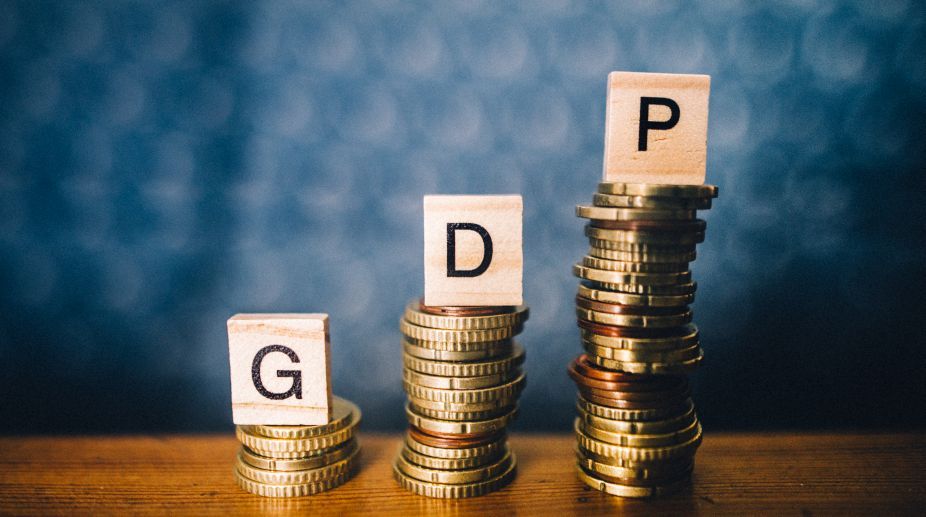
As the Indian economy is forecast to grow at its slowest in four years this fiscal (2017-18), Congress chief Rahul Gandhi on Saturday hit out at Prime Minister Narendra Modi and finance minister Arun Jaitley and said that their GDP (Gross Divisive Politics) was affecting the country’s GDP (Gross Domestic Product).
In a tweet, the Gandhi scion accused Modi and Jaitley of slowing down the economy and said new investments, bank credit growth, job creation, agriculture growth were all down while fiscal deficit and stalled projects were rising.
“FM Jaitley’s genius combines with Mr Modi’s Gross Divisive Politics (GDP),” tweeted the Congress president.
Senior Congress leader P Chidambaram also hit out at the government over lower growth estimates for the current fiscal, saying the worst fears of an imminent economic slowdown have come true.
There is a decline in new projects and fresh investment, Chidambaram claimed in a statement.
The informal sector is reeling under the ill effects of demonetisation. Job creation is abysmal, exports are plunging, and manufacturing sector growth has slowed down. The agriculture sector has been hit hard and rural despair is abundant, he claimed.
Job creation remained the “single biggest failure” of the BJP government. The bank credit growth was extremely sluggish and it did not bode well for the economy, he said.
“No amount of sugar coating, false bravado and rhetoric along with headlines management can conceal the stark reality. Our fears and warnings have proved true,” the Congress leader said.
He said the recent social discontent could be a “direct manifestation of this economic slowdown, which the government was conveniently hiding”.
It was time the government stopped making tall claims and did some solid work, he said.
Citing government data, the former finance minister said the GDP growth rate was 8 per cent in 2015-16, 7.1 per cent in 2016-17. It is estimated at 6.5 per cent in 2017-18, “which proves there is a slowdown”.
A decline in economic activity and growth meant loss of millions of jobs, he said.
While the GDP growth is estimated at 6.5 per cent during 2017-18 as compared to 7.1 per cent in 2016-17, the anticipated growth of real GVA at basic prices in 2017-18 is 6.1 per cent as against 6.6 per cent in 2016-17, he said.
Retail inflation soared to a 15-month high of 4.88 per cent in November and industrial output hit a three-month low of 2.2 per cent in October, he pointed out.
“The investment picture remains bleak… The manufacturing sector has seen the sharpest fall and fiscal deficit is likely to overshoot the budget estimates of 3.2 per cent of GDP,” the Congress leader said.
On 250 yr South park cemetry lits up to tune of music
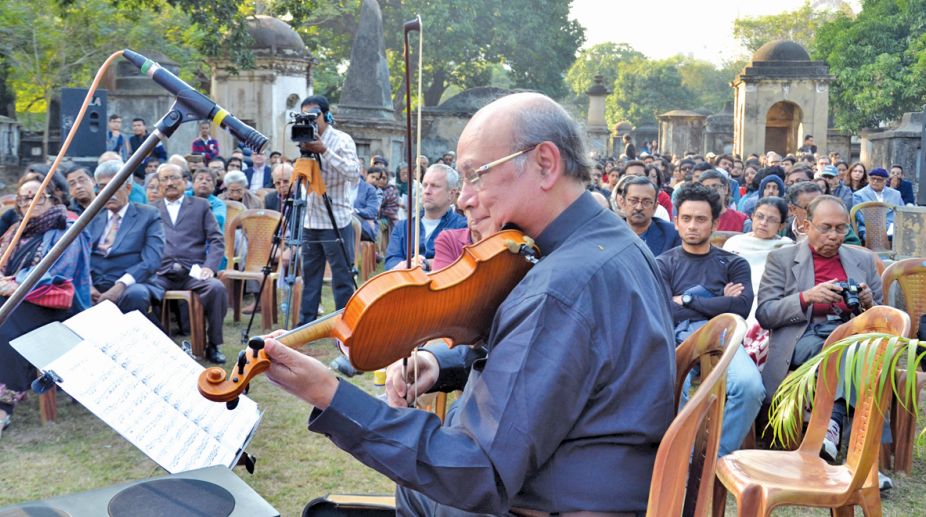
First concert ever at the historic Park Street Cemetery. Organised by Christian Burial Board in Kolkata on Saturday--Dilip Dutta
The historic South Park Cemetery on its 250th year today lit up with the tunes of baroque music as a string quartet comprising classical music maestros played out compositions of the greatest musical minds of 17th and 18th century baroque music. Around 500 people poured in to witness the extravaganza organised by the Christian Burial Board (CBB) at the heart of the cemetery.
The baroque concert in the heart of the historic cemetery which holds the graves of several eminent personalities today turned lively with the compositions of Johann Sebastian Bach, George Frideric Handel and Antonio Vivaldi which were played by a string quartet and a pianist.
Speaking on the composition ‘Firework Music’ by Handel, Professor Prosanto Dutt on first violin explained “Handel was a court musician at Hanoever and later, on becoming a ‘Kapellmeister’ to King George I, he used to accompany him playing and composing music for the band.
The compositions that were made by him while floating on River Thames on a boat along with the King, were named as’ water music’ while the ones composed during firework display were known as ‘firework music.”
“Compositions that were played today were in keeping with the time when this cemetery functioned and hence this baroque concert had a lot of relevance especially the slow movements which have a deep connection with funeral hymns” said Mr Dutt, who learnt violin under Theo Olof in the Royal Conservatory of music.
Thespian Victor Banerjee commenting on the event said “Baroque and Rococo art are closely related. It is an opulent form of music and have inspired generations of musicians. Music is eternal.”
Dr SK Mukhuty, Chairman, CBB, speaking at the occasion said “The concert is special in its way as it is being performed in an unusual atmosphere.
“The ambience has provided for an appropriate mood to enjoy a music genre that originated in the years when the historic cemetery, where tombs are constructed in a Greek and Indo-Saracenic style, was active. Most of the structures were made of mortar and lime and hence it becomes difficult at times to keep them preserved. We would love to have support from the citizens who have always cherished the historical value and sentiment of this place.” Ranajoy Bose, executive member, CBB, said, “The concert was unexpectedly well attended by the music lovers of Kolkata, particularly by the students of music schools. Some of the renowned doctors, present here, have already mentioned about the therapeutic and healing effects of music on the human anatomy. It is not easy to hold a concert in a cemetery but we hope to conduct more of such events here in the near future.”
Blaring music disturbs National Library environs as employees enjoy picnic
NATIONAL LIBRARY_WITH SUBHENDU'S STORY
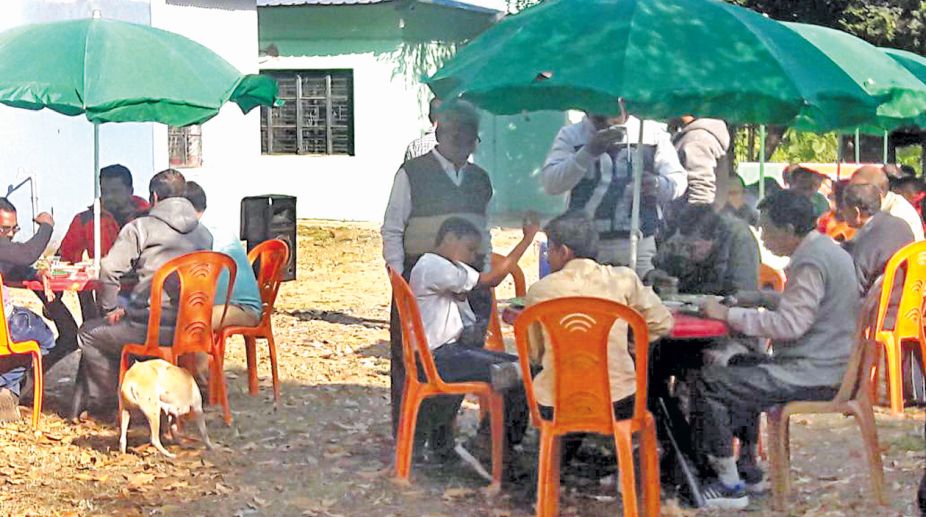
National Library authorities are sitting idle while a reportedly unauthorised employees’ union held a picnic inside the sprawling library complex today, in violation of rules, just a couple of days before the visit of the secretary in the union ministry of culture, Mr. Raghavendra Singh, to the prestigious central government institute.
Dr Arun Chakraborty, director general of the National Library at Alipore campus, said today that all unions inside the library premises are ‘unauthorised and unregistered’ and they organise get-togethers every year.
According to the Union ministry of culture rules under which the National Library operates, no picnics are allowed inside the library complex so as not to disturb the readers.
But a visit to the library this afternoon found the National Library Kormi Association (NLKA), reportedly a BJP-affiliated union that runs its office in the CPWD engineer’s room, organising a big picnic while blaring music from a sound box installed at the spot was audible even outside the library.
After being disturbed by the noise several readers of the library have informed the matter to the security personnel of the library, a senior security officer said, requesting anonymity.
The NLKA office was decorated with colourful union flags and banners while trendy Hindi movie songs blared on sound boxes throughout the day.
Some employees who are also members of the NLKA got angry with this correspondent and a photographer of a Bengali daily saying, “We are organising a picnic here. And why are you so interested?”
When asked what action is going to be taken Dr Chakraborty told The Statesman, “It’s a get-together and not a picnic. All unions organise this sort of programmes every year. Some time before an union had organised a similar programme where 500 people participated. I have no idea whether the organiser has used the sound box today.”
“All the unions inside the library complex are unauthorised and unregistered and this is going on for years,” Dr Chakraborty admitted.
But he had nothing to say when asked how he was going to stop this disturbance to the readers just a day before the visit of Mr Singh.
“Our union is registered and authorised and there is no doubt about it.
“ How did the authority allow the union to organise such a picnic using sound box inside the library complex ignoring the union ministry of culture’s rules,” said Saibal Chakraborty, secretary of the National Library Staff Association.

CM to hand over work order for Kolkata Eye on 29 Jan
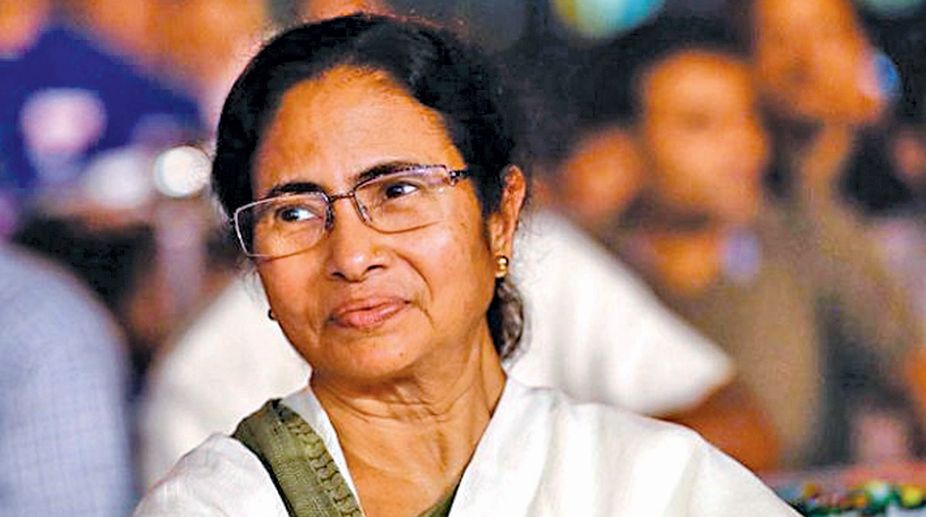
West Bengal Chief Minister Mamata Banerjee. (Photo: Facebook)
Chief minister Mamata Banerjee will hand over the work order for her dream project Kolkata Eye on 29 January paving the way for it to start operating from 2020.
The state government has received all clearances that are needed to start the project. Larsen & Toubro has been selected through a global tender and work is likely to start very soon.
The Kolkata Eye that seeks to recreate a London landmark at Millennium Park along the Hooghly will offer a view of the skyline and the Hooghly river. It will be the first of its kind in Asia and will thus serve as a major tourist attraction, said an official.
The giant wheel will be 135 metres in height, which is exactly the same as that of London Eye and will take 45 to 55 minutes for a complete round after starting from the ground level. It will carry a total of 480 persons at a time.
According to the proposal, the structure will possess 60 tubes with seating arrangement for eight persons in each of them. It will be a steel structure and parts will be assembled and erected at the site. If required technological assistance will be taken from Tokyo and Las Vegas.
The initial cost for the project was Rs 400 crore but it may rise due to certain technological inputs.
It is being estimated that once the construction begins, it will take two years to end the project. Thus, once the work order is handed over and the construction begins then the project will be completed by 2020.

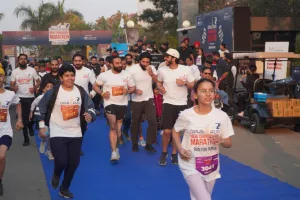
Safe Drive Save Life Marathon today
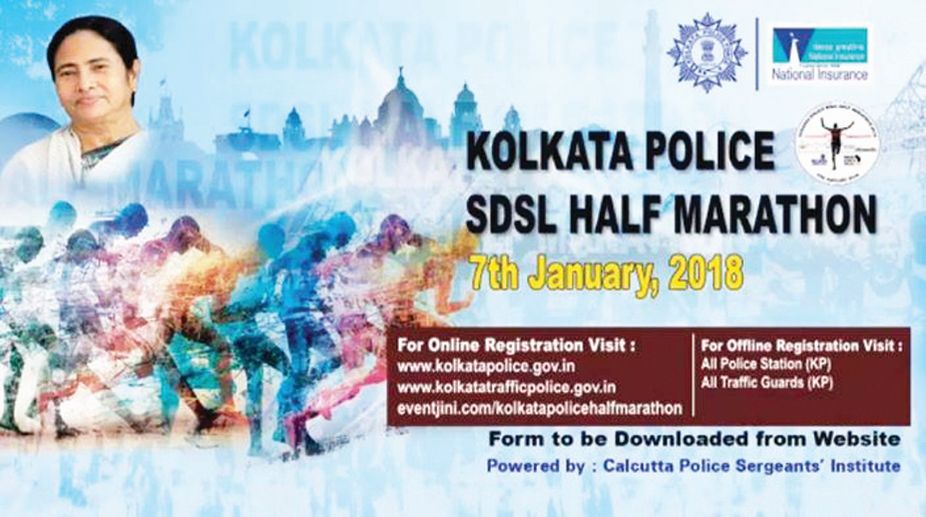
Safe Drive Save Life Half Marathon
Numerous traffic diversions will be in effect owing to the ‘Safe Drive Save Life Half Marathon’ organized by Kolkata police tomorrow. Around 12000 participants will be in attendance.
Kolkata Police will observe “Road Safety Week 2018” from 7 January to 13 January.
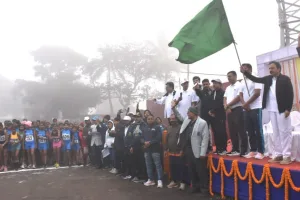
The opening ceremony of the Road Safety Week will take place tomorrow at 6 a.m. before the initiation of the half marathon.
There will be 21Km run,10Km run,and a 5 Km run. According to Sumit Kumar,DC Traffic, 12000 participants have registered . There are cash prizes for the first,second,third and fourth positions for both men and women in the 21 Km and 10 Km runs.
For the different age categories in the 21 Km run,from 18 years -30 years,31 years – 45 years,46 years -60 years and above 60 years. The first prize, second prize,third prize and fourth prize will be amounts of Rs 25000,15000,10000 and 5000 respectively.
The marathon will begin at 6:30 a.m.For the 10 Km run the first prize, second prize, third prize and fourth prize will be amounts of Rs 20000,10000,5000 and 3000 respectively.
That race will begin from 7 a.m. For the 5 Km run participants all finishers will get medals.The race will begin at 7:30 a.m.All the participants in the different categories will get race day and finisher T~shirts.Photographers of all runners will be posted on their Facebook pages.
“Our idea is to make this race one of the best race, not just in Kolkata but in the entire country. We will continue to have this race on the first Sunday of every year,” said Additional Commissioner (I) of Police, Vineet Kumar Goyal.
The Safe Drive Save Life Half Marathon will be organized to “set the ball rolling for the Road Safety Week and promote the culture of safe driving and better road etiquette,” he added.
The 21 Km run participants will start from the basketball ground on Red Road before moving to CR Avenue and then take a right turn to Vivekananda Road and AJC Bose Road towards the Moulali,Mullickbazar and Beckbagan crossings.
There is a left turn to be taken to Ballygunge Circular Road and Judges Court Road.A right turn would then be taken to Alipore Road.National Library Avenue,Belvedre Road,Zeerut Bridge and JN Island before coming back to the venue.Traffic diversions will accordingly be made.