Logo

TRAI’s views on ICT solutions for differently-abled by June

PTI | New Delhi |

Regulator TRAI will by the middle of this year recommend measures to make telecom and broadcasting services more accessible for the differently- abled, its Chairman R S Sharma has said.

Sharma said service providers and other stakeholders must respond to the Telecom Regulatory Authority of India’s (TRAI) recent discussion paper on the issue with constructive suggestions to brainstorm solutions, aids and assistive devices that would make telecom and broadcasting services more “inclusive”.

“We should be able to come out with the recommendations on this consultation paper by May or June this year. By March, hopefully, we will have an open house discussion with stakeholders,” Sharma told PTI.

Sharma said finding solutions that would make information and communications technology (ICT) accessible for the differently-abled was of utmost importance given the fact that mobile phones and devices have become “ubiquitous and universal”.

“The percentage of Persons with Disabilities (PwDs) in the total population has grown to 2.21 per cent in 2011, with 2.68 crore PwDs in the country,” the TRAI chief said.

Last month, the regulator, through a new consultation paper began a dialogue on making ICT accessible for the differently-abled, saying more policy interventions were needed in this area where benefits of technology have not been fully realised.

It has sought industry views on whether handset makers should be mandated to manufacture at least one model for such individuals with assistive technology features such as hearing, visual aids and emergency buttons. TRAI had also asked if information on billing and pricing needs to be provided in a more accessible form for them.

The consultation paper has also sought the industry’s comments on disabilities that need to be included in the enabling framework, reasons for benefits not reaching PwDs and corrective measures that need to be undertaken.

Sharma said sometimes the argument is given that making solutions more accessible for the differently-abled will increase costs. He, however, emphasised that these would not be universal solutions applicable to all, but rather tailor- made for such individuals.

Ultimately, the “benefits of inclusion” will outweigh the cost that will be infused to make systems inclusive, Sharma argued.

TRAI’s consultation paper had expressed concern that differently-abled individuals were “often not able to access these ICT services on account of lack of necessary accessibility features or unaffordable prices of the equipment or due to unavailability of required services”.

TRAI is of the view that the additional policy interventions need to be “explored and implemented to address the unique challenges” faced by them.

In this regard, the consultation paper aims to identify key areas that require policy intervention and understand barriers being faced by such individuals in accessing telecom and broadcasting services. This will help in working out affirmative actions at the policy level, says the consultation paper.


‘Laavaan Phere’s trailer gains 1.2 million views in 3 days

SNS | New Delhi |

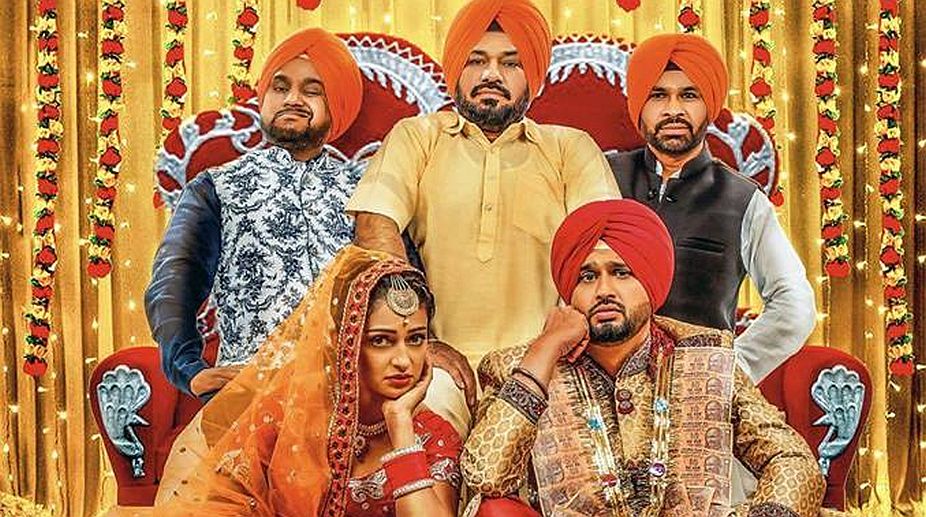
The new Punjabi movie trailer Laavaan Phere gained 1.2 million views on YouTube and currently ranks 23rd on the trending list.

Laavaan Phere, directed by Smeep Kang, stars actor Roshan Prince as the male lead and actress Rubina Bajwa in a never before seen avatar as the female lead.

It also showcases Punjabi stars like Gurpreet Ghuggi, BN Sharma, Karamjit Anmol and Harby Sangha in important roles.

The movie is set to release worldwide on February 9, 2018.

Take a look at the trailer below:

Ind vs SA, 1st Test: Twitteratis hail Hardik Pandya’s spirited performance

Pandya along with Bhuvneshwar Kumar added 99 runs for the eighth wicket and helped India cross the 200 runs.

SNS |

On the first day of opening Test match, Indian pacers were able to bowl out South Africa for 286 runs. But Indian batsman lost the opportunity to convert the lead to their side, as the visitors lost their top order just for 28 runs as the first day ended.

When the match began on the second day, expectations were high from Cheteshwar Pujara and Rohit Sharma and once again Sharma failed to impress the audience with his bat in the overseas match. Rohit soon gifted his wicket to Rabada and following the dismissal, Ravichandran Ashwin, who was promoted up the order, joined Pujara to take India to 76/4 at lunch.

Pujara was sent back to pavilion by Philander just after lunch and following his departure Wriddhiman Saha joined Ashwin on the ground.

Later, both Ashwin and Saha were sent back by Proteas pacers and for a moment it seemed as if visitors won’t be able to cross the 150-run mark, as Virat Kohli’s side lost half of their batsman before even reaching 100 runs.

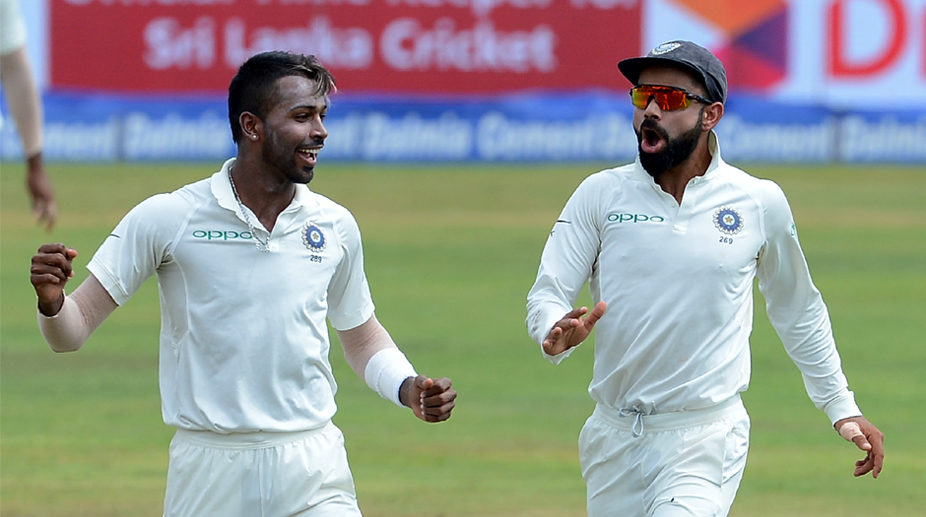
But, once again star all-rounder Hardik Pandya bailed India out. Pandya along with Bhuvneshwar Kumar added 99 runs for the eighth wicket and helped India cross the 200 runs.

The Indian cricket fans, who were earlier upset with the selection of playing eleven and dismissal of Kohli cheaply, came forward to applaud the performance of Pandya.


Equity MFs inflow at record Rs 1.3 lakh cr in 2017

PTI | New Delhi |

Investors pumped in a record Rs 1.3 lakh crore in equity mutual funds in 2017 on the back of low bank deposit rates and lacklustre performance of gold and real estate.

The strong inflows pushed the asset base of equity MFs to Rs 7.7 lakh crore last year from Rs 4.7 lakh crore in 2016, latest data with the Association of Mutual Funds in India (Amfi) showed.

Fund houses attributed the strong inflow to continuous participation from retail investors through systematic investment plans (SIPs), positive returns from equity funds and steps taken by Amfi to create awareness among investors.

“The year 2017 has seen record inflows in equity mutual funds (MF) driven by low bank deposit rates and loss of investor interest in alternatives such as property and gold due to the lacklustre performance of these asset classes.

“Past performance and hopes of a sharp cyclical recovery in earnings growth have also triggered increased investor interest in equity mutual funds,” Bajaj Capital CEO Rahul Parikh said.

The spike in bank deposits and consequent decline in interest rates following demonetisation on November 8, 2016 has also helped mutual funds.

According to Amfi data, equity and equity-linked saving schemes (ELSS) attracted an impressive inflow of around Rs 1.33 lakh crore last year, much higher than the Rs 51,000 crore inflow seen in 2016.

SIPs have been a key driver for these flows, while EPFO has been another major contributor through passive funds.

Fund houses have garnered over Rs 53,000 crore through SIPs — a preferred route for retail investors to invest in mutual funds as it helps them reduce market timing risk.

The industry added over 9 lakh SIP accounts each month on an average in 2017, with SIP size increasing from Rs 3,973 crore in 2016 to Rs 5,893 crore last year.

The industry has been running a very ambitious investor awareness campaign, ‘mutual funds sahi hai’ (mutual funds are right) and experts feel it may have added considerably to the growth.

Over the last few years, MFs have proved to be a low-cost and transparent way to channelise savings towards financial investments.

Franklin Templeton Investments India President Sanjay Sapre said going ahead, low penetration of mutual funds, coupled with increasing levels of financial literacy and lack of suitable alternatives for long-term wealth creation, will drive growth for the segment.

“Further, technology is likely to be a key enabler of growth to deepen reach and build scale using the trinity of Jan Dhan, Aadhaar and mobile (JAM) for everything from KYC to payments.

“This will not only help improve distribution reach across the country but will also reduce costs and improve ease of investing,” he added.

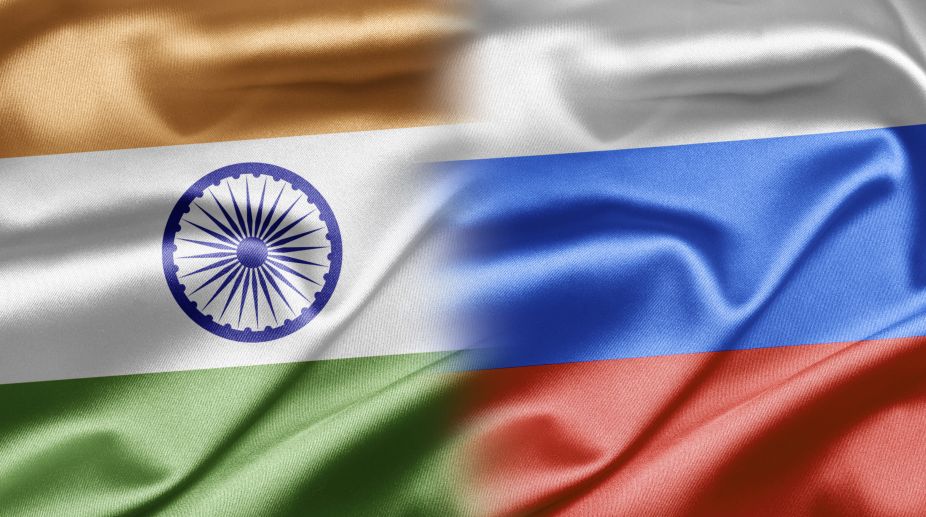
Russia keen to sell S-400 missile defence system to India

Ashok Tuteja | New Delhi |

Russia is believed to have conveyed to India its keenness to sell its S-400 air and missile defence system and urged New Delhi to take an early decision on the proposed deal.

The issue is learnt to have figured in the context of defence cooperation during a meeting of the India-Russia Inter-Governmental Commission on Trade, Economic and Cultural Cooperation, co-chaired by External Affairs Minister Sushma Swaraj and Russian Deputy Prime Minister Dmitry Rogozin in New Delhi last month.

Informed sources said Swaraj assured the Russian side that India was committed to further intensifying its age-old military and technical cooperation with Moscow, notwithstanding its plans to manufacture defence equipment under the ‘Make in India’ programme and diversify its purchases.

Sources said the two sides were at this stage holding regularly talks, focusing on technical issues connected with the S-400 deal. These issues related to pricing, training, transfer of technologies and setting up of command and control centers.

India has also conveyed to Russia that New Delhi has its own procedures and internal mechanisms which have to be followed so that the deal was concluded in such a way that the result was satisfactory and met this country’s requirements.

Sources denied there was any tensions between India and Russia over military and technical cooperation. Reports in the media about difficulties in the relationship were inspired by interested parties. ”Our military-technical cooperation is long-standing based on mutual trust and understanding,” they added.

Sources also refuted reports that US sanctions on Russia had cast a shadow on India-Russia defence cooperation. As far as India was concerned, it was not a party to the sanctions, they added.

This comes close on the heels of statements by senior Russian officials that negotiations between India and Russia on S-400 missile system had reached a very profound stage.

The S-400 is Russia’s fourth-generation air and missile defence system. It is currently Moscow’s most advanced deployed system, although a fifth-generation version, the S-500, is under development.

Islamabad to continue engagement with Washington: Pakistan official

IANS | Islamabad |

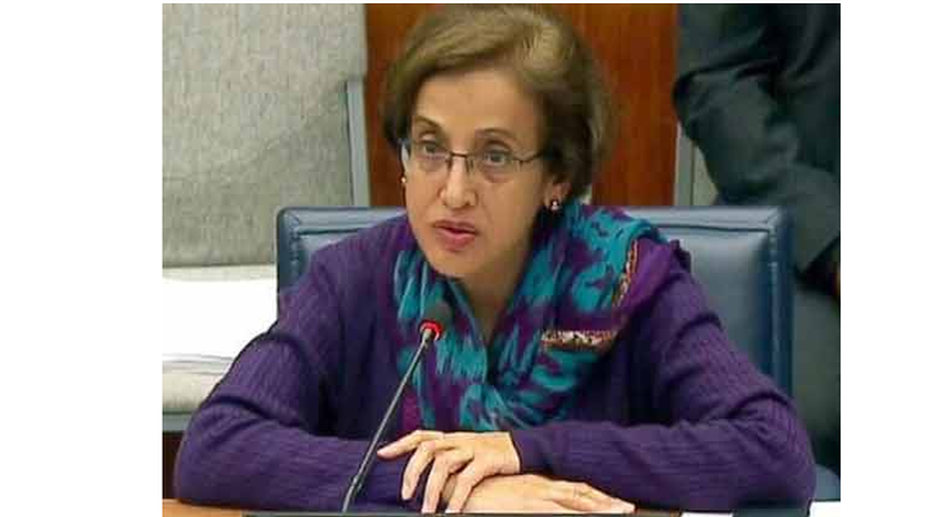
Pakistan Foreign Se­cre­tary Tehmina Janjua has said that the country will continue to have engagement, as far as possible, with the US because America is not only a global power but also has its presence in the region, and “for us, it’s almost our neighbour”.

Delivering a lecture on ‘Pakistan’s Foreign Policy Issues’ at the Institute of Business Administration (IBA) in Karachi on Saturday, she said: “We need to continue to have a measured response to all the rhetoric coming out of the US,” reports Dawn news.

In reply to a question, Janjua said US President Donald Trump’s tweet on January 1 could be well thought out or he was just being his impulsive self, or it could be a result of any other reason such as the fact that the US was not doing well in Afghanistan.

“The tweet that came on January 1 was a tweet that came for many reasons. We are trying to analyse why that tweet came. It could have been some briefing material given to him in the morning… What triggered it?”

Answering a question on Pakistan being put by the US on the watch list for violation of religious freedom, Janjua said it had political reasons because right next door (in India) mob lynching of Muslims and minorities took place but no one took notice of it.

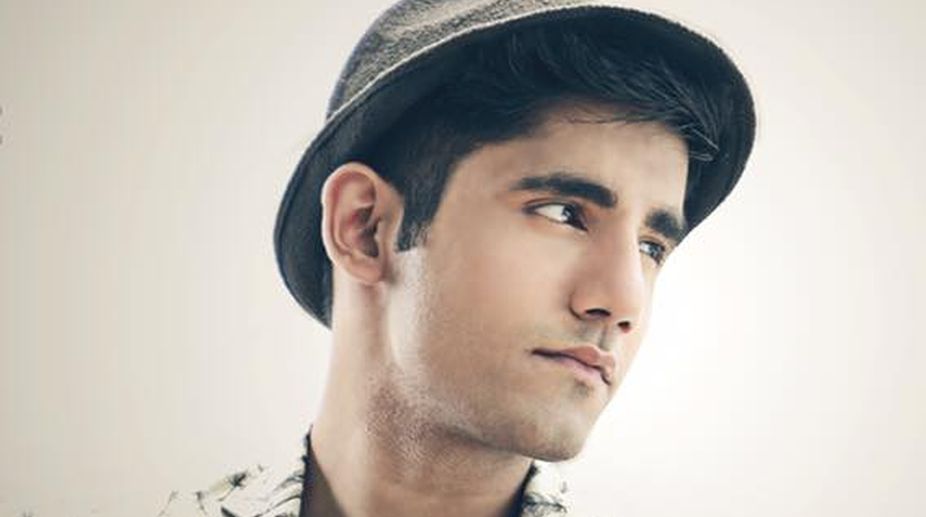
Varun Sood, Ayesha Adlakha to host eSports league UCypher

IANS | Mumbai |

Popular video jockey Varun Sood and actress Ayesha Adlakha will be hosting UCypher, a multi-platform eSports league.

Sports presenter Suhail Chandhok has been roped as a guest host.

Varun and Ayesha will be seen encouraging gamers and bringing out the most competitive side of the players in the first season of UCypher, read a statement.

“I am thrilled to partner with UCypher and be a part of a revolution in the gaming space in the country. ESports as a genre has immensely grown and its high time e-gamers got their due. I’m sure gaming fans are going to love this. The league has a great team in place and I’m looking forward to many great seasons to come as well,” Varun said.

To this, Ayesha added: “I’m excited to see where this journey takes us and equally excited to be a part of the e-sport journey in India.”

The league is planned by Ronnie Screwvala (Founder of U Sports) and sports business veteran Supratik Sen (Co-Founder and CEO of U Sports).

Suhail is also very “excited to get the opportunity to co-host UCypher”.

“It’s a unique idea and a great platform that has brought together the internet and gaming, both of which are very relevant and popular amongst today’s audiences. Working with a great team like Ronnie and Supratik is definitely going to help take the show to the next level. I hope the viewers enjoy it,” he added.

Rs 31,930 cr initiatives to decongest Delhi: Nitin Gadkari

PTI | New Delhi |

Major projects entailing an investment of Rs 31,930 crore are in the pipeline to decongest the national capital, including development of the Dwarka Expressway at a cost of Rs 6,000 crore, Union minister Nitin Gadkari said.

The initiatives, some of which are progressing fast, are in line with the Modi government’s vision to ensure seamless flow of traffic in the National Capital Region (NCR) besides minimising vehicular pollution, Road Transport and Highways Minister Gadkari told PTI.

“We have undertaken projects worth Rs 31,930 crore to decongest Delhi and the NCR region and minimise vehicular pollution, which has become a major problem,” the minister said.

Work on the Rs 12,000 crore Eastern Peripheral Expressway and Rs 6,000 crore Delhi-Meerut Expressway is on full swing and bids have been invited for the Rs 6,000 crore project for development of Dwarka Expressway, he said.

“Work has already been awarded for decongestion of Dhaula Kuan-airport corridor to be executed at a cost of Rs 260 crore besides detailed project report (DPR) is in progress for Rs 5,000 crore new ring road project (UER II) for Delhi,” Gadkari said.

Last month, chairing a high-level meeting attended by Delhi Lieutenant Governor Anil Baijal, among others, Gadkari had asked officials to expedite the Urban Extension Road (UER) project. It was also decided that the extra cost of UER II, phase one will be shared by NHAI and DDA on a 50:50 basis.

Master Plan for Delhi has proposed UER II, which connects National Highways 1, 10 and 8. This road was proposed to reduce traffic on the Ring Road and Outer Ring Road.

It was also decided that DDA will hand over encumbrance free land.

Gadkari said apart from UER II, bids have been invited for development of Gurgaon-Sohna road with elevated highway/ six-lane road with service roads. The project will cost Rs 1,500 crore.

Besides these projects, “90 per cent progress have been achieved in development of major injunctions on NH 8 in Gurgaon to be executed at a cost of Rs 1,000 crore and construction of a flyover at Hero Honda Chowk entailing Rs 170 crore cost,” the minister said.

About Delhi-Meerut Expressway, he said its first leg which includes India’s first 14-lane highway and 2.5 metre- wide cycle track, is set to be inaugurated anytime now.

The minister said it is being completed in a record 14 months as against the scheduled 30 months and will reduce the travel time significantly from Delhi to Meerut to just 45 minutes from three-four hours at present.

Prime Minister Narendra Modi had on December 31, 2015 laid the foundation stone of the expressway.

As far as the Eastern Peripheral Expressway is concerned, the National Highways Authority of India (NHAI) has recently told the Supreme Court that hurdles in its ongoing construction have been resolved in a “satisfactory manner” in the states of Uttar Pradesh and Haryana.

The 135-km-long expressway envisages signal-free connectivity between Ghaziabad, Faridabad, Gautam Budh Nagar (Greater Noida) and Palwal.

Rajasthan saw ‘Padmavati’ protests, lynchings in 2017

PTI | Jaipur |

Protests over Sanjay Leela Bhansali’s period drama Padmavati, lynching of a man over suspicion of cow smuggling and encounter of most wanted gangster Anandpal Singh were among the several issues that kept Rajasthan in news in 2017.

The Vasundhara Raje-led BJP government, which completed four years in office on December 13, was cornered over ‘black law’ which proposed to bar media from naming a public servant until the government sanctions the investigation.

Riding roughshod over protest, the government tabled the Code of Criminal Procedure (Rajasthan Amendment) Bill in assembly, for which the government had already brought an ordinance, but it was later referred to a select committee of the house.

Not only this, Raje and her government were criticised and targeted by senior legislator of the ruling party Ghanshyam Tiwari who along with his supporters also attempted to stage a protest in front of her house in civil lines against her twin residence dispute.

2017 began on an unpleasant note for filmmaker Bhansali who was slapped by Sri Rajput Karni Sena activists during a violent protest at the sets of the film Padmavati at Jaigarh fort.

This was the beginning of an unending controversy which caught the attention of the country with members of Rajput community accusing Bhansali of trying to present distorted facts with regards to legendary queen of Mewar Rani Padmavati, who along with 16,000 other women had committed Jauhar or self immolation in Chittorgarh fort to protect their honour when Muslim ruler Alaudddin Kilji had attacked the fort.

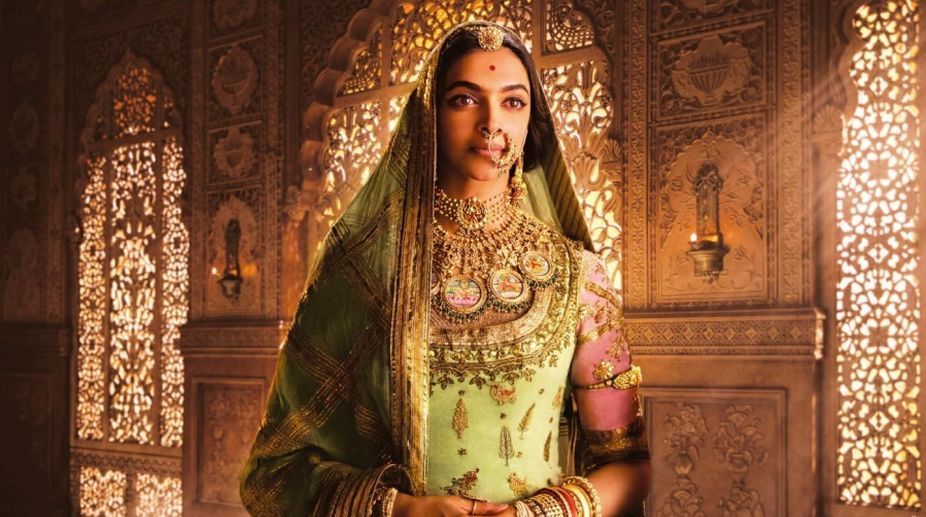
Bhansali’s team assured the leaders that no love scene or dream sequence were filmed between Rani Padmavati (played by Deepika Padukone) and Alauddin Khilji (played by Ranveer Singh).

On December 30, the censor board decided to give Padmavati a UA certificate and suggested director Bhansali to change the film’s title to Padmavat.

The board also suggested modifications in disclaimers, pertinently adding one regarding not glorifying the practice of “Sati” and also relevant changes in the song “Ghoomar” to befit the character portrayed.

The state police heaved a sigh of relief after eliminating most wanted notorious criminal Anandpal Singh in Churu in June.

Anandpal was carrying a cash reward of Rs 5 lakh after he escaped from police custody in Ajmer in September 2015 while being taken back to prison from a court.

He was killed in a police encounter, which evoked sharp anger among Rajput community members who in large numbers gathered at his village Sanvrad in Nagaur. Family members demanded a CBI inquiry and refused to perform his funeral.

There was violence and authorities imposed curfew in affected areas in Nagaur district. The body was cremated on July 13 after police served notice to the family members to conduct the funeral as per the direction by the state human rights commission.

The state government later assured the community members to hand over the case to CBI.

The BJP government introduced a controversial ordinance which sought to protect both serving and former judges, magistrates and public servants in the state from being investigated for on-duty action without the government’s prior sanction.

The Criminal Laws (Rajasthan Amendment) Ordinance 2017, promulgated on September 7, also sought to bar the media from reporting on accusations till the sanction to proceed with the probe was obtained. Amid protests by Opposition, rights activists and the media, the government later referred the bill to a select committee.

On the political front, Raje faced lot of criticism from rebel BJP MLA Tiwari, who was served show-cause notice by the party’s national discipline committee in May. He later announced that political platform would be formed.

Tiwari also targeted the party leadership for making K Alphons the party candidate for Rajya Sabha election saying the party ignored and sidelined leaders and workers of the state and chose to field an “outsider”. Union Minister of State for Tourism Alphons was elected unopposed to Rajya Sabha from Rajasthan in November.

The Congress in Rajasthan led by Sachin Pilot left no opportunity to corner the state government on various occasions. One of the prominent issues which the Congress party as opposition raised was that of farmers. It held the state government responsible for suicide of farmers and demanded loan waiver for the farmers.

The Gujjar reservation issue also saw important developments in the state with the government initiating to raise OBC quota from 21 to 26 per cent for granting 5 per cent reservation to Gujjar and four other castes.

The government introduced a bill for this but it was challenged in the high court as it raised the reservation limit in the state from 49 per cent to 54 per cent, against the legal limit of 50 per cent.

Later, the government decided to give one per cent quota to the five castes so that the reservation limit does not cross the 50 per cent ceiling.

Apart from these developments, the Pahlu Khan lynching on suspicion of cow smuggling in Alwar and the brutal killing of a man for alleged ‘love jihad’ in Rajsamand were a blot.

Some other incidents of cows smuggling were also reported from Alwar, which shares border with Haryana and forms a part of Mewat region.

In one of such case, an alleged cow smuggler was killed in exchange of fire with police while in another case in the same month of December, another alleged cow smugger was injured when his speeding vehicle overturned when police were chasing the vehicle in Alwar. He was also beaten by locals.

Following those incidents, BJP MLA from Ramgarh (Alwar) Gyan Deo Ahuja warned “you will be killed if you smuggle and slaughter cows”.

Medical and health services were badly hit in the state when in-service government doctors went on strikes in November and December to press for their demands.

Wyndham Hotel Group to add 40 new hotels in India by 2020

PTI | New Delhi |

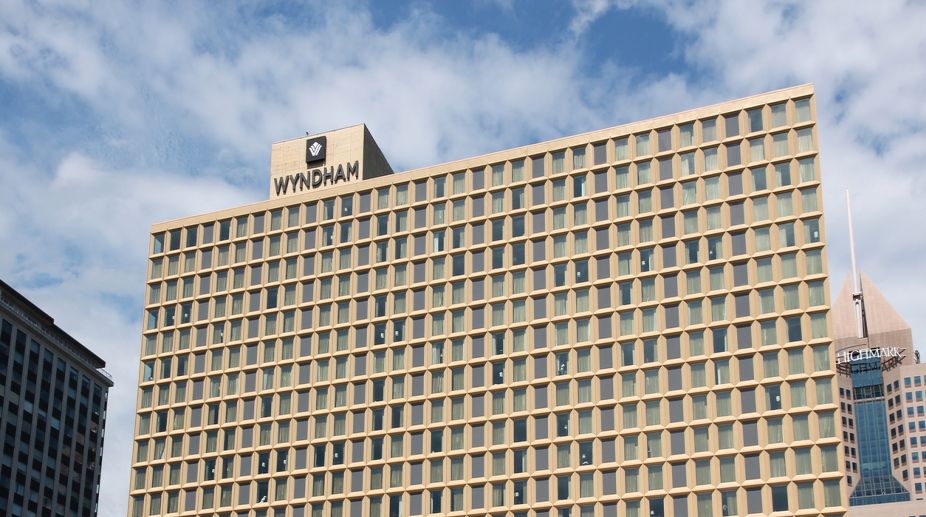
Global hospitality major Wyndham Hotel Group is looking to add 40 new hotels in India by 2020 as part of its expansion plans in the country, a senior company official said.

The company currently has 35 operational hotels with 3,258 rooms under the Ramada, Ramada Encore, Howard Johnson and Days brands in India.

“We aim to have 75 operational hotels in India by 2020 and plan to further expand our footprint in other high potential countries in the region by exploring new opportunities,” Wyndham Hotel Group Eurasia Regional Vice President Deepika Arora told PTI.

Emphasising that India is a key market for the Group, she said the company is also planning to introduce some new brands in the coming years such as Hawthorn Suites by Wyndham, Wyndham Grand and Wyndham in India. Wyndham Grand is scheduled to open in Bengaluru in 2020.

Elaborating on the growth strategy, Arora said: “In India, as part of our development strategy, we look to provide global connectivity and brand recognition with further expansion into secondary and tertiary cities as well as leisure destinations.”

The company’s upcoming openings will add leisure locations like Kasauli and Lonavala, pilgrim destinations like Tirupati and Dwarka in Gujarat and business locations like Ghaziabad, Trivandrum, Bhubaneswar among others, she added.

Wyndham Hotel Group has two global business models but it primarily follows franchise models for its hotel brands although in many markets, the company also operates properties under management contract.

In India, the company has largely grown through the franchise model, she added.

“The franchise model has worked well for us and within a short time frame, we grew in India from eight hotels in 2010 to 35 operational hotels to date in 2018,” Arora said.

When asked about the segment that could be a major growth driver for the hospitality major, Arora said: “We are concentrating on the mid-market segment in the country as we see an opportunity for immense growth in this segment.”

There has been a shift with an increasing number of corporate travellers opting for mid-market hotels along with India’s growing middle class with disposable income who are eager to travel and explore, she added.

“Our goal is to ensure that wherever across India or the region that travellers want to go, they will find a Wyndham Hotel Group hotel to meet their needs and their budget,” Arora said.

Wyndham Hotel Group currently has over 8,100 hotels with more than 7,08,500 rooms in 78 countries across 20 brands.

Step up performance to match private players: Par panel to SAIL

PTI | New Delhi |

A parliamentary panel has said PSU steel giant SAIL must adopt necessary measures to remove all bottlenecks and focus on overall improvement in performance in view of competition from private players.

Observing that Steel Authority of India Ltd (SAIL) achieved its highest ever hot metal production at 15.73 million tonnes (MT) during 2016-17, the Standing Committee on Coal and Steel, chaired by Rakesh Singh, said though physical parameters have improved, it should step up efforts.

“SAIL should step up the good efforts for overall improvement in its physical performance so as to make the company more competitive with other players in the market,” the 31-member committee said.

The panel said it is concerned to note the poor performance of Rourkela Steel Plant, IISCO Steel Plant, Alloy Steel Plant and Visvesvaraya Steel Plant that could achieve only 79 per cent, 56 per cent, 38 per cent, 60 per cent and 33 per cent, respectively of their installed capacity of crude steel during 2016-17.

“The company should take all necessary steps to address all the bottlenecks which hampers full capacity utilisation of these plants so that production targets for 2017-18 which are lagging behind during the first half of the year are fully achieved,” the committee observed.

It also directed the PSU to ensure that all its plants are operated at full installed capacity.

The panel noted that though slowly and steadily SAIL has “managed to come on track after suffering initial setbacks during last two years, a lot is yet to be accomplished”.

It said the turnover of the company which was Rs 50,627 crore during 2014-15 was reduced to Rs 43,294 crore during 2015-16 and again rose to Rs 49,180 crore during 2016-17.

Last year, Steel Minister Chaudhary Birender Singh had warned PSUs, including SAIL, to “perform or perish” saying complacency cannot be tolerated at a time when private players are excelling on various parameters.

Chairing a meeting of chiefs of top steel PSUs, the minister had pulled up public sector firms like SAIL and RINL for not only lagging behind on international benchmarks, but were behind their private counterparts and complacent in ramping up capacities.

“On production and productivity parameters, PSUs are far behind their counterparts in private sector. In terms of international benchmarks, performance of Indian steel companies is very poor,” Singh had told PSU top brasses as per the ministry sources.

Also pulling up SAIL for slow progress in modernisation as well as ramping up of capacity, the minister has said deadlines were missed one after another which cannot be tolerated anymore.

 pr

2017, a hectic year for Himachal

PTI | Shimla |

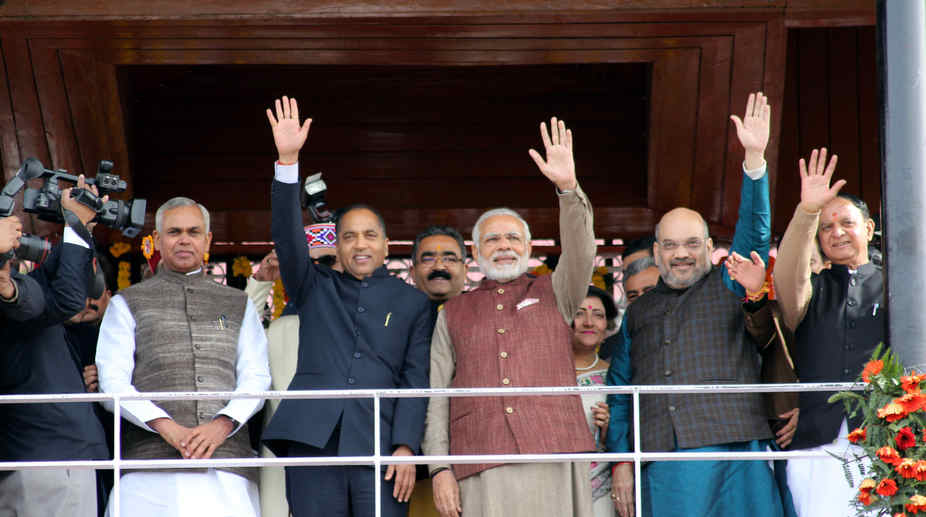
The Kotkhai rape and murder and custodial death cases kept Himachal Pradesh on the boil in 2017 which also saw intense political activities that culminated in the return of the BJP to power.

The BJP bounced back to power with a majority dethroning the Congress and a new government was in the saddle at the end of the year but without Prem Kumar Dhumal, the chief ministerial face of the party, who suffered a shock defeat from Sujanpur constituency.

Fifty-two-year-old Jai Ram Thakur from Mandi district became the chief minister. Mandi district got a chief minister for the first time in the 65-year electoral history of Himachal Pradesh.

The BJP won 44 out of 68 seats against 21 seats bagged by the Congress but the CPI(M) won the Theog seat, making inroads in Shimla district while veteran Congress leader, Vidya Stokes, an eight times MLA whose nomination papers were rejected, called it a day.

Virbhadra Singh, who headed the previous Congress government, remained at loggerheads during the year with state party chief Sukhvinder Singh. The disproportionate assets and the money laundering cases filed against him by the CBI and Enforcement Directorate (ED) also kept him engaged.

The state was on the boil following the gangrape and murder of a 16-year-old school girl while violence erupted following the custodial death of an accused Suraj and the case was referred to CBI on the direction of the high court.

The CBI arrested nine police officials including Inspector General of Police Z H Zaidi, Superintendent of Police D W Negi and DSP Manoj Joshi in the custodial death case, sending shock waves across the state and sullying the image of the police.

The Kotkhai case turned out to be a major poll issue.

It was a good year for the BJP which also won the Shimla Municipal Corporation for the first time in 31 years and captured the posts of Mayor and Deputy Mayor.

The Congress government took several populist measures to woo the voters but the electorate voted for a change, keeping alive the 32-year-old tradition of replacing the government after every five years.

The state witnessed major calamities and road mishaps in which scores of passengers were killed.

The judiciary remained active and investigation of half a dozen cases of crime were transferred to the CBI while the amendment to HP Town and Country Act (Retention Policy) to regularise all illegal constructions on “as is, where is” basis was struck down by the high court.

The National Green Tribunal also came to rescue of Shimla town and banned all constructions in core areas and along the national highways and restricted the height of the buildings in other areas to two storeys and attic. It also directed the government not to regularise illegal constructions .

Himachal Pradesh was declared as first “open defecation free” state in the country while capital Shimla got the ‘smart city’ tag.

During the year gone by, Prime Minister Narendra Modi laid the foundation stone of AIIMS at Bilaspur while the ESI medical college and Chamba medical college were also made functional, raising the total number of government medical colleges to five.

More people should support hearing-impaired children: Poonam Pandey

IANS | Mumbai |

Actress Poonam Pandey on Saturday called for more people to know about and support hearing-impaired children.

Present along with actor Ali Asgar, and actor-producer Kunickaa Sadanand at “Lean an ear, hear the future” competition organized by JOSH foundation, Poonam, talking about being associated with the venture, said: “This is a big thing to be part of, I feel honoured to be here. I will make sure that I will promote JOSH foundation as much as I can. It is a great cause and everyone should support these kids.

“They are brilliant kids and more people should know about them.”

‘Lean an ear, hear the future’ is an interschool dance competition which was held here on Saturday. Organized by JOSH foundation, the competition showcased the impressive result of the hard working hearing impaired children from Mumbai.

Asked about her upcoming projects, Poonam said: “I just finished a film but I don’t want to talk about it here. These kids deserve our attention. I really enjoyed the performances.”

JOSH foundation has been supporting hearing impaired children in their quest for excellence for the last ten years.

Poonam was last seen in a cameo in Aa Gaya Hero starring Govinda.

A satire cum thriller – inspired by politics

IANS |

Title: Miss Laila Armed and Dangerous

Author: Manu Joseph

Publisher: Fourth Estate

Pages: 210

Price: Rs 499

A lanky woman, arms akimbo, wearing a tucked-in white shirt, divided skirt and red high heels is standing with her back to us. There’s a mike in front of her and she’s addressing a nondescript crowd, waving flags — the ‘Bhagwa Dhwaj’ (the saffron flag of Shivaji, adopted by the RSS) to be specific. But what catches the eye is her dress — specially her khaki shorts.

The cover of Manu Joseph’s “Miss Laila Armed and Dangerous” is telling.

“Just the sight of Hindu patriots this way in the uniform of the Sangh reminds Muslims of death,” writes the novelist-journalist in his new book.

The woman in the Sangh outfit is Akhila Iyer, one of the protagonists in the book. And if the way she dresses is any hint, Miss Iyer is that rare breed that has both a sense of humour and strong political views. She is all that and much more.

In “Miss Laila…”, Joseph is having fun. He is unapologetic and out to offend. And he spares no one. If you’re a Right-winger or a Left lib, Arundhati Roy fan or Modi bhakt, a feminist or an activist or a journalist, Anna Hazare follower or Irom Sharmila sympathiser — this book is NOT for you. Or maybe it is.

The novel opens as a political satire, with Miss Iyer — a neurosurgery student who has a love-hate relationship with Left liberals (in possible revenge at her mother who had abandoned her to carry out her ultra-Left activities) — playing pranks on everybody, and exposing their hypocrisy.

As far as the “patriots” go, Joseph also makes fun of them, though in a subtly indirect way, with characters like Damodarbhai — DaMo for short — and his minions, a certain Professor Vaid, and through “White Beard”.

There are two gripping narratives running parallel to each other. One involves Miss Iyer helping a man caught in the debris of a collapsed building survive by crawling to him through a tunnel and feeding him. Then he whispers to her something which has the intelligence agency racing against time to avert a terror attack.

The other concerns Miss Laila — of the title — whose character is loosely based on the 19-year-old Ishrat Jahan, an alleged terrorist killed in a “gunfight” with police while on the way to assassinate the then Gujarat Chief Minister Narendra Modi, whom most of us will only recognise from that picture of four dead bodies strewn on a road besides a blue Tata Indica.

There have been many theories on the Ishrat Jahan case, some holding that she was an innocent girl who got mixed up with wrong people. Joseph seems to subscribe to this view in his fictionalised tale that is too close to the real thing.

“Miss Laila…” is not an investigative piece in that it doesn’t provide any new information. But it brings a fresh perspective to the story of a “hip” Ishrat Jahan from Mumbra — a sister to six siblings, their idol and bread winner. Instead of letting the character of Laila speak for herself, the author lets her younger sister to be the narrator and that’s what humanises the story.

With his earlier works “Serious Men” and “The Illicit Happiness of Other People”, Joseph has already established himself as a prolific writer in English. With “Miss Laila…” he has set a new benchmark for anyone looking to spin newspaper headlines to write an everyday politics-inspired thriller.

While anyone can write a political satire-cum-thriller, which is at once funny and dark, it is a writer like Joseph who can make you question and laugh at your beliefs. (Unless you are a bigot, in which case the only literature you should be reading is that recommended by Dina Nath Batra).

Joseph addresses many issues in this stylishly-written 210-page book. Capturing the themes of identity, selfishness and inefficiency, he talks about the life of extras in the film industry, poor disaster management in the country’s financial capital and journalists who swing facts to show the poor in worse condition than they actually are in. He does all this while maintaining the flow of the narrative and never losing the plot.

And there is never a dull moment.

In one chapter, the author goes deep into the ways of the Indians with his description of “faces only an Indian can make”. Like when “he crosses the road like a cow, and is startled by a truck… when boys fall off trains because they were dangling from the doorways, when illegal homes built on infirm soil collapse, when pilgrims are squashed in annual stampedes inside narrow temples”.

In another, flaying the Hindu outfits’ claims of Muslims reproducing to take over the world, Joseph says that one thing Damodarbhai would never say out loud is “reason why the Muslim population is growing faster than the Hindu… Muslims don’t kill their girls in the womb”.

Writing about the Indian Marxists and their love for French wines when they wish to discuss poverty and revolution, he says, “Actually, they are happy with South African wines, too.”

There is so much happening, the moment you finish reading the book feels like you just got off a roller coaster. And you want to take the ride again. Luckily for us, the book is being made into a movie.

IIT-KGP course to rediscover technique used in building ancient landmarks

PTI | Kolkata |

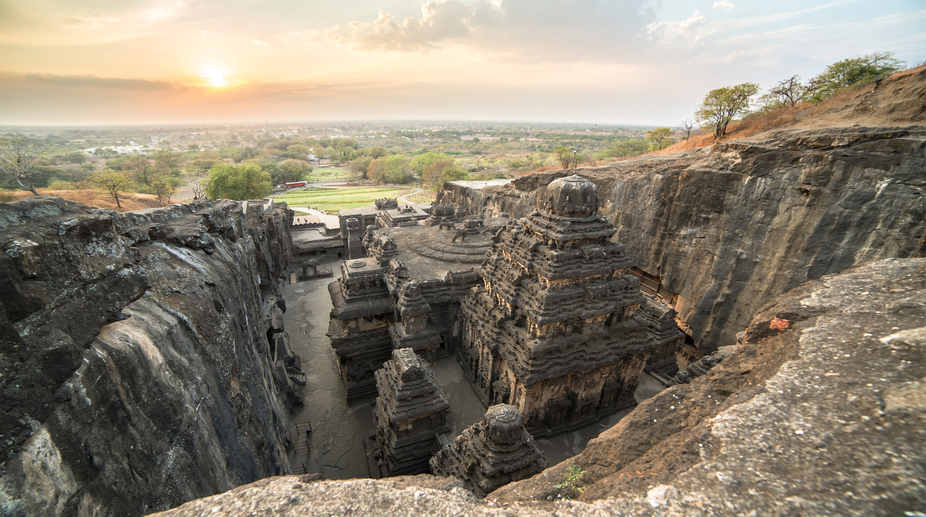
The IIT Kharagpur has embarked on a course to rediscover the technique used in building ancient Indian landmarks such as the Dilwara Jain temple or the Kailasa temple of Ellora caves.

Such ancient structures are marvels of architecture built from top to base cutting a single gigantic stone, IIT Kharagpur Director Prof Partha Pratim Chakrabarti told PTI.

“We are amazed to think about the tools used in the construction of structures such as the Dilwara temple or the Kailasa temple,” Chakrabarti said.

These structures were built from the top, while modern day architecture talks about elevation from the ground, he said.

“We have to find out the design and implementation technology of these structures. We have to study the symbols dating back to that era,” he said.

Construction of the Kailasa temple of Ellora caves in Maharashtra was attributed to 756-773 CE, while the Dilwara Temple in Rajasthan was completed between the 11th and 13th centuries CE.

HC quashes censor board order on ‘Battle for Banaras’ film

PTI | New Delhi |

The Delhi High Court has set aside the censor board’s decision of refusing public viewing of a documentary chronicling the high-voltage 2014 campaign for the Varanasi Lok Sabha seat involving Narendra Modi, Arvind Kejriwal and Congress candidate Ajay Rai, saying it does not have hate speeches.

Modi won the elections comfortably.

The court said that while viewing Battle for Banaras, one does not get an impression that the documentary film tries to divide people on caste or communal lines.

“After having viewed the film, I am of the view that the broad general finding rendered by the Central Board of Film Certification (CBFC) as well as Film Certification Appellate Tribunal (FCAT) that the film is full of hate speech and inflammatory speeches is not sustainable.

“The film merely reproduces the speeches made by various leaders and party candidates at the time of the general elections. It is not the case of the board or the FCAT that what the petitioner has sought to project is an incorrect depiction or portrayal of what has transpired,” Justice Sanjeev Sachdeva said.

The court further said it was not the case of the board that what the petitioner, the documentary’s producers, projected is not extract of the speeches of the candidates.

It said that the petitioner has tried to project through the film the views and extracts of speeches of various candidates, workers or leaders of different parties.

It added that though some words used or some portion of the film may be in conflict with the guidelines framed by the central government in terms of the Cinematograph Act, neither the board nor the FCAT has clearly spelt as to which part or dialogue of the film would violate the guidelines.

The court sent the matter back to the FCAT to re-examine the film and pass a speaking order within four weeks.

It asked FCAT to pin point the scenes or dialogues which may be in conflict with the guidelines for film certification framed under the Act.

The court quashed the 2015 and 2016 orders of the board and the FCAT saying they are not sustainable.

It said that a viewing of the film, which is unpartisan, and a reading of its script clearly showed that there is no language or scene that is either defamatory, derogatory, abusive or likely to offend or affect public order, decency or morality or the sovereignty or integrity of India.

The petition had sought quashing of the April 4 order of the FCAT and the October 16, 2015 decision of the CBFC refusing to certify the documentary Battle for Banaras, saying no reasons were given for rejecting their plea for certification.

The petition alleged that the censor board and FCAT orders contained no mention of what parts of the film were objectionable and violated the guidelines of film certification issued under the Cinematograph Act.

Freud’s threefold personality division and its literary manifestations

IANS |

Personality cannot be entirely predictable but its basic pathways can be somewhat mapped. It, however, comes into its own when it meets a contrasting outlook(s), and these have to combine or clash — more so in literature. Anything with more than one principal character works on the interplay of differing personality types — ranging from two to five. The optimum is three — reflecting the famous Viennese psychologists conjecture of personality.

While most of Sigmund Freud’s theories have been discredited or replaced, they continue to make their presence felt in popular media. Among the most prevalent is his classification of the three constructs making up the psyche.

Outstripping the association of a passionate, impetuous, enthusiastic character matched with a more serene, controlled and observant counterpart (say Dr Watson/Sherlock Holmes or conversely, Tintin/Capt Haddock), the four-philosophy (cynical, realist, optimistic or apathetic/conflicted) or four-temperament (phlegmatic, sanguine, choleric and melancholic) ensemble or the five-man band (leader, lancer, smart guy, big guy and chick) is the Freudian Trio.

This trio of the Id, Ego and Superego is present in a wide range of literature from possibly the most famous trio of Russian brothers to the Boy (Wizard) who lived, a swordfight and intrigue story set in early 17th century France to the fantastic tale of a scientist and his aides taken (unwillingly) on a marvellous undersea tour, and the defining tale of Christmas to arguably the most famous space story — as seen on TV.

But what exactly are these three? Freud, in his “Beyond the Pleasure Principle” (1920) and “The Ego and the Id” (1923), postulated the individual psyche comprised these three parts, all developing at different stages in life and non-corporeal. Saul McLeod of the University of Manchester says that, at the simplest, they can be understood as the primitive and instinctual part of the mind that contains sexual and aggressive drives and hidden memories (Id), the moral conscience (Superego), and the part that mediates between desires of these two (Ego). Each has its unique features and they mix to form a whole, each part making its contribution to an individual’s behaviour.

More simply, Id is completely unconscious and has no judgments or sense of morality and governs our basic instincts. For Superego, Freud, who was in a sexist time, envisaged it as a symbol of the strong father figure — emerging after a boy jettisoned the Oedipus complex and since women don’t display this, their Superego is less developed. Ego, the referee, being realistic and rational, is the organised — and organising — part of the consciousness. While this is now commonly thought as a central mediator between the competing demands, Freud thought of it as more of a middleman, driven by the Id and confined by the Superego.

Freud originally used “das Es” (id), “das Uber-Ich” (superego) and “das Ich” (ego), or “the It”, “the Over-I” and “the I”, which while intelligible to German-speakers, had no evocative English equivalents, so his translator James Strachey coined them from Latin.

But where can we find them? One of the best examples is “Star Trek: The Original Series” where the highly emotional Dr James ‘Bones’ McCoy is Id, the supremely logical Spock is the Superego and Captain James T. Kirk, who strikes the middle path, is the Ego.

Then Alexandre Dumas’ “The Three Musketeers” has the boastful and hedonistic Porthos (Id), the man of the world Aramis (Superego) and the quiet, noble Athos (Ego). Jules Verne’s “20,000 Leagues Under the Sea” is itself Freudian involving being dragged down to subterranean depths in a mysterious vessel, seeing frightening creatures, and so on. Its not difficult to figure what impulsive Canadian harpooner Ned Land, calm aide Conseil, and mostly calm but sometimes upset Professor Aronnax represent.

In Fyodor Dostoyevsky’s “The Brothers Karamazov”, the eldest Dmitri, with his boozing and wenching, the cold, clever and contemptuous Ivan and the youngest Alyosha, who is the only to have good relations with the others, are also obvious. Try to identify the Three Ghosts of Christmases that Scrooge sees in Charles Dickens’ “A Christmas Carol” too?

There is Harry Potter world — Harry, with his desire to save people at any cost, can be Id but with his constant mediation between Ron Weasley and Hermione Granger and his constant reliance on both, can be Ego. Ron, a balance between Harry’s impulsiveness and Hermione’s cautiousness can be the Ego or as fond of eating, oblivious to others’ needs or states, can be Id. However, knowledgeable, respectful and rule-abiding Hermione is always the Superego.

Also, in the Marauders (save Peter Pettigrew) — the born rebel, highly emotional Sirius Black is Id, the less reckless but over-confident James Potter is Ego and studious and sensible Remus Lupin is Superego.

Another popular fantasy series — Rick Riordan’s Percy Jackson series — also display this, with again the wise woman protagonist (Annabeth Chase) the Superego, Percy, whose primary goal is to help his friends, the Id, and Grover Underwood the Ego.