Logo

NF Railway introduces new technology to tackle fog

IANS | Guwahati |

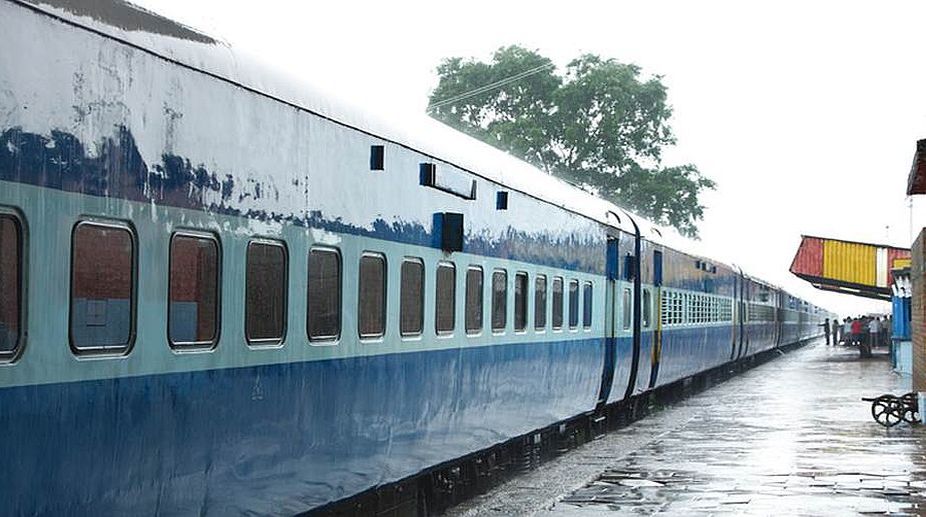
The Northeast Frontier Railway (NFR) has introduced a new GPS-based system in all locomotives for an auto warning to train drivers during the foggy season, an official said on Thursday.

The system is also expected to ensure the timely running of trains.

NFR Chief Public Relations Officer, Pranav Jyoti Sharma, said an equipment called FogPASS (Fog Pilot Assistance System for Safety), consisting of an inbuilt battery and GPS antenna with a magnetic base, has been installed in all locomotives in the NFR.

“The device, which weighs 1.5 kg, is carried by the loco pilot at the time of assuming charge of the locomotive. It is placed on the console of the loco and, as the train moves, it displays the short description and remaining distance of next two landmarks in geographical order on an LCD screen,” he said, adding that landmarks include signals of various types and level-crossings.

“This means that as a train approaches a station, the device will flash the distance left for the home signal of that station. Thus, even if the pilot is unable to physically see the signal, he would be aware of how far train is from the signal and would be alert to notice the aspect of the signal (red, green or yellow) and act accordingly,” he said.

He said there is also the provision of voice announcement from speakers attached to the device. The new device has proved to be helpful to drivers in foggy weather, Sharma added.

“A total of 1,101 such devices have already been allotted to all Divisions for fixing in locomotives. Besides, the Railways has also deployed Frogmen to place detonators on the tracks to alert the loco pilots about approaching signals. Senior railway officials are undertaking night foot-plate inspection and track patrolling to detect cases of rail fracture,” he said.

Railway authorities have also provided sufficient walkie-talkie sets to the crew and station staff. Signal indication booklets have been provided to loco pilot and counselling on working during fog is also being done.

He said FogPASS is also proving to be a boon in speeding up trains during intense fog.

How stress can make you sick explained

Stress can interact with immune cells and regulate how they respond to allergens, causing physical symptoms and disease, a study has found.

PTI | New Delhi |

Stress can interact with immune cells and regulate how they respond to allergens, causing physical symptoms and disease, a study has found.

Published in the Journal of Leukocyte Biology, the study showed how a stress receptor, known as corticotropin-releasing factor (CRF1) can send signals to certain immune cells, called mast cells, and control how they defend the body.

Leukocyte Biology
Photo Credits: Getty Images

For the study, researchers from the Michigan State University (MSU) in the US compared the histamine responses of mice to two types of stress conditions – psychological and allergic – where the immune system becomes overworked.

One group of mice was considered “normal” with CRF1 receptors on their mast cells and the other group had cells that lacked CRF1.

“While the ‘normal’ mice exposed to stress exhibited high histamine levels and disease, the mice without CRF1 had low histamine levels, less disease and were protected against both types of stress,” said Adam Moeser, from MSU.

“This tells us that CRF1 is critically involved in some diseases initiated by these stressors,” Moeser said. The CRF1-deficient mice exposed to allergic stress had a 54 per cent reduction in disease, while those mice who experienced psychological stress had a 63 per cent decrease.

The results could change the way everyday disorders such as asthma and the debilitating gastrointestinal symptoms of irritable bowel syndrome are treated.

irritable bowel syndrome
Photo Credits: Getty Images

“This work is a critical step forward in decoding how stress makes us sick and provides a new target pathway in the mast cell for therapies to improve the quality of life of people suffering from common stress-related diseases,” said Moeser.

Tamil version of ‘Tenali Raman’ out on January 16

IANS | Chennai |

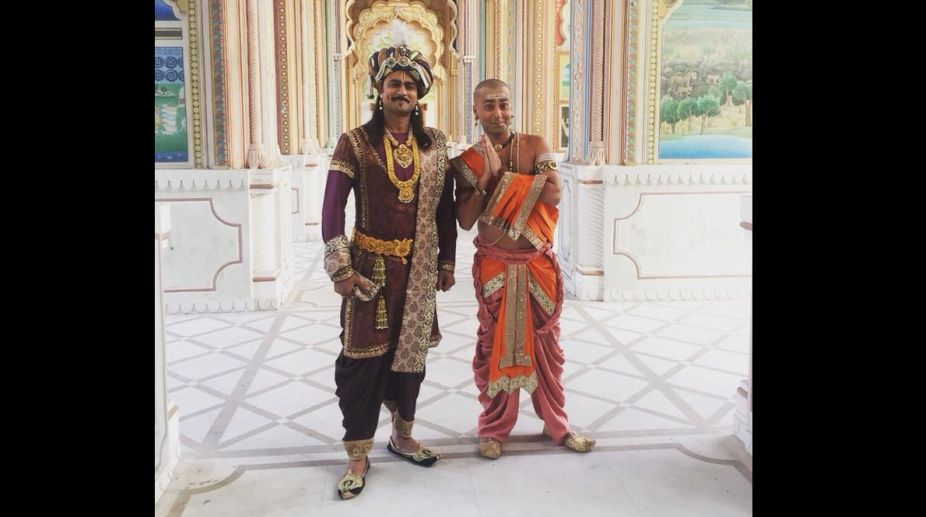
The Tamil version of Hindi television show “Tenali Raman”, which narrates the story of the poet, will go on air on January 16.

The original “Tenali Raman” was aired on Sab TV last year and the Tamil dubbed version will be telecast on Zee Tamil and Zee Tamil HD. It features Krishna Bharadwaj as Tenali Raman, Pankaj Berry as Tathacharya and Manav Gohli as emperor Krishnadevaraya.

“We are committed to presenting fresh and innovative content across genres and categories for our Tamil viewers around the world. Packed with wit and humour, we are confident that the tales of Tenali Raman will entertain our audiences across all age groups and beyond all boundaries,” read a statement from the channel.

The show narrates the story of the legendary poet who was one of the Ashtadiggas in King Krishnadevaraya’s court. He used his wit and intelligence to solve tricky situations and problems that led to his widespread popularity around the kingdom and across generations.

His sharp encounters with his arch rival Tathacharya, who often tries to show him down, forms an integral part of the story.

Chaos as Tamil Nadu bus strike enters eighth day

IANS | Chennai |

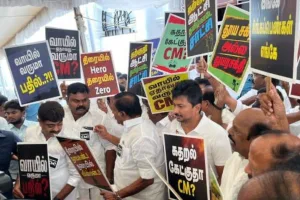
There was mounting anger among the general public as an indefinite strike by workers in state-owned bus services demanding higher wages entered the eighth day in Tamil Nadu.

With only days left for the Pongal festival, there was no indication when the work stoppage would end even after a Rs 750 crore package was announced by the government on Wednesday in a bid to end the work stoppage.

On Thursday, members of central trade unions began an indefinite fast at Pallavan House here in support of the striking bus crew.

A union leader demanded early talks with the government. He said if their demands were met, they would resume work immediately.

The unions requested the Madras High Court to cancel a January 4 government order in favour of Anna Workers’ Union and asked the judge to tell the authorities to start discussions soon with the strikers.

The DMK-backed Labour Progressive Federation said a retired judge must be named to start the talks between the strikers and the government.

The continuing bus strike, in a state where state-run buses ferry hundreds of thousands daily, has forced more and more people to take to local trains, making them over-crowded.

This is the time when tens of thousands leave major cities for their hometowns and villages to celebrate Pongal with their families.

Officials said the government was planning to rope in additional drivers and conductors to resume the stalled buses.

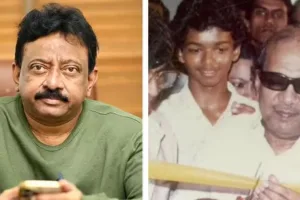
Ram Gopal Varma shoots video with adult film star Mia Malkova and Sunny Leone

IANS | New Delhi |

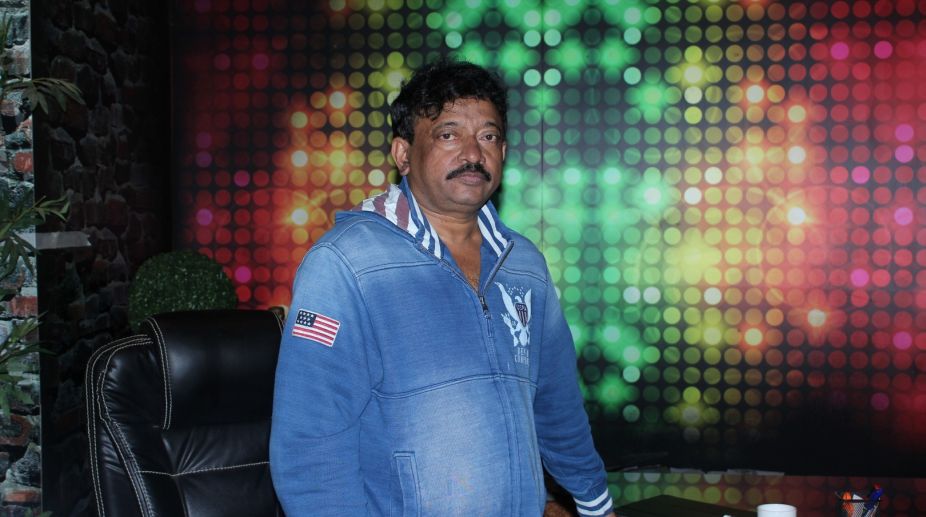
Filmmaker Ram Gopal Varma has shot a video titled “God, Sex and Truth” with American porn star Mia Malkova in Europe and he says it is an “elevating and thought-provoking experience”.

Malkova on Thursday took to Twitter to share her excitement working with an Indian filmmaker.”Indian filmmaker Ram Gopal Varma shot a video with me in Europe titled ‘God, Sex, and Truth’. I will be the second adult star after Sunny Leone to be shot by an Indian feature filmmaker,” she tweeted.

She also thanked the “Sarkar” helmer and said that it was an “exhilarating experience” for her. “Thank you, Ram Gopal Varma, for shooting ‘God, Sex and Truth’ with me. It’s been an exhilarating experience to see myself through your vision,” she wrote along with a photograph of herself sitting nude in front of Varma, who is seen explaining her a scene from the video.

Varma replied to Mia’s tweet saying: “Hey Mia it was such an elevating and thought-provoking experience to film ‘God, Sex, and Truth’.” He added that he has never got a chance to work with Sunny. “I never shot with Sunny Leone but will never forget the experience of shooting ‘God, Sex and Truth’,” he added.

Ready for dialogue with Mamata: Bimal Gurung

PTI | New Delhi |

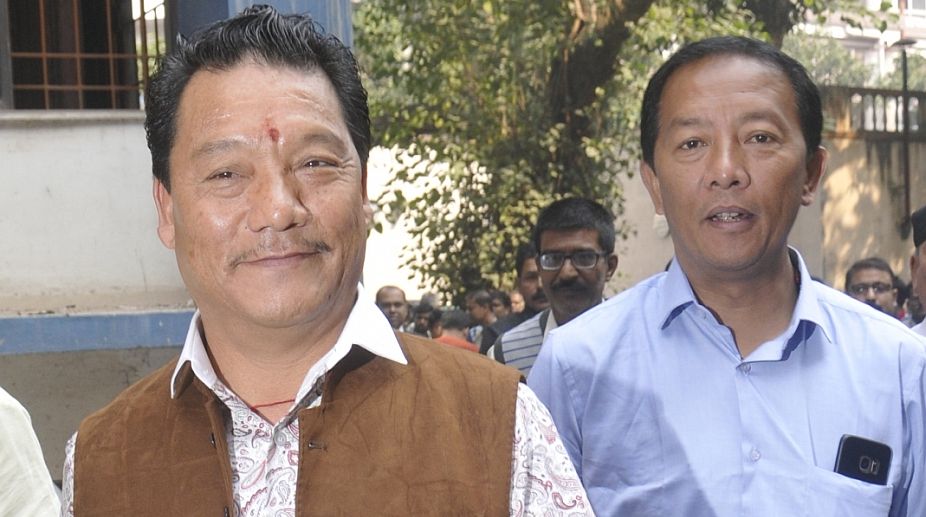
Gorkha Janmukti Morcha leader Bimal Gurung today expressed his willingness to hold dialogue with West Bengal Chief Minister Mamata Banerjee to defuse the crisis in Darjeeling and asserted that his fight was for Gorkha identity.

In his first direct interaction with reporters following a long and violent agitation in Darjeeling last year, Gurung also rejected Banerjee’s accusation that he was a separatist, saying his party’s demands were within the purview of Indian Constitution and he believed in national integrity.

He claimed that the state police had implicated him and his party’s workers in false criminal cases and sought an independent enquiry into the matter.

His party leaders said Gurung was booked in over 350 cases and had been on a run before the Supreme Court asked the police to not take any coercive measure against him after he filed a plea there.

Asked if he was willing to hold dialogue with Banerjee, he answered in affirmative.

“I’m ready for dialogue. Dialogue is the way ahead,” he said.

Though his party has been demanding a separate state of Gorkhaland to be carved out of West Bengal, he did not touch upon the issue in his today’s comments.

“Our agitation is for Gorkha identity,” he said.

He said he had nothing against the people of Bengal but the language and culture of Gorkhas were distinct from them and whatever they were demanding was within the ambit of the Constitution.

Gurung accused the state government of acting in a “one-sided” manner following the start of an agitation in Darjeeling in June last year.

Eleven Gorkhas died in police and other violent action, he said.

Gurung also appealed for peace and asked his supporters to stay away from any illegal activity.

In his absence, a group of other Gorkha leaders led by Vinay Tamang had claimed to be the real representatives of people. Banerjee appointed Tamang as the head of Gorkhaland Territorial Administration (GTA) after Gurung, who was its chief, and his associates resigned.

People close to Gurung have claimed that the Trinamool Congress had propped up Tamang but the GJM leader remained the “real leader” of Gorkhas.

Work on mining corridors in Goa likely to start next month

PTI | Panaji |

The work on the much-awaited mining corridors to ease the congestion on the main roads in Goa due to trucks carrying iron ore is likely to start next month, a senior official said on Thursday

As a part of the project, a network of roads has been planned in South Goa district so that trucks avoid the main roads while transporting the iron ore from the mining leases to jetties on the river fronts.

“The work on the mining corridor connecting Guddemol to Kapxem in South Goa, costing around Rs 100 crore, will begin from February. Attempts are being made to ensure that the work begins on time,” Goa State Infrastructure Development Corporation (GSIDC) Chairman Deepak Pauskar told PTI on Thursday.

The state run-GSIDC has been appointed as the nodal agency to construct these corridors.

Pauskar said the earlier planned work on the corridor from Tilamol to Rivona in South Goa has been delayed as the mining leases around that road are yet to resume operations due to some environmental issues, following closure in 2012.

He also said that Chief Minister Manohar Parrikar will hold a meeting soon for clarity on the funding of the project.

It is yet not clear whether the cost of the project would be borne by the District Mineral Fund (a fund collected from mine owners), the state government or the Centre.

Pauskar said almost all clearances required for the project are also in place.

The forest department is also likely to soon give a no objection certificate (NOC) for the project, as the roads run through its area, he added.

In 2011, then chief minister Digambar Kamat had mooted the idea of having dedicated mining corridors in Goa.

However, it could not take shape as there were funding issues after the mining companies declined to finance it.

Later, the iron ore extraction industry was hit hard by the ban in September 2012.

Vijay Mallya to return to UK Court for hearing in extradition case

PTI | London |

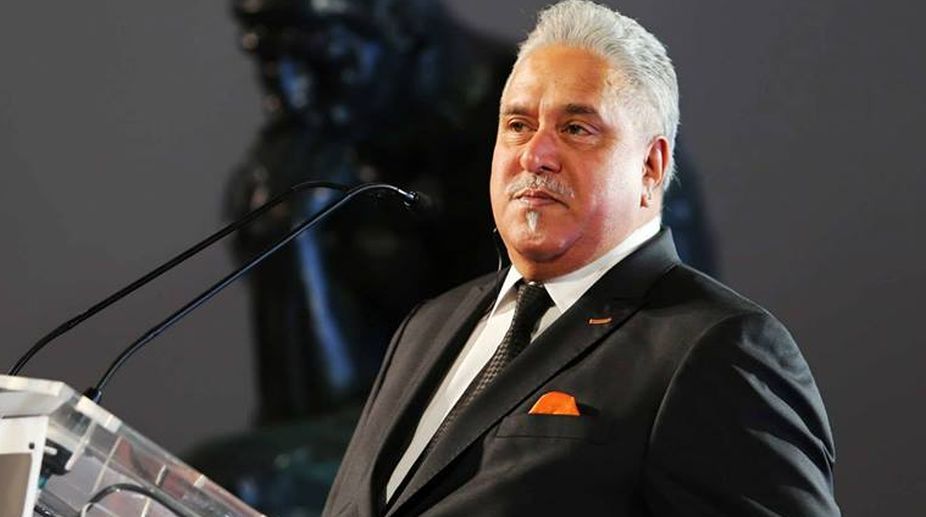
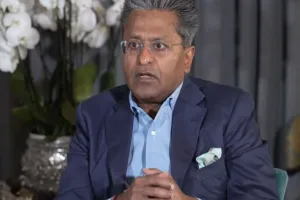
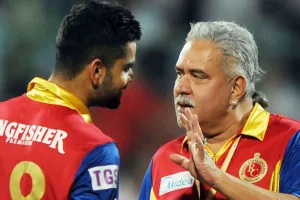
Embattled liquor tycoon Vijay Mallya, wanted in India on charges of fraud and money laundering allegedly amounting to around Rs. 9,000 crore, will return to court in London today for a hearing related to his extradition trial.

The 62-year-old Mallya will be back in the dock at Westminster Magistrates’ Court in London for what is expected to be one of the final hearings in the case to determine the “admissibility” of some of the evidence presented by the Indian government.

Judge Emma Arbuthnot will rule on the evidence, following which she is expected to set a timetable for closing arguments and her verdict on whether the UK-based businessman can be extradited to India to face the fraud and money laundering allegations involving his now-defunct Kingfisher Airlines.

Vijay Mallya’s defence team, led by barrister Clare Montgomery, has called into question much of the material submitted by the Crown Prosecution Service (CPS) arguing on behalf of the Indian authorities, as questionable and claimed there are at least a dozen documents submitted which read like an identical “template”.

The judge had directed both sides to submit their arguments for and against the admissibility of the material, which will be taken up this week.

Judge Arbuthnot had also sought further clarifications related to availability of natural light and medical assistance at Barrack 12 of Mumbai Central Prison on Arthur Road, where Mr Mallya is to be held if he is extradited from Britain.

The CPS had confirmed that it would provide the required information from the Indian side.

“The government has been very cooperative and we have had no difficulty in obtaining any information,” CPS barrister Mark Summers had told the judge at the last hearing in the case on December 14.

Earlier, Ms Montgomery had fielded UK-based prison service expert Dr Alan Mitchell, who referenced a medical report on Mr Mallya which claims the businessman suffers from “diabetes, coronary artery disease and sleep apnea”.

Dr Mitchell had stressed that those conditions would require regular “monitoring” and a healthy “diet” and called into question the suitability of Indian prisons in this regard.

As part of a second-hand account, Mitchell also related gruesome details of conditions endured at Puzhal Jail in Chennai, from where six former British soldiers were released last year.

The CPS had sought to counter this line of defence on the grounds that Arthur Road Jail in Mumbai cannot be compared to Puzhal Jail in Chennai.

“India is a huge country, both in terms of population and size…some states are more wealthy than others…and conditions in the prisons in any given state can vary greatly from state to state and within a state. Some may be seriously overcrowded, others not so,” said Mr Summers.

Earlier in the trial, the role of the Central Bureau of Investigation (CBI) had come under the court’s scanner prompting the CPS to take political economist Lawrence Saez, a professor in the department of politics at the School of Oriental and Asian Studies (SOAS) in London, to task during his expert statement for the defence.

As part of his witness statement, Mr Saez had claimed that Vijay Mallya is being “unfairly persecuted on account of his high profile corporate persona” and being “unfairly targeted” by political parties trying to lobby for political gains against each other.

The extradition trial, which opened at the London court on December 4, is aimed at laying out a prima facie case of fraud against the tycoon, who has been based in the UK since he fled India in March, 2016.

It will also seek to prove that there are no “bars to extradition” and that Mr Mallya is assured a fair trial in India over his erstwhile airline’s alleged default of over Rs. 9,000 crore in loans from a consortium of Indian banks.

While the CPS’ stand is that Vijay Mallya did not intend to repay the loans he sought because his airline’s demise was inevitable, Ms Montgomery is trying to establish that Kingfisher Airlines was suffering from consequences of a wider global financial crisis.

Vijay Mallya was arrested by Scotland Yard on an extradition warrant in April, 2017 and has been out on bail on a bond worth 650,000 pounds.

Chief Magistrate Arbuthnot will present her ruling within a time frame she sets out at the end of the trial.

If she rules in favour of the Indian government, the UK home secretary will have two months to sign Mallya’s extradition order.

However, both sides will have the chance to appeal in higher courts in the UK against the chief magistrate’s verdict.


3 Army soldiers fall from chopper as slithering exercise goes wrong

SNS | New Delhi |

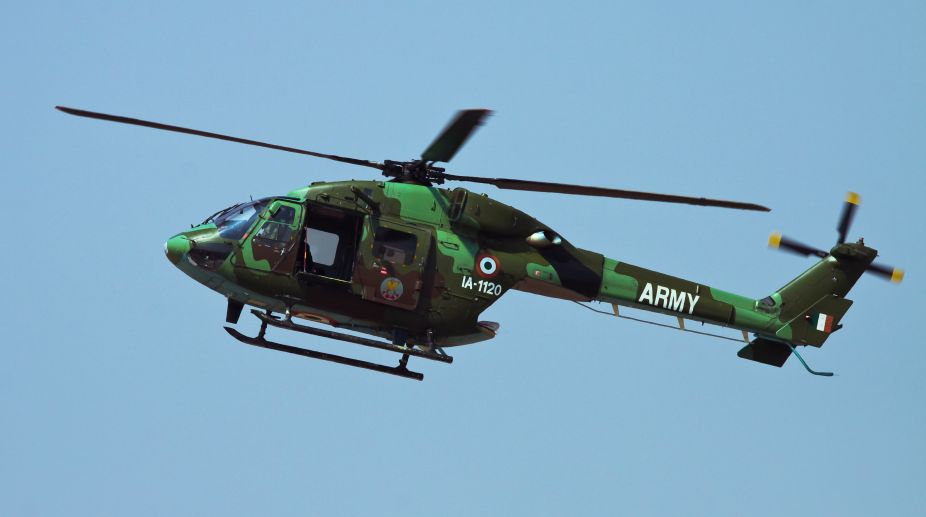
In a freak accident, three army soldiers fell from a chopper after the rope they were using to slither down snapped. All the injured personnel are recovering in hospital, Army said.

According to reports, the “slithering operation” was part of the ‘Army Day’ rehearsals taking place in Army’s parade ground in the national capital.

The incident took place on Tuesday and involved an Advanced Light Helicopter (ALH) Dhruv. The Army has suspended slithering operations involving the chopper till a probe is completed, sources said.

A video that has gone viral on social media shows a total of four soldiers sliding down the chopper as part of the slithering operation using a rope which is attached to the aircraft.

The first paratrooper completes the drill safely and is seen walking away from the chopper.

Just as the second trooper is about to touch base while the third has reached midway, the fourth soldier begins to descent and suddenly the rope gives way as the three troopers come crashing down to the ground.

Watch here:

As per reports, the metal winch to which the rope was connected had fatigue cracks and finally broke.

ALH Dhruv’s broken winch (Photo: Twitter)


The ‘Army Day’ is held on January 15 every year in honour of Lieutenant General KM Kariappa, the first Commander-in-Chief of the Indian Army.

ALH Dhruv is an indigenously developed helicopter manufactured by Hindustan Aeronautics Limited (HAL).

(With inputs from agencies)

Taliban kill five policemen in Afghanistan

IANS | Kabul |

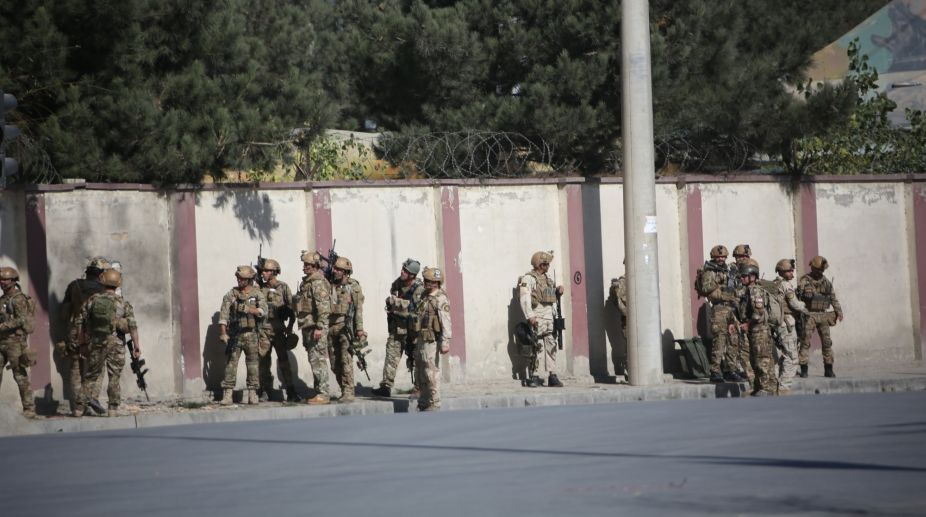
Five Afghan police personnel were killed and two others wounded in an attack by the Taliban in the country’s northern province, an official said on Thursday.

“The incident took place in Archi, a restive district on the outskirts of Kunduz city, on Wednesday night after the Taliban stormed police checkpoints, triggering clashes lasting for hours,” official Nasruddin Nazari told Xinhua news agency.

The injured were shifted to a hospital in Kunduz.

“Several militants were also killed and wounded during the gun battle, but their number could not be exactly specified as the militants evacuated their casualties after the fighting,” Nazari said.

Amidst thawing relations, Maldives FM calls on Sushma Swaraj

SNS | New Delhi |

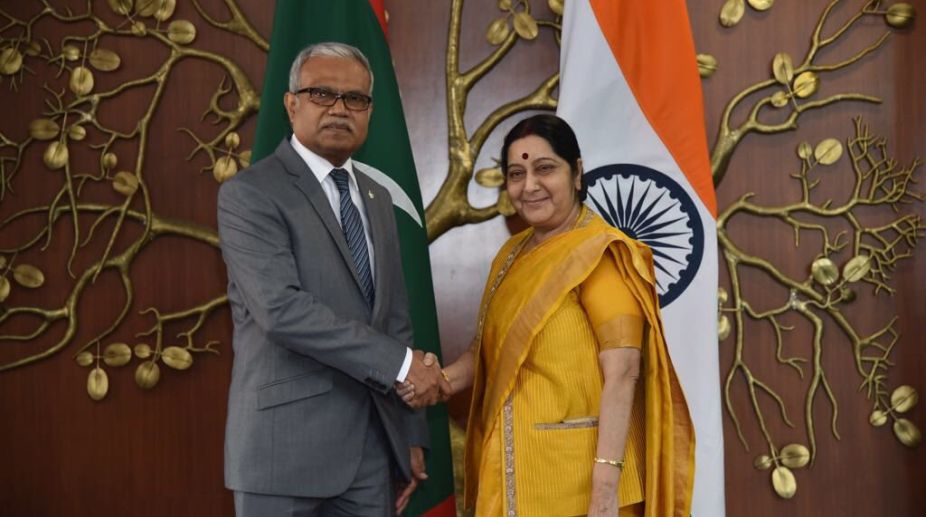
Maldives Foreign Minister Dr Mohamed Asim called on Minister of External Affairs Sushma Swaraj in New Delhi on Thursday.

Asim, who is also the official envoy of the President of Maldives Abdulla Yameen, met Sushma to discuss the strengthening of bilateral relationship keeping, whilst keeping in mind ‘India first’ policy of Maldives and India’s policy of ‘Neighbourhood first’.

Maldives Foreign Minister Asim will also call on Prime Minister Narendra Modi to extend him an invitation to visit the Indian Ocean archipelago. The Maldives is the only country in the region Modi has not visited so far.

Also read: Maldives denies getting closer to China at the cost of India

Maldives had signed a Free Trade Agreement (FTA) with China late last year without any debate in their Parliament, shaking India’s trust in the island nation. The signing of the FTA is perceived as a reversal of the Maldives’ ‘India First’ policy since it came despite an assurance from the President that an FTA with India would be signed first.

After the signing of the Maldives-China FTA, the Ministry of External Affairs had clearly stated that the Maldives should be sensitive to New Delhi’s concerns and keep in mind its “India First” policy.

The growing relationship between the Maldives and China has fuelled India’s fears of China increasing its clout in India’s own backyard.

In another recent incident, the Maldives government suspended three local councillors for meeting the Indian ambassador to Male. Media reports in recent days have also suggested that the Maldivian authorities have imposed undeclared restrictions on the movements of the Indian envoy.

Always wanted to be performer: Isabelle Kaif

“I am doing my first ad campaign with them, the fashion week with them, so can’t wait,” said Isabelle.

IANS | New Delhi |

Actress Isabelle Kaif, who made her acting debut with Dr. Cabbie and has now been roped in as the face of cosmetic brand Lakme, joining the likes of Kareena Kapoor Khan, says she always wanted to be a performing artiste.

“I started dancing as a kid, so I always wanted to be a performing artiste. I always had that creative side. Acting came little later and it actually came when I saw dancing in the films. That’s when I knew that I always want to do this,” Isabelle said.

The younger sister of Bollywood actress Katrina Kaif has also done an acting course from New York.

Dr. Cabbie, a 2014 Canadian romantic comedy film, also starred Kunal Nayyar, Vinay Virmani, and Adrianne Palicki. The film is directed by Jean-François Pouliot and co-produced by Bollywood actor, Salman Khan.

As a face of Lakme, she is looking forward to make some runway appearances now.

“I am doing my first ad campaign with them, the fashion week with them, so can’t wait,” said Isabelle.

China objects to Vietnam’s call for Indian investment in SCS

PTI | Beijing |

China on Thursday objected to Vietnam’s invitation to India to invest in oil and natural gas sector in the disputed the South China Sea, saying it is firmly opposed to infringement of its rights using development of bilateral ties as an “excuse”.

Vietnam’s Ambassador to India Ton Sinh Thanh on Tuesday had told an Indian news channel that his country would welcome Indian investments in the South China Sea.

Responding to remarks, Chinese Foreign Ministry spokesman Lu Kang said: “China does not object to the development of normal bilateral relations of relevant countries in our neighbourhood”.

“But China firmly opposes relevant party to use it as an excuse to infringe upon China’s legitimate rights and interests in the South China Sea and impair regional peace and stability,” Lu said.

Ton had also said defence cooperation is one of the important and effective areas of cooperation between India and Vietnam and India can be helpful in expanding Vietnam s defence capabilities.

China has been opposing India’s Oil and Natural Gas Corporation (ONGC) exploring oil in wells claimed by Vietnam in the South China Sea (SCS) for years. India has been asserting that the ONGC’s exploration is a commercial operation and not connected with the dispute.

China claims almost all of the SCS while Vietnam, the Philippines, Malaysia, Brunei and Taiwan have counterclaims.

Oil exploration in the SCS is a sensitive issue in the Vietnam-China relations. There were anti-China riots in Vietnam when China tried to deploy oil rigs in areas claimed by Vietnam a few years ago.

India, which is ramping up ties with Vietnam, calls for freedom of navigation in the SCS through which trillions of dollars of trade happens every year.

Book on Telugu short stories in English

IANS | New Delhi |

An anthology of 28 Telugu short stories written by stalwarts of yesteryears as also new authors making waves in the realm of Telugu literature is now available in English.

“Moisture Trapped in Stone: An Anthology of Modern Telugu Short Stories” translated by K N Rao has stories about everyday lives and ordinary people, highlighting the issues confronting the society covering a wide spectrum of topics.

A total of 17 writers are featured in the volume, nine of them being women writers.

Feudalistic prejudices to present-day problems and realities find a place in the stories, which range from the serious to the satirical, from light hearted humour to grave discursive.

Some of the authors whose stories feature in the anthology, published by Niyogi Books, are B Geetika, D Kameswari, Jalandhara, Kalipatnam Rama Rao, Madhurantakam Rajaram and Popuri Lalita Kumari.

According to Rao, Telugu short story, as a genre of literary writing, celebrated its centenary year in 2011.

“The air was astir all over the Telugu-speaking areas of the country. Print medium helped its growth; magazines weeklies and monthlies in particular. But it must be said that the Telugu short story does not enjoy a degree of acceptance, same as its counterpart from other languages of the country, possibly because of non-availability in translated version,” he says.

“However, as far back as 1952, when Palagummi Padmaraju’s “Galivana” was adjudged the second best short story in a world short story competition conducted by the New York Herald Tribune, the Telugus went agog. This was 65 years ago. I wonder if something like this happened again,” he says.

That memory surfaced in Rao’s mind as he read about the festivities around the centenary of the Telugu short story in 2011.

“It lit a spark: Why not I translate some Telugu short stories into English, especially those written by well-known writers?

Indian-origin death-row prisoner to be executed on Feb 23 in US

PTI | Washington |

The execution date of the first death-row Indian-American prisoner convicted of killing a baby and her Indian grandmother has been set for next month.

Raghunandan Yandamuri, 32, in 2014 was given death penalty for kidnapping and killing a 61-year-old elderly Indian woman and her 10-month grand-daughter. It was seen as part of a botched kidnapping-for-ransom plot.

Yandamuri’s execution date has been set for February 23 by local correctional authorities.

However, he is likely to get a reprieve because of a 2015 moratorium on the death penalty by Pennsylvania Governor Tom Wolf. Yandamuri is the first Indian-American to face the death penalty.
Federal authorities alleged that killings were part of a botched kidnapping-for-ransom plot

A native of Andhra Pradesh, Yandamuri had come to the US on an H-1B visa. He holds an advanced degree in electrical and computer science engineering. Following his conviction, he asked that death penalty is imposed upon him. Later he appealed his sentence but lost his appeal last April.

The local Times Herald yesterday reported that even though his execution by lethal injection is set for February 23, he might get a reprieve because a death penalty moratorium previously was put in place by Governor Tom Wolf.

“The law provides that when the governor does not sign a warrant of execution within the specified time period, the secretary of corrections has 30 days within which to issue a notice of execution,” Pennsylvania Department of Corrections said in a news release.

According to the report, Wolf imposed a moratorium on the death penalty in 2015. State officials are awaiting the results of a study conducted by the Pennsylvania Task Force and Advisory Committee on Capital Punishment, before moving forward with any executions.

Pennsylvania has not seen any executions in the last nearly 20 years. Since 1976, three persons have been executed in the States between 1995 and 1999.

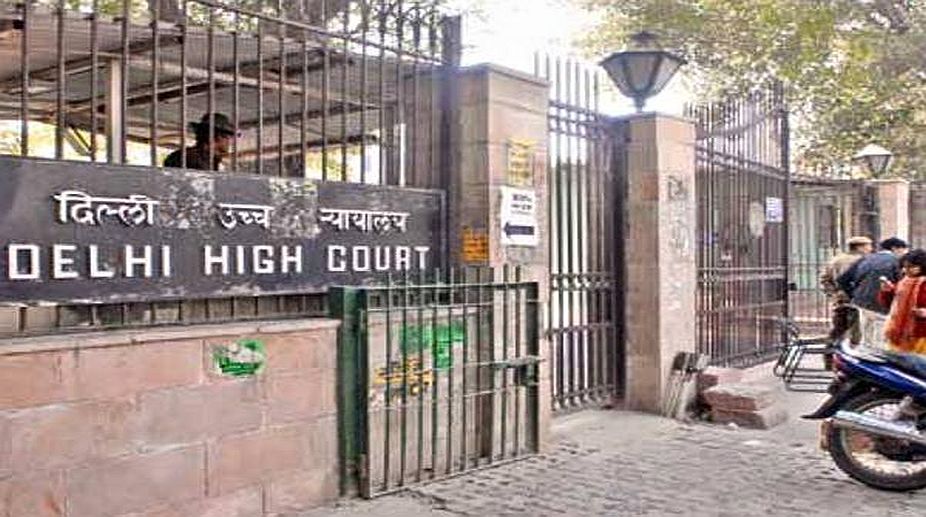
Delhi HC dismisses PIL for withdrawal of coins with religious images

PTI | New Delhi |

The Delhi High Court on Thursday dismissed a plea seeking withdrawal of coins having religious symbols embossed on them, saying it does not dent the secular fabric of the country.

Two Delhi residents had filed a PIL seeking a direction to the RBI and the finance ministry to withdraw the coins brought out in 2010 and 2013 with images of Brihadeeswara Temple and Mata Vaishno Devi, respectively.

Rejecting the PIL, a bench of Acting Chief Justice Gita Mittal and Justice C Hari Shankar said, “It does not deny the country’s secular fabric and secularism does not bar issuance of coins to commemorate any event.”

It observed that the petitioners were not able to support their argument that the act of issuing coins with religious figures was impacting religious practices.

“The decision to issue coins to commemorate an occasion is purely in the domain of the government under the Coinage Act, 2011,” the court said, adding there was no act of favouritism or discrimination by the government by directing minting of coins to commemorate a particular event under the Act.
The PIL by Nafis Qazi and Abu Sayeed had sought a direction to the RBI and the finance ministry to withdraw the coins brought out in 2010 and 2013 with religious symbols on them.

The court had asked the petitioners as to how it was destructive of secularism.

“Tomorrow there may be a commemorative coin or note of any other religion. Secularism means equal respect, regard for all religion. It is not discriminatory to any religion,” the bench said.

The PIL had also sought a direction to the central government to formulate a national policy whereby figures and symbols of any religion were prohibited from being made on any tangible or intangible property of the Indian State.

The government had in 2010 brought into circulation a Rs five coin to mark 1,000 years of Brihadeeswara Temple, Thanjavur with its image embossed on it.
In 2013, the RBI brought out another Rs five coin with the figure of Shri Mata Vaishno Devi Shrine Board embossed on it, the PIL had said while terming this act as “anti-secular”.

It had said that these symbols undermined the secular character, a basic feature of the Constitution, claiming that “the making, marking, naming, drawing, embossing or displaying overtly any religious figure or symbol is tantamount to espousing a religion by the State”.

Paracetamol in pregnancy may delay daughters’ language skills

IANS | New Delhi |

Women who consume acetaminophen — also known as paracetamol and widely used to reduce a high fever or relieve pain — during early pregnancy are six times more likely to see delay in their daughters’ language skills, warns a new study.

Acetaminophen is the active ingredient in Tylenol and hundreds of over-the-counter and prescription medicines. The maternal intake of acetaminophen saw a reduction in the intelligence quotient level along with increasing language delay, defined as the use of lesser than 50 words, by the kids. The communication delay affected boys at the same time, but was more prevelant among the girls, the study showed.

“Given the prevalence of prenatal acetaminophen use and the importance of language development, our findings, if replicated, suggest that pregnant women should limit their use of this analgesic during pregnancy,” said Shanna Swan, Professor at the Icahn School of Medicine at Mount Sinai in New York, US. “It’s important for us to look at language development because it has shown to be predictive of other neurodevelopmental problems in children,” Swan added.

The study, published in the journal European Psychiatry, examined 754 women, who were in eight-13 weeks of pregnancy. Researchers asked participants to report the number of acetaminophen tablets they had taken between conception and enrollment, and tested the acetaminophen concentration in their urine at enrollment.

Both the number of tablets and concentration in urine were associated with a significant increase in language delay in girls, with a slight decrease in boys. Previous studies have found that the over exposure to the pain relieving drug during pregnancy also damages the fertility of the daughters.