Logo

Punjab Police foils major terror plot, arrests ISI-backed BKI operative in Jalandhar

Police have slapped charges under the Bharatiya Nyaya Sanhita (BNS), the Explosive Substances Act, and the Arms Act at the Patara station in Jalandhar Rural.

Neeraj Bali | Chandigarh |

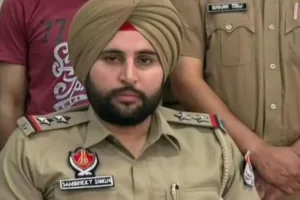
A major terror conspiracy was nipped in the bud on Sunday when Punjab Police tracked down and arrested an operative belonging to an ISI-backed Babbar Khalsa International (BKI) cell in Jalandhar.

The joint strike, carried out by Counter Intelligence Jalandhar alongside Jalandhar Rural Police, yielded a ready-to-use Improvised Explosive Device (IED) weighing nearly 1.3 kg. Packed tight with iron shrapnel and steel ball bearings, the device was clearly engineered to maximize casualties in a public space, according to police sources.

Initial questioning showed that the arrested suspect was taking direct commands from handlers stationed overseas, who are working under the umbrella of Pakistan’s intelligence agency, the ISI. Officials maintained that prompt police action averted what could have been a devastating strike in the state.

Confirming the arrest on social media, the Director General of Police (DGP) Punjab shared the details of the raid. “In a breakthrough against cross-border terror networks, Counter Intelligence Jalandhar, in a joint operation with Jalandhar Rural Police, busts an ISI-sponsored BKI terror module operated by foreign-based handlers and arrests a key operative from Jalandhar,” the police chief posted.

He further noted that the recovered bomb carried 1.3 kg of high-grade explosive mix alongside lethal shrapnel, pointing to meticulous groundwork by the module. The DGP stressed that the force is doubling down on its effort to dismantle organized crime rings and cross-border outfits across Punjab.

Police have slapped charges under the Bharatiya Nyaya Sanhita (BNS), the Explosive Substances Act, and the Arms Act at the Patara station in Jalandhar Rural.

Senior officers said the suspect is currently being grilled to map out the network’s local links. The ongoing probe is looking to piece together who supplied the local logistics, how the explosive packet made its way across the border, and where the blast was originally planned to take place.

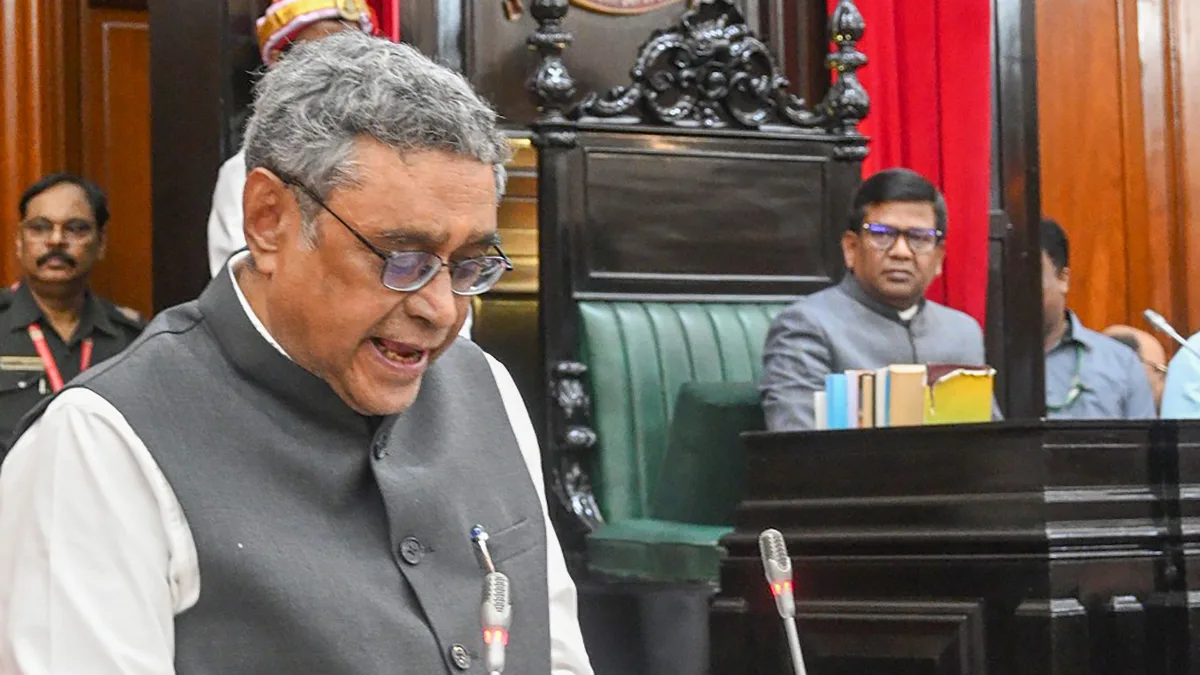
Will boost revenue without raising taxes: Bengal Finance Minister Swapan Dasgupta

“We have not increased the tax; instead, we have chosen to keep expenditure under control,” Swapan Dasgupta said.

Statesman News Service | Kolkata |

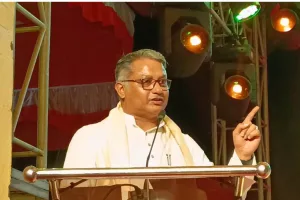
The West Bengal government is focusing on widening the tax base, formalising the informal economy and improving tax compliance rather than imposing additional taxes to enhance the state’s revenue, state Finance Minister Swapan Dasgupta said.

Replying to discussions on the Comptroller and Auditor General (CAG) report and other financial matters in the Assembly on Saturday, the Finance Minister outlined the government’s roadmap for increasing revenue while keeping the tax burden on citizens unchanged.

Dasgupta said the state had consciously refrained from increasing professional tax despite the need to strengthen its finances.

“Our discussion centred on professional tax. We have not increased the tax; instead, we have chosen to keep expenditure under control,” he said.

Rejecting allegations of excessive taxation, the Finance Minister asserted that the government had no intention of imposing a double tax burden on citizens.

“Are we resorting to double taxation? No. Had that been the case, it would certainly have been a matter of concern,” he told the House.

Dasgupta observed that while income tax deducted from the salaries of government employees contributes to the state’s revenues, the number of government employees has been declining, in line with trends seen across the country.

At the same time, employment in the private and other sectors has been expanding, prompting the government to devise new strategies for revenue generation. He said the administration’s priority was to bring more enterprises and workers from the informal sector into the organised economy, thereby improving tax compliance and expanding the state’s revenue base.

“We want to bring the informal sector into the formal organised sector. We will increase revenue. Going by the present trend, revenue from the state is expected to grow by around 18 per cent,” Dasgupta said.

The Finance Minister also indicated that the government would review tax concessions granted to certain sectors in the past. He said exemptions earlier extended to the mining sector by the previous state government were now being brought under review as part of the revenue augmentation exercise.

Highlighting the government’s future strategy, Dasgupta said technology, including artificial intelligence, would play a key role in improving tax administration and enforcement. Strengthening policing against tax evasion and expanding business activity would also contribute to higher GST collections and overall revenue growth.

He maintained that the government’s economic policy sought to balance fiscal discipline with public welfare by avoiding additional financial pressure on ordinary citizens while ensuring sustainable growth in the state’s revenues.

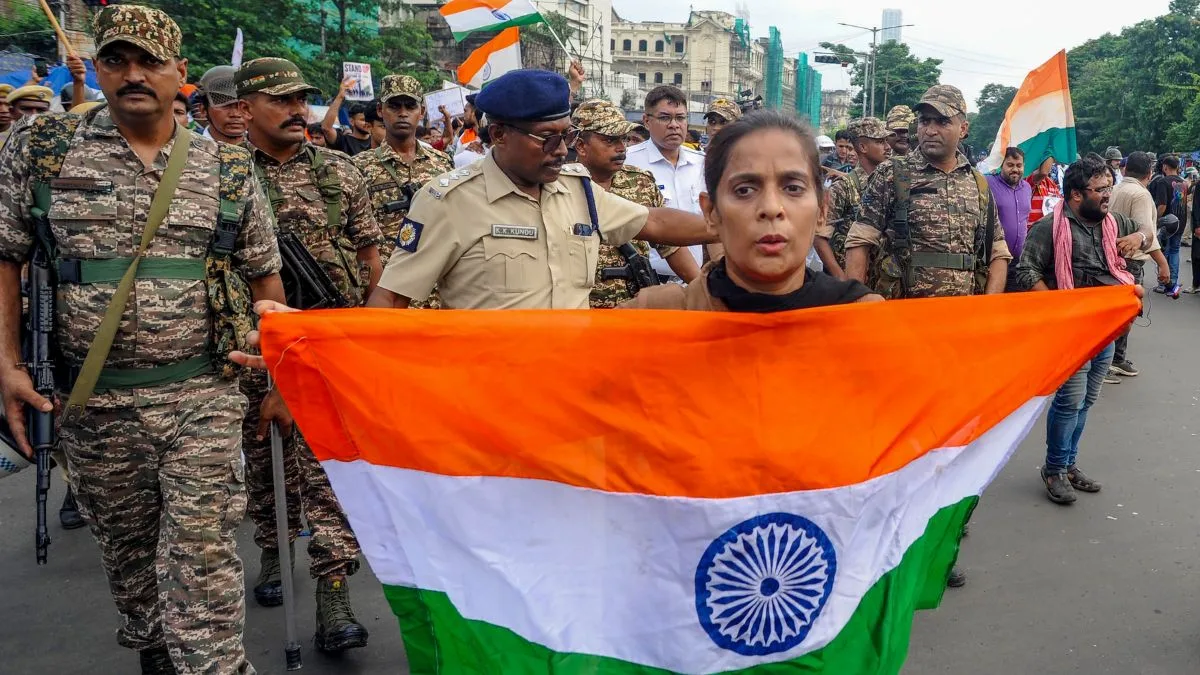
Bengal to launch statewide ‘Har Ghar Tiranga’ campaign from August 9

As part of the observance, renditions of Vande Mataram will be given prominence during all field-level and digital events alongside the display of the national flag.

Statesman News Service | Kolkata |

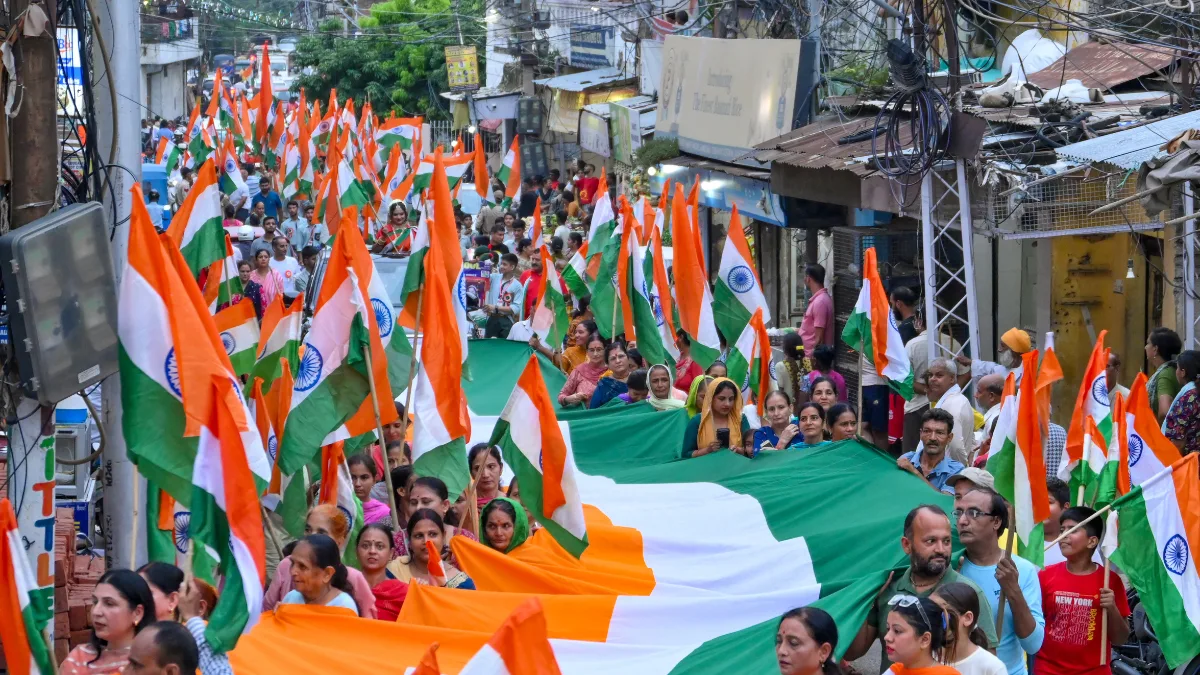
In a first, the West Bengal government is set to organise the ‘Har Ghar Tiranga’ campaign across the state from August 9 to August 17. This would be the first such observance of the nationawide campaign after the Bharatiya Janata Party came to power in Bengal.

The initiative which aims to promote patriotism and strengthen national unity among the citizens has been planned in line with a communication from the Union Ministry of Culture.

Based on the Centre’s directive, information and cultural affairs department secretary Soumitra Mohan has issued detailed guidelines outlining the implementation of the campaign across West Bengal.

This year’s campaign has been linked with the 150th anniversary of ‘Vande Mataram’, following a decision taken by a committee headed by the union home minister.

As part of the observance, renditions of Vande Mataram will be given prominence during all field-level and digital events alongside the display of the national flag.

People uploading selfies on the Har Ghar Tiranga portal will also find the lyrics of Vande Mataram automatically embedded on their photographs.

The state government has directed district administrations, the Kolkata Municipal Corporation, municipalities, panchayats and educational institutions to jointly implement the campaign.

Tiranga rallies, prabhat pheris, bicycle and e-bike processions will be organised at the district and block levels.

Government offices, heritage buildings, bus terminals and markets will be illuminated with Tiranga-themed decorations, while educational institutions have been asked to display murals and quotations of freedom fighters.

District headquarters and other prominent public places will also host exhibitions on the history of the national flag, along with quizzes, drawing competitions and Tiranga rangoli events.

To support the campaign, the government has allocated 150,000 national flags each for every district and the Kolkata Municipal Corporation, while 20,000 flags have been earmarked for Kalimpong district.

Financial assistance has also been sanctioned for organising the events.

Each district will receive Rs 100,000, each subdivision Rs 50,000, every block and municipality Rs 20,000, and each municipal corporation Rs 100,000.

Officials have also been instructed to ensure active participation of government employees and the public.

After the campaign concludes, district authorities have been asked to submit detailed reports and photographs of the events to Nabanna.

Kolkata NEET protest: Three more arrested, total detentions rise to 14

The investigation into the Kolkata protest violence is expanding, with police identifying around 70 suspects and registering seven FIRs. Authorities claim those arrested were not linked to NEET.

Statesman News Service | Kolkata |

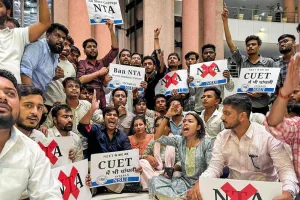
Kolkata Police have arrested three more people in connection with the violence that broke out during a protest against the NEET examination paper leak and other alleged exam scandals. With these latest arrests, the total number of people taken into custody has reached 14.

Officials said the fresh arrests were made between Saturday night and Sunday as the investigation into the July 24 violence continues.

Earlier, police had arrested 11 people after identifying them through CCTV footage and videos recorded during the clashes.

Three new accused identified

The three newly arrested persons have been identified as Shahbaz Khan, Sheikh Muhammad Salman Hossain, and Muhammad Zahiruddin.

According to police, Shahbaz Khan lives in the Karaya area of south-eastern Kolkata. Salman Hossain is a resident of Rajabagan in Garden Reach, while Zahiruddin comes from the Bhangar area on the southern outskirts of the city.

Police have identified around 70 suspects

Officials said that around 70 people have so far been identified for their alleged role in the incident. Police have also registered seven First Information Reports (FIRs) related to the violence. One of these cases was filed by the Kolkata Police on its own.

The protest march was jointly organised by the Cockroach Janata Party (CJP) along with the students’ and youth wings of several Left parties.

Police say arrested persons have no link to NEET

Police sources claimed that none of the 14 people arrested so far are students or have any connection with the NEET examination results.

According to investigators, those arrested are accused of taking part in ‘violent’ activities and ‘provoking’ police personnel during the protest.

Chief Minister blames anti-social elements

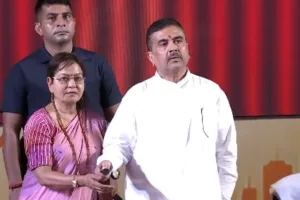
Speaking in the West Bengal Assembly on Saturday, Chief Minister Suvendu Adhikari alleged that anti-social elements from different parts of Kolkata were behind the attacks on police officers and media personnel.

He named areas including Rajabazar, Kidderpore, Park Circus, Garden Reach, and Ekbalpur, claiming that people from these localities were involved in the violence.

The Chief Minister alleged that the attackers wanted to force the police into responding with baton charges and tear gas so that the situation would become more serious. He said the police remained restrained and did not react in the manner the protesters had hoped.

“They wanted the police to use force by resorting to baton-charge and firing of teargas shells. They intended to aggravate the tension and thus create a drama. Fortunately, the police did not fall into that trap. But they continued their attacks,” he said.

(With input from IANS.)

Runner gets her period mid-race but does she finish in style or does she quit mid-way? 2024 incident back to limelight

Imagine running a marathon but you get your period before reaching the finish line. This is exactly what happened with Li Meizhen. But did she stop?


Riya Malik | New Delhi |

One woman, one marathon, one goal and one natural unexpected challenge. Recently, a moment on social media went viral where blood was visibly running down a marathon runner’s thighs. Most would think about what happened to her or if she injured herself, but in reality she got her period mid-race. But the woman didn’t stop.

Who is she?

Li Meizhen, a star Chinese runner born on 3rd January, comes from a non-sports background. She was born in Hetian Town, Longyan City, Fujian Province, and her parents ran a local restaurant and guesthouse. Her journey began when she joined her school’s sports interest group in the 5th grade where upon winning the first place in the race, Li was scouted by the Longyan City Junior Sports School. Later, Li Meizhen graduated from the Shanghai University of Sport and went on to serve as a professional athlete in the People’s Liberation Army. In the years since, Li Meizhen has won and participated in a number of marathons, carving a successful path for herself.

One Goal – Cross the finish line

In April 2024, while participating in the Hengshui Lake Marathon, Li Meizhen faced an unexpected challenge: she got her period in the middle of the race. Instead of giving up, the then-25-year-old pushed through the physical discomfort and the visible presence of menstrual blood on her thighs. While many would have withdrawn from the marathon, Li Meizhen showed remarkable resilience crossing the finish line in 2 hours and 35 minutes to achieve the qualifying standard.

Li later explained the reason behind why she didn’t stop. How something as natural yet very painful and discomforting as starting her menstruating cycle mid-race didn’t deter her. She mentioned stopping meant running another full marathon to qualify for an upcoming championship. She persevered and stayed dedicated to earning the points she needed to avoid putting her body through another demanding race.

Breaking taboos on the race course

This incident sparked a larger debate challenging societal norms around menstruation. Traditionally, Period was a very hushed topic, viewed as a taboo, making open conversations about it uncommon. Especially in sports, female athletes had to downplay or avoid acknowledging how it can affect performance. However, Li Meizhen’s story helped break barriers, encouraging more open conversations about menstruation in athletics. This story is just another reminder for every woman to never shy away and take up space no matter what challenge life throws at you.

Also Read: Satwiksairaj Rankireddy, Chirag Shetty Clinch Singapore Open Title, Rekindling Debate Over Recognition in Indian Sport

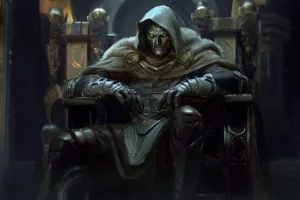
‘Hell answers to me’: Doom’s coldest line yet steals the show at ‘Avengers: Doomsday’ comic-con reveal

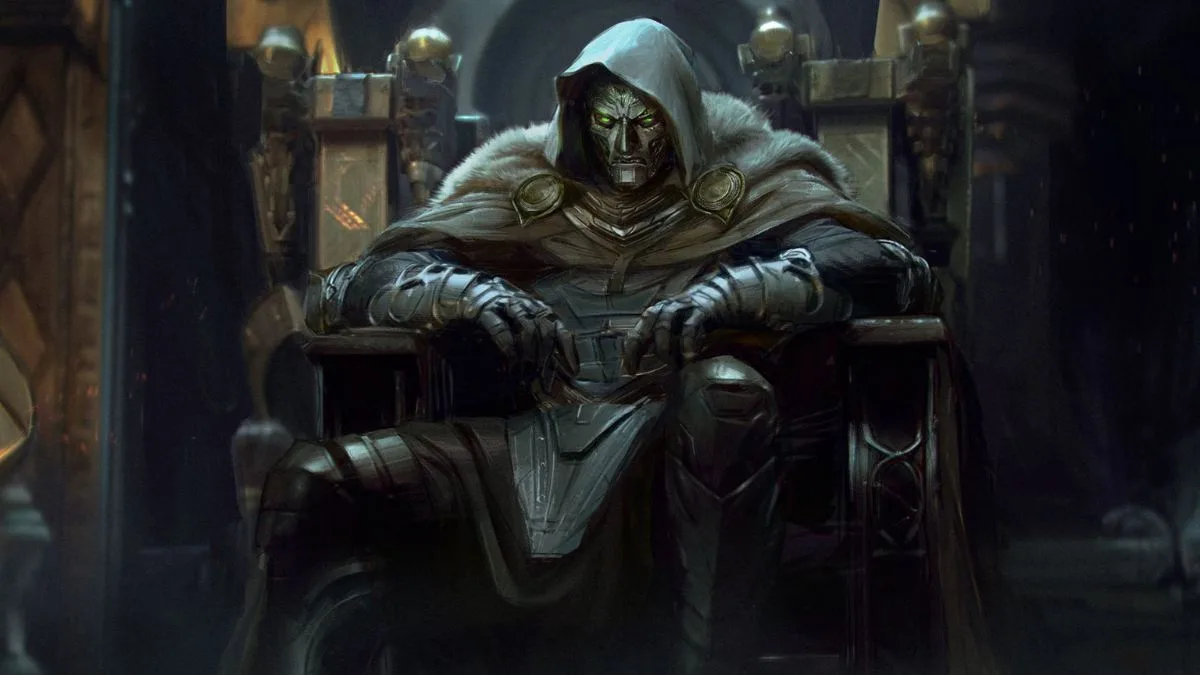
Doom sits on his throne like he’s already won. One flick of his fingers stops the God of Thunder cold. Then the ground splits open, and an army rises to finish the job.

Statesman News Service | New Delhi |

Marvel Studios showed exclusive Comic-Con footage from ‘Avengers: Doomsday’ over the weekend, and fans in Hall H got a preview loaded with new details about the villain and his powers.

Studio chief Kevin Feige brought out footage that had not been released to the public before. Attendees inside the convention center’s Hall H got the exclusive first look at the new movie. The crowd reaction, according to multiple reports, was loud and immediate once Doom’s full power became clear.

A villain’s origin

The footage opens on Victor Von Doom, played by Robert Downey Jr., seated on a throne. Sue Storm, played by Vanessa Kirby, narrates that Victor used to be different and was once the smartest person in any room. Reed Richards, played by Pedro Pascal, appears in a ruined alien setting. He asks Doom directly if he caused the destruction around them.

Doom stops Thor cold

Thor charges at Doom with his weapon Stormbreaker. He shouts a threat about sending Doom to hell, then jumps to attack. Doom stops the strike using only two fingers. Doom does not budge even as Thor puts everything into the attack. And, Doom throws Thor back with a burst of green energy.

Sentinels rise

Right after beating Thor, Doom places his hand on the ground. He brings a group of broken Sentinels back to life. These are the mutant-hunting robots from the X-Men films. Cyclops, played by James Marsden, fires his optic blast at the machines in the same sequence. Comic-Con also featured a display case showing a defeated Sentinel with a damaged, wired-open head, suggesting the heroes can eventually take them down despite the threat they pose.

A cold final line

Doom closes the sequence with a chilling declaration. As quoted in the footage, he says hell answers to him, for he is Doom.

Three teams, one threat

The footage connects heavily to the shared history between Reed Richards and Doom. Magneto, played by Ian McKellen, also appears in the scene alongside Richards and Storm. The film brings together the Avengers, the Fantastic Four and the X-Men, forcing all three teams to face Doom and his Sentinel army together.

Release date and cast

Avengers: Doomsday is set to premiere worldwide on December 18. The cast is led by Downey Jr. as Doctor Doom, alongside stars such as Chris Evans, Chris Hemsworth, Paul Rudd, Sebastian Stan, Anthony Mackie and Simu Liu. The wider cast also includes Pedro Pascal, Vanessa Kirby, Letitia Wright as Shuri and more.

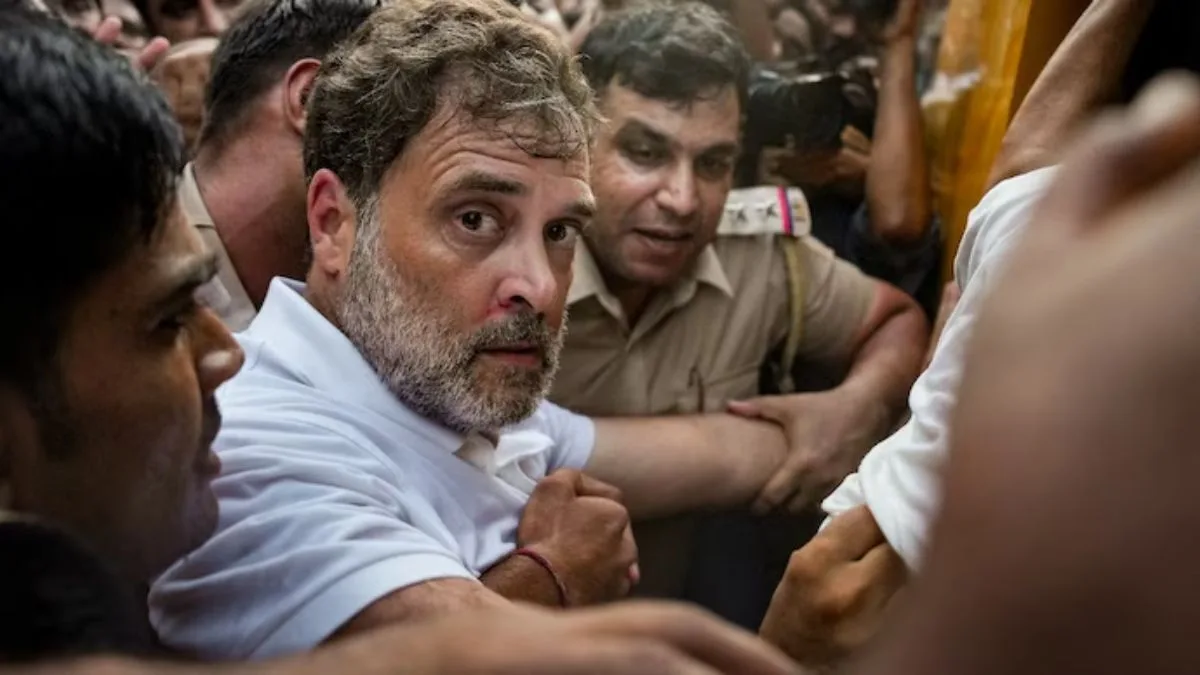
‘Who gave the order to thrash the students?’ Rahul Gandhi writes to Amit Shah demanding accountability for Delhi protest violence

A 19-year-old wanted to become a police officer. Now he may never see out of his right eye again. Students were met with pellets, batons, and silence from those in power. Rahul Gandhi wants to know who gave the order.

Statesman News Service | New Delhi |

Congress leader Rahul Gandhi has written a letter to Union Home Minister Amit Shah. He has demanded accountability for police action against student protesters in Delhi on July 20, 2026.

On July 20, Students gathered at Jantar Mantar in Delhi. They marched towards Parliament under the banner of the Cockroach Janata Party (CJP). The march was called “Chalo Sansad.” Protesters were demanding action against an alleged NEET paper leak. They also wanted a fair and accountable education system.

Police used batons and tear gas to disperse the crowd. Several protesters and at least one journalist suffered injuries. Hospital records reportedly showed wounds consistent with pellet gun injuries.

Rahul Gandhi’s letter

In his letter, Gandhi wrote about “the barbaric assault on students who were peacefully protesting in Delhi.” He said security forces used “indiscriminate force, including lethal weapons and tear gas.” He alleged women students were assaulted by policemen.

Gandhi met 19-year-old student Sahil Lochab. He said Lochab “is now in severe pain” and “is likely to lose an eye” after being hit by pellets.

He asked Shah two direct questions. First, did he approve the use of lethal force including pellet guns against students. Second, who authorised people in plain clothes seen beating students with lathis.

Gandhi wrote, “Peaceful protest is crucial to any democracy.” He added that the government must protect protestors and resolve grievances through dialogue.

Sahil Lochab’s injury

According to reports, Lochab underwent surgery. Doctors removed multiple metallic pellets from his eye. His mother, Jyoti, told the paper doctors said there is only a “1% chance” his vision will return to normal. His friend Parvesh said, “Sahil said he was hit directly in his eye.”

Reports also named other injured protesters, including Shaikh Irshad Mansoori, who had pellets removed from his face and body.

Delhi Police denial

Delhi Police has denied using pellet guns. It called the reports “false and misleading.” However, fact-checkers reported a video showing a Rapid Action Force soldier firing what appeared to be a pellet gun during the protest. Experts weighed in saying the weapons seen in videos were 12-bore pump-action rifles, commonly called pellet guns.

Human Rights Watch said police and the Rapid Action Force used “electric shock batons, tear gas and stones.” It added that internet services were restricted during the protest.

Gandhi’s press conference

On July 25, Gandhi held a press conference. He said, “We hold Amit Shah directly responsible for the violence that has taken place against our students.” Also, he added, “He authorised the shooting of our students. He authorised the use of lethal weapons, including pellet guns, against our students.”

Gandhi said the issue would be raised in Parliament. He also linked the protests to what he called failures in India’s education, media and job systems.

Giriraj Singh claims ‘foreign conspiracy’ behind student unrest, says ‘many secrets will soon come out’

Several BJP leaders alleged that the student controversy was part of a larger conspiracy involving foreign funding and social media links. They also defended the government’s handling of the crisis.

Statesman News Service | New Delhi |

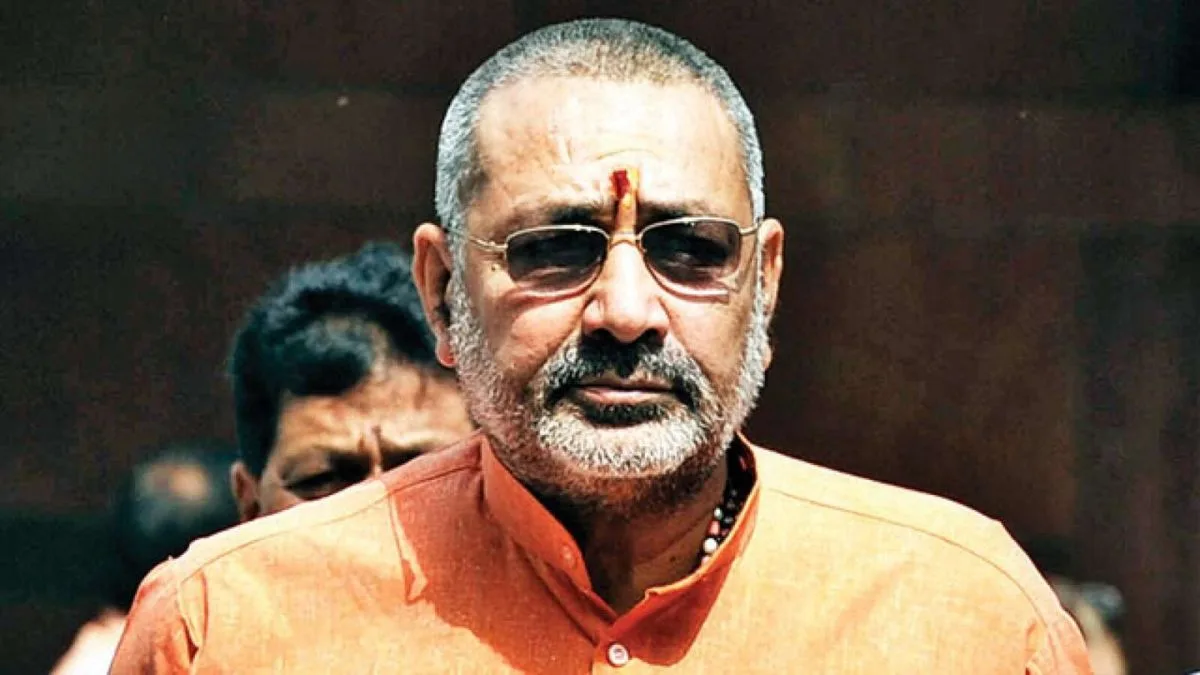
Union Minister Giriraj Singh on Sunday accused the Opposition of trying to create unrest in the country with the help of foreign funding and financial support. He alleged that a larger conspiracy was behind the recent controversy involving students and claimed that more details would be revealed in the coming days.

Speaking to IANS, Singh said his concern was not about political victory or defeat but about the future of the country and its young people. He alleged that a person based in America was connected to the matter and claimed that several hidden facts would soon come to light.

According to him, investigations would reveal who arranged the money, where the funds were sent, and what activities were taking place at Jantar Mantar. He further alleged that money was used to create instability and disturb peace in the country.

However, the Ministry of Foreign Affairs (MEA) has dismissed the allegations, stating that it has no such information.

“I have no information to share on this issue with you,” MEA spokesperson Randhir Jaiswal said during a press briefing on Friday.

PM Modi focused on students, says Union Minister

Giriraj Singh praised Prime Minister Narendra Modi, saying the government acted quickly to protect the interests of students during the crisis.

He said the Prime Minister showed foresight by ensuring that the academic future of students was not affected. According to Singh, examinations for nearly 22 lakh students were completed within a month. He added that the results were announced on time and the admission process also started without major delays.

The Union Minister said that while some political leaders were travelling abroad, Prime Minister Modi remained focused on solving issues related to students and safeguarding their future.

National Education Policy praised

Singh also appreciated former Union Education Minister Dharmendra Pradhan for implementing the National Education Policy (NEP).

He said Pradhan’s work on the education reforms would be remembered for generations and described the policy as an important contribution to the country’s education system.

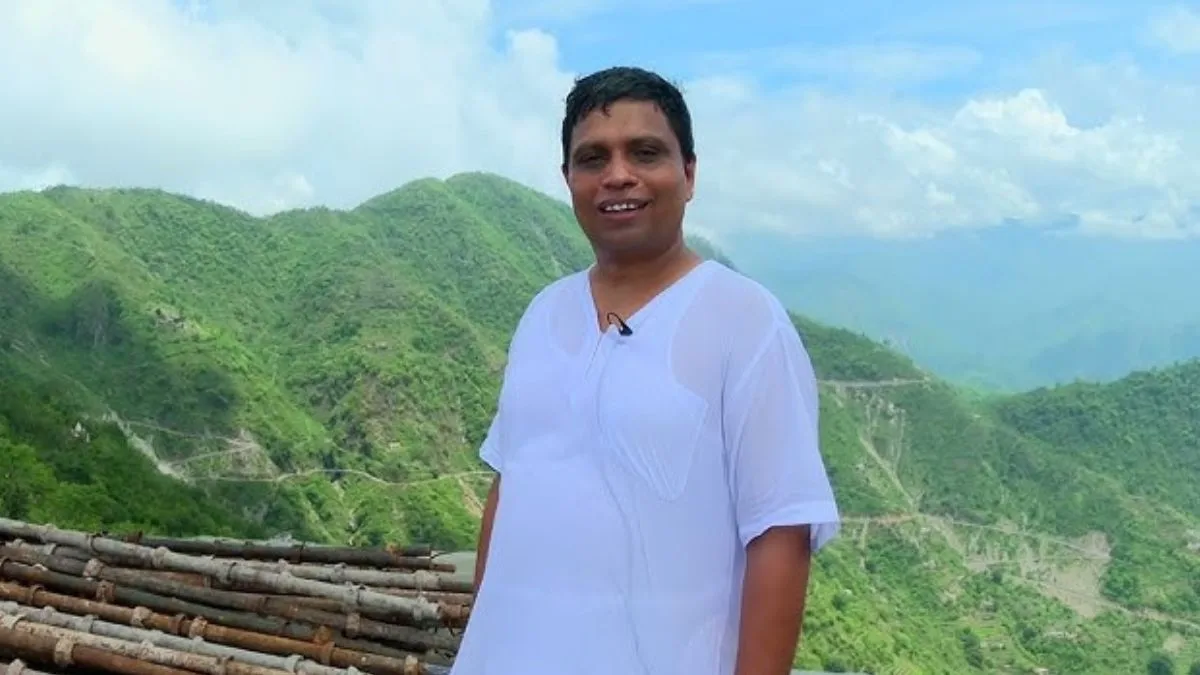
Black pepper and honey: Acharya Balkrishna’s ayurvedic remedy for throat care

Long before cough syrups lined pharmacy shelves, kitchens relied on black pepper, honey, and ginger. Acharya Balkrishna revisits this old Ayurvedic remedy, explaining why it still holds a place in throat care today.

Statesman News Service | New Delhi |

In a recent Facebook video, Patanjali Yogpeeth’s managing director Acharya Balkrishna turned the spotlight on something most of us barely think twice about while cooking — black pepper, or marich, as it’s called in Ayurveda. His focus this time was specifically on how it’s traditionally been used for throat and voice care.

Balkrishna called black pepper one of Ayurveda’s most valued spices, and made the point that its role goes well beyond just seasoning your food. In traditional healing practices, he explained, it’s held a much bigger place than we tend to give it credit for. One of the oldest applications, according to him, is pairing black pepper with honey for soothing the throat and managing coughs.

He also brought up another combination worth knowing — black pepper mixed with ginger juice and honey, which shows up in various Ayurvedic traditions for similar reasons. And in small, regular amounts, he added, black pepper is also considered beneficial for voice health, making it worth a spot in your everyday diet.

What ayurveda actually says about it

Black pepper isn’t standing alone in Ayurvedic tradition either. It’s one-third of trikatu, a well-known classical formulation that also includes long pepper and dried ginger. Together, these three have long been used to support digestion and respiratory health.

Ayurvedic texts classify black pepper as having a hot potency, and describe it as particularly useful for balancing kapha dosha — the dosha tied to mucus buildup and congestion in the body. So the throat-and-cough connection isn’t some random home remedy; it’s rooted in a fairly established line of traditional thinking.

But there’s actual science here too

What makes black pepper genuinely interesting isn’t just tradition — it’s backed by some real research. The compound responsible for its sharp, pungent kick is called piperine, and it’s been studied fairly extensively for its impact on digestion and nutrient absorption. In fact, piperine has shown up in studies as something that can boost the bioavailability of other nutrients, curcumin from turmeric being a well-known example.

Beyond that, black pepper isn’t nutritionally empty either. It carries small amounts of vitamin C, vitamin K, and minerals like manganese and iron. Its flavonoid content has also drawn attention in antioxidant research.

Why pepper and honey keep showing up together

If you’ve grown up in a South Asian household, chances are you’ve seen black pepper and honey combined for a sore throat more times than you can count. It’s practically a rite of passage during cold season. And this isn’t just old wives’ tale territory — honey has documented antibacterial properties, and clinical studies have actually shown it can help reduce how often people cough, especially in kids.

So when grandmothers reach for this combination, they’re not entirely working off instinct. There’s a reasonable amount of science quietly backing them up.

Where ginger fits into the picture

Ginger, of course, needs no introduction in Ayurvedic or broader traditional medicine circles. It’s been used for digestive issues for centuries and has well-documented anti-inflammatory effects. When ginger juice is added to the black pepper-honey mix, it becomes a go-to remedy the moment someone feels a scratchy throat or the first signs of a cold coming on.

Much of ginger’s reputation comes down to compounds called gingerols, which research has linked to both anti-inflammatory and antioxidant benefits.

A little goes a long way

Nutrition experts generally agree that spices like black pepper work best in small, consistent amounts rather than large concentrated doses, and that lines up well with how Ayurveda has always approached spice use too. Moderation over excess, essentially.

At the end of the day, black pepper remains a fixture in nearly every Indian kitchen, not just because of its flavour, but because of the quiet, generations-old belief in what it can do for the body when used the right way.

Pulses packed with protein, zinc and fiber: Acharya Balkrishna’s hair health tip

A simple bowl of dal might be doing more than filling your plate. Acharya Balkrishna points to the protein, zinc, and vitamins packed inside pulses as quiet allies for stronger hair.

Statesman News Service | New Delhi |

Patanjali Yogpeeth’s managing director, Acharya Balkrishna, took to Facebook recently with a simple but interesting nutrition tip — the dal sitting in your kitchen might be doing more for you than just filling your stomach. According to his post, pulses are loaded with protein, vitamin B, vitamin C, zinc, and fibre, all of which play a role in keeping hair healthy and strong.

It’s the kind of advice that sounds almost too basic to matter, but there’s actually solid science backing it up.

Why pulses deserve more credit

Lentils, chickpeas, rajma, moong — these aren’t just kitchen staples in Indian households, they’re genuinely powerful sources of plant protein. A single cup of cooked lentils packs close to 18 grams of protein. It is a big deal for anyone following a vegetarian diet and trying to hit their daily protein targets without meat or eggs.

Beyond protein, pulses bring a good dose of fibre to the table too. That helps with digestion and keeps blood sugar levels from spiking around, something that matters more than people realise for overall health.

The zinc connection

Here’s where it gets interesting for hair specifically. Zinc is one of those minerals that quietly does a lot of heavy lifting in the body, including helping hair tissue grow and repair itself, and keeping the oil glands around hair follicles functioning the way they should. Nutrition studies have repeatedly linked low zinc levels to thinning hair and hair loss.

Now, pulses don’t have as much zinc as meat or seafood, sure. But if you’re eating a variety of lentils, chickpeas, and beans regularly, and maybe pairing them with other zinc-rich foods, you can still get pretty close to meeting your daily needs, even on a vegetarian diet.

Vitamins

B vitamins help the body produce red blood cells, and those cells are what carry oxygen to your hair follicles. Biotin specifically, a B vitamin found in small amounts in some pulses, keeps coming up in hair health research. Folate, another B vitamin present in dals, adds to this benefit.

Then there’s vitamin C, which might not seem directly related to hair at first glance, but it actually helps your body absorb iron from plant-based foods like pulses. And iron deficiency is one of the more common culprits behind hair fall. Vitamin C also plays a part in collagen production, which affects hair structure at a more fundamental level.

It all comes back to digestion

There’s a bigger picture here too. Fibre from pulses supports gut health, and good gut health generally means better nutrient absorption overall, which then shows up in things like skin and hair condition. This is exactly why dietitians keep recommending pulses as a daily staple rather than an occasional side dish.

A diet India already knows well

None of this is really new to Indian households, where dal has been a daily fixture for generations, whether it’s a simple dal-chawal, sprouted moong, or besan used in everything from dhokla to pakoras. India also happens to be the world’s largest producer and consumer of pulses, so in a way, this advice is just reaffirming something the country already does right.

Even the Indian Council of Medical Research has, in its official guidelines, pushed for regular pulse consumption, largely because pulses offer solid protein at a fraction of the cost of animal-based sources.

So the next time someone tells you to finish your dal, maybe don’t argue. Your hair might actually thank you for it.

Acharya Balkrishna marks Kargil Vijay Diwas with tribute to fallen soldiers

Twenty-seven years ago, soldiers climbed frozen peaks under enemy fire to bring the tricolor back to Tiger Hill. Today, that courage is remembered across the nation.

Statesman News Service | New Delhi |

Patanjali Yogpeeth managing director Acharya Balkrishna shared a post on Facebook marking Kargil Vijay Diwas. The post pays tribute to soldiers who raised the tricolor on Tiger Hill during the Kargil War.

Balkrishna wrote that brave sons of Bharat Mata made the nation proud by hoisting the tricolor on Tiger Hill during the Kargil War. He called on citizens to remember and honor the soldiers who sacrificed their lives for the motherland. He ended the post with “Jai Hind.”

The post refers to this year marking 25 years since the victory. Records show the Kargil War took place in 1999, which makes this year the 27th anniversary, not the 25th. This detail is worth noting for accuracy.

What Kargil Vijay Diwas marks

Kargil Vijay Diwas is observed every year on July 26. It marks the day Indian forces regained control of high-altitude posts in the Kargil district of Ladakh from Pakistani intruders in 1999. The conflict is officially called Operation Vijay.

The war lasted close to two months. Fighting took place at extreme altitudes, in one of the coldest inhabited regions in the world. Indian troops fought to reclaim peaks that Pakistani soldiers had occupied earlier that year.

The battle for Tiger Hill

Tiger Hill was one of the most significant and heavily fought positions during the war. It sits at a height of around 16,000 feet. Indian forces launched a major operation to recapture the peak in early July 1999. The battle involved intense artillery support and infantry assaults under harsh conditions.

Recapturing Tiger Hill became one of the defining moments of the war. It marked a turning point that pushed Indian forces closer to full control of the region.

This year’s observance

This year, Kargil Vijay Diwas falls on July 26, 2026. Official ceremonies are being held in Dras, near the Kargil war memorial. Families of soldiers who died in the war are expected to travel from different parts of the country to attend.

Defense Minister Rajnath Singh is set to lead tributes at the National War Memorial in Delhi. Similar programs are being organized across the country, including in smaller towns with strong military ties.

Background on the war

The Kargil War was fought between May and July 1999. Pakistani soldiers and militants crossed the Line of Control and occupied strategic peaks in the Kargil sector. India launched Operation Vijay in response.

The war ended with India regaining control of the occupied posts. Official figures put Indian military casualties at over 500 soldiers. The conflict remains one of the most significant military engagements between India and Pakistan since 1971.

Ryan Gosling finally says yes to Marvel, and it’s the role he always wanted

Marvel just handed Ryan Gosling the role he’s been chasing for years. A revving engine, a surprise walk-on, and Kevin Feige grinning through it all. Ghost Rider rides again in 2028, this time with Gosling in the leather jacket.

Statesman News Service | New Delhi |

Marvel Studios has cast Ryan Gosling as Ghost Rider. Kevin Feige made the announcement at Comic-Con in San Diego on Saturday, during Marvel’s Hall H panel. Gosling will play Johnny Blaze in a standalone film set for 2028.

Feige built up the moment by referencing years of fan speculation about Gosling joining Marvel. He then brought Gosling out on stage to a roaring motorcycle sound effect. The crowd reacted with loud cheers. Gosling told the audience he’d wanted this role for a long time, and said only one director could handle it.

Shawn Levy steps in

That director is Shawn Levy. He joined Gosling on stage and confirmed he’ll direct the new film. Levy directed Deadpool & Wolverine in 2024, another Marvel hit. He said the idea for Ghost Rider came up while he and Gosling were shooting their current project together.

A ready-made partnership

Gosling and Levy are finishing Star Wars: Starfighter right now. That film hits theaters on May 28, 2027. According to Levy, the pair spent time on that set discussing Ghost Rider and swapping ideas. He joked about how the pitch came together on the fly.

Gosling’s first comic book role

This marks Gosling’s first time playing a superhero or comic book character. He’s coming off a big year, with Project Hail Mary drawing strong numbers at the box office. He’s also set to appear in the Star Wars spinoff before Ghost Rider begins production.

The character’s history

Ghost Rider first appeared in Marvel Spotlight No. 5 in 1972. Writer Gary Friedrich and artist Mike Ploog created the character. Johnny Blaze is a stunt motorcycle rider who makes a deal with the devil and becomes a fiery avenger.

Nicolas Cage played Blaze in two earlier films, released by Sony in 2007 and 2011. Those movies made more than $361 million combined at the box office. The rights later returned to Marvel Studios.

A different version of the character also appeared on TV. Gabriel Luna played Robbie Reyes, a younger take on Ghost Rider, in Agents of S.H.I.E.L.D. That version never became part of the main MCU timeline. A planned Hulu series with Luna was scrapped back in 2019.

Talks were already underway

Gosling had hinted at this for years. Back in 2022, he mentioned interest in playing Ghost Rider while denying rumors about a different Marvel role. Feige responded at the time by saying he’d love to find a place for Gosling in the MCU.

Earlier this year, Gosling confirmed on a podcast that discussions with Marvel were happening, though he called the situation complicated. That set the stage for Saturday’s announcement.

Greater Noida tragedy: 6-year-old boy dies after falling into water-filled borewell pit, contractor and supervisors booked

The death of six-year-old Avyaan Surya has sparked public outrage, with residents blaming poor safety measures at the excavation site. Authorities have filed an FIR, terminated the contractor’s services.

Statesman News Service | New Delhi |

The Greater Noida Authority has taken strict action after a six-year-old boy died after falling into a water-filled pit at Kala Dham Society in the Knowledge Park area of Greater Noida. An FIR has been filed against the contractor and two site supervisors, while all three have also been removed from their duties.

Officials identified the accused as contractor Manoj Jain, site supervisor Johnny, and technical supervisor Akash. According to the Authority, the accident happened because of negligence during the borewell installation work.

Borewell location was allegedly changed without approval

The Greater Noida Authority said the tube well project had been officially approved after residents of the society complained about water supply problems. The borewell was originally planned at a different location.

General Manager A.K. Singh explained that the approved site required the removal of a few trees because of limited space, and that process had already started around a week before the incident. However, preliminary findings suggest that the contractor shifted the borewell installation site on his own without informing or getting permission from the Authority.

Officials believe this unauthorized change led to the digging of the pit where the fatal accident later took place.

Child fell into rainwater-filled pit while playing

The victim was identified as six-year-old Avyaan Surya, son of Siwan Yadav, Vice Principal of Kendriya Vidyalaya.

According to police and local residents, the excavation pit was around 15 feet deep and had filled with rainwater after recent rainfall. Avyaan was playing with other children near construction site when he accidentally slipped and fell into pit.

Residents immediately rushed to rescue the child and took him to nearby hospital. There doctors declared him dead.

Following the incident, police sent the child’s body for a post-mortem examination and started an investigation into the case.

Authority calls incident tragic, police continue probe

Expressing grief over the incident, Greater Noida Authority General Manager A.K. Singh described the death as deeply tragic. He said the Authority was saddened by the loss and confirmed that the tube well project had been approved only to solve the society’s water shortage.

The Authority has launched its own inquiry while police continue investigating the circumstances surrounding the accident. Officials said further action will be taken based on the findings of the investigation.

Residents demand better safety measures

The incident has sparked anger among residents of Kala Dham Society. They are now questioning safety arrangements at construction site. Many alleged that excavation area was left open without proper barricades, warning boards, or any protective barriers. That made it dangerous for children and pedestrians.

Katy Perry angry after Trump uses ‘Firework’ in Iran strike video without permission

A White House TikTok featuring military strikes has sparked fresh criticism after a global pop star said her music was used without permission. The controversy adds to a growing list of artists pushing back.

Statesman News Service | New Delhi |

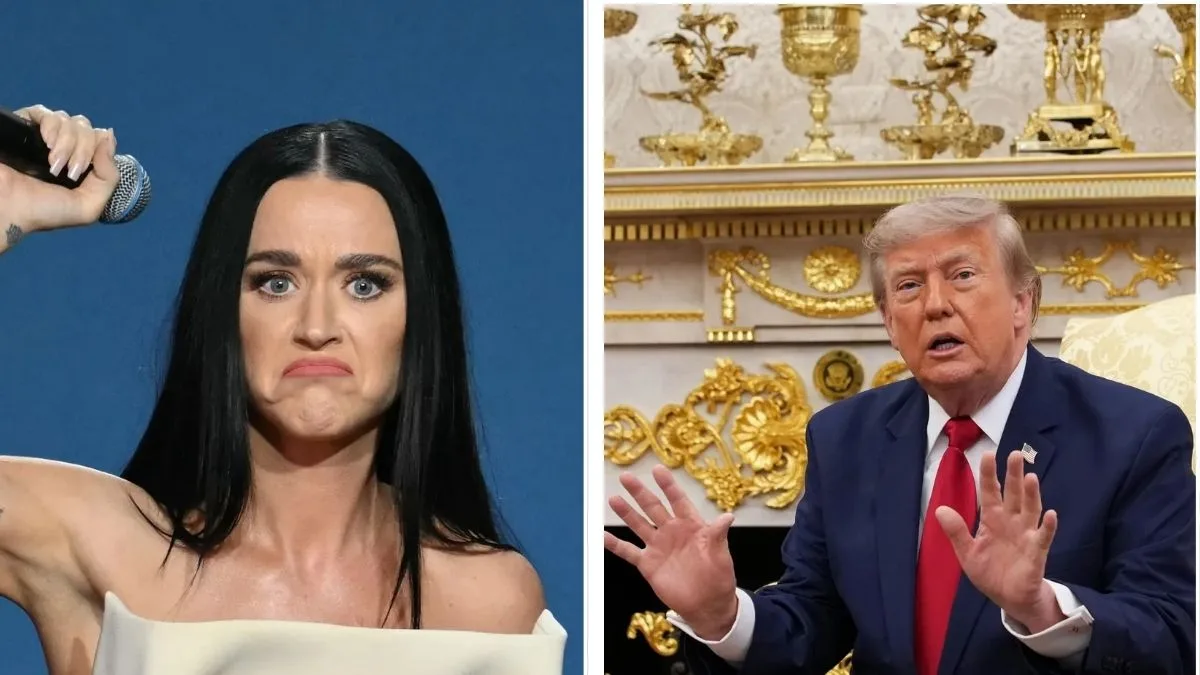
Singer-songwriter Katy Perry has strongly criticized US President Donald Trump after her hit song ‘Firework’ was used in a White House TikTok video featuring footage of US military strikes on Iran.

The video, which began circulating on TikTok earlier this week, combined scenes of military action with Perry’s 2010 chart-topping anthem. After learning about the clip, the singer made it clear that she had never given permission for her music to be used in that way.

Sharing her reaction on X, formerly known as Twitter, Perry said she was “deeply appalled and angry” over the video.

‘Firework’ was written to inspire, not promote violence

In her statement, Perry explained that the song was created to encourage people during difficult times and to remind them of their inner strength.

“I am deeply appalled and angry to see ‘Firework’ used on the White House TikTok as a backing track for video footage of military strikes. I did not approve this, I was not asked, and I absolutely do not condone it,” she wrote.

The singer added that seeing a song about hope and self-confidence paired with scenes of violence completely went against its original purpose.

She said ‘Firework’ was written as “an anthem of hope, healing, and inner strength” for people facing their darkest moments. According to Perry, using that message alongside images of destruction was “a complete violation” of everything the song represents.

Song has special meaning in Perry’s career

‘Firework’ has long been one of Perry’s most meaningful songs. In January 2021, she performed the hit outside the Lincoln Memorial during the televised celebration of Joe Biden’s presidential inauguration, highlighting its message of unity, hope, and resilience.

Other artists have also criticised Trump

Katy Perry is not the only artist to object to the Trump administration’s use of popular music on social media.

Last month, pop star Ariana Grande also spoke out after her song ‘Bye’ was used in a TikTok video promoting US immigration arrests. The clip showed Immigration and Customs Enforcement (ICE) officers detaining and handcuffing people, along with the caption, “Bye-bye. President Trump has delivered the most secure border in history.”

Grande responded in a comment that was later deleted, writing, “Please do not ever use my music in relation to this barbaric, inhumane, heinous nonsense. F— ICE.”

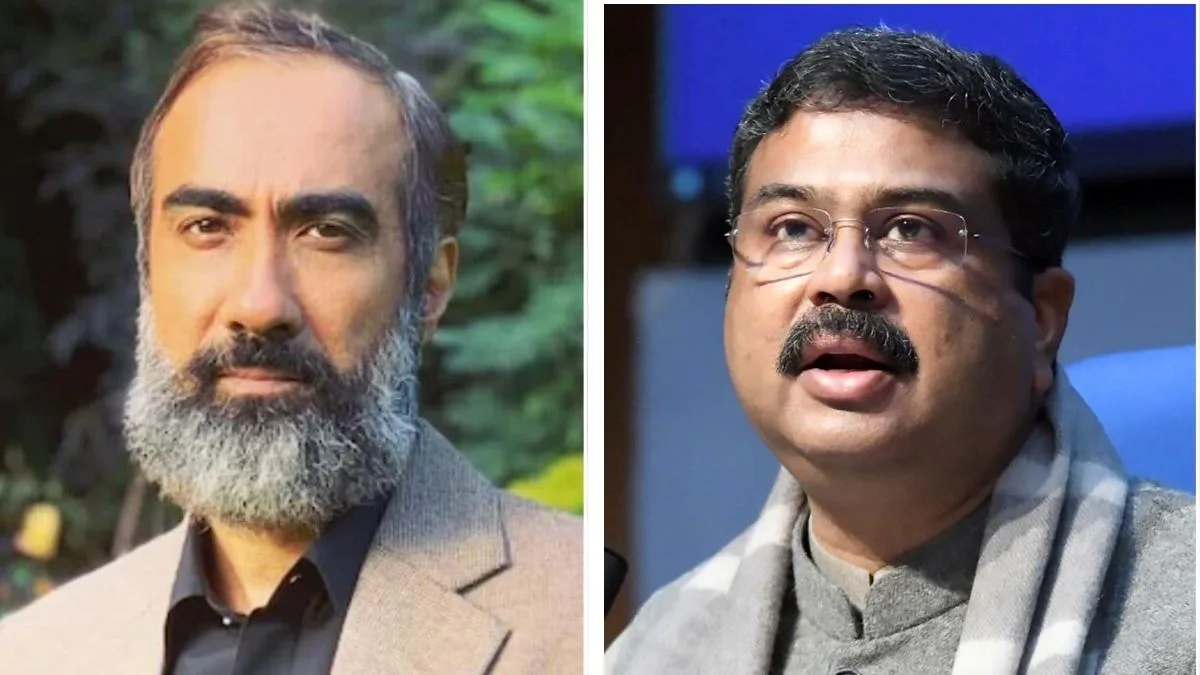
Ranvir Shorey reacts to Dharmendra Pradhan’s resignation, says government ‘disenchanted its supporters’

Several actors joined protests or backed the movement online. But Ranvir’s remarks on the timing of the resignation have triggered a fresh political debate across social media.

Statesman News Service | New Delhi |

Actor Ranvir Shorey has taken a different stand from many members of the film industry after Dharmendra Pradhan resigned as Union Education Minister on July 25. While several celebrities have openly supported the Cockroach Janata Party (CJP), Sonam Wangchuk, and student protesters, Ranvir said government’s decision disappointed him.

Ranvir Shorey says government lost its own supporters

Soon after news of Pradhan’s resignation became public, Ranvir reacted on X (formerly Twitter) by posting a shocked GIF. He also shared a message criticizing the government’s handling of the situation.

He wrote, “And in one swift move the Modi govt has managed to win over none of its enemies, and disenchant a lot of its supporters. #masterstroke,” along with clapping emojis.

Responds to question on NEET paper leak

Later, an X user asked Ranvir whether he believed Dharmendra Pradhan should not have resigned over the NEET paper leak controversy.

The actor replied to that question. He clarified that his objection was not entirely about the resignation itself but about its timing. Referring to the protests led by the Cockroach Janata Party (CJP), he wrote, “Yes, but should have done it before the streets were held hostage. Now it seems supporters will not be heard, but ‘cockroaches’ on streets will!”

Bollywood divided in public reactions

While Ranvir Shorey questioned the government’s move, many other Bollywood personalities have publicly supported the protest movement.

Actors Prakash Raj, Shabana Azmi, and rapper Hanumankind joined the demonstrations in Delhi. Meanwhile, Sonakshi Sinha, Vijay Varma, and several others voiced their support through social media posts.

In Mumbai, actors Gurfateh Pirzada, Pratibha Ranta, Shalini Pandey, and many others also participated in protest events.

Iran condemns Ukrainian attack on merchant vessel, warns it ‘will not hesitate’ to defend national security

A deadly blast on a merchant ship has opened a new front in the Russia-Ukraine conflict, with Iran accusing Kyiv of crossing a dangerous line. As both sides harden their positions, fears of wider regional tensions are growing.

Statesman News Service | New Delhi |

Iran has strongly condemned what it says was a Ukrainian military attack on one of its commercial vessels in the Caspian Sea. The Iranian Foreign Ministry called the incident an “act of aggression” and warned that Tehran is prepared to defend its national interests under international law if needed.

According to the ministry, the attack happened early on Saturday and caused an explosion aboard the Iranian ship. One sailor was killed in the blast, while another crew member suffered injuries. Iranian state media, including Press TV, reported the details of the incident.

Tehran calls attack a violation of international law

The Foreign Ministry said the strike violated Article 2(4) of the United Nations Charter, which prohibits the use of force against the territorial integrity or political independence of another state.

In its statement, the ministry accused Ukraine of deliberately increasing regional tensions by targeting a civilian commercial vessel. It said the attack was not only an internationally wrongful act but also a dangerous move that could spread insecurity across the region.

Iran further claimed that Ukraine openly acknowledged carrying out the strike, describing Kyiv’s actions as evidence of what it called an “irrational and hostile approach” toward Tehran.

Iran rejects claims of involvement in Russia-Ukraine war

The ministry once again denied that Iran has played any role in the ongoing Russia-Ukraine conflict. It stressed that Tehran has “never intervened” in the war and argued that the attack on its vessel was therefore unjustified.

Iran urged the United Nations Security Council, European countries, and all UN member states to take action against Ukraine. The ministry said countries that truly want peace and stability in Eastern Europe and nearby regions should hold Kyiv responsible for what it described as a criminal and provocative act.

Tehran also warned that if tensions increase further, the responsibility would rest entirely with Ukraine and those supporting its government.

Iran signals it is ready to defend its interests

In one of its strongest warnings, the Iranian Foreign Ministry said the country would not hesitate to protect its security and national interests.

The statement said Iran reserves its right to act in self-defence according to the basic principles of international law. It also warned that any consequences resulting from what it called Ukraine’s “adventurism” would be the responsibility of Kyiv and its international supporters.

Foreign Minister raises issue with EU’s Kaja Kallas

Iranian Foreign Minister Abbas Araghchi also discussed the incident during a phone call with European Union foreign policy chief Kaja Kallas.

According to Iran’s state news agency IRNA, Araghchi strongly condemned the reported attack and called for a firm response from the United Nations Security Council, the European Union, and the wider international community.

He also demanded that those responsible for carrying out and supporting the attack be held accountable.

During the conversation, the two leaders also reviewed recent developments in the Persian Gulf and the Strait of Hormuz following Iran’s response to earlier US military actions against Tehran. They agreed on the importance of diplomatic efforts to reduce tensions in the region.

Ukraine says it targeted military supply routes

Iran’s statement came after Ukraine officially confirmed a series of long-range strikes aimed at Russian military logistics and supply networks.

In a post on X, Ukrainian President Volodymyr Zelenskyy said Ukraine’s Defence Forces had hit several strategic targets inside Russia. These included a weapons component plant in Kirov, an oil refinery in Tyumen, a logistics facility in Yekaterinburg, and a fuel depot in Rostov-on-Don.

Zelenskyy also claimed that Ukrainian forces carried out successful strikes in the Caspian Sea. He said the operation targeted vessels used for military cargo shipments involving Iran, along with a warship.

India’s recent Obsession with OBSESSION

The recent 2026 film Obsession is emerging as a remarkable contribution to contemporary horror cinemascape, not merely because it spine-chills its audience, but because it fundamentally reconfigures what horror can be.

OISHIK KARMAKAR | Kolkata |

“And if you gaze long into an abyss, the abyss also gazes into you.” – this very famous quote by Friedrich Nietzsche perfectly reflects how the young American director Curry Barker succeeds in deconstructing the stereotypical presentation of horror in Western films, as he relocates horror from the former grotesque settings of abandoned castles or cursed villages into the very psychology of his character, who ultimately becomes a victim of his own “obsession”.

The recent 2026 film Obsession is emerging as a remarkable contribution to contemporary horror cinemascape, not merely because it spine-chills its audience, but because it fundamentally reconfigures what horror can be. While conventional Western horror films often rely upon external antagonists like demons, ghosts, serial killers, vampires or monstrous creatures, Obsession relocates terror into the realm of desire itself. The film begins with what appears to be the premise of a romantic comedy: Bear, an awkward and emotionally inhibited young man, harbours unspoken feelings for his childhood friend Nikki. Unable to articulate his affection and terrified of rejection, he turns to a supernatural object known as the One Wish Willow, wishing that Nikki would love him more than anyone else in the world.

Yet what follows is not a fantasy of fulfilled romance but a horrifying descent into psychological disintegration, moral corruption and existential dread. Barker deliberately deconstructs the conventions of mainstream horror by transforming the very thing that popular culture frequently celebrates – unconditional love, into a grotesque and suffocating curse. In doing so, he crafts a postmodern horror narrative that resists singular interpretation and instead invites the audience into a labyrinth of competing meanings and possibilities. The film’s postmodern character emerges from its persistent ambiguity.

Unlike traditional horror narratives, which typically provide clear explanations regarding the source of evil, Obsession refuses to offer definitive answers. Is Nikki possessed by a supernatural force? Has her soul been displaced by an otherworldly entity? Is the entire narrative a metaphor for coercive desire and the violation of agency? Or is it all simultaneously true? Barker refuses to privilege one interpretation over another. Consequently, the film becomes an open text, allowing viewers to construct meaning according to their own anxieties and philosophical assumptions. The horror is therefore not merely located within the narrative but within the interpretive process itself.

Every explanation generates new uncertainties and every certainty dissolves into ambiguity. Such instability is a hallmark of postmodern cinema, where truth becomes fragmented, subjective and perpetually deferred. Central to this ambiguity is the enigmatic One Wish Willow, which functions as far more than just a supernatural artifact. On a symbolic level, it represents humanity’s perennial desire to eliminate uncertainty from emotional relationships. Love, by its very nature, requires vulnerability, reciprocity and the possibility of rejection. Bear seeks to circumvent these conditions through magical intervention, attempting to transform affection into possession.

The willow grants his wish with terrifying literalness, embodying the ancient folkloric principle that supernatural gifts invariably conceal catastrophic consequences. Like the cursed objects of Gothic fiction and the infamous monkey’s paw of W. W. Jacobs, the willow exposes the hubris inherent in attempting to control forces that ought to remain free. Bear desires love without risk, intimacy without consent and devotion without reciprocity. The horror emerges from the realization that such desires are fundamentally incompatible with genuine human connection.

What he receives is not love but its grotesque simulacrum – an obsessive attachment stripped of autonomy, individuality and humanity. Perhaps the most fascinating interpretation generated by the film is the increasingly popular Cat Theory, which suggests that Nikki’s transformation is not merely the result of the willow’s magic but actually of spiritual possession by the recently deceased cat referenced earlier in the narrative. While Barker never explicitly confirms this reading, the theory possesses a compelling internal logic. Throughout the film, Nikki begins to exhibit behaviours that seem strangely feline in nature.

Her movements become unnaturally graceful yet predatory, her gaze lingers with unsettling intensity and her obsessive attachment to Bear resembles the territorial fixation of an animal rather than the emotional devotion of a human being. She appears unexpectedly within domestic spaces, often materializing with a disquieting suddenness that recalls a cat silently entering a room. Her possessiveness, jealousy and instinctive behaviour seem less characteristic of a cursed lover than of a creature operating according to primal impulses.

According to proponents of this theory, the One Wish Willow fulfilled Bear’s wish by transferring the spirit of the recently deceased cat into Nikki’s body, creating a hybrid entity whose overwhelming attachment reflects animal instinct amplified by supernatural power. Whether literally true or not, the theory enriches the film by adding another interpretive dimension, transforming Nikki from a simple victim of magic into a vessel through which questions of identity, embodiment and consciousness can be explored. The brilliance of the theory lies precisely in its uncertainty; it remains simultaneously plausible and unprovable, thereby reinforcing the film’s postmodern refusal of definitive meaning.

The film’s exploration of psychological horror is equally sophisticated. Unlike many contemporary horror films that depend upon sudden shocks and visceral spectacle, Obsession derives its terror from the gradual erosion of identity. Nikki’s condition is horrifying not because she becomes violent, but because fragments of her original self appear trapped beneath the obsessive persona imposed upon her. Several scenes imply that the authentic Nikki remains conscious somewhere within the psychological abyss created by the willow, helplessly witnessing the destruction of her own autonomy. The terror therefore becomes existential rather than physical.

The audience is confronted with the horrifying possibility of being imprisoned within one’s own body, stripped of agency while retaining awareness. Such imagery evokes philosophical concerns regarding free will, consciousness and the nature of personal identity. The film transforms possession from a supernatural phenomenon into a metaphor for psychological imprisonment, creating a horror that resonates on a deeply human level. Barker’s mastery of visual storytelling further intensifies this atmosphere through his meticulous use of dark mise – en-scène. The f ilm is permeated by oppressive shadows, muted colour palettes and claustrophobic compositions that externalize the psychological deterioration of its characters. Darkness in Obsession is never merely an absence of light; it becomes a visual manifestation of uncertainty and moral corruption.

Interiors feel suffocatingly enclosed, while familiar domestic environments acquire an uncanny quality that transforms them into spaces of latent menace. The cinematography frequently employs uncomfortable framing and excessive empty space around characters, emphasizing their loneliness and vulnerability. The result is a visual landscape in which every room seems haunted not by ghosts but by emotional decay. Even before overt horror emerges, the mise – en-scène quietly communicates that something within this world has become profoundly wrong. Equally significant is the film’s deployment of spatial horror, a technique through which physical environments themselves become sources of anxiety. In conventional haunted-house narratives, horror occupies a location. In Obsession, however, location itself becomes horrifying.

Bedrooms, hallways, kitchens and parking lots lose their familiarity and acquire an unsettling unpredictability. Nikki’s ability to appear unexpectedly within spaces destabilizes the audience’s trust in geography and distance. Safe environments cease to function as sanctuaries, generating a pervasive sense of vulnerability. This manipulation of space recalls Freud’s concept of the uncanny, wherein the familiar becomes terrifying precisely because it remains recognizably familiar. Barker exploits this phenomenon with remarkable effectiveness, creating a world in which ordinary spaces become psychologically hostile. The viewer begins to experience a form of existential claustrophobia, sensing that privacy, security and personal boundaries have all collapsed.

Ultimately, Obsession is gradually succeeding to become a Blockbuster because it transforms horror into a philosophical inquiry unlike any previous movie. It is simultaneously a supernatural possession story, a critique of male entitlement, a meditation on consent, and an exploration of fragmented identity and also a postmodern puzzle resistant to closure.

Through the symbolism of the One Wish Willow, the unsettling plausibility of the Cat Theory, its sophisticated psychological terror and its oppressive visual and spatial design, Barker creates a film that lingers long after its conclusion. The true horror of Obsession does not reside in monsters, ghosts or supernatural violence. Rather, it resides in the terrifying realization that the desire to possess another human being can become an abyss in itself. And as Nietzsche’s warning suggests, once one gazes deeply enough into that abyss, it inevitably begins to gaze back.

The writer is an undergraduate scholar of English