Logo

Trinamul slams BJP after released of rapist from court

The BJP’s slogan of Beti Bachao Beti Padhao is the biggest farce as the saffron party cannot protect women and the alleged rapists are released from the court, said the Trinamul Congress today.

Statesman News Service | Kolkata |

The BJP’s slogan of Beti Bachao Beti Padhao is the biggest farce as the saffron party cannot protect women and the alleged rapists are released from the court, said the Trinamul Congress today.

The ruling party in its X handle wrote: “In @BJP4India- ruled states women aren’t the prime targets of savage sexual crimes they’re condemned to a living hell where justice is a cruel myth and the system actively crushes any hope of recourse.”

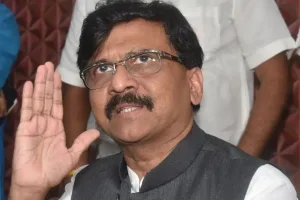
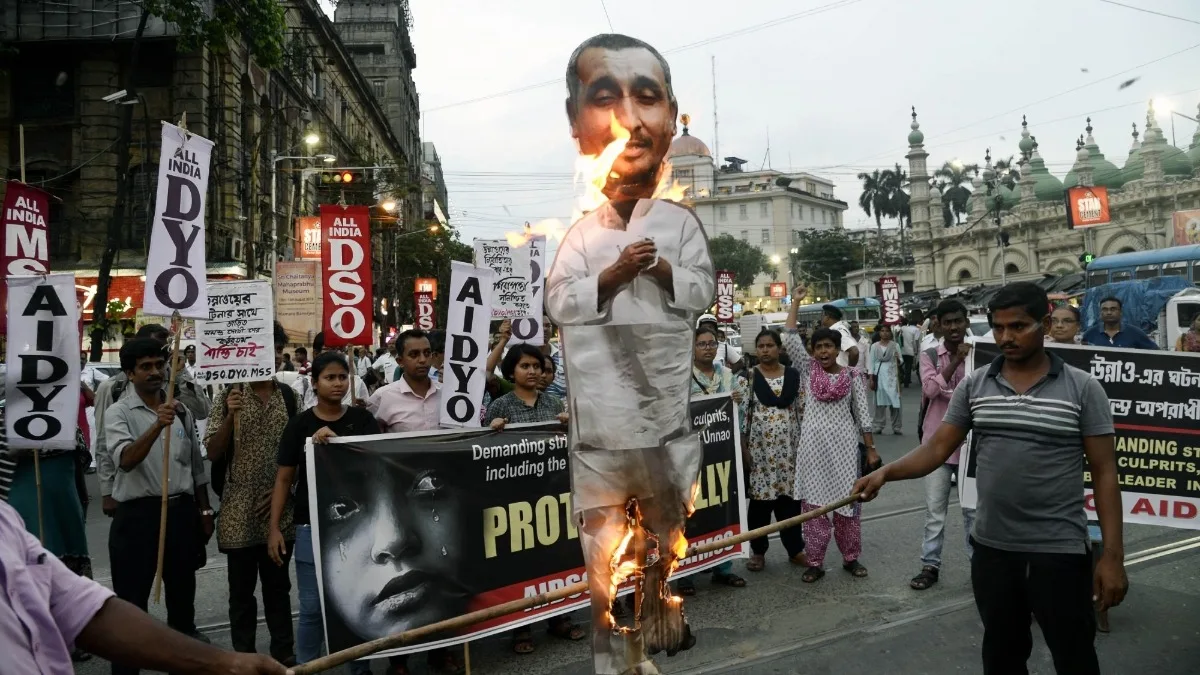
Reacting sharply on the release of Kuldeep Singh Sengar, BJP MLA, who was arrested in connection with the alleged rape of a minor girl at Unnao in Uttar Pradesh and was recently released from the court, Dr Shashi Panja, state minister for women and child development and social welfare, said: “The BJP should be condemned for this shameful act. Why is the BJP silent on the matter,” she questioned.

She added: “The minor girl, who is an adult now, lost her father who was allegedly murdered by the BJP goons. Again, two of her maternal aunts had been killed by the criminals. The BJP killed the witnesses and the party has exposed itself before the nation,” she said.

She said a 20 year old college student in Odisha was driven to self-immolation after relentless sexual harassment by professor. She finally succumbed to her burns.

In Madhya Pradesh, a woman was allegedly raped by the son of BJP’s Shivpuri Municipal Council president. She consumed sleeping pills and rat poison because surviving in BJP’s regime is worse than death.

Coming down heavily on the godi media, she said: “Muzzled and obedient, burying stories under layers of sycophancy, it did not hesitate not to carry these reports. The BJP’s true nature should be exposed before the country,” she maintained.

Uphill battle underscores scribes’ role

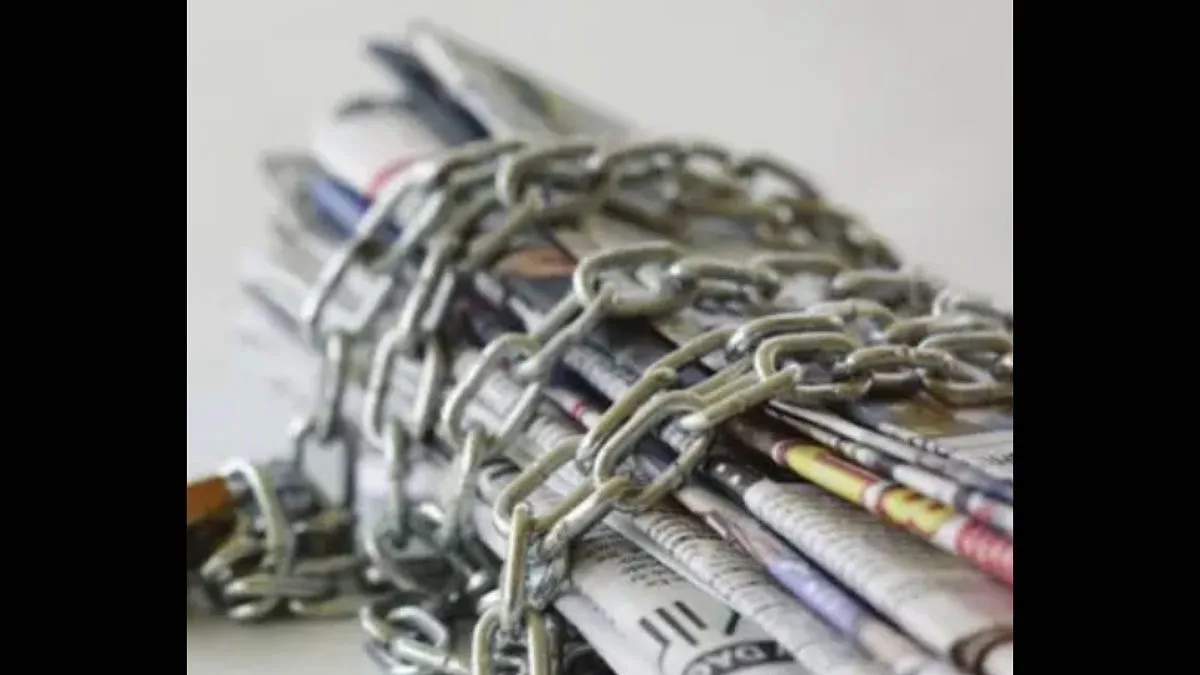
On December 10, the year 2025 reached a murderous milestone. In 2024, the Committee to Protect Journalists (CPJ) had recorded 126 journalists and media workers killed, the highest number since the CPJ first began keeping records in 1992.

JAMES RODGERS | New Delhi |

On December 10, the year 2025 reached a murderous milestone. In 2024, the Committee to Protect Journalists (CPJ) had recorded 126 journalists and media workers killed, the highest number since the CPJ first began keeping records in 1992. In 2025, the figure was matched with three weeks of the year still to go. One nationality, Palestinian, has paid by far the highest price.

“Israel has killed almost 250 journalists since the

  • Israel-Gaza war
  • began in 2023,” the CPJ reported. What does this mean for audiences’ understanding of a world where international affairs are dominated by war, the climate crisis and unpredictable politics? As far back as the early years of the US, and through the European revolutions of the 19th centuries, information and freedom have been linked. In 1787, Thomas Jefferson wrote: “Were it left to me to decide whether we should have a government without newspapers, or newspapers without a government, I should not hesitate a moment to prefer the latter.” Today, we have access to more media than at any other time in human history.

    But this vast amount of information has not necessarily meant more reliable information. Governments and tech companies striving to control the message often succeed. Bottom of Form Israel has banned international journalists entering Gaza. Palestinian journalists continue, at great risk, to report from the territory. Russia, meanwhile, has placed restrictions on reporting its “special military operation” – in a word, war – on Ukraine. A generation ago, when the CPJ first began keeping data on journalists’ deaths, it was different.

    The fall of the Berlin Wall and the end of the cold war allowed international media organisations freedom to work as never before in the former Soviet bloc. As those countries embraced political change, they encouraged freer media to flourish within their new societies. True, these media were often influenced by political and business interests – the news media often are. But there was plurality where previously there had only been the party line. The 1990s, imperfect though they were as a time of press freedom, were better than what has followed since. As the media academic and former foreign correspondent Peter Greste has persuasively argued, the aftermath of 9/11 involved state power extending, “into control over information and ideas.

    They did that by loosening the definitions of what constituted ‘terrorism’ and ‘national security’”. Greste’s words were informed by the price he had paid for his own journalism. In late 2013, along with two colleagues, Mohamed Fadel Fahmy and Baher Mohammad, he was detained in Egypt on terrorism charges. He spent 400 days in prison. The charges had resulted from the fact that he had spoken to the Muslim Brotherhood as part of his reporting. “How do you accurately and fairly report on Egypt’s ongoing political struggle without talking to everyone involved?” he wrote at the time.

    It is not new that governments seek to control media. What is new is that the US is so proudly among them. Jefferson would probably not like what the current US government is doing, especially its recent policy of restricting access to the Pentagon for reporters who themselves refuse restrictions on their reporting. The words that follow Jefferson’s discussion of the relative merits of governments and newspapers are less well remembered: “But I should mean that every man should receive those papers and be capable of reading them.” Outdated gendered language aside, that, today, is the problem.

    For while we have more and more media, we have far less media freedom. In the age of mass media, news organisations have largely controlled the means of distribution. Today, the tech companies take the lead. Not everyone is receiving the “papers”. Where they are not formally censored, they are harder to find – and cost money, unlike social media content. Algorithms may be adjusted to give us more cat videos and fewer questions. Governments and criminals place physical restrictions, up to and including death, on journalists’ work. Powerful politicians use legal action – or the threat of it – to silence trusted news organisations. In my previous career as an international correspondent, I reported on wars in the former Soviet Union and the Middle East.

    In the 1990s and 2000s, journalists were often restricted by governments not wanting bad news reported – but rarely simply banned as they increasingly seem to be now. In Gaza and in Russia, international journalists are unable to access places they need to tell the story. In both cases, courageous reporters from those countries risk danger and even death to try to tell the world what is happening. The restrictions placed upon journalists today may mean that governments seem to be winning at the moment. Their desire to control confirms the power to challenge that journalism still holds.

    (The writer is Reader in International Journalism, City St George’s, University of London. This article was published on www.theconversation.com)

    ‘Farming is our identity’

    Chhattisgarh’s Agriculture, Farmer Welfare and Tribal Welfare Minister Ramvichar Netam is spearheading a transformative shift aimed at improving the lives of farmers, tribal communities, and rural youth.

    Statesman News Service | New Delhi |

    Chhattisgarh’s Agriculture, Farmer Welfare and Tribal Welfare Minister Ramvichar Netam is spearheading a transformative shift aimed at improving the lives of farmers, tribal communities, and rural youth. Known for his grassroots connect and long political journey, Netam is focused on promoting sustainable farming, modern technology, and self-reliant villages.

    In a conversation with Shishir Roy of The Statesman, he shares his plans to reshape Chhattisgarh’s agriculture and strengthen the rural economy over the next few years.

    Q. What are your achievements in the agricultural sector of Chhattisgarh?

    A. Agriculture is not just an occupation in Chhattisgarh – it is our identity. People here have been connected with farming for generations, and our entire rural economy is based on it. The first priority of our government was to ensure that farmers get the right price for their produce. Earlier, they had to struggle to sell their crops. After our government came to power, we focused on fair pricing and timely procurement. Under the guidance of Prime Minister Narendra Modi, we have reduced input costs through substantial subsidies on machinery and equipment, around 40 to 50 per cent, and provided quality seeds to make Chhattisgarh self-reliant in agriculture. We were earlier dependent on other states for seed supply, but that is no longer the case. Through the e-NAM portal, farmers are now able to sell their produce directly across India. Our vision is simple, ‘when farmers prosper, Chhattisgarh develops’.

    Q. What special plans are being implemented to help farmers in different regions of Chhattisgarh?

    A. The strength of Chhattisgarh lies in its diversity. Every region here has a different climate and potential. In hilly and forest areas, we are promoting millet cultivation and helping farmers through special projects. In the plains, we are working on improving paddy and maize production with better seeds and mini kits. In Bastar and Dantewada, we are encouraging organic and natural farming. In fact, Dantewada has been declared a Javik Zila (organic district). Farmers there are producing completely organic crops, and we are helping them access better markets. Our goal is to ensure that the farmers’ produce, whether it is paddy, millets, or vegetables, gets the best possible value.

    Q. You also handle the Animal Husbandry department. What initiatives are being taken to strengthen this sector?

    A. The dairy and livestock sectors are an important part of rural life. But for years, farmers faced challenges like lack of fodder and poor milk production. We have now revived the cooperative model in partnership with the National Dairy Development Board (NDDB). I visited Anand in Gujarat to study their system. We are improving cattle breeds, setting up milk chilling plants, and providing better market access for milk producers. The focus is not just on milk but also on value-added products such as paneer, ghee, and curd. These small changes will have a big impact on rural income. Within a year, people will start seeing the results.

    Q. Chhattisgarh is also taking new steps in palm oil cultivation. Could you tell us more?

    A. Palm oil is an area where India has been heavily dependent on imports. The central government has given us a big responsibility to expand palm c ultivation in Chhattisgarh. We have identified large tracts of land suitable for this and are working closely with agricultural universities and Krishi Vigyan Kendras (KVKs). Under this plan, the central government aims to develop 1.2 lakh hectares of land across the country for palm cultivation – and Chhattisgarh is contributing a major share. Farmers are being encouraged through subsidies and intercropping options like chilies and spices so that they can earn even before the palm plantations mature. The response has been very encouraging.

    Q. Chhattisgarh is known as the “Rice Bowl of India”. How are you ensuring a better paddy procurement system for farmers?

    A: Chhattisgarh’s farmers grow rice in abundance, and it’s our pride. When our government came to power, we had promised to purchase paddy at Rs 3,100 per quintal – and we kept that promise. We have modernized mandis, expanded storage facilities, and made the procurement system more transparent. This year, around 1.5 lakh new farmers have joined the procurement network. Payments are being made faster, and the system is becoming simpler. Our aim is that no farmer should have to worry about selling their produce or getting paid on time.

    Q. Chemical fertilizer supply has often faced disruptions. What steps have you taken to address this issue?

    A . Global issues like the Russia-Ukraine conflict affected fertilizer imports everywhere, but with the direct intervention of Prime Minister Mo di and constant coordination with our leadership, we ensured that Chhattisgarh’s farmers did not suffer. At the same time, we are focusing on reducing dependence on chemical fertilizers by promoting organic farming. Farmers are being encouraged to prepare compost using cow dung and natural materials. This improves soil health, protects the environment, and reduces cost. The more we move towards organic methods, the stronger our farming will become.

    Q. How is the government implementing the PM Janman Yojana in Chhattisgarh?

    A. The PM Janman Yojana is one of the most significant programmes for the Particularly Vulnerable Tribal Groups (PVTGs). Chhattisgarh is among the best-performing states in its implementation. Every PVTG family is being provided with housing, solar power, clean drinking water, education and healthcare. I have visited many of these villages. Electricity is being supplied through solar panels, new schools are opening, and roads are being built in areas that were earlier cut off. We have also started coaching centres for tribal students in 16 districts and expanded hostel facilities in Delhi to support higher education. The goal is to bring tribal communities into the mainstream of development while preserving their culture.

    Q. What is your message for the youth and young farmers of Chhattisgarh?

    A. The youth of Chhattisgarh are full of energy and talent. Agriculture today is not what it was 20 years ago – it’s now an opportunity-filled profession. With modern technology, precision farming, and startups, it’s possible to make a good income from the land. I have seen engineers, doctors, and entrepreneurs returning to farming because they see the potential. My message to them is simple: Chhattisgarh has fertile land, abundant water, and a strong agricultural base. Use technology wisely, adopt drip irrigation, and focus on the principle of “More Crop per Drop.” This will increase productivity, conserve water, and secure a better future for everyone.

    Delhi air quality worsens again: AQI slips into ‘very poor’ and ‘severe’ zones

    Delhi’s air quality declined again after a brief improvement, with several areas slipping into very poor and severe AQI levels as calm winds trapped pollution across the city.

    Statesman News Service | New Delhi |

    Delhi’s brief spell of cleaner air did not last long. Pollution levels rose again on Saturday, pushing air quality back into the “very poor” and “severe” categories in several parts of the city.

    A thick blanket of smog covered large areas in the morning, lowering visibility and making outdoor conditions uncomfortable for many residents.

    Figures from the Central Pollution Control Board showed sharp differences across locations. Dhaula Kuan saw an AQI reading of 252, which means the air quality there was poor. Conditions were much worse in Akshardham and Anand Vihar, where AQI levels went up to 410, putting these areas in the severe pollution category. Pollution was also high around ITO, where the AQI stood at 379, classified as “very poor”.

    Citywide data pointed to a clear decline. Delhi’s 24-hour average AQI was recorded at 332 at 4 pm on Friday, compared with 234 on Thursday.

    Why pollution levels rose again

    Weather conditions played a major role in the sudden spike. The India Meteorological Department said calm winds ahead of an approaching western disturbance prevented pollutants from dispersing. Winds remained weak through the early morning, so polluted air stayed trapped. They picked up slightly later in the day, reaching about 10 kmph, but this was not enough to clear the smog.

    Meteorologists have warned that pollution could remain high over the next few days as more western disturbances are expected to affect the region. A yellow alert has been issued, warning of moderate to dense fog in Delhi and surrounding areas.

    Cold weather is also adding to the problem. The minimum temperature in the capital is expected to remain between 6 and 8 degrees Celsius on Saturday and drop further to 5–7 degrees on Sunday, conditions that can trap pollutants close to the ground and allow smog to persist.

    Test of intentions

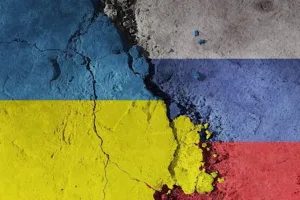
    Ukraine’s latest peace proposal marks a subtle but significant shift in how Kyiv is trying to end a war that has long defied clean diplomatic solutions.

    Statesman News Service | New Delhi |

    Ukraine’s latest peace proposal marks a subtle but significant shift in how Kyiv is trying to end a war that has long defied clean diplomatic solutions. Rather than framing peace as a binary choice between territorial integrity and continued fighting, the plan advances a more ambiguous idea: de-escalation without surrender. In doing so, it exposes both the limits of compromise and the deeper strategic contest that still defines the conflict.

    At the centre of the proposal is the concept of demilitarised or economically neutral zones in eastern Ukraine, particularly in parts of Donbas still under Ukrainian control. This is not an offer to redraw borders or legitimise occupation. Instead, it suggests a managed reduction of military presence, matched on both sides, while retaining Ukrainian administration and policing. The logic is clear. Kyiv is signalling flexibility on how territory is defended, but not on who owns or governs it. Any pullback of forces carries obvious dangers after years of brutal fighting. Yet the alternative ~ an endless war of attrition ~ also carries mounting costs, both human and economic. The proposed zones are less about trust in Moscow and more about creating enforceable mechanisms that make renewed large-scale offensives harder to launch unnoticed.

    What gives the plan its sharper edge is the emphasis on security guarantees. Ukraine is no longer seeking vague assurances or symbolic partnerships. It is demanding a framework that mirrors the collective defence logic associated with the North Atlantic Treaty Organisation, even if formal membership remains unresolved. Combined with a sizable standing military, this reflects Kyiv’s core lesson from recent history: peace without deterrence is merely an interlude. The implicit message is that rejection would trigger deeper Western involvement, from heavier arms supplies to harsher sanctions. In this sense, the plan is as much about shaping external incentives as it is about resolving disputes on the ground. From the Kremlin’s perspective, the offer is unlikely to be attractive. President Vladimir Putin has consistently framed the war as a question of control, not coexistence. Demilitarised zones that remain under Ukrainian authority undermine the narrative of irreversible territorial gains.

    Acceptance would imply limits to Russia’s ambitions – something Moscow has so far resisted. Yet, the proposal’s real audience may not be Russia alone. By insisting on a future referendum, Ukrainian leaders are anchoring any settlement in domestic consent. This reinforces democratic legitimacy at a moment when external actors, including US President Donald Trump, are pressing for rapid conclusions. It also signals to Europe that Ukraine’s eventual integration into the European Union is tied to stability, not capitulation. Ultimately, the plan does not promise peace in the immediate sense. What it offers instead is a framework to test intentions. If Russia refuses, the diplomatic burden shifts decisively. If it engages, the war may enter a phase where guns fall silent even as fundamental disagreements persist. Either way, Ukraine is asserting that any end to the conflict must balance realism with resolve ~ and that survival, not exhaustion, now defines its negotiating position.

    Narrow victory

    The razor-thin outcome of Honduras’s presidential election reveals less about partisan strength than about the vulnerability of democratic legitimacy under stress.

    Statesman News Service | New Delhi |

    The razor-thin outcome of Honduras’s presidential election reveals less about partisan strength than about the vulnerability of democratic legitimacy under stress. When victory margins fall below a percentage point, elections cease to be simple contests of numbers and instead become tests of institutional credibility. In this case, delays, technical failures, and competing claims of interference have transformed a procedural exercise into a national reckoning over trust.

    The declared winner, Nasry Asfura, enters office with a formal mandate but a contested moral one. While the vote count eventually produced a result, the process by which it arrived there ~ system crashes, manual recounts of a significant share of ballots, and weeks of uncertainty ~ has left space for doubt. For the runner-up, Salvador Nasralla, rejection of the outcome reflects not just personal grievance but a broader anxiety shared by supporters who view procedural irregularities as decisive, not incidental. The real danger is not disputed ballots but eroding consent, where citizens accept outcomes reluctantly, convinced rules were bent, and future contests feel predetermined rather than genuinely competitive and fair.

    What makes this election particularly consequential is the visibility of external pressure. When powerful foreign actors signal preferences, issue threats, or frame outcomes in advance, they inadvertently weaken the very stability they claim to support. Even if the final tally reflects voter intent, overt intervention reshapes domestic perceptions, turning technical disputes into symbols of sovereignty under strain. In such conditions, calls for calm and acceptance sound hollow unless accompanied by credible assurances of institutional independence. The reaction within Honduras itself highlights this tension. Protests, counter-protests, and sharply worded statements from senior political figures suggest that the election has deepened existing polarisation rather than resolved it. The governing challenge ahead is therefore twofold. First, the incoming administration must demonstrate competence and restraint, signalling that the narrow victory will not translate into winner-takes-all governance. Second, electoral authorities must confront the failures of the process with transparency, not defensiveness, if they are to regain public confidence.

    The broader lesson extends beyond Honduras. Democracies today operate in an environment where technology, geopolitics, and information flows intersect in unpredictable ways. Technical glitches are no longer mere administrative hiccups; they can become catalysts for systemic distrust. Likewise, foreign endorsements, once routine elements of diplomacy, now risk being read as attempts to pre-empt popular will. Ultimately, stability will depend less on legal finality than on political maturity. A narrow win demands humility from the victor and restraint from external partners. It also requires opposition leaders to calibrate dissent carefully, distinguishing between legitimate scrutiny and escalation that could fracture institutions further. Honduras’s election is thus not just about who governs next, but about whether democratic processes can still command consent in an era of suspicion. The answer will be shaped in the months ahead, not by rhetoric, but by governance that proves worthy of trust.

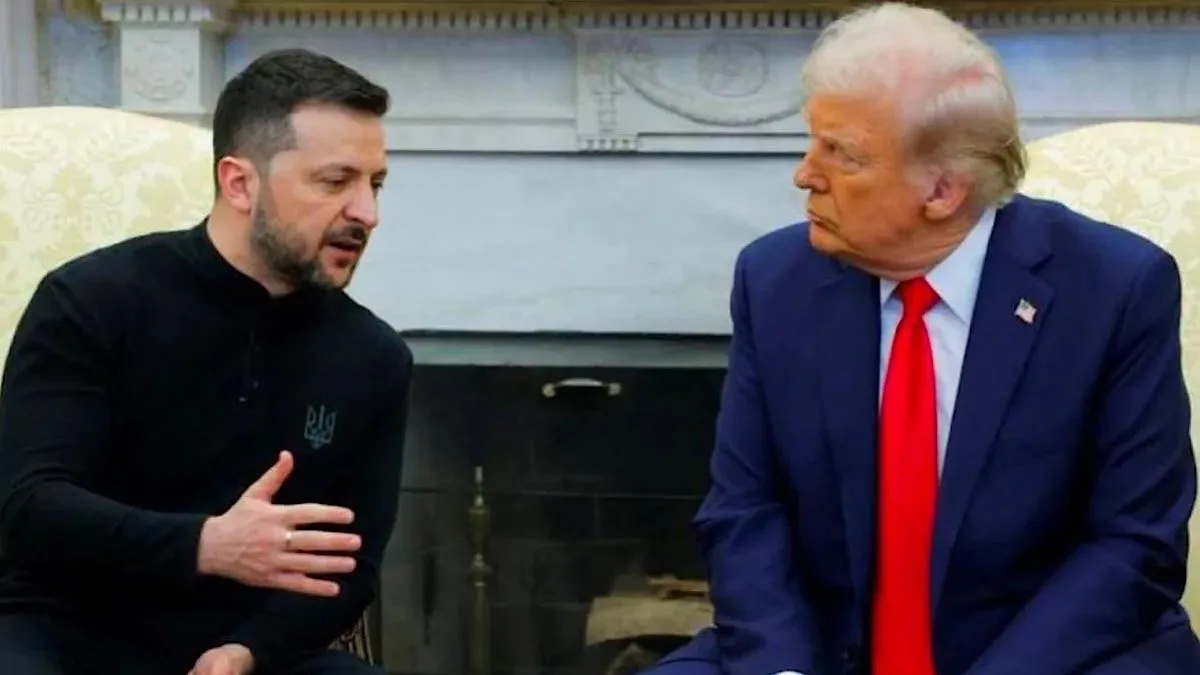
    Zelensky ‘doesn’t have anything until I approve it’: Donald Trump claims final say on Ukraine peace deal

    Donald Trump says Ukraine’s peace plan with Russia needs his approval as he prepares to meet President Zelensky in Florida for high-level talks.

    Statesman News Service | New Delhi |

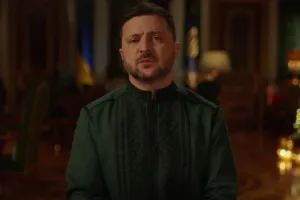
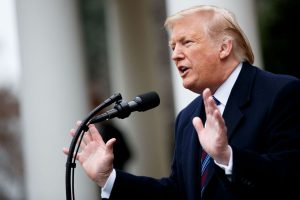
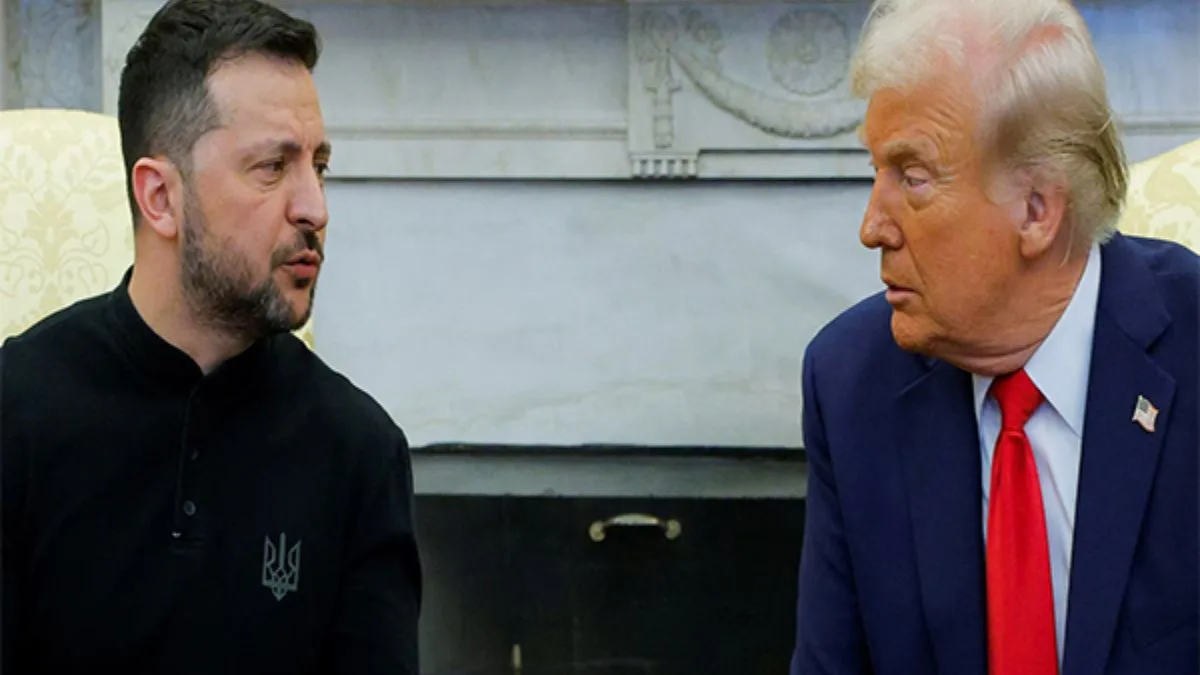
    US President Donald Trump has said that any peace deal aimed at ending the war between Ukraine and Russia would require his approval, as Ukrainian President Volodymyr Zelensky prepares to present a new proposal during talks in Florida this weekend.

    Speaking in an interview ahead of the meeting, Trump said Zelensky’s plan would carry no weight without his consent. “He doesn’t have anything until I approve it,” Trump said, adding that he would first review what Zelensky brings to the table.

    Zelensky is expected to meet Trump on Sunday, where he plans to outline a 20-point peace proposal to bring an end to the conflict, which has lasted nearly four years. Ukrainian officials say the framework of the plan is almost complete, with around 90 per cent of the details finalised.

    Also Read: Test of intentions

    What Zelensky’s 20-point plan includes

    The proposed framework reportedly includes the creation of a demilitarised zone, along with discussions on security guarantees that the United States could offer Ukraine after the fighting ends.

    According to Ukrainian officials, the talks will also cover sensitive political and strategic issues, including the future control and management of the Zaporizhzhia nuclear power plant and territorial questions linked to the Donbas region in eastern Ukraine, which Russia claims.

    Zelensky has said the peace plan involves four parties – Ukraine, the US, Russia and Europe – and cannot be finalised without the participation of all sides.

    Why the Florida meeting matters now

    Trump said he was optimistic about the upcoming discussions, not only with Zelensky but also with Russian President Vladimir Putin. He said he expects to speak with Putin soon and believes the talks could move the process forward.

    The remarks came a day after Zelensky held discussions with Trump’s special envoy Steve Witkoff and Trump’s son-in-law Jared Kushner, an interaction Zelensky later described as positive.

    Trump also confirmed that Israeli Prime Minister Benjamin Netanyahu would be visiting him around the same time, describing a series of meetings with global leaders as a sign of renewed respect for the United States.

    Zelensky has cautioned against expectations of an immediate breakthrough. He said the Florida meeting should be seen as a step toward resolving pending issues rather than a moment for a final agreement.

    In a social media post, Zelensky said both sides had agreed to hold high-level talks soon, adding that significant decisions could be taken before the end of the year.

    Showing the way

    In a world increasingly fractured by distrust, rivalry, and polarisation, India stands today as an unexpected but undeniable centre of gravity. This rise did not happen by accident; it is the cumulative effect of a decade marked by purposeful leadership, democratic stability, cultural confidence, and a foreign policy that has redefined India’s place in world affairs.

    SANTHOSH MATHEW | New Delhi |

    In a world increasingly fractured by distrust, rivalry, and polarisation, India stands today as an unexpected but undeniable centre of gravity. This rise did not happen by accident; it is the cumulative effect of a decade marked by purposeful leadership, democratic stability, cultural confidence, and a foreign policy that has redefined India’s place in world affairs. If the previous centuries belonged to geopolitical might, the coming ones will belong to nations with moral authority ~ and India has emerged as one such nation, powered by an ancient civilisation and a modern, forward-looking State. This decade has been transformative.

    India is not merely growing; it is guiding. Not merely rising; it is reassuring. Not merely participating; it is shaping global outcomes. At a time when many nations are building walls, India is building bridges ~ between continents, ideologies, economies, and cultures. The world, torn between superpower rivalries and leadership voids, increasingly turns to India for reason, balance, and hope. The hallmark of India’s foreign policy today has been strategic autonomy backed by strategic clarity. Under Prime Minister Narendra Modi and External Affairs Minister Dr S. Jaishankar, India has mastered the art of engaging the world without becoming entangled in its camps. This is not non-alignment of compulsion but multi-alignment of choice ~ working with all, aligning with none, and speaking for many. Jaishankar captured it succinctly: “India today is recognised as a voice of peace, security and stability. When India speaks, it speaks not only for itself but for many others.” India’s relevance comes from credibility.

    During the Russia–Ukraine conflict, India refused to be bullied into taking sides. It took the path of dialogue, urging an immediate cessation of violence, earning praise from both Moscow and Kyiv. Ukraine’s Foreign Minister Dmytro Kuleba himself acknowledged that India’s “authoritative voice is vital for peace efforts.” In West Asia, India alone has managed to maintain steady relations with Israel, Palestine and Iran – a rare diplomatic balance that few nations have achieved. n the Indo-Pacific, India has become the anchor of stability, countering aggressive postures through partnerships built on trust rather than threats. Beyond diplomacy, India’s peace credentials are grounded in decades of service.

    As one of the largest contributors to UN peacekeeping missions ~ over 2,50,000 troops across 50 missions ~ India has demonstrated that peace is a practice, not just a position. From Lebanon to Congo, Indian peacekeepers have protected civilians, rebuilt communities, and earned admiration for professionalism and compassion. If peace is India’s message, prosperity is its method. The last decade has seen India rise from the world’s tenth-largest economy to the fifth, and it is poised to nter the top three. Sectors from digital infrastructure to space, agriculture to aviation, defence manufacturing to renewable energy have undergone radical expansion. The Atmanirbhar Bharat mission has turned crisis into opportunity by pushing for local innovation and global integration. Today, India is the pharmacy of the world, the tech back-office of the world, and increasingly, the digital backbone of the world.

    India’s vaccine diplomacy during the pandemic set a new global benchmark. While richer nations hoarded supplies, India delivered over 240 million vaccine doses to more than 100 countries under Vaccine Maitri – a gesture that strengthened global health and restored faith in humanity. Whether in earthquakes in Nepal, cyclones in Mozambique, tsunamis in the Pacific or, most recently, the devastating floods in Sri Lanka, India was the first responder. This readiness to help is not strategy; it is civilisational duty shaped by the timeless values of Vasudhaiva Kutumbakam – the world is one family. The G20 presidency in 2023 was perhaps India’s most visible moment on the global stage. India broke deadlocks that even powerful nations failed to resolve, brought the African Union into the G20 as a permanent member, and reframed global development debates around equity and justice. The theme “One Earth, One Family, One Future” was not a slogan; it was a worldview.

    Under India’s leadership, the G20 became more representative, more humane, and more attuned to the Global South. Part of India’s modern rise comes from the regeneration of its soft power. Yoga is now a global phenomenon celebrated in 180 countries. Ayurveda, Indian cuisine, classical arts, cinema, and philosophy have become cultural ambassadors. But the real soft power revolution is not accidental; it is the result of conscious cultural diplomacy. The International Solar Alliance – championed by India ~ has emerged as a global climate coalition of hope, proving that environmental leadership can come from developing nations too. Alongside this, the New Education Policy (NEP 2020) is shaping a new generation that is globally connected yet deeply rooted. It promotes mother languages, Indian knowledge systems, and cultural literacy while embracing modern skills like AI, blockchain, and design.

    It is an educational renaissance that seeks to bridge India’s past and future. Naari Shakti ~ the empowerment of women ~ has become a moral and developmental pillar. From higher female participation in STEM and armed forces to the passage of the Women’s Reservation Act, India is signalling that a rising nation must rise with its women. But India’s success is not merely about India. It has changed the psychology of South Asia itself. When people speak of the region, they often invoke clichés ~ poverty, conflict, migration. What they ignore is that South Asia is home to 40 per cent of the world’s democracy. Despite imperfections, it is one of the world’s most vibrant democratic zones. India’s constitutional continuity, gigantic election management, culture of alternation, and acceptance of political loss have inspired neighbours to rethink their own democratic journeys. Losing an election in India does not end politics; it begins renewal. This stability has allowed institutions to mature and citizens to develop expectations about how power should change hands.

    Neighbours trapped in debt crises ~ from Sri Lanka to Maldives ~ now see the resilience of the Indian model: political stability, constitutional continuity, and economic prudence. India has become not just the largest democracy, but also the most successful and instructive in the region. While nations worldwide battle ideological radicalism, India practices pluralism; while many grapple with identity crises, India celebrates diversity; while others retreat into protectionism, India champions globalisation with fairness. The cultural confidence of this decade has allowed India to shed outdated inferiority complexes. The world no longer views India as a land of snake-charmers or call centres, but as a civilisation-state that blends antiquity with modernity. Perhaps the most underrated instrument of India’s democratic strength is Mann Ki Baat ~ the world’s largest mass-line communication experiment.

    Over 110 episodes, it has turned communication into a national movement, spotlighting grassroots heroes, ordinary citizens, innovators, environmental champions, and social reformers. It connected the State with society in ways no government programme ever has. Mann Ki Baat is India’s democratic heartbeat ~ participatory, people-centric and profoundly inclusive. India today is shining not like a bird in a cage but like a bird that has discovered open skies. It is no longer content with being a moral spectator or a demographic giant; it seeks to be a civilisational leader. In the last decade, the world has witnessed an India that is strong without being threatening, confident without being arrogant, assertive without being aggressive. It speaks softly but with strength; it mediates without imposing; it leads without dominating. In an era where many nations are building walls, India is building bridges.

    Bridges between peace and power. Between past and future. Between nationalism and universalism. Between development and dignity. And between responsibility and ambition. As the world searches for stability in uncertain times, India stands tall as a superpower of meaning. A nation that shows peace is not weakness, democracy is not chaos, and diversity is not liability. A nation that insists that power without compassion is dangerous, and peace without power is fragile. India’s journey over the last decade offers a simple truth for the world: the future belongs to those who can grow without hatred, rise without violence, and lead without fear. India has done exactly that. And in doing so, it has not just marched ahead ~ it has shown the world the way

    (The writer is Professor, Centre for South Asian Studies, Pondicherry Central University)

    Pahalgam terror attack probe results will put Pakistan in the dock: Shah

    Union Home Minister Amit Shah on Friday stated that the country’s agencies conducted a complete and successful probe in the Pahalgam terrorist attack, and the outcomes are going to put Pakistan in the dock on international platforms.

    UNI | New Delhi |

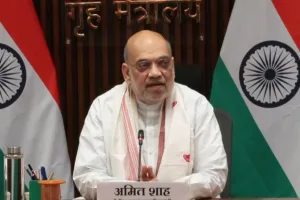
    Union Home Minister Amit Shah on Friday stated that the country’s agencies conducted a complete and successful probe in the Pahalgam terrorist attack, and the outcomes are going to put Pakistan in the dock on international platforms.

    “Our team has conducted a complete and successful investigation of the Pahalgam terrorist attack, which agencies around the world will study in the coming days,” Shah said.
    The Home Minister, who inaugurated the ‘Anti-Terrorism Conference-2025’ here, said in his address that the Government of India, the Indian security forces, and the people of the country have given a strong and befitting reply to Pakistan’s terrorist masters.
    Shah also said that the Jammu and Kashmir Police conducted a thorough investigation into the recent Red Fort car blast. He prasiedd all the agencies for doing an “excellent job” in investigating the entire network.

    He said the investigation into the Pahalgam and Delhi blast cases are more than ordinary policing, and can be considered as outstanding examples of watertight investigation.
    He said the April 22 attack in Baisaran Valley shook the entire country. The terrorists through their dastardly act wanted to disrupt communal harmony, and affect the development and tourism that has begun in Kashmir.

    The Minister added that, however, based on extremely precise intelligence, the country’s armed forces neutralised all three terrorists, delivering a stern message to Pakistan.
    He said this is the first terrorist incident in which those who planned the subversive act were punished by India through Operation Sindoor. And those who carried out the act with the weapons provided to them were neutralised through Operation Mahadev.
    Meanwhile, Shah also said as per Prime Minister Narendra Modi’s vision of zero-tolerance against terrorism, the annual conference has become a platform to deal with emerging threats.

    He said in the last three years, the country has moved forward in the direction of making this conference an annual tradition, with the forum becoming a place where actionable points emerge, and the NIA, along with all related agencies of the states, continuously work throughout the year towards their implementation.
    He said India has got success in building a strong anti-terrorism grid across the country.
    Shah said the landscape of terrorism in the world is now changing due to the use of technology in terrorist incidents alongside technological advancements, and the country must be prepared to prevent it.

    Shah also said that the country has established a new standard of coordination, cooperation, and communication among the DGP Conference, Security Strategy Conference, N-CORD meetings, and the Anti-Terror Conference.
    Shah stated that the NIA has worked very hard to create a common ATS structure and has sent it to the police forces of the states.

    A common ATS structure across the entire country provides an opportunity for uniform preparation at every level, he said, adding that all DGPs across the country must implement this common ATS structure.

    Shah also said the three new initiatives have been launched including the release of updated crime manual prepared by the NIA.
    He requested all DGPs to form a team in their respective states and ensure that they study this manual for investigation and prosecution purposes.
    Throwing light on the database on organised crime networks, he said that these networks initially operate for ransom and extortion, but when their leaders flee abroad and settle there, they automatically come into contact with terrorist organizations and then use the proceeds from ransom and extortion to spread terrorism within the country.
    He said that every state must, under the guidance of the NIA and CBI, and with the cooperation of the IB, utilise the database. UNI APS SSP

    UN chief condemns attack on mosque in Syria

    UN Secretary-General Antonio Guterres unequivocally condemned the deadly terrorist attack on a mosque in Homs, Syria, his spokesperson said in a statement.

    IANS | New Delhi |

    UN Secretary-General Antonio Guterres unequivocally condemned the deadly terrorist attack on a mosque in Homs, Syria, his spokesperson said in a statement.

    The attack occurred during Friday prayers at the Ali Bin Abi Talib mosque in the Wadi al-Dahab neighborhood of Homs, according to the statement issued by spokesperson Stephane Dujarric, Xinhua news agency reported.

    Guterres reiterated that attacks against civilians and places of worship are unacceptable, stressing that those responsible must be identified and brought to justice, the statement said.

    “The Secretary-General extends his condolences to the families of those killed and expresses his sympathy to all those injured, wishing them a prompt and full recovery,” it added.

    The death toll from the explosion that struck the mosque has risen to eight, Syria’s health authorities said Friday.

    Initial reports said that five people were killed and 21 others wounded in an explosion at a mosque in the Wadi al-Dhahab neighborhood of Homs, a city in central Syria, during Friday prayers, Syrian health authorities said.

    Najib al-Naasan, director of referral, ambulance and emergency services at Syria’s Health Ministry, told state-run SANA news agency that the toll was a preliminary figure. He said the explosion occurred inside the Imam Ali bin Abi Talib Mosque, adding that emergency teams rushed the wounded to nearby hospitals.

    Security and medical teams cordoned off the area as investigations began. Authorities said security measures were tightened around the area.

    The Britain-based Syrian Observatory for Human Rights also reported the blast inside the mosque, saying it was not yet clear whether the explosion was a suicide attack.

    Hundreds of flights delayed, canceled at US San Francisco International Airport

    Hundreds of flights at US San Francisco International Airport were delayed and canceled due to strong winds and the temporary closure of the departures lobby at Terminal 1.

    IANS | New Delhi |

    Hundreds of flights at US San Francisco International Airport were delayed and canceled due to strong winds and the temporary closure of the departures lobby at Terminal 1.

    According to aircraft tracking website FlightAware, 432 flights were delayed, most of them arrivals, and 26 flights were canceled on Friday, Xinhua news agency reported.

    The Federal Aviation Administration said arriving flights were experiencing average delays of one hour and 44 minutes because of weather conditions and high winds.

    Separately, the departures lobby at Terminal 1 was closed for more than an hour on Friday morning due to what airport officials described as “police activity,” and it reopened at around 10:45 a.m. local time.

    Local media reported that Terminal 1 had been evacuated at around 8 a.m. local time after San Francisco police discovered a “suspicious package.” No additional information was provided.

    “There is still heavy roadway congestion, so give yourself extra time getting to the Airport and consider dropping off at the International Terminal and taking AirTrain,” the airport said.

    Departing passengers using Terminal 1 who do not have luggage to check can be dropped off at other terminals and use less congested security checkpoints, which can access all gates via walkways.

    Three women stabbed at Paris metro stations, suspect arrested

    Three women were stabbed at different Paris metro stations on Friday, causing panic among commuters.

    ANI | New Delhi |

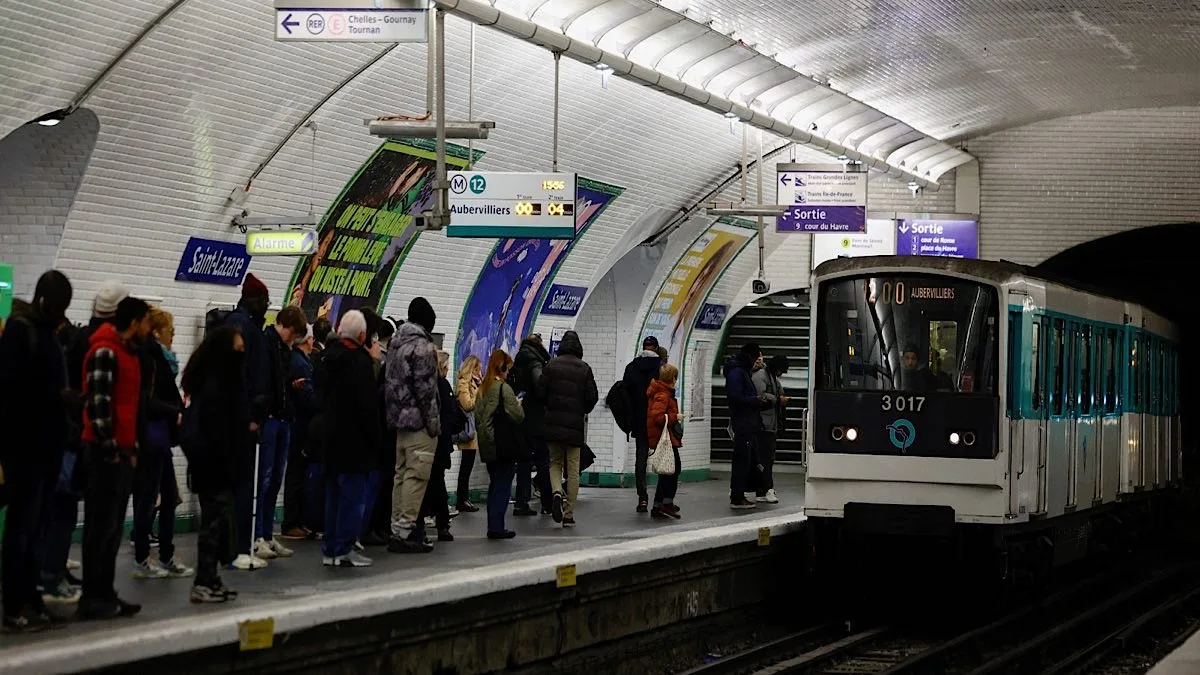
    Three women were stabbed at different Paris metro stations on Friday, causing panic among commuters. The attacks took place within a short span of time on Metro Line 3, French authorities said, Euro News reported.

    According to the prosecutor’s office, the man attacked three women with a knife at Republique, Arts et Metiers and Opera stations around 4 pm. All three victims were given medical treatment and are safe.
    Police said the suspect was identified and tracked using CCTV footage from the metro stations and location data from his mobile phone. He was later arrested in the Paris region.

    The Paris public transport operator RATP said firefighters reached the stations quickly, police teams secured the area, and additional security staff were deployed on the affected metro line to reassure passengers.

    France’s Interior Minister Laurent Nunez praised the police and security agencies for quickly identifying and arresting the suspect.
    “I congratulate the investigators and police officers of the regional transport police of the

    @prefpolice who identified and then apprehended, along with the #ValdOise police officers, the alleged perpetrator of the knife attacks committed in the Parisian metro this afternoon, particularly thanks to the video surveillance camera network and their exceptional knowledge of the terrain,” he wrote in an X post.

    Transport police have registered a case of attempted homicide and assault with a weapon. The police are now trying to establish the motive behind the attacks.
    Security remains tight across France, especially during the New Year as the festivities begin. European capitals are on high alert due to past violent incidents and threats targeting public places and festive gatherings.
    Last week, Minister Nunez had already asked officials to maintain “maximum vigilance” across the country. He cited a very high terror threat level and the risk of public disorder, and directed authorities to increase visible security presence to deter attacks, France 24 reported.

    Zelenskyy to meet Trump in Florida on Sunday to push peace talks

    Ukrainian President Volodymyr Zelenskyy said on Friday that he plans to meet US President Donald Trump in Florida on Sunday, as part of efforts to push forward a peace plan aimed at ending the ongoing war between Russia and Ukraine

    ANI | New Delhi |

    Ukrainian President Volodymyr Zelenskyy said on Friday that he plans to meet US President Donald Trump in Florida on Sunday, as part of efforts to push forward a peace plan aimed at ending the ongoing war between Russia and Ukraine, CNN reported.

    Speaking to reporters, Zelenskyy said the meeting could help move discussions closer to a settlement, though he cautioned that no final agreement should be expected immediately. He said both sides would focus on completing as many unresolved points as possible.
    Zelenskyy also added that the 20-point peace plan proposed by US and Ukrainian officials is 90 per cent ready. He added that talks with Trump would centre on long-term security guarantees for Ukraine and the role of its allies in ensuring stability after the war.
    CNN reported that there was no immediate confirmation from the White House about the proposed meeting. Zelenskyy’s comments come amid renewed diplomatic activity, with Kyiv signalling openness to discussions on issues that have stalled previous negotiations.
    Earlier in the day, Zelenskyy said in a post on X that Ukraine and the US had agreed to hold a high-level meeting soon, adding that significant decisions could be taken before the New Year.

    Zelenskyy wrote on X after the latest round of discussions between Ukrainian and US negotiators, “We have agreed on a meeting at the highest level – with President Trump in the near future. A lot can be decided before the New Year.”
    These developments followed talks held on Thursday, when the Ukrainian leader met Trump’s special envoy Steve Witkoff and the US president’s son-in-law Jared Kushner as part of ongoing consultations.

    Updating on the substance of those discussions, Zelenskyy noted that several documents forming part of a broader framework aimed at ending the conflict and supporting Ukraine’s reconstruction were “nearly ready” while others were “fully prepared”.
    This diplomatic activity comes after Zelenskyy earlier this week presented a 20-point draft peace plan, which he described as the principal framework for ending the war.
    While the plan envisages Ukraine receiving security guarantees to deter future Russian aggression, there has been no agreement between Ukraine and the US on territorial issues, as Moscow continues to demand that Kyiv cede territory.
    In addition to territorial questions, the issue of control over the occupied Zaporizhzhia nuclear power plant remains unresolved and subject to further discussions.

    ‘Will not let TMC turn Bengal into West Bangladesh!’: BJP leader Mithun Chakraborty targets TMC, TMC hits back

    West Bengal BJP posted a video in which Mithun Chakraborty stated that the party will not let TMC turn West Bengal into West Bangladesh.

    ANI | New Delhi |

    Amid attacks on the minority Hindu community in Bangladesh following the death of Sharif Osman Hadi, who was shot at close range on December 12 while travelling in a rickshaw, a war of words has erupted between the BJP and TMC in India.

    On Thursday, the official handle of West Bengal BJP posted a video in which BJP leader Mithun Chakraborty stated that the party will not let TMC turn West Bengal into West Bangladesh. Referring to the alleged lathicharge carried out by West Bengal Police near the premises of the Deputy High Commission of Bangladesh in Kolkata, Chakraborty said, “This is a state for Bengali Hindus. If this is turned into Bangladesh, then where will we go?”

    “We will not let the Trinamool Congress turn West Bengal into West Bangladesh! Bengali Hindus including women, protested against the brutal lynching of a fellow Bengali Hindu in Bangladesh but they were assaulted by the Police! This is a state for Bengali Hindus. If this is turned into Bangladesh then where will we go? We shall give it our all! We will not yield as long as there is blood in my veins!,” said Chakraborty.

    Responding to these allegations, the TMC highlighted attacks on the Bengali community in various states and accused the BJP of weaponising the situation in Bangladesh to influence public opinion in West Bengal.

    “Those screaming “West Bangladesh” should answer one question first: why are Bengalis being beaten and lynched under BJP rule across India? You weaponise Bangladesh to poison minds in Bengal, while BJP-ruled states spill Bengali blood without consequence. While you run fear campaigns online, Juel Rana, 22, Bengali, a worker was lynched in BJP-ruled Odisha. You accuse Bengal of infiltration, yet your own governments brand Indian Bengalis as foreigners, drag them into detention, assault them, and leave their killers untouched,” said TMC.

    “Where are your rallies for Juel Rana? Where is your fury for Bengali workers hunted like criminals in states you control? Where is your courage when police under your command protect mobs instead of citizens? You shout “Bangladesh” because you cannot say: Odisha, Assam, Haryana, Delhi, places where BJP rule has turned Bengali identity into a liability. We will expose your lies.We will name your violence. And we will resist your attempt to turn every Bengali into a suspect, anywhere in this country,” added TMC.

    Earlier, Vishva Hindu Parishad national spokesperson Vinod Bansal expressed concern about the atrocities against the Hindu minority in Bangladesh, urging international organisations such as the United Nations to intervene and protect human rights.

    Speaking with ANI, Vinod Bansal said, “The way the political developments have changed there and the violence already visible even before the general elections is a major warning for the entire world. I feel that the UN should intervene in this immediately.””Has the International Human Rights Authority issued any notice to Bangladesh? No. Have they taken any action in this regard? This is a matter worth considering,” he added.

    Vinod Bansal further alleged that attempts to “eradicate” Bengal culture are being made by Islamists fundamentalist.”The attempt being made to completely destroy and eradicate Bengal’s culture is serious,” he said.

    The recent killings of two Hindus, Dipu Chandra Das and Amrit Mondal, in Bangladesh have triggered international concern over the safety of minorities in the country.

    IndiGo crisis: DGCA’s probe panel submits report to Aviation Ministry

    DGCA’s probe panel submitted its investigative report into the IndiGo flight disruptions to the Ministry of Civil Aviation (MoCA).

    Statesman News Service | New Delhi |

    A high-level committee constituted by the Directorate General of Civil Aviation (DGCA) submitted its investigative report into the recent operational disruptions faced by IndiGo Airlines to the Ministry of Civil Aviation (MoCA), on Friday. The findings of the report have been classified as confidential, stated the Ministry.

    The special committee was set up to probe the large-scale flight cancellations and delays that caused widespread inconvenience to passengers earlier this month. The panel included Joint Director General Sanjay K. Bramhane, Deputy Director General Amit Gupta, and senior aviation safety officials Captain Kapil Manglik and Captain Lokesh Rampal.

    The disruptions, attributed to an operational crisis at IndiGo, led to significant passenger hardship across the country. Later, the airline offered travel vouchers worth ₹10,000 to severely impacted customers. These vouchers can be used for any future IndiGo journey within the next 12 months.

    DGCA’s investigative committee

    Earlier, on December 5, the DGCA had ordered the formation of a high-level committee to conduct a comprehensive review of the circumstances that led to the disruptions. The committee was tasked with identifying the underlying causes of the operational failures and assessing the adequacy of manpower planning, fluctuating roster systems, and preparedness for implementing the revised Flight Duty Time Limitation (FDTL) Civil Aviation Requirements (CAR) 2024.

    The panel was also asked to examine IndiGo’s compliance with the revised FDTL provisions, fix accountability for the operational lapses, evaluate the airline’s mitigation measures, and determine whether sufficient steps were being taken to restore normal operations. It was directed to submit its findings and recommendations within 15 days.

    The DGCA had said the report will form the basis for necessary regulatory enforcement action and institutional strengthening to prevent similar large-scale disruptions in the future.


    Delhi Transport Department intensifies anti-pollution drive; 28 goods buses impounded

    According to the release, approximately 28 goods-carrying buses, including interstate vehicles, were impounded, and approximately 100 buses have been impounded this month to date for violations of pollution norms.

    ANI | New Delhi |

    As part of its continued efforts to combat air pollution and ensure strict compliance with emission norms, the Delhi Transport Department has intensified enforcement actions across the city.

    According to the release, approximately 28 goods-carrying buses, including interstate vehicles, were impounded, and approximately 100 buses have been impounded this month to date for violations of pollution norms.

    In the last 24 hours, enforcement agencies carried out extensive checks across Delhi. During this period, 4,927 vehicles were inspected, resulting in 2,390 challans by Delhi Traffic Police (PUCC), 285 challans by Transport Enforcement (PUCC), and 1,114 challans through ANPR cameras.

    Additionally, 11 vehicles were penalised for GRAP violations by the Transport Department, while 170 GRAP-related challans were issued by Delhi Traffic Police. A total of 238 vehicles were returned after compliance.

    The Transport Department has also taken stringent action against erring Pollution Under Control (PUC) centres. So far, 28 PUC centres have been suspended, two centres have been cancelled, and action has been initiated against two more centres.

    In an alleged malpractice case, a police complaint has been filed against a PUC centre at Gokulpuri Police Station for issuing forged PUCCs.
    Reinforcing the government’s citizen-centric approach, Pankaj Kumar Singh, Minister for Transport, Government of NCT of Delhi, has instructed senior transport department officials to visit PUC centres across the city personally.

    Officials have been directed to ensure that vehicle owners are not inconvenienced in obtaining PUC certificates and to report any irregularities or deficiencies directly to the Minister for immediate corrective action.

    “Our fight against pollution requires both strict enforcement and citizen convenience. While action against polluting vehicles will continue without compromise, I have directed senior officials to personally inspect PUC centres to ensure that people face no difficulty in obtaining certificates. Any irregularity found will be dealt with strictly. Clean air for Delhi and transparent, hassle-free services for citizens remain our top priorities,” said Pankaj Kumar Singh.

    To curb the menace of forged PUCCs issued by out-of-state vehicles, the Delhi Transport Department has also urged the Transport Commissioners of Uttar Pradesh and Haryana to take strict action against violators operating in their jurisdictions.

    Meanwhile, intensive enforcement drives were conducted at key congestion and entry points, including Kashmiri Gate, Geeta Colony, and Mori Gate, targeting goods vehicles and high-emission offenders.

    The Transport Department reiterated that enforcement drives, vehicle checks, and monitoring under GRAP norms will continue rigorously in coordination with Delhi Traffic Police, ensuring both environmental protection and public convenience, as the government remains committed to delivering clean air and transparent, accountable services for the people of Delhi.

    Unnao rape case: CBI moves SC against Delhi HC’s bail to convict Kuldeep Sengar

    CBI moved Supreme Court today challenging the Delhi HC’s decision to grant bail to convicted Kuldeep Singh Sengar in the Unnao rape case.

    Statesman News Service | New Delhi |

    The Central Bureau of Investigation (CBI) moved Supreme Court today challenging the Delhi High Court’s decision to grant bail to Kuldeep Singh Sengar who has been convicted in the Unnao rape case.

    A Special Leave Petition was filed today before the Supreme Court against the Delhi HC’s order, which suspended the sentence and granted bail to Senger in the Unnao rape case, said a CBI Spokesperson.

    The Delhi High Court had ordered on Tuesday to suspend the life sentence awarded to Sengar in the rape case. The verdict had triggered sharp reactions from political leaders, civil society members, and human rights activists.

    Sengar was convicted by a trial court in 2019 and sentenced to life imprisonment for the rape of a minor in Unnao, Uttar Pradesh. He filed an appeal against the conviction before the Delhi HC in Janyuar 2020 and a petition for suspension of sentence in March 2022 before the Delhi HC.