Logo

Ghostbusters of Bengal Real life paranormal detectives

A team of four people, Devraj Sanyal (founder), Ishita Das Sanyal (Director), Ayush Majumdar (Field Investigator, and Anirban Das (Technical Head) have been detectives in the field of paranormal since 2010.

MOHUL BHATTACHARYA | Kolkata |

A team of four people, Devraj Sanyal (founder), Ishita Das Sanyal (Director), Ayush Majumdar (Field Investigator, and Anirban Das (Technical Head) have been detectives in the field of paranormal since 2010. From 2010 to 2015, the team could not even pitch the idea of paranormal investigators to people. It was an alien concept to Bengal that there are professionals who detect the presence of ghosts with scientific instruments like motion sensors and Electro-Magnetic Field metres.

In an exclusive session with The Statesman two members of the team sat down to discuss what they do, how they do it, and some rare stories of spirit detection that they claim they have faced. Devraj Sanyal starts, “in 2019, we were invited to a Bengali TV show. We shared our stories there. After that video got viral, every rational club and society in Kolkata were extremely angry at this activity. They dangerously opposed us, going as far as death threats, and sexual abuse. We had asked the people just this that we had shared what we experienced. We have never claimed our beliefs to be a religion, nor have we sold some product in the name of god. People believe in gods, there are so many temples and people worship them. That is supernatural in nature as well.

We are not here to divulge into organised religion. So, we reported these threats to the cyber crime cell of Kolkata Police. The cell disbanded and punished the group that were spreading this hate. This is how we won, and the police understood we are honest people.” Detectives of Supernatural always preach ‘rise above fear’, and they urge the people to question the unexplainable circumstances happening around us. Sanyal continues, “Science now shows that death is not instant. Even after a person has been declared dead there is approximately 6 minutes of consciousness running through the brain. The gadgets we use are not ghost catching machines, they simply detect the environmental changes of the space we are mapping. We have presented our findings in front of Lal Bazar, High Court of Bengal, hence we are in a respectable position with them as well.”

The team has been focused on eradicating unnatural fear from people’s minds, to understand the cause behind such activities. Their objection is to create awareness about the fears, “99 per cent of the cases are serious mental illnesses like Schizophrenia, or Bipolar Personality Disorder. Only those 1 per cent of cases are those that are genuinely unexplainable by logic and science,” said Sanyal. Their most recent case was in a village in Asansol called Benagram. The village had been abandoned for 10 years in the fear of paranormal activities. The team showed their findings to the Inspector-in-Charge of Kulti Police Station, and Sunil Kumar Choudhury, Commissioner of Police, Asansol-Durgapur Commissionerate.

“There were almost no paranormal activities, certainly nothing harmful. There is always residual energies in all spaces, but we did not detect any hostility in the environment, nor did we find the village uninhabitable,” said Sanyal. The team shared the story of dangerous situations, and they have not been able to dissect themselves. The first one was in Dowhill, Darjeeling. The team had taken four cars, along with camera crews, to the church in Dowhill that has been infamous for paranormal sightings. Sanyal said, “That was one such situation where I felt very unsafe. All four of our cars had suddenly stopped working, their batteries were dead, and to top it off, one of our crew members got injured with scratch marks unbeknownst to himself.

I felt as if I was in a horror movie, waiting to be hunted by some ghost. Thankfully we could return relatively unharmed.” The road Sanyal mentioned is still barred for tourists in Darjeeling due to accidents and incidents that have taken place in the church vicinity. The team have even seeked legal help, to confirm their motions that they are indeed not doing anything illegal. Lastly, Sanyal ends with, “We don’t have a specific ideology. We are not followers of a religion or a set of laws. We are scientific in our approach, and thus change with how the detection work demands for us to change. Humans have very limite dp erception of the surroundings.

We only see violet to red spectrum of colours, we hear limited frequencies, and even have limited smell. Our instruments merely help us record those things that are otherwise unreachable with our five senses.” Detectives of Supernatural plan to do an exhibition of the haunted items, now some 40 odd objects soon. This exhibition will be primarily to showcase their archives, their record keeping, and to take the audience on a journey of the paranormal and otherwise out of bounds of what we call logical.
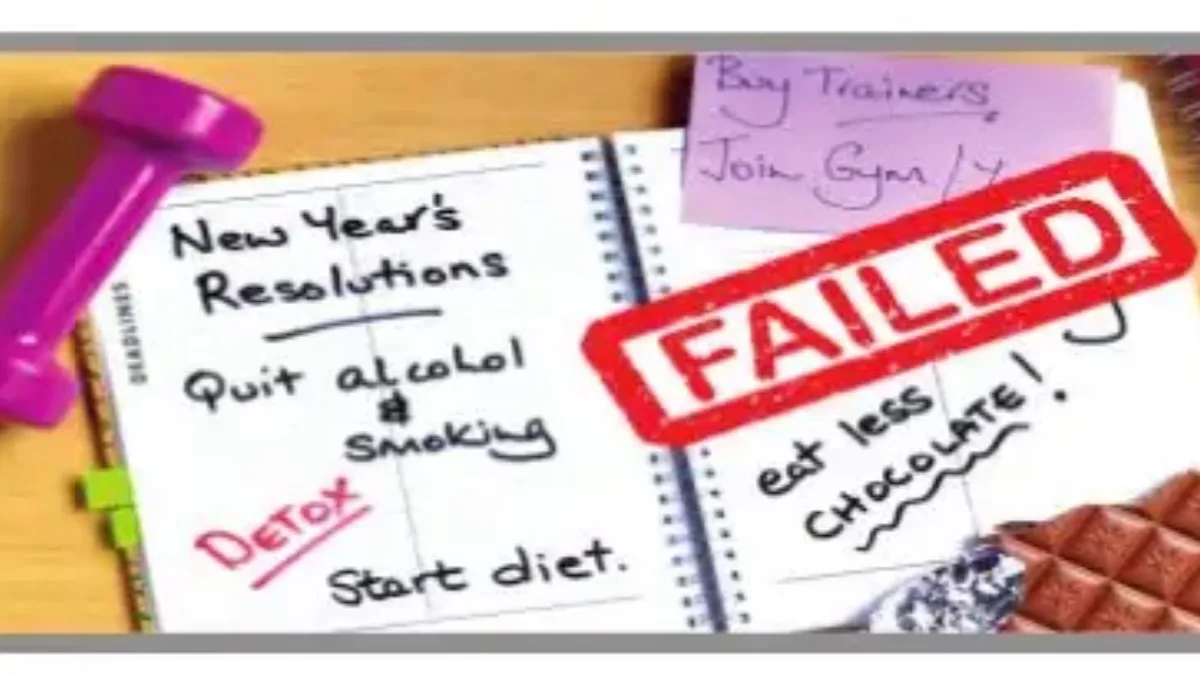
When our New Year resolutions fail

Every year, many of us bravely announce our resolutions for the new year. A glass of champagne on New Year’s Eve might add to our confidence in our ability to do better in the coming year and save more, spend less, eat better, work out more, or binge-watch less.

JANINA STEINMETZ | New Delhi |

Every year, many of us bravely announce our resolutions for the new year. A glass of champagne on New Year’s Eve might add to our confidence in our ability to do better in the coming year and save more, spend less, eat better, work out more, or binge-watch less. But most of our resolutions fail. Even within the first weeks after New Year’s Eve, the majority of people have given up on them.

Yet, not all tales of failure are the same, because the way you talk about the failure matters for your own motivation and other people’s confidence in your ability to try again. So what can we do after we’ve given up on our resolution? We’ve announced our good intentions to friends and family and now must admit failure. Research has shown the way you word your failed resolution can affect how people view it. And understanding the reasons most resolutions don’t work out can help us see it through in the future. Indeed, you can talk about your resolutions in a way that will make your failure more understandable and will sustain your motivation to keep going.

A constructive way to discuss your failed resolution is to focus on the controllability of the failure. Research shows that most resolutions will require some investment of time and of money. For example, getting in shape takes time for exercise and also normally requires money for a gym membership or for workout equipment. Because both of these resources are essential for pursuing our goals, many failed resolutions are due to the lack of either time or money, or both. When talking about a failed resolution in the past, I’ve showed in my own research that we should focus on how lack of money contributed to this failure, rather than lack of time. In my 2024 study, people read about fictional as well as real panel participants who failed either due to lack of money or lack of time.

Most participants felt the person whose failure was caused by lack of money would have more self-control going forward and was going to be more reliable at pursuing their goals. This effect occurred because lack of money is seen as something that cannot be controlled very easily, so if this caused the failure, there wasn’t very much the person who failed could have done about it. In this research, most of the failed resolutions were related to weight loss, better eating, or working out in the gym. Participants felt the same whether the person who failed was a man or a woman, presumably because it’s plausible that everyone needs some time and some money to pursue various goals regardless of gender or the specific resolution. The role of controllability takes a different form when it comes to thinking about how we can do better next time.

Research also shows the way we view time matters when it comes to failure. For the past, it’s better to think about things outside of our control that can help to take the negativity out of failure and bolster the belief that we can do better. This can mean, for example, to consider how our failure was due to lack of money or other resources outside of our control. For the future, however, take an active perspective on time. Look at your schedule and make active decisions how to allocate time to your goal pursuit, by scheduling gym sessions or blocking time to prepare healthy meals. This can help to give us the motivation to try again because we’re not victims of our busy schedules.

A study published in October 2025 that focused on how a lack of time contributed to failures showed that people can get back a sense of control by talking about “making time”, instead of “having time”. People who discussed their failures as an issue of not having made the time felt like they could do things differently in the future, and were more motivated to do so. This is because “making time” suggests active control over one’s time and schedule, instead of “having time” that leaves us passive. For example, if you say you didn’t make the time to work out, that means you can make the time in the future if you choose to do so.

In contrast, if you say you didn’t have time to work out, it feels like this lack of time is outside of your control and could happen again, preventing you from pursuing your exercise goals. Another reason so many people struggle to keep to their new year resolution may be because they were too ambitious, or they neglected that joy and pleasure keep us going. We need not only to have a goal in mind. Finding joy in the journey and belief in the ability to change is also important. For example, someone might want to get in better shape and work out more, but when they actually try to go to the gym, they lack the confidence to sign up for a class. Without some fun, it’s hard to follow through on a resolution even if we really want to pursue the goal.

So, try to think of ways you can make the goal more enjoyable to work on and remind yourself you are capable. The trend for new year resolutions isn’t a bad thing in itself. Although it might seem a bit paradoxical to start virtuous habits right after a big night with alcohol and overeating, research shows that we can indeed benefit from the “fresh-start” effect in which a new beginning in the calendar can provide a clean slate to start better habits. But we don’t have to wait for the calendar to give us a fresh start. We can choose to make our own resolution (maybe a Valentine’s or Easter resolution?) to boost the motivation to pursue our goals.

(The writer is Professor in Marketing, Bayes Business School, City St George’s, University of London. This article was published on www.theconversation.com)

Deregulation must be Odisha’s 2026 mantra

Odisha enters 2026 with a rare opportunity. The state’s Gross State Domestic Product (GSDP) is projected at Rs 10.63 lakh crore, with a growth rate of nearly 12 per cent – among the fastest in India.

CHARUDUTTA PANIGRAHI | New Delhi |

Odisha enters 2026 with a rare opportunity. The state’s Gross State Domestic Product (GSDP) is projected at Rs 10.63 lakh crore, with a growth rate of nearly 12 per cent – among the fastest in India. Yet, beneath this headline figure lies a familiar problem: regulatory bottlenecks that choke enterprise, delay projects, and reduce the vibrancy of its start-up ecosystem.

The solution is clear and urgent: a De-Regulation Cell dedicated to deregulation and compliance reform. Odia Asmita must evolve beyond nostalgic rhetoric (ad nauseum moralisers) into a living force that empowers the youth to shape Odisha’s future.

True pride in identity cannot be sustained by endlessly rehearsing, read repeating and over killing, century-old traditions; it must be anchored in meaningful work, innovation, and reform. Establishing a Re gulation (Deregulation) Cell in 2026 would embody this shift – cutting through archaic compliances, liberating entrepreneurial energy, and positioning Odisha as a hub for startups and sectoral growth. Such a move would transform Odia Asmita from a hollow slogan into a dynamic ethos of progress, where cultural pride is inseparable from economic vitality.

By aligning with Prime Minister Modi’s reform vision, Odisha can gift itself a new year of renewal – where Asmita is not just remembered, but lived through courage, creativity, and collective advancement. The Prime Minister, at the 5th National Conference of Chief Secretaries (Dec 2025), urged states to set up deregulation cells to accelerate reforms and improve ease of living. He reminded the nation that India has boarded the “Reform Express,” powered by its young workforce. Odisha must seize this moment. Worldwide, deregulation has been the lever for growth.

Bangladesh’s garment sector, after trade simplifications, now contributes over 11 per cent of GDP. India’s telecom deregulation in the 1990s transformed it into the world’s second-largest mobile market. Indonesia’s mining deregulation attracted billions in FDI, boosting exports. Odisha, with its mineral wealth, fertile plains, and coastline, mirrors these economies. A Deregulation Cell can replicate such success by cutting redundant compliances and speeding approvals.

Odisha’s economy rests on four dominant pillars, each with immense potential waiting to be unlocked through deregulation. The first and most visible pillar is mines and minerals. Odisha contributes nearly 20 per cent of India’s total mineral output, making it one of the country’s richest resource states. Yet, the sector is often slowed by clearance delays and overlapping compliances. A Deregulation Cell could streamline approvals, attract foreign direct investment, and accelerate exports, turning Odisha into a global mineral hub. The second pillar is agriculture, which remains the backbone of the state, employing close to 60 per cent of the population.

Despite significant allocations in irrigation and rural support, farmers continue to face challenges in accessing markets and modern technology. Deregulation – particularly through initiatives like AgriStack for smart supply chains and market linkages – can simplify land-use permissions, reduce middlemen, and directly raise farmer incomes. While these funds and awards highlight Odisha’s rising profile in agriculture, the real challenge lies in deploying resources wisely.

Investments must prioritize farmer-centric outcomes: improved productivity, sustainable practices, and resilience against climate risks. Funds should strengthen digital infrastructure and last-mile delivery, ensuring that technology translates into tangible benefits for small and marginal farmers. Transparent monitoring and accountability will be crucial to prevent inefficiency or misallocation. In this way, Odisha can transform recognition into lasting impact, making agriculture not just a sector of survival but a driver of pride and prosperity – an authentic expression of Odia Asmita. The third pillar is the blue economy, encompassing ports, fisheries, and coastal trade.

With a capital outlay of Rs 65,012 crore in 2025-26, Odisha has already begun investing in maritime infrastructure. However, logistics bottlenecks and regulatory hurdles limit its potential. A deregulated framework for coastal trade and fisheries could transform Odisha into a maritime hub, boosting exports and employment along its 574.7-kilometer coastline. Finally, the services sector – including tourism, healthcare, and education – remains underdeveloped compared to its potential. In 2025–26, Odisha allocated Rs 41,273 crore to education (3.9 per cent of GSDP) and Rs 23,635 crore to health (2.2 per cent of GSDP), signalling intent.
Yet, private investment is constrained by licensing complexities and slow PPP approvals. Deregulation here could open doors for world-class universities, hospitals, and tourism ventures, positioning Odisha as a services powerhouse alongside its traditional strengths. Together, these four pillars – minerals, agriculture, blue economy, and services – form the foundation of Odisha’s economic health. A Deregulation Cell in 2026 would act as the lever to unlock each of them, ensuring that growth is not just projected but realized. Leading pharma companies in India have begun approaching the Odisha government to adopt specific regions of the state for targeted interventions in child and maternal health.

These partnerships aim to deploy innovative healthcare models – combining medical expertise, technology, and community outreach – to address persistent gaps in nutrition, prenatal care, and early childhood development. The state should actively encourage such approaches, as they not only bring private-sector efficiency and resources but also align with Odisha’s broader vision of inclusive growth and social transformation. Odisha’s startup ecosystem is struggling. Despite policy support, the state has only 3,211 active start-ups as of 2025.

Between Jan-Mar 2025, just 85 new start-ups were recognized and 26 incubated at O-Hub. Compared to Karnataka or Maharashtra, this is modest. The truth is stark: Odisha’s start-up story has been reduced to tokenism. A Deregulation Cell can change this by streamlining compliance, reducing bureaucratic hurdles, and creating a transparent environment for investors. Without it, Odisha risks losing entrepreneurial talent to other states. PM Modi’s emphasis on human capital, ease of doing business, and next-generation reforms directly resonates with Odisha’s needs. His call for deregulation cells is not abstract – it is a blueprint for states. For Odisha, this must become the single-point agenda in 2026.

Unlocking All Sectors: From mines to services, deregulation will cut red tape and unleash productivity. Human Capital Development: By reducing compliance burdens, resources can be redirected to skill-building and innovation. Global Competitiveness

: Odisha can position itself as a deregulation- driven hub for minerals, agriculture exports, and maritime trade. Odisha stands at a crossroads. With strong GSDP growth but weak entrepreneurial momentum, the state risks stagnation if regulatory bottlenecks persist.

A Deregulation Cell in 2026 would be the Great New Year gift to ourselves – a bold institutional reform that can revive start-ups, accelerate sectoral growth, and align Odisha with the Prime Minister’s vision of Viksit Bharat. The dawn of 2026 brings Odisha not just a new calendar year, but a new Chief Secretary – an opportunity to demonstrate decisive leadership. This is the moment to break free from Secretariat-led complexities and initiate the Deregulation Cell.

Other states are already bracing for reform, and in the age of competing federalism, growth will not wait for those who hesitate. India is growing and will continue to grow; the question is whether Odisha chooses to be part of this momentum or wallow in its past glory. The new Chief Secretary must convene an inter-departmental meeting immediately in January 2026, followed by the constitution of a Task Force to establish the Deregulation Cell. This is not mere administrative housekeeping – it is the defining act that will shape Odisha’s economic health for the next decade.

Baby steps must begin now, in January itself, because we are racing against time. Delay will mean irrelevance; action will mean transformation. Odisha’s pride, its Asmita, must be expressed not in outdated slogans but in reforms that unleash the energy of its youth and entrepreneurs. The Deregulation Cell of 2026 can be Odisha’s greatest gift to itself – a gift of freedom, growth, and future prosperity.

(The writer is an author and technocrat. He can be contacted at charudutta403@gmail.com)

Unbuilt Cities

India’s cities today reveal a contradiction that can no longer be brushed aside as a passing phase of growth.

Statesman News Service | New Delhi |

India’s cities today reveal a contradiction that can no longer be brushed aside as a passing phase of growth. Flyovers gleam, metro lines stretch across skylines, and terminals resemble global showcases. Yet, at street level, daily life is increasingly marked by toxic air, broken roads, overflowing drains, and the quiet normalisation of civic disorder. The problem is not that Indian cities are short of money or ambition. It is that they are structurally incapable of governing themselves.

Urban India has expanded at a pace the Constitution never anticipated. Towns have morphed into megacities, and villages into dense urban corridors, without a corresponding evolution in political authority. Power over planning, staffing, budgets, and even minor operational decisions remains concentrated in state capitals. City governments exist, but largely as implementers, not decision-makers. The result is a permanent mismatch between responsibility and authority: cities are blamed for failure but denied the tools to succeed. This imbalance explains why headline infrastructure projects coexist with collapsing basics. Waste management fails not because technology is unavailable, but because municipal bodies lack control over land, contracts, and long-term financing.

Roads disintegrate because utilities dig them up without coordination, or concern for public expenditure. Flooding recurs because drainage planning is fragmented across agencies that answer to different political masters. No single office is truly accountable, and therefore none is compelled to fix the system end-to-end. India’s urban challenge is often framed as a capacity problem. In fact, it is a power problem. Mayors are weak, councils are underfunded, and city administrations are staffed by officials whose incentives are shaped by state-level career paths, not urban outcomes. Leadership becomes episodic, dependent on individual bureaucrats rather than durable institutions. When those individuals move on, reform moves with them.

The absence of reliable data has deepened this crisis. Urban populations have surged far beyond official estimates, but policy continues to rely on outdated numbers. Planning without accurate population, housing, or employment data guarantees failure, no matter how well intentioned the scheme. Cities are being asked to manage twenty-first century pressures with twentieth-century assumptions. There is also a democratic cost. When citizens experience daily civic breakdown with no clear authority to hold accountable, disengagement sets in.

Anger surfaces sporadically ~ after floods, pollution spikes, or infrastructure collapses ~ but rarely translates into sustained political pressure for structural reform. Urban distress is normalised rather than politicised; a situation civic bureaucracies thrive on. India’s cities will not become liveable through cosmetic upgrades or isolated success stories. What is required is a decisive shift: genuine devolution of power, predictable municipal finances, empowered mayors, professional city cadres, and transparent accountability tied to outcomes. Growth has already made India urban in practice. Governance must now catch up in principle. Without that correction, India’s cities will continue to grow richer on paper while becoming poorer places to live.

Paved with graves

Wars often end not with a decisive victory but with exhaustion. In the Ukraine conflict, that exhaustion is now being carefully measured, counted, and paradoxically exploited.

Statesman News Service | New Delhi |

Wars often end not with a decisive victory but with exhaustion. In the Ukraine conflict, that exhaustion is now being carefully measured, counted, and paradoxically exploited. Recent patterns in battlefield deaths suggest that as diplomatic activity intensifies, the fighting has become deadlier rather than restrained. This contradiction exposes a brutal logic at work: casualties themselves have become a negotiating instrument. The surge in Russian losses is not accidental.

It reflects a strategic choice by the Kremlin under President Vladimir Putin to treat territory and momentum as leverage. When negotiations loom, pressure increases at the front. The message is simple ~ any settlement must account for “facts on the ground,” even if those facts are purchased at extraordinary human cost. War, in this framing, is not a failure of diplomacy but its extension by other means. What makes this phase of the conflict particularly grim is who is dying. A growing share of Russian casualties comes from men who had no military background when the war began: prisoners, indebted civilians, students, and those facing legal or economic coercion.

Many entered the battlefield believing the war was nearing its end, that a contract signed now would translate into freedom or financial security later. Instead, they found themselves trapped in an open-ended conflict where contracts renew automatically and exit is largely illusory. This system has allowed Moscow to avoid the political risks of mass mobilisation while sustaining an industrial scale of attrition. High pay-outs, selective pressure, and the targeting of socially marginal groups have kept dissent muted. But this is not resilience; it is deferred instability. A state that treats human lives as replenishable inputs may sustain war longer, but it also hollows out its social fabric in ways that no ceasefire can easily repair.

For the United States, the push for negotiations under President Donald Trump has introduced another distortion. The promise of a rapid deal has not reduced violence; it has reshaped incentives. Each diplomatic signal becomes a reason to fight harder now, before terms are frozen. Peace, when framed as imminent but undefined, can perversely raise the short-term value of escalation. Ukraine, under President Volodymyr Zelensky, faces its own attritional dilemma. While defending territory remains existential, prolonged fighting strains manpower, morale, and society.

The longer the war is framed as a test of endurance rather than strategy, the greater the risk that Ukraine’s losses ~ less visible but no less real ~ become politically normalised abroad. The deeper truth is unsettling: diplomacy that rewards battlefield gains incentivises bloodshed. As long as negotiations are shaped by who advanced last and at what cost, violence will spike whenever talks approach. Ending the war will therefore require more than meetings and proposals. It will demand a shift in the underlying arithmetic ~ one where restraint, not escalation, improves a side’s position. Until then, the path to peace will continue to be paved with graves.

The Year That Was

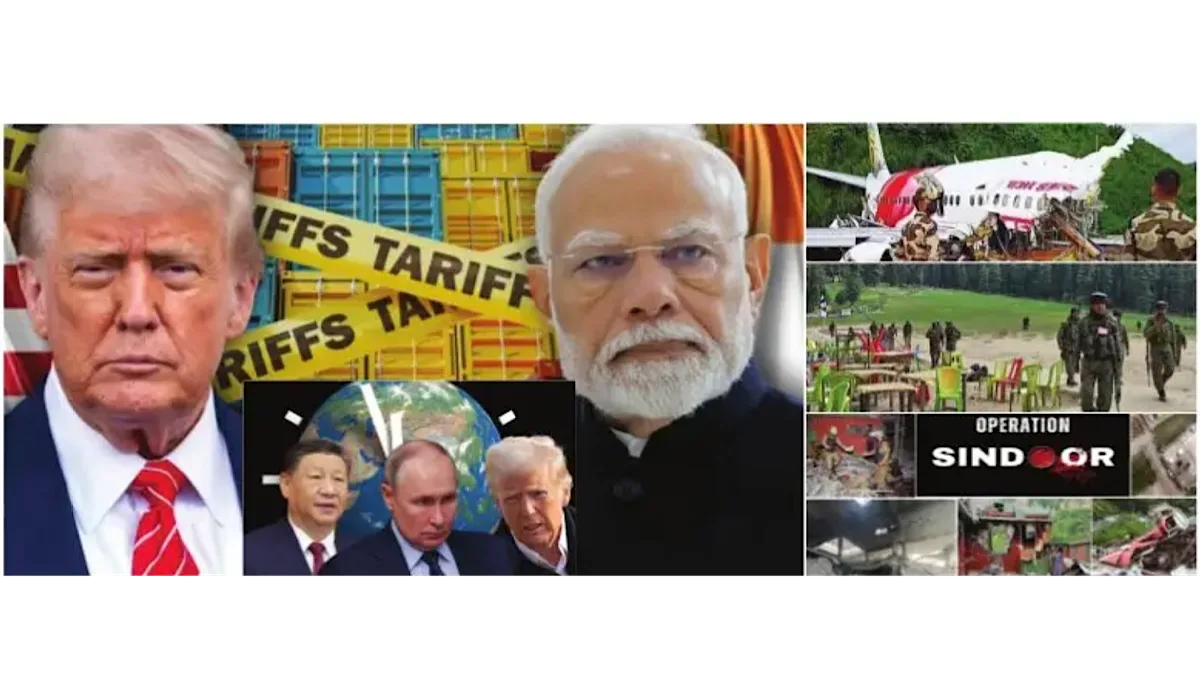
The parallel between happenings in 2025 and the dystopian novel 1984 is unmistakable. Between them, Donald Trump, Vladimir Putin, and Xi Jinping have all but created the fictional nations of Oceania, Eurasia and Eastasia, imagined in George Orwell’s novel.

DEVENDRA SAKSENA | New Delhi |

The parallel between happenings in 2025 and the dystopian novel 1984 is unmistakable. Between them, Donald Trump, Vladimir Putin, and Xi Jinping have all but created the fictional nations of Oceania, Eurasia and Eastasia, imagined in George Orwell’s novel. Showing remarkable prescience, Orwell’s novel showed the three nations in perpetual conflict, but with the tacit understanding that the hostilities were only a tool to perpetuate a state of emergency, one that justified the dictatorial and totalitarian measures by rulers of the three superpowers.

That said, Trump is the undoubted protagonist of 2025. True to his impatient and megalomaniacal nature, within a year of inauguration, Trump has rewritten domestic and international politics, leaving alliances and allies of long standing in the lurch, weaponizing trade to bring the rest of the world to heel, withdrawing the USA from the Paris accord on climate change, supporting genocide by Israel and attacking Iran for no justifiable reason, scrapping USAID, deploying the armed forces to crack down on migration at the border, ordering the National Guard into US cities, terminating all diversity programmes in government, and cancelling policies supporting renewable energy.

However, the world economy adapted to Trump’s tariff shock remarkably well; new trading opportunities emerged, and the volume of world trade remaining largely unaffected. Rather, Americans bore the brunt of Trump’s depredations: “Liberation Day” tariffs in April 2025 led to a precipitate fall in stock markets, with the S&P 500 tumbling by about 11 per cent in two days, and inflation inched upwards throughout the year. Fortunately for the US, Trump’s billionaire supporters made him see reason; most tariffs were eventually lowered or postponed, and stock markets bounced back.

All said, the net effect of Trump’s antics was transitory; the world economy and the American economy, both are forecast to grow by around 3 per cent in 2025. Twenty twenty-five was a momentous year for India. Massacre of 26 innocent, unarmed tourists, in Pahalgam by Pakistani militants on 22 April 2025, plunged the country into grief. India retaliated swiftly, by launching Operation Sindoor on May 9, destroying terrorist bases deep inside Pakistan, and damaging a large number of military installations ~ all without a single aircraft or soldier stepping into Pak territory. Pakistan, armed to the teeth with the latest Chinese weaponry, and forewarned by Chinese satellites, was overwhelmed, and had to beg for peace.

The four-day war decisively demonstrated India’s military and technological superiority, with Indian missiles and drones hitting targets deep inside Pakistan with deadly precision, and preventing Pakistani retaliation by its Integrated Air Command and Control System (IACCS) ~ an unheralded but successful air defence shield. The US and China, who supported Pakistan, had to watch their much-touted weapons eating humble pie before India’s improvised weaponry ~ reminding defence experts of the 2019 incident, when Group Captain Abhinandan Varthaman, piloting a souped-up vintage Mig-21, shot down a Pakistan Air Force F-16.

Western media did all they could do to debunk a decisive Indian victory, with the US President adding his tuppence of brokering peace at the request of both India and Pakistan. The year 2025 started with the Maha Kumbh at Prayagraj, with the world’s largest gathering of an estimated 66 crore devotees. Excellent arrangements at the Maha Kumbh were marred by a stampede that cost the lives of at least 30 people, and left another 60 injured. In a related incident, at least 18 people were killed and over 15 others injured, in a stampede that broke out on February 15 at the New Delhi Railway Station. All casualties were of devotees, waiting to board trains for Prayagraj, for the Maha Kumbh.

A horrific stampede followed the Royal Challangers Bengaluru’s IPL triumph; poor crowd management at the M. Chinnaswamy Stadium, where lakhs of fans had thronged to felicitate the home team, led to a stampede which killed 11 people, and caused injuries to at least 50. Then there was a stampede at Karur in Tamil Nadu, where thousands of people had gathered to attend a rally by actor-turned-politician Vijay. Fans surging towards his vehicle, triggered a stampede that killed 41 people and injured over 100 others. Probably, police of all States need lessons in modern crowd management. The Supreme Court, and a number of judges of higher courts, were in the headlines for all the wrong reasons. Justice Yashwant Verma, a judge of the Delhi High Court, is facing impeachment, after sacks of notes were allegedly burnt in a fire at his official residence.

Then, there have been repeated instances of the Supreme Court frequently reversing its earlier judgements ~ a trend deprecated judicially by the Supreme Court itself ~ which signals that there is no finality to the law laid down by the apex court. The most notable instance of backtracking was the celebrated Governors’ Powers Case; a bench of the Supreme Court decided that Governors were bound to approve bills within a definite timeframe, while in an advisory opinion, rendered soon after, the Supreme Court held that no definite timeline for the Governor’s approval, could be prescribed. Afterwards, a two-judge bench of the Supreme Court was constrained to deprecate the growing predilection of the top court of re-visiting and overturning its own judgements.

The year also saw return of incumbent BJP governments in Bihar and Haryana. The opposition highlighted discrepancies in electoral rolls, coining the slogan of ‘vote chori’ in this context. In this background, the Special Intensive Revision (SIR) exercise, in a number of States, was a much-needed step. Significantly, in 12 States, after SIR, 6.59 crore persons have been removed from the draft voters list, and around 1.87 crores have been marked as ‘unmapped’ ~ persons who will have to provide additional documents to be included in the voters list. On the economic front, rising US tariffs, an issue that is yet to be sorted out, caused much anxiety to exporters. True to the adage of every cloud having a silver lining, new trade partnerships emerged and the economy, which was forecast to drag, grew at a record rate of 8.2 per cent.

Also, belatedly, the Government bit the bullet and restructured GST and granted income-tax relief to marginal tax payers, thus spurring domestic demand. Despite lower rates, contrary to apprehensions, both direct and indirect tax collections increased. Parliament passed the “Sustainable Harnessing and Advancement of Nuclear Energy for Transforming India (SHANTI) Bill,” which is aimed at encouraging private investment, and international partnerships, in the nuclear sector. Another move was the much-delayed implementation of the four Labour Codes, which will, hopefully, simplify, harmonise and modernise the labyrinthine labour law framework. A controversial law passed by Parliament was the Viksit Bharat ~ Guarantee for Rozgar and Ajeevika Mission (Gramin) (VB~G RAM G) Act 2025, which replaces the Mahatma Gandhi National Rural Employment Guarantee Act 2005 (MGNREGA). The Opposition has objected to removal of Mahatma Gandhi’s name, and moving away from a legally enforceable, demand-driven employment guarantee ~ despite higher promised workdays. While thousands of kilos of explosives were being discovered by investigating agencies in nationwide raids, using the same explosives, a terrorist detonated a car bomb near the Red Fort, killing 12 people and injuring 20 others.

Later on, the same confiscated explosives, transported to a Srinagar police station, blew up killing an additional nine people, and injuring 32 others. Enforcement agencies definitely need to coordinate and upgrade their SOPs. The year saw the Indian aviation sector coming apart, first with the tragic Air India crash in Ahmedabad which claimed 260 lives, and again with the Indigo crisis in December, which saw airfares going through the roof, and 5,000 flights being cancelled. It appears that the regulator, DGCA, had not been vigilant enough and was being led by the nose by the dominant airline, Indigo; chaos erupted, when DGCA wanted to implement the rules framed by them. We would definitely be better off if regulators are staffed by hands-on, industry experts, and not bureaucrats. Learning from our mistakes, we can hope to do better in 2026. As Alfred Lord Tennyson, had said: “Hope smiles from the threshold of the year to come, whispering, ‘It will be happier.’

The writer is a retired Principal Chief Commissioner of Income-Tax

Indore water contamination: Lab report confirms pipeline leak; HC to hear case today

Lab findings have linked Indore’s Bhagirathpura health crisis to contaminated water caused by a pipeline leak, with the state set to update the High Court today.

Statesman News Service | Mumbai |

Laboratory tests have pointed to contaminated drinking water as the cause of the health crisis reported from Indore’s Bhagirathpura area, with officials expected to place a detailed status report before the High Court later today.

The findings come from Mahatma Gandhi Memorial (MGM) Medical College, which had been asked to analyse water samples after a spate of illnesses and deaths was reported in the locality.

Also Read: Indore contaminated water tragedy leaves families shattered: Many dead, hundreds ill, answers still missing

What the lab report says so far

Confirming the submission of the report on Thursday, Indore Chief Health and Medical Officer Dr Madhav Hasani said the tests showed contamination in the water supply.

“The medical college’s test report has revealed that the water supply was contaminated due to leakage in the pipeline in Indore’s Bhagirathpura area. However, the exact level of contamination and what precisely caused the deaths are yet to be ascertained,” Dr Hasani said on Thursday.

Officials said further clarity is expected once the state government places its status report before the Indore bench of the Madhya Pradesh High Court.

Health response and patient numbers

According to the health department, a large-scale medical screening drive was carried out on Thursday. Over 8,500 people, covering more than 1,700 households, were examined in the affected area.

Dr Hasani said 338 fresh patients were identified during the exercise and were given primary treatment at home.

“Overall, 272 patients were admitted to various hospitals. Of them, 72 have been discharged till January 1. At present, 201 patients remain hospitalised, including 32 who are undergoing treatment in intensive care units,” he said.

High Court hearing and casualty count

The matter is now under judicial scrutiny. On Wednesday, a division bench of Justice Rajesh Kumar Gupta and Justice BP Sharma, hearing a public interest litigation linked to the incident, directed the state government and the Indore Municipal Corporation to submit a detailed status report by January 2.

There is still no clarity on the death toll. The state government has officially confirmed seven deaths. However, some reports suggest the number could be as high as 14 between December 21, 2025, and January 1, 2026.

Compensation announced for families

Meanwhile, Madhya Pradesh Urban Affairs and Housing Minister Kailash Vijayvargiya on Thursday distributed compensation cheques to the families of the seven officially confirmed deceased.

Each family received an ex gratia payment of Rs 2 lakh, in line with the announcement made by Chief Minister Mohan Yadav on Wednesday night.

‘Death to the Dictator’: Iran’s New Year begins with bloodshed as economic anger drives nationwide protests

Iran entered 2026 amid deadly unrest as protests spread nationwide, security forces opened fire, arrests mounted and chants for regime change reached even the country’s religious heartlands.

Statesman News Service | Mumbai |

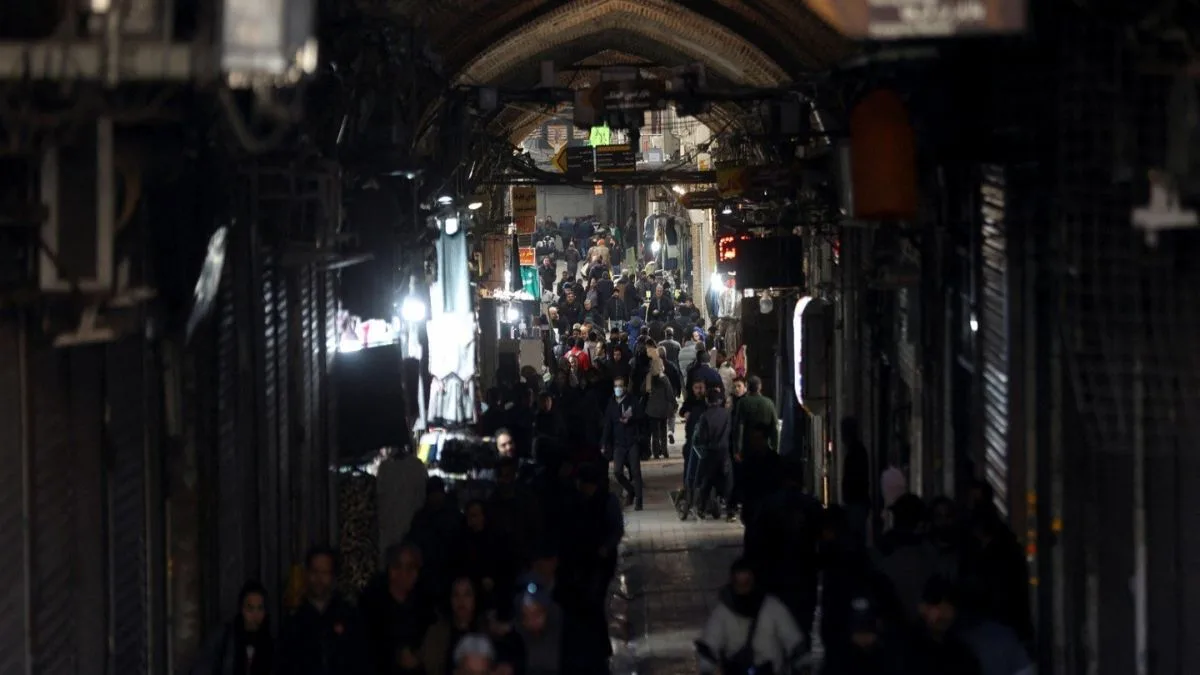
Iran rang in the New Year on a grim note, as fresh violence erupted on the streets on Thursday. Nationwide protests over worsening economic conditions stretched into a fifth day, drawing a heavy security response in several cities.

At least one demonstrator was confirmed dead after security personnel fired on crowds, while reports of more casualties surfaced from different parts of the country, though tight controls on information have made independent confirmation difficult.

Protests spread, death confirmed

One demonstrator, identified as Dariush Ansari Bakhtiarvand, was shot dead by security personnel in Fooladshahr, Iran International reported. Other deaths were reported elsewhere, though independent confirmation remains difficult due to limited access and curbs on reporting.

Demonstrations widened geographically, reaching cities large and small. Clashes were reported from Tehran and Mashhad to Lorestan, Isfahan, Khuzestan, and several provincial towns.

In many places, protesters moved beyond economic complaints, openly challenging clerical rule and Iran’s top leadership.

Qom unrest marks symbolic shift

A major turning point came as protests erupted in Qom, a city long seen as the religious heart of the Islamic Republic. The city hosts influential seminaries and senior clerics who have traditionally formed the backbone of state support.

Crowds chanted slogans such as “Long live the Shah” and “Death to the Dictator”, even as security forces attempted to clear the streets. Footage circulating online showed demonstrators backing exiled crown prince Reza Pahlavi and refusing to disperse despite force being used.

The appearance of anti-regime and pro-monarchy chants in Qom has been viewed by observers as crossing a long-standing political and religious red line.

Escalation across provinces

In Lorestan province, videos showed protesters in Nurabad advancing towards security lines without retreating. In Lordegan, several people were killed during clashes, according to the semi-official Fars News Agency, which is linked to the Islamic Revolutionary Guards Corps.

Further south in Marvdasht, witnesses said security forces fired after crowds chanted slogans including “This year is the year of blood, Seyyed Ali will be overthrown”. In Mashhad, another key religious centre, demonstrators gathered at a metro station before authorities moved in to break up the crowd.

Arrests have accompanied the crackdown. In Farsan, in Chaharmahal and Bakhtiari province, local sources said at least 20 protesters, most of them under 18, were detained following street demonstrations.

Residents across several areas said security forces used tear gas, smoke grenades, batons, and live ammunition, with teenagers appearing to be specifically targeted during round-ups.

A critical moment

With fatalities now confirmed and public anger growing, analysts say the unrest has reached a decisive stage. What began as scattered protests has evolved into a broader challenge to the foundations of the Islamic Republic itself.

As per some Iranian observers, reliance on force alone may worsen the crisis, as each crackdown appears to fuel further protests rather than contain them.

Amid power tussle with Siddaramaiah, DK Shivakumar meets Congress President Mallikarjun Kharge in Delhi

The meeting comes days after Shivakumar said that the Congress high command has spoken to both him and his boss Siddaramaiah and assured them that they will called to Delhi at an appropriate time to address the issue.

Statesman News Service | New Delhi |

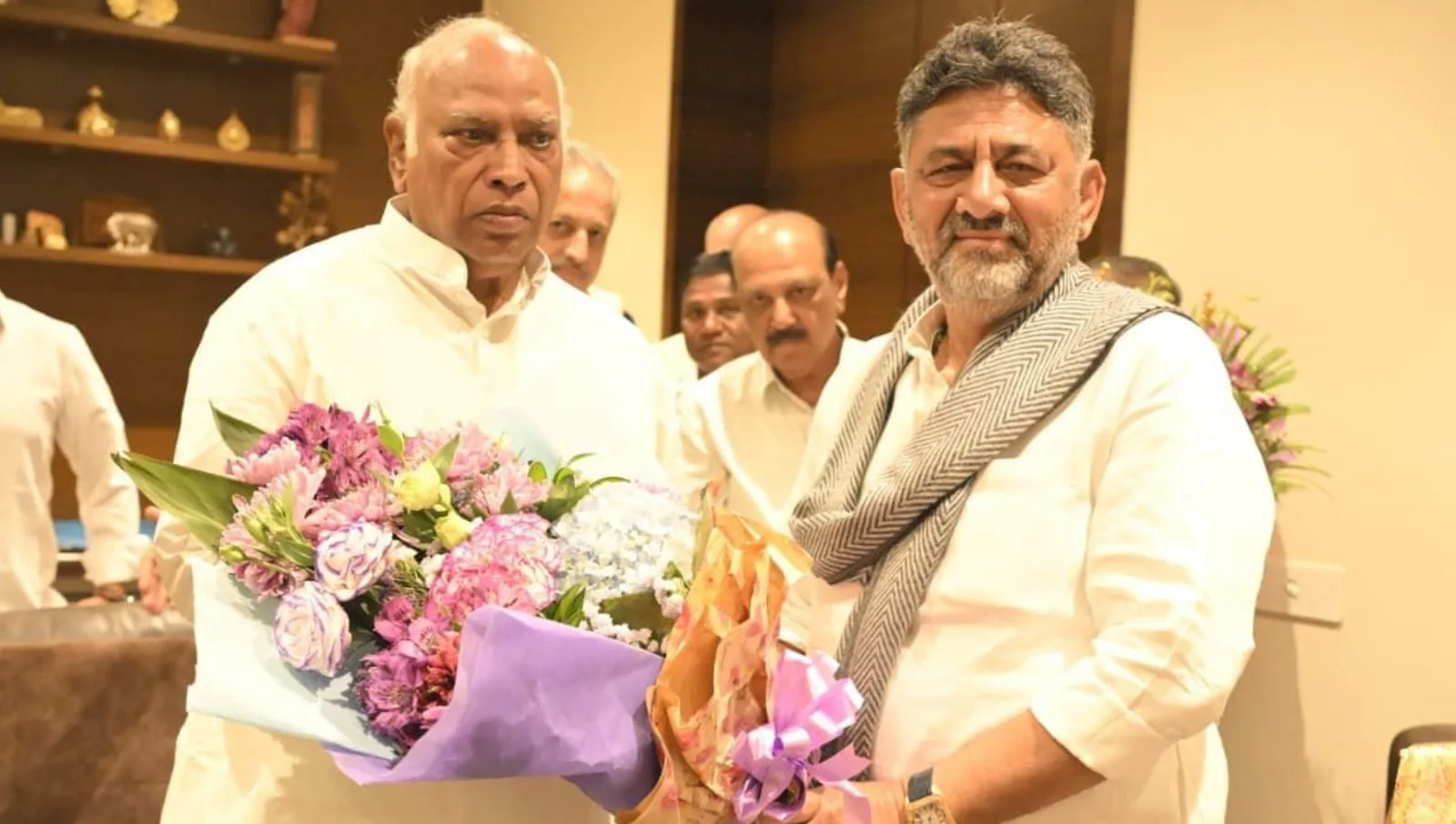
Karnataka Deputy Chief Minister Dk Shivakumar on Thursday met Congress national president Mallikarjun Kharge in Delhi.

The meeting was long-awaited and comes in the wake of a power tussle between Shivakumar and Karnataka Chief Minister Siddaramaiah.

“Met AICC President Shri Mallikarjun Kharge avaru today to extend New Year greetings and good wishes,” Shivakumar posted on X and also shared photograph of the meeting.

It comes days after Shivakumar said that the Congress high command has spoken to both him and his boss Siddaramaiah and assured them that they will called to Delhi at an appropriate time to address the issue.

Last month, Shivakumar and Siddaramaiah exchanged veiled jibes at each other in public, prompting Kharge to intervene.

The Congress President later admitted that there is some “confusion” at the state level and said that the issue will be resolved soon.

Kharge had also said that the Congres central leadership, including Leader of Opposition Rahul Gandhi, will discuss the issue with both the leaders before taking a final call.

‘Both will go to Delhi at appropriate time,’ says Shivakumar amid leadership tussle

Why is there a power tussle between DK Shivakumar and Siddaramaiah?

At the centre of this tussle is a perceived power-sharing arrangement said to have been reached between in 2023 after the Congress registered a landslide victory in the Karnataka Assembly elections.

As per the purported formula, Siddaramaiah will serve as the Chief Minister of Karnataka for the first 2.5 years and Shivakumar will take over for the remaining term.

Neither the two leaders nor the Congress party ever made any such agreement official. But with Siddaramaiah now having completed his 2.5 years in the office, the Shivakumar camp is reportedly putting pressure on the high command to honour the alleged agreement.

However, Siddaramaiah, on his part, has consistently maintained that he will complete his full five-year term.

Ashwin urges ICC to rethink calendar, calls ODI cricket ‘redundant’

Statesman News Service | New Delhi |

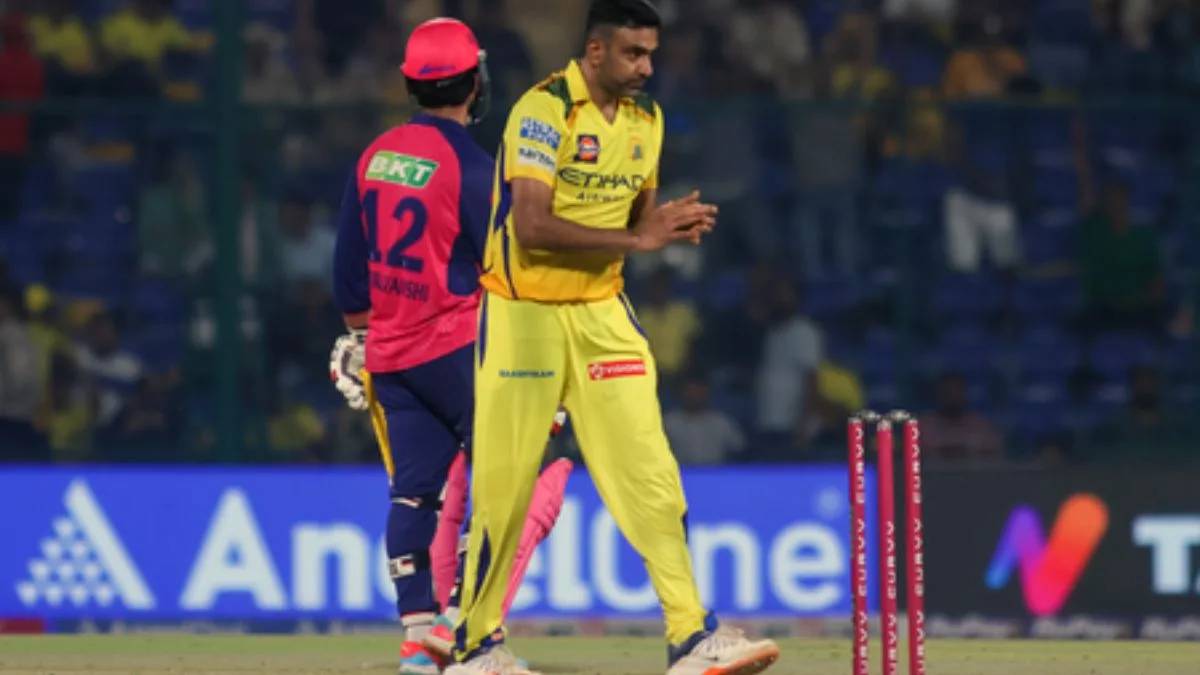
Ravichandran Ashwin has called on the International Cricket Council (ICC) to revisit its international calendar, arguing that the increasing frequency of global tournaments has diluted their significance and placed commercial considerations ahead of the sport’s long-term health.

Speaking on his YouTube channel Ash Ki Baat, Ashwin pointed out that almost every year now features a marquee ICC event, a trend he believes is driven largely by revenue generation. He noted that 2025 hosted the men’s Champions Trophy and the women’s ODI World Cup, while 2026 is set to feature both the men’s and women’s T20 World Cups.

“The ODI format has become redundant and to top it, ICC needs to see how they are conducting these World Cups. Every year, there is an ICC tournament for revenue generation pattern, but look at how FIFA is doing it. There are leagues (EPL, La Liga, Serie A, Bundesliga) happening and they do their World Cup once in every four years. The World Cup has value as it’s a marquee tournament. (But in cricket) too many bilaterals, too many formats, too many World Cups, so it’s a little bit of an overkill,” Ashwin said.

While several former players, including Sachin Tendulkar, have suggested innovations such as a split-innings format to revive 50-over cricket, Ashwin proposed a more fundamental change, limiting ODIs to a single global event every four years.

“If you really want to make ODI cricket relevant, then just play these (T20s) leagues and play ODI World Cup once in four years. So when people turn up for events, there will be sense of expectation. (Otherwise) I feel it (ODI cricket) is going towards slow death,” he said.

Ashwin also warned that the format could face deeper challenges once established stars like Virat Kohli and Rohit Sharma step away from ODIs, suggesting that modern-day one-day cricket no longer encourages the kind of innings-building that once defined the format.

“…Dhoni (would) take singles for 10-15 overs before he went berserk at the end. You don’t have players like that (Dhoni) anymore. There isn’t any requirement to play like that, as you are playing with two new balls and five fielders inside circle,” said Ashwin, asserting that modern ODIs are either a ‘BashaThon’ or a tale of collapse if the wicket happens to be slightly difficult,” he said.

Abhaya fund row: Doctors’ front president Aniket Mahato quits

A rift has surfaced within the Junior Doctors’ Front (JDF), a platform formed to pursue legal justice for Abhaya, the young woman doctor, who was brutally raped and murdered at RG Kar Hospital, over financial irregularities linked to the ‘Abhaya Fund’.

Statesman News Service | Kolkata |

A rift has surfaced within the Junior Doctors’ Front (JDF), a platform formed to pursue legal justice for Abhaya, the young woman doctor, who was brutally raped and murdered at RG Kar Hospital, over financial irregularities linked to the ‘Abhaya Fund’.

The controversy culminated on the first day of the New Year, when JDF president Aniket Mahato resigned from his post, citing deep differences and what he described as “undemocratic functioning” of the organisation. The Junior Doctors’ Front was set up by a section of Abhaya’s batchmates to keep alive the demand for justice and to support the continuing legal battle. Junior doctors Aniket Mahato, Debashis Haldar and Asfakulla Naiya were among those who initiated the ‘Abhaya Fund’ to collect money for legal expenses.

However, within months, allegations began to surface that funds were being misused, triggering unease within the forum and among supporters of the movement.

In his resignation letter, Aniket Mahato did not conceal his dissatisfaction. He stated that the manner in which the front was functioning had deviated from democratic norms and was no longer aligned with the core objective of securing justice for Abhaya. Despite repeated attempts to raise concerns internally, he claimed his objections were ignored by the leadership. Mahato added that continuing in the post under such circumstances would amount to compromising the very principles on which the movement was founded. The case that sparked the movement continues to evoke strong emotions.

In August 2024, a woman doctor was raped and murdered inside a seminar room at RG Kar Hospital. Junior doctors launched a sustained agitation demanding justice. The Central Bureau of Investigation later took over the probe and concluded the trial within a relatively short span. Civic volunteer Sanjay Roy was convicted and sentenced to life imprisonment. However, the verdict failed to satisfy the victim’s family, relatives and friends, who alleged that key aspects of the crime were concealed and that the judicial process shielded certain individuals. As a result, the legal fight has continued in the Supreme Court, with the family seeking a more comprehensive probe.

It was to support this legal battle that the ‘Abhaya Fund’ was created. But allegations of financial impropriety and claims that the Front’s movement was losing direction intensified internal discord. Mahato, in his letter, also referred to protests he had led earlier against the transfer of himself, Debashis Haldar and Asfakulla Naiya, underscoring his continued commitment to the cause despite growing differences.

Reacting to the developments, Trinamul Congress leader Kunal Ghosh remarked that such trusts had turned into “honey pots”, leading to inevitable infighting. With Mahato’s resignation, the credibility and future course of the Junior Doctors’ Front now stand under a cloud, even as the demand for justice for Abhaya continues to resonate beyond organisational turmoil.

Sikkim CM calls for collective resolve, greets people on New Year

Sikkim Chief Minister Prem Singh Tamang on Wednesday extended New Year greetings to the people of the state, expressing confidence that 2026 would usher in renewed growth, deeper unity, and sustained progress.

Statesman News Service | Kolkata |

Sikkim Chief Minister Prem Singh Tamang on Wednesday extended New Year greetings to the people of the state, expressing confidence that 2026 would usher in renewed growth, deeper unity, and sustained progress.

In his New Year message, the Sikkim Chief Minister said the steady advancement achieved over the years had been shaped by the collective strength, unity, and active participation of the people, who remain the true driving force behind the state’s development. Emphasis was laid on cooperation and shared responsibility as the foundation of continued progress.

Gratitude was expressed to citizens for their trust, support, and unwavering faith in the government’s vision, which, he said, had served as a guiding force in navigating challenges and achieving milestones.

“The path ahead will continue to be guided by unity, cooperation, and a shared sense of purpose, ensuring that our efforts translate into meaningful and lasting outcomes for future generations,” Mr Tamang said.

The Chief Minister noted that the new year carried the promise of fresh beginnings and renewed hope, with aspirations expected to gain clearer direction and collective efforts yielding positive and enduring impact.

Calling for confidence, compassion, and unity, Mr Tamang urged people to move forward together in the spirit of harmony and collective resolve.

Shopkeepers get eviction notice from railway land in Burnpur

The South Eastern Railway has issued notices to shopkeepers operating on railway land in the market area adjacent to Burnpur station in West Burdwan district, asking them to remove their shops within seven days.

Statesman News Service | Kolkata |

The South Eastern Railway has issued notices to shopkeepers operating on railway land in the market area adjacent to Burnpur station in West Burdwan district, asking them to remove their shops within seven days.

Protesting against the directive, shopkeepers of the Burnpur station market area staged a demonstration on Thursday.

Following the protest, Asansol Municipal Corporation (AMC) Ward No. 78 councillor Ashok Rudra visited the site and expressed his support for the shopkeepers.

The traders said the South Eastern Railway was asking them to vacate the area despite the fact that many of them have been running their businesses there for the past 20 to 30 years. They questioned where they would go if evicted without any rehabilitation arrangement.

They further alleged that the railways were repeatedly creating difficulties for local traders in one way or another, which they described as unfair. Many shopkeepers said their establishments were their sole source of income and that a forced eviction would push their families into a severe livelihood crisis. “We are not against development, but our livelihood and families must also be taken into account,” they said.

Councillor Rudra said: “After receiving information about the matter, I visited the area today. The shopkeepers told me that railway officials had come and given them a seven-day deadline to remove their shops. Some have been earning their livelihood here for 20 years, others for 30 years. If they are suddenly asked to leave, where will they go?”

He added: “We and the local people are not opposed to development work being carried out by the South Eastern Railway. However, the railways must also consider the future of these shopkeepers.”

The councillor further stated that until the railway authorities make proper rehabilitation arrangements for the affected traders, they will not vacate the area.

Meanwhile, the South Eastern Railway maintained that the shops had been asked to be removed strictly in accordance with rules, as they were illegally occupying railway land.

It may be noted that in the steel township of Burnpur, railway land lies on one side of the area, while land belonging to SAIL’s IISCO Steel Plant is located on the other.

Bloody start to New Year as TMC leader gunned down in Raiganj

State politics in West Bengal was rocked at the very start of the New Year after a Trinamul Congress leader was shot dead in Raiganj town of North Dinajpur district last midnight.

Statesman News Service | Kolkata |

State politics in West Bengal was rocked at the very start of the New Year after a Trinamul Congress leader was shot dead in Raiganj town of North Dinajpur district last midnight.

Nabendu Ghosh (37), vice-president of the Trinamul Congress youth wing in North Dinajpur, was gunned down in front of his residence while attending a picnic with friends shortly after welcoming the New Year. The incident, occurring ahead of the 2026 Assembly elections, has sent shockwaves through political circles.

According to police sources, the shooting happened around 12.30 a.m. near Mohanbati Market in the Milanpara area of Raiganj. Miscreants suddenly opened fire on Ghosh, hitting him in the chest. He collapsed on the spot in a pool of blood. Locals rushed him to Raiganj Medical College and Hospital, where doctors declared him brought dead.

Police from Raiganj police station reached the spot soon after being alerted. CCTV footage from the area was examined, leading to the arrest of two suspects later in the night. An improvised firearm used in the crime has also been recovered. Police confirmed gunshot injury marks on the victim’s body and said investigations are underway to determine whether the murder was politically motivated or the result of personal enmity.

A former general secretary of the Raiganj University students’ union, Ghosh was known to be popular across party lines. His killing has plunged the district’s political fraternity into mourning and raised concerns over law and order.

Family members said Ghosh had briefly returned home before midnight to wish them a Happy New Year and then went out again. His father, Pranab Ghosh, described the family’s shock and grief following the incident.

District Trinamul Congress president Kanaiyalal Agarwal said police have begun a thorough probe and expressed confidence that the culprits would be brought to justice. Meanwhile, district Congress president Mohit Sengupta demanded strong steps to rid the town of criminal elements.

People celebrate Kalpataru Utsav across city

Thousands of people gathered at Kashipur Math of Ramakrishna Mission to take part in Kalpataru Utsav.

Statesman News Service | Kolkata |

Thousands of people gathered at Kashipur Math of Ramakrishna Mission to take part in Kalpataru Utsav.

The day was observed with solemnity at the RKM centres across the globe. It was also organised at the private centres associated with the Ramakrishna movement.

Several NGOs distributed fruits and sweets among the patients of the state-run hospitals.

At Kashipur, special puja was held in the morning. In the evening, a religious meeting was held where the speakers talked on the relevance of the teachings of Sri Ramakrishna. Ramakrishana’s view on religious harmony needs to be followed to improve inter-personal relationship among the people coming from different religious and cultural backgrounds, the speakers said.

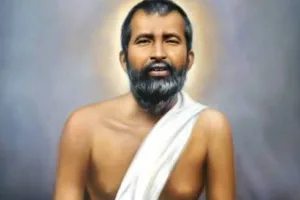
Sri Ramakrishna who was suffering from throat cancer, used to stay at the Kashipur house.

On 1 January, 1886 the devotees had gathered at this house to see Sri Ramakrishna. Despite illness, he came down to the garden to meet the devotees. He blessed them to be enlightened. He died on 16 August, 1886.

Since then, the day is being observed as Kalpataru Divas.

Today, the devotees visited the room on the first floor where Sri Ramakrishna breathed his last. They took prasad and spent the day at Kashipur Udyanbati.

Firhad Hakim, Kolkata mayor visited Nanbaneer, an old age home in Chetla.

People visited the Alipore zoo, victoria memorial, Nicco Park and Eco Park and spent time with their families and friends.

Mamata, Abhishek wish partymen on TMC’s foundation day

Trinamul Congress leaders and workers on the foundation day of the party pledged to protect the pride of the nation, ensure development of Bengal and protect the democratic right of every citizen.

Statesman News Service | Kolkata |

Trinamul Congress leaders and workers on the foundation day of the party pledged to protect the pride of the nation, ensure development of Bengal and protect the democratic right of every citizen.

Trinamul Congress chairperson Miss Mamata Banerjee on this auspicious day said: “Trinamul family is full with the blessings of countless people and their prayer. With the good wishes of the people we will continue our fight against all evil. We will not bow down to the evil forces and their muscle flexing and continue to fight to protect and establish the rights of common people. I pay my respect to all workers and supporters of the Trinamul Congress family.”

Abhishek Banerjee, national general secretary of the party, said: “Mother soil and people are committed to ensure development of the state and the country. We salute to the untiring work, selfless sacrifice of the workers. Armed with fellow feelings and harmony let us fight with renewed effort.”

On 1 January, 1998 Miss Mamata Banerjee who was the president of state Youth Congress, floated Trinamul Congress after she realised that Congress will never launch any serious movement to oust the CPI-M from Bengal.

Trinamul Congress flags were hoisted in the party offices across the state. The workers vowed to put up a fight against the divisive forces and defeat the BJP in the 2026 Assembly election. Rallies were taken out in the morning in different areas. Trinamul Congress has taken programmes to make people aware of the schemes the state government has taken in the past 15 years.

Abhishek Banerjee will kick off his programme tomorrow with a meeting in Baruipur in South 24-Parganas. He will go to Thakurnagar, headquarters of the Matua community on 9 January.

After raising the party, she launched a series of movements to highlight the misrule of the CPI-M in Bengal.

She raised her voice when the CPI-M government forcibly took fertile land from the farmers to help the Tata Group to set up an automobile factory in Singur. The Tatas left Bengal. After becoming the Chief Minister, she continued her legal battle against the acquisition of land. Finally, the Supreme Court declared the acquisition as “unconstitutional and void.” She returned the land that had been acquired from the farmers.

In Nandigram, she lodged a movement against forcible acquisition of land to set up a chemical hub by the Salem group.

Her sustained movement finally dislodged the CPI-M from power in the 2011 Assembly election. In 2008 the CPI-M lost control over the zilla parishads in East Midnapore and South 24-Parganas in the panchayat election in 2008. In the Lok Sabha election, which was held in 2009, the Trinamul Congress got 18 seats. In 2010, it got control over the Kolkata Municipal Corporation and finally came to power in 2011.

After coming to power Trinamul Congress-led state government has taken 64 development schemes, of which Lakshmir Bhandar, Swasthya Sathi, Sabuj Sathi, Khadya Sathi deserve mention. Schemes like Students’ credit card, Kanyashree, Swami Vivekananda scholarship have helped the students to go ahead with higher studies.

J&K cricketer summoned by police for sporting Palestine flag on his helmet, inquiry ordered

According to the police, the cricketer identified as Furqan Ul Haq allegedly used the Palestinian Flag on his helmet while playing the match at J&K Champions League. After it came to the notice of the Jammu and Kashmir police, both the cricketer and the organiser of the tournament were called for questioning to ascertain the circumstances surrounding the incident.

Statesman News Service | New Delhi | Updated :

An inquiry has been launched by the Jammu and Kashmir Police after a cricketer purportedly used a Palestinian flag on his helmet during a match at a local tournament in Jammu. The police had on Thursday called the cricket player as well as the organiser of the cricket tournament for questioning in connection with the matter.

According to the police, the cricketer identified as Furqan Ul Haq allegedly used the Palestinian Flag on his helmet while playing the match at J&K Champions League. After it came to the notice of the Jammu and Kashmir police, both the cricketer and the organiser of the tournament were called for questioning to ascertain the circumstances surrounding the incident.

“One cricket player and Organizer of the tournament has been called for questioning by J&K Police regarding the use of the Palestine Flag on his helmet during a cricket match at a private tournament in Jammu,” the Jammu and Kashmir Police said in a statement.

The police action came after photos and videos of Bhatt wearing a Palestinian flag on his helmet went viral on social media.

The police today said: “Yesterday, a video circulating on social media shows a cricket player, namely Furqan Ul Haq, playing cricket at KC Door, Muthi while displaying a Palestine logo on his helmet. In view of the sensitivity of the matter and its potential public order implications, a 14 days preliminary enquiry under Section 173(3) BNSS has been initiated at PS Domana to ascertain the facts, intent, background of the individual, and any possible linkages.”

According to reports, the Jammu and Kashmir Cricket Association has distanced itself from the tournament.

The board reportedly clarified that it has no role in the J&K Champions League tournament. Some reports also claimed that Bhatt has been “banned” over the incident.