Logo

Courts being brought closer to people to ensure speedy justice: CJI Surya Kant

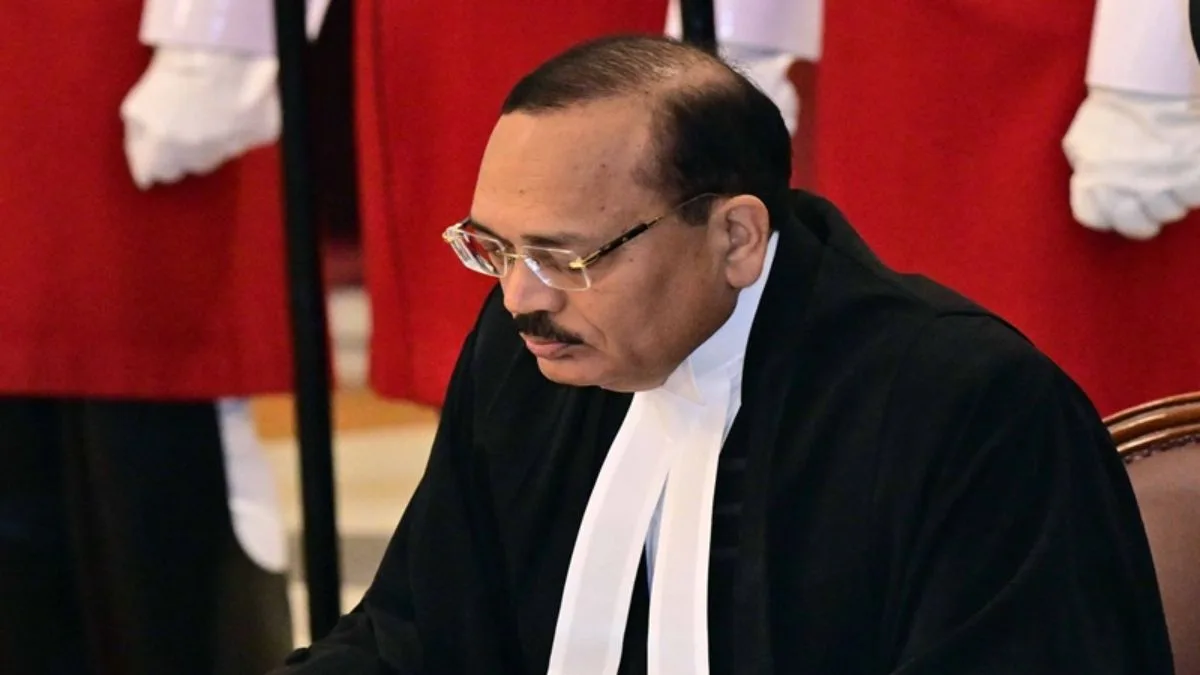
The Chief Justice was speaking as the chief guest at a programme held in Barwala. Earlier in the day, Justice Surya Kant inaugurated the newly constructed court building in Barwala and also laid the foundation stone of the upcoming court complex.

Statesman News Service | Chandigarh |

Chief Justice of India Justice Surya Kant on Saturday said that courts are being established closer to the people to ensure speedy justice. He emphasised that the nearer the courts are, the easier it becomes for citizens to fight for the protection of their rights.

The Chief Justice was speaking as the chief guest at a programme held in Barwala. Earlier in the day, Justice Surya Kant inaugurated the newly constructed court building in Barwala and also laid the foundation stone of the upcoming court complex. He also conveyed a message of environmental conservation by planting a sapling on the premises.

The programme was attended by Cabinet Minister Ranbir Singh Gangwa, Cabinet Minister Dr Arvind Sharma, Chief Justice of the Punjab and Haryana High Court Justice Sheel Nagu, Punjab and Haryana High Court Judge Justice Alka Sarin, Justice HS Sethi, District and Sessions Judge Alka Malik, Additional District and Sessions Judges Isha Khatri and Saurav Khatri, ACJM Anuradha, and Bar Association President Dinesh Saini.

Justice Surya Kant said that the primary objective of establishing new courts is to improve access to justice and make it simple, accessible and affordable for the common citizen. Congratulating the Haryana government, he said that judicial work in Barwala and Narnaund would commence from Monday.

He noted that the framers of the Constitution envisaged High Courts in every state so that citizens would not have to travel to Delhi for the protection of their fundamental, civil and human rights, and could instead obtain justice within their own state.

Expressing gratitude to the Haryana government, the Chief Justice said that the state has consistently extended cooperation in strengthening judicial infrastructure. He shared that during his tenure as Chairman of the High Court Building Committee, the government provided timely financial assistance for the construction of several judicial complexes in Haryana.

He expressed confidence that, under the guidance of the Punjab and Haryana High Court, judicial officers would remain sensitive to the hardships of the common man and deliver quality justice, enabling Haryana to emerge as a leading state in judicial administration.

Referring to the concept of “Justice at Your Doorstep,” Justice Surya Kant said that judicial complexes are being constructed closer to the public, which has proved particularly beneficial for the poor and marginalised sections. He added that along with continuous infrastructure development, ensuring quality justice remains equally important.

Welcoming the Chief Justice to his ancestral land, Cabinet Minister Ranbir Singh Gangwa said the day was a matter of pride for Hisar district. He said Justice Surya Kant, through his judicial wisdom, has enhanced the prestige of Haryana and the nation.

Having reached the highest position in the judicial system, he stands as a source of inspiration for the youth, the minister added. He reiterated that the state government is committed to strengthening the judicial framework so that people no longer have to travel long distances to seek justice.

Pooja sidelined for two weeks with hamstring injury

“Pooja Vastrakar was not available for selection (against Mumbai Indians),” Malolan said. “Two weeks before her release from the CoE (Centre of Excellence in Bengaluru), she unfortunately tweaked her hamstring. The information we have is that she will be there for two more weeks.

Statesman News Service | New Delhi |

Royal Challengers Bengaluru (RCB) have been dealt an early setback in the WPL 2026 season, with pace-bowling all-rounder Pooja Vastrakar sidelined for at least two weeks due to a hamstring injury. Head coach Malolan Rangarajan confirmed the update after RCB’s thrilling final-ball win against Mumbai Indians at the DY Patil Stadium in Navi Mumbai on Friday.

“Pooja Vastrakar was not available for selection (against Mumbai Indians),” Malolan said. “Two weeks before her release from the CoE (Centre of Excellence in Bengaluru), she unfortunately tweaked her hamstring. The information we have is that she will be there for two more weeks.

“Earlier, she was there (at the CoE) for her shoulder; now she has a hamstring issue. It’s a week-by-week process. So let’s see where she is at,” Malolan added.

In the season opener, RCB chased down MI’s 154/6 with three wickets in hand. Nadine de Klerk starred with an unbeaten 63 off 44 balls to seal the win.

Mumbai Indians, meanwhile, were also without a key all-rounder in the opener, as Hayley Matthews missed the match while recovering from a shoulder injury.

Head coach Lisa Keightley said the West Indies star was close to returning but was not quite ready to take the field.

“Unfortunately, her shoulder isn’t great. While training, she got a slight strain, and she’s really close (to play). It was a bit too close for her to play tonight. We will see how she goes tomorrow and if she’s fit for tomorrow’s game. But she is really close,” she said.

Following their narrow defeat in the opener, the defending champions are scheduled to face Delhi Capitals on Saturday at the DY Patil Stadium in Navi Mumbai.

If Hindus remain united, nothing can stop India from becoming world leader in next 20-30 years: Mohan Bhagwat

The RSS chief was participating in the centenary celebrations of Sudama Kuti Ashram in Vrindavan.

Statesman News Service | Vrindavan |

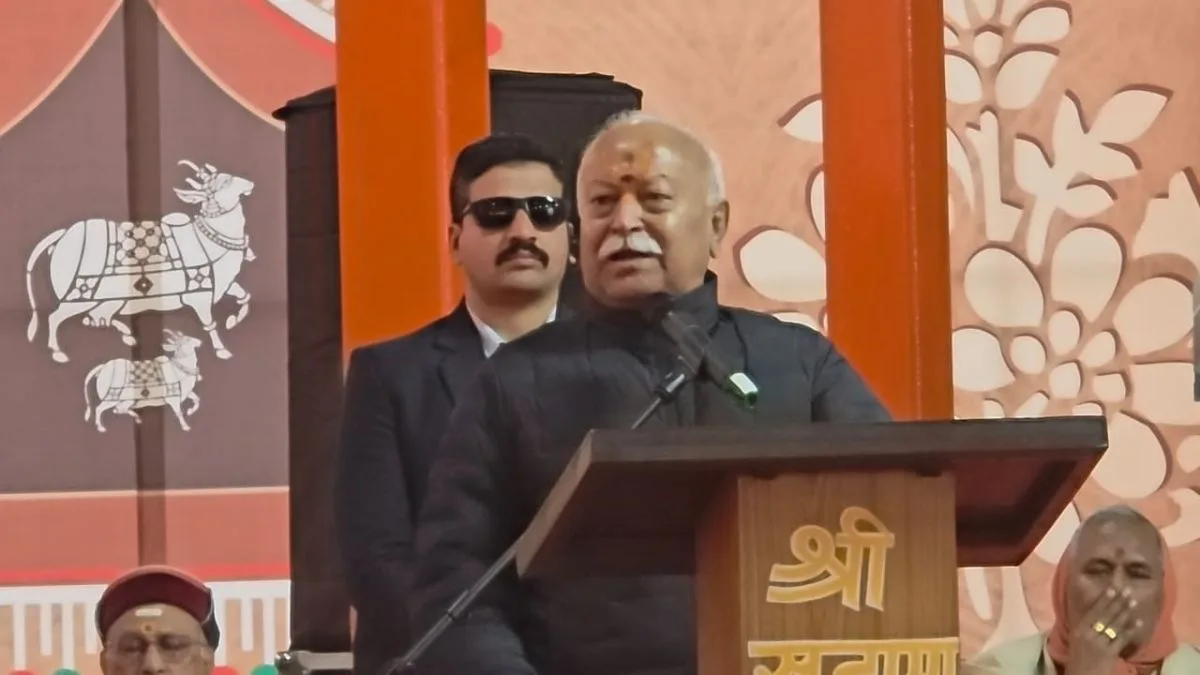
RSS chief Mohan Bhagwat on Saturday said, “We must unite, all Hindus should be one, sit together, stand together, eat together, and talk together.” he said if Hindus remain united, nothing can stop India from becoming a world leader in the next 20 to 30 years.

The RSS chief was participating in the centenary celebrations of Sudama Kuti Ashram in Vrindavan. He inaugurated the program by lighting the lamp in the presence of Mahant Sudikshak Das Maharaj of Sudama Kuti, Muni Rishi Sadhvi Ritambhara, Maluk Peeth Rajendra Das Maharaj, and other saints.

Speaking on the occasion, Bhagwat called devotion the true strength. Noting that the West considers itself the master of creation, but we are not the masters of creation but we are a part of creation, he emphasized that we consider all people living in India as Hindus, but outsiders see us as belonging to different castes.

Bhagwat stressed the unity of Hindus, saying that this is the essence of the RSS’s family awakening program. “We have preserved our religion through sacrifice, and the flag of Sanatan Dharma is flying high in the world. We serve the nation with devotion in our Sangh work. We have to do the work of awakening our strength. The saints are the ones who perform devotional work that is why I attend such events,” RSS chief said.

He further said, “if we stand united, there is no power in the world that can stand against us. We need awakening and determination. Crises come, but they do not last against those who face them with patience. We have seen this situation before. As we, the Sanatani religious Hindus, become united, these powers will crumble. We have to move forward on the basis of strength, attend such events, and receive the teachings of the saints, thus uniting everyone.”

The saints and spiritual leaders who were present on the stage include Pipa Peethadhishwar Balram Das, Kamal Nayan Das Maharaj, Sadhvi Ritambhara, Gyananand Maharaj, Gauri Shankar Das Maharaj, Kumar Swami, Rajendra Das Maharaj, Bhuri Wale Baba, Sudarshan Das Maharaj, Manoj Mohan Shastri, and senior VHP leader Dinesh Ji.

Air pollution silently fuelling rise in respiratory, cardiac and neurological diseases

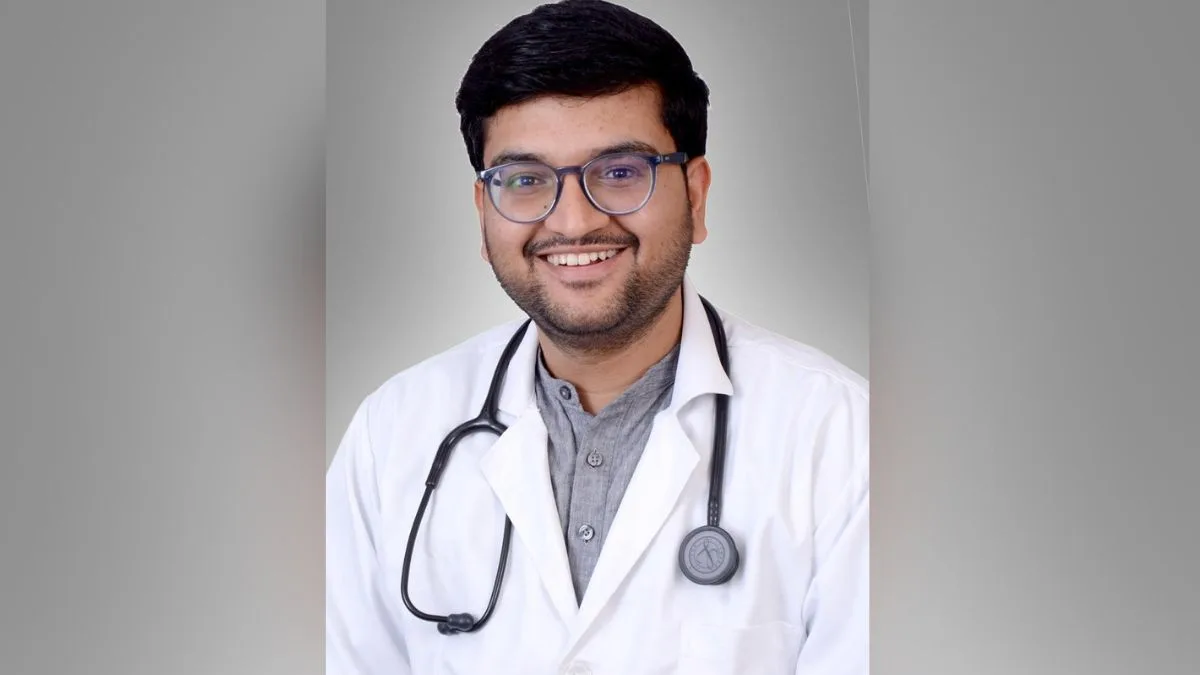
In an interaction with The Statesman, Dr Rishabh Yadav, MBBS, MS (Medical Superintendent) at a private hospital in the national capital, said that prolonged exposure to polluted air is silently increasing the burden of respiratory, cardiac and neurological diseases across the population.

Nikhil Vyas | New Delhi |

Air pollution has emerged as one of the most serious public health challenges of our time and is no longer confined to metropolitan cities alone. Smaller cities and semi-urban areas are equally affected.

In an interaction with The Statesman, Dr Rishabh Yadav, MBBS, MS (Medical Superintendent) at a private hospital in the national capital, said that prolonged exposure to polluted air is silently increasing the burden of respiratory, cardiac and neurological diseases across the population.

Dr Yadav said air pollution has both immediate and long-term health impacts. “Short-term exposure can cause eye, nose and throat irritation, coughing, wheezing, breathlessness, headaches, dizziness, nausea, skin allergies, chest discomfort, frequent respiratory infections, fatigue and reduced concentration. These symptoms may appear within hours or days,” he explained.

When asked about the long-term consequences of continuous exposure, Dr Yadav said it is far more damaging. “Long-term exposure contributes to chronic respiratory illnesses such as asthma and chronic obstructive pulmonary disease (COPD), reduced lung development in children, cardiovascular diseases including heart attacks, lung cancer, weakened immunity, cognitive decline, hormonal imbalance and a reduction in overall life expectancy,” he said.

He added that the most vulnerable sections of society include children, the elderly, pregnant women and individuals suffering from asthma, heart disease or diabetes. “For them, polluted air can aggravate existing conditions and lead to serious complications,” he noted.

On preventive measures, Dr Yadav advised people to regularly monitor the Air Quality Index (AQI) and limit outdoor activities when pollution levels are high.

“Wearing a good-quality mask during severe pollution can significantly reduce the inhalation of harmful particles. Keeping windows closed during peak pollution hours and using air purifiers indoors can also help maintain cleaner indoor air,” he added.

Magh Mela goes digital as CM Yogi launches Service App for pilgrims

The Mela Service App for visitors coming to the Magh Mela has also been included in this list.

Statesman News Service | Prayagraj |

To facilitate the devotees visiting the Magh Mela, several innovations are being introduced by the Mela administration this time.

The Mela Service App for visitors coming to the Magh Mela has also been included in this list.

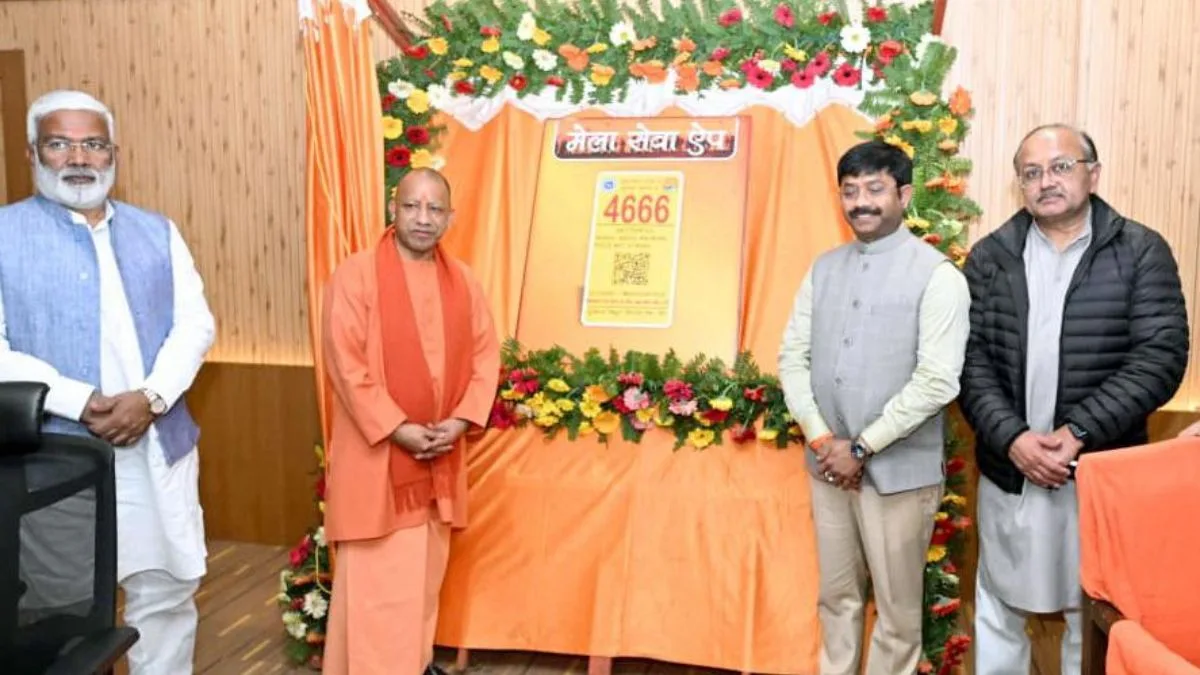
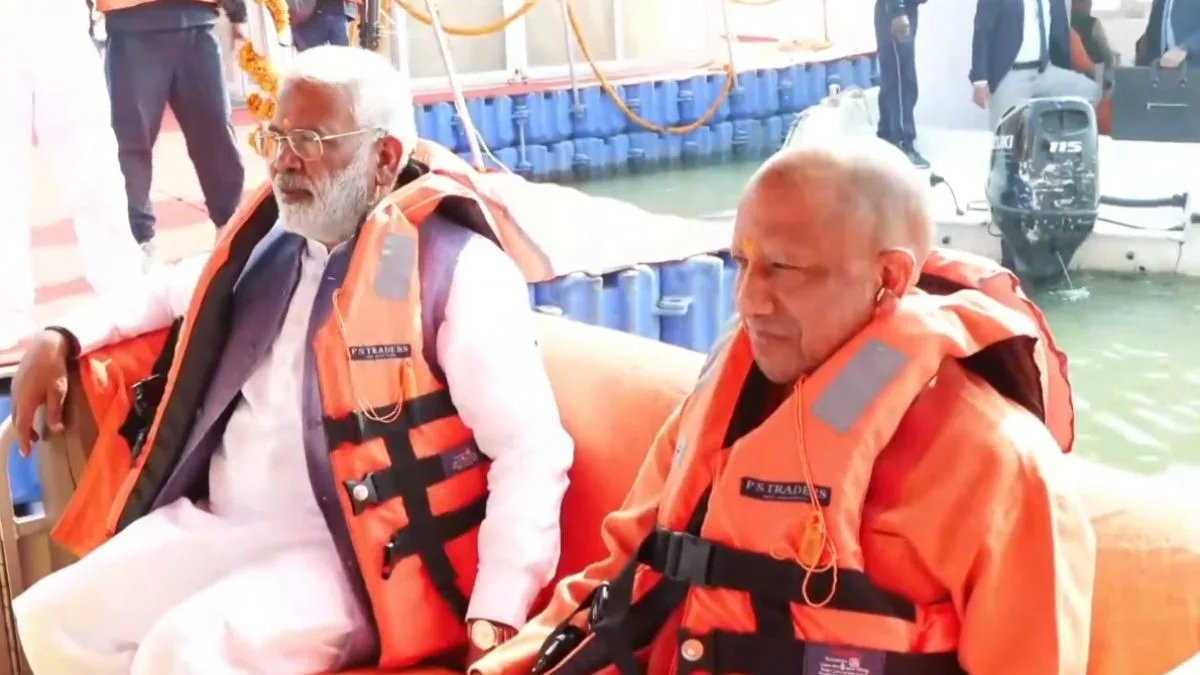
On Saturday, Chief Minister Yogi Adityanath inaugurated the app after visiting the Magh Mela in Prayagraj.

Chief Minister Yogi Adityanath visited the Magh Mela area to review the upcoming Snan festivals of the ongoing Magh Mela in Prayagraj and held a review meeting with officials and public representatives in this regard.

During this meeting, CM Yogi also inaugurated the Magh Mela Service App to provide digital guidance to pilgrims in Prayagraj. Through this app, devotees visiting the Mela will be able to access services digitally.

Rishiraj (Mela Officer) stated that the app has been digitally designed in such a way that any devotee or tourist sitting in any part of the Mela region can inform the Mela administration about their problem, and the Mela administration staff will be able to resolve it.

For this purpose, QR codes have been pasted on all electricity poles in the Mela area. By scanning these QR codes, devotees can describe their problem in the form and send it to the administration.

Teams from various departments of the Mela administration will take cognizance of the issue and resolve it immediately. This facility has been provided for the first time in the Magh Mela.

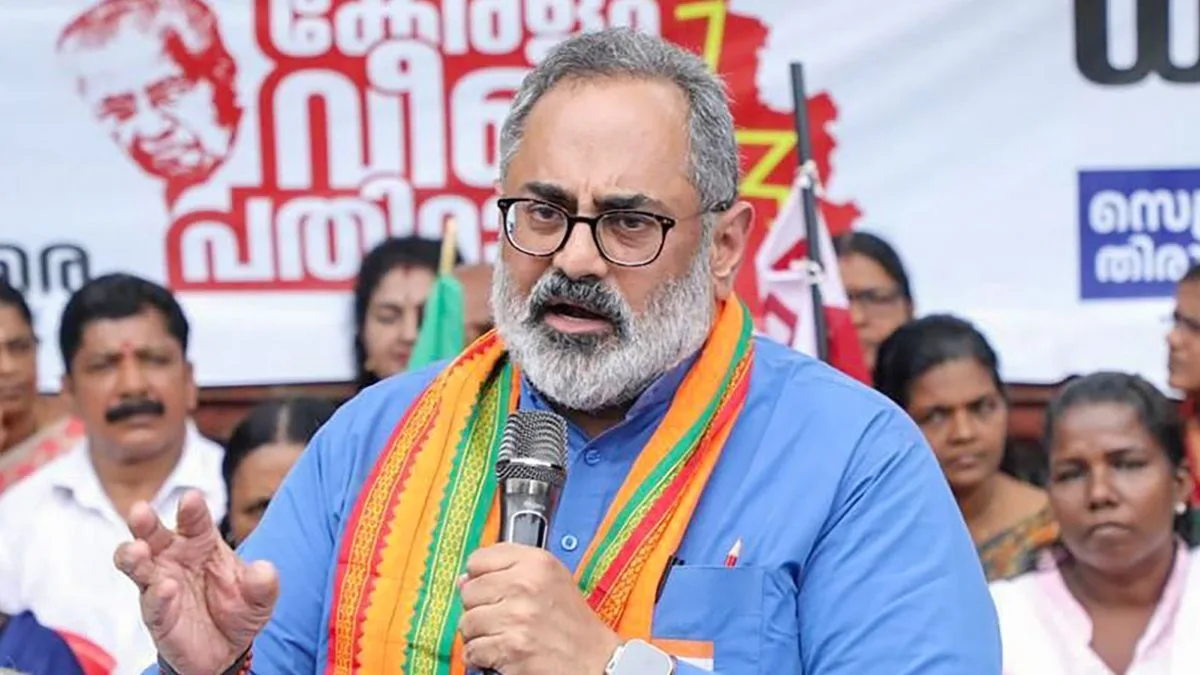
Congress–CPM ‘Kuruva Gang’ behind Sabarimala gold theft: Rajeev Chandrasekhar

BJP Kerala president Rajeev Chandrasekhar on Saturday alleged that the arrest of temple Thanthri Kandaru Rajeevaru in the Sabarimala gold theft case is an attempt by the LDF government to divert public attention from the backlash it faced in the recent local body elections.

Statesman News Service | Thiruvananthapuram |

BJP Kerala president Rajeev Chandrasekhar on Saturday alleged that the arrest of temple Thanthri Kandaru Rajeevaru in the Sabarimala gold theft case is an attempt by the LDF government to divert public attention from the backlash it faced in the recent local body elections.

Addressing a press conference here, Chandrasekhar alleged that the Congress–CPM “Kuruva gang” is behind the Sabarimala temple gold robbery. “Huge efforts have been made by both the Left and the Congress to protect their members and ministers. The gold theft has been committed by the Congress–CPM ‘Kuruva gang’,” he said.

He questioned why a minister allegedly linked to the case has not been arrested while the thanthri has been taken into custody. “When the thanthri is arrested, why is the minister not arrested? There are powerful politicians behind the Sabarimala gold robbery,” Chandrasekhar alleged.

Stating that the Travancore Devaswom Board (TDB) and the Devaswom Minister are responsible for safeguarding the temple’s gold and properties, the BJP state chief asked, “If the thanthri is arrested, why is the minister not being held accountable?”

Chandrasekhar also announced that the Sabarimala Samrakshana Deepam would be lit in houses across the state on January 14, Makaravilakku Day, under the slogan ‘Veetilum Nattilum Ayyappa Jyoti’. “On January 14, Makaravilakku Day, Ayyappa Jyoti will be lit in all homes across the state as the beginning of an NDA-led protest. This is against the LDF and UDF for their role in the Sabarimala gold looting,” he said.

Former BJP state president K. Surendran said the SIT proceedings in the case were mysterious and alleged that the arrest of the thanthri was a tactic by the LDF government to divert attention from its electoral setback in the local body polls.

Speaking to the media, Surendran questioned why former Devaswom Minister Kadakampally Surendran, who is allegedly involved in the conspiracy, was not arrested despite being questioned. He alleged that the SIT failed to arrest both Kadakampally Surendran and former TDB president P.S. Prasanth, despite what he claimed was ample evidence and the statement of Unnikrishnan Potti.

Surendran further alleged that while former TDB member Sankardas, who signed the relevant minutes, is free, the thanthri—who, according to him, had not even seen the documents—was arrested. “Beyond rituals, the thanthri has no responsibility for the management of Devaswom properties. That responsibility rests entirely with the Travancore Devaswom Board,” he said.

He pointed out that the remand report only mentions an alleged violation of customary practices by the thanthri and does not state that Thanthri Rajeevaru gained any monetary benefit from the gold theft. “The remand report speaks only of a ritual violation. The Devaswom Board is the custodian of the temple’s property, while the thanthri has only ritualistic authority,” Surendran said.

He added that if cases are being filed on the grounds of ritual violations, then Chief Minister Pinarayi Vijayan—who, he alleged, permitted the entry of women into the Ayyappa temple in the name of renaissance—should be arrested first.

Surendran also alleged that Unnikrishnan Potti and a businessman consulted Congress leader Sonia Gandhi to identify a market to sell the stolen items. Making further allegations against the UDF, he said leaders Adoor Prakash and Anto Antony were also involved in the case. “Potti approached Sonia Gandhi to find an international market for antiquities. Sonia Gandhi’s sister has an antiquities trading company in Italy,” he claimed.

Surendran demanded that the SIT record a statement from Sonia Gandhi to identify what he described as the real accused in the case.

We act like nothing affects us: Shanto on controversies around Bangladesh teams before every WC

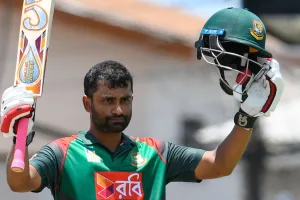
Bangladesh Test captain Najmul Hossain Shanto has said that players are often forced to put up an “act” to deal with controversies that emerge ahead of and during major tournaments like World Cups, admitting that such issues do affect the team even though players try to hide it.

Statesman News Service | New Delhi |

Bangladesh Test captain Najmul Hossain Shanto has said that players are often forced to put up an “act” to deal with controversies that emerge ahead of and during major tournaments like World Cups, admitting that such issues do affect the team even though players try to hide it.

“We haven’t got a good result in any World Cup. We had a good opportunity last time (at the T20 World Cup in 2024), but we couldn’t do it. But you will notice that before every World Cup, there’s some incident that takes place,” Shanto said on Friday while responding to a question on the uncertainty surrounding Bangladesh’s participation in the upcoming T20 World Cup scheduled for February–March in India and Sri Lanka.

“As a player who has played one or two of these tournaments, I can tell you that it affects us. But we ‘act’ as if nothing affects us since we are professional cricketers. Even though you know that it affects us. It is not easy. It is better if these things didn’t happen. I think the players still try to keep all things aside to perform well.

“I would also add that this thing is beyond our control. Wherever we play the World Cup ultimately, I would think that the players have to act like nothing is bothering them, and they can do well for the team.”

With less than a month to go before the start of the T20 World Cup, a final call on Bangladesh’s participation is yet to be taken. The uncertainty follows a controversy involving the Indian Premier League, after the BCCI asked Kolkata Knight Riders to release their Rs 9.2 crore signing Mustafizur Rahman from IPL 2026.

The Bangladesh government subsequently suspended the IPL broadcast in the country, while the Bangladesh Cricket Board informed the ICC that the national team would not tour India and would prefer to play its World Cup matches in Sri Lanka, citing security concerns.

Shanto is not part of Bangladesh’s current T20 setup, but he captained the side in the previous T20 World Cup and was also part of the ODI World Cup campaign in India in 2023.

‘Completely reject Najmul’s comments’

Adding fuel to the fire, BCB director M. Najmul Islam targeted Tamim Iqbal and labelled him as an “Indian agent” when the former captain’s call for the board to prioritise cricketing considerations while deciding on World Cup participation.

Shanto expressed deep hurt over Najmul’s comments, calling it disrespectful and unacceptable.

“Very sad, very sad because such comments were made about a cricketer – a former captain, and in my opinion one of Bangladesh’s most successful cricketers whom we grew up watching,” Shanto said.

“As players, we expect respect, whether someone is a former captain, a regular player, successful or not. At the end of the day, a cricketer hopes for respect,” he added.

“What hurts most is that the cricket board is supposed to be our guardian. We expect them to protect us. As a player, I cannot accept such a comment. Parents should correct you at home, not in front of everyone. So such a comment from someone who is supposed to be our guardian is very difficult to accept. I completely reject it as a player,” Shanto concluded.

Caste enumeration in Census: Stalin urges Modi to constitute consultative mechanism involving CMs

Such consultation would allow incorporation of diverse perspectives, account for State-specific nuances, and foster cooperative federalism in this critical exercise, he pointed out.

Statesman News Service | Chennai |

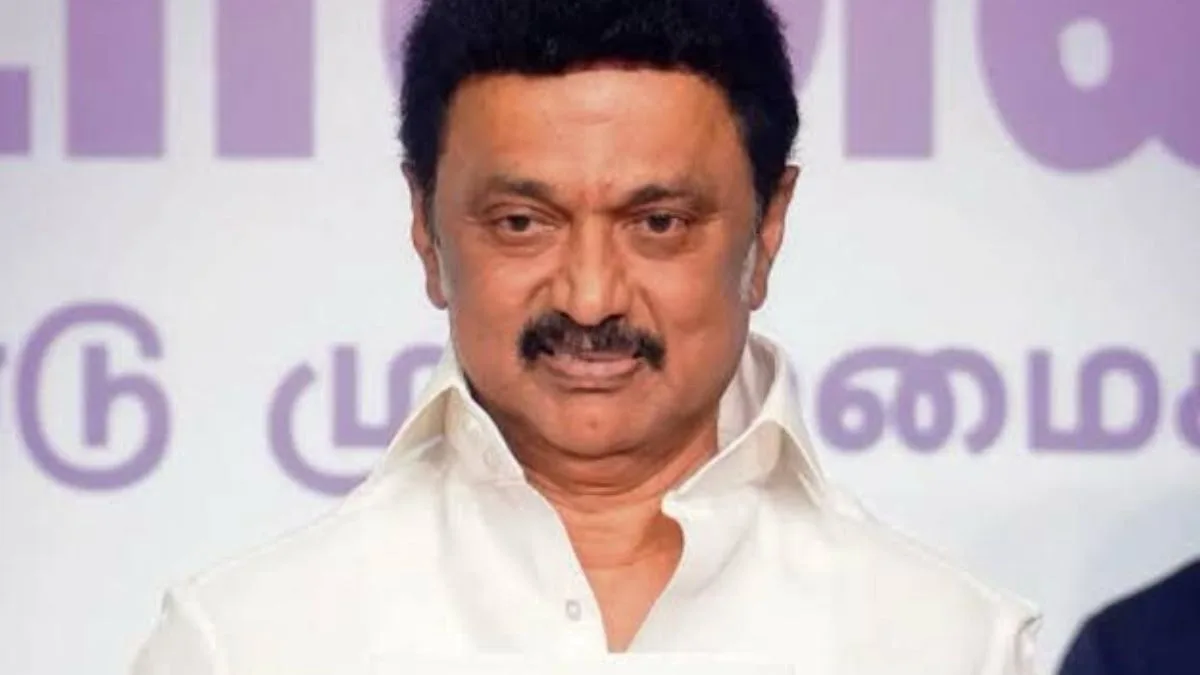
Welcoming the decision of the Union government to have caste enumeration along with the Census, a long-standing demand of Tamil Nadu, Chief Minister MK Stalin on Saturday urged Prime Minister Narendra Modi to constitute a consultative mechanism involving Chief Ministers and representatives of States to discuss and refine the guidelines in carrying out the task.

“Given that Census is a Union subject, but its outcomes profoundly impact State-level policies on education, employment, reservations, and welfare schemes, it is imperative that the Union government consult all states and Union Territories before finalising the guidelines and questionnaire,” Stalin said in a DO letter to the prime minister.

Such consultation would allow incorporation of diverse perspectives, account for State-specific nuances, and foster cooperative federalism in this critical exercise, he pointed out.

Expressing apprehension that the exercise, if not handled properly, will have unintended consequences, the chief minister said, “Caste enumeration is an exceedingly sensitive matter that touches upon deep-rooted social dynamics, regional variations in caste structures, and the potential for unintended societal tensions if not handled with utmost care.”

As such, the framing of questions, categories, sub-categories, and the methodology for data collection must be precise, inclusive and free from ambiguity, he warned, “Any shortcomings in these aspects could lead to disputes, inaccuracies, or even exacerbate divisions.”

Therefore, he called for the constitution of a consultative mechanism comprising chief ministers and representatives of states to discuss and refine the guidelines for caste enumeration. Further, he suggested exercising due diligence in designing the framework, including pilot testing where necessary, to safeguard the sensitivity of the process and ensure the data reliability for advancing social justice.

In his view, the inclusion of caste enumeration in the national census is a move that has far reaching implications for social justice and equitable policy-making, and the federal structure of our nation. Further, it serves the need for comprehensive, reliable data to address historical inequalities and ensure targeted welfare measures, he added.

Recalling the Tamil Nadu Assembly passing resolutions for inclusion of caste enumeration in the census, the chief minister expressed confidence that ‘this historic opportunity will be utilised to strengthen India’s commitment to equality and inclusivity, vindicating the DMK’s consistent advocacy for evidence-based social justice.

I-PAC controversy turns Bengal battle into a TMC-BJP bipolar politics; parties like Congress struggle for space

The TMC has accused the BJP-led Centre of misusing Central agencies for political ends, a charge the saffron party has denied.

VIBHA SHARMA | New Delhi |

The Enforcement Directorate’s raids on political consultancy firm I-PAC and the high-voltage political drama that followed seem to have further sharpened the already bipolar West Bengal politics ahead of the 2026 Assembly elections. As on date, the confrontation seems to have largely reduced the most-watched-for contest between Chief Minister Mamata Banerjee’s Trinamool Congress (TMC) and Opposition BJP, leaving limited political space and scope for INDIA bloc parties like Congress and Left in the state.

The matter reached the Supreme Court after the Calcutta High Court deferred hearing in the case, indicating that the battle is set to escalate further. A “fighter” that she is, Banerjee is unlikely to let go of the situation without giving the BJP a good fight. As someone who till recently was grappling with strong anti-incumbency pressures, her open challenge to the Centre and Central agencies have only given her a fresh lease of political life.

The TMC has accused the BJP-led Centre of misusing Central agencies for political ends, a charge the saffron party has denied. The ED, on its part, has maintained that the raids are linked to an illegal coal mining case being investigated under the Prevention of Money Laundering Act (PMLA). Amid this, other parties, such as Congress, needs to rethink their West Bengal’ strategy, say observers

The TMC is going solo and the Congress, too, decided to contest all 294 Assembly seats on its own, focusing on organisational revival and local issues such as unemployment and corruption to carve out a distinct space beyond the BJP-TMC polarisation. The state unit urged the Central leadership to allow a solo run — “ekla chalo” — arguing that past alliances with the Left Front weakened its voter base, say sources In the 2021 elections, the Congress failed to win a single seat.

However, after the I-PAC controversy, there needs to be re-thinking, even as divisions remain amongst those wanting an alliance with Left, those seeking going with the TMC, and those favouring the “ekla chalo” path. So far, no pre-poll alliances have been finalised and post-poll support to the TMC is one option. On Thursday, West Bengal Congress president Subhankar Sarkar backed the TMC, accusing the BJP of “misusing” the ED for political purposes.

As on date, the Congress plans to prioritise booth-level strengthening of the party across constituencies. With senior leader Rahul Gandhi is expected to undertake a ‘padyatra’ in the state to energise workers and address organisational disarray, the party hopes to position itself as an alternative to both the TMC and BJP, highlighting issues like ‘vendetta’ politics and the suspension of central welfare schemes like MGNREGA. .

However, the broader political narrative is becoming increasingly dominated by the TMC and the BJP.

The BJP continues to push for Hindu consolidation, while the TMC is doubling down on Bengali identity and resistance to Centre’s interference. The I-PAC controversy has further reinforced this binary, squeezing non-BJP, non-TMC parties, and risking vote-splitting that may benefit the BJP, say analysts.

With Banerjee projecting her defiance as a stand for federalism and democratic fairness, the I-PAC episode can become a turning point in the larger tussle between Opposition-ruled states and Central authorities. In other words, the Congress leadership will have to rethink a new plan out of its substantially weak position, they add.

WPL 2026: Litchfield’s valiant knock in vain as Gujarat Giants beat UP Warriorz by 10 runs

Chasing a mammoth total of 207 runs, the Warriorz had a poor start as opener Kiran Navgire (1) was clean bowled by Renuka Singh while attempting a sweep shot.

IANS | New Delhi |

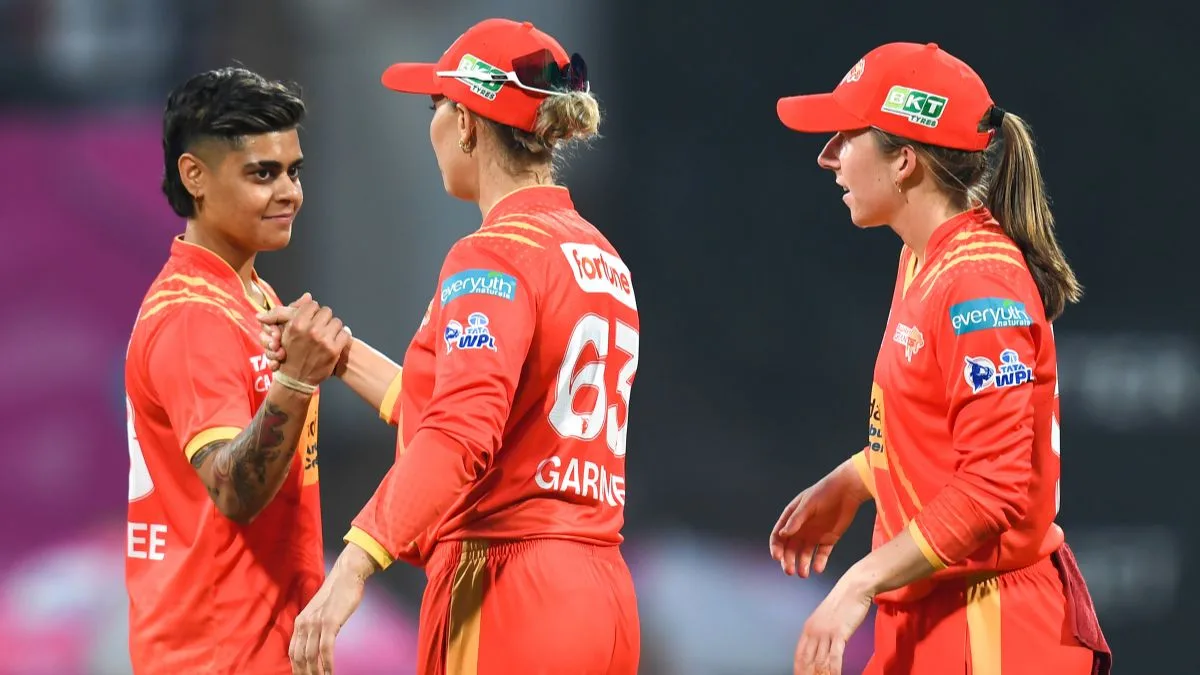
A captain’s knock from Ashleigh Gardner, followed by a splendid bowling performance from Renuka Singh Thakur and Sophie Devine, powered Gujarat Giants to a thrilling 10-run victory over UP Warriorz in the second match of the Women’s Premier League (WPL) 2026 at the DY Patil Stadium.

Chasing a mammoth total of 207 runs, the Warriorz had a poor start as opener Kiran Navgire (1) was clean bowled by Renuka Singh while attempting a sweep shot. Captain Meg Lanning then forged a strong 70-run partnership with the number three batter, Phoebe Litchfield.

The Australian duo steadied the chase with continuous strike rotation and timely boundaries. Gujarat finally made a turnaround in the ninth over when Georgia Wareham sent captain Lanning (30) back to the pavilion with a perfectly pitched googly.

Gujarat then strengthened their position by dismissing Harleen Deol for a duck and vice-captain Deepti Sharma for just one run in the next four balls.

With three wickets falling in quick succession, the Warriorz were under pressure, but Litchfield stood tall and completed her half-century in just 24 balls. She received good support from Shweta Sehrawat (25), who fell in the 15th over.

Litchfield was eventually dismissed by the experienced Sophie Devine, who also completed 350 wickets in T20 cricket. Phoebe scored 78 runs off just 40 balls, hammering eight fours and five sixes on her debut.

Asha Shobhana, who remained unbeaten on 27 off just 10 balls, tried to mount a late fight, but it was not enough as the Warriorz finished on 197/8 in 20 overs and lost to the Giants by 10 runs.

Renuka Singh Thakur was the most successful bowler for the Giants, finishing with two wickets and delivering 14 dot balls in her spell. She was well supported by Sophie Devine, who picked up two wickets while conceding 55 runs, and Georgia Wareham, who ended with figures of 2 for 30. Captain Ashleigh Gardner also chipped in with a wicket.

Earlier, after being asked to bat first following the loss of the toss, the Gujarat Giants posted a commanding total of 207 runs with the help of a blistering 103-run partnership between captain Ashleigh Gardner and debutant Anushka Sharma. Gardner scored 65 runs off 41 balls, an innings that included four boundaries and three sixes, while Anushka narrowly missed a well-deserved half-century with 44 runs off 30 balls.

Brief Scores: Gujarat Giants 207/4 in 20 overs (Ashleigh Gardner 65, Anushka Sharma 44; Sophie Ecclestone 2/32) beat UP Warriorz 197/8 in 20 overs (Phoebe Litchfield 78, Meg Lanning 30; Renuka Singh Thakur 2/25, Georgia Wareham 2/30).

127 UG and PG students from Odisha selected for Reliance Foundation Scholarships 2025-2026

The 2025–26 cohort forms part of Reliance Foundation’s enhanced commitment announced in 2022 by Mrs Nita Ambani to award 50,000 scholarships over 10 years.

Statesman News Service | BHUBANESWAR |

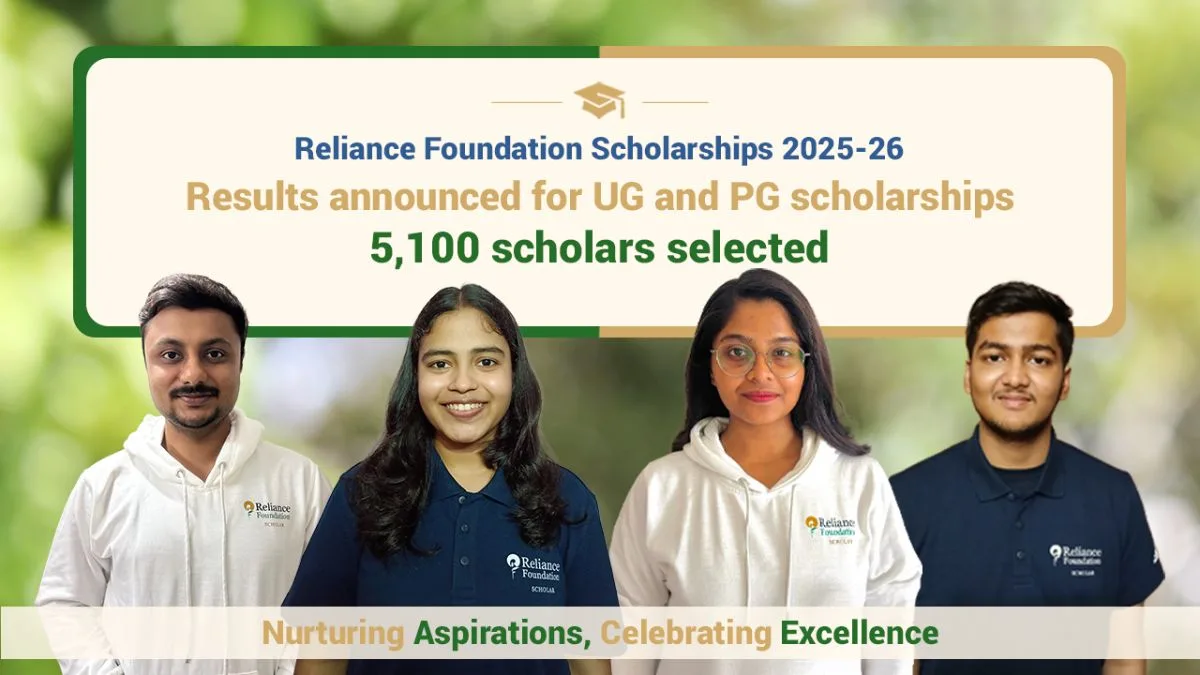
Reliance Foundation has announced the results of its prestigious Undergraduate and Postgraduate Scholarships for 2025-26. A total of 127 UG and PG students from Odisha have been selected for the Reliance Foundation Scholarships, among 5,100 scholars selected nationwide for the academic year 2025-26.

The 2025–26 cohort forms part of Reliance Foundation’s enhanced commitment announced in 2022 by Mrs Nita Ambani to award 50,000 scholarships over 10 years. Inspired by the vision of Dhirubhai Ambani, the initiative reinforces the Foundation’s long-term commitment to supporting meritorious students from diverse socio-economic backgrounds.

Selected undergraduate scholars will receive grants of up to Rs 2 lakh, while postgraduate scholars will receive up to ₹6 lakh, along with mentoring and leadership development opportunities, and access to a global alumni network. Reflecting a merit-cum-means approach, 83% of scholars come from households earning below Rs 2.5 lakh annually, with strong representation of women and students with disabilities.

The selection process for the 2025-26 cohort was highly competitive, reflecting the immense talent across India. From over 1,25,000 applications, 5,100 students have been selected, representing 15,544 institutes. The scholars selected for this academic year hail from across 28 states and 4 Union Territories, showcasing the pan-India reach of the programme. The 100 postgraduate scholars who are selected represent the pinnacle of scientific and technological talent in India, pursuing advanced degrees in ‘future-ready’ fields such as Artificial Intelligence, Computer Science, Renewable Energy, and Life Sciences. Selected scholars access a global alumni network and expert-led development programmes for future leadership.

India can become self-reliant only by embracing Swadeshi & Swabhasha mantra: Amit Shah

Union Home Minister Amit Shah on Saturday said by increasing manufacturing, doubling exports, boosting digital transactions, and building a $4 trillion economy, the Modi government has established India as a leading nation.

Statesman News Service | New Delhi |

Union Home Minister Amit Shah on Saturday said by increasing manufacturing, doubling exports, boosting digital transactions, and building a $4 trillion economy, the Modi government has established India as a leading nation.

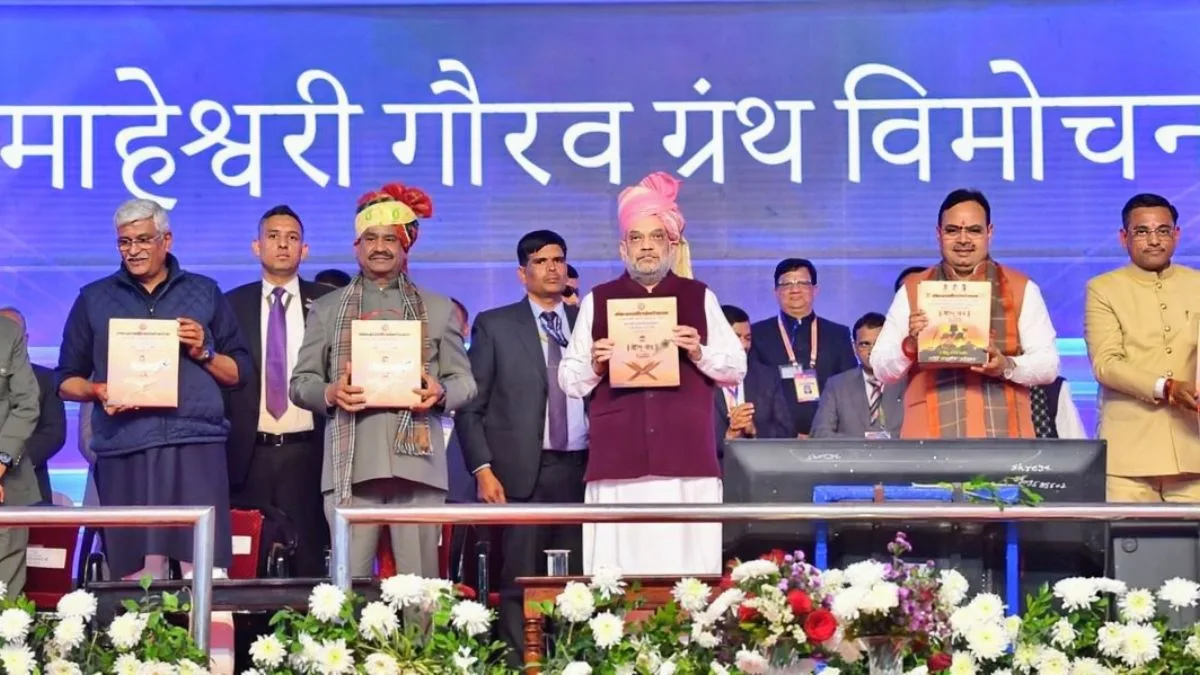
Speaking at the Maheshwari Global Convention and Expo – 2026 in Jodhpur, Rajasthan, Shah said over the past 11 years, Prime Minister Narendra Modi has worked to take India forward across many dimensions. “We have become the world’s fourth-largest economy, our exports have doubled, and we have reached a four-trillion-dollar economy. Manufacturing has grown by more than 70 per cent. Out of every 100 digital transactions worldwide, 50 take place in India,” he added.

“In the mobile phone sector, we are the world’s second-largest producer. In terms of startups, we rank third globally. We are also third in the world in pharmaceuticals manufacturing and in the automobile sector,” he said.

Shah further said that a strong platform has now been created through which the country’s young generation can compete head-on with youth across the world and move forward.

He said along with Swadeshi, Swabhasha (one’s own language) is also essential. “For progress in the world, one should speak whatever language is required and learn whatever language is necessary — there is no opposition to that. However, at home, one should speak to children only in our mother tongue,” the Union Home Minister added,

“If we converse with children in our own language and teach them their mother tongue, they will naturally develop a deep connection with their history, with Marwar, and with the glorious history of Rajasthan. This will help them advance by a generation,” he said.

Shah said the use of Indian languages is the means to keep society and culture alive. One should certainly speak foreign languages when required, but parents should always speak to their children in their mother tongue. This is very important for taking the country forward.

The Union Home Minister pointed out that to achieve the goal of a developed India by 2047, the Prime Minister has highlighted several important points. Entrepreneurs associated with manufacturing should not only continue their work but also expand it further. They should move ahead of the world and also begin producing items that are not currently manufactured in India, he said, adding, “This very vision of Atmanirbhar Bharat (self-reliant India) alone can make us the world’s largest economy.”

Recalling that when Narendra Modi became Prime Minister in 2014, India was the world’s 11th largest economy, he said, “Today, we have reached the fourth position. In the next few years, we are set to become the world’s third-largest economy.”

“If we want to reach the top position, Atmanirbhar Bharat is the only option,” he stated.

The second important formula for making Atmanirbhar Bharat successful, he said, is Swadeshi. As far as possible, indigenous products should be used.

“The appeal is that every trader should resolve that if a product made in our country is available, then that is what he will trade in. Swadeshi is the second crucial pillar of self-reliance,” he stressed.


UP steps up sewage treatment to curb Ganga, Yamuna pollution

Under Prime Minister Narendra Modi’s guidance and Chief Minister Yogi Adityanath’s leadership, extensive work is underway to treat wastewater and prevent river pollution. Untreated sewage from UP cities will no longer flow directly into rivers.

Statesman News Service | Lucknow |

Uttar Pradesh has taken a major step toward ensuring the cleanliness of major rivers, including the Ganga and Yamuna.

Under Prime Minister Narendra Modi’s guidance and Chief Minister Yogi Adityanath’s leadership, extensive work is underway to treat wastewater and prevent river pollution. Untreated sewage from UP cities will no longer flow directly into rivers.

Under the Namami Gange Mission Phase-2, sewerage infrastructure is being significantly strengthened.

In FY 2025-26, four major sewage infrastructure projects have commenced operations. These include two large STPs in Agra (31 MLD and 35 MLD) costing ₹842 crore, benefiting approximately 25 lakh people.

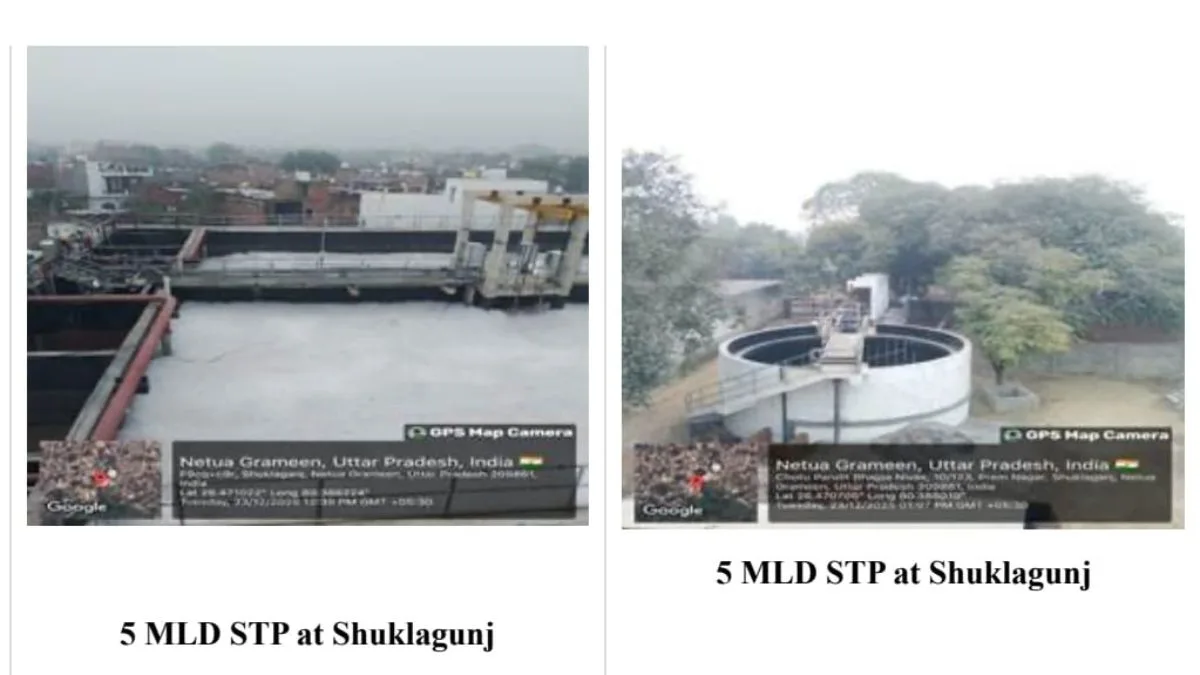
In Varanasi’s Assi-BHU area, a 55 MLD STP has started operations at ₹308 crore, serving over 18 lakh people with better sanitation and waste management. In Shuklaganj (Unnao), a 5 MLD STP costing ₹65 crore has been launched, benefiting over 3 lakh people and effectively reducing Ganga pollution.

Project Director of State Clean Ganga Mission, Joginder Singh, stated here on Saturday that 74 sewage treatment projects have been approved across the state, with 41 projects completed and work progressing rapidly on the rest.

These projects enable scientific treatment of urban wastewater.

Currently, 152 Sewage Treatment Plants (STPs) are operational in Uttar Pradesh, treating large volumes of sewage to make it environment-friendly before discharge into rivers. These plants safeguard both Ganga-Yamuna cleanliness and public health.

Under PM Narendra Modi’s guidance and CM Yogi Adityanath’s leadership, these projects primarily aim to treat wastewater flowing into rivers through drains, completely preventing river pollution and ensuring river purity.

Project Director Joginder Singh stated that unprecedented work is being done for river conservation and rejuvenation under CM Yogi Adityanath’s leadership. Through sewage treatment projects, Uttar Pradesh is rapidly progressing toward national Ganga cleanliness targets.

Sewage treatment projects are operational in Prayagraj (Naini, Phaphamau, Jhunsi), Kannauj, Narora, Garhmukteshwar, Anupshahr, Kanpur, Bithoor, Ayodhya, Mathura-Vrindavan, Chhata (Mathura), Kosi Kalan (Mathura), Varanasi, Chunar, Firozabad, Moradabad, Kasganj, Etawah, Shuklaganj-Unnao, Sultanpur, Jaunpur, Baghpat, Muzaffarnagar, Budhana, Lucknow, Ghazipur, Mirzapur, Bareilly, Kairana, Farrukhabad, Meerut, Deoband (Saharanpur), Saharanpur, Shamli, Hapur, Gorakhpur, Agra, Gulawati (Bulandshahr), Pandit Deen Dayal Nagar (Mughalsarai-Chandauli), Bhadohi, Ramnagar, Hathras, Aligarh, Dalmau (Raebareli), and Manikpur (Pratapgarh).

UP Tourism to honour rural tourism champions on National Tourism Day through State Tourism Awards

The awards invite entries under three categories: Best Tourism Village 2026, Best Rural Homestay, and Best Farm Stay. Winners will be honoured with Gold, Silver, and Bronze awards.

Statesman News Service | Lucknow |

To mark National Tourism Day 2026, the Department of Tourism, Government of Uttar Pradesh, announced that the State Tourism Awards will be presented on January 25. The award aims to recognise villages, rural homestays, and farm stays that strengthen tourism through cultural preservation, community participation, and responsible practices.

The awards invite entries under three categories: Best Tourism Village 2026, Best Rural Homestay, and Best Farm Stay. Winners will be honoured with Gold, Silver, and Bronze awards.

The initiative is designed from a people-centric perspective, encouraging villages, families, farmers, and rural hosts to step forward and showcase their work in creating authentic tourism experiences rooted in local culture, crafts, cuisine, agriculture, and nature. Importantly, all eligible stakeholders can apply, including those who are not currently registered with Uttar Pradesh Tourism.

Speaking on the initiative, Tourism and Culture Minister Jaiveer Singh said here on Saturday, “Uttar Pradesh is steadily emerging as a national model for agri and rural tourism. We have already registered over 800 rural homestays with the Tourism Department, and our effort is now to bring many more villages, families, and farm stay operators into this ecosystem. Regions such as Gorakhpur, Awad,h and Braj are witnessing strong growth in rural tourism experiences, with visitors coming not only from across India but also from countries like Sri Lanka, Spain, and Germany. Through these awards, we want to recognise those who are preserving local culture, creating livelihoods and offering meaningful hospitality.”

Principal Secretary (Tourism) Amrit Abhijat said, “Tourism is no longer about sightseeing, it is about soul seeing. Rural tourism is India’s ‘soft power’. We aim to connect travellers with rural life so their visit goes beyond a day or two at monuments and becomes a longer pause rooted in culture and simplicity.”

Under the Best Tourism Village 2026 category, villages will be assessed on tourism assets such as heritage, nature, culture, festivals, and unique experiences, along with community participation, sustainability measures, visitor facilities, and overall readiness to host tourists.

The Best Rural Homestay category focuses on authentic rural living experiences, guest comfort, transparency of operations, and actual tourist stays. The Best Farm Stay category recognises farm-based experiences that integrate agriculture, local produce, nature, and professionally managed rural hospitality.

Applications must be submitted online through category-wise registration forms. Stakeholders can also apply by scanning the QR codes shared on the official Uttar Pradesh Tourism website.

The last date for registration and submission is January 20, 2026.

New Delhi World Book Fair 2026 begins with military history theme at Bharat Mandapam; entry free for all

The Fair brings together 1,000+ publishers from over 35 countries, features 600+ events, 1,000+ speakers, and is expected to attract over 2 million visitors.

Statesman News Service | New Delhi |

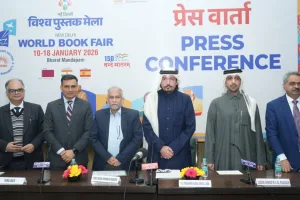
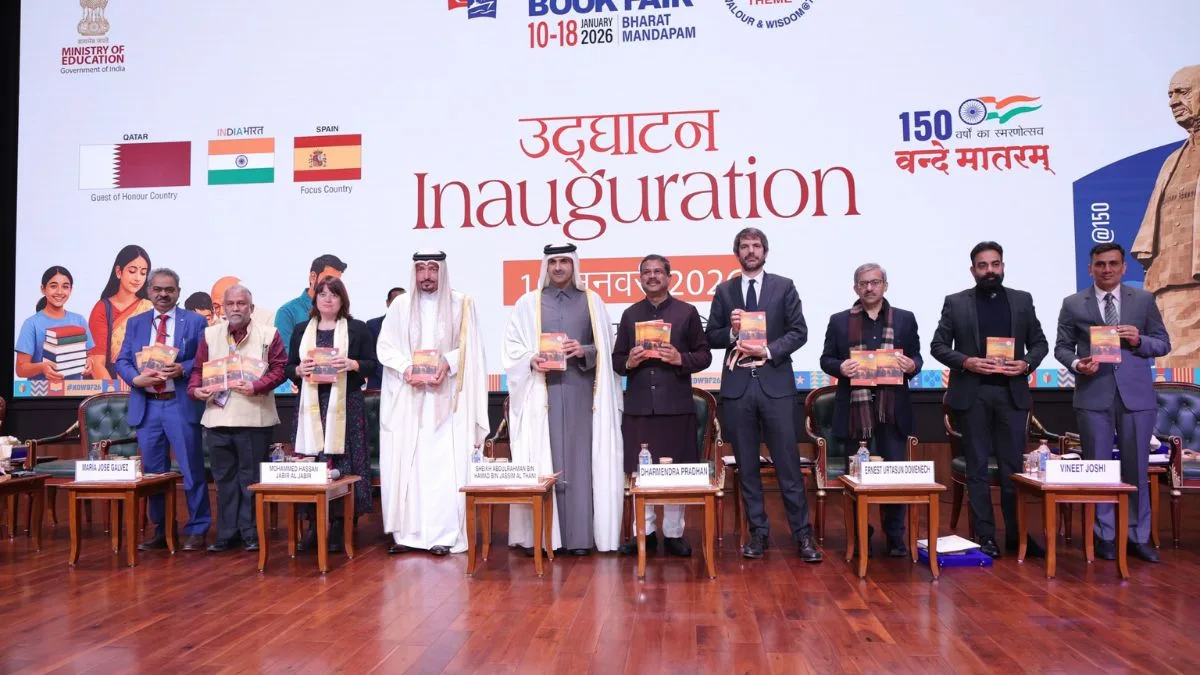
The 53rd edition of the world’s biggest B2C book fair, the New Delhi World Book Fair (NDWBF), was inaugurated today at the iconic Bharat Mandapam, New Delhi. The nine-day mega event is organised by the National Book Trust (NBT), India, under the Ministry of Education, and co-organised by the India Trade Promotion Organisation (ITPO). For the first time ever, entry to the Fair has been made free for all visitors from 10–18 January. The Fair brings together 1,000+ publishers from over 35 countries, features 600+ events, 1,000+ speakers, and is expected to attract over 2 million visitors.

The Fair was inaugurated by Shri Dharmendra Pradhan, Hon’ble Union Minister of Education, in the presence of H.E. Mohammed Hassan Jabir Al Jabir, Hon’ble Ambassador of the State of Qatar to India; H.E. Abdulrahman bin Hamad bin Jassim bin Hamad Al Thani, Hon’ble Minister of Culture, State of Qatar; Mr Ernest Urtasun Domènech, Hon’ble Minister for Culture of Spain; Prof. Milind Sudhakar Marathe, Chairman, NBT-India; Ms María José Gálvez, Director General of Books, Comics and Reading, Ministry of Culture, Spain; Shri Vineet Joshi, IAS, Secretary (Higher Education), Ministry of Education; Shri Neeraj Kharwal, IAS, Managing Director, ITPO; Shri Premjit Lal, ITS, Executive Director, ITPO; and Shri Yuvraj Malik, Director, NBT & CEO, NDWBF, among other dignitaries.

Unsung Freedom Fighters Remembered at NDWBF 2026

A key highlight of the day was the launch of the translated editions of “The Saga of Kudopali: The Unsung Story of 1857” in nine Indian languages including Bangla, Punjabi, Assamiya, Malayalam, Urdu, Marathi, Tamil, Kannada, Telugu and Spanish. The book brings to light a lesser-known chapter of India’s First War of Independence by chronicling the resistance that emerged from Kudopali in Sambalpur, Odisha, under the leadership of Veer Surendra Sai and local freedom fighters.

The uprising at Kudopali in Sambalpur was not a fleeting act of resistance but a guerilla rebellion that spanned generations, sustained by collective memory, local leadership and an enduring spirit of defiance. Even in the face of repression, arrests and exile, it became the longest armed rebellion against colonial rule from 1827 to 1862. A rare example of intergenerational resistance, The Saga of Kudopali, highlights the forgotten heroes of Indian Independence struggle whose stories were lost to time. This effort to revive and celebrate unsung heroes is in line with Hon’ble Prime Minister’s vision of recognizing and honoring India’s lesser-known freedom fighters and their enduring legacy.

Speaking on the occasion the Hon’ble Education Minister said that NDWBF 2026, the world’s largest B2C book fair, is not only a confluence of ideas but also a grand celebration of India’s robust and vibrant reading culture. He further said that the theme of the Book Fair, “Indian Military History: Valour and Wisdom @ 75,” and the participation of countries such as Qatar and Spain, has further enhanced the significance of the cultural and literary event.

Addressing the gathering, the Hon’ble Education Minister said that the book “The Saga of Kudopali: The Untold Story of 1857,” which brings to light lesser-known chapters of the freedom struggle on the land of Sambalpur, have been released in 9 Indian languages, including Bengali, Assamiya, Punjabi, Marathi, Malayalam and Urdu, as well as one international language, Spanish. He noted that the book had earlier been released in Hindi, English and Odia and is now available in 13 languages. He described the book as a commendable effort to honour the legacy of Veer Surendra Sai ji and the sacrifices of the martyrs of Kudopali. The initiative, he added, also strengthens India’s tradition of multilingualism and global dialogue.

Mr Ernest Urtasun Domènech, Hon’ble Minister for Culture of Spain, highlighted Spain’s participation during the Spain–India Dual Year 2026, noting that the Fair offers a valuable opportunity to promote Spanish writers in India, where interest in Spanish language and literature continues to grow. He recalled the historic literary connection between Juan Ramón Jiménez and Rabindranath Tagore.

H.E. Abdulrahman bin Hamad bin Jassim bin Hamad Al Thani, Hon’ble Minister of Culture, State of Qatar, said Qatar’s participation reflects the depth of bilateral relations between the two countries and reaffirmed the role of culture and knowledge as foundations for people-to-people ties and nation-building.

Delivering the welcome address, Prof. Milind Sudhakar Marathe, Chairman, NBT-India, said the Fair seeks to address three key questions – why to read, what to read and how to read – and aims to nurture a lasting reading culture, especially among the youth. He highlighted how the national mottos of India, Qatar and Spain reflect shared values of truth, progress and collective participation, all of which find expression at the Fair.

Shri Yuvraj Malik, Director, NBT, India, said, “Publishing for us is not an act of profit but an act of purpose. Every book released at the Fair contributes to nation-building. I express my gratitude to the Hon’ble Education Minister for his vision and leadership, and wish everyone nine days of enriching literary celebration filled with valour and wisdom.”

The Hon’ble Minister of Education, along with the Hon’ble Ministers of Culture from Qatar and Spain, also inaugurated the Theme Pavilion ‘Indian Military History: Valour & Wisdom @75’ (Hall 5) and two special exhibitions commemorating 150 years of Sardar Vallabhbhai Patel and ‘Vande Mataram’. Dignitaries also visited the International Pavilion, Guest of Honour Pavilion (Qatar), Focus Country Pavilion (Spain) and the Children’s Pavilion.

The Theme Pavilion is a 1,000 sq. metre immersive, 360-degree experience showcasing 500+ books, curated exhibits, documentaries and installations, including replicas of the Arjun Tank, INS Vikrant and LCA Tejas, tributes to 21 Param Vir Chakra awardees, and sessions on key military operations from Budgaon 1947 to Operation Sindoor, supported by 100+ theme-based events.

Apart from Qatar (Guest of Honour) and Spain (Focus Country), the Fair features participation from publishers and cultural institutions across 35+ countries, including Russia, Japan, France, Poland, Iran, Kazakhstan, Hungary and Chile, and marks the first-time participation of 10 international book fair directors.

The Children’s Pavilion – Kidz Express offers engaging activities for young readers, while the Rashtriya e-Pustakalaya provides access to 6,000+ free e-books, promoting inclusive reading across languages and regions.

Readers, families, students, educators and book lovers are invited to visit the New Delhi World Book Fair 2026 at Bharat Mandapam from 10–18 January, experience free entry, explore global literature, engage with authors and ideas, and be part of India’s largest celebration of reading and knowledge.

Hall Highlights
Hall 2: Indian Languages Publishers & Lekhak Manch
Hall 3: Indian Language Publishers & New Delhi Rights Table
Hall 4: Guest of Honour Country, Focus Country & International Pavilion
Hall 5: Theme Pavilion, Authors’ Corner & General/Trade Publishers
Hall 6: Children’s Pavilion & Educational, Humanities and Spiritual Books
Amphitheatre-I: Cultural Programmes


Magh Mela bathing rituals to be conducted smoothly: CM Yogi

Addressing the media during his visit to Prayagraj on Saturday, the Chief Minister said that administrative alertness, extensive use of technology, and close inter-departmental coordination are ensuring convenience and safety for devotees.

Statesman News Service | Prayagraj |

Uttar Pradesh Chief Minister Yogi Adityanath, while reviewing the preparations for the Magh Mela, said that all major bathing rituals will be conducted smoothly, maintaining purity, effective communication, and strong coordination.

Addressing the media during his visit to Prayagraj on Saturday, the Chief Minister said that administrative alertness, extensive use of technology, and close inter-departmental coordination are ensuring convenience and safety for devotees.

He expressed happiness at getting the opportunity to take a holy dip and offer prayers at the sacred Triveni Sangam during the Magh month.

Recalling last year, the Chief Minister said that preparations for the Maha Kumbh were underway at a similar time, and he had also visited Prayagraj on January 10 in that context. He added that he is personally monitoring arrangements to ensure the smooth conduct of all events during this period.

CM Yogi Adityanath stated that while an inflow of 10 to 15 lakh devotees was expected on Paush Purnima, more than 31 lakh devotees took a holy dip at the Sangam. He noted that Kalpvasis are deeply engaged in spiritual practices during their month-long Kalpvas.
The Chief Minister also said that he had the opportunity to participate in the programme marking the 726th birth anniversary of Jagadguru Ramanandacharya Ji. Describing Prayagraj as a sacred land of sages and seers, he said the city has been associated with great saints such as Maharshi Bharadwaj and Yajnavalkya.

Highlighting the upcoming bathing festivals, CM Yogi said that key occasions include Makar Sankranti on January 14–15, Mauni Amavasya on January 18, Vasant Panchami on January 23, followed by Magh Purnima and Mahashivratri on February 15. He said comprehensive preparations have been made by all departments to ensure the successful conduct of these events.

He informed that the length of the ghats has been increased this year, with special emphasis on cleanliness. Adequate arrangements have also been made to protect devotees from the severe cold wave. For effective crowd management, a public address system has been deployed across the Mela area. In addition, the ‘Mela Seva App’ has been launched to provide saints, Kalpvasis, and devotees with quick access to essential services and grievance redressal.

Manjhi backs Tyagi’s Bharat Ratna demand for Nitish Kumar as JDU distances itself

On Saturday, Manjhi posted a statement on social media platform ‘X’, calling Nitish Kumar deserving of the Bharat Ratna.

Imran Mojib | Patna |

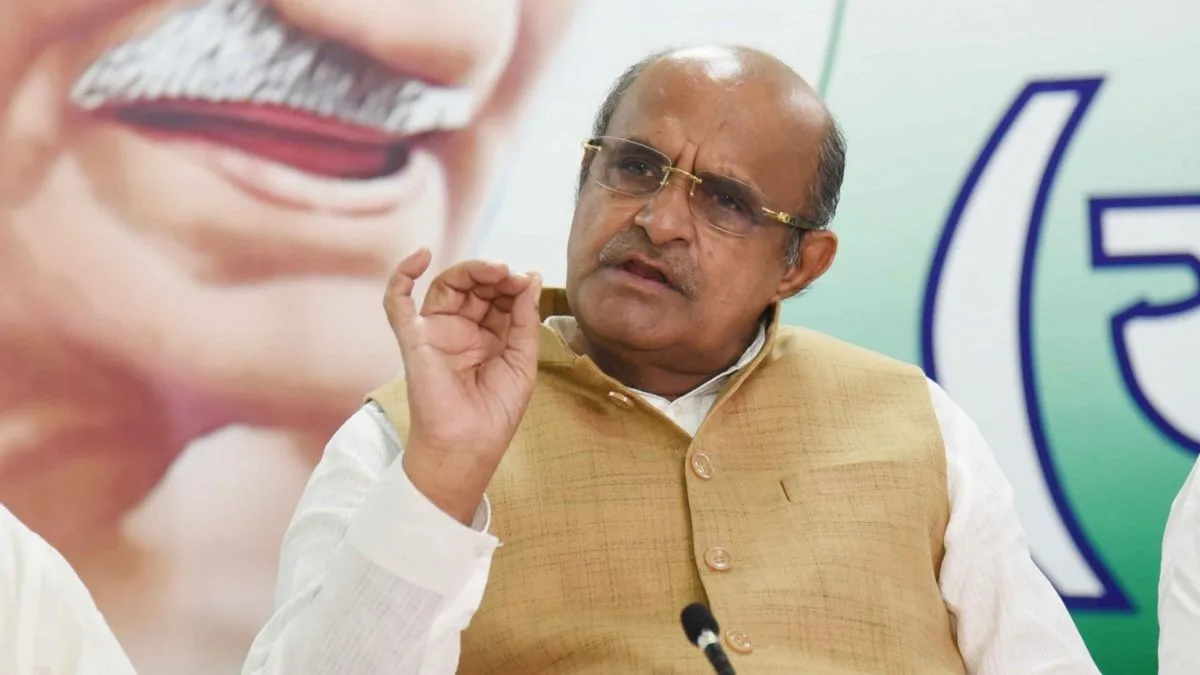
Union Minister Jitan Ram Manjhi has supported the demand of JD(U) leader KC Tyagi to confer India’s highest civilian award, Bharat Ratna, on Bihar Chief Minister Nitish Kumar. He claimed that Prime Minister Narendra Modi will surprise everyone with his decision.

On Saturday, Manjhi posted a statement on social media platform ‘X’, calling Nitish Kumar deserving of the Bharat Ratna.

He wrote, “Bharat Ratna Nitish Kumar ji … how good would it sound to hear these words! We have full confidence that the Honourable Prime Minister Narendra Modi, who never fails to surprise us with his decisions, will once again surprise everyone by deciding to confer the Bharat Ratna on Bihar’s Honourable Chief Minister Nitish Kumar ji. Bharat Ratna Nitish Kumar…”

KC Tyagi, a senior leader of JD(U) and former Member of Parliament, wrote a letter to Prime Minister Narendra Modi on Thursday, demanding that Bihar’s Chief Minister Nitish Kumar be awarded the highest civilian honour, Bharat Ratna.

In the letter, Tyagi recalled the historic day of 30 March, 2024, when the central government awarded Bharat Ratna to former Prime Minister Chaudhary Charan Singh and former Bihar Chief Minister Karpoori Thakur.

In his letter, KC Tyagi wrote that just as Chaudhary Charan Singh and Karpoori Thakur made significant efforts for farmers, the oppressed, and marginalised people, Nitish Kumar is continuing those ideals. He referred to Nitish Kumar as “the remaining precious gem of the socialist movement” and stated that he is fully deserving of the Bharat Ratna.

However, JD(U) distanced itself from his statement and called it his personal opinion. JD(U)’s national spokesperson Rajeev Ranjan sharply stated that KC Tyagi’s statement was his personal opinion and had nothing to do with the party. He even went as far as to say that the party leaders and workers are unaware whether KC Tyagi is still with JD(U) or not.

This development has stirred political activity in Bihar.

In the letter demanding the Bharat Ratna, KC Tyagi referred to himself as a political advisor to the JD(U), while Rajeev Ranjan has stated that party leaders and workers were unaware of whether Tyagi was still associated with the JD(U). This has created confusion within the party, especially since Tyagi’s expulsion or resignation from the JD(U) was never made public.

Also, despite JD(U) distancing itself from the demand, the support coming from coalition partners has added a political angle to the issue. Now, it remains to be seen how this controversy unfolds in the coming days.