Logo

CISF Coastal Cyclothon accorded warm welcome in Odisha village

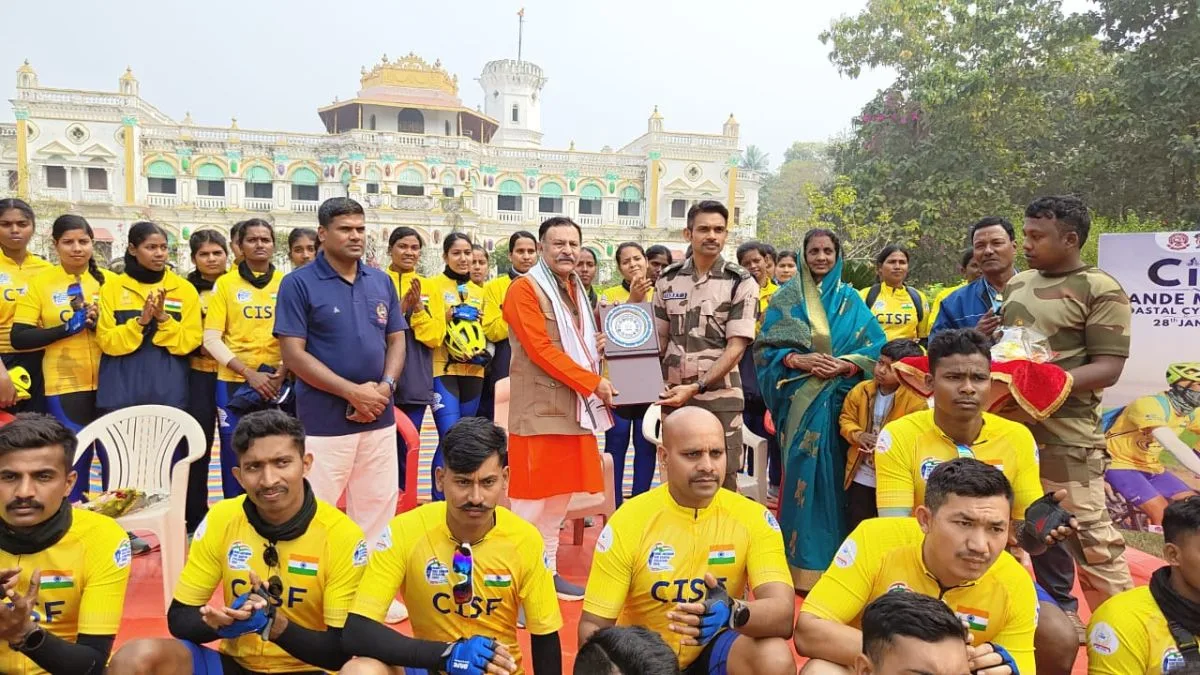
The Cyclothon was conducted under the stewardship of CISF Commandant Sanat Patel, Assistant Commandant Akash Jayswal while several dignitaries including Shivendra Narayan Bhanjadeo, the scion of the erstwhile Rajkanika royal family extended warm support to cyclists.

Statesman News Service | BHUBANESWAR |

Residents of Rajkanika in Odisha’s Kendrapara district accorded rousing welcome to the Central Security Force Vande Mataram Coastal Cyclothon-2026, a flagship national public outreach and awareness initiative, as the CISF personnel took out a cycle rally and passed through the main thoroughfares.

The Cyclothon was conducted under the stewardship of CISF Commandant Sanat Patel, Assistant Commandant Akash Jayswal while several dignitaries including Shivendra Narayan Bhanjadeo, the scion of the erstwhile Rajkanika royal family extended warm support to cyclists.

The event is being organised to commemorate 150 years of “Vande Mataram”, the iconic song that inspired India’s freedom struggle and continues to guide generations in the spirit of national service. The objective of the rally was to sensitize the people regarding the coastal security and instill patriotic fervor.

The entire region wore a festive look as locals lining up on both sides of the main thoroughfares patted the CISF initiative.

Corruption in the name of schemes under BJP governments: Avinash Pandey

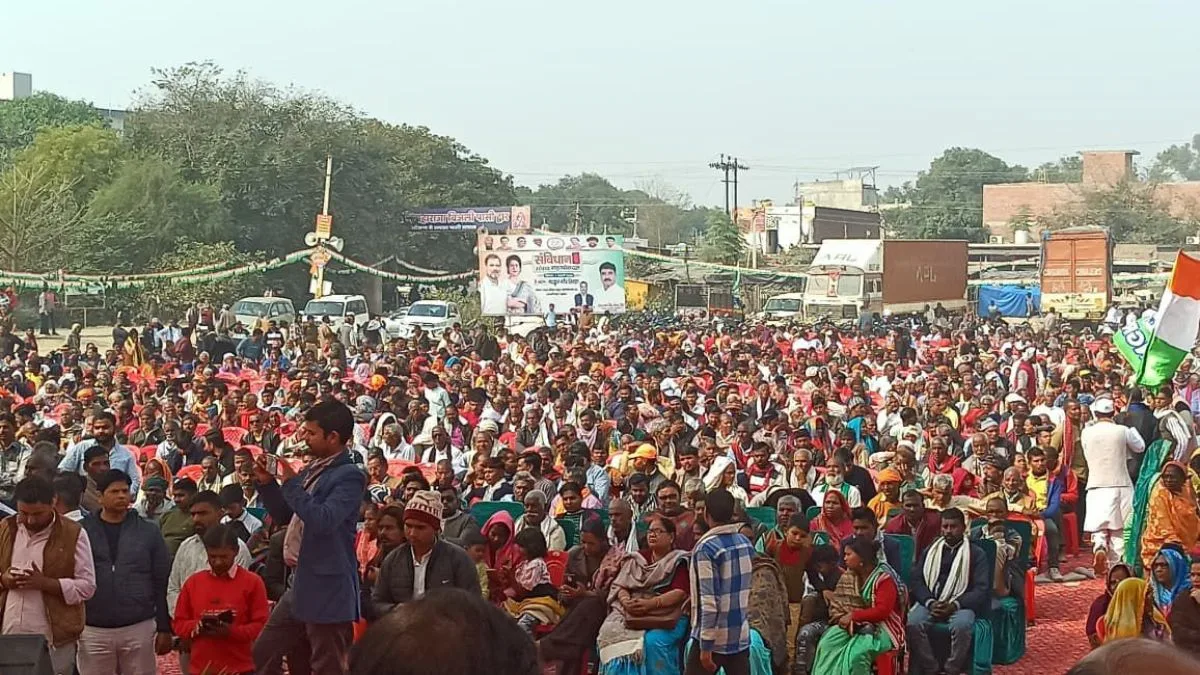
Pandey was speaking in the “Samvidhan Samvad Mahapanchayat” in Natkur village, under the Sarojini Nagar assembly constituency of Lucknow, on Sunday.

Statesman News Service | Lucknow |

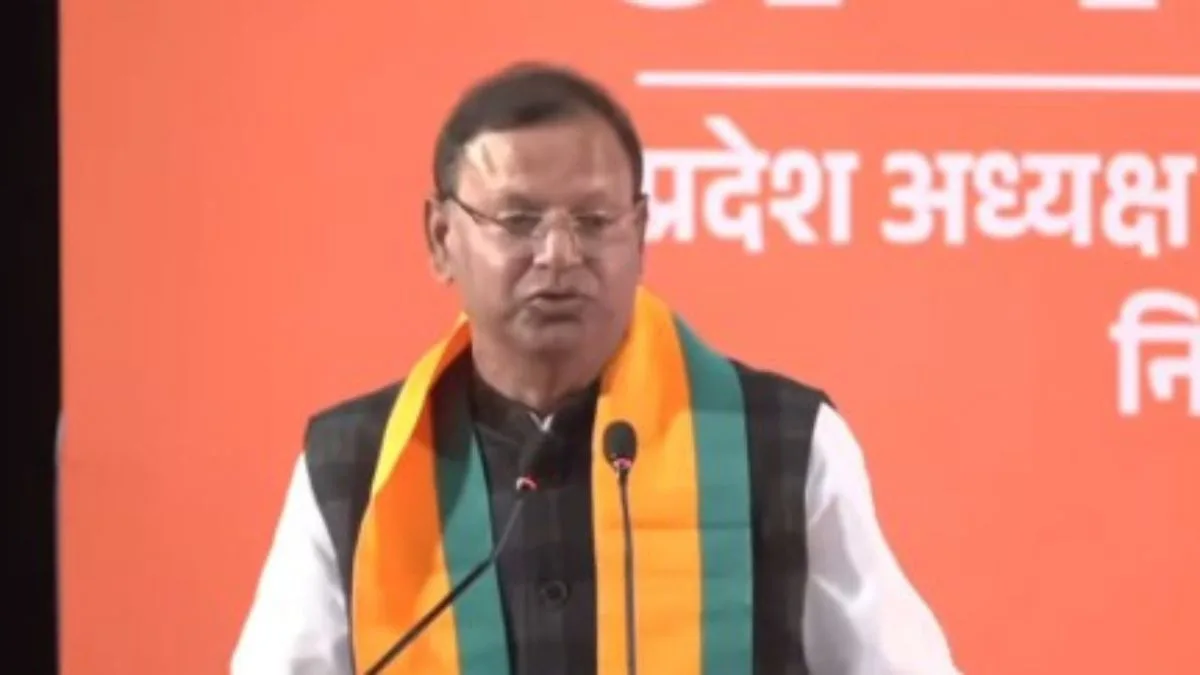
Congress national general secretary and Uttar Pradesh in-charge Avinash Pandey, alleged that corruption is rampant in the name of schemes under the BJP governments, and that crony capitalism is being promoted while the interests of the common people are being ignored.

Pandey was speaking in the “Samvidhan Samvad Mahapanchayat” in Natkur village, under the Sarojini Nagar assembly constituency of Lucknow, on Sunday.

Raising the issue of misuse of voting rights, he said that attempts are being made to weaken democracy by stealing votes in the name of the electoral roll, which the Congress will not allow to succeed. He also expressed concern over the increasing crimes against women.

Presiding over the program, Congress state president Ajay Rai said that by trying to dismantle the Mahatma Gandhi National Rural Employment Guarantee Act, the BJP had exposed its anti-laborer mindset and weakened the rural economy. He alleged that local lands are being given to capitalists at cheap rates, such as the airport to the Adani Group and the Scooter India land to the Hinduja Group, but local people are not getting jobs.

Rai said that during the Congress rule, industries were established, employment was generated, and policies were made in the interest of farmers. He appealed to the workers to support grassroots leaders and not to trust empty promises. The organizer, District Congress President Rudra Daman Singh ‘Bablu’, thanked the large number of workers and citizens present.

Several senior leaders, including MLA Virendra Chaudhary, and a large number of Congress workers and local citizens were present at the Mahapanchayat.

BUDGET 2026: Focus on skilling youth in healthcare and tourism

The Finance Minister proposed to set up a National Institute of Hospitality by upgrading the existing National Council for Hotel Management and Catering Technology.

RITA SACHDEVA | New Delhi |

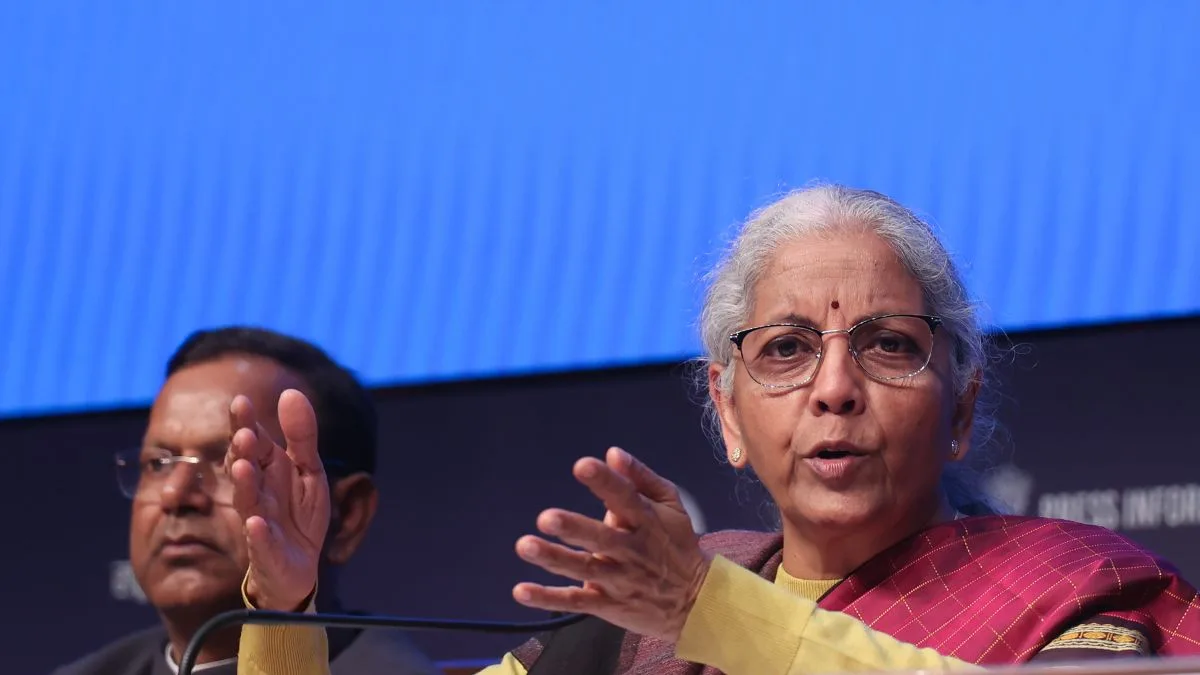
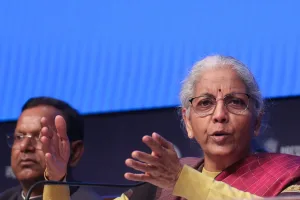
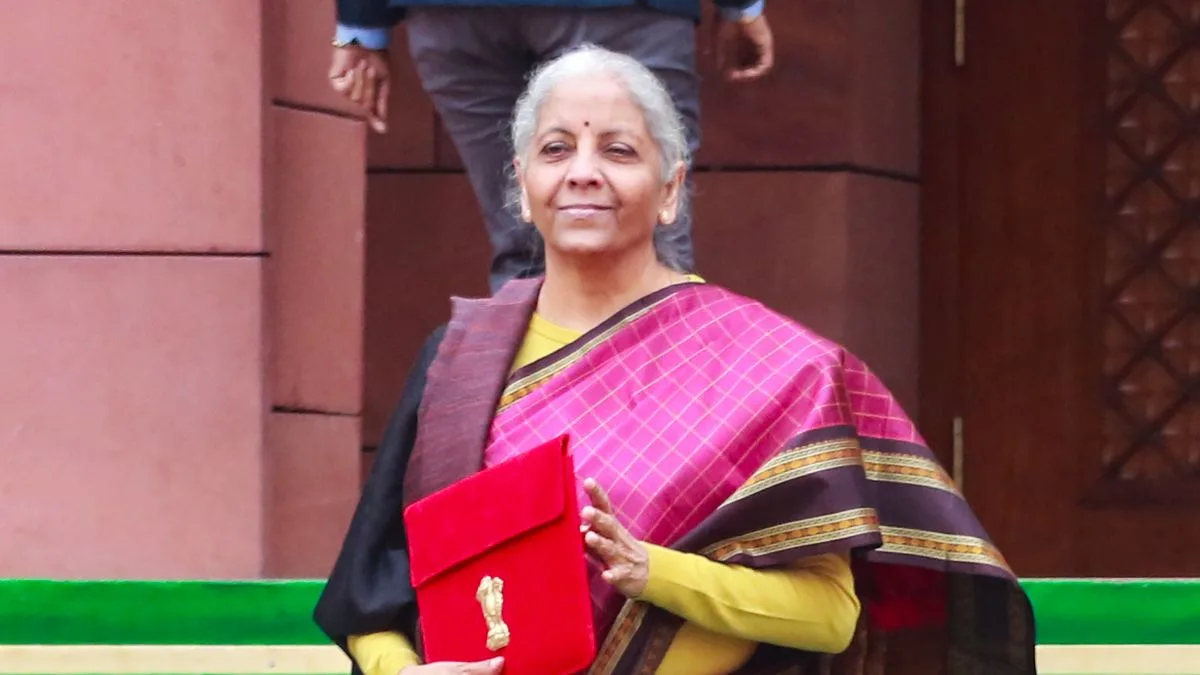
In a series of announcements aimed at opening up job opportunities for millions of youth in the country, the Budget 2026, presented by Finance Minister Nirmala Sitharaman on Sunday, laid out a roadmap across various sectors to create a pool of professionals in various sectors, including healthcare, hospitality, and tourism.

The Finance Minister proposed to set up a National Institute of Hospitality by upgrading the existing National Council for Hotel Management and Catering Technology. It will function as a bridge between academia, industry, and the government. She further proposed a pilot scheme for upskilling 10,000 guides in 20 tourist sites through a standardised, high-quality 12-week training course in hybrid mode, in collaboration with an Indian Institute of Management.

Recognising the growing healthcare demands arising from an ageing population, the rising burden of non-communicable diseases, and increasing global demand for skilled healthcare professionals, the government has proposed a phased plan outlay of Rs 980 crore over three years for the expansion and strengthening of allied and healthcare professionals’ education.

Under this initiative, Allied Health Professional (AHP) Institutes in 10 key disciplines will be set up and upgraded to create nearly one lakh skilled professionals over the next five years through public and private sector participation.

Additionally, a focused programme will train 1.5 lakh geriatric caregivers, addressing the rapidly rising long-term care needs of India’s elderly population. These measures will enhance diagnostics, preventive, rehabilitative, and public health services while positioning India as a global hub for skilled allied healthcare professionals.

India’s Animation, Visual Effects, Gaming and Comics (AVGC) sector is a growing industry, projected to require 2 million professionals by 2030. The Finance Minister proposed to support the Indian Institute of Creative Technologies, Mumbai, in setting up AVGC Content Creator Labs in 15,000 secondary schools and 500 colleges, giving a boost to the upskilling of the youth of the country.

The Union Budget also proposed to set up a High-Powered ‘Education to Employment and Enterprise’ Standing Committee to recommend measures that focus on the Services Sector as a core driver of Viksit Bharat. This will make India a global leader in services, with a 10 per cent global share by 2047. The Committee will prioritise areas to optimise the potential for growth, employment and exports. They will also assess the impact of emerging technologies, including AI, on jobs and skill requirements and propose measures thereof.

To promote India as a hub for medical tourism services, the Finance Minister proposed a scheme to support states in establishing five regional medical hubs in partnership with the private sector. These Hubs will serve as integrated healthcare complexes that combine medical, educational and research facilities. They will have AYUSH Centres, Medical Value Tourism Facilitation Centres and infrastructure for diagnostics, post-care and rehabilitation. These Hubs will provide diverse job opportunities for health professionals, including doctors and AHPs.

To strengthen mental healthcare services for the youth, the Budget provides for the upgradation of premier mental health institutions at Ranchi and Tezpur, along with the establishment of a NIMHANS in North India, significantly expanding access to advanced mental health care, training, and research facilities. The government has proposed the establishment of Emergency and Trauma Care Centres in every district hospital, ensuring affordable and round-the-clock (24×7) access to critical emergency medical services for citizens across the country.

The Finance Minister said that to fulfill aspirations and build capacity, close to 25 crore individuals have come out of multidimensional poverty through a decade of the government’s sustained and reform-oriented efforts.

Presenting the Yuva Shakti-driven Budget, which emphasises the Government’s ‘Sankalp’ to focus on the poor and the underprivileged, the Finance Minister said India will continue to take confident steps towards Viksit Bharat, balancing ambition with inclusion.

Attempt to change the concept of job seekers, youth to become ‘job givers’: Varanasi

The budget proposals for 2026-27 received mixed reactions from traders, lawyers, bank officials, and others in the holy city of Kashi (Varanasi), parliamentary constituency of Prime Minister Narendra Modi.

Statesman News Service | Varanasi |

The budget proposals for 2026-27 received mixed reactions from traders, lawyers, bank officials, and others in the holy city of Kashi (Varanasi), parliamentary constituency of Prime Minister Narendra Modi.

Rajesh Kumar Sinha, Assistant General Manager of Punjab National Bank, said that the budget is quite balanced. He said, “This is a positive budget that will empower India and strengthen the goal of a self-reliant India. It has a special focus on infrastructure development. An attempt has been made to change the concept of job seekers. Now the youth of the country should become job creators, not just job seekers. A fund of Rs 10,000 crore has been allocated for the MSME sector. A rail corridor and a shipyard have been announced for Kashi, where ships will be repaired. This will lead to the development of new industries.”

Chartered Accountant Mudit Agarwal said that not much has been done for the manufacturing sector, while the service sector has received some relief. He called the plan to train 10,000 guides effective and said that it would create new jobs. There has been no change in the income tax slabs.

Advocate Shashank Tripathi said that India is an agrarian country. A new definition will be established by linking small industries with agriculture. Significant provisions have been made in the budget to promote tourism. This will realise the vision of ‘One India, Great India’.

Haji Shahid Qureshi, President of the Minority Business Association, said that there were high expectations from the weavers, but Kashi did not receive much except for the rail corridor. The budget was average for small traders.

Jake Verma, Manager of Punjab National Bank, said that the focus has been on small-scale industries. There will be a large investment in railway-related projects, which will open new avenues for employment.

Union Budget: How money comes, how money goes?

As India pushes towards its Viksit Bharat goal amid global uncertainty, how each rupee comes in and where it finally goes will shape the country’s economic direction in the year ahead.

Statesman News Service | New Delhi |

From the taxes that Indians pay and the borrowings the government raises, to the money spent on states, defence, welfare, and interest payments, every paisa reveals where the government’s priorities lie.

As India pushes towards its Viksit Bharat goal amid global uncertainty, how each rupee comes in and where it finally goes will shape the country’s economic direction in the year ahead.

The government takes one rupee from citizens, pools it with millions of others, and deploys it with intent into highways, railways, defence equipment, classrooms, hospitals, and digital infrastructure.

That rupee is split between paying interest to maintain fiscal credibility, funding welfare to protect the vulnerable, and investing in capital expenditure to fuel future growth and jobs.

The Union Budget is essentially the script that shows where this rupee goes and what return the government expects from it.

In Budget 2025, for every rupee earned by the government, 66 paise was estimated to come from direct and indirect taxes, the remaining portion came from borrowings, non-tax revenue, and capital receipts.

Further, 39 paise came from direct taxes, including 22 paise from personal income tax, and 17 paise from corporate tax.

Among indirect taxes, GST contributed 18 paise, making it the largest source; excise duty added 5 paise, customs duty contributed 4 paise; borrowings and other liabilities provided 24 paise, non-tax revenue, including disinvestment proceeds, added 9 paise, and non-debt capital receipts made up 1 paisa.

In Budget 2026, the government expects every rupee to be sourced as follows. 24 paise from borrowings and other liabilities, 21 paise from income tax, 18 paise from corporate tax, 15 paise from GST and other taxes, 10 paise from non-tax revenue, 6 paise from Union excise duties, 4 paise from customs duties, and 2 paise from net debt capital receipts.

While taxes remain critical, borrowing continues to play a central role in financing government expenditure as India prioritises growth and infrastructure investment.

On the expenditure side, Budget 2025 showed a strong emphasis on transfers, interest payments, and development schemes.

Out of every rupee spent, 22 paise went to states as their share of taxes and duties, 20 paise for interest payments, 17 paise for central sector schemes, 8 paise for centrally sponsored schemes, 11 paise for defence, 7 paise each for Finance Commission transfers and other expenditures, 6 paise for major subsidies, and 2 paise for civil pensions.

A similar pattern existed in earlier budgets as well, underlining the structural nature of these commitments, especially interest payments and transfers to states, which together consume more than 40 paise of every rupee spent.

Budgets often overwhelm with trillion-rupee figures, but the real story lies in the smallest unit.

Following the journey of one rupee strips away complexity and reveals the government’s choices on taxation, borrowing, welfare, and growth.

As India navigates global uncertainty while chasing big economic ambitions, Budget 2026 will be judged not just by how much money is raised or spent but by how decisively and efficiently that one rupee is put to work.


“No objection to Parth Pawar”: Maharashtra CM a day after Sunetra Pawar’s oath

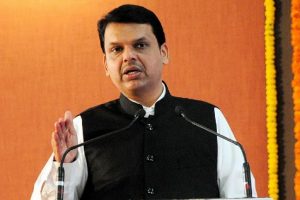
Fadnavis also clarified that there is no opposition to Parth Pawar. He also said that if there were any merger talks, Ajit Pawar would have informed him.

ANI | Mumbai |

Just a day after NCP leader Sunetra Pawar took oath as Maharashtra’s Deputy Chief Minister, Chief Minister Devendra Fadnavis on Sunday said that decisions regarding the Nationalist Congress Party (NCP) are made internally.

Fadnavis also clarified that there is no opposition to Parth Pawar. He also said that if there were any merger talks, Ajit Pawar would have informed him.

Addressing a press conference in Mumbai, CM Fadnavis said, “NCP’s decisions are taken by the party itself. We have no objection to Parth Pawar. If there were any merger talks, Ajit Dada would have told me.”

A day earlier, NCP Sunetra Pawar, leader of the Nationalist Congress Party and widow of the late Maharashtra Deputy Chief Minister Ajit Pawar, took oath as the state’s Deputy Chief Minister at Lok Bhavan in Mumbai.

She stepped into fill the post that became vacant following the demise of Ajit Pawar in a plane crash on January 28 in Baramati. With this, Sunetra Pawar becomes the first woman Deputy Chief Minsiter of Maharashtra.

Maharashtra Governor Acharya Devvrat administered the oath of office to Sunetra Pawar in the presence of Maharashtra Chief Minister Devendra Fadnavis and Deputy CM Eknath Shinde.

Maharashtra Minister Chandrashekhar Bawankule, Maharashtra State President of NCP, Sunil Tatkare and NCP Working President Praful Patel, and Maharashtra Minister Chhagan Bhujbal were also present at the occasion.

She was also elected leader of the NCP Legislative Party. NCP leaders then met with Maharashtra CM Devendra Fadnavis to finalise Sunetra Pawar’s appointment as Deputy CM.

She is known for her work in sustainable development, environmental conservation, and rural empowerment.

A Member of Parliament in the Rajya Sabha, she has emerged as a driving force behind several initiatives that promote inclusive and sustainable progress.

In 2010, she founded the Environmental Forum of India (EFOI), a non-governmental organisation dedicated to raising environmental awareness and fostering eco-conscious communities. She has led extensive grassroots campaigns focusing on biodiversity conservation, protection of endangered species, water resource management, and drought mitigation.

‘Directionless’ disappointed all sections of society: Maha Congress president

“This budget is not meant to satisfy any social class, but is only limited to some big figures and claims. Figures have been manipulated in this budget and it is completely directionless,” Sapkal said.

Statesman News Service | Mumbai |

Maharashtra State Congress President Harshwardhan Sapkal has dismissed the Union Budget 2026-27, presented by the Narendra Modi government on Sunday, as “no different than its previous budget”.

“This budget is not meant to satisfy any social class, but is only limited to some big figures and claims. Figures have been manipulated in this budget and it is completely directionless,” Sapkal said.

“Actually, a very good strategy is needed for large-scale employment generation in the country, but there is no clear direction for employment generation in this budget. No concrete provision has been made in the interests of farmers. No relief has been given to the employed class and the middle class who pay income tax. Even achieving declared growth rate targets seems difficult and everything seems limited to only announcements,” Sapkal said.

“After demonetisation and GST, small and medium enterprises of the country got completely weakened. This sector has not received any solid support from this budget either. Most of the employment generation in the country is from this sector, but the government has completely ignored this reality. Unemployment has increased in a big way during the tenure of the Modi government. According to the latest data, one out of two graduates is unemployed. Unemployment has gone up to more than 50%. The Modi government has completely failed in terms of investment and employment generation,” Sapkal said.

“India is an agricultural country, but this budget has disappointed farmers. The target of doubling farmers’ income has not been met since the last 12 years. On the contrary, the input cost of farming has doubled, agricultural produce is not getting fair prices, no concrete decision has been taken on the minimum support price and farmer suicides are on the rise. There is no concrete provision in the budget to mitigate any of these serious issues. The government should understand that farmers’ problems cannot be solved by simply paying them Rs 6,000 annually,” Sapkal said.

“The government has claimed that 25 crore people have been lifted out of poverty in 10 years, but the reality is that 80 crore people are still being given a free ration of 5 kg of grain. So how logical is the claim that 25 crore people have been lifted out of poverty? It is purely a statistical jugglery. The price of gold has reached Rs lakh per 10 grams and the price of silver has reached Rs 4 lakh per kg, but the government has no plan to control these prices. No concrete policy to control inflation is visible,” Sapkal said.

“The Central government is under a heavy debt burden. Schemes are being run by taking loans, but there is no improvement in the standard of living of our people. Income and wealth inequality in India today has reached historic heights. About 58% of the country’s total income goes to the top 10%, while only 15% of income reaches the bottom 50%. About 40% of the country’s total wealth is concentrated in the hands of merely the top 1% of people. This is not merely a statistic, but a situation which shows a deep imbalance in the economic structure of our country. Yet, there is not even a single word about this inequality in this budget or any measure to remove this inequality,” Sapkal said.


‘Disappointing, directionless, opaque, anti-poor, anti-farmer,’ Opposition tears into Budget

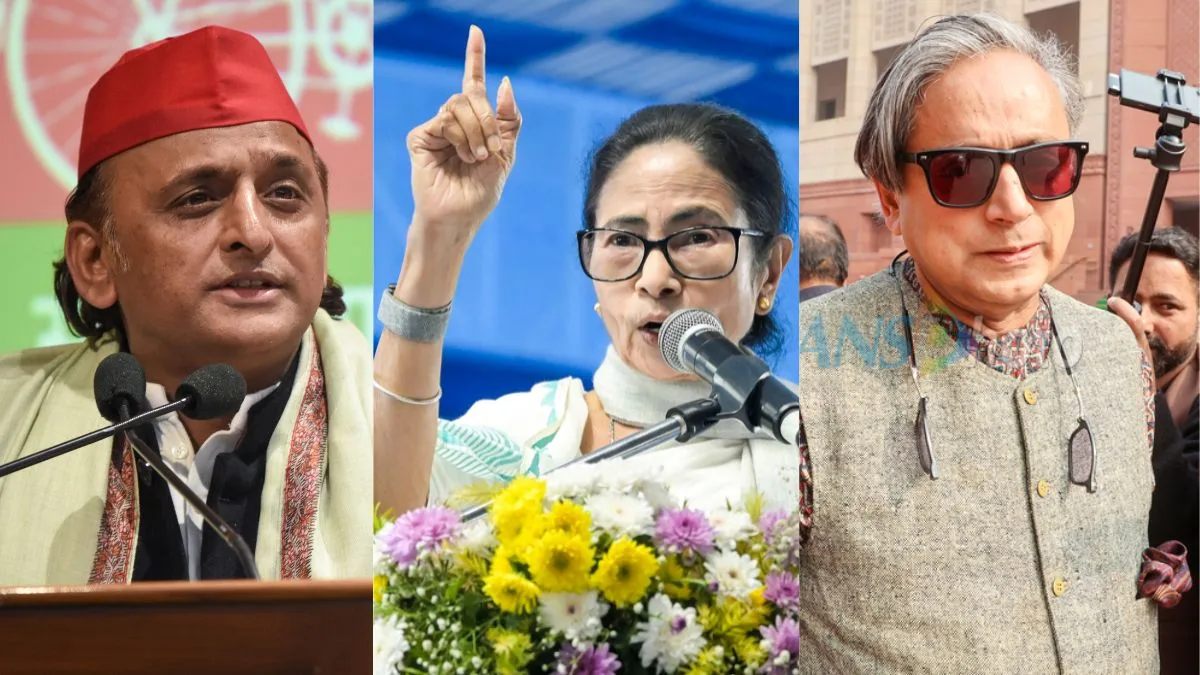
West Bengal Chief Minister Mamata Banerjee went further, using a nursery rhyme to label it a “Humpty Dumpty budget.” “It is totally directionless, visionless, mission-less, actionless. It is a ‘Humpty-Dumpty Budget’, just jugglery of words, it is anti-women, anti-farmer, anti-education. The Centre wants to destroy the economic structure of the country,” Banerjee said.

Statesman News Service | New Delhi |

While Prime Minister Narendra Modi pitched the Union Budget 2026-27 as a reform-driven blueprint offering a clear roadmap for a developed India by 2047, opposition parties described it as “disappointing, directionless, lacklustre, opaque, anti-poor, anti-farmer.”

West Bengal Chief Minister Mamata Banerjee went further, using a nursery rhyme to label it a “Humpty Dumpty budget.” “It is totally directionless, visionless, mission-less, actionless. It is a ‘Humpty-Dumpty Budget’, just jugglery of words, it is anti-women, anti-farmer, anti-education. The Centre wants to destroy the economic structure of the country,” Banerjee said.

Calling the Budget “historic” and future-oriented, PM Modi highlighted that the government’s financial plan reflected the empowered presence of women and gave fresh momentum to India’s journey towards becoming the world’s third-largest economy. However, Leader of the Opposition in the Lok Sabha Rahul Gandhi described it as “blind” to India’s real crises. “Youth without jobs. Falling manufacturing. Investors pulling out capital. Household savings plummeting. Farmers in distress. Looming global shocks – all ignored. A Budget that refuses course correction, blind to India’s real crises,” he said.

Opposition parties across the spectrum criticised Finance Minister Nirmala Sitharaman’s 2026-27 plan for its opaqueness on spending priorities and alleged bias against states ruled by non-BJP parties. The ruling DMK in Tamil Nadu said Sitharaman had given nothing to the state even in an election year, and that even experts were unable to discern the Budget’s objectives. “It does not have an aim or goal, and in short, it is directionless,” DMK leader Constantine Ravindra said.

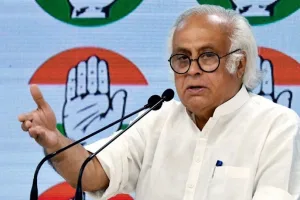
Congress leader Jairam Ramesh also called the Budget “non-transparent.” “It is clear after 90 minutes that Budget 2026-27 falls woefully short of the hype that was generated about it. It was totally lacklustre. The speech was also non-transparent since it gave no idea whatsoever of budgetary allocations for key programmes and schemes,” he wrote on X.

Congress MP Shashi Tharoor, who is relatively favourable towards the BJP and PM Modi, criticised the lack of specifics, particularly for Kerala. Congress MPs from Kerala, Hibi Eden and Jebi Mather, accused the government of “avoiding and badly neglecting” the state. Left parties argued that the Budget ignored challenges facing the Indian economy and offered no relief to the poor, who are reeling under high inflation, stagnant income, and rising unemployment.

Samajwadi Party chief Akhilesh Yadav questioned its relevance to ordinary citizens. “This Budget is beyond the understanding of the poor. How will you build a developed India without education?” he said. TMC’s Abhishek Banerjee noted that in 1 hour and 25 minutes of Sitharaman’s speech, Bengal was not mentioned even once. “Centre views Bengal as Bangladesh; otherwise, why was Bengal not mentioned even once? We had no expectations with this Budget. They knew that even if they spent money in Bengal, they wouldn’t win. So, from their perspective, they preferred not to spend any money on Bengal,” he said.

Fadnavis hails Union Budget 2026, calls it a powerful step towards ‘Viksit Bharat’

Fadnavis said, “The budget has laid a strong foundation for India’s development by focusing on planned urbanisation, promotion of industry and entrepreneurship, and firm measures to boost investment and job creation.”

Statesman News Service | Mumbai |

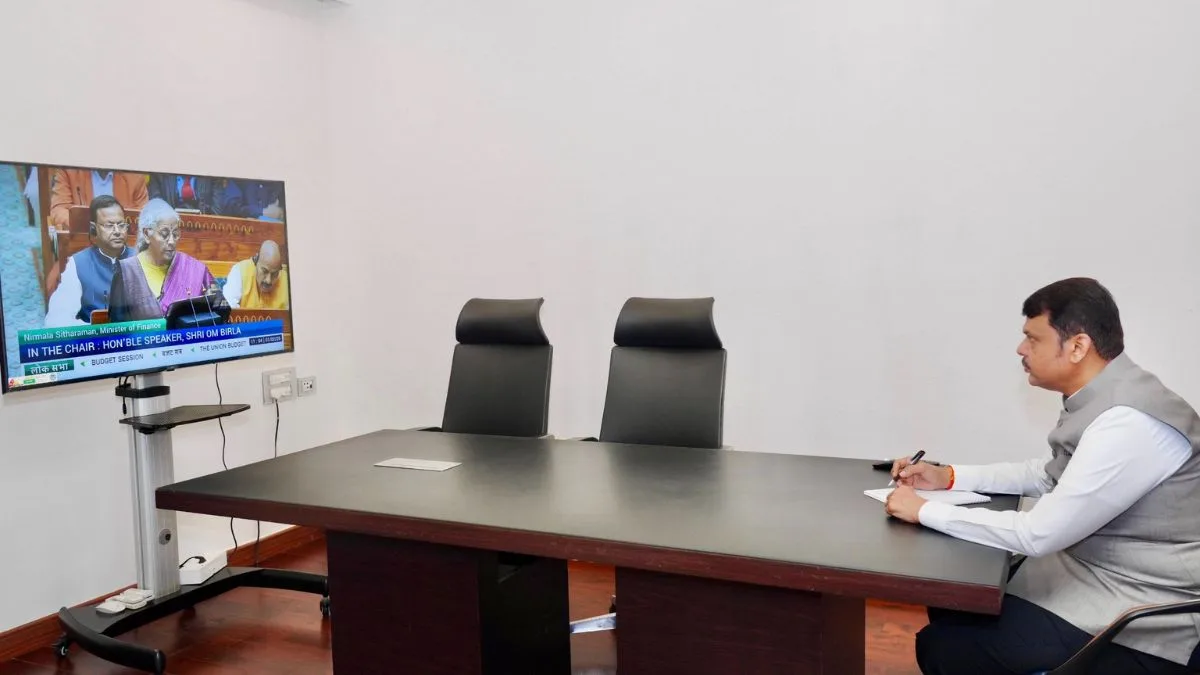
Maharashtra Chief Minister Devendra Fadnavis on Sunday welcomed the proposals mentioned in the Union Budget 2026 and described it as a “powerful step towards Viksit Bharat”.

Fadnavis said, “The budget has laid a strong foundation for India’s development by focusing on planned urbanisation, promotion of industry and entrepreneurship, and firm measures to boost investment and job creation.”

Referring to women-centric measures, Fadnavis said that following the success of the ‘Lakhpati Didi’ scheme, the proposal to create exclusive malls and industrial opportunities for women was “extremely important”. He also welcomed the announcement of hostels for girls pursuing higher education in every district, calling it a significant step towards improving access to education.

Fadnavis praised the decision to establish emergency medical facilities in district hospitals, stating that it would prove invaluable for strengthening the healthcare sector at the grassroots level.

He also welcomed the initiative to allocate Rs 5,000 crore over the next five years to each growth hub, stating that the move would benefit the Mumbai Metropolitan Region (MMR), the Pune Metropolitan Region, and the Nagpur Metropolitan Growth Hub.

BJP’s Maharashtra state president Ravindra Chavan said that the Union Budget 2026 presents a clear action plan for the country’s overall development and promotes the concept of a developed India.

Speaking at a press conference here on Sunday, Chavan stated that the budget has been presented “keeping every sector and component of the country in focus”. He also mentioned that substantial provisions have been made in this budget to strengthen India economically and move towards becoming the third-largest economy in the world at a rapid pace under the leadership of Prime Minister Narendra Modi.

Chavan said the budget gives special emphasis on creating an environment conducive to growth in production and investment. The budget has been designed for the upliftment of every segment of society, including farmers, women, youth, the middle class, and entrepreneurs. The budget has given special emphasis on accelerating economic growth, strengthening capabilities of the people and making them active partners in development, besides making resources available to all based on the principle of ‘Sabka Saath, Sabka Vikas’, he added.

He said that infrastructure development has been given an unprecedented boost, due to which investments in roads, railways, metros, ports, energy, housing, and digital connectivity will give a new impetus to the economy. The provisions made for infrastructure, health, education, defence, startups, and other industry sectors have given a new direction to the country’s economic growth, he said, adding that infrastructure development will create lakhs of employment opportunities.

Chavan praised the ‘Bio Pharma Shakti’ scheme with a provision of Rs 10,000 crore for the next five years to develop India as a global bio-pharma manufacturing hub and the seven high-speed rail corridors announced in the budget.

He also praised the budget’s emphasis on energy security, allocation of Rs 40,000 crore for semiconductors, as well as announcement of mineral corridors for Andhra Pradesh, Odisha and Kerala.

Chabahar Port gets nothing in Sitharaman’s Budget amid US-Iran tensions; aid to Bangladesh halved

Also, India has halved the aid to Bangladesh amid the ongoing strain in ties with the neighbouring country.

Ashok Tuteja | New Delhi |

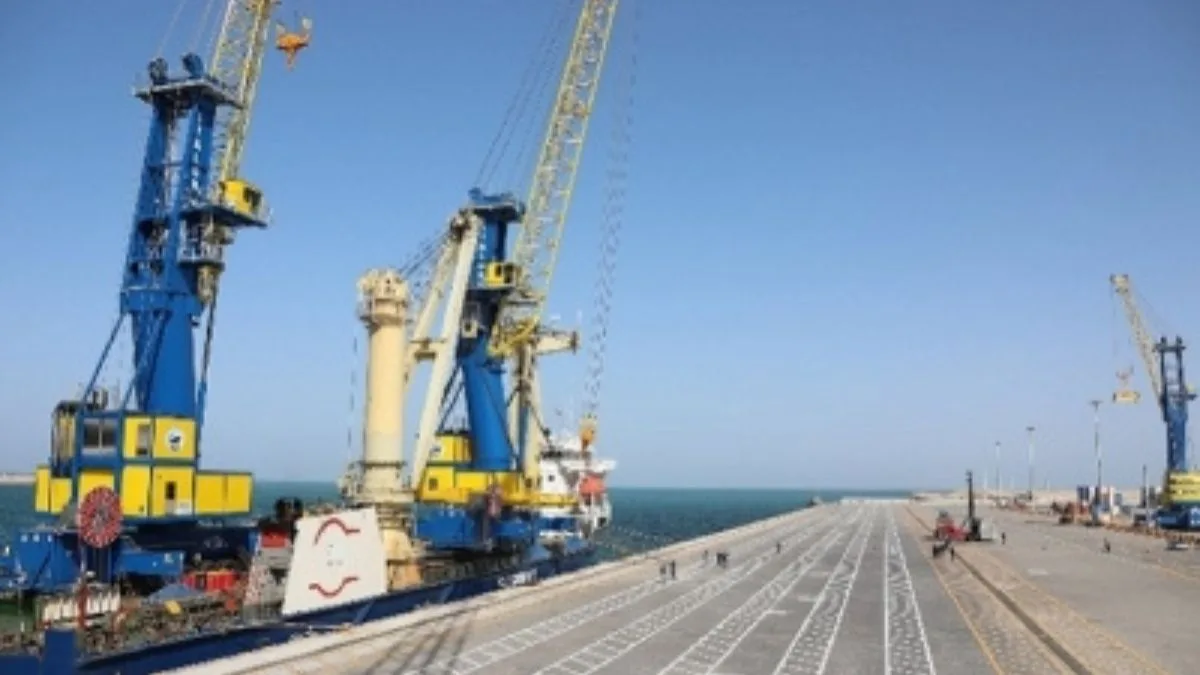
In what is seen as a direct outcome of the United States tightening the noose around Iran, there is no provision in the General Budget of Finance Minister Nirmala Sitharaman for the strategic Chabahar Port in Iran that provides India a crucial road link to Afghanistan bypassing Pakistan.

Also, India has halved the aid to Bangladesh amid the ongoing strain in ties with the neighbouring country.

In the 2024-25 Budget, the Finance Minister had set aside Rs 400 crore for the project while Rs 100 crore was allocated to it in the 2025-26 Budget. In the revised estimates for 2025-26, the allocation was again increased to Rs 400 crore. However, this time around, the Finance Minister has played it safe amid the increasing tensions between the US and Iran and not allocated anything to the vital port project, which is aimed at increasing India’s trade links with Afghanistan and Central Asia.

The decision comes amid global fears that the US could attack the Islamic nation which has witnessed large-scale anti-government protests in recent days.

In September last year, the US had imposed fresh sanctions on Iran but granted a six-month waiver to India on the Chabahar project, keeping in view New Delhi’s plea that the project was meant for transporting humanitarian assistance to the war-ravaged people of Afghanistan. This exemption will end on 26 April, 2026 and India is said to be in touch with Washington in the matter.

Meanwhile, The Trump administration recently announced that it will slap 25 per cent tariffs on nations engaged in trade with Iran. Since then India, which is already fighting the punitive tariff regime unleashed by the Trump administration, has been considering various options. The move comes despite the fact that India had signed a ten-year agreement in 2024 to operate the Shahid Beheshti Terminal at Chabahar, which is crucial for direct access to Afghanistan.

Meanwhile, India has drastically reduced to Rs 60 crores its assistance to Bangladesh in the ‘’Aid to Countries’’ category. Bangladesh was allocated Rs 120 crores in the budget for 2025-26 but the allocation was reduced to Rs 34.48 crores in the revised estimates for that financial year.

The overall allocation under ‘’Aid to Countries’’ has been raised to Rs 5686 crores, some four per cent higher than last year’s revised estimates of Rs 5483 crores.

Bhutan continues to get a favoured nation treatment in view of its strong political and economic links with India. The Finance Minister has allocated Rs 2288.56 crores to Bhutan, up from Rs 1950 crores in the revised Budget for 2025-26.

The allocation for Afghanistan, where India is seeking to mend fences with the Taliban regime to secure regional interests, has also been increased from Rs 100 crores in the revised 2025-26 Budget to Rs 150 crores.


People-oriented budget realizing the vision of a developed India: Pankaj Chaudhary

In a statement issued by the BJP on Sunday, he called the budget a significant milestone towards the country’s economic strength, social balance, and long-term development.

Statesman News Service | Lucknow |

Uttar Pradesh BJP President and Union Minister of State for Finance Pankaj Chaudhary, in his reaction to Union Budget 2026-27, has congratulated Union Finance Minister Nirmala Sitharaman for presenting “a people-oriented budget” to realize the vision of a developed India under the guidance of Prime Minister Narendra Modi.

In a statement issued by the BJP on Sunday, he called the budget a significant milestone towards the country’s economic strength, social balance, and long-term development. As part of the budget-making process, he expressed confidence that this budget will prove decisive in fulfilling the aspirations of citizens, empowering the youth, and increasing farmers’ income.

Congratulating the Finance Minister on presenting the budget for the ninth consecutive time, he described it as a strong example of women’s leadership.

The state BJP chief further said that the budget is a strong link in realizing Pandit Deendayal Upadhyaya’s Antyodaya philosophy, focusing on the upliftment of the poor, middle class, women, youth, and underprivileged sections of society. He described the announcement of seven high-speed rail corridors, including Delhi-Varanasi and Varanasi-Siliguri in Union Budget 2026-27 as a symbol of modern infrastructure and reliable connectivity.

This, he said, will give a new impetus to tourism, create employment opportunities for the youth, and strengthen the ease of doing business. He also highlighted the proposal of ₹20,000 crore for ship repair facilities in Patna and Varanasi and carbon capture in five industrial areas as significant.

He said that the provisions to strengthen agriculture, fisheries, and animal husbandry will boost the rural economy. Three new All India Institutes of Ayurveda will be established in the Ayush sector, pharmacy and drug testing labs will be upgraded, and the WHO Global Centre for Traditional Medicine in Jamnagar will be strengthened. Additionally, increased outlay under the Biopharma Shakti Yojana, India Semiconductor Mission 2.0, and the Electronic Components Manufacturing Scheme will give new strength to Atmanirbhar Bharat (Self-Reliant India).

Pankaj Chaudhary said that this budget reflects a focus on investment, employment, and sustainable development, rather than mere expenditure, and will play a decisive role in making the country self-reliant, strong, and prosperous under the leadership of the Prime Minister.

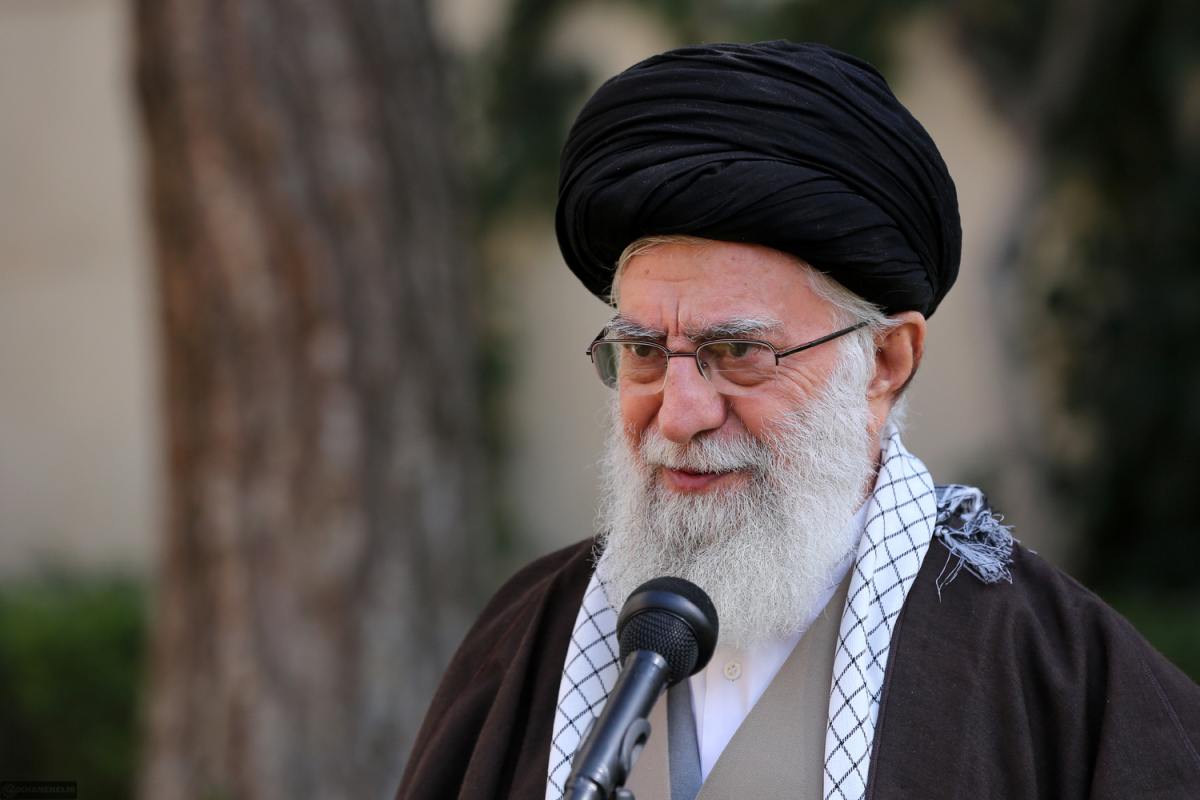
Supreme Leader Ayatollah Ali Khamenei warns of ‘regional war’ if US attacks Iran

The Iranian Supreme Leader asserted that Iran is not the initiator of war but will give a decisive response if anyone tries to cause harm to the country.

Statesman News Service | NEW DELHI |

Iranian Supreme Leader Ayatollah Ali Khamenei on Sunday warned of a “regional war” in the Middle East if the US attacks Iran. “The Americans should know if they start a war, this time it will be a regional war,” he wrote on X.

He said that Iran is not affected by US threats of war. “That Americans sometimes talk about war, saying we will come with warships and aircraft, is nothing new. The Iranian nation is not affected by such talk. They shouldn’t try to intimidate the Iranian nation with such things.”

The Iranian Supreme Leader asserted that Iran is not the initiator of war but will give a decisive response if anyone tries to cause harm to the country.

“We are not the initiators of war. We do not seek to oppress anyone. We do not seek to attack any country. However, anyone who seeks to attack or cause harm will face a decisive blow from the Iranian nation,” he said.

Khamenei’s remarks came amid rising tensions between the United States and Iran over the death of anti-government protesters. So far, 6,713 anti-government demonstrators have been killed in a violent crackdown by security forces in Iran.

US President Donald Trump had warned that the US would intervene militarily if Iran continued to kill the protesters. When the protests were at their peak, he even assured the protesters that “help is on the way”.

The US is believed to have positioned warships and aircraft carriers near Iran amid Trump’s warnings. “We’re watching Iran… you know we have a lot of ships going that direction just in case… we have a big flotilla going in that direction, and we’ll see what happens… we have a big force going towards Iran… I’d rather not see anything happening… we have an armada, a massive fleet heading in that direction,” Trump had said earlier this week.

Budget exempts all non-residents who pay tax on presumptive basis from MAT

The Union Budget also proposes to provide a safe harbour of 15 per cent on cost in case the company providing data centre services from India is a related entity.

Statesman News Service | New Delhi |

Presenting Union Budget 2026-27 in Parliament on Sunday, Union Minister for Finance and Corporate Affairs Nirmala Sitharaman proposed to provide exemption from Minimum Alternate Tax (MAT) to all non-residents who pay tax on presumptive basis.

Recognising the need to enable critical infrastructure and boost investment in data centres, Sitharaman proposed to provide tax holiday till 2047 to any foreign company that provides cloud services to customers globally by using data centre services from India. It will, however, need to provide services to Indian customers through an Indian reseller entity.

The Union Budget also proposes to provide a safe harbour of 15 per cent on cost in case the company providing data centre services from India is a related entity.

To harness the efficiency of just-in-time logistics for electronic manufacturing, the Union Finance Minister proposed in the budget to provide safe harbour to non-residents for component warehousing in a bonded warehouse at a profit margin of 2 percent of the invoice value. The resultant tax of about 0.7 percent will be much lower than in competing jurisdictions.

The Minister, in order to provide fillip to toll manufacturing in India, has proposed in Union Budget 2026-27 to provide exemption from income tax for 5 years to any non-resident who provides capital goods, equipment or tooling, to any toll manufacturer in a bonded zone.

The Budget proposals also provide exemption to global (non-India sourced) income of a non-resident expert, for a stay period of 5 years under notified schemes. This is intended to encourage a vast pool of global talent to work in India for a longer period of time.

“I propose to provide exemption from Minimum Alternate Tax (MAT) to all non-residents who pay tax on presumptive basis,” she said in her Budget speech.


Rare sighting: BRO shares clip of three snow leopards frolicking in deep Ladakh snow

The video of the endangered species frolicking in deep snow has sparked optimism about the growing population of the elusive big cat in the region.

SP Sharma | Jammu |

In a rare and uplifting moment from the high-altitude wilderness of Ladakh, the extraordinary sighting of three snow leopards joyfully playing in thick snow has captured attention and renewed optimism among wildlife lovers and conservationists alike.

The video was shared on Sunday on X by the Border Roads Organisation (BRO), whose Project Himank keeps the road connectivity operational in all seasons in the rugged high altitude terrain of the cold desert region of Ladakh. “Spotting of the elusive Snow Leopard in the High Himalayas by Project Himank@BROindia—a powerful reminder that infrastructure development and nature conservation go hand in hand,” the BRO wrote on X.


The video of the endangered species frolicking in deep snow has sparked optimism about the growing population of the elusive big cat in the region.

The video has not only gone viral on social media but also served as a reminder of Ladakh’s rich biodiversity and the success of the ongoing conservation efforts aimed at protecting one of the world’s most mysterious and endangered big cats.

The clip, shared by the BRO, captures the shy predators at ease in their natural habitat. Wildlife experts say such sightings point to a healthy habitat and a steadily improving snow leopard population in Ladakh, often regarded as one of the last strongholds of the species. They say such group sightings suggest improved prey availability, minimal human disturbance, and effective conservation measures in the region.

The mid-winter months from January to March are the best time to watch snow leopards.

Of the 718 snow leopards in the country, Ladakh has the highest number of 477 estimated population of the animal, followed by Uttarakhand (124), Himachal Pradesh (51), Arunachal (36), Sikkim (21), and Jammu & Kashmir (9).

With the region’s unique high-altitude ecosystem, snow leopard has been declared the state animal of Ladakh that was given the status of a Union Territory in 2019 after being detached from Jammu and Kashmir. Of the ten best spots in the country for snow leopard sighting, Ladakh hosts three — Hemis National Park, Rumbak Valley, and Ulley Valley.
T
he Kishtwar district of Jammu division has also shown signs of growing snow leopard population.

A camera-trapping study between 2022 and 2025 confirmed a breeding population of up to 20 snow leopards in Kishtwar’s Himalayas, particularly within Kishtwar High Altitude National Park and the Paddar area in the neighbourhood of Kargil (Ladakh) and also Himachal Pradesh.

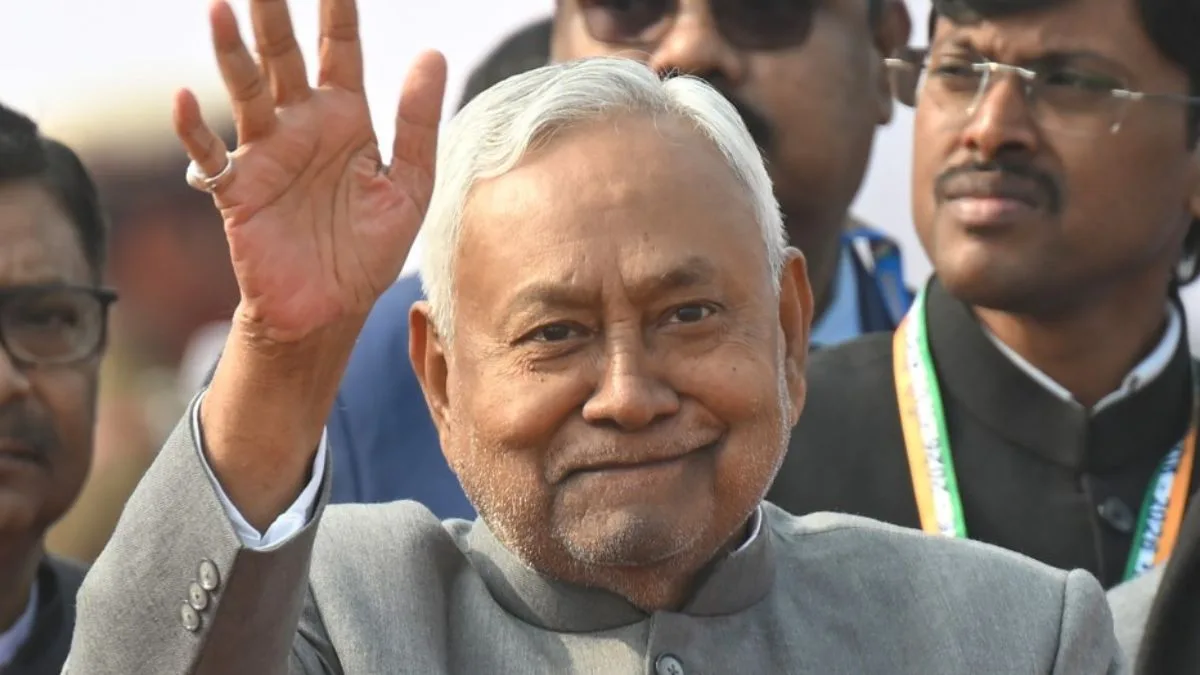
Nitish Kumar welcomes Budget, sees boost for Bihar’s connectivity, jobs; Opposition slams it

Bihar Chief Minister Nitish Kumar on Monday welcomed the Union Budget 2026, saying its provisions for high-speed rail corridors, new waterways, textile parks, and employment generation reflect a development-oriented vision for Bihar as well as the entire country.

Imran Mojib | Patna |

Bihar Chief Minister Nitish Kumar on Monday welcomed the Union Budget 2026, saying its provisions for high-speed rail corridors, new waterways, textile parks, and employment generation reflect a development-oriented vision for Bihar as well as the entire country.

In a post on X, the Chief Minister said, “The Union Budget has proposed the introduction of seven high-speed rail corridors across the country. The Varanasi-Siliguri high-speed rail corridor will greatly benefit Bihar as well. In addition, the budget has announced the creation of 20 new national waterways across the country. Under this initiative, ship repair facilities will be made available in Patna and Varanasi. The expansion of waterways will benefit several cities in Bihar, enhance export facilities for the state’s products, and boost trade and commercial activities.”

He further said, “The Union Budget has also announced large textile parks across the country and the Mahatma Gandhi Self-Employment Scheme. Additionally, support of Rs40,000 crore has been announced for the semiconductor sector. This will create new employment opportunities for young people across the country, including Bihar, and help accelerate the nation’s economic growth.”

Bihar’s Deputy Chief Minister and Home Minister Samrat Choudhary said the budget has cleared the way for a water metro route from Bihar to Varanasi, adding that the waterway would be systematically developed. He also said the Bihar government has already provided land for the proposed ship repair facility in Patna.

Bihar BJP President Sanjay Saraogi said all sectors have been given equal importance in the budget. He said it presents a clear vision for strengthening the employment and tourism sectors, including the development of Buddhist sites in the northeastern region and the creation of five new tourist destinations.

“This budget will prove to be a milestone for development, farmers’ prosperity, and relief for the middle class. It is not only a strong step toward a self-reliant India, but also a historic effort to make the country economically and socially stronger,” he said.

However, Bihar Congress President Rajesh Ram sharply criticised the NDA government, alleging that it has attempted to hide the country’s weakening economy by selling dreams and confusing people with impressive figures.

He said no announcement offering tangible benefits for Bihar was made in the budget, despite several populist promises announced ahead of last year’s elections that have yet to materialise. He added that Bihar has not even received its rightful share of funds.

RJD chief spokesperson Shakti Singh Yadav termed the Budget completely directionless and anti-people, which has ignored Bihar. He said the people of the state were shown grand dreams to secure votes but did not receive even a single factory in return.

“Bihar continues to rank at the bottom of the country in education and healthcare. The people were expecting a special package or special category status, but all they received was disappointment. Even the proposal to set up a ship repair facility in Patna is nothing more than a token gesture,” he said.

Union Budget disappoints Bihar industrialists, calls for ‘booster dose’ for state

It is expected that these projects will improve connectivity in the state, reduce freight transportation costs, and create new training and employment opportunities for youth in the inland waterways sector.

Imran Mojib | Patna |

Presenting the Union Budget 2026-27 in the Lok Sabha, Finance Minister Nirmala Sitharaman announced proposals to set up a shipyard in Patna and a Varanasi-Siliguri high-speed rail corridor, saying the projects will give a major boost to Bihar.

It is expected that these projects will improve connectivity in the state, reduce freight transportation costs, and create new training and employment opportunities for youth in the inland waterways sector.

However, many industrialists in Bihar appeared disappointed. They said that the budget is aimed at the country’s overall development. It does not offer anything particularly special for Bihar. Entrepreneurs stated that they had expected something distinctive for Bihar in this budget, but those expectations have been dashed.

Bihar Industries Association President Ramlal Khetan said that Bihar needs a separate booster dose. Per capita income in Bihar is quite low, and unless it increases, rapid development in the state will not be possible.

Bihar Chamber of Commerce and Industries President PK Agrawal said that people in Bihar were hoping for a special package in the budget, but its absence has led to disappointment.

Some other entrepreneurs said that they had high expectations from the budget. Since the Finance Minister has spoken about mega textile parks, at least one such park should be set up in Bihar.

In the previous budget, the Centre had paid special attention to Bihar. Considering that Bihar accounts for 80% of the country’s makhana (fox nut) production, a special “Makhana Board” was announced. On the lines of the Kashi Vishwanath Corridor, commitments were made to develop the Vishnupad Temple (Gaya) and Mahabodhi Temple (Bodh Gaya) corridors.

Approval was given for the expansion of IIT Patna and the establishment of a National Institute of Food Technology in Bihar. The development of new greenfield airports and the acceleration of construction work at Bihta Airport were announced. An initial allocation of approximately Rs 11,500 crore was also made for flood management.

Odisha’s Nandankanan Zoo loses five captive crocodiles in eight days

The estuarine (saltwater) crocodiles were reared in the zoo pens after eggs collected from the water bodies of Bhitarkanika National Park were artificially hatched. The species was kept in captivity for demonstration and research purposes.

Statesman News Service | BHUBANESWAR |

Nandankanan Zoological Park (NZP) near Bhubaneswar has lost five estuarine crocodiles kept in captivity over the last eight days, raising concerns among zookeepers and conservationists.

The estuarine (saltwater) crocodiles were reared in the zoo pens after eggs collected from the water bodies of Bhitarkanika National Park were artificially hatched. The species was kept in captivity for demonstration and research purposes.

The zoo has reported the deaths of five captive crocodiles between January 23 and 30, raising serious concerns. An investigation is underway to ascertain the exact cause of the reptiles’ deaths, an official of NZP said.

Post-mortems of the crocodiles have been conducted. Researchers and veterinarians from the Department of Animal Breeding and Genetics at the College of Veterinary Science and Animal Husbandry under Odisha University of Agriculture and Technology, Bhubaneswar, are conducting a thorough investigation into the deaths. The health condition of other saltwater crocodiles is being monitored round the clock, he added.

Bhitarkanika National Park, a designated Ramsar wetland site in Odisha’s Kendrapara district, is an ideal habitat for estuarine crocodiles, with their population showing an upward trend. According to the Saltwater Crocodile Estimation-2026 report, a total of 1,858 estuarine crocodiles were recorded.

Bhitarkanika National Park is home to 70% of India’s estuarine (saltwater) crocodiles, conservation of which began in 1975. The saltwater crocodile population in Bhitarkanika has increased manifold from 96 in 1975 to 1,858 today.

Incidentally, Odisha is the only state in the country where three species of crocodiles — saltwater, gharial, and mugger — inhabit the river systems.