


agence france-presse
CARDIFF, 15 JUNE: England limited overs coach Ashley Giles has denied his players tampered with the ball following controversial allegations by former captain Bob Willis.
Willis told Sky Sports on Friday that Pakistan umpire Aleem Dar and New Zealand&’s Billy Bowden had ordered the ball to be changed when Sri Lanka were batting during their seven-wicket Champions Trophy win over England at The Oval on Thursday because it had been tampered with.
"Let’s not beat about the bush ~ Aleem Dar is on England’s case. He knows that one individual is scratching the ball for England – who I am not going to name ~ and that’s why the ball was changed," Willis said.
But ex-England spinner Giles, speaking ahead of his side’s key Champions Trophy match against New Zealand in Cardiff on Sunday, said: “We don’t tamper with the ball.”
“With the situation the other day, the ball was changed because it had gone out of shape. We asked the question, the captain (Alastair Cook) asked that question to the umpires which he has a right to. The ball was changed, the rest is history.” Giles added: "The most important thing is winning cricket matches and not what Bob Willis says."
Reports in the British media have highlighted the role of Ravi Bopara in polishing the ball, a legitimate tactic, but Giles said the Essex all-rounder, who has starred with the bat in this tournament, had been selected for his cricket ability. "There’s even mention of one of our player’s (Bopara’s) specific role and that player is an extremely good cricketer. He has had an extremely good series so far and we’d like to let him concentrate on playing his cricket."
After England’s tournament-opening win over defending champions Australia at Edgbaston, Australia&’s stand-in captain George Bailey said he was "very surprised" by the speed with which Giles’s side got the ball to reverse.
However, Giles insisted on Saturday that an abrasive pitch at Edgbaston had played a key role in aiding England’s use of reverse-swing against Australia.
Prior to the Champions Trophy, New Zealand beat Giles’s men 2-1 in a one-day series in England. New Zealand coach Mike Hesson said on Saturday that he had seen nothing untoward during the recent home and away matches against England. "We played them in New Zealand and there were very abrasive surfaces. There was always going to be an element of reverse swing."
Asked if England achieved reverse swing by legitimate means, Hesson replied: "I’ve got no idea how they achieve reverse swing and that’s not my responsibility. The umpires are there to do a job and if they think something is done out of the ordinary then they will deal with it. From what I understand, they changed the ball the other day because it was out of shape."
On Thursday, Sri Lanka were 119 for two at the halfway stage of their reply to England’s seemingly imposing 293 for seven when the ball was changed.
The replacement ball moved little and Sri Lanka’s Kumar Sangakkara went on to complete a match-winning hundred.
Afterwards, Cook said: "The ball was changed because it was out of shape. The umpires make these decisions and you have to accept them. Sometimes you don’t think they are the right decisions."
Officials of the England-Sri Lanka match didn’t impose a penalty and the ICC explained, that as the umpires hadn’t reported anything and no team had complained, they were not planning to take any action.
Giles denies Willis’ ball-tampering claims



Maternity homes need care
KOLKATA, 14 June: Nearly three years have passed since the Trinamul Congress board took control of the Kolkata Municipal Corporation (KMC), but nothing has been done as yet to improve the condition of the maternity homes.
After the new civic board came to power, the KMC authorities announced in June 2010 that every maternity home will have ambulance facility and the residential medical officers would be present at the hospitals. Also, steps would be taken to increase the number of beds and introduce caesarian operation facility.
After three years none of the promises has been kept. The ambulance facility has not been introduced as senior officials felt it was not needed to keep ambulances at the hospitals as almost every social welfare club has them these days and most of the ambulance services are open for 24 hours. No step has been taken to upgrade the maternity homes and increase the number of seats.
There are 100 seats in KMC’s four maternity homes. Kidderpore maternity home has 40 seats, which is highest among the maternity homes followed by north Kolkata, Champamoni and Garden Reach, each having 20 seats.
The Champamoni maternity home which stands on 20 cottahs of land was inaugurated by then then chief minister of West Bengal Dr BC Roy. The maternity home looks like a haunted house after dusk with no lights in most of the rooms. As there is no facility for caesarean operation, women prefer to go to state run hospitals. sns
Doctors achieve ‘miracle’ feat on woman
statesman news service
KOLKATA, 14 JUNE: Doctors at RG Kar Medical College and Hospital have virtually brought a pregnant woman out from the jaws of death who suffered two cardiac arrests within a gap of few seconds and was put on ventilator support, although the stillborn couldn’t be saved.
A resident of Basirhat, Mrs Pieu Chakraborty (25), in an advanced stage of pregnancy was admitted to the gynaecology ward of the hospital on 7 June after she complained of uneasiness.
She was brought to the hospital after local doctors failed to cure her. It was found after tests that she was suffering from Peripartum Cardiomyopathy (a rare disease in pregnancy causing deterioration in cardiac function) and pregnancy- induced hypertension, said doctors who treated her.
“The woman suffered the first cardiac arrest on the same day of admission and was immediately rushed to the Intensive Therapy Unit. But she suffered second cardiac attack on the way to the emergency ward,” said Dr Sugata Dasgupta, the critical care specialist at RG Kar.
“We found that the patient was affected with pneumonia, lung failure and drop in oxygen which resulted in cardiac arrests. It was difficult to treat her because supporting the diseased lungs, diseased heart and dysfunctional brain after two cardiac arrests is very difficult, especially where the woman is pregnant,” Dr Dasgupta said.
“The doctors and the staff did a remarkable job by pumping her heart while shifting her to the emergency building located at a distance from the ward where she was shifted. A delay of five minutes and any carelessness by the doctors attending her could have been risky,” he added.
Terming her survival as a miracle, the doctors admitted that such instances are rare in government hospitals due to lack of infrastructure.
We saved the mother but couldn’t save the premature child but she can become pregnant again and enjoy her motherhood.
Less passengers, freight: Airport incurs loss
bappaditya paul
KOLKATA, 14 JUNE: The N S C Bose International Airport in the city has registered a significant drop in passenger and freight movement in the just concluded 2012-13 fiscal year ending March.
This at a time when the airport has recently thrown open a Rs 2,325-crore new passenger terminal with an installed capacity to handle 20 million (two crore) passengers per annum.
Airport insiders are blaming the overall slump in the country’s economy and also lack of any major industrial activity in West Bengal for the decline.
According to data fetched from the Airports Authority of India (AAI) headquarters in New Delhi, in 2012-13, Kolkata airport handled a little over 1.01 crore passengers compared to 1.03 crore passengers the previous year. The net decline in this case is about 1.34 lakh passengers. Similarly, freight movement has dropped from a little over 1.25-lakh metric ton (MT) in 2011-12 to 1.22-lakh MT in 2012-13.
The net dip is of about 3,361 MT. What is cause for worry for the airport management is that the downfall in freight movement has been a recurrent phenomenon since 2010-11 and the drop in freight movement in the past three years has been around 7,727 MT. As regards passenger movement, the decline has been on account of domestic passengers going down by around 2.21 lakh.
Interestingly, in contrast the number of international fliers has gone up by around 87,000 thus compensating for the overall drop to a limited extent. This despite Kolkata airport offering less number of direct flights to foreign destinations.
“It appears that for domestic travel people these days are preferring trains to flights and this could be because of the overall drop in the country’s GDP, which has a direct bearing on the people’s purchasing power. Besides, you have to consider the absence of major industrial activity in Bengal that robs us business travellers,” said a senior AAI official. For the dip in freight movement, officials are pointing out a year-after-year decline in air exports from Kolkata.
"The decline in exports to Bangladesh is prime amongst them. It could be Bangladesh’s ever-improving direct air connectivity with major production hubs across the world and also due to a rise in surface movement of cargo from countries such as Nepal and Bhutan,” an official overseeing the cargo operations said. Exports from Kolkata mainly include readymade garments, raw leather, leather goods, handicrafts and perishables. They are sent primarily to the UK, USA, Italy, Germany and West Asia. Imports are dominated by electronics ~ both finished items and spares ~ telecommunications apparatus, machinery, industrial tools and silk. They mostly come from China. In view of the under-utilisation of Kolkata airport’s cargo handling capacity, which is now stagnant at 20 per cent, the AAI chairman, Mr V P Agarwal, had on 29 May said that they were contemplating a concession on landing charges for cargo aircraft flying into Kolkata. The move is aimed at encouraging more airlines to operate cargo flights from and to Kolkata.
Familiar foes face off at Edgbaston
press trust of india
Birmingham, 14 June: The result would only be of academic interest but it is unlikely to be just another encounter when traditional foes India and Pakistan take on each other in their final Group B match of the Champions Trophy here tomorrow.
Like all the other times they have clashed in the history of the game, the immediate context of the tournament will be irrelevant at Edgbaston tomorrow. With India already in the semi-final stage and Pakistan out of the competition, the last group B league fixture of the ICC Champions Trophy cannot influence the outcome of the tournament. However, when the Champions Trophy tickets went online for sale in April this year, it took all of 30 minutes for the allocated tickets to be lapped up. The insatiable demand from Indian and Pakistani fans will mean tomorrow’s game will be more than a dead rubber. Birmingham is the second most populous city outside of London in the UK. The city is home to a chunky mass of Asian expats whose voracious appetite for cricket has always seen Edgbaston wearing its prettiest frock when India and Pakistan play.
At least 90 per cent of the 25,000 capacity crowd is expected to be divided between the sub-continental cricket giants.
There are many ways to look at any India versus Pakistan clash. From an emotional standpoint, supporters of both teams will have a tumultuous ride, but the final equation will be determined by how the players ultimately perform in the middle.
Like any such battle where mind and matter go hand in hand, tomorrow’s contest will be unique as it will test both skill and mental toughness of the players. With nothing to lose, Pakistan can be a dangerous enemy.
The agony of crashing out of the Champions Trophy after two horrible performances against West Indies and South Africa will be instantly forgotten if Pakistan can beat India, the reigning World Cup champions and the No. 1 ODI team according to the ICC rankings. Champions Trophy history is, of course, siding with Pakistan. They have never lost to India in six editions of this event. Pakistan’s first win in this tournament came at Edgbaston in September, 2004. Chasing 201 for a win, Mohammad Yousuf (then known as Yousuf Youhana) scored an unbeaten 81 to anchor Pakistan to a three-wicket victory with four balls to spare.
In head-to-head, Pakistan made it 2-0 against India in the Champions Trophy with a 54-run win at the Supersport Park in Centurion in September 2009.
Shoaib Malik scored a 126-ball 128 to give Pakistan’s experienced bowling attack 302 runs to defend.
Two run outs ~ Gautam Gambhir (57) and Rahul Dravid (76) ~ doomed India.
Suresh Raina’s 46 went in vain as Mohammed Amir, Naved-ul-Hasan, Saaed Ajmal and Shahid Afridi picked up two wickets apiece to consign India to a big defeat.
Purely on form, India have a good chance to pull one back on Pakistan this time. A win will take India to the top of group B with six full points and they will travel to Cardiff to play the No. 2 team in group A.
India opened their Champions Trophy campaign against South Africa in Cardiff with a 26-run victory on 6 June. Like most encounters between the arch-rivals, tomorrow’s match will be a clash between Pakistan’s bowlers and India’s batsmen.
With rain soaking Edgbaston on Wednesday and Thursday and the Sun playing hide and seek, conditions may not be ideal for high scores. But India will back themselves largely because they have posted 300-plus scores thrice in four games, twice in warm-up matches. The toss, therefore, will be crucial as the team batting second will have the advantage of pacing its innings according to the circumstances. Both India and Pakistan have sound knowledge of the Edgbaston wicket. Riding on hundreds from Virat Kohli and Dinesh Karthik, India chased down 333 with consummate ease here in a warm-up match against Sri Lanka on 1 June. Pakistan, on the other hand, were shot out for 167, chasing South Africa’s 234 for nine in a group league game on 10 June.
Pakistan’s batting has been a serious worry for them in this tournament. The absence of a grafter in the top-order has exposed the brittle middle-order too soon. Except opener Nasir Jamshed and skipper Misbah-ul-Haq, none of the batsmen have fired. Mohammed Hafeez and Malik’s poor run with the bat has hit Pakistan hard.
India’s batting remains their biggest strength. The opening combination of Rohit Sharma and Shikhar Dhawan has worked like magic.
Against quality pace attacks, especially against a South African pace quartet, the duo put on 100-plus stands that gave set up the middle-order to control the innings.
Dhawan has been outstanding with back-to-back centuries. The last time the teams met, Pakistan surprised hosts India 2-1 in a short series in December 2012-January 2013.
The left-handed Jamshed made it a memorable tour with back-to-back-hundreds at Chepauk and Eden Gardens. In another development, former fast bowler Shoaib Akhtar has described most of the members in the Pakistan national team as being “mentally disturbed”.
Teams (from): India: Mahendra Singh Dhoni (capt), Ravichandran Ashwin, Shikhar Dhawan, Ravindra Jadeja, Dinesh Karthik, Virat Kohli, Bhuvneshwar Kumar, Amit Mishra, Irfan Pathan, Suresh Raina, Ishant Sharma, Rohit Sharma, Murali Vijay, Vinay Kumar, Umesh Yadav.
Pakistan: Misbah-ul-Haq (capt), Nasir Jamshed, Mohammad Hafeez, Imran Farhat, Kamran Akmal, Shoaib Malik, Asad Shafiq, Saeed Ajmal, Junaid Khan, M. Irfan, Asad Ali, Wahab Riaz, Umer Amin, Abdul Rehman, Ehsan Adil.
PCB chief
Former Pakistan captain Majid Khan and senior bureaucrat Khalid Mahmood have emerged as front-runners for the post of PCB chief after Zaka Ashraf’s suspension was upheld by the Islamabad High Court.
We will not be under any extra pressure: Dhoni
Birmingham, 14 June: Even though the result would only be of academic interest, Indian captain Mahendra Singh Dhoni today termed their face-off with arch-rivals Pakistan in the ICC Champions Trophy an “important” game but said that his team would not be under any added pressure.
“I think it’s an important match. It doesn’t matter which side you are playing, because all international sides are good enough; so there is no real point in taking any added pressure,” Dhoni said on the eve of the match.
While admitting all India-Pakistan matches were big games, Dhoni said it would be suicidal to take extra pressure. “All international sides are good and packed with good fast bowlers. Pakistan also have good spinners in (Saeed) Ajmal and (Mohammed) Hafeez. We will not change our approach,” he said.
Dhoni also commended India’s batting muscle ahead of the eagerly-awaited match, saying they “don’t need 100-plus opening stands” every time.
“Well, I think we are a side that relies quite a bit on a good start. That doesn’t really mean that we always need a hundred-plus opening partnership,” he said.
Misbah&’s take
Pakistan captain Misbah-ul-Haq reckons tomorrow’s Champions Trophy contest against India here will be “one last chance to prove ourselves” in front of
the world. pti
Rain forces tie, South Africa go through
press trust of india
Cardiff, 14 June: Kieron Pollard’s wicket at a crucial juncture proved to be the difference as South Africa managed to secure a semi-final berth ~ by virtue of having a better run-rate than their rivals ~ despite their Champions Trophy Group ‘B’ match against the West Indies ending in a tie under the Duckworth/Lewis method, here today. Chasing an imposing 231-run target to win in 31 overs in the rain-curtailed match, West Indies were 190 for six after 26.1 overs when the heavens opened up once again to bring an early end to the decisive game at Sophia Gardens.
Had Pollard not got out after scoring a 23-ball 28, the par for the West Indies would have been 187 for five under the D/L method. But the hard-hitting batsman was dismissed by Ryan McLaren just before rain intervened, dashing West Indies’ hopes of earning a semi-final berth.
South Africa ended with three points from as many matches while the West Indies also finished with the same tally but the Proteas advanced to the knockout stage on account of a better net run-rate. India are the other team to have qualified from Group B after finishing their league engagements with four points.
Marlon Samuels hit a 52-ball 48 to put the Windies in contention ~ after they were reduced to 87/3 ~ before Dale Steyn removed him to dent their hopes.
Earlier, opener Colin Ingram struck a fluent half-century while David Miller played an unbeaten cameo of 38 as South Africa posted a formidable 230 for six. South Africa’s fifth-wicket pair of Miller and Faf du Plessis (32-ball 35) put on display some sensational strokeplay at the business end of the innings and added 68 runs in just 48 deliveries to put their side in the driver’s seat. From 153 for four in the 23rd over, both took their side to 221 for five as the last five overs yielded 52 runs for the Proteas. Miller’s unbeaten knock of 38 was laced with three huge sixes and a four while Du Plessis decorated his useful innings with three fours and a six. Ingram hit 63-ball 73 laced with six fours and two sixes as South Africa were invited to bat first under overcast conditions. The match started three hours and 15 minutes late due to inclement weather.
Sutherland slams Warner, Clarke issues warning
press trust of india
MELBOURNE/LONDON 14 June: The punishment has been handed out but Cricket Australia Chief Executive Officer James Sutherland remains livid with David Warner (in photo, right), saying the opener&’s bar-room brawl during the Champions Trophy was “despicable” and his public apology for the incident counts for little.
“David Warner has done a despicable thing,” Sutherland told reporters in Brisbane.
“But I also hold the team to account here. There were other people there with him and those that were there need to take responsibility for that, but so does the team as a whole and the team management group as a whole,” he said.
Sutherland said the team management was also to be blamed for the incident.
“There is no place for violence anywhere and I’m extremely disappointed with this . I’m extremely disappointed in him and I have told him that … There were certain things that led to this situation that happened, as I understand it, at 2.30 in the morning,” he said.
“There&’s not a lot of good that happens at 2.30 in the morning in a pub or a nightclub. I believe that the team as a whole and the people who were around him at the time also need to take responsibility for what happened.”
Michael Clarke (in photo, left), who accompanied Warner to the press conference where he issued a public apology, urged him to watch his conduct.
“Although the punishment for David is quite harsh, that&’s the reality when you play for the Australian cricket team,” Clarke said. “This is not an IPL team, this is not state cricket, it&’s not county cricket, when you play for Australia there are standards you have to uphold,” he added as a stern warning.
No quick fixes to economic problems: PC
statesman news service
NEW DELHI, 14 JUNE: There are no ‘quick fixes’ to temporary economic problems but the government will tackle the issue with ‘long-term’ perspective, the Union finance minister, Mr P Chidambaram, has said. “The temporary problems that we face cannot be solved by quick-fixes, it can only be solved by continuing to take long-term steps,” he told reporters here today.
The government will announce steps by the end of this month or next month to boost investment and growth, he said adding: “The Prime Minister endorsed all the measures. You will see that these decisions are taken in the coming days.”
Jet-Etihad deal put on hold by FIPB
press trust of india
NEW DELHI, 14 JUNE: The Rs 2,058-crore deal struck by Jet Airways to sell 24 per cent of its stake to Abu Dhabi’s Etihad Airways was put on hold today by the government’s foreign investment approving agency which sought more clarity on control and ownership of the Indian airline.
“It (Jet-Etihad proposal) has been deferred. We need more details on effective control and ownership,” economic affairs secretary Mr Arvind Mayaram, who heads the Foreign Investment Promotion Board (FIPB),” told reporters after a meeting here.
Market regulator Sebi and competition watchdog CCI have already sought clarifications from the premier private carrier on the transaction, to ensure that Etihad’s ownership powers in Jet remains in line with its 24 per cent stake in the company’s equity capital.
Asked about the development, civil aviation minister Mr Ajit Singh said Sebi has raised some concerns and asked both the airlines to “rectify some parts of the pact.” “I don’t see any major problem for the deal,” Mr Singh said. When contacted, Jet sources said they have already submitted the necessary clarifications to Sebi.
It could not be ascertained when the FIPB would take up the Jet-Etihad proposal next. Once the FIPB clears it, the matter would be sent to the Cabinet Committee on Economic Affairs for approval. All deals over Rs 1,200 crore have to be approved by CCEA.
Funds pose a challenge to doctor dreams
pradip chatterjee
KOLKATA, 14 JUNE: Jasim Ahmed has overcome his disability to rank seventh in the National Eligibility-cum-Entrance Test (NEET) under the OBC category (sub category PH) for admission to under-graduate medical courses in West Bengal but still doesn’t know whether he will be able to achieve his dream of becoming a doctor as his poor father is unable to fund his studies.
By virtue of his rank he is entitled to a seat in one of the state-run medical colleges in Kolkata. He has also ranked 71st for the Armed Forces Medical College (AFMC), Pune.
Shamim Ahmed, Jasim’s father, who works as a superviser in a plastic factory in Chowbaga on Basanti Highway, was all smiles after his son secured a rank in the NEET examination held on 5 May this year. Shamim was elated that his son finally beat the odds to taste success.
Now the biggest worry for the father is how to arrange funds to help his son realise his dreams of becoming a doctor.
Shamim earns Rs 4,000 a month, which is not enough to fund his son’s education. He has to maintain his family with this meagre amount, apart from providing funds for his four schoolgoing daughters. Jasim’s mother is a housewife.
A good student all through since childhood Jasim had passed the higher secondary examination from Md Jan Higher Secondary School in 2008. Since then he has been striving for success. He gave private tuition to local students to arrange money for his studies. It was never easy for a boy with a lower limb deformity to visit places to give private tuitions. His aim is to join one of the city’s hospitals so that he can serve the less fortunate who cannot afford to go to private nursing homes for treatment.
"I wanted to become a doctor to treat poor patients. I struggled hard to crack the examination. But still I don’t know how I will arrange funds to fulfill the long-cherished dream," said a misty eyed Jasim.
Despite the dark clouds over his future career, the residents of Tangra where the boy lives are proud of him. Mr Suman Sadhu said: "The boy has made us proud. We have seen him toiling hard for many years to find a place on the merit list."
Shamim Ahmed said: "We will appeal to the state government to help realise my son’s dream as he has fared remarkably well. But his future still hangs in the balance as the financial logistics have to be worked out."
Briefs
Uncontested wins: SEC seeks reports
KOLKATA, 14 JUNE: In the wake of around 5,259 panchayat seats going uncontested for the first phase panchayat polls to be held on 2 July, mostly in favour of the ruling Trinamul Congress, the State Election Commission (SEC) has sought reports from district magistrates of seven south Bengal districts that have thrown up a maximum number of uncontested candidates. The SEC tonight hinted that in the absence of adequate security for the polls, it might increase the polling phase from three to four and there could be even multiple-phase voting in a district. “But this is a matter that is to be decided with due permission from the High Court,” SEC secretary Tapas Ray said this evening. sns
details on page 5
Prof falls on tracks, loses foot
KOLKATA, 14 JUNE: A professor of Jadavpur University slipped and fell on the railway tracks near Palbazar station at Jadavpur and before he could rise a train ran over his right foot. Prof Gupinath Bhandari, with his right foot severed, lay unconscious on the spot for over half-an-hour as a crowd gathered there, but none came to his help. The incident took place this morning when the professor of the Civil Engineering department, on his way to JU, was crossing the tracks. sns
details on page 13
Pakistan’s change of guard
Where Does India Stand?
sankar sen
THE convincing victory of the Pakistan Muslim League (N) in the recent election under the leadership of Nawaz Sharif will hopefully mark the beginning of a new era in Pakistan. During the election campaign, nearly all the parties had campaigned for improving relations with India. Their manifestos indicated a growing consensus among politicians for a detente with this country. Mr Sharif&’s party went to the extent of saying that it would open the trade route between India, Afghanistan and beyond through Pakistan.
Both the political class and the intelligentsia in Pakistan seem to have realised that China, its most trusted all-weather ally, will not be able to bail the country out. Its salvation lies in strengthening ties with India and taking advantage of its growing economy.
The run-up to the election was particularly violent. The Pakistani Taliban targeted the secular parties to disrupt the tryst with democracy. Over 100 political activists, including some candidates, were killed. Perhaps because of a tacit understanding, the terrorists did not attack the rallies of Nawaz Sharif and Imran Khan. The violence did not dampen the enthusiasm of the voters, however. The turnout was high, with 60 per cent of the electorate exercising its franchise. While the Pakistan People&’s Party and the Awami National Party (ANP) accepted the drubbing they suffered, Imran Khan&’s Pakistan Tehreek-e-Insaf, which won only 34 seats in the National Assembly, alleged widespread rigging. Imran tried to woo the young and apolitical voters, but he could not make a dent in Sharif&’s stronghold of Punjab. In popular perception, the PTI is a one-man show rather than a party. Further, Imran could not break the biradari structure of Pakistan politics. It is one thing to rant against corruption and patronage-based politicians; quite another to offer a viable democratic alternative. However, the PTI has fared impressively in Khyber Pukhtunkhawa.
During post-election press conferences and television interviews, Nawaz Sharif has indicated that he wants to mend fences and improve relations with India. As a successful businessman, he is aware that better trade relations will benefit Pakistan. Its economy has done well in terms of trade and India is quite obviously the only market to be tapped. Indian imports will be cheaper and help Pakistan tackle inflation. He may even take steps to grant the Most Favoured Nation (MFN) status to India. However, resistance from the army cannot be ruled out.
President Zardari was also keen on improving ties with India, but he was thwarted by the establishment and could not do much. With his strong mandate from the Punjab, Sharif is in a better position to do something more substantial than Zardari. In an interview to the Wall Street Journal, he signalled his intent “to pick up the threads where they were left” and resolve the remaining issues with India through peaceful means. He has gone to the extent of saying that if he comes to power he would share the reports on the Kargil operations and the Mumbai outrage with India. He has stated that he will seek to assert civilian supremacy over the army. How far he will be able to do so is, of course, open to question.
The military establishment will vociferously oppose such initiatives because it will denude the army&’s pre-eminent position in the country and also dent its image as the saviour of Pakistan. It will also threaten the army&’s economic empire built up over the years. Beyond a point, it will not allow the humiliation of the former Army Chief, Pervez Musharraf, now imprisoned in his farmhouse. Nor for that matter will it allow a thorough probe into the Kargil incursion because of the fear that skeletons will tumble out of the cupboard. Perhaps it will be wiser for Sharif to allow them to rest there. Should the need arise, the army might use the terrorists and take the help of Imran Khan to settle scores with Nawaz Sharif.
To improve relations with India, Sharif will have to rein in the jihadi outfits such as Lashkar-i-Toiba and Lashkar-i-Jangvi, which are operating against India from within Pakistan. Before the election, Sharif&’s party had concluded behind-the-scene agreements with many of the jihadi entities. His brother, Shahbaz Sharif&’s government in Punjab secured the help of the banned anti-Shia outfits, notably the Sipah-e-Salva.
The Prime Minister has cordial relations with the Lashkar chief, Hafiz Sayeed. The extent to which he will be able to exercise control over the jihadi outfits remains to be seen. These groups have developed vested interests and wield considerable influence in rural Punjab. They will not abjure violence so readily. If thwarted, they may even turn against the master. At best, there could be a measure of calculated remission but not elimination of the jihadi terror threat.
Sharif will also have to reach out to the leaders of other provinces to maintain national unity. The province of Punjab has traditionally dominated the country&’s armed forces, judiciary and the civil services. If the trend persists under a democratic dispensation, it is bound to be resisted by the smaller ethnic groups. It is significant that despite the high turnout overall, very few voted in the volatile province of Baluchistan. Indeed, the regional split between the Punjab and other provinces has been accentuated.
In Afghanistan, it remains to be seen whether Sharif endorses the army&’s policy of supporting the Taliban to secure a “strategic depth” for Pakistan. Both the military and the bureaucracy believe that Pakistan deserves a proprietary role in Afghanistan. The Taliban&’s efforts ~ with the support of Pakistan ~ to gain complete ascendancy in Afghanistan might ignite a civil war that could endanger Pakistan.
India has no place in Pakistan&’s vision of Afghanistan, post the pullout of US troops. And this is unlikely to change. Instead of being overly optimistic, India ought to observe the evolution of developments in Pakistan. Sharif will first have to strengthen his position within the country and then initiate his promised change in dealings with India. Till then, Delhi would do well to wait and watch.
The writer is Senior Fellow, Institute of Social Sciences; former Director-General, National Human Rights Commission; and former Director, National Police Academy
We will accelerate reforms: FM
statesman news service
NEW DELHI, 13 JUNE: On the last year of its second term and facing a disappointed electorate in the 2014 Lok Sabha polls over the general state of the economy, the Congress-led UPA government today announced that it will accelerate reforms and spur investments in critical sectors.
The government’s announcement came in the wake of stalled reforms and stuck pro-liberalisation legislation for want of consensus with allies as well as the Opposition. Significantly it also came a day after official data showed India’s industrial production registered its lowest growth in several years in April this year.
The announcement was made at a Press conference here by the Union finance minister, Mr P Chidambaram, who said the government will initiate a number of reforms such as lifting the cap on foreign direct investment in the coming weeks to spur growth.
“I expect a number of decisions in the next few days and weeks. In June, you can expect a number of decisions taken and implemented that will accelerate reforms and spur investments in critical sectors,” he said. The reforms will include allowing foreign direct investment (FDI) in various sectors, including Defence and skill development, and rationalisation of coal and gas prices, he said.
Mr Chidambaram also indicated that the government is likely to announce measures to ensure proper supply of coal to power plants.
Stressing that economic reforms were not a one-day game, Mr Chidambaram asked investors to take a long-term view on India’s growth story.
“My appeal to everyone is that we have to take a long term view ~ what’s happening in India and what will be the results we will achieve over a period of time,” he said.
On the continuing slide in rupee value, Mr Chidambaram said there was no need to panic and the rupee will stabilise in the next few days.
Don’t buy gold
In somewhat controversial remarks, he also asked people to resist the temptation of buying gold for the sake of the health of the economy. “I once again appeal to everyone to resist the temptation to buy gold. This will show positive impact on every aspect of the Indian economy.”
The finance minister said reduction in gold imports would have a big positive impact on vital macro-economic indicators, especially the current account deficit, trade deficit and inflation.
“People think that they are buying gold in rupees, actually they are buying gold in dollars… If for one year there are no gold imports, it will change the current account deficit story of the country,” he said.
Disinvestment
Mr Chidambaram said he was confident of achieving the target of Rs 40,000 crore from stake sale in public sector firms in the current fiscal.
He said the government plans to sell 10 per cent stake in Coal India that would fetch around Rs 20,000 crore to the exchequer.
The finance minister said the disinvestment proceeds will be used to finance expansion plans of other public sector undertakings, especially banks.
MMTC shares subscribed more than 1.5 times
statesman news service
KOLKATA, 13 JUNE: MMTC’s divestment through offer for sale (OFS) route today attracted bids which were more than 1.5 times of the shares on offer, making it a successful beginning for the government’s divestment programme this financial year.
The issue attracted bids for over 14.42 crore shares, accounting for 154 per cent of 9.33 crore shares on offer at the close of market hours, according to data available with the Bombay Stock Exchange.
The indicative price, at which the bids were made, was 60.86 as against the floor price of Rs 60, announced by the government yesterday. At the indicative price, the share sale is expected to fetch over Rs 567 crore to the exchequer.
The stake sale would help the company meet the 10 per cent minimum public shareholding norm, as stipulated by the market regulator Securities and Exchange Board of India. The government held 99.3 per cent stake in the trading major before the OFS.
According to stock exchange data, more than 38 per cent bids were made with 100 per cent margin money, while the remaining 116 per cent bids were made with no margin money.
The government has embarked on an ambitious divestment programme this financial year, targeting to raise Rs 40,000 crore through this mode.
The government had shortlisted Avendus Securities Private Limited, IDBI Capital Market Services Limited and IDFC Securities Limited for managing the MMTC disinvestment.
Meanwhile, in stocks market today, MMTC suffered a steep fall of around 10 per cent and touched the lower circuit limit in opening trade, resulting in a halt in trading of the share for the entire day. In the Bombay Stock Exchange, the share price plunged by 9.98 per cent to Rs 190.35. In the National Stock Exchange, the scrip suffered an identical fall and touched its 52-week low at Rs 189.05.
Amit Shah discounts idea of a Third Front
statesman news service
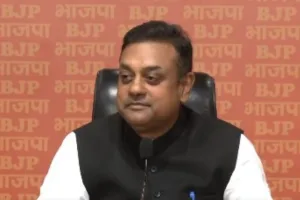
LUCKNOW, 13 JUNE: The BJP national general secretary and Uttar Pradesh in-charge Amit Shah (file photo) today discounted the idea of a Third Front in the 2014 election stressing the current polity has now become bipolar.
He said the BJP was alive to the prevailing incumbency against the UPA government and added the road for the saffron party to Delhi lay via Lucknow. In his first Press conference after assuming the new responsibility entrusted upon him by his mentor and the national election committee chief Narendra Modi he said a change was definite in 2014 and the foundation of the same will be laid in Uttar Pradesh. He added the upcoming parliamentary poll will see the NDA government firmly in the saddle in Delhi.
Mr Shah said the Ram Mandir was on the agenda of the BJP and the VHPs proposal on the same will be looked into by the party. Unscathing in his criticism of the UPA government, he said the Congress-led government had failed on all counts. Dubbing it as the most corrupt government since Independence, he said prices of commodities had registered an astronomical rise and the condition of the poor and the downtrodden had gone from bad to worse.
Speaking on the internal security of the country, Mr Shah said the UPA government had failed to contain the threat from Maoists and terrorists. It had failed to adopt a zero tolerance policy towards them. He said the prestige of the country had taken a beating and the growth rate had fallen below five per cent. Mr Shah said in the light of these all-round failures of the Central government it had lost the moral and constitutional right to remain in power.
Mr Shah accused the Samajwadi Party and the Bahujan Samaj Party for being hand in glove with the UPA government. He said had the two parties withdrawn their support the collapse of the UPA would have been imminent . The BJP’s UP in-charge said the winds if incumbency were discernible against the Akhilesh Yadav government in UP also. The SP was able to reap the benefit of the anti-incumbency factor against the BSP government in the 2012 Vidhan Sabha polls. But the 2014 elections will be a different story for the SP as the electorate now wants to see the BJP in power at the Centre, he said.
Naidu confident of emergence of ‘Federal Front’
statesman news service
HYDERABAD, 13 JUNE: TDP president N Chandrababu Naidu (file photo) today once again voiced his confidence about the emergence of a ‘Federal Front’, but this time largely to pre-empt any demand in the party that the TDP sail with the BJP in the 2014 elections.
“It is only a matter of time in the sense that the front, by whichever name you call it, would emerge either as a result of a pre-poll alliance or a post-poll one,” he told reporters.
Mr Naidu has been looking at a non-Congress and non-BJP front pretty keenly in the recent past. Ever since it was clear that Gujarat Chief Minister Narendra Modi would be the BJP&’s prime ministerial candidate, a chunk in the party prefer the TDP to go with the BJP as the latter is expected to gain considerably in Andhra Pradesh due to the “Modi factor”.
Their argument is that the minorities continue to be ill disposed to the TDP and so is the secular voter. “In this scenario it would be a win-win situation for the TDP and the BJP to ally rather than tread the time tested and pretty weak path with the Left,” a senior leader told The Statesman.
It is this kind of intra-party talk that Mr Naidu wants to stifle. He still does not want to distance the minorities irrespective of the percentage who favour him. And the past experience has shown that the BJP is a far tougher customer than any ally in the Third Front.
Significantly, Mr Naidu claimed that West Bengal Chief Minister Mamata Banerjee is in touch with him. Sources, however, emphatically said neither Ms Banerjee nor Mr Naidu have spoken to each other regarding this in the recent past.
Mr Naidu also claimed that he is in touch with all the important leaders who want to be part of this formation. “As and when it is formed you will get to know about it, and also about who will play a role in its formation,”
he said.