Photo
MORE Photo STORIES
Moon and its many faces
Representational Image (Photo: Getty Images)
Israel commits to jointly fight menace of terrorism
The President also recalled the positive and growing cooperation between the two nations in areas of defence and security.
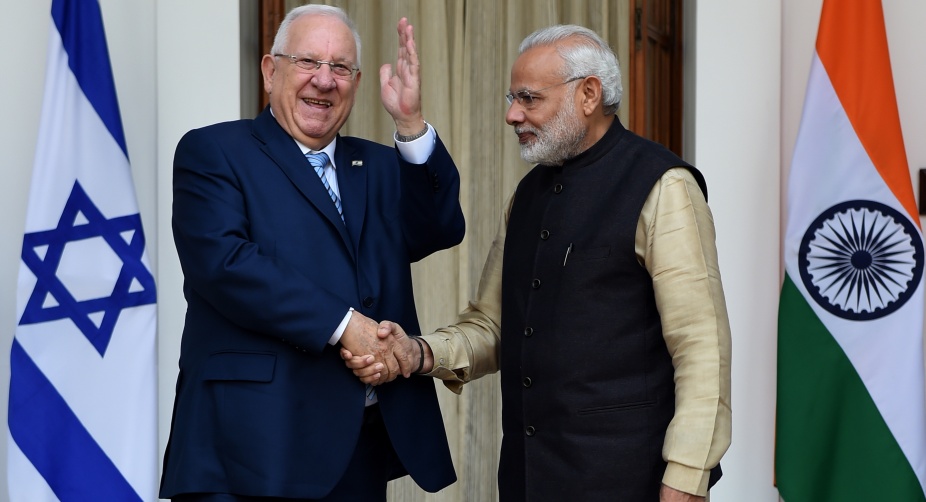
Indian Prime Minister Narendra Modi (R) shakes han
Asserting that both Israel and India are facing similar
challenges in terms of terrorism and radicalism, Israel on Thursday expressed its
commitment to jointly fight against the menace.
“We also face a common challenge in fighting terrorism
and radicalism. I am here today to affirm our commitment to the fight against
global terrorism. We are here today, to carry the great potential of this
partnership into reality,” Israeli President Reuven Rivlin said here at a
function.
The President also recalled the positive and growing
cooperation between the two nations in areas of defence and security.
Talking about the increasing menace of cyber warfare, he
said it is no longer science fiction it is a strategic challenge.
“In all these areas, Israel, and Israeli industry is
ready and committed to strengthening this cooperation to make a safer world. Of
course we are very grateful to our Indian partners, for the way they work
together with us in order to ensure a safe and secure world,” he added.
Referring to issues concerning food security, he recalled
the work done by experts in the field of agricultural, water treatment, food
and environment and said they are the persons who plant seeds of tomorrow.
“They are literally planting the seeds of tomorrow.
We already have Israeli and Indian experts, working together with local
farmers, to improve Indian produce, and the lives of local families,” he
said.
Invoking the famous speech of Swami Vivekananda in Chicago,
he addressed the audience here as “sisters and brothers of India”.
“We are here to reaffirm our deep commitment to our
shared future,” he said, adding both the countries are already cooperating
in areas of economics, technology, and security, and this cooperation continues
to grow.
“Israel wants to play a part in the Four-Colour
Revolution that Prime Minister Narendra Modi has set as India s national goal,
that brings together the colours of the Indian flag: Saffron for solar power,
Green for agriculture, White for dairy produce, and Blue for water,” he
said.
The President is on official visit to India and is being
accompanied by Israeli academia, business leaders, industries, and defence
industries.
A dose of realism
At 47, Anna Tan has gone through at least five career shifts
and worked in sectors as diverse as charity and IT. Her kith and kin have had
doubts about her decisions, but that has not stopped her from taking the plunge
each time. Neither has she been concerned about being labelled a job hopper.
Instead, she says it is because she dabbled in so many
fields and gained so much experience that she is able to run a coaching
business, which involves helping people to reach their personal or professional
goals. The Malaysia-born Tan spent most of her working life in London, where
she grew up. The Singapore permanent resident, moved back five years ago when
work opportunities started drying up in Britain. There, she had worked on
government and community projects.
She felt she needed a change and took a job on a four-month
contract, to help a local company put its retail arm online and found jobs in
project and change management, fields she had experience in. She has a diploma
in leisure and recreation studies and the course included sports coaching. Last
year, the accredited coach co-founded Coaching Go Where, which matches coaches
in areas such as life or career coaching with people seeking such services. She
also set up Barrage Vision, a change management consultancy. “I love doing
different things every few years. I don’t have to play office politics,” she
says. But when she was mulling over setting up her first company in Britain
about 12 years ago, she had support from fellow entrepreneur friends who told
her to go for it and her risks have paid off. “It’s because I’ve changed so
much that I had the breadth of experience to set up Coaching Go Where.” She
adds that people sometimes underestimate “the power of transferable skills” in
changing jobs or even careers. Douglas Foo, co-chairman of the Tripartite
Alliance for Fair and Progressive Employment Practices, says that while not
everyone is as comfortable embracing changes in working life, making career
moves in one’s 40s is no longer uncommon.
“As the workforce shrinks, employers need to adopt more progressive
approaches and mindsets to ensure they attract a diverse pool of talent to
maintain a competitive advantage,” says Foo, who is also chairman of Sakae
Holdings. He says employers can enable a smoother transition for staff making a
mid-career switch by exploring options such as redesigning their jobs to suit
their strengths and tapping programmes and grants available at agencies such as
Spring Singapore and the Singapore Workforce Development Agency. A Workforce
Development Agency spokesman says that since 2007, more than 7,000
professionals, managers, executives, and technicians have participated in the
Professional Conversion Programmes, which help them get skills for new jobs.
These are targeted at a range of industries, such as early
childhood care and education, retail, intellectual property and food services.
Older workers considering a career change should prepare well before taking the
plunge, say experts. Woon Peng Ziady, who runs coaching business Chai Coaching,
says, “Understand how long you can survive on savings and passive income. If
you don’t have enough, build up your savings first. Be willing to accept a pay
cut.” She advises mid-career switchers to consider taking small steps
initially, such as joining a course in cooking if one wants to go into the food
and beverage industry, or co- investing in a business first.
Jovian Koh, co-founder of ConnectionQ, a coaching and
training consultancy, says the preparation is also mental. Middle-aged and
older people should do an ego check first. “In their own industry, they
may have been at a middle or senior level. Now they have to re-establish
themselves. It can be hard to establish networks. You have to eat humble pie at
times. Some people have the mindset that they just want an easier work life. If
this is the attitude, they cannot go far. There will always be people hungrier
than them,” she says.
Peng Ziady says once they have embarked on a new career,
they should be mindful to give themselves time to succeed and not have overly
high expectations in terms of money and accolades. Once they overcome the
challenges, the leaps they take can be rewarding. Some of her clients have
found greater meaning in their lives. Many people start their career without a
direction. When they are in their mid-40s and older, making a switch is like
getting a second chance.
As a child, Suguna Tambusamy dreamt of being a nurse, but it
was an ambition she fulfilled only last year, when she was 44. She was drawn to
the white uniform, which suggested to her a “pure and noble” profession. She
joined the Red Cross as a co-curricular activity in primary school and enjoyed
learning first aid. In secondary school, her housewife mother objected to her
career choice because she viewed nursing as “a dirty job” that involved washing
people’s bodies, says Tambusamy.
The Straits Times/ANN
As the marketplace goes online
India ranks 20th in Climate Change Performance Index
Representational Image (Photo: Getty Images)
India has been ranked 20th in the Climate Change Performance Index (CCPI) 2017, which underlined that countries like India are making “great efforts” in the fields of renewables and energy efficiency.
With the historic Paris Agreement having recently entered into force, the latest CCPI confirms a boost for renewable energy and positive developments in energy efficiency.
The publication was issued by Germanwatch and Climate Action Network Europe.
While these encouraging trends are happening on a global scale, the necessary energy revolution is still happening too slowly, it said.
“Morocco (rank 8), this year’s host of COP22 continued its upward trend in the CCPI 2017. With massive investments in renewable energy and ambitious mid- and long-term targets, Morocco is a frontrunner in Africa.
“Positive trends are seen as well among emerging economies of the G20 like India (rank 20), Argentina (rank 36) and Brazil (40) which all improved their ranking in the CCPI 2017,” it said.
It said that some developing countries like Morocco, India and South Africa are starting to catch up and are already making great efforts in the fields of renewables and energy efficiency.
In terms of climate policy, it said that India, Sweden, Luxembourg, Norway and Germany managed to hold their positions.
“All countries are now expected to put forward national emissions reduction plans, and the G20 countries have to take a leading role in doing so by 2018.
“Although, India belongs to the ten largest CO2 emitting countries, per capita emissions are still relatively low, resulting in a good performance in this category,” it said.
National experts value that the Indian government runs one of the largest renewable capacity expansion programmes in the world, which leads to a good policy performance for the country, it said.
Canada (55), Australia (57) and Japan (60) are in the bottom group (rated “very poor”) of the index while Japan once again dropped two places as national experts criticize their government for a very poor climate policy.

The Climate Change Performance Index is an instrument designed to enhance transparency in international climate politics and aims to put political and social pressure on those countries which have, up until now, failed to take ambitious action on climate protection.

On the basis of standardised criteria, the index evaluates and compares the climate protection performance of 58 countries that together are responsible for about 90 per cent of global energy-related CO2 emissions.
Jan Burck, Germanwatch, key author of the CCPI comments said that the conditions for a global energy revolution have never been better.
“Due to the falling costs of renewable energy and efficiency technologies, national governments have no more excuses not to enshrine the Paris Agreement into national law.
“Besides the vast development of renewable energy, we see positive signals that fossil fuels increasingly are put on the defence. So far, falling oil prices did not cause an increase in demand for the energy source while a growing number of countries are starting to turn their backs on coal,” he said.
India ranks 20th in Climate Change Performance Index
Representational Image (Photo: Getty Images)
India has been ranked 20th in the Climate Change Performance
Index (CCPI) 2017, which underlined that countries like India are making
“great efforts” in the fields of renewables and energy efficiency.
With the historic Paris Agreement having recently entered
into force, the latest CCPI confirms a boost for renewable energy and positive
developments in energy efficiency.
The publication was issued by Germanwatch and Climate Action
Network Europe.
While these encouraging trends are happening on a global
scale, the necessary energy revolution is still happening too slowly, it said.
“Morocco (rank 8), this year’s host of COP22 continued
its upward trend in the CCPI 2017. With massive investments in renewable energy
and ambitious mid- and long-term targets, Morocco is a frontrunner in Africa.
“Positive trends are seen as well among emerging
economies of the G20 like India (rank 20), Argentina (rank 36) and Brazil (40)
which all improved their ranking in the CCPI 2017,” it said.
It said that some developing countries like Morocco, India
and South Africa are starting to catch up and are already making great efforts
in the fields of renewables and energy efficiency.
In terms of climate policy, it said that India, Sweden,
Luxembourg, Norway and Germany managed to hold their positions.
“All countries are now expected to put forward national
emissions reduction plans, and the G20 countries have to take a leading role in
doing so by 2018.
“Although, India belongs to the ten largest CO2
emitting countries, per capita emissions are still relatively low, resulting in
a good performance in this category,” it said.
National experts value that the Indian government runs one
of the largest renewable capacity expansion programmes in the world, which
leads to a good policy performance for the country, it said.
Canada (55), Australia (57) and Japan (60) are in the bottom
group (rated “very poor”) of the index while Japan once again dropped
two places as national experts criticize their government for a very poor
climate policy.
The Climate Change Performance Index is an instrument
designed to enhance transparency in international climate politics and aims to
put political and social pressure on those countries which have, up until now,
failed to take ambitious action on climate protection.
On the basis of standardised criteria, the index evaluates
and compares the climate protection performance of 58 countries that together
are responsible for about 90 per cent of global energy-related CO2 emissions.
Jan Burck, Germanwatch, key author of the CCPI comments said
that the conditions for a global energy revolution have never been better.
“Due to the falling costs of renewable energy and
efficiency technologies, national governments have no more excuses not to
enshrine the Paris Agreement into national law.
“Besides the vast development of renewable energy, we
see positive signals that fossil fuels increasingly are put on the defence. So
far, falling oil prices did not cause an increase in demand for the energy
source while a growing number of countries are starting to turn their backs on
coal,” he said.
Game-changer or spoiler
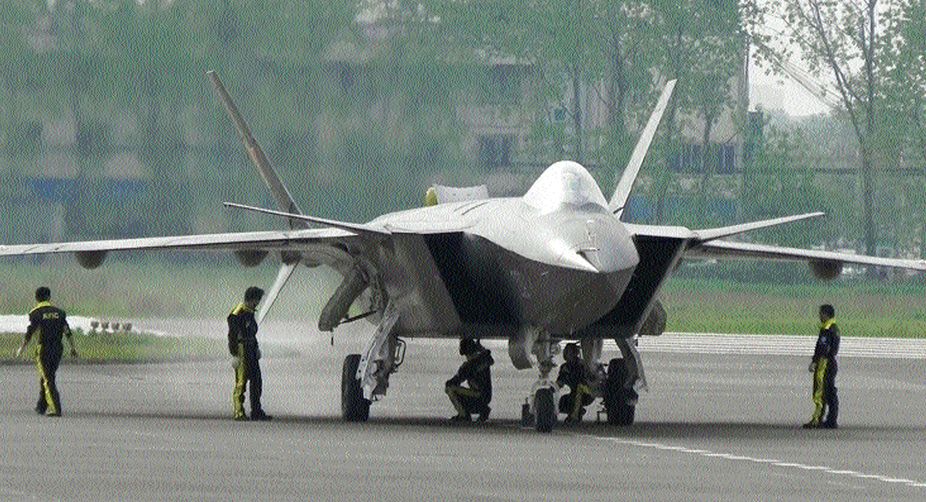
The pièce de résistance at the Zhuhai air show in
Guangdong province was the long-awaited Chinese J-20 stealth fighter jet. The
60-second flypast in a first ever, public sneak-preview was the cynosure of the
world as China demonstrated its claim of entering the exclusive club of
countries with “fifth generation” fighter planes. Touted as the only other
operation-ready answer to America’s Lockheed Martin F-22 Raptor (entered
service in 2005) and the Lockheed Martin F-35 (entered service earlier this
year), the J-20 is a strategic statement of intent by the Chinese that suggests
the narrowing down of the critical technology gap with the US, in a fight to
actualise the neologism of the “Chinese Century”.
The diffusion of technology, economic output and
power has reduced the spectre of US unipolarity, especially with the Chinese
claiming to have overtaken the mantle of the largest economy from the US.
Earlier, it was generally accepted that the Chinese were at least two decades
behind the US in terms of military capability, especially in maritime,
aerospace and technological dimensions. Therefore, with its numerical strength
(largest standing army of nearly 2.5 million vis-à-vis the second largest army
of the US with 1.5 million), the Chinese have a robust “defensive” position.
However, its hegemonic ambitions necessitate “offensive” capabilities that call
for exponential advancement in military ware like the J-20 or a navy with
“blue-water” capabilities. However, questions on J-20’s capability and efficacy
remain.
To put it in perspective, the French Rafale (36
bought by India) is a fourth-generation fighter, whose design concepts emanated
in the 70’s and 80’s, like the Eurofighter Typhoon, F/A 18 Hornet, MIG 29/35 or
the Sukhoi-35. The key differentiation in the fifth-generation fighters is the
emphasis on the “all-aspect stealth”, highly integrated systems that enable
networking with other elements and the deployment of advanced avionics and
airframes. So far, the Russians and Chinese are in catch-up mode with their
respective programmes of Sukhoi PAK FA and J-20, as the contending platforms to
the US F-22 or the more recent F-35. Incidentally, India has pegged its need
for a “Fifth-generation” fighter on the success of the Russian Sukhoi PAK FA
(with FGFA or Fifth Generation Fighter Aircraft, envisaged to be co-developed
with HAL as an even superior platform in terms of stealth, super cruise,
avionics and sensors). India is expected to procure 144 of these two-seat
versions, besides 50 original Russian single-seater versions, with the
induction expected to start from 2020.
Virtual undetectability, enhanced lethality and
ability to operate in hostile anti-access environments make these “fifth
generation” fighter planes worth the extreme cost (F-35 programme is supposed
to cost $1.5 trillion, making it the most expensive military weapons system in
the world). The sci-fi abilities include inter-operability to share everything
it can see with other aircraft and operational centres, 360-degree access to
“real-time” combat information, electro-optical targeting systems that deliver
laser and GPS-guided weapons — all this, while remaining undetected!
Concerns over J-20’s ‘stolen’ technology and
inability to fully match up with the US F-22 or the F-35 abound, with questions
on its radar-evading coating, design issues like poorly shielded engines,
avionics on-board or the sensor-fusion capabilities to make it a comparable
“fifth-generation” competitor. It is said that data stolen or hacked from the
American contractors contributed substantially to the development of the
Chinese J-20. US Deputy Defence Secretary Bob Work had conceded that the
Chinese “have stolen information from our defence contractors and it has helped
them develop systems”. J-20 is said to proximate the F-22 platform whereas J-31
(still under development by Shenyang Aircraft Corporation) is said to mirror
F-35.
The J-20’s relatively larger frame vis-à-vis the
American fighters, ought to give it a longer reach with more internal fuel
capacity and a larger weapon carrying bay for missiles and munitions. While it
may not be as stealthy or capable as the US platforms, it is still a quantum
leap in terms of its still hard-to-detect capabilities that could be superior
to anything in the region, be it the current Russian made Sukhois, MiGs or the
Japanese or Indian forays (e.g. the stuttering development of Tejas-LCA). The
Chinese are maintaining that the J-20 would be fully operational by 2018, and
could start induction thereafter. Already the Pakistanis, who are the largest
importers of Chinese arms, have evinced interest to buy the export variant of
the J-20 called the FC-31.
So, while exact details on the specifications and
capabilities are still patchy and doubts over the comparable US offerings will
persist, the J-20 development needs to be noted in terms of the
“reverse-engineering” feat of the Chinese and their ability to rapidly develop
and deliver a weapons platform, ahead of schedule. Even though it is early days
to fully operationalise and functionalise the entire J-20 support system to
make it lethal, there is the threat of Indian BrahMos missiles on the
Sino-Indian border that could bring the Daocheng Yading airport in Tibet within
the “first-wave” hit. We need to recalibrate our future response with the
options of accelerating the joint Indo-Russian FGFA or even considering the
American F-35s which are on order by countries like Israel, Turkey, South Korea
and a host of European countries.
Already, tensions in Asia are rife like never
before: the Middle East and Af-Pak region are caught in a Pan-Islamic fire,
Indo-Pakistani LOC is witnessing unprecedented cross-border hostility, the
North Korean belligerence continues, and the Chinese have upped the ante in the
restive South China Sea with its famed bullying and intimidation tactics that
threaten the sovereignty of nations in the region. Seen in this cauldron, the
J-20 threatens to unbalance the delicate security arrangement with a fresh
imperative towards a corrective arms race. The J-20 may not be a game changer
in capabilities as postured, but it surely is a dangerous spoiler.
–By Bhopinder Singh
The writer is Lt Gen PVSM, AVSM (Retd), Former Lt
Governor of Andaman & Nicobar Islands & Puducherry.
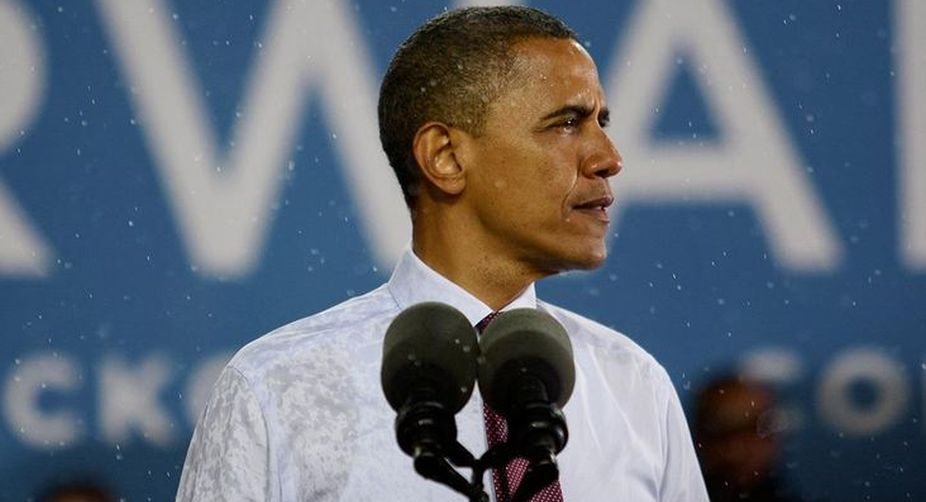
Merkel has been an ‘outstanding partner’, says Obama
US President Barack Obama lauded German
Chancellor Angela Merkel on Thursday as
an “outstanding” international partner who showed a recognition that
being a good leader also meant engaging with the world.
“All I can say is that Chancellor Merkel
has been an outstanding partner, and Chancellor Merkel is perhaps the only
leader left among our closest allies that was there when I arrived,” he
said, after talks with Merkel in his farewell tour of Europe.
While acknowledging that they have not always
been on the same page every issue, he cited Merkel’s “integrity, her
truthfulness, her thoughtfulness” among traits he appreciated.
“Her commitment to looking out for the
interests of the German people first, but recognising that part of good leadership
on behalf of the nation requires engaging the world as a whole… I think she’s
been outstanding.”
In a ringing endorsement of Merkel before
she announces if she would stand for a fourth term in next year’s elections,
Obama said: “It’s up to her whether she wants to stand again… but if I
were here and I were German and I had a vote, I might support her.”
Obama acknowledged that Merkel will have
big international burdens to shoulder if she decides to run again.
“I wish I could be there to lighten
her load. But she’s tough,” he added.
Our thought process is very similar, says Alia about SRK
Alia Bhatt, whose Dear Zindagi is all set to hit the screen on November 23, says that after working with Shah Rukh Khan, she realised that they both share a similar thought process.
At the promotional interactions on Thursday for her upcoming release, asked about her personal equation with Shah Rukh, said: “I got to know Shah Rukh as a person during the shooting. Before this, I hardly spent time with him. We met socially sometimes, but only after spending time with him, I realized that our thought process is quite similar.”
“Shooting with Shah Rukh Khan is a big deal, specially for me, as I have been in industry for just 4 years, so I was bit nervous. But he is a very warm person. He goes out of his way to make you feel comfortable. And he exactly did that. So after, half day of shooting I was feeling quite relaxed,” she added.
Alia, who is always known for her poor jokes and her 'not so great' general knowledge, feels that flaws should not be hidden away, but celebrated. “Flaws have to be there. We have come up with something like 'Flawsome'. Its like, to have flaws is awesome. If you have flaws, do not hide. Like I have a flaw of speaking too fast, but I celebrate it instead of hiding away from it. So everyone has some flaws, but its not bad as flaws are also necessary,” she said.
The actress who have portrayed a wide range of roles within a short span of four years admits that Dear Zindagi is a very different film and admires her director Gauri Shinde for it. “The film is genuinely different. People have not seen or experienced this kind of story before. Its a story about life and people would definitely take something with them after watching this film,” she said.
Praising Shinde, Alia said: “I loved working with her and would love to work with her again. Her thinking is very precise and concepts are very clear. No fakeness at all and a very real, clear person. I feel Gauri is a very unique voice of our film industry.”
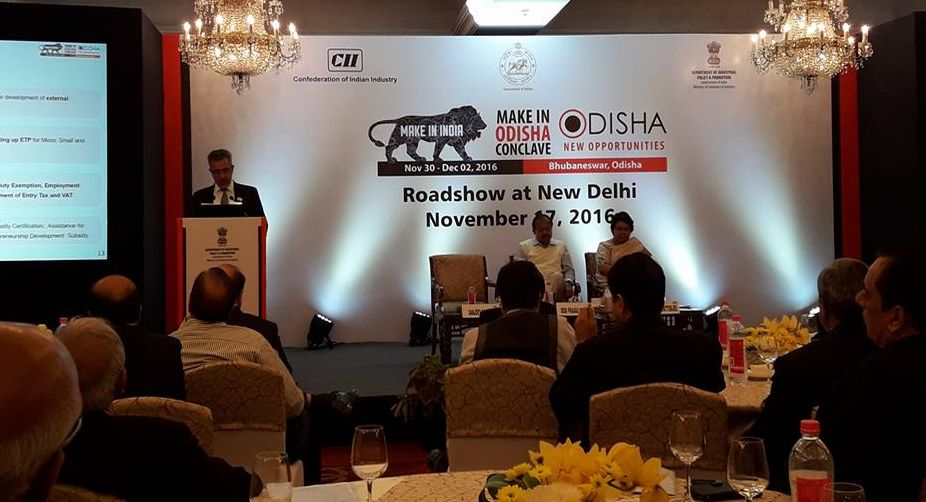
22 companies in Make in Odisha Delhi road show
(Photo: Facebook)
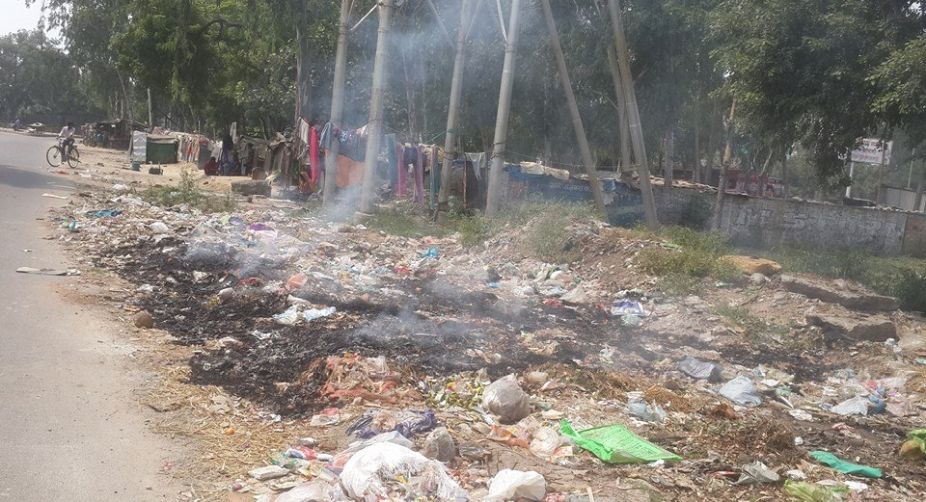
Workshop on new solid waste management rules in Shimla
Representational image (Photo: Facebook)
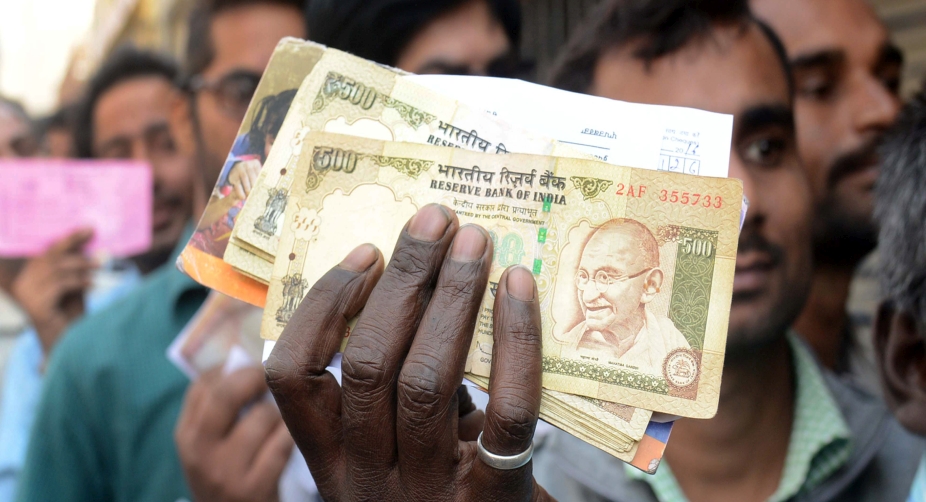
India forms task force to facilitate notes-exchange for Nepal, Bhutan
Indian currency is freely exchangeable in Nepal and Bhutan and following the Indian move to demonetise its high-value bank notes.
(Photo: AFP)
No plan to reissue Rs 1,000 note, ATMs being recalibrated: FM
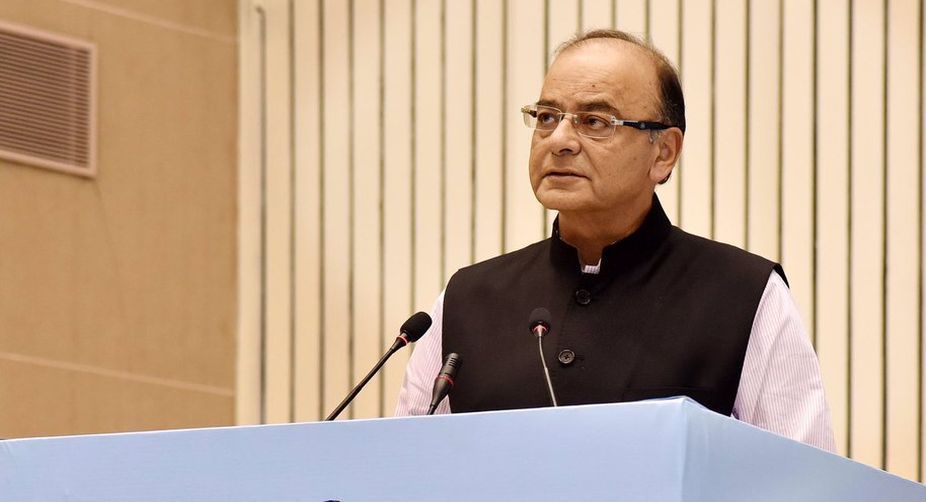
Finance Minister Arun Jaitley (PHOTO: Twitter)
Declaring there was no plan to re-monetise Rs.1,000 notes, Finance Minister Arun Jaitley on Thursday said the decision to reduce the exchange limit for demonetised notes to Rs.2,000 is designed to stop the misuse of funds.
The finance minister also said that 22,500 ATMs would be re-calibrated on Thursday.
“The government's decision to limit the exchange of banned Rs.500 and Rs.1,000 notes to Rs.2,000, from the existing cap of Rs.4,500, would stop misuse of funds,” Jaitley told reporters here.
“As of now, there is no plan to reintroduce Rs 1,000 note,” he said. He also said that around 10 per cent of ATMs would be recalibrated to dispense new notes.
“As many as 22,500 ATMs will be recalibrated today (Thursday) to allow withdrawal of Rs.100, Rs.500 and the Rs.2,000 notes. Nearly 2 lakh ATMs exist as of now,” he added.
He further said the decision to allow withdrawals up to Rs.2.5 lakh in case of marriages was intended as a relief for the common people.
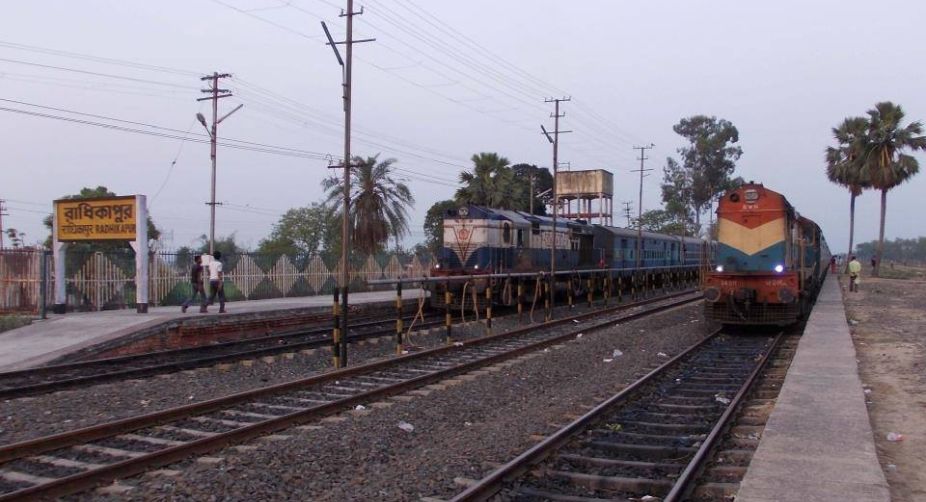
Rail blockade in Northeast withdrawn
Representational image (Photo: Facebook)
‘Fukrey 2’ shoot starts rolling in Delhi!
A still from 'Fukrey'
Philippines President threatens to pull out from International Criminal Court
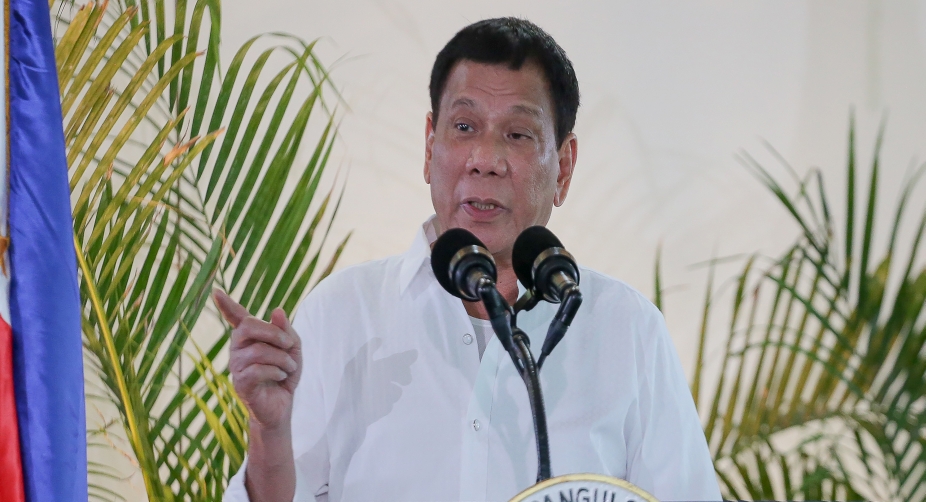
Philippines President Rodrigo Duterte threatened to withdraw from the International Criminal Court, following criticism from Western countries of his aggressive anti-drug campaign.
Philippines President Rodrigo Duterte (Photo: AFP)