Photo
MORE Photo STORIES
Sensex, Nifty trade higher in morning trade
(Getty Images)
EFL Cup: Liverpool ease past Leeds United
Have Liverpool unearthed a new icon in young Benjamin Woodburn?
Benjamin Woodburn (Photo: AFP)
Photo
MORE Photo STORIES
Canada PM approves controversial pipeline to Pacific Coast
PMO to notify CMs’ panel on making India less-cash economy
DCW staff take to the streets seeking 3 months’ salary
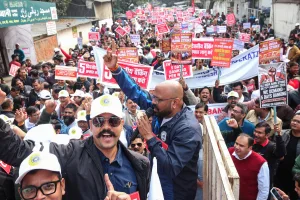
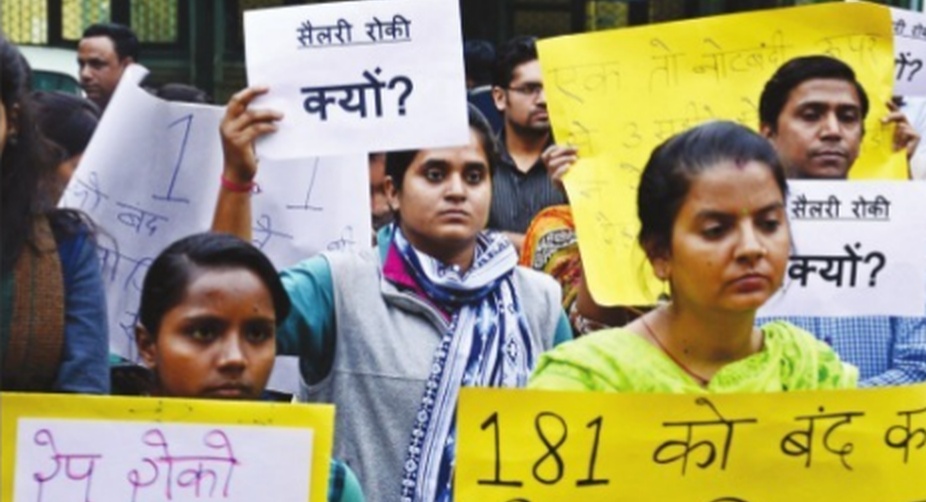
The contractual staff of Delhi Commission for Women on Tuesday silently protested outside the woman’s body office against non-payment of salaries for the last three months.
The contractual staff of Delhi Commission for Women on Tuesday silently protested outside the woman’s body office against non-payment of salaries for the last three months. They also submitted a memorandum to member secretary Alka Dewan requesting her to release their salaries.
Kuma, a consultant for 181 Women Helpline said, “We have not received salary for the last three months and now we don’t have money to commute. Some of the staff have mortgaged their gold to meet the daily expenses.” Mohini, assistant coordinator in Delhi Commission for Women and an acid attack survivor, said, “We are facing many problems due to non-payment of salary. I have a one-year old baby and he was sick. As I didn’t have money to take him to a doctor, I borrowed money from a neighbour to take him to a doctor. The situation is so bad that it is better to commit suicide,” The staffs are working in the rape crisis cell, mobile helpline, 181 women helpline, mahila panchayat, etc.
Among the unpaid workers, some are orphans of Nari Niketan, acid attack survivors, dowry harassment survivors and women from extremely vulnerable backgrounds. DCW chief Swati Maliwal said, “For three long months, the entire contractual workforce of DCW has been denied their salaries. Over 90 per cent of them earn less than Rs 25,000. They are on the verge of leaving their jobs. I believe they are continuing only because they understand that the programmes of the commission will close if they do so. I have worked in nights to build the present DCW. It is really painful to see its work sabotaged in this manner by the present member secretary. I urge Lieutenant Governor Najeeb Jung to immediately intervene and ensure our salaries.”
“Our commission is the only gover nment body which functions even on Saturdays. It is difficult for us to survive without salaries for three months. We will be forced to quit jobs under these circumstances,” said the memorandum.
Amarinder plays smart to connect with youths
Free laptops are passé,smart phones appear to be the next ‘in-thing’when it comes to wooing youngsters in the election season.
Punjab Congress chief Captain Amarinder Singh (Photo: Facebook)
Free laptops are passé,smart phones appear to be the next
‘in-thing’when it comes to wooing youngsters in the election season. While a
number of political parties in the past have promised to offer free laptops
across the country, Punjab Congress chief Captain Amarinder Singh has taken a
step forward by promising 50 lakh 4G ‘smartphones’ to youth aged between 18 and
35 years if the party comes to power. Registrations for these smartphones are
being carried ‘online’ till 30 November.
To get registered, one must be a bonafide resident of
Punjab, aged between 18 and 35 years, must have passed matriculation and
his/hers yearly income should be less than Rs 6 lakh. Not surprisingly,the
Congress claims that registrations for this ‘Captain Smart Connect Scheme’ have
crossed over 13 lakh till date. Of this, 19 per cent registrations have come
from Ludhiana, 8.8 per cent from Amritsar and 8.2 per cent from Patiala.
More than 82 per cent of those who have registered are men
and 18 per cent are women. Interestingly, most of the women who have registered
for the smart phones belong to Chandigarh, Jalandhar and Ludhiana. About 60 per
cent of the registrations have come from people between the age of 18-26 years
and 30 per cent are from the 27-35 years age group. Congress workers, supported
by the party’s student and youth wings as well as election strategist Prashant
Kishore’s Indian Political Action Committee (IPAC) team members, have been
keeping a close watch on registrations through special desks set up near
colleges, coaching centres, market areas and even ATM queues.
Youths registering
through the website are being provided receipts with unique codes, which will
entitle them to receive the 4G-enabled ‘Smart Phone’. Vijay Inder Singla,
Congress leader and former MP from Sangrur, said that the ‘Captain Smart
Connect’ initiative was aimed at helping youths belonging to poor families, who
can’t afford smart phones.“It is a unique initiative and is definitely going to
help the youths in the state. It will also help to educate the youths who are
deprived of socio-economic benefits,” he said. Capt Amarinder on 20 November
promised to give 50 lakh ‘smart phones’ with one year of data and calling
service for free. He had said that the party will make allocation in the state
budget to meet the cost of the scheme.
Unhygienic conditions at Gurgaon hospital lab
More than 100 people queue up daily at the laboratory in the Civil Hospital located in the Millennium City for free medical tests but they are unaware of the terribly unhygienic conditions.
(Photo: Getty Images)
More than 100 people queue up daily at the laboratory in the
Civil Hospital located near the bus-stand in the Millennium City for free
medical tests but they are unaware of the terribly unhygienic conditions in
which these tests are conducted.
At the lab,The Statesman spotted used syringes and open
bottles of urine samples lying next to unused syringes. Patients names were
missing in the samples.On being asked about the open bottles of urine, an
attendant said: “We have conducted the tests and these are of no use now.” The
government hospital conducts around 50 medical tests free of cost. These
include blood test, urine test, HIV, pregnancy test, malaria test, ECG, blood
sugar and cholesterol test. There are long queues every day for these tests.
Santosh,a 36-year-old woman, who had come for a blood test, said she works at
people’s homes and tries to save money for her children’s education.
“If I had gone to a private lab they might have charged more
than Rs.500. I earn very little and I can’t afford a huge amount,” said
Santosh. A man and his mother were squatting on the floor of the hospital. He
had brought her for a blood sugar test. He said: “I have come from Kherki Daula
village. My mother was admitted here yesterday.Today,a blood sugar test was to
be conducted on her but the attendant said the machine is nonoperational.Now,I
am waiting for the doctor to ask him what to do.” One of the nurses said the
government had instructed them to conduct tests but there was no proper
infrastructure.
“We have to cut a sorry figure whereas it is the duty of the
government to send necessary equipment and machinery for these tests,” she
added.
Who wouldn’t want to date Salman Khan: Amy Jackson
Actress Amy Jackson says any girl would love to date superstar Salman Khan.
Actress Amy Jackson (Photo: Facebook)
Actress Amy Jackson says any
girl would love to date superstar Salman Khan.
The actress considers the
50-year-old star a “great friend”, who has given her a lot of
confidence.
There were reports that
Salman made a surprise appearance at “2.0” teaser launch to support
Amy.
When asked would she like to
date the “Sultan” star, the actress said, “Who wouldn’t like to
date Salman Khan? I am totally single and I am very happy.”
Amy was speaking at the
launch of a magazine. The actress was part of Salman’s brother Sohail Khan’s
directorial venture “Freaky Ali”.
“Salman has been great
as a friend and giving me lot of guidance. Also Akshay Kumar has always been
helping me,” she added.
Amy said she would love to
star opposite Salman if she gets an offer. The actress also praised the star
for his fit physique.
“Salman has dropped 20
kilos now. He was there at the ‘Robot 2’ launch and I was like how did you lose
that in a month, he has done a brilliant job. He has incorporated lot of cardio
into his routine. He looks fantastic,” she added.
It’s all in your blood
The dream of using ‘vampire’ techniques to look younger and live longer might have delighted goths and the vain alike.
Representational image (Getty Images)
The dream of using “vampire” techniques to look younger and
live longer might have delighted goths and the vain alike. But scientists have
warned them not to get too excited. They have said that the treatments, which
involve taking young blood and injecting it into older people in an attempt to
rejuvenate people’s bodies, don’t actually work. But the research has found
that old blood does in fact perform an important part of the ageing process and
contributes to declining health. That might mean that there are treatments for
older blood that helps relieve those effects.
The same team had previously
found that giving older mice younger blood seemed also to give them a new lease
of life. They published their work in a study in 2005. It quickly led to talk
of vampires and hopes that similar techniques could be used to improve the
lives of people, too. But the study wasn’ t able to control the flow of blood
precisely enough to be sure about how the effect was working. For the new
study, precise measurements were made of the way old mice responded to young
blood, and viceversa. It showed that young blood made little or no difference
to indicators of ageing and health in older mice. In contrast, young mice
receiving older blood experienced significant deterioration of their tissues
and organs.
The rapid changes occurred within 24 hours and affected multiple
tissues including muscle, liver and brain. Lead scientist Irina Conboy, from
the University of California at Berkeley, US, said, “Our study suggests that
young blood by itself will not work as effective medicine. It’s more accurate
to say that there are inhibitors in older blood that we need to target to
reverse ageing.” Mice in the original experiment not only shared blood but also
organs, so that older animals benefited from young lungs, immune systems,
hearts, livers and kidneys.
The new study, reported in the journal Nature
Communications, removed the influence of shared organs. In a series of trials,
blood was exchanged between an old mouse and a young one until each animal had
half its blood from the other. Various indicators of ageing were then tested
including liver growth, scarring and fattiness, brain cell development
affecting learning and memory, and muscle strength and repair.
The most telling
results came from the brain tests. Older mice showed no improvement in neural
regeneration from stem cells after receiving young blood but young mice given
old blood saw a more than two-fold drop in brain cell replacement. Conboy
added, “Under no circumstances did young blood improve brain neuro-genesis in
our experiments. Old blood appears to have inhibitors of brain cell health and
growth, which we need to identify and remove if we want to improve memory.”
Circular replication
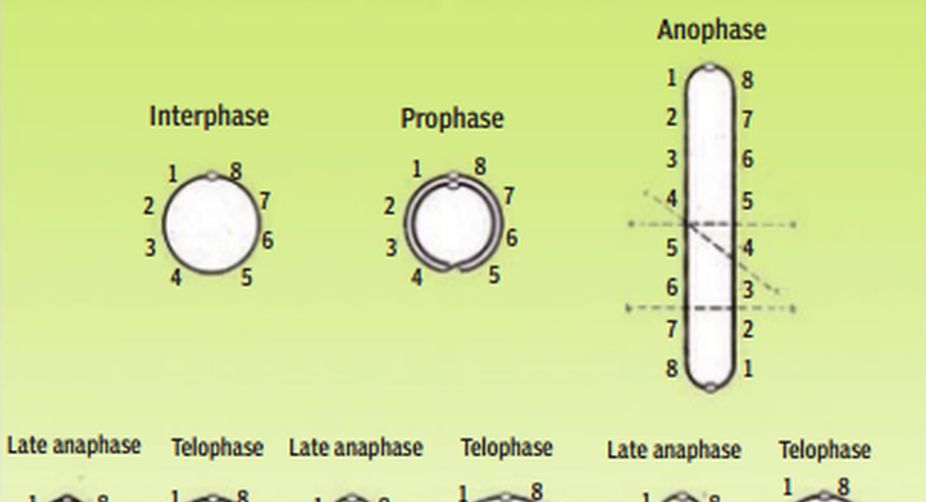
Ring chromosomes have been described in a number of organisms from viruses to humans, but it is now evident that as a group they are similar only in a superficial, morphological sense. Some are naturally circular, others can be artificially produced while others must be considered sporadically occurring aberrations. The circularity of the lambda bacteriophage chromosome is due to the complementary redundancy of single polynucleotide sequences, which terminate the chromosome, thus permitting it to exist either as a ring or a linear structure.
The chromosome of Escherichia coli, which is one mm in length and possesses a molecular weight of about two billion, replicates in a circular form although the manner of unwinding of the double helix of DNA during replication still remains a puzzle. The genetic map of such chromosomes would, of course, be similarly circular, for the topography of the map and the physical nature of the chromosome must be consistent with each other. However, such consistency is not found in the T2 or T4 bacteriophage — the map is circular, but the chromosome is a linear structure, 56 µ in length. The T2 chromosomes are circularly and genetically permuted and possess a terminal redundancy amounting to about two percent of the total length. Partial enzymatic digestion followed by annealing produces circular chromosomes, providing proof of the terminal redundancy.
Therefore, the circularity which occurs naturally in lambda bacteriophage can be artificially induced in the T2 virus. The ring chromosomes of higher organisms, however, must be viewed as aberrant types. They have been studied in Drosophila, maize, and humans, and although they can be perpetuated in certain experimental stocks, they would, in the long run, tend to be eliminated in any situation where they compete with their normal linear homologues. This fact is evident from their behavior, for although they can reproduce in such a manner as to give two un-entangled rings, they also give rise to interlocked rings and to double-sized, di-centric single rings. The fact that cleanly separating rings can be formed at all is, by itself, surprising if it is assumed that the DNA molecule replicates semiconservatively.
In maize, however, small ring chromosomes freely separate a fair percentage of the time while larger rings have a greater tendency to be interlocked or to form double-sized di-centric rings. Ring chromosomes in humans have involved the X chromosome, some other members of the six-12 group of chromosomes, and chromosomes 17 or 18.
All are associated with phenotypic abnormalities, and it seems reasonable to suppose that the loss of chromatin accompanying formation of the rings and the irregularity of transmission of these chromosomes are responsible for the observed abnormalities.
Preponderance of first digits
Natural processes have characteristics that get disturbed when there is motivated action. Numerical markers of “normality” can then signal anything unusual, in a way that those responsible may find it difficult to conceal or where normal detection may take more time or effort. Professor Shankar Venkatagiri, mathematician and member of the decision sciences and information systems area at the Indian Institute of Management, Bangalore during the annual meeting of the Indian Railway Accounts Service at the Rail Wheel Factory in Bangalore, described features of numbers and the way that fraud detection agencies, as well as the world of business, make use of patterns to detect threats and opportunities.
A little known property of numbers that arise in natural processes is that the first digit of these numbers is not uniformly distributed, but tends to be low, like one, two, or three rather than high, like eight or nine. For example, the height of mountains in feet, or of buildings in millimeters, would be numbers, typically, from a few hundreds to many thousands. Now, the first digits of actual numbers, which may be 12,335 or 8,322 or 6,345, for instance, are one, eight and six, in these examples. Would there be a tendency for this first digit to be preferentially in some range, rather than be uniformly distributed from one to nine?
While one would normally expect that all the digits from one to nine are equally likely to be the first digit in long lists of numbers, which cover many orders of magnitude (rather than stay in a limited range), Venkatagiri explained that there was a counter-intuitive law which said this was not so. The Benford’s Law, he said, was that one was the first digit as often as 30 per cent of the time and nine appeared at the first place only 4.6 per cent of the time. The percentage of times that all the digits arise and a graph of how they fall, from 30.1 per cent to 4.6 per cent, is shown in the picture. This rule about how the first digit is more often not a lower number has been verified in a great many instances, like the area of lakes in a district, population sizes, birth or death rates, electricity bills and commodity prices. It will be noticed that these are numbers that arise “naturally” or without a design that affects the first digit.
This would not be the case, say, in the height, in inches, of the average 12-yr-old, which would be between 50 and 60 inches, with five as the most common first digit. The area of a lake, in square metres, or populations, for instance, could be anything from a few hundred to thousands or even hundreds of thousands. While this feature of the first digit being low numbers rather than high ones would seem surprising at first, it can be understood with a little analysis. The number 1 we can see, occurs as the first digit, first, by itself, then from the numbers, 10 to 19 and then from 100 to 199, and so on. The number, two, similarly, occurs as the first digit first by itself, then from 20 to 29, and then from 200 to 299 and so on. The same sequence is true of three. What we notice is that one gets repeated first within nine numbers of its first appearance, and then after just the next 80 numbers. But the number, two has to wait for 18 numbers before the first repetition and then for 170 numbers before the second repetition. The wait before repetition keeps extending, like this, for the numbers, three to nine — it being from 100 to 899, or 799 numbers before the second repetition of nine as first digit. That is ten times the wait of only 80 numbers for one. When we reach higher numbers, the distance between successive appearances of the higher digits extends exponentially or the greater the number, the more marked the higher separation of occurrence. This is the reason that in a collection of numbers that cover a wide range, the distribution of first digits follows Benford’s law.
A direct application is to capture the numbers generated in a system and to keep checking if the first digits follow Benford’s law. One kind of fraud in banks, for instance, is with the daily interest calculated on balances. The fraudster manipulates the system to add some small figure to the interest worked out on a thousand accounts and transfer the total amount to a separate account that the fraudster can access. If the bank had a “Benford’s law check system” in place, it would regularly inspect the first digits, and also some other features of the numbers in the bank’s records. If all is well, the numbers follow Benford’s law. But if there is a systematic change being made, this would reflect in how the first digits appear and alert the bank’s auditors. A similar application could be in the data collected through surveys. Figures that arise from honest surveys show features that do not appear in fictitious data or even in data where there have been errors in sampling. Applying statistical checks on the numbers could then show that corrections need to be applied. This kind of check could be vitally important in statistical quality checks or checks that ensure safety. Venkatagiri went on to describe other uses of capturing and analysing numbers, like in maintaining law and order, public health, scheduling material movement or public transport. An area of great use was in advertising and marketing.
The clicks on pages of search engines like Google, or in the course of purchases on the Internet were captured and made use of to send specifically sele-cted advertisement messages to individual users, based on their browsing behaviour. Venkatagiri also described how Google may be able to detect an epidemic before the health administration of a state came to know of it. Particularly in countries where medical help or dispensing was expensive, the occurrence of symptoms was revealed first in the way Internet users carried out searches rather than in the records of their visits to doctors or hospitals. Google could hence use its data to alert governments of apparent rise in the incidence of body pain and fever, for instance, to set in motion a process of investigation and containment.
‘Easing pain’
(Photo: AFP)
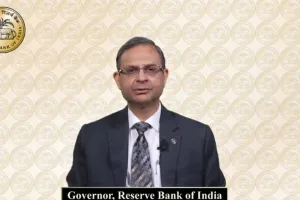
As a matter of high principle politicians should avoid dragging heads of supposedly-autonomous institutions into their customary bickering. That lofty sentiment, however, is rooted in the premise that those “heads” strive to retain the independence of the institution, and place interests of the common folk above the political aspirations of the government of the day.
While the jury is “out” on the role of the Reserve Bank of India in the current demonetisation controversy, it is worth noting that its Governor has not responded to the contention of a Cabinet minister that it had advocated the “once in a lifetime event” – but has spoken of “easing the genuine pain of citizens who are honest and who have been hurt.” Whether the Prime Minister, finance minister etc accept that formulation of Urjit Patel is unclear: it is in considerable contrast to their standard line of “temporary inconvenience” (without daring to put a time-frame on it) and promising long-term gains. And runs counter to their attempt to project electoral success as public endorsement of their bid to dismantle the shadow economy.
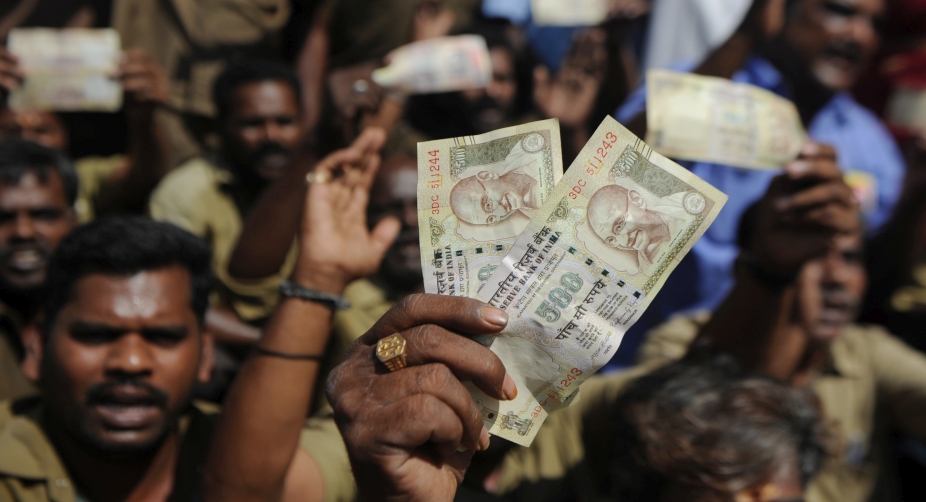
The Governor would be well aware that a genuine “certificate” would have to be issued by professional experts – which has not been forthcoming thus far. The Reserve Bank will have to do a lot more to fulfil its’ Governor’s aim of easing genuine pain, its actions will speak louder than the claims of the political leadership and pliant officials. Unfortunately no “visible” action has been taken, and the claim that the queues are shortening would be contested – particularly by those going to banks/ATMs but preferring to return rather than spend uncomfortable hours in what might turn out a futile exercise. It is apparent that the series of knee-jerk measures announced by the government have not really eased the situation, and the RBI must make positive interventions to restore public trust and confidence in the banking system – a trust unlikely to be regained via the now-favoured “plastic” panacea.
The Governor’s assurance that the presses were working at maximum capacity is more reassuring than the campaign for cash-alternatives that only confirm a lack of preparedness for the “mammoth” exercise. Surely steps to popularise debit cards etc should have been taken ahead of pulling 86 per cent of the currency out of the system? That the Governor broke his silence only after much political heat was turned on the RBI suggests that he and top officials were not really sensitive to what they saw around them. Perhaps they were aware, but wary of doing anything that might “undercut” the position taken by the government. Hence a lurking suspicion that Urjit Patel & Co. are being made the “fall guys”.


No plan to extend Dec 30 deadline for old notes, says Govt
Representational image (Photo: AFP)
No secret talks with Pak on CPEC, says Russia
Representational image (Photo: Getty Images)
Fitch lowers India’s GDP outlook to 6.9% for 2016-17
(Getty Images)