Logo

Ashton Kutcher, Mila Kunis trying for another baby

IANS |

Star couple Ashton Kutcher and Mila Kunis, who welcomed their second child Dimitri in November, are reportedly already thinking about baby number three.
Kunis, 33, gave birth to her and Kutcher‘s second child — son Dimitri — on November 30, giving their two-year-old daughter Wyatt, a sibling. 
“Ashton and Mila are not done in the baby making department, and she is eager to start again sooner than Ashton might be ready himself,” hollywoodlife.com quoted a source as saying. 
“They want a big family, and she feels the sooner the better. As much as she likes to act, she is okay with doing voiceover work to substitute the time to have even more family. So don’t be surprised when she gets pregnant again,” the source added. 

Kourtney throws ‘Fast and the Furious’ theme party

IANS | Los Angeles |

Reality TV star Kourtney Kardashian threw a birthday party with the Fast and the Furious theme for her sons.
Kourtney, 37, arranged the party on Saturday for Mason, who turned seven on December 14, and Reign, who was two on the same day, at her home here.
The celebrity, who also has four-year-old daughter Penelope with Scott Disick, was casually dressed for the party, teaming her skinny jeans with sneakers, an oversized denim jacket and a red, white and blue bandana around her head, reports femalefirst.co.uk.
Entertainment at the party included a huge car-shaped bouncy castle, and a tricycle race track, and all guests — young and adult — enjoyed the fun.
A giant balloon display in the garden spelled out The Fast and the Furious.

A real challenge

Rangan Dutta |

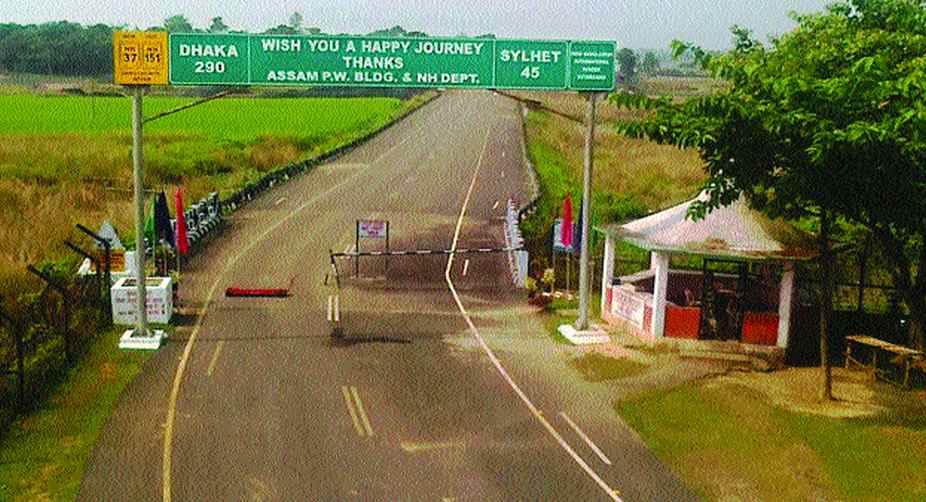
The liberation of East Pakistan and the birth of Bangladesh in December 1971 was a momentous event of the post-World War II period for several reasons. First, it was the most populous state created after decolonisation and that too by dividing the Bengal Delta which, according to geographers, is not amenable to any physical/ political division, as that entails intractable problems like sharing of river water and fixing boundaries.
Second, Bangladesh is the only Muslim region that seceded from another Muslim state, Pakistan, which was carved out, ironically, as a homeland for Indian Muslims. It is another matter that practically all Muslims, other than those in the Indian part of Punjab, decided to remain in India and there was virtually no migration of Muslims from West Bengal and Assam. 
Few would recall today that the Constituent Assembly and the provincial assemblies, which decided to divide India, were formed in 1946 by an electorate of only 30 million, as the franchise was severely restricted under the Government of India Act 1935.
In the North-east, the emergence of Bangladesh produced mixed feelings of high hopes and apprehension, as it also coincided with the reorganisation of Assam and  the region under the North East Areas Reorganisation Act 1971. The reopening of the river route and border trade were well received  but after  the assassination of Sheikh Mujibur Rahman and the beginning of the Assam movement against foreign nationals from 1979, primarily to stop influx from Bangladesh, the country came to be seen as a part of the problem. That produced an attitude of, what may be described at best, constructive indifference and  apathy towards Bangladesh in the North-east throughout the last three decades with the exception of Tripura. This is  evident  from the fact that the North-east media routinely ignores the positive developments in Bangladesh and the great strides it has made in diverse fields like becoming the only near total open defecation-free country in South Asia, high female literacy and empowerment, and in micro credit and women micro enterprises and garments industry.
 Yes there are problems caused by political Islam and terror but progressive forces are also at work, taking the country forward, which prompted observers to call it the “Bangladesh paradox”. Above all, it has proved Henry Kissinger’s assessment wrong by earning the tag of an emerging economy. It is in the interest of the North-east to note the unreported economic success story of Bangladesh and recall what the late Purna Sangma said “for us in the North-east, Look East means look South to Bangladesh first”. 
In this background, certain recent developments of the Bangladeshi economy deserve notice. According to the International Monetary Fund, Bangladesh is the second fastest growing economy of 2016 with 7.1 per cent rate of growth (projection for 2017 being  6.9 per cent) and per capita GDP in nominal US dollar terms is at $1,403, which calculated at the Purchasing Power Parity on 2016 prices, works out as $ 3,889. 
This position of GDP per capita being above $1,000 has enabled the World Bank to raise Bangladesh from “low income” to “lower middle income” group of countries — it includes India and Pakistan as well. 
We may also note that the per capita GDP of Bangladesh as well as its growth rate are about the same as ours, estimated at about $ 1,500 and 7 per cent, respectively. This will cause some discomfort in some circles who view Bangladesh  as “desperately poor” — evidently its per capita GDP is well above the per capita income of individual North-eastern states. Bangladesh’s economy is robust and diversified with a strong export sector led by the ready-made garments industry, which contributed $ 27 billion in 2016. With advancing skills and entrepreneurship imperative for market-led growth, the size of the Bangladeshi economy — presently close to $ 200 might scale up to $ 332 in 2021 as per World Bank projections. 
This breakthrough, according to observers, is quite feasible as Bangladesh can be an export power house at the level of her East Asian neighbours by improving its business competitiveness. The annual remittances from migrant Bangladeshi expatriates are about 7.9 per cent of GDP now, which is a huge development resource for the country as it provides a solid cushion for balancing the foreign trade account. Interest-ingly, the high growth forecast is partly based on a 44 per cent increase over 2014 in flow of FDI which for the first time has crossed two billion dollars. 
Bangladesh’s social development indicators are impressive — the life expectancy at birth is now 70 years and longer than India and Pakistan and significantly, the proportion of people below the poverty line  is now 22 per cent due to effective implementation of poverty alleviation programmes and the great success of Grameen model of women-led micro credit and entrepreneurship development — in which the Chinese have recently shown an interest. This and employment of women in the garments industry raised women’s participation in the work force and consequently, the assertion of their rights. Thus it has been possible for Bangladesh to ban “triple talaq” even when it is an Islamic Republic while India is still grappling with this matter.
The challenges are still many. Bangladesh is most vulnerable to climate change as two-thirds of its land is at less than five metres above the sea level and 60 per cent of the population is dependent on agriculture. However, Bangladesh is endowed with two trillion cubic metres of gas. In this context, the 2015 order of the UN Permanent Court of Arbitration in the matter of its dispute with India has given Bangladesh a great advantage when the latter established a case for its “sovereign rights on more than 1,18813 sq km of territorial sea, 200 nautical miles of Exclusive Economic Zone” and all kinds of animal and non-animal resources under the Continental Shelf up to 354 nautical miles from Chittagong. The Tribunal awarded Bangladesh 19,467 sq km of maritime area out of 25,602 sq km of disputed area. This is a big boon for Bangladesh as the territorial sea area allotted is bigger than its land area and rich with under-sea oil, gas and marine resources.
In this scenario, during Chinese President Xi Jinping’s visit to Dhaka in October, on his way, to the BRICS summit at Goa, it was declared that China would  support the development efforts of Bangladesh with an investment of $ 26 billion for infrastructure. That has great geo-political significance for  eastern and North-east India for several reasons.
First, it would be the largest FDI for infrastruc-tural facilities in Bangladesh, which would enable it to absorb the shifting of some Chinese industries, which might be rendered unviable there due to rising labour and other costs of manufacturing. Second, it would raise significantly Bangladesh’s demand for coal, cement, iron and steel, limestone and other products now available in its neighbourhood in the North-east and other parts of India. Third, the increase in North-east India-Bangladesh trade may facilitate reopening of the rail-road transit facility through Bangladesh and access to the Chittagong and Mongla ports. That is important because when the Kaladan multi modal India Myanmar project is fully operational, Bangladesh might be inclined to share a part of the increased cargo movement with India’s North-east. 
There is, however, a need to develop a strategy to take advantage of this opportunity, which Tripura had shown by putting in place the Agartala doctrine of framing its own approach to Bangladesh while taking the Centre fully on board. This is clear from the launch of the Agartala-Dhaka direct bus service, project for construction of the Akhaura-Agartala rail link, and supply of power to Bangladesh from its Palatana gas-based power plant. The plant’s construction was facilitated by Bangladesh as it agreed to use of its river port for moving heavy power generation machines to Tripura that reduced the project cost significantly. This shows that each North-eastern state, and Assam and Meghalaya in particular, will need a state-specific policy for raising the level of economic interaction with Bangladesh. And one must note that implicit in the Act East policy — an effort to participate in the globalisation process — is a lesson derived from post World War II development experience that “geography is economic destiny” of all nations. 
Thus  initiatives like the Trans-Asian railway and highways network are all set to reduce the importance of national frontiers for progress. In this emerging scenario of a new South and South-east Asia, a paranoiac attitude to one’s neighbourhood, for whatever reason, makes little practical sense and should be substituted for enlightened national interest to see and reap benefits from developments in the neighbourhood. This is the real challenge before the North-east in the 21st century.
The writer is a retired IAS officer of Assam-Meghalaya cadre and had served as a scientific consultant in the office of the Principal Scientific Advisor to the Government of India


Nayanthara’s ‘Kolayuthir Kalam’ a remake of ‘Hush’

IANS | Chennai |

Actress Nayanthara’s upcoming Tamil thriller Kolayuthir Kalama, which will be directed by Chakri Toleti, is reportedly based on Mike Flanagan’s English invasion thriller, Hush, a source said.
“It’s not an official remake but will be based on the recent indie hit ‘Hush’. You could call it the kind of film where ‘Hush’ meets ‘Don’t Breathe’. The principal shooting will commence from January next year,” an industry source said.
Hush, starring Kate Siegel in the lead, is the story of a deaf and mute author who is struggling to complete the climax of her latest novel when she falls prey to a psycho killer.
Nayanthara, too, plays a deaf and mute character.
“She might not be playing an author but she will reprise the same character from the original. In fact, the first poster of the film, which features Nayanthara with a hand covering her mouth, symbolically indicates that she plays a mute character,” the source said.
The first look poster of the film was released last month when the project was officially announced.
Yuvan Shankar Raja has been roped in to compose the music. He will co-produce the film with Vashu Bhagnani and Deepshikha Deshmukh.

Twitter to update camera app

IANS | New York |

Twitter will update the existing short-form video hosting app Vine to a pared-down Vine Camera despite the service being shut down.
“In January, we are transitioning the Vine app to a pared-down Vine Camera. With this camera app you will still be able to make six-second looping videos, and either post them directly to Twitter or save them to your phone,” a blog post by the Vine team said. 
Vine is also rolling out a way to make it easy for Twitter users to migrate their Vine followers to Twitter.
According to a report in Variety, the Vine website will also stay up and running, allowing users to continue to watch past Vines. However, from January, no new videos can be posted on Vine.
“Twitter first announced in October that it was going to shut down Vine. The announcement came days after Twitter announced that it was going to lay off 350 employees, and focus on some of its core initiatives,” the report said.
With the emergence of new platforms like Snapchat and video on Instagram, Vine lost its popularity.

Rising to the occasion

Yamben Laba |

Chief minister Okram Ibobi Singh has literally pulled the rug
from under the feet of the Manipur-based United Naga Council. UNC has imposed
an economic blockade of two national highways from 1 November as a mark of
protest over the proposal to create the Kuki-dominated Sadar Hills out of
Senapati district — a stronghold of the National Socialist Council of Nagaland
(Isak-Muivah) and the UNC.

On the night of 8 December, Singh, however, announced the
creation of seven new districts including Sadar Hills, which has been renamed
Kangpokpi district. The others were Kamjong in Ukhrul, Tengnoupal (Chandel),
Noney (Tamenglong), Pherzawl (Churachandpur) and Kakching in Thoubal Districts
and Jiribam from Imphal East. The names of the deputy commissioners and
superintendents of police of the new districts were also announced.

With this single master-stroke, Singh has been able to
silence the voices of dissent emanating from the Nagas of Ukhrul, Chandeland
and Tamenglong while also appeasing the Meiteis of Kakching and Jiribam. While
Jiribam had been vocal and active over the conversion of their area as a
district, not much was heard over the creation of Tengnoupal, Noney, Pherzawl
and Kamjong although occasional press notes have been making their appearance
once in a while. Now the UNC finds itself in a catch-22 situation with its
president Gaidon Kamei and information secretary S K Stephen already in custody
after being arrested by Tadubi police on a separate set of charges relating to
crimes committed during the ongoing economic blockade.

The Manipur High Court had earlier come down heavily on the
state government for not doing enough to break the blockade and decreed that
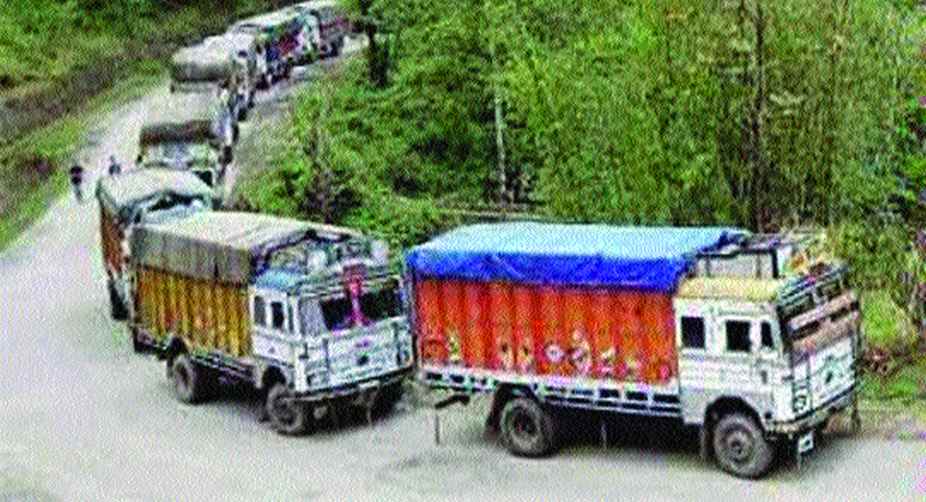
adequate security forces be used to enable the passage of hundreds of
goods-laden trucks stranded at the Nagaland-Manipur border and at Jiribam on
the Assam border.

Singh rose to the occasion and first directed the district
magistrate of Senapati district to impose prohibitory orders and a curfew along
NH 39. Then he mobilised all the forces at his disposal and sent them to Mao,
equipped with two excavators to remove obstacles and two ambulance vans with
doctors, paramedic staff and medicines. Earlier, the chief minister had written
to Union home minister, Rajnath Singh stating that the UNC is the frontal
organisation of the NSCN (I-M) that is holding talks with the Centre, and therefore
it should intervene and give necessary directives to call off the blockade. The
Centre’s response was ambiguous.

But for the Nagas, the blockade has been an annual feature
and this apparently is the season. This time Singh had initially avoided confronting
the Nagas along NH 39, choosing the Imphal-Jiribam via Silchar route instead.
But the UNC activists had taken excavators and dug up the road to prevent that
but Singh sent yet another team to Jiribam and escorted several trucks to
Imphal.

When asked, UNC chief Kamei told the media that he would
consult his people first before taking a decision on whether or not to call off
the blockade. He was also served with a 72-hour deadline by the United
Committee Manipur, the other apex body, comprising mostly Meiteis of the
valley. The All Manipur Christian Organisation also requested the UNC to call
off the blockade keeping in mind the fact that people were suffering and
Christmas festivities were round the corner. The Nagas have often used the
national highways that pass through their areas to highlight their demands and
grievances, thereby causing a scarcity of essential items in the Imphal valley.
In the meantime queues for petrol and before ATMs are lengthening, although
prices of essential goods have come down in the grey market with petrol now
selling at Rs 150 a litre. 

Singh’s master-stroke may ensure the re-election of Congress
legislators in the assembly elections due early next year. If the NSCN (I-M)
opposes the bifurcation of Chandel and Tamenglong districts, they are bound to
lose the support of the people there, and if they welcome it, they would be
praising their sworn enemy, Singh. Silence would be golden for both the NSCN
(I-M) and the UNC at the moment. For Singh, it was perfect timing — he must
have waited for people to feel the brunt of the blockade first and then offer a
panacea, both in terms of a show of strength and political decisiveness.

In this scenario, the valley population has all but
forgotten the burning issue of the Inner Line Permit system that had paralysed
the state administration for months. And agitators in Churachandpur are also
quiet for the time being with nine bodies still lying in the morgue — they were
killed in last year’s clashes over three bills the state assembly had passed.
And so, for Singh and company, the blockade and Narendra Modi’s demonetisation
have come as godsends.

On the other hand, the Joint Naga Civil Societies in Delhi
issued an ultimatum to the state government to roll back the creation of the
new districts by stating that Tengnoupal will become another Kuki district and
that the Meiteis will start encroaching upon Kamjong. In a near xenophobic
stand, the Delhi Nagas asked the Centre to impose President’s Rule in Manipur
and roll back the decision.

The NSCN (I-M) has also retracted from Hebron stating that
the move to create the new districts will jeopardise the ongoing peace talks
with the Government of India, which is now in its 19th year. In a press
statement issued on 12 December, the NSCN (I-M) has questioned the sincerity of
the Centre by saying that it is in cahoots with the Government of Manipur. It
also said that it stood by the UNC on the indefinite economic blockade. It took
a pot-shot at Singh by saying said that they have taken a serious note of his
attempts to communalise the vote banks of the Nagas on one side, and Meiteis
and Kukis on the other. And, finally, it said that the seven new districts are
not acceptable to the Naga people. All of Singh’s decisions run in opposition
to their ethnic cleansing pogrom, which the NSCN (I-M) had initiated around
1992 — it killed more than 1,000 Kukis in an attempt to clear grounds for a
greater Nagalim.

The Union home minister said in a statement that “the Centre
was fully committed to the maintenance of law and order and that it considers
blockades anywhere in India as a gross violation of law and a crime against
humanity”. That said, the BJP’s central leadership has almost dug its own grave
in the forthcoming polls in Manipur. This happened when Union human resource
development minister Prakash Jadavekar, who is in charge of the forthcoming
elections, told a public meeting on 11 December that with the creation of seven
new districts, the state government is following a divide-and-rule policy. This
is exactly what the UNC/NSCN (I-M) and other Naga groups have been saying and
Jadavekar suddenly appeared as their main spokesman from New Delhi. This has
not been taken too kindly by the valley people and that will be reflected in
the polls next year.

The writer is the Imphal-based special correspondent of The Statesman

Australia deny Pakistan in gripping Test finale

The victory, in the first day-night Test at the Gabba, extended Australia's unbeaten record to 28 Tests at the venue.

AFP | Brisbane |

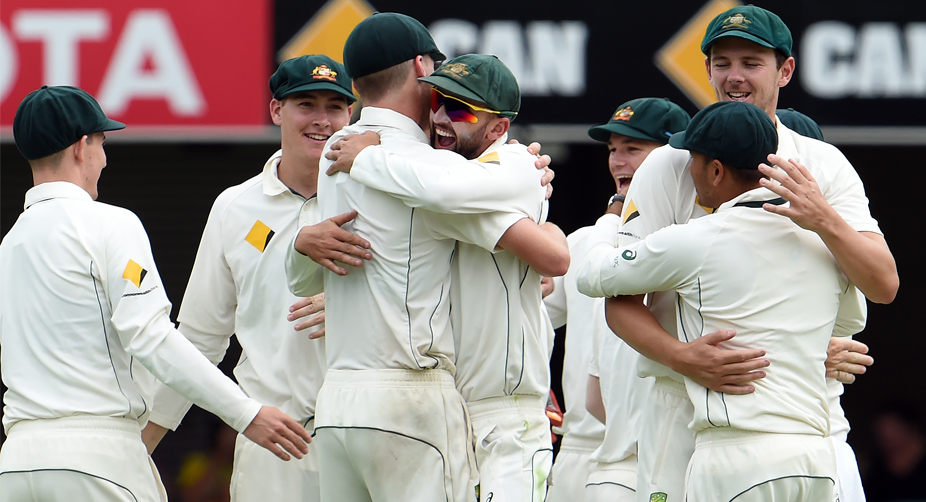
Australia prevented a world-record, 490-run chase by Pakistan to win a gripping first Test by just 39 runs and preserve their 28-year unbeaten streak at Brisbane's Gabba ground.
Relieved skipper Steve Smith ran out Yasir Shah for 33 to take the last wicket and end Pakistan's brave attempt to reel in the mammoth target on the last day of the day-night Test.
“I think I lost all my fingernails. Some game of cricket, wasn't it?” said Smith.
“A lot of credit has got to go to the way they played.
But I thought our bowlers stuck at it all day, we bowled a lot of overs, our quicks just kept coming back.”
The highest ever successful Test run chase of 418 for seven was set by the West Indies against Australia in Antigua in 2003.
And Pakistan looked on course to beat that on the back of Asad Shafiq's knock of 137, but he was caught shortly before Yasir's run out.
His magnificent innings came to end when a Mitchell Starc lifter came off the shoulder of his bat and lobbed to David Warner in the gully for the crucial catch.
Man-of-the-match Shafiq faced 207 balls in 336 minutes and hit 13 fours and a six. While he was at the wicket, Pakistan's hopes of a remarkable victory were still realistic.
“There is energy, we have to go for the match here, so that's what I was aiming for, for the match,” said Shafiq.
In the process, Pakistan posted their highest fourth innings total, surpassing their previous best of 382 for three to beat Sri Lanka in Pallekele last year.
“I'm happy, because after the first innings, it was looking very difficult for us to come back in this game,” said Pakistan captain Misbah-ul-Haq.
“But the way all the team, all the batsmen showed their character, that was wonderful, and we got some special knocks from the tailenders as well.
“A lot of positives, I'm happy and proud the way the team played in the fourth innings.” 
The victory, in the first day-night Test at the Gabba, extended Australia's unbeaten record to 28 Tests at the venue since their last defeat in 1988.
It was also Australia's second straight win after Test series defeats to Sri Lanka and South Africa this year prompted a team shake-up.
Australia have now won all three of the pink-ball Tests they have played at home over the last 12 months.
But for much of Monday's final session the Australians were frustrated by Pakistan's tailenders chipping away at their lead.
Shafiq and Yasir were finding runs easy to score. Nathan Lyon made a fantastic flying two-handed effort at point, but narrowly missed catching Yasir on 27.
There was a big moment when Yasir was hit on the back leg while shouldering arms to Josh Hazlewood and given out on 30, but a review showed the ball clearing the stumps and the decision was reversed.
But Starc's brutish delivery to Shafiq grabbed the vital breakthrough, before Smith's throw-down to catch Yasir out of his ground and snatch victory.
Pakistan, despite coming up short, showed by their spirited response that they can do better in the rest of the three-Test series, with Melbourne next up on Boxing Day.
Smith chose not to enforce the follow-on after Pakistan were dismissed for 142, even though they were 287 runs in front on the first innings.
The Australians added a brisk 202 for five batting again and in the end it just proved enough to get the home side over the line.

Photo

  • img
  • img
  • img
  • img
  • img

Miss World 2016: Of beauty and Glamour

Miss World 2016: Of beauty and Glamour

MORE Photo STORIES

Russian aircraft carrying 39 crashes, 5 survive

IANS | Moscow |

A Russian aircraft with 39 aboard crashed in the country’s Sakha Republic on Monday, a source said.
The Il-18 aircraft crashed near the Tiksi settlement, Sputnik news agency reported.
“There were 32 passengers and seven crew members in the plane. It is possible that five of them managed to survive,” the source said.

Rupee makes a weak start, slips 6 paise against Dollar

PTI | Mumbai |

Rupee depreciated by 6 paise to 67.82 against the US Dollar in early trade today at the Interbank Foreign Exchange due to increased demand for the American unit from importers amid foreign fund outflows.
Dealers attributed the fall in Rupee to increased demand for the US currency and lower opening of the domestic equity market but the Dollar’s weakness against some currencies overseas because of the mounting tension between the US and China capped the losses.
Staging a strong recovery, the Rupee on Friday had gained 7 paise to end at 67.76 against the American currency, a day after succumbing to pressure created by US Federal Reserve’s rate hike.
Meanwhile, the benchmark BSE Sensex fell by 80.82 points or 0.31 per cent to 26,408.74 in early trade.

Goa Cong dares CM to initiate graft probe against Dhavalikar

IANS | Panaji |

The Goa Congress today challenged Chief Minister Laxmikant Parsekar to order an inquiry against former PWD minister Sudin Dhavalikar who has been accused of being involved in corruption.
Parsekar has made a statement through media that Sudin Dhavalikar was involved in corruption through his PWD department. We dare Parsekar to initiate an action against Dhavalikar and imprison him,” All India Congress Committee Secretary Girish Chodankar said today.
The CM had sacked two MGP legislators Sudin Dhavalikar and Dipak Dhavalikar from his cabinet after they went public against the state government.
Parsekar’s statement has broken all records. Parsekar is accusing MGP ministers of being involved in corruption.
It is Parsekar who owns the responsibility of corruption.
CM can’t run away by making just a statement,” Chodankar said.
“Mr Parsekar, you should know that you are the CM and not the Opposition leader. What you say matters a lot, but people of Goa heard nothing after your statement. People have voted you to power because you had promised Zero Tolerance to corruption, don’t fool the people of Goa, again and again, he said.
The Congress leader said that people want to know about the extent and volume of corruption in PWD and Transport Department and are waiting to hear it from the CM.
People are confused with your statement and also wonder if it is a blackmail technique to force an alliance with BJP. If you are not clear about your statement, it means you are incapable or are misusing your position, Chodankar alleged.

Sensex declines 83 pts in morning trade

SNS | New delhi |

Tracking negative global markets, domestic bourses started the week in the red zone. At 9.50 am on Monday, the Sensex at the BSE was trading 83 points down at 26,407 while the Nifty at the NSE was trading 21 points down at 8,119.
In the broader markets, BSE Midcap and Smallcap indices slipped around 0.3 per cent each. 
Among the BSE sectoral indices, Oil & Gas index registered the biggest gain with a jump of 1.2 per cent while Auto index became the top loser with a dip of 0.4 per cent.
On Friday, the Sensex had closed 30 points down at 26,490 and the Nifty had ended 14 points lower at 8,139.
Top gainers in the Sensex-30 pack: Gail (up 1.5 per cent), M&M (up 1 per cent), Lupin (up 0.6 per cent), Reliance Industries (up 0.5 per cent) and ITC (up 0.5 per cent).
Top losers in the Sensex-30 pack: Sun Pharma (down 1.1 per cent), Asian Paints (down 1.1 per cent), HUL (down 1 per cent), HDFC (down 0.9 per cent) and Tata Motors (down 0.9 per cent).
Meanwhile, the Rupee was trading two paise down at 67.78 against the US Dollar. 

Premier League: Manchester City see off fading Arsenal

After a midweek loss to Everton, Arsenal were in desperate need of a win.

SNS | New Delhi |

Arsenal’s inability to build on a good start was evident for the umpteenth time as they allowed Manchester City to overturn an early deficit and beat them 2-1 on Sunday night at the Etihad Stadium.
For the second successive game in a row, The Gunners threw away an early lead to finish the game tamely, while Manchester City continued their resurgence to climb to second place in the league table.
After a midweek loss to Everton, Arsenal were in desperate need of a win and when Theo Walcott put the visitors ahead in the fifth minute itself, the groans around the Etihad were evident.
Alexis Sanchez was given time to pick out a pass after Hector Bellerin’s superb run had found him near the penalty box and his reverse ball found Walcott who took two touches before finishing cooly past Claudio Bravo.
The City defence was all at sea and manager Pep Guardiola had his head in his hands.
Just minutes later, Raheem Sterling missed a open-net header from a superb Kevin De Bruyne cross, squandering the opportunity to equalise. City fans must have been wishing for the services of the suspended Sergio Aguero, who would have put that one way without any fuss.
They needn’t have worried, however, as the excellent Leroy Sane latched on to David Silva’s through ball to equalise with just two minutes of the second half played. The speedy German was marginally offside as replays confirmed but the goal stood and Arsenal were rocking.
Sterling then made amends for his first-half horror miss, cutting in from the right and finishing well with his weaker foot, beating Petr Cech at the near post in the 71st minute. While Nacho Monreal did afford him time and space, the credit must be given to De Bruyne’s glorious 50-yard cross field ball to 
After two consecutive defeats, Arsenal’s ‘mentality’ is rightly being questioned as they find themselves nine points adrift of leaders Chelsea.
For City, there were loads of positives, not least their first win in recent years in a game that they have been trailing at half-time.

Indiscreet charm of a coffee house

Manish Nandy |

I like coffee houses. To be candid, I like places where people meet and talk for no other reason than they like to talk. Practical people, proud of their practicality, think most talk a waste of good time. A friend chose his company motto: Be a doer, not a talker. I didn’t have the heart to tell him that talking is doing. It is putting our time to good use. How is talking a kind of doing? 
Let me suggest two thoughts. I know of no better way to know a person than to talk (short, of course, of making love to one). I suppose two persons can look at each other and get instantly enamoured, but usually we talk, and talk a lot, to know each other. True we often talk trivial things, Virat Kohli’s bush or Katrina Kaif ’s coiffure. But at times we really connect and get a true glimpse of the other person
Then the miracle of a genuine relationship begins. The other point is less personal, but no less important. However superficially we talk, whether of politics or of office politics, however similar our interests or views, we always leave on the other an imprint of our different take. That difference is like leaven: it has the potential to change the other’s view, a little or a lot. It is for many people the key recurrent source of exposure to a new idea. 
Often we reject the other’s view cavalierly, without giving it further thought. Occasionally, however, the new idea stays, germinates and kicks off a new way of thinking. So I like talk, just talk, nothing useful or practical, perhaps something facile and frivolous, which still helps me connect and learn. I like places where people talk; especially I like coffee houses where robust conversation mingles with the aroma of strong java, and enthusiasm and brio overtake syllogism and precision. 
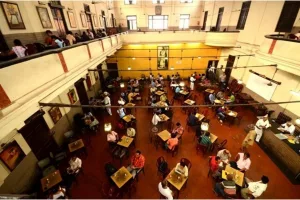
My first initiation to coffee houses was in Kolkata, to a spacious, bright Coffee Board café conveniently close to both my home and my university on College Street. It seemed forever buzzing with professors and students, journalists and scholars, authors and artists, vagrants and vagabonds. 
The visitors had one feature in common: they all wanted to be heard. If there was a quiet person among them, I didn’t meet him. Everybody talked, in unison and at cross purposes, sometimes cogently and always eagerly, frequently at higher and higher decibels when the discussion got heated. It was a fun place. The stairwell to the hall had cracks and needed repair, some tables were askew and some chairs were in disrepair, but the atmosphere was electric. 
The ambience was vibrant, the people lively if discordant. Even the waiters were just right: they recognized us and received us with amused tolerance, patient with our slow ordering and perpetual penury. I loved that coffee house. 
That affection prompted me to explore coffee houses in the many countries my work took me. From embassies and project offices I strayed into cafés in Bogota to Berlin, Kathmandu to Kuala Lumpur, Paris to Port au Prince, Manila to Mexico City. 
Sitting alone with an espresso, I watched the cavalcade of men and women sipping latte, smoking cigarettes, reading newspapers and, most of all, talking and laughing and sharing. They differed in look and style, but the essential business of exchanging messages and meanings remained unchanged. We all need to talk and connect. Decades later, I returned to Kolkata and, in a salute to my past, walked into another Coffee Board café in Jadavpur, in the CIT Market on Central Road. Compared to sparkling new coffee houses sprouting all over the country, this one retained the oldworld charm of a commodious hall, raucous with debate and discussion. 
The stairwell had cracks, the chairs were often askew and tables were in varying states of disrepair, but the ambience was familiar: people talked, animated and excited, fought over political stands and literary opinions, waved their hands and raised their voices, a strange bonhomie wafting over the hall like a familiar aroma. The coffee was indifferent, but I felt at home. 
The writer is a Washington-based International Development advisor and had worked with World Bank.

Lose weight as you binge on winter delights

Winter food delicacies are many, but beat the cold with some low-calorie, easy to make food.

Deepa Gupta | New Delhi |

With the arrival of the cold season, it's time to relish winter food delicacies. And, when it's cold the body mechanism makes you want to eat more. Hence the urge to eat is stronger during winter than in summer. As you enjoy the food, you may have to watch the calories intake as you may put on more weight. But you simply can't resist the steaming delicious delights out on the street or at home. Don't you worry, enjoy the food. Just take care of the quantity and increase the time of your daily workout. And, add more water and fibre in your diet. Some food you can splurge on to your heart's content without having to worry about calories and weight gain are listed below. 

Vegetable soup: It should comprise of more tomatoes and less spinach, carrot, gourd, onion and celery. Boil all the vegetables together, grind and sieve. Add little water, salt, black pepper powder and sugar to the puree. Give a boil. Have it hot with a toast of whole ounce bread without butter. Eating this low calorie meal regularly replacing the bulky dinners will help you shed your weight quickly and load your body with nutrition. High in potassium, it helps prevent fluid retention by clearing the body of extra fluids leading to weight loss.

Boiled vegetable platter: Take broccoli, cauliflower, beans, peas and carrots. Chop them and steam cook. Sprinkle light salt, black pepper powder and lemon juice on it. Have it as your dinner regularly instead of heavy foods and forget about the fat deposits through winter delicacies. High in nutrients, fibre and water content, it helps in weight management. 

Carrot juice: The other ingredients besides the main bulk of carrots are beetroot, ginger, mint leaves and gooseberry in low quantities. Take out the juice of all vegetables together. Stir little black salt and lemon juice in it. Drink one to two glasses every day preferably pre or post exercise schedule. High in fibre, it increases the bile secretion, burns fat and aids weight loss.

Baked mushrooms: Take 15-20 mushrooms. Wash them thoroughly and marinate them for an hour in fat free hung curd along with garlic, salt and pepper. Bake in air fryer/electric tandoor or oven till golden crisp without adding butter. Have this super delicious low calorie snack skipping your hefty dinners for a month or so. Baked mushrooms are low in fat and have zero saturated trans-fats and cholesterol. It is a great dish to be added in weight loss diet that helps the body metabolise fats.

Mustard greens: Make a butter free mustard greens vegetable curry, including little quantities of spinach, fenugreek leaves, carrot and chenopodium. With its proficiency, you can detoxify your body well and obtain dietary fibre in higher amounts. It helps maintain metabolism and a sound weight.

With the fall in temperature, you are now free to pick ‘n’ eat any appealing lunch options, keeping their frequency low. Take maximum advantage out of the unusual winter veggies that are high in nutrients for relatively low calories. They are best to fill you up with optimal health and make you feel lighter and slimmer by dropping body weight. Avoid the weight and not the flavour.

RBI governor to brief Parliamentary panel on demonetisation

PTI | New Delhi |

Reserve Bank Governor Urjit Patel will on December 22 brief the Parliamentary Committee on Finance about the demonetisation process and its impact.
“Briefing by the Governor, RBI, on the subject ‘Demonetisation of Indian currency notes of Rs 500 and Rs 1000 and the impact thereof,'” said a schedule posted on the Parliament website.
The briefing will start at 11am at the Parliament annexe building on Thursday.
Since banning of old Rs 500 and Rs 1000 notes on November 8, Government has taken a host of measures like service tax sops and incentives for making digital payments to ease out problems arising out of less currency being available in the market.
The move has led to wiping out of almost 86 per cent of the currency which was present in cash before November 8, in the form of Rs 500/1000 notes.
The RBI and government have been assuring the common people regularly that there is enough cash that has been pumped back into the system.
The Reserve Bank of India last week said that Rs 12.44 lakh crore in demonetised notes have been collected at banks.

Also, banks have issued Rs 4.61 lakh crore to the public since November 8-9 through ATMs and bank counters, it said.
“The RBI has issued 21.8 billion pieces of banknotes of various denominations since demonetisation,” deputy governor R Gandhi said.

India win third place match in Brazil football U-17 meet

India beat Orlando City SC 2-1 in the third-place match at the Atletico Paranaense U-17 international tournament.

IANS | New Delhi |

India outclassed American side Orlando City SC 2-1 in the third-place match at the Atletico Paranaense U-17 international football tournament on Sunday.

Amarjit Singh scored from the penalty spot and Shubham Sarangi headed the second goal in the first-half to record their first victory of the tournament, held at Curitiba in Brazil.
Orlando City SC scored first but India came back strongly and received a penalty when Shubham was brought down inside the box.

Amarjit scored from the spot to draw parity.
Shubham then put India in front when he guided Amarjit’s lofted pass into the net shortly before the half-time.

Both teams failed to add to the scoreline in the second half.