Logo

Glimpses of heritage

Urni Mukherjee |

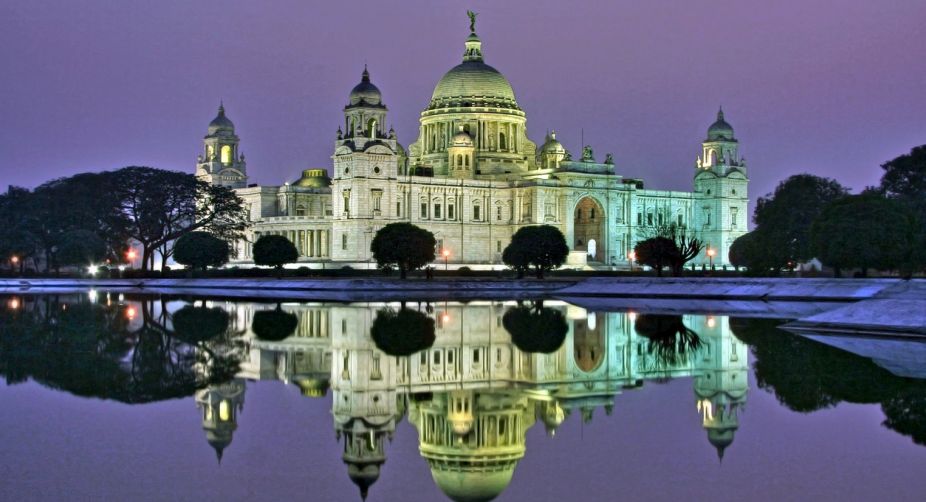
The Victoria Memorial celebrated the World Heritage Week from recently in November 2016 with a colourful and interesting line-up of events. The five days culminated into some remarkable moments for the audience who were dazzled with the glimpses of culture reflecting the rich treasury of heritage that the city could afford along with global glimpses from some of the most cherished intellectuals of our times.

At the Western Quadrangle with Warren Hastings overlooking Calcutta or as we would call Kolkata, voiced its heritage of idol-makers, as Professor Surendra Munshi started his discussion on ‘Making Gods; Shaping Excellence: Lessons from Kumartuli Image-Makers in Calcutta’.

The lecture was a result of his year-long research from 1999-2000 of the area and its artists. As a retired professor of Sociology at the Indian Institute of Management, Kolkata he attempted to juxtapose the organisational form of work at Kumartuli with that of the management perspective of the best organisational behaviours guaranteeing success and excellence to the multi-national companies.

He shared his wonder at how a number of unlettered people have been able to adapt to the grammar of producing and delivering excellent idols every year without any institutional training and have been doing so for generations in the most inconvenient circumstances whatsoever.

“There is an ebullient organisational form of work at Kumartuli and they have this functional and creative mode of working. We wonder at how simple people have created modes of functioning that are fantastic not only from an artistic perspective but also in terms of management precepts”, Prof. Munshi said.

We heard him keenly as he took us down the path of Kumartuli alleys where the artists strive every day with expenses and material, share their food on a single thali or how they disregard any hierarchy when the best of the artisans or the owner perhaps cook for the other labourers.

We learned how they store the materials in small measures as they do not have big storage room.

This made us realise how the Indian management institutes send trainees and students to Japan every year to study this method of working in small space while we already have such instances in our own city.

Once the lecture was over the audience had a visual treat from Ranajit Ray who featured his National Award winning film Kumartuli Clay Image-Makers: Ordinary People Extraordinary art followed by an interaction with the director. The film was originally commissioned by the Indira Gandhi National Centre for the Arts, which brought individual voices of the artists residing within the mazy alleyways of Kumartuli. Their words recounting bits of their lifelong experience, informed the spectators that many of them had come from different parts of the country as well as abroad, the gradual procedure of making idols, the amount of endeavour involved, the sacrifices on the parts of the workers, coming originally from different villages of the state and Krishnanagar in particular, work day and night to make ends meet for their families.

Some of the old artisans, to mention a few Nemai Chandra Pal, Netai Pal and Dilip Pal gave anecdotes on how despite promises from the previous government, the Kumartuli people still have to live in the unhealthy and slum-like situation with only the gap of some plastic sheets between a heavy monsoon and the half-finished idols.

Their daily fare is depicted in the most humane way pleading for better provisions and help for the artists at Kumartuli, as Prof. Munshi points out, “this is the world of the image-makers and it is all that they have”.

The event had a deep impression on those present as they were quite amazed with the truth behind the grandeur of Durga puja and how a community of artists despite having huge contributions to this annual tradition are faring no better than a average slum-dweller.

There was also a workshop day at the Western Quadrangle for the members of the Activity Club of the Victoria Memorial Hall on the art of pottery as clay has always been an integral part of the Bengali culture and heritage with Mr. Chanchal Ahmed and his team pivoting the participants around the different moulds of our divergent culture.

Two successive events were organised the next day. First was a performance by the nachnis (dancers) reminding the metro people of this dying art form that the artists in the regional parts of Purulia and Birbhum are trying to uphold through their lyrics bringing in the whiff of local soil with the sentiments and expressions of these half-forgotten people and their culture in association with the Durbar Mahila Samanwaya Committee.

In the evening Professor Margaret Olin, Senior Research Scholar, Divinity School and the Department of the History of Art, Yale University gave a presentation on Conversations on the Periphery: Berlin-Bethlehem where she presented the audience with some remarkable observations on the wall-art and the tradition of mural painting in and around the troubled parts of Berlin and Palestine.

In Berlin only the relics of the political voice remain on the wall and around the check-points that are at some places converted to museums telling the people what transpired in another temporal and political era. She then went on to the tradition of mural painting at Dheisheh, a Palestinian refugee-camp located south of Bethlehem where the politically murdered ones or the martyrs occupy their space on the walls and the children of Dheisheh grow up around these murals of the dead ones with death looming on their poor souls.

This series of events came to the end with the musical performance where the heterogeneous voices and genres of baul, urban folk and Swiss twists mingled with each other producing melodious moments with the half-lit grand-dame of the Victoria Memorial glimmering in the dark evening.

Student, Statesman Print Journalism School.

Glimpses of heritage

Urni Mukherjee |

The Victoria Memorial celebrated the World Heritage Week from recently in November 2016 with a colourful and interesting line-up of events. The five days culminated into some remarkable moments for the audience who were dazzled with the glimpses of culture reflecting the rich treasury of heritage that the city could afford along with global glimpses from some of the most cherished intellectuals of our times.

At the Western Quadrangle with Warren Hastings overlooking Calcutta or as we would call Kolkata, voiced its heritage of idol-makers, as Professor Surendra Munshi started his discussion on ‘Making Gods; Shaping Excellence: Lessons from Kumartuli Image-Makers in Calcutta’.

The lecture was a result of his year-long research from 1999-2000 of the area and its artists. As a retired professor of Sociology at the Indian Institute of Management, Kolkata he attempted to juxtapose the organisational form of work at Kumartuli with that of the management perspective of the best organisational behaviours guaranteeing success and excellence to the multi-national companies.

He shared his wonder at how a number of unlettered people have been able to adapt to the grammar of producing and delivering excellent idols every year without any institutional training and have been doing so for generations in the most inconvenient circumstances whatsoever.

“There is an ebullient organisational form of work at Kumartuli and they have this functional and creative mode of working. We wonder at how simple people have created modes of functioning that are fantastic not only from an artistic perspective but also in terms of management precepts”, Prof. Munshi said.

We heard him keenly as he took us down the path of Kumartuli alleys where the artists strive every day with expenses and material, share their food on a single thali or how they disregard any hierarchy when the best of the artisans or the owner perhaps cook for the other labourers.

We learned how they store the materials in small measures as they do not have big storage room.

This made us realise how the Indian management institutes send trainees and students to Japan every year to study this method of working in small space while we already have such instances in our own city.

Once the lecture was over the audience had a visual treat from Ranajit Ray who featured his National Award winning film Kumartuli Clay Image-Makers: Ordinary People Extraordinary art followed by an interaction with the director. The film was originally commissioned by the Indira Gandhi National Centre for the Arts, which brought individual voices of the artists residing within the mazy alleyways of Kumartuli. Their words recounting bits of their lifelong experience, informed the spectators that many of them had come from different parts of the country as well as abroad, the gradual procedure of making idols, the amount of endeavour involved, the sacrifices on the parts of the workers, coming originally from different villages of the state and Krishnanagar in particular, work day and night to make ends meet for their families.

Some of the old artisans, to mention a few Nemai Chandra Pal, Netai Pal and Dilip Pal gave anecdotes on how despite promises from the previous government, the Kumartuli people still have to live in the unhealthy and slum-like situation with only the gap of some plastic sheets between a heavy monsoon and the half-finished idols.

Their daily fare is depicted in the most humane way pleading for better provisions and help for the artists at Kumartuli, as Prof. Munshi points out, “this is the world of the image-makers and it is all that they have”.

The event had a deep impression on those present as they were quite amazed with the truth behind the grandeur of Durga puja and how a community of artists despite having huge contributions to this annual tradition are faring no better than a average slum-dweller.

There was also a workshop day at the Western Quadrangle for the members of the Activity Club of the Victoria Memorial Hall on the art of pottery as clay has always been an integral part of the Bengali culture and heritage with Mr. Chanchal Ahmed and his team pivoting the participants around the different moulds of our divergent culture.

Two successive events were organised the next day. First was a performance by the nachnis (dancers) reminding the metro people of this dying art form that the artists in the regional parts of Purulia and Birbhum are trying to uphold through their lyrics bringing in the whiff of local soil with the sentiments and expressions of these half-forgotten people and their culture in association with the Durbar Mahila Samanwaya Committee.

In the evening Professor Margaret Olin, Senior Research Scholar, Divinity School and the Department of the History of Art, Yale University gave a presentation on Conversations on the Periphery: Berlin-Bethlehem where she presented the audience with some remarkable observations on the wall-art and the tradition of mural painting in and around the troubled parts of Berlin and Palestine.

In Berlin only the relics of the political voice remain on the wall and around the check-points that are at some places converted to museums telling the people what transpired in another temporal and political era. She then went on to the tradition of mural painting at Dheisheh, a Palestinian refugee-camp located south of Bethlehem where the politically murdered ones or the martyrs occupy their space on the walls and the children of Dheisheh grow up around these murals of the dead ones with death looming on their poor souls.

This series of events came to the end with the musical performance where the heterogeneous voices and genres of baul, urban folk and Swiss twists mingled with each other producing melodious moments with the half-lit grand-dame of the Victoria Memorial glimmering in the dark evening.

Student, Statesman Print Journalism School.

Path-breaking and inspiring

Sahasika Zaman |

Directed by acclaimed filmmaker, Nitesh Tiwari and produced by Aamir Khan, Dangal is a stoic tale of the hardships endured by a father to make his daughters worthy of gold medals in wrestling, against all odds in the society.

It is indeed a strong and unwavering combat against all the odds and the emergence of a successful lead in the course of women empowerment. The greatest Christmas release this year and Nitesh Tiwari’s crowd-fawner Dangal follows a pathway to its great plot and alluring impact on the spectators. Mahavir Singh Phogat (Aamir Khan) sketches the life story of Phogat, cuts an unsightly figure in an off-white kurta and pot-bellied attire.

Grey, grizzly and old, he plays a character much older for his age. His wishes of becoming a National-level wrestler are crushed due to financial crisis and decide to train his son to fulfill his dreams.

To his misfortune, his wife, Sakshi Tanwar, gives birth to a daughter followed by three more girls and he witnesses his desires getting crushed, underneath his fortune. Later on, when his two daughters, Geeta Kumari Phogat essayed by Fatima Sana Sheikh and Babita Kumari Phogat played by Sanya Malhotra grow up to become proficient brawlers and engage in a fight with two boys in the neighbourhood, Mahavir Phogat believes that they are born to wrestle and not live a life only confined to the thoughts of the male-dominated society.

From firing the words, “Mera sapna sirf chhora hi poora kar sake” to fearlessly living the lines, “Mhari chhoriyaan chhoro se kam hai ke?”

Aamir makes us believe in his words. He trains his daughters in defiance of the disapproval and assumptions of the villagers to grime wrestling and instills in them, feminism and the right to churn the discordance of the society. He stitches boyish clothes and prohibits his daughters from wearing salwar kameez, since it would be a hindrance in the way of wrestling.

To make things more eye-catching, they are asked to shave their heads since they wrestle on mud. The training gears up as it begins at five in the morning and they jog, complete the push-ups and wrestle till they go to school. Dangal, on the highlight spool includes the older daughter Geeta who trained by her father, rises from mud wrestling to pro and further goes to Patiala in Punjab for training in the National Sports Academy to compete in the National level wrestling championship.

Based on the true story of Geeta and Babita Phogat, the movie advances and avails the amount of time and the number of scenes it devotes to unadulterated wrestling. Fatima wins hearts with her performance, both as a wrestler and a debutante, and Sanya runs neck-to-neck with her. The two make each scene so plausible that it is difficult to imagine them as non-wrestlers. Aamir Khan's return to the silver screen after a gap of almost two years which left the critics wanting for more is undoubtedly relevant with grappling storyline, lesser known yet a potent cast and great ideas. The Haryanvi dialogues would force laughter and amazement. The wrestling scenes are mingled with a few background scores which add splurge to the actions. However, the film lacks to be entertaining on the succulent note due to lesser number of songs which lets the spectators to concentrate on the ground-breaking realities of wrestling which is not just a sport but a way of life. Dangal is one such movie which has been made to inspire, motivate and encourage women to breakfree from the taboo in the male-dominated society that wrestling is thus far only made for men.

Coordinator, Class IX, St Mary’s Day School, Coochbehar.

Virtual world of fun

Diotima Roy |

Ever been amused, intrigued or downright shocked by the way Google auto completes some of your queries? Google Feud is the game for you then.

An online modified version of Family Feud, this game has taken the internet by storm since its launch in March 2015, with some gamers on Youtube going so far as to claim how it ‘hates’ them.

The rules are simple (but the game is not). You can pick from four categories to predict how Google would autocomplete a query: Culture, People, Names and Questions. You have three chances to guess the top 10 ways a particular query is completed. The more common your suggestion, more are the points you are awarded, ranging from 1000 to 10,000.

A good way to pass time when bored, you’d say. But the game isn’t as easy and straightforward as it seems. Human beings are intelligent and interesting creatures, and unsurprisingly, their various diverse musings and ideas are reflected in some of the top searches. If not anything else, this game provides an unparalleled understanding of the intricacies of the human mind.

For example, giraffes are apparently ‘gay’, ‘fake’, ‘awesome’, ‘dumb’, ‘selfish’, ‘heartless’, ‘four different species’, ‘cool’ and everything else on earth. But the most obvious one – ‘tall’ – doesn’t even feature among the top 10 searches. People often wonder what would happen if they touched an elf, whether or not they can mail a potato and if the government can control the weather.

What would one expect to be the most popular way to complete the query “is my bird”…? By now you can guess it’s something pretty wacky. Definitely not ‘sick’ or ‘happy’ or ‘healthy’. Lo and behold, the top search ~ “is my bird a terrorist?” Don’t believe me? Go check it out yourself.

However, in spite of enlightening one about the things that go on in the mind of their fellow beings, the game doesn’t allow players to compare how well they did at guessing the thoughts. There’s no leaderboard which players can climb up to reach the top.

The game is unending, and there is no ultimate prize to be won or records to be broken. All in all, it’s an addictive game which requires one to think totally out-of-the-box, and is a great stress buster.

Coordinator, Class XI, West Windsor-Plainsboro High School North, New Jersey, USA.

Stop violence against women

Camellia Paul |

Like every year, Swayam, a women’s rights organisation committed to ending violence against women and advancing women’s rights, conducted an active campaign to stop physical, sexual, emotional and economic abuse and raise public awareness on this issue.

A 16-day campaign to “Stop Violence against Women and Girls” took place from 25 November to 10 December 2016 to raise mass awareness and stir individuals to act against hostility on women. The main focus of this campaign was on ‘Domestic Violence’ that affects almost every family and violates women’s rights to dignity, equality, freedom, security, bodily integrity, education and livelihood.

On 21 November, Swayam’s Mobile Campaign Van was inaugurated by by Dr. Shashi Panja, Minister of Women Development, Social Welfare, Child Development, Minister of State, Health and Family Welfare at Mukta Mancha, Kolkata. The van was a part of their aim to create awareness about women's rights and mobilise public action against aggression against women.

The campaign began with a rally on 25 November, observed as International Day against Violence that was preceded by a brief cultural programme to spread mass awareness. Placards with slogans and information on domestic violence were carried by participants and leaflets were also distributed. Around 650-700 people participated in the rally showing their solidarity towards the cause.

Up next was a programme against the practice of dowry on 26 November at Metiabruz. Every year Swayam identifies people from the local community to acknowledge their initiative and to spread awareness on stopping the practice of dowry, by awarding them the ‘Anti Dowry Social Responsibility Award’ named ‘Jehj -e-Nafi’.

This year three young people from the community were recognised who had married without taking or giving dowry. Along with this, a short documentary film was screened to educate the public on the different aspects of dowry, followed by an interactive session with the audience.

On 29 November a public awareness programme ‘Ekata Anbe Samata – Eso Kheli, Samatar Katha Boli’ took place at a football ground in Diamond Harbour.

The programme began with 200 women participating in a rally raising awareness about domestic violence. The community members played different games on social issues and interacted with the Swayam team. Over 600 people watched the cultural programme in the evening where there were performances by the theatre and music group, Yuva group and a ‘Baul’ performance.

Next, a kiosk was set up in Shyambazar on 3 December for awareness on Mental Health and Domestic Violence. This was primarily to generate awareness on issues around domestic violence and its mental health implications.

Posters and ribbons were displayed to impart information on these issues, while Swayam staff and volunteers distributed leaflets among the general masses in order to reach out to a larger number of people. The response was overwhelming and while some people actually shared their opinion on and experiences with domestic violence, others came up with queries they wanted answers to.

On 4 December ‘Ek Saath with Men and Boys’, encouraged the male members of Mashat and Kamarpole Gram Panchayat, Diamond Harbour to participate in Swayam’s campaign. Games challenging gender norms were played.

‘Roadside Romeo’ resulted in discussions about street sexual harassment and ways they could stop it, and singing and dancing followed it. To keep up the spirit, the next day also saw similar activities and games.

The following event was on 8 December for the release of Echoes – a compilation of selected Bengali poems published in ‘Prayas’ between 2006 and 2015 and ably translated into English by Ms. Madhuchhanda Karlekar, writer and activist.

Since 1998, Prayas (meaning ‘endeavour’)- a quarterly published by Swayam then. Prayas has provided women with a space for self-expression, encouraged them to showcase their latent talents and helped them regain their self-confidence. The event organised at Rotary Sadan consisted of a speech by the Editorial Board members of Swayam, recitation by Madhumanti Maitra, elocutionist and a monologue by Suranjana Dasgupta, theatre personality.

A final feather to its cap, Swayam, in collaboration with Cyan International, conducted a Gender Equality Mela on 9 December, at the Bishop’s College grounds. A number of schools from Kolkata were invited to participate in different games on social issues, extempore and quizzes.

Students also showcased a 10-minute performance through skits on the issue of gender equality. Throughout the day, there were film screening, poster exhibition and food stall which motivated everyone to attend and participate.

The 16-day campaign came to an end with maximised impact of all the efforts, adding more voices to stir individuals and to raise mass awareness to ‘Stop Violence against Women and Girls’.

Not quite, your lordship

Sunil Garodia |

The issue of criminal contempt of court has been the subject of intense debate in recent times. It has been taken up for utterances by eminent people like ex-Supreme Court judge Markanday Katju while blogging about the apex court judgment in the Soumya rape case and again when he referred to a judge as Mister during the court hearing. It has also been taken up when plaintiffs, defendants or their lawyers have either made written or oral derogatory remarks against the court. But the Delhi High Court, in the case Kuldeep Kapoor vs Sushanta Sengupta, had initiated contempt proceedings against the accused for not answering questions posed by the court.

The matter came up before the Supreme Court in Court on its Own Motion vs Kuldeep Kapoor and ors. recently. The Supreme Court ordered that there can be no contempt in the instant case as “the behaviour of the appellants was not contemptuous.”

In the Delhi High Court, the order was written by Justice Swatanter Kumar (now retired) who had in the case Court on its own Motion vs Gulshan Bajwa had earlier held forth on contempt thus, “the meaning of the expression ‘contempt’ in normal parlance is an act of state of despising, the conduct that defies the authority or dignity of a Court. It is so because such conduct interferes with the administration of justice and is liable to be punished. Even in its liberal construction, it conveys a strong feeling of combined dislike and lack of respect. In order to protect the dignity of Court and ensure proper administration of justice, the Legislature has enacted ‘the Contempt of Courts Act’, which deals with the various situations and varied conduct of parties, counsel or any person to ensure that the orders of the court are implemented and administration of justice is not hampered.

“Every citizen has a Fundamental Right of personal liberty and freedom of expression. Despite such Right, this Act granted jurisdiction to the court to punish for contemptuous behaviour made in writing or verbally. While reasonably protecting these rights and circumventing the Court’s jurisdiction to punish for contempt, the initial Contempt of Courts Act, 1926 was replaced by the 1971 Act. The Legislature intended to caution the Courts that even where prima facie a contempt was committed, it still may not punish such a contempt if it had not substantially interfered with due course of justice and the defence was bona fide. Whatever be the enactment or the situation neither the Legislature is intended nor the courts vested with the duties of administration or dispensation of justice can condone acts of substantial interference with the administration of justice coupled with contempt in the face of the Court.

“These acts of contempt may be attempted by the party, their counsel and for that matter any person. The mode of committing such offence may be by filing applications, affidavits or submissions etc. Whosoever including an Advocate for a party, who are also called Officers of the Court, commits grave offences of contempt with the feeling of impunity and repeatedly, then there can hardly be any scope left for any Court to hold that they are entitled to the benefit of the provisions of Section 13 of the Act.”

While the above lucidly describes situations where contempt can be applied, the judge perhaps forgot to consider sub-section 3 of Article 20 of the Constitution while ordering contempt proceedings against Kuldeep Kapoor in the instant case. The sub-section states that “no person accused of any offence shall be compelled to be a witness against himself.” It is a well established principle of law that no one can be forced answer questions in court that can be used later to incriminate him in another case.

Kuldeep Kapoor and others were accused of submitting forged documents and affidavits in court and for providing false addresses in them. When the court asked him why he had provided false addresses in the papers submitted in court, the accused refused to answer the question. Taking this as an affront to the court that lowered its dignity and impeded justice, the court ordered contempt proceedings. But if the accused refused to answer the question, he was protected by sub-section 3 of Article 20 of the Constitution. He had allegedly submitted fabricated documents in court. If he answered the question about the address, whether in the affirmative or not, he could have been pulled up under Section 191 of the Indian Penal Code (IPC). So in refusing to be a witness against himself, the accused was protected under Article 20 and no contempt proceedings could be initiated for that reason alone.

The Supreme Court was clear about this and hence dismissed the case in Kuldeep Kapoor and ors. vs Court on its own Motion in very short order. While stating that the accused did not behave in a manner that could be construed as contemptuous, it also stated that proper notice was also not served on them under Section 15 of the Contempt of Courts Act, 1971. While the apex court did not refer to the right under Article 20, it is implicit in the manner in which the court chose to set aside the contempt order.

The court said “we feel that the entire exercise done under the Contempt of Courts Act, 1971 was not proper and therefore we set aside the impugned order imposing punishment upon the appellants.” Judges have been initiating contempt proceedings very liberally. This will have the effect of diluting the real reason for which the contempt section exists in the statute books. While thinking of contempt, judges should keep only one thing in mind – whether the accused has behaved in a manner that is likely to lower the prestige and dignity of the court, thereby making a mockery of the legal process, rule of law and the laws of the country. To pull up anyone for contempt just because he refuses to answer questions put to him by the court is not correct, especially if he or she has the right to remain silent under sub-section 3 of Article 20.

The writer is Editor-in-Chief of www.indiacommentary.com

Unmasking real owners

Ashoo Gupta |

The Benami Transactions (Prohibition) Amendment Act, 2016, which came into force on November 1 last, is an amendment to the earlier Act of 1988. The amendments have been put into place to stem transactions in assets bearing front (third and unrelated party) or fictitious names and check evasion of law through dubious means.

The Government amended the earlier Act instead of introducing a new one, effectively blocking an escape route for those who had entered into benami transactions since 1988. The reason it did this is because penal provisions contained in a new law cannot be applied with retrospective effect, and all violations prior to its enactment would have otherwise circumvented action.

Definition of benami

A transaction is deemed benami if:

The underlying property is acquired and held in the name of one person, but has been paid by another person who is the actual beneficiary and will enjoy the immediate or future privileges associated with that property. Effectively, the owner merely acts as a front and does not enjoy the asset, per se.

However, properties bought in the name of one’s spouse or child, or those held jointly with siblings or lineal ascendant or descendent will not be treated as benami if they have been paid for from known sources of the individual. Likewise, assets held by (i) a Karta, or a member of Hindu undivided family for his benefit or benefit of other members in the family provided the consideration for such property has been provided or paid for from known sources of the Hindu undivided family or (ii) a person in a fiduciary capacity e.g. a trustee, executor, partner, director of a company are also not treated as benami.

The underlying property is in a fictitious name, meaning the so-called owner does not exist, or is otherwise untraceable. The Government also has power to exclude properties held by charitable or religious organi-sations from this definition.

The term ‘property’ has been defined comprehensively to include all categories of assets whether movable (such as gold, stocks, mutual fund holdings and bank deposits), immovable (such as flats or land), tangible, intangible, corporeal, or incorporeal, any conversion into other form of such property and also the proceeds from such property. It includes any right, interest, legal documents or instruments that prove the title to or interest in the property.

The person on whose name the property has been bought is called the benamidar and the property acquired is benami property. The person who finances the deal is the real owner.

Although the Government had enacted the Act in 1988 to curb benami transactions, the law was never enforced due to lack of provisions in the Act for its implementation. The Amendment Act bars the real owner from re-transferring the property held benami from the benamidar or front.

Re-transfer of a benami property will be deemed to be void. Properties held benami are liable for confiscation by the Government without payment of compensation. Any person found guilty of engaging in benami deals risks rigorous imprison-ment for a term ranging between one and seven years, in addition to a fine which may extend to 25 per cent of the fair market value of the property. Under the earlier Act the penalty for entering into a benami transaction was imprisonment up to three years, or a fine, or both.

Unearthing benami properties

There are several ways in which benami transactions may get uncovered. Some of them are:

Ascertaining disproportionate income: The tax department keeps a check on high-value transactions. These transactions provide an inkling to the tax authorities to look into the person’s sources of income to ascertain whether he has the means to purchase such a property. Once it is established that the person does not have the income to purchase the underlying property, they will try to find the real owner.

Search and seizure: During such operations, if the tax authorities find bank pass books/shares/property documents in the names of other individuals in the custody of the person whose premises is being searched, it is quite likely that the assets will be benami.

The dispute route: In case there is a dispute between the real owner and the benamidar, the real owner may approach the court for relief. If the court holds that the property is benami it will in addition to dismissing the proceedings also notify the tax department.

The Amended Act stipulates penalties for providing false information. If any person required to furnish information under the Amendment Act knowingly submits false information or document, he faces rigorous imprisonment of anything between six months and five years. He shall also be liable to a fine of up to 10 per cent of the fair market value of the property. No prosecution shall be instituted against any person without previous sanction of the Central Board of Direct Taxes (CBDT).

The Amended Act provides a complete execution mechanism and gives the Initiating Office or the Approving Authority or the Adjudicating Authority the power to require any officer of the Central or State Government or local body or officer responsible for registering and maintaining books of accounts or documents containing records of transactions relating to properties or any other person to furnish information in relation to any person or matter related to a benami deal.

It directs Income tax authorities, officers from Customs and Central Excise, Narcotics Drugs and Psychotropic Substances Act, Securities and Exchange Board of India, Reserve Bank of India, Foreign Exchange Management Act etc. to assist the authorities in enforcement of the Amended Act. The Initiating officer can provisionally attach a property if on the basis of data available with him he believes that the benamidar may alienate the benami property.

The Amended Act also provides for an appellate mechanism consisting of an adjudicating authority and appellate authority. Appeals against orders ofthe appellate tribunal will lie in the high court.

People generally enter into Benami transactions in order to park their untaxed money. With the implementation of the Amended Act, exit from such Benami investments especially real estate, will become not only difficult but unpopular as well, due to the severe penalty such transactions attract.

People will be inclined to renounce such property rather than make an attempt to reclaim it because the externalities are so high.

With the enforcement of the Amended Act, an archived catalogue of land across India will become available to the Government, which will enable it to fast-track the process of providing affordable housing to the indigent and reduce the rising scarcity of land. People trying to escape the clutches of the law by selling off such Benami assets or depositing the black money into the accounts of their employees will not be let off the hook because proceeds from sale of such properties as well such deposits are also considered Benami under the Amended Act and will attract stringent penalties, including imprisonment.

The Amended Act is also likely to impact the process of bringing transparency in the real estate market and minimising title risks by adopting the practice of providing authentic names in property transactions thereby boosting investments and transactions in the real estate sector.

Henceforth, proper implementation of the Amended Act will induce confidence in investors and increase accountability for black money.

This new piece of legislation is well curated and if implemented diligently it could have a substantial impact in curbing the circulation of black money and restricting benami transactions. The Government will do well to build in adequate safeguards ensuring that the power vested in officers to confiscate properties or otherwise prosecute individuals isn’t misused, and that the common man is not at the receiving end of unnecessary and unwarranted harassment.

The writer is a partner at Shardul Amarchand Mangaldas & Co. The views expressed are personal.

Present blighted, future uncertain

Mahir Ali |

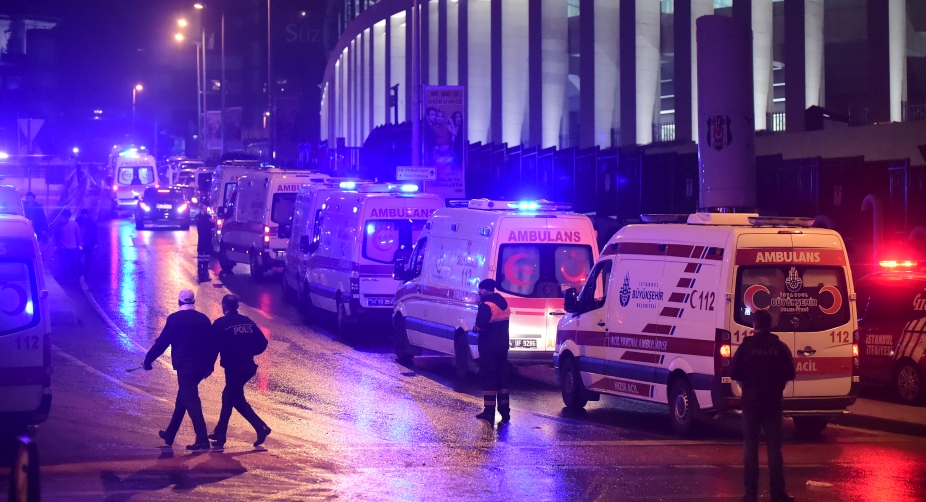
The heinous bloodbath at a swanky nightclub on the banks of the Bosphorus in Istanbul brought what had already been a terrible year for Turkey to an exceptionally brutal conclusion.

It was a year peppered with terrorist attacks, but its centrepiece was arguably a coup attempt in July that apparently came close to succeeding, followed by a sweeping wave of state repression that has deepened fractures in Turkish society amid shifting allegiances on the Syrian front that have resulted in a Nato stalwart effectively allying itself with Russia.

If the idea behind the assassination a fortnight ago of the Russian ambassador to Turkey was to precipitate a stand-off between Moscow and Ankara, it has predictably failed. The assassin, an off-duty policeman, was killed immediately afterwards, so his precise motivations may never be known, but his “Remember Aleppo!” slogan while performing his dastardly act offers obvious pointers.

Syria’s largest city was recently wrested from rebel control by forces allied to the government of Bashar al-Assad, with the Russians and Iranians instrumental in producing this result. It has been claimed that Turkey’s president Recep Tayyip Erdogan helped out by persuading his Islamist allies among the Syrian rebels to facilitate the evacuation of eastern Aleppo.

The Erdogan government was involved in the Syrian conflict long before its troops directly stepped in, and its assistance to Islamist factions included turning a blind eye to international recruits — many of them attracted by the militant Islamic State group — entering the war-torn country through the Turkish border. ISIS turned against Turkey once this route became a lot more restricted, and after Ankara had second thoughts about its initial refusal to permit American and other Nato forces to use Turkish bases as a launching pad for airstrikes against IS on Syrian territory.

Turkey’s relations with the US have frayed markedly since the abortive coup in July, partly over Washington’s refusal to extradite Fethullah Gulen, who is accused of having masterminded the attempt to overthrow his former ally Erdogan. Whether the advent of the Trump administration will improve relations remains to be seen.

Meanwhile, Turkey had visibly bristled at Russia’s intervention in Syria on behalf of Assad, and things came to a head after its forces shot down a Russian warplane that had allegedly strayed into Turkish airspace. Vladimir Putin resisted any temptation he may have had to ramp up the confrontation, instead using the incident as a lever to forge an unlikely informal alliance that had the twin advantage of facilitating his aims in Syria while driving a wedge between leading Nato members.

It was thus Russia and Turkey, alongside Iran, that jointly announced a truce in Syria shortly before the Istanbul atrocity, and successfully sought the imprimatur of the UN. The cessation of hostilities does not include ISIS, and is anyhow not expected to last very long, but it apparently does cover Al Nusra, an organisation once formally allied with Al Qaeda that has played a key role in the rebellion against Assad and enjoyed Turkish favours in the bargain, but is also likely to have borne the brunt of Russian bombing campaigns.

By some accounts, the primary purpose of Erdogan’s Syrian adventure has always been to forestall the likelihood of a de facto Kurdish state on Turkey’s border, and he strove hard to prevent Turkish Kurds from aiding their Syrian comrades. A ceasefire between the Turkish state and the Kurdistan Workers’ Party (PKK) broke down in 2015, and the latter claimed responsibility for some of last year’s terrorist attacks, directed chiefly against security forces — the PKK claims not to target civilians and roundly condemned the Reina nightclub massacre.

The Americans have heeded some of Erdogan’s concerns while broadly backing the Kurdish People’s Protection Units (YPG) in their fight against ISIS (and potentially Assad). But then the US strategy in Syria has anyhow been all over the place, and last month’s truce announcement conspicuously excluded Washington, demonstrating the extent to which it has been sidelined.

Turkey under Erdogan, meanwhile, finds itself besieged on three fronts — by the Gulenists, Kurds and ISIS, which belatedly claimed responsibility for the 39 deaths and dozens of injuries at the Reina nightclub.

The president’s reaction to Turkey’s multiple woes has largely revolved around clamping down on all dissent and extending the breadth and depth of his autocracy, blaming everyone but his own often contradictory policies for all that is going horribly wrong in a nation that not long ago seriously aspired to become a fully fledged European state but has lately been sucked right back into the Middle Eastern cauldron, with its present blighted and its future increasingly uncertain.

Dawn/ANN

Present blighted, future uncertain

Mahir Ali |

The heinous bloodbath at a swanky nightclub on the banks of the Bosphorus in Istanbul brought what had already been a terrible year for Turkey to an exceptionally brutal conclusion.

It was a year peppered with terrorist attacks, but its centrepiece was arguably a coup attempt in July that apparently came close to succeeding, followed by a sweeping wave of state repression that has deepened fractures in Turkish society amid shifting allegiances on the Syrian front that have resulted in a Nato stalwart effectively allying itself with Russia.

If the idea behind the assassination a fortnight ago of the Russian ambassador to Turkey was to precipitate a stand-off between Moscow and Ankara, it has predictably failed. The assassin, an off-duty policeman, was killed immediately afterwards, so his precise motivations may never be known, but his “Remember Aleppo!” slogan while performing his dastardly act offers obvious pointers.

Syria’s largest city was recently wrested from rebel control by forces allied to the government of Bashar al-Assad, with the Russians and Iranians instrumental in producing this result. It has been claimed that Turkey’s president Recep Tayyip Erdogan helped out by persuading his Islamist allies among the Syrian rebels to facilitate the evacuation of eastern Aleppo.

The Erdogan government was involved in the Syrian conflict long before its troops directly stepped in, and its assistance to Islamist factions included turning a blind eye to international recruits — many of them attracted by the militant Islamic State group — entering the war-torn country through the Turkish border. ISIS turned against Turkey once this route became a lot more restricted, and after Ankara had second thoughts about its initial refusal to permit American and other Nato forces to use Turkish bases as a launching pad for airstrikes against IS on Syrian territory.

Turkey’s relations with the US have frayed markedly since the abortive coup in July, partly over Washington’s refusal to extradite Fethullah Gulen, who is accused of having masterminded the attempt to overthrow his former ally Erdogan. Whether the advent of the Trump administration will improve relations remains to be seen.

Meanwhile, Turkey had visibly bristled at Russia’s intervention in Syria on behalf of Assad, and things came to a head after its forces shot down a Russian warplane that had allegedly strayed into Turkish airspace. Vladimir Putin resisted any temptation he may have had to ramp up the confrontation, instead using the incident as a lever to forge an unlikely informal alliance that had the twin advantage of facilitating his aims in Syria while driving a wedge between leading Nato members.

It was thus Russia and Turkey, alongside Iran, that jointly announced a truce in Syria shortly before the Istanbul atrocity, and successfully sought the imprimatur of the UN. The cessation of hostilities does not include ISIS, and is anyhow not expected to last very long, but it apparently does cover Al Nusra, an organisation once formally allied with Al Qaeda that has played a key role in the rebellion against Assad and enjoyed Turkish favours in the bargain, but is also likely to have borne the brunt of Russian bombing campaigns.

By some accounts, the primary purpose of Erdogan’s Syrian adventure has always been to forestall the likelihood of a de facto Kurdish state on Turkey’s border, and he strove hard to prevent Turkish Kurds from aiding their Syrian comrades. A ceasefire between the Turkish state and the Kurdistan Workers’ Party (PKK) broke down in 2015, and the latter claimed responsibility for some of last year’s terrorist attacks, directed chiefly against security forces — the PKK claims not to target civilians and roundly condemned the Reina nightclub massacre.

The Americans have heeded some of Erdogan’s concerns while broadly backing the Kurdish People’s Protection Units (YPG) in their fight against ISIS (and potentially Assad). But then the US strategy in Syria has anyhow been all over the place, and last month’s truce announcement conspicuously excluded Washington, demonstrating the extent to which it has been sidelined.

Turkey under Erdogan, meanwhile, finds itself besieged on three fronts — by the Gulenists, Kurds and ISIS, which belatedly claimed responsibility for the 39 deaths and dozens of injuries at the Reina nightclub.

The president’s reaction to Turkey’s multiple woes has largely revolved around clamping down on all dissent and extending the breadth and depth of his autocracy, blaming everyone but his own often contradictory policies for all that is going horribly wrong in a nation that not long ago seriously aspired to become a fully fledged European state but has lately been sucked right back into the Middle Eastern cauldron, with its present blighted and its future increasingly uncertain.

Dawn/ANN

Too little time, too much to do

Yogesh Pratap Singh |

Judges should be of stern stuff and tough fibre, unbending before power, economic or political, and they must uphold the core principle of the rule of law which says, ‘Be you ever so high, the law is above you.’ This is the principle of independence of the judiciary which is vital for the establishment of real participatory democracy, maintenance of the rule of law as a dynamic concept and delivery of social justice to the vulnerable sections of the community.

These words of the Supreme Court of India evidently elucidate the expectation from its judges. Mr. Justice Jagdish Singh Khehar, perhaps more than any other contemporary Indian judge, has demonstrated this stern stuff and tough fibre. Erudite, possessed of intellectual sensitivity and judicial courage, he led the five-judge constitution bench which struck down the NJAC Act. Justice Khehar also headed a historic bench that reinstated the Congress-led Arunachal Pradesh Government and held all the actions of the Governor violative of the Constitution. Alluding to S R Bommai v. Union of India [(1994)3 SCC 1] the bench avowed that it had “all the powers to put the clock back”. Justice Khehar on the occasion of Constitution Day responded to the diatribe from Attorney General for India, by saying that the judiciary is functioning within its “lakshmanrekha.” The two judgements of Justice Khehar had placed government in an uncomfortable situation; therefore speculation about a third supersession was obvious in corridors of Supreme Court. However, perhaps because of his being a Sikh and from Punjab facing assembly elections or for whatever other reason, he has taken oath today as the 44th Chief Justice of India.

It was Justice J.S. Khehar who gave new life to the collegium after declaring the government’s NJAC law unconstitutional, although the majority view was reprimanded by the dissent of Justice Chelameshwar as repugnant to the spirit of the Constitution. Criticizing the functioning of present collegium system, Justice Chelameshwar observed that absolute independence of any one of the three branches is inconsistent with core democratic values and the scheme of our Constitution. The amendment only seeks to restore such balance and therefore cannot be said to be destructive of the basic structure of the constitution. Later, he refused to participate in meetings of the collegium.

Khehar proceeded to invite public opinion on ways to improve the opaque collegium system of judicial appointments and after receiving over 11,500 views from the public, the Bench directed the government to draft a new Memorandum of Procedure (MoP). This MoP is a persistent bone of contention between the Centre and the Supreme Court. The first challenge before the new Chief Justice therefore would be to give meaning to this dream of the majority in NJAC case. It is now inevitable for the Chief Justice of India to unknot the predicament by addressing genuinely queried issues of transparency and accountability in the collegium for otherwise the conscience of people will be intimidated.

Delay in filling vacancies in the sanctioned strength of Courts and in increasing the sanctioned strength to meet the increase in the institution of cases renders the judiciary inadequate to deliver its constitutional mandate. Bringing the judiciary into this state of adequacy has been the singularly constant finding of all Government Committees and Commissions on Arrears in Courts. All these fact-finding bodies have unvaryingly recommended increasing the strength of judges [See Rankin Committee 1925 to the 189th Law Commission Report of 2004]. These recommendations as well as those of the All India Chief Justices Conference have remained unimplemented.

same applies to the implementation of the orders of the Supreme Court in All India Judges Association case [(1993) 4 SCC 288] followed by Brij Mohan Lal case [(2002)4 SCC247]. Even as there is a national debate on arrears, new arrears accumulate daily. Putting courts in a situation whereby Judges are unable to deliver the public’s fundamental right to timely justice is to deny access to justice and thereby undermine the sole purpose of judicial independence and constitutionalism. Hence, the second major challenge before Justice Khehar would be to foster the relationship where appointments are made smoothly.

is no magic wand to resolve the present judicial crisis. Increasing judges’ strength through an emotional outburst as by Justice Thakur will not fix problems. The government and civil society are constantly asking what initiatives Supreme Court has taken for ensuring more accountability in the judicial wing. Why do constitutional courts in India still follow the archaic ritual of long vacations? Why is the Supreme Court not able to take concrete steps to abolish the culture of adjournments? Why have initiatives not been taken to reform the Bar and to make it more accountable? Justice Khehar must make some hard decisions. He must set the ball rolling by taking some positive reformative measures otherwise the judiciary of the largest democracy will succumb under the weight of its own responsibility and it will be difficult to resuscitate the diminishing confidence of people in the judiciary.

Justice Khehar will retire on 27 August with a discourteous summer vacation of one and half months in between. In such a short stint, no one will be able to accomplish his dream. Thus, questions on the functionality of the ritual that the senior most judge shall be the Chief Justice too become relevant. In the absence of any constitutional provision this convention was nurtured (with two exceptions) to avoid any controversies. But this convention unleashes rapid succession of CJIs with short stints of one, two or a few months. Within the Supreme Court structure all powers revolve around the office of Chief Justice and in the absence of a fixed minimum tenure, no chief justice can hope to reform the judiciary and thereby ensure its independence on aspects other than appointment of the CJI.

The writer is Deputy Registrar, Supreme Court of India.

Marshall to Mattiss

Bhopinder Singh |

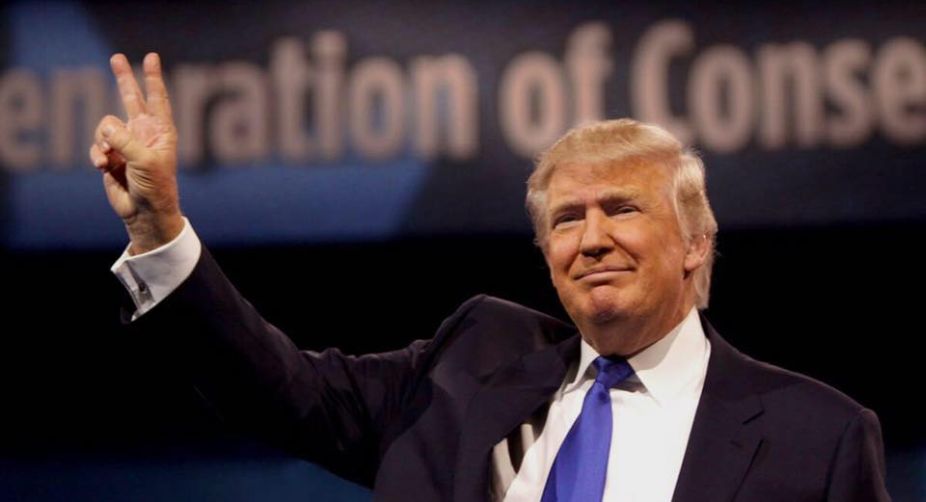
Donald Trump will inherit at least eight active combat theatres with direct US involvement (Iraq/swathes of Syria, Yemen, Pakistan, Afghanistan, Nigeria, Cameroon, Somalia and Uganda), up from the three that Barack Obama inherited in 2009 (Iraq, Afghanistan and Pakistan). The ‘war-related’ commitments have increased from $ 811 billion under the Presidency of George W Bush to $ 866 billion in the Obama tenure, while the overall annual Defence spending for 2016 would be approximately $ 600 billion. However, given the aggressive posturing and unpredictable nature of Donald Trump’s position on dealing with terror and managing foreign policy, these Defence figures could spiral stratospherically.

In the US context, the Secretary of Defence is the key executive whose powers over the US military are in the chain of command, second only to those of the US President. The US Secretary of Defence is also sixth in the Presidential line of succession. So, given the existing operational commitments and the foreboding portents owing to the growing belligerence of Chinese threats, the selection of the new Secretary of Defence in the Trump cabinet is keenly awaited, as the incumbent would have the definitive “authority, direction and control over the Department of Defence. Historically, the US Secretary of Defence has always been a civilian, except in the case of General George Marshall who was the Secretary of Defence in 1950-51. He was brought in to resurrect the morale and confidence of the US forces in the aftermath of the recent demobilisation and to get them combat ready for Korea and the ensuing Cold War theatrics. Therefore, the choice of the Secretary of Defence is a sure-shot indicator of the tenor and approach that is sought to be adopted by the new Trump regime.

Herein, the choice of retired Marine General James “Mad Dog” Mattis is a veritable statement of intent. While it is still subject to a Congressional waiver, as the federal law requires the Secretary of Defence to be off active duty for at least seven years, and General Mattis retired as the 11th Commander of the United States Central Command (USCENTCOM) at Tampa, Florida, in 2013. This 4-star General is part of the popular folklore with monikers like “Mad Dog”, “Warrior Monk” and the ubiquitous imagery of a stoic and expressionless General with the call-sign “Chaos” staring out of posters with statements like, “Be polite, be professional, but have a plan to kill everybody you meet” or “Actually it’s quite fun to fight them, you know. It’s a hell of a hoot. It’s fun to shoot some people. I’ll be right up front with you, I like brawling”!

Now, a certain amount of brouhaha and swagger comes naturally to the Marine Corps fraternity and it needs to be discounted. However, this life-long bachelor with a penchant for voracious reading is a cold-blooded intellectual, who became a legend much earlier as a Major-General commanding the 1st Marine Division during the 2003 Iraq war, when he immortalised the 1st Marine Division motto, “no better friend, no worse enemy”.

Unlike the only other former veteran as Secretary of Defence, the Democrat appointee, General George Marshall, who was an inherent pacifist (recipient of the Nobel Prize for Peace in 1953 for his seminal ‘Marshall Plan’ for the European Recovery Programme) and was also avowedly opposed to the idea of recognising the State of Israel, General Mattis, is, as the rightist Donald Trump introduced him, a ‘true General’s General’, an old-school American who still believes that Iran is the principal threat to US interests in the Middle East and not the ISIS, still cast in the anti-Russian mindset of the Cold-War era and is believed to be intrinsically confrontationist in his operational deployments.

Already, the conciliatory tones of ‘inclusiveness’ that were alluded to and invoked by Donald Trump after his electoral victory are falling apart with the prospective appointments of Jeff Sessions as the next Attorney General, Mike Pompeo as the CIA Chief and Michael Flynn as the National Security Adviser — all of them come with taints of racism or xenophobia and a track record of regressive and incendiary statements. The proverbial ‘walls’ Donald Trump promised are inevitable, at least in the crucial policy-making framework of the next Presidential governance.

The quintessential Marine Corp General Mattis will have to make an unknown and uncomfortable transition from the familiar ‘Semper Fi’ intonations and muscular Oorah’s to the more stately sobriety of continuous engagement and disengagement of the American military footprint in such a way that the diminishing might and respect of the US military is both restored and protected from the heavy price it is paying in terms of personnel lives, material and sustenance investments. The recent thawing, from a decidedly hostile to a cautious status of ‘frenemies’, on both Cuba and Iran stands risked with Trump’s advent as he threatens to reverse ‘better deals’ for the US.

Increased military spending, blunt speak and concern for the last US man standing would be logically expected from General Mattis, but at question is his ability to bring the requisite ‘political’ astuteness to manage often contradictory strains and realities such as the Pakistan theatre with its duplicitous and ‘selective’ stance on the ‘war on terror’. With a track record of undeterred and apolitical soldiering, the military commitments will have a more military rationalisation as opposed to the often obfuscated rationales professed by part-time civilian bureaucrats in the Defence set-up or by semi-informed politicos who have hidden angularities to their statements. While the US Secretary is akin to our Defence Minister, the formula of an ex-military man at the helm of military affairs will be put to test. The only parallel example of a veteran as the Defence Minister in India was Jaswant Singh, arguably among the finest, albeit, for a short period. If the appointment of General Mattis was to send an unmistakable message of deterrence to interests inimical to the US and to prop up the flagging morale of the over-stretched US forces, then on both counts, the result will be unambiguously achieved. However, the acid test for the Secretary of Defence goes beyond conventional combat ‘Generalship’ and requires statecraft and protracted engagements with enemies that will require General Mattis to go beyond his practised instincts and inclinations. Herein lies the doubt about someone who famously said, “I come in peace. I didn’t bring artillery. But I’m pleading with you, with tears in my eyes: If you (expletive) with me, I’ll kill you all”.

The writer is LT GEN PVSM, AVSM (Retd), former LT Governor of Andaman and Nicobar Islands and Puducherry.

For a good cause

Editorial |

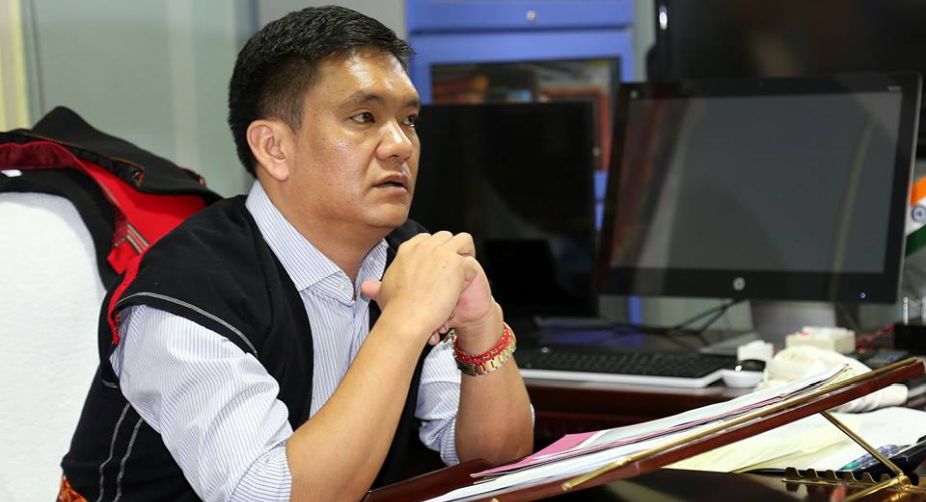
After taking oath on 31 December as chief minister of a full-fledged BJP government, Pema Khandu said, “The lotus has finally bloomed in Arunachal Pradesh … the people will see a new dawn in 2017 under the new government.” Khandu had taken over in September after the Supreme Court annulled President’s rule and restored the Congress government headed by Nabam Tuki.

But after a few days he merged his entire Congress team of 42 members with the regional People’s Party of Arunachal Pradesh. The new development — the merger with the BJP — came about after the PPA temporarily suspended Khandu and some of his colleagues from the party for their “anti-party activities” without even serving them show-cause notices.

What possibly could have forced Khandu to take the prompt decision to team up with the BJP is perhaps his realisation of the uncertainty of his continuation with the support of the regional party. And he was well aware that when opportunity arises the regional party is certain to give him the short shrift.

Ever since Governor JP Rajkhowa (since dismissed) advanced the date of the assembly session, apparently to help the Congress dissidents who had sought Tuki’s removal, the state’s politics had beena rancorous sore. The year also saw Kalikho Pul, a dissident leader, fulfilling his desire to become the chief minister. He held the officefor about four months. Sadly enough, within weeks of being ousted, he allegedly committed suicide.

The swearing-in of four chief ministers in a year is in itself a sad commentary on the working of multi-party democracy. The frequent changes in leadership have already put on hold any meaning of development plans, mostly building of infrastructure. If Khandu has opted for the ruling party at the Centre with the main objective of rapid development of his state, he has done the right thing.

Congress Prime Minister Manmohan Singh gave an assurance that by 2013 the 1,800-km Trans-Arunachal Highway would be ready but it is still under construction. Sadly enough even the strategic Miao-Vijayanagar Road, that will open up the most underdeveloped region in the interior, is behind schedule by many years.

The plan for a green airfield at Itanagar is also taking a long time. It may not even come up at all what with the state authorities now keen on using the military’s advanced landing grounds for civilian purposes.

Sickening silence

Editorial |

Women in Bangalore suffered physical and mental agonies on New Year’s Eve. Women across the country were subjected to a high degree of shame when political elements came up with the customary male chauvinistic line that the victims had “asked for it”. Alas, both the action and reaction are not uncommon. Yet what really sickens all right-thinking people, regardless of their sex, is the silence of the mama-beta leadership of the Congress party.

Was it not honour-bound to take to severe task the home minister in its government in Karnataka who initially made light of the outrageous behaviour, which set the tone for the indifferent attitude displayed by the city police, and actually facilitated the subsequent flood of misogynistic comments that confirm the burden with which Indian women are laden? Condemnation from Sonia Gandhi was expected not because of the fact of her “gender” but because the political party she heads prides itself on being “modern”, “progressive” and “liberated” from the archaic thinking that dominates its major rivals. This was an occasion to convince “young India” that it was so different from most other political elements: it failed to do so.

And in this age of instant communication there was no valid reason for Sonia or Rahul to hold back and not strike out in favour of the harassed Indian woman. The minister who ought to have been served with immediate marching orders does not wield the kind of political clout that should have made the “high command” wary of publicly admonishing him. True that the comments from G Parmeshwaram were not as disgusting as what was mouthed by a Samajwadi Party neta in Mumbai: the difference being that the Congress projects itself as being “different”.

Or is that difference being obliterated as it seeks some kind of a tie-up with the Samajwadi for the upcoming poll in UP? That none of the Congress’ spokespersons broached the subject for three days confirms that it would prefer to sacrifice the interests of women rather than call its’ Karnataka government to account.

Indian misogyny, it is obvious, cuts across party lines. For the people of Bangalore it has been a double whammy. Their state government has hardly earned a reputation for efficiency, now the police has disgraced itself. The “strong” force deployed at MG Road/Brigade Road did little to contain the wanton hooliganism, now the cops seek formal complaints before taking criminal action.

The induction of “new” officers on December 31 points to gross administrative incompetence. And now a salvage operation is being launched — the “image” of Bangalore is being mischievously tarnished, so goes the chant. “Image” is a reflection of reality: the truth was told at MG Road before 2017 dawned.

More banks cut rate by up to 0.9%, make home loans cheaper

PTI | New Delhi |

Joining the rate cut bandwagon, major banks, including HDFC Bank and Canara Bank, on Wednesday slashed their lending rates by up to 0.9 percentage point to make home and other loans cheaper to customers.

The move will help bring down cost of home, auto and other loans linked to marginal cost of funds based lending rate (MCLR).

Following reduction, the one-year MCLR rate of state-owned Canara Bank has come down to 8.45 per cent, down by 0.7 percentage point.

Similarly, country's second biggest private lender HDFC Bank also cut its benchmark lending rate by up to 0.90 percentage point, joining over a dozen banks and housing finance companies that have slashed rates in last few days.

The bank's asset liability committee decided for a cut of 0.75-0.90 per cent in marginal cost of funds-based lending rate (MCLR) across multiple tenures.

Even though IDBI Bank and State Bank of Travancore had announced cuts in the last week of 2016, the reduction in lending rate by major banks got-off with country's largest lender SBI slashing its offerings by a flat 0.90 percentage point on Sunday, a day after being exhorted by Prime Minister Narendra Modi to help the poor and marginalised sections.

SBI has reduced its one-year MCLR to 8 per cent and ICICI Bank has brought down to 8.20 per cent.

Earlier in the day, mortgage firm DHFL too reduced its home loan lending rate by 0.5 per cent in line with competitors.

Following the reduction, rates on home loan for various maturities will vary from 8.60 per cent to 9.10 per cent.

The government's recent decision to provide interest rate relief to home buyers and to those who wish to plan a home in 2017, as well as several past initiatives have created a growth-enabling and conducive environment for the housing finance sector, DHFL CEO Harshil Mehta said.

SC asks top UP officials to explain why warrant was not executed

IANS | New Delhi |

The Supreme Court on Wednesday asked Uttar Pradesh's Chief Secretary and Director General of Police to file an affidavit stating as to why its order issuing non-bailable warrant against a contemnor was not executed.

The bench of Justice Ranjan Gogoi and Justice Ashok Bhushan said that in case of failure to file the affidavit, both officials will appear before it in person.

The court has directed that the affidavit be filed on or before January 13, failing which both Chief Secretary and the DGP would be present before it at 10.30 a.m. on January 13.

The court order cameafter ten contemnors who were asked to hand over the possession of a shop, located in the state's Meerut city, to its owner told it that they have complied with its direction of 2014.

However, the bench was irked after it was told that Asghar, one of the contemnors against whom the warrant was issued, was present in the court.

Advocate Nikhil Jain, who had appeared for shop owner Rafique Ahmed said that this annoyed the court as to how the non-bailable warrants issued by it on December 15, 2016, were not executed and the contemnor was present in the court.

AAP seeks apology from Delhi BJP chief for ridiculing people

PTI | New Delhi |

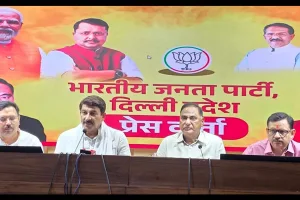
The Aam Aadmi Party on Wednesday sought an apology from Delhi BJP Chief Manoj Tiwari for "ridiculing" people queueing up for cash saying branding them as "patriots" was akin to "psychological manipulation".

AAP MLA Saurabh Bhardwaj told a press conference that Tiwari was only deploying a strategy that is an "inherent part" of BJP's arsenal and used by top leaders including Prime Minister Narendra Modi and its chief Amit Shah.

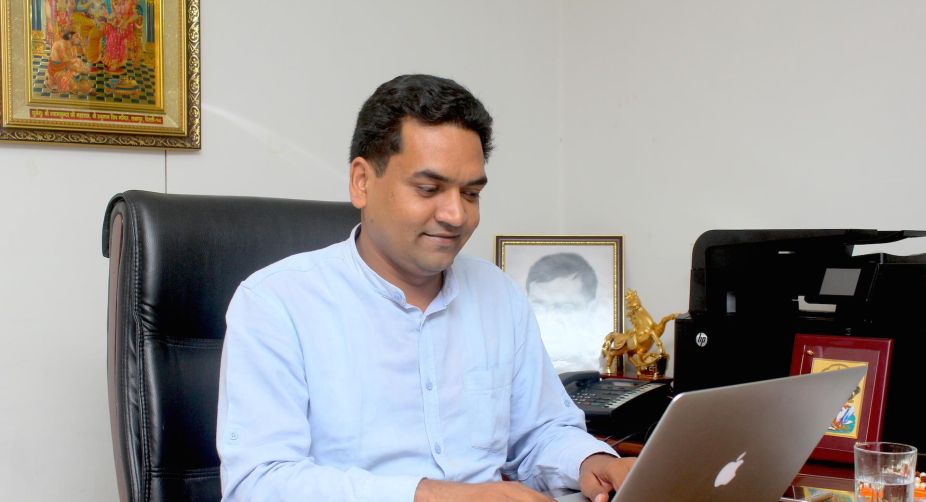
Delhi Water Minister Kapil Mishra also penned an open letter to Tiwari saying he could be a "wonderful singer" but was using it to mislead the people which merits an apology.

"You along with Leader of the opposition Vijender Gupta and other leaders who were present on the occasion should tender a collective apology to the people of Delhi," he wrote.

"Wherever BJP starts getting cornered, it brings patriotism, nationalism to its defence and for psychological manipulation. Not only the poor, even the rich are victims of this manipulation," Bhardwaj said.

Mishra also took a dig at Tiwari over his attire during his stay at a slum to highlight the misery of its dwellers.

"I saw you wearing a costly Burberry muffler at the slum.

While trade has come to a standstill, people have lost jobs due to note ban. Few days ago you were distributing ladoos but due to strong protests within BJP you had to ditch the idea," Mishra wrote.

Tiwari had yesterday questioned AAP's charges against him saying how was terming somebody as "patriot" akin to ridiculing them. AAP is "rattled" by my visit to several unauthorised colonies in the city, he had said.

"Desperate AAP is trying to mislead the people by indulging in politics on frivolous and unreasonable issues.

Chief Minister Arvind Kejriwal and his colleagues seem to have lost their mental balance due to the fear of indictment in Shunglu Committee Report and prosecution in the cases sent to the CBI by the former Lt Governor Najeeb Jung," the BJP said in a statement.

Trump speaks with UN head after criticism of world body

IANS | United Nations |

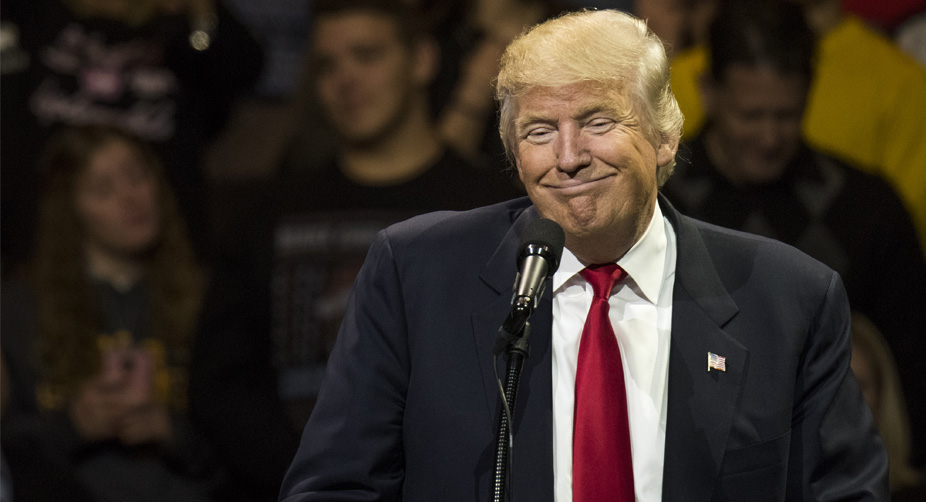
After scathing criticism of the UN, US President-elect Donald Trump spoke Wednesday with Antonio Guterres, its new Secretary-General.

The Secretary-General's deputy spokesperson Farhan Haq told reporters that Guterres called Trump and described it as an "introductory calla that "went quite well."

Trump spokesperson Sean Spicer in answer to a question at his briefing about the criticism of the UN and moves in Congress to cut US contributions to it, said that as the biggest contributor to the UN budget, Washington can demand some "reforms and changes" to make it more efficient.

The US contributes about 22 percent of the UN's budget and about 25 percent of its peacekeeping expenses.

Spicer did not give any specifics about their meeting and said that Trump will work with his UN Ambassador-designate Nikki Haley on the US agenda at the world body.

They discussed a number of issues and how the UN and the US can work together, Haq said. They will get into the specifics when they meet, he added.

He said that he did not think that the Paris agreement on climate change came up in their conversation. Trump has been sceptical about the Paris pact as well as about the UN version of climate change dangers.

Last month the Security Council passed a resolution critical of Israel and condemning the construction of settlements in occupied territories with the US refusing to veto it as it has in the past with resolutions criticising the strong ally of the US.

Trump attacked President Barack Obama for allowing the resolution to pass and said in a tweet, "As to the UN, things will be different after Jan. 20th," the day he takes over as President.

Efforts have also started in the US Congress to cut funding to the UN as a fallout of the resolution.

In another tweet, Trump mocked the UN as a "just a club for people to get together, talk and have a good time." But he also added, "The United Nations has such great potential."

Last month Guterres told the Portuguese television channel SIC last month that he hoped to have an excellent working meeting with Trump and it was in his interest to meet him.

He also acknowledged that Washington was a major contributor to the UN and has a fundamental role in its activities.