Logo

France ‘not planning’ Israeli-Palestinian UN Resolution

AFP | Jerusalem |

France is not secretly planning a UN Security Council resolution on the Israeli-Palestinian conflict after a major conference in Paris this month, the president of the French Senate said on Thursday.

Gerard Larcher said he was not aware of any country working on a resolution to put before the Council between the January 15 meeting and the inauguration of Donald Trump as US president on January 20.

Speaking to the press in Jerusalem at the end of a four-day visit to Israel and the Palestinian territories, Larcher said that many Israeli interlocutors had expressed fear France would try to translate the outcome of the conference into a UN resolution.

The French-organised talks, to be attended by around 70 countries — but not by Israeli or Palestinian representatives — are being held to reiterate international support for a two-state solution to the conflict.

"There is no secret proposal for a resolution prepared by France at the UN after the Paris conference to date," Larcher said.

Israeli Prime Minister Benjamin Netanyahu has consistently spoken out against the French initiative since its announcement early last year, insisting that anything but direct talks between the sides will make peace more distant.

On Tuesday, Netanyahu told Israeli diplomats that the French conference would be "futile," warning however that "there are signs that there will be attempts to use decisions that are taken to vote on a new UN resolution against Israel." 

The Palestinians support the French initiative.

On December 23, the UN Security Council for the first time since 1979 condemned Israeli settlement of occupied Palestinian territory. The United States did not use its veto and abstained in the vote.

Netanyahu rejected the resolution at the time as a "shameful blow against Israel" and claimed that outgoing US President Barack Obama was behind it. 
218 Indian fishermen freed by Pak; one dies before release

PTI | New Delhi |

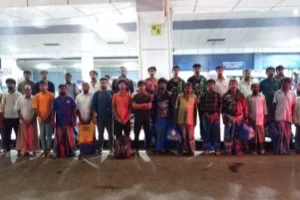
 In an irony of fate, an Indian fisherman died of heart attack in a Karachi jail hours before he was to be released, along with 218 others, by Pakistan as a "goodwill gesture", according to Gujarat Fishermen Association.

Jeeva Bhagwan (37), whose name was on the list of 219 fishermen released today, hailed from Khan village in Una tehsil of Gir Somnath district of Gujarat, Veljibhai Masani, senior vice president of Gujarat Fishermen Association, said on Thursday night.

He died of heart attack on Wednesday, Masani said.

The fishermen were freed from Malir jail on instructions from the Interior Ministry as a goodwill gesture, jail superintendent Hasan Sehto said.

With the release of the fishermen today, the total number of Indian fishermen freed from Pakistani jails as "goodwill gesture" in the last 10 days reached 439, despite the chill in bilateral ties.

This is the second batch of Indian fishermen released from Pakistan jails since relations between the two countries became tense after the terror attack on an Indian army base in Uri in September for which India has blamed Pakistan-based Jaish-e-Mohammed terror outfit.

On December 25, the Pakistan government had freed 220 Indian fishermen who were in jail for more than a year as goodwill gesture after Prime Minister Narendra Modi greeted counterpart Nawaz Sharif on his birthday.

Sehto said the Indian fishermen who were released today would be handed over to Indian officials at the Wagah border.

He said that around 110 more Indian fishermen remain in Landhi jail in Karachi.

Last March, the Pakistan government had released 87 Indian fishermen who had been languishing in jail in Karachi for the last two and half years.

Pakistan and India frequently arrest each others' fishermen for violating the territorial boundary.

Poor fishermen from both countries routinely find themselves arrested for illegal fishing as there is no clear demarcation of the boundaries between the two countries in the Arabian sea near Sir Creek and lack of technology has made life difficult for the fishermen of both the countries.

Last Friday, Pakistan Maritime Security Agency arrested 66 Indian fishermen for illegally fishing in Pakistan's territorial waters.

Fishermen from both countries end up languishing in jails for years even after serving their sentences and their only hope of getting released is when the governments decide to take goodwill steps.


Tax refund to exporters within 7 days under GST: Sitharaman

IANS | New Delhi |

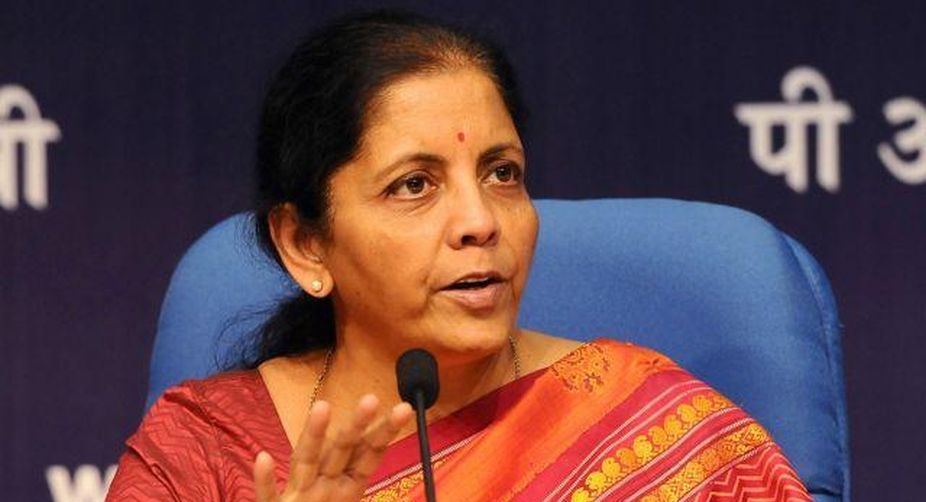
The tax claims of Indian exporters will be refunded by the Department of Revenue (DoR) within seven days under the proposed Goods and Services Tax (GST) regime, Commerce Minister Nirmala Sitharaman said on Thursday.

She also said that exporters would get interest on the refund if it is delayed beyond two weeks.

At a meeting here on Thursday of the Council for Trade Development and Promotion, exporters were assured "that on 90 per cent of the amount (of refund), within seven days, the refund will be made and if there is an undue delay, interest will be paid on the amount due", Sitharaman said, briefing reporters on the meeting.

Exporters have been demanding exemption from GST regime on the grounds that delay in refunds often takes months and results in blocking of working capital.

"GST clearly provides that the taxes must be paid and that the refund will be provided. So since the regime is so structured, in order to see that there is minimum pain to the exporters, the DoR has committed that 90 per cent of the refund will be made within seven days. Delays beyond that would invite interest payment," Commerce Secretary Rita Teaotia said.

"This assurance satisfies the exporters," she said.

"The issue about interest payment, what that amount would be and whether it would kick in after two weeks, that detail DoR would decide," Teaotia added.

A matter of importance

Dinesh Goel | New Delhi |

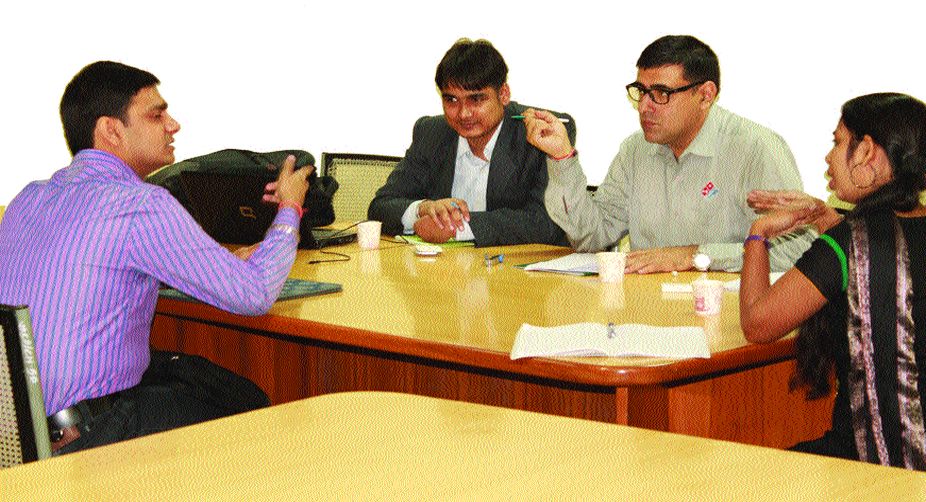
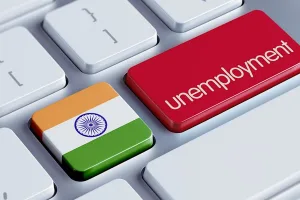
A new trend has been observed in the job market demonstrating a steady rise in demand for more skills based job opportunities rather than qualification roles. This gradual shift suddenly accelerated over time as more and more organisations recognised the fact that the country is reeling under a huge gap between the skills an individual possessed and the kind of jobs they applied for in the market. 
This mismatch directly affected many young job aspirants, who had to face rejection or were turned down by prospective employers, leading to an increase in unemployment. What many fail to consider is that a college degree does not always guarantee a job. In India, students have been traditionally taught that doing well in academics is a surefire way of getting good work opportunities. This long-held mentality has led many to either learn by rote, or cramp in as much information as possible in their mind to achieve good grades during their examinations. 
There are only a handful of colleges in the country that actually prepare their curriculum keeping in mind the practical skills required for any role that can benefit students in the future. However, even such institutions market their degree in a way that it seems appealing to any student hoping to embark on his/her professional journey as soon as they graduate. Many applicants tend to think their degree will speak for them, and do not feel the need to prove themselves. They simply rely on the popular notion that getting a degree from that particular college will guarantee them with a job. 
While some students do benefit from such offers, a large chunk of fresh graduates, despite holding a degree, generally do not get picked up, simply because of their lack in certain skills. The biggest reason for this disconnect is the fact that the overall course at most institutions only cover the theoretical aspect of a subject, which are not regularly updated.  
Meanwhile, industries and corporates work on projects that affect economies at mass scale are away from theories and evolve at a much faster rate. Thus, it has become a matter of extreme importance nowadays to enable students with various kinds of skills-based training at the secondary and higher education level in order to prepare them for their future professional career. 
It has been universally acknowledged that individuals tend to learn faster about a subject that involves some form of activity or practice, rather than rotting chapters and theories taught in the conventional education system. Similar to ones basic habits, constant practice allows them to acquire lifelong skills, which they can utilise. This is probably why most corporates emphasise on questions involving previous work experience rather than the kind of syllabus the candidate followed during their stint in university. 
Almost all job descriptions floated by employers specify some key skills that they seek in potential job seekers. There are very few employers who are extremely stringent about the degree of candidates. It all depends on the kind of career or line of work one chooses to pursue. What’s more, unlike attaining a degree that validates one’s specialisation over a subject, acquiring basic skills can enable individuals to switch careers irrespective of the degree they hold. One should always be prepared to compete with highly qualified applicants in the job market as it can get extremely competitive. Individuals should assess their strengths and weaknesses in various areas and apply for those job roles that best match their skill set. 
With the start-up revolution in India, most employers have become more open minded about hiring candidates mostly on the basis of their skills. Hence, one should opt for training courses that can enhance their abilities and ensure a bright future in their professional career. There are various learning opportunities available for candidates who wish to hone their skills. They can either pursue a diploma or short term training courses to fulfill their requirements. 
Internships are also a great way to acquire skills in the real world and experience how a typical workplace looks like. This may initially seem trivial, but the right opportunities can pave the way for a bright professional future. 
While earning a degree or completing higher studies is an achievement by itself, one needs to update their skills as well in order to keep up with latest trends in the market. Thus, it can be safely said that skill set can become the determining factor when it comes to securing good job placements or opportunities. 

(The writer is the co-founder and chief executive officer of Hunarr.co.in)

Getting the impression right

Lizzi Hart | New Delhi |

It's your first proper real adult job. Scary, right? As graduates, you’re not expected to be brimming with experience, or even understand the unwritten rules of the office. That being said, just because you’re a fresh graduate, it doesn’t mean you have to act like one.
Here’s a look at some of the mistakes many office newbies make, in the hope that you can avoid these and make an even better first impression.
n Drinking too much caffeine: Just because the coffee is free, it doesn’t mean you should drink seven cups a day. Just like everything, consume in moderation, or risk getting the jitters and struggling to sleep.
n Getting too drunk at their first company outing: Ah, the first company social — a breeding ground for nerves. And what do nerves love best? Alcohol. But before you down that third pint, think about the first impression you'll make.
You might not realise it yourself, but you might come across as very obnoxious to people who don’t know you that well whilst drunk.
Don’t become a liability; drink in moderation, and actually live to remember the conversations you have had with your new colleagues.
n Too much texting: Everyone does it occasionally, especially when a tempting notification appears on screen. But you need to be careful.
Remember, this is your first job and you want to impress your co-workers and managers. It’s not even easy to conceal.
When you’re on your phone, it’s very obvious. Try turning off your phone for your first few weeks, or switching it to do not disturb so you aren’t hounded by constant vibrations.
n Not owning up to mistakes: It's a horrible thing to admit that you’ve screwed up; to admit that you have flaws, and that you aren’t perfect. But when it comes to your job, you need to be accountable for your actions.
Don’t just hide behind your desk. Tell someone you messed up, and do everything you can to remedy the situation, or just be careful to not do it again.
As my own manager says, it’s better to let someone make a few small mistakes autonomously, rather than help them, and let them believe they're invincible — they’re more likely to be careful in the first instance, but reckless in the second instance.
n Not asking for help: You’re not expected to know everything in an entry-level or graduate position. You weren’t hired for your knowledge necessarily, but more your ability to learn or understand what your job requires of you.
In this vein, learn to ask for help when you need it. Try something yourself first, as you don’t want to come across as lazy, but if you're truly stumped, ask someone.

Companies don’t want you to make loads of mistakes by trial and error because you're too proud to ask for help; they want to teach you.
If you’re worried people seem too busy to help, you’ll have to get used to it. Speak to your line manager, or find someone who is patient and good at explaining things, and run through your problem.
n A tendency to complete tasks too quickly: We've all been there. Doing a long and time-consuming school assignment, but getting so sick of doing it, you just end up submitting it without proof-reading. But this isn’t going to cut it when you’re being paid.
The annoying thing for graduates is that, to the colleague who gave you the task, you seem to have poor attention to detail. But it’s not that, you just want to complete as much as possible in a short space of time, despite the lower quality of work.
To avoid annoying your co-workers or coming across as sloppy, take a little extra time on a task to check through your work. It will be appreciated.
n Leaving on time when there’s work to do: Hours aren’t rigid. Graduates coming into the working world might think they are, but often, you will work unpaid overtime in order to get the job done, or to hit a deadline.
If you can spend 20 minutes extra finishing up a task, rather than leaving at 5pm and wasting time the next day reminding yourself of the task and what needs to get done, your dedication and hard work will be noticed.
Think about it this way — when you’re more experienced, you’ll likely have familial ties, meaning home time is even more precious. So why not put in the extra hours now in order to make an impression.
Once you’re more established within your industry, you can demand a regular leaving time if needs be. 
n Over/under-sharing with colleagues: There’s always a danger of either completely holding back from your work colleagues (going home for lunch, avoiding after work drinks) or coming across as far too keen and end up annoying your colleagues — which is never a good idea.
A happy medium is obviously the answer, but many graduates new to the working world aren’t sure how to strike such a balance. Everyone has their own friends and family.
The people you get on well with, you’ll probably end up seeing outside of work. But not everyone will want to socialise with you, or wants to hear every single minute detail about your weekend.
Conversely, if you decline all social invitations, you leave your co-workers to make assumptions or feel rejected.
n Complaining too much: Humans love to complain. For some reason, many of us believe negativity is a more effective way to connect with each other than positivity.
We all need to have a rant when we’re frustrated with something we can't change or don’t know how to. But when all you bring to an office environment is negativity, you are less likely to make friends, let alone a good impression on management.
It’s a tricky thing to try and combat, but if you can try and catch yourself before you complain at someone who just politely asked you how your weekend was, you’re more likely to get on well with everyone and come to enjoy work.

(THE INDEPENDENT)

Hong Kong ball in China’s court

Frank Ching | New Delhi |

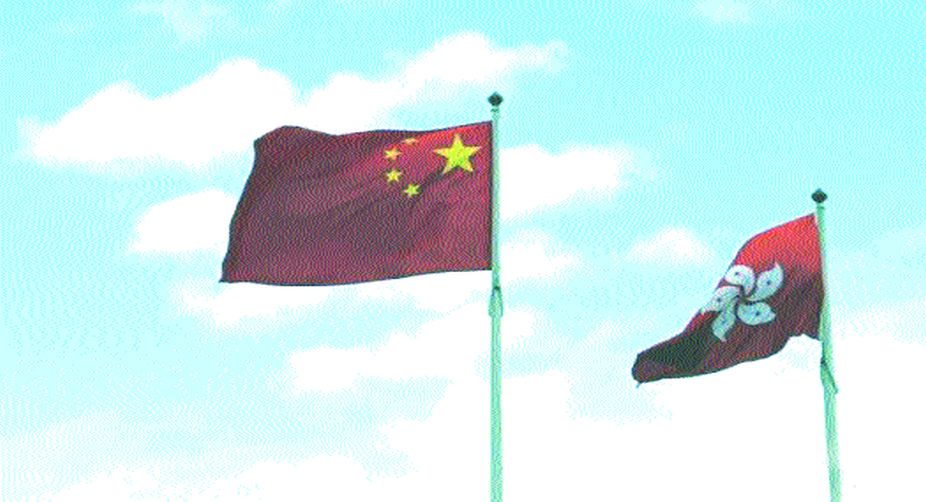
Twenty years ago, Hong Kong was handed over to China by Britain, its colonial master for 156 years. The decision had been made earlier by China’s diminutive but doughty leader Deng Xiaoping, and the reputedly unbending “Iron Lady” Margaret Thatcher had little choice but to acquiesce.
The thinking was that with the whole world watching, China would live up to its treaty commitments and, under the “one country, two systems” policy, allow Hong Kong a high degree of autonomy.
At the time, Hong Kong had a lot going for it. It had a highly successful economy, considered one of the Four Tigers of Asia, along with Singapore, South Korea and Taiwan. China, by comparison, was still poor, with the majority of its people living in the countryside.
China was — and is — the world’s most populous country, with a 1996 population of 1.2 billion people and a GDP of $856.1 billion. Hong Kong, which accounts for perhaps 1 per cent of China’s overall territory, had a GDP of $160 billion, or roughly 20 per cent of China’s national GDP. Hong Kong’s per capita GDP was $24,818, far exceeding China’s $703.
Hong Kong was the goose that laid golden eggs. No Chinese leader in his right mind would do anything to harm the territory’s interests, it was believed. Besides, there was the question of face. Hong Kong was a superlative success under the British. If it started to go downhill after sovereignty changed hands, it would look pretty bad for China.
Twenty years later, where are we? Well, in terms of figures, Hong Kong has moved ahead to a GDP of $316 billion, or $36,117 per capita, making it very much a developed economy. China is now the world’s second largest economy, with a GDP of $11.39 trillion and per capita GDP of $6,416.
On an overall basis, the Hong Kong economy is now a mere 2 per cent of the Chinese economy. And on a per capita basis, mainland Chinese have moved up from 1/35th to 1/6th that of their Hong Kong counterparts. That is a very dramatic change.
In other words, China has many more geese laying golden eggs and is much less reliant on Hong Kong than it was 20 years ago. In fact, the shoe is now on the other foot and Hong Kong is increasingly dependent on the mainland to grow its economy. That is why Hong Kong has asked to be made part of China’s five-year economic plan.
Twenty years ago, on the eve of the handover, people in Hong Kong were most fearful of losing the rights and freedoms that they enjoyed under the British. To be sure, even then those rights were not absolute, and the government had powers to rein in such freedoms as the right to assembly and to a free press.
Today, those rights and freedoms are largely intact, though recent reports of Chinese agents exercising law enforcement functions in Hong Kong are deeply worrying, as was the horrifying 2014 knife attack on Kevin Lau, former chief editor of Ming Pao.
But the most sensitive issue is democracy. Under Britain, there was little democracy to speak of. Only after London agreed to return Hong Kong to China did the British introduce limited forms of democracy, such as functional constituency elections, indirect elections and finally a few directly elected seats before the 1997 handover.
But China stated in Hong Kong’s mini-constitution, the Basic Law, that the ultimate aim was to have the chief executive and the entire legislature chosen through universal suffrage. Hence there has been much pressure in Hong Kong to implement such promises — pressure that has been strongly resisted by the Chinese government.
China made an offer in 2014 on universal suffrage elections for chief executive — an offer that was rejected by the Hong Kong legislature in 2015.
China insisted on mechanisms that allow it to vet candidates by defining the Election Committee that currently elects the chief executive as the Basic Law’s “broadly representative nominating committee” whose job it is to nominate candidates in universal suffrage elections for chief executive. Not surprisingly, this was rejected by pro-democratic legislators.
The ball is in Beijing’s court. During this anniversary year, it should take action to end the impasse by agreeing that the nominating committee should be much more broadly based than the current 1,200-member Election Committee. Such a move would be consistent with the Basic Law; it would show China’s goodwill, improve the political environment and, hopefully, allow Hong Kong to move ahead not only in the debate on democracy but in other areas as well.

(The China Post/ANN.)

PPP projects now at the crossroads

Bhai Vijay Chhibber  and Kiran K Kapila | New Delhi |

The relevance of Public Private Partnership (PPP) as a mode of delivery of infrastructure projects, be it in terms of leveraging private sector investments or in the use of most appropriate technology and capacity enhancements, needs little elucidation. With over 350 PPP Projects with investment of around INR 400,000 crores already rolled out, it is an opportune moment to review and focus upon the impediments that are being faced by this mode of delivery, particularly given the slowdown in award of PPP Projects in the last two to three years.
This is not to say that efforts have not been made to strengthen the PPP environment, particularly in the highways sector.  Premium deferment in stressed projects, harmonious substitution of concessionaires in projects that face financial constraints, timely infusion of funds to revive languishing projects and restoring the operating period for levy of toll or securing all annuities in respect of projects delayed not on account of concessionaire default, are all extremely relevant and dynamic decisions taken by government in the recent past aimed at mitigating the stress faced by PPP projects. And yet, there is no disputing the fact that the contracting community, in general, has become averse to the PPP mode of delivery of projects with Engineering Procurement and Construction (EPC) emerging as the preferred route. So what ails the PPP mode and what further steps are required to revive the PPP mode with its concomitant advantages, in parallel with the EPC?
Firstly, there is an urgent need for clear distinction between ‘’Concessionaires’’ and ‘’Contractors’’, which appears to have been allowed to be blurred in the anxiety to make PPP the “default” mode of delivery.  This was the primary reason for excessively competitive bidding in recent years, making many of the PPP projects unviable. Besides nothing was done either by the Authority or the lenders to arrest this trend which only added insult to injury. The bid parameters require immediate correction to limit participation in PPP projects to only those SPVs which correspond to the basic definition of a “Concessionaire”.
Second, while all projects can be streamlined to be awarded on the PPP mode, that may not always be in the country’s best interest.  It may be prudent to frame standard methods or comparators for each infrastructure sector to help determine/identify the projects which have comparative advantage and value for money in adopting the PPP mode vis-à-vis other alternatives. Thirdly, there is need to have a more effective and accurate assessment of the Civil Cost of each project.  There have been several instances in the past where Civil Cost as assessed by the Authority has been subsequently reassessed by the Concessionaire and accepted by lenders at a substantially higher level.  One way around this persistent problem is to replace the existing practice of the Authority preparing only a “feasibility report” for purposes of inviting bids with a more comprehensive Detailed Project Report (DPR).  This will help capture the Civil Cost with increased accuracy, taking into account market rates of key materials. These estimates should also cater to the element of inflation, based on previous years’ data. This will not only inspire greater confidence amongst   bidders, but also help reduce infructuous expenditure being incurred currently by all bidders as they separately assess the likely Civil Cost.  Moreover, it will take away the ambiguity which allows lenders to accept potentially inflated assessment of Civil Cost, an element which has contributed to several projects becoming unviable.
Fourthly, in all cases where there have been delays in rolling out projects from the time the initial estimates were prepared, the financial viability and bankability needs to be reassessed. As a thumb rule, no cost estimate should be taken as the basis of assessing a project which is dated beyond 9 to 12 months.
Fifthly, the Authority needs to be more focused on fulfilling its obligations, as any delay in achieving the Conditions Precedent has a disproportionate impact on the Cash Flow of the Concessionaire. The triggers that will determine a default and the exact scope and nature of compensation, including methodology of computation, must form a part of the Model Concession Agreement (MCA). Similarly, the time frame within which such compensations would flow from the defaulting party, should also be embedded into the Contract itself.
Sixthly, PPP Concessions are usually envisioned over extended periods. Any disruption in revenues during the operation period can have deleterious impact on the cash flows of the project.  Even where the Authority accepts the claims of the Concessionaire for compensation, this is usually in the form of extension in the concession period, benefits of which are available at the end of the period.  There is need to review this framework to provide for such compensations to be provided upfront either wholly or substantially, and not back ended as at present.
More importantly, there is need to revisit the nature of relationship between the Authority and the Concessionaire. A “mai baap” approach, typical of Government contracts, is inimical to the creation of a conducive ecosystem required for the success of PPP, particularly where large programmes are being undertaken.  Once the Conditions Precedent have been met, PPP projects must be allowed to go ahead on a reasonably autonomous basis. All decisions should be taken strictly as per the Concession Agreement, without undue interference and influence of the client agencies. Where decisions rest with Independent Engineers/Concessionaires, there is no need for Authorities/Officers to interfere, e.g., change of scope, extension of time, etc.  The Authorities/Officers should concentrate on matters of land acquisition, removal of utilities and interfacing with the representative of the State Government with the overall objective of fulfilling the Conditions Precedent in a timely manner.
Now that sufficient experience in the award and operation of PPP projects is available, it may perhaps be prudent to have an Independent Regulator. In the roads sector, for example, the Regulator could be tasked to not only deal with all “interpretation” issues, but also look at observance of service and safety conditions.  The continued role of Government/NHAI, both as Regulator as well as the Authority, is not appropriate, as they are interested parties with an obvious conflict of interest.
 
(The writers are, respectively, former Secretary, Road Transport and Highways, Govt. of India, and CMD of Intercontinental Consultants and Technocrats Pvt Ltd.)

Tragedy to farce

Subrata Mukherjee | New Delhi |

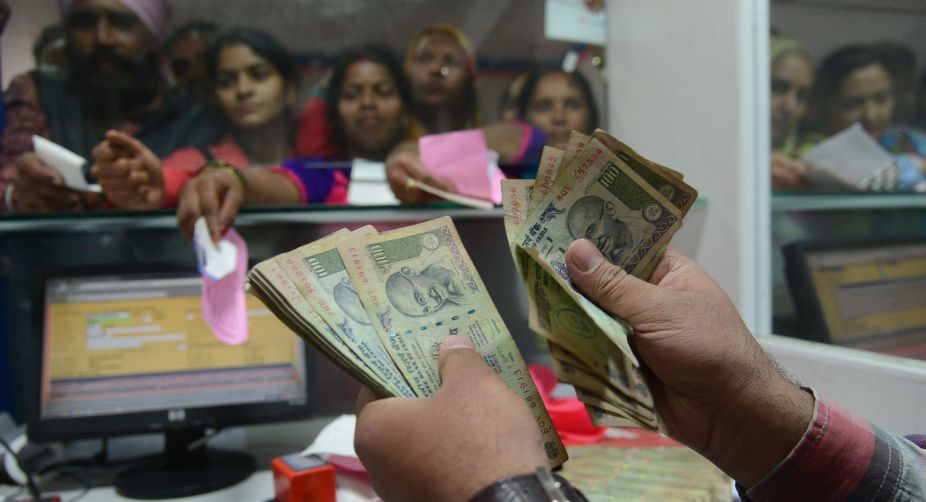
Prime Minister Narendra Modi’s assertion that the people we see queuing up for withdrawing money from the banks and ATMs is “a line to end all lines”. This perception is of a piece with what Sir Karl Popper once called “utopian social engineering”. Utopians attempt to establish an ideal state in which two acts are performed simultaneously ~ (a) conflicts in social life are resolved satisfactorily; and (b) some presumed ultimate human ends are met. The crux of the problem arises when any such scheme calls for a radical overhaul of the existing edifice. It calls for decisive intervention in the interests of a societal whole and the intervention is to ‘lessen the birth pangs’, to quote Marx. Popper contends that such utopian social projects are only superficially attractive as they lead to several unintended and negative consequences.
The reason for a wide gap, as we have noticed in the present demonetisation drive, between the expectation and the consequences, is because the social world is extremely complex and our knowledge of the same is incomplete, in spite of one’s best efforts. It is this inherent limitation that renders an untested grand design normally ineffectual. Popper observes: “The greater the holistic changes attempted, the greater are their unintended and largely unexpected repercussions forcing on the holistic engineer the expedient of piecemeal improvisation” or the “notorious phenomenon of unplanned planning.” Even the most carefully planned action is fallible; which is why Popper once asked, “Who plans the planners?”
The inherent assumption is that individuals are pawns in a larger social system and are subordinated to social forces beyond their control and this inevitably leads to the emergence of authoritarian regimes. Centralised planning leads to concentration of power in the hands of a few or even in one person, paving the transition from democracy to authoritarianism.
There is a certain hostility to public criticism, which stops the essential flow of feedback and the real impact of policies. This further curtails the effectiveness of such policies. Popper says that a such a situation makes the utopian planners totally indifferent to miseries that such plans can cause. Suffering is assumed to be an essential part of such a process as the undefined utopia would justify such hardships for the present. The line to end all lines surely falls in this category.
While developing this impressive theory, Popper changed the important question ~ Who should rule to a novel one: “How can we so organise political institutions that bad or incompetent rulers can be prevented from doing too much damage. This institutional design is only possible within democracy as problems can be solved by providing a non-violent and institutionalised mechanism of change to get rid of bad rulers.”
For Popper, the intrinsic value of democracy is not the sovereignty of the people as ‘the people do not rule anywhere, it is always governments that rule”. In the mass democracies of today the role of the people is to get rid of incompetent, corrupt or abusive leaders at regular intervals.
Narendra Modi’s demonetisation scheme perfectly matches Karl Popper’s prescriptions of utopian social engineering. It has been a futile attempt to achieve a grand transformation within 50 days, marked by different and often contradictory clarifications in 40-odd days to the scheme that was announced on 8 November 2016. Formal institutional and parliamentary channels were bypassed. Subsequent changes left enough scope to legalise black money. From a crusade against black money the goal post was changed to cashless economy and digital payments reducing the policy from a tragedy to a farce.
It never differentiated between black economy and black money, the latter always a small portion as the tax evaders keep a small amount in cash and the rest is invested in real estate, bullion, foreign currency and accounts in tax havens beyond the reach of law. It has not stopped the generation of black money in new currency notes. The limited demonetisation of the Morarji Desai’s government was no deterrent to accumulation of black money.
The unintended consequences of demonetisation are the deaths of many people who stood in the queues for hours, loss of jobs in the unorganised sector, slowing down of demand, sluggish economy, fear of substantial fall in growth rate, foreign investments and tourists and above all erosion of faith in cash. The BBC observed that India received 8 million tourists in 2016 and predicted that next year, it would be half of this number and the many who came this year would never ever revisit India. Before invoking demonetisation, the reasons for which were more political than economic, the Modi government should have analysed our own capacity to replace such huge currencies and the costs involved in doing so.
The US, whose currency is the most sought after, has never thought of demonetisation. It faces considerable problems while dealing with black money and dirty cash especially when a large chunk is held outside the US. But it has never declared its own currency illegal since the introduction of currency notes in 1862. The US knows that its currency is the essential basis of its financial strength and credibility, on which the entire world has unshakeable confidence.
Many have commented on the rise of an invasive and a maximalist government as there is an attempt to undermine the citizen’s right to privacy and choice about the mode of payments. The crux of the matter is that a currency note is a solemn promise which under any circumstances is to be honoured. Demonetisation by the Modi government has undermined that one cardinal principle, thereby denuding our position on the comity of nations, specifically as a democracy which is far from perfect. It is a setback that will take decades to heal, if it is totally healed ever.

(The writer is retired Professor, Department of Political Science,
 University of Delhi)

‘US challenging India’s solar policy sent message to world’

PTI | Washington |

The US successfully challenged India's local content conditions in its solar policy which sent a message to the rest of the world that it would not tolerate "new form of protectionism", outgoing American Trade Representative Mike Froman said on Thursday.

Further, this also helped the US to get India to open up its market worth $1 billion, Froman said in an exit-memo released by the White House on eight years of the outgoing Obama Administration.

USTR, he said, filed as many as 24 cases against other countries before the World Trade Organization.

The US has focused in particular on bringing cases which have broad, systemic benefits, he argued.

"Challenging India's local content requirements was not just about increasing solar panel exports to India, but was intended to send a message to governments all over the world that the United States would not tolerate this new form of protectionism to exclude our products from their markets, contrary to their WTO commitments," Froman said.

Similarly challenging China's use of export restrictions on rare earth materials not only provided important relief to US manufacturers dependent on those materials as inputs, but also provided an opportunity to send a message to China's government and other governments not to use such restraints in any sector to gain a trade-distortive advantage over US competitors, he said.

Of the 24 enforcement actions, 15 have targeted China's unfair and WTO-illegal policies, ranging from illegal barriers to auto imports, agricultural subsidies to grain producers, discriminatory taxes, barriers to services trade, and barriers to US exports of high-tech steel, Froman said.

"We also brought economically significant cases against India's illegal, non-science-based ban on US poultry, European subsidies to civil aviation, and Argentina's import restrictions," he said.

"Our trade enforcement successes have positively affected billions of dollars of US exports," Froman said, adding that the US' case against China for illegally imposing anti-dumping duties opened up that market to $5 billion of auto and auto parts exports.

"Our case against India's local content requirements for India opened up an estimated $1 billion market. And our case against China's illegal duties on US poultry is worth an estimated $1 billion," Froman wrote in his exit memo.

Beneath Ground Zero

Editorial | New Delhi |

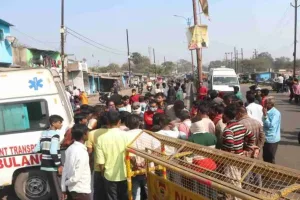
It may not be eerily reminiscent of the coal mine catastrophe at Chasnala, near Dhanbad, in December 1975, but the tragedy in Jharkhand’s Lalmatia open-cast coalfields has yet again thrown up the defects in maintenance and safety. With 17 killed and at least 50 miners still gasping under mounds of coal and rubble, the focus of the investigation will hopefully be riveted to the inherently fragile construction. That mining wasn’t in progress when the walls caved in is of academic interest to the technologically inclined; the casualties would have been far higher if extraction of coal was on. However, this version has been contested by a section of the Eastern Coalfields (ECL) staff, who claim that work did not stop even when one of the walls of the mine started collapsing.
This isn’t the moment to engage in a discord over the mining schedule. What matters most of all is that there were what the ECL authorities call “landslides” down under. The plural form of the geological phenomenon is critical in the greater scheme of things. It is now fairly confirmed by the management that “landslides in the hard rock area below ground zero led to the collapse of heaps of earth from the upper portion of the site”. No one denies that this is “something rare”; it is pretty much obvious though that the minimum precautionary measures were not in place to avert the kind of disaster that befell Lalmatia last week.
The accident lends no scope for any feeble excuse in the face of an ugly truth, still less an attempt by ECL to cover its tracks. The fact that Jharkhand’s Chief Secretary and DGP swiftly left Ranchi for the disaster site in Godda is suggestive of the magnitude of the tragedy. That magnitude was borne out by the Chief Secretary’s assertion that “we will not spare anyone found guilty of negligence”. It remained for the administration in Ranchi to intervene before an FIR was filed against Eastern Coalfields, which had hired the miners from a Gujarat firm. The public sector subsidiary of Coal India is palpably on the mat.
Direly imperative, therefore, is to ensure safety and maintenance if ECL is to avoid egg dripping down its face. In the aftermath of the Lalmatia disaster, it shall not be easy to dispel the dominant impression of negligence that has overwhelmed the mining belt.
Also to be probed is whether the collieries boast emergency teams in suitable strength to countenance an accident. Personnel of the National Disaster Response Force and units of the CRPF and CISF were sent from Ranchi to supplement the inadequate local effort. Every minute counts when an accident occurs on the rail track or inside a coal mine. And yet negligence plagues both the Railways and the collieries.

Decisive polls?

Editorial | New Delhi |

It is customary to use the term “referendum” whenever simultaneous polls are being conducted to state legislatures ~ though the implications of their outcome has little more than moral impact on the government at the Centre. Technically there would be no direct outcome for New Delhi of the coming elections to five assemblies, but in the surcharged political atmosphere the spin-off could be considerable. Not only on “moral” grounds, but because they might set the future course of Indian politics. Thus the results scheduled to be announced on 11 March will be decisive ~ if not for the BJP then certainly for the Congress, Samajwadi and BSP ~ which underscores the acceptance of UP as the “heartland”: though a couple of side stories could also be scripted.
Just how high are the stakes is evident from the demand that the presentation of the Union budget be deferred, a demand rooted in the apprehension that the BJP would offer more sops than what the Prime Minister announced on New Year’s Eve to woo the voter. That adds up to proof of how easily the voter may be swayed, and the secondary role that “performance” plays in the electoral slugfest. Also proof (which will undoubtedly be disputed) that Modi sarkar generates little confidence that it will rise above using its clout on Raisina Hill for electoral advantage.
The BJP does have cause for some worry too: will the verdict in March confirm its claim that the masses solidly support demonetisation? After its runaway success in the parliamentary poll, the BJP’s performance has been wishy-washy, it could do with a boost.
The Congress would be desperate to improve its fortunes: retaining Uttarakhand and Manipur is just not good enough. Having been reduced to a walk-on role in UP, it would need an improved performance there to dispel the impression that Rahul Gandhi lacked “what it takes”, but comments from its chief ministerial aspirant suggest it has already settled for crumbs the Samajwadi might toss its way. Those crumbs could indeed be limited, Akhilesh Yadav may seem to be gaining the upper hand in the internal scrap, but with Mayawati snapping at his heels and the BJP emerging with all guns blazing, the Samajwadi will need more than its “cycle” to romp home again.
Goa might, just might, offer prospects of a consolation prize for the Congress and thus (with UP a virtual non-starter) its credentials would rest on snatching Punjab from the Akali-BJP alliance. For the Aam Aadmi Party too the stakes are high ~ it needs voters in Punjab and Goa to liberate it from the “upstart” tag. As for the Election Commission, as always, it will be a challenge to keep the exercise clean.


Trump threatens Toyota over Mexico factory plans

PTI | Washington |

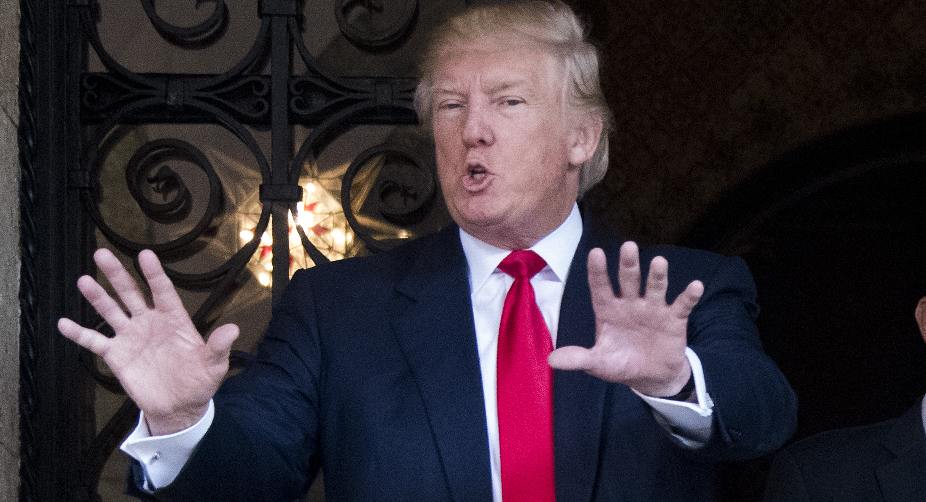
US President-elect Donald Trump on Thursday threatened to impose steep import taxes on Toyota if it goes ahead with plans to build a factory in Mexico to export cars to the United States.

"Toyota Motor said will build a new plant in Baja, Mexico, to build Corolla cars for U.S. NO WAY! Build plant in U.S. or pay big border tax," Trump said in a tweet, his latest attack on auto manufacturers investing abroad rather than in the United States.

Toyota in November celebrated the groundbreaking for the plant in Guanajuato, in central Mexico, which reportedly will entail a USD 1 billion investment.

Ford this week canceled plans for a USD 1.6 billion plant in Mexico after coming under attack by Trump. 

Make a fragrant choice

Swaati Chaudhury | New Delhi |

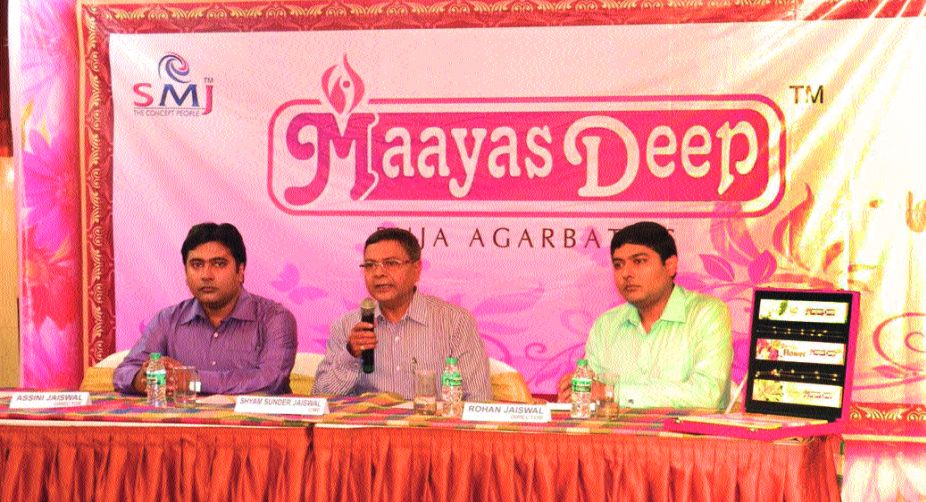
There's no better way to spruce up one’s home during this season than with candles and fragrances. SMJ Venture Private Limited, Kolkata’s leading fast moving consumer goods player, has launched its fragrant brand of incense sticks — Maayas Deep — across Bengal. The group is now contemplating to launch incense sticks using the fragrance of orchids from Sikkim.
Established in 1994, the small organisation was involved in making ceramic caps but has transformed into a popular FMCG group. The incense sticks market is growing at fast rate in the country. Assini Jaiswal, executive director, SMJ Venture Private Limited explained, “The incense sticks market in India is largely unorganised and is worth Rs 1,800 crore while the market in Bengal accounts for Rs 100 crore. Our products are now on offer only in the retail outlets of Jharkhand and West Bengal. 
“West Bengal has the largest consumption of incense sticks in the country and very soon, we plan to display them in retail outlets in the North-eastern region and other states of eastern India as well. We expect to have a one per cent share in the incense sticks market of India in future.” 
The FMCG major has around 3,000 dealers across West Bengal and is on a rapid expansion path. The brand Maayas Deep offers five different kinds of fragrances that include Astha, Desires, Natural, Live and Morning Flower. Jaiswal said,  “The fragrances of our incense sticks go well with people’s mood and generate good feelings. The fragrance of Morning Flower brings freshness of mind, rejuvenates the soul and makes one vibrant.”
The company is known for its production of battery vent caps and battery spares across the country and its products have global buyers in countries like Oman, Saudi Arabia, Bangladesh, Argentina and Chile.

When it comes to making high quality camphor, the FMCG player just can’t have enough. It stands high in its production and occupies around 15 per cent of the market share in West Bengal.  Camphor forms an essential ingredient in lighting festival lamps during Diwali and come in jars and pouches. The group enjoys a market share of more than 30 per cent in camphor production in North Bengal. 
Jaiswal siad, “The people of West Bengal are not too aware about the use of superior quality camphor. We are thinking of offering camphor free of cost along with incense sticks to our customers during Diwali.” The FMCG player 
is looking to clock a growth of 25 per cent every year. 

Pankaj Advani knocked out of Kolkata Open Pro-Am in semi-finals

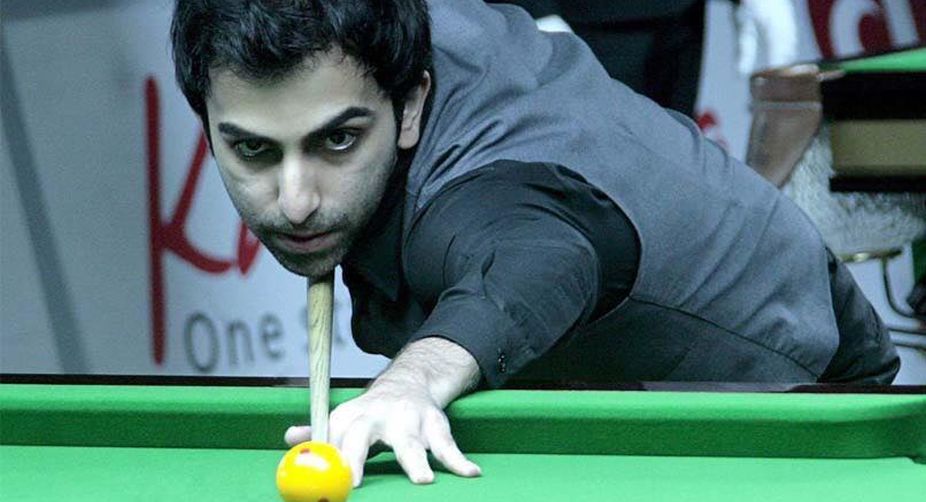
Dharminder Lilly and Sunil Saraogi pulled off a huge upset beating sixteen-time world champion Pankaj Advani and his teammate Rajesh Tulsian 3-2 in the semi-finals.

PTI | Kolkata |

World Masters Snooker and 9-Ball Pool Champion Dharminder Lilly and his amateur partner Sunil Saraogi pulled off a huge upset beating sixteen-time world champion Pankaj Advani and his teammate Rajesh Tulsian 3-2 in the semi-finals of the Kolkata Open Pro-Am tournament here on Thursday.

Second Seeds Aditya Mehta and his partner Ravi Goenka (Bazaar Kolkata) stormed into the finals by putting up a flawless performance to beat Third Seeded Faisal Khan and Shreevardhan Poddar of Subir Udyog 3-0. Aditya played the role of Senior Pro to perfection, guiding his partner Ravi to up his game at the right juncture.

Though Pankaj Advani-Rajesh Tulsian (Team Shree Cement) duo were seeded first, it was the fourth seed duo of Dharminder Lilly and Sunil Saraogi (Team Natural Products) who drew first blood, winning the first game 61-47.

Pankaj was in his elements in the next two games, comfortably winning them 19-63 and 20-62. Dharminder-Sunil pulled off another winner in the fourth game, winning 68-47 and leaving the game tantalizingly poised 2-2. With the packed hall sitting on edge, it was down to the wire, as both the pros dug deep into their experience. In the end, it was just not Pankaj's day as Dharminder Lilly and Sunil Saraogi prevailed 50-41 in the decider.

SEMI-FINALS SCORES Dharminder Lilly & Sunil Saraogi (Natural Products) beat Pankaj Advani & Rajesh Tulsian (Shree Cement) :: 3-2 :: (61-47, 19-63, 20-62, 68-47, 50-41) Aditya Mehta & Ravi Goenka (Baazar Kolkata) beat Faisal Khan & Shreevardhan Poddar (TVS – Subir Udyog Ltd.) :: 3-0 :: (55-48, 69-39, 76-41) QUARTER FINALS SCORES Pankaj Advani & Rajesh Tulsian (Shree Cement) beat Shahbaaz Adil Khan & Mudit Poddar (MP Portfolio) :: 3-2 :: (123(93)-07, 77-26, 29-53, 13-88, 72-26) Dharminder Lilly & Sunil Saraogi (Natural Products) beat Brijesh Damani & Rajeev Jhunjhunwala (Kalawati) :: 3-2 :: (66-19, 53-74, 86-30, 46-58, 64-41) Faisal Khan & Shreevardhan Poddar (TVS – Subir Udyog Ltd.) beat Kamal Chawla & Piyush Bhagat (Space Group) :: 3-1 :: (76-59, 65-28, 18-61, 75-72) Aditya Mehta & Ravi Goenka (Baazar Kolkata) beat Lucky Vatnani & Chetan Mehta (Gloster Limited).

As it meanders along

Asanna | New Delhi |

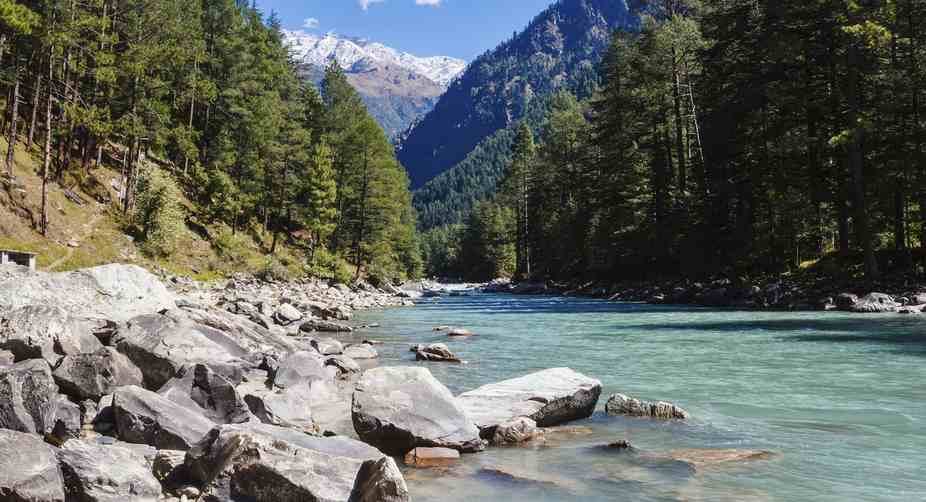
The pebbles lie clean and still under the crystal clear water of the roaring river that rolls peacefully on a mid-winter day.

It’s January. The bright yet soft winter sun makes silvery sparkles over the water. The stony bank where the river overflowed in summer now lies bare far and wide. The sky is blue as the day is bright but the water is ice cold. Cold, but refreshing and relaxing as you dip your tired feet into it.

The Bogamati River (meaning white river) — running lowly between the foothills of Indo-Bhutan border — cuts through the vast expanse of the Assam border. It got its name from the huge deposits of white sand and stones on its bank. About a 91 km-drive from Guwahati, its captivating panoramic beauty with soft hill ranges around and a peaceful environ with no settlers makes it an ideal blissful getaway. One can sunbathe on the white river bank and enjoy the cool breeze or take a rejuvenating dip in the water.

It gets a little crowded during holiday season though. People flock to the place for a day picnic and a visit to the Buddha statue that stands tall on a hill near the river. The Assam government built the statue as a symbol of world peace to attract Buddhist visitors from Bhutan and strengthen the bond with the neighbouring country. It is a 200-step climb to the breathtaking spiritual abode overlooking the river that winds in a beautiful meandering path along the border. On the foundation of the statue is inscribed — “A sign of world peace”. Sure indeed, it’s peaceful up there.    The golden Buddha statue is surrounded by low green groves over small pathways.

If time is at hand, one shouldn’t drive back to the city just yet as the nearby hamlets where mostly Bodos, Assamese and Nepalese live warrant exploration. The local people are simple, peaceful, hospitable and helpful. The roads here are small and unpaved, but the drive is worth it. The betel trees stand tall between houses, and its long, dried leaves line the road as fences, something which is unique to the place.  Lush betel plantations and tea gardens between villages are a beautiful sight to behold. 

As you wind away from the habitats, skip the main road.  Take the less-travelled and shorter route and drive through the river courses across the border to Bhutan.    

The drive across the shallow river onto the highway is for the more adventurous at heart and makes a thrilling trip. If you could make it to Bhutan before the sun sets — the entry closes by 4.30 pm — you can spend the evening there in crisp fresh mountain air and grab a quick bite of Bhutanese delicacies before you speed back to India.

Much-needed rescuing act

Deepak Rikhye | New Delhi |

Around 80 people drown every day in India, which comes to more than 29,000 every year. This data was released by the National Crime Records Bureau. In fact, from 2010-14, each year recorded an average of 25,000 deaths by drowning. The World Health Organisation reports that, on a global scale, 1,008 people die every day due to drowning — thus it is the third leading cause of unintentional death across the world with more than half the number being below 25 years of age. 
These statistics articulate a clarion call to safeguard people from such disasters. But does one plan for such an arduous task? India is a vast country, and with its diversity, gives the matter of logistics some challenges. A person with calibre, conforming to this role, may successfully meet the demands of synchronising activities, and adopting a methodology, which encompasses the length and breadth of India — introduce life-saving skills that will benefit every man, woman and child. 
An organisation called Rashtriya Life Saving Society-India has been formed and incredible as it appears, India has been blessed by a personality from the Indian Navy who has resolved to help redeem a series of tragedies, which entail drowning. 
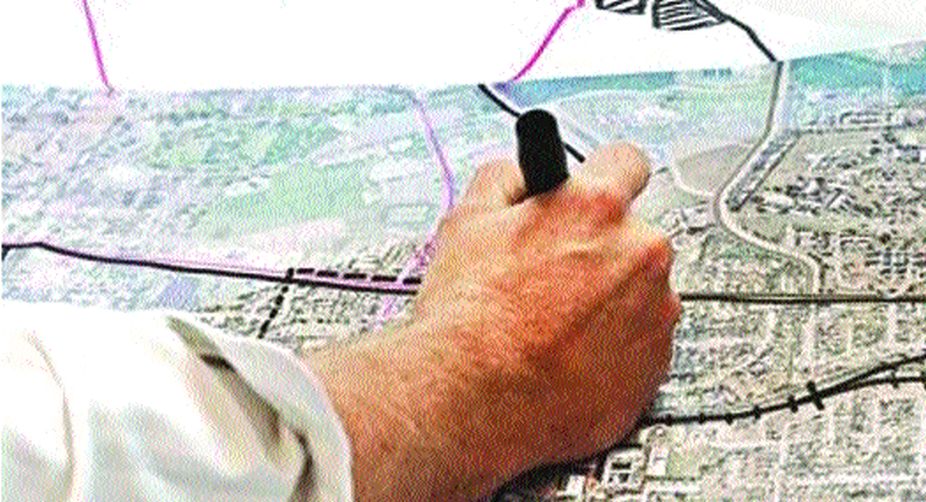
PD Sharma, Rear Admiral (Retired), crystallised a vision that both he and his wife, Kavita, decided to first study as a microcosm by scrutinising a map of the sub-continent and then expanding a programme to embrace every part of the country into their fold. 
The journey that unfolds is mind-boggling because of the fact that the entire plan has cruised along ever since RLSS-I was founded on 2 August 1998. Both Rear Admiral PD Sharma and Kavita, the president and vice-president respectively, were presented the Commonwealth Award on 22 November last year by Queen Elizabeth at Buckingham Palace. 
RLSS-I teach people to protect themselves from drowning — be it a village pond covered with an impenetrable mass of water hyacinth, a swimming pool, a river or even the mighty ocean. The Pune-based organisation engulfs just about everything with its humble ethos, which is a cornerstone of its amazing pursuits — the RLSS-I is a non-profit making endeavour. 
Theirs is a service to the nation, one that every citizen of our vast country must be enlightened about.  The indefatigable and tenacious efforts of this husband and wife team have elucidated an extraordinary dimension to the word, protection.
Rear Admiral Sharma’s determination came into effect when he read the horrifying details of the number of people who drowned every year in India. Both he and Kavita began an incredible journey thereafter. Their training programmes in Kerala were highlighted by the government there — interestingly, Kerala has many water bodies and that intensified the involvement of RLSS-I in the state. 
They went through central India, onto West Bengal and into Assam where they began with the Assam Valley School — owned by the Williamson Magor Group, it ensures that every student is trained to swim, taught to help rescue another swimmer, and administer first aid, if necessary. The RLSS-I have included Assam and Arunachal Pradesh’s fast flowing rivers, into their training programmes as their waters have taken away many lives. 
Rear Admiral Sharma has designed a manual with simple but effective rules for fast-flowing rivers, such as never going into a river alone; never jumping from a great height like a tree or bridge and making sure both feet are firmly on the river bed. To gauge the current, one should check by throwing a piece of wood or a bottle, and assess the speed of it drifting. He warns of the dangerous difference when a river has a separate rate of a current on the surface compared to the current in its depths.
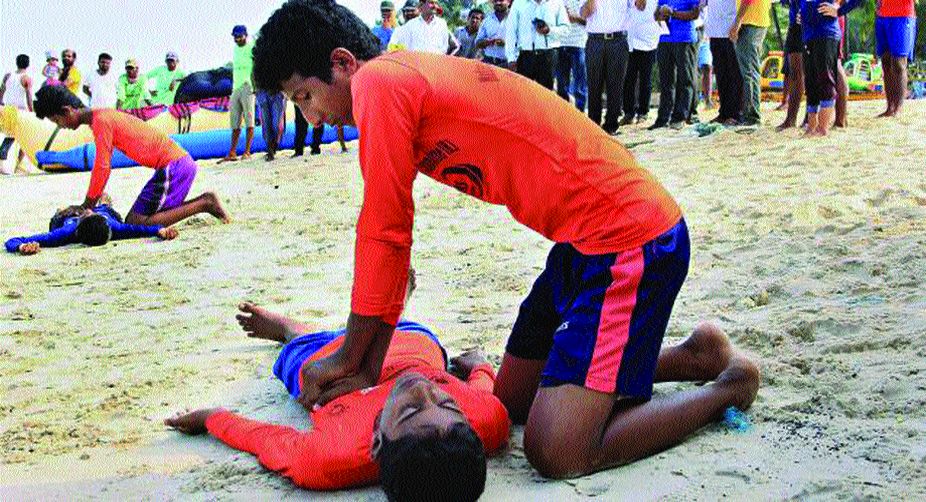
Apparently humans are not good swimmers and this is a principle that must be borne in mind because it excludes the possibility of taking risks.      The core value of this programme is not preparing a learner for the Olympics. On the contrary, it teaches people to be safe in the water and to be of help to other swimmers around. In addition, the organisation conducts certifications in resuscitation (CPR), first-aid, lifeguards, and life saving.
Rear Admiral Sharma was elected the president of the International Life Saving Federation’s Asia-Pacific Region in 2012 — the first from Asia to hold such a position.  

BJP, Congress link BJD leaders to Rose Valley chit fund scam

PTI | Bhubaneswar |

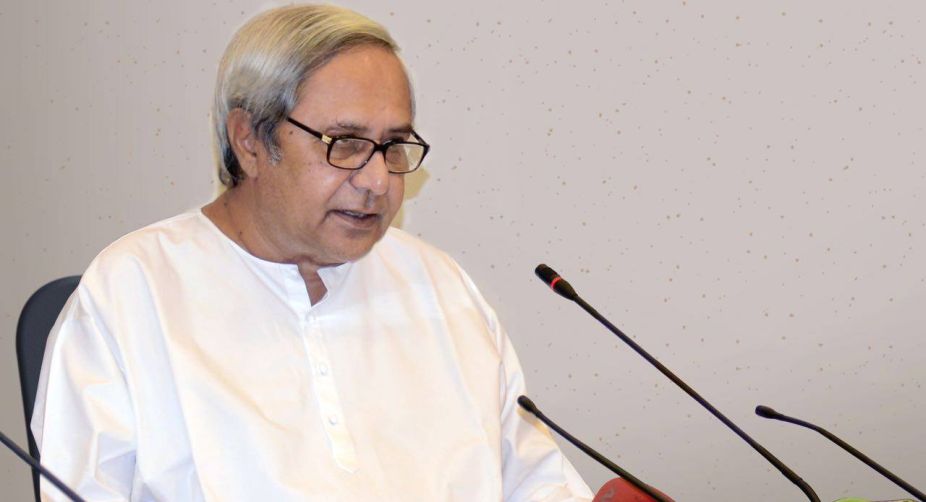
With the CBI arresting two Trinamool Congress MPs for their alleged involvement in the Rose Valley chit fund case, opposition Congress and BJP in Odisha on Thursday demanded action against some BJD leaders for "being hand-in-glove" with the ponzi scheme company.

BJP state vice-president Samir Mohanty at a press conference, without taking any name, alleged that a ruling party MLA from Cuttack had arranged a rented house in Mancheswar area of Bhubaneswar for Rose Valley Group chief Goutam Kundu's media venture.

He also alleged that a BJD minister had arranged a meeting of Kundu with Chief Minister Naveen Patnaik and said, "We seek a clarification from the chief minister on this." 

Mohanty alleged that the BJD and the TMC had a "secret understanding" as per which, the former would provide its people for a rally planned by Mamata Banerjee's party in Odisha on January 10.

Asserting that the BJP would make the chit fund scam a major issue in the panchayat polls scheduled to begin from February 13, Mohanty said the state government had failed to return the money to the small investors even though two-and-a-half years had passed.

Reacting to the allegation, senior BJD minister Damodar Rout said, "The CBI took up the chit fund investigation on the Supreme Court's directive. Now, the BJP is in power at the Centre and the CBI is a central agency. So, why are they not cracking the chit fund case at the earliest?" 

"BJP has been levelling baseless allegations to stay in the media limelight in view of the upcoming panchayat polls," said BJD spokesperson Rabi Narayan Nanda.

Congress too mounted an attack on the BJD over the chit fund scam.

"Cuttack-Barabati MLA Debashish Samantaray was involved in Astha chit fund and there was a Mercedes car in his driver's name. However, the whole issue was covered up," alleged Odisha Congress treasurer and Cuttack Nagar Congress chief Mohammed Moquim.

"We demand that the CBI bring the MLA and others into the purview of its investigation," he added.

BJD MLA Samantaray, however, rejected the allegations saying, "I am in no way involved in the scam. I have no links with any ponzi scheme company."