Logo

A date with music

Sudipta Chanda | New Delhi |

Starting a new year without a calendar is almost an impossible task. We need it to plan our weeks ahead, if not the days of the current week itself. And if you are a fan of Kishore Kumar, Ashok Kumar, S.D.Burman, Salil Chowdhury, Satyajit Ray, R.D.Burman, Md Rafi, the Amit Kumar Fan Club along with Kumar Brothers Music has released a trip down memory lane with a unique calendar featuring numerous rare photographs of your favourites. 
It was in Charulata where Kishore Kumar sang for Satyajit Ray for the first time. “Ami Chini Go Chini Tomare”, the Tagore song earned fame for its simplistic melody and Kumar’s soulful rendition. This calendar starts with a moment from its recording session where Kishore Kumar is seen following Ray’s instruction during recording. Incidentally, the singer did not charge a penny for this song. 
Kishore Kumar can also be found in another rare picture holding an umbrella over his head, looking thoughtful. There is one of legendary singer Md Rafi playing the tabla while music composer genius R.D.Burman is seen playing some creative notes on his harmonium. 
First of the four months have some rare photographs. R.D.Burman and Amit Kumar teamed up for their debut Bengali non-film song “Kato Din Aar Ebhabe Bose Thaki”, released in 1975. A rare picture from the recording of the song featuring the singer Amit Kumar along with its music composer R.D.Burman in front of microphone at the recording booth is featured in the May-June page. Salil Chowdhury playing the piano is also another ‘feel good’ snap from the same months’ page. 
Amit Kumar’s picture as a young boy can be found in July-August months page. The same page also carries a candid moment of Kishore Kumar and Amit Kumar where the senior is holding the junior’s ears during a recording session. It is more of a funny moment, seems carrying a message don’t be naughty, concentrate on song. 
Very few know Dadamoni Ashok Kumar the great actor was also a superb painter. 
A rare photograph of Ashok Kumar painting is in the September-October months’ page. On the other hand S.D. Burman’s picture from the premier show of Aradhana in Kolkata also can be seen on the same page. Ashok Kumar and S.D.Burman were both born in October. 
The calendar ends with two beautiful solo pictures of Kishore Kumar and Amit Kumar. As a whole this presentation is for retro music lovers.
The special ‘retro’ calendar offers eight  pages altogether including a cover page followed by information about Amit Kumar Fan Club & Kumar Brothers Music and then pages of rarely seen photographs of the legends from musicologist-researcher Vishwas Nerurkar’s collection. 
Amit Kumar and Kishore Kumar, the father-son duo has got  much space in this calendar as it is an Amit Kumar Fan Club’s initiative. Amit rendered his debut song under his father’s musical baton while he was just 13-years-old. 

The calendar is priced at 
Rs 300 and available through 
www.amitkumarfanclub.com

A touch of London

Anit Mukherjea | New Delhi |

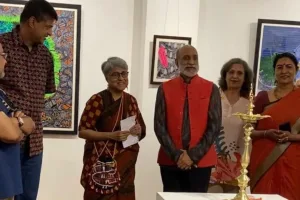
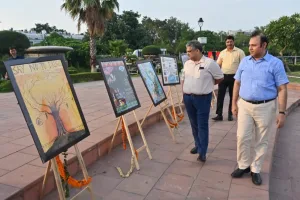
A recently concluded exhibition in December incorporated a touch of London with local art that was showcased in the paintings of UK-based senior artist Sisir Kanjilal with local painter Malay Das held at the Academy of Fine Arts (South Gallery) Kolkata. The exhibition was inaugurated by Anup Motilal Curator, Rabindra Tirtha and Nazrul Tirtha, Newtown in the presence of Jahar Dasgupta Ex President of the Academy of Fine Arts and Debabrata Chakrabarti renowned artist and art critic. 
On display were 12 canvases of Sisir Kanjilal mostly executed in oil and some in acrylic. Among the paintings was a portrait of Bob Dylan in his youth probably the inspiration was triggered by the Nobel Prize in 2016 by the lyricist and vocalist in Dylan.  Applying a minimal palette of white, brown, blue, yellow and offset in black though in oil, has a subtle pastel texture. Much of Kanjilal’s painting style derives its western influence through his grooming in art from a relatively well known German painter Herr Herman Muller and, under his guidance created a series of representational oil paintings.
A retired Chartered Accountant by profession, Kanjilal is a Fellow of the Royal Society of Arts of England. Among the other displayed canvases were a series of flower bouquets meticulously executed and brilliantly chromatic. His European art masters appear to form the backbone of some of his ideas and techniques. However, Kanjilal manages to come into his own with a show of his individuality and integrity in such paintings as Anguish of Lava and Northern Lights both in oil seemed pitted together in a riot fiery red with a blend of colours that merge into each other, a contrast of the meaningful with the abstract. 
The other painter Malay Das, a local artist is more engaged with the ground reality of his natural surroundings, far from the cityscape. Having numerous awards to his credit, this artist is backed by a Masters Degree from the Bangla Sangeet Parishad affiliated to the Rabindra Bharati University. Das started his career in painting mostly in water colours to what may be deemed as nature studies. Twelve of his canvases in oil and acrylic showcased mostly dreamy impressions of simple woods, forests producing a mystical quality in his work. 
The ones that rivet the attention are Sylvia, Nature, The Park and Mail Bandhan with a colour palette of different hues of green, shades of black, blood red and myriad colours to depict loneliness in Sylvia. 

A touch of London

Anit Mukherjea | New Delhi |

A recently concluded exhibition in December incorporated a touch of London with local art that was showcased in the paintings of UK-based senior artist Sisir Kanjilal with local painter Malay Das held at the Academy of Fine Arts (South Gallery) Kolkata. The exhibition was inaugurated by Anup Motilal Curator, Rabindra Tirtha and Nazrul Tirtha, Newtown in the presence of Jahar Dasgupta Ex President of the Academy of Fine Arts and Debabrata Chakrabarti renowned artist and art critic. 
On display were 12 canvases of Sisir Kanjilal mostly executed in oil and some in acrylic. Among the paintings was a portrait of Bob Dylan in his youth probably the inspiration was triggered by the Nobel Prize in 2016 by the lyricist and vocalist in Dylan.  Applying a minimal palette of white, brown, blue, yellow and offset in black though in oil, has a subtle pastel texture. Much of Kanjilal’s painting style derives its western influence through his grooming in art from a relatively well known German painter Herr Herman Muller and, under his guidance created a series of representational oil paintings.
A retired Chartered Accountant by profession, Kanjilal is a Fellow of the Royal Society of Arts of England. Among the other displayed canvases were a series of flower bouquets meticulously executed and brilliantly chromatic. His European art masters appear to form the backbone of some of his ideas and techniques. However, Kanjilal manages to come into his own with a show of his individuality and integrity in such paintings as Anguish of Lava and Northern Lights both in oil seemed pitted together in a riot fiery red with a blend of colours that merge into each other, a contrast of the meaningful with the abstract. 
The other painter Malay Das, a local artist is more engaged with the ground reality of his natural surroundings, far from the cityscape. Having numerous awards to his credit, this artist is backed by a Masters Degree from the Bangla Sangeet Parishad affiliated to the Rabindra Bharati University. Das started his career in painting mostly in water colours to what may be deemed as nature studies. Twelve of his canvases in oil and acrylic showcased mostly dreamy impressions of simple woods, forests producing a mystical quality in his work. 
The ones that rivet the attention are Sylvia, Nature, The Park and Mail Bandhan with a colour palette of different hues of green, shades of black, blood red and myriad colours to depict loneliness in Sylvia. 

Giving classical music its due

Meena Banerjee | New Delhi |

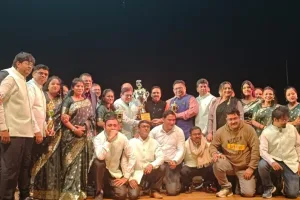
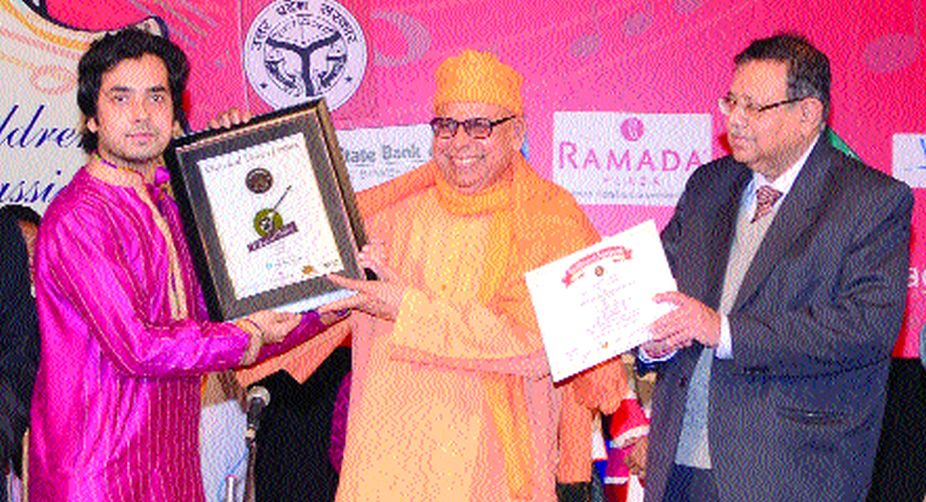
The young and talented Sumit Mishra of Kolkata lifted the trophy of “Classical Voice of India” at a great congregation of music worshippers that took place under the aegis of Sangeet Milon, a Lucknow-based group. They organised the grand finale of “Classical Voice of India 2016” and “Tabla Nawaz 2016” — two pan-India contests — at Lucknow’s Sant Gadge auditorium of the State Sangeet Natak Academy recently. Mahesh Salunkhe (Pune) won the title of Tabla Nawaz.
Akhilesh Yadav, chief minister of Uttar Pradesh, who graced the glittering prize-distribution ceremony, was highly impressed to see a huge gathering of classical music contestants along with their music-loving parents and erudite musicians as judges from across the country. After two day-long marathon sessions of evaluating hugely talented budding performers as finalists from 22 cities in 15 states, the final day saw the toppers showcase their brief recitals along with a few other brilliant contestants who topped at the state level.
As one of the jury, this reporter was impressed by quite a few young talents who not only sang or played in perfect tune and rhythm, but have actually learnt the art of improvisation between two phrases, notes and beats. Also, there were some who have imbibed the distinct flavour of the gharanas they are being groomed into. A rare achievement in this era of distractions; and the credit goes to their gurus as well!
These highly promising performers, irrespective of their junior, middle, senior or Yuva Kalakar categories, are Anindya Mahata, Sahil Bhogale, Sameer Athreya, Purnesh Bhagwat, Arijit Roy, Krishnendu Samarth, Devashri Nawgharey, Bidisha Hazra, Amit Kumar Rath and little Anjali Gaekwad in vocals. In the tabla arena Ishaan Ghosh (Mumbai), Aarchik Banerjee and Abir Mukherjee (Kolkata) displayed amazing maturity.
One noticed that while Bengal, Maharashtra and Karnataka’s Dharwad region
dominated the scene, Delhi and Chandigarh put up a brave and commendable show. But Uttar Pradesh, the North-east and even Odisha lagged way behind. The latter, despite having extremely talented voices, needs proper guidance in
khayal singing. This is very different from ghazals or the swaying nuances of Odissi music. 
The platform and encouragement provided by Sangeet Milon is definitely going to be very beneficial for them; especially for Lucknow. Once upon a time Lucknow, as the capital of Awadh, used to be the epicentre of Hindustani tehzeeb (culture) replete with its nafaasat (finesse) and nazaaqat (delicacy) but not anymore. Except for the oft-quoted grandeur of Shaam-e-Awadh and Subah-e-Benares nothing bears testimony to the long history of flourishing classical music in this region.
While listening to them, one wondered what had sparked this hugely successful extravaganza and that too in this now musically barren region! The answer came from Arundhati Chowdhury and her revered Master-moshay Milon Debnath, the life-force behind the movement to save classical ragas. One gathered that Chowdhury came to Lucknow in the 1980s with high hopes of learning the rich cultural traditions of Awadh. 
Fortunately, she met her Mastermoshay. His single- minded dedication to teach the basics of ragas through compositions in a simple but effective manner impressed her and her gastroenterologist husband, whose mission is to make young students aware of ways and means to good health through his initiative in the form of Hope Foundation. 
Music is an essential part of one’s well-being, he believes. Together, they toyed with the idea of reviving the musical tradition of the city by inspiring school children with a talent-hunt show called “Classical Voice of Lucknow”.
One thing led to another and Sangeet Milon was formed in 2011 with a vision to promote classical music among addicts of film songs. The initial success in remote areas of UP (135 contestants) helped them graduate to the state level (350 participants) and finally a national level. “Classical Voice of India” now is a programme by way of which students of Hindustani classical music get a chance to showcase their talent on a national platform and in front of a panel of eminent judges. 
The contestants are encouraged to show their ability to handle slow and fast khayal compositions in any raga of their choice with proper enunciation and elaboration within the given time limit. Judges come forward with tips for further improvement and queries of the contestants are entertained whole-heartedly. Workshops between participants and renowned music experts are also organised.
Inspired by a huge demand from Kolkata, a tabla contest was introduced in 2015. This year more than a thousand contestants were evaluated in vocals and tabla. This year also saw an additional group between 25-29 years (Young Artists / Yuva Kalakaar group) to encourage former winners and youth in general who wish to realise their dreams by showcasing their performance.
   A competition of classical music at a pan-India level for the first time in Lucknow by a private organisation and the concept of involving educational institutions to target the student group was well appreciated by school authorities, parents and students alike. The fact that there was no entrance fees to the competition lent credibility to the event. The target was and is to reach out to the maximum number of schools, colleges, universities, music institutions and music gurus even in remote areas. The prize money given to the winners is distributed between the winners and their Gurus.
The Kolkata auditions in 2013 would not have been possible without the initial help from the ITC Sangeet Reseach Academy, and to translate all this into reality the main support came from the State Bank of India. Their exemplary initiative inspired others including airlines, hospitality experts and also the Sangeet Natak Akademi, Delhi and the Department of Cultural Affairs, UP, to name a few. While Arundhati, Dr Chowdhury and his Hope Team take care of the entire logistics, Milon Debnath remains focused on authentic bandishes, which show the way to the purity of ragas. 
Moreover, Sangeet Milon sees to it that the deserving get more opportunities to perform as Debnath remains in touch with keen learners all through. All this leads to a warm and invaluable musical bond.

Senior’s blessings
The 32nd annual classical music conference, organised by All India Music Festival at Ankur Hall in Kolkata, was blessed by Vidushi Dalia Rahut in more than one way. 
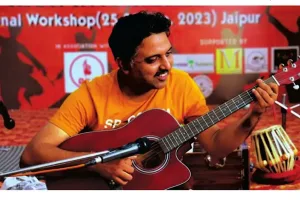
This unassuming veteran thumri exponent and a very successful Guru not only offered her recital (bol-banao ki thumri in khamaj, slow gat; bol-baant ki thumri in nat set to addha; khamaj tappa, kirwani dadra and bhairavi bhajan) but also encouraged one of her talented disciples Sohini Roy Chowdhury to sing khayal (raga maru bihag) and thumri (khamaj) during the course of this two-day spread, essentially focused on upcoming artistes. They were supported on the tabla by Pandit Sujit Saha and his worthy son, Surojit Saha.
Apart from young and talented musicians Vedantika Mukherjee (vocal) and Subhrangshu Bhattacharjee (sarod), there were Sibprasad Bhattacharya (sitar) and Punyabrata Sengupta (vocal) as the other participants in the conference.

Giving classical music its due

Meena Banerjee | New Delhi |

The young and talented Sumit Mishra of Kolkata lifted the trophy of “Classical Voice of India” at a great congregation of music worshippers that took place under the aegis of Sangeet Milon, a Lucknow-based group. They organised the grand finale of “Classical Voice of India 2016” and “Tabla Nawaz 2016” — two pan-India contests — at Lucknow’s Sant Gadge auditorium of the State Sangeet Natak Academy recently. Mahesh Salunkhe (Pune) won the title of Tabla Nawaz.
Akhilesh Yadav, chief minister of Uttar Pradesh, who graced the glittering prize-distribution ceremony, was highly impressed to see a huge gathering of classical music contestants along with their music-loving parents and erudite musicians as judges from across the country. After two day-long marathon sessions of evaluating hugely talented budding performers as finalists from 22 cities in 15 states, the final day saw the toppers showcase their brief recitals along with a few other brilliant contestants who topped at the state level.
As one of the jury, this reporter was impressed by quite a few young talents who not only sang or played in perfect tune and rhythm, but have actually learnt the art of improvisation between two phrases, notes and beats. Also, there were some who have imbibed the distinct flavour of the gharanas they are being groomed into. A rare achievement in this era of distractions; and the credit goes to their gurus as well!
These highly promising performers, irrespective of their junior, middle, senior or Yuva Kalakar categories, are Anindya Mahata, Sahil Bhogale, Sameer Athreya, Purnesh Bhagwat, Arijit Roy, Krishnendu Samarth, Devashri Nawgharey, Bidisha Hazra, Amit Kumar Rath and little Anjali Gaekwad in vocals. In the tabla arena Ishaan Ghosh (Mumbai), Aarchik Banerjee and Abir Mukherjee (Kolkata) displayed amazing maturity.
One noticed that while Bengal, Maharashtra and Karnataka’s Dharwad region
dominated the scene, Delhi and Chandigarh put up a brave and commendable show. But Uttar Pradesh, the North-east and even Odisha lagged way behind. The latter, despite having extremely talented voices, needs proper guidance in
khayal singing. This is very different from ghazals or the swaying nuances of Odissi music. 
The platform and encouragement provided by Sangeet Milon is definitely going to be very beneficial for them; especially for Lucknow. Once upon a time Lucknow, as the capital of Awadh, used to be the epicentre of Hindustani tehzeeb (culture) replete with its nafaasat (finesse) and nazaaqat (delicacy) but not anymore. Except for the oft-quoted grandeur of Shaam-e-Awadh and Subah-e-Benares nothing bears testimony to the long history of flourishing classical music in this region.
While listening to them, one wondered what had sparked this hugely successful extravaganza and that too in this now musically barren region! The answer came from Arundhati Chowdhury and her revered Master-moshay Milon Debnath, the life-force behind the movement to save classical ragas. One gathered that Chowdhury came to Lucknow in the 1980s with high hopes of learning the rich cultural traditions of Awadh. 
Fortunately, she met her Mastermoshay. His single- minded dedication to teach the basics of ragas through compositions in a simple but effective manner impressed her and her gastroenterologist husband, whose mission is to make young students aware of ways and means to good health through his initiative in the form of Hope Foundation. 
Music is an essential part of one’s well-being, he believes. Together, they toyed with the idea of reviving the musical tradition of the city by inspiring school children with a talent-hunt show called “Classical Voice of Lucknow”.
One thing led to another and Sangeet Milon was formed in 2011 with a vision to promote classical music among addicts of film songs. The initial success in remote areas of UP (135 contestants) helped them graduate to the state level (350 participants) and finally a national level. “Classical Voice of India” now is a programme by way of which students of Hindustani classical music get a chance to showcase their talent on a national platform and in front of a panel of eminent judges. 
The contestants are encouraged to show their ability to handle slow and fast khayal compositions in any raga of their choice with proper enunciation and elaboration within the given time limit. Judges come forward with tips for further improvement and queries of the contestants are entertained whole-heartedly. Workshops between participants and renowned music experts are also organised.
Inspired by a huge demand from Kolkata, a tabla contest was introduced in 2015. This year more than a thousand contestants were evaluated in vocals and tabla. This year also saw an additional group between 25-29 years (Young Artists / Yuva Kalakaar group) to encourage former winners and youth in general who wish to realise their dreams by showcasing their performance.
   A competition of classical music at a pan-India level for the first time in Lucknow by a private organisation and the concept of involving educational institutions to target the student group was well appreciated by school authorities, parents and students alike. The fact that there was no entrance fees to the competition lent credibility to the event. The target was and is to reach out to the maximum number of schools, colleges, universities, music institutions and music gurus even in remote areas. The prize money given to the winners is distributed between the winners and their Gurus.
The Kolkata auditions in 2013 would not have been possible without the initial help from the ITC Sangeet Reseach Academy, and to translate all this into reality the main support came from the State Bank of India. Their exemplary initiative inspired others including airlines, hospitality experts and also the Sangeet Natak Akademi, Delhi and the Department of Cultural Affairs, UP, to name a few. While Arundhati, Dr Chowdhury and his Hope Team take care of the entire logistics, Milon Debnath remains focused on authentic bandishes, which show the way to the purity of ragas. 
Moreover, Sangeet Milon sees to it that the deserving get more opportunities to perform as Debnath remains in touch with keen learners all through. All this leads to a warm and invaluable musical bond.

Senior’s blessings
The 32nd annual classical music conference, organised by All India Music Festival at Ankur Hall in Kolkata, was blessed by Vidushi Dalia Rahut in more than one way. 
This unassuming veteran thumri exponent and a very successful Guru not only offered her recital (bol-banao ki thumri in khamaj, slow gat; bol-baant ki thumri in nat set to addha; khamaj tappa, kirwani dadra and bhairavi bhajan) but also encouraged one of her talented disciples Sohini Roy Chowdhury to sing khayal (raga maru bihag) and thumri (khamaj) during the course of this two-day spread, essentially focused on upcoming artistes. They were supported on the tabla by Pandit Sujit Saha and his worthy son, Surojit Saha.
Apart from young and talented musicians Vedantika Mukherjee (vocal) and Subhrangshu Bhattacharjee (sarod), there were Sibprasad Bhattacharya (sitar) and Punyabrata Sengupta (vocal) as the other participants in the conference.

An enriching experience

Tapati Chowdhurie  | New Delhi |

Ratan Thiyam’s wish to give back what has been taken away from the original inhabitants of the land is paying rich dividends. The so-called civilisation of man with all its scientific and technical advancements is a kind of self-destruction. From Adivasis (tribal people) we need to learn how to live and let live. It is for our own benefit that we should encourage them to live the life they have been living from time immemorial rather than make them imitate city folks. 
It is the aim of Thiyam, chair man of the National School of Drama, to bring awareness to people about those who live with nature and not against it. With that in mind, he has been organising the Adivasi Adi Bimb festivals in places where a number of tribes live as well as cities like Mumbai. He has adopted Dwaronda village, which is home to many tribal communities. Dwaronda, where the Adivasi Adi Bimb festival is held, is about 16 km away from Santiniketan. In fact, Thiyam has been holding the festival there for four consecutive years now.   
This time too, the festival not only provided a platform for dance, music and drama, but also held a crafts mela for exhibiting hand-made products by the adi vasis. An exhibition also showcased several musical instruments used by Adivasis besides their weapons. The three-day festival had at least 15 performing groups from different parts of the country. Festival concept and design was Thiyam’s while ambience design and decoration was provided by Anup Giri. 
The make-shift performance area, in the football ground of the village, was made meticulously with mud and clay, and was large enough to provide space to groups of dancers. The backdrop of the open-air stage was done up with typical village and tribal motifs that revealed the aesthetic taste of its makers. There were separate performance places for singers and theatre artists. Huge statues of tribal gods adorned the ground besides other motifs put up in huge scaffoldings. Thiyam and actor/dancer/teacher Mamata Shankar, daughter of legendary Uday Shankar, inaugurated the festival.
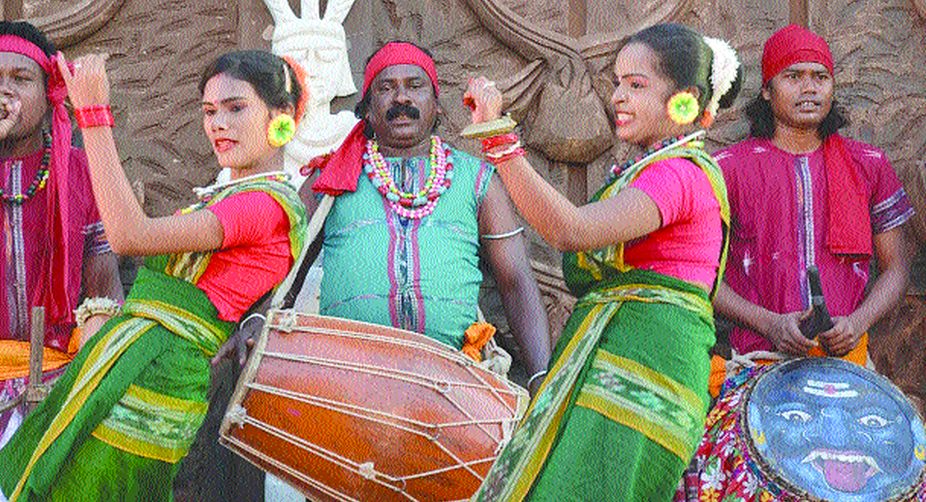
It was a happy festive atmosphere and for three consecutive days, Dwaronda became the representative of mini rural India with troupes thronging the place in their traditional dance attires. The primitive Firkal dancers from Jharkhand had lots in store — male dancers came in to perform with all kinds of primitive weapons. A plethora of acrobatic movements were indeed jaw dropping as for example, lifting a water filled pot with the might of one’s teeth while going round in circles was indeed mind boggling. It was most interesting to watch porcupines eat up the yams cultivated by the Lepchas of Sikkim who are controlled by the power of the priests. They are all ears for the sounds of insects and birdsong, which tell them about the coming season rather than sit in posh apartments and look at calendars. 
The Lepchas of Darjeeling, who call themselves Mutunchi Rongkup Rumkup, pray to Mt Kanchanjunga and pay obeisance to her. The Hozagiri dancers from Tripura who pray to Mainuma on the full moon day after Dussera had much in common with the Kojagori Lakshmi puja of the people of Eastern India. Even the name sounds similar. Hozagiri dancers were adept at balancing acts and several intricate feats that require great expertise. On the other hand, the influence of Hinayana Buddhism marked the dance of the Mogs of Tripura. Sangrain Mog Dance Academy performed much to the delight of all. 
Khamti dancers of Assam, Cheraw dancers and Sarlamkai dancers of Mizoram told the story of their lives — agriculture for sustenance and fights with neighbours for rights — through dance. The Gubukudu performers of Bolangir came in singing Joy ma Sambal sariki joy and danced gracefully in the very popular Sambalpuri folk style. In the Koshli dialect, they continued the usual chant of Ei ghubukudu chang chang paisa thake pathre bhang, which entails begging for money with an empty tin box. The catchy tune induced swaying body movements among some in the audience. 
The Jhum cultivators of Arunachal performed Adi Solung dance for giving them a bountiful harvest. On the other hand, Traditional Sringarik dancers from rural Kalahandi danced their way into the performance area to the rhythm of the dhol, mohuri, tasa, nishan and taal. Moli phul phula moho moho sang the vocalist and the dancers broke into performance eliciting answers from the Dholias in a spirit of madhur or romantic rasa. 
Chhau dance from Jharkhand had gods, goddesses and demons of mythology as their theme. There was the enactment of the killing of the Demon Mahisasura by Durga who is known as Mahisasurmardini. Their leaps, jumps and somersaulting as well as costumes and masks enthralled the audience. Mising dancers of Assam performed a merry dance with the accompaniment of dhol, taal and bansi. They also presented Pu Yug: The withered canvas, a drama about the trials and tribulations of living on a river bank. Gohai Jatra by the people of Jharkhand was a drama on human trafficking while Lamana by Star Kamei of Manipur was based on the evils of blind faith. The ground was over-crowded and despite the biting cold, people came in their droves to the festival as it was their own. Adivasi Adi Bimb was a very enriching experience.  

An enriching experience

Tapati Chowdhurie  | New Delhi |

Ratan Thiyam’s wish to give back what has been taken away from the original inhabitants of the land is paying rich dividends. The so-called civilisation of man with all its scientific and technical advancements is a kind of self-destruction. From Adivasis (tribal people) we need to learn how to live and let live. It is for our own benefit that we should encourage them to live the life they have been living from time immemorial rather than make them imitate city folks. 
It is the aim of Thiyam, chair man of the National School of Drama, to bring awareness to people about those who live with nature and not against it. With that in mind, he has been organising the Adivasi Adi Bimb festivals in places where a number of tribes live as well as cities like Mumbai. He has adopted Dwaronda village, which is home to many tribal communities. Dwaronda, where the Adivasi Adi Bimb festival is held, is about 16 km away from Santiniketan. In fact, Thiyam has been holding the festival there for four consecutive years now.   
This time too, the festival not only provided a platform for dance, music and drama, but also held a crafts mela for exhibiting hand-made products by the adi vasis. An exhibition also showcased several musical instruments used by Adivasis besides their weapons. The three-day festival had at least 15 performing groups from different parts of the country. Festival concept and design was Thiyam’s while ambience design and decoration was provided by Anup Giri. 
The make-shift performance area, in the football ground of the village, was made meticulously with mud and clay, and was large enough to provide space to groups of dancers. The backdrop of the open-air stage was done up with typical village and tribal motifs that revealed the aesthetic taste of its makers. There were separate performance places for singers and theatre artists. Huge statues of tribal gods adorned the ground besides other motifs put up in huge scaffoldings. Thiyam and actor/dancer/teacher Mamata Shankar, daughter of legendary Uday Shankar, inaugurated the festival.
It was a happy festive atmosphere and for three consecutive days, Dwaronda became the representative of mini rural India with troupes thronging the place in their traditional dance attires. The primitive Firkal dancers from Jharkhand had lots in store — male dancers came in to perform with all kinds of primitive weapons. A plethora of acrobatic movements were indeed jaw dropping as for example, lifting a water filled pot with the might of one’s teeth while going round in circles was indeed mind boggling. It was most interesting to watch porcupines eat up the yams cultivated by the Lepchas of Sikkim who are controlled by the power of the priests. They are all ears for the sounds of insects and birdsong, which tell them about the coming season rather than sit in posh apartments and look at calendars. 
The Lepchas of Darjeeling, who call themselves Mutunchi Rongkup Rumkup, pray to Mt Kanchanjunga and pay obeisance to her. The Hozagiri dancers from Tripura who pray to Mainuma on the full moon day after Dussera had much in common with the Kojagori Lakshmi puja of the people of Eastern India. Even the name sounds similar. Hozagiri dancers were adept at balancing acts and several intricate feats that require great expertise. On the other hand, the influence of Hinayana Buddhism marked the dance of the Mogs of Tripura. Sangrain Mog Dance Academy performed much to the delight of all. 
Khamti dancers of Assam, Cheraw dancers and Sarlamkai dancers of Mizoram told the story of their lives — agriculture for sustenance and fights with neighbours for rights — through dance. The Gubukudu performers of Bolangir came in singing Joy ma Sambal sariki joy and danced gracefully in the very popular Sambalpuri folk style. In the Koshli dialect, they continued the usual chant of Ei ghubukudu chang chang paisa thake pathre bhang, which entails begging for money with an empty tin box. The catchy tune induced swaying body movements among some in the audience. 
The Jhum cultivators of Arunachal performed Adi Solung dance for giving them a bountiful harvest. On the other hand, Traditional Sringarik dancers from rural Kalahandi danced their way into the performance area to the rhythm of the dhol, mohuri, tasa, nishan and taal. Moli phul phula moho moho sang the vocalist and the dancers broke into performance eliciting answers from the Dholias in a spirit of madhur or romantic rasa. 
Chhau dance from Jharkhand had gods, goddesses and demons of mythology as their theme. There was the enactment of the killing of the Demon Mahisasura by Durga who is known as Mahisasurmardini. Their leaps, jumps and somersaulting as well as costumes and masks enthralled the audience. Mising dancers of Assam performed a merry dance with the accompaniment of dhol, taal and bansi. They also presented Pu Yug: The withered canvas, a drama about the trials and tribulations of living on a river bank. Gohai Jatra by the people of Jharkhand was a drama on human trafficking while Lamana by Star Kamei of Manipur was based on the evils of blind faith. The ground was over-crowded and despite the biting cold, people came in their droves to the festival as it was their own. Adivasi Adi Bimb was a very enriching experience.  

US Congress certifies Trump presidential election

AFP | Washington |

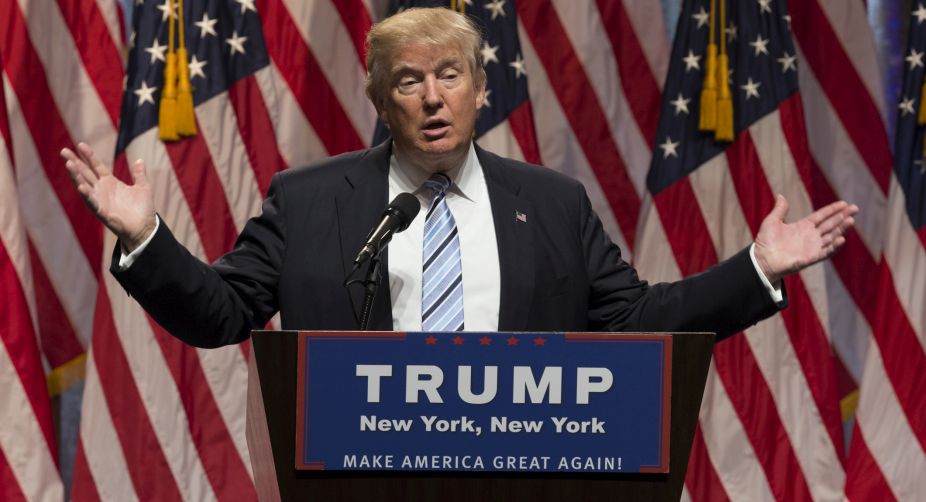
The US Congress certified on Friday that Donald Trump won the November election to become the nation's 45th president, as lawmakers counted and affirmed the votes by the Electoral College.

"Donald Trump of New York has received, for president of the United States, 304 votes," while his Democratic rival Hillary Clinton received 227 votes, Vice President Joe Biden declared to assembled lawmakers after the counting was complete.

Biden said the official count "shall be deemed sufficient declaration" for Trump and Vice President-elect Mike Pence to take their oaths of office on January 20.

"The Electoral College results are in. Donald J. Trump will be the 45th president of the United States," House Speaker Paul Ryan announced in a tweet shortly afterward.

The count is normally a rubber-stamp event weeks after the electors formally cast their votes. But it was not without drama, as at least three protesters interrupted Biden's tally announcements before being removed from the chamber.

One of them shouted "one person, one vote" from the visitor's gallery, an apparent reference to the US election system in which citizens vote indirectly for their choice for president through the Electoral College.

When US voters cast ballots on November 8, they did not directly elect the president but rather 538 electors charged with translating voters' wishes into reality.

Trump won a clear majority of those electors: 306. Two Republican electors bucked their state tally and voted for someone other than Trump, although the result was not in doubt.

House Democrats interrupted the count multiple times, objecting to electoral vote tallies in different states for several reasons, including "massive voter suppression" and election-related cyber attacks.

Such objections are required by House rules to be made in writing, signed by a House member and a Senate member.

Biden, banging the gavel and calling for order, asked each interrupting lawmaker whether the objections were signed by a senator.

When one congresswoman said her objection had "not yet" been signed by a senator, Biden stood firm.

"Well, it is over," the vice president said, to loud cheers and applause from Republican lawmakers. 

Films not to miss – mark your dates

Geoffrey Macnab | New Delhi |

The arrival of Danny Boyle’s T2 Trainspotting in late January should start the year off with a jolt. Renton, Begbie, Spud and Sick Boy are all back, and it will be intriguing to see how the now middle-aged skaggies are coping in a world of reality TV, zero-hour contracts and social media. In a year in which sequels again loom very large, James Foley (director of After Dark, My Sweet and several of the best episodes of House Of Cards) has the challenge of trying to bring some wit and imagination to Fifty Shades Darker (out in February). It can surely hardly be worse than Fifty Shades Of Grey.
If you like post-modern irony with your superhero films, The Lego Batman Movie (also out in February) should provide plenty of chuckles. The big “real” action movie of the summer is likely to be Wonder Woman — although expectations for this have been severely downgraded after the awful Batman v Superman (in which Gal Gadot’s Wonder Woman featured).
King Kong is back, yet again, in Kong: Skull Island, starring Tom Hiddleston (it remains to be seen whether Godzilla will put in an appearance too, or whether we’ll have to wait for later in the franchise to see the two monsters together).
Disney is rebooting Beauty and The Beast yet again, this time in live-action form, with Emma Watson as Belle and Dan Stevens as the Beast. Fast & Furious 8 (out in April) will break new ground as the first mindless Hollywood blockbuster to have been shot in Cuba. Likely to be equally empty-headed is Seth Gordon’s big-screen spin-off of beach bodyguard TV series Baywatch, which comes complete with Pamela Anderson and David Hasselhoff in the supporting cast. This will be out in May and is likely to further undermine the attempts of its star, Zac Efron, to be taken seriously as an actor.
Ridley Scott is back with another Alien film, Alien: Covenant, a sequel to Prometheus (Michael Fassbender again gets to play the well-spoken robot while Katherine Waterston is on board, no doubt vying to be the new Ripley). Meanwhile, Denis Villeneuve, director of sci-fi hit Arrival, will be unveiling a sequel to one of Scott’s most famous films. Blade Runner 2049 stars Ryan Gosling, while Harrison Ford is back, too, as Rick Deckard. Let’s hope the new film is more than just a replicant of the original. Sports movie fans will be waiting to see if Shia LaBeouf can manage to be as brattish on screen as John McEnroe was in real life in the Swedish drama, Borg/McEnroe, from director Janus Metz Pedersen. There’s never really been a decent tennis movie so this one may be breaking new ground. Another Swedish director to look out for is Lisa Langseth, who has made her first English language film, Euphoria, a dark drama about two estranged sisters starring her friend and regular collaborator, Alicia Vikander, alongside Eva Green and Charlotte Rampling.
Amid the big summer films (Spider Man: Homecoming, War for the Planet of the Apes, etc), one title sticks out — Christopher Nolan’s Dunkirk. There were poignant stories from on set in the Netherlands of teenage girls waiting forlornly in the wind and rain for a glimpse of One Direction’s Harry Styles (who appears alongside Tom Hardy). Making a British World War II film marks quite a change of direction for Nolan after his Dark Knight trilogy and Interstellar. It will be fascinating to see Nolan using IMAX and blockbuster tactics to tell the kind of story that you half expect John Mills and Kenneth More to star in.
Yorgos Lanthimos’s Lobster was one of the oddest and mort original films of 2015. The Greek-born but British-based director has a new film, The Killing of a Sacred Deer, starring Colin Farrell and Nicole Kidman, that promises to be every bit as offbeat. Appa-rently inspired by a Euripides tragedy, it’s about the strange relationship between a brilliant surgeon and a troubled teenager.
Paddington 2 will be out late in the year. Having dealt with Kidman’s dominatrix in the first film, the lovable little marmalade-eating bear from Peru has a new antagonist trying to steal his scenes — Hugh Grant, typecast yet again as a vain and smarmy narcissist. Some of this year’s releases have a distinctly old-fashioned look. There’s yet another Agatha Christie adaptation – an all-star version of Murder On The Orient Express. It stars Kenneth Branagh (who also directs) as Poirot aboard a train whose passengers include Johnny Depp, Michelle Pfeiffer and Daisy Ridley.
As if dusting down Agatha Christie yet again wasn’t enough, there’s also a new Daphne Du Maurier adaptation. Roger Michell has directed this latest stab at My Cousin Rachel, starring Rachel Weisz as Rachel (the role played by Olivia de Havilland in an early film version) and Sam Claflin as her young cousin who is attracted by her but isn’t at all sure if she is to be trusted.
the independent.

Obsessed with the frivolous

Kabir Babar  | New Delhi |

One of the most unique documentarians working today, the BBC journalist Adam Curtis has for decades produced films which are compelling commentaries on modern civilisation, a body of work which provides insights into the forces that have shaped the post-war era. His controversial documentary The Power Of Nightmares (2004), in which he attacked Western politicians and the media for exaggerating the dangers of terrorism, was described by a critic as “a Noam Chomsky lecture channelled by Monty Python” and by an admirer as “taking the Red Pill in the movie The Matrix.”

“My job description,” says Curtis, “is to make people aware of power. To let them see the forces around them. The things they don’t see.”
Curtis’ latest film, the 166-minute HyperNormalisation showcases his talent for doing this by making connections between cultural trends and political events that most observers would not notice. His narration opens,“We live in a strange time. Extraordinary events keep happening that undermine the stability of our world — suicide bombs, waves of refugees, Donald Trump, Vladimir Putin, even Brexit. Yet those in control seem unable to deal with them, and no one has any vision of a different or a better kind of future. This film will tell the story of how we got to this strange place. It is about how over the past 40 years politicians, financiers, and technological utopians, rather than face up to the real complexities of the world, retreated. Instead, they constructed a simpler version of the world in order to hang on to power. And as this fake world grew, all of us went along with it, because the simplicity was reassuring. Even those who thought they were attacking the system — the radicals, the artists, the musicians, and our whole counter-culture — actually became part of the trickery, because they too had retreated into the make-believe world. Which is why their opposition has no effect, and nothing ever changes.”
The documentary then breezes through a wide variety of subjects which serve to enunciate Curtis’ theses, if sometimes only tangentially — the rise of suicide bombing under the auspices of Ayatollah Khomeini and its subsequent use by Hamas; the conflict between Syrian President Hafez al-Assad and US Secretary of State Henry Kissinger due to the latter’s “constructive ambiguity”; technological utopians such as John Perry Barlow and their dream of online freedom; the rise of Artificial Intelligence and its use by software companies to monitor and influence people’s online habits; former radicals such as Patti Smith and Jane Fonda who abandoned revolution for a cool detachment; the Occupy Movement and the Arab Spring.
However, Curtis does not place the blame for this predicament solely with politicians. HyperNormalisation also discusses how the withdrawal by radicals into self-centeredness, coupled with the rise of an insular Internet culture reinforced by the intelligent algorithms of various websites, corporations and networks, has led to a world where people are detached from political reality and obsessed with the frivolous. Recurring throughout the film is the relationship between Colonel Gaddafi and the West, which is used as an example of how the United States, “paralysed by the complexity” of the situation in the Middle East, constructed a more manageable “super-villain” in order to explain events which had intractable roots. Gaddafi did nothing to discourage this, thus helping to create a fake world in which both sides tacitly accepted lies as truth. After the invasion of Iraq in 2003, Gaddafi became a friend and fake hero when he promised to dismantle weapons of mass destruction he didn’t possess, and then a few years later was branded again as a villain when the Arab Spring arose.
The result of such “perception management”, according to Curtis, is a general disbelief in the narratives spun out by politicians, leading to the rise of political technologists such as Vladislav Surkov in Russia and Donald Trump in the US, both of whom deliberately act in a bewilderingly self-contradictory matter. In a 2011 article for the London Review of Books by Peter Pomerantsev titled “Putin’s Rasputin”, Surkov is described as being at the centre of a fusion of despotism and post-modernism, “sponsoring nationalist skinheads one moment, backing human rights groups the next. It’s a strategy of power based on keeping any opposition there may be constantly confused, a ceaseless shape-shifting that is unstoppable because it’s indefinable.”
Curtis makes a connection between this approach by Surkov and the language of Trump, which at turns bears resemblance to both the Occupy Movement and the far right. The 1987 book Trump: The Art of the Deal carries the following confession by the President-elect: “I play to people’s fantasies… People want to believe that something is the biggest and the greatest and the most spectacular. I call it truthful hyperbole. It’s an innocent form of exaggeration — and it’s a very effective form of promotion.”
Aptly, The Art of the Deal was ghost-written, and its author Tony Schwartz, in a mea culpa expressed in The New Yorker, stated , ‘“Truthful hyperbole’ is a contradiction in terms. It’s a way of saying, ‘It’s a lie, but who cares?” Unsurprisingly, Trump, according to Schwartz, loved the phrase, and Trump biographer Timothy L O’Brien described the book as a “nonfiction work of fiction.” “Welcome to the post-truth world,” declares the trailer for HyperNormalisation.
However, Curtis does not place the blame for this predicament solely with politicians. HyperNormalisation also discusses how the withdrawal by radicals into self-centeredness, coupled with the rise of an insular internet culture reinforced by the intelligent algorithms of various websites, corporations and networks, has led to a world where people are detached from political reality and obsessed with the frivolous. As one astute online observer — Carmen Hermosillo — noted as early as 1994, “Cyberspace is a black hole. It absorbs energy and personality, and then represents it as an emotional spectacle. It is done by businesses that commodify human interaction and emotion, and we are getting lost in the spectacle.”
This technologically-driven insulation may explain the footage in HyperNormalisation of the tearful British citizen dazed by Brexit, and the wider shock at the election of Trump as President of the United States. It also explains why the armchair philosophers and Facebook warriors who poured out on to the streets for the Occupy Movement and Arab Spring were unable to produce lasting structural changes.

Dawn/ANN

‘Showed tremendous leadership in Paris’

Asha Ramchandran | New Delhi |

On 9 December 2016, the US-based John D and Catherine T MacArthur Foundation announced more than $8 million in grants to support India's growing national, regional and global leadership on climate change. This funding marks MacArthur's initial investment to support climate solutions in India since announcing its broader commitment in 2015 to reduce greenhouse gas emissions and encourage international leadership and cooperation.
MacArthur, which has maintained an office in India since 1994, has recognised India's leadership in addressing climate change with the commitments it made in the Paris Agreement at the Conference of Parties (COP-21) in December 2015.  “Ultimately, India's climate leadership will be determined by its ability to follow through on the pledges it made in Paris,” said Moutushi Sengupta, Director of MacArth ur's India office. “So we want to work with Indian institutions in an open, inclusive way to help lay the groundwork and build the capacities necessary to accelerate the country's transition to a low-carbon future.”
In an e-mail interview with ASHA RAMACHANDRAN, Ms Sengupta elaborated upon the various sectors that McArthur is working with, including Indian research institutions, NGOs, and the government, to address climate change issues in the future. Excerpts:

Q: The MacArthur Foundation has been working extensively with the Indian government on the issue of climate change. What, in your opinion, are the areas that India needs to strengthen if it needs to meet its INDC (Intended Nationally Determined Contributions) targets presented at the CoP-21 summit at Paris?
A: India faces a unique set of challenges in its fight against climate change. While it is the third largest emitter of global greenhouse gases, contributing to about seven per cent of total global emissions in 2014, the per capita carbon emission rate is one of the lowest in the world. The country has achieved middle-income status, but still houses the largest number of poor people for any one single country and over 300 million people still live without access to any reliable source of electricity. While fully aware of these challenges, India demonstrated tremendous leadership in Paris, committing to a set of ambitious goals that hold huge potential in positively influencing the emerging climate story not only for the country but for the global landscape as a whole. To achieve its NDC targets, it will be critical to strengthen and build capabilities in several areas: At a primary level, India needs to strengthen its capacities at generating robust and transparent datasets, invest in developing and executing contextually relevant technologies and build new skillsets that can support such technology adoption. For these gains to be sustained over the long term, building and strengthening institutions of high scientific repute is the immediate imperative. Last but not the least, enabling factors that nurture and promote stronger community participation in the country's fight against climate change will need support and encouragement.

Q:. Do you see a mismatch between India's climate change adaptation and mitigation programme and the country's development needs and poverty alleviation programmes? How will the Foundation ensure, as part of its work in India, that the balance is maintained?
A: Following internal reflections and external exploration over the last couple of years, there have been substantial changes in the Foundation's programme priorities. Many programmes are changing or being phased out. Several have played a role in India in the past, such as Conservation and Sustainable Development, Populations and Reproductive Health, and Secondary Education. In future, the Foundation's focus in India will be in supporting action that either mitigates the adverse impacts of climate change or defines and implements growth pathways that are environmentally sound. We recognise that adaptation measures will continue to play a critical role in coming years, but also think that other development institutions have stronger comparative advantages in supporting future action on adaptation in India.

Q: While a Green Climate Fund has been established, little has been done to take it further. What expectations do you hold from the Annexe-I countries (developed nations) to help provide finance?
A: There have been several recent decisions at the global level which makes me optimistic about the deep commitment of world leaders in addressing climate change. The Paris declaration, the Indo-US joint declaration on clean energy, the Indo-China declaration and the Kigali agreement demonstrate commitment by global leaders to find multilateral solutions to challenges associated with the global commons. The level of additional financing required to enable developing countries achieve the goals outlined in these agreements and other recent treaties being negotiated is humungous and it will be necessary to pull in support from both public and private sector actors to make this happen. It is encouraging to note that in the last few months, a number of development institutions have come forward to lessen this financing gap, including setting up dedicated financing facilities, such as the US-India Clean Energy Fund.

Q: Transfer of technology remains another crucial issue before the developing countries. Do you see this getting resolved in the near future, given the urgency of the issue?
A: It is indeed urgent to address the technology gap and it is important that this is met through solutions that are contextually relevant for India. Technological solutions from developed countries will at best provide only partial answers to the challenges and it will be critical to set up institutions and processes that nurture and develop locally appropriate technologies. Such solutions are likely to be far more sustainable in the long run.

Q: MacArthur has been working with Indian research institutions and NGOs as well. How equipped are these two sectors in addressing India's climate change adaptation and mitigation goals?
 A: The entirety of the Foundation's support is made available to civil society organisations of repute, which work closely with both public and private actors to define and implement solutions that proactively contribute to the achievement of national climate goals. The number of civil society organisations working on issues related to climate change adaptation and mitigation are still very few in comparison to the large spectrum of issues that need immediate attention. Capacity to successfully engage with these diverse issues is also limited to only a few institutions. To ensure that the goals on adaptation and mitigation are achieved, it will be vital to nurture the small pool of existing institutions as also support the development of new ones, which can take on the challenges posed by climate change.

Cash-starved India calculates its pain

Ravindra Kumar | New Delhi |

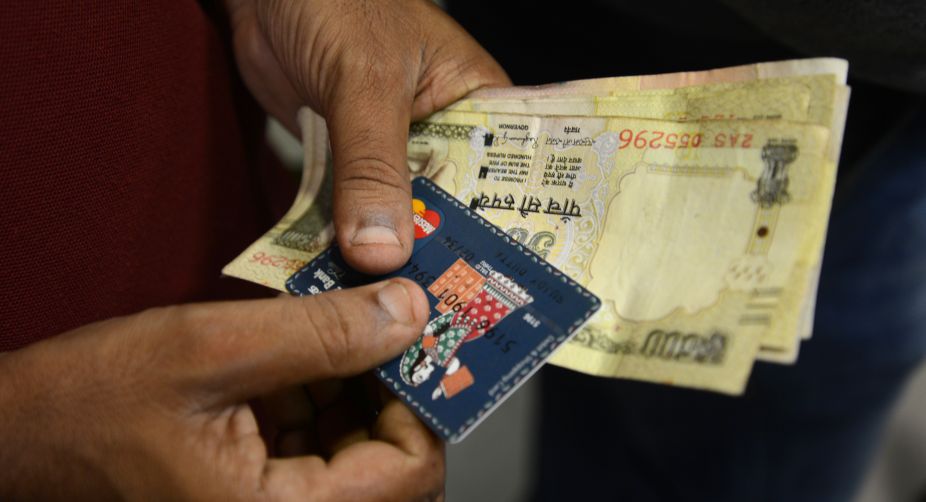
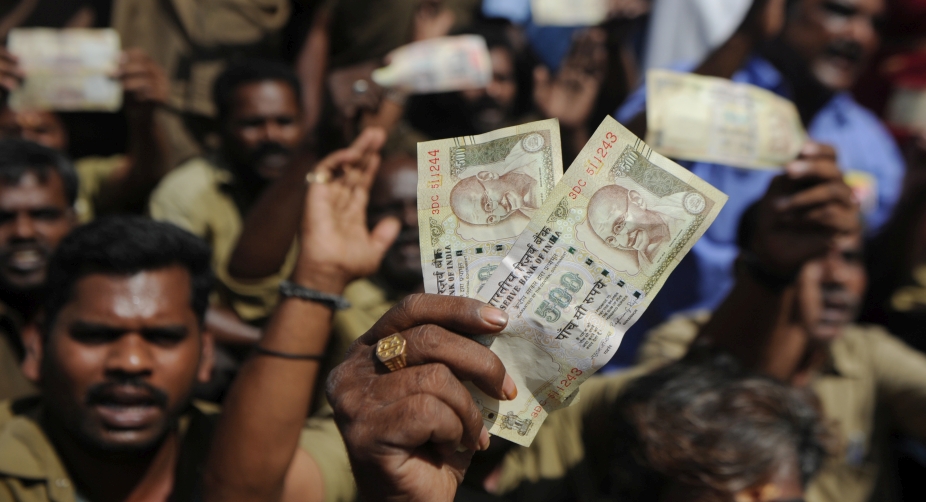
Two months after Prime Minister Narendra Modi announced the controversial decision to withdraw currency notes of Rs 500 and 1,000 from circulation this country is still reeling from the effects.
On 8 November, Mr. Modi had sought 50 days – until 31 December – for things to become normal after an estimated 86 per cent of currency notes were abruptly withdrawn from circulation. But the calculations of his government have proved as accurate as the Prime Minister’s count of 53 days as 50.
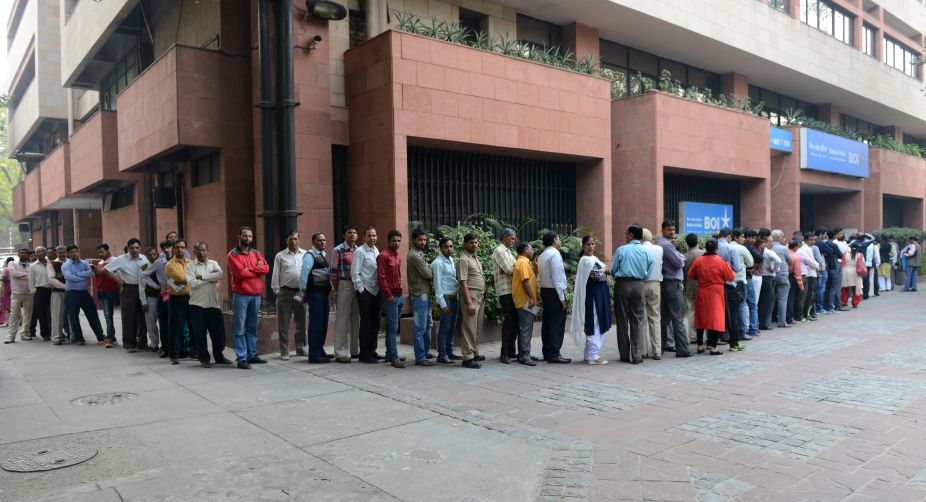
On January 1, Indians were exactly where they had been for days after the November announcement – in queues outside banks and at automated teller machines to withdraw their own money for use in an economy that is still largely cash-driven in terms of the everyday transactions that make up life. There are limits to the cash they can withdraw and there seems little hope of respite in the foreseeable future.
The distress is so acute in the villages – where some two-thirds of people live – that the Reserve Bank was forced to issue instructions that 40 per cent of cash supplies be sent to rural areas.
Characterised by policy flip-flops and shoddy implementation, the decision to withdraw old notes and to replace them initially with new Rs 2,000 notes – for which no one seemed to have change – and later with Rs 500 notes in a new series was said to have several objectives.
Mr Modi had said these were to snuff out black money, detect fake notes and paralyse underground groups sitting on large piles of extorted money. Later, spin doctors put it out that it was all part of government’s plan to make India a digital, cashless economy.
By themselves, the objectives were unexceptional, even laudable. But as is always the case with pious intention, there is more to the story.
Black money has two faces – the first worn when tax has either not been paid or underpaid on honestly earned income, and the other which is the fruit of crime, extortion or corruption and is spawned by the first.
Paying tax is part of a social contract whereby the citizen agrees to give to government a portion of earnings in order to secure services that include infrastructure, defence and, most important, social security. Sadly in India, this has largely been a contract neither party – citizen or State – has honoured.
Who breached the contract first is a moot question, as indeed whether the two parties worked in tandem to do so. Less than four percent Indians pay income tax and farmers, even the richest of them, pay no tax. The result is that governments – at the Centre and in states – have performed pathetically in terms of meeting social obligations. Things are so bad that in order to meet two of its most basic commitments – public sanitation and education – the state levies a tax surcharge on citizens. Seventy years after independence, a majority of Indians have no social security to speak of the other face of black money – fruit of crime and corruption – is a necessary component of the social fabric. Bribes are sought – and paid – to navigate the cumbersome processes of an opaque bureaucracy, to secure government contracts, to avail undeserved tax sops and to overcome the intrusions of the policeman, the taxman and the alderman. It is not without reason that most politicians and many bureaucrats are considered corrupt.
The cash for paying these bribes comes from under-invoicing exports (and sales), over-invoicing imports (and purchases) and evading local taxes through the device of what is called a “kutcha” invoice.
The fact that most of the “old” cash in circulation has been deposited into bank accounts would suggest that very little of it was “black” and thus debunks Mr. Modi’s primary hypothesis. The truth though is that almost every one with unexplained cash on hand on 8 November has found a way to bring it into the system.
Money changers – formal and informal – in Delhi’s Chandni Chowk, Kolkata’s Bara Bazar, Singapore’s Lucky Plaza and Bangkok’s Sukhumvit Road were happily accepting old Indian notes at a 70 to 75 per discount until the last week of December. The cash changed overseas found its way into India through porous land borders with Nepal and Bhutan and was deposited into bank accounts of friends, relatives but mostly of low-income strangers who offered the service at a charge.
Of course, all deposits above a threshold limit will be scrutinised by the taxman but clearly many people think this is a procedure they will “manage” (a charming Indian-English construct with myriad connotations) because taxmen are believed, for the most part, to be notoriously manageable.
The irony of Mr. Modi’s anti-corruption measure though is that it gave birth to a new class of the corrupt – bank officers and tellers, petrol pump operators, railway counter clerks, school and municipal body cashiers (until December, old notes were accepted for fuel, train tickets, school fees and local body taxes) – who had the power to change old into new notes.   
But cash isn’t all bad. It can’t be because after all it is an instrument of the state. A majority of Indians prefer to receive wages and make payments in cash. They find it convenient and reliable, while plastic and digital transactions are deemed suspicious. Digital security in India is suspect; just six weeks before the demonetisation, an estimated 3.2 million ATM cards were hacked.
While India scores fairly high on the World Bank’s index of infrastructure – ahead of Greece, Saudi Arabia and Thailand – the benefits do not percolate to the country’s interiors where power supply is erratic and internet connectivity spotty. In essence, the government’s hope of a digital India is far-fetched in at least the medium term.
With most of the cash that was in circulation before 8 November now deposited in banks, many believe it is only a matter of time before it re-enters the system and does all the things – good and bad – that it once did. If that happens, Mr. Modi’s venture would have failed. Two consequences though will be inevitable. One, the taxman will have become even more powerful. Two, someone will have to pay for putting people to such misery. Mr. Modi must hope it is not he who does.

(The writer is Editor, The Statesman. This is a series of columns on global affairs written by top editors from members of the Asia News Network and published in newspapers across the region.)

3 dead in shooting at US airport

IANS | Washington |

At least three persons were killed after a gunman opened fire at the Fort Lauderdale-Hollywood International Airport in Florida on Friday, officials said.

The shooter is in custody and the motive is yet to be known, law enforcement officials said, CNBC reported.

The airport tweeted the incident took place at the Terminal 2 baggage claim area.

Hundreds of passengers and airport workers could be seen gathering and evacuating via the tarmac. 

The airport tweeted that all services were temporarily suspended and passengers should contact their air carrier about flight information.

3 dead in shooting at US airport

IANS | Washington |

At least three persons were killed after a gunman opened fire at the Fort Lauderdale-Hollywood International Airport in Florida on Friday, officials said.

The shooter is in custody and the motive is yet to be known, law enforcement officials said, CNBC reported.

The airport tweeted the incident took place at the Terminal 2 baggage claim area.

Hundreds of passengers and airport workers could be seen gathering and evacuating via the tarmac. 

The airport tweeted that all services were temporarily suspended and passengers should contact their air carrier about flight information.

Escape route for parties

Gyan Ranjan Saha | New Delhi |

In the wake of demonetisation of high-value currency notes, the Opposition has accused the Union Government and the ruling party at the Centre of destroying the country’s economy. In the forefront of the crusade is the Trinamul Congress followed by the Congress, BSP, SP, NCP, CPI-M, CPI and sundry other sign-board parties. In their agitation against the move, they have levelled several motives, some of them weird and sometimes, ridiculous. The most vociferous of these criticisms have been articulated by Trinamul supporters, led by Mamata Banerjee. The latest salvo relates to the alleged granting of an escape route to the parties in the context of the exemption provisions of the Income Tax Act, 1961. In the frenzy, the point that has been missed is that such provisions apply equally to her own party. It is alleged that the provision has been introduced with an ulterior agenda, though, the same remains unspecified till date. It would be fit and proper to examine the legal provision in some detail to remove the mental cobwebs distorting the thought process of the common man.
Exemption to political parties from the rigours of paying Income Tax has been provided in Section 13A of the Income Tax Act, 1961. Such a provision on exclusion is not new. It has not been enacted with a view to enabling such parties or their members to convert their non-tax paid income, hoarded in currency notes of Rs 500/1000, in the aftermath of demonetisation. The provision has in fact been on the statute book since 1 April 1979 as part of the Taxation Laws (Amendment) Act, 1979. It would be incorrect to state that it has been enacted to help unscrupulous people or political parties to convert their non-tax paid income into legitimate money through this exemption route. Further, as initially enacted, it did not exempt income from capital gains earned by the parties. The exemption was extended to capital gains on sale of capital assets by the parties with retrospective effect from 1 April 1979 by the Finance Act 2003… once again by a coalition government, this time led by the National Democratic Alliance.
Trinamul Congress has taken advantage of this politically beneficial piece of legislation almost ritually, every financial year. The latest example is for the 2015-16 fiscal when the party got exemption for Rs 65,00,002 received as contributions from 12 persons, in excess of Rs 20,000 (earlier, the limit was Rs 10,000 till 11 September 2003). In every case, the largest contributor was its MP, Subhendu Adhikari who paid Rs 1500000 by cheque. (Source: Election Commission website). These exemptions were availed of by the party when the currency notes were legal tender. So it is inappropriate to state that the exemption provisions in Section 13A are discriminatory or are designed to serve the illegitimate interests of people who have been encouraged by the political parties in power to avoid payment of taxes by wrongful conversion of the currency notes.
It is another matter that other parties, which have filed their latest annual returns to the EC, show relatively larger amounts received as contribution and have been exempted from the levy of Income Tax. Such exempted amounts run into hundreds of crores. It is also interesting to note that the Election Commission in its latest reform proposals has suggested that the limit be scaled down to Rs 2000 only.
Even though the recognised and registered political parties u/s 29A of the Representation of the People Act, 1951 enjoy a tax holiday on such receipts, they are not immune from the probing eyes of the Income Tax department. Moreover, the tax authorities can always call the payers to disclose the source from which the contributions emanated or their own financial capability to make such contributions. Take, for example, the contribution of an entity named Satya Trust which donated about Rs 47 crore to the two main parties in FY 2015-16. It may legitimately be called upon to prove the sources of its own receipts. Such exemptions are not allowed across the board. There are conditions attached to claim the same. That the Income Tax Department has not undertaken any such endeavour is another matter. In fact, most of the parties have not been following the law in making the required disclosures.
Another provision permits a political party to receive unlimited donations below Rs 20,000 from anybody without disclosing the donor’s personal data, such as PAN , name and address etc. For example, the Bahujan Samaj Party denied having received any donation exceeding Rs 20,000 from a single entity and yet, received crores of rupees as donation. These receiving parties deliberately split the donations to a level below Rs 20,000 to get away under this loophole. Further, even though donations above Rs 20,000 require the parties to disclose the identification details of the contributors, PAN, addresses and the cheque details, most parties ignore the prescription. Significantly, the Election Commission raises no objection and the parties go scot-free.

There is another loophole. There are more than 1800 “registered political parties”. The Election Commission has “recognised” less than 50 parties as national /state parties. There is thus a distinction between “registered” parties and the “recognised” ones. This is a meaningless and potentially subversive distinction. The Election Commission should be tasked only to give “recognition” to the parties based on well-defined and transparent criteria. There is absolutely no need to register a political party to open an opaque avenue for a group of people or even one person, as has been found of late by the Commission, to abuse the exemption provision of the Income Tax Act. It is encouraging to note that the Commission has woken up after several decades to the danger of this invidious distinction in the context of demonetisation. The latest missive sent by the Commission to the Central Board of Direct Taxes to delist 255 such paper entities is most welcome. But it is imperative to abolish the distinction between the “registered” and “recognised” parties and make only the second category entitled to the exemption benefit.  It is open to question though whether such abolition will curb the menace of money-laundering by the political class.
The country awaits the order of the Supreme Court at its next hearing on 11 January in a PIL petition. One would strongly commend the proposal of the Commission to remove the privilege to allow the receipt of anonymous donations of less than Rs 20,000 and restrict the amount to Rs 2000 only.
It would be pertinent to examine the propriety and economic consequences of the proposal to make elections state-funded. While very few countries in the world have such provisions, its adoption in India would be fraught with serious consequences. It would be virtually impossible to devise a fool-proof, enforceable and transparent systemic framework to make the proposal workable. The chances of unscrupulous political groups taking the state for a ride would be considerable. For instance, what would be the numerical standards on the basis of which such funding would be allowed. For instance, the Trinamul Congress or Bahujan Samaj Party or Nationalist Congress Party do not have any presence in most of the states. How would the share of the total kitty be determined and disbursed? Given the bogey of tax exemption, it could open another floodgate of corruption and money-laundering.

Lanka provokes

Editorial | New Delhi |

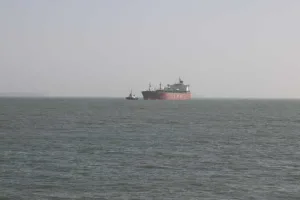
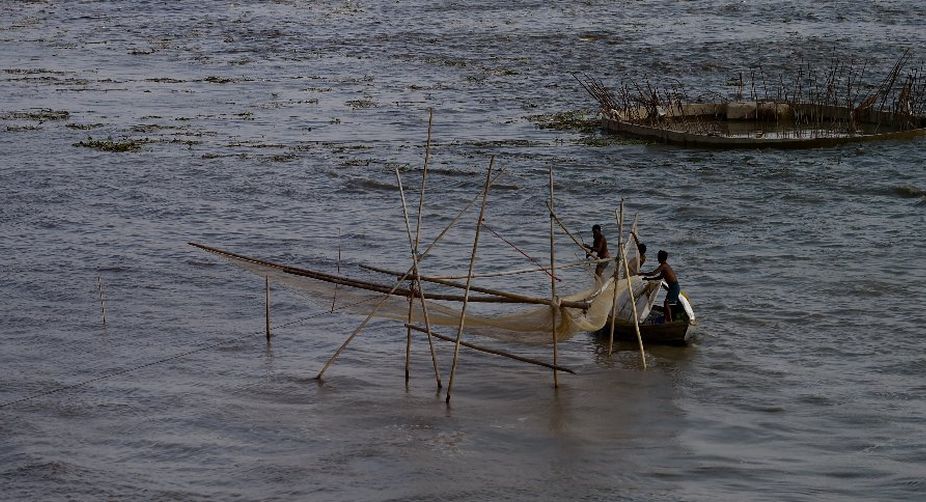
Needless provocation by Sri Lankan ministers and their Indian counterparts' failure to rebut their misguided statements, quoting facts and figures, made the normally mild Tamil Nadu Chief Minister, O Panneerselvam, shoot off an angry letter to Prime Minister Narendra Modi urging the government of India to register its disapproval in the strongest possible terms at the appropriate level. His outburst came on a day Sri Lanka’s minister for fisheries and aquatic resources development, Mahinda Amaraweera, led his country’s delegation at the ministerial-level talks with the Indian delegation led by agriculture minister Radha Mohan Singh in Colombo on the Palk Bay fisheries conflict. Amaraweera spoke of a proposed legislation in Sri Lanka that would levy heavy fines on Indian fishing boats ‘trespassing’ into his country’s territorial waters and nationalisation of Tamil Nadu fishing boats seized by the Sri Lankan Navy. The Indian side sought the release of 114 fishing boats and 51 fishermen held captive by Sri Lanka. It is unfortunate the Indian delegation failed to correct Amaraweera that no Tamil Nadu fishing boat violated Sri Lankan territorial waters and detaining our fishermen in custody is against all canons of law. India’s external affairs ministry, Navy and Coast Guard are ill-informed about the intricate legal position of the Palk Bay waters and invariably take the side of Sri Lanka whenever Tamil Nadu fishermen are attacked, abducted and held prisoners by the Sri Lanka Navy and plead for their release as if they had committed a crime instead of asserting the rights of our fishermen. The Palk Bay fisheries conflict arose out of a goodwill gesture India extended to Sri Lanka by gifting Kachchativu, a tiny, uninhabited islet in the Palk Bay belonging to Ramanathapuram district of Tamil Nadu, to boost the morale of former Prime Minister Sirimavo Bandaranaike when it was at its lowest ebb, by Prime Minister Indira Gandhi in 1974 by an international treaty. Under the treaty, Sri Lanka committed itself to honour the rights of Tamil Nadu fishermen to fish in the traditional waters of the bay for all time to come and extend unhindered access to St Antony’s church built by Indian fishermen more than a century ago. In 1976, the countries redrew their territorial waters based on Kachchativu becoming a part of Sri Lanka which shrunk India’s territorial waters in the Palk Bay drastically, but without extinguishing any of Tamil Nadu fishermen’s rights enshrined in the treaty. During the nine-year rule of President Mahinda Rajapaksa, Sri Lanka attacked and seized fishing boats from Tamil Nadu. In the name of good relations with the neighbouring country, New Delhi ignored the infractions. Meanwhile, both the AIADMK and the DMK governments had challenged the ceding of Kachchativu without observing the constitutional requirements. Pending disposal of the case, status quo ante should be observed and the Indian Navy and Coast Guard should be directed to protect Tamil Nadu boats fishing in the Palk Bay.

Plea for the poor

Editorial | New Delhi |

It may no longer be fashionable for those in government to talk of the poor, but with his vast experience in the political management of economic affairs there can be no making light of his observations on the subject. That Mr Pranab Mukherjee holds the most exalted office in the Republic only amplifies his articulation. Hence, whether Narendra Modi, Arun Jaitley & Co. liked it or not, the President’s call for providing immediate succour to the poor to overcome the impact of demonetisation must “register”. Immediately after the Prime Minister’s announcement on 8 November the President had expressed himself in favour of the junking of high-value currency notes: subsequent developments have obviously generated second thoughts about the manner in which directives were implemented. And he has been man enough not to live in a state of permanent denial, even though he sees the prevailing discomfort as” temporary”, and feels that the 31 December sops might bring some relief. In his televised communication with Governors, Mr Mukherjee was forthright: “Demonetisation, while immobilising black money and fighting corruption, may lead to temporary slow-down of the economy. We all will have to be extra careful to alleviate the suffering of the poor which might become unavoidable for the expected progress in the long term.” And while he expressed his appreciation of the general thrust of the government’s moves, he also noted that the poor “need to get succour here and now, so that they can also participate actively in the national march towards a future devoid of hunger, unemployment and exploitation.” The government has opted to discount media reports of the hardships ~ in rural areas particularly ~ resulting from the finance ministry and Reserve Bank of India’s inability to handle a difficult situation, but the President has accepted the grim realities of the day.
The President also did well to remind Governors that they were more than ceremonial figureheads and had a vital role to play in national affairs. Referring to the coming elections he stressed that the “conduct of free and fair elections has made our democracy one of the most vibrant in the world.” Yet he also noted that elections "reflect the attitudes, values and beliefs of  the people towards their political environment”, and sounded a caution “about competitive populism, electoral rhetoric and vote-bank politics”. Ideally goodwill must prevail between different communities, yet at times “harmony may be put to test by vested interests. Communal tensions may rear their ugly head. Rule of law must form the sole basis of dealing with any such challenging situation”. Could there be more sanguine advice to administrators?