Logo

La Liga: Bale scores on Real Madrid return

Real Madrid extended its La Liga lead with a 2-0 home victory over Espanyol.

IANS | Madrid |

Real Madrid extended its La Liga lead with a 2-0 home victory over Espanyol on Saturday, getting a boost from the return of Welsh forward Gareth Bale.

Spanish striker Alvaro Morata and Bale scored to secure the victory for Real Madrid in their 21st match of the season, Efe news reported

Morata opened the scoring at Santiago Bernabeu Stadium at the 33-minute mark, scoring on a header off a pass from Isco.

Bale, playing his first game after missing nearly three months with an ankle injury, took the field midway through the second half as a substitute for Morata and scored the second goal seven minutes before stoppage time.

Real Madrid head coach Zinedine Zidane rested several key players against Espanyol, including James Rodriguez, Casemiro and Marcelo.

With the win, Real Madrid leads the La Liga standings with 52 points, four ahead of second-place Barcelona, which will face Leganes on Sunday in its 23rd match of the season.

Real Madrid is in a commanding position at this point of its La Liga campaign, since it still has postponed games pending against Valencia and Celta Vigo.

Espanyol is currently in ninth place with 32 points.

La Liga: Bale scores on Real Madrid return

Real Madrid extended its La Liga lead with a 2-0 home victory over Espanyol.

IANS | Madrid |

Real Madrid extended its La Liga lead with a 2-0 home victory over Espanyol on Saturday, getting a boost from the return of Welsh forward Gareth Bale.

Spanish striker Alvaro Morata and Bale scored to secure the victory for Real Madrid in their 21st match of the season, Efe news reported

Morata opened the scoring at Santiago Bernabeu Stadium at the 33-minute mark, scoring on a header off a pass from Isco.

Bale, playing his first game after missing nearly three months with an ankle injury, took the field midway through the second half as a substitute for Morata and scored the second goal seven minutes before stoppage time.

Real Madrid head coach Zinedine Zidane rested several key players against Espanyol, including James Rodriguez, Casemiro and Marcelo.

With the win, Real Madrid leads the La Liga standings with 52 points, four ahead of second-place Barcelona, which will face Leganes on Sunday in its 23rd match of the season.

Real Madrid is in a commanding position at this point of its La Liga campaign, since it still has postponed games pending against Valencia and Celta Vigo.

Espanyol is currently in ninth place with 32 points.

Researchers uncover how Zika causes microcephaly

IANS | New York |

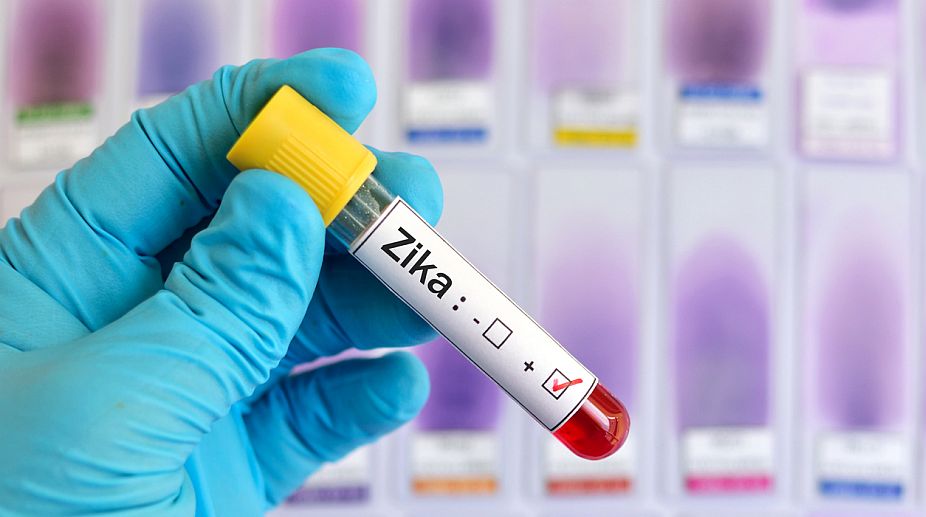
Researchers have uncovered the mechanisms that the Zika virus uses to cause foetus microcephaly, a brain development disorder.

Babies with microcephaly can have a wide array of problems including a small brain and head, developmental delays, seizures, vision and hearing loss and feeding difficulty. 

While a Zika infection typically results in mild or symptom-free infections in healthy adults and children, the risk of microcephaly in the developing foetus is an alarming consequence that has created a worldwide health threat.

Since a normal brain develops from simple cells called stem cells that are able to develop into any one of various kinds of cells, the research team deduced that microcephaly is most likely linked with abnormal function of these cells.

Two weeks after the cells had developed into a certain type, the Zika infection was mainly found in glial cells, which provide support and insulation for the brain, according to the study published in the journal Stem Cell Reports.

There are currently 70 countries and territories reporting active Zika transmission, according to the World Health Organisation. 

There are two main lineages of the virus, African and Asian. 

Recently, the team found that only the Asian lineage has been linked with microcephaly. So, what is it about this particular form of the virus that inflicts such damage?

The researchers established a method of investigating how Zika alters the production, survival and maturation of brain stem cells using cells donated from three human foetal brains.

They focused on the impact of the Asian lineage Zika virus that was involved in the first outbreak in North America in late 2015.

"We discovered that the Asian lineage Zika virus halted the proliferation of brain stem cells and hindered their ability to develop into brain nerve cells," said study senior author Ping Wu, Professor at The University of Texas Medical Branch at Galveston in the US.

"However, the effect that the Zika virus had on the ability of stem cells to develop into specialized cells differed between donors. This difference seems to be linked with a Zika-induced change in global gene expression pattern, it remains to be seen which genes are responsible," Wu said.

"The unique system containing stem cells from three donors will allow us to dissect molecular mechanisms underlying Zika virus-induced brain malformation," Wu said.

Researchers uncover how Zika causes microcephaly

IANS | New York |

Researchers have uncovered the mechanisms that the Zika virus uses to cause foetus microcephaly, a brain development disorder.

Babies with microcephaly can have a wide array of problems including a small brain and head, developmental delays, seizures, vision and hearing loss and feeding difficulty. 

While a Zika infection typically results in mild or symptom-free infections in healthy adults and children, the risk of microcephaly in the developing foetus is an alarming consequence that has created a worldwide health threat.

Since a normal brain develops from simple cells called stem cells that are able to develop into any one of various kinds of cells, the research team deduced that microcephaly is most likely linked with abnormal function of these cells.

Two weeks after the cells had developed into a certain type, the Zika infection was mainly found in glial cells, which provide support and insulation for the brain, according to the study published in the journal Stem Cell Reports.

There are currently 70 countries and territories reporting active Zika transmission, according to the World Health Organisation. 

There are two main lineages of the virus, African and Asian. 

Recently, the team found that only the Asian lineage has been linked with microcephaly. So, what is it about this particular form of the virus that inflicts such damage?

The researchers established a method of investigating how Zika alters the production, survival and maturation of brain stem cells using cells donated from three human foetal brains.

They focused on the impact of the Asian lineage Zika virus that was involved in the first outbreak in North America in late 2015.

"We discovered that the Asian lineage Zika virus halted the proliferation of brain stem cells and hindered their ability to develop into brain nerve cells," said study senior author Ping Wu, Professor at The University of Texas Medical Branch at Galveston in the US.

"However, the effect that the Zika virus had on the ability of stem cells to develop into specialized cells differed between donors. This difference seems to be linked with a Zika-induced change in global gene expression pattern, it remains to be seen which genes are responsible," Wu said.

"The unique system containing stem cells from three donors will allow us to dissect molecular mechanisms underlying Zika virus-induced brain malformation," Wu said.

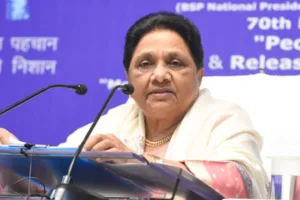
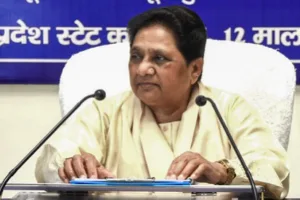
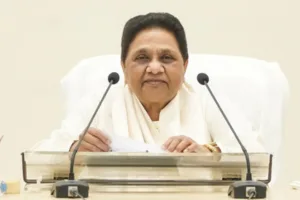
Mayawati casts vote in Lucknow, claims victory

IANS | Lucknow |

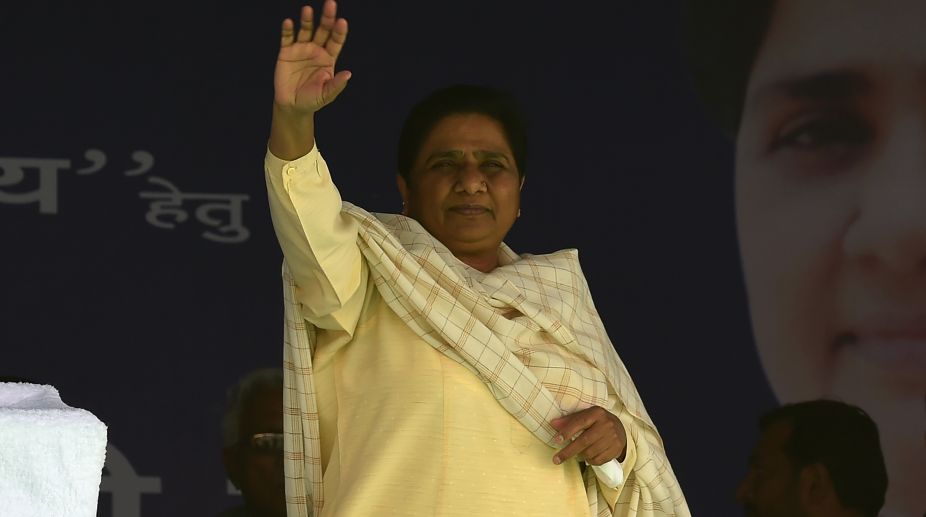
Bahujan Samaj Party (BSP) chief Mayawati here on Sunday cast her vote in the third phase of the Uttar Pradesh assembly election.

Clad in a fawn coloured salwar suit and a matching floral shawl, Mayawati at around 9 am walked in the polling booth number 251 at the Mall Avenue polling station.

She smiled at the polling officials as they checked her voting ID card and inked her finger.

Later interacting with the media, the four-time Uttar Pradesh Chief Minister claimed a wave in favour of the BSP and said her party was number one in the two rounds of balloting so far.

She said the BSP would get 300 plus seats at the end of the polling.

Exuding confidence, Mayawati said she was confident of a "government on our own" as people had decided to favour her party.

"The 'hawa-hawai' claims of the Congress-Samajwadi Party alliance and the Bharatiya Janata Party will fall flat on their faces and we will romp home to power," she said.

Accompanied by her confidante and party General Secretary Satish Chandra Mishra, she was mobbed by journalists outside the polling station to get her views on the ongoing election process.

Mayawati also pointed out the large turnout at her election rallies had made it clear that she would be voted to power this time.

Later she flashed a "V" sign and posed for pictures with her voter card.

Her party was voted out of power in 2012 and drew a blank in the 2014 Lok Sabha elections where it could not win a single seat of the 80 the BSP contested.

Mayawati casts vote in Lucknow, claims victory

IANS | Lucknow |

Bahujan Samaj Party (BSP) chief Mayawati here on Sunday cast her vote in the third phase of the Uttar Pradesh assembly election.

Clad in a fawn coloured salwar suit and a matching floral shawl, Mayawati at around 9 am walked in the polling booth number 251 at the Mall Avenue polling station.

She smiled at the polling officials as they checked her voting ID card and inked her finger.

Later interacting with the media, the four-time Uttar Pradesh Chief Minister claimed a wave in favour of the BSP and said her party was number one in the two rounds of balloting so far.

She said the BSP would get 300 plus seats at the end of the polling.

Exuding confidence, Mayawati said she was confident of a "government on our own" as people had decided to favour her party.

"The 'hawa-hawai' claims of the Congress-Samajwadi Party alliance and the Bharatiya Janata Party will fall flat on their faces and we will romp home to power," she said.

Accompanied by her confidante and party General Secretary Satish Chandra Mishra, she was mobbed by journalists outside the polling station to get her views on the ongoing election process.

Mayawati also pointed out the large turnout at her election rallies had made it clear that she would be voted to power this time.

Later she flashed a "V" sign and posed for pictures with her voter card.

Her party was voted out of power in 2012 and drew a blank in the 2014 Lok Sabha elections where it could not win a single seat of the 80 the BSP contested.

Jat agitation raises spectre of last year’s violence

PTI | Chandigarh |

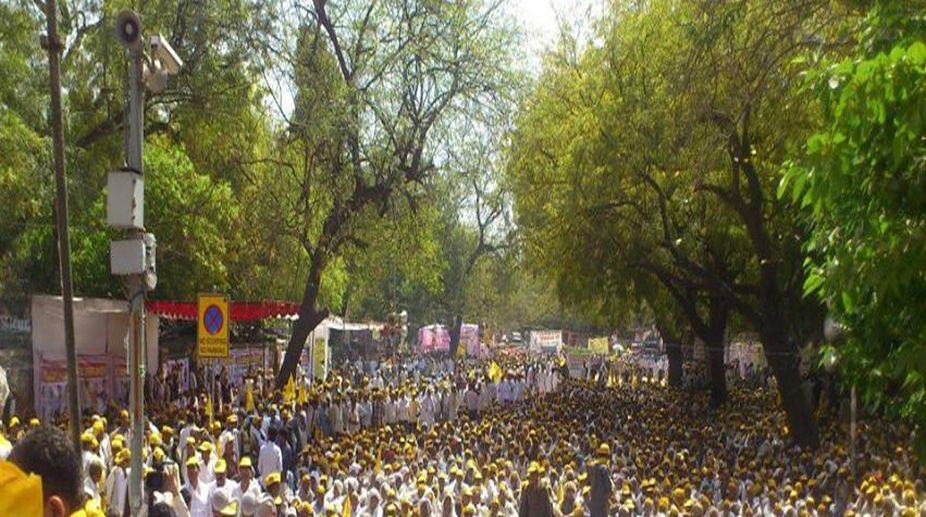
Haryana is on the edge as the ongoing Jat agitation seeking reservation in education and government jobs has once again raised the spectre of last year's violence that killed 30 people.

Members of the Jat community have been sitting on dharnas in 19 of the state's 22 districts since January 29.

The fresh protests come at a time when Haryana is observing golden jubilee of its formation.

The images of mobs setting houses, schools, eateries and other places on fire during last year's quota agitation are still fresh in public memory.

The Delhi-Ambala National Highway, the gateway for travel to Punjab, Jammu and Kashmir and Himachal Pradesh, had remained blocked for days.

The Manohar Lal Khattar government had drawn flak from various quarters, including the opposition, for its alleged inept handling of the situation last year.

A complete breakdown of the official machinery was witnessed between February 19 and 22 last year.

Later, a committee headed by former Uttar Pradesh DGP Parkash Singh probed the acts of omission and commission of officers during the Jat quota violence and indicted several officers for not taking appropriate steps, thus allowing the situation to worsen.

As many as 1,196 shops were set ablaze, 371 vehicles torched, 30 schools/colleges were burnt, 75 houses were set on fire, 53 hotels/marriage palaces were devastated, 23 petrol pumps were attacked and vandalised, the committee had observed in its report.

An industry body had pegged the loss at around Rs.34,000 crore in last year's violence.

The mode of protests this year is giving sleepless nights to the first ever BJP government in Haryana, a state carved out in 1966.

Despite the government assuring the Jats that it will do whatever possible within the ambit of the law and the agitation leader promising that the stir will be peaceful, the growing number of protesters with each passing day is proving a tightrope walk for the Khattar government, which does not want to allow a repeat of last year's situation.

Notably, opposition parties – the Indian National Lok Dal and the Congress – have given their support, asking the Khattar government to fulfil the promises it had made to the Jat community.

Jats are demanding reservation in government jobs and educational institutions, besides withdrawing of criminals cases registered against several youths of the community during last year, release of those lodged in jail, compensation and government jobs to the next of kin of those killed in last year's agitation.


Like last year, this year too the epicentre of the stir is Rohtak, Sonipat, Hissar and Jhajjar districts.

The All-India Jat Aarakshan Sangarsh Samiti (AIJASS) is spearheading the fresh stir and is being led by its national president Yashpal Malik (55), who hails from Uttar Pradesh and has no link with Haryana.

Last year, Haryana Police had slapped a sedition case against him. However, Malik has been active and has been criss-crossing the state this year during fresh round of the stir to drum up support.

The Haryana government's decision to grant reservation to Jats and five other communities in jobs and educational institutions under the newly created Backward Class 'C' category was challenged last year after a PIL was filed in this regard before the Punjab and Haryana High Court.

The PIL was filed by a Bhiwani resident, who challenged the constitutional validity of the Haryana Backward Classes (Reservation in Services and Admission in Educational Institutions) Act, 2016, passed by the assembly on March 29 last year.

The Act provides 10 per cent quota in Class III and IV posts and educational institutions and six per cent quota in Class I and II posts to Jats, Jat Sikhs, Rors, Bishnois, Tyagis and Muslim Jats in Schedule-III.

The government has been trying to defend its quota law since. While reservation continues to be the main demand of the Jats, the protesters are also putting pressure on the government for other demands as well.

The state had last year enacted a law for providing reservation to Jats in consultation with all stakeholders, but later on the court has stayed it and now the matter would have to be dealt with in a legal manner only, Chief Minister Manohar Lal Khattar has said.

The state government has appointed a senior advocate to plead the case in the court, Khattar had said earlier.

"Once the stay is vacated, the state government would request the Centre to include the Act (granting reservation to Jats and others) in the 9th Schedule," he said.

The Khattar government has also announced a fresh compensation, this time for "innocent persons" who were injured during the 2016 Jat reservation stir.

The BJP government in the state had last week formed a five-member committee, headed by Chief Secretary D S Dhesi, to hold talks with the agitating Jats.

Recently, a meeting between representatives of a Haryana government-appointed committee and leaders of the Jat agitation remained inconclusive.

The fresh round of stir is a sort of tightrope walk for the BJP government, which does not want to let the law and order situation get out of hands this time, even as it is wary of taking any strict action that alienates the predominant Jats totally.

In view of the fresh Jat stir, paramilitary forces have been deployed in sensitive areas, while the state police is maintaining a strict vigil.


Jat agitation raises spectre of last year’s violence

PTI | Chandigarh |

Haryana is on the edge as the ongoing Jat agitation seeking reservation in education and government jobs has once again raised the spectre of last year's violence that killed 30 people.

Members of the Jat community have been sitting on dharnas in 19 of the state's 22 districts since January 29.

The fresh protests come at a time when Haryana is observing golden jubilee of its formation.

The images of mobs setting houses, schools, eateries and other places on fire during last year's quota agitation are still fresh in public memory.

The Delhi-Ambala National Highway, the gateway for travel to Punjab, Jammu and Kashmir and Himachal Pradesh, had remained blocked for days.

The Manohar Lal Khattar government had drawn flak from various quarters, including the opposition, for its alleged inept handling of the situation last year.

A complete breakdown of the official machinery was witnessed between February 19 and 22 last year.

Later, a committee headed by former Uttar Pradesh DGP Parkash Singh probed the acts of omission and commission of officers during the Jat quota violence and indicted several officers for not taking appropriate steps, thus allowing the situation to worsen.

As many as 1,196 shops were set ablaze, 371 vehicles torched, 30 schools/colleges were burnt, 75 houses were set on fire, 53 hotels/marriage palaces were devastated, 23 petrol pumps were attacked and vandalised, the committee had observed in its report.

An industry body had pegged the loss at around Rs.34,000 crore in last year's violence.

The mode of protests this year is giving sleepless nights to the first ever BJP government in Haryana, a state carved out in 1966.

Despite the government assuring the Jats that it will do whatever possible within the ambit of the law and the agitation leader promising that the stir will be peaceful, the growing number of protesters with each passing day is proving a tightrope walk for the Khattar government, which does not want to allow a repeat of last year's situation.

Notably, opposition parties – the Indian National Lok Dal and the Congress – have given their support, asking the Khattar government to fulfil the promises it had made to the Jat community.

Jats are demanding reservation in government jobs and educational institutions, besides withdrawing of criminals cases registered against several youths of the community during last year, release of those lodged in jail, compensation and government jobs to the next of kin of those killed in last year's agitation.


Like last year, this year too the epicentre of the stir is Rohtak, Sonipat, Hissar and Jhajjar districts.

The All-India Jat Aarakshan Sangarsh Samiti (AIJASS) is spearheading the fresh stir and is being led by its national president Yashpal Malik (55), who hails from Uttar Pradesh and has no link with Haryana.

Last year, Haryana Police had slapped a sedition case against him. However, Malik has been active and has been criss-crossing the state this year during fresh round of the stir to drum up support.

The Haryana government's decision to grant reservation to Jats and five other communities in jobs and educational institutions under the newly created Backward Class 'C' category was challenged last year after a PIL was filed in this regard before the Punjab and Haryana High Court.

The PIL was filed by a Bhiwani resident, who challenged the constitutional validity of the Haryana Backward Classes (Reservation in Services and Admission in Educational Institutions) Act, 2016, passed by the assembly on March 29 last year.

The Act provides 10 per cent quota in Class III and IV posts and educational institutions and six per cent quota in Class I and II posts to Jats, Jat Sikhs, Rors, Bishnois, Tyagis and Muslim Jats in Schedule-III.

The government has been trying to defend its quota law since. While reservation continues to be the main demand of the Jats, the protesters are also putting pressure on the government for other demands as well.

The state had last year enacted a law for providing reservation to Jats in consultation with all stakeholders, but later on the court has stayed it and now the matter would have to be dealt with in a legal manner only, Chief Minister Manohar Lal Khattar has said.

The state government has appointed a senior advocate to plead the case in the court, Khattar had said earlier.

"Once the stay is vacated, the state government would request the Centre to include the Act (granting reservation to Jats and others) in the 9th Schedule," he said.

The Khattar government has also announced a fresh compensation, this time for "innocent persons" who were injured during the 2016 Jat reservation stir.

The BJP government in the state had last week formed a five-member committee, headed by Chief Secretary D S Dhesi, to hold talks with the agitating Jats.

Recently, a meeting between representatives of a Haryana government-appointed committee and leaders of the Jat agitation remained inconclusive.

The fresh round of stir is a sort of tightrope walk for the BJP government, which does not want to let the law and order situation get out of hands this time, even as it is wary of taking any strict action that alienates the predominant Jats totally.

In view of the fresh Jat stir, paramilitary forces have been deployed in sensitive areas, while the state police is maintaining a strict vigil.

Akhilesh casts vote, ducks questions on Mulayam-Shivpal

IANS | Lucknow |

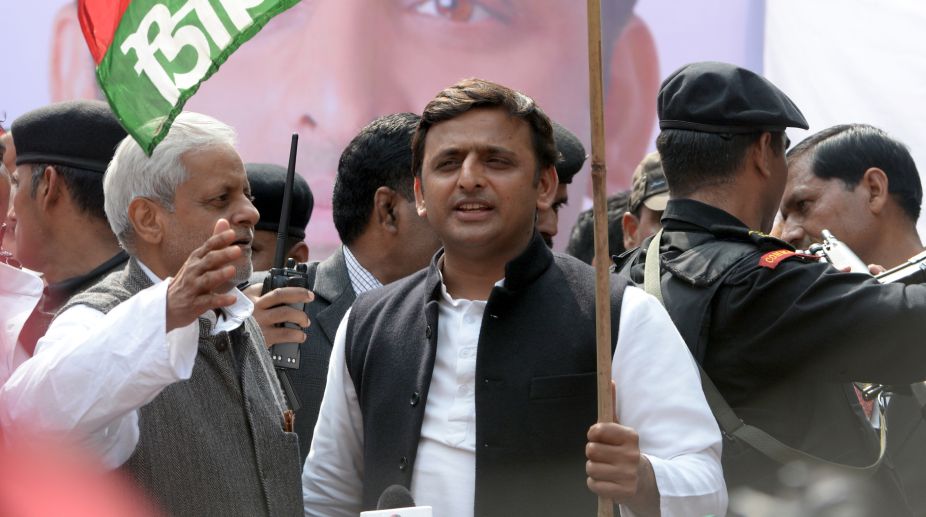
Uttar Pradesh Chief Minister Akhilesh Yadav here on Sunday cast his vote in the third phase of the state assembly election.

Accompanied by cousin and Budayun MP Dharmendra Yadav, the Chief Minister, at the Abhinav Vidyalaya polling booth in his native village of Etawah, told the media that he voted for the Samajwadi Party so that development could further be expedited in the state.

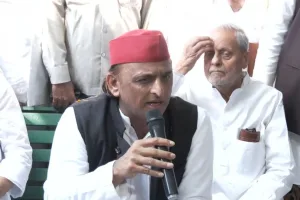
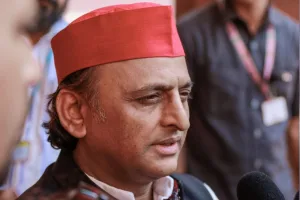
Sporting the red-colour party cap, the SP national president however looked a little shaky and snapped back at certain journalists who asked some uncomfortable questions.

When asked why he has declared his vote, Yadav said because "you were asking".

He also got angry when the mediapersons asked about his father Mulayam Singh Yadav not accompanying him for vote, like he always does.

Ducking the question, he expressed hope that the people of the state will vote in large numbers in the favour of the SP-Congress alliance.

Replying to a question whether he would like to wish his estranged uncle Shivpal Singh Yadav, who is contesting from Jaswantnagar, the Chief Minister wished that all SP candidates won the polls.

On the question why Mulayam Singh, whom he ousted as the National President of the party in January, did not turn up for joint rallies with him, Akhilesh Yadav said he probably wanted to cover other areas.

Amid reports of a not good faring in the erstwhile strongholds, the Chief Minister also ruled out "bheetarghat" against the ruling party candidates.

Akhilesh casts vote, ducks questions on Mulayam-Shivpal

IANS | Lucknow |

Uttar Pradesh Chief Minister Akhilesh Yadav here on Sunday cast his vote in the third phase of the state assembly election.

Accompanied by cousin and Budayun MP Dharmendra Yadav, the Chief Minister, at the Abhinav Vidyalaya polling booth in his native village of Etawah, told the media that he voted for the Samajwadi Party so that development could further be expedited in the state.

Sporting the red-colour party cap, the SP national president however looked a little shaky and snapped back at certain journalists who asked some uncomfortable questions.

When asked why he has declared his vote, Yadav said because "you were asking".

He also got angry when the mediapersons asked about his father Mulayam Singh Yadav not accompanying him for vote, like he always does.

Ducking the question, he expressed hope that the people of the state will vote in large numbers in the favour of the SP-Congress alliance.

Replying to a question whether he would like to wish his estranged uncle Shivpal Singh Yadav, who is contesting from Jaswantnagar, the Chief Minister wished that all SP candidates won the polls.

On the question why Mulayam Singh, whom he ousted as the National President of the party in January, did not turn up for joint rallies with him, Akhilesh Yadav said he probably wanted to cover other areas.

Amid reports of a not good faring in the erstwhile strongholds, the Chief Minister also ruled out "bheetarghat" against the ruling party candidates.

Trump attacks media at Florida rally yet again

IANS | Washington |

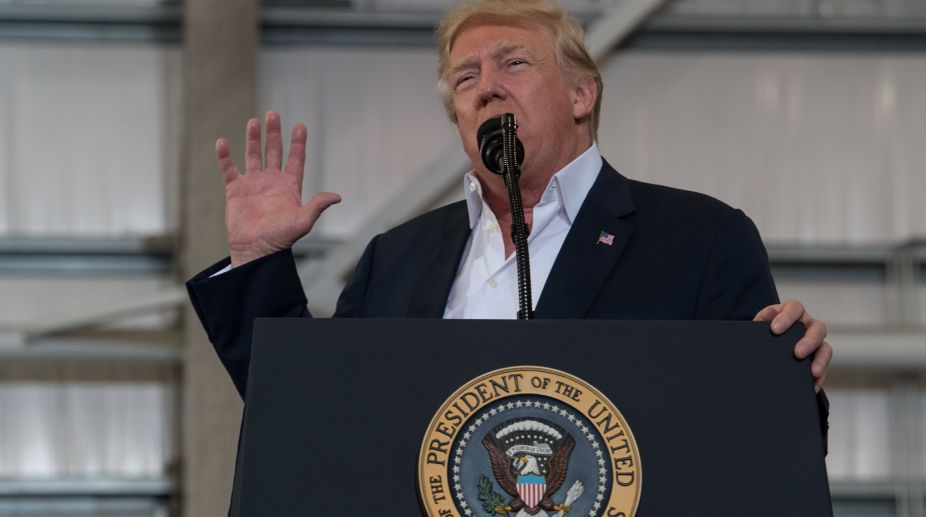
US President Donald Trump at a rally in Florida again attacked the media as "fake news" and renewed pledges on Obamacare and border security.

"They just don't want to report the truth," Trump on Saturday told the crowd of about 9,000 people in Melbourne.

Addressing an event little changed from the rallies he gave on the campaign trail, the Republican called the media as "part of the problem" and "part of the corrupt system".

"They have their own agenda, and their agenda is not your agenda," NBC News quoted the President as saying.

Trump's attacks on the media came a day after the President on Twitter named five organisations, calling them "fake" news media and "the enemy of the American people".

Trump earned applause for saying he would repeal and replace Obamacare, a line that consistently ushered in some of his loudest praise from crowds across the country in 2016.

He promised a new healthcare plan to replace it "in a couple of weeks".

It would be "great", he said, but did not expand further as to what it might entail.

The President also previewed a new executive order to replace his court-blocked order temporarily suspending entry to the US of citizens from seven Muslim nations.

"We will do something next week, I think you'll be impressed," Trump said.

He complained about the appeals court judges who refused to reinstate his executive order, which critics have called a "Muslim ban". Trump has denied that.

He called the judges' ruling "very sad" and read part of a statute giving authority to the President in matters of immigration and national security.

"If you have a college education, you can understand it. If you have a high school education, you can understand it. If you were a bad student in high school, you can understand it," Trump said of the statute.

Trump's Florida rally came at the end of a turbulent few weeks that saw court defeats over his travel restriction, and the resignation of his National Security Adviser Michael Flynn after he misled Vice President Mike Pence about his conversations with Russia's ambassador to the US.

Trump told the crowd gathered in a hangar at the Orlando Melbourne International Airport that his administration was on the right track.

"I hear your demands, I hear your voices, and I promise you I will deliver," Trump said.

"And by the way, you've seen what we've accomplished in a very short period of time — the White House is running so smoothly, so smoothly."

Trump said he "inherited one big mess" from the Obama administration.

He reminded the crowd that the November 8 election was supposed to be "the greatest defeat in the modern history of American politics — and it was, for the Democrats, not the Republicans".

Trump attacks media at Florida rally yet again

IANS | Washington |

US President Donald Trump at a rally in Florida again attacked the media as "fake news" and renewed pledges on Obamacare and border security.

"They just don't want to report the truth," Trump on Saturday told the crowd of about 9,000 people in Melbourne.

Addressing an event little changed from the rallies he gave on the campaign trail, the Republican called the media as "part of the problem" and "part of the corrupt system".

"They have their own agenda, and their agenda is not your agenda," NBC News quoted the President as saying.

Trump's attacks on the media came a day after the President on Twitter named five organisations, calling them "fake" news media and "the enemy of the American people".

Trump earned applause for saying he would repeal and replace Obamacare, a line that consistently ushered in some of his loudest praise from crowds across the country in 2016.

He promised a new healthcare plan to replace it "in a couple of weeks".

It would be "great", he said, but did not expand further as to what it might entail.
The President also previewed a new executive order to replace his court-blocked order temporarily suspending entry to the US of citizens from seven Muslim nations.
"We will do something next week, I think you'll be impressed," Trump said.

He complained about the appeals court judges who refused to reinstate his executive order, which critics have called a "Muslim ban". Trump has denied that.

He called the judges' ruling "very sad" and read part of a statute giving authority to the President in matters of immigration and national security.

"If you have a college education, you can understand it. If you have a high school education, you can understand it. If you were a bad student in high school, you can understand it," Trump said of the statute.

Trump's Florida rally came at the end of a turbulent few weeks that saw court defeats over his travel restriction, and the resignation of his National Security Adviser Michael Flynn after he misled Vice President Mike Pence about his conversations with Russia's ambassador to the US.

Trump told the crowd gathered in a hangar at the Orlando Melbourne International Airport that his administration was on the right track.

"I hear your demands, I hear your voices, and I promise you I will deliver," Trump said.

"And by the way, you've seen what we've accomplished in a very short period of time — the White House is running so smoothly, so smoothly."

Trump said he "inherited one big mess" from the Obama administration.

He reminded the crowd that the November 8 election was supposed to be "the greatest defeat in the modern history of American politics — and it was, for the Democrats, not the Republicans".

‘Nothing can be done’ in genetic Fragile X Syndrome a myth

IANS | Kolkata |

The absence of clinical medicine to treat Fragile X Syndrome, the most common known genetic cause of autism, does not mean it is not amenable to other forms of care, say experts debunking myths about the inherited condition.

"For something that is not treatable by medicine, you tend to think nothing can be done. The doctor's job is to get somebody better. The real myth is there is no chemical medicine so nothing can be done," Samir Dalwai, Indian Academy of Paediatrics, Mumbai chapter, told IANS.

Fragile X Syndrome (FXS) is the most common cause of inherited intellectual disability and the most common known genetic cause of autism or autism spectrum disorders. 

Approximately 1 in 3,000 to 4,000 individuals has FXS. It causes a range of developmental problems including learning disabilities and cognitive impairment.

Usually, males are more severely affected by this disorder than females.

The awareness level in India with respect to other countries is considerably low, says Shalini Kedia, chairperson, Fragile X Society of India.

"It is necessary for spreading awareness about the syndrome among the medical fraternity especially paediatricians and gynaecologists as well as parents and couples planning to have a child, so that children with Fragile X Syndrome are detected early in life," Kedia told IANS.

There is no medication that has a benefit specifically for fragile X syndrome. Drugs are commonly used to treat symptoms of attention deficit and hyperactivity, anxiety, and aggression and so, supportive management becomes necessary.

Kedia said in developed countries like the US, toddlers at the age of 36-42 months are detected with Fragile X Syndrome whereas, in India, children with Fragile X Syndrome are detected at a later age of 6-8 years or even later. This leads to a huge gap in their treatment cycle.

Dalwai hoped guidelines on FXS would soon be available.

"We have a chapter of neurodevelopmental paediatrics and we just came out with guidelines on autism, ADHD. We would be very happy to come out with guidelines on FXS. Once we have looked at autism, after that next thing should be to look at specific causes of autism and intellectual disability," he added.

‘Nothing can be done’ in genetic Fragile X Syndrome a myth

IANS | Kolkata |

The absence of clinical medicine to treat Fragile X Syndrome, the most common known genetic cause of autism, does not mean it is not amenable to other forms of care, say experts debunking myths about the inherited condition.

"For something that is not treatable by medicine, you tend to think nothing can be done. The doctor's job is to get somebody better. The real myth is there is no chemical medicine so nothing can be done," Samir Dalwai, Indian Academy of Paediatrics, Mumbai chapter, told IANS.

Fragile X Syndrome (FXS) is the most common cause of inherited intellectual disability and the most common known genetic cause of autism or autism spectrum disorders. 

Approximately 1 in 3,000 to 4,000 individuals has FXS. It causes a range of developmental problems including learning disabilities and cognitive impairment.

Usually, males are more severely affected by this disorder than females.

The awareness level in India with respect to other countries is considerably low, says Shalini Kedia, chairperson, Fragile X Society of India.

"It is necessary for spreading awareness about the syndrome among the medical fraternity especially paediatricians and gynaecologists as well as parents and couples planning to have a child, so that children with Fragile X Syndrome are detected early in life," Kedia told IANS.

There is no medication that has a benefit specifically for fragile X syndrome. Drugs are commonly used to treat symptoms of attention deficit and hyperactivity, anxiety, and aggression and so, supportive management becomes necessary.

Kedia said in developed countries like the US, toddlers at the age of 36-42 months are detected with Fragile X Syndrome whereas, in India, children with Fragile X Syndrome are detected at a later age of 6-8 years or even later. This leads to a huge gap in their treatment cycle.

Dalwai hoped guidelines on FXS would soon be available.

"We have a chapter of neurodevelopmental paediatrics and we just came out with guidelines on autism, ADHD. We would be very happy to come out with guidelines on FXS. Once we have looked at autism, after that next thing should be to look at specific causes of autism and intellectual disability," he added.

China to halt coal imports from North Korea

IANS | Beijing |

China announced that it will suspend all coal imports from North Korea, a measure taken to comply with sanctions imposed on Pyongyang by the United Nations.

The ban will be in place through December 31, according to a joint statement by China's Ministry of Commerce and General Administration of Customs on Saturday, Efe news reported.

The statement said the decision was made to ensure China was complying with the UN Security Council's Resolution 2321, which was approved in late November and imposes new sanctions on North Korea in retaliation for its September 9 nuclear test.

The Council decided then that annual imports of coal from North Korea by member states should not exceed $400.9 million, or 7,500,000 metric tons, whichever is lower.

Saturday's announcement comes after news reports this week that China had turned back a shipment of North Korean coal worth around $1 million.

China in December had announced a temporary halt to imports of North Korean coal, saying the move was taken to ensure compliance with Resolution 2321.

China is the lone customer for North Korea's coal, one of the North Asian nation's only sources of hard currency.

The announcement follows Monday's poison-attack killing at Kuala Lumpur's airport of Kim Jong-nam, the half-brother of North Korean leader Kim Jong-un.

The Chinese government has not commented on that crime except to say it was closely following the local authorities' investigation.

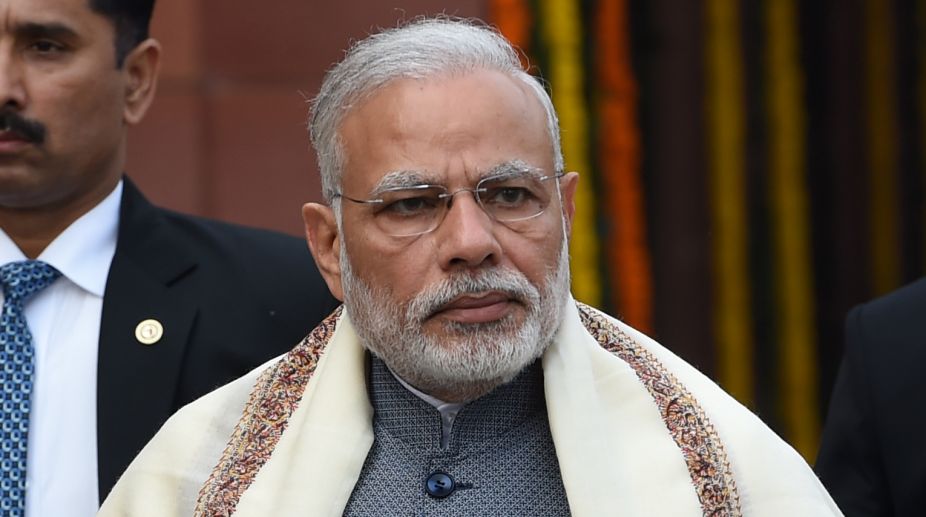
Modi pays tribute to Chhatrapati Shivaji Maharaj

IANS | New Delhi |

Prime Minister Narendra Modi paid tribute to Chhatrapati Shivaji Maharaj on his birth anniversary on Sunday expressing his gratitude to the Maratha warrior for having taken birth here.

"I bow to Chhatrapati Shivaji Maharaj on his Jayanti. India is proud that a valorous and great soul like him was born on our land."

"Shivaji Maharaj placed wellbeing of his people above everything. He was an ideal ruler blessed with exceptional administrative skills," Modi said.

He spoke of his endeavours at creating an India on the ideals of Shivaji Maharaj something that the latter would have been proud of.

"We are working tirelessly to fulfil the ideals of Shivaji Maharaj and create an India that he would be proud of," he said.

The Prime Minister also expressed his feeling of being honored at joining the "programme for Shivaji Maharaj's statue off the Arabian Sea. I will always cherish that day."

With MRI, researchers find autism biomarkers in infancy

IANS | San Francisco |

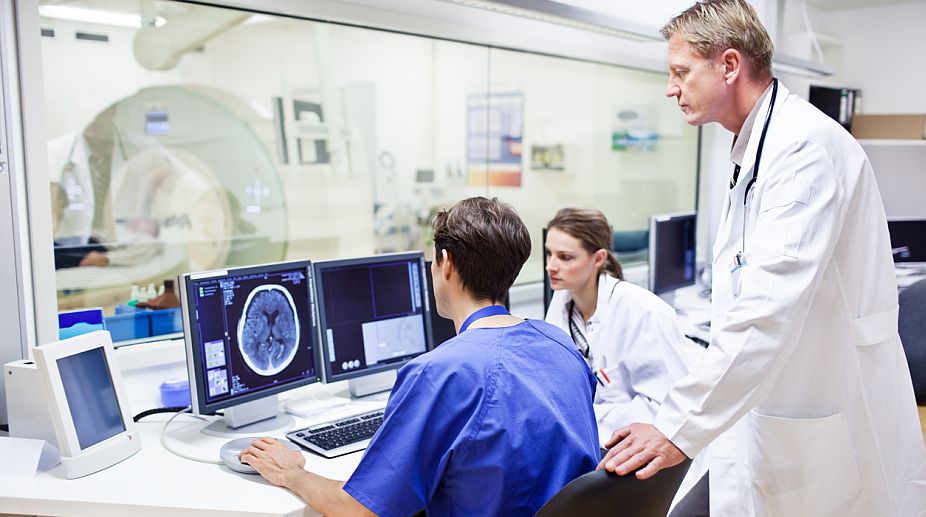
 Researchers studying the brains of infants who have older siblings with autism were able to identify 80 per cent of the babies who would be subsequently diagnosed with autism at two years of age.

The results, published this week in the journal Nature, stem from research led by the University of North Carolina to use magnetic resonance imaging (MRI) to measure the brains of "low-risk" infants, with no family history of autism, and "high-risk" infants who had at least one autistic older sibling, Xinhua news agency reported.

A computer algorithm was then used to predict autism before clinically diagnosable behaviours set in, subsequently making it the first study to show that it is possible to use brain biomarkers to identify which infants in a high-risk pool, namely those having an older sibling with autism, will be diagnosed with autism spectrum disorder, or ASD, at 24 months of age.

"Typically, the earliest we can reliably diagnose autism in a child is age 2, when there are consistent behavioural symptoms, and due to health access disparities the average age of diagnosis in the US is actually age 4," said co-author and University of Washington (UW) professor of speech and hearing sciences Annette Estes. "But in our study, brain imaging biomarkers at 6 and 12 months were able to identify babies who would be later diagnosed with ASD."

While researchers at four clinical sites in the United States took part, the project included hundreds of children across the country.

The researchers obtained MRI scans of children while they were sleeping at 6, 12 and 24 months of age, and assessed the babies' behaviour and intellectual ability at each visit. 

They found that the babies who developed autism experienced a hyper-expansion of brain surface area from 6 to 12 months, as compared to babies who had an older sibling with autism but did not themselves show evidence of autism at 24 months of age. 

Increased surface area growth rate in the first year of life was linked to increased growth rate of brain volume in the second year of life. Brain overgrowth was tied to the emergence of autistic social deficits in the second year.

By inputting these data, including MRI calculations of brain volume, surface area, and cortical thickness at 6 and 12 months of age, into a computer program, the researchers sought to classify babies most likely to meet ASD criteria at 24 months of age. 

They found that, among infants with an older ASD sibling, the brain differences at 6 and 12 months of age successfully identified 80 per cent of those infants who would be clinically diagnosed with autism at 24 months of age.

The predictive power of the findings may lead to a diagnostic tool for ASD that could be used in the first year of life, before behavioural symptoms have emerged.

"We don't have such a tool yet," Estes was quoted as saying in a news release from UW. "But if we did, parents of high-risk infants wouldn't need to wait for a diagnosis of ASD at 2, 3 or even 4 years and researchers could start developing interventions to prevent these children from falling behind in social and communication skills … By the time ASD is diagnosed at 2 to 4 years, often children have already fallen behind their peers in terms of social skills, communication and language."