Logo

UK museums put on ISIS alert

PTI | London |

Museums and galleries across the UK have stepped up security amid fears of a possible bomb attack by the Islamic State terror group, a media report said on Sunday.

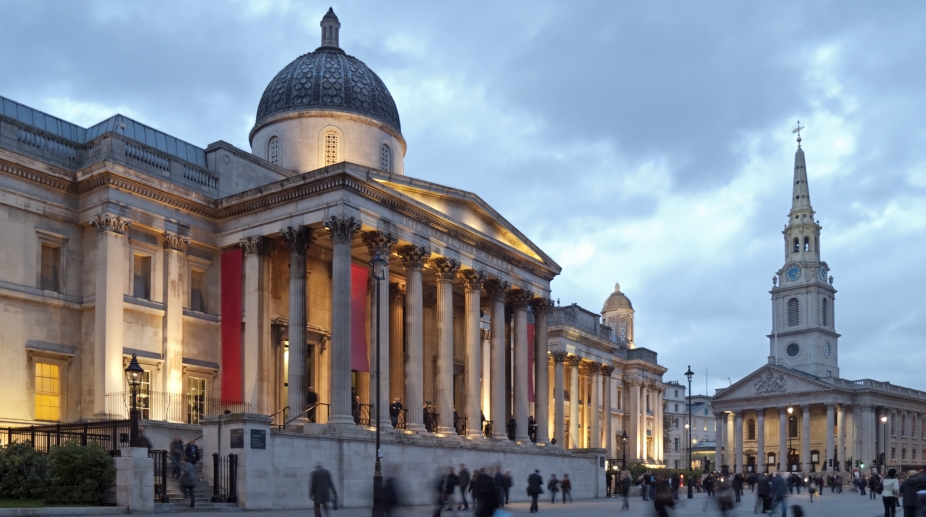
London's National Gallery and British Museum are among the leading institutions that have banned visitors from ringing in large pieces of luggage and are now routinely screening all other bags fearing bombs hidden in bags being used by terrorists, 'The Sunday Times' reports.

Fears about a possible attack on a "soft target" have led anti-terrorism police to invite museum and gallery officials to training seminars for venues with big crowds, such as sports stadiums and shopping centres.

There is no intelligence indicating a specific threat, the newspaper claims.

The National Gallery in central London, which has in the past been highlighted as a potential target in an ISIS film, became the latest cultural venue to upgrade security just over a fortnight ago.

Signs say that suitcases and items of large luggage are now banned, while all other bags are checked at desks inside by security guards.

The gallery, which attracts around 6 million visitors a year, adds on its website: "All items left in the cloakrooms may be searched in the interests of safety and security." 

Restrictions on bag size are also in operation at The Lowry arts complex in Salford, Greater Manchester.

The website states: "In line with advice received from our security advisers, additional security measures are in place. We kindly ask that patrons refrain from bringing large bags to the venue and that they arrive in plenty of time in order for any potential security checks to take place." 

Other sites with luggage restrictions include the Museum of Liverpool and St Paul's Cathedral in London, as well as the British Museum, although the latter claims this is due, in part, to space constraints.

Visitors to the British Museum are now guided through crowd-control barriers and airport-style signs list prohibited items.

The museum said: "We continue to take advice from a number of departments and agencies, including the Metropolitan police." 

UP Election 2017: Over 60% voting in third phase

IANS | Lucknow |

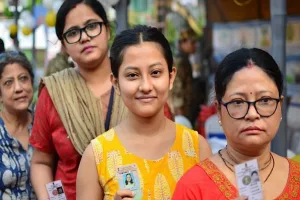
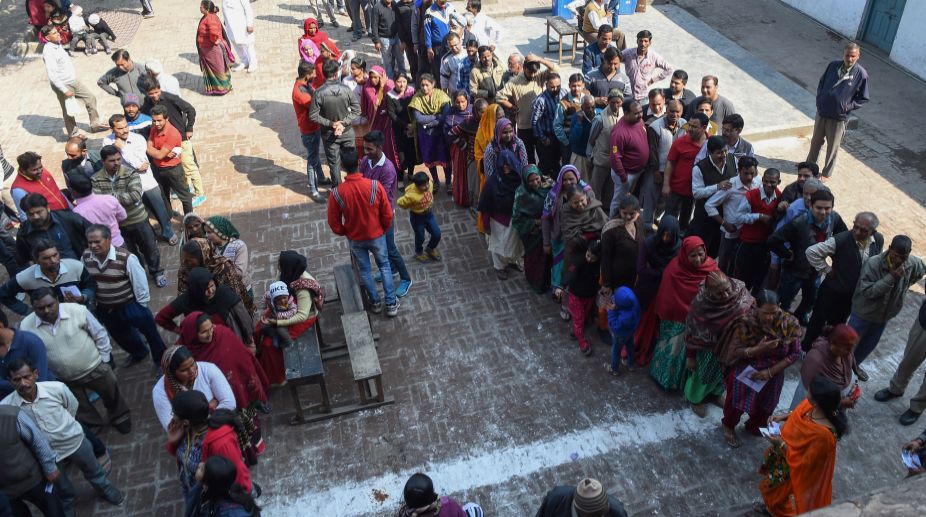
Over 60 per cent balloting was recorded as polling closed for the third phase of the Uttar Pradesh assembly elections on Sunday, Election Commission (EC) officials said.

The maximum balloting was reported from Barabanki, followed closely by Sitapur and Kannauj.

A total of 69 seats went to polls in 12 districts in the third phase of voting.

Stray incidents of violence – firing, preventing some from voting and stone pelting – were reported from some places though voting was by and large peaceful in most constituencies.
 

EU citizens in UK could face legal limbo

IANS | London |

The European Union (EU) fears millions of its nationals living in the UK will be left stranded in a legal no-mans land after the country leaves the bloc because of the weaknesses of the British immigration system, according to a leaked document.

Members of the European Parliament (MEP) and senior European diplomats fear that chaos will ensue as the Home Office does not have the information or systems in place to select who can stay, once the UK restricts access to nationals from the other 27 EU member states, the Guardian reported. 

It is widely assumed that, at an early stage of article 50 — official process of exiting the EU — negotiations, Britain and the bloc will agree a cut-off date after which foreigners who have settled in the country will not have an automatic right to remain.

But the leaked document on Saturday, drawn up by MEPs on the European parliament's employment committee to aid the EU's Brexit negotiations, warned: "The UK has no population register. In practice it would be difficult to determine which EU27 citizens were residing legally in the UK before the Brexit would have taken effect.

"If all 3.3 million EU citizens were to initiate procedures aimed at proving the ‘exercise of treaty rights', the administrative system would be overburdened."
Former Prime Minister Tony Blair's government was forced to drop plans for a national identity card and population register in 2007 because of concerns over the security of citizens' data.

The Cabinet Office advises that EU nationals do not need to register for any documentation in order to enjoy free movement rights and responsibilities in the UK, reports the Guardian. 

The government does not track EU nationals as they enter and leave the country. The databases of the Department for Work and Pensions, Revenue and Customs and the Home Office do not share information.

EU nationals who have lived in the UK for five years can gain automatic permanent residency status, although there have been numerous cases of employers asking for their foreign employees to acquire permanent residency cards in order to guarantee their jobs.

There has been almost a 50 per cent increase in the number of EU citizens applying for permanent residency documentation since the vote on June 23.

EU nationals say that to obtain permanent residency cards they have to complete an 85-page form requiring huge files of documentation.

The European parliament is also due to debate the rights of EU nationals in both the UK and on the continent on March 1. 
 

Nullify TN assembly proceedings on Saturday: Stalin to Governor

IANS | Chennai |

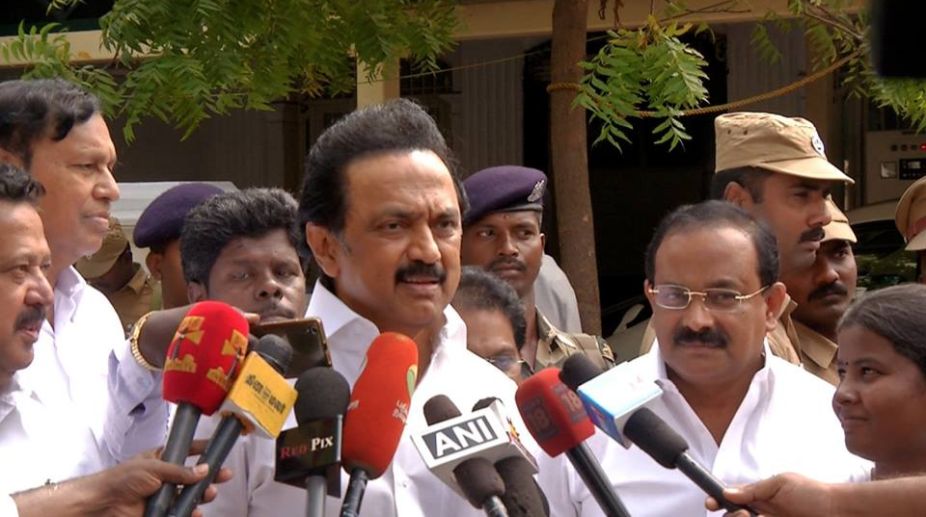
DMK Working President MK Stalin on Sunday urged the Tamil Nadu Governor to nullify the proceedings in the assembly on Saturday in which Chief Minister Edapaddi K Palaniswami won the confidence vote.

Stalin, who is also the Leader of the Opposition in the assembly, in his representation to Governor C. Vidayasagar Rao said the motion of confidence moved by Chief Minister Palaniswami was adopted in the absence of the entire opposition on Saturday.

Stalin requested Rao to invoke his Constitutional powers "to nullify the entire proceedings with a view to protect the spirit of democracy and the Constitution".

Stalin said extraordinary police presence was mobilised, giving an impression of a "war-like situation" around the assembly complex and a "thick atmosphere of terror" was prevailing.
According to Stalin, the AIADMK legislators belonging to the V.K. Sasikala camp who were kept as hostages for some days in a beach resort were brought to the assembly "under tight security and they appeared to be under constant threat".

Stalin said the Speaker of the house P. Dhanapal did not respond to his request for a secret ballot on the confidence motion.

According to the DMK leader, the party legislators had no other way to register their protest and resorted to peaceful sit-in inside the house.

"The Speaker ordered expulsion of all the members of the DMK, without following the procedure laid down. The police entered into the house presumably on instructions given in advance by the Speaker.

"The police and the assembly guards forcibly evicted us from the house and in this process, many of us sustained bleeding injuries. The other opposition parties staged a walk-out, strongly protesting against the action of the Speaker," Stalin told Rao.

BJP youth wing leader kills wife over a fight

Swati Sharma | Meerut |

In a sensational incident, a BJP leader of the city youth wing, killed his wife with his pistol followed by a fight. A case of murder has been registered against the accused politician and his family members in Medical police station.

It all started on Friday evening when Kuldeep Tomar, a resident of Medical thana area of the city, entered into a fight with his wife Poonam (45). The fight between the couple went to the extreme that enraged Tomar whipped out his licensed pistol and fired on her. The bullet pierced into her skull and she was immediately rushed to a private hospital where the doctors did her surgery. But ill fated Poonam could not survive and died on Saturday night.

Tomar had been  associated with the youth wing of the BJP and currently he is the president of Tejgarhi Vyapaar Association. He had a licensed pistol which he did not deposit at the time of the election in the area police station and used in the crime.

Meanwhile, the family members of deceased Poonam arrived in the town from Saharanpur and registered a case of murder against her husband and his family members in the Medical police station.

According to sources the accused was trying to have a compromise with Poonam`s family to which they had refused. Her brother Praveen Kumar charged that Tomar was in a relationship with a divorced woman because of which he tortured Poonam.

BJP leaders and MLA Sangeet Som visited hospital after the incident and consoled the grieved family.

Australian seamer Starc opts out of IPL 2017

Starc has pulled out in order to rest himself ahead of a long season for his national cricket team.

IANS | Bengaluru |

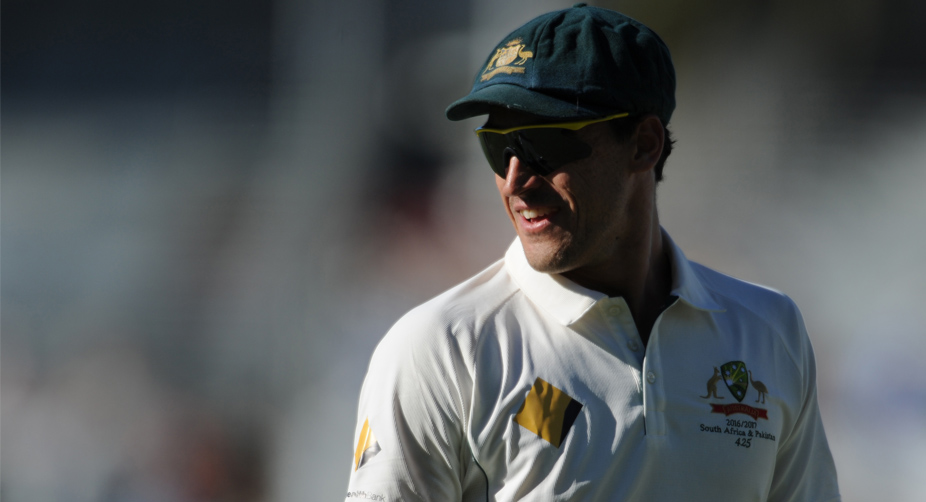
Australian left-arm seamer Mitchell Starc has pulled out of the upcoming edition of the Indian Premier League (IPL) in order to rest himself ahead of a long season for his national cricket team, it was announced on Sunday.

With this decision, the 27-year-old will sacrifice Rs. 5 crore that he was supposed to bag after turning out for IPL franchise Royal Challengers Bangalore (RCB) during the coming season.

Starc, one of the world's premier fast bowler, had also missed the 2016 IPL edition due to injury.

"The Royal Challengers Bangalore and fast bowler Mitchell Starc have mutually decided to discontinue their association ahead of the upcoming season of VIVO Indian Premier League 2017 in accordance with Regulation 41 of the IPL Player Regulations," a statement said.

Now, in the absence of Starc, the city-based franchise of the richest Twenty20 cricket league will go into Monday's IPL Players auction with an additional purse of Rs 5 Crore and an additional slot for overseas player. In total, RCB have a purse of Rs 17.825 crore to buy players.

The IPL starts on April 5.

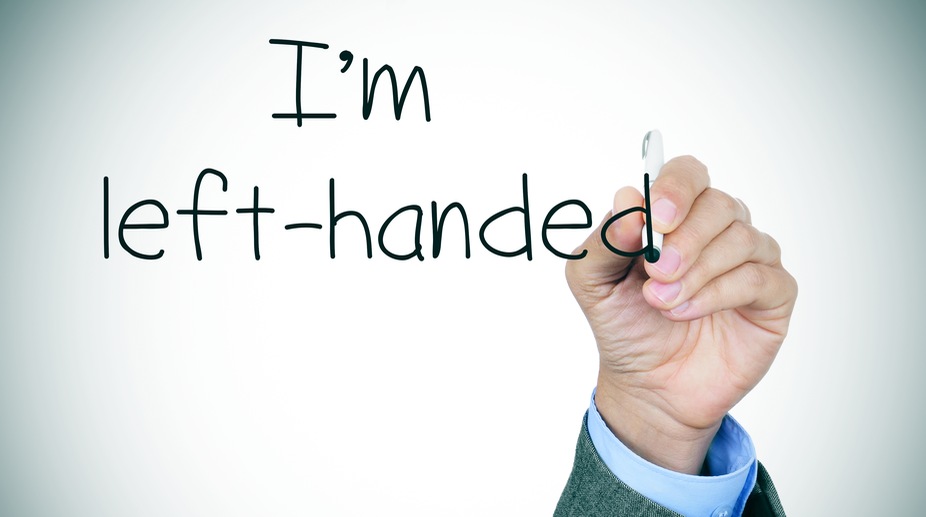
What makes you a lefty or a righty?

IANS | London |

It is not the brain that determines whether a person is a lefty or a righty, but the spinal cord, a study has claimed.

Until now, it had been assumed that differences in gene activity of the right and left hemisphere might be responsible for a person's handedness — people's tendency to naturally favour the use of one hand over the other. 

But the recent study demonstrated that gene activity in the spinal cord is asymmetrical already in the womb and could be linked to the handedness of a person.

"Our findings suggest that molecular mechanisms for epigenetic regulation within the spinal cord constitute the starting point for handedness, implying a fundamental shift in our understanding of the ontogenesis of hemispheric asymmetries in humans," said Sebastian Ocklenburg from Ruhr University Bochum in Germany.

According to ultrasound scans carried out in the 1980s, a preference for moving the left or right hand develops in the womb from the eighth week of pregnancy. From the 13th week of pregnancy, unborn children prefer to suck either their right or their left thumb.

Arm and hand movements are initiated via the motor cortex in the brain. It sends a corresponding signal to the spinal cord, which in turn translates the command into a motion. 

However, the motor cortex is not connected to the spinal cord from the beginning. In fact, even before the earliest indications of hand preference appear, the spinal cord has not yet formed a connection with the brain, stated researchers in the paper appearing in the journal eLife.

In addition, environmental factors were found to be controlling whether spinal cord activity was greater on the left or right side.

For the study, the team analysed the gene expression in the spinal cord during the eighth to 12th week of pregnancy and detected marked right-left differences in the eighth week — in precisely those spinal cord segments that control the movements of arms and legs. 
 

Mamata condoles death of Banasree Sengupta

SNS | New Delhi |

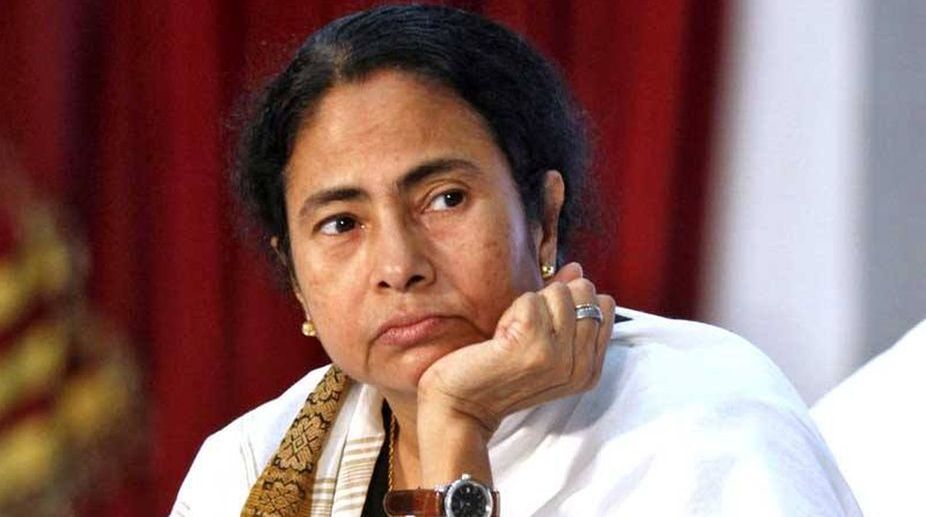
West Bengal Chief Minister Mamata Banerjee on Sunday condoled the death of noted Bengali singer Banasree Sengupta.

“Deeply saddened at the passing of legendary singer Banashree Sengupta. My condolences to her family and fans” Mamata wrote on twitter.

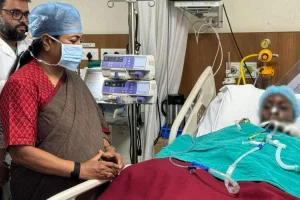
Banasree Sengupta, 71 who was undergoing treatment at the state-run SSKM Hospital passed away at 11.30 am on Sunday.

Govt meets stent makers to ensure availability

PTI | New Delhi |

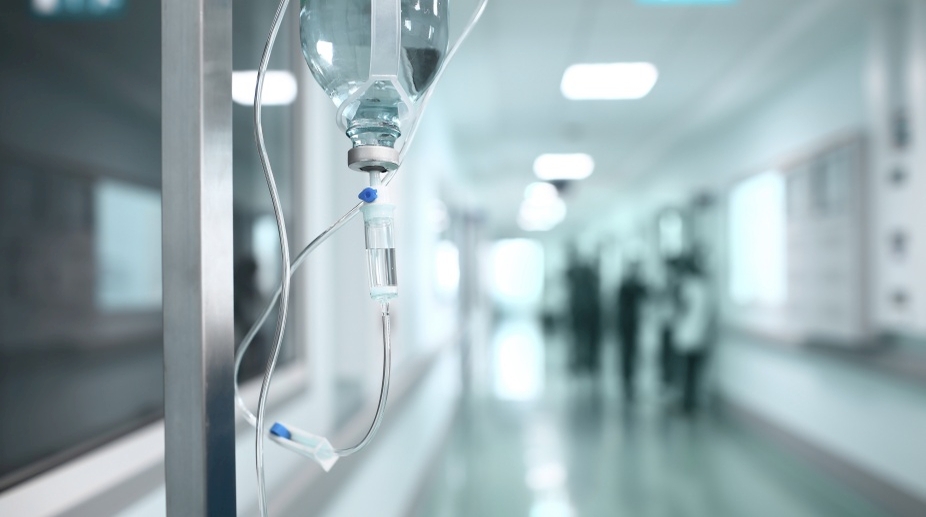
The government has held a meeting with stent makers and importers to review its availability in market amid reports that artificial scarcity is being created in the garb of withdrawing the device for price relabelling.

There are reports of shortages of stents in hospitals after the government reduced their prices by up to 85 per cent by capping rates of bare metal stents at Rs.7,260 and drug- eluting ones at Rs.29,600 on February 13.

"The government held a meeting with all domestic stent manufacturers as well as all the importers and their associations. They have all assured that the supplies would be maintained and no shortage will be allowed to develop. There is enough stock," Pharma Secretary Jai Priye Prakash told.

It was also decided that if needed, a separate meeting with associations and bodies of hospitals will be called with the assistance of health secretary to sensitise the hospitals too, he added.

Senior officials of Department of Pharma and NPPA had met the stent manufacturers and importers to review the availability of stents in the market, amid reports of artificial scarcity being created in the garb of withdrawing stents for re-labelling of prices.

"We are keeping an eye on all those who are engaging in unethical practices such as creating artificial shortage of stents, not abiding by the fixed ceiling price etc, against whom strict action will be taken," Prakash had earlier said.

The Department of Pharmaceuticals has already written separately to NPPA, DCGI and Healthy Ministry requesting them to take "necessary action" to curb artificial shortage.

‘Goonda raj’ in UP, even SC has to intervene: PM Modi

PTI | Fatehpur (UP) |

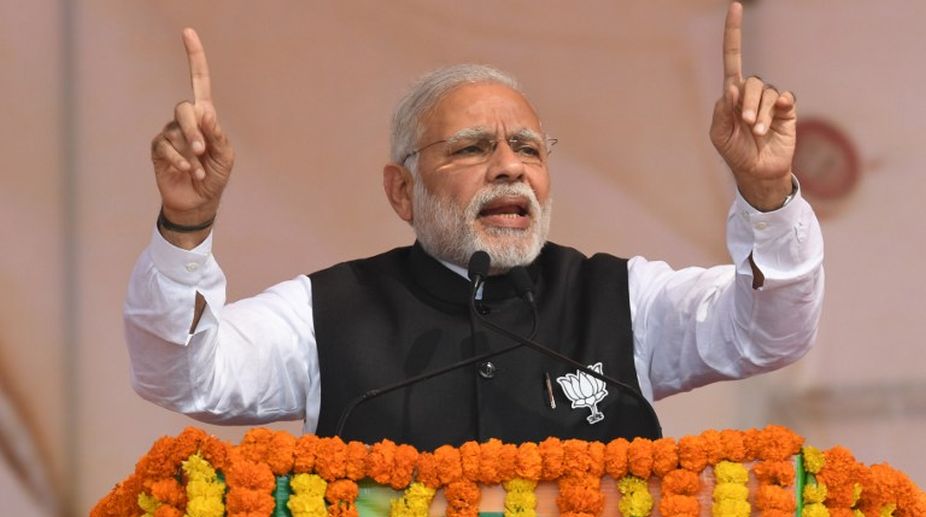
Prime Minister Narendra Modi on Sunday lambasted the SP government for its "failure "to maintain law and order in Uttar Pradesh, saying 'goonda raj' was prevailing there and even the Supreme Court has had to intervene to get a minister booked in an alleged rape case.

"The SC had to intervene to get the FIR registered against Gayatri Prasad Prajapati. 'Goonda raj' is prevailing all over UP and police stations have become Samajwadi Party office," Modi said at an election rally here.

With the apex court breathing down its neck, UP Police yesterday filed an FIR against the tainted minister in connection with cases of alleged gangrape and attempt to rape a woman and her minor daughter.

"The glow has disappeared from Akhilesh Yadav's face, his voice has become feeble, he is afraid and looking for right words while talking to media," he said, adding that the SP chief has "accepted that he has lost the game".

"Why is the policing system so inefficient in UP? Why are complaints not registered? What work culture is it? SP is least concerned about improving law and order situation in UP.

I urge people to elect a government that will ensure safety of people," he said, putting SP government on the dock.

Modi referred to the CM's rally to campaign for Prajapati and wondered whether "the (Cong-SP) alliance was as holy as Gayatri." 

Prajapati, who is contesting as a candidate of the alliance in the prestigeous Amethi constituency, was sacked by Akhilesh from his cabinet in 2016 but later reinstated in the council of ministers sans the lucrative mining portfolio.

Terming SP's alliance with Congress as an "insult" of socialist leader Ram Manohar Lohia, he said "SP has insulted Lohia by forging alliance with the Congress."

In a jibe at Rahul Gandhi without taking his name for forging alliance with SP, Modi said, "Those born with silver spoon in mouth have realised that the situation is not in their favour on the ground. After '27 saal, UP behal' slogan, Congress was compelled to form alliance with SP because of this reason."

The Prime Minister also said development has been "in exile for 10 years" in Uttar Pradesh.

Israeli leader lauds ‘new day’ in relations with Trump’s US

AP | Jerusalem |

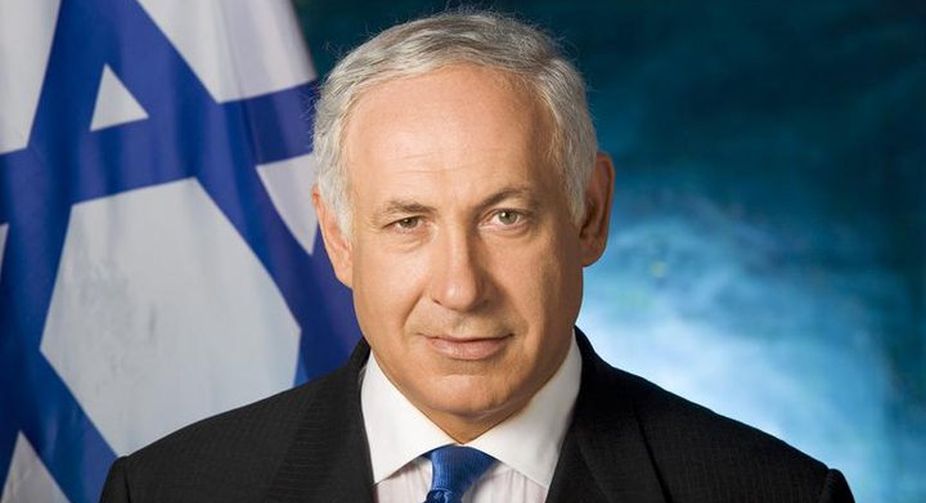
Israel's leader says President Donald Trump told him it was a "new day" in Israeli-American relations.

Benjamin Netanyahu told his Cabinet on Sunday that last week's meeting with Trump in Washington was "historic" and strengthened the two countries' longtime alliance.

After eight years of testy ties with Barack Obama, Netanyahu seems to be relishing Trump's warm embrace.

The new president has broken from his predecessor in adopting friendlier positions to the Israeli government regarding a tough line on Iran, a vaguer stance on Palestinian statehood and a more lenient approach to West Bank settlements.

Netanyahu says the two leaders see "eye to eye" on Iran and have formed teams to work together on a host of issues. He says "there is a new day and it is a good day." 

Indian IoT market value to touch $9 bn by 2020

PTI | Mumbai |

The number of units under Internet of Things (IoT) is expected to grow exponentially to 1.9 billion units in India by 2020 or about $9 billion, says a report.

A rapidly growing hub for IoT solutions, the country's IoT market size in this area is expected to increase about 7 times — from $1.3 billion last year to $9 billion by 2020, said consultancy firm Deloitte in its TMT Predictions 2017.

IoT refers to the devices, other than computers and smartphones, connected to the Internet. Deloitte estimates the current number of such devices in the country to be around 60 million.

The report said IoT solution deployment for digital utilities or smart cities and in the manufacturing, transport and logistics and automotive industries would drive the demand for industrial IoT applications going forward.

"By 2020, we believe industries such as utilities, manufacturing, automotive, transportation and logistics are expected to see highest adoption levels of IoT in India.

The government's planned investment of about $1 billion for 100 smart cities, over the next five years, is expected to be a key enabler for IoT adoption across these industries.

In addition, industries such as healthcare, retail, and agriculture are also expected to make significant progress in IoT adoption," it said.

It said India needs to continue to build capabilities across technology areas of sensors to adapt to rugged climate, terrain along with network infrastructure, standards and augmented intelligence and behaviour.

Observing that telecom operators would be initially focusing on providing SIMs for IoT devices and solutions, the report expects that in the next two years, telcos would unveil new IoT strategies or stretch the existing one to have higher level of participation in the overall end-to-end IoT ecosystem and economy.

"Though initial focus would be on providing SIMs for IoT devices and solutions, which in 2017 is expected to take off, leading to over a billion additional SIM sales in the next three years.

"However, some of the leading operators, as part of the long-term play, would spin off new IoT entities that would provide them with the flexibility and reason to focus on being an end-to end IoT solution provider rather than just a connectivity provider," the report said.

It expects that couple of leading operators would make significant investments to extend their IoT capabilities by providing data analytics and storage and in some cases for more specialised areas operators would enter into partnerships with companies.

"These companies would provide cheaper sensors, cloud data storage, analytics, visualisation platforms providing remote monitoring, dashboards and reports, and field service platforms providing automated maintenance tickets and technical assistance," it said.

MCD polls: AAP likely to finalise 1st candidates list by month

PTI | New Delhi |

AAP is expected to finalise its first list of candidates for MCD polls by the month-end with over 10,000 aspirants are eying the 272 seats.

The party plans to take on BJP and Congress by focusing on alleged financial irregularities in the civic bodies and sanitation.

"Sanitation will be our major focus in the MCD polls as it is their primary duty to ensure cleanliness in the city.

Delhi saw an outbreak of vector-borne diseases as the MCDs failed in their duty," AAP's Delhi unit convenor Dilip Pandey said.

Delhi is governed by multiple-agencies and civic bodies are a crucial cog in the wheel of day-to-day governance.

With the state government under its control, AAP now intends to wrest power from BJP which has been managing the civic bodies.

Over the past few months, AAP has been raising issues related to alleged corruption in the MCDs.

More than 10,097 aspirants have declared their desire to contest on party tickets. Of these, 3,522 are from North MCD, 3,673 from South and 2,902 from East MCD.

The party has already formed a screening committee whose functioning will be reviewed by senior AAP leader and Deputy Chief Minister Manish Sisodia. Pandey and Delhi government ministers Kapil Mishra and Satyendar Jain are also a part of the committee.

Chief Minister Arvind Kejriwal is expected to return to the national capital from Bengaluru this week where he is undergoing a naturopathy course. A final decision on the candidates is expected after it.

"We should come up with the first list of candidates by the month-end. The review process is on and names will be given to the Political Affairs Committee (PAC) which will take a final call on this," Pandey added.

MCD polls: AAP likely to finalise 1st candidates list by month

PTI | New Delhi |

AAP is expected to finalise its first list of candidates for MCD polls by the month-end with over 10,000 aspirants are eying the 272 seats.

The party plans to take on BJP and Congress by focusing on alleged financial irregularities in the civic bodies and sanitation.

"Sanitation will be our major focus in the MCD polls as it is their primary duty to ensure cleanliness in the city.

Delhi saw an outbreak of vector-borne diseases as the MCDs failed in their duty," AAP's Delhi unit convenor Dilip Pandey said.

Delhi is governed by multiple-agencies and civic bodies are a crucial cog in the wheel of day-to-day governance.

With the state government under its control, AAP now intends to wrest power from BJP which has been managing the civic bodies.

Over the past few months, AAP has been raising issues related to alleged corruption in the MCDs.

More than 10,097 aspirants have declared their desire to contest on party tickets. Of these, 3,522 are from North MCD, 3,673 from South and 2,902 from East MCD.

The party has already formed a screening committee whose functioning will be reviewed by senior AAP leader and Deputy Chief Minister Manish Sisodia. Pandey and Delhi government ministers Kapil Mishra and Satyendar Jain are also a part of the committee.

Chief Minister Arvind Kejriwal is expected to return to the national capital from Bengaluru this week where he is undergoing a naturopathy course. A final decision on the candidates is expected after it.

"We should come up with the first list of candidates by the month-end. The review process is on and names will be given to the Political Affairs Committee (PAC) which will take a final call on this," Pandey added.

‘Hasina’s India visit likely in April’

PTI | New Delhi |

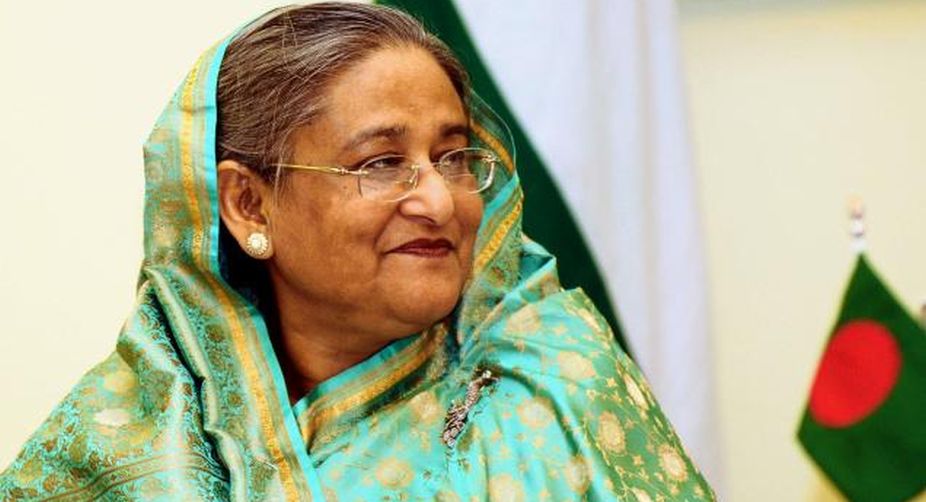
A top Bangladeshi official has said the much-anticipated visit by Prime Minister Sheikh Hasina to India was likely to take place in April during which key issues like Teesta water sharing and Padma Bridge were expected to be discussed.

Significantly, New Delhi last week announced that Foreign Secretary S Jaishankar will be visiting Dhaka on February 23-24to discuss Hasina's visit and other related aspects including agenda for talks between the visiting dignitary and the leadership here.

"So many drafts are being made by both the countries…We are closest than ever before with agreements on every possible fora. And, nothing will be done by India and Bangladesh without consulting each other," the official, a top aide of the Bangladesh prime minister, said.

"She will visit sometime in April," the official said, noting that next month would be busy due to Bangladesh Independence Day on March 26 and other government activities.

The much-anticipated visit of the Bangladesh prime minister was first slated to happen last December to discuss a wide range of bilateral issues with her Indian counterpart Narendra Modi, but the plan got postponed.

In late January, Bangladeshi officials had indicated that her visit was likely to be delayed further due to Hasina's engagement at the World Economic Forum, among other programmes.

Asked about the issues likely to come up during the meet, the source said, "There would be several areas that would figure, including the Padma Bridge… Also, we are trying to set up power bases in Nepal and Bhutan.

"We need permission from India for these projects, as cable and other infrastructure would be passing through India.

But, this would be a bilateral matter and not part of BIMSTEC (Bay of Bengal Initiative for Multi-Sectoral Technical and Economic Cooperation) or BBIM (Bangladesh, Bhutan, India, Nepal) sub-regional architecture," the source said.

There are many areas to discuss and we are getting a lot of support from India, the source said.

On the Teesta issue being part of her visit agenda, the source said, "We understand the problem…but NDA government is doing its best… Prime Minister Modi himself is doing it, and we hope that Mamata Banerjee will agree in the near future…but this will be a new framework and not the old framework." 

A source in the Prime Minister's Office in Dhaka and three Awami League policymakers had in December said the Teesta issue requires the consent of the West Bengal Chief Minister, who is protesting the NDA's government's demonetisation move.

Since Mamata has overtly expressed her dissatisfaction, the Bangladesh administration, keeping everything in mind, realised that it was not a suitable time to discuss the Teesta issue, the Dhaka Tribune had reported in December.

Hasina, in December, had told reporters in Dhaka, that "I am going to India, I am not going with any conditions…discussion is on for Teesta river water sharing and we are hopeful".

In October, Modi had met Hasina on the sidelines of BRICS-BIMSTEC Outreach Summit in Goa.

‘Hasina’s India visit likely in April’

PTI | New Delhi |

A top Bangladeshi official has said the much-anticipated visit by Prime Minister Sheikh Hasina to India was likely to take place in April during which key issues like Teesta water sharing and Padma Bridge were expected to be discussed.

Significantly, New Delhi last week announced that Foreign Secretary S Jaishankar will be visiting Dhaka on February 23-24to discuss Hasina's visit and other related aspects including agenda for talks between the visiting dignitary and the leadership here.

"So many drafts are being made by both the countries…We are closest than ever before with agreements on every possible fora. And, nothing will be done by India and Bangladesh without consulting each other," the official, a top aide of the Bangladesh prime minister, said.

"She will visit sometime in April," the official said, noting that next month would be busy due to Bangladesh Independence Day on March 26 and other government activities.

The much-anticipated visit of the Bangladesh prime minister was first slated to happen last December to discuss a wide range of bilateral issues with her Indian counterpart Narendra Modi, but the plan got postponed.

In late January, Bangladeshi officials had indicated that her visit was likely to be delayed further due to Hasina's engagement at the World Economic Forum, among other programmes.

Asked about the issues likely to come up during the meet, the source said, "There would be several areas that would figure, including the Padma Bridge… Also, we are trying to set up power bases in Nepal and Bhutan.

"We need permission from India for these projects, as cable and other infrastructure would be passing through India.

But, this would be a bilateral matter and not part of BIMSTEC (Bay of Bengal Initiative for Multi-Sectoral Technical and Economic Cooperation) or BBIM (Bangladesh, Bhutan, India, Nepal) sub-regional architecture," the source said.

There are many areas to discuss and we are getting a lot of support from India, the source said.

On the Teesta issue being part of her visit agenda, the source said, "We understand the problem…but NDA government is doing its best… Prime Minister Modi himself is doing it, and we hope that Mamata Banerjee will agree in the near future…but this will be a new framework and not the old framework." 

A source in the Prime Minister's Office in Dhaka and three Awami League policymakers had in December said the Teesta issue requires the consent of the West Bengal Chief Minister, who is protesting the NDA's government's demonetisation move.

Since Mamata has overtly expressed her dissatisfaction, the Bangladesh administration, keeping everything in mind, realised that it was not a suitable time to discuss the Teesta issue, the Dhaka Tribune had reported in December.

Hasina, in December, had told reporters in Dhaka, that "I am going to India, I am not going with any conditions…discussion is on for Teesta river water sharing and we are hopeful".

In October, Modi had met Hasina on the sidelines of BRICS-BIMSTEC Outreach Summit in Goa.

Top orchestra quits UK over Brexit migration clampdown

IANS | London |

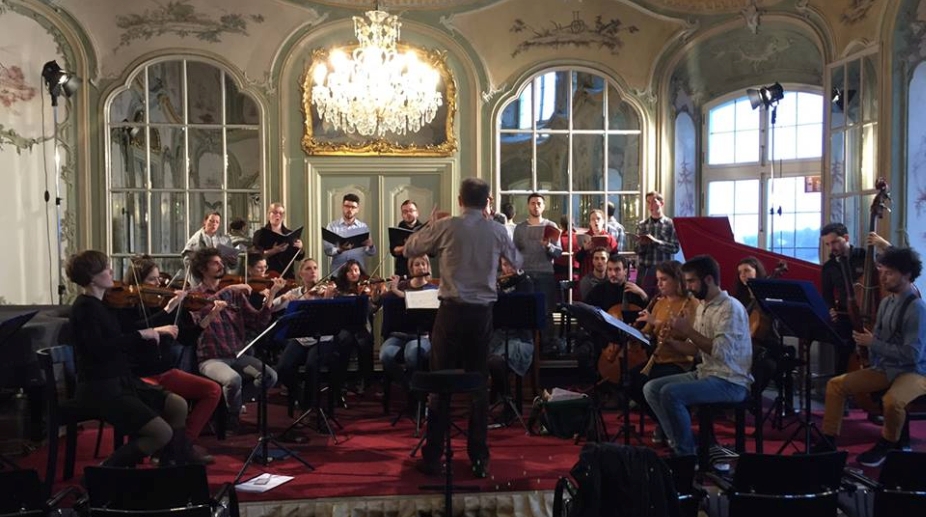
One of Britains most successful orchestras is moving to Belgium amid fears that its musicians may be among the victims of a post-Brexit crackdown on immigration, the media reported.

The European Union Baroque Orchestra has been based in Oxfordshire since 1985, but will give its last UK concert in its current form at St John's Smith Square in London on May 19, before moving to Antwerp, the Guardian reported on Saturday. 

The critically acclaimed orchestra, auditions about 100 students a year, including young British musicians, and chooses between 20 and 25 for intensive training and performance. 

Alumni have gone on to fill posts in major baroque orchestras around the world.

General manager Emma Wilkinson said that while no one knows what the future may look like, the orchestra decided that moving to Antwerp now would be wise. 

She fears that the loss of free movement would make life for musicians very difficult: "I do worry that European orchestras will not be inviting talented British musicians to work with them. It will just be too bureaucratically difficult."

Asked whether future concerts in Britain by the orchestra might be threatened when it was based outside the UK, she replied: "That's the problem with the uncertainty around this whole issue. We just don't know."

Timothy Walker, chief executive and artistic director of the London Philharmonic Orchestra, fears for the cultural life of the capital: "London has one of the most vibrant creative communities in the world, full of freelance artists, many of whom come from the EU," he said. 

"Expected changes to their right to reside here and work through a points system will unquestionably affect classical music and soundtrack recordings which are a vital part of the arts ecology in the capital."