Logo

Cash crops perform poorly despite good monsoon

Vijay Thakur | Vijay Thakur |

Despite good monsoon this year, cash crops in the agriculture sector have yielded little fruits and the production of vegetables, fruits, spices, and sugarcane crops has hardly improve as compared to the drought year of 2015-16, according to the first advance estimates of the Agriculture Ministry for 2016-17.

According to the estimates, there was a marginal increase of 2% with respect to drought year 2015-16,. Vegetables production went down by 0.3%, onions production by 6% lower than last year and potato and tomato production was up by mere 1 %, and sugarcane crop was down by 11 %.

The year 2015-16 was a bad year for agricultural crops as monsoon has failed and untimely rains adversely affected crop production. This year, though, the monsoon was good but cash crop did now show impressive results, the ministry data revealed.

However, foodgrains production this year has broken all previous records and never before was the production of wheat, rice, pulses, and oilseeds so high, thanks to the good monsoon.

The second advance estimates for foodgrains production made by the Union Agriculture Ministry has claimed that India for the first time has register a record production of rice (108.86 million tonnes), wheat (96.64 MT), coarse cereals (44.34 MT), maize (26.15 MT), tur (4.23 MT), urad 2.89 MT), and oil seeds (33.60 MT).

The assessment of production of crops was based on the feedback received from states and validated with information available from other sources, said a senior officer of the Agriculture Ministry.

Government estimates revealed that while good Monsoon has yielded record production of foodgrains, good rains has made little or no impact on the cash crops of vagetables, fruits, and water intensive sugar cane.

India, Pak extend pact reducing risk of N-accidents

Tuteja | New Delhi |

Despite heightened tension, India and Pakistan on Monday extended their agreement on reducing the risk of accidents related to nuclear weapons by five years. The validity of the agreement was to end Monday.

 "In accordance with Article 8 of the Agreement between India and Pakistan on Reducing the Risk of Accidents Relating to Nuclear Weapons, both countries have agreed to extend the Agreement for a further period of five years. The existing validity was up to February 20, 2017," The MEA said in a press release.

 The agreement, which was signed in 2007, was last extended for five years in February 2012.

Under the accord, the two countries agreed to notify each other in the event of any accident related to nuclear weapons under their jurisdiction, which could create radio-active fallout with adverse effects on both sides of the border.

Under the agreement, the two countries are to use hotline links between foreign secretaries, diplomatic links or any other channel for any information in such situations. The pact also makes it binding on the two parties not to reveal any such information to a third party without the other's consent.

US lawmakers in India to discuss eco, security issues

Statesman News Service | New Delhi |

Amid indications that the Donald Trump era would see an upswing in Indo-US relations, two delegations of US lawmakers are here in India for what is being billed as a familarisation trip which will offer the two sides an opportunity to exchange views on vital economic and security-related issues.

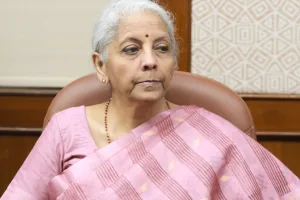
One group of US Congressmen on Monday met Union Commerce Minister Nirmala Sitharaman, while another group is likely to meet Prime Minister Narendra Modi here on Tuesday, a source in the MEA said.

The delegations would also visit Hyderabad and Bengaluru, the source added.

The Narendra Modi administration is keen to enhance ties with the month-old Trump administration. At the same time, it would like the US to keep in mind its sensitivities on issues like the H-1B visas.

External Affairs Minister Sushma Swaraj had a telephonic conversation with US Secretary of State Rex Tillerson on February 15 and both leaders, among other things, resolved to work together "closely to further expand and deepen" the strategic partnership between their countries.

In recent weeks, both India and the US have agreed to intensify cooperation in various sectors, including defence and security, energy and economy.

Both Swaraj and Tillerson had also agreed to follow up on the firm resolve expressed by Modi and Trump to cooperate closely in the global fight against terrorism.

SC orders Unitech to compensate 39 flat buyers for delay

Statesman News Service | New Delhi |

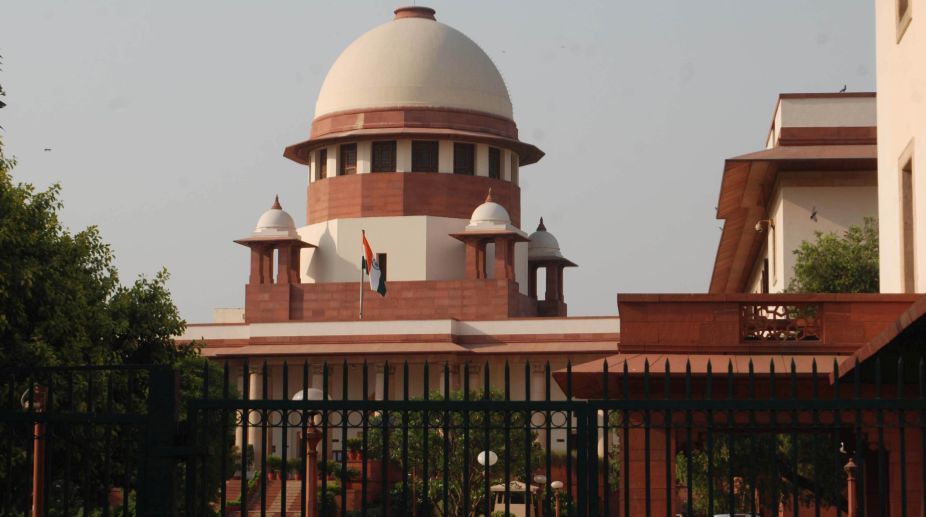
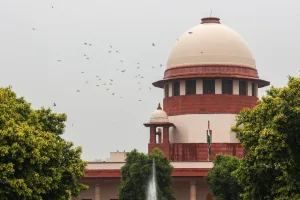
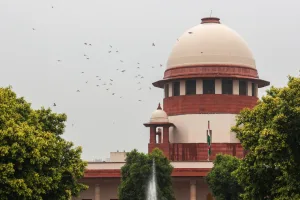
In a major setback to big builders, the Supreme Court on Monday directed Delhi-based Unitech to pay its 39 flat buyers a penalty equivalent to 14 per cent of the principal deposited since 2010, in addition to returning the principal amount.

The apex court has ordered Unitech to pay out 14 per cent a year for every year from 2010, on the principal amount of Rs.16.55 crore deposited by 39 flat buyers, along with Rs.16.55 crore.

The apex court has directed that Unitech pay at least 90 per cent of the total amount to these buyers within eight weeks.

Earlier, the apex court had asked the realty firm to return Rs.16.55 crore to the 39 flat buyers in its Vista project. But it was told that construction was underway on the 39 buyers' flats and that they would be handed over to them in April this year. The counsel for the firm pleaded for six months to complete the project.

"The company by delaying or procrastinating the completion of the flats cannot base its stand on excuses or any subterfuge to advance the stand that constructions take time…The submission in a way rests upon the metaphor that `Rome was not built in a day' but serves no purpose. It is `flat' or `money'. And nothing else. They collectively make a demand for refund of money because they have fought the litigation with ceaseless vigour and enormous hope," the bench said.

The apex court warned real estate companies not to play with people's dreams of owning a house by reneging on their promise of delivering flats in time and instead making them run from pillar to post to get back their hard-earned money.

"It needs no special emphasis to state that the property developer has to respect the contractual commitment. It has to live up to the terms of the contract and gain trust so that the people who dream of houses can repose faith in him. Not for nothing, it has been said, the foundation of any economy is faith and if faith is lost, everything is lost," the bench added.

India can develop space station, says ISRO chief

PTI | Indore |

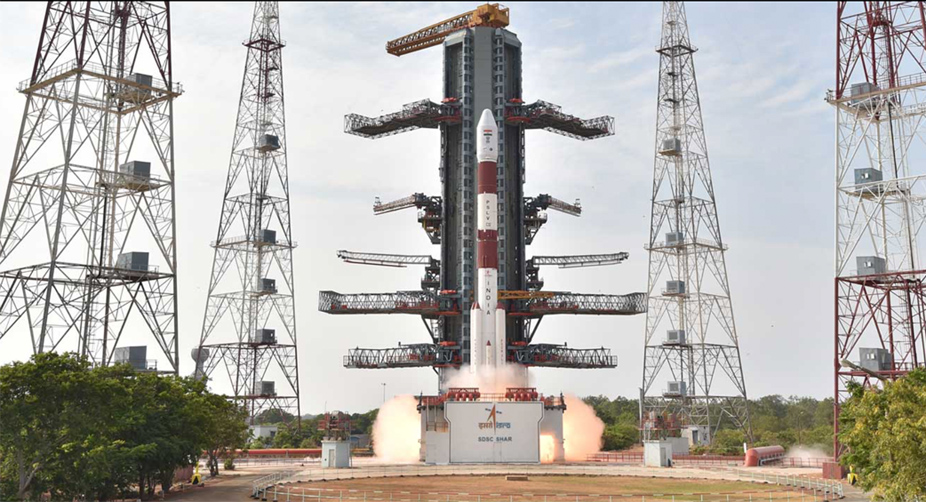
Indian Space Research Organisation (ISRO) chairman A S Kiran Kumar on Monday said the country has the capability to develop a space station, but it needed a long-term approach and an ambitious planning.

His comment follows ISRO display of technological prowess last week by launching 104 satellites in a single mission.

"We have all the capabilities to set up a space station.

The day the country takes the decision, we will 'ok' the project. Just draw a policy and provide us necessary funds and time," Kumar said here.

He was in the city to attend the foundation day ceremony of Raja Ramanna Center for Advanced Technology (RRCAT).

"We still talk about what would be the immediate benefits of a manned space mission. That is why the country hasn't made up its mind about when to invest in a space station," he said.

A long-term thinking was needed for setting up a space station, he said, adding "the sooner the better." 

Kumar said ISRO was also mulling tying up with the industry to enhance the country's satellite launching capability.

Many more satellites were needed to keep a tab on the land and weather conditions and to enhance the communication network, he said.

This would be possible with increase in the number of satellite launches, for which the country needed to enhance the basic infrastructure and reduce the cost of equipment, he added.

The number of companies manufacturing small satellites has gone up across the world, but these companies could not launch them, therefore this area had immense commercial potential and India could tap it by enhancing the launch facilities, the ISRO chief said.


House of Lords to begin debating Brexit Bill

PTI | London |

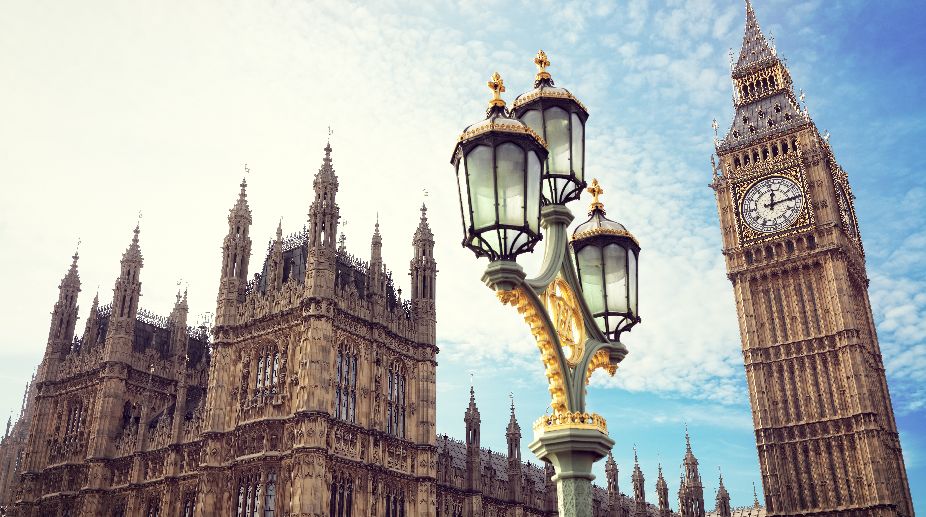
Nearly 200 British peers will on Monday debate the crucial Brexit Bill in the House of Lords where Prime Minister Theresa May's Conservative party does not hold a majority.

Lawmakers in the lower House of Commons have already given their go-ahead to the so-called Brexit Bill, which gives May the authority to invoke Article 50 of the Lisbon Treaty to formally initiate Brexit negotiations.

The UK government does not have a majority in the House of Lords, where as many as 190 peers are due to speak during the debate, which will include a number of amendments being proposed.

The voting in the upper house of Parliament, whose total strength is in excess of 700, is expected by on Tuesday evening.

Opposition and crossbench peers are seeking guarantees about the rights of EU citizens in Britain following an exit from the EU and the role of Parliament in scrutinising Britain's final exit deal with the economic bloc.

The Lords begins the Second Reading debate on the Bill on Monday and a vote will take place on Tuesday only if peers allow government legislation through unopposed at this stage.

Detailed scrutiny of the bill at committee stage is due to take place on February 27 and March 1.

If the bill is not amended, then it could theoretically be approved by the Lords at Third Reading on March 7 and go on to become law.

However, if peers do make changes to the bill, it would be a direct challenge to the Commons MPs who have effectively passed the bill unaltered.

Parliamentary norm would lead to MPs then overturning any Lords amendments.

The Conservatives have the largest number of peers in the Lords, with 252 members, but the Opposition has 202 Labour peers and 102 Lib Dems, who are expected to join forces against the government.

It will be the 178 crossbench in the Lords, who are not aligned to any party, who are expected to determine the final outcome of the Second Reading.

May has declared her intention to invoke Article 50 by the end of next month and believes she can stick to that timetable.

She was forced to table the Bill after the Supreme Court ruled in January that the government must seek parliamentary approval on pressing the Brexit trigger button.

House of Lords to begin debating Brexit Bill

PTI | London |

Nearly 200 British peers will on Monday debate the crucial Brexit Bill in the House of Lords where Prime Minister Theresa May's Conservative party does not hold a majority.

Lawmakers in the lower House of Commons have already given their go-ahead to the so-called Brexit Bill, which gives May the authority to invoke Article 50 of the Lisbon Treaty to formally initiate Brexit negotiations.

The UK government does not have a majority in the House of Lords, where as many as 190 peers are due to speak during the debate, which will include a number of amendments being proposed.

The voting in the upper house of Parliament, whose total strength is in excess of 700, is expected by on Tuesday evening.

Opposition and crossbench peers are seeking guarantees about the rights of EU citizens in Britain following an exit from the EU and the role of Parliament in scrutinising Britain's final exit deal with the economic bloc.

The Lords begins the Second Reading debate on the Bill on Monday and a vote will take place on Tuesday only if peers allow government legislation through unopposed at this stage.

Detailed scrutiny of the bill at committee stage is due to take place on February 27 and March 1.

If the bill is not amended, then it could theoretically be approved by the Lords at Third Reading on March 7 and go on to become law.

However, if peers do make changes to the bill, it would be a direct challenge to the Commons MPs who have effectively passed the bill unaltered.

Parliamentary norm would lead to MPs then overturning any Lords amendments.

The Conservatives have the largest number of peers in the Lords, with 252 members, but the Opposition has 202 Labour peers and 102 Lib Dems, who are expected to join forces against the government.

It will be the 178 crossbench in the Lords, who are not aligned to any party, who are expected to determine the final outcome of the Second Reading.

May has declared her intention to invoke Article 50 by the end of next month and believes she can stick to that timetable.

She was forced to table the Bill after the Supreme Court ruled in January that the government must seek parliamentary approval on pressing the Brexit trigger button.

RBI not for free licensing of payments sector: Deputy Governor

IANS | Mumbai |

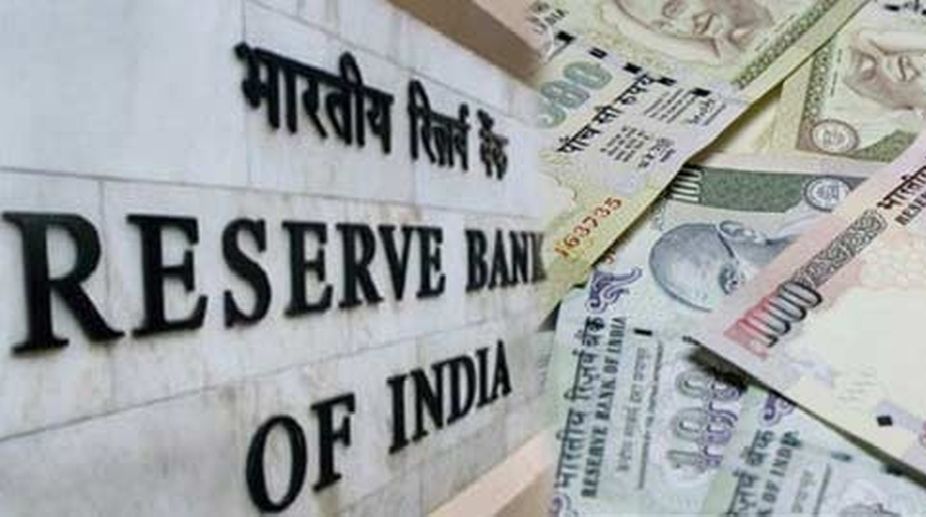
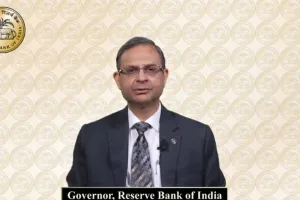
Launching the BharatQR mobile payments acceptance system here on Monday, RBI Deputy Governor R Gandhi said granting licences to payment service providers cannot be an automatic "tick box exercise" and such entities need to be selected as per proper selection criteria.

"There is an implied suggestion that this (payment) sector needs to be freed of licensing mechanism and once a set of criteria are fixed, any number of entities meeting those criteria should be allowed to function. We differ from this idea," Gandhi said launching the payments solution developed as per directions given by the Reserve Bank of India.

"Such a free entry may not be appropriate for payment industry. We must remember that the payment service provider is entrusted with money and therefore fit and proper criterion is of utmost importance and consequently, free entry based on tick box exercise will not be right and it can pose a risky proposition to the system as a whole," he said.

"When you keep the money of the public in 'account', you are a financial entity taking deposits and you must be public trustworthy and so be regulated as a deposit taking financial entity," he added. 

Citing the examples of Prepaid Payment Instrument (PPI) issuers, Bharat Bill Payment System (BBPS) operating units, Trade Receivables Discounting System (TReDS), White Label ATMs (WLAs) and other payment aggregators, Gandhi said there is a misconception that non-bank entities are being discriminated as compared to the banking entities in the payment system arena.

"We have been opening up the space and allowing entry to non-bank entities. At the origination, in between originating bank and destination bank and at the receiving end, there is no restriction for a non-bank entity to be present," he said.

Referring to criticism over RBI not allowing non-bank entities to keep bank accounts in a situation of mobile phone companies wanting to offer "account" based payment services, Gandhi said: "Our answer is simple. If you maintain an account, then you are a bank and you need a banking licence." 

BharatQR is an inter-operable and low cost payment acceptance solution, developed by National Payments Corporation of India (NPCI), Mastercard and Visa.

With this new digital payments solution, consumers will not need to scan different quick response (QR) codes at the same merchant provided by the different payment networks. The merchants will only need to display one QR code at the storefront or through the acquiring bank's mobile application.

RBI not for free licensing of payments sector: Deputy Governor

IANS | Mumbai |

Launching the BharatQR mobile payments acceptance system here on Monday, RBI Deputy Governor R Gandhi said granting licences to payment service providers cannot be an automatic "tick box exercise" and such entities need to be selected as per proper selection criteria.

"There is an implied suggestion that this (payment) sector needs to be freed of licensing mechanism and once a set of criteria are fixed, any number of entities meeting those criteria should be allowed to function. We differ from this idea," Gandhi said launching the payments solution developed as per directions given by the Reserve Bank of India.

"Such a free entry may not be appropriate for payment industry. We must remember that the payment service provider is entrusted with money and therefore fit and proper criterion is of utmost importance and consequently, free entry based on tick box exercise will not be right and it can pose a risky proposition to the system as a whole," he said.

"When you keep the money of the public in 'account', you are a financial entity taking deposits and you must be public trustworthy and so be regulated as a deposit taking financial entity," he added. 

Citing the examples of Prepaid Payment Instrument (PPI) issuers, Bharat Bill Payment System (BBPS) operating units, Trade Receivables Discounting System (TReDS), White Label ATMs (WLAs) and other payment aggregators, Gandhi said there is a misconception that non-bank entities are being discriminated as compared to the banking entities in the payment system arena.

"We have been opening up the space and allowing entry to non-bank entities. At the origination, in between originating bank and destination bank and at the receiving end, there is no restriction for a non-bank entity to be present," he said.

Referring to criticism over RBI not allowing non-bank entities to keep bank accounts in a situation of mobile phone companies wanting to offer "account" based payment services, Gandhi said: "Our answer is simple. If you maintain an account, then you are a bank and you need a banking licence." 

BharatQR is an inter-operable and low cost payment acceptance solution, developed by National Payments Corporation of India (NPCI), Mastercard and Visa.

With this new digital payments solution, consumers will not need to scan different quick response (QR) codes at the same merchant provided by the different payment networks. The merchants will only need to display one QR code at the storefront or through the acquiring bank's mobile application.

Students plea against UGC notification: HC seeks JNU reply

PTI | New Delhi |

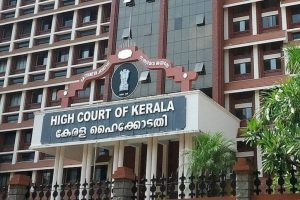
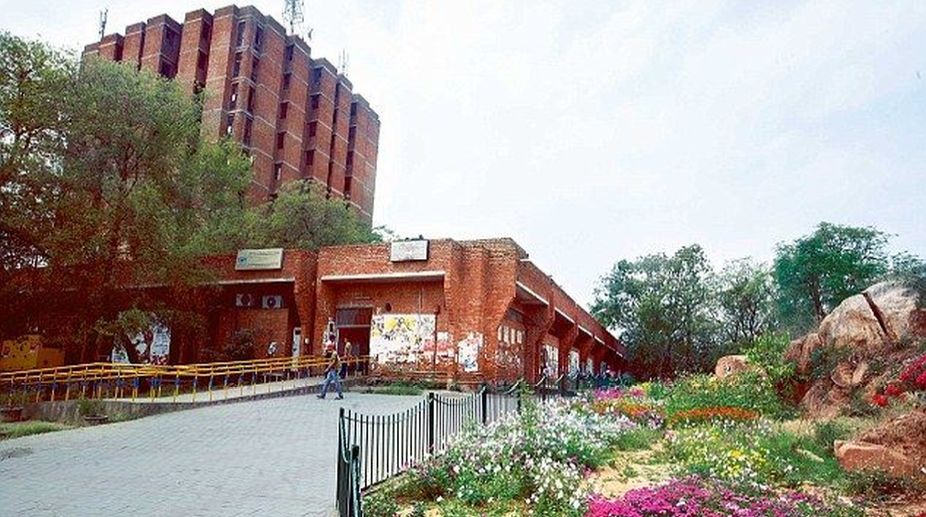
Delhi High Court on Monday sought the respose of Jawaharlal Nehru University (JNU) on a plea by some students challenging a UGC notification which set a limit of eight students per professor for MPhil and PhD courses.

Justice V K Rao issued notice to the varsity and sought its reply by March 2 on the students' petition which claims that the May 5, 2016 notification of the University Grants Commission (UGC) "threatens to put their future in jeopardy" as they would not be able to find a supervisor.

The petitioners, represented by senior advocate Arvind Nigam, have contended that the notification not only affects the existing students, but would also result in fewer admissions in the current academic session, "thereby violating constitutionally mandated reservation norms".

Central government standing counsel Monika Arora, appearing for JNU, accepted notice and orally submitted before the court that the administration will not issue admission forms and prospectus for the next academic year till the next date of hearing on March 2.

Protesting against the UGC notification, students have blockaded the administrative block of the varsity since February 9 and are not permitting officials to enter the building.

Some students have also gone on a hunger strike to protest against the notification.


Students plea against UGC notification: HC seeks JNU reply

PTI | New Delhi |

Delhi High Court on Monday sought the respose of Jawaharlal Nehru University (JNU) on a plea by some students challenging a UGC notification which set a limit of eight students per professor for MPhil and PhD courses.

Justice V K Rao issued notice to the varsity and sought its reply by March 2 on the students' petition which claims that the May 5, 2016 notification of the University Grants Commission (UGC) "threatens to put their future in jeopardy" as they would not be able to find a supervisor.

The petitioners, represented by senior advocate Arvind Nigam, have contended that the notification not only affects the existing students, but would also result in fewer admissions in the current academic session, "thereby violating constitutionally mandated reservation norms".

Central government standing counsel Monika Arora, appearing for JNU, accepted notice and orally submitted before the court that the administration will not issue admission forms and prospectus for the next academic year till the next date of hearing on March 2.

Protesting against the UGC notification, students have blockaded the administrative block of the varsity since February 9 and are not permitting officials to enter the building.

Some students have also gone on a hunger strike to protest against the notification.


Coal case: Court directs CBI to expeditiously file final report

PTI | New Delhi |

A special court on Monday directed CBI to expeditiously file the report on its further probe in a coal block allocation scam case against Congress leader and industrialist Naveen Jindal, ex-Minister of State for Coal Dasari Narayan Rao and others.

The court's direction came after CBI filed an application saying the report of further investigation was still under scrutiny and some time was required to finalise it.

"The CBI officers have been told that already sufficient time has been given for submission of report of further investigation. They are directed to expedite the same.

"Accordingly, matter be now put up for filing of further investigation report on March 6," Special CBI Judge Bharat Parashar said.

The court had earlier too granted time to CBI to file the report in a proper format.

The court, which had rapped the CBI for not filing the final report in a proper format, later accepted the further probe report noting that sufficient time has already lapsed in the matter and asked the agency to file the documents in a "proper format".

While filing the report which contains CFSL report, list of documents, list of witnesses and their statements, the CBI had told the court that the probe was complete.

CBI had alleged that former Jharkhand Chief Minister Madhu Koda, also accused in the case, had favoured Jindal group firms — Jindal Steel and Power Ltd (JSPL) and Gagan Sponge Iron Private Ltd (GSIPL) — in allocation of Amarkonda Murgadangal coal block in Jharkhand.

Opposing CBI's contention, all the accused had said there was no evidence to show that there was any conspiracy during the coal block allocation process. They had also denied the allegations levelled against them by CBI in its charge sheet.

Coal case: Court directs CBI to expeditiously file final report

PTI | New Delhi |

A special court on Monday directed CBI to expeditiously file the report on its further probe in a coal block allocation scam case against Congress leader and industrialist Naveen Jindal, ex-Minister of State for Coal Dasari Narayan Rao and others.

The court's direction came after CBI filed an application saying the report of further investigation was still under scrutiny and some time was required to finalise it.

"The CBI officers have been told that already sufficient time has been given for submission of report of further investigation. They are directed to expedite the same.

"Accordingly, matter be now put up for filing of further investigation report on March 6," Special CBI Judge Bharat Parashar said.

The court had earlier too granted time to CBI to file the report in a proper format.

The court, which had rapped the CBI for not filing the final report in a proper format, later accepted the further probe report noting that sufficient time has already lapsed in the matter and asked the agency to file the documents in a "proper format".

While filing the report which contains CFSL report, list of documents, list of witnesses and their statements, the CBI had told the court that the probe was complete.

CBI had alleged that former Jharkhand Chief Minister Madhu Koda, also accused in the case, had favoured Jindal group firms — Jindal Steel and Power Ltd (JSPL) and Gagan Sponge Iron Private Ltd (GSIPL) — in allocation of Amarkonda Murgadangal coal block in Jharkhand.

Opposing CBI's contention, all the accused had said there was no evidence to show that there was any conspiracy during the coal block allocation process. They had also denied the allegations levelled against them by CBI in its charge sheet.

1984 anti-Sikh riots probe: Centre files status report in SC

PTI | New Delhi |

The Centre on Monday filed in the Supreme Court a status report on the investigation conducted by a special investigation team (SIT) into 1984 anti-Sikh riots cases.

The report was filed before a bench headed by Justice Dipak Misra which took it on record.

The bench, also comprising Justices A M Khanwilkar and M M Shantanagoudar, has fixed the matter for hearing on March 6.

The report was filed in pursuance to the January 16 direction of the apex court which had asked the Centre to file a "comprehensive report" on the status of the probe conducted by the SIT on a plea seeking a court-supervised investigation.

The court had also asked the Centre to apprise it about the steps taken in the matter within four weeks after the government had said that the SIT's work is "in progress".

Petitioner S Gurlad Singh Kahlon had argued that extension of the tenure to the SIT was given earlier and its term was going to expire on February 17.

The Centre, in its counter affidavit filed earlier, had said there has been a "considerable progress" in the SIT probe and 218 cases were at various staged of scrutiny and a "decision has been taken for re-investigation in respect of 22 cases".

Kahlon, a member of the Delhi Sikh Gurdwara Management Committee, had sought the apex court's direction for setting up of the SIT to ensure speedy justice to riots victims.

He had also sought a direction to the Home Ministry to complete the task within six months and give reports on the progress of the probe in all criminal cases relating to the massacre from time to time till the filing of charge sheets.

The petitioner has said the SIT was formed by the Centre on February 12, 2015 for a fresh probe into the 1984 riots cases and got an extension for a year.

The Home Ministry had set up a three-member SIT for re- investigation of the 1984 anti-Sikh riots cases, mainly in Delhi and other states.

It was to look into all serious criminal cases relating to the riots, examine evidence and even reopen cases and file charge sheets in courts concerned.

The SIT is headed by Pramod Asthana, an IPS officer of 1986 batch, and has Rakesh Kapoor, a retired district and sessions judge, and Kumar Gyanesh, additional deputy commissioner in Delhi Police, as its members.

Anti-Sikh riots that broke out after the assassination of then Prime Minister Indira Gandhi had claimed 2,733 lives in Delhi alone.

 

1984 anti-Sikh riots probe: Centre files status report in SC

PTI | New Delhi |

The Centre on Monday filed in the Supreme Court a status report on the investigation conducted by a special investigation team (SIT) into 1984 anti-Sikh riots cases.

The report was filed before a bench headed by Justice Dipak Misra which took it on record.

The bench, also comprising Justices A M Khanwilkar and M M Shantanagoudar, has fixed the matter for hearing on March 6.

The report was filed in pursuance to the January 16 direction of the apex court which had asked the Centre to file a "comprehensive report" on the status of the probe conducted by the SIT on a plea seeking a court-supervised investigation.

The court had also asked the Centre to apprise it about the steps taken in the matter within four weeks after the government had said that the SIT's work is "in progress".

Petitioner S Gurlad Singh Kahlon had argued that extension of the tenure to the SIT was given earlier and its term was going to expire on February 17.

The Centre, in its counter affidavit filed earlier, had said there has been a "considerable progress" in the SIT probe and 218 cases were at various staged of scrutiny and a "decision has been taken for re-investigation in respect of 22 cases".

Kahlon, a member of the Delhi Sikh Gurdwara Management Committee, had sought the apex court's direction for setting up of the SIT to ensure speedy justice to riots victims.

He had also sought a direction to the Home Ministry to complete the task within six months and give reports on the progress of the probe in all criminal cases relating to the massacre from time to time till the filing of charge sheets.

The petitioner has said the SIT was formed by the Centre on February 12, 2015 for a fresh probe into the 1984 riots cases and got an extension for a year.

The Home Ministry had set up a three-member SIT for re- investigation of the 1984 anti-Sikh riots cases, mainly in Delhi and other states.

It was to look into all serious criminal cases relating to the riots, examine evidence and even reopen cases and file charge sheets in courts concerned.

The SIT is headed by Pramod Asthana, an IPS officer of 1986 batch, and has Rakesh Kapoor, a retired district and sessions judge, and Kumar Gyanesh, additional deputy commissioner in Delhi Police, as its members.

Anti-Sikh riots that broke out after the assassination of then Prime Minister Indira Gandhi had claimed 2,733 lives in Delhi alone.
 

Goa Raj Bhavan goes cashless

IANS | Panaji |

Goa's Raj Bhavan, the official residence of Governor Mridula Sinha, has gone cashless as far as day-to-day household purchases are concerned.

A statement issued on Monday by the Raj Bhavan said all expenditure towards household expenses would be made via a point of sale (POS) machine from henceforth. 

"A bank account for the Raj Bhavan has been opened with State Bank of India in the name of Comptroller of Governor's 'Household', through which the purchases will be made after swiping the issued SBI debit card on the POS system, for various day-to-day purchases," the statement said.

The official communique said all the staff and residents of Raj Bhavan were being trained to use PoS machine, ATM as well as the "security aspect of cashless transactions".

Goa Raj Bhavan goes cashless

IANS | Panaji |

Goa's Raj Bhavan, the official residence of Governor Mridula Sinha, has gone cashless as far as day-to-day household purchases are concerned.

A statement issued on Monday by the Raj Bhavan said all expenditure towards household expenses would be made via a point of sale (POS) machine from henceforth. 

"A bank account for the Raj Bhavan has been opened with State Bank of India in the name of Comptroller of Governor's 'Household', through which the purchases will be made after swiping the issued SBI debit card on the POS system, for various day-to-day purchases," the statement said.

The official communique said all the staff and residents of Raj Bhavan were being trained to use PoS machine, ATM as well as the "security aspect of cashless transactions".