Logo

Uneven implementation

Naveen Chopra |

The move by President Donald Trump to ban citizens of seven Muslim majority countries has created a lot of turmoil both within the US and globally. Caught in the wake of the ban are international students studying in or intending to study. While the legal challenges ensued have put a temporary hold on the ban taking effect, it is clear that the Trump administration will fight and eventually get its way, probably through another executive order, differently worded.

It is quite apparent that the thought leaders do not realise that these moves would harm the US itself, more than those it is targeting. Its companies will be denied the best available global talent and will also distract amongst those whom it seeks to neutralise. The US is an immigrant country and its constitution is clear in the protection it affords all people regardless of colour, creed or religious belief. Despite that, changing the very fundamentals with the discourse will inject into the body politic.

The impact on the rest of the world would be immense and will likely change the way we interact and transact with different countries and cultures. Grappling with Trump’s executive order are also the international students from India. The implications of these intended changes that have been in place till now poses uncertainties. For one, they may not have the work options after they graduate from the US universities that they have had till now, or the bar may be raised considerably. This will rob them both of gaining work experience and exposure in the world’s leading economy and innovation-leading companies, but also from gaining some return on their education investment.

However, for students who are from the upper socio-economic strata and others who do not consider it important to work post-study completion, the setbacks are considerably less. They will most likely choose to proceed simply for the great education and the campus experience. In addition to that, Indian students looking for scholarship opportunities will find themselves disadvantaged.

All in all, students looking for a migration prospect will find it tough if the ruling is passed. Those who aim for an overseas education is to use opportunities that are legally available to work after completing their studies or to migrate are already looking at backup options across the world.

These include applying to countries that are still open and welcoming to international students, not just to boost the income of their often cash-strapped universities due to cuts in public funding, but also to fill critical skill gaps within their economies and societies.

Thus, students are applying in increasing numbers to alternative destinations such as Canada, Australia, New Zealand, Ireland, Germany and other European destinations like France, Italy and Spain. Singapore is also a potential beneficiary, as well as Dubai for the undergraduate segment particularly. Among these countries, Canada, Australia, New Zealand, Ireland and Germany permit students 20 hours of part-time work per week and also grant post-study work opportunities. Often, these lead to immigration opportunities when the student meets the legal parameters set by the particular country. Students are now increasingly planning their overseas studies keeping the legal framework in mind, such as language skills, area of study, work experience, age, etc.

At this point it is too early to weigh in on the impact of the US Visa ban. It will be a wise decision to have a fall back option.

The writer is chairman and founder, The Chopras.

At the ‘Nobel Prize for students’

Abhiraj Ganguli |

They call it the “Nobel Prize for students” and going by the names and prestige involved with the annual Hult Challenge Prize, one would have to agree. Started in 2010, the prize from the Hult International Business School (named after Swedish entrepreneur Bertil Hult, the B-school has campuses in Boston, San Francisco, London, Dubai and Shanghai) is awarded to a team of college students who come up with unique business solutions for a pressing global problem.

Like every year, 2017’s topic — “Refugees: Reawakening Human Potential” was also issued by former US president Bill Clinton, who is a key member of the selection panel.

The prize has several stages — local and regional competitions; followed by the Hult Prize Accelerator (six teams attend an intensive six-week programme at the Hult International Business School in July and August); the global finals, which are hosted by Clinton in New York in September and where one team gets a seed capital of US one million dollars to implement their plan via a start-up. The winning team is mentored thereafter by experts for the implementation stage.

It is in this milieu that the all-women “Team Visionaries” comprising four students from the International Management Institute, New Delhi, will head to Boston for one of the regional rounds (conducted simultaneously in Boston, San Francisco, London, Dubai, Shanghai and online) on 4 March. The team members — 23 year olds, Ayushi Srivastava, Bhanushee Malhotra and Anisha Rajput and 26-year-old Priyesha Modi — shared their excitement at getting a chance to showcase their plan in Boston and talked on how the competition would help their start up, SharanAtithi. Excerpts from an interview:

Do elaborate on the selection process for the regional final. Initially, a real life problem concerning the globe was posed by the Hult Challenge Prize 2017.

We were asked to propose a social business plan to improve the conditions of refugees, who are taking shelter in different countries. We had to explain the entire business plan by answering questions posted by the Hult team. Through our primary research, we did justify the questions by providing rational and feasible solutions to the critical problem. Among a pool of over 50,000 applicants, our application was shortlisted for the regional finals to be conducted at the Hult International Business School, Boston.

How have you tackled the chosen topic, “Refugees: Reawakening Human Potential”?

We interacted with the refugees residing in different areas of Delhi and tried to understand the issues concerning them. On talking to them, we came to know that the major issue that they face in any country, where they take shelter, is the communication barrier. They are unable to converse in the local or regional language of their country of residence. This exponentially increases their hardships. Our aim was clear — to eliminate the problem from its grassroots level. Hence, we ensured proper understanding of the local language by the refugees. Providing them social upliftment and instilling a sense of belonging in them towards the shelter country has been our motto. We tried to culturally integrate them with the native citizens of the country and make them feel at home.

What makes your entry different from the rest?

We didn’t consider it as merely a competition. Rather, it was our passion that drove us — to actually propose a business solution, which can improve the current living conditions of refugees. We began at the grassroots level in order to probe the core reason behind the plight of refugees — the problems they are facing, the circumstances that led to their pathetic condition, their emotional connect with their native country et al. Based on the information collected, we devised a plan to address this real life social cause and began a start up called SharanAtithi.

How supportive have your teachers been?

Right from the beginning, our faculty members have been our backbone; be it mentoring about the process, providing guidance on initiating research or completing the administrative formalities. They supported us throughout the entire journey and encouraged us to participate at the international level. In times of difficulty, the entire IMI fraternity motivated us.

How will participating at the regional final in Boston help your future endeavours?

The Hult Challenge Prize is a great platform that encourages young minds to think beyond the horizon and cater to a social cause. It motivates budding entrepreneurs to propose a business solution, which addresses a real life problem and start an organisation of their own. Moreover, this once-in-a-lifetime opportunity would provide us valuable exposure, which will surely widen our thinking horizon. Competing at the international level with teams from the Harvard Business School, Columbia University, Massachusetts Institute of Technology and many others would enable us to learn about their thought processes and business design.

Exchange of ideas at such a broad level would provide a foundation for our startup, SharanAtithi in the near future.

Understand before you criticise

Harsha Kakar |

The recent comments against those supporting militants in the valley by the army chief have been criticized by politicians and armchair journalists and strategists. However, few of those negative comments comprehend the true situation. As the snow recedes, operations against militants who had managed to cross have intensified across the valley. Operations are against both local as well as infiltrated militants. In most cases, militants are trapped in villages, raising questions of whether they have local support or have barged in forcibly.

Most recent encounters have been partially successful due to stone pelting and movement towards encounter sites by locals, compelling security forces to adhere to increased precautions to avoid civilian casualties. This distraction results in increased losses to security forces and enables militants to escape. While the army does not get involved with stone-throwers, leaving this to the police to handle, recent incidents have highlighted their impact on operations. The army has also discarded the use of heavy weapons which could destroy residential accommodation where militants hide, mainly to safeguard civilian property.

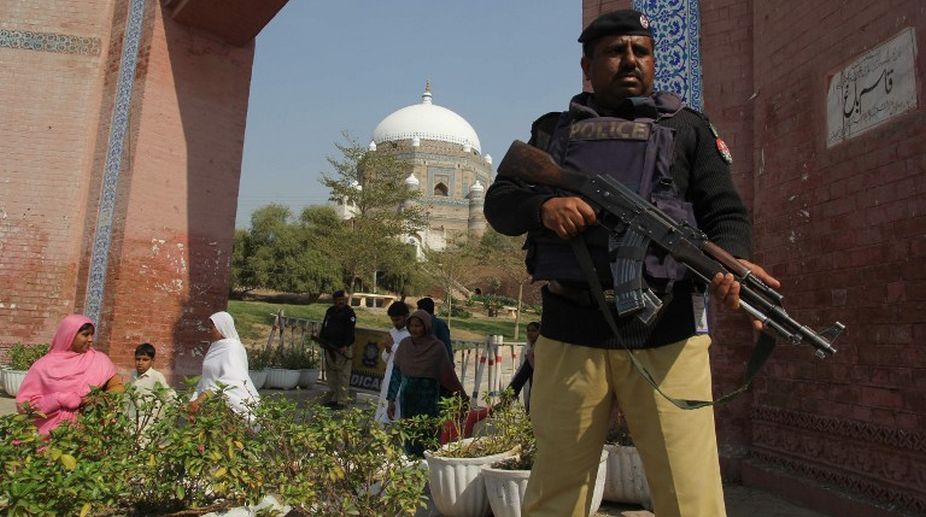
They are forced to battle under severe restrictions, constraints never placed on any military across the globe. In its recent counter-strike against militants, after the blast in the Sufi Mosque in Sehwan, Pakistan openly employed air and artillery firepower, unmindful of collateral damage. The issue which arises is whether the sacrifice of Indian jawans’ lives are justified and for how long can we expect the army to continue to suffer casualties when those whom they seek to protect attack them, providing militants a chance to escape with their lives.

Stone throwing and adopting an anti-Indian stance is not a recent phenomenon in the valley. It has existed for decades. Excessive deployment of the army and its lack of retaliation against provocation by the locals have only emboldened them, especially as they continue to be supported by Pakistan and the separatists. If no action is taken, they are likely to become more violent. Even criminal law terms an accessory to murder guilty for the crime; hence stone-throwers and agitators who disrupt activities resulting in additional casualties are legally guilty.

Each soldier who is involved in operations is also a father, a son or a husband, as are the locals. The soldier is involved in operations not for sacrificing his life, but to eliminate those who threaten the fabric of the country. There is thus a need to re-think and analyse the strategy which is presently in vogue and possibly adopt a hard-line approach, ignoring any criticism, local or international.

Those armchair journalists, politicians and strategists who seek to criticise the army chief’s statement should understand that the situation existing in the valley is the culmination of a series of failures of successive governments, both at the Centre and in the state. None of the critics has either faced a bullet or lost loved ones to militant bullets, hence can easily pass judgement from the safety of secure homes.

No militancy has ever been curbed by treating every civilian resident in the area as an enemy and therefore there is a need to segregate those with or against the state. To move people away from the clutches of militants, the army had adopted a policy of winning hearts and minds, while simultaneously battling militancy. It had expended colossal funds and effort by establishing schools, implementing developmental projects and conducting medical camps. It has always provided amenities to the local public, when the state machinery has failed.

In places where residents interfere with anti-militancy operations, these projects should be temporarily closed for security reasons. A clear message would then be conveyed that if you desire support from the state, then you need to support the state. It can no longer be a one-way traffic, nor can the government be taken for granted. The army is the instrument of last resort; hence whenever it has been deployed to restore a situation beyond the local civil authorities it has ensured peace, whether it is Haryana, Gujarat or any other state. It is a respected force when so deployed. Its attitude in the valley needs to change to regain this stance.

Hence, those indulging in stone throwing or disrupting operations need to be engaged as enemies of the state and treated at par with militants. The police and Special Operations Group of the J and K police should be tasked to deal firmly with those disrupting operations, including by opening fire, while the army battles militants.

If the British government could enact an order suspending human rights laws on the battlefield as late as October 2016, we too could consider strengthening AFSPA in the valley, as we battle anti-national elements and their supporters. There is a feeling within governments at the state and Centre that the situation that prevailed last summer should not be allowed to recur. This message has also been conveyed to the security forces, who are compelled to be more cautious about civilian casualties than their own. It is time the government takes a holistic view of the prevailing situation and allows security forces more freedom and laxity in their operations. Firmness and strictness in dealing with the situation would bring normalcy faster than mollycoddling the populace.

Those who sit and criticise should spend time with troops and understand the deep tensions and pressures under which they operate, rather than bank on their limited knowledge, gleaned from movies, videos and interactions with anti-national elements. Firm decisions need to be considered and implemented as early as possible. With summer approaching, the valley is likely to be again on the boil, with increased infiltration. The army cannot afford to be battling both militants and their local supporters. The hierarchy of the army and the government must agree to new rules of engagement, before the army suffers abnormal casualties, affecting morale and efficiency.

(The writer is a retired Major-General of the Indian Army.)

Rescuing the world’s most vital security link

Jonathan Eyal |

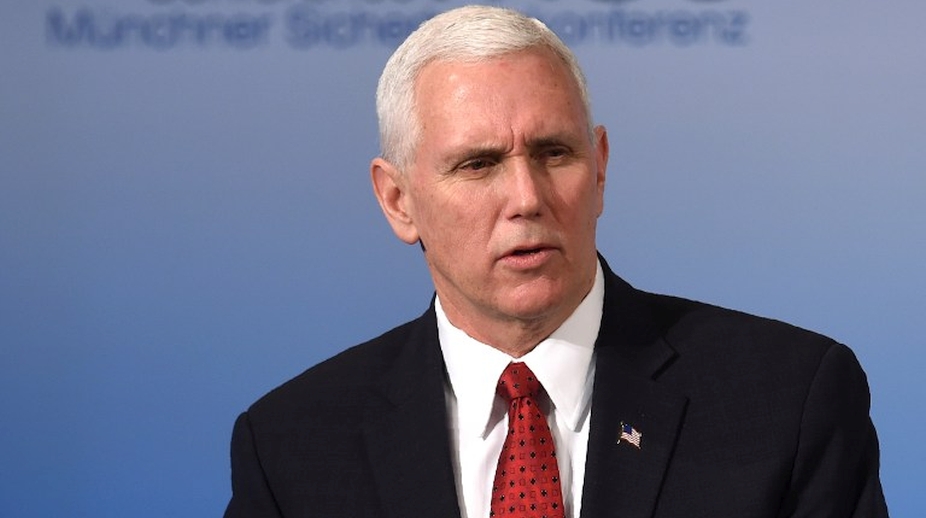
The annual get-together of European military and security chiefs in the southern German city of Munich is a traditional venue for governments to reassert their commitments; the conference served as inspiration for the Shangri-La Dialogue in Singapore, which now performs the same function in Asia.

But this year’s Munich gathering, which concluded over the weekend, was particularly noteworthy, for it offered a first glimpse into the defence policies of Donald Trump, the only United States president since World War II to have dismissed America’s military alliance with Europe as “obsolete” and the only US head of state who appears to believe that the potential break-up of the European Union may actually serve America’s interests.

After weeks of transatlantic spats, the Munich Security Conference braced itself for the worst. But it ended on the best of tones, as US Vice-President Mike Pence reiterated Washington’s commitment to “stand with Europe today, and every day”, and as Europeans restated their attachment to the transatlantic link. “Europe needs North America, and North America needs Europe,” Mr Jens Stoltenberg, secretary-general of the North Atlantic Treaty Organisation (Nato), the US-led military alliance in Europe, responded.

But despite this renewal of their marriage vows, the reality remains that US-Europe relations are still facing their biggest challenge in seven decades, and the discussion about what needs to be done to fix them has barely begun.

Nobody doubts the significance of the transatlantic link. Notwithstanding the economic rise of Asia, the US-EU economic relationship remains the world’s largest, accounting for around one-third of global trade in goods and services, and just under half of the global economic output.

Its 28 member states spend a staggering US$1 trillion on their armed forces each year, have a combined force of 3.1 million servicemen and women, and include the nuclear arsenals of no fewer than three of the world’s nuclear powers. A bigger punch in both economic and military terms cannot be imagined.

But there is equally no doubt that the military relationship between the US and Europe is ailing. Since Nato was founded in 1949, the Europeans never paid their full share of the expenses. By the early 1990s when the Cold War ended, the US alone paid for half of Nato’s military capabilities. Since then, matters have got worse.

The Americans are now responsible for around 70 per cent of Nato assets, despite the fact that in both terms of population and combined size of their economies, the Europeans’ are bigger than the US’.

Efforts to shame the Europeans into spending more are hardly new.

In prophetic words which date back to 2011, then US Defence Secretary Robert Gates publicly warned that Nato faces a “dismal future” of “collective military irrelevance” unless its European members increase their financial contributions. But the pledge which European governments then made to devote at least 2 per cent of their gross domestic product to defence each year remains unfulfilled: apart from the US itself, only Britain, Greece, Poland and Estonia have redeemed the pledge. Europeans cannot, therefore, plausibly claim to be surprised that the Trump administration now expects quick progress, or that the new US officials are even less diplomatic on this point.

“No longer can the American taxpayer carry a disproportionate share of the defence of Western values; Americans cannot care more for your children’s future security than you do,” said US Defence Secretary James Mattis. Some European officials still resent being lectured to. With his curious knack of saying the wrong thing at the wrong time, Mr Jean-Claude Juncker, president of the European Commission, the EU’s executive body, rejected American “pressure”, claiming that the EU’s broader contributions to global development should also be taken into account. But that was very much a minority view; most European decision makers accept that they should dig deeper into their own pockets.

Still, the Trump administration’s insistence on increased European contributions is misconceived, and can lead only to a sterile debate which will do little to improve transatlantic links. To start with, the Europeans are already doing more. Countries such as Poland and Romania, much closer to Russia which they consider as a threat, are increasing their defence budgets at the fastest rates in Europe. Germany and France have also pledged additional funds.

True, they should have done much more, and much earlier. But the Europeans have already accepted that the burden of proof of their commitment now lies with them. However, looking at bare numbers does not tell much about the actual European defences.

For even if the political will to boost military expenditures was there, the capacity to absorb so much extra cash into the defence sector is absent. Germany alone, for instance, would have to divert about €30 billion of extra expenditure into its defence budget each year, a huge amount which clearly would take years to ramp up. Furthermore, it is not so much the volume of spending but, rather, how one spends cash which matters more. Nato member states are supposed to devote 20 per cent of their military budgets each year to the purchase of new hardware but, on average, they spend only 11 per cent on new weapons. Greece, for instance, meets the 2 per cent of GDP spending target but blows most of the cash on pension liabilities for its servicemen.

So, what Europe and the US need is not an accountants’ dialogue but a broader discussion about how their military relationship is going to function, and what the Americans are still prepared to do.

President Trump inherited an ambitious programme of military involvement with the Europeans, which included a plan to place four Nato multinational battalions – including one commanded by the US – nearer the borders of Russia, in order to bolster the defences of fragile countries.

The current White House also inherited a so-called “European Reassurance Initiative”, a plan to enhance the capabilities of former communist countries which are now members of Nato. At least for the moment, however, there is no signal from Washington whether the Trump administration intends to proceed with these plans, and that matters more to cementing transatlantic relations than all the discussions about defence expenditure targets.

And overshadowing everything is the thorny issue of Russia. In Munich, Vice-President Pence sought to reassure the Europeans that the US would “continue to hold Russia accountable” for the illegal annexation of Crimea, and for fomenting the war in Ukraine.

But at the same time, Pence also told the Europeans that Washington will continue to “search for new common ground” with Russia “which, as you know, President Trump believes can be found”.

Europe is not against a dialogue with Moscow; after all, the Europeans have frequently argued that the US should pay more attention to engaging with Russia.

But they fear that Trump’s idea of a deal is one negotiated above the heads of Europe, directly with Moscow. And they also resent what appears to be the US President’s premise that Russia is a potential ally in a joint effort to contain the threat Trump considers most acute: that of China. Such plans to enlist Russian support against China are not only being dismissed in Europe as wrong-headed, but they are also seen as deadly to the future existence of the Nato alliance.

Ultimately, all the participants in the Munich dialogue laboured under a polite, diplomatic delusion that it is possible to isolate military and security questions from the deeper worries which Europe has with President Trump’s dismissal of the advantages of free trade and globalisation, and that it is feasible for Washington and its European allies to pretend that their security relationship remains unchanged, while they disagree on almost everything else the US President plans to do.

It fell only to Angela Merkel, the German Chancellor whose country hosted the event, to warn that it remains to be seen whether Europe and the US “will be able to act in concert or fall back into parochial politics”. It was a clear admission that the world’s most important security link, although durable, may still need rescuing.

The Straits Times/ANN

When queen bee dies

Sam Rajappa |

The All-India Anna Dravida Munnetra Kazhagam left behind by J Jayalalitha, former Chief Minister of Tamil Nadu, could be compared to a honey bee colony in which the queen bee has just died. When a queen bee dies, a swarm of bees leave the hive to establish a new colony. When Jayalalitha, died on 5 December last, a cluster of members of the AIADMK, which included a section of its elected representatives in both the state legislature and Parliament, followed pretender VK Sasikala, a wasp dressed as a queen bee and posing as the real McCoy. Pending coronation, she kept the flock in comfort and well endowed within two luxury waterfront resorts near Chennai. Once the Supreme Court exposed Sasikala for what she really is, a usurper who conspired with Jayalalitha to amass wealth by most foul means, confusion prevailed and the MLAs kept captive in the seaside resorts ran helter-skelter in search of pastures new, but she kept them on a tight leash. O Panneerselvam, anointed regent queen bee by Jayalalitha and left to hold the hive together twice during her lifetime, failed to do so the third time when the reigning queen bee was no more. He lacked the charisma and skill of Jayalalitha. Even after officiating Governor Vidhyasagar Rao gave him ample opportunities, he could not rise to the occasion and paved the way for Sasikala to try and install her proxy as Chief Minister.

Notwithstanding its claim to having 1.5 crore card-carrying members, having completed three terms in office and being voted to power for a fourth term last year, the AIADMK has never been a political party with any ideology or programme other than making money on the sly. It began as the fan club of the late lamented MG Ramachandran, founder-leader of the party whose primary objective was to cut M Karunanidhi, DMK leader and then chief Minister of Tamil Nadu, to size. Capturing power was never on his initial agenda. Prime Minister Indira Gandhi, through her CPI friends in Tamil Nadu, made him submit a memorandum listing corruption charges against Karunanidhi to the Governor which led to a vertical split in the DMK and the birth of the ADMK, renamed AIADMK.

The fledgling party, backed by the Janata Party, was voted to power in the post-Emergency 1977 election. The victory was short-lived. In the subsequent Lok Sabha election his party was routed, and Indira Gandhi, who became Prime Minister again in 1980, dismissed the MGR government together with seven other non-Congress ruled states.

In the following Tamil Nadu Assembly election in 1982, MGR paid cash for votes for the first time and set a bad precedent which has now spread to other states as well. The Election Commission has been grappling with this menace and has not been able to eradicate it as far as Tamil Nadu is concerned. The majority of those who vote for the AIADMK or the DMK have come to expect cash for vote as their democratic right. Jayalalitha, who snatched the AIADMK leadership from MGR following his death, added freebies to cash to influence voters and win elections. She too had a fan club following. In our first-past-the-post system of election with multiple contestants, an average of one-third of the electorate is enough to capture and hold on to power. Her target was the 30 to 35 per cent vulnerable section of society who look forward to largesse at every election time and it is easy to keep them loyal to the party.

Because of Jayalalitha’s capacity to gather votes even if by methods not in sync with the best traditions of democracy, her AIADMK has been the cynosure of political parties of all persuasions, from the Congress to the BJP, the Communists to the caste and community based outfits, all seeking an alliance. This had put her on a pedestal as an invincible politician feared by national leaders. When she managed to secure her acquittal in the disproportionate assets case, Prime Minister Narendra Modi was the first national leader to congratulate her even as she claimed dharma had won over adharma. Now the nation knows who won. This is a classic case of denial of justice by delaying it. If only the Supreme Court had not waited more than eight months, Jayalalitha, like Sasikala, would have been in jail and Tamil Nadu’s contemporary history would have been not so sordid. The state would have escaped Black Saturday, 18 February 2017, when democracy was buried fathoms deep.

Edapadi Palanisami of the AIADMK, nominee of convict VK Sasikala, was voted as Chief Minister by a bunch of MLAs brought literally in chains from their detention camp, and physically lifting and throwing out Opposition leader MK Stalin and driving the other DMK members out by the partisan Speaker who was taking orders from prisoner number 9234 of Parappana Agrahara jail in Bangalore. While restoring the judgment of special court judge John Michael D’Cunha, the Supreme Court Bench of Justices PC Ghose and Amitava Roy, said: “We have analysed the evidence adduced by the parties and come to the conclusion that Jayalalitha, who was a public servant at the relevant time, had come into possession of assets disproportionate during the check period (1991-96) and had got the same disbursed in the names of Sasikala, Sudhakaran and Elavarasi and the firms and companies involved to hold this on her behalf with a masked front.” Their staying together in the Chief Minister’s private residence at Poes Garden was “not for any philanthropic purpose but to further the criminal conspiracy to hold assets.”

The institution of Governor has come under strain in this sordid drama. Mari Channa Reddy, Governor of Tamil Nadu who gave Subramanian Swamy leave to prosecute Jayalalitha in 1995 when she was at the zenith of power and popularity, was gheraoed in the Raj Bhavan for several days and during one of his official visits to Pondicherry, his entire convoy was waylaid on the Southern Grand Trunk Road. Swamy was put on her hit-list and several attempts were made on his life by AIADMK goons. Once in the Madras High Court complex, Jayalalitha’s women brigade lifted their sarees as Swamy was coming out of the court house, even as the City Police Commissioner chased him. It was to Jayalalitha’s samadhi the new Chief Minister led his captive MLAs after the impugned trust vote on Saturday and pledged to restore ‘Jayalalitha rule’.

The people of Tamil Nadu certainly deserve something better. Since her death, present Governor Vidhyasagar Rao was faced with a tricky situation. He administered the oath of office as Chief Minister to O Panneerselvam, her chosen successor, but Sasikala, her partner in crime, had different ideas. She first captured control of the AIADMK and then the party MLAs and kept them hidden in a beach resort and staked her claim to chief ministership. Since Panneerselvam could not mobilise the requisite number of MLAs, the Governor had no option but to invite Sasikala’s nominee for a floor-test.

Article 163 of the Constitution gives the Governor sufficient discretionary powers to stipulate terms and conditions for the conduct of the floor test. Had he made it a condition to let the MLAs visit their constituencies at least once before the test vote, they would have conducted themselves differently. During the entire rule of Jayalalitha, Sasikala remained an extra-constitutional authority and no one’s property was safe under her covetous eyes. And her writ was faithfully carried out by an obliging civil service and police. With the death of the queen bee, the AIADMK as constituted now is poised to disintegrate and disappear. The sooner, the better.

The writer is a veteran journalist and former Director of The Statesman Print Journalism School.

Only for thrills?

Editorial |

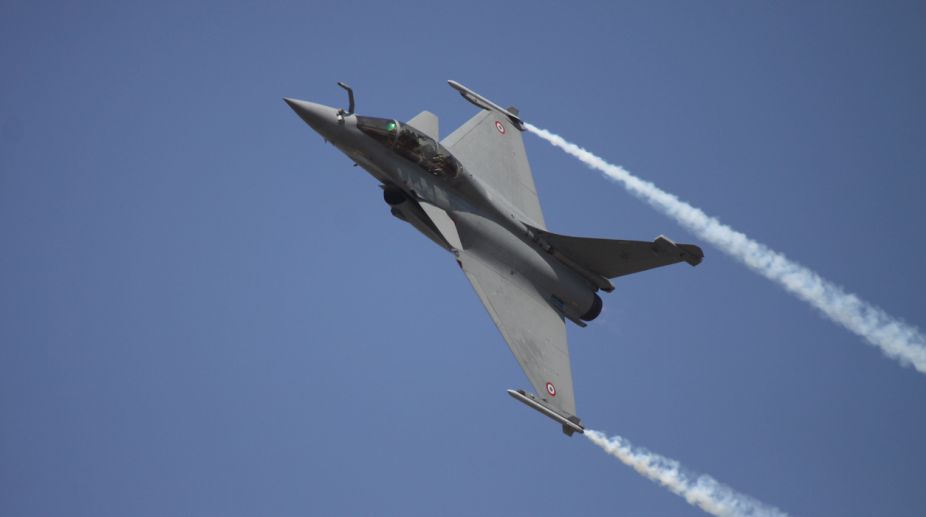
A competent financial audit will calculate the expenses incurred on the biennial military-aviation fiesta Aero India, the 11th edition of which has just concluded at IAF Yelahanka, Bangalore. Unfortunately, it would be difficult to assess in financial terms the “gains” that accrued from the extravaganza.

For while 500,000 footfalls, and massive traffic jams when the show was thrown open to the public might testify to its popularity, the prime purpose of such events is business promotion — the thrills that attracted so much attention are a mere side-show. Hence the yardstick by which the success of Aero India 2017 — or the lack of it — must be evaluated is “professional”, lest it degenerate into a mela like the annual trade fair in the Capital.

The international aviation industry will not invest much time, effort and money for a mere exhibition.

That nearly 100 firms fewer participated this year, when contrasted with the previous show tells a certain tale: it points to a trend that needs to be addressed before the next Aero India.

Particularly in the light of the “buzz” that the next event may be staged in the defence minister’s political bailiwick, Goa, which unlike Bangalore does not have an aviation industry track-record; and its lovely beaches are no substitute for an industry that came into being during World War II.

While no deals are expected to be firmed up at such events, it is worth noting that while there is need for some 200 combat aircraft to maintain the desired squadron-strength of the Indian Air Force, no “new” aspirant flipped its wings at Yelahanka.

The Lockheed Martin F-16, Swedish SAAB Gripen, Dassault’s Rafale and Russian SU-30 have all been evaluated before, and if more attractive financial arrangements are now on offer the event was not where they would be made. The grapevine has it that those firms participated in Aero India 2017 only because they apprehended that staying away would diminish their chances of bagging an order.

The domestic industry did not really “sell” itself: though the public sector HAL displayed a range of helicopters, most of them have been on the market for some time now.

The Air Chief flying the Tejas LCA was merely for show. Much was made of the “induction” of an indigenous AWAC, but this plane had participated in the flypast on Republic Day, and a “bigger” platform is now being considered.

It was disappointing that the participants were informed that the revised procurement/offsets policy would be announced shortly — prudence demanded that it be made public ahead of the show. The short point being that Aero India will attract the “cutting edge” only if India convinces that it is ready to do business.

Turmoil over TET

Editorial |

A swathe of rural Bengal is seething again over the appointments purportedly on the basis of the Teachers Eligibility Test. The distressing message of the observation of the Calcutta High Court is that corruption has been institutionalised over the years, and ever more so under a holier-than-thou dispensation. It is a measure of the scam that the Bench (coram: Arijit Banerjee, J) has virtually binned the appointments made as per the results of TET, 2015.

Aside from the logistical conundrum on the day of the exam — scandalised by the leak of question papers — a wholly arbitrary system of appointments was determined by the candidate’s proximity to the party in power… with little or no regard to one’s performance in TET, let alone pre-exam training. Primary education has been generally disastrous in West Bengal; the Right to Education Act has translated to precious little in terms of qualitative change.

It now comes about that TET has degenerated to a political qualifier, bereft of even a scintilla of academic connotation. In the absence of adequate teachers and the appalling teacher-student ratio, the child in search of learning is the worst sufferer as must be primary education in the wider canvas.

A multiplicity of universities can make the foundation weaker still. It is a grim tragedy for education that those appointed as teachers are essentially political appointees who lack the wherewithal to teach.

The change of education ministers — from Bratya Basu to Partha Chatterjee — has scarcely addressed the chaos that is almost wholly politically contrived. More accurately, the fiddle has been finetuned ever since primary teachers without the mandatory training were appointed by the CPI-M dispensation.

Confusion gets worse confounded with reports that appointments are being effected on “monetary considerations” — a euphemism for bribery. This has provoked the judge to observe that “this is a serious allegation”.

No less serious has been the violation of another certitude that the names of those recommended for appointment must be published. The public domain has rather conveniently been accorded the short shrift; those chosen in accord with the lights of the ruling party are being informed via SMS. An essential qualification for teachers in the primary segment has been denuded beyond measure.

Political affiliation ensures that untrained candidates — loyal to the establishment — are being accorded precedence over the trained and most particularly those who have cleared TET. It would be delusory on the part of the government to ignore the groundswell of opposition in rural Bengal over the education department’s handling of a basic test.

The siege of several District Primary School Councils is but a symptom of the overwhelming malaise.

SC summons WB environment secy on Feb 22

Statesman News Service | New Delhi |

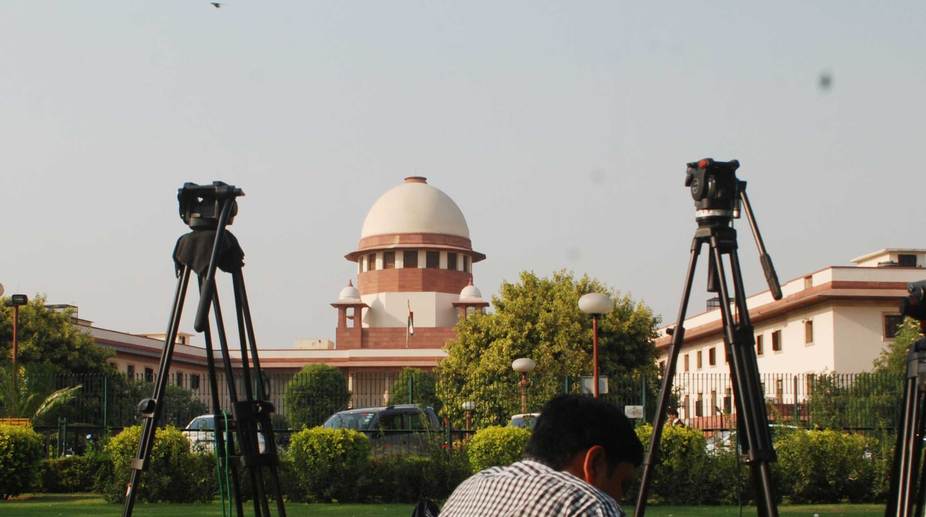
The Supreme Court on Monday pulled up the West Bengal government for not filing a reply to a PIL on release of untreated effluents by industries and other bodies into rivers across the country and asked its environment secretary to appear before it on 22 February.

A bench of Chief Justice Jagdish Singh Khehar, Justices D Y Chandrachud and Sanjay Kishan Kaul asked the official to be present on 22 February as it noted that even after a lapse of five weeks the state has not filed its response before the court.

The court in its last hearing on 16 January, asked eight states to file affidavits within four weeks stating the position of their critically and severely polluted areas.

 All states but West Bengal complied with the apex court's order.  The bench was irked when counsel for West Bengal sought two more weeks to file the affidavit. "Why should we waste time with you (lawyer for the state). You are a wonderful lawyer. You will not file affidavit in five weeks. You want two more weeks' time. And you will also not bring the man as ordered last time. Your environment secretary must be before us day after tomorrow… Every other state has filed its reply and you choose not to file it. Ask your (environment) secretary to remain present," the Bench said, as the counsel for the state government sought two weeks more time to file the counter affidavit in the case.

The apex court had earlier issued notice to the Centre, the Ministry of Environment and Forests, the Central Pollution Control Board (CPCB) and Chief Secretaries of 19 states, including Gujarat, on the plea filed by NGO Paryavaran Suraksha Samiti on the issue of pollution in water bodies, including ground water.

Initially, the plea was restricted to Gujarat and later its scope was widened by the apex court which had granted last opportunity to states on 16 January to file their response.

At the outset, the bench said it would pass an order on 22 February on the issues including stoppage of industrial activity till effluent treatment plants are set up by the industries and inquired from CPCB about the possible time taken in establishing the sewage treatment plants (STPs).

Senior advocate Colin Gonsalves, appearing for the NGO, said there has been a rise of 300 to 400 per cent in release of untreated liquid wastes in rivers across the country.

 "We may forthwith stop the release of industrial effluents and will allow them to release after they set up the sewage treatment plants. One way is to stop the polluting industries," the court said.

When the counsel for parties tried to elaborate upon the processes involved in the sewage treatment, it said, "You keep saying. We keep listening. But nothing is happening.

AI to get 4 more dreamliners this year

Abhijeet Anand | New Delhi |

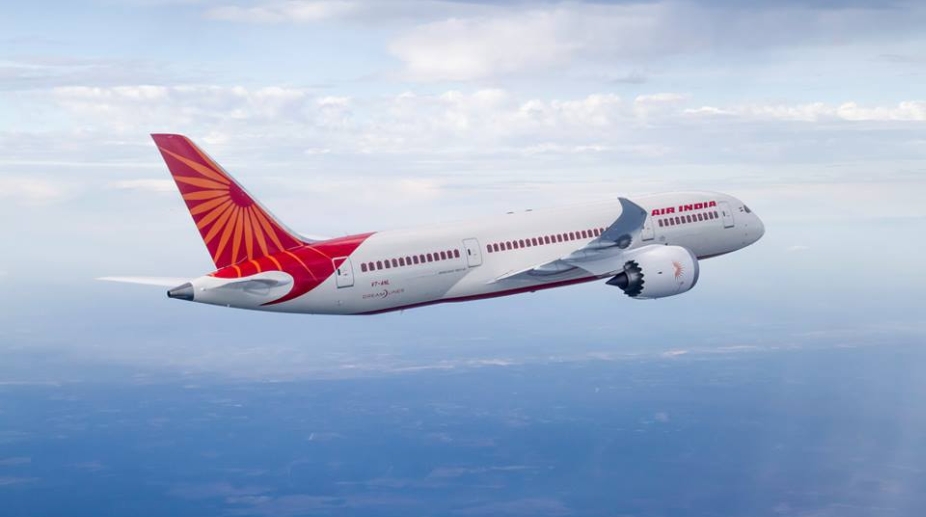
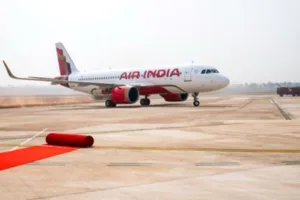
The debt-ridden national carrier Air India is scheduled to take delivery of the four remaining dreamliners by this year.

 The airline has acquired 23 dreamliners for its international operations during the period from September 2012 to 9 January 2017. However, the aircraft "have experienced technical reliability issues" since their induction into the fleet. The decision to induct dreamliners was taken when Ajit Singh was Minister of Civil Aviation as dreamliners were supposed to be fuel efficient.

 According to Minister of State for Civil Aviation, Jayant Sinha, one B787-8 aircraft will be delivered in July 2017, two B787-8 aircraft in August 2017 and one B787-8 aircraft will be delivered in October 2017.

 According to Sinha, technical reliability issues do not adversely affect the safety of the airplane due to the system design and in-built system redundancy. "Further, regular improvements are incorporated as a part of reliability enhancement process," he added.

 In a separate written reply in the Lok Sabha, Civil Aviation Minister Ashok Gajapathi Raju said the system reliability issues on the dreamliners are caused by airplane software as well as failures of some of the components of airplane and engine.

Textiles Ministry inks MoU to boost earnings of SC artisans

Statesman News Service | New Delhi |

In a move to boost the economic development of about 12 lakh scheduled caste artisans, Development Commissioner (Handicrafts) Ministry of Textiles on Monday inked an MoU with National Scheduled Castes Finance and Development Corporation (NSCFDC), a Central PSU under Ministry of Social Justice and Empowerment.

The aim is to improve the earnings of artisans across the country belonging to Scheduled Castes categories.

The MoU was signed in the presence of Union Textiles Minister Smriti Irani and Union Minister of Social Justice and Empowerment, Thaawarchand Gehlot. Textiles Secretary Rashmi Verma and Secretary, Ministry of Social Justice and Empowerment Latha Krishna Rao were also present.

The MoU provides for continuous and extensive collaboration between Office of DC (Handicrafts) and NSCDFC with extensive need-based skill upgradation in identified clusters having dominant presence of Scheduled Caste artisans, in the field of innovative and market-friendly designs and adoption of modern tools and techniques

The MoU was signed by Development Commissioner (Handicrafts), Alok Kumar, and Chairman-cum-Managing Director, NSCFDC, Shyam Kapoor.

Textiles Ministry inks MoU to boost earnings of SC artisans

Statesman News Service | New Delhi |

In a move to boost the economic development of about 12 lakh scheduled caste artisans, Development Commissioner (Handicrafts) Ministry of Textiles on Monday inked an MoU with National Scheduled Castes Finance and Development Corporation (NSCFDC), a Central PSU under Ministry of Social Justice and Empowerment.

The aim is to improve the earnings of artisans across the country belonging to Scheduled Castes categories.

The MoU was signed in the presence of Union Textiles Minister Smriti Irani and Union Minister of Social Justice and Empowerment, Thaawarchand Gehlot. Textiles Secretary Rashmi Verma and Secretary, Ministry of Social Justice and Empowerment Latha Krishna Rao were also present.

The MoU provides for continuous and extensive collaboration between Office of DC (Handicrafts) and NSCDFC with extensive need-based skill upgradation in identified clusters having dominant presence of Scheduled Caste artisans, in the field of innovative and market-friendly designs and adoption of modern tools and techniques

The MoU was signed by Development Commissioner (Handicrafts), Alok Kumar, and Chairman-cum-Managing Director, NSCFDC, Shyam Kapoor.

India offers knowhow to ASEAN in telecom sector
Statesman News Service | New Delhi |

India on Monday offered secure ICT products to ASEAN countries at competitive costs and also renewed its pledge to share “know how” and “know why” and its willingness to provide long-term financing for buying Indian telecom products and services.

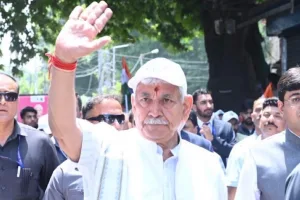
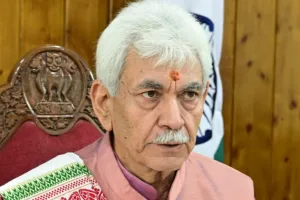
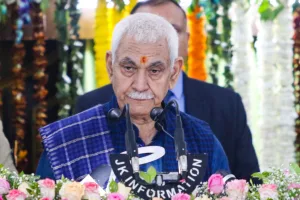
Inaugurating the India Telecom-2017 here, Minister of Communications Manoj Sinha said Indian Telecom companies are willing to share technologies and enter into joint production ventures to develop the entire telecom eco-system in any host country.

At the event organised to commemorate the 25th year of the ASEAN-India relations, the minister urged the participating countries to ensure that Indian telecom products and services become their number one choice as they accelerate digital connectivity initiatives.

Sinha said at the 13th ASEAN-India Summit in November 2015, Prime Minister Narendra Modi had committed a Line of Credit of US $1 billion to promote projects that support physical and digital connectivity between India and ASEAN. The minister said both the sides have complementary skills, huge markets and capacity to develop new technology and products to serve the people.

He said the Indian communications industry has made great progress over the last decade and with an overall tele-density of 88 and rural tele-density of 53, India has the second largest telecommunications network in the world. Referring to India having one of the lowest mobile tariffs in the world, Sinha said India has already overtaken the US to become the world’s second largest Internet market, with more than 220 million broadband subscribers and more than 450 million users, only behind China.

In his address, Telecom Secretary J S Deepak said the potential of partnership between India and ASEAN is indeed huge and specific areas like GSM, broadband, e-education, tele-medicine, disaster management and capacity building can be explored in a win-win fashion.

India offers knowhow to ASEAN in telecom sector

Statesman News Service | New Delhi |

India on Monday offered secure ICT products to ASEAN countries at competitive costs and also renewed its pledge to share “know how” and “know why” and its willingness to provide long-term financing for buying Indian telecom products and services.

Inaugurating the India Telecom-2017 here, Minister of Communications Manoj Sinha said Indian Telecom companies are willing to share technologies and enter into joint production ventures to develop the entire telecom eco-system in any host country.

At the event organised to commemorate the 25th year of the ASEAN-India relations, the minister urged the participating countries to ensure that Indian telecom products and services become their number one choice as they accelerate digital connectivity initiatives.

Sinha said at the 13th ASEAN-India Summit in November 2015, Prime Minister Narendra Modi had committed a Line of Credit of US $1 billion to promote projects that support physical and digital connectivity between India and ASEAN. The minister said both the sides have complementary skills, huge markets and capacity to develop new technology and products to serve the people.

He said the Indian communications industry has made great progress over the last decade and with an overall tele-density of 88 and rural tele-density of 53, India has the second largest telecommunications network in the world. Referring to India having one of the lowest mobile tariffs in the world, Sinha said India has already overtaken the US to become the world’s second largest Internet market, with more than 220 million broadband subscribers and more than 450 million users, only behind China.

In his address, Telecom Secretary J S Deepak said the potential of partnership between India and ASEAN is indeed huge and specific areas like GSM, broadband, e-education, tele-medicine, disaster management and capacity building can be explored in a win-win fashion.

BJP demands apology for SP leader’s ‘terrorist’ remark

Dipankar Chakraborty | New Delhi |

The BJP on Monday took strong exception to Samajwadi Party leader and minister in the Akhilesh Yadav government in Uttar Pradesh calling both Prime Minister Narendra Modi and BJP president Amit Shah ‘aatankwaadi’ or terrorist.

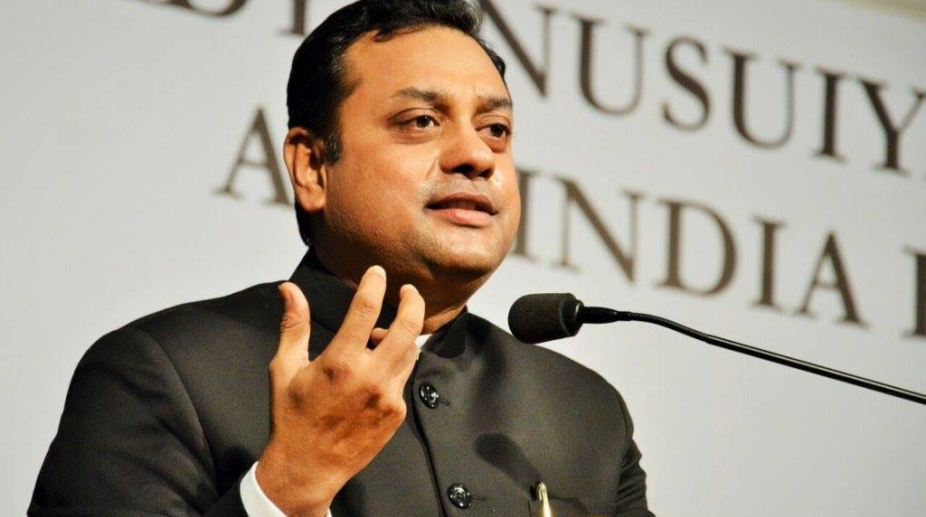
The BJP Uttar Pradesh in-charge Om Prakash Mathur and party spokesman Sambit Patra were quick to react and termed SP minister Rajendra Chaudhary’s remarks about the Prime Minister as ‘unprecedented’ and ‘shameful’ and sought an apology from the Samajwadi Party.

Though there was no immediate reaction from the top SP leadership about their minister’s observations, the BJP lost no time to project it as an SP line and asked the party to apologise.

Patra interpreted the SP leader’s remarks as an indication of party’s ‘exasperation’ amid the ongoing polling process. Campaigning for the fourth phase of elections is coming to an end tomorrow.

“Unacceptable comment by Samajwadi Govt Minister Rajendra Chaudhary!…is-se Samajwadi Party ki bokhlahat saf jhalakti hain…SP Maafi Mange,” Sambit Patra tweeted.

Om Prakash Mathur said such a ‘shameful’ statement has never been used against a Prime Minister. ”Shameful! I have never seen such treacherous statements used for PM. Exhibits SP’s bid to seduce minority voters,” Mathur tweeted.

Choudhary made the remarks at a public meeting. He accused both Modi and Amit Shah, currently busy campaigning in UP, of terrorising voters in the state.

“Yeh dono aatankvaadi hain, Narendra Modi aur Amit Shah. Dono aatank paida kar rahein hain loktantra mein (They both are terrorists, Narendra Modi and Amit Shah. They both are creating terror in a democracy),” the SP leader reportedly said.

“BJP president Amit Shah has no role to play and he is merely following instructions on what he has to say. He goes ahead and scares people. His own party workers are afraid of him…They are creating an atmosphere of fear among the voters… they are polluting the political environment in the country,” Choudhary charged.

BJP demands apology for SP leader’s ‘terrorist’ remark

Dipankar Chakraborty | New Delhi |

The BJP on Monday took strong exception to Samajwadi Party leader and minister in the Akhilesh Yadav government in Uttar Pradesh calling both Prime Minister Narendra Modi and BJP president Amit Shah ‘aatankwaadi’ or terrorist.

The BJP Uttar Pradesh in-charge Om Prakash Mathur and party spokesman Sambit Patra were quick to react and termed SP minister Rajendra Chaudhary’s remarks about the Prime Minister as ‘unprecedented’ and ‘shameful’ and sought an apology from the Samajwadi Party.

Though there was no immediate reaction from the top SP leadership about their minister’s observations, the BJP lost no time to project it as an SP line and asked the party to apologise.

Patra interpreted the SP leader’s remarks as an indication of party’s ‘exasperation’ amid the ongoing polling process. Campaigning for the fourth phase of elections is coming to an end tomorrow.

“Unacceptable comment by Samajwadi Govt Minister Rajendra Chaudhary!…is-se Samajwadi Party ki bokhlahat saf jhalakti hain…SP Maafi Mange,” Sambit Patra tweeted.

Om Prakash Mathur said such a ‘shameful’ statement has never been used against a Prime Minister. ”Shameful! I have never seen such treacherous statements used for PM. Exhibits SP’s bid to seduce minority voters,” Mathur tweeted.

Choudhary made the remarks at a public meeting. He accused both Modi and Amit Shah, currently busy campaigning in UP, of terrorising voters in the state.

“Yeh dono aatankvaadi hain, Narendra Modi aur Amit Shah. Dono aatank paida kar rahein hain loktantra mein (They both are terrorists, Narendra Modi and Amit Shah. They both are creating terror in a democracy),” the SP leader reportedly said.

“BJP president Amit Shah has no role to play and he is merely following instructions on what he has to say. He goes ahead and scares people. His own party workers are afraid of him…They are creating an atmosphere of fear among the voters… they are polluting the political environment in the country,” Choudhary charged.

NDMA to conduct mock exercises in earthquake-prone Uttarakhand

Deepak Razdan | New Delhi |

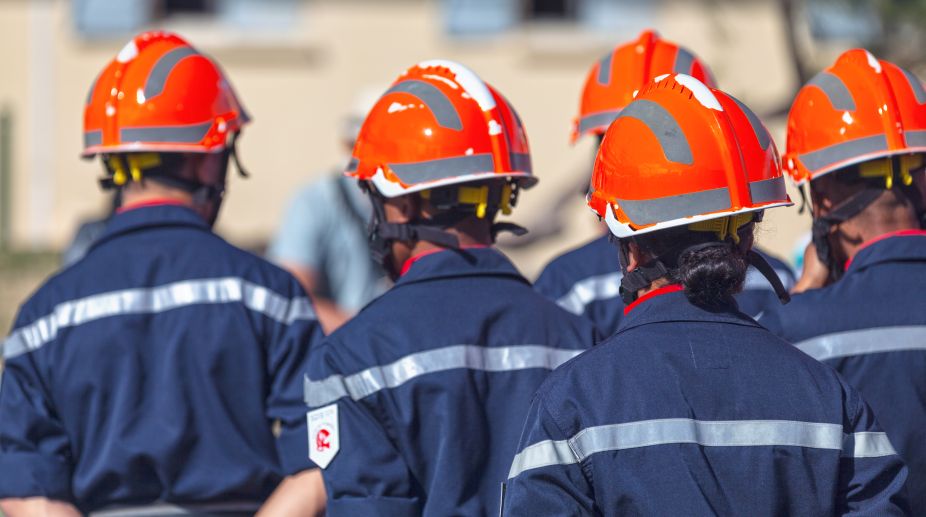
The National Disaster Management Authority (NDMA) will this week conduct two mock exercises on earthquake preparedness in Uttarakhand,covering all districts of the hill State.

To be conducted in collaboration with the State Government, the exercises will help NDMA assess the readiness of various stakeholder departments in the event of a high-intensity earthquake anywhere in the earthquake-prone State.

The first exercise will be held tomorrow and cover Dehradun, Tehri Garhwal, Hardwar, Uttarkashi, Chamoli, Pauri Garhwal and Rudraprayag districts. To prepare for this, a table-top exercise was on Monday held through video-conferencing. Senior officials from all stakeholder departments such as NDRF, Health, Police, Education, Firefighting,
Civil Defense, Public Relations, and Transport took part.

Another round of a similar coordination conference will be held on Wednesday for the second mock exercise on Thursday, covering Pithoragarh, Bageshwar, Champawat, Almora, Nainital and Udham Singh Nagar districts.

These exercises will deal with simulated scenarios of earthquakes wherein the participants will be trained on key aspects of disaster management such as formation of Incident Response Teams and Emergency Operation Centres (EOC), coordination among various participating agencies, evacuation and medical preparedness.

Aimed at enhancing the preparedness and response mechanism of key stakeholders, these exercises will help highlight areas that require improvements. NDMA expert Major General VK Datta (Retd.), who will lead the exercises, said "Mock exercises help in filling gaps and ensuring better communication thus improving coordination among various agencies in real-life situations."

He said there was need for regular exercises in Uttarakhand as the entire hill State falls either in the Seismic Zone V or IV and has experienced many high-intensity earthquakes in the past. After the drills, post-exercise analyses will also be carried out to discuss the shortcomings, challenges and ways to improve them.

The NDMA has so far conducted more than 500 mock exercises in the country. Next month, a mock exercise will be held on flood and tsunami preparedness in Puducherry.

NDMA to conduct mock exercises in earthquake-prone Uttarakhand

Deepak Razdan | New Delhi |

The National Disaster Management Authority (NDMA) will this week conduct two mock exercises on earthquake preparedness in Uttarakhand,covering all districts of the hill State.

To be conducted in collaboration with the State Government, the exercises will help NDMA assess the readiness of various stakeholder departments in the event of a high-intensity earthquake anywhere in the earthquake-prone State.

The first exercise will be held tomorrow and cover Dehradun, Tehri Garhwal, Hardwar, Uttarkashi, Chamoli, Pauri Garhwal and Rudraprayag districts. To prepare for this, a table-top exercise was on Monday held through video-conferencing. Senior officials from all stakeholder departments such as NDRF, Health, Police, Education, Firefighting,
Civil Defense, Public Relations, and Transport took part.

Another round of a similar coordination conference will be held on Wednesday for the second mock exercise on Thursday, covering Pithoragarh, Bageshwar, Champawat, Almora, Nainital and Udham Singh Nagar districts.

These exercises will deal with simulated scenarios of earthquakes wherein the participants will be trained on key aspects of disaster management such as formation of Incident Response Teams and Emergency Operation Centres (EOC), coordination among various participating agencies, evacuation and medical preparedness.

Aimed at enhancing the preparedness and response mechanism of key stakeholders, these exercises will help highlight areas that require improvements. NDMA expert Major General VK Datta (Retd.), who will lead the exercises, said "Mock exercises help in filling gaps and ensuring better communication thus improving coordination among various agencies in real-life situations."

He said there was need for regular exercises in Uttarakhand as the entire hill State falls either in the Seismic Zone V or IV and has experienced many high-intensity earthquakes in the past. After the drills, post-exercise analyses will also be carried out to discuss the shortcomings, challenges and ways to improve them.

The NDMA has so far conducted more than 500 mock exercises in the country. Next month, a mock exercise will be held on flood and tsunami preparedness in Puducherry.