Logo

IMF chief ‘reassured’ after talks with Trump’s team

AFP | Berlin |

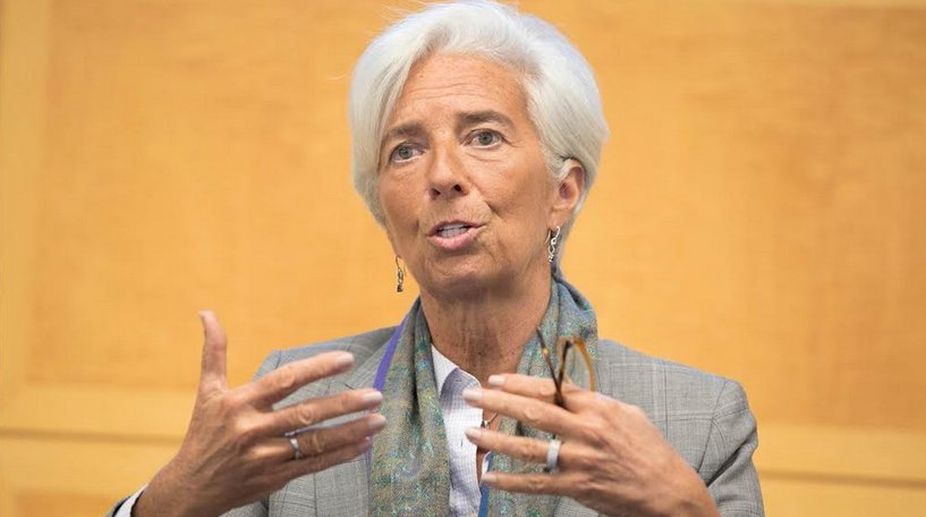
IMF chief Christine Lagarde has said that she had been reassured by her first meetings with members of the new administration of US President Donald Trump, whose economic programme has caused global jitters.

Lagarde singled out "some very positive discussions" with US Treasury Secretary Steven Mnuchin.

"I have had several meetings with officials of his administration in the economic and financial domains and the meetings I had are quite reassuring and comforting," the International Monetary Fund head yesterday told German television ARD during a visit to Berlin.

She said Mnuchin "clearly has indicated his desire to work with the IMF, on a multilateral basis. He's expecting a candid assessment of the situation and clearly he has an interest in financial stability going forward."

On Tuesday, Mnuchin called on the IMF to provide "candid analysis" of exchange-rate policies in member countries.

The IMF monitors currencies and other economic policies in the 189 member countries, and its rules dictate that members must avoid manipulating exchange rates… to gain an unfair competitive advantage.

However, in practice the fund can only exert real pressure to change policies on those countries that have IMF loan programmes in place.

Trump, who has repeatedly accused countries like China, an IMF member, of using trade and currency policies to cheat its trading partners.

Lagarde's comments came a month into Trump's presidency, after he had campaigned on the slogan "America First".

In recent weeks, he has sent senior representatives to Europe to convince allies that his putting America first does not mean they will be left behind.

But he has also brandished the threat of hiking customs duties for Mexican-made products entering the United States.

Earlier this month, Trump also took the first step to undoing key reforms enacted after the 2008 financial crisis, aiming to scale back toughened regulations on the banking industry.

He has also accused countries including China, Germany and Japan of manipulating their currencies to boost trade.

Last month the International Monetary Fund raised its estimates for US growth on expected stimulus spending by the Trump administration, but kept the forecast for global growth unchanged.

The IMF warned then that executing protectionist policies could backfire on the US economy and create ripple effects abroad.

London appoints first woman Scotland Yard chief in 187 years

IANS | London |

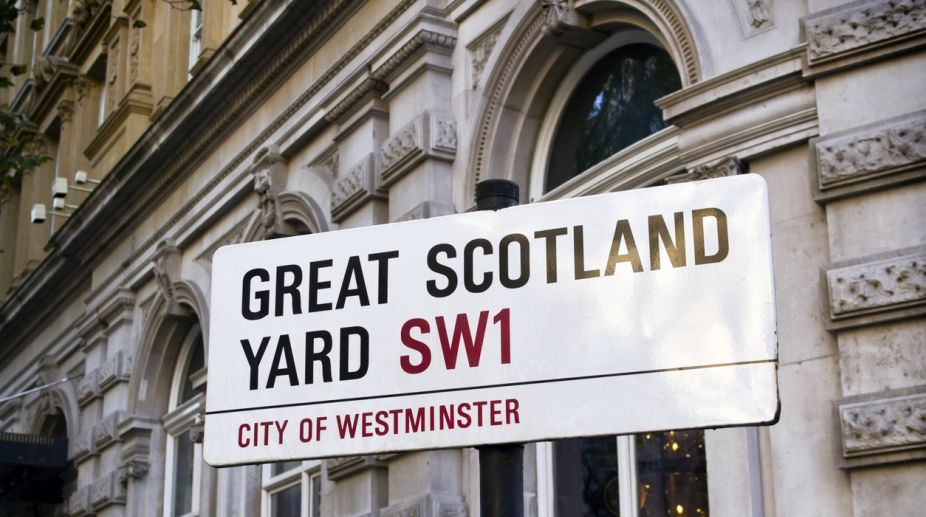
Britain's Home Secretary Amber Rudd announced that a female police officer would be the next Commissioner of the Scotland Yard, media reports said.

Cressida Dick's appointment to the top job at Scotland Yard means that for the first time in its history, Britain's biggest police force will be run by a woman, Xinhua news agency reported.

So important is the role of 'Britain's top cop' that Dick was appointed by Queen Elizabeth II following a recommendation from the Home Secretary.

The Metropolitan Police or Met, as it is commonly known, is the largest police force in Britain, with more than 43,000 employees and an annual budget of over 3 billion pounds ($3.74 billion).

Rudd said: "Cressida Dick is an exceptional leader, and has a clear vision for the future of the Metropolitan Police and an understanding of the diverse range of communities it serves."

Rudd said the new police chief was taking on one of the most demanding, high-profile and important jobs in British policing, against the backdrop of a heightened terror alert and evolving threats from fraud and cyber crime.

London Mayor Sadiq Khan said, "Cressida Dick will be the first female commissioner of the Met in its 187-year history, and the most powerful police officer in the land. She has already had a long and distinguished career, and her experience and ability has shone throughout this process." 

London appoints first woman Scotland Yard chief in 187 years

IANS | London |

Britain's Home Secretary Amber Rudd announced that a female police officer would be the next Commissioner of the Scotland Yard, media reports said.

Cressida Dick's appointment to the top job at Scotland Yard means that for the first time in its history, Britain's biggest police force will be run by a woman, Xinhua news agency reported.

So important is the role of 'Britain's top cop' that Dick was appointed by Queen Elizabeth II following a recommendation from the Home Secretary.

The Metropolitan Police or Met, as it is commonly known, is the largest police force in Britain, with more than 43,000 employees and an annual budget of over 3 billion pounds ($3.74 billion).

Rudd said: "Cressida Dick is an exceptional leader, and has a clear vision for the future of the Metropolitan Police and an understanding of the diverse range of communities it serves."

Rudd said the new police chief was taking on one of the most demanding, high-profile and important jobs in British policing, against the backdrop of a heightened terror alert and evolving threats from fraud and cyber crime.

London Mayor Sadiq Khan said, "Cressida Dick will be the first female commissioner of the Met in its 187-year history, and the most powerful police officer in the land. She has already had a long and distinguished career, and her experience and ability has shone throughout this process." 

Concentration camp prisoners’ letters found in Poland

IANS | Warsaw |

Some letters that Polish women prisoners in Germany's Ravensbruck concentration camp during World War II, wrote using urine as 'invisible ink' to their families, have recently been handed over to Lublin Museum, local media reports said.

According to Polish TVN 24 portal, the women prisoners were abjected to many inhuman experiments and had full consciousness that they would most probably die. Due to the fact that their correspondence was censored, they used their urine as invisible ink to let their families know the secret information about their fate and the situation within the camp.

They used thin wooden sticks to write on the internal side of envelopes or between the lines of 'regular' letter, written with a pencil. The families would iron the letters which made the secret texts visible, Xinhua news agency reported.

It all began with two Lublin girls, Nina Iwanska and Krystyna Czyz. Krystyna hinted about using the method to write letters to her family members in a letter to her brother. According to the report, it was also her family who gave 27 letters written between years 1943-1944 to the Lublin Museum.

The women in Ravensbruck were victims of inhuman medical experiments. The letters also include information about the camp's functioning, labour and death sentences.

Ravensbruck was a German concentration camp for women located in northern Germany. It was opened in May 1939. Between 1939 and 1945, some 130,000 to 132,000 female prisoners passed through the camp, including around 40,000 Polish and 26,000 Jewish.

Concentration camp prisoners’ letters found in Poland

IANS | Warsaw |

Some letters that Polish women prisoners in Germany's Ravensbruck concentration camp during World War II, wrote using urine as 'invisible ink' to their families, have recently been handed over to Lublin Museum, local media reports said.

According to Polish TVN 24 portal, the women prisoners were abjected to many inhuman experiments and had full consciousness that they would most probably die. Due to the fact that their correspondence was censored, they used their urine as invisible ink to let their families know the secret information about their fate and the situation within the camp.

They used thin wooden sticks to write on the internal side of envelopes or between the lines of 'regular' letter, written with a pencil. The families would iron the letters which made the secret texts visible, Xinhua news agency reported.

It all began with two Lublin girls, Nina Iwanska and Krystyna Czyz. Krystyna hinted about using the method to write letters to her family members in a letter to her brother. According to the report, it was also her family who gave 27 letters written between years 1943-1944 to the Lublin Museum.

The women in Ravensbruck were victims of inhuman medical experiments. The letters also include information about the camp's functioning, labour and death sentences.

Ravensbruck was a German concentration camp for women located in northern Germany. It was opened in May 1939. Between 1939 and 1945, some 130,000 to 132,000 female prisoners passed through the camp, including around 40,000 Polish and 26,000 Jewish.

La Liga: Valencia stun leaders Real Madrid

An extremely damaging loss for Los Blancos. 

SNS | New Delhi |

Two goals inside the opening ten minutes enabled hosts Valencia to stun La Liga leaders Real Madrid at the Mestalla Stadium on Wednesday, weathering a late storm to secure a priceless 2-1 victory.

Simone Zaza’s wonder goal got the ball rolling in the 4th minute itself, as the on-loan Juventus man continued his hot goalscoring run in Spain with a pirouetting volley which left the entire Los Blancos team dumbstruck. With his back to the goal, Zaza seemingly had no way to finish as Raphael Varane was pressurising him from behind but the Italian swivelled to unleash a stunning volley which left Keylor Navas with no chance.

Navas did have a chance to save the second, however, but after Nani had put Fabian Orellana through with a smart ball on a counter-attack, the Chilean’s shot somehow found its way past Navas’ legs to double the home side’s lead in the 9th minute.

Madrid were extremely sluggish on the night and took a while to rise from their stupor, perhaps missing the superlative talents of Gareth Bale, who sat on the bench.

Karim Benzema looked lively in attack, but with Cristiano Ronaldo not in top form, Los Blancos lacked the necessary dynamism in attack.

Ronaldo managed to cut Valencia’s deficit a minute before half-time with a powerful header from a Marcelo cross to give the visitors some hope as they went into the interval with some momentum.
It was the Portuguese superstar’s 14th league goal of the season and came at quite possibly, the worst time for Valencia, as they were hoping to see out the first half without conceding. 

Things didn't pick up for Zinedine Zidane’s men in the second period, however, despite the introduction of Bale just after the hour-mark in place of the ineffectual James Rodriguez. 

The Colombian had been enjoying an extended run in the Madrid starting XI in recent weeks, but with Bale on the verge of full fitness, it seems likely he will be warming the bench again.

Madrid pressed hard for a second goal but somehow didn't look cohesive in attack but credit must be given to the home side, who defended gamely for the final 45 minutes.

The pressure is well and truly on Zidane’s side, as they remain in first place, but only just. With 52 points from 22 matches, they are a point ahead of Barcelona, who have played a game more. The French manager knows his team cannot afford to slip up any more in the coming weeks and it looks like the race for the title will go down to the wire this time.

Valencia rise to 14th in the table with 26 points with the win, moving ahead of Real Betis in the process.

La Liga: Valencia stun leaders Real Madrid

An extremely damaging loss for Los Blancos. 

SNS | New Delhi |

Two goals inside the opening ten minutes enabled hosts Valencia to stun La Liga leaders Real Madrid at the Mestalla Stadium on Wednesday, weathering a late storm to secure a priceless 2-1 victory.

Simone Zaza’s wonder goal got the ball rolling in the 4th minute itself, as the on-loan Juventus man continued his hot goalscoring run in Spain with a pirouetting volley which left the entire Los Blancos team dumbstruck. With his back to the goal, Zaza seemingly had no way to finish as Raphael Varane was pressurising him from behind but the Italian swivelled to unleash a stunning volley which left Keylor Navas with no chance.

Navas did have a chance to save the second, however, but after Nani had put Fabian Orellana through with a smart ball on a counter-attack, the Chilean’s shot somehow found its way past Navas’ legs to double the home side’s lead in the 9th minute.

Madrid were extremely sluggish on the night and took a while to rise from their stupor, perhaps missing the superlative talents of Gareth Bale, who sat on the bench.

Karim Benzema looked lively in attack, but with Cristiano Ronaldo not in top form, Los Blancos lacked the necessary dynamism in attack.

Ronaldo managed to cut Valencia’s deficit a minute before half-time with a powerful header from a Marcelo cross to give the visitors some hope as they went into the interval with some momentum.
It was the Portuguese superstar’s 14th league goal of the season and came at quite possibly, the worst time for Valencia, as they were hoping to see out the first half without conceding. 

Things didn't pick up for Zinedine Zidane’s men in the second period, however, despite the introduction of Bale just after the hour-mark in place of the ineffectual James Rodriguez. 

The Colombian had been enjoying an extended run in the Madrid starting XI in recent weeks, but with Bale on the verge of full fitness, it seems likely he will be warming the bench again.

Madrid pressed hard for a second goal but somehow didn't look cohesive in attack but credit must be given to the home side, who defended gamely for the final 45 minutes.

The pressure is well and truly on Zidane’s side, as they remain in first place, but only just. With 52 points from 22 matches, they are a point ahead of Barcelona, who have played a game more. The French manager knows his team cannot afford to slip up any more in the coming weeks and it looks like the race for the title will go down to the wire this time.

Valencia rise to 14th in the table with 26 points with the win, moving ahead of Real Betis in the process.

Uttar Pradesh Assembly elections 2017: Fourth phase polling underway

SNS | New Delhi |

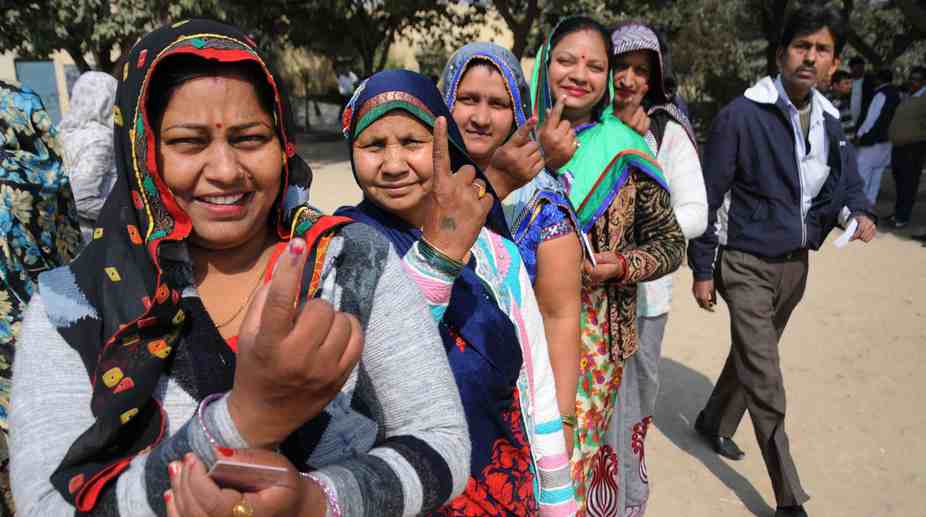
Amid tight security, the fourth phase of Uttar Pradesh Assembly elections began on Thursday with polling for 53 constituencies.

In the fourth phase, there are 680 candidates, including 61 women, and about 30,000 security personnel have been deployed at polling centres to deal with any law and order situation during the voting.

Polling at 10 AM: The polling was largely peaceful and till about 10 am, it recorded 15 per cent voting, according to the UP chief electoral officer.

Polling at 11 AM: In Allahabad district, voting was under way on a brisk note in all 12 assembly seats with 21.22 per cent voters having exercised their franchise by 11 am. Leaders who have cast their votes in the city included West Bengal Governor Keshri Nath Tripathi, Uttar Pradesh BJP president Keshav Prasad Maurya and the party's national secretary Siddharth Nath Singh.

Polling at midday: Over 40 per cent of the 1.84 crore voters exercised their franchise till midday in eastern Uttar Pradesh.

A total of 1.84 crore voters is estimated. Around 1 crore of the voters are males and 84 lakh women. The third gender includes 1,034 voters.

The main political parties in fray are the Bharatiya Janata Party (BJP), the Samajwadi Party-Congress alliance and the Bahujan Samaj Party (BSP).

Prominent personalities include Utkarsha Mishra, son of former opposition leader in the outgoing assembly Swamy Prasad Maurya, independent Raghuraj Pratap Singh aka Raja Bhaiyya, Aradhna Mishra, daughter of Raja Sabha member Pramod Tiwari, and Ujjwal Raman Singh, son of Samajwadi Party leader Reoti Raman Singh.

The constituency with most candidates is Allahabad North, with 26 in fray and the constituencies with the least number of nominees are Khaga and Kunda with six each in fray.

Lalitpur has the largest electorate (453,162) and Ayahshah the least (260,439). There are 19,487 polling stations in this phase.

The state assembly elections began on February 11 with polling for 73 constituencies. It recorded 64.22 per cent voting.

Polling for the third phase was held on February 19 in 69 constituencies. It was held in 12 districts and recorded 61.16 per cent voting.

Polling for the fifth phase will be held on February 27.

(With inputs from agencies)

Uttar Pradesh Assembly elections 2017: Fourth phase polling underway

SNS | New Delhi |

Amid tight security, the fourth phase of Uttar Pradesh Assembly elections began on Thursday with polling for 53 constituencies.

In the fourth phase, there are 680 candidates, including 61 women, and about 30,000 security personnel have been deployed at polling centres to deal with any law and order situation during the voting.

Polling at 10 AM: The polling was largely peaceful and till about 10 am, it recorded 15 per cent voting, according to the UP chief electoral officer.

Polling at 11 AM: In Allahabad district, voting was under way on a brisk note in all 12 assembly seats with 21.22 per cent voters having exercised their franchise by 11 am. Leaders who have cast their votes in the city included West Bengal Governor Keshri Nath Tripathi, Uttar Pradesh BJP president Keshav Prasad Maurya and the party's national secretary Siddharth Nath Singh.

Polling at midday: Over 40 per cent of the 1.84 crore voters exercised their franchise till midday in eastern Uttar Pradesh.

A total of 1.84 crore voters is estimated. Around 1 crore of the voters are males and 84 lakh women. The third gender includes 1,034 voters.

The main political parties in fray are the Bharatiya Janata Party (BJP), the Samajwadi Party-Congress alliance and the Bahujan Samaj Party (BSP).

Prominent personalities include Utkarsha Mishra, son of former opposition leader in the outgoing assembly Swamy Prasad Maurya, independent Raghuraj Pratap Singh aka Raja Bhaiyya, Aradhna Mishra, daughter of Raja Sabha member Pramod Tiwari, and Ujjwal Raman Singh, son of Samajwadi Party leader Reoti Raman Singh.

The constituency with most candidates is Allahabad North, with 26 in fray and the constituencies with the least number of nominees are Khaga and Kunda with six each in fray.

Lalitpur has the largest electorate (453,162) and Ayahshah the least (260,439). There are 19,487 polling stations in this phase.

The state assembly elections began on February 11 with polling for 73 constituencies. It recorded 64.22 per cent voting.

Polling for the third phase was held on February 19 in 69 constituencies. It was held in 12 districts and recorded 61.16 per cent voting.

Polling for the fifth phase will be held on February 27.

(With inputs from agencies)

Waning interest in two great poets: Josh and Firaq

RV Smith |

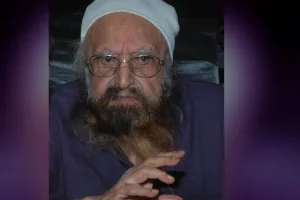
As Firaq Gorakhpuri’s death anniversary approaches (he died on 3 March, 1982), there are few signs that it will attract much attention. The same thing happened when Shabbir Husain Khan Josh Malihabadi's anniversary fell on 2 February. The two died within a month of each other. It is believed that one of the reasons for Firaq's sudden demise was the loss of his great friend. He is said to have remarked, "Yeh dard tau mit jaiga/Lekin jo dard dil mei hai uska kya hoga?" That's when the doctor said he would inject a tranquilliser to relieve his pain. Soon after he collapsed. He had just been discharged from AIIMS after a cataract operation and moved to the house of his friend, a Supreme Court lawyer, R K Garg in New Delhi. His body was later taken to Allahabad for the funeral.
One's personal memories of Raghupati Sahai alias Firaq are based on two meetings: One, when he came to take one's MA Literature viva voce, along with Prof V V John, and asked a question on William Wordsworth but cut the answer short saying, "Had your father been here I would have discussed the poet with him, but you are too young to comprehend the worth of Wordsworth, though you might wax eloquent on the likes of T S Eliot, without understanding what Omar Khayyam meant when he observed: And a muezzin from the tower cries, 'Fools your reward is neither here nor there'." One now thinks that had the IS been around then it would have executed Omar as a heretic. Firaq Sahib went on to add, "Kya likhta hai yaar, kya likhta hai, hosh-o-hawas uda deta hai (What he writes, friend, stuns the senses)."

This was the same man who, while taking an English Literature class in Allahabad University, paused suddenly and went home to complete the last line in a couplet, which had been eluding him, that said, "Ai Hijr ki raat katne walon/Kya karoge gar subhah na hui tau? (Oh, you, passing the Mecca-Medina like Hijri era night of acute anxiety, what would you do if morning did not come?)". The other meeting took place earlier, when he came to St John's College, Agra, for a mushaira, along with Maikash Akbarabadi. Students trooped in to see the great shair, tipsy and stumbling on his way to the rest-room. His pyjama string was dangling loose when a student pointed towards it. Firaq Sahib glared at him and remarked, "Udhar kya dekhta hai/Yeh nazr tau kisi mehboob ki hone chaihya thi. (What are you looking there for, this glance should have been some beloved's)?" Everybody was stunned, though some were aware that Firaq could very well talk like that when drunk. Even the tongawallahs of Allahabad were aware of this and when the horse gave trouble, they would shout, "Firaq ko bulaun? (Should I call Firaq)?" Like Josh he too was quick-tempered but actually a good person at heart.

His nephew, Ajai Mansingh has in a biography, “The Poet of Pain and Ecstasy (Roli books) thrown much light on Firaq Sahib's personal life in which the shair is presented warts and all. Belonging to a family, which had been gifted five villages 400 years ago by the rulers of Awadh, his ancestors came to be known as the "Panchgaon Kayastha". His father, Gorakh Prasad Sahai ("Chacha" to him and siblings), was a well-known lawyer and poet, who wrote under the pseudonym of Ibrat Gorakhpuri. It was from him that Firaq acquired his love for Urdu. Ibrat Sahib died in his 50s, leaving Firaq as the head of the family. But the poet's sour relations with his wife Kishori Devi was a sore point throughout his life of 86.
Firaq found love in young Ramesh Dwivedi who, in course of time, began to exercise complete control over him. He once remarked that the beloved in Urdu and Persian poetry was always a boy and not a girl, and so also the Saqi, or cup-bearer, even of the gods. So what was the taint attached to his relationship? It continued even after Ramesh got married and fathered two children. In his Hindi book on Firaq, "Mian Ramesh" gives an insight into Firaq's daily life; He was never fond of bathing with the result that he suffered from skin ailments. But every day he would wear a fresh set of clothes ~ acchkan, kurta and pyjamas before going to the university. He ate good non-vegetarian food, having kababs even at breakfast, and drank heavily. As a matter of fact, when he was lying ill in Delhi, the Maharani of Patiala and A B Vajpayee came to see him with a bottle each, which however, his nephew whisked away.

Among his close friends were Jawaharlal Nehru, Josh, Sir Tej Bahadur Sapru, K N Katju, the Kunzroos, Harivanshrai Bachchan, Majaz Lucknavi and A N Jha, who later became Lt-Governor of Delhi. But he had an aversion to his neighbour, the puritanical historian Pandit Ishwari Prasad, telling the vegetable vendor in 8/4 Bank Street, Allahabad, "Sell potatoes cheap to the Pandit or he'll howl that they were 2 paise a seer in Napoleon's time."

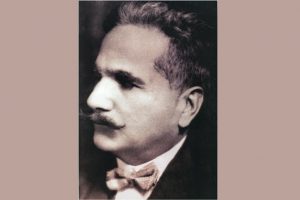
Firaq's love for Mir Taqi Mir was so great that when he couldn't sleep at AIIMS he told his caretakers, "Kalam-e-Mir sunaoo/Badi udhas hai raat. (The night is very sad, recite Mir's poetry). He didn't think much of Allama Iqbal, but Josh Malihabadi occupied the place next to Mir in his heart. Naturally, Firaq could not survive him for long.

One was Josh's neighbour for over two months in the winter of 1967-68 at Azad Hind Hotel in the Jama Masjid area. Josh came from Lahore with his wife to Delhi, where his brother from the ancestral town of Malihabad joined him. Every evening local shairs came to recite their verses in front of him as he sat on a chair in the hotel courtyard with the seven wives of the proprietor (also a poet) peeping from the top storey windows and screens to enjoy the shairs of the evening.

Among the poets Gulzar Dehlvi was prominent, a short-statured fair man wearing a sherwani and tight pyjamas, like most Kashmiri Pandits. Josh called it a day at 8 pm, when his khana was sent by the owner of Moti Mahal hotel in Daryaganj, along with three pegs of Scotch whisky. After the drink and Mughlai food, he retired for the night and got up at 4.30 am when, after a cup of tea, he sat down to write poetry amid puffs from the hookah, which he shared with his brother, Khan Sahib, while his wife kept a stern eye on the two from an adjoining room.

Josh was a great friend of Jawaharlal Nehru but when he came to Delhi, Nehru was dead and India Gandhi had become Prime Minister. One remembers that soon after his arrival he went to see her and came back praising "Nehru's daughter" as an affectionate person, just like her father, who regretted that Josh had migrated to Pakistan despite Nehru's advice to the contrary. Josh, it seems, had left India at the insistance of his begum, but both were deeply disappointed with the reception they got there. And Josh frankly admitted that he had committed a blunder because the Punjabi milieu of Lahore hardly suited him, though poets like Faiz Ahmed Faiz were all grace and courtesy. When some mullahs of Pakistan criticised Josh for drinking, he wrote a verse in defiance: "Tor kar tauba nadamat tau hoti hai mujhe ai Josh/Kya karun niyat badal jati hai saghar dekh kar. (I do repent breaking my promise not to drink, but what to do when seeing the wine-cup I can't resist the temptation.)" Such was Josh and such was Firaq, both being slowly forgotten by the new generation.

Waning interest in two great poets: Josh and Firaq

RV Smith |

As Firaq Gorakhpuri’s death anniversary approaches (he died on 3 March, 1982), there are few signs that it will attract much attention. The same thing happened when Shabbir Husain Khan Josh Malihabadi's anniversary fell on 2 February. The two died within a month of each other. It is believed that one of the reasons for Firaq's sudden demise was the loss of his great friend. He is said to have remarked, "Yeh dard tau mit jaiga/Lekin jo dard dil mei hai uska kya hoga?" That's when the doctor said he would inject a tranquilliser to relieve his pain. Soon after he collapsed. He had just been discharged from AIIMS after a cataract operation and moved to the house of his friend, a Supreme Court lawyer, R K Garg in New Delhi. His body was later taken to Allahabad for the funeral.

One's personal memories of Raghupati Sahai alias Firaq are based on two meetings: One, when he came to take one's MA Literature viva voce, along with Prof V V John, and asked a question on William Wordsworth but cut the answer short saying, "Had your father been here I would have discussed the poet with him, but you are too young to comprehend the worth of Wordsworth, though you might wax eloquent on the likes of T S Eliot, without understanding what Omar Khayyam meant when he observed: And a muezzin from the tower cries, 'Fools your reward is neither here nor there'." One now thinks that had the IS been around then it would have executed Omar as a heretic. Firaq Sahib went on to add, "Kya likhta hai yaar, kya likhta hai, hosh-o-hawas uda deta hai (What he writes, friend, stuns the senses)."

This was the same man who, while taking an English Literature class in Allahabad University, paused suddenly and went home to complete the last line in a couplet, which had been eluding him, that said, "Ai Hijr ki raat katne walon/Kya karoge gar subhah na hui tau? (Oh, you, passing the Mecca-Medina like Hijri era night of acute anxiety, what would you do if morning did not come?)". The other meeting took place earlier, when he came to St John's College, Agra, for a mushaira, along with Maikash Akbarabadi. Students trooped in to see the great shair, tipsy and stumbling on his way to the rest-room. His pyjama string was dangling loose when a student pointed towards it. Firaq Sahib glared at him and remarked, "Udhar kya dekhta hai/Yeh nazr tau kisi mehboob ki hone chaihya thi. (What are you looking there for, this glance should have been some beloved's)?" Everybody was stunned, though some were aware that Firaq could very well talk like that when drunk. Even the tongawallahs of Allahabad were aware of this and when the horse gave trouble, they would shout, "Firaq ko bulaun? (Should I call Firaq)?" Like Josh he too was quick-tempered but actually a good person at heart.

His nephew, Ajai Mansingh has in a biography, “The Poet of Pain and Ecstasy (Roli books) thrown much light on Firaq Sahib's personal life in which the shair is presented warts and all. Belonging to a family, which had been gifted five villages 400 years ago by the rulers of Awadh, his ancestors came to be known as the "Panchgaon Kayastha". His father, Gorakh Prasad Sahai ("Chacha" to him and siblings), was a well-known lawyer and poet, who wrote under the pseudonym of Ibrat Gorakhpuri. It was from him that Firaq acquired his love for Urdu. Ibrat Sahib died in his 50s, leaving Firaq as the head of the family. But the poet's sour relations with his wife Kishori Devi was a sore point throughout his life of 86.

Firaq found love in young Ramesh Dwivedi who, in course of time, began to exercise complete control over him. He once remarked that the beloved in Urdu and Persian poetry was always a boy and not a girl, and so also the Saqi, or cup-bearer, even of the gods. So what was the taint attached to his relationship? It continued even after Ramesh got married and fathered two children. In his Hindi book on Firaq, "Mian Ramesh" gives an insight into Firaq's daily life; He was never fond of bathing with the result that he suffered from skin ailments. But every day he would wear a fresh set of clothes ~ acchkan, kurta and pyjamas before going to the university. He ate good non-vegetarian food, having kababs even at breakfast, and drank heavily. As a matter of fact, when he was lying ill in Delhi, the Maharani of Patiala and A B Vajpayee came to see him with a bottle each, which however, his nephew whisked away.

Among his close friends were Jawaharlal Nehru, Josh, Sir Tej Bahadur Sapru, K N Katju, the Kunzroos, Harivanshrai Bachchan, Majaz Lucknavi and A N Jha, who later became Lt-Governor of Delhi. But he had an aversion to his neighbour, the puritanical historian Pandit Ishwari Prasad, telling the vegetable vendor in 8/4 Bank Street, Allahabad, "Sell potatoes cheap to the Pandit or he'll howl that they were 2 paise a seer in Napoleon's time."

Firaq's love for Mir Taqi Mir was so great that when he couldn't sleep at AIIMS he told his caretakers, "Kalam-e-Mir sunaoo/Badi udhas hai raat. (The night is very sad, recite Mir's poetry). He didn't think much of Allama Iqbal, but Josh Malihabadi occupied the place next to Mir in his heart. Naturally, Firaq could not survive him for long.

One was Josh's neighbour for over two months in the winter of 1967-68 at Azad Hind Hotel in the Jama Masjid area. Josh came from Lahore with his wife to Delhi, where his brother from the ancestral town of Malihabad joined him. Every evening local shairs came to recite their verses in front of him as he sat on a chair in the hotel courtyard with the seven wives of the proprietor (also a poet) peeping from the top storey windows and screens to enjoy the shairs of the evening.

Among the poets Gulzar Dehlvi was prominent, a short-statured fair man wearing a sherwani and tight pyjamas, like most Kashmiri Pandits. Josh called it a day at 8 pm, when his khana was sent by the owner of Moti Mahal hotel in Daryaganj, along with three pegs of Scotch whisky. After the drink and Mughlai food, he retired for the night and got up at 4.30 am when, after a cup of tea, he sat down to write poetry amid puffs from the hookah, which he shared with his brother, Khan Sahib, while his wife kept a stern eye on the two from an adjoining room.

Josh was a great friend of Jawaharlal Nehru but when he came to Delhi, Nehru was dead and India Gandhi had become Prime Minister. One remembers that soon after his arrival he went to see her and came back praising "Nehru's daughter" as an affectionate person, just like her father, who regretted that Josh had migrated to Pakistan despite Nehru's advice to the contrary. Josh, it seems, had left India at the insistance of his begum, but both were deeply disappointed with the reception they got there. And Josh frankly admitted that he had committed a blunder because the Punjabi milieu of Lahore hardly suited him, though poets like Faiz Ahmed Faiz were all grace and courtesy. When some mullahs of Pakistan criticised Josh for drinking, he wrote a verse in defiance: "Tor kar tauba nadamat tau hoti hai mujhe ai Josh/Kya karun niyat badal jati hai saghar dekh kar. (I do repent breaking my promise not to drink, but what to do when seeing the wine-cup I can't resist the temptation.)" Such was Josh and such was Firaq, both being slowly forgotten by the new generation.

The cultural Emirate

Rupali Dean |

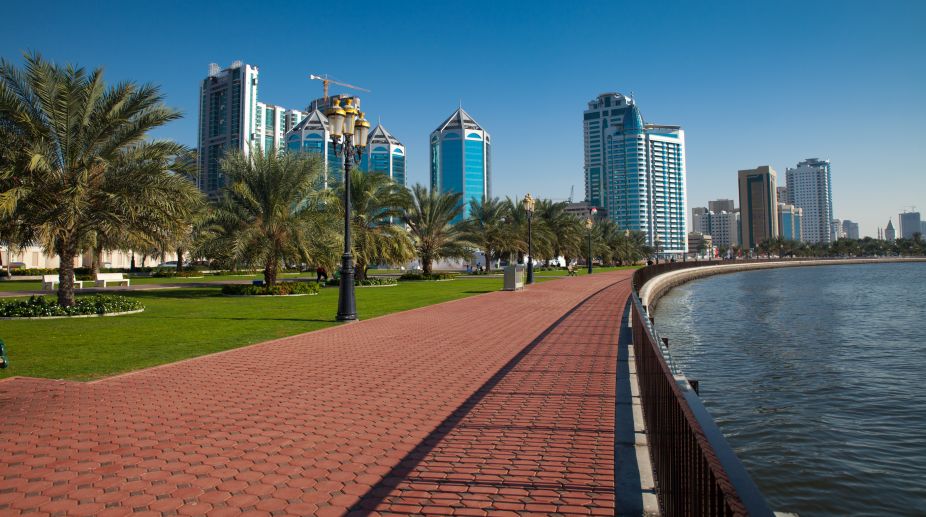
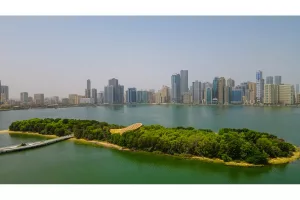
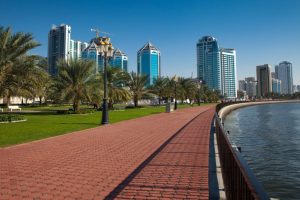
The Emirate of Sharjah is a distant call from the allure and flashiness next door and it takes only a little bus ride to get from one to the other and is borderless but the dissimilarity is amazingly beautiful. The folks of Sharjah have oil wealth too, they drive their share of Ferraris, have their grand buildings and 5-star hotels, but you only need to casually scuff the external to learn that they are profoundly entrenched in their traditions. The finest museum to visit is certainly the Sharjah Art Museum, the leading art gallery in the Gulf, with an inspiring assortment of Arabic and Orientalist art. It's a great idea to take a tea break on the third floor, with its stunning domed ceiling decorated with patterns and the night sky. A gathering of old buildings house yet more museums; and there's also a striking fort. One old house, conserved as it would have been when the family lived there, gives a thought-provoking vision into how wealthy Arabs lived before the onset of the high-rise apartment. Sharjah's heritage centre lies on the north side of the corniche, and opposite it, old-style dhows from Iran still nod on the harbour, as they have done for years.

The souks especially the Central Souk is beautiful in the heart of town, is the perfect place to shop for souvenirs, and rates are lesser than in Dubai. Sharjah is also the place to come if you want to get a hint of genuine Arab life. Head for the beach, serene and beautiful; In Arabic culture, the beach is a place to meet and hang out, to picnic with family and friends.

Friday market

With a swarm of stalls vending fruits, vegetables, clothes, accessories, domestic items, portable prerequisites and handcrafted goods, the market is a must visit and an interesting insight to the local culture. Most of the people include families visiting food stalls complete with an assortment of dishes and snacks, including samosas, vadas as well as kadak chai.

Desert safari in Meliha

The desert safari is an experience unique to the social and cultural fabric of Sharjah. Visiting Sharjah and going back without boarding on a desert safari is quite impossible indeed! This safari gives a real chance to experience the many flavours of Sharjah courtesy a complete range of activities. The inexplicably alluring desert sands make for a beautiful landscape while the dune bashing sessions signify pure adventure and adrenaline pumping vehicle dexterity. Also denoted to as Dune bashing, this activity can securely be measured the biggest attraction on desert safari trips, where automobiles are seen immaculately balanced above sand dunes.

Arabia's superb deserts come thriving with a multitude of fascinating experiences for tourists at these safaris. The Meliha desert safari is a brew of adventure, excitement, warmth and amorousness diversified into one extremely pleasant experience that will create memories to be prized for a lifetime indeed! Meliha, Sharjah has its own exclusive excursion desk, where one can book a desert safari adventure for the entire family without any hassles. Not only are the tour packages really affordable, they also throw in numerous supplementary lures that you will not get elsewhere! Do not miss taking pictures of the Camel Rock and fossil exploring!

The cultural Emirate

Rupali Dean |

The Emirate of Sharjah is a distant call from the allure and flashiness next door and it takes only a little bus ride to get from one to the other and is borderless but the dissimilarity is amazingly beautiful. The folks of Sharjah have oil wealth too, they drive their share of Ferraris, have their grand buildings and 5-star hotels, but you only need to casually scuff the external to learn that they are profoundly entrenched in their traditions. The finest museum to visit is certainly the Sharjah Art Museum, the leading art gallery in the Gulf, with an inspiring assortment of Arabic and Orientalist art. It's a great idea to take a tea break on the third floor, with its stunning domed ceiling decorated with patterns and the night sky. A gathering of old buildings house yet more museums; and there's also a striking fort. One old house, conserved as it would have been when the family lived there, gives a thought-provoking vision into how wealthy Arabs lived before the onset of the high-rise apartment. Sharjah's heritage centre lies on the north side of the corniche, and opposite it, old-style dhows from Iran still nod on the harbour, as they have done for years.

The souks especially the Central Souk is beautiful in the heart of town, is the perfect place to shop for souvenirs, and rates are lesser than in Dubai. Sharjah is also the place to come if you want to get a hint of genuine Arab life. Head for the beach, serene and beautiful; In Arabic culture, the beach is a place to meet and hang out, to picnic with family and friends.

Friday market

With a swarm of stalls vending fruits, vegetables, clothes, accessories, domestic items, portable prerequisites and handcrafted goods, the market is a must visit and an interesting insight to the local culture. Most of the people include families visiting food stalls complete with an assortment of dishes and snacks, including samosas, vadas as well as kadak chai.

Desert safari in Meliha

The desert safari is an experience unique to the social and cultural fabric of Sharjah. Visiting Sharjah and going back without boarding on a desert safari is quite impossible indeed! This safari gives a real chance to experience the many flavours of Sharjah courtesy a complete range of activities. The inexplicably alluring desert sands make for a beautiful landscape while the dune bashing sessions signify pure adventure and adrenaline pumping vehicle dexterity. Also denoted to as Dune bashing, this activity can securely be measured the biggest attraction on desert safari trips, where automobiles are seen immaculately balanced above sand dunes.

Arabia's superb deserts come thriving with a multitude of fascinating experiences for tourists at these safaris. The Meliha desert safari is a brew of adventure, excitement, warmth and amorousness diversified into one extremely pleasant experience that will create memories to be prized for a lifetime indeed! Meliha, Sharjah has its own exclusive excursion desk, where one can book a desert safari adventure for the entire family without any hassles. Not only are the tour packages really affordable, they also throw in numerous supplementary lures that you will not get elsewhere! Do not miss taking pictures of the Camel Rock and fossil exploring!

Creativity meets economy

Nivedita R |

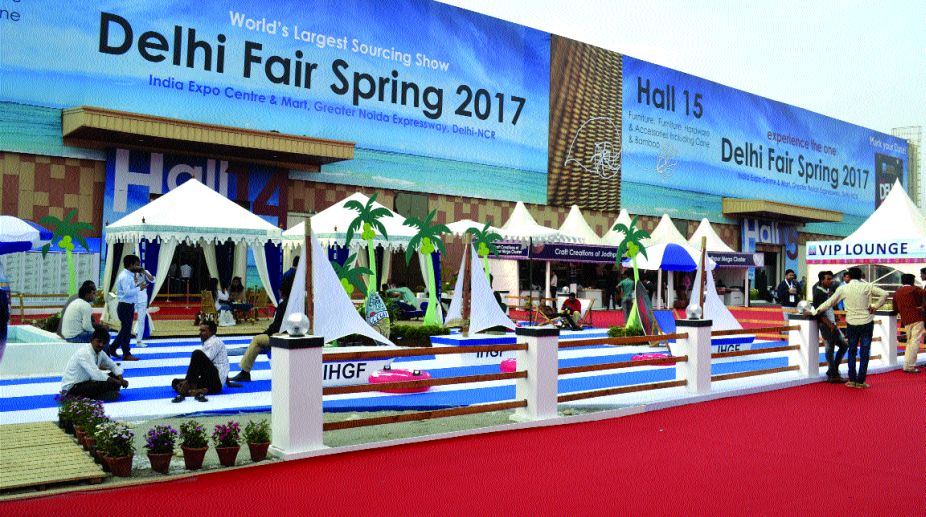
With rising popularity of Indian handicrafts world-wide, the Indian Handicrafts and Gifts Fair (IHGF) has been attracting an increasing number of foreign buyers. With some buyers sourcing as much as 80 per cent of their imports from India, the bi-annual fair, organised by Export Promotion Council for Handicrafts ( EPCH) in the Capital, has been recognised by Limca Book of World Records as the world's largest handicrafts and gifts fair.

Organised with an aim to provide an international platform to the artisans and manufacturers of Indian handicrafts, the IHGF-Delhi Fair this year saw the presence of 3064 exhibitors and buyers from across the globe. The five-day 43rd edition of the fair was inaugurated on 16 February, at India Expo Centre and Mart, Greater Noida, by Rashmi Verma, Secretary (Textiles), Ministry of Textiles. This direct buyer-seller meet enables the artisans, crafts persons and budding entrepreneurs from different craft clusters to interact directly with the international clients.

Speaking about the gala event, Rakesh Kumar, executive director of EPCH, said the overseas buyers' and their representatives participation increased from 4700 last year to 4900 this year and also the Fair generated business enquiries worth Rs 1700 crores this time around. In all, buyers from 91 countries visited the fair this year and exhibitors showcased their products in 14 product segments of handicrafts in home, lifestyle, fashion, gifts and furniture with 2000 product lines. The maximum number of buyers came from the US, followed by the UK, France, Germany and others, said D Kumar, chairman, EPCH.

Pulak Kumar Mandal, from the Cane and Bamboo Technology Centre, said, "With this fair, we got to know that foreigners are interested in bamboo products that have a natural finish rather than a shining touch to them. They look for miniature creative bamboo products from north-east region that are authentic, traditional and unique products like cutlery and flower vase." Although there is a fierce competition from China, as machine-made products are more in demand than hand-made products, Mandal said there are not enough entrepreneurs in the northeastern region.

A foreign buyer said, "My company G-Furn deals mostly in furniture items from India but this time we are keen to source lighting and accessory products. People have an inclination towards Indian wood products and rugs as they are superior to those manufactured in other countries. We import almost 40 per cent of our wood furniture from India. People like Indian products and with more designs on offer, manufacturers can gain more market share. Price here is reasonable too."

David Moore, from the US, said, "My company, Rehab Pope deals in home decor items and we have a worldwide business. I am a regular visitor to this fair as we import 80 per cent products from India. Our major import source country is India only and we also import from regions like the African continent, Peru and Turkey. We also deal in large quantities of shawls that we take only from India. The market for Indian products is strong."

Focus Northeast

The highlight of the fair this time was a special thrust to promotion of crafts from the northeastern region of India as well as Jodhpur mega cluster. Entrepreneurs from Jodhpur mega cluster displayed leather, home furnishing, wooden, iron, horn and bone products during the show. From the North-East products like cane and bamboo based basketry, lamp shades, gift items, decoratives and utility products as well as furniture; cushion covers and stoles; water hyacinth products, and silk based traditional artistic textiles; products made of kauna grass; jute based bags and accessories; hand loomed artistic textiles; and handicrafts using other local materials were the main attraction for the visiting buyers. Rakesh Kumar informed, "More than 26 entrepreneurs from the North-East and 10 from Jodhpur mega cluster participated this year with new and innovative designs."

An exhibitor from Creative, a society for rural economic development based in Assam, said, "Our NGO gives training to the physically challenged people to make bamboo products and we sell them. This is our first time here to this fair. Around 32 artisans are part of our NGO who are either blind, have hearing impairment, lost a leg, or people who are dumb and deaf. They willingly come forward to be part of this society and make wonderful handicrafts. This year we have got maximum orders from USA for baskets made of bamboo."

Money matters

Government's recent demonetisation move also found its impact on this sector. An exhibitor from Jodhpur, Jamaluddin, who deals with camel bone handicrafts and furniture said, "I am into this business for 32 years and due to this demonetisation move by the government we had to face huge loss. People are facing enormous cash crunch due to which our business is suffering. " He hoped the situation would get better as local buyers also order these products.

In contrast, exhibitors from the North-East cluster said they did not face much problem as they were following the e-payment method such as Paytm for a very long time. The exhibitor from Creative said, "In Assam, Guwahati and other parts of the North-East, we use Paytm and other online mode of payment. The wholesale market, which deals in only cash, suffered due to this initiative."

Creator of dance

Aruna Bhowmick |

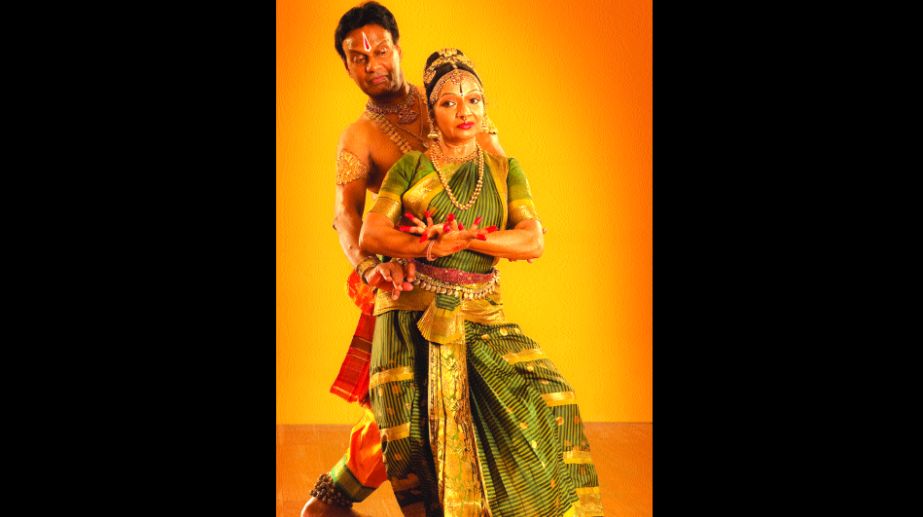
In celebration of a Mahashivratri concert and 50 years of service to the field of classical dance, Padma Bhushan Raja-Radha Reddy perform at Natya Tarangini building premises in Saket.

Raja-Radha Reddy are a legendary Kuchipudi dancing couple, gurus and choreographers. Their performances for over five decades globally have gained them a reputation of rare excellence and perfection in style and technique. Between them, the couple is solely responsible for bringing the classical Indian dance form of Kuchipudi to the cultural map of the world.

NatyaTarangini performing arts, founded by Raja-Radha Reddy 40 years ago, has been annually organising the "Parampara Series", a national festival of dance and music to promote these arts, for the last 20 years. This year to celebrate the couple's 50 years of dedication to the field of classical dance, Natya Tarangini is organising as an ode to Nataraja, The Lord of dance, on the occasion of Mahashivratri, a series of concerts to worship and praise Lord Shiva, The Creator of dance.

It has often been said that when in performance, Raja Reddy personifies and indeed embodies Lord Shiva Himself, driven by an inner force that inspires, almost possesses him when he dances, with Radha as an equally inspired Parvati. Together they weave magic, unmatched by any other dancing couple worldwide. The experience is altogether mersmerising, lifting the viewer into a trance.

Radha's sister, the lively Kaushalya, accorded the privilege of dancing with the two gurus much later in the years, too, is an intelligent and spritely dancer, extending the excellence of the gurus. It is always an added treat for the viewer to watch Kaushalya with Raja-Radha on stage, their timing and movement levelled to perfection.

The performance this Shivaratri will take place tomorrow (24 February) at 8.30 pm.

Lok Chhanda presents "Nritya Katha" ~ an evening of choreographic works in association with India Habitat Centre, in presenting a bouquet of various dance styles inspired by Kathak, Chhau and Contemporary Dance. Katha Dance Theatre tries to trail Indian Kathak from American soil, conceptualised by Rita Mustaphi, disciple of Pandit Birju Maharaj, with artists hailing from the US to capture the Indian magic. The troupe has been globe trotting to present their art from a global platform. The evening presents a wealth of seemingly scintillating performance, grand and nuanced at the same time.

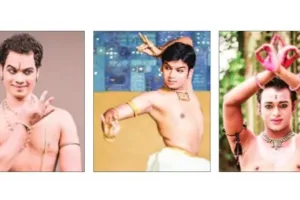
Nayak, performed by Rakesh Sai Babu, choreographer and disciple of Guru Janmejoy Sai Babu, artistic director at Gurukul Chhau Dance Sangam, performs in the Mayurbhanj Chhau style.

Kabeer by Maitreyee Pahari graces with pure Kathak Style in contemporary presentation; music by the Mrigya band, composer Sharat Chandra Srivastava.

Karna by Rita Mustaphi, in Kathak style, reworks the Mahabharata, collaborated with Katha Dance Theatre Company members, Anurag Sharma and Derek Phillips, also local dancers and drummers, who accompany the tour.

Chains by Nanda Kumar depicts emotions and suffering of slaves and their thirst for freedom, having no escape route ~ individuals owned by others who control their life and living. Nand Kumar, with his background in Funk Jazz, dexterously moulded to Mayurbhanj Chhau under Santosh Nair, should be an interesting inclusion, like several other aspects of this rather unique series.

Lok Chhanda, established for the preservation and promotion of dance forms of India has come a long way, in the 25 years of its existence, drawing critical acclaim for its performances worldwide, as also in all major dance festivals of India. They perform on 27 February at the Stein Auditorium, India Habitat Centre, at 7pm.

Melange of melody and rhythm

Manjari Sinha |

The Ravi Shankar Centre, Chanakyapuri, also known as RIMPA, reverberated with music in its entirety with vocal, instrumental and dance performances from 16-19 February in celebration of the 97th Birth Anniversary of its founder Pt Ravi Shankar. The four-day festival of classical music and dance was dedicated to his disciple George Harrison for his 74th birthday. In fact this is RIMPA's annual festival, which Pandit Ravi Shankar had started himself in the memory of his disciple and a dear friend.

The festival concluded with the melodious Sitar recital by his senior disciple Arun Bharat Ram, who said, "This is a moment of us to reflect on our Guruji, and what better way would be for us students, than to honour him with the annual festival he had started? It is an opportunity for established and young artists to present their art." The screening of an incredible film on the legendary musician was the added attraction of the festival, that overwhelmed the audience each and every evening, before the performances.

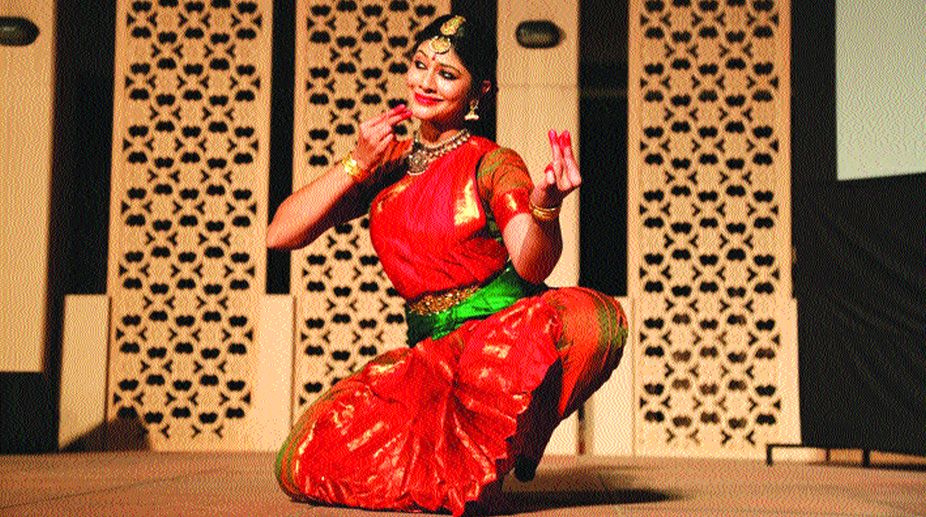
The festival opened with the Sitar recital by Supriya Shah, who was joined by Sanjeev Shankar on the Shehnai, after rendering her main raga Yaman. The duet of Sitar and Shehnai offered the dessert in Thumri Manjh Khamaj, a raga created by Pt Ravishankar. The other attraction of the inaugural evening was the light classical vocal recital by Malini Awasthi. A tabla solo by Bickram Ghosh and a Hindustani classical vocal recital by Indrani Mukherjee were the other vocal and instrumental performances. The dance segment comprised talented dancers like Arushi Mudgal for Odissi, Dakshina Vaidyanathan in Bharatanatyam, and Sujata Banerjee and company for Kathak.

The delicate grace of Arushi pervaded throughout her performance right from Vasant, the opening number based on the opening Shloka of Kalidasa's Ritusamhar "Drumah sapushpah, salilam sapadmam…", describing the advent of the spring season when the trees are laden with flowers, the ponds are abloom with the lotus, the breeze is heavily scented, the nights are as delightful as the days. The thoughtfully-composed music by Pt Madhup Mudgal, based on ragas like Bhathiyar, Sohini, Vasant, Bahar and the combination of both in Vatant-Bahar, had captivating choreography by Madhavi Mudgal.

Then came the Nritta piece "Aahlad", the joyous abandon of melody and rhythm. This raga Shahana-based composition of Pt Madhup Mudgal was choreographed by Arushi herself. She chose the Odia song "Prano-sangini re…" for her emotive Abhinaya next with the immortal choreography of Guru Kelu Charan Mahapatra. A very special feature of her Odissi repertoire was the innovative way each and every item was titled, like Aahlad or Moort-Amoort (form and formless), that opened with a verse from the Mundakopanishad, describing the Purusha as the ultimate being ~ he who is formless, free from the cycle of birth and death, the creator of all creation and all-pervading. This invocation of the formless coexists with the worship of the many exquisite forms of gods and goddesses like the Shiva as Ardhanareeshwara, Ram and Krishna. The crux or the ultimate reality is one, that resides in all, whether with form or formless.

Arushi concluded with a celebration of the union of the form with the formless. Music for this was composed by Pt Madhup Mudgal with the rhythmic inputs from Guru Dhaneswar Swain and Budhanath Swain. The admirable aspect of Arushi's performance was that she tried to be innovative but adhering strongly to the tradition she belongs to.

Dakshina Vaidyanathan was also innovative in her repertoire, even though sticking to traditional "Margam". Her dazzling dance opened with the Ganapati Stavana, an invocation to Ganesha, in his typical gait. The opening Veda Mantras and the sound of conch-shell created the perfect ambience for this invocatory item. She proceeded with "Pannagendra-shayana Shri Padmanabha…," a composition of Maharaja Swathi Thirunal, and gave it the detailed treatment like a Varnam, studded with Swarajathi and the intricate rhythmic patterns interspersed with Abhinaya of a Nayika pining for her beloved Lord Vishnu. The eight statements of Shringara-Bhakti were woven into ragamalika according to her varied emotional states. The electrifying Jathis of Karaikudi Shiv Kumar were reproduced in Nritta by the energetic dancer.

Dakshina also presented a Hindi Pada of Swathi Thirunal "Main toh nahi jaun Jamuna teer…", depicting the child Krishna refusing to go to the banks of river Yamuna and mother Yashoda argues why not! The pada takes a poignant turn when Dakshina enacts the Virahini Gopi, who doesn't want to go to the those banks of Yamuna, where she had the love alliance with her beloved Krishna, who has left her and gone far away. Dakshina concluded her Bharatanatyam recital with a Tillana in raga Amritavarshini. Guru Rama Vaidyanathan had choreographed all the numbers presented by her gifted disciple Dakshina.

A symphony of bird-calls

Sri Krishna |

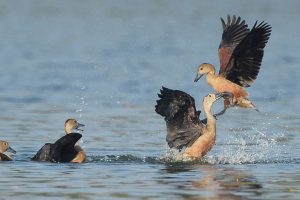
As one drives into Bharatpur township, it is indeed rather surprising that almost within the precincts of this Rajathan township exists the heritage Keoladeo National Park, which in peak season from November onwards is an important wintering ground of Palaearctic migratory waterfowl. The sanctuary, which is a green wildlife oasis, situated within a populated human-dominated landscape, has a two-metre high wall to ensure that there are no encroachments. It has some 375 bird species and a diverse array of other life forms in this mosaic of grasslands, woodlands, woodland swamps and wetlands of just 2,873 ha.

The Park's continued existence is dependent on a regulated water supply from a reservoir outside the park boundary. The park's well-designed system of dykes and sluices provides areas of varying water depths which are used by various avifaunal species. The water bodies within the park gets water from nearby Ajana reservoir and the water flow has been regular, to keep the avian population well-fed.

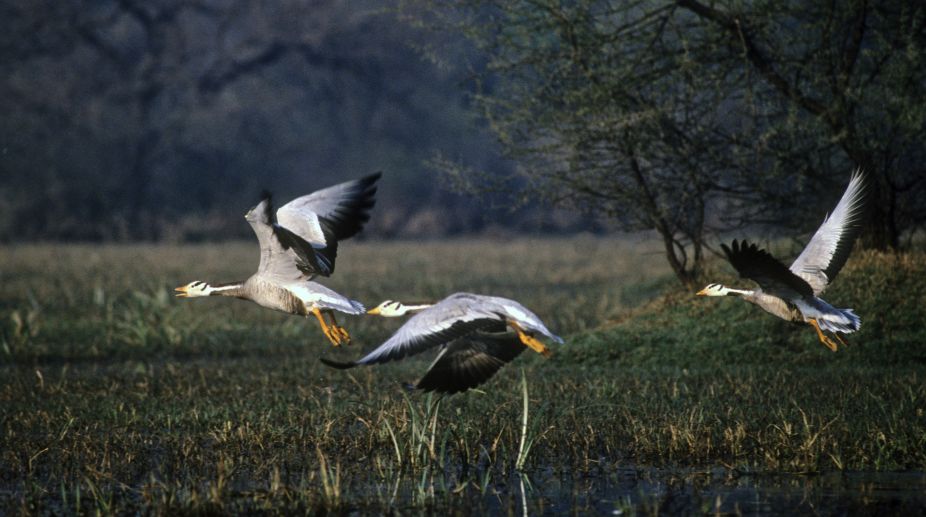
"This year we have had ample water in the various water bodies inside the park and so there has been a large congregation of birds coming in," said Park Director Bijoy Joy, who makes it a point to go several times round the park daily. "Though we have no big cats but this year one leopard has come into the park, which has 10 sq km of wetland and 20 square kilometres of woodlands and grasslands. Otherwise, the park has mostly coots, bar headed geese, storks, cormorants, herons, monitor lizards, pythons, cobras and vipers."

A night drive through the park enables the visitor to see animals like the nilgai, spotted deer, jackals, hyenas and, if one is lucky, a porcupine.

History

This "Bird Paradise" was developed in a natural depression wetland that was managed as a duck-shooting reserve at the end of the 19th century. There is even a plaque near the Shiva temple inside the park, listing out the number of ducks shot by the various Englishmen, who visited the park for duck-shooting in the company of the local ruler. The killings range from a few hundreds to thousands.

The park was a hunting ground for the maharajas of Bharatpur, a tradition dating back to 1850, and later, duck shoots were organised yearly in honour of the British viceroys. In one shoot alone in 1938, over 4,273 birds such as mallards and teals were killed by Lord Linlithgow, the then Governor-General of India.

However, since the park was declared a National Park on March 10, 1982, and subsequently made a World Heritage park by UNESCO, it is now "shoot" of a different kind that takes place and many of these "hunters" travel on cycles and cycle rickshaws as also the couple of golf carts that are provided to take them around.

Due to its strategic location in the middle of Central Asian migratory flyway, it is indeed a bird lovers' paradise as one gets to see large congregations of ducks, geese, coots, pelicans, painted storks and waders during the winter season.

The park was the only known wintering site of the central population of the critically endangered Siberian Crane but, unfortunately, these Cranes have become extinct with the last one having been sighted in 2002 and have almost disappeared. Some of the best shots of these birds have been taken by politician-businessman Kamal Morarka, whose organisation M R Morarka GDC Rural Research Foundation provided buses for visitors. Now these vehicles lie in disuse. As veteran guide Bholu Abrar Khan, who has spent 38 years working in the park, said, "See, the buses given by Kamal Morarka are parked in the garages and not been in use. I think golf carts would be a good thing since the park needs more of them as they do not pollute the place."

Bholu, the guide

Popularly known as Bholu, he knows every nook and corner of the park and a visit under his guidance is indeed an education, for he shows where a particular bird specie is nesting. Carrying powerful binoculars, he gives it to the visitor to see these avians at handshaking distance.

Bholu, whose father was a chef, has been enjoying every bit of his 38 years' stay in the park and loves taking visitors explaining the intricate details of the various birds. He had worked closely with ornithologist Dr Salim Ali and proudly says he learnt from the "great Doctor" as he calls him.

Bholu, a long-term resident of the area and someone who knows every inch of the 29-sq km park, says the revival of the park to its past glory will take some more years. "It takes several breeding seasons for many of the resident and migratory birds to establish presence in terms of breeding and feeding. While we are happy to see that the presence of water is attracting birds to build nests, changes in weather patterns along the migratory path in Central Asia through Afghanistan and Pakistanare delaying the arrival of many species."

He said abundance of fish, which is the main food source for birds such as kites, eagles, cranes, storks and kingfishers, means that the birds could stay longer in the sanctuary this year. He hopes the famed Siberian Cranes, which once visited Bharatpur in large numbers but have now all but vanished, will make an appearance.

Haven of birds

The park is also the wintering area for globally threatened species such as the Greater Spotted Eagle and Imperial Eagle. During the breeding season the most spectacular heronry in the region is formed by 15 species of herons, ibis, cormorants, spoonbills and storks, where in a well-flooded year over 20,000 birds nest.

Around 115 species of birds breed in the park which includes 15 water bird species forming one of the most spectacular heronries of the region. The habitat mosaic of the property supports a large number of species in a small area, with 42 species of raptors recorded.

Notes of concern

There has been some concern expressed over possible air and water pollution effects from the adjacent city of Bharatpur, but these effects are not evident at present. Through eco-development activities in the surrounding villages, the grazing of cattle within the park has been minimised and the local communities are also engaged in participatory resource conservation, which includes removal of invasive alien species.

"One of the major problems is the water hyacinth but we are employing local people to clear them and it has been of immense help to the park as we are able to keep the water clean for the birds that are dependent on water," said Joy.

Keoladeo attracts many visitors, who are taken for bird watching in cycle rickshaws by trained local guides from surrounding villages, which provides additional livelihoods as well as reduces noise pollution. This year 338 people, including members of the Forest Department staff and rickshaw pullers, were trained in bird watching along with 82 nature guides registered with the Rajasthan Forest Department. As Joy said at a function last year, "In the park, rickshaw pullers, nature guides and organisations like WWF-India work together as a team. Each and every individual is important and we all function like parts of a car, collectively contributing to the journey."

The rickshaw drivers are well-versed in the flora and fauna as also the birds that visit the park and they take the tourists to the right spots enabling them to get a better view. "We are trained by the local forest officials and also given a guided tour of the park. It helps us in earning extra money for our household," said Charan Singh, a cycle rickshaw driver, who has been working for several years now. These rickshaw drivers are indeed a source of valuable information and they have many foreigners, who also hire them for going round the park.

Preserving the Park

A recently-started conservation programme for the 27 satellite wetlands surrounding this park has further enhanced the protection of the migratory waterfowl arriving in the Central Asian flyway to winter in Western India. The park is home to 366 bird species, 379 floral species, 50 species of fish, 13 species of snakes, five species of lizards, seven amphibian species, seven turtle species and a variety of other invertebrates.

The park requires around 500 million cubic feet of water every year. This is now ensured with regular supply of water from the Goverdhan drain. A set of pipelines from the Santruk village to the Keoladeo National Park at a distance of about 17.1 km has seen water resource augmentation within the National Park area.

The park has effective legal protection under the provisions of Wildlife (Protection) Act, 1972 and Indian Forest Act, 1927. The site is managed by the Rajasthan Forest Department with the support of local communities and national and international conservation organisations, and a management plan has been developed for the protection and management of the property.

The boundary wall that surrounds the park virtually eliminates the threats of poaching or pollution, and there is no encroachment or habitations inside the park. Noise pollution from the adjoining Bharatpur city and National Highway are minimal.