Logo

Myriads of musical strains

Meena Banerjee |

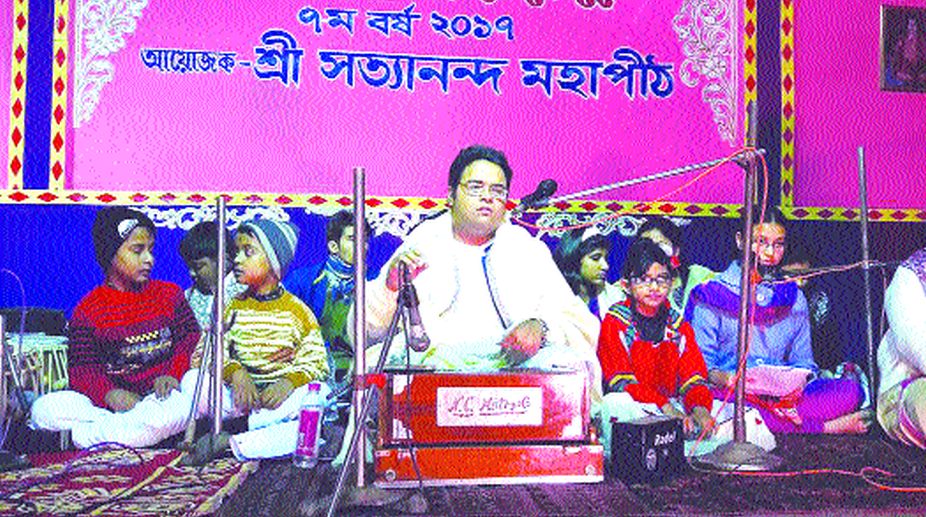
Baruipur’s Ramnagar Uttarbhag wears a festive look every year during the second half of January, thanks to the several days long Satyananda Mela, organised by Sree Satyananda Mahapeeth. The clarion call, originating from this divine institution under the guidance of Sree Archanapuri Maa and her devoted disciple Swami Mrigananda, actually inspires all the artistes and craftsmen to showcase their art and craft during this fair focused on Bengal’s cultural heritage. This noble effort to bring this remote corner of the metro under the mainstream, receives generous support from the West Bengal government, from reputed artistes as well as from all segments of the local social groups.

This year the Mela commenced with a musical feature, scripted, tuned, directed and originally sung by Archanapuri Maa who, like her spiritual Guru Thakur Satyananda Dev, believes in educating the masses through captivating cultural shows. To this effect, she has scripted numerous musical features.

Well-known classical vocalist and guru Nabhodeep Chakraborty and his students chose to perform one such captivating feature Sumbh Nisumbh Badh, which describes the victory of Goddess Durga over evil with songs, based on ragas like Devgiri Bilaval, Malgunji, Bhankar, Bhimpalsri, Bhupali, Vrindavani Sarang, Durga et al. Ably narrated by Sikha Chakraborty and sung by Asu Anvita Naidu, Samudranil Dhara, Shreya Ghosh, Sagnik Sen, Atasi Sarkar, Anisha Mondal Mukherjee, Vishwajeet Singh Thakur, Rajeswari Chakraborty, Avirup and Avijoy Saha under the guidance of Nabhodeep who trained them in the Patiala Gharana parampara, the feature was brought alive, especially when the guru joined them and made a memorable impact. They were supported by Somnath Saha, Ashish Goswami and Subhashish Chakraborty on the tabla, percussion and keyboard respectively.

Each day of the Mela showcased different genres of performing arts. Apparently, the crowd pullers were the jatra palas, theatre groups, kirtan sampradaya, magic shows and interesting storytellers like the “human puppets”.

Classical debut

Sur Archana Sangeet Pratishthaan has been presenting annual cultural concerts for years. This was the first time that they organised a purely classical music concert in Belgharia’s Nazrul Mancha under the guidance of Archana Chakraborty, who is the founder of the organisation. The students of Sur Archana commenced the evening with a beautiful Saraswati vandana, which was followed by a bhajan.

However, renowned Hindustani classical vocalist Sandip Bhattacharjee and New York-based sitarist Indrajit Chowdhary were the main attraction of this melodious evening. While the latter was supported by Arindam Chakravarty (tabla), Dilip Biswas and Kingshuk Mukherjee accompanied Sandip on the harmonium and tabla very efficiently. Sandip presented raga Bageshree and mesmerised the audiences with alaap, vistaar, taan and sargam — all punctuated with emotive spells. Though time was limited, he presented the famous thumri, Yaad piya ki aye with beautiful artistry.

Earlier, the classical part began with raga Yaman, neatly sung by Shrijeeta Chakraborty. She rounded off with a Meera Bhajan (composed by Sandip). This was followed by vocalist Susmita Chakraborty’s melodious khayal recital in raga Ragheshri and a soulful Hori bhajan.? Kathak exponent Tandra Sar?bajna along with her co-artists began their recital with an invocation (Shiva stuti) in contemporary dance style and then went into traditional kathak. ?Their costumes and dancing skills was captivating.

150th birthday

The year-long celebration of the 150th birth anniversary of Swami Abhedananda commenced on his janma tithi on 24 September 2016 at the Satyananda Devayatan Hall under the aegis of Sree Satyananda Mahapeeth. As in the first two phases of the celebration, the third one also highlighted the vision and philosophy of the Swami’s life and mission. Spread over two days, it was organised at Sree Satyananda Vidyaniketan Hall, Baruipur.

The first day saw an enlightening seminar on “Relevance of Sanskrit and the Hindu Way of Life”. Moderated by Swami Shivatmananda, eminent scholars like Indrajit Sarkar, Ayan Bhattacharya, Parthsarathy Mukhopadhyay, Biplab Chakraborty and Shubhodeep Mukhopadhyay spoke on the subjects close to the heart of Abhed Swami.

Music too was one of his most revered subjects and the second day focused on that. Nabhodeep Chakraborty, representative of Kasur Patiala Gharana, started the afternoon recital with raga Bhimpalasi. As this concert was dedicated to Abhed Swami, the vilambit khayal in ektal and showed certain elements of Khandaharbani Dhrupad. The chalan of the raga displayed heavy meends without lighter embellishments. The lyrics of teental khayal were Saadh le man Hari ko, kar le dhyan tu Bramha ko. A Sanskrit composition of Adi Shankaracharya, Pashupatim Dyupatim Dharani-patim tuned in raga Malkauns was his next. A Bengali devotional song of Premik Maharaj, set to chautal completed this melodic tribute, well accompanied by Kamalaskha Mukherjee and Nabarun Kumar Dutta on the harmonium and tabla respectively.

This devotionally-charged mood reached its zenith when renowned kirtan exponent Shanta Das and Sampradaya took centre stage. The erudite singer said that worldly life introduces us to several people, this awakens emotions, which lead to love and when our loved one goes out of sight, we suffer the pangs of separation. This pain is the mainstay of Mathur-Leela, the core of her presentation of the day. After the traditional Gaurchandrika in raga Alhaiya Bilawal, she offered compositions of Vidyapati, Chandidas and Vasudev Ghosh Thakur set to Puria Dhanashri, Yaman et al. In the Akshep segment she sang an emotive Prem ka ankur set to raga Yaman Kalyan and tewra tala. Beautifully assisted all through by her daughter Shatarupa Das, she concluded with Dooti samvad in raga Bageshri.

Awesome quartet

The hallowed Tollygunge Clubs lawns witnessed a memorable evening of jazz and classical fusion featuring santoor maestro Tarun Bhattacharya and the much acclaimed US-based saxophone virtuoso George Brooks. They were ably supported by Joy Sarkar on the guitar and Pandit Shubhankar Banerjee on the tabla. The evening began with raga Kirwani replete with an elaborate alaap and gatkaris in jhaptal and teental. This was followed by a solo rendition by Brooks who played a western melody akin to raga Puriya Dhanashree.

Bhattacharya followed this with a dhun called Dreams and quickly moved on to another captivating raga Charukeshi. Brooks took over from there with his solo rendition of western melodies and finally the musicians played the famed Vaishnava jana toh taine kahiye, the favourite bhajan of Mahatma Gandhi. The enthralling music for over two hours was witnessed by a mammoth crowd of almost one thousand discerning music lovers.

North-South dialogue

Rasika Ranjana Sabha, Kolkata, is a premier organisation known for their regularly organised classical music concerts. They presented a rare vocal duet concert in Carnatic and Hindustani classical music styles recently.

This featured two very talented and upcoming artistes, Calcutta VN Shankar (a former Kolkata-resident now settled in Chennai) and Pallabi Ghatak. They started their concert with a shloka invoking blessings of Lord Ganesha followed by a composition set to interesting melodies of Mohana Kalayani (a Carnatic raga, having Bhupali and Yaman in arohan and avarohan respectively) in praise of Lord Siddhi Vinayaka in Aditala (composed by Harikesh Nalur Muthaiyabagwathar). Kudos to Pallabi, a disciple of Pandit Ajoy Chakrabarty, for singing the composition in this raga as it is quite rare for the Hindustani system. She, then, presented raga Jog in the traditional way, replete with slow and fast khayals that were duly treated with vistar, behlawa and a variety of taans. She was ably assisted by one of most competent young tabla exponents today, Sandip Ghosh. Pallabi’s mellifluous voice did wonders in the higher octave with clear tone without any blemishes.

Next, Calcutta VN Shankar, who is groomed by PS Naryanaswamy Chennai belonging to the Semmangudi Bani, took up his solo presentation in the traditional Carnatic raga Shankarabaranam (the corresponding raga in Hindustani being Bilwal). He presented an elaborate alap that delineated this gambhira raga very effectively. He then sang one of the most popular kriti composed by Saint Thyagraja set in Aditala. He was ably followed on the violin by S Ranganthan, a student of the renowned Guruguha Gana Vidayalaya Kolkata. The kriti’s beauty was enhanced by the rhythmic support provided by the city-based well-known mridangam vidwan N Shankar.

After these solo presentations, both Shankar and Pallabi took up a duet. While Shankar followed the typical ragam Tanam Pallavi format, Pallabi followed the alap, taan and khayal bandish based design. They chose the conventional and traditional raga Puriya Dhanashri (the corresponding raga in Carnatic style being Pantuvarali). The composition set up by N Shankar for this concert was set to Aditala with 16 matras and the mukhda of the bandish was very interesting. The lyrics of both, the pallavi and bandish, were based on Devi and her Shakti. Both the artistes revelled in their respective way in exploring the raga alap and touched all the main nuances. They also ventured to do a raga Malika in this format by choosing ragas Sri Ranjani and Hindolam (in Carnatic style) and ragas Charukesi and Madhuvanti (in Hindustani style). They then traversed back to Puriaya Dhanasri and followed it with a mathematical variation of different tempos. This was very interesting and progressed towards a sawal jawab pattern between the singers with the percussionists joining in. This ended with a grand tihai.

That was followed by a short but brilliant taalvadya by both N Shankar (mrigangam) and Sandip Ghosh (tabla). Pallabi later sang a lilting thumri and then joined Shankar in paying tributes to the legendary Sri Balamuralikrishna by singing his Tillana/Tarana in the raga Kuntavarali. This was quite innovative in approach but aesthetically performed by these two artists withou deviating from the classical strictures of these two styles.

This particular concert, conceived by N Shankar, was indeed very interesting and such concerts should be presented regularly so that the lovers of these two styles can understand the intricacies of both Carnatic and Hindustani music systems.
Studded with exemplary choreography

Tapati Chowdhurie |

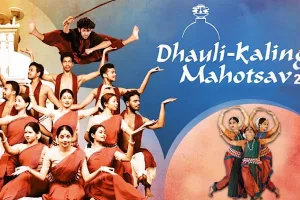
The Dhauli Kalinga Mahotsav in Odisha — held at the foothills of Dhauli with the Peace Pagoda built atop it by the Japanese in 1972 — has been a great cultural event ever since its inception in 2003. The site of the festival had seen the remarkable life-changing Kalinga War fought by Ashoka the Great, which made him embrace non-violence, a doctrine preached by Gautama Buddha.

In today’s world of intense competition among nations to become powerful by amassing sophisticated war weapons, a quiet history of becoming a dominant soft power is gradually taking shape in Dhauli on the foothills of Dhauligiri.

The Mahotsav organised jointly by the department of tourism, Government of Odisha and Orissa Dance Academy gave performance space to other classical dance forms as well as some of the martial art forms of India.

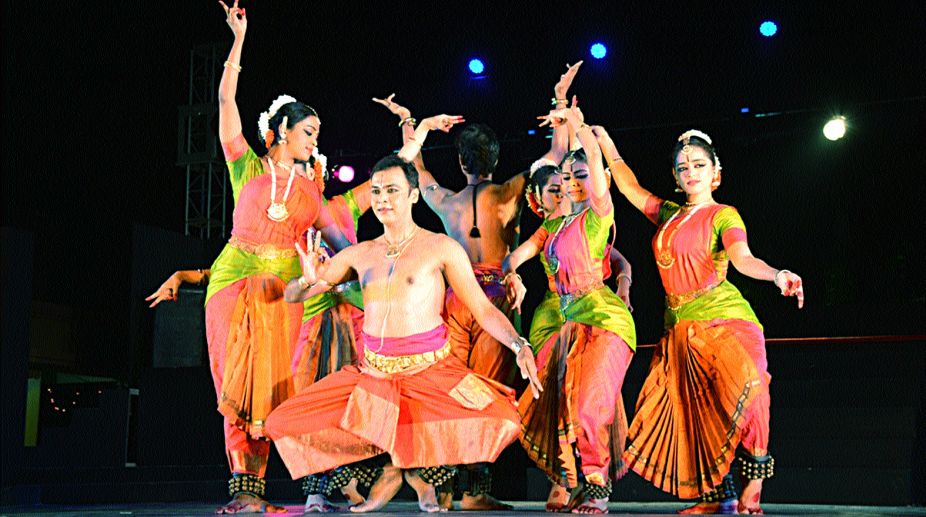
In the face of intense in-house competition that exists among dance forms belonging to the same genre, Aruna Mohanty conceived Aikatana, which made the coming together of seven gurus and their groups possible in a harmonious ensemble. Scripted by Kedar Misra, Aikatana brought together well known groups in the Odissi firmament like Srjan, Art Vision, Nupur, Gunjan, Suravi, Utkal Sangeet Mahavidyalay and Orissa Dance Academy and produced their epoch-making choreographic piece. The piece was based on sankhya or numbers, which signify oneness or Brahma. Each group was given a number on which they worked. For example, the guru who got number six worked on showcasing Sadaripu. For seven, the seven colours of the rainbow were chosen. Eight was represented Asta Shabhu, while nine was displayed evocatively through the nine emotions as delineated in the Natya Shastra. The groups merged with each other seamlessly — before one group could make their exit, another appeared and fused smoothly. Finally all the groups jointly performed Dasavatar to showcase the power of 10, in an exquisite choreographic piece that took one’s breath away.

It was a privilege to watch Vaibhav Arekar, who is one of the foremost Bharatanatyam practitioners and also a teacher, actor, educationist, choreographer and writer. His invocation to Nataraja in raga Malika and taal malika, described all the facets of Shiva. Creatively conceived sancharis were entertaining and they aroused a sense of wonder in the audience. The ground-breaking Alarippu blossomed in myriads of ways, where at times the group was in a circle while in others, they covered the whole stage.

This continued with his presentation of Ardhanareeswara, where everything was explained through effortless and subtle body language. Originality of thought was there all through. Postures of Shiva, Parvaty and the devotee were all simple but eloquent. Arekar and his group sailed through. As Mahisasura, he entered the stage with unbelievable leaps before the arrival of the Mahisasuramardini in group. What power, what control and command the slayer of Mahisasur displayed and the expression of the humbled demon had to be seen to be believed.

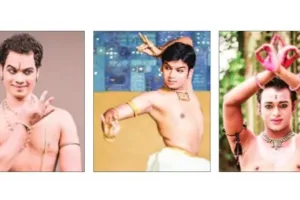
Classical dance is self-explanatory and has little use of props. However, Devatmayee, depicting the soul of the gods, was done in a contemporary approach and used props to highlight dramatic elements. It included elements of classical Manipuri dance, Thang Ta (the martial dance of Manipur) and Lai Haroaba — a traditional festival celebrated to please the gods through dancing and singing. It was the choreographic work of noted Manipuri dancer, Bimbavati Devi. Devatmayee delved into tradition using dramatic devises through the blending of indigenous Manipuri music, Natasankirtana and chants. The piece is basically an allegory of a woman’s journey through the meandering lanes and layers of self-realisation. The concept was by Bimbavati Devi and Srijan Chatterjee.

Devatmayee was the fruit of Chatterjee’s research. The script was also by him while the music was by N Tiken Singh. A set of well-trained dancers with Bimbavati Devi being one, performed with ease. For depicting Usha or dawn, pristine Manipuri dance was used.

Incorporating Pung Cholom and Kartal cholom movements is the typical style of Manipuri of Guru Bipin Singh. Much of that was seen in Bimbavati’s composition. The lilting music of Manipur’s traditional instrument Pena was used in the Lai Haroaba portion. The inclusion of Goddess’ Kamala, Annapurna, Kali and Ganga made the choreography visually spectacular.

Nadanta presented by Jonardhan Raj Urs from Bangalore was a mixed-media production, depicting the infinite dance of fire and ash. Visual and auditory designs created the cosmic dance of fire. The concept was by Madhu Nataraj. There was much pomp and show and the piece provided variety.

Tala Vadya Vichitra by Dhaneswar Swain and group captured the mood of rhythms. Percussion instruments of all kinds, which are indigenous to Odisha created a masterpiece. Master of rhythms, Swain’s group effortlessly executed soothing and melodious rhythms. Difficult musical phrases were deftly executed. He showed his brilliance in rhythm compositions.

Each of the three days displayed martial art forms of the country. On the first day, Belraj Soni and group of Mumbai gave the audience a glimpse of what Kalaripayattu of Kerala is all about.

However, the very best martial art performance was by Budhayan Binash Kumar Mishra and his group from Malkangiri in Odisha. Young and dynamic, Mishra is infused with a zeal for social service. He represented India at the Beijing Olympics and is well-versed in martial art forms as well as dance choreography. He is deeply involved in improving the quality of life of the children in Malkangiri, a tribal district of Odisha.

Mishra is also the initiator of the All Odisha Martial Arts Academy, a premier organisation dedicated to sports, arts, culture, education and social service. The group performed great feats and showed fighting and self-defence techniques as well as physical exercises coupled with mental discipline. It also helps in spiritual growth said the mentor.

The Dhauli Kalinga Mahotsav is a one-of-its-kind festival and prestigious awards are conferred every year. This time, Asim Basu, eminent painter and designer, a sensitive artist and filmmaker, was awarded the Ruchi Buddha Samman posthumously. The Guru Gangadhar Pradhan Smriti Samman was awarded to Leela Venkatraman and Dr Sunil Kothari for their scholarship. Sarat Kumar Sahoo and Dr Purna Patnaik are art connoisseurs who have popularised Odiya Art in the US. Both were also felicitated with the Guru Gangadhar Pradhan Smruti Samman.

How Pixar came back

Cristopher Palmeri |

By Thanksgiving of 1994, Steve Jobs was stuck. Jobs hadn’t had a hit product in years. He’d blown through $50 million investing in Pixar, a maker of high-end graphics computers struggling to reinvent itself as an animation studio. His relationship with the talent there was frayed. Then, with a couple of shrewd financial moves over the next two years, he helped create one of the most remarkable success stories in Hollywood.

Pixar would go on to make a string of hit films, from Finding Nemo to Cars, spawn a renaissance in animated moviemaking, and turn Jobs, the co-founder of Apple, into the largest shareholder of the Walt Disney Co, after Disney bought the studio for 7.4 billion dollars in 2006.

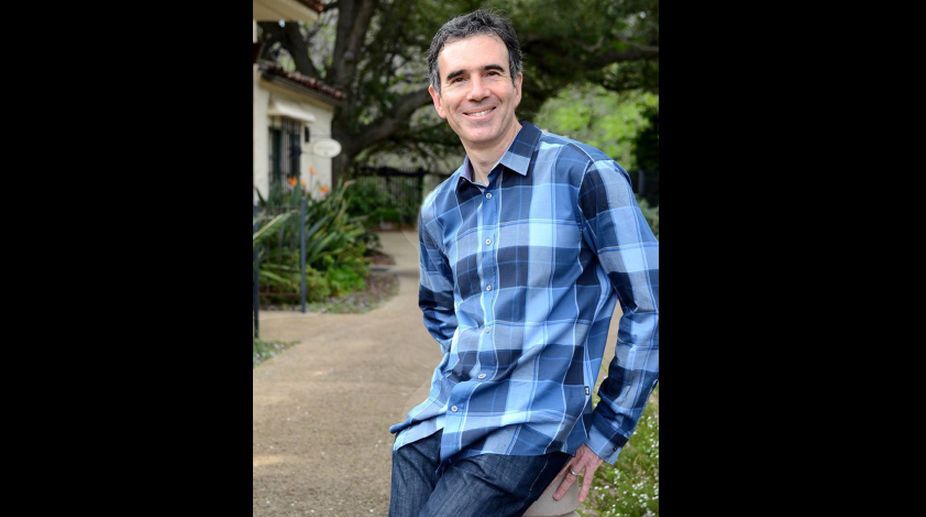
It’s a backstory told for the first time from the perspective of Lawrence Levy, Pixar’s former chief financial officer, in a new book, To Pixar and Beyond. Levy doesn’t take credit for Pixar’s big-screen successes. That goes to executives and filmmakers like John Lasseter, Pixar’s chief creative officer, and Ed Catmull, its president. He argues, though, that companies, like people, need a balance of craft and commerce to succeed.

“Pixar was the classic starving artist, full of talent and creativity but frustrated by a lack of money,” Levy said in an interview. Levy, then a technology executive in Silicon Valley, was cold-called by Jobs that November, 22 years ago. He signed on as finance chief after seeing a short preview of what was to become Pixar’s first feature, Toy Story.

“For 10 minutes I’d been transported somewhere else,” Levy writes. “A world where toys lived. Had feelings. Had problems. I had no idea who was behind it all, but somewhere in this building there were magicians at work.”
After learning more about the movie business and discussing Pixar’s distribution contract with entertainment industry insiders, Levy realised that Jobs, then 39, had signed a lopsided deal with Disney. The Burbank, California-based entertainment company had agreed to put up all of the money to make Pixar’s movies and stood to collect 90 per cent of the profits, even if the films were huge hits.
With that kind of profit-sharing, Pixar would never amount to much more than a contract worker, an animator-for-hire, subservient to the Disney machine, Levy reasoned.
“I don’t think Pixar could have retained or hired the kind of talent it did without building a company financially stable enough to reward them,” he said.

So Jobs and Levy hatched a two-part plan. The first part involved an initial public stock offering. Pixar raised about 150 million dollars in November 1995, shortly after the first Toy Story enjoyed its then-stellar 29 million dollars opening weekend. The success of that first film and the cash in the bank allowed Pixar to take its next step, going to Disney Chief Executive Officer Michael Eisner and asking for a renegotiation of the contract.

Eisner didn’t have to budge, but Pixar’s offer to finance half of the future cost of the films was likely a big incentive in the boom-or-bust business. After months of haggling, Eisner cut a deal, giving Disney the right to additional films and Pixar a 50 per cent share of the profits.

By the time of the Disney purchase, Pixar had won nine Academy Awards, and its first six feature films had grossed more than 3.2 billion dollars at the box office, thanks to such hits as The Incredibles and Monsters, Inc. Jobs, who had pancreatic cancer, died five years later at 56.

For those who can’t get enough of Jobs, Levy offers more insight into his world. A one-time neighbour of Jobs’ in Palo Alto, California, Levy describes a surprisingly laid-back scene where he could simply stroll through the entrepreneur’s back door and go on long weekend walks with him, chatting about the business.

The more controlling side of the future billionaire also comes across, as Levy describes a carefully choreographed Fortune profile in 1995 that rankled Pixar staffers because it focused mostly on Jobs.

Readers looking for more of Pixar’s recent history won’t find it here; Levy’s tale ends, more or less, with the sale in 2006. The company’s creative process, including its “brain trust” of senior executives and directors who review films in progress to keep them on track, has been taken up elsewhere in more detail.

Levy is out of the entertainment business now. He runs the Juniper Foundation, a nonprofit in San Francisco devoted to meditation and Eastern spiritualism. The lesson from Pixar and the key to its success still, he said, is finding that Buddhist “middle way”-part bureaucrat, part free spirit.

“Pixar is thriving,” Levy said. “But it never gets to rest on its laurels. Balancing those things requires constant vigilance.”

Dawn/ANN

Moonlight sonata

Geoffrey Macnab |

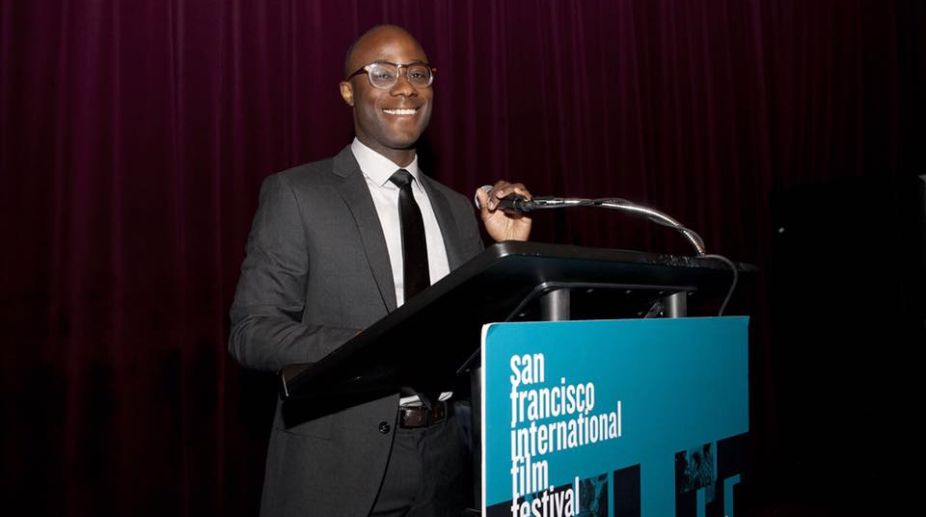
Barry Jenkins is sitting by the window in a hotel suite high up in a Rotterdam skyscraper just a day after his second feature Moonlight has been nominated for eight Academy Awards. A calm presence, he doesn’t seem in the slightest resentful that he is in Europe in the dead of winter on an exhausting promotional tour for his movie, when he could be back home in LA basking in the pre-Oscars adulation. “Surprised is the wrong word,” Jenkins suggests when asked if he has been taken aback by just how many awards nominations Moonlight has been picking up. “I was proud of the film. I thought we had done good work. But I have friends who’ve made really great work which no-one ever sees – so you never know how that is going to play out.”

Moonlight is a coming-of-age story in three parts that tells the story of Chiron, a young, black boy growing up very poor in a rough part of Miami. Although it is based on Tarell Alvin McCraney’s play, In Moonlight Black Boys Look Blue, Jenkins freely admits that McCraney’s story had a very strong personal resonance for him. In particular, the character of the drug addicted single mom Paula (brilliantly played by British actor Naomie Harris) is like Jenkins’ own mother.

One reason why Moonlight has so enraptured audiences and critics is that it deftly and continually defies expectations. The streetwise drug dealer Juan (Mahershala Ali) turns out to be one of the most sensitive and selfless characters in the film.

The frazzled, drug addict mother is devoted to her son in her own delinquent way. The sensitive and seemingly passive Chiron (“I ain’t soft”) eventually reveals hidden reserves of aggression as well as an ability to soak up punishment.

McCraney’s original play had been inspired by his relationship with a local drug dealer who, when he was still a boy, had taken him under his wing and acted as a surrogate father figure. “Because this was someone who existed in Tarrell’s life, he was never just a drug dealer. He was always a fully fleshed human being,” Jenkins explains. In most movies, he adds, a black drug dealer is “just a black drug dealer.” The point about Moonlight is that we see other sides of the character and other parts of his life. “For me, drug dealing is something that a man, this man, does. It is not the totality of who he is.”

Jenkins never set out to make a film that could “apply to everyone and that everyone could see themselves in. It was more about trying to do the best job we could to show off these characters – to show their lives.” He describes Moonlight as “immersive cinema” and talks about how he wants the audience to see events from the perspective of Chiron.

“There was a scene where Naomie as Paula meets Chiron in the courtyard, right before she is going to take the money out of his pockets,” Jenkins says, describing an uncomfortable moment in Paula steals her son’s money to feed her drug habit. “I remember filming that scene and thinking that because this was so personal for me, I was feeling things as a human being who had lived this that the audience wasn’t, that the camera wasn’t conveying to the audience.”

In order to ensure that the audience felt the full emotional force of the boy’s sense of betrayal, Jenkins shot the scene from the boy’s point of view, so that viewers had the sense they were looking straight into the mother’s eyes as she spoke to camera.

Jenkins chose Naomie Harris after she was recommended by Brad Pitt’s production company, Plan B. At first, Harris was reluctant to play a drug addict. Jenkins recalls explaining to her: “‘You’re actually playing a version of my mom and I would never create a version of her that didn’t have her full humanity.”’ At the time, Harris had been busy promoting Bond movie Spectre in which she played Miss Moneypenny, but threw herself into preparing for Paula’s role.

“She has never done drugs, she’s never had a drink of alcohol. She is totally different to who this character was in real life, but I trusted that when she showed up, she would have this presence,” Jenkins says. On the very first scene they shot, he asked her to perform direct to camera. When she agreed, he realised: “We were working from the same place and that wherever I need to push her, she’d be willing to go. It was just a beautiful experience.”

At the end of one of the chapters, Chrion does something brutal to one of his tormentors. It’s a cathartic moment and some spectators have whooped in approval. But when Jenkins watched the film at the Toronto Festival, there was clapping alongside one or two gasps. He himself doesn’t see any triumph in the scene. “There’s a physical scar on the bully but there’s a psychic scar on Chiron,” he says of a moment which represents a symbolic loss of innocence for the boy, even as he asserts himself.

The film was shot in Miami, which is where Jenkins himself grew up. He describes the city as a character in the story: “The essence of it, the atmosphere of it, the spirituality of it, it had to be there. It couldn’t be anywhere else. It would have been a different film if it wasn’t set in Miami.”

When the Oscars take place, Moonlight is strongly tipped to win at least some of the major awards. Jenkins himself isn’t allowed to vote: having directed only two features, he hasn’t yet been invited to join the Academy.

This time last year, there was a furious controversy about what filmmaker Spike Lee called “another all white ballot” at the Oscars. Jenkins was in post-production on Moonlight at the time and followed the debate with interest, little realising that a year later, he would be an Oscar front runner himself. “The film industry I work in is not homogenous. I think what all that commentary (last year) was about was trying to have all these governing bodies reflect the industry that we work in, the world we live in,” he notes of what appears to have been a transformation of the event since last year’s row.

The Academy pledged to double the number of female and minority members by 2020, and this year’s nominations are already among the most diverse in history. Jenkins welcomes the work that has gone on to “bring voices from the margins to the centre”.

The challenge for him now, win or lose at the Oscars, is to follow up Moonlight. He doesn’t want to talk about future projects but the trade press has reported he’s in the frame to direct a TV adaptation of Colson Whitehead’s novel The Underground Railroad, the story of a slave who flees a Georgia cotton plantation and is pursued by a ruthless slave catcher.

He insists that he will approach any future project in exactly the same painstaking way as he did Moonlight: “When this is all done, I am going to open my notebook (on the next project) and you know what is going to be there: a blank page. And it is going to take the same amount of work to fill it as on this one. As a writer, a blank page will humble the hell out of you. It always does and it always will.”

The Independent

Woes of urban relocation

Bharat Dogra |

Urban relocation projects generally involve shifting of urban poor people from central parts of a city to the outskirts. Despite reservations expressed by eminent urban planners, such relocation of slum dwellers and the homeless have become more frequent in several cities. It may be interesting to look at the experience of some groups whose relocation goes back a decade or more to see if with the passage of time they have become more comfortable.

A large number of slum-dwellers living in Banuwal Nagar in North-West Delhi were shifted about 24 kms away to G and H blocks of JJ Colony, Bawana in Outer Delhi about a decade ago. A recent visit to this colony revealed that in terms of the most important issue of livelihood, people are now in a worse position than they were.

Umesh Singh, a community leader who works as a mason explained: “In our previous home I was so well connected that I would just be roaming around and someone would call me for work. Employment was easy to get because we the service providers were living close to the more prosperous people who needed these services and could pay adequately. Then they resettled all the service providers together but in this area away from the main city. Who will use their services?”

He adds: “It is not only we as construction workers, carpenters and plumbers who have suffered. When we meet upper and middle class people of colonies where we worked earlier they tell us that they also now have much more difficulty in getting various services. So if our problems have increased and their problems have also increased then who has benefited from this resettlement?”

Livelihood problems have worsened particularly for women domestic workers. As they could not get work at the new place, many of them still go to their earlier employments in and around Saraswati Vihar about 24 km away. There is no direct bus. They have to leave home at or even before 6 a.m., grabbing a roti or two before leaving if they can get the time for this. Earlier they could return home for some rest in the afternoon. Now they do not get this rest because the home is so far away. They manage to return home only late in the evening and sometimes at night.

People complain bitterly that they still do not have access to usable toilets and have to walk a long distance for open defecation and that too in insecure conditions as an area near a canal is prone to crime. Several of them have been victims of crime. Overall sanitation is very poor as this is contracted out. Piped drinking water is not available and people have to make their own arrangements.

There is another settlement in Bawana JJ colony in front of K and L blocks. These are people who were evicted from Paschim Vihar in west Delhi, a distance of about 30 km, about a decade ago but unlike the relocated people of G and H blocks they do not have legal papers for this relocation. They have built small huts and planted trees, creating a new colony on their own. They do not have ration cards. They do not have sanitation and water facilities either and have to walk a considerable distance for a toilet. School education particularly for girl students is difficult as they have to go a long way and face harassment from goons. The nearest government hospital is also a long distance away.

Most of them are construction workers but some of them also work in nearby industries. People say that there are several industries but the prevailing wage rate of Rs. 4,500 to Rs. 5,000 per month for a eight-plus hour working day is so low that no one can survive on this. But keeping in view the poverty and desperation of people and the lack of alternatives these industries keep the wage rates so low and manage to employ desperate workers, particularly women.

A Block jhuggi in Shahbad dairy is another cluster of people shifted mostly from Shalimar Bagh area more than two decades ago. Despite the fact that the young men of this colony have grown up here, their existence remains precarious and devoid of essential facilities. There are no usable toilets and women going to relieve themselves in the open face the threat of not just harassment but even molestation. Due to lack of drainage, some houses suffer from water logging. Water supply depends on a tanker and hence is very uncertain. The nearest school needs repairs so children are being sent to a village school further away.

Hence it is clear that relocation often increases the many sided problems and vulnerabilities of urban poor households. While there is a clear need for changing urban policies which emphasise relocation, there is also need for immediate action to meet at least the most pressing and basic needs of relocated people.

The writer is a free-lance journalist who has been involved with several social movements and initiatives.

‘DMK was behind assembly fracas’

Sri Krishna |

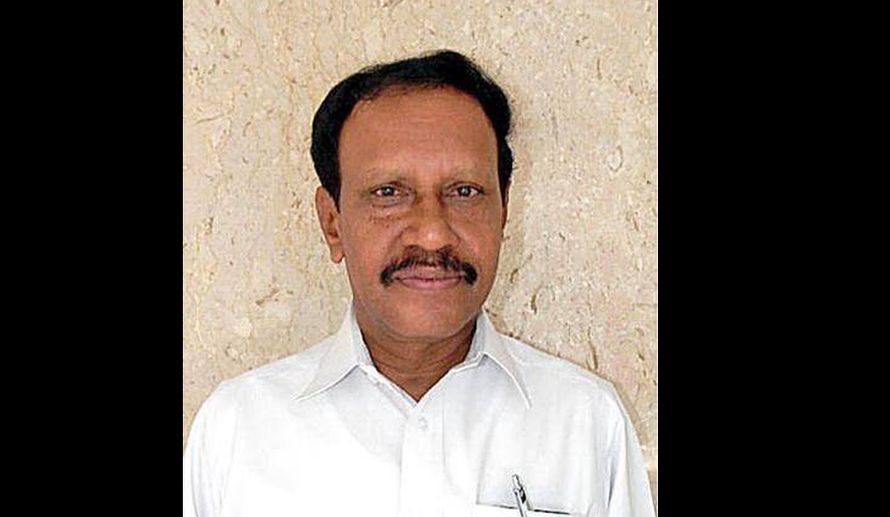
Senior AIADMK leader and Deputy Speaker in the Lok Sabha, Munisamy Thambi Durai, has squarely blamed the DMK for the chaos in the Tamil Nadu Assembly during the recent confidence vote for newly sworn-in state chief minister Eddapaddi Palaniswamy.

Seventy-year-old Thambi Durai, a fifth-term member of the Lok Sabha representing Karur, was Deputy Speaker for the first time in 1984 when the late Rajiv Gandhi was Prime Minister. He was Union Minister for Law, Justice and Company Affairs and Minister of State of Surface Transport from March 1998 to April 1999.

Thambi Durai began his political career at 18 as a youth activist of the erstwhile united DMK in 1965, during his first year as a student of Madras Christian College. He participated in the anti-Hindi agitation of 1965 and courted arrest. He worked his way up in the party starting as a worker at the booth level for municipal and legislative assembly polls in 1967 and 1971 for the DMK, and also as an agitprop coordinator in universities and colleges. He was among the founding-members of the AIADMK under M G Ramachandran. He became an MLA from Erode in 1977, and was first elected as a Member of Parliament in 1984 from Dharmapuri. He was also elected to the 9th, 12th, 15th and 16th Lok Sabhas. He has been serving as leader of the AIADMK in the House since 2009. In an interview, Thambi Durai spoke on the prevailing situation in Tamil Nadu. Excerpts:

Q: How do you foresee politics in Tamil Nadu after the confidence vote won by E Palaniswamy?

A: As far as Tamil Nadu politics is concerned, the legacy of Amma (Jayalalitha) is going to continue and there will be no change. We are going to provide a good and stable government. The people of the state have voted for Amma and her party is in power. We are going to take up Amma’s programmes. I am sure people would appreciate our stand and the support will continue. We are going to carry forward the people-oriented schemes that she had envisaged and implemented. They are all going to continue. It may take some time but we will implement them.

Q: Is any action contemplated against those MPs who came out openly in support of O Panneerselvam and were against Sasikala Natarajan?

A: There is no split in the party, we are all together though there may have been some differences which is only natural. Therefore there is no necessity of action against any of them. We are all members of the AIADMK. Our effort in the coming days would be to establish the supremacy of the party which was created by Puratchi Thalaivar M G Ramachandran and Puratchi Thalaivai Amma (Jayalalitha). We are united and are going in the direction given by our leaders.

Q: Who do you think could have been behind this action by Pannerseelvam ?

A: You know very well that it is DMK and its leader Stalin. You would have seen what happened in the Assembly. You know that confidence vote means open voting and there is no rule which says that there should be secret ballot. If there is secret ballot than what is the necessity of having an anti-defection law that has been enacted by Parliament. It is open voting that is the practice even in Parliament. The anti-defection law was brought in Parliament to ensure a stable government and for development of the country. In this case Pannerseelvam sought a secret ballot with the support of DMK.

If you recall, even in 1989 the DMK voted to dislodge an elected government so that President’s rule could be imposed in the State. This time, too, the DMK wanted to dislodge the government established by Amma, so they colluded with Panneerseelvam. They sought to get President’s rule promulgated in the State. But the AIADMK MLAs remained true to Amma’s legacy and followed the rules properly.

Many DMK leaders say democracy is followed only in their party but what happened in the Assembly shows what kind of democracy the DMK is following. The party sought to derail democracy by indulging in the kind of action that they did. They occupied the Speaker’s chair and misbehaved.

You saw the violence that erupted inside the Assembly where mikes were pulled out and papers torn and thrown allegedly by DMK MLAs.

The AIADMK followed the path shown by the late Annadurai and our leaders M G Ramachandran and J Jayalalitha. The party MLAs behaved politely.

It was the DMK which even though it claims the legacy of Annadurai did not follow his ideals and supported Pannerseelvam. It was there for all to see. Pannerseelvam was encouraged by Stalin to press for secret ballot as they felt that this would enable the DMK to get the support of his group.

They enacted this drama inside the Assembly forcing the House to be adjourned but later it functioned smoothly and we got the confidence vote and the government was in place.

Q: What do you have to say to the charge that MLAs were forcibly taken away to the Golden Beach resort by Sasikala and kept locked up till the assembly met?

A: The MLAs were not forcibly taken away to the resort. Even the police came and saw where they stayed. The MLAs also gave a statement that they were staying at the resort willingly and wanted to discuss certain things concerning party affairs and how to proceed in the Assembly. Therefore to say that they were staying there forcibly is not true.

At that time Pannerseelvam was the Chief Minister and he too had sent the police but the police said the MLAs were staying at the resort of their own free will. I don’t know why eminent persons are saying such things. Whatever allegations are being made concerning the MLAs and their stay at the resort are not correct.

Q: Now that a government is in place, what would be the stand regarding Jallikattu?

A: A law allowing Jallikattu has already been enacted with the help of the Central Government, so there is no need for any further action in this regard. The Central government has also removed the word bull from the list of performing animals and there is no problem.

Q: How do you foresee relations with the Centre after the recent developments?

A: The policy of the Tamil Nadu government, be it under MGR or Amma, has always been to have good relations with the Central government. This will continue in the interests of the state. We hope the Centre would ensure that the elected government which still has about four-and-a-half years to go would last its full term.

It is only the DMK which is attempting to destabilise the government and they will fail in this move. Even at the time Amma was in hospital, the DMK attempted to topple the duly elected AIADMK government and made all attempts to capture power trying short cut methods. But we are all united and therefore Amma’s legacy would continue.

Q: What is your government’s stand regarding GST?

A: Our government even during the time of Amma had made clear its stand on GST. There will be no change under the present government in Chennai.

Identity politics

Subrata Mukherjee |

Liberal democracy is based on the primacy of the individual; yet in the context of representative democracies, there is no alternative to group affiliation for meaningful expression of individual needs, aspirations and fulfillment. In the post-World War II period, the democratic pluralist view asserts that in the context of advanced capitalism, the basic contradictions of the industrial revolution have been resolved and that an overwhelming number of people through group affiliations satisfactorily take part in the decision-making process. Inequality and size are taken care of by a rough parity and special attributes of groups. The advantages and disadvantages are balanced by various attributes of society and government by what is called ‘Whitehall Pluralism’.

A radical critique of this democratic pluralist view emerges in C Wright Mills’ Power Elite (1956) and Herbert Marcuse’s One Dimensional Man (1964). Accepting the fact that there is no better alternative to liberal democracy, the American Left is trying to plug the loopholes of democracy and actualise it for those in the margins or are unrepresented. The objectives of the new social movements are participatory democracy and identity politics. These lack the social democratic experience of Western Europe, and their primary concern is America’s capitalist democracy.

The central issues that the Leftists of the US champion are wrong politically, such as reproductive rights, equal pay, affordable health care, abolition of patriarchy, and action on climate change. The basic problem with identity politics is that its constituency is restricted to the upper middle class both in terms of membership and appeal. It is delinked from serious and immediate economic and structural issues thrown up by globalisation and the rapid technological changes in the manufacturing and mining sectors. This has rendered hundreds of thousands out of employment, disturbed their social status, family life, and the future of the next generation.

Helen Lewis states that instead of attributing Trump’s victory to identity politics, it needs to be stressed that the tokenism of contemporary feminism that Hillary Clinton champions was less mindful of white Americans and “male Americans”. There was an explicit identification with Afro-Americans, and a sizeable number of white Americans and Hispanics preferred to vote Trump rather than Clinton. In her reckoning, identity politics like neo-liberalism “has become a bogeyman, as dumpster for anything that people don’t like but don’t care to articulate more fully”.

Politics in the US is dominated by identity politics. Clinton’s campaign for women is overstressed and her other planks for blue-collar workers, jobs, plans for education have not been effective because of her gender-centric campaign and publicity. Lewis significantly mentions that identity politics has been evident in the US for quite some time, and Trump cannot be blamed for its revival. David Brooks “blames identity politics for not really analysing the cause of the rise of ethnic populism” one that is totally ignored by proponents of identity politics. The crucial problems are: (1) disappearance and decimation of jobs as a consequence of phenomenal leaps in technology, automation and globalisation; (2) tearing of the social fabric; (3) redefinition of the nation-states by mass migration; and (4) rejection of the post-World War II order as a means to ensure peace.

Identity politics views these problems casually and is incapable of providing an answer. In the heyday of post-materialism, these postures were accepted uncritically; but now when even in advanced capitalism contradictions and cracks are visible, such politics is increasingly losing its relevance. As Lewis remarks, both the planks of Trump — (a) building a wall between Mexico and USA to stop illegal migration; and (b) making America great again — are not part of identity politics. She has argued that “the selling a candidate as an unreconstructed alpha male is not identity politics”.

Prof Mark Lilla of Columbia University is categorical that identity politics is detrimental to progressive ideas, the reason being that such politics detaches progressives from the larger nation. He writes: “The fixation on diversity in our schools and not in the press has produced a generation of liberals and progressives narcissistically unaware of conditions outside their self-defined groups and indifferent to the task of reaching out to Americans in every walk of life”. The proponents of identity politics cannot provide a coherent view of action to meet the multiple challenges in such a situation. The suspicion of average Americans towards the Washington establishment and the accessories is understandable.

John Gray thinks that Trump has been able to demolish the dynastic politics of the Clintons and Bushs. His victory is appreciable because he won against the well-established media and spending much less money than his opponents both in his own party and the democrats. Gray writes that the popular rejection of the established elite is because of their collective incompetence both in domestic and international politics. He adds: “Those who talk of a triumph of racism and misogyny point to aspects of Trump’s campaign that were real enough. Yet it is impossible to imagine these familiar disorders propelling him to power without the decades of neglect and disdain displayed in both main parties for those Americans who have been consistent losers from globalisation”.

In such a situation voting for Trump is not an irrational act of the voters. Gray has pointed out that “the hysteria that surrounds Trump’s victory stems in large part from a refusal by his opponents to admit their part in bring it about”. Making the contrast between the two upsets, he comments that “for the US presidency, economic deprivation and despair trumped the politics of gender, culture and race”. The traditional political vocabulary fails to address the issues of bread and butter, concentrating on gender and the like which, without incorporating the masses, appear suspicious and divisive.

Trump has demonstrated that his appeal for American nationalism resonates much louder than Clinton’s phony planks of gender and other equalities, as her background of privileges lacks the needed sincerity of an authentic American voice. In a way, Trump’s victory reassures the return of programmatic politics in a society which is essentially apolitical and individualistic. But even in such an order the desirable change can only crystallize politically as the fragmented social movements today lack the grassroot support that the civil rights movement had. As Brooks writes, “the central challenge is to rebuild a functioning polity and to modernize a binding American idea”.

The basic problem with identity politics is that substantive change can only be brought about by the political process, spearheaded by a leader or a political party. The turning points in contemporary American history have been initiated by political parties. And the examples are the New Deal, the Great Society programme, the containment theory and practice and the Reagan revolution. In spite of the inherent weaknesses of the American political parties, they are better organised and disciplined, qualities that the fragmented social movements cannot match. The major weakness of identity politics is that it is spearheaded by a small group of people with similar outlook and without accepting the basic fact that in the present-day cosmopolitanism, every single individual has multiple identities within a defined nation-state. This calls for a new national agenda, acceptance of what Habermas called constitutional citizenship with a brand of capitalism that has a humane face and which incorporates but is not divisive.

The myth that the American economic heritage is built on economic liberty and laissez faire internationalism is broken by the fact that Alexander Hamilton is the first major theorist of American protectionism which the US follows. The Trump victory vindicates what Montesquieu had said long ago, specifically that there are no accidents in history but only cause and effect.

The writer is former Professor of Political Science, University of Delhi.

No cause for pride

Editorial |

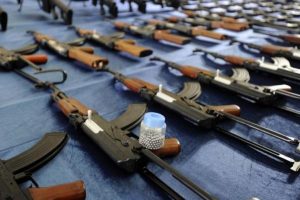
Only those who deem gung-ho belligerence a fashion statement will be impressed by India being projected as the world’s largest importer of military equipment: accounting for 13 per cent of the international arms trade, as calculated by the respected think-tank, the Stockholm International Peace Research Institute.

Perhaps some politicians owing allegiance to the ruling NDA will tom-tom the $21.95 billion imports over 2012-2016 as evidence of the government’s determination to augment military muscle in keeping with the commitment to national security, and use the SIPRI findings to counter the criticism of only a marginal hike in the defence outlays proposed in the recent budget.

While the Swedish institute has remained aloof from the Indian “debate”, it has made one very damning point — a key reason for the huge import bill is because “the Indian arms industry has largely failed to produce competitive indigenously designed weapons”.

And before the chorus singing of the NDA government’s praises gets hyper-active, the SIPRI study notes that the “make in India drive” had yet to result in any technology build-up.

The same noted that China was increasingly able to substitute arms imports with domestic products. For the record, China was the fourth largest importer, and Pakistan was placed seventh on the list.

The SIPRI observation confirms that a virtual non-starter was the plan announced by prime minister PV Narasimha Rao in the early 1990s to reverse the trend of the Indian military being equipped in a 70-30 per cent ratio of imported and indigenous equipment.

Some critics would insist that a failure to earmark 10 per cent of defence spending for research and development has hindered domestic production, others would insist that sarkari red tape remains the garrote and the “procurement policy” has been so frequently modified that it has thwarted, and continues to stymie, the belated exercise to harness the resources and expertise of private industry for defence production.

True there have been some “developments” on that front, but mainly as a result of the “off-sets” policy which sees Indian industrial units serving their foreign partners as “sweat shops”, producing items at the lower end of the technology scale. The only positive angle to contemporary arms imports is that India is no longer critically dependent on Russian equipment, with American and Israeli products also “flooding” the arsenal.

Going beyond imports, some would question a budgetary allocation of 2,74,114 crore rupees when there is not enough money for electricity, water, roads, health or education. One reason is the diplomatic failure to finalise land and maritime boundaries with all neighbouring countries. Adding to that “governance deficit” is the vast expenditure incurred in dealing with insurgencies, both in “frontier” regions and a vast swathe of central India.

Privately does it

Editorial |

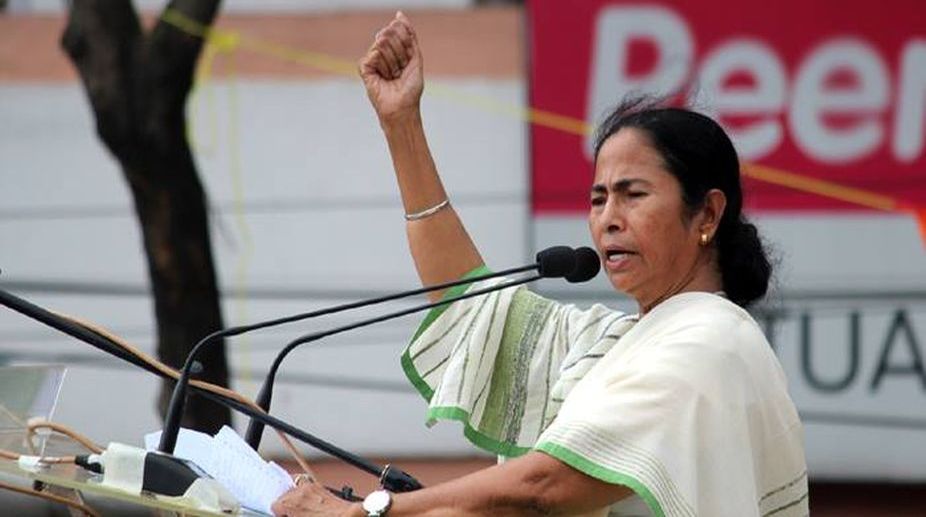
Mamata Banerjee’s surgical strike on the booming enterprise called “private hospitals” confirms the dominant impression that medical treatment is only for those who can afford it. This is the worst that can happen in a purportedly welfare state.

As West Bengal’s chief minister, she had to be riveted to the mess within the state; on closer reflection, the problem is said to have assumed endemic proportions across the country. The wider canvas need not detain us here; the view through the Bengal prism can be revolting in itself.

There exists a sharp divide between public and private healthcare, a disconnect in the human development index that can only baffle the sick and the dying. If the affordable state hospitals can be inhumanly negligent when not death traps, treatment and fleecing go hand in hand in the chic private establishments.

Medical insurance and company reimbursement cannot be a fig-leaf or excuse for atrocious charges, as often as not higher than five-star hotels, going by the Chief Minister’s verbal demarche to the heads of leading private hospitals on Wednesday. It is an almost insufferable double whammy as the fiscal distress compounds the physical.

Of course, to earn a profit is the primary factor that determines the functioning of a non-government entity… beyond the ambit of public spending as a concept of welfare. Yet there can be no feeble defence of an ugly truth — inflated bills, lack of transparency, expensive pathological tests that may be unrelated to the illness, and what is quite the most heart-rending — the refusal to release bodies before all the bills are cleared, however inflated.

The Chief Minister has hit the bull’s eye with the diagnosis. Less easily formulated is an effective cure as the canker has over the years permeated the system.

The philosophy that guides healthcare in West Bengal oscillates between the direly mercenary (private hospitals) and the remarkably insensitive (state hospitals). Some of the private entities have even “diversified” operations to the level of crime, specifically the sale of kidneys and babies. The subtext of the Chief Minister’s robust presentation must be that the private healthcare sector is as much responsible for the overwhelming sclerosis.

Equally must it be conceded that the almost exponential expansion of private hospitals is embedded in the progressively decrepit state healthcare mechanism. In both sectors is the patient accorded a relatively minor rating. Not wholly unrelated is the mushroom growth of nursing homes — many of them unregistered — throughout the state. On a limited scale, they showcase the racket that operates in the premier private hospitals… made worse by the lack of equipment and regular attendance by doctors. The malaise is as forbidding as it is disgraceful.

DU clashes: Crime Branch begins probe

PTI | New Delhi |

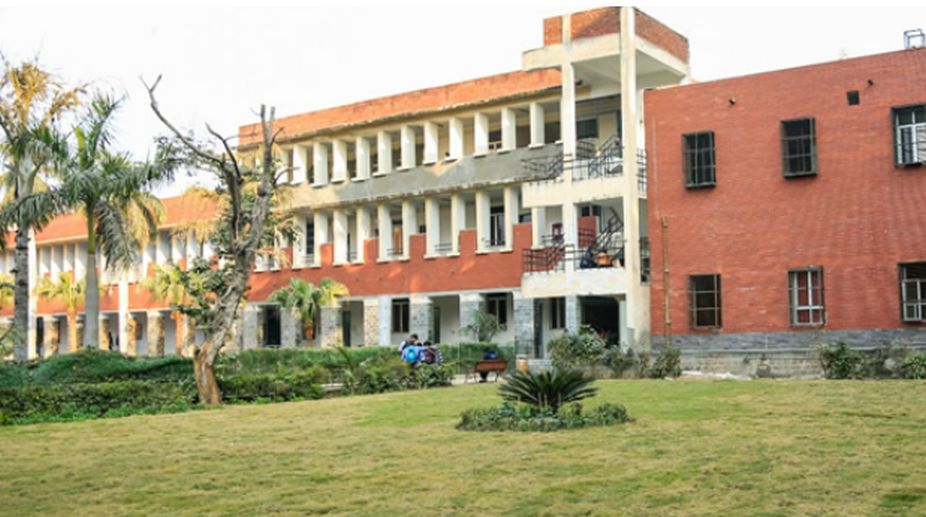
Delhi Police's Crime Branch has begun its probe into clashes between ABVP and AISA members in Delhi University's Ramjas College.

"Since it was Mahashivratri, students were not present in the campus. Police will begin recording the statements of students tomorrow and will collect all the video evidences in the matter," said a senior police officer.

Officers analysed all the complaints received from both the parties, he said.

Meanwhile, there was police presence in the campus and adjoining areas today to ensure peace despite it being a holiday.

Ramjas College had on Wednesday witnessed large-scale violence between members of AISA and ABVP supporters. The genesis of the clash was an invite to JNU students Umar Khalid and Shehla Rashid to address a seminar on 'Culture of Protests' which was withdrawn by the college authorities following opposition by the ABVP.

Tension continued to simmer across Delhi University's North Campus on Thursday with students' groups holding protests against police "high-handedness" during the violent clashes even as three policemen were suspended for "unprofessional" conduct.

While students of JNU and DU who are members of All India Students Association (AISA) staged a protest at the Delhi Police Headquarters at ITO, the Congress' student wing National Students Union of India (NSUI) took out a peace march to Maurice Nagar police station, near the North Campus.

ABVP, on its part staged a protest reiterating that "they will not allow any repeat of JNU like events in Delhi University".

While the DU authorities maintained that the varsity proctor's office is looking into the issue, the HRD Ministry had yesterday sought a report from the university over the issue.

A case was registered in connection with the violence and on Thursday it was transferred to Crime Branch.

Manipur polls 2017: Amid shutdown call, PM Modi launches campaign

Dipankar Chakraborty/SNS | New Delhi |

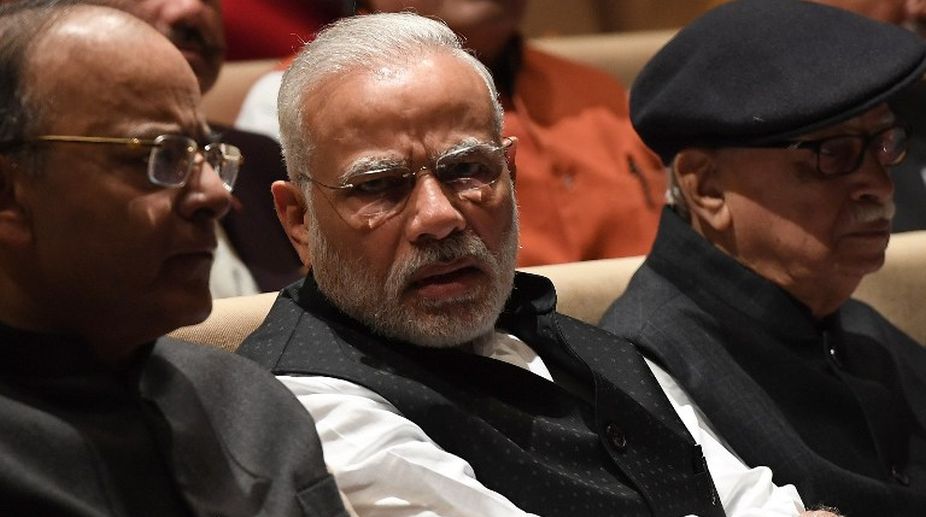
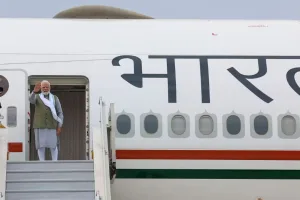
Prime Minister Narendra Modi will begin his election campaign in Manipur on Saturday amid a statewide ‘shutdown’ call given by a group of militant outfits protesting against his visit.

Tight security cordon has been thrown in and around the city, especially at the Langjing Achouba ground, the venue of Narendra Modi’s public meeting in the capital Imphal.

The state goes to the polls for the 60-member assembly in two phases on 4 and 8 March.

The rebel group, which calls itself ‘Coordination Committee’ or CorCom comprises major rebel outfits, has given the ‘shutdown’ call from 6 am till Modi's departure.

A high alert in the state has been sounded in view of security inputs about likely attempts by NSCN (I-M) cadres to disrupt Modi’s public address.

The Centre has sought detailed information from the state and central security agencies on the threat perception and steps being put in place in view of the PM’s visit.

The Special Protection Group or SPG responsible for the Prime Minister's security has carried out a combing operation of the meeting venue ahead of Modi’s visit. He will be travelling in a bullet-proof vehicle and his address will be made from a podium secured by bullet-proof glass, sources said.  

CorCom in a press release on Friday accused the prime minister of dividing communities in the state. It said the communities in the state have been living amicably for generations. The media coordinator of the committee Ksh Yoiheiba said, “The proposed visit of Prime Minister Modi is to deceive the people of Manipur with false promises in the name of development.” 

Yoiheiba accused successive governments in New Delhi of violation of human rights and exploitation of the local economy and hitting growth over the last 67 years.

The All-Manipur Students Union has also asked the prime minister to clarify his government’s stand on the ‘framework agreement’ it reached with the NSCN (I-M) in August 2015. It fears the agreement will compromise Manipur’s territorial integrity. 

The main electoral battle in Manipur is between the Congress and the BJP. The BJP is contesting on its own from all the 60 seats and the Congress from 59. The BJP’s allies National People’s Party (NPP), the Naga People’s Front (NPF) and the Lok Janshakti Party (LJP) are contesting from 21, 15 and 11 seats respectively. The BJP is banking on Modi’s face and has not announced any chief ministerial candidate for the polls.

Manipur polls 2017: Amid shutdown call, PM Modi launches campaign

Dipankar Chakraborty/SNS | New Delhi |

Prime Minister Narendra Modi will begin his election campaign in Manipur on Saturday amid a statewide ‘shutdown’ call given by a group of militant outfits protesting against his visit.

Tight security cordon has been thrown in and around the city, especially at the Langjing Achouba ground, the venue of Narendra Modi’s public meeting in the capital Imphal.

The state goes to the polls for the 60-member assembly in two phases on 4 and 8 March.

The rebel group, which calls itself ‘Coordination Committee’ or CorCom comprises major rebel outfits, has given the ‘shutdown’ call from 6 am till Modi's departure.

A high alert in the state has been sounded in view of security inputs about likely attempts by NSCN (I-M) cadres to disrupt Modi’s public address.

The Centre has sought detailed information from the state and central security agencies on the threat perception and steps being put in place in view of the PM’s visit.

The Special Protection Group or SPG responsible for the Prime Minister's security has carried out a combing operation of the meeting venue ahead of Modi’s visit. He will be travelling in a bullet-proof vehicle and his address will be made from a podium secured by bullet-proof glass, sources said.  

CorCom in a press release on Friday accused the prime minister of dividing communities in the state. It said the communities in the state have been living amicably for generations. The media coordinator of the committee Ksh Yoiheiba said, “The proposed visit of Prime Minister Modi is to deceive the people of Manipur with false promises in the name of development.” 

Yoiheiba accused successive governments in New Delhi of violation of human rights and exploitation of the local economy and hitting growth over the last 67 years.

The All-Manipur Students Union has also asked the prime minister to clarify his government’s stand on the ‘framework agreement’ it reached with the NSCN (I-M) in August 2015. It fears the agreement will compromise Manipur’s territorial integrity. 

The main electoral battle in Manipur is between the Congress and the BJP. The BJP is contesting on its own from all the 60 seats and the Congress from 59. The BJP’s allies National People’s Party (NPP), the Naga People’s Front (NPF) and the Lok Janshakti Party (LJP) are contesting from 21, 15 and 11 seats respectively. The BJP is banking on Modi’s face and has not announced any chief ministerial candidate for the polls.

Maha results no referendum on note-ban: Chidambaram

PTI | Hyderabad |

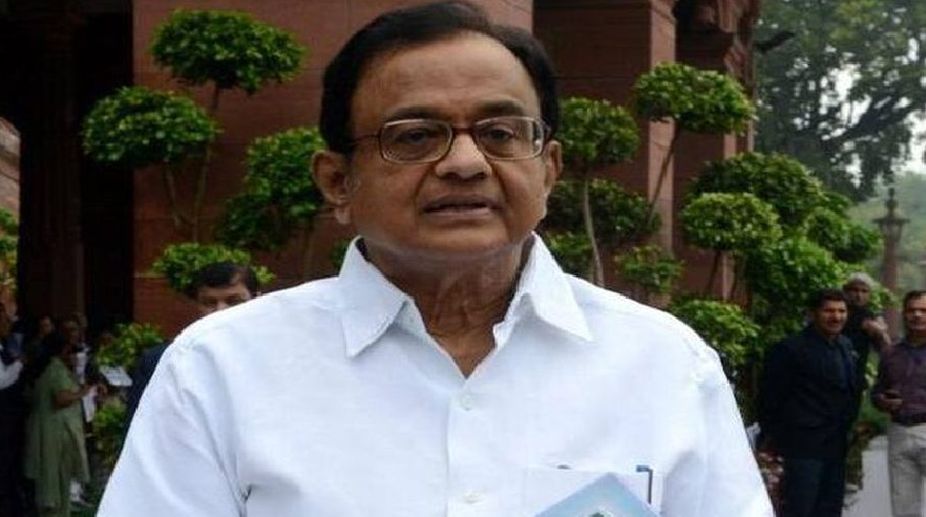
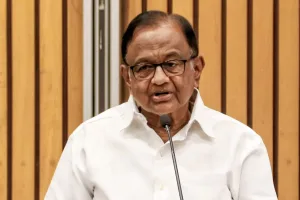
The results of civic polls in Maharashtra should not be considered a referendum on the demonetisation, senior Congress leader P Chidambaram said on Friday.

He also suggested that as with the sterilisation during the Emergency, people's anger may manifest itself later.

BJP made impressive gains in the civic elections in Mumbai and elsewhere in Maharashtra.

"It only shows that the Indian people are extremely patient and stoic. But that does not mean that there is no anger. During the Emergency there was a widespread belief that sterilisation was forced on the people. There were no street protests… But that does not mean that people have accepted it," the former Finance Minister said here.

"Assuming that the story (about anger regarding sterilisation) was true and assuming that the anger of the people is justified, they expressed their resentment at an appropriate time. No election is a referendum on any one issue," Chidambaram said at an interactive session here.

"Demonetisation has affected practically every family in India… everyone is nursing a grievance," he said.

Due to the note ban decision of Narendra Modi government, the economy will grow at 6 to 6.5 per cent in the current fiscal and the NPAs of banks will rise, he predicted.

To a question about Jammu and Kashmir, he said the situation there was grim, and a series of mistakes were made which are "almost too late" to correct now.

He also criticised recent controversial comments of the Army Chief Bipin Rawat. "General Rawat said anyone interfering with security operations will be treated as anti-national.

That's, I think, thoughtless, intemperate words," the former Union Home Minister said.

About Mukesh Ambani's telecom venture Reliance Jio, he said "disruption" is good, as it promotes innovation.

"Disruption is good… advent of Jio has forced the telecom industry to consolidate… that is good for the country. Imagine if the voice becomes totally free, you will never stop talking. That's is the kind of disruption required in this country," Chidambaram said.

Maha results no referendum on note-ban: Chidambaram

PTI | Hyderabad |

The results of civic polls in Maharashtra should not be considered a referendum on the demonetisation, senior Congress leader P Chidambaram said on Friday.

He also suggested that as with the sterilisation during the Emergency, people's anger may manifest itself later.

BJP made impressive gains in the civic elections in Mumbai and elsewhere in Maharashtra.

"It only shows that the Indian people are extremely patient and stoic. But that does not mean that there is no anger. During the Emergency there was a widespread belief that sterilisation was forced on the people. There were no street protests… But that does not mean that people have accepted it," the former Finance Minister said here.

"Assuming that the story (about anger regarding sterilisation) was true and assuming that the anger of the people is justified, they expressed their resentment at an appropriate time. No election is a referendum on any one issue," Chidambaram said at an interactive session here.

"Demonetisation has affected practically every family in India… everyone is nursing a grievance," he said.

Due to the note ban decision of Narendra Modi government, the economy will grow at 6 to 6.5 per cent in the current fiscal and the NPAs of banks will rise, he predicted.

To a question about Jammu and Kashmir, he said the situation there was grim, and a series of mistakes were made which are "almost too late" to correct now.

He also criticised recent controversial comments of the Army Chief Bipin Rawat. "General Rawat said anyone interfering with security operations will be treated as anti-national.

That's, I think, thoughtless, intemperate words," the former Union Home Minister said.

About Mukesh Ambani's telecom venture Reliance Jio, he said "disruption" is good, as it promotes innovation.

"Disruption is good… advent of Jio has forced the telecom industry to consolidate… that is good for the country. Imagine if the voice becomes totally free, you will never stop talking. That's is the kind of disruption required in this country," Chidambaram said.

No mystery over Jayalalithaa death: TN CM

PTI | Coimbatore |

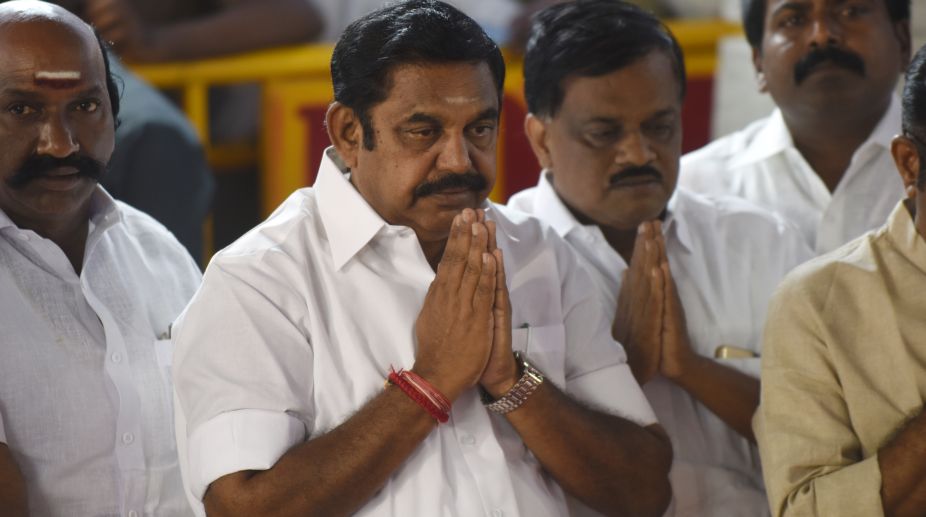
Tamil Nadu Chief Minister Edapaddi K Palaniswami on Friday asserted that there was no mystery over the death of AIADMK chief J Jayalalithaa, as was being made out by some quarters.

"Nothing wrong has happened over her death….there is no problem as being made by some persons," he told reporters here to a question on demands for an enquiry into her death.

Jayalalithaa, who was hospitalised in Chennai for more than two months for various complications, passed away on December 5 last year, after a cardiac arrest.

To another question on opposition leader in the Assembly M K Stalin meeting the President and seeking a fresh trust vote, he said "you are all aware of what happened. Since the issue is in Court, it will not be appropriate to comment on it."

Palaniswami had won the February 18 trust vote 122-11 in the 234-member Assembly, aided by eviction of main opposition DMK and walkout by its allies, amid stormy scenes during which mikes were uprooted, chairs toppled and sheets of papers torn.

The division vote was taken up after two adjournments following tempestuous scenes during which the opposition MLAs insisted on a secret vote, which was rejected by the Speaker.

Asked about the hydro carbon exploration and extraction project at Pudukottai in Tamil Nadu, which is being opposed by environmentalists and public, Palaniswami said it was a central government project and that the state will take "appropriate measures" if it affects people and farmers. 

No mystery over Jayalalithaa death: TN CM

PTI | Coimbatore |

Tamil Nadu Chief Minister Edapaddi K Palaniswami on Friday asserted that there was no mystery over the death of AIADMK chief J Jayalalithaa, as was being made out by some quarters.

"Nothing wrong has happened over her death….there is no problem as being made by some persons," he told reporters here to a question on demands for an enquiry into her death.

Jayalalithaa, who was hospitalised in Chennai for more than two months for various complications, passed away on December 5 last year, after a cardiac arrest.

To another question on opposition leader in the Assembly M K Stalin meeting the President and seeking a fresh trust vote, he said "you are all aware of what happened. Since the issue is in Court, it will not be appropriate to comment on it."

Palaniswami had won the February 18 trust vote 122-11 in the 234-member Assembly, aided by eviction of main opposition DMK and walkout by its allies, amid stormy scenes during which mikes were uprooted, chairs toppled and sheets of papers torn.

The division vote was taken up after two adjournments following tempestuous scenes during which the opposition MLAs insisted on a secret vote, which was rejected by the Speaker.

Asked about the hydro carbon exploration and extraction project at Pudukottai in Tamil Nadu, which is being opposed by environmentalists and public, Palaniswami said it was a central government project and that the state will take "appropriate measures" if it affects people and farmers. 

Mission staff in touch with wife of Indian killed in US: Sushma

IANS | New Delhi |

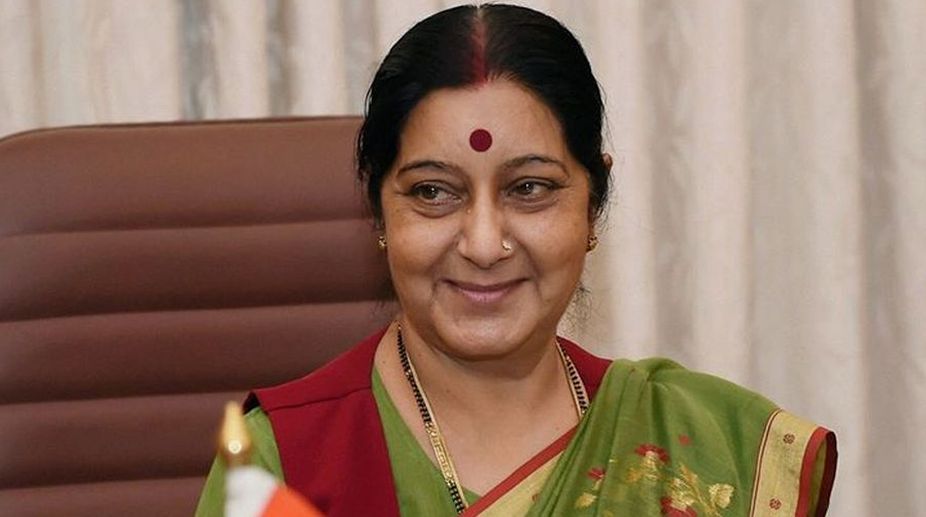
Officials of the Indian Consulate General in Houston are in touch with the wife of Srinivas Kuchibhotla, an Indian engineer who was killed in a shooting incident in US' Kansas state, External Affairs Minister Sushma Swaraj said on Friday.

"I have received a report from Anupam Ray CGI Houston," Sushma Swaraj tweeted late Friday evening.

"Our mission staff hv met with Sunayna Kuchibhotla. Indian Government is with her in this hour of grief. We assure her of all our support," she said.

The Minister also said that Indian Ambassador to the US Navtej Sarna was also in touch with her and was her keeping her updated.

Kuchibhotla, 32, was killed and Alok Madasani was injured when Adam W. Purinton, a white who earlier served in the US Navy, shot them at the Austins Bar & Grill in Olathe, Kansas, on Wednesday night.

Purinton reportedly got into an argument with the victims and hurled racial slurs. He yelled "get out of my country", "terrorist" before shooting them.

Purinton, according to reports, provoked them into argument asking their presence and work in his country, and how they are better than him.

To avoid unwanted scuffle, the bar management asked him to leave the place, only to find him back at the bar later with gun when he fired at the Indians.

Ian Grillot, 24, an American who tried to save the Indians, was also shot at, media reports quoted police as saying. Grillot was recovering in a hospital while Madasani was discharged.

The Hindu American Foundation (HAF) called it a hate crime.

Police said Purinton, 51, fired multiple rounds and fled the bar. He was arrested on Thursday morning in Clinton city in neighbouring Missouri state when a bartender told police that he had bragged about killing "two Middle Eastern men", The Kansas City Star reported.

The US "strongly" condemned the shooting and said it has reached out to Indian consular officials to offer support.

The US Embassy in New Delhi expressed full faith in the US authorities investigating the matter. "We have full faith that US legal authorities will bring the case to justice," the statement said.

Purinton has been charged with first-degree murder.

"It was a tragic and senseless act of violence," Olathe Police Chief Steven Menke said.

Kuchibhotla hailed from Hyderabad while Madasani is from Warangal town in Telangana. They were aviation programme managers at Garmin, an electronics manufacturer.