Logo

Note ban impact: GDP growth slips to 7% in 3rd quarter

SNS | New Delhi |

Reflecting the impact of Prime Minister Narendra Modi’s demonetisation drive, Gross Domestic Product (GDP) growth for the quarter ended December 31, 2016 contracted to 7 per cent.

“GDP growth for the third quarter (Oct-Dec) estimated at 7 per cent,” Central Statistics Office (CSO) said on Tuesday.

"Advance GDP growth estimate for current fiscal pegged at 7.1 per cent, the same as projected earlier,” it added.

The third quarter number GDP numbers are an important indicator of how the economy reacted after demonetisation. In the quarter ended December 31, 2015 the GDP growth was 7.2 per cent.

Meanwhile, Growth of 8 core sector industries slowed to 3.4 per cent in January compared to 5.7 pc in the year-ago month, government data showed on Tuesday.

Intensifying the fight against corruption and black money, PM Modi had outlawed 86 per cent of India's total currency in circulation as part of Rs.500 and Rs.1,000 notes.

Soon after the announcement of note ban, the economists had predicted the GDP growth to go down.

The International Monetary Fund (IMF) in a report last week had predicted that India’s GDP growth will go down due to temporary disruptions caused by the Union government’s demonetisation drive.

“Growth is projected to slow to 6.6 per cent in financial year 2016-17, and then rebound to 7.2 per cent in financial year 2017-18, due to temporary disruptions, primarily to private consumption, caused by cash shortages,” the IMF said.

Meanwhile, the Reserve Bank of India (RBI) on February 17 has lowered the economic growth forecast for the currency fiscal to 6.9 per cent from previously projected 7.1 per cent. However, the RBI has projected the group to bounce back to 7.4 per cent in 2017-18.

The government announced demonetisation or note ban of Rs.500 and Rs.1,000 notes on November 8 midnight to curb black money and terrorism and promote digital transactions.

Rahul Gandhi hits out against PM Modi on Manipur issues

IANS | Imphal |

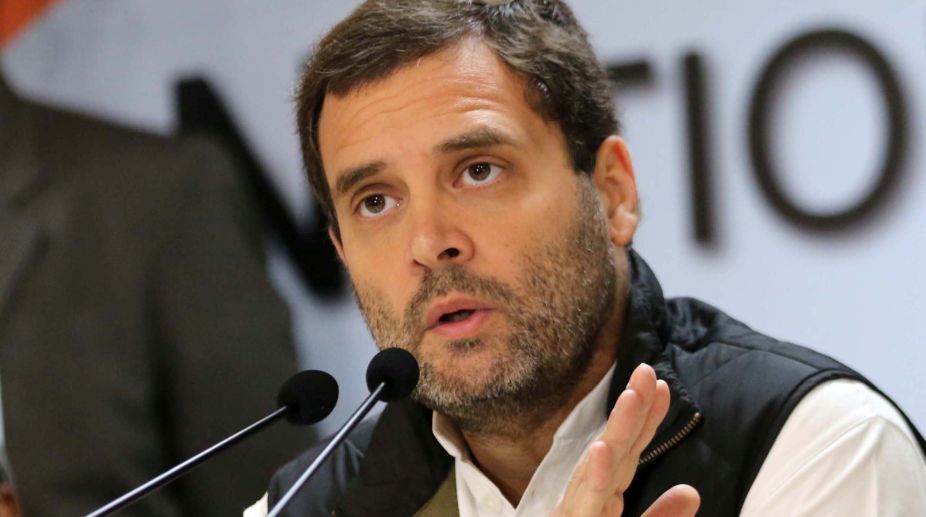
Congress Vice President Rahul Gandhi on Tuesday hit out against Prime Minister Narendra Modi, questioning his government's achievements and asking him why he had not consulted key stakeholders, like the Manipur government, about the accord with the NSCM-IM.

Addressing a public meeting at Hapta Kangjeibung in the heart of Imphal ahead of the March 4 and 8 assembly elections, he said: "The BJP government is concealing vital information. It has also backed out of various commitments. 

"Modi had promised to provide employment to 2 crore youth, repair the NH 37 in Manipur within the first 100 days of the NDA government… but nothing has been done about these promises."

Gandhi said Congress President Sonia Gandhi received a surprise phone call from Modi informing that the framework agreement with the National Socialist Council of Nagaland-Isak-Muivah had been signed. On inquiry, it was found that Manipur Chief Minister Okram Ibobi Singh as well as other Central Ministers were kept in the dark about this accord.

"When Modi comes to Manipur next time, people should ask him why he is keeping the people in the dark in this manner," said Gandhi.

The Congress Vice President also said that two business houses had given a huge amount to Modi and this is in the know of the Income tax department.

"All these days Modi has been harping on corruption of Okram Ibobi. Modi should make inquiry into these allegations against himself," he added.

Both Gandhi and Ibobi said that no force in the world can break up Manipur.

"The territory of Manipur is safe in the hands of the Congress," Gandhi said.

Manipur Deputy Chief Minister Gaikhangam told IANS that over 400,000 persons had assembled for the meeting and "by Manipur's standard, it is a huge gathering".

"It shows that the Congress shall come back with a thumping majority," he added.

Rahul Gandhi hits out against PM Modi on Manipur issues

IANS | Imphal |

Congress Vice President Rahul Gandhi on Tuesday hit out against Prime Minister Narendra Modi, questioning his government's achievements and asking him why he had not consulted key stakeholders, like the Manipur government, about the accord with the NSCM-IM.

Addressing a public meeting at Hapta Kangjeibung in the heart of Imphal ahead of the March 4 and 8 assembly elections, he said: "The BJP government is concealing vital information. It has also backed out of various commitments. 

"Modi had promised to provide employment to 2 crore youth, repair the NH 37 in Manipur within the first 100 days of the NDA government… but nothing has been done about these promises."

Gandhi said Congress President Sonia Gandhi received a surprise phone call from Modi informing that the framework agreement with the National Socialist Council of Nagaland-Isak-Muivah had been signed. On inquiry, it was found that Manipur Chief Minister Okram Ibobi Singh as well as other Central Ministers were kept in the dark about this accord.

"When Modi comes to Manipur next time, people should ask him why he is keeping the people in the dark in this manner," said Gandhi.

The Congress Vice President also said that two business houses had given a huge amount to Modi and this is in the know of the Income tax department.

"All these days Modi has been harping on corruption of Okram Ibobi. Modi should make inquiry into these allegations against himself," he added.

Both Gandhi and Ibobi said that no force in the world can break up Manipur.

"The territory of Manipur is safe in the hands of the Congress," Gandhi said.

Manipur Deputy Chief Minister Gaikhangam told IANS that over 400,000 persons had assembled for the meeting and "by Manipur's standard, it is a huge gathering".

"It shows that the Congress shall come back with a thumping majority," he added.

Opposition leaders visit DU, support protesting students; slam Centre

IANS | New Delhi |

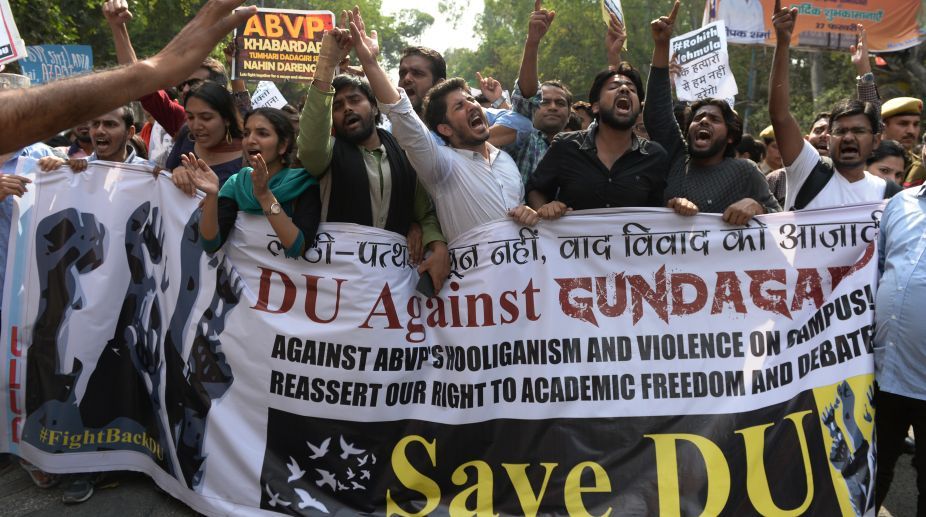
Several opposition leaders on Tuesday joined a protest at the Delhi University campus against the violence on the Ramjas College on February 22 and accused the government of politicising the issue and censoring students.

Communist Party of India-Marxist (CPI-M) leader Sitaram Yechury, Communist Party of India leader D. Raja, Janata Dal-United leader K.C. Tyagi and Swaraj India leader Yogendra Yadav were among those who visited the protesting students.

Adressing the protestors, Yechury said different politicians present at the protest venue were not to be blamed for politicising the students' protest since the central government had already politicised the issue.

"The government has made the issue political by censoring students into submission and using police for its benefit. It is the government that politicised the issue," Yechury said.

"Students should be allowed to express themselves. Politics is deciding everything for students today. Why should I not decide on my politics? You have to make your own choice," the CPI-M leader said.

He said there should be debate and not violence.

"The atmosphere at different university campuses has been ruined. If you wish to fight us, come ahead with your views… if all is well with universities, all is well with my country. We will argue. We shall fight at an intellectual level, no physically," Yechury said.

Raja called for a fight against the Bharatiya Janata Party-led Centre just as "Indians once fought the British rule".

"I am a communist, I don't need any certificate of nationalism. We fought for the country's independence. We fought against the British Raj and won independence. Now, we have to fight against the BJP 'raj' to defend our democracy," Raja said.

"What is BJP and ABVP? Ever since the BJP came to power (at the Centre), the Rashtriya Swayamsevak Sangh has become the extra-constitutional ruler," he said.

Swaraj India leader Yogendra Yadav, meanwhile, compared the handling of the DU situation with the style of functioning of late Congress leader Sanjay Gandhi.

"For the last 10 days, there has been an atmosphere of fear and intimidation in the university, which is reminiscent of Sanjay Gandhi's style of functioning. There is only one answer to this — the students should come forward and say they are not scared," Yadav said.

Hundreds of students from Delhi University and other institutions of higher learning in the national capital, along with a large number of teachers, staged a protest march on the varsity's North Campus on Tuesday, which culminated at the Arts Faculty.

The march was against the Akhil Bharatiya Vidyarthi Parishad (ABVP) and Delhi Police over the February 21-22 disturbances on the campus.

Opposition leaders visit DU, support protesting students; slam Centre

IANS | New Delhi |

Several opposition leaders on Tuesday joined a protest at the Delhi University campus against the violence on the Ramjas College on February 22 and accused the government of politicising the issue and censoring students.

Communist Party of India-Marxist (CPI-M) leader Sitaram Yechury, Communist Party of India leader D. Raja, Janata Dal-United leader K.C. Tyagi and Swaraj India leader Yogendra Yadav were among those who visited the protesting students.

Adressing the protestors, Yechury said different politicians present at the protest venue were not to be blamed for politicising the students' protest since the central government had already politicised the issue.

"The government has made the issue political by censoring students into submission and using police for its benefit. It is the government that politicised the issue," Yechury said.

"Students should be allowed to express themselves. Politics is deciding everything for students today. Why should I not decide on my politics? You have to make your own choice," the CPI-M leader said.

He said there should be debate and not violence.

"The atmosphere at different university campuses has been ruined. If you wish to fight us, come ahead with your views… if all is well with universities, all is well with my country. We will argue. We shall fight at an intellectual level, no physically," Yechury said.

Raja called for a fight against the Bharatiya Janata Party-led Centre just as "Indians once fought the British rule".

"I am a communist, I don't need any certificate of nationalism. We fought for the country's independence. We fought against the British Raj and won independence. Now, we have to fight against the BJP 'raj' to defend our democracy," Raja said.

"What is BJP and ABVP? Ever since the BJP came to power (at the Centre), the Rashtriya Swayamsevak Sangh has become the extra-constitutional ruler," he said.

Swaraj India leader Yogendra Yadav, meanwhile, compared the handling of the DU situation with the style of functioning of late Congress leader Sanjay Gandhi.

"For the last 10 days, there has been an atmosphere of fear and intimidation in the university, which is reminiscent of Sanjay Gandhi's style of functioning. There is only one answer to this — the students should come forward and say they are not scared," Yadav said.

Hundreds of students from Delhi University and other institutions of higher learning in the national capital, along with a large number of teachers, staged a protest march on the varsity's North Campus on Tuesday, which culminated at the Arts Faculty.

The march was against the Akhil Bharatiya Vidyarthi Parishad (ABVP) and Delhi Police over the February 21-22 disturbances on the campus.

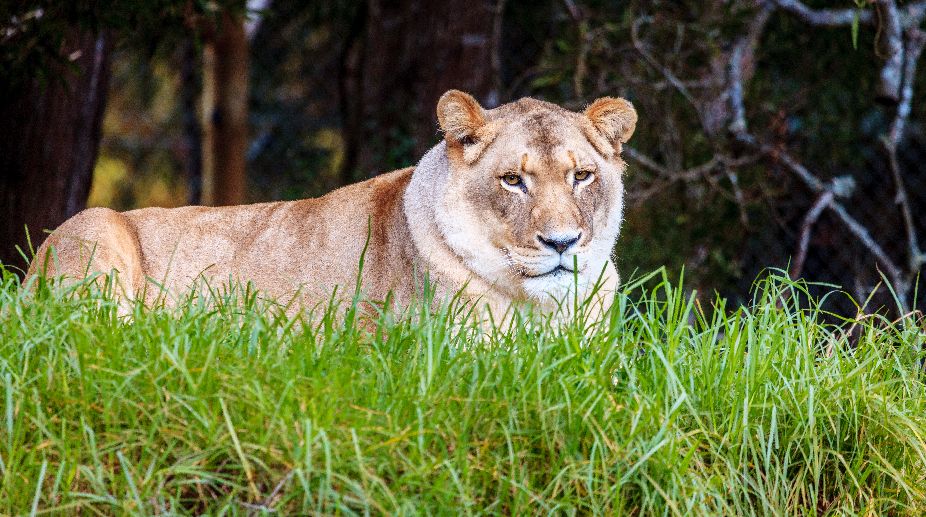
Uncertainty continues over MP getting lions from Gujarat

IANS | Bhopal |

The authorities in Madhya Pradesh are yet to confirm the arrival of Asiatic Lions from Gujarat in the state's Palpur-Kuno Wildlife Sanctuary.

The Madhya Pradesh government does not have even the draft of the contract though which the lions from Gujarat would be brought, according to officials on Tuesday. 

Forest Minister Gaurishankar Shejwar, replying to a query in the Madhya Pradesh assembly, said the Supreme Court has constituted a committee on resettlement of lions from Gujarat's overcrowded Gir. 

The minister said, the committee would decide of the arrival of lions from Gir to Palpur-Kuno. 

S&T in Northeast plagued by poor infra, lack of good governance

IANS | Kolkata |

Delay in receiving lab equipment due to remoteness, corruption in fund management, dearth of jobs for returnee scientists and inadequate infrastructure are some of the major hurdles faced by researchers in India's northeast region (NER) who demand good governance to promote science and technology in its eight states.

IANS spoke to a number of scientists in the NER on the occasion of National Science Day On February 28 to ascertain the magnitude of the difficulties faced by them and their views on what needs to be done. 

Damanbha Lyngdoh, an up-and-coming researcher from Shillong, Meghalaya, who has a special interest in parasites, lamented that a tiring and time-consuming nature of a trip to the labs in NER, mostly through small, winding and bad roads deters visitors, including scientists.

"Moreover, the time duration for various chemicals/machinery needed for various experiments to reach is too long as compared to other parts of the country," Lyngdoh, currently a faculty at St. Anthony's College, Shillong, told IANS.

"This delay brings about late experimental results and failure to publish at the earliest, especially if there is a competition from other teams in other parts of the country/world)," he noted.

Biotechnologist and an advocate of bio-entrepreneurship, Assam's Utpal Bora, deplored the dearth of quality manpower in adequate numbers. He said the number of science postgraduates joining doctoral research is very low.

"The best amongst those who go for research prefer to go aboard, the second rungs land up in National Laboratories in the metros and the quality of the leftover researchers is so poor that every scientist in NER has to struggle every year to start from scratch. In spite of this, whatever trained manpower comes out after Ph.D. research again enters same vicious cycle of going, abroad, joining labs in metros and so on,a Bora of IIT Guwahati, told IANS.

Lyngdoh said difficulty in finding jobs for the locals in their hometown means that they have to go out to the metros and other big cities for employment.

"However, recently, safety is a major factor which has forced people from this region to come back and settle for a less deserving profession," he pointed out.

Robin Dutta from Assam's Tezpur University believes aligning research to the needs of the people is the "greatest challenge" in developing science and technology sector in northeast India.

"This (challenge) is followed by increasing academy-industry interfacing through rapid industrialization in the potential sectors (like oil, agro, pharma and tourism), developing infrastructure to minimise the locational disadvantage and good governance to check wastage of resources due to corruption," Dutta, known for his efforts in water treatment technologies, told IANS.

Despite ongoing efforts by the Centre, there are gaping holes when it comes to R&D funding, corruption and mismanagement, they feel.

"Though the Centre sometimes takes some measures like allocating 10 per cent of R&D budget for the northeast, they are hardly implemented honestly. A corrupt and inefficient management system including some defective expert committees play spoil sport," Dutta observed.

Bora called for urgent action in setting up a science and policy research institute located in the NER to study the problems that plague the development of S&T in the region.

Lyngdoh batted for locals being given more preference for scientific posts (and other employment offers), otherwise, he says, the whole concept of uplifting NER is lost.

"Only a person born and brought up in this region will understand the difficulties that people are facing and therefore will develop ways and means to counter these difficulties and build a better India," he contended.

They pitched for improving primary and secondary education in rural areas, building more research centres on topics like tropical diseases, institutes of national importance, promotion of indigenous knowledge and setting up more research centres in rural northeast.

"An affirmative action plan is required not just to draw the brightest minds to science but also to retain them and absorb them. In the absence of opportunities many are now turning their back to S&T," Bora added.


Ranbir Kapoor to get inked Sanjay Dutt style for his next?

SNS |

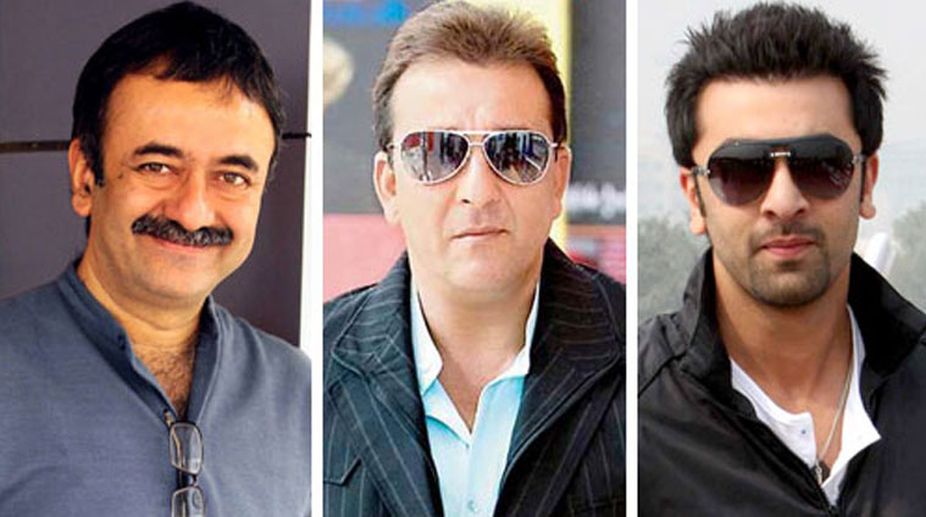
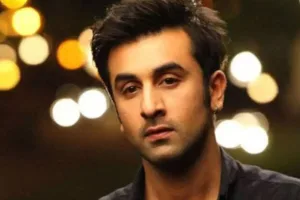
If rumours are to be believed, actor Ranbir Kapoor who is all set to play Sanjay Dutt in his biopic, is likely to get a tattoo like him.

The Barfi actor has gained 13 kg to resemble Dutt's physique and has copied his walking style perfectly.

Besides the physical changes,Ranbir was also spotted wearing a wig resembling Dutt’s hairstyle from the '90s while shooting for the Rajkumar Hirani directorial. 

The young actor is to take a step forward and in order to look even more authentic, Ranbir planning to sport the exact same tattoos that Dutt has on various parts of his body to look exactly like him on screen.

Ranbir is striving hard to do justice to Sanjay Dutt's character and is leaving no stone unturned to fit the bill perfectly. 

Helmed by Rajkumar Hirani, Sanjay Dutt's biopic is slated to release later in 2017.

PM Modi to visit Israel this summer

Ashok Tuteja/SNS | New Delhi |

Prime Minister Narendra Modi's much-awaited visit to Israel will take place this summer, coinciding with the celebrations of 25 years of the establishment of diplomatic relations between the countries.

Official sources said the two countries were in touch to finalise the dates of the PM’s visit, which would take place in June-July. This would be the first visit by an Indian PM to the Jewish nation.

The two countries on Tuesday launched the year-long celebrations to mark 25 years of diplomatic relations. Israeli Ambassador to India Daniel Carmon and Amar Sinha, Secretary (Economic Relations) in MEA jointly unveiled a logo on the occasion at a function here.

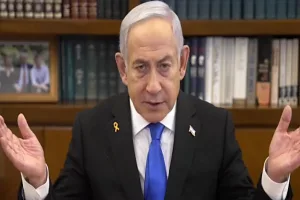
Talking highly about the growing India-Israeli relationship, Carmon announced that Israeli Prime Minister Benjamin Netanyahu would also visit India this year or early next year.

Modi's visit, it is understood, is being anxiously awaited in Israel, given the "close chemistry" he has with his Israeli counterpart.

Relations between the countries have progressed at an unprecedented pace since the two countries established diplomatic relations but India has shied away from such high-level visits in the past.

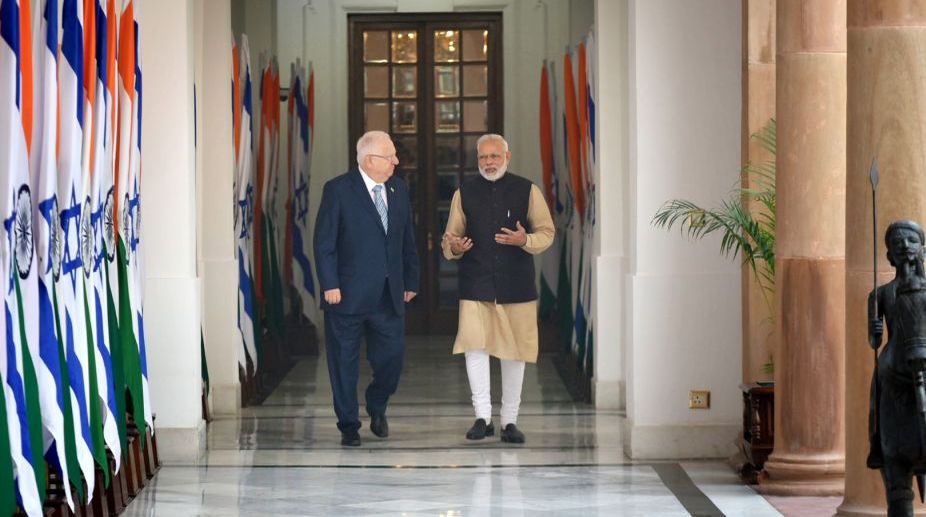
However, the BJP-led governments have always accorded priority to India’s relationship with Israel. President Pranab Mukherjee visited Israel in October 2015 in what was the first such visit by an Indian Head of State to Israel. Israeli President Reuven Rivlin paid a reciprocal visit last year at Mukhejee's invitation.

Carmon said the two countries were today not only cooperating in defence and security fields but also in areas like water, agriculture, science and technology and food. ‘’It’s a unique relationship that we have with India,’’ he added.
The Indian official said everyone was aware of the defence and security ties between India and Israel but the two countries were now seeking to make the relationship multi-dimensional.

Core sector growth slows down to 3.4% in Jan

PTI | New Delhi |

The growth of eight core sectors slowed down to a five-month low of 3.4 per cent in January mainly due to contraction in output of refinery products, fertiliser and cement.

The growth rate of eight infrastructure sectors of coal, crude oil, natural gas, refinery products, fertilisers, steel, cement and electricity was 5.7 per cent in January 2016.

Infrastructure sectors' expansion in January this year is the lowest since August 2016, when the segments had recorded a growth of 3.2 per cent.

It is also lower than that of 5.6 per cent seen in December 2016.

The core sectors, which contribute 38 per cent to the total industrial production, expanded 4.8 per cent in April – January this fiscal compared to 2.9 per cent growth in the same period previous financial year, according to the data released by the commerce and industry ministry on Tuesday.

The output of refinery products, fertiliser and cement contracted by 1.5 per cent, 1.6 per cent and 13.3 per cent, respectively during the month under review.

Both coal and electricity expanded at 4.8 per cent in January as against 7.9 per cent and 11.6 per cent expansion respectively in January 2016.

However, crude oil, natural gas and steel output reported positive growth.

Crude oil output grew by 1.3 per cent in January 2017 against 4.7 per cent contraction in the same month of previous year.

Similarly, natural gas and steel output rose by 11.9 per cent and 11.4 per cent respectively during the month under review.

Haryana Assembly to take up Jat stir issue on Wednesday

PTI | Chandigarh |

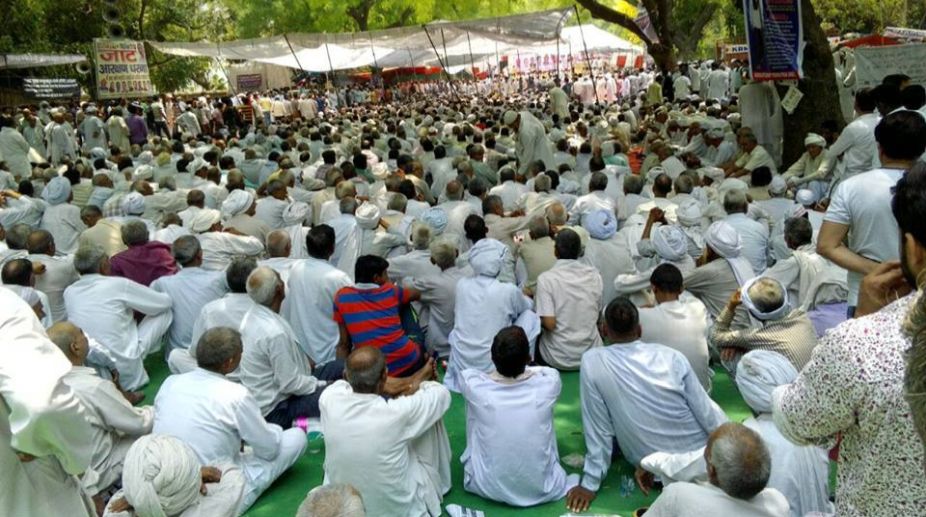
The Haryana Assembly will take up for discussion the ongoing Jat reservation stir on Wednesday after opposition Congress and INLD moved an adjournment motion in this regard.

Speaker Kanwar Pal stated that all things barring the part which is sub-judice will be discussed in the House.

During Zero Hour, Leader of Opposition and senior INLD leader Abhay Singh Chautala sought to know the government's reply on the ongoing stir by the Jats which has been going on for a month now.

Referring to last year's stir in which 30 persons were killed, Chautala said that the government had promised to accept the demands of those agitating which included giving Rs.10 lakh and government jobs to the next of kin of those who died in the agitation in February 2016, withdrawal of cases slapped last year and release of those jailed after the stir turned violent.

Chautala alleged that the state BJP government had gone back on its promises made to the Jats and they had been forced to sit on protest in June and now February this year.

"Again, this year, they have been forced to sit on protest and the dharnas have been going on for a month now. It is not only the Jats who are sitting on the dharnas, but they are being supported from all sections of the society," he said.

The Speaker told him that since the Jat reservation issue was sub-judice, he will look into what part of the adjournment motion that has been moved can be admitted and discussed in the House.

At this, former chief minister and senior Congress leader Bhupinder Singh Hooda got up and said that only the reservation part was sub-judice and there was no bar to discuss the rest of the things pertaining to the stir.

"Thousands of people are sitting on the dharnas across the state for a month now. Reservation is not their only demand, there are so many issues that are involved and should be discussed here in the House," Hooda said.

Hooda also targeted the government, alleging that development has come to a standstill.

"Ministers and officers of the Khattar government cannot go and move in villages because of public anger…again they (are Jats) have been forced to agitate. The government must resolve this issue," Hooda said.

Afterwards, the Speaker adjourned the House for half an hour and held a meeting with the opposition leaders from the Congress and INLD.

After the House re-assembled, the Speaker informed that it has been decided that the issue will be taken up on Wednesday.

Besides seeking quota in education and government jobs under Other Backward Classes category, the demands of the Jats include release of those jailed during last year's agitation, withdrawal of cases slapped during the protest and government jobs for the kin of those killed or injured while taking part in the stir. 

Australia wary of Kohli comeback: Mitchell Starc

Kohli could only managed scores of 0 and 13 in his two innings in the Pune Test against Australia.

PTI |

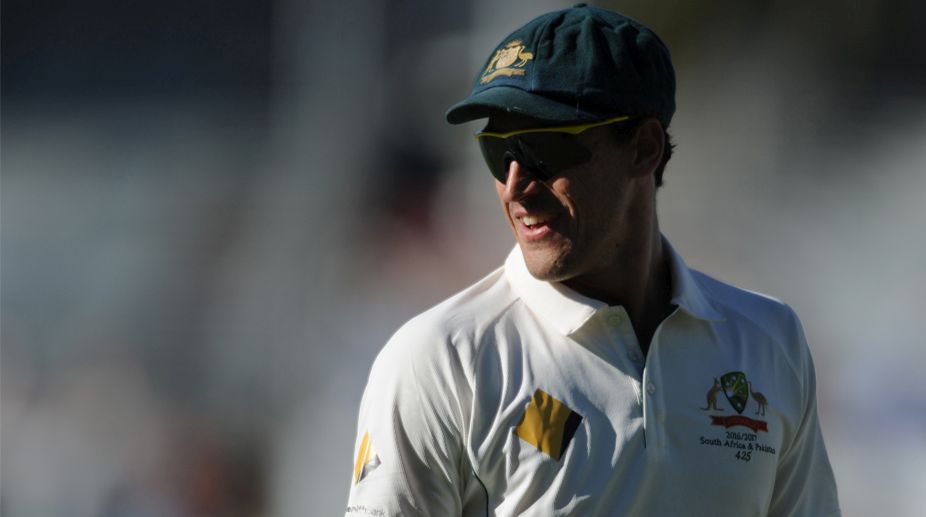
Australian pacer Mitchell Starc on Tuesday said his team is wary of a strong comeback by Indian skipper Virat Kohli, whose early dismissals were a major factor in the visitors' opening Test triumph here.

Kohli could only managed scores of 0 and 13 in his two innings in the Pune Test where India plunged to a humiliating 333-run loss, their first against Australia at home in almost 13 years.

Starc dismissed him in the first innings for a duck and it was a rare failure for the Indian captain who has struck four double hundreds in as many series.

"He's a class player, we all know that. He's scored a mountain of runs already this year. We're going to have to be wary of that Virat comeback," Starc told reporters here.

"We know Kohli is going to be another key wicket for the rest of the series. There's six more times we've got to get him out to really cement this series," he added.
Before seeing the back of Kohli, Starc had dismissed Cheteshwar Pujara to start India's downfall but he said Kohli's wicket is the most prized one for him.

"We know he'll come back bigger and stronger, but he's one I'll take over Pujara at the moment," Starc, who also shared the dressing room with Kohli as his Royal Challengers Bangalore teammate, said.

"We are really happy that it happened that way for us, but we know that one Test is not going to win us the series.

It's three important Test matches to go."

India will lock horns with Australia in the second Test in Bangalore, starting March 4.

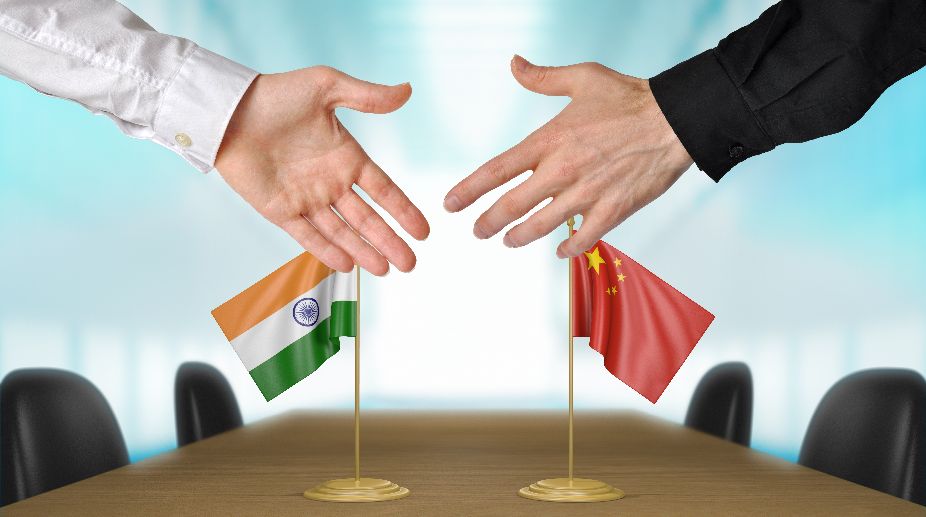
Strategic Dialogue with China positive, constructive: India

IANS | New Delhi |

The first Strategic Dialogue between India and China in Beijing last week that was co-chaired by Foreign Secretary S Jaishankar and Chinese Vice Foreign Minister Zhang Yesul was "positive and constructive", a senior official said here on Tuesday.

"Our assessment is that the recent meeting was positive and constructive," External Affairs Ministry spokesperson Gopal Baglay said in response to a question on an article that appeared in the Global Times, a leading English daily in China, in connection with the Strategic Dialogue. 

"We both agreed that at the time when the global situation is in flux, a more stable, substantive and forward-looking India-China relationship was good for the international system," Baglay said. 

"The two sides had open and useful exchanges on Afghanistan, UN, counter-terrorism and nuclear issues. While in some cases, we found common ground, in others, it was felt that dialogue should continue further."

An editorial in the state-run Global Times following the Strategic Dialogue said that India needed to be "honest" with itself and acknowledge its asymmetrical relationship with China and not let it become an impediment in bilateral ties.

It suggested that New Delhi could take a leaf out of how Beijing benefited from its relationship with the US "despite major ideological differences and visible geopolitical confrontations". 

It said it was in India's interest to "rationalise the concerns over its disparity with China" and not "obsess with false parity".

It also advised India that it needed to lower its expectations and attach more importance to the bilateral ties. 

During the Strategic Dialogue, New Delhi raised concerns over China's repeated opposition to India's entry into the Nuclear Suppliers Group (NSG) and veto against a resolution seeking a global ban against Pakistan-based Jaish-e-Mohammad (JeM) chief Masood Azhar. 

"While most Chinese scholars and critics received the dialogue positively, believing it may thaw the atmosphere and propel the bilateral relations into a new era, their Indian counterparts turned out to be rather pessimistic – if not cynical, quoting the 'unsolved' issues regarding India's NSG bid as well as the UN ban on JeM chief Masood Azhar." the editorial said. 

"Understanding this critical difference between the two is the key to capturing the shifting dynamics between the two emerging economic giants."

In his statement on Tuesday, Baglay said that on the bilateral side, "there was appreciation of progress on areas like investment and tourism". 

"At the same time, both sides articulated their respective concerns and remain committed to working together in that regard," he stated.
"We found the Strategic Dialogue in its restructured form to be a productive exercise that addressed the full complexity of India-China relations. It is important that we take a balanced and objective view of what is clearly one of the key relationships in international politics."

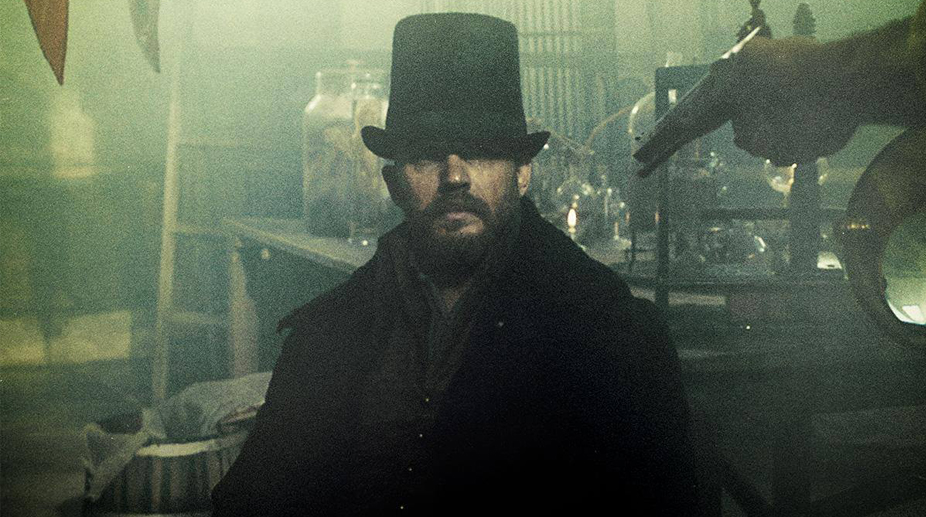
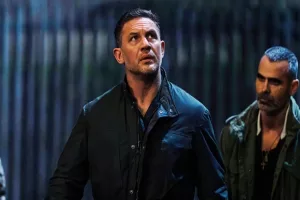
Taboo Episode Eight review: Finale that flatters to deceive

Prithviraj Dev |

Series: Taboo

Director: Anders Engstorm

Cast: Tom Hardy, Jonathan Pryce, Jessie Buckley, David Hayman, Stephen Graham and Franka Potente

Genre: Period-Drama

Taboo’s first season comes to an end in a finale that starts off with a bang, but ends with a veritable whimper.

If there was any doubt whether James Delaney could moonlight as a master puppeteer, they would have been quelled. As he, despite being held in the infamous Tower of London, gets Sir Stuart Strange of the East India Company and the Crown to play on his terms one final time.
Locked in the dungeon is Tom Hardy character, James Delaney, but manages to exude an aura of being in charge. Hardy’s brilliance has been extolled enough already in this eight-part season, but he takes his performance up a notch even as the team effort sags noticeably towards the end. 

And, after last week’s instalment which felt chaotic at times, this time around things feel a little easy to keep track off, right from James’ epic showdown with Strange in the beginning to the massive battle at the docks at the end (More on that later).

Using his son as the messenger boy to deliver his messages across London, James’ masterplan seems unstoppable. And not once will you feel tense about the final outcome which leaves little doubt that the Delaney scion will have his way.

His stay in the Tower hasn't gone unnoticed for his rag-tag crew, who are busy preparing for one final stand. Such is their unwavering loyalty.

After an exciting 30-odd minutes that set the stage for a grand battle at the end, the final act is disappointing in many ways.

With predictable story arcs for the butler Brace, half-sister Zilpha and Sir Stuart Strange, the final episode doesn't quite venture into unchartered territory, a massive negative considering characters that have played crucial parts in the story so far. Showing Dumbarton as a double-agent was an understatedly brilliant move, but appears insignificant in the larger scheme of things.

Coming to the big battle at the docks that seems inevitable, as the Crown finally decides the time for gloves is past, is epic any way you look at it. Gunpowder, muskets, crude-grenades, who doesn't want to see chaos ensue as Delaney’s men engage in an massive melee with the British Army. 
The only large action set-piece in the whole season is an impressive visual spectacle and as we have been accustomed to. The makers don't shy from zeroing in on the gruesome, a desperate mini-battle each man must overcome in a bid to survive only to be dragged into another almost immediately after.

While mercifully, Delaney doesn't quite come out of it unscathed as he loses a few key personnel in the bargain, it is difficult to believe that soldiers who are trained for conflicts such as these will fall like chaff in the wind despite having a numerical superiority. It was just another detraction in what was supposed to be the crown piece in what has been a solid, if slow debut season for Taboo

As James sails away on the high tides with a skeleton crew, you wonder just how he will manage the long, arduous journey to the land of the Star-Spangled Banner.
Many more questions remain in one's mind, but after a seriously underwhelming finale, most viewers will struggle to justify returning to their television sets for a second season

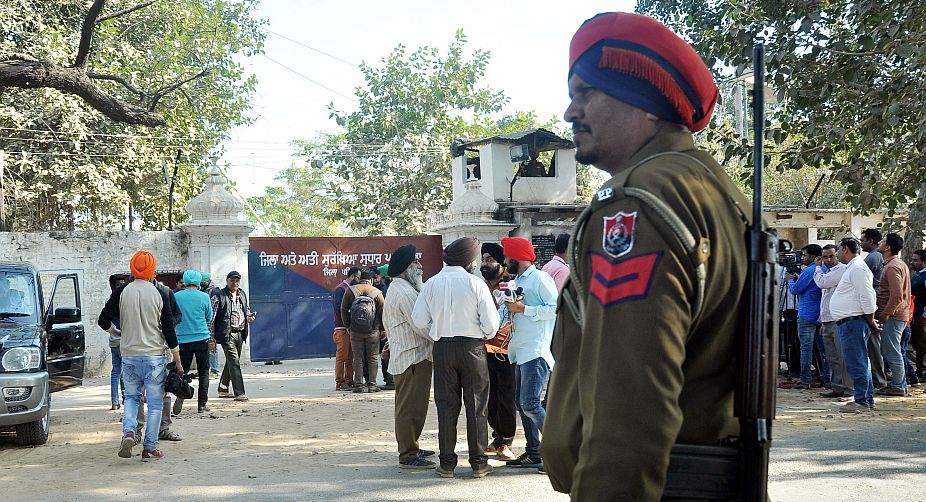
IG crime and SSP Tarntaran Harjit Singh depose before Punjab sc commission

Statesman News Service | Chandigarh |

Inspector General Police (IG) Vibhu Raj and SSP Tarntaran Harjit Singh on Tuesday deposed before the Punjab State Scheduled Castes Commission. They brought to the knowledge of the commission that 7 accused have been arrested in connection with the murder of a 32 year old dalit youth Surjit Singh of Palsaur village in Tarn Taran district, whereas, 8 others have also been named in the case.

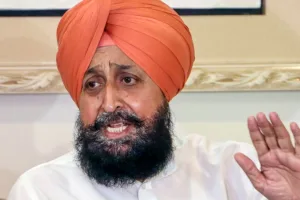
Disclosing this, the Deputy Director of the Commission Raj Bahadur Singh said that the Chairman of the Commission Rajesh Bagha has directed the Welfare Department, Punjab to give a compensation of Rs 5 lakh to the family of the victim. He further said that the SSP Tarntaran has also been directed to add section 3 (1) N pertaining to violence under modified SC/ST Act.

He also disclosed that the commission has sought a report from the Punjab Police by 16th March regarding atrocities on people belonging to the SC/ST category during the elections. He further elaborated that the commission has also instructed the state police to enforce modified provisions of the Scheduled Castes and Scheduled Tribes (Prevention of Atrocities) Act, 1989 in the incidents pertaining to violence during the course of Assembly elections in the state.

Brexit should be delayed if no trade agreement, say businesses

IANS | London |

The UK's exit from the European Union (EU) should be delayed if there is no trade agreement at the end of two years of negotiations, a British Chambers of Commerce (BCC) report said on Tuesday.

The BCC, which consulted more than 400 businesses in order to identify "key business priorities" for the UK's Brexit negotiations with the bloc, also called for "immediate certainty" on residence rights for EU citizens working in the UK, Efe news reported.

"In the UK's negotiations with the EU, the ideal outcome for businesses would be for the EU exit negotiations and our future trade agreement with the EU to be concluded simultaneously, within the two-year timetable after triggering Article 50 — official process of leaving the EU," the BCC report said.

However, if this is not possible, the UK "should seek an extension to the negotiating period, to enable completion of both agreements concurrently," it said.

UK Prime Minister Theresa May has said she would activate Article 50 before the end of March.

The BCC said businesses should have the freedom to recruit workers from the EU in a post-Brexit UK.

"The skills of existing EU workers are crucial to the success of businesses, and must be retained," the report said.

May has also expressed an intention for the country to leave the single market in order to control immigration.

But the Prime Minister has also said she is interested in reaching a broad trade agreement with the EU.

Former Conservative Prime Minister John Major warned on Monday that May's government was offering an "unreal and over-optimistic" depiction of the nation post-Brexit.

In June 2016, the UK electorate narrowly voted for the country to leave the EU in a historic referendum.

Ties with US at lowest since Cold War, says Russia

IANS | Moscow |

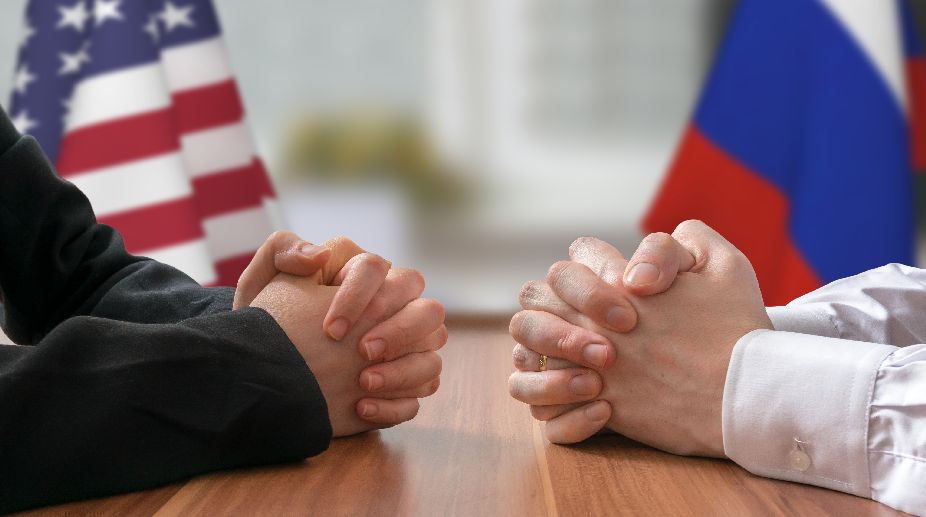
Relations between Moscow and Washington are at their lowest point since the end of Cold War, but there is hope in US President Donald Trump, a top Russian official said on Tuesday.

Foreign Minister Sergei Ryabkov made the remarks while addressing lawmakers at Russia's State Duma, the lower parliamentary chamber, Efe news reported.

"The current state of the links between Russia and the US, as we all know, leaves much to be desired," said Ryabkov.

"It's not an exaggeration to say that our relations are at their lowest point in the post-Cold War period," he stressed.

He told Russian lawmakers that former US President Barack Obama increased tensions and opted for confrontation with Russia long before the conflict in Ukraine.

The Obama administration drew up sanctions against Moscow for its alleged role in the pro-Russian insurgency that sprung up in Ukraine's Russian borderlands following the 2014 ousting of President Viktor Yanukovich.

"The rate of total degradation in (US-Russian) relations quickly accelerated following the coup d'état in Kiev three years ago. In the White House, they opted for open confrontation," he said.

Reiterating views already expressed by some of Russia's top officials, including President Vladimir Putin, Ryabkov said he hoped that the arrival of Trump to the White House would create an opportunity to defrost Russian-American relations.

Any future discussions between the nations must be balanced and free of blackmail, he said. 

Trump is due to address Congress later on Tuesday where he would expound the set-up of his new cabinet.

"It will be very important to analyse the signals and the approaches Trump takes in his first speech as leader of a superpower," said Ryabkov.

Trump has previously expressed his willingness to normalise ties with Moscow.

However, his cabinet recently came under considerable scrutiny when leaked documents suggested some of its members had held discussions with Russian officials before Trump was inaugurated.

That scandal led to the involuntary resignation of former National Security Adviser Michael Flynn who, according to the White House, failed to fully divulge to Vice President Mike Pence the contents of a telephone discussion he held with a Russian diplomat.