Logo

Varsities should be place of debate, not violence: President

PTI | Kochi |

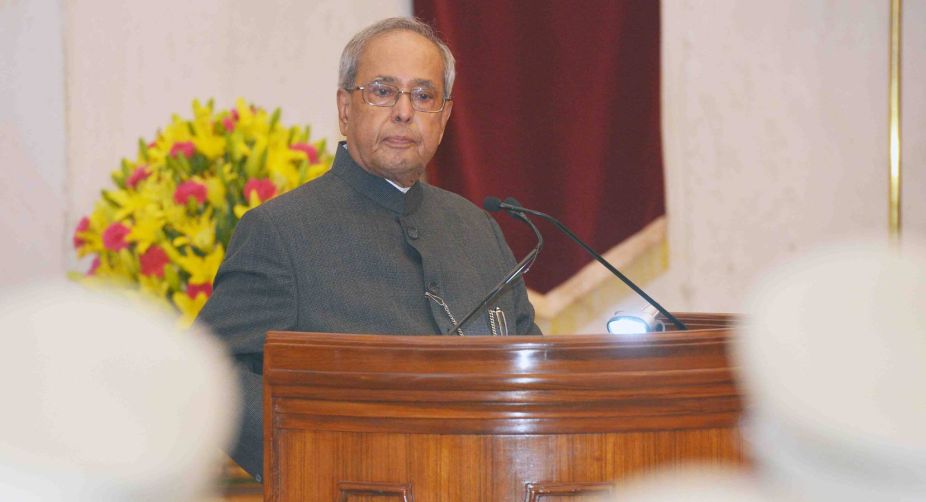
Advocating free thinking in university campuses, President Pranab Mukherjee on Thursday said students and faculties must engage in "reasoned discussion and debate rather than propagating a culture of unrest"

He also said it was tragic to see students caught in the vortex of violence and disquiet

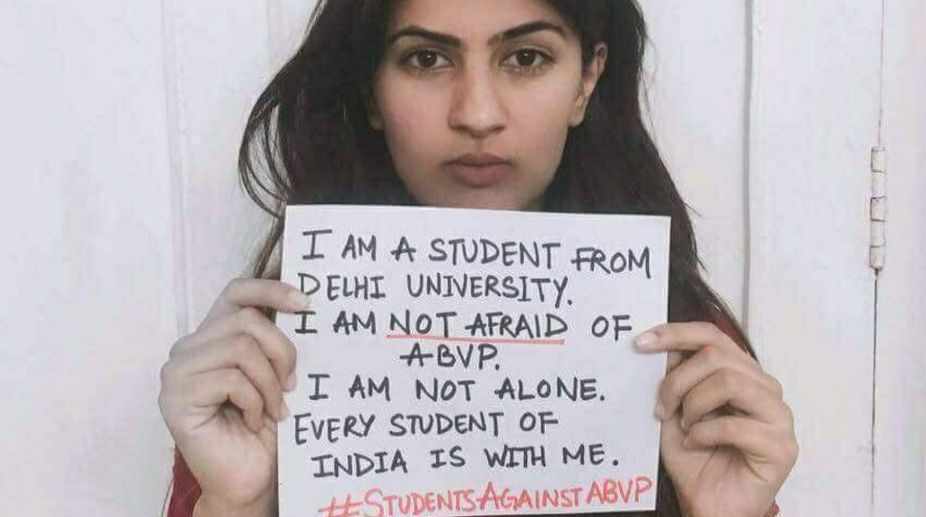
His comments come in the backdrop of the ongoing tussle between RSS-affiliate ABVP and Left-backed AISA supporters in the Delhi University and a raging debate over free speech and nationalism following recent tweets of one of the varsity's students Gurmehar Kaur

"It is tragic to see them (students) caught in the vortex of violence and disquiet," Mukherjee said while delivering the sixth K S Rajamony Memorial Lecture here

Underlining ancient glorious culture of universities in the country, he said, "Our premier institutions of higher education are the vehicles on which India has to propel itself into a knowledge society." 

"These temples of learning must resound with creativity and free thinking," he said.

Mukherjee also cautioned against the exploitation of "fault lines" in the society, intolerance and attack on women

He said there should be no room in the country for the "intolerant Indian" as this nation has been a bastion of free though, speech and expression since ancient times

The society has always been characterised by the open contestation of diverse schools of thought and debate as well as discussion, the President said

"Freedom of speech and expression is one of the most important fundamental rights guaranteed by our Constitution

There must be space for legitimate criticism and dissent," he said

The views of Kaur, daughter of an army officer killed in action against militants, evoked sharp reaction from Union minister Kiren Rijiju who went on to ask, "who is polluting her mind"

Kaur was allegedly threatened with rape on her Facebook page and was mocked by sportspersons and celebrities who questioned her pacifist approach

"Protection and safety of our women and children must be a nationwide priority. The acid test of any society is its attitude towards women and children. India should not fail this test," he said

In terse comments, Mukherjee said he does not consider a society or State to be civilised if its citizens' behaviour towards women is uncivilised

"When we brutalise a woman, we wound the soul of our civilisation. Not only does our Constitution guarantee equal rights to women but our culture and tradition also celebrate the feminine as divine," he said.
Gujarat Home Minister attacked with shoe

IANS | Gandhinagar |

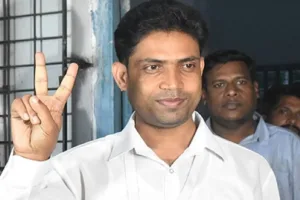
A government clerk on Thursday hurled shoes at Minister of State for Home Pradeepsinh Jadeja at the entrance of the Gujarat assembly apparently to protest against growing corruption.

Gopal Italia from Dhandhuka town in Ahmedabad district hurled a shoe as soon as the minister began speaking to the media on the killing of a Dalit sarpanch in Saurashtra region.

As the minister began speaking, Gopal came within a couple of metres of Jadeja and hurled the shoe. 

As a startled Jadeja dodged the shoe, Italia threw another one that landed on the podium where the microphones were placed.

The attacker was immediately grabbed by security guards. 

Italia, who works as a clerk in the office of the sub-divisional magistrate of Dhandhuka, began shouting "prohibition, shame, shame" and "corruption, shame, shame".

While being taken away, the youth said he targeted the minister in protest against the "arrogance" of the government, rising corruption and unemployment. 

"I see it as a (protest) against the inability of the state to control rampant corruption, rising unemployment and inability to implement prohibition," he said.

Deputy Inspector General of Police R.R. Brahmbhatt later told reporters that Italia appeared to be mentally unstable. 

"He is the same person who had some time ago posed as a policeman and called Gujarat Deputy Chief Minister Nitin Patel to complain about the new prohibition law," he said. 

The audio clip of Gopal and the Deputy Chief Minister had gone viral on social media and he was arrested in the case.

Condemning the incident, state BJP president Jitu Vaghani blamed the Congress for "misleading" the people of Gujarat, leading to such an incident.

"Anyone in a democracy has the right to submit a memorandum. But the way this boy has acted is condemnable. I fear some opposition leader may be behind him. It must be investigated," Vaghani said.

The Congress denied it was involved.

Congress leader Shaktisinh Gohil said: "The youth is only giving voice to the anger among various sections in the state, be it youths, farmers, Patidars, Dalits or others."

The leader of OBC community, Alpesh Thakore, said the incident proved the ineffectiveness of the BJP government in the state. 

"If the Home Minister is not safe in the premises of one of the most secure places, then it speaks volumes about their governance," he said.
JNU orders removal of poster seeking ‘freedom’ for Kashmir

PTI | New Delhi |

The JNU administration on Thursday ordered removal of a "controversial" poster which sprang up on its campus demanding "freedom for Kashmir and Palestine".

The poster with "Freedom for Kashmir! Free Palestine! Right to Self Determination Long Live! DSU" written on it was pasted on the wall by the Left-leaning Democratic Students Union (DSU).

DSU's former members Umar Khalid, Anirban Bhattacharya and others had organized the controversial event last year against the hanging of Parliament attack convict Afzal Guru at the JNU during which anti-national slogans were allegedly raised.

Khalid, Bhattacharya and former student union president Kanhaiya Kumar are out on bail in a sedition case over the event.

Some students noticed the poster on the wall of the new block of the School of Social Sciences (SSS) and informed the administration.

The JNU authorities asked the university security to remove the poster in the evening.

"The university has already lost precious time and energy in such unnecessary controversies. Unfortunately a small group of people are still trying to create another ruckus and vitiate the academic environment.

"We don't know who put up the poster as this has been the pattern in JNU. However, the administration has asked the staff to bring it down," a senior university official said.

The administration was unable to function for over 17 days due to the blockade of the administrative building by students in protest against changes in the admission policy and it was only early this week that the staff got access to the building and resumed work.

CBI arrests two for alleged bribery of Rs.25,000 in Himachal

Bhawani Negi | Shimla |

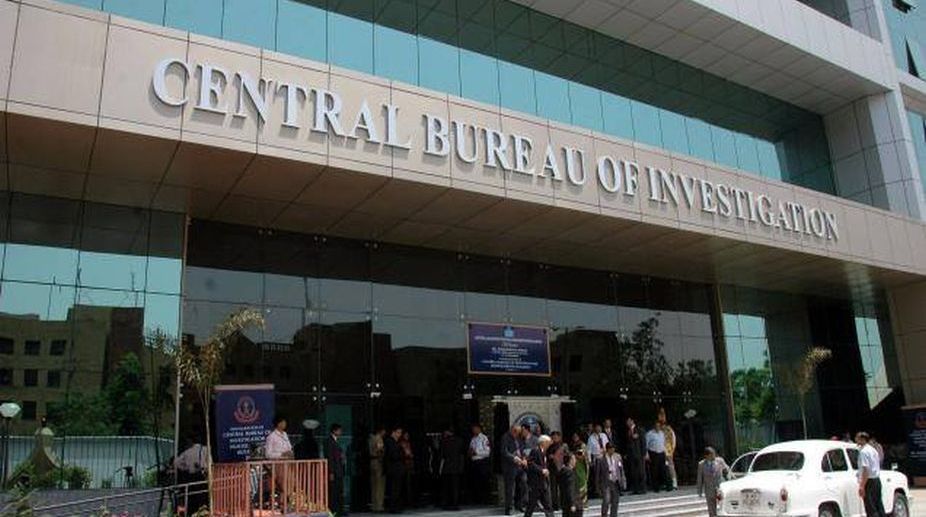
The Central Bureau of Investigations (CBI), Shimla, has arrested two officers of the MSME Development Institute, Chambaghat, Solan district, in an alleged bribery of Rs.25,000.

The CBI had registered a case on February 27, following a complaint alleging that the accused Assistant director (Electricals) and Investigator/Inspector (Glass and ceramics), working in the office of Director, MSME Development Institute, Chambaghat demanded a bribe of Rs.35,000.

The complainant was allegedly demanded bribe for showing favour of issuance of amendment of additional products in the certificate issued to his firm.

The CBI on Wednesday laid a trap and caught the accused while demanding and accepting a bribe of Rs.25,000 from the complainant. Searches are being conducted at the official and residential premises of both the accused persons.

Researchers measure temperature swings of black hole winds

IANS | Washington |

In a first, scientists have measured rapidly varying temperatures in hot gas emanating from around a black hole and found that the winds can heat up and cool down in the span of just a few hours.

The findings, published in the journal Nature, could shed new light on how winds emanating from around a black hole can affect the environment of host galaxies.

For the study, the researchers used data from NASA's Nuclear Spectroscopic Telescope Array (NuSTAR) telescope and the European Space Agency's XMM-Newton telescope. 

"We know that supermassive black holes affect the environment of their host galaxies, and powerful winds arising from near the black hole may be one means for them to do so," said NuSTAR Principal Investigator Fiona Harrison, Professor at California Institute of Technology in the US.

"The rapid variability, observed for the first time, is providing clues as to how these winds form and how much energy they may carry out into the galaxy," Harrison said.

The black hole that the researchers observed is located in the active galaxy IRAS 13224-3809 in the constellation Centaurus.

To measure the temperatures of these winds created by disks of matter surrounding black holes, the team studied X-rays coming from the edge of the black hole. 

As they travel toward Earth, these X-rays pass through the winds, and some wavelengths of the X-ray spectrum are absorbed by different elements in the winds, such as iron and magnesium. 

By examining the holes, or "absorption features", in the X-ray spectrum as it reaches Earth, astronomers can learn more about the components of the wind.

While observing this spectrum, the team noticed that the absorption features were disappearing and reappearing in the span of a few hours. 

The team concluded that the X-rays were actually heating up the winds to very high temperatures so that they became incapable of absorbing any more X-rays. 

The winds then cool off, and the absorption features return, starting the cycle over again.

"This is the first time we have seen that winds are interacting with the black hole's radiation," study first author Michael Parker, postdoctoral scholar at University of Cambridge Institute of Astronomy in Britain

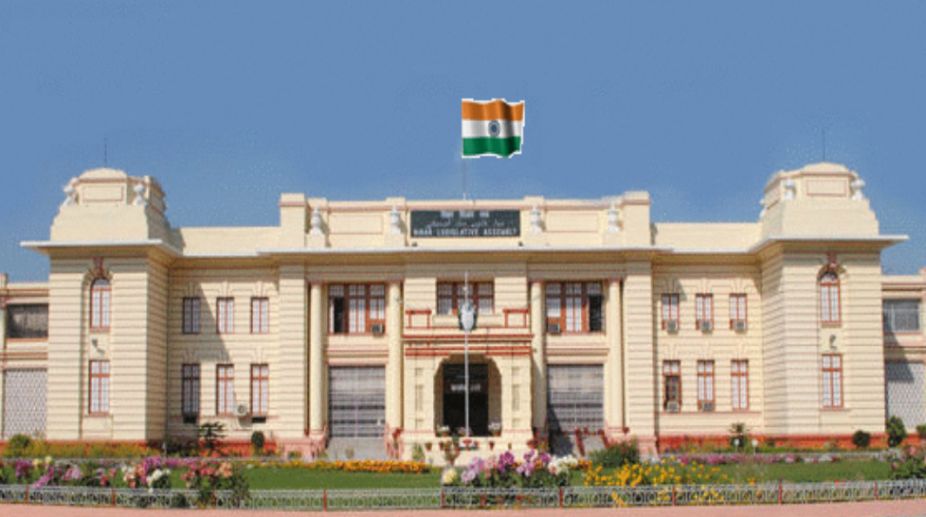
Bihar house disrupted for second consecutive day

Manoj Chaurasia | Patna |

The Bihar Assembly transacted no business for the second consecutive day on Wednesday as the angry opposition led by the BJP remained adamant on its demand to dismiss Excise Minister Abdul Jalil Mastan accused of making disparaging remarks against Prime Minister Narendra Modi and instigating the crowd to beat his photograph with shoes.

They disrupted proceedings, shouted slogans and then sat on dharna in the well of the House to express anger over the move by the chief minister to “shield” the accused minister who is from the Congress.

As the House assembled for the day, the opposition leader Prem Kumar rose from his seat and demanded sacking of the minister. He refused to relent despite request by the Speaker to let the minister present his case in the House, and remained adamant on the demand, prompting the Chair to adjourn the House till 2 pm.

The scene was no better when the House reassembled at 2 pm. Angry members soon trooped into the well of the House and sat on dharna, forcing the Speaker to adjourn it for the day.

In between, a united opposition led a protest march to Raj Bhawan, seeking governor’s intervention in sacking the minister. “Such a minister needs to be fired without any delay. We don’t know what is preventing the chief minister from initiating action against him. This is not an ordinary incident which can be ignored,” former deputy CM Sushil Kumar Modi told news after submitting a memorandum to the governor.

The BJP said it wouldn’t let the issue go so easily adding the minister will have to go. “On the one hand the minister denies making any obscene remarks against the PM, on the other he tenders apology. It’s strange,” he wondered.

Meanwhile, two separate cases were registered against the minister by the BJP leaders in Patna and Muzaffarpur for insulting the PM in public. In the first case lodged with the Kotwali police station in Patna, BJP legislator Nitin Navin has sought for slapping sedition charges against the minister, his arrest for disturbing communal harmony and a probe into his citizenship as he reportedly hails from an areas bordering Bangladesh. The BJP has also declared to stage a state-wide dharna on Saturday to protest minister’s conduct.

The Congress, however, ruled out sacking the minister. “The minister has already expressed regret for his conduct and thus there is no question of his sacking,” said senior Congress leader Sadanand Singh, after a meeting of the Congress Legislature Party leader held on late Wednesday evening at his residence. H said the entire party was with the minister.

Strangely, Congress’ own allies, the RJD and the JD-U have condemned the act of the minister. “Action must be taken against the minister if what the media is showing is true,” the RJD chief Lalu Prasad has said. He has also demanded severe action against all those who were caught on camera hitting the photograph of the PM with shoes allegedly on the instruction of the minister at a party rally.

“This is a very serious matter. The Congress should think over it,” the RJD chief added. The JD-U has already disapproved of the conduct of the minister.

Government mulling cap on cash holding limit

Prashant Mukherjee/SNS | New Delhi |

The Central government is considering more steps to curb cash transactions even as a few banks have started imposing charges after limited transactions. The government is now considering imposing a cap on cash holding limit as suggested by the SIT. 

Most bankers say they are under pressure from the government to augment digital economy. A clutch of private banks such as ICICI, HDFC and Axis Bank have imposed charges at present, since they have the highest CASA (current account-savings account) deposit ratio.

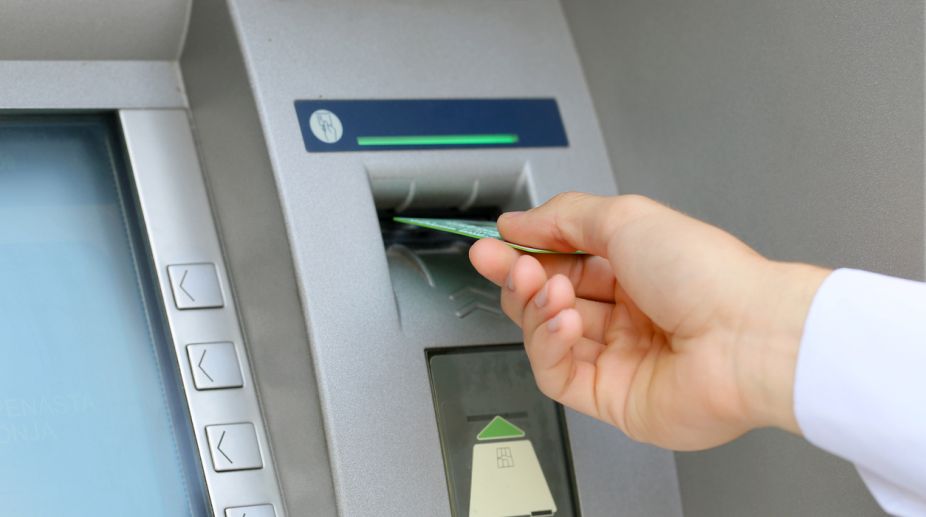
Bank officials indicated that the number of free ATM withdrawals may be slashed. There will be a hike in charges levied in the coming months in a move to discourage people from using cash. The country's largest PSU bank State Bank of India has started levying charges after only three transactions.

The Supreme Court-constituted SIT in July last year had recommended a cap of Rs 3 lakh on cash transactions and Rs 15 lakh on cash holdings. The decision to levy a cash transaction fee has come less than two weeks before 13 March, the deadline set for the removal of all restrictions on cash withdrawals.

Union Finance Minister Arun Jaitley, while presenting the Budget, already implemented one of the SIT recommendations of allowing no transactions above Rs 3 lakh in cash. Bank officials also indicated that they will increase charges on issuance of cheque books. 

However, experts believe that many other small private banks who have not imposed transaction charges such as Indusind bank, Bandhan bank, Kotak Mahindra, Yes Bank, etc., are taking this as an opportunity to attract customers to shift their accounts and increase their deposit base. 

According to market experts charging transactions on high value cash transactions is not a bad idea since this will not impact the normal customers. However, much of the problem will arise if banks start charging cash withdrawal/ deposit transactions in small value. This will hurt the common customer since cash is still a mainstream medium for transaction. 

The government is making a case for digital economy at a time when the country's mainstream digital infrastructure is not fully equipped to handle security breaches. RBI Governor Urjit Patel, who appeared before the Public Accounts Committee, told the panel that the country’s infrastructure is not ready for a cashless economy. 

A shift to digital transactions will greatly increase exposure to cyber-security threats ~ essentially fraud and theft. At present, neither the government nor the banks are ready to compensate for any loss of an individual due to online transactions. 

Mayhem in Haryana Assembly over Vij remark on Gurmehar

Statesman News Service | Chandigarh |

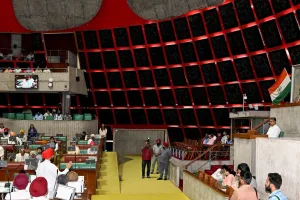
The ongoing Budget Session of Haryana Assembly on Wednesday witnessed ruckus over Health Minister Anil Vij's comment on Delhi University student Gurmehar Kaur in which he has said that those supporting her were anti-nationals and should be thrown to Pakistan.

Immediately after the Question Hour, Indian National Lok Dal (INLD) MLA Jaswinder Singh Sandhu raised the issue and criticised Vij for latter's remark, saying that the minister has insulted all the daughters of the country.

Backed by the INLD benches, Sandhu said that earlier Vij has also insulted Mahatma Gandhi by commenting that Gandhi's image was responsible for devaluation of currency.


Opposition leader Abhay Singh Chautala added fuel to the controversy and said, "On one side, the BJP claims to ensure protection and participation of girl child and on the other hand its leaders use derogatory language against a girl like Kaur."

This was countered by the ruling benches and it led ruckus in the House with both the ruling and INLD lawmakers raising slogans against each others.

However, Vij continued to maintain the same stand saying that he still believed that people supporting Kaur should be thrown out of the country.

"I stand by my comment. Why should I say sorry for criticising anti-national people," Vij said while terming the act of INLD MLAs equal to Kaur' remark.

After a long disruption over the issue, Speaker Kanwarpal Gurjar calmed down the lawmakers, adding that whether it is a daughter or a son, nobody is permitted to make an anti-national comment.

Kaur, student of Lady Shri Ram College whose father was killed in the Kargil war, launched a social media campaign against the Akhil Bharatiya Vidyarthi Parishad (ABVP) after violence erupted in Delhi's Ramjas College on February 22, after cancellation of a seminar invitation to JNU students Umar Khalid and Shehla Rashid following protests by ABVP. She even claimed of receiving rape and life threats for her remark.

Kaur's campaign attracted criticism from so many people, including Vij who tweeted, "People supporting Gurmehar Kaur, are pro-Pakistan should be thrown out of the country."

All this led to a political storm with parties including the Congress and the CPI condemning BJP leaders for calling Gurmehar an anti-national.

INHS Asvini gets trophy for best service hospital

Sri Krishna | New Delhi |

Defence Minister Manohar Parrikar on wednesdaypresented the Raksha Mantri’s Trophy and Citation for the best Service Hospital in the Armed Forces Medical Services (AFMS) for 2016 to INHS Asvini Mumbai.

The award was received by Commandant of INHS Asvini Mumbai, Surgeon Rear Admiral Ravi Kalra on behalf of the Hospital. The Command Hospital (Southern Command), Pune and Command Hospital (Northern Command) Udhampur were jointly adjudged the second best Service Hospitals. The  trophies and citations were received by Commandant, Command Hospital (Southern Command) Pune, Maj General R Grewal and Commandant, Command Hospital (Northern Command) Udhampur, Maj General N Naithani.

Complimenting the AFMS for the excellent work in provision of contemporary and comprehensive healthcare, the defence minister expressed hope that it will continue to perform with the same zeal and energy to achieve the goals and objectives.

The function was also attended by Chief of the Army Staff General Bipin Rawat and several senior officers from the three services and the Defence Ministry.

Manipur Assembly elections 2017: Women candidates in the fray

Guihiamliu Riamei | New Delhi |

With International Women’s Day around the corner, let us take time to reflect on the roles played by women in Manipur politics, especially, in the coming Assembly elections 2017.

Minimum women represention:

Manipur has 18,93,743 voters of which 9,68,312 are women. Although the number of female voters exceeds male voters, women have minimal representation in the state political affairs. As many as 49 constituencies do not have a single woman candidate in the coming elections, which will go to polls for the 60-seat assembly in two phases -March 4 and March 8.

Two parties and just two women candidates each:

In fact, the main contenders of the Manipur Assembly elections 2017- the Congress and Bharatiya Janata Party (BJP) – have fielded only two women candidates each.

The Congress has fielded Akoijam Mirabai Devi and Loitongbam Tilotama Devi as its women candidates for the 11th Manipur Assembly elections. Both will be contesting in the first phase. While Akoijam Mirabai Devi is contesting from the Patsoi constituency, Loitongbam Tilotama Devi is being fielded from Langthabal.

Nemcha Kipgen, who resigned from the Congress is contesting as BJP candidate from Kangpokpi constituency. The other BJP woman candidate is SS Olish, who is contesting from Chandel constituency. Kipgen is contesting in the first phase while Olish in the second phase.

Iron lady leads the way:

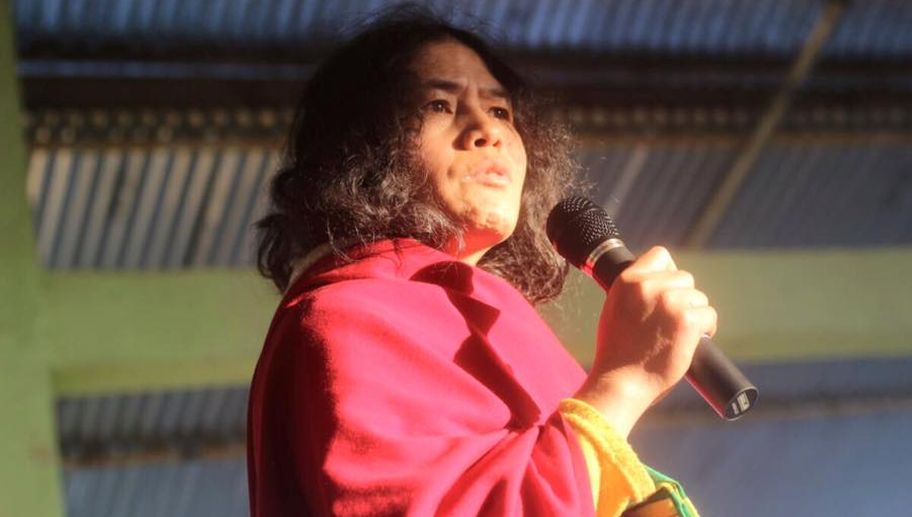
The most prominent face among the women candiates in the Manipur Assembly elections 2017 is Iron Lady, Irom Sharmila, who is all set to contest against Manipur Chief Minister Okram Ibobi Singh.

Like the ruling Congress and the BJP, Irom Sharmila’s party – People’s Resurgence and Justice Alliance (PRJA) party has also fielded two women candidates including Sharmila and Najima Bibi. Sharmila, who ended her 16 years' fast against Armed Forces (Special Powers) Act (AFSPA), on August 9, 2016 is contesting from two constituencies – Khurai and Thoubal.

Najima Bibi is, in fact, the first Muslim women candidate of Manipur who is contesting from Wabagai constituency. Bibi is determined to fight against domestic violence and work for the upliftment of Muslim women.

Manipur National Democratic Front (MNDF) party will have Y Romola Devi and S Achoubi as its women representatives from Keishamthong and Wangjing Tentha constituencies, respectively.

Despite the minimal representation Manipur Assembly elections 2017, the women candidates are all set to be the trendsetters. For instance, Iron Lady Irom Sharmila made a big leap – from a fast-unto-death protest to entering politics. Sharmila’s election objective includes rooting out corruption and injustice in the state besides carrying forward her protest to repeal AFSPA.

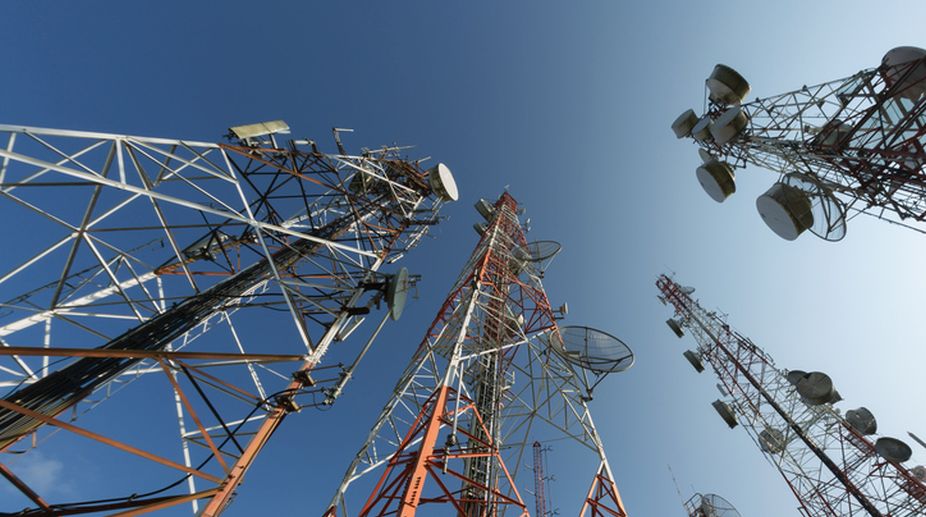
India’s ‘Fastest Mobile Network for 2016’

IANS | New Delhi |

Indias largest telecommunications services provider Bharti Airtel has been rated the 'Fastest Mobile Network for 2016', leading broadband testing and network diagnostic application Ookla said on Thursday.

The findings were based on analysis of millions of internet speed tests logged on ‘modern devices' by mobile customers across the country using Ookla's popular Speedtest app. 

The results include all mobile tests, regardless of connection technology.

"We are delighted to receive this recognition from a global leader like Ookla and it is yet another validation of our efforts to build a world-class smartphone network," said Ajai Puri, Director-Operations (India and South Asia), Bharti Airtel.

The latest speed tests published by the telecom regulatory TRAI also rated Airtel as the fastest 4G network in India.

"This award recognises Airtel's commitment to delivering fast speeds and a strong network to their customers across India," added Jamie Steven, COO at Speedtest by Ookla.

Airtel has been making significant investments towards building a future ready network under "Project Leap" — its national network transformation initiative. 

NITI Aayog roundtable on govt-civil society coordination

Statesman News Service | New Delhi |

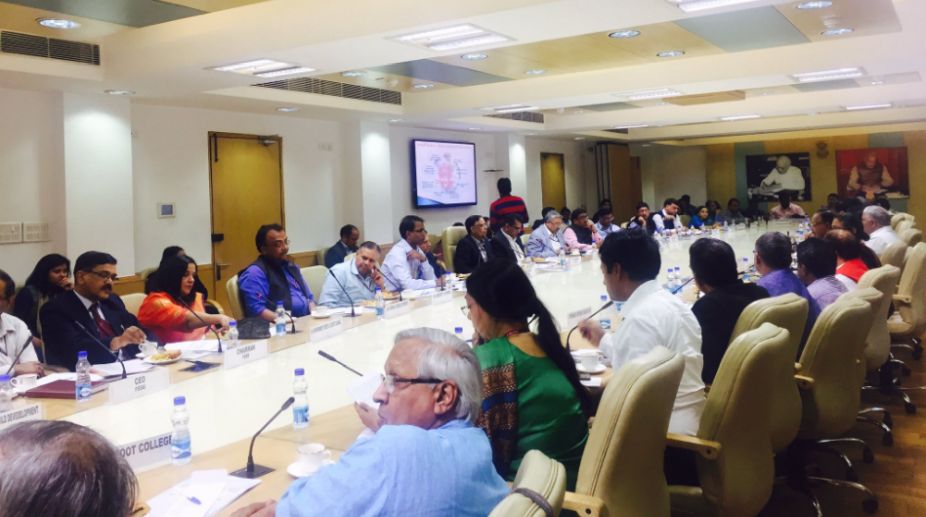
The Civil society organisations (CSOs) are likely to play a greater role in implementation of government policies and programmes after an interaction organised between Central ministries and the CSOs by NITI Aayog.

NITI Aayog said on Wednesday a range of issues from allocation of funds to monitoring and evaluation of social sector schemes, as also
self-regulation by the CSOs, were discussed at the roundtable.

Over 17 leading voluntary organisations and 15 Central Ministries took part in the deliberations on Wednesday.

Voluntary organisations from all over the country, working across the spectrum of education, health, geriatric care, women’s empowerment, rural development and handlooms interacted with senior officials from Ministries of Rural Development, Women and Child Development, Minority Affairs, and FSSAI, among others.

Highlighting the crucial role of CSOs in ensuring inclusive growth and development, down to the last mile, NITI Aayog Vice Chairman, Dr. Arvind Panagariya said, “An effective partnership between the government and the CSOs will go a long way in efficient utilisation of government resources, especially in the social sector.”

Emphasising the potential of a collaborative approach for a lasting impact on the lives of all citizens, NITI Aayog CEO, Amitabh Kant, said that innovative solutions to eliminate poverty, hunger and all other forms of deprivation can emerge through greater coordination between CSOs and the government.

The meeting identified effective ways of strengthening partnership between CSOs and the government at the national, state, district and ground level for improving service delivery of major government schemes.

Elucidating the nature and impact of work performed by the organisations, each CSO brought to the table specific sector-wise recommendations to collaborate with government ministries and departments.

Suggestions were made by leading voluntary organisations,including Pratham, Help Age India, Sulabh International, Pradhan, Akshaya Patra and Prayas for developing a sustainable partnership between voluntary organisations and the government.

Carrying forward the spirit of partnership, it was decided that similar interactions to build strong partnerships for effective governance will take place at regular intervals.

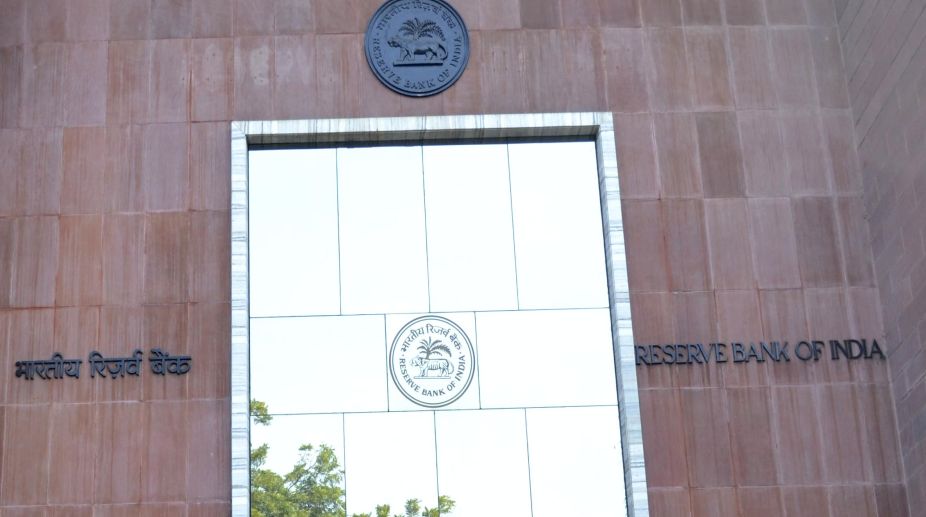
India seeks Nepal’s commitment over banned notes

IANS | Kathmandu |

A two-member team of the Reserve Bank of India (RBI) has sought Nepal's commitment on curbing black money and corruption while exchanging banned Indian currency notes in that country.

In their discussions with the Nepal Rastra Bank (NRB) — the central bank of Nepal — and the Nepal Bankers Association — the umbrella organisation of Nepali banks, the RBI team, while providing the exchange facility for banned Indian notes, expressed concern over measures to check black money and money accumulated through illegal means.

Although the RBI team was positive about providing exchange facility for the demonetised Indian currency notes within banking and financial institutions, it sought Nepal's commitment on identifying and checking black money and money accumulated by the corrupt, according to Nepali officials.

It is believed that banned Indian currency notes worth crores of rupees have been hoarded by the general public, traders and others in Nepal.

According to Bhisma Raj Dhungana, head of NRB's Foreign Exchange Management Department, the Indian team was also concerned about Nepali banks identifying Indian nationals having bank accounts in Nepali banks to negate the possibility of black money.

The possibility of illegal money reaching Nepal is high on account of an open border with India.

The Nepali side responded that their banks had a mandatory provision, which seeks a copy of citizenship from every customer before opening an account in banks and financial institutions (BFI).

"To open bank account in Nepali BFIs, Indian nationals have to provide a copy of their citizenship proof, along with a recommendation letter from the Indian Embassy in Kathmandu," Nepali officials told the RBI team.

According to Dhungana, Indian authorities had expressed apprehensions that Nepal was being used as "clearing house" to channel illegally amassed banned notes back into India's financial system.

During the meeting, the Nepali side also demanded that India allow exchange facility up to INR 25,000 to each Nepali citizen, who have bank accounts — a provision that was agreed upon by India earlier.

To avoid money amassed illegally like through money laundering and money accumulated through other illegal means, Nepali BFIs have adopted a system like KYC (know your customer) and anti-money laundering provisions.

The RBI team would also visit Bhutan and assess the ground reality there before coming up with exchange modalities for Nepal and Bhutan, they told the Nepali officials.

The Nepali central bank has said that INR 3.6 billion in denominations of Rs.500 and Rs.1,000 is with the BFIs in Nepal, including cash parked in the vaults of BFIs and NRB. But actual stock of banned Indian bills is expected to be much higher, because Nepalis were previously allowed to carry Indian Rs 500/1,000 bank notes worth up to INR.25,000. 

Besides, those residing in areas bordering India usually stash Indian notes of larger denomination as they have to visit Indian markets frequently to buy goods.

The Indian government's November 8 demonetisation move has caused inconvenience to many Nepalis, especially those who earn a living by working as daily-wage labourers in India, visit India for medical treatment, study, pilgrimage, trading and others.

India seeks Nepal’s commitment over banned notes

IANS | Kathmandu |

A two-member team of the Reserve Bank of India (RBI) has sought Nepal's commitment on curbing black money and corruption while exchanging banned Indian currency notes in that country.

In their discussions with the Nepal Rastra Bank (NRB) — the central bank of Nepal — and the Nepal Bankers Association — the umbrella organisation of Nepali banks, the RBI team, while providing the exchange facility for banned Indian notes, expressed concern over measures to check black money and money accumulated through illegal means.

Although the RBI team was positive about providing exchange facility for the demonetised Indian currency notes within banking and financial institutions, it sought Nepal's commitment on identifying and checking black money and money accumulated by the corrupt, according to Nepali officials.

It is believed that banned Indian currency notes worth crores of rupees have been hoarded by the general public, traders and others in Nepal.

According to Bhisma Raj Dhungana, head of NRB's Foreign Exchange Management Department, the Indian team was also concerned about Nepali banks identifying Indian nationals having bank accounts in Nepali banks to negate the possibility of black money.

The possibility of illegal money reaching Nepal is high on account of an open border with India.

The Nepali side responded that their banks had a mandatory provision, which seeks a copy of citizenship from every customer before opening an account in banks and financial institutions (BFI).

"To open bank account in Nepali BFIs, Indian nationals have to provide a copy of their citizenship proof, along with a recommendation letter from the Indian Embassy in Kathmandu," Nepali officials told the RBI team.

According to Dhungana, Indian authorities had expressed apprehensions that Nepal was being used as "clearing house" to channel illegally amassed banned notes back into India's financial system.

During the meeting, the Nepali side also demanded that India allow exchange facility up to INR 25,000 to each Nepali citizen, who have bank accounts — a provision that was agreed upon by India earlier.

To avoid money amassed illegally like through money laundering and money accumulated through other illegal means, Nepali BFIs have adopted a system like KYC (know your customer) and anti-money laundering provisions.

The RBI team would also visit Bhutan and assess the ground reality there before coming up with exchange modalities for Nepal and Bhutan, they told the Nepali officials.

The Nepali central bank has said that INR 3.6 billion in denominations of Rs.500 and Rs.1,000 is with the BFIs in Nepal, including cash parked in the vaults of BFIs and NRB. But actual stock of banned Indian bills is expected to be much higher, because Nepalis were previously allowed to carry Indian Rs 500/1,000 bank notes worth up to INR.25,000. 

Besides, those residing in areas bordering India usually stash Indian notes of larger denomination as they have to visit Indian markets frequently to buy goods.

The Indian government's November 8 demonetisation move has caused inconvenience to many Nepalis, especially those who earn a living by working as daily-wage labourers in India, visit India for medical treatment, study, pilgrimage, trading and others.

Parrikar backs free speech, but with a rider

Statesman News Service | New Delhi |

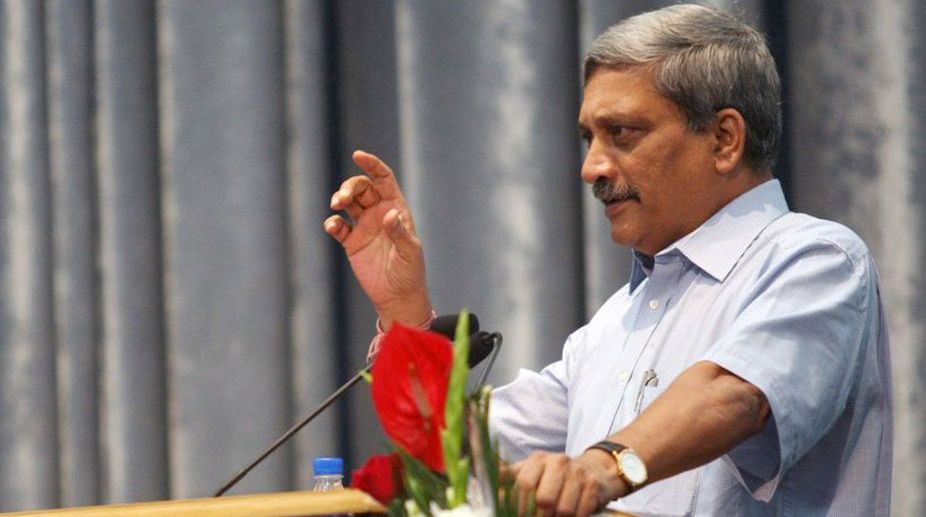
As controversy continued over the issue of free speech, Defence Minister Manohar Parrikar on Wednesday came out in support of  freedom of expression, but with the rider that it should be within the legal framework.

 “I believe in freedom of expression but it has to be within a reasonable legal framework,” he told reporters on the sidelines of a DRDO function when asked for his views on the controversy surrounding Delhi University student Gurmehar Kaur who had launched a campaign against RSS-backed ABVP.

 However, Parrikar clarified that his comments were not related to any particular incident.

 On the issue of the alleged leak of question papers of an army recruitment examination, Parrikar said the Defence Ministry has recommended a CBI inquiry as the case has inter-state ramifications.

 The Army had on Thursday ordered a high-level court of inquiry (CoI) into the alleged question paper leak. Referring to the Kabul blasts and possible use of chemical weapons, he said the army should be well-prepared to tackle any challenge.

 “As per the reports which are coming from the southern and northern parts of Afghanistan, I have seen photographs of the local population having suffered from blisters…. (due to possible use of some chemical weapons). At this moment, I don’t have confirmation on this matter but the photos are quite distressing,” he said. The minister said India will have to be prepared for any kind of nuclear or chemical attack, adding the armed forces must remain alert and prepared for any challenge. More than a dozen people were killed in two terror attacks in Kabul on Tuesday.
Parrikar backs free speech, but with a rider

Statesman News Service | New Delhi |

As controversy continued over the issue of free speech, Defence Minister Manohar Parrikar on Wednesday came out in support of  freedom of expression, but with the rider that it should be within the legal framework.

 “I believe in freedom of expression but it has to be within a reasonable legal framework,” he told reporters on the sidelines of a DRDO function when asked for his views on the controversy surrounding Delhi University student Gurmehar Kaur who had launched a campaign against RSS-backed ABVP.

 However, Parrikar clarified that his comments were not related to any particular incident.

 On the issue of the alleged leak of question papers of an army recruitment examination, Parrikar said the Defence Ministry has recommended a CBI inquiry as the case has inter-state ramifications.

 The Army had on Thursday ordered a high-level court of inquiry (CoI) into the alleged question paper leak. Referring to the Kabul blasts and possible use of chemical weapons, he said the army should be well-prepared to tackle any challenge.

 “As per the reports which are coming from the southern and northern parts of Afghanistan, I have seen photographs of the local population having suffered from blisters…. (due to possible use of some chemical weapons). At this moment, I don’t have confirmation on this matter but the photos are quite distressing,” he said. The minister said India will have to be prepared for any kind of nuclear or chemical attack, adding the armed forces must remain alert and prepared for any challenge. More than a dozen people were killed in two terror attacks in Kabul on Tuesday.
Why a sitting job is bad for your heart and waist

IANS | London |

Do you have a desk-bound job? Beware, you may be at a heightened risk of developing cardiovascular diseases by 0.2 per cent and an increase in waist circumference by two cm, for every additional hour of sitting on top of five hours, researchers warned.
The findings showed that those who had desk jobs had a bigger waist circumference — 97 cm compared to 94 cm in people without desk jobs. They also had approximately one body mass index (BMI) unit difference.
Further, they had a higher risk of cardiovascular disease — 2.2 per cent compared to 1.6 per cent in people without desk jobs, over ten years.

In addition, each extra hour of sitting from five hours a day, increased the levels of bad cholesterol (LDL) and decreased good cholesterol (HDL).

"Longer time spent in sedentary posture is significantly associated with larger waist circumference, higher triglycerides (fat in the blood) and lower HDL cholesterol, all adding up to worse risk of heart disease," said William Tigbe from University of Warwick in Britain.

In contrast, walking more than 15,000 steps per day, which is equivalent to walking seven to eight miles, or spending seven hours per day upright, may be associated with zero risk factors, Tigbe added, in the paper published in the International Journal of Obesity.

Although the study could be used as the basis of new public health targets for sitting, lying, standing and stepping to avoid metabolic risks, it would be very challenging to achieve unless incorporated into people's occupations.

"Our evolution, to become the human species, did not equip us well to spending all day sitting down. We probably adapted to be healthiest spending seven to eight hours every day on our feet, as hunters or gatherers," said Mike Lean Professor at the University of Glasgow.