Logo

Assembly elections results 2017: Congress leads by 2 in Goa

PTI | Panaji |

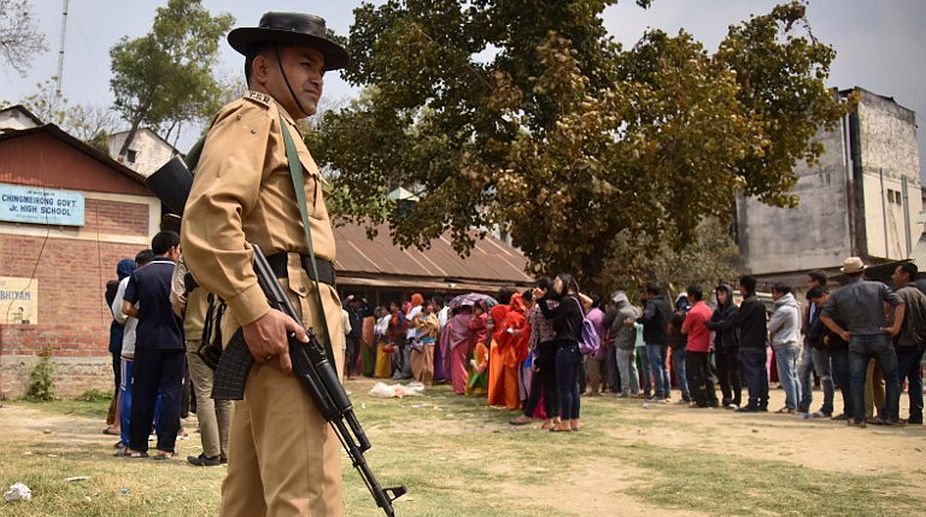
The counting of votes for all 40 constituencies of the Goa Assembly began at 8 am on Saturday at two centres in Panaji and Margao and as per early trends the Congress is leading by 2 seats.

The focus is on whether the BJP will be able to retain power and if it gets a fresh mandate, will Defence Minister Manohar Parrikar return to his home state as chief minister.

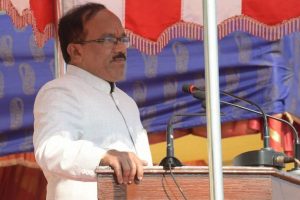
The fate of Chief Minister Laxmikant Parsekar, whose Mandrem constituency will be taken up for counting during the first round, will be decided within the first hour of the counting.

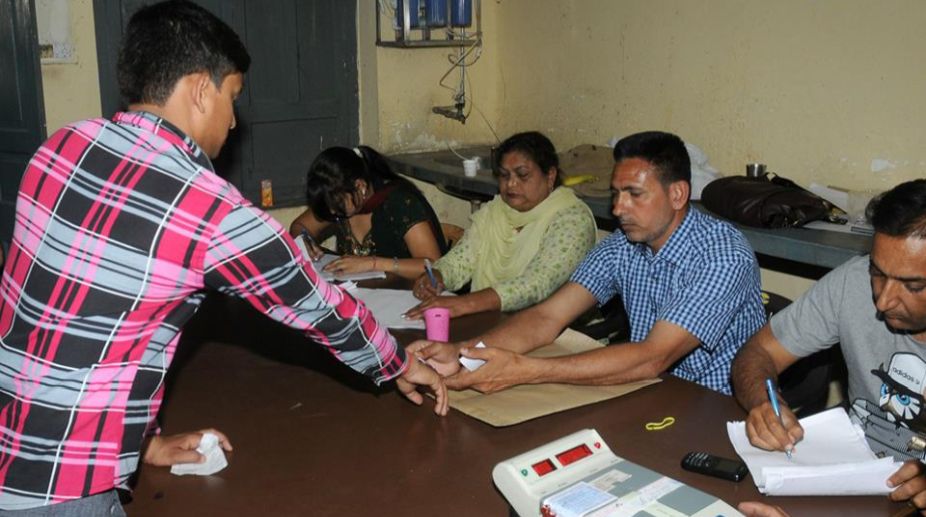
The postal ballots and votes polled by service voters will be taken up first before calculating the numbers on Electronic Voting Machines (EVMs).

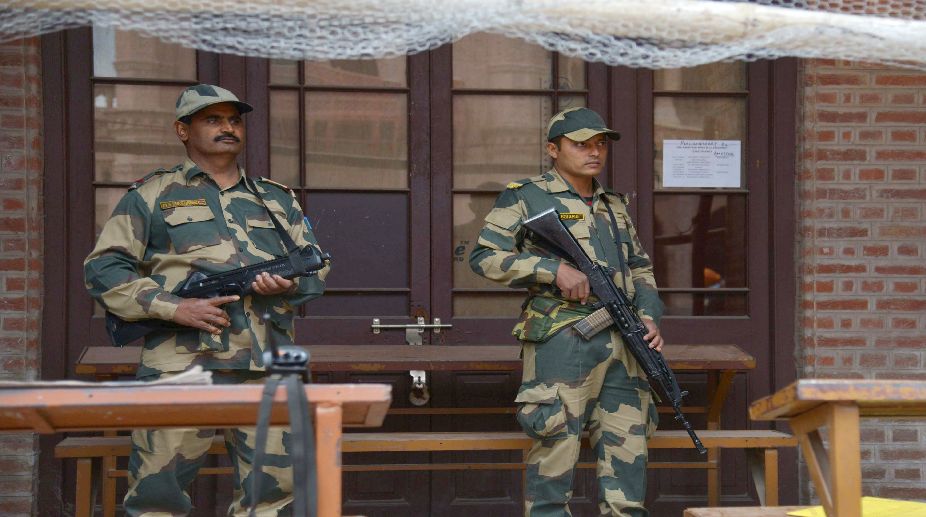
Tight security arrangements have been made with over 1,000 policemen deployed.

Election officials said the counting will be completed by 2.30 PM.

The votes for 19 constituencies will be counted at Panaji in North Goa, while the tally for the remaining 21 will be carried out in Margao in South Goa.

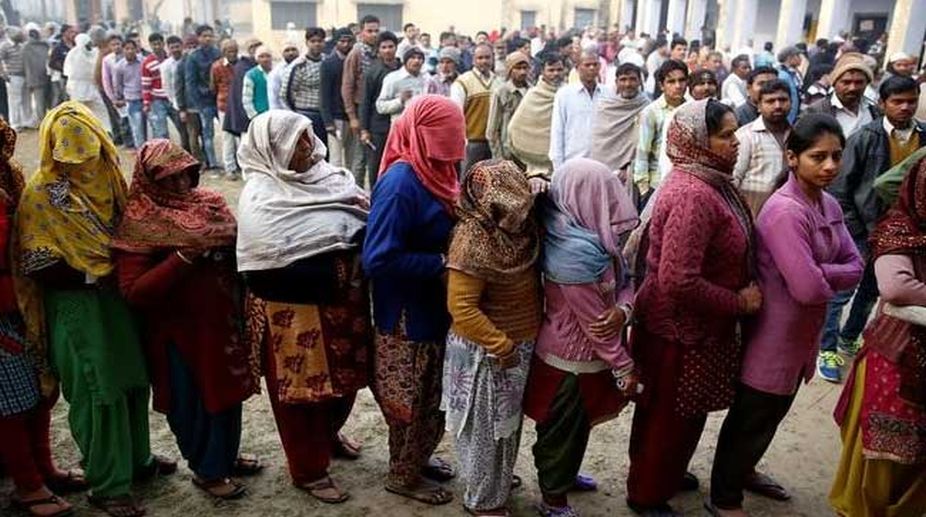
The elections held on February 4 witnessed an enthusiastic response of voters, with polling clocking in at 83 per cent.

The election has five former chief ministers besides the incumbent CM in the fray.

The Congress, the prime opponent of the BJP, has fielded four former chief ministers – Digambar Kamat, Pratapsinh Rane, Ravi Naik and Luizinho Faleiro in their respective constituencies, while the NCP has given a ticket to Churchill Alemao.

The main fight expected to be between the Congress and the BJP, while the AAP has also put up a spirited fight on 39 seats.

The BJP has fielded 36 candidates, supporting Independents in Benaulim, Navelim, Priol and Velim. The Congress has candidates on 37 seats and has extended support to United Goans' Atanasio Monserratte in Panaji, Goa Forward's Vinod Palyekar in Siolim and Independent candidate Rohan Khaunte in Porvorim constituencies.

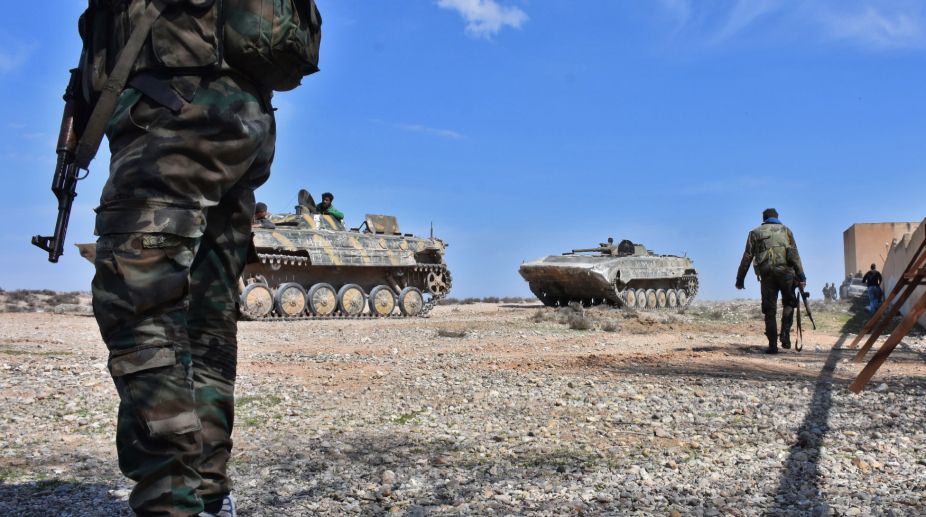
UN Security Council hopes early Syrian peace talks

IANS | United Nations |

The UN Security Council on Friday welcomed the mediation efforts by the UN special envoy for Syria, Staffan de Mistura, to bring all warring Syrian parties to a negotiation table in order to end the Syrian crisis.

"The members of the Security Council welcomed the conclusion of a further round of United Nations-facilitated intra-Syrian negotiations in Geneva on 3 March 2017," Xinhua quoted the UN body as saying.

"The members of the Security Council looked forward to the early resumption of the intra-Syrian negotiations and encouraged the Syrian parties to return to talks in good faith and to engage constructively and without preconditions on the agenda set out by the UN special envoy when talks resume," the statement said.

After briefing the Security Council, De Mistura told reporters here that a new round of Syrian peace talks is set to take place on March 23 in Geneva.

The fourth round of Syrian peace talks ended on Friday with no breakthrough achieved towards reaching a political solution to end the country's six-year war.

"They further welcomed the announcement by Special Envoy de Mistura of a clear agenda for future negotiations" as indicated by Security Council Resolution 2254, focusing on governance; constitutional issues; elections; and counter terrorism, security and confidence building measures, the statement said. 

"The members of the Security Council reiterate their commitment to ensuring the inclusion of Syrian women in the political process through sustained consultation and dialogue and promoting their full and effective participation," the statement said.
 

Sessions asks Obama-era US attorneys to resign

IANS | Washington |

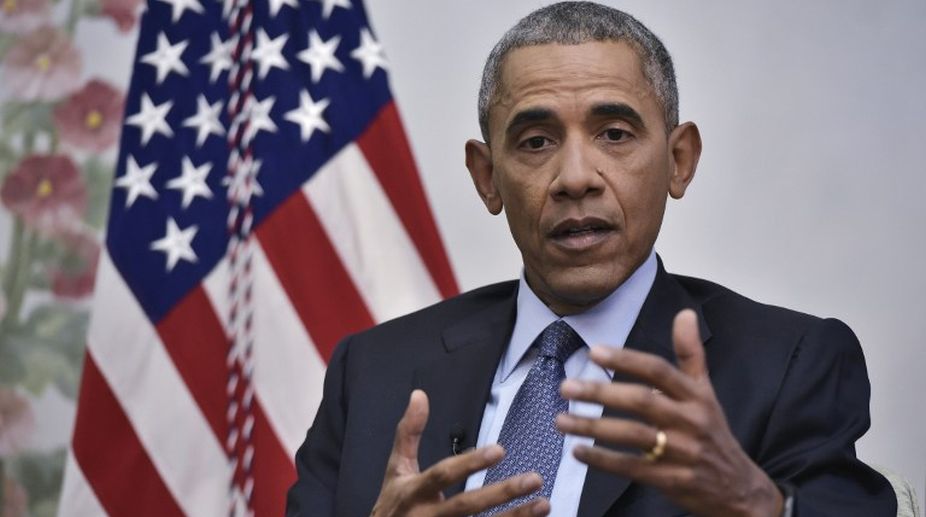
Attorney General Jeff Sessions has asked dozens of US attorneys appointed by former President Barack Obama to submit their resignations, the Department of Justice (DOJ) announced.

US attorneys are normally replaced at the beginning of new administrations. Out of a total 93 attorneys, 46 remain from the past administration, the department said on Friday.

Sessions asked for the federal prosecutors to resign "in order to ensure a uniform transition", DOJ spokeswoman Sarah Isgur Flores said in a statement.

"As was the case in prior transitions, many of the US Attorneys nominated by the previous administration already have left the Department of Justice," The Hill magazine quoted Flores as saying.

The DOJ said career prosecutors in Sessions' office would continue investigations and prosecutions until the new US attorneys were confirmed.

The call for resignations applies to all Senate-confirmed US Attorneys, including Preet Bharara, the Indian-origin US attorney for the Southern District of New York.

This comes as a surprise as Bharara reportedly met Trump after the election and agreed to remain in his position during the Trump administration. 

Sessions also asked him to stay, the prosecutor told The New York Times.

Once the resignations are submitted, it would be Trump's decision on whether to accept all of them.

Meanwhile, Democracy 21, Citizens for Responsibility and Ethics in Washington and the Campaign Legal Centre sent a letter asking Bharara to investigate whether Trump had received payments or other benefits from foreign governments through his business interests, according to The Washington Post.

Under the "emoluments clause" of the Constitution, top officials are prohibited from receiving payments or favours from foreign governments.

Trump invites Palestinian leader Abbas to White House ‘soon’

AFP | Ramallah |

Donald Trump has invited Palestinian leader Mahmud Abbas to visit the White House sometime soon, both sides said after the first phone call between the pair since the US president took office in January.

Trump invited Abbas "to visit the White House soon to discuss ways to resume the (Palestinian-Israeli) political process," the official Palestinian news agency Wafa quoted Abbas's spokesman as saying.

The spokesman, Nabil Abu Rudeina, said that Trump stressed his "commitment to a peace process that would lead to a real peace between Palestinians and Israelis", Wafa reported.

Abbas told Trump that peace was a "strategic choice" for the Palestinian people that should lead to the "establishment of a Palestinian state alongside Israel".

In Washington, the White House said Trump "emphasised his personal belief that peace is possible and that the time has come to make a deal." 

"The president noted that the United States cannot impose a solution on the Israelis and Palestinians, nor can one side impose an agreement on the other," said a statement from Trump's spokesman Sean Spicer.

"The president invited president Abbas to a meeting at the White House in the near future." 

Trump received Israeli Prime Minister Benjamin Netanyahu at the White House in mid-February.

At that meeting, Trump broke with decades of US policy by saying he was not bound to the two-state solution for ending the Israeli-Palestinian conflict.

The peace process has been deadlocked since April 2014 following the collapse of indirect negotiations led by then US secretary of state John Kerry.

Since Trump came to power, having pledged to lead the most pro-Israel US administration in history, Palestinian officials have been quietly alarmed by their lack of access to senior figures in the White House.

On Tuesday, the US ambassador to the United Nations, Nikki Haley, met for the first time with the Palestinian envoy to the world body, Riyad Mansour.

After the talks, Haley tweeted that the Palestinians should "meet with Israel in direct negotiations rather than looking to the UN to deliver results that can only be achieved through the two parties".

Israel has long favoured direct bilateral talks, while the Palestinians argue they need the international community to ensure Israel follows through on its pledges.

Trump has previously suggested he would move the US embassy from Tel Aviv to Jerusalem, while Israeli right- wingers have encouraged Netanyahu to use Trump's election as an opportunity to formally annex parts of the West Bank into Israel.

Assembly election results 2017: Irom Sharmila trailing in Manipur

IANS |

Counting of votes for the 60 assembly constituencies in Manipur began amid tight security at 8 a.m. on Saturday.

All eyes are on Irom Sharmila’s People's Resurgence and Justice Alliance, and Congress’ Okram Ibobi Singh. Currently, Congress has taken a lead while Irom is trailing in her constituency Thoubal.

A total of 266 candidates, including 11 women, were in the fray. The BJP contested all the 60 seats and the ruling Congress 59.

While 38 constituencies went to the polls on March 4, the remaining voted on March 8. Manipur saw a voter turnout of 87.51 per cent.

Assembly elections results 2017: Congress leading by 3 in Punjab

SNS | New Delhi |

Counting of votes for 117 assembly seats and the by-election to the Amritsar Lok Sabha seat began across Punjab on Saturday amid tight security and as per trends the Congress is leading by 3 seats.

Parkash Singh Badal is leading from Lambi and Capt Amarinder Singh is in second position and AAP's Jarnail Singh is in third position as per the early trends.

The counting, which started at 8 am, is taking place at 54 centres in 27 locations. Early trends are likely to emerge within the first couple of hours.

The fate of 1,145 candidates, including 81 women, will be known on Saturday. A total of 77.4 per cent of the 1.98 crore electors in Punjab voted on February 4.

"Over 14,000 officials will be involved in counting," Punjab Chief Electoral Officer VK Singh said.

The counting started amid uncertainty amid the possibility of a hung house.

The main contenders for powers are the Shiromani Akali Dal-BJP combine, the Congress and the Aam Aadmi Party (AAP).

A party needs 59 seats to gain a simple majority in the assembly.

The by-election to the Amritsar Lok Sabha seat, vacated by Congress leader Amarinder Singh in November 2016, was also held with the assembly polls.

All England Open: Saina, Sindhu crash out in quarters

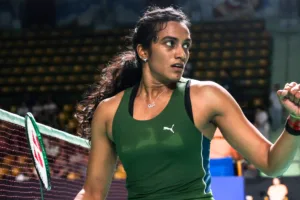
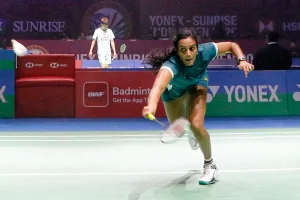
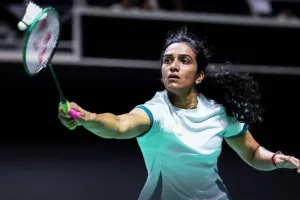
Sindhu found the going tough against Chinese Taipei's top seed Tai Tzu Ying as she lost 14-21, 10-21.

IANS | Birmingham |

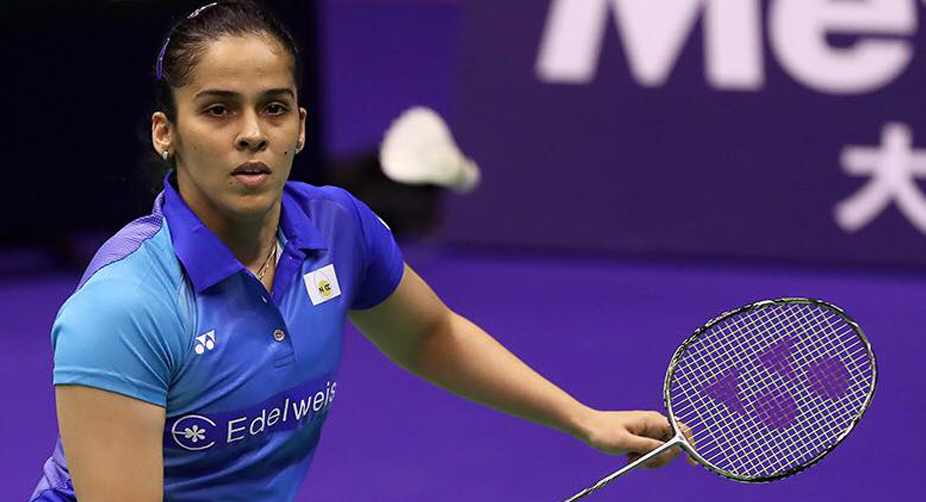
India's campaign at the All England Open Badminton Championships came to an end as women's singles shuttlers P.V. Sindhu and Saina Nehwal suffered defeats in the quarter-finals here on Friday.

Sixth seed Sindhu could not muster a challenge against Chinese Taipei's top seed Tai Tzu Ying as she lost 14-21, 10-21 in 34 minutes. Tai looked sharper and her delectable drop shots rattled Sindhu throughout the match.

With this win, world No.1 Tai has taken an impressive 6-3 lead in career meetings with 2016 Rio Olympic silver medallist Sindhu. Tai also registered three consecutive wins over the Hyderabadi.

Eighth seed Saina fought hard but could not avoid a 20-22, 20-22 defeat to South Korean third seed Sung Ji Hyun in 54 minutes.

It was a heartbreaking loss for Saina who came close but could not pull it off at critical junctures at the Barclaycard Arena.

The win was Sung's only second triumph in eight games against 2012 London Olympic bronze medal winner Saina.

Only two Indians — Prakash Padukone and current chief coach P. Gopichand — have managed to win titles at the world's oldest tournament. While Padukone won in 1980, Gopichand's feat came in 2001.

UN says world faces largest humanitarian crisis since 1945

AP | United Nations |

The world faces the largest humanitarian crisis since the United Nations was founded in 1945 with more than 20 million people in four countries facing starvation and famine, the UN humanitarian chief has said.

Stephen O'Brien on Saturday told the UN Security Council that "without collective and coordinated global efforts, people will simply starve to death" and "many more will suffer and die from disease."

He urged an immediate injection of funds for Yemen, South Sudan, Somalia and northeast Nigeria plus safe and unimpeded access for humanitarian aid "to avert a catastrophe."

"To be precise," O'Brien said, "we need $4.4 billion by July."

Without a major infusion of money, he said, children will be stunted by severe malnutrition and won't be able to go to school, gains in economic development will be reversed and "livelihoods, futures and hope will be lost."

UN and food organisations define famine as when more than 30 per cent of children under age 5 suffer from acute malnutrition and mortality rates are two or more deaths per 10,000 people every day, among other criteria.

"Already at the beginning of the year we are facing the largest humanitarian crisis since the creation of the United Nations," O'Brien said. "Now, more than 20 million people across four countries face starvation and famine."

O'Brien said the largest humanitarian crisis is in Yemen where two-thirds of the population 18.8 million people need aid and more than seven million people are hungry and don't know where their next meal will come from. "That is three million people more than in January," he said.

The Arab world's poorest nation is engulfed in conflict and O'Brien said more than 48,000 people fled fighting just in the past two months.

During his recent visit to Yemen, O'Brien said he met senior leaders of the government and the Shiite Houthi rebels who control the capital Sanaa, and all promised access for aid.

"Yet all parties to the conflict are arbitrarily denying sustained humanitarian access and politicise aid," he said, warning if that behaviour doesn't change now "they must be held accountable for the inevitable famine, unnecessary deaths and associated amplification in suffering that will follow."

For 2017, O'Brien said 2.1 billion is needed to reach 12 million Yemenis "with life-saving assistance and protection" but only 6 per cent has been received so far. He announced that Secretary-General Antonio Guterres will chair a pledging conference for Yemen on April 25 in Geneva.

The UN humanitarian chief also visited South Sudan, the world's newest nation which has been ravaged by a three-year civil war, and said "the situation is worse than it has ever been."

"The famine in South Sudan is man-made," he said. "Parties to the conflict are parties to the famine as are those not intervening to make the violence stop." 

Assembly election results 2017: Vote count begins in UP; BJP takes slight lead

IANS | Lucknow |

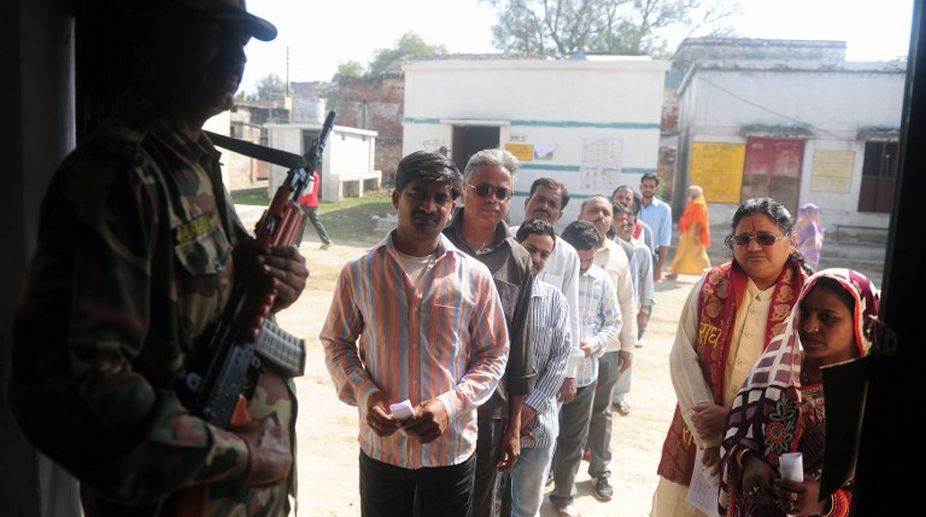
The counting of votes began for 403 assembly seats in Uttar Pradesh at 8 a.m. on Saturday amid tight security. While vote counting has started. BJP has taken a slight lead with eight seats, while Congress has taken 5 seats. BJP is leading in western and Central UP with Congress trailing behind it. 

Chief Electoral Officer T. Venkatesh said postal ballots would be counted first and then the Electronic Voting Machines (EVMs) would be taken up.

A total of 4,853 candidates contested the staggered election.

The maximum number of 403 candidates were fielded by the Bahujan Samaj Party followed by Bharatiya Janata Party (384), Samajwadi Party (311) and the Congress (114). A total of 1,462 independents were in the fray.

Assembly election results 2017: Vote count begins in UP; BJP takes slight lead

IANS | Lucknow |

The counting of votes began for 403 assembly seats in Uttar Pradesh at 8 a.m. on Saturday amid tight security. While vote counting has started. BJP has taken a slight lead with eight seats, while Congress has taken 5 seats. BJP is leading in western and Central UP with Congress trailing behind it. 

Chief Electoral Officer T. Venkatesh said postal ballots would be counted first and then the Electronic Voting Machines (EVMs) would be taken up.

A total of 4,853 candidates contested the staggered election.

The maximum number of 403 candidates were fielded by the Bahujan Samaj Party followed by Bharatiya Janata Party (384), Samajwadi Party (311) and the Congress (114). A total of 1,462 independents were in the fray.

Assembly election results 2017: Counting of votes begins in Goa

IANS | Panaji |

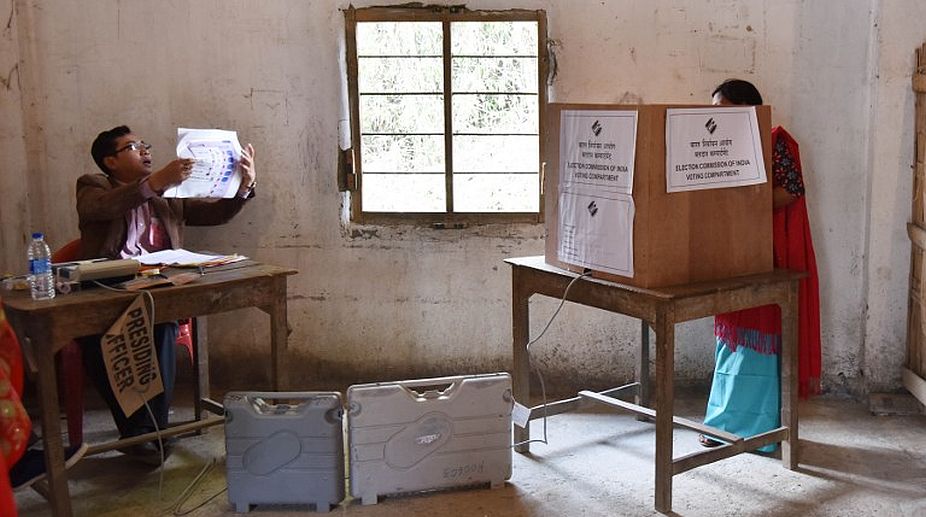
Counting of votes polled in the February 4 Goa assembly election got under way at 8 am on Saturday.

Officials said the postal ballots were being counted first and the Electronic Voting Machines (EVMs) would be taken up for counting next.

The votes logged in nearly 2,500 EVMs are being counted at the Bal Bhavan in Panaji and the Government College of Commerce and Economics in Margao, 35 km from here.

For the 40 seats in the state, the BJP fielded candidates in 36 seats, the AAP in 39, Congress in 37 and the Maharashtrawadi Gomantak Party in 25.

Assembly election results 2017: Counting of votes begins in Goa

IANS | Panaji |

Counting of votes polled in the February 4 Goa assembly election got under way at 8 am on Saturday.

Officials said the postal ballots were being counted first and the Electronic Voting Machines (EVMs) would be taken up for counting next.

The votes logged in nearly 2,500 EVMs are being counted at the Bal Bhavan in Panaji and the Government College of Commerce and Economics in Margao, 35 km from here.

For the 40 seats in the state, the BJP fielded candidates in 36 seats, the AAP in 39, Congress in 37 and the Maharashtrawadi Gomantak Party in 25.

Assembly election results 2017: Counting begins in 5 states

SNS | New Delhi |

Counting of votes has begun in 8 am across five states in India- Uttar Pradesh, Manipur, Goa, Punjab and Uttarakhand. While the results will reveal the actual winners in the states, exit polls give BJP an edge in Uttar Pradesh and the Congress in Punjab. In Manipur, Irom Sharmila and Okram Ibobi Singh are set to fight it out.

Most exit polls have predicted that BJP will win over 180 seats in UP, while the SP-Cong alliance will win only around 150-160 seats.

In Punjab, were AAP too has a stronghold, counting has begun in all the 54 centres at 27 locations in Punjab for 117 assembly seats.

Assembly election results 2017: Counting begins in 5 states

SNS | New Delhi |

Counting of votes has begun in 8 am across five states in India- Uttar Pradesh, Manipur, Goa, Punjab and Uttarakhand. While the results will reveal the actual winners in the states, exit polls give BJP an edge in Uttar Pradesh and the Congress in Punjab. In Manipur, Irom Sharmila and Okram Ibobi Singh are set to fight it out.

Most exit polls have predicted that BJP will win over 180 seats in UP, while the SP-Cong alliance will win only around 150-160 seats.

In Punjab, were AAP too has a stronghold, counting has begun in all the 54 centres at 27 locations in Punjab for 117 assembly seats.

Savouring soulful strains

Meena Banerjee |

Indian classical music is essentially chamber music but we live in an era when musical baithaks have become a rarity due to social changes. Thanks to a few enthusiasts of classical music these intimate sit-ins do happen once in a while and when they happen, they leave a deep impression. One such rare occasion was gifted to genuine music lovers and musicians by renowned connoisseur couple, Rajeev and Prerna Goenka at their plush Ashoka Road apartment recently, featuring Vidushi Arati Ankalikar Tikekar.  

The celebrity vocalist began her concert with raga Bhimpalasi, replete with vilambit and drut khayals duly treated with decorative mukhda, rhythm encrusted arrival on sam, delightfully cajoling behlawa, cascading taans of umpteen varieties and a thrilling tarana. Since she has great command on rhythm, she experimented with numerous rhythmic permutations with effortless ease. Inspired by that, her accompanists Sanjay Adhikary (tabla) and Gourab Chatterjee (harmonium) too came up with delightful replies and saath sangat. During raga elaboration in the mid-part of middle octave, she infused a surprise element by a sudden plunge in the middle of the lower octave with great precision. But at times, due to extra force, her voice sounded rather harsh from upper tonic onwards.

While listening to her recital one could relish a blend of several gharanas. Trained by legends like Ganasaraswati Kishori Amonkar, Pandit Dinkar Kaikini (Agra) and Pandit Vasantrao Kulkarni (Gwalior-Agra) she is well equipped to do so and maybe that is why she tries to explore her chosen ragas from a different angle. For example, her method of incorporating the nishad of Bhimpalasi as the nyas swara of the upper half of the octave during antara elaboration was out of the usual rung. And when she came back to an emphatic madhyam, it was a great relief for the raga-fanatics.

Apparently a prolific composer, she chose a self-composed tarana in Basant set to medium ektal. The rhythmic variety of the phrases, with due emphasis on every beat, were its mainstay while the fast teental-based Piya Sang khelo ri eschewed the bars of the tala cycle and merrily floated from sam to sam. Her next was Madho Mukund Murari, a Kafi tappa set to Pashto (seven beats) but in Hindi, written and tuned by Dinkar Kaikini only because musicians do not try to understand the Punjabi lyrics of traditional compositions. Arati’s treatment included both the staccato-loops of Punjab and the softer gamak-based tappa-taans as perceived by Rabindranath Tagore. She followed it up with a Hori and an unseasonal Jhoola in Majh Khamaj with shades of Malhar and Jaijaiwanti but without the traditional composition or traditional style of singing this form of Purab Anga Gayaki. It was more like a modern song with some thumri elements.
A lively person, she honoured encores that led her to sing raga Nand next but since she had ventured out of the serious to lighter mood, she aptly chose to present a tarana set to adachautal with an unusual utthaan — both rhythmic and melodic. Unusual was her Bhairavi composition too which, according to her, was a trial before initiated listeners! Composed by Chaitanya Kunthe of Pune, it (Kahe rokat Shyam dagariya) was set to a mind-boggling nine and a half beats’ tala cycle. After only the composition, she moved on to a fast teental tarana and juxtaposed it with a ghanakshari bandish with one syllable per beat. Both, composed by Dinkar Kaikini, were sung by her with superb facility.          

For a Cause

“Let Them Touch the Sky”, with this as the main objective Bandish Music Foundation continues to try and organise programmes for children with special needs. Youngsters who are specially-abled but have a penchant for music and dance are provided a platform to showcase their talent but with a difference. They perform and share the stage with eminent artistes under Bandish Music Foundation’s banner.

This commendable concept was implemented by them in two cities this year, Siliguri and, two days later, Kolkata. While professional artistes like sarod virtuoso Abhishek Lahiri, renowned vocalist Arshad Ali Khan, tabla exponent Subrata Bhattacharya and harmonium exponent Debasish Adhikary came forward to offer their support to the cause at both places, the event organised at Dinabandhu Mancha, Siliguri saw the inaugural song based on the theme of the event, “Let Them Touch The Sky” performed by 35 students of Jermel’s Academy. That was followed by an item by specially-abled students of a special school called Prerona in Siliguri. The Kolkata event, held at Dr Triguna Sen Auditorium was inaugurated by Pandit Arun Bhaduri and a guru vandana by the young students. Specially-abled students of Manovikas Kendra presented a sterling performance.   

Tabla solo recitals by Subrata Bhattacharya, supported by Debasish Adhikary’s harmonium, commenced the classical music segment of both events. Abhishek Lahiri with Pandit Arup Chatterjee on the tabla, played Shyam Kalyan (vilambit and drut teental gatkaris) in Siliguri and in Kolkata he chose to play raga Chhayanat (medium jhaptal and fast teental) and a Mishra Khamaj dhun set to deepchandi. Subrata Bhattacharya (tabla) was his ally in the city while at Siliguri he accompanied Arshad Ali Khan who sang raga Bageshree (slow and fast ektal). He concluded his recital with a tarana. Back home, the young Ustad teamed with Parimal Chakraborty (tabla) and sang raga Shudh Kalyan. Debasish Adhikary’s harmonium remained his companion at both places.

Udat Abeer Ghulal  

Bharatiya Bhasha Parishad hosted a musical programme called Udat Abeer Ghulal as a welcome signal to the festival of Holi featuring instrumentalists and vocal artists from Mumbai representing both Hindustani and Carnatic styles with as much as four percussion instruments thrown in.

Santoor exponent Snehal Muzoomdar and veena maestro Narayan Mani, disciple of maestro K S Narayanswami, lead the instrumental classical fusion with Shraddha Shridharani and Nupur Joshi providing the vocal inputs in Hindustani and Carnatic styles respectively. The quartet was complimented on the percussion instruments by Abhisek Chatterjee (tabla), P Aravindan (mridangam), Mithun Chakraborty (pakhawaj) and Somnath Roy (ghatam).

The ragas chosen were Pantuvarali for Carnatic and Basant for Hindustani and the talas for the Hindustani bandish had matta- tala with nine matras whereas for Carnatic it was Roopakam having six matras. Later a composition of Thyagaraja, Shiva Shiva Shiva enaradha was played on the veena by Mani and Nupur Joshi sang the kriti. Shridharani took up a couplet from Kalidasa and weaved raga Basant with it. Later the tala changed to jhaptal of 10 beats. Nupur did not stick wholly to the Carnatic idiom and shades of Puriya Dhanasri peeped in but Shridharani gave the correct Basant punch with properly placed teevra madhyam and with the typical phrase having the shuddh madhyam. While Mani’s veena was evocative, Muzoomdar’s santoor could do better with careful tuning. Possibly he was time constrained to fine-tune the instrument with a hundred strings as the programme started half an hour late.

The percussionists played with good understanding with no one overshadowing the other. Both Abhishek Chatterjee and Mithun Chakraborty are sought after artistes in their respective fields and it was good to see the son of the soil Somnath Roy taking up the Carnatic Ghatam and P Aravindan, denizen of Kolkata, playing the mridangam in a matured way.  

Against oppression   

This year Bharat Rang Mahotsav saw its 19th spring in Delhi. Organised by the National School of Drama, this eagerly awaited festival included Little Thespian as the representative theatre group from Kolkata to present its unconventional but acclaimed play Gainda at Sri Ram Centre auditorium, Delhi. Also selected for Bharat Rang Mahotsav’s Parallel Theatre Festival, it was staged at Nazrul Prekshagrah auditorium, Agartala.  Gainda is an adaptation of Eugène Ionesco’s play Rhinoceros and its translation, design and direction was by SM Azhar Alam. The play demonstrates the playwright’s anxiety about the widespread inhuman totalitarian tendencies in society. This play depicts the struggle of one man to maintain his identity and integrity, alone, in a world where all others have succumbed to the “beauty” of brute force and violence. It depicts an imaginary epidemic disease called “rhinocerite” in a city, which scared all its inhabitants. Slowly turned into rhinoceros they resort to innate brutality.

Apart from being a professor of Urdu in Moulana Azad College, the play-director SM Azhar Alam is a famed theatre veteran who has been working in this field in different capacities for more than three decades. Paschim Bang Natya Academy, department of culture, Govternment of West Bengal awarded him the Best Playwright for Namak Ki Guddia (Urdu) in 2001 and Best Director Award for Question Mark in 2007. The music of this play was provided by Sangeet Natak Akademi awardee Murari Ray Choudhary.


Savouring soulful strains

Meena Banerjee |

Indian classical music is essentially chamber music but we live in an era when musical baithaks have become a rarity due to social changes. Thanks to a few enthusiasts of classical music these intimate sit-ins do happen once in a while and when they happen, they leave a deep impression. One such rare occasion was gifted to genuine music lovers and musicians by renowned connoisseur couple, Rajeev and Prerna Goenka at their plush Ashoka Road apartment recently, featuring Vidushi Arati Ankalikar Tikekar.  

The celebrity vocalist began her concert with raga Bhimpalasi, replete with vilambit and drut khayals duly treated with decorative mukhda, rhythm encrusted arrival on sam, delightfully cajoling behlawa, cascading taans of umpteen varieties and a thrilling tarana. Since she has great command on rhythm, she experimented with numerous rhythmic permutations with effortless ease. Inspired by that, her accompanists Sanjay Adhikary (tabla) and Gourab Chatterjee (harmonium) too came up with delightful replies and saath sangat. During raga elaboration in the mid-part of middle octave, she infused a surprise element by a sudden plunge in the middle of the lower octave with great precision. But at times, due to extra force, her voice sounded rather harsh from upper tonic onwards.

While listening to her recital one could relish a blend of several gharanas. Trained by legends like Ganasaraswati Kishori Amonkar, Pandit Dinkar Kaikini (Agra) and Pandit Vasantrao Kulkarni (Gwalior-Agra) she is well equipped to do so and maybe that is why she tries to explore her chosen ragas from a different angle. For example, her method of incorporating the nishad of Bhimpalasi as the nyas swara of the upper half of the octave during antara elaboration was out of the usual rung. And when she came back to an emphatic madhyam, it was a great relief for the raga-fanatics.

Apparently a prolific composer, she chose a self-composed tarana in Basant set to medium ektal. The rhythmic variety of the phrases, with due emphasis on every beat, were its mainstay while the fast teental-based Piya Sang khelo ri eschewed the bars of the tala cycle and merrily floated from sam to sam. Her next was Madho Mukund Murari, a Kafi tappa set to Pashto (seven beats) but in Hindi, written and tuned by Dinkar Kaikini only because musicians do not try to understand the Punjabi lyrics of traditional compositions. Arati’s treatment included both the staccato-loops of Punjab and the softer gamak-based tappa-taans as perceived by Rabindranath Tagore. She followed it up with a Hori and an unseasonal Jhoola in Majh Khamaj with shades of Malhar and Jaijaiwanti but without the traditional composition or traditional style of singing this form of Purab Anga Gayaki. It was more like a modern song with some thumri elements.
A lively person, she honoured encores that led her to sing raga Nand next but since she had ventured out of the serious to lighter mood, she aptly chose to present a tarana set to adachautal with an unusual utthaan — both rhythmic and melodic. Unusual was her Bhairavi composition too which, according to her, was a trial before initiated listeners! Composed by Chaitanya Kunthe of Pune, it (Kahe rokat Shyam dagariya) was set to a mind-boggling nine and a half beats’ tala cycle. After only the composition, she moved on to a fast teental tarana and juxtaposed it with a ghanakshari bandish with one syllable per beat. Both, composed by Dinkar Kaikini, were sung by her with superb facility.          

For a Cause

“Let Them Touch the Sky”, with this as the main objective Bandish Music Foundation continues to try and organise programmes for children with special needs. Youngsters who are specially-abled but have a penchant for music and dance are provided a platform to showcase their talent but with a difference. They perform and share the stage with eminent artistes under Bandish Music Foundation’s banner.

This commendable concept was implemented by them in two cities this year, Siliguri and, two days later, Kolkata. While professional artistes like sarod virtuoso Abhishek Lahiri, renowned vocalist Arshad Ali Khan, tabla exponent Subrata Bhattacharya and harmonium exponent Debasish Adhikary came forward to offer their support to the cause at both places, the event organised at Dinabandhu Mancha, Siliguri saw the inaugural song based on the theme of the event, “Let Them Touch The Sky” performed by 35 students of Jermel’s Academy. That was followed by an item by specially-abled students of a special school called Prerona in Siliguri. The Kolkata event, held at Dr Triguna Sen Auditorium was inaugurated by Pandit Arun Bhaduri and a guru vandana by the young students. Specially-abled students of Manovikas Kendra presented a sterling performance.   

Tabla solo recitals by Subrata Bhattacharya, supported by Debasish Adhikary’s harmonium, commenced the classical music segment of both events. Abhishek Lahiri with Pandit Arup Chatterjee on the tabla, played Shyam Kalyan (vilambit and drut teental gatkaris) in Siliguri and in Kolkata he chose to play raga Chhayanat (medium jhaptal and fast teental) and a Mishra Khamaj dhun set to deepchandi. Subrata Bhattacharya (tabla) was his ally in the city while at Siliguri he accompanied Arshad Ali Khan who sang raga Bageshree (slow and fast ektal). He concluded his recital with a tarana. Back home, the young Ustad teamed with Parimal Chakraborty (tabla) and sang raga Shudh Kalyan. Debasish Adhikary’s harmonium remained his companion at both places.

Udat Abeer Ghulal  

Bharatiya Bhasha Parishad hosted a musical programme called Udat Abeer Ghulal as a welcome signal to the festival of Holi featuring instrumentalists and vocal artists from Mumbai representing both Hindustani and Carnatic styles with as much as four percussion instruments thrown in.

Santoor exponent Snehal Muzoomdar and veena maestro Narayan Mani, disciple of maestro K S Narayanswami, lead the instrumental classical fusion with Shraddha Shridharani and Nupur Joshi providing the vocal inputs in Hindustani and Carnatic styles respectively. The quartet was complimented on the percussion instruments by Abhisek Chatterjee (tabla), P Aravindan (mridangam), Mithun Chakraborty (pakhawaj) and Somnath Roy (ghatam).

The ragas chosen were Pantuvarali for Carnatic and Basant for Hindustani and the talas for the Hindustani bandish had matta- tala with nine matras whereas for Carnatic it was Roopakam having six matras. Later a composition of Thyagaraja, Shiva Shiva Shiva enaradha was played on the veena by Mani and Nupur Joshi sang the kriti. Shridharani took up a couplet from Kalidasa and weaved raga Basant with it. Later the tala changed to jhaptal of 10 beats. Nupur did not stick wholly to the Carnatic idiom and shades of Puriya Dhanasri peeped in but Shridharani gave the correct Basant punch with properly placed teevra madhyam and with the typical phrase having the shuddh madhyam. While Mani’s veena was evocative, Muzoomdar’s santoor could do better with careful tuning. Possibly he was time constrained to fine-tune the instrument with a hundred strings as the programme started half an hour late.

The percussionists played with good understanding with no one overshadowing the other. Both Abhishek Chatterjee and Mithun Chakraborty are sought after artistes in their respective fields and it was good to see the son of the soil Somnath Roy taking up the Carnatic Ghatam and P Aravindan, denizen of Kolkata, playing the mridangam in a matured way.  

Against oppression   

This year Bharat Rang Mahotsav saw its 19th spring in Delhi. Organised by the National School of Drama, this eagerly awaited festival included Little Thespian as the representative theatre group from Kolkata to present its unconventional but acclaimed play Gainda at Sri Ram Centre auditorium, Delhi. Also selected for Bharat Rang Mahotsav’s Parallel Theatre Festival, it was staged at Nazrul Prekshagrah auditorium, Agartala.  Gainda is an adaptation of Eugène Ionesco’s play Rhinoceros and its translation, design and direction was by SM Azhar Alam. The play demonstrates the playwright’s anxiety about the widespread inhuman totalitarian tendencies in society. This play depicts the struggle of one man to maintain his identity and integrity, alone, in a world where all others have succumbed to the “beauty” of brute force and violence. It depicts an imaginary epidemic disease called “rhinocerite” in a city, which scared all its inhabitants. Slowly turned into rhinoceros they resort to innate brutality.

Apart from being a professor of Urdu in Moulana Azad College, the play-director SM Azhar Alam is a famed theatre veteran who has been working in this field in different capacities for more than three decades. Paschim Bang Natya Academy, department of culture, Govternment of West Bengal awarded him the Best Playwright for Namak Ki Guddia (Urdu) in 2001 and Best Director Award for Question Mark in 2007. The music of this play was provided by Sangeet Natak Akademi awardee Murari Ray Choudhary.

Diverse blend of delineations

Tapati Chowdhurie |

Katha Angika was a festival of dance and theatre, which celebrated five genres of Indian classical dance. The festival was rounded off with Kalaripayattu — an Indian martial art from the hoary past. In fact it finds mention in Sangam literature much of which has been lost. But let’s take a look at the four classical dance styles that were presented.
Kerala was culturally enriched by the great Chera monarch Kulasekhara Perumal, who was also one of the 12 Alwar saints of the south. The state has a rich tradition of dance drama on mythological themes, especially those depicting Vishnu taking the form of Mohini with enticing abhinaya. Thus was born Mohiniattam. The devadasis who settled down in Kerala naturally accepted the concept of Mohini. A few pieces of the style established Priyadarshini Ghosh and Mohana Iyer, of the Natyanova Dance Company, as innovative choreographers. The duo joined by their troupe members Ranu, Sreeradha, Sushmita, Saheli and Srijaini commenced with the genuflection to Ganapati, the remover of obstacles. His various attributes were described in a slow-paced way. The piece was in ragam Hamsadhwani and talam chempata while the music was by Leela Omcherry. Mukhachalam, a piece showcasing the pure nritta of Mohiniattam in in raga Malika and tala malika — a composition of Kavalam Narayana Panikkar — captured the circular and semi-circular movements the genre’s uniqueness. Mangala Shloka, in ragam Bageshri and talam marma, in praise of Lord Nataraja, was replete with the typical Kerala style of rhythm reaching a crescendo.

Moving on, Sreyashi Dey presented Shiva-Shakti in the Odissi style. The style is known for its grace, sculpture-like stances and intense lyricism in its movements. She showcased two opposites — one with form and the other formless, energy and consciousness in the cosmos as a whole as well as in every individual.

The first hymn from Shiva Panchaka, described Lord Shiva who is the most mercurial God of the Hindu Trinity. The power and energy of Shiva as portrayed by Dey in the rich style of her mentor Guru Gangadhar Pradhan was commendable. Her huge chaukas and pronounced bhangas were pleasing to behold. The piece vividly and reverentially described the physical attributes of Lord Shiva. Choreography was by Guru Gangadhar Pradhan. 
On the other hand, Mahakali Stuti was in praise Mahakali or the Dark Mother. She liberates, and along with her counterpart Lord Shiva, grants moksha and is famed as the destroyer of ego. Dey evocatively described her outer appearance and beautifully etched the Goddess’ multiple forms. Literature, stories of mythology and the great Indian epics are generally the traditional source grounds of classical dance and therefore its value will never to be lost as long as they are performed on stage. The choreography of Mahakali was by Guru Bichitrananda Swain.

Odissi dancer Arpita Venkatesh’s Navagraha paid respects to Navagraha (the nine planets) with the Navagraha Stotra of Rishi Vyasa in a neat choreographic work with her students. Venkatesh shone like a jewel with the impeccable form acquired from her guru Alok Kanungo, who has been recently awarded the Sangeet Natak Akademi Award. With the help of a well-reherased work, Venkatesh was cynosure of all eyes.

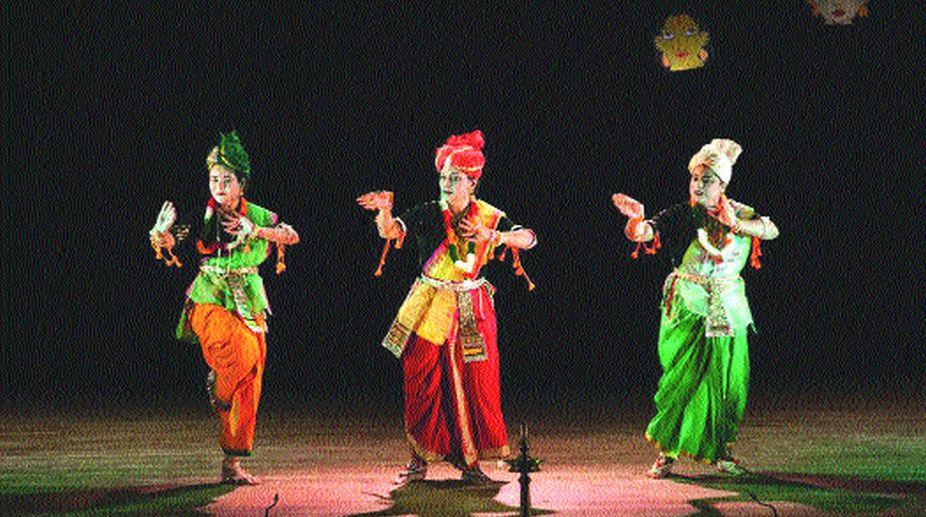
Next up, Poushali Chatterjee, carefully nurtured in the Guru Bipin Singh style of Manipuri dance, delivered Vasanta Raas with her group. Chatterjee got the audience involved by playing with colours in Khilata Radha Gopi Sangh. The playful Krishna tackled the whole lot of gopis alone with sprinklers filled with colours. It was a good idea to use shredded yellow marigold rather than actual gulal. It made cleaning the stage for the next performer a lot easier. The rendition of Tanuum, which is a pure dance piece, gave the audience a glimpse of Manipuri. However, to be at her best, Chatterjee should catch up on her practice.

Thereafter, one found their way to Kathak. Sanjay Bhattacharya started his repertoire with Rambhajan, which was rather unusual. Tulsi Das’ Sri Ramchandra Bhajman sung in Yaman Kalyan raga and teora tala was soothing and appealed to the listening pleasure of the audience. In the nrityang taal, Rudra was used to show the students’ taalim. Teen taal, which is the most sought after taal of all Kathakas and which spells either success or doom, was presented in a pleasing manner. Toras, tukras, tehais, amad, padahant and chakradhars were executed with as much ease and élan as young aspiring dancers are capable of. The last piece was by Bhattacharya himself. A good performer and teacher, he would do better as a performer with a well-tuned physique.

Sutradhar Arko Mukhopadhyay is a theatre person to whom launching an evening of dance was child’s play. He was a natural stage actor as was aptly clear when he spoke. He is presently a Kalaripayattu trainee in Kerala under the mentorship of Assan Ajith Kumar. A group of Kalaripayattu artists, Ajith Kumar, Maruthi Mama Chikilsa and Kalari Sangham came all the way from Kerala to present their art at Gyan Manch. Their wielding of the weapons and close contact technique were commendable. 

Sreyashi Dey with her admirable academic record of teaching at Michigan University is the founder-president of Akshara, which is a platform to create, perform and promote the arts from India both in their traditional forms and in more dynamic and contemporary expressions. She is also the president and artistic director of Shristi, which specialises in performance and preservation of Indian classical dance. Katha Angika was her presentation in Kolkata to fulfill her pledge to the arts.