Logo

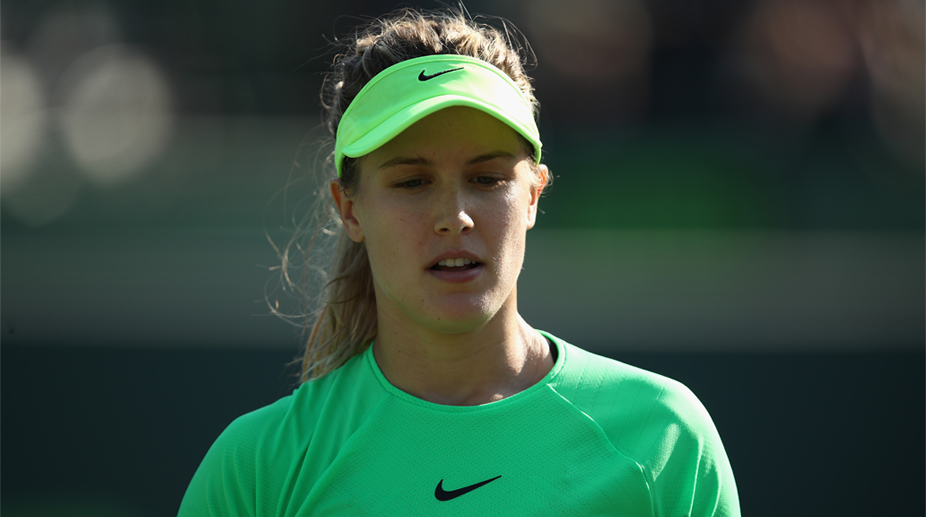
Miami Open: Eugenie Bouchard stunned in first-round

"It has been a bit of a struggle," said Bouchard, unable to account for her loss of form.

AFP | Miami |

Eugenie Bouchard's poor run of form continued as the Canadian suffered a first-round exit at the hands of Australia's Ashleigh Barty at the Miami Open.

Wildcard Barty's 6-4, 5-7, 6-3 win sets up an all-Australian clash in the second round of the WTA hardcourt event against 14th seed Samantha Stosur.

But for the 23-year-old Bouchard, a former World No. five who has slumped to 56th in the rankings, it was another blow after her first-round exit in Indian Wells.

"It has been a bit of a struggle," said a stone-faced Bouchard, who was unable to account for her loss of form.

Bouchard was a beaten finalist at Wimbledon in 2014 but, apart from a run to the semi-final at Sydney where she was beaten by Britain's Johanna Konta, she has been unable to make an impact in 2017.

Barty reproduced the gutsy tennis that helped her secure her maiden WTA title at the Malaysian Open in Kuala Lumpur in February.

"We've had a good pre-season and get a good foundation and the stars aligned a bit for us this year so far. We have worked hard and it is just that hard work starting to pay off," said the Australian.

The 20-year-old, who took time out from tennis in 2014 to play cricket, has never come up against her compatriot Stosur before and while she will start as clear underdog, she is relishing the challenge.

"It will be good. Obviously we have trained together and hit a lot so it will be interesting. I am really excited. For me it is just another opportunity to go out and play," she said.

Serbia's Jelena Jankovic was another high-profile early exit, the 2008 Miami finalist falling 4-6, 6-4, 7-6 (7/3) to Kazakhstan's Yaroslava Shvedova.

Local favourite and Rio Olympic gold medalist Monica Puig was comfortably dealt with 6-2, 6-4 by Romanian Sorana Cirstea.

The Puerto Rican Miami-resident struggled from the outset and although she battled back well in the second set, Cirstea kept her cool to book a second round meeting with Latvian 19th seed Anastasija Sevastova.

Britain's Heather Watson, who reached the fourth round in Miami last year, was beaten 7-6 (7/4), 6-1 by Romanian qualifier Patricia Maria Tig.

London terror attack: PM Modi says India stands by UK

PTI | New Delhi |

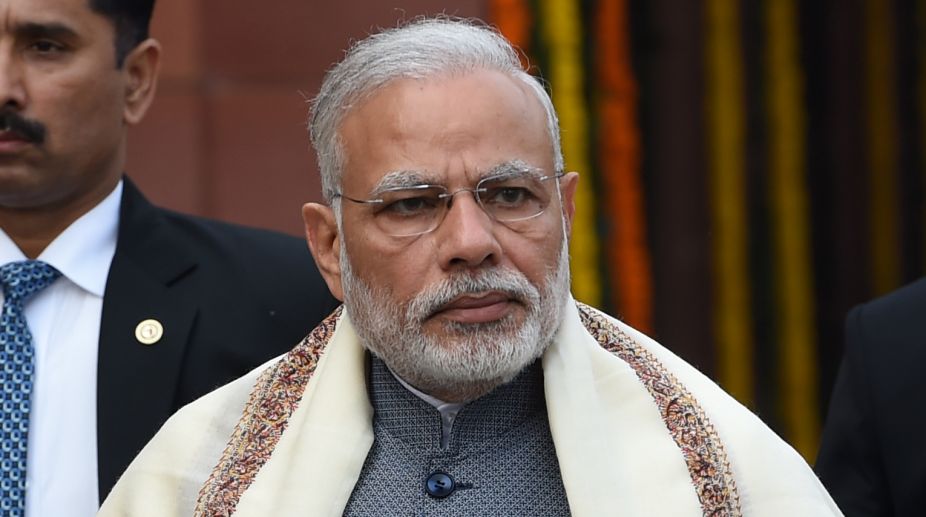
Prime Minister Narendra Modi on Thursday expressed sadness over the London terror attack and said India stands with the UK at this difficult moment.

"Deeply saddened by the terror attack in London. Our thoughts and prayers are with the victims and their families," Modi said in a tweet.

Five people were killed and nearly 40 injured when a terrorist suspect mowed down pedestrians on a bridge and stabbed a police officer close to the British parliament complex in an incident inspired by "international terrorism".

Those dead included the assailant and the policeman he stabbed. The attacker was shot dead by Scotland Yard officers.

"At this difficult moment, India stands with UK in the fight against terrorism. @theresa_may @Number10Gov," Modi said in another tweet.

Mark Rowley, Britain's national lead for Counter Terrorism Policing and the Acting Deputy Commissioner, said the attack began when a car was driven over the Westminster Bridge, hitting members of the public and three police officers. 

Key Indian equity market indices open higher

IANS | Mumbai |

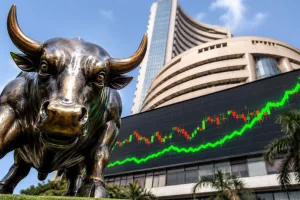
Taking a cue from global markets, the key Indian equity market indices opened higher on Thursday.

The Sensitive Index (Sensex) of the BSE, which had closed at 29,167.68 points on Wednesday, opened higher at 29, 201.01 points. Minutes into trading, it was quoting at 29,221.57 points, up by 53.89 points, or 0.18 per cent.

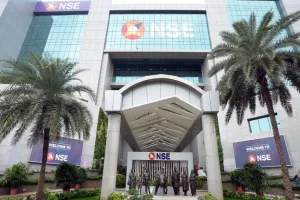
At the National Stock Exchange (NSE), the broader 51-scrip Nifty, which had closed at 9,030.45 points, was quoting at 9,056.30 points, up by 25.85 points or 0.29 per cent.

The markets on Wednesday slipped for the third consecutive trade session, as investors' sentiments were dented on the back of negative global cues, coupled with a weak rupee and heavy selling pressure in automobile, consumer durables and banking stocks.

The Sensex was down by 317.77 points or 1.08 per cent at the Wednesday's closing. 

In the day's trade, the barometer 30-scrip sensitive index had touched a high of 29,341.41 points and a low of 29,137.48 points. The Nifty too was down by 91.05 points or one per cent.

On Thursday, Asian indices were showing a positive trend. Japan's Nikkei 225 is trading in green, up by 0.02 per cent, Hang Seng up by 0.37 per cent while South Korea's Kospi was in green, up by 0.21 per cent. 

China's Shanghai Composite index was quoting in green, up by 0.30 per cent.

On a positive note, Nasdaq closed in green, up by 0.48 per cent but FTSE 100 was down by 0.73 per cent at the closing on Wednesday.

Lukas Podolski scores stunner in farewell game as Germany edge England

What a way to end your international career!

SNS | New Delhi |

Lukas Podolski scored what just may be the finest goal of his glittering international career on Wednesday in his farewell game for Germany against a young England side, as the Die Mannschaft edged their arch-rivals 1-0 in an international friendly that was high on emotion.

Given the captain’s armband by coach Joachim Low on his 130th cap, Podolski’s howitzer of a shot in the 68th minute left a sprawling Joe Hart with no chance and while England had plenty of chances to win the game, they were left to rue their profligacy in Dortmund.

England manager Gareth Southgate made a few surprises with his team selection, opting to give Michael Keane his first England start along side Gary Cahill in the centre of defence and Jake Livermore marked his comeback into the national side with a start in midfield. Jamie Vardy was given the nod ahead of Marcus Rashford and Adam Lallana started with Raheem Sterling warming the bench.

Joachim Low sent out a strongest possible XI, with young Timo Werner leading the line ahead of Leroy Sane, Lukas Podolski and Julian Brandt. Marc-Andre ter Stegen started in goal in place of the injured Manuel Neuer.

The Three Lions, playing in their new navy blue kit for the first time, began the first half positively and while the hosts were just about ahead in the possession stats, England looked dangerous on the counter. 

And after an uncharacteristically sloppy pass was intercepted by Lallana near the halfway line, it seemed like England would take the lead. The Liverpool man sprinted through on goal with Mats Hummels the sole defender and Vardy arriving in the centre, but selfishly chose to shoot from a narrow angle rather than laying it off his teammate. The shot beat Stegen but came off the post to give Germany a reprieve. 
Podolski sent a shot over from distance a couple of minutes later as Germany tried to get back into the game but it was England who would have the last clear-cut chance of the first half.

Again Germany gave the ball away needlessly in their own half and Vardy was alert enough to set up Dele Alli for a one-on-one with Stegen. The Tottenham Hotspur man, however, chose to shoot straight at the German custodian, who did nothing but make himself big and bail out his side.

The second period began in the same vein as the first, with England looking dangerous on the counter but were lacking the clinical finish in the final third.

And the masters of efficienty, Germany, finally got on the scoresheet with the man of the night showing them just what they will be missing in the coming years. Collecting substitute Andre Schurrle’s one-touch pass ten yards from the England penalty area, Podolski took a touch to steady himself and with nobody closing him down, let loose with a venomous shot. The ball flew into the top corner and his celebration with the rest of the team showed just how much the game meant to him.

Substituted in the 84th minute for Sebastian Rudy, he got a standing ovation from the capacity crowd and both teams as he called time on his international career with an impressive 130 appearances and 49 goals. Post the game, he was thrown in the air by his teammates and with plenty of youth in Germany's squad on the night, many will be hoping to emulate the affable Poland-born winger.

Germany now travel to Azerbaijan on Sunday for their FIFA World Cup qualifier and know that they need to buck up as luck wont be on their side forever, but the fact that they have now gone seven games without conceding is commenable in itself.

England host Lithuania in their World Cup qualifier and will take plenty of positives from their vibrant display in Dortmund to Wembley.

Cabinet approves MoU with US on cyber security

IANS | New Delhi |

The Union Cabinet on Wednesday approved a Memorandum of Understanding on the cyber security with the United States, said an official release.

The MoU was signed between the Indian Computer Emergency Response Team (CERT-ln) under the Ministry of Electronics and Information Technology and the US Homeland Security Department on cooperation in cyber security.

"The MoU intends to promote closer co-operation and exchange of information pertaining to the cyber security in accordance with relevant laws, rules and regulations and on the basis of equality, reciprocity and mutual benefit," an official release said.

The US and India also signed an MoU on July 19, 2011, to promote closer cooperation and timely exchange of information between organisations of their respective governments that were responsible for cyber security. 

Since July 19, 2011, regular interactions between CERT-In and US CERT are taking place to share information and discuss cyber security-related issues.

Election Commission freezes AIADMK’s symbol

PTI | New Delhi |

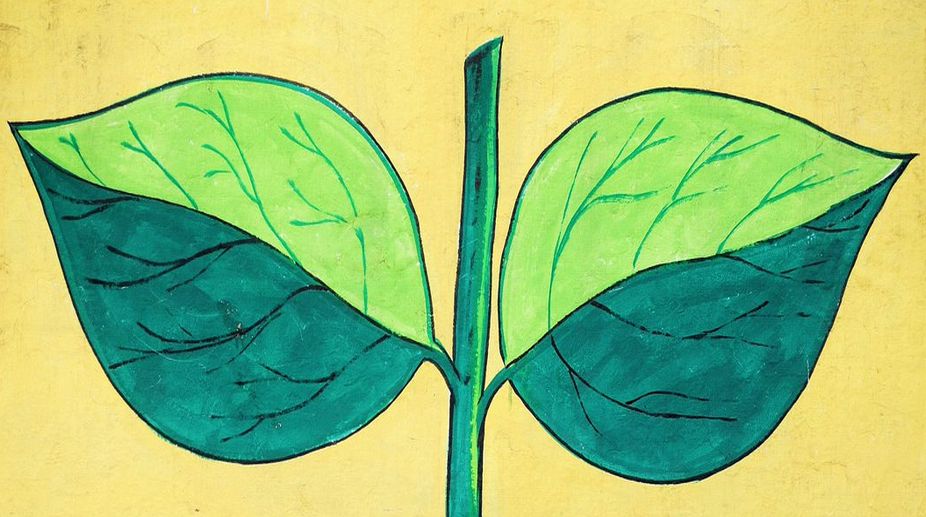
The Election Commission tonight issued an interim order freezing the 'two leaves' election symbol of AIADMK, saying both the rival camps cannot use the party symbol as well as its name for the prestigious R K Nagar assembly bypoll.

After a day-long hearing here, the Commission said since there is little time available with it to issue a final order, it is issuing an interim one.

Tomorrow is the last date to file nominations for the April 12 bypoll.

The interim order will place both the rival groups on even keel to protect their rights and interests, it said.

"Neither of the two groups shall be permitted to use the name of the party 'All India Anna Dravida Munnetra Kazhagam' simplicitor; neither of the aforesaid two groups shall also be permitted to use the symbol 'Two Leaves', reserved for 'All India Anna Dravida Munnetra Kazhagam'," the order said.

It said both the groups shall be known by such names as they may choose for their respective groups, showing, if they so desire, linkage with their parent party.

Both the groups will also be allotted such different symbols as they may choose from the list of free symbols notified by the Election Commission.

The bypoll was necessitated following the demise of J Jayalalitha.

The OPS camp has announced E Madhusudhanan's name as its candidate for the bypoll in R K Nagar.

T T V Dinakaran, AIADMK Deputy General Secretary and nephew of Sasikala, is the candidate of the other camp.

Top Apollo hospitals official quizzed by Kolkata Police

IANS | Kolkata |

 Two days after Apollo Hospitals Group Vice-Chairperson Preetha Reddy met West Bengal Chief Minister Mamata Banerjee here, Kolkata Police on Wednesday quizzed group Vice-President-HR T. Karunakar regarding a case of hospital's alleged negligence in treatment of a patient.

"T. Karunakar was called by the investigating officers on Wednesday to Phoolbagan police station and questioned for more than hour," Joint Commissioner of Police (Crime) Vishal Garg said.

Reddy had assured of working with the regulatory commission set up by the state government to monitor private hospitals, in addition to rationalising tariffs if needed and admitted its level of care has deteriorated.

Apollo Gleaneagles is facing a police probe following the death of Sanjoy Roy, a resident of Dankuni in Hooghly district, who was critically injured in a road accident.

Roy died on February 23 at the state-run SSKM Hospital after being shifted from Apollo.

Later, his relatives and friends accused Apollo of "inadequate treatment" even while raising a huge bill and refusing to allow him to be shifted to SSKM unless they paid up the full amount.

They alleged the hospital delayed his discharge and relented only after they submitted fixed deposit certificates.

A six-member Health Department team set up to probe the allegations against leading private city hospitals found "overall negligence" and other anomalies like improper billing, multiple charges and not following proper medical procedure during treatment.

Police have so far questioned a number of doctors and senior officials of the hospital in connection with the death.

Role of Raj Bhavan

Nirmalendu Bikash Rakshit | New Delhi |

Recently, some actions of Governors have triggered off a heated controversy among jurists and political leaders. Some of them  believe that as we have adopted the British model, the Governor, like the President, has to act upon the advice of the Cabinet. But others think that though, in normal times, the Governor has to abide by the advice of the Cabinet, in some situations the former can surely act of his own choice. Thus, the question ultimately veers round the actual position occupied by the Governor in our Constitution.

It is true that we have adopted the “Westminster model’ of Britain. But as WH Morris-Jones writes, ‘the system is reproduced in the units, but with some differences’ – (The Government and Politics of India, p. 80). Though the President is the Head of the State, there is, under Art. 74 (1), a cabinet to ‘aid and advise’ him and he is expected to act upon such advice. As such, he has no ‘discretionary’ power.

But the local cabinet gives the Governor aid and advice ‘except in so far as he is required to exercise his functions or any of them in his discretion.’

So for the Governor, there are two fields – in one of them, he is to act according to the will of his Ministers, but there is an undefined area where he is his own master. Significantly enough, the Constitution has not demarcated the area of his discretion. According to Art. 163 (2), if any question arises whether or not a matter actually falls within his discretionary capacity, ‘the decision of the Governor shall be final’ and its validity cannot be called in question at all.
This provision sufficiently proves that the Founding Fathers did not intend to make the Governor a puppet-ruler, because he is a functionary equipped with various discretionary powers.

DD Basu has held that the Governor can, of course, act in his discretion in some matters and they may vary ‘according to circumstances’ – (Introduction To The Constitution of India, p. 210). And Dr BC Rout opines that the Governor may claim to have discretionary power in the (i) appointment of the Chief Minister; (ii) dismissal of the Chief Minister; (iii) Summoning the Assembly; (iv) dissolution of the same; (v) reservation of a state Bill for the President; (vi) recommendation for the imposition of the President’s Rule and (vii) promulgation of Ordinance etc. – (Democratic Constitution of India, p. 220). If such powers really rest with the Governor, he can by no means be regarded as a mere figurehead.

Secondly, though the Constitution did not originally contain any Article to compel the President to act upon the ministerial advice, the 42nd Amendment to the Constitution totally changed Art. 74 (1). Now the President is legally bound to abide by the advice of his cabinet. If he flouts it, he may, under Art. 61, be impeached by the Parliament for ‘violation of the Constitution.’

But such amendment has not at all touched the gubernatorial authority and moreover there is no impeachment mechanism at the state-level. So if a Governor ignores the cabinet, it can only request the President to remove him from the province – neither the cabinet nor the state legislature can take a punitive step against the defiant Governor.
Thirdly, the President is elected by an ‘electoral college’ (Art. 54) and he cannot be removed without an impeachment. But, the Governor is nominated by the President and may be dismissed by him at any time and without any reason – (Art. 155 and Art. 156). Thus, as Dr SC Kashyap observes, ‘the Governor has no security of service’ – (Our Constitution, p. 213). In fact, he is a crucial part of our centralised federation, the Founding Fathers thought that India could not be held together without a unified mechanism and that the structural unity could be safety assisted through the gubernatorial office.

So if a state cabinet seeks to act against the national interest and organic integrity, gubernatorial powers can stem the rot. In other words, when the ministerial advice and central directives differ, the Governor would surely accept the later in order to safeguard his own job.

Fourthly, there are some gubernatorial powers which in normal conditions seem to be insignificant but in the changed situation they become immensely crucial.

For example, the Governor, under (Art. 164 (i)), nominates the Chief Minister. Thus, if a political party can secure an absolute majority in the Assembly, he has to send for its leader. But if no party can obtain such majority, the Governor can either summon the leader of the biggest party or try to form a coalition cabinet. In such a situation, much depends upon him – (Dr HH Das – India: Democratic Government and Politics, p. 273).

He can, in such case, ask the aspirant to give him the list of his probable supporters and to present them at the Raj Bhawan. But he can, of course, promptly choose his Chief Minister without any numerical test and then give him some time to prove his majority – (GS Pandey – Constitutional Law of India, p. 240). In this sense, he may become the ‘King-maker’.

Similarly, ‘the Ministers hold office during the pleasure of the Governor.’ The Chief Minister is a ‘Minister’ in terms of Art. 164 (2), and, so, he too can be ousted by withdrawing the gubernatorial ‘pleasure’ which is purely a mental phenomenon. It is in this way that Justice BC Mitra of the Calcutta High Court directly supported in 1967 the stand of Dharma Vira, the Governor of West Bengal (Ghose v. Sharma). As Dr JC Johari has opined, ‘the term of the Chief Minister depends upon the pleasure of the Governor. The word pleasure is very important’ – (Indian Government and Politics, p. 730.)

To take another example, under Art. 174 (1), the Governor summons the legislature on the advice of his Chief Minister. But, if, after a split in the ruling party or departure of an ally, he hesitates to face the Assembly for the fear of a defeat, the Governor may, of his own, summon the House in order to ascertain the actual numerical position.

Then, he normally dissolves the House on the advice of the Chief Minister. But, if a defeated CM gives him such an advice, the Governor ‘is within his inherent right to decline to grant it’ – (Dr AC Kapur – The Indian Political System, p. 355). Particularly if he has a fair chance to form an alternative cabinet, he can rightly refuse to oblige the erring Chief Minister.

He can also recommend to the President to impose President’s Rule in the province under Art. 356. In such cases, he does not require the advice of the Chief Minister – (SL Sikri – Indian Government and Politics, p. 232).

He is moreover not bound to assent to a state Bill. He can veto it or send it to the President. In 1959, the Governor of Kerala referred the Education Bill to the President and the apex court indirectly appreciated it as a wise step.

Truly, the role of the Governor has been a controversial subject ever since the creation of the Constitution. But in 1967, some non-Congress parties occupied power in several states and, hence, the Union Government under the Congress faced a political debacle. Naturally, it used the gubernatorial power to keep these states under control and thus some of the Governors came out of their slumber with their decisive powers. Thus, it has become crystal clear that the Governor is not merely a decorative emblem. As Dr MV Pylee has rightly claimed, ‘he is a functionary designed to play a vital role in the administration of the affairs of the state’ – (An Introduction To The Constitution of India, p. 204).

After independence, the Congress occupied power at the Centre and in the states and, hence, there was no Centre-state conflict. Moreover, some eminent leaders became Chief Ministers in the states. This is why the Governors had to reside behind the curtain. Sarojini Naidu, the Governor of UP, regarded herself as ‘the bird in the golden cage.’ Another Governor compared himself with a ‘dignified hotel-keeper.’

But, with the passage of time, the political scene has changed and the actual nature of the gubernatorial office has taken shape.

The writer is a Griffith Scholar, Author and Former Reader, New Alipore College.

A pressing need to amend

Yogesh Pratap Singh and Sanjeeb Panigrahi | New Delhi |

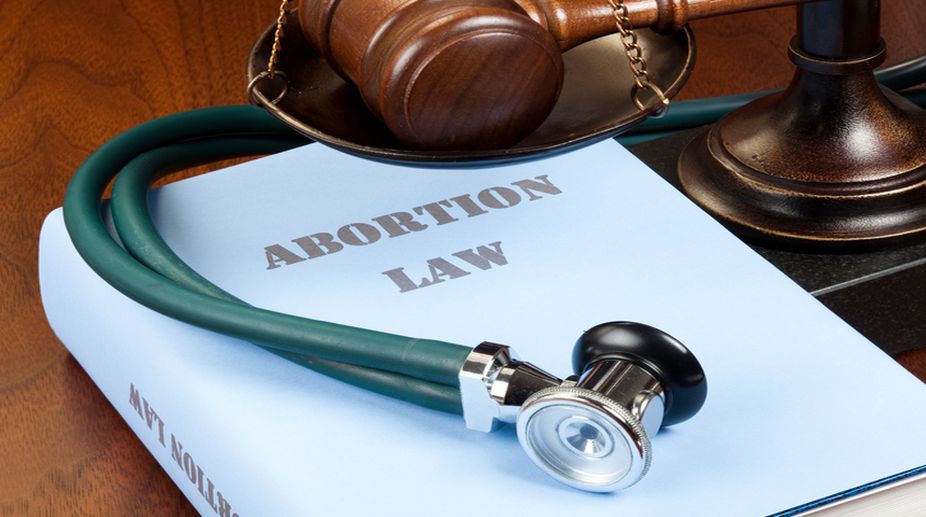
With thousands of women marching in protest in Washington and across the United States after a newly elected President promised to name judges of the Supreme Court who oppose abortion, reproductive rights have never felt so endangered. There is a real concern about what would happen if Roe v. Wade is overturned in United States.

The legal regime in India too appears to be belligerent with issues whether, and to what extent, abortion should be legal, who should decide the legality of abortion, what methods the Supreme Court should use in constitutional adjudication with the emerging implications for reproduction rights.

These questions came into debate when on 28 February the Supreme Court discarded a woman's prayer seeking permission to abort her 26-week-old foetus detected with Down’s syndrome, a genetic disorder. The Bench declined the woman’s plea saying “Down’s Syndrome” does not qualify as a life-threatening factor hence there is no physical risk to the mother from the pregnancy.

In January 2016, it allowed a Mumbai woman to abort a 24-week-old foetus after medical reports found that the foetus had no skull. In yet another case, in 2015, the same court had allowed a 14 year old rape victim to undergo abortion after the 20 weeks deadline as prescribed under the Medical Termination of Pregnancy Act, 1971. Although this was treated as a special case with zero precedence value, the indecisiveness on the part of court is quite worrying.

Changing Paradigm

Terminating a pregnancy is often an emotional and complex decision for a woman at any age. Times have changed and abortion has been accepted by many societies considering the health of the mother as paramount. In spite of legislation in many countries across the globe, controversy surrounds this issue.
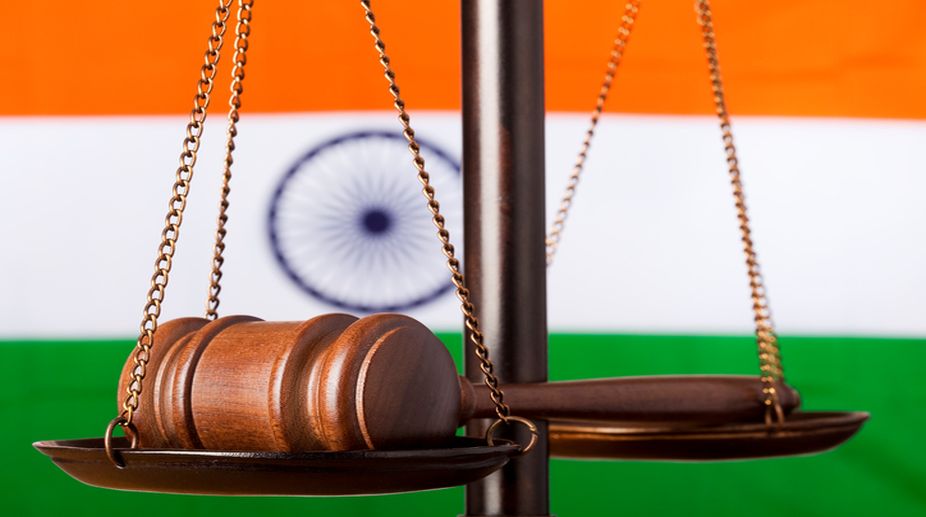
Women’s organizations campaign that woman has the fundamental right to decide for herself and hence the restrictions imposed by section 312 of the Indian Penal Code along with the Medical Termination of Pregnancy Act 1971, including the time limit of 20 weeks, other than the ones to ensure good medical conditions, contravene the right to abort.
Domain of Right to Privacy

Freedom from interference in one’s privacy and family life is protected by Article 12 of UDHR, Article 17 of ICCPR, Article 11 of the American Convention, and Article 8(1) of the European Charter. The European Court of Human Rights, in Bruggemann and Scheuten v. Federal Republic of Germany and Paton v. United Kingdom, authoritatively held that a decision one makes about one’s body, particularly one’s reproductive capacity, fall squarely in the domain of private decision making. The right to determine the number and spacing of children relates to the right to privacy. However, it also suggests government duty to facilitate decision-making in matters of family planning.

Forbidding abortion would also undermine the right to health as an integral part of Article 21 of our Constitution as it violates her right to control her property, her body as wells her life, liberty and happiness.  

Sadly, the law in India does not give a woman a right over her own body. Even though the 1971 Act was passed in order to legalise abortion, the so-called stellar provisions of the Act ultimately left the matter to the choice of medical practitioners instead of the subject herself.

Despite the fact that unsafe abortion accounts for the third highest cause of pregnancy-related deaths, the sanctity of life cannot be disputed, but the court, in many cases, took a moral and strictly positivistic position and ignored the physical and mental condition of women.

Approximately 26 million pregnancies are terminated legally across the world, and 20 million are terminated illegally, with more than 68,000 deaths. In India alone 10-12 million abortions take place annually, resulting in 15-20 thousand maternal deaths due to illegal abortions. These abortions don’t just take away the innocent infant’s life but also pose a threat to the mothers’ lives.

The MTP Act: Issues and Challenges

Legislation has miserably failed to achieve its objectives as there has been increasing number of illegal abortions after MTP 1971. One of the major criticisms of the MTP Act, 1971 is that it still keeps the women away from the decision making process and is more clinic-centric. Legal and medical experts feel that revision of the legal limit for abortion is long overdue.

The 45 year old enactment seems to be obsolete with so many technological breakthroughs in the field of health and diagnostics. The rising incidence of sex crimes and the urgent need to empower women with sexual rights, reduction of fertility rate etc. make it imperative to change the law and address issues such as: recognition of woman’s right of choice; decriminalisation of abortion; improving the facilities to provide last-mile access to safe abortion as per MTP Act; acknowledgement of the termination of pregnancies with major abnormalities as a part of standard medical care and procedure at any stage of pregnancy without having to seek legal exception for each case, and  identification and avoidance of potential conflict of the MTP Act with PC & PNDT Act that results in stigmatization of all doctors providing abortions.

Conclusion

There is a need to strike a balance between the rights of women to control their bodies and the legitimate interests of the state to prevent selective sex determination as well as protect the interests of the woman and the unborn foetus. These changes contemplated in the draft amendment are a positive move towards recognising women’s rights, preventing their suppression and, it shifts the law from being pro-practitioner to pro-women.

The draft amendment Bill, 2014 which seeks to increase the time period within which abortion may be carried out from 20 weeks to 24 weeks is still in the legislative womb. Further, recognising a woman’s agency over her body, it has proposed that within the first 12 weeks, an abortion may be carried out by a registered doctor at the request of a pregnant woman, without the opinion of a registered doctor. It also permits abortion beyond the stipulated 24 weeks, in case the foetus suffers from substantial foetal abnormalities.

The writers are, respectively, Associate Professor, National Law University, Odisha and an Advocate, Supreme Court of India.

Making the case for a uniform civil code

Sunil Gupta | Sunil Gupta |

The Uniform Civil Code (UCC) is one of the most contentious issues staring the Indian polity in the eye. Although Article 44 of the Directive Principles of State Policy in the Constitution speaks of a Uniform Civil Code for citizens, it has remained a distant dream, with no government thus far addressing the issue with seriousness.

This has been primarily on account of the fear of a possible backlash at elections from sections of voters. The present government's attempt to implement UCC has been vehemently resisted by large sections of Muslims led by clerics and their ilk. Endless debates and discussions between stakeholders have not succeeded in carrying the issue to fructification. Religious sentiments have prevailed over aspirations of all right-thinking men and women of the nation for a level playing field.

A Uniform Civil Code for all citizens is in agreement with the secular ethos of the nation. Unlike in the West, where secularism is a mere act of the State distancing itself from the Church, the concept means in the Indian context, equal treatment of people of all religions – a proactive stance on the part of the State.

This calls for respect from the government for the sentiments of the people of different religions, without leaving any room for favour or prejudice. While the endeavour to treat all citizens alike before law is in keeping with the exhortation of the relevant Article of the Directive Principles of State Policy as well, the State is hard put to carry out the implementation without its action being perceived by people of the minority communities as an attempt to trample upon their sentiments or to curtail their freedom to live in terms of their religious beliefs. 

At the same time, people of any religion cannot be viewed or treated as clones cast in the same mould and should not be expected to unquestioningly fall in line with the provisions of the personal law applicable to their community. That is because such personal laws were fashioned and designed on the basis of religious tenets and cultural mores, dating back to medieval times to primarily suit people living in a distant land in harsh conditions, fighting for the perceived supremacy of their religion.

In the Indian context, a community is made up of individuals with their own views, beliefs and opinions in their vital personal matters and private lives in changed circumstances and conditions prevailing in the country. They may not be faulted for seeking redressal for a grievance in terms of natural justice, just like any other citizen, without prejudice to their religious standing or beliefs.

In the matter of personal law, interpretation of its provisions is heavily loaded in favour of the clerics and other religious entities and agencies. An individual's inalienable right to natural justice is stifled by his or her religious identity, in matters such as marriage, divorce, maintenance, adoption, inheritance, etc.

The issue of triple talaq is a case in point. The fundamentality of a divorced woman's right to alimony is at stake. The self-esteem of a woman to live a life of gender equality is in question. This is the kind of a helpless situation in which a large number of persons, mostly women, of the minority communities find themselves in.

The question of such men and women being able to contribute their optimal share to the nation's and society's development in accordance with the evolved social situation is a matter of equal concern to the majority community.
When aggrieved individuals find their voice to protest against provisions of their personal law and choose to step out of the line and try to seek justice in a court of law, the State cannot afford to stand on the wings as a mute spectator and do nothing to ameliorate the situation. 

Judiciary, on its part, finds hardly any maneuverability in the present system to address the situation, leaving the aggrieved person to fall back into the mire of personal law. Lack of conviction on the part of politicians or their obstinacy to take any measure for social welfare that would impinge on their vote bank politics prevail over the concern of judiciary for fair play and natural justice for all the citizens, as was witnessed in the Shah Bano case during the Congress rule.

The individual liberty of members of a community which is governed by personal law thus falls prey to the stubborn attitude of the community elders and their insistence on the freedom to have their own personal civil code. The government cannot continue to turn a blind eye to the travails of forlorn individuals on account of their vulnerability against the personal law code.

The resulting situation is simmering discontent among individuals, particularly women, in minority communities, who find themselves victims of a lacuna in the system. In a society such as the one in India where people of diverging religious beliefs have been living in harmony despite grave instigations and provocations, for the State to continue to allow this kind of despair among vast numbers of its citizens does not augur well.

It is not only the various religious groups in the country but also the faceless individuals who form these groupings and yet feel left out who have to be carried along by the State in the interests of fair play and its own survival lest discontent have a detrimental effect. Failure on the part of the government to be proactive in such a crucial matter would not only reflect poorly on its efficacy but also be a sad commentary on the shape of democracy in the country.
Speaking at the Jaipur Literature Festival on January 23 this year, Bangladeshi writer Taslima Nasrin, who is well-known for slamming misogynistic ideas in Islam, rightly asserted that India urgently needs a UCC to protect the democratic rights of Muslim women as well as to stop the issue of fatwas by some religious clerics. To cut a long story short, the UCC is long overdue. To further delay its implementation would be tantamount to the State abandoning a section of its own people, no matter how small or large their number, purportedly on account of lack of a consensus, while, in reality, on account of lack of political conviction.

The returning of the Law Commission's questionnaire on the UCC by the Chief Minister of Bihar purportedly because "the questions have been framed in such a manner so as to force the respondent (Bihar government) to reply in a specific way" is a classic attempt on the part of the naysayers of Indian politics to tactfully avoid taking the bull by its horns.

As the first step in the long way to be traversed, the people of our country need to be educated by the government about the issues involved. How several countries around the world, including a fair number of Islamic ones, have opted for UCC in the interests of their own social and overall development needs to be projected.

The people of the minority communities should be spurred on to realize that the time for self-introspection and rejection of complacency in matters vital to their interests is well at hand. The foremost task at hand is for the government to convince the people to stir out of their comfort zone and help themselves.

The writer is a chartered accountant and former member of the boards of public sector banks and corporations.

Ayodhya back to square one

kuldip Nayar | New Delhi |

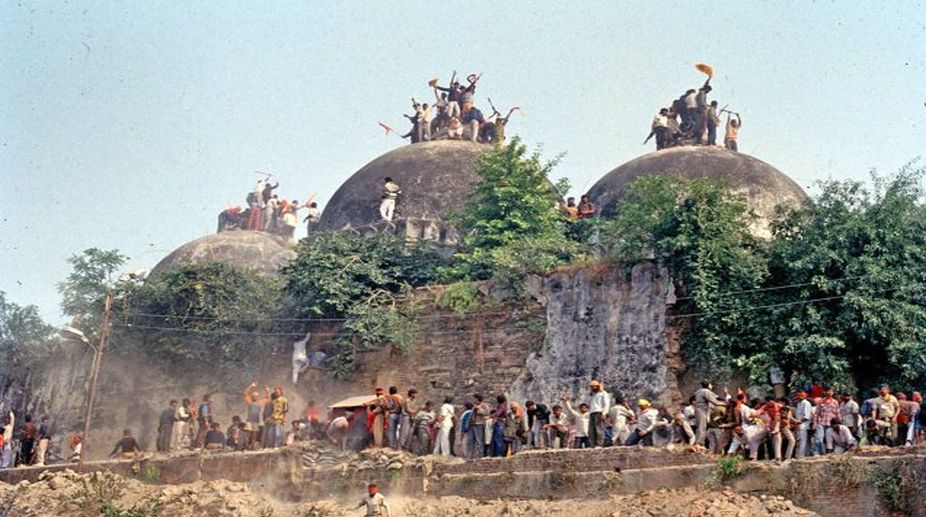
We are back to square one. The Supreme Court has advised the two parties, those who want the Babri Masjid to be reconstructed and those who claim that the site is that of Lord Rama, to sit together and sort out the problem through negotiations.

One surprising part of the advice is that the Chief Justice of India is willing to mediate for an out-of-court settlement. He has said “give a bit and take a bit. Make an effort to sort it out.” He points out that these are issues of sentiment and he can even step aside and let his brother judges decide. How can the chief justice or, for that matter, his brother judges mediate because their very office is supposed to be above controversy?  

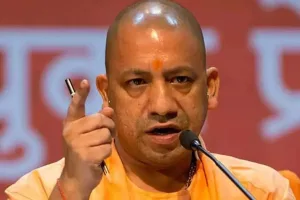
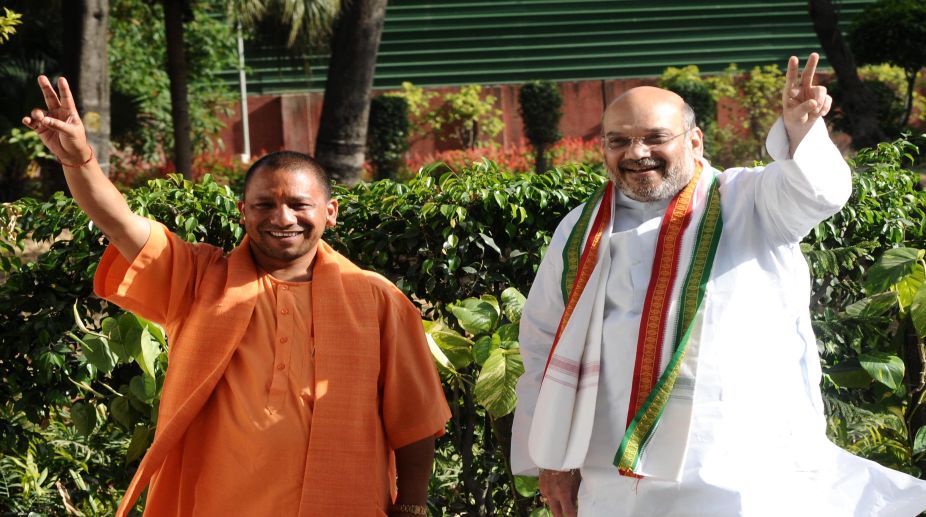
Yogi Adityanath, a Hindu icon, has been elected as the leader of the Uttar Pradesh legislative party with a huge margin and installed as chief minister. Whether the credit for securing this majority in UP goes to Prime Minister Narendra Modi or to the Yogi, who has the reputation of being a hardcore Hindu leader, it shows that Hindutva is sweeping the country. Obviously, the RSS is behind the move.

In the past, the RSS always kept its distance although it was the final arbiter. But now it is so confident of the Hindu majority, particularly after the BJP swept elections in UP, that it doesn’t mind coming out in the open. It is already preparing for the 2019 Lok Sabha elections. Its chief Mohan Bhagwat minces no words when he tells the swayamsewaks to be prepared to meet the increasing attacks on the RSS and to get ready for the next Lok Sabha polls.

In the face of what has happened in recent assembly elections, the RSS fears that the opposition parties might join hands to fight it out. In such a scenario, the BJP-led NDA may lose ground. The RSS or for that matter the BJP know that despite getting 42 per cent of vote share in UP, the combined efforts of the other parties fetched 55 per cent.  It means that the non-BJP parties would have to come together. This doesn’t seem possible at present.

But the bigger danger may force them to sink their differences and fight the saffron brigade. As Nani Palkhiwala the late eminent jurist said when the house is on fire you don’t think whether to save the drawing room or dining room. You want to save the entire house. He was referring to the looming threat of the erstwhile Jan Sangh getting a majority in parliament. It is another matter that Janata Party, comprising most Jan Sanghis, came to power at the Centre in 1977. But the sticking point was to sever relations with the RSS.

However, the Jan Sangh elements which are now a part of the ruling BJP, refused to snap ties with the RSS. Subsequently, L.K. Advani walked out and founded a separate party, the BJP. Liberal elements in the party like Atal Behari Vajpayee too left the Janata Party. It turned out to be a blessing in disguise that his sobering influence did not allow the hardcore elements to take over when the party came to power.

It, however, shows that secularism has not taken root in the country. It is unfortunate that the independent struggle aimed at a secular democratic country that included this noble thought in the preamble of the Constitution seems to have gone awry. The Hindutva elements, slowly and gradually, have swept the country. Today, you can see that soft-Hindutva has spread even in Kerala where the BJP for the first time has made inroads.

As it is, the party has captured the imagination of people and has come to power in over a dozen states. This also means that a secular party like the Congress has lost its grip in states which it ruled once. Even regional parties are losing their relevance as happened in UP. Obviously, the BJP has been able to influence the minds of most people. The Rajya Sabha elections look like strengthening the BJP’s hands.

The assembly elections in Gujarat and Himachal Pradesh will really show whether the Lok Sabha would be captured by the BJP or not. However, the future is ominous. The revival of the Ram mandir issue could shape the future of the country and would polarise the nation further even though Yogi Adityanath has repeated the Modi words of ‘sabka saath, sabka vikas.’

But the thrust of the party cannot change overnight. Though the UP chief minister may not be saying it in as many words, he will have to follow the RSS and the BJP agenda of the Ram temple at Ayodhya, sooner or later. If the all-powerful Yogi has been installed as chief minister by the BJP high command, it must be with a clear-cut intention.
Whatever may be the outcome, the court cannot decide on what is apparently a matter of faith. That is perhaps why the CJI has offered to mediate for an out-of-court settlement. But then there have been several attempts since 1986, involving five governments of different colours. It was mainly because both parties seemed to be adamant and did not want to make any compromises. Under the circumstances, another attempt by the CJI may not help.

Except for the BJP, none of the other parties is enthused over the offer by the Supreme Court bench. It looks as if the apex court also is not clear in its mind on how to settle the dispute. This long-ranging issue needs a quick solution for the comfort of all parties concerned. But, unfortunately, it doesn’t seem to coming, at least in the near future.  

The writer is a noted Journalist, Columnist, and Commentator. 

A vote for Mr Modi

Jayita Mukhopadhyay | New Delhi |

The phenomenal victory of the Bharatiya Janata Party in Uttar Pradesh has surpassed the figures projected by various exit polls, and has almost fooled political pundits. The outcome can rightly be viewed as a tectonic shift in the country’s political landscape, whose aftershocks will continue to reverberate across the political spectrum. Amidst the euphoria in the BJP camp, despair among Akhilesh-Rahul gatbandhan supporters and a sense of foreboding among the Left-liberal forces, apprehensive of further accentuation of the communal divide, myriad interpretations of the verdict are being offered.

What has come through is the mesmerizing magic of Narendra Modi’s charisma, his perceived metamorphosis from the Modi of Gujarat, who suffered the ignominy of being the alleged perpetrator of a genocide to a benevolent mass leader, who is strong, capable of taking risky decisions and shouldering the responsibility of its fallout independently, a leader who seems to be keen on delivering and making a difference in the lives of India’s teeming millions. This election has been a lot about Modi than about any other factor. The jury might be still out on the question of demonetisation as a policy decision, but it has worked well as a political move.

Politics is a game of perception and the masterfully crafted persona of Modi as almost a Yugpursh has purportedly dealt a severe blow to the hoarders of ill-gotten black money, the local money lenders, thanedars, landlords, contractors, lawyers or even doctors, who, for the poor, dispossessed men and women of rural India are the tormentors. This impression has captured the imagination of millions. Through extensive visibility of a Prime Minister repeating again and again his resolve to work for the garib aadmi, through the reiteration of the professed mantra, Sabka sath, sabka vikas, Modi has hijacked the ‘pro development’ plank of the Opposition. Expressing a willingness to do away with ‘triple talaq’ has helped him to win the support of Muslim women and reports suggest that a sizeable chunk of the community voted for Modi. 

The introduction of a gender-related issue by the BJP, even if one grants the allegation of the Opposition that it is a mischievous move and hides the party’s real intention to heighten the binaries of Hindu and Muslim social practices, is a first of its kind. It was a move that has yielded impressive results as it gave vent to the aspirations of women of minority communities to gain access to a better life which is now within the reach of some of their sisters from the majority community.

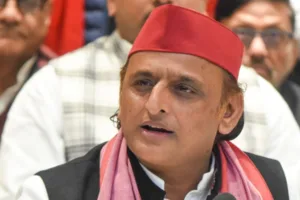
The Akhilesh-Rahul gatbandhan failed to take off for a variety of reasons. The Akhilesh government’s policy of distributing freebies instead of creating more employment opportunities deepened frustration even among the traditional support base of the Samajwadi Party, particularly among the youth. The family drama and the rift between father and son worsened matters. The state’s rising crime graph during his chief ministership, particularly the heinous crimes against women, the low rate of conviction of criminals, and the fielding of a character called Gyatri Praajapati ~ facing a rape charge ~ scuppered the prospects of the outgoing Chief Minister. The scion of the Gandhi family is increasingly viewed as incapable of delivering as the BJP acolytes mock his sudden trips abroad as signs of a weakling who can’t stand the heat of politics, and a person who is neither serious nor committed.

Meticulous planning and execution of a strategy to negotiate the complex matrix of caste and community in Uttar Pradesh by the BJP president Amit Shah, indeed a process that began right after the 2014 election, is another key factor behind his party’s spectacular performance against which the belated alliance of SP and Congress turned out to be quite insipid.  Among the other factors can be listed a vigorous drive to induct new members, numerous meetings and road-shows, a religious march, ‘Dharma Chetana Yatra’ led by a Buddhist monk, a clear signal to the Dalit community that they stand to gain from abandoning Mawawati, steeped in corruption charges, and jumping onto the bandwagon of the BJP, numerous moves to consolidate the upper caste Hindu vote through controlled but somewhat muted use of the Ram Mandir issue, making Modi omnipresent in the cyber world through the well calibrated effort of an army of paid techies, Amit Shah did all it takes to ensure success.

The kabarsthan jibe and ‘more electricity during Ramzan’ post-truth (a new phrase in circulation these days, implying subtle mixing of facts and lies) created deep seated apprehension among sections of the media, intellectuals and political analysts, who feared a bitterly polarizing discourse. But one must give credit to Indian democracy that after the media outrage, Modi acolytes had to issue qualifying statements that the binary mode of Modi’s speech are wrongly interpreted, that he only advocates equal access to resources for all communities. If one compares this to the rabidly sectarian, bitterly divisive discourses delivered by Modi’s American counterpart, who never makes any attempt to couch his hateful words with decent homilies, one feels a sense of pride in the inherent strength of our democracy. The fact that stories about Kairana helped the BJP to win more votes than Dadri made them lose, is testimony to the failure of the SP-Congress combine as well as pro-left forces to generate a strong counter-narrative.

The BJP’s relentless charge of minority appeasement against its opposition, the charge of pseudo-secularism, fanning the discontent among the majority about the perceived restrictions on the free articulation of Hindu socio-religious practices have been buttressed by the failure of the ruling dispensation to enforce the rule of law, to generate a sense of justice and fair play and be perceptively impartial in its dealings with different communities, as perceptions are hardly ex nihilo. The myth of a consolidated vote-bank along the caste and communal divide has been debunked. As the noted psephologist, Pranay Roy, has observed, the BJP seems to have received a significant percentage of lower caste and minority votes.

Those who scoff at the election result as a vindication of divisive, communal, polarizing techniques, with a touch of supercilious contempt about the intellect of the common voter, should think twice. The electorate might have enjoyed the jibes, the mocking style of Mr Modi who is always at his eloquent best at the election rallies and excels in the use of the language of the common man, but as it turns out, the voters have reflected on the issues of development, of peaceful, harmonious, living with members of other communities, of an overwhelming desire to have opportunities while choosing their rulers. A young Muslim girl, a first-time voter in a remote village of UP, told a TV journalist, kuch achha karna chati hu (I want the opportunity to do something good for me, for the country). Her voice must have echoed the yearnings of her Hindu brothers and Dalit sisters as well. 

One hopes that Narendra Modi’s victory speech will bring about a ‘New India’ emerging out of the aspirations of the common people, of the poor, of the youth and women… and unscathed by any jingoistic, communal, divisive politics. Hopefuly, the slogan ~ sabka sath, sabka vikas ~ will graduate from rhetoric to reality.

The writer is Associate Professor, Department of Political Science, Women’s Christian College, Kolkata.  She can be reached at jayita_m@hotmail.com.

Not on your lap!

Editorial | New Delhi |

It is a remarkable instance of coordination in the air, when the greater imperative of concerted action on the ground to confront terrorists has floundered on the rock of prevarication. The United Kingdom has joined the United States to reinforce the latter’s anti-immigrant agenda. Whitehall has followed up the sweeping ban imposed by the White House on laptops and tablets on inbound flights from six countries ~ Turkey, Lebanon, Jordan, Egypt, Tunisia and Saudi Arabia ~ all predominantly Muslim. Only mobile and smart phones of a specified size will be allowed inside the cabin. These countries or points of origin of flights do not figure in Donald Trump’s list of seven nations whose citizens have been barred from stepping into the United States of America. Not even Saudi Arabia whose nationals are believed to be involved in 9/11. President Trump and Prime Minister Theresa May ~ nationalists both ~ emerge as siblings together in the war against terrorists intent on blowing up planes. The latest imprimatur which has readily been accepted by 10 Downing Street raises the number of “suspect nations” ~ viewed through the US prism ~ to thirteen, though unconfirmed reports suggest that Iraq might now be spared the humiliation. In a sense, a not dissimilar prism is now in use in the United Kingdom. No one denies the potential technological threat that these gadgets could pose; and yet the fact remains that this threat cannot possibly be confined to Turkey, the Middle East, and North Africa. Equally, a wider application would have dislocated civil aviation. It is a pregnant targeting of innocent civilian passengers from certain Islamic nations, indeed a ban that has been announced almost simultaneously in Washington and London. Hence the sniper attack from Lebanon: “We have come to expect this from Trump ~ the court jester of global politics. Even Gaddafi thought before he spoke.”

The statement of the US Department for Homeland Security mirrors the threat which is dangerously real ~ “The US government is concerned about terrorists’ ongoing interest in targeting commercial aviation, including transportation hubs over the past two years, as evidenced by the 2015 downing of an airliner in Egypt; the 2016 attempted airliner downing in Somalia; and the 2016 armed attacks against airports in Brussels and Istanbul.” The fear can scarcely be minimised even if laptops, tablets, and e-reading devices such as Kindle are checked in and kept in the hold. The international check-in counters can be less stringent in Pakistan, however. And thereby hangs a tale.

Error in judgment

Editorial | New Delhi |

Karnataka’s decision to move a revision petition in the Supreme Court seeking to rectify an error that had crept into its 14 February judgment in the 19-year-old wealth case against former Tamil Nadu Chief Minister J Jayalalitha is a welcome move. A Division Bench of the Supreme Court comprising Justices PC Ghose and Amitava Roy set aside the Karnataka High Court order of September 2014 acquitting Jayalalitha, Sasikala, VN Sudhakaran and J Illavarasi of amassing wealth disproportionate to their known sources of income, but ruled that the corruption case against Jayalalitha stood “abated” with her death on 5 December. The four were convicted by the Special Judge who tried the case and sentenced Jayalalitha to four years’ simple imprisonment and a fine of Rs 100 crore and the other three to similar terms of imprisonment and fines of Rs 10 crore each. Following Jayalalitha’s death, Sasikala through legally questionable means has captured the AIADMK and is ruling Tamil Nadu in the name of Jayalalitha by remote control from jail in Bengaluru where she is undergoing her jail term, much to the embarrassment and shame of the people of the state. For instance, the budget for 2017-18 was presented first by Finance Minister D Jayakumar on 16 March at the graveside of Jayalalitha on the Marina Beach and only later to the state Assembly. Jayalalitha’s photo still adorns government offices and full-page state advertisements with her picture have become a common feature.

The Karnataka government said in its review petition that Jayalalitha’s death had freed her from jail sentence but the fine of Rs 100 crore imposed by the trial court stood and should have been recovered from her vast estate. There is no provision in the Constitution or in the Supreme Court rules for such abatement. On the contrary, the Supreme Court ruled in 2013 that both in case of civil appeals as well as in election petitions there would be no abatement if the death takes place after the conclusion of hearing. The Bench concluded arguments in Jayalalitha’s disproportionate wealth case on 7 June 2016 and reserved judgment. She died on 5 December. The judgment was delivered on 14 February. The criminal appeal of Jayalalitha involved offences under the Prevention of Corruption Act. The judgment said in a scathing attack on Jayalalitha, “Corruption is a vice of insatiable avarice for self-aggrandisement by the unscrupulous, taking unfair advantage of their power and authority in breach of the institutional norms, mostly backed by minatory loyalties. Both the corrupt and the corrupter are indictable and answerable to society and the country. This is more particularly in the people’s representatives in public life committed by the oath of office to dedicate oneself to the unqualified welfare of the people.” Recovering the fine of Rs 100 crore is not going to make a dent on the vast estate running into thousands and thousands of crore rupees with no known heir, but it will send a message to the corrupt that crime and punishment go hand in hand.

States advised to amend law to accommodate AYUSH system

IANS | New Delhi |

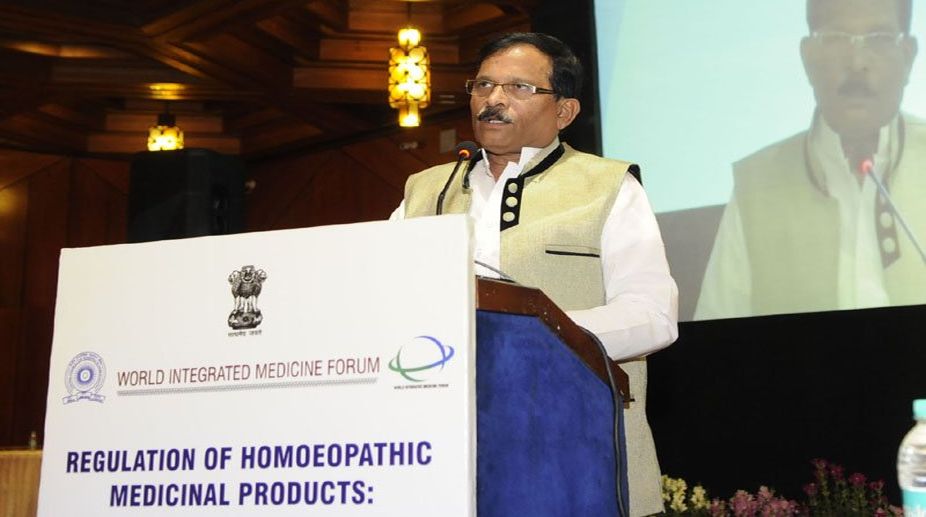
Minister of State for AYUSH Shripad Yesso Naik on Wednesday urged all state governments to consider amending their state medical practioners act to enable AYUSH system to deal with medical emergencies.

According to Naik, several states including Maharashtra, Haryana, Uttar Pradesh and West Bengal have already made such amendments in their respective medical Practitioner acts.

Speaking at the 3rd edition of State AYUSH/Health Ministers' Conference held here, Naik said there was an urgent need to stop misguided advertisements about AYUSH drugs appearing in the print and electronic media.

"Central Government has entered into an MoU with the Advertising Council of India to check such fraudulent claims relating to AYUSH projects," he said, adding that the state Governments could also bring such advertisements to the notice of the said council.

The purpose of this conference was to discuss the various issues connected with propagation and mainstreaming of AYUSH and also to take stock of the progress made and developments that took place during the last two years.

Stating that the ministry had developed Ayurveda protocols as well as Yoga protocols for prevention and control of diabetes, Naik stated that another landmark achievement was that the insurance companies had started entertaining the claims for reimbursement made by policyholders for the expenditure made on AYUSH treatment.

Speaking on the occasion, Minister for Health & Social Justice, Government of Kerela, K.K. Shailja Teacher said that they had decided to set up an International Research Institute of Ayurveda in the state.

Madhya Pradesh bans book, blacklists author

IANS | Bhopal |

The Madhya Pradesh government has proscribed a book — which allegedly describes a tribe as killers of cows — and blacklisted its author, a minister said on Wednesday.

The book 'Bharat ka Bhugol' (Geography of India) is prescribed for postgraduation course and allegedly describes Gond tribals of Madhya Pradesh as killers of cows and consumers of cow meat.

Talking to the media after the issue rocked the assembly, Higher Education Minister Jaibhan Singh Powaiya said the book has been published by a private publisher and not the government. 

He said its author Harish Khatri has been blacklisted.

Earlier, in the assembly, Congress members created a ruckus on the issue. The house was thereafter adjourned to Thursday. 

Longest tunnel in India: Endless landslides on highway play spoilsport

SP Sharma | Jammu |

India’s longest tunnel that is scheduled to be inaugurated on April 2 by Prime Minister Narendera Modi in Chenani will reduce the distance between Jammu and Srinagar by 31 km, but the constant landslides ahead on the highway will continue to play spoilsport for truckers and motorists.

The 9.2 km long tunnel will save a couple of minutes drive on the 300 km long highway, but the troublesome landslides beyond Nashri, where the tunnel opens on the other side, will keep blocking the highway every now and then. The tunnel has been built at a cost of Rs.3720 crores in a period of about six years.

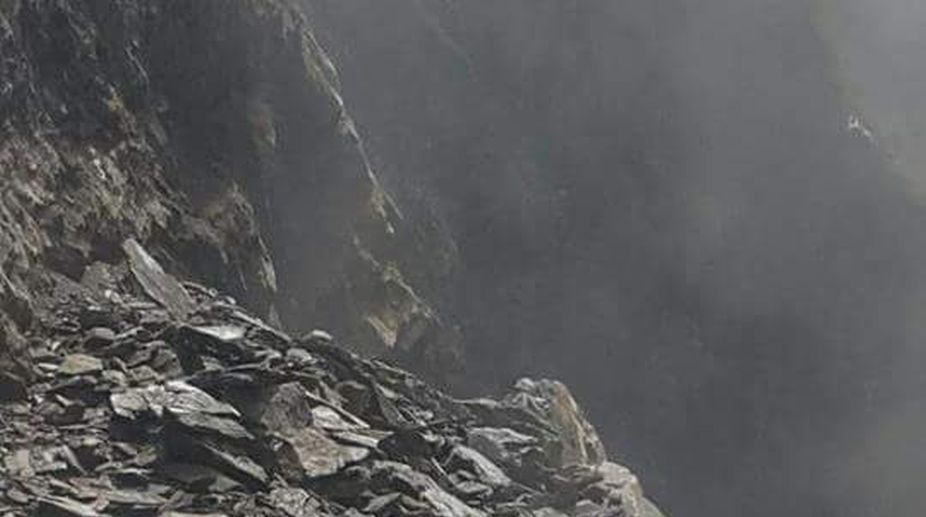
Perpetual landslides were keeping vehicles stranded on the highway at times for days together. The highway remained blocked earlier this month continuously for eight days due to landslides at several places and the stranded passengers were airlifted. The tunnel has bypassed the tourist spots of Patnitop, Kud and Batote that used to be problematic due to snowfall in winters. The new tunnel will solve the problem on the nearly 30 kms stretch of road but besides the perennial ones several new landslides have developed across the tunnel.  

Repeated closure of the highway has become headache not only for passengers and truckers but also for men of the Border Roads organization (BRO) and the traffic police who are faced with the task of removing the massive landslides and controlling movement of stranded vehicles.

Few years ago the landslides used to generally occur during the monsoons but now it has become a round the year phenomenon as the fragile mountains keep virtually moving forward. The spots on the highway that have been identified problematic are Nashri, Kureel, Mehar, Chanderkot, Digdol and 8 other places. An officer of traffic police said that new landslides have developed at Seri, Sherbibi, Monkeymore and adjoining areas.

In a bid to check soil erosion that was the main cause of landslides, the government got aerial seeding done in these areas in early 1980s but that too remained futile as not a blade of grass came out of the seeds that were scattered from a helicopter.

It is a constant fight of men of the BRO to clear the highway of the huge boulders and debris that roll down from the mountainous areas. The problem gets compounded in winters when several areas get covered under thick layer of snow.

Chief Minister Mehbooba Mufti had recently persuaded the railway minister to allow movement of vehicular traffic through the rail tunnel at Banihal when the highway on both sides of the Jawahar Tunnel is blocked with snow.

The Batote—Kishtwar highway is also shut for the past four days due to landslides at Drabshala.