Logo

Kate extremely intuitive, emotional: Downer

IANS | New Delhi |

Actress Kate Winslet is "an extremely intuitive and emotional person", apart from being a master in her craft, says John Downer, director of documentary Snow Chick – A Penguins Tale.

Winslet has narrated the documentary — which tells the story of an emperor penguin chick battling for survival in Antarctic region — and also highlights climatic changes. The documentary will air in India on Sony BBC Earth on April 1.

"I met Kate Winslet long time ago. We hit it off so well. She is such a wonderful person and a fine actress. It's the freshness she brings to the show," Downer told IANS over email from Britain. 

Downer also pointed out how Winslet's voice in the series "personifies her own inner feeling". 

He added: "One great thing about her is the fact that though she hasn't seen the film but her voice personifies her own inner feeling about the snow chick's emotion. She isn't just reading the lines but actually is feeling it. She is an extremely intuitive and emotion person at the same time an amazing actress which comes across when she speaks and narrates."

Downer says he wants people to know and understand the "harsh environment" that they shot in. 

"People must also understand the complexities of the climate that the production has to face. We would want them to empathise with the crew and at the same time enjoy the cute penguins," he added. 

Photo

  • American singer Steven Tyler, lead vocalist of the legendary rock band Aerosmith, was born on 26 March, 1948 in New York (PHOTO: Facebook)

    " alt="img" />
  • The dynamic vocalist has grabbed a number of awards, including four Grammys, four Billboard Music and six American Music Awards (PHOTO: Facebook)

    " alt="img" />
  • Known as ‘Demon of Screamin’ – Steven Tyler has wide vocal range and can effortlessly hit high notes (PHOTO: Facebook)

    " alt="img" />
  • Songs such as ‘Dream On,’ ‘Crazy’, Walk This Way’, ‘Sweet Emotions’ and ‘Back in the Saddle’ placed the band at the most respectable position worldwide (PHOTO: Facebook) 

    " alt="img" />
  • The incomparable energy of four members, heavy riffs by lead guitarist Perry and powerful lyrics by Tyler makes Aerosmith an outstanding rock band (PHOTO: Facebook)

    " alt="img" />
  • The charismatic outfits of fashion freak Tyler make his personality more dynamic. His ‘rock scarf’, which he hangs on microphone, is especially famous (PHOTO: Facebook)  

    " alt="img" />
  • The dynamic vocalist has grabbed a number of awards, including four Grammys, four Billboard Music and six American Music Awards (PHOTO: Facebook)

    " alt="img" />
  • Songs such as ‘Dream On,’ ‘Crazy’, Walk This Way’, ‘Sweet Emotions’ and ‘Back in the Saddle’ placed the band at the most respectable position worldwide (PHOTO: Facebook) 

    " alt="img" />

‘Crazy’ Steven Tyler turns 69

‘Crazy’ Steven Tyler turns 69

MORE Photo STORIES

Govt may table GST Bills in Parliament on March 27

PTI | New Delhi |

The government is likely to table supplementary goods and services tax legislations in Parliament on March 27.

Sources said C-GST, I-GST, UT-GST and the compensation law are likely to be introduced in the Lok Sabha on March 27 and could be taken up for discussion as early as March 28.

Also, amendments to the excise and Customs Act to abolish various cess as well as furnishing Bills for exports and imports under the new GST regime will be placed before the House.

The Business Advisory Committee of the Lok Sabha is likely to meet tomorrow to decide on the duration of discussion on the Bills, the sources added.

According to the sources, the government is looking at passage of the GST Bills in the Lower House by March 29 or latest by March 30.

Then, these will move to the Rajya Sabha and this gives the government enough time to bring back any amendment adopted by the Upper House to the Lok Sabha. The amendments can either be rejected or incorporated by the Lok Sabha.

The current session of Parliament ends on April 12.

Although the legislations will be introduced as Money Bills, the government wants discussion in both the Houses, the sources said.
The government has set a target of July 1 for rollout of GST, which will subsume excise, service tax, VAT and and other local levies.
Once these Bills are cleared by Parliament, the states will then take the state GST (S-GST) Bill to their respective assemblies. S-GST has been prepared as a model of the central GST (C-GST), with each state incorporating state-specific exemptions.

The integrated GST (I-GST) deals in taxation of inter-state movement of goods and services while the Union Territory GST (UT-GST) Bill covers taxation in UTs. The compensation law has been prepared to give a legislative backing to the Centre's promise to compensate the states for 5 years for any revenue loss arising out of GST implementation.

Brazil still have scope of improvement: Philippe Coutinho

Coutinho has insisted that the Brazilian football team still has scope for improvement.

IANS | Sao Paulo |

Midfielder Philippe Coutinho has insisted that the Brazilian football team still has scope for improvement despite winning seven straight matches since the appointment of coach Tite.

The Selecao moved to within touching distance of a berth at next year's World Cup with a 4-1 victory over Uruguay in Montevideo on Thursday. Tite's team will all but secure a spot in Russia if they overcome Paraguay at Corinthians Arena on Tuesday, reports Xinhua news agency.

Despite the confidence gained under Tite, who replaced Dunga in June after the team's group-stage elimination from the Copa America, Coutinho said Brazil were far from a finished product.

"There is always something that we can improve. Tite pays a lot of attention to detail, positioning and dead-ball situations. We are playing well but he is always talking about what we need to do to get better," the Liverpool midfielder told reporters on Saturday.

Brazil currently lead the South American zone World Cup qualifying standings with 30 points from 13 matches, seven points ahead of second-placed Uruguay.

Paraguay are seventh, with 18 points, and need to win on Tuesday to maintain hope of qualifying for the tournament in Russia.

"We have to be focused just as we were against Uruguay. Every game is complicated and every team wants to make life difficult for us," Coutinho said. 

"We had a great result against Uruguay, which showed our maturity. But now we have another challenge. If we are all focused, we are confident that everything will go to plan," he added.

‘Snapchat’ most-searched app on App Store

IANS | New York |

Although Snap's stock price was a bit down this week, Snapchat is the top searched app on the iOS App Store, a media report said.

According to a report in Forbes magazine, Snapchat led all competitors in App Store search volume and as a result, Snapchat was also the app people were looking for most frequently.

Snap Inc, the parent company of picture messaging app Snapchat, went public earlier this month. The young company, founded in 2012, posted a $515 million loss last year.

According to Snapchat, 158 million people use the service each day and create 2.5 billion "snaps" between them. 

Facebook-owned photo-sharing app Instagram was placed on the second spot, while social media giant Facebook's mobile app took the third rank.

Google's video platform YouTube is on the fourth spot. Teen-focused messaging startup Kik is fifth, and micro-blogging website Twitter is sixth on the list, the report said.
 

Children with autism may benefit from faecal transplant: Study

PTI | New York |

Faecal transplants, a method of introducing donated healthy microbes into people with gastrointestinal disease to rebalance the gut – may benefit children suffering from autism, a new study has suggested.

Behavioural symptoms of autism and gastrointestinal distress often go hand-in-hand, and both improved when a small group of children with the disorder underwent faecal transplant and subsequent treatment.

Researchers, including those from University of Arizona in the US, studied about 18 children with autism and moderate to severe gastrointestinal problems.

Children without autism were included for comparison of bacterial and viral gut composition prior to the study.

Researchers collected this information from parents through established, standardised questionnaires to assess social skills, irritability, hyperactivity, communication and other measures. One of those tools showed the average developmental age increased by 1.4 years after treatment.

The average score on a scale for ranking gastrointestinal symptoms dropped 82 per cent from the beginning to the end of treatment.
An overall improvement that was sustained two months after the final treatment was seen when the researchers asked parents to give feedback on 17 autism-related symptoms.
A diagnostic evaluation before the experimental treatment, at the end of treatment and eight weeks after that was also conducted.
Doctor-reported symptoms (from the Childhood Autism Rating Scale) decreased by 22 per cent at the end of treatment and 24 per cent eight weeks after treatment ended compared with ratings at the start of the study, researchers said.

“Transplants are working for people with other gastrointestinal problems. And with autism, gastrointestinal symptoms are often severe, so we thought this could be potentially valuable,” said Ann Gregory of Ohio State University in the US.

Previous research had established that children with autism typically have fewer types of some important bacteria in their guts and less bacterial diversity overall    a difference that held true in this study. That could be because many of them are prescribed a lot of antibiotics in the first three years of life, researchers said.

The study was published in the journal Microbiome

CAG to audit impact of demonetisation

PTI | New Delhi |

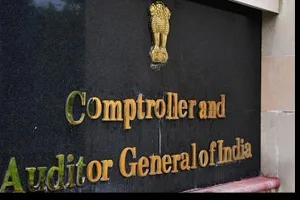
The Comptroller and Auditor General of India (CAG) plans to audit the impact of note ban and the affect it has had on government tax revenues, said CAG Shashi Kant Sharma.

In an interview to PTI, he said the auditor is gearing up to audit tax revenues under the new Goods and Services Tax (GST) regime and has started capacity building and reorienting its audit methodology and procedures.

Among the special audits, CAG has already completed audit of agricultural crop insurance scheme and flood control and flood forecasting and is now engaged in several important audits like Right to Education, National Rural Health Mission, defence pensions and Ganga Rejuvenation, he said. "These reports should be ready by the end of the current year." 

Sharma asserted that CAG has audit jurisdiction over any body or authority which has any relation to government revenues and expenditure and resistance by some like city development bodies, DISCOMs and metro corporations will wither away.

"We plan to audit certain issues related to fiscal impact of demonetisation, largely its impact on tax revenues," he said.

The government had withdrawn old 500 and 1,000 rupee notes from circulation on November 8 last year, and announced a new tax amnesty scheme for those holding unaccounted junked currency.

CAG audit may look into expenditure on printing of notes, RBI dividend payout and banking transaction data.

The auditor has also conveyed to the government its stand on the recent move of the GST Council to delete section 65 of the preliminary draft that authorised CAG to audit GST.

"Our mandate covers GST just like the earlier taxation regimes were covered. We have already started work on restructuring of our revenue audit arrangements to meet this likely challenge when GST is introduced.

"This exercise would include issues of capacity building, data access and analysis, reorientation of audit methodology and procedures and developing end-to-end IT solutions," he said.

Sharma said executive, legislature, judiciary and audit have clearly demarcated roles and responsibilities.

"The framers of our Constitution were fully aware of the concept of checks and balances and hence you find the mention of Judiciary and CAG in the fifth part of the Constitution along with legislature and executive," he said. "The CAG's DPC Act of 1971 provides the details of the mandate and scope of audit available to us." 

Stating that there are no lacunae in CAG's empowerment but with advent of time, the governance models have undergone changes.

The September 2014 judgement of the Supreme Court in the telecom case "reinforced an important principle that wherever public resources are being used by private companies for revenue generation, CAG will have a duty to examine as to whether the government is getting due share of such revenue," he said.

"So, I can say that the bodies and authorities which have any relation to government revenues and expenditure are under the audit jurisdiction of CAG," he said.

City development bodies, electricity distribution companies and metro corporations "resist" CAG audit on the ground of being autonomous or on the ground of getting no support of the government although they perform the functions which were earlier being performed by the government departments, he said.

"I believe the situation will settle down with passage of time and such resistance will wither away," he added.


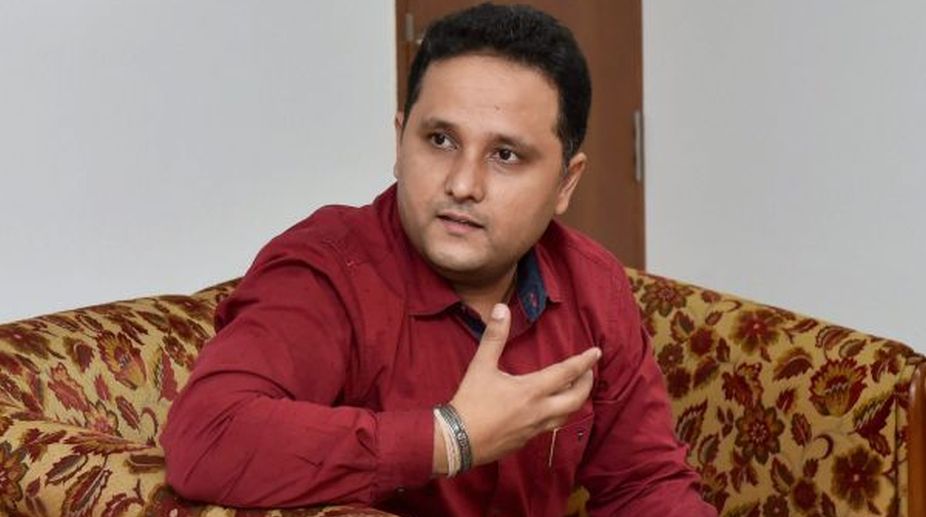
Sita was a warrior, Amish Tripathi claims in his new book

Amish Tripathi's upcoming book narrates the story of Hindu goddess Sita.

IANS | New Delhi |

He is the author of the fastest-selling book series in Indian publishing history — The Shiva Trilogy — and his last book, Scion of Ikshvaku, was the biggest literary blockbuster of 2015, all of which have together sold over 3.5 million copies.

Now, banker-turned-writer Amish Tripathi's upcoming book narrates the story of Hindu goddess Sita, but the author's interpretation is contrary to her depiction in popular culture.

Sita, the wife of Lord Ram, is generally seen as a symbol of the Adarsh Bhartiya Nari — the Ideal Indian Woman — and from daily soaps to mythological books, she stands as an obedient and devoted wife. But is she just the sum total of her wifely submissions?

Tripathi, whose second book from the Ram Chandra series is titled Sita – Warrior of Mithila, said that there is some sort of amnesia among people about the character of Sita.

"Sita was not just an obedient and humble wife; she was a warrior. I was surprised to know that many people do not even know that she was the adopted daughter of King Janak. The feeling that I have got after interacting with so many people is that although people seem aware of the Ramayana, there is very little knowledge about the story of Sita," Tripathi told IANS in a candid chat over breakfast here on Thursday.

"Sita – Warrior of Mithila", which is expected to release by end of May or early June, comes after roughly two years since "Scion of Ikshvaku".

With a slice of french toast and masala omelette waiting to be relished, Tripathi went on to reveal that the second book of the Ram Chandra series is not exactly a sequel to "Scion of Ikshvaku", as it will take the readers back to the beginning.

"Readers will get to see Sita maa as a feminist icon and, even more importantly, they will get to see her as a warrior, not just her physical strength but also her mental ability," he said.

The writer has applied the multi-linear narrative technique in the Ram Chandra series and, therefore, the first book, "The Scion of Ikshvaku", is from the birth of Ram to the kidnapping of Sita; the second book will be from the birth of Sita to the kidnapping of Ram; the third, from the birth of Ravana to the kidnapping of Sita; and from there on, the story converges into a common narrative in the fourth and the fifth parts.

"I can't claim to have invented this style, it's been around for some time. The basic idea is that multiple truths can exist. All of us are in the same room, but one month later, each one of us will have a slightly different recollection of this day. Do we know well enough the backstory of all the characters of Ramayana? So I thought it would be interesting to have the backstories of the main characters, which converges into a common narrative," added the author with gross retail sales of over Rs.100 crore.

He said that the idea of a multi-linear narrative was clear-cut in his mind right from the beginning, which is why he announced it as a five-book series. While Lord Ram remains the overall protagonist of the Ram Chandra series, Sita will take centrestage in the second part and Ravana in the third.

"One point to be noted is that it is not Ramayana from Sita's perspective; that has been done several times. It is, instead, the story of Sita, where Ram comes as a character in the last part of the book," he reminded.

Mythological fiction raises one question, though. Are the depictions of the characters in the book or even the plot of the novel true?

Tripathi said that Indian civilisation believes in multiple truths and that is the strength of the Indian way of life. Our scriptures basically tell us, he said, that your truth is right from your perspective and my truth is right from my perspective.

"The purpose is to catch up on the lessons and inspirations from their lives rather than worrying about a singular truth," quipped the 43-year-old writer.

So what is the biggest lesson that one can derive from the life of Lord Ram?

"That he was a Maryada-Purushotam, the follower of laws. The main lesson from his life is that an able administrator needs to believe in rule of law. When there is a leader who believes in the rule of law, it is very good for the society — but very challenging for the family. He represents an ideal follower of laws," contended Tripathi.

"Sita – Warrior of Mithila", is published by Westland, recently acquired by Amazon. One-third of the book was penned in the national capital, at Tripathi's brother's residence here, while the rest was written in Mumbai and Cambodia.

Tripathi worked for 14 years in the financial services industry and quit it only after, in his own words, his royalty check became greater than his salary.


NASA mission to study cosmic material between stars

IANS | Washington |

NASA has announced plans to launch a balloon-borne observatory to study the emissions from the cosmic material found between stars, known as the interstellar medium.

This data will help scientists determine the life cycle of interstellar gas in the Milky Way galaxy, witness the formation and destruction of star-forming clouds, and understand the dynamics and gas flow in the vicinity of the centre of our galaxy, the US space agency said in a statement on Saturday.

The Galactic/Extragalactic ULDB Spectroscopic Terahertz Observatory (GUSTO) mission will fly an Ultralong-Duration Balloon (ULDB) carrying a telescope with carbon, oxygen and nitrogen emission line detectors. 

"GUSTO will provide the first complete study of all phases of the stellar life cycle, from the formation of molecular clouds, through star birth and evolution, to the formation of gas clouds and the re-initiation of the cycle," said Paul Hertz of NASA's Science Mission Directorate in Washington. 

The mission, led by Christopher Walker of the University of Arizona, is targeted for launch in 2021 from McMurdo, Antarctica, and is expected to stay in the air between 100 to 170 days, depending on weather conditions, NASA said.

This unique combination of data will provide the spectral and spatial resolution information needed for the researchers to untangle the complexities of the interstellar medium.

The observatory will help researchers map out parts of the Milky Way galaxy and a nearby galaxy known as the Large Magellanic Cloud. 

"NASA has a great history of launching observatories in the Astrophysics Explorers Program with new and unique observational capabilities. GUSTO continues that tradition," Hertz added.
 

RTI questions why note conversion stopped; RBI keeps mum

PTI | New Delhi |

Why was not the conversion of old currency notes allowed till March 31, 2017 for Indians as assured by Prime Minister Narendra Modi in his speech on November 8 announcing demonetisation? 

The Reserve Bank of India (RBI) has refused to answer the question under the Right to Information (RTI) Act claiming the query does not come under the definition of "information" as per the transparency law.

The Prime Minister in his speech on November 8, 2016, announcing demonetisation, had assured countrymen that they could convert the notes of Rs 1,000 and Rs 500 till March 31.

Later, it was decided that the window till March 31 will be kept only for Non-Resident Indians who constitute a major support base for the ruling BJP.

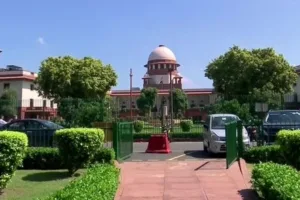
The issue about the time limit for converting old currency notes is also being heard by the Supreme Court where Attorney General Mukul Rohatgi has reportedly submitted that the law will prevail over the words of the Prime Minister.

In its response, the RBI refused to share file notings on the decision to limit currency conversion window till March 31 only for NRIs saying it would be against the economic interests of the state.

The applicant had sought reasons, as "recorded" in the files of the RBI, behind the decision to not allow conversion of currency till March 31 for Indians as assured by the PM.

"The question is in the nature of seeking reasons or justification from CPIO which is not defined as information as per Section 2(f) of the RTI Act," the response form Suman Ray, Central Public Information Officer, said.

The Supreme Court has clarified the issue in one of its noted judgements saying if opinion or advice is available in the records of the public authority, it will come under the definition of the "information" under the RTI Act.

Former Information Commissioner Shailesh Gandhi said that section 8(2) of the RTI Act allows disclosure of information, even if it is exempted, if it is in larger public interest.

The RTI Act defines "information" as "any material in any form" held by or under the control of a public authority.

The definition covers "any material in any form, including records, documents, memos, emails, opinions, advices, press releases, circulars, orders, logbooks, contracts, reports, papers, samples, models, data material held in any electronic form and information relating to any private body which can be accessed by a public authority under any other law for the time being in force".

The bankers' bank has stonewalled almost every RTI query pertaining to demonetisation citing one or the other reason.

It had refused to respond if the views of Finance Minister Arun Jaitley or Chief Economic Advisor were taken before demonetisation was announced, it had also refused to disclose reasons behind the sudden move, among others.

It had also refused to allow access to minutes of the meetings held to decide on the issue of demonetisation of Rs 1,000 and Rs 500 notes.

After the deadline to exchange the scrapped notes expired on December 30, 2016, the government issued an ordinance saying only those who were abroad, the armed forces personnel posted in remote areas, or others who could give valid reasons for not being able to deposit the cancelled notes, can do so till March 31.

Four-legged robot can change gait with speed

PTI | Tokyo |

Scientists have, for the first time, successfully developed a four-legged robot that can spontaneously change its gait when speed is varied.

The advance may lead to a wide range of applications such as adaptive legged robots working in disaster areas, user-friendly legged entertainment robots and automatic motion-creation algorithms for computer graphics animation.

Until now, the manner in which changing speeds cause quadrupeds to change their gaits – walking, trotting and galloping – was poorly understood.

Researchers from the Tohoku University in Japan successfully demonstrated the reproduction of the quadruped gait transition phenomena.

They achieved this via a decentralised control scheme, using a simple local rule in which a leg continues to support the body while sensing weight on the corresponding leg.

Moreover, they confirmed that the energy-efficiency profile of the robot's gait patterns matched those measured in horses.
The research is expected to lead to better understanding of the mechanism of how quadrupeds can flexibly and efficiently adjust their gait when their speed is changed, researchers said.

The result may constitute the basis of an unconventional approach to coordinating the many degrees of freedoms required for adaptive robot locomotion.

Telangana, Andhra Governor holds meeting on post-bifurcation issues

IANS | Hyderabad |

ESL Narasimhan, who is joint Governor for Telangana and Andhra Pradesh, on Sunday held a meeting with ministers and officials of the two Telugu states to sort out pending issues arising from bifurcation of Andhra Pradesh in 2014.

The meeting discussed the issues related to division of employees and handing over of the buildings of Andhra Pradesh Secretariat in Hyderabad to Telangana. However, no decision was taken during the meeting.

Telangana government's Advisor G Vivekanand told reporters after the meeting that they decided to hold another round of talks on April 17.

Andhra Pradesh's Labour Minister K Atchan Naidu said they discussed division of teachers, police personnel and employees of electricity department but did not come to a conclusion.

On handing over the buildings of Andhra Pradesh Secretariat and legislature to Telangana, he said a decision in this regard would be taken after consultation with Andhra Pradesh Chief Minister N Chandrababu Naidu.

The Labour Minister said two senior officials of electricity department had submitted their reports on sharing of electricity and a decision was expected in the next meeting.

Andhra Pradesh was represented by Atchan Naidu, Finance Minister Y Ramakrishnudu and Telugu Desam Party Chief Whip Kalva Srinivasulu, besides other senior officials.

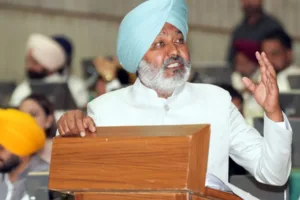
Irrigation Minister Harish Rao, Energy Minister Jagdish Reddy, Advisor G. Vivek and other officials represented Telangana.

This was the third in a series of meetings the Governor was holding with the ministers and officials of the two states since last month, to sort out all post-bifurcation issues.

The two states had decided last month to sort out all issues with mutual agreement instead of fighting in courts.

The two states have had differences over various issues, including sharing of electricity and water and division of institutions listed in the 9th and 10th Schedules of the Andhra Pradesh Reorganisation Act and also the High Court here.

Several meetings held between the officials of the states over the past two-and-half years failed to sort out issues.

A group of employees from Telangana, who are discharging their duties from the Andhra Pradesh Secretariat in Amaravati, had submitted a memorandum on Saturday to Atchan Naidu that he should take initiative for sending them to the Telangana Secretariat.

In the representation, the employees mentioned that as many as 238 employees, having local status in Telangana, are working at the Andhra Pradesh Secretariat.

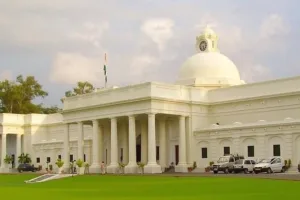
GATE 2017: IIT Roorkee announces results

SNS | New Delhi |

Graduate Aptitude Test in Engineering (GATE) 2017 was announced on Sunday by IIT Roorkee.

The GATE exam that held on February 4,5,11, and 12 earlier this year, announced the results a day earlier than expected. The successful candidates will be able to download their scorecards from the official website before the last date, which is May 5.

The result of GATE 2017 will be valid for the next 3 years and can be used for opportunities to pursue Masters and PhD from select institutions and job opportunities in PSUs.

Candidates can check their result on www.gate.iitr.ernet.in by entering their registration details for GATE 2017. Successful candidates can download their scorecard till May 5, 2017.

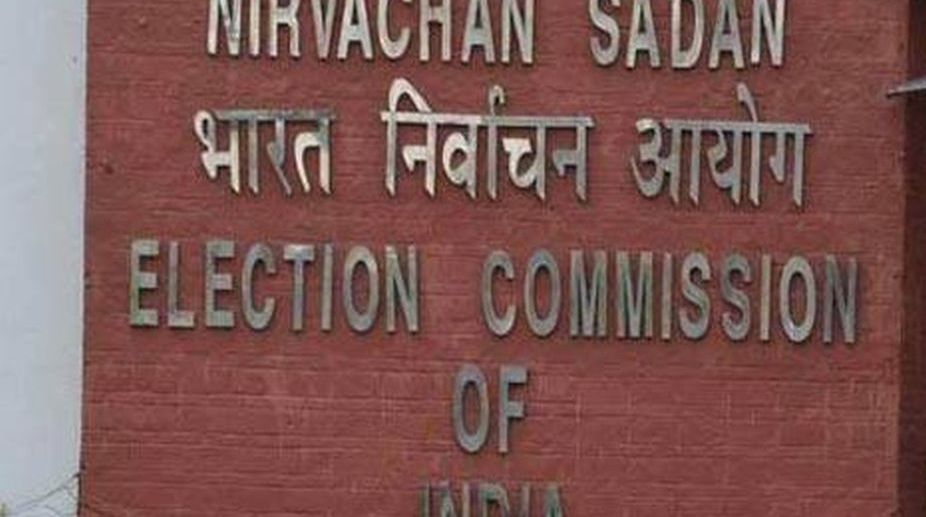
Bar political parties not paying dues from fielding candidates: EC proposes

PTI | New Delhi |

After its proposal to bar candidates from contesting for failure to clear utilities dues, the Election Commission now wants a similar treatment to be meted out to the political parties.

The poll panel has written to political parties seeking their views on the issue and how to implement the Delhi High Court directive that not only candidates but also political parties should furnish 'no dues certificate' before fielding their candidates.

In August 2015, the court had asked the EC to ensure that candidates contesting Lok Sabha and Assembly elections furnish a 'no dues certificate' from the agency providing electricity, water and telephone connections to their accommodation.

The order had said the same rule should apply to political parties also.

"When we were examining the high court order, it was pointed out that it not only pertains to candidates but also to political parties. We are in correspondence with political parties. We have sought their views on how to go about it," Chief Election Commissioner Nasim Zaidi told PTI.

He also said in the recent Assembly polls, some of the candidates could not file their nomination as they had not provided a 'no dues certificate'.

All the seven national parties — the BJP, Congress, NCP, CPI, CPI-M, BSP and TMC — and major regional parties like the SP and AIADMK have been given government accommodation in the national capital for which they have to pay rent.

The poll watchdog has already written to the Law Ministry urging it to amend election laws so that candidates who have defaulted in clearing dues can be barred from contesting Lok Sabha and Assembly polls.

According to the EC, barring candidates will require amendment to the chapter-III of the Representation of the People Act which deals with electoral offences.

A new clause will have to be inserted therein for disqualification "on the ground of being a defaulter of public dues". The issue is pending with the government.


Bar political parties not paying dues from fielding candidates: EC proposes

PTI | New Delhi |

After its proposal to bar candidates from contesting for failure to clear utilities dues, the Election Commission now wants a similar treatment to be meted out to the political parties.

The poll panel has written to political parties seeking their views on the issue and how to implement the Delhi High Court directive that not only candidates but also political parties should furnish 'no dues certificate' before fielding their candidates.

In August 2015, the court had asked the EC to ensure that candidates contesting Lok Sabha and Assembly elections furnish a 'no dues certificate' from the agency providing electricity, water and telephone connections to their accommodation.

The order had said the same rule should apply to political parties also.

"When we were examining the high court order, it was pointed out that it not only pertains to candidates but also to political parties. We are in correspondence with political parties. We have sought their views on how to go about it," Chief Election Commissioner Nasim Zaidi told PTI.

He also said in the recent Assembly polls, some of the candidates could not file their nomination as they had not provided a 'no dues certificate'.

All the seven national parties — the BJP, Congress, NCP, CPI, CPI-M, BSP and TMC — and major regional parties like the SP and AIADMK have been given government accommodation in the national capital for which they have to pay rent.

The poll watchdog has already written to the Law Ministry urging it to amend election laws so that candidates who have defaulted in clearing dues can be barred from contesting Lok Sabha and Assembly polls.

According to the EC, barring candidates will require amendment to the chapter-III of the Representation of the People Act which deals with electoral offences.

A new clause will have to be inserted therein for disqualification "on the ground of being a defaulter of public dues". The issue is pending with the government.


India vs Australia 4th Test Day 2: Pujara’s fifty brings hope after early blows 

India trail the visitors by 147 runs with eight wickets remaining at the HPCA Stadium.

SNS | New Delhi |

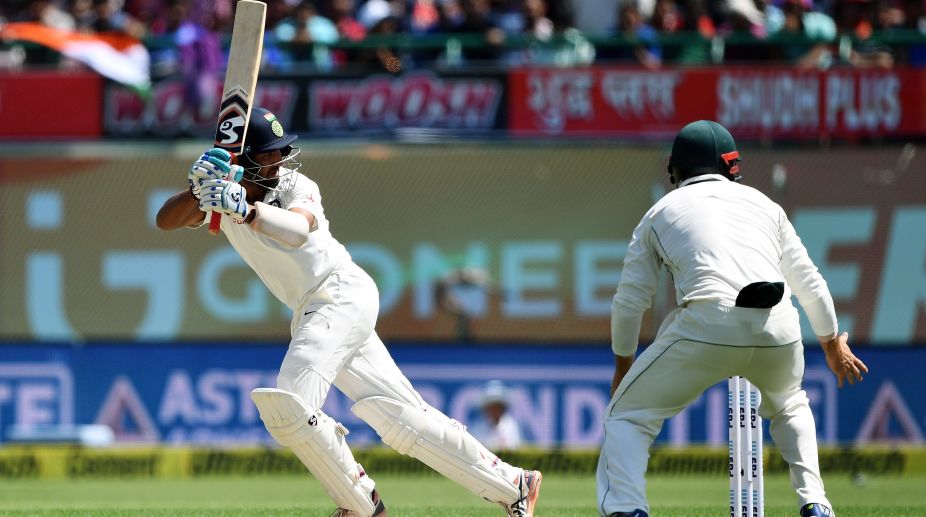
Cheteshwar Pujara smashed his 15th international Test fifty and captain Ajinkya Rahane supported with 19 (not out) to take India to 153/2 at Tea on Day 2 of the fourth and final Test against Australia on Sunday.

Pujara (53*) and Rahane put unbeaten 45 runs for the third-wicket partnership as India trail the visitors by 147 runs with eight wickets remaining at the HPCA Stadium, Dharamsala.

Earlier in the day, India suffered early blow as opener Murali Vijay departed in the 11th over cheaply for just 11 runs. 

Vijay, who scored 82 runs in Ranchi Test, faltered today at the picturesque stadium when a fine delivery by Josh Hazlewood (1/35) got the edge of his bat and Matthew Wade made no mistake behind of the stumps.

Consistent batsman KL Rahul continued to delight the spectators as he scored a swift 60 runs, however, he was also sent back to the pavilion before putting a strong knock.

Spearhead Pat Cummins chipped in to the moment as he trapped the big fish Rahul with David Warner, who took a superb catch at mid-off.
 

India vs Australia 4th Test Day 2: Pujara’s fifty brings hope after early blows 

India trail the visitors by 147 runs with eight wickets remaining at the HPCA Stadium.

SNS | New Delhi |

Cheteshwar Pujara smashed his 15th international Test fifty and captain Ajinkya Rahane supported with 19 (not out) to take India to 153/2 at Tea on Day 2 of the fourth and final Test against Australia on Sunday.

Pujara (53*) and Rahane put unbeaten 45 runs for the third-wicket partnership as India trail the visitors by 147 runs with eight wickets remaining at the HPCA Stadium, Dharamsala.

Earlier in the day, India suffered early blow as opener Murali Vijay departed in the 11th over cheaply for just 11 runs. 

Vijay, who scored 82 runs in Ranchi Test, faltered today at the picturesque stadium when a fine delivery by Josh Hazlewood (1/35) got the edge of his bat and Matthew Wade made no mistake behind of the stumps.

Consistent batsman KL Rahul continued to delight the spectators as he scored a swift 60 runs, however, he was also sent back to the pavilion before putting a strong knock.

Spearhead Pat Cummins chipped in to the moment as he trapped the big fish Rahul with David Warner, who took a superb catch at mid-off.