Logo

What fall of Sangin means

S Mudassir Ali Shah | New Delhi |

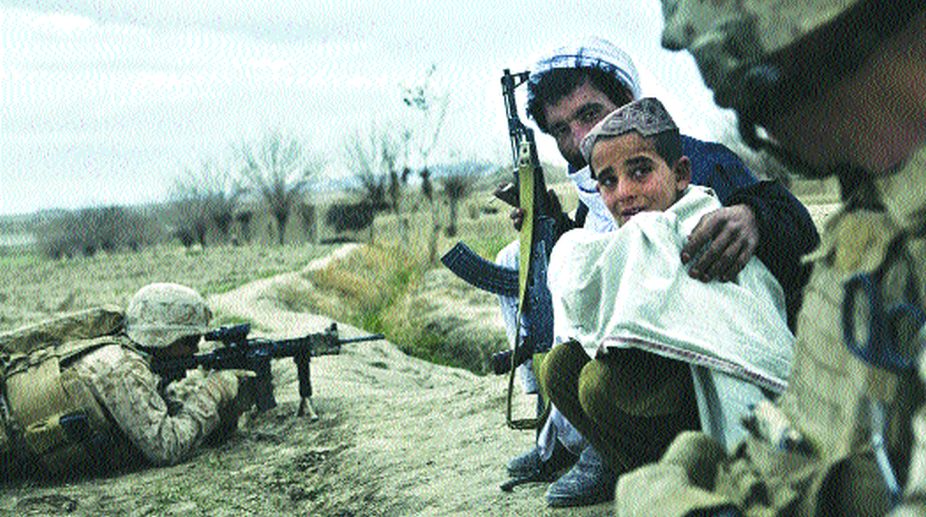
By seizing the strategically located Sangin district, with a population of less than 100,000, Taliban insurgents have gained control of more than 50 per cent of southern Helmand province. The town has literally been a major killing field for British, US and Afghan soldiers over the past 16 years of war in Afghanistan.
A vital supply route for security personnel stationed in the provincial capital Lash­kargah, Sangin has been the scene of brazen Taliban attacks for the last eight months or so. Straddling a scorched desert and a lush river valley that Nato commanders once described as a ‘green zone’, Sangin fell to the Taliban as a result of a predawn assault on Thursday.
The ragtag Afghan forces — fatigued, outgunned and short of ammunition and food — took to their heels. As TV channels around the world screened images of audacious fighters marauding through the district centre and police headquarters, a patently clueless Ministry of Defence in Kabul characterised the security forces’ meek surrender of the major urban space as a tactical retreat.
Sangin’s collapse, which the US military has euphemistically called the repositioning of the district centre, represents the culmination of a ferocious offensive that has been deadlier than the battles for any of the country’s other 400 districts. Following the 2013 security transition from NATO to local forces, hundreds of Afghan soldiers and policemen have died defending the district.
After capturing Sangin, where the international fraternity has invested heavily, the Taliban are now better positioned to coordinate their operations in Helmand and Kandahar, the group’s spiritual base. Seen in this context, abandoning Sangin will turn out to be a costly mistake. Although the American-led coalition bombed the area to destroy strategic assets, the fighters were able to seize some of the vehicles, weapons and equipment abandoned by the soldiers.
While ensconced in Sangin, the emboldened militants will obviously step up their recruitment drive and mobility north of the embattled province, known as Afghanistan’s drug capital. Helmand accounts for more than 50 per cent of the total opium production within the country. The rebels, posing more like godfathers than a government-in-waiting, generate much of their revenue from the narcotics trade — worth roughly $3 billion a year. In what looks like icing on the cake, the Taliban also recruit from the large pool of labourers, mostly young men, who converge on Helmand during the opium harvest season.
Come spring, the Taliban lay down their arms to work as daily wagers on lush green poppy fields in Sangin and other districts of Helmand. Additionally, the guerrillas collect a 10 per cent tax (ushr) on opium produce. Growers, however, cannot summon the courage to say that Islam orders the distribution of ushr to the needy, not warriors.
Buffeted by increasing unemployment and poverty, many of those coming in from all over the country tend to become willing hires for the militant movement. Heavy rainfall, cancellation of annual eradication campaigns and perennial violence betoken a greater income for the Taliban and a higher opium yield in Helmand this year.
Illustrative of Taliban’s rising control in the chaotic south, the fall of Sangin will bust the morale of Afghan forces and their Nato partners, who are now more focused on training than combat. Again, this tactical shift afforded the insurgents a good opportunity to escalate their armed struggle.
In Sangin, which has changed hands several times since 2001, many British and American service members, just like their Afghan counterparts, have lost their lives. More than 100 of the 456 British fatalities in Afghanistan over the past 16 years have occurred in this restive city.
British troops, moving into Helmand in 2006, failed to deliver on their oft-repeated promise of bringing security, good governance and reconstruction to the province. Their failure came in for a lot of flak from ex-president Hamid Karzai and senior US military commanders in Afghanistan.
Thousands of US Marines ventured into Sangin, Nawa, Garmser, Marjah, Khanshin and Nawzad districts in 2010; at least 20 were killed in Sangin within the first three months of deployment. Ironically enough, the city is still mired in a whole host of problems, including misgovernance and corruption.
Government officials, who are supposed to crack down on poppy cultivation, are allegedly complicit in the opium trade. As if competing with the militants for cash, government servants help farmers cultivate and harvest the illicit crop. There is enough reason to believe the drug business has become institutionalised in Sangin and other parts of Helmand.
As things stand, one can safely predict an escalation of air and ground offensives in Sangin and, indeed, throughout the province. If the Taliban retains control of the district — a tough challenge — the fighting is bound to spill over into neighbouring Kandahar.

Dawn/ANN.
Brace yourselves for a violent summer

Harsha Kakar | New Delhi |

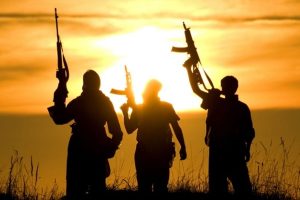
Afghanistan, India and Pakistan are three states, intrinsically linked, facing varying levels of militancy. Each country blames the other for supporting groups inimical to it. Politically the nations have grown so apart that resolution of any crisis appears unlikely. The summer is yet to set in, passes yet to reopen, movement of militants across borders still to commence in earnest; thus probably a violent period is ahead for security agencies and 
people.
Afghanistan is rattled by militants belonging to some eight groups, the most prominent being the Taliban and the ISIS. The summer offensive launched by the Taliban in 2016 was the worst in Afghanistan’s history as casualties – civil and military – were high. The Taliban hierarchy is based in Quetta, Pakistan. The area that it controls in rural Afghanistan increased marginally in 2016 as compared to previous years. As a prelude to its 2017 summer offensive, the Taliban captured the opium rich Sangin district of Helmand Province last week.
The ISIS has begun expanding its footprint and along the way has inducted fighters of the Pakistan Taliban (TTP). While it has launched few open operations, it has announced its enlarged presence by suicide attacks in crowded areas and by targeting remote military posts. Afghanistan blames Pakistan for harbouring and supporting the Taliban.
Pakistan on the other hand, faces the brunt of terror strikes spearheaded by the TTP and its breakaway factions. The ISIS has also established a foothold and claimed responsibility for suicide attacks on minority communities. The crescendo against the strikes rose to such levels that the army was compelled to deploy artillery and air power on the Afghan border to destroy terror camps near and in Afghanistan. Operation Radd-ul-Fasaad, the latest in a series of operations against terror groups was launched in February across the country. It shut its borders with Afghanistan, pushed back Afghan refugees and launched air and artillery barrages across the border. It has announced its intention to fence its border with Afghanistan, an action which may not be effective considering India’s experience with border fencing.
Pakistan always accuses India and Afghanistan of acting in concert to destabilize the country. While the groups are based in Afghanistan, direct support by Afghan intelligence agencies has never been proved. Similarly, Indian support to the groups remains a conjecture by Pakistan without any proof.
India faces militancy mainly in Kashmir and to a more controlled extent in the North-east, with Kashmir being openly supported by the Pakistani deep state. It also has the tacit support of separatists in Kashmir, who continue to incite the population against the Indian state. The past summer was a violent one in the valley, after the encounter killing of local militant leader Burhan Wani. It resulted in more than 80 local youth joining the militancy, the largest in the recent past. India has proof of Pakistani involvement in Kashmir.
Supporting terror groups in neighbouring countries of the region is of national interest and linked to national strategy, hence unlikely to be easily discarded. Pakistan has always considered Afghanistan as its strategic backyard and thus seeks a pro-Pak government in the country. With US and Indian involvement in Afghanistan, the local government is unlikely to change its policy. The present government did attempt a truce; however because of Pakistan’s continued support to the Taliban, Ashraf Ghani was forced to switch allegiance to India. For Pakistan, gaining Kashmir appears to have become the sole purpose of its survival as a nation state. Four wars (including Kargil) and no success has compelled it to adopt a policy of bleeding India with a thousand cuts. Hence its support to the so-called ‘Good Terror’ groups.
For India and Afghanistan, it is simply a case of payback. Terror can only be answered with terror. Whether support is direct, moral, financial or material, it matters little. It is only when the sponsor of terror faces it and bleeds that lessons will possibly be learnt. Thus amongst nations in the region, Pakistan and Afghanistan are worst hit. Pressure mounts within Pakistan as minorities are attacked and suicide bombers tear internal security apart. But no lessons are learnt. Support to terror groups continues.        
The coming months are likely to be tough for the three countries. The Taliban summer offensive would commence in Afghanistan, post its winter restructuring, compelling the Trump administration to re-evaluate its Afghan strategy. Whether the US increases deployment or leaves it to the Afghan security forces to handle, time will tell. Pakistan would see a quantum increase in strikes, as the weather makes movement easier. TTP and the ISIS are likely to join hands to challenge the authority of the state.
Pakistan’s army would be stretched to the limits, ensuring security of the CPEC and battling terror groups. Indian security forces would also brace for a violent summer, as the opening of the passes would result in an increased inflow of militants. The valley is again likely to be up in arms as civilian casualties mount when locals attempt to interfere in security 
operations.
Terrorism in the region is internally sponsored by nations against each other. Ironically, each country feels supporting terror groups operating in the neighbourhood gives it strategic leverage. However, with passage of time, relations have deteriorated to levels where rapprochement appears unlikely. While India battles militancy in just one part, the other two countries face terror strikes across their length and breadth. Ultimately, it is the population which suffers and development remains hampered, as selfish leaders sponsor terror groups solely to control and retain power.
Terror groups which were once assets are now liabilities as any action contemplated to rein them in is likely to fail and compel them to turn inwards. There is almost no choice for sponsor nations, unless self-realization sets in and concerted action is taken. This is unlikely, considering increased differences and powerful terror groups. Hence all that can be expected is a violent summer with enhanced casualties across the region.

(The writer is a retired Major-General of the Indian Army)

Brace yourselves for a violent summer

Harsha Kakar | New Delhi |

Afghanistan, India and Pakistan are three states, intrinsically linked, facing varying levels of militancy. Each country blames the other for supporting groups inimical to it. Politically the nations have grown so apart that resolution of any crisis appears unlikely. The summer is yet to set in, passes yet to reopen, movement of militants across borders still to commence in earnest; thus probably a violent period is ahead for security agencies and 
people.
Afghanistan is rattled by militants belonging to some eight groups, the most prominent being the Taliban and the ISIS. The summer offensive launched by the Taliban in 2016 was the worst in Afghanistan’s history as casualties – civil and military – were high. The Taliban hierarchy is based in Quetta, Pakistan. The area that it controls in rural Afghanistan increased marginally in 2016 as compared to previous years. As a prelude to its 2017 summer offensive, the Taliban captured the opium rich Sangin district of Helmand Province last week.
The ISIS has begun expanding its footprint and along the way has inducted fighters of the Pakistan Taliban (TTP). While it has launched few open operations, it has announced its enlarged presence by suicide attacks in crowded areas and by targeting remote military posts. Afghanistan blames Pakistan for harbouring and supporting the Taliban.
Pakistan on the other hand, faces the brunt of terror strikes spearheaded by the TTP and its breakaway factions. The ISIS has also established a foothold and claimed responsibility for suicide attacks on minority communities. The crescendo against the strikes rose to such levels that the army was compelled to deploy artillery and air power on the Afghan border to destroy terror camps near and in Afghanistan. Operation Radd-ul-Fasaad, the latest in a series of operations against terror groups was launched in February across the country. It shut its borders with Afghanistan, pushed back Afghan refugees and launched air and artillery barrages across the border. It has announced its intention to fence its border with Afghanistan, an action which may not be effective considering India’s experience with border fencing.
Pakistan always accuses India and Afghanistan of acting in concert to destabilize the country. While the groups are based in Afghanistan, direct support by Afghan intelligence agencies has never been proved. Similarly, Indian support to the groups remains a conjecture by Pakistan without any proof.
India faces militancy mainly in Kashmir and to a more controlled extent in the North-east, with Kashmir being openly supported by the Pakistani deep state. It also has the tacit support of separatists in Kashmir, who continue to incite the population against the Indian state. The past summer was a violent one in the valley, after the encounter killing of local militant leader Burhan Wani. It resulted in more than 80 local youth joining the militancy, the largest in the recent past. India has proof of Pakistani involvement in Kashmir.
Supporting terror groups in neighbouring countries of the region is of national interest and linked to national strategy, hence unlikely to be easily discarded. Pakistan has always considered Afghanistan as its strategic backyard and thus seeks a pro-Pak government in the country. With US and Indian involvement in Afghanistan, the local government is unlikely to change its policy. The present government did attempt a truce; however because of Pakistan’s continued support to the Taliban, Ashraf Ghani was forced to switch allegiance to India. For Pakistan, gaining Kashmir appears to have become the sole purpose of its survival as a nation state. Four wars (including Kargil) and no success has compelled it to adopt a policy of bleeding India with a thousand cuts. Hence its support to the so-called ‘Good Terror’ groups.
For India and Afghanistan, it is simply a case of payback. Terror can only be answered with terror. Whether support is direct, moral, financial or material, it matters little. It is only when the sponsor of terror faces it and bleeds that lessons will possibly be learnt. Thus amongst nations in the region, Pakistan and Afghanistan are worst hit. Pressure mounts within Pakistan as minorities are attacked and suicide bombers tear internal security apart. But no lessons are learnt. Support to terror groups continues.        
The coming months are likely to be tough for the three countries. The Taliban summer offensive would commence in Afghanistan, post its winter restructuring, compelling the Trump administration to re-evaluate its Afghan strategy. Whether the US increases deployment or leaves it to the Afghan security forces to handle, time will tell. Pakistan would see a quantum increase in strikes, as the weather makes movement easier. TTP and the ISIS are likely to join hands to challenge the authority of the state.
Pakistan’s army would be stretched to the limits, ensuring security of the CPEC and battling terror groups. Indian security forces would also brace for a violent summer, as the opening of the passes would result in an increased inflow of militants. The valley is again likely to be up in arms as civilian casualties mount when locals attempt to interfere in security 
operations.
Terrorism in the region is internally sponsored by nations against each other. Ironically, each country feels supporting terror groups operating in the neighbourhood gives it strategic leverage. However, with passage of time, relations have deteriorated to levels where rapprochement appears unlikely. While India battles militancy in just one part, the other two countries face terror strikes across their length and breadth. Ultimately, it is the population which suffers and development remains hampered, as selfish leaders sponsor terror groups solely to control and retain power.
Terror groups which were once assets are now liabilities as any action contemplated to rein them in is likely to fail and compel them to turn inwards. There is almost no choice for sponsor nations, unless self-realization sets in and concerted action is taken. This is unlikely, considering increased differences and powerful terror groups. Hence all that can be expected is a violent summer with enhanced casualties across the region.

(The writer is a retired Major-General of the Indian Army)

Talk-time on Ayodhya?

Rajinder Sachar | New Delhi |

The Chief Justice of India has suggested that he can act as a mediator in the pending Babari Masjid demolition case. The expression of concern is a little odd as it comes at the instance of an “inter-meddler”, and without the parties being present in Court. No wonder the suggestion on negotiations towards a muual settlement has caused a flutter in the political roost. In my opinion, the Babari Masjid demolition case is not a matter that can be settled through a compromise. This case has constitutional implications. The Constitution states clearly that India is a secular republic.
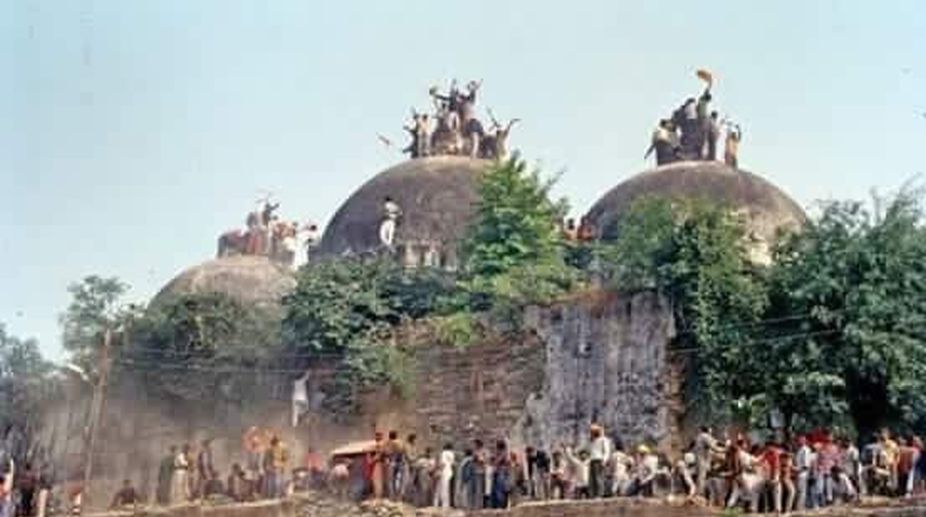
I was in Geneva attending the UN Human Rights Commission meeting when I was informed that the Babari Masjid had been demolished. On television, I watched the gory spectacle of BJP stormtroopers climbing up the walls of the Masjid and breaking it down. The party Chief Minister, Kalyan Singh’s assurance to the Supreme Court that he would take steps to prevent the demolition was belied. The Supreme Court by a majority just accepted his apology instead of sending him to jail for contempt of court. But this was a relatively minor issue compared to the ominous conspiracy of the Congress Prime Minister, Narasimha Rao, who suddenly became inaccessible to senior journalists, his Home Secretary and even his colleagues.
I feel ashamed to admit the complicity of the judiciary, which despite the injunction since 1949 to bar people from entering the area did not proceed against the public. Even the higher judiciary did not intervene; rather, it seemed to ignore the trespass.
The magnitude of the danger should have been grasped by all parties. The battle for secularism should have been reflected in the determination to nip the canker of communalism in the bud. As it turned out, nothing was done.
At that point of time, I had made a public statement , saying that the Government should have announced December 6 as a ‘National Repentance Day’ when people will fast and pray for the unity and welfare of all communities”. But the non-BJP parties analysed the situation as merely a law and order problem and thus acquiesced in this dastardly action.
Whatever the history of the controversy, all parties let the matter be referred to Allahabad High Court. Both sides were aggrieved with its decision. The BJP is insisting that it will build a temple on the site where the Masjid undoubtedly stood for over 500 years. The Muslims cannot obviously agree to a shameful compromise on the sanctity of the Masjid. The matter is before the Supreme Court; it cannot avoid a decision which may not make everyone happy.  It is its constitutional duty and it has no other option.
Going by precedents, the case in favour of Muslims is invincible. I say this on the precedence of the Shahidganj Masjid case in Lahore. It was decided by the Privy Council in 1940. The Supreme Court need not decide on the merits of the argument whether Babari Masjid stood where the Ram Temple once existed. This is of no consequence as it is not relevant to the judiciary’s ultimate decision.
It is obvious to the meanest intelligence that it is impossible to prove that the birthplace of Lord Ram was beneath the Masjid . It may be a matter of faith, genuine or contrived, but that is no proof. Nor for that matter can it ever be cited as a legal ground to take away the land from the mosque.
If the finding is that the mosque was not built on Ram’s birthplace, then the Muslims can get the land back. They will be free to use it in any way, including the construction of the mosque.
Alternatively even if it is assumed that there was a temple on the land of Babari Masjid, the suit filed by the VHP/RSS has to be dismissed. Admittedly, Babari Masjid existed for over 500 years, till it was demolished by the activists of the VHP/RSS on 6 December 1992.  From the legal perspective, the Sangh Parivar would have no right even if a temple had been demolished to build the Babari Masjid. I say this in view of the precedent of the case of Shahidganj Masjid. There was a mosque dating back to 1722. But by 1762, the shrine came under Sikh rule and was used as a gurdwara. It was only in 1935 that a suit was filed claiming the building was a mosque and should be returned to the Muslims.
The Privy Council observed that “their Lordships have every sympathy with a religious sentiment which would ascribe sanctity and inviolability to a place of worship. However, they cannot under the Limitation Act accept the contention that such a building cannot be possessed adversely. The property now in question, having been possessed by Sikhs, was adversely given to the waqf and to all interests thereunder for more than 12 years. The right of the mutawali (caretaker) to take possession for the purposes of the waqf came to an end under the Limitation Act”.
On a parity of reasoning, even if a temple existed prior to the construction of the Masjid 500 years ago, the suit by the Hindu outfits like Nirmal Akhara VHP / BJP etc lacks basis.
There is another reason why in such a situation, the suit will fail because in common law, even a rightful heir, if he kills his ancestor, forfeits his right of inheritance. In the Masjid case too there was a “murder most foul”, and hence the killer cannot be allowed to take the benefit of his own dastardly deeds, whatever the factual position may be.
Of course, it is the privilege of the Chief Justice of India to constitute the Bench.  With respect, I submit that it might be more reassuring if a Bench of seven or nine judges hears the appeal.

(The writer is retired Chief Justice, Delhi High Court)

Talk-time on Ayodhya?

Rajinder Sachar | New Delhi |

The Chief Justice of India has suggested that he can act as a mediator in the pending Babari Masjid demolition case. The expression of concern is a little odd as it comes at the instance of an “inter-meddler”, and without the parties being present in Court. No wonder the suggestion on negotiations towards a muual settlement has caused a flutter in the political roost. In my opinion, the Babari Masjid demolition case is not a matter that can be settled through a compromise. This case has constitutional implications. The Constitution states clearly that India is a secular republic.
I was in Geneva attending the UN Human Rights Commission meeting when I was informed that the Babari Masjid had been demolished. On television, I watched the gory spectacle of BJP stormtroopers climbing up the walls of the Masjid and breaking it down. The party Chief Minister, Kalyan Singh’s assurance to the Supreme Court that he would take steps to prevent the demolition was belied. The Supreme Court by a majority just accepted his apology instead of sending him to jail for contempt of court. But this was a relatively minor issue compared to the ominous conspiracy of the Congress Prime Minister, Narasimha Rao, who suddenly became inaccessible to senior journalists, his Home Secretary and even his colleagues.
I feel ashamed to admit the complicity of the judiciary, which despite the injunction since 1949 to bar people from entering the area did not proceed against the public. Even the higher judiciary did not intervene; rather, it seemed to ignore the trespass.
The magnitude of the danger should have been grasped by all parties. The battle for secularism should have been reflected in the determination to nip the canker of communalism in the bud. As it turned out, nothing was done.
At that point of time, I had made a public statement , saying that the Government should have announced December 6 as a ‘National Repentance Day’ when people will fast and pray for the unity and welfare of all communities”. But the non-BJP parties analysed the situation as merely a law and order problem and thus acquiesced in this dastardly action.
Whatever the history of the controversy, all parties let the matter be referred to Allahabad High Court. Both sides were aggrieved with its decision. The BJP is insisting that it will build a temple on the site where the Masjid undoubtedly stood for over 500 years. The Muslims cannot obviously agree to a shameful compromise on the sanctity of the Masjid. The matter is before the Supreme Court; it cannot avoid a decision which may not make everyone happy.  It is its constitutional duty and it has no other option.
Going by precedents, the case in favour of Muslims is invincible. I say this on the precedence of the Shahidganj Masjid case in Lahore. It was decided by the Privy Council in 1940. The Supreme Court need not decide on the merits of the argument whether Babari Masjid stood where the Ram Temple once existed. This is of no consequence as it is not relevant to the judiciary’s ultimate decision.
It is obvious to the meanest intelligence that it is impossible to prove that the birthplace of Lord Ram was beneath the Masjid . It may be a matter of faith, genuine or contrived, but that is no proof. Nor for that matter can it ever be cited as a legal ground to take away the land from the mosque.
If the finding is that the mosque was not built on Ram’s birthplace, then the Muslims can get the land back. They will be free to use it in any way, including the construction of the mosque.
Alternatively even if it is assumed that there was a temple on the land of Babari Masjid, the suit filed by the VHP/RSS has to be dismissed. Admittedly, Babari Masjid existed for over 500 years, till it was demolished by the activists of the VHP/RSS on 6 December 1992.  From the legal perspective, the Sangh Parivar would have no right even if a temple had been demolished to build the Babari Masjid. I say this in view of the precedent of the case of Shahidganj Masjid. There was a mosque dating back to 1722. But by 1762, the shrine came under Sikh rule and was used as a gurdwara. It was only in 1935 that a suit was filed claiming the building was a mosque and should be returned to the Muslims.
The Privy Council observed that “their Lordships have every sympathy with a religious sentiment which would ascribe sanctity and inviolability to a place of worship. However, they cannot under the Limitation Act accept the contention that such a building cannot be possessed adversely. The property now in question, having been possessed by Sikhs, was adversely given to the waqf and to all interests thereunder for more than 12 years. The right of the mutawali (caretaker) to take possession for the purposes of the waqf came to an end under the Limitation Act”.
On a parity of reasoning, even if a temple existed prior to the construction of the Masjid 500 years ago, the suit by the Hindu outfits like Nirmal Akhara VHP / BJP etc lacks basis.
There is another reason why in such a situation, the suit will fail because in common law, even a rightful heir, if he kills his ancestor, forfeits his right of inheritance. In the Masjid case too there was a “murder most foul”, and hence the killer cannot be allowed to take the benefit of his own dastardly deeds, whatever the factual position may be.
Of course, it is the privilege of the Chief Justice of India to constitute the Bench.  With respect, I submit that it might be more reassuring if a Bench of seven or nine judges hears the appeal.

(The writer is retired Chief Justice, Delhi High Court)

Blockade realities

Editorial | New Delhi |

Manipur’s first BJP chief minister, N Biren Singh, who was sworn in last week has already earned a feather in his cap by persuading the pro-NSCN(IM), Manipur-based United Naga Council to lift its 139-day economic blockade (the longest so far) of the state’s two vital lifelines the 214-km Dimapur-Kohima-Imphal highway and the 219-km Silchar-Imphal Road.
The chief minister is also proud that he was able to achieve this before the Prime Minister’s electoral commitment of clearing the two highways within five days of the installation of a BJP government. The chief minister was left with little choice but to end the blockade as Manipur High Court in its 7 March ruling had declared it illegal and observed, “The persons/organisations responsible for the blockade of the national highways, have violated the fundamental rights of the citizens to satisfy their own political wishes at the cost of the miseries of the people, and it is not in the interest of the state”.
The end of the blockade was due anyway because before the assembly elections there was some sort of understanding and BJP-Naga bonhomie was all too clear. Not for nothing was the venue for the tripartite talks, involving the Union home minister and state government officials, the Naga-majority Senapati district headquarters (46 km from Imphal) which happens to be the NSCN(IM)’s stronghold in Manipur and where the people lent support for Greater Nagaland. The UNC’s two top leaders, who were under judicial custody since December, were freed.
Before the election the Centre showed little interest in helping out the outgoing Congress government. It could have at least approached the NSCN(IM) leadership to interfere but it conveniently steered clear for fear of jeopardising the ongoing Naga peace talks. The Union home ministry sent 4,000 para-military personnel and when Ibobi could not break the blockade he was blamed.
The BJP leaders could not have been unaware that such an exercise in the past had never worked. Now the big question is, will the 139-day blockbuster be the last one? People who resort to blockades must ask themselves whether starving citizens to achieve their aspirations is ethical. The ordeals of the people of Imphal valley are likely to become unbearable once the cry for greater Nagaland gains stridency. There has to be an end to the no-holds-barred intimidation of the travelling public and truck drivers keeping in mind that the Dimapur-Imphal-Moreh road is part of the Asian highway, vital for the success of the now renamed Act East Policy. The Centre must involve itself.

Blockade realities

Editorial | New Delhi |

Manipur’s first BJP chief minister, N Biren Singh, who was sworn in last week has already earned a feather in his cap by persuading the pro-NSCN(IM), Manipur-based United Naga Council to lift its 139-day economic blockade (the longest so far) of the state’s two vital lifelines the 214-km Dimapur-Kohima-Imphal highway and the 219-km Silchar-Imphal Road.
The chief minister is also proud that he was able to achieve this before the Prime Minister’s electoral commitment of clearing the two highways within five days of the installation of a BJP government. The chief minister was left with little choice but to end the blockade as Manipur High Court in its 7 March ruling had declared it illegal and observed, “The persons/organisations responsible for the blockade of the national highways, have violated the fundamental rights of the citizens to satisfy their own political wishes at the cost of the miseries of the people, and it is not in the interest of the state”.
The end of the blockade was due anyway because before the assembly elections there was some sort of understanding and BJP-Naga bonhomie was all too clear. Not for nothing was the venue for the tripartite talks, involving the Union home minister and state government officials, the Naga-majority Senapati district headquarters (46 km from Imphal) which happens to be the NSCN(IM)’s stronghold in Manipur and where the people lent support for Greater Nagaland. The UNC’s two top leaders, who were under judicial custody since December, were freed.
Before the election the Centre showed little interest in helping out the outgoing Congress government. It could have at least approached the NSCN(IM) leadership to interfere but it conveniently steered clear for fear of jeopardising the ongoing Naga peace talks. The Union home ministry sent 4,000 para-military personnel and when Ibobi could not break the blockade he was blamed.
The BJP leaders could not have been unaware that such an exercise in the past had never worked. Now the big question is, will the 139-day blockbuster be the last one? People who resort to blockades must ask themselves whether starving citizens to achieve their aspirations is ethical. The ordeals of the people of Imphal valley are likely to become unbearable once the cry for greater Nagaland gains stridency. There has to be an end to the no-holds-barred intimidation of the travelling public and truck drivers keeping in mind that the Dimapur-Imphal-Moreh road is part of the Asian highway, vital for the success of the now renamed Act East Policy. The Centre must involve itself.

‘Thieves honour’?

Editorial | New Delhi |

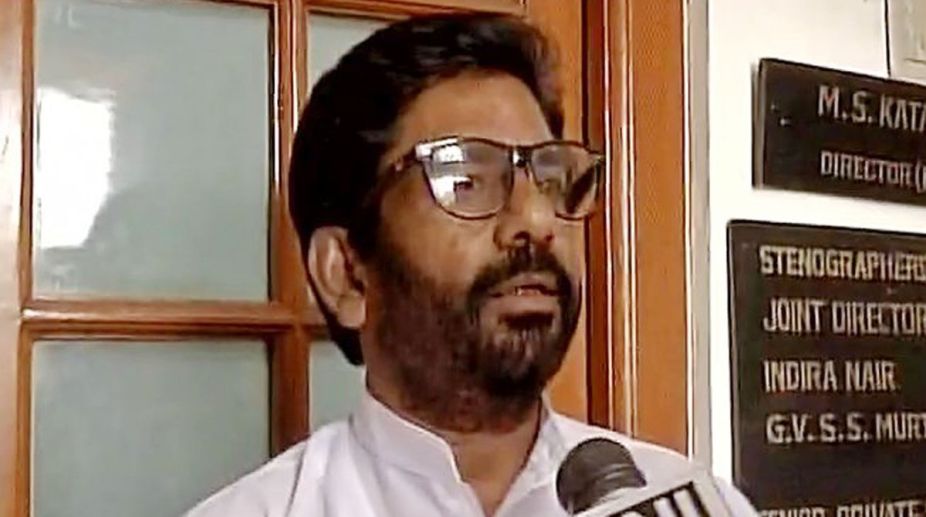
If used in the context of members of Parliament ducking a principled position against the disgusting misbehaviour of one of their clan, that caption could certainly provoke charges of a breach of privilege. That, however, would only add emphasis to the point being made that there is a vast perception gap between the “people”, and those who claim to represent them, when under focus are the standards of behaviour expected of those who wish to be hailed as “lawmakers”. The issue in point being the beating up of an Air-India official by the Shiv Sena member of the Lok Sabha, Ravindra Gaikwad.
The facts of the case are not in dispute, the MP has taken pride in declaring he wielded his slipper 25 times, declaring he was a member of the Shiv Sena, not the BJP, and would tolerate no infringement of his authority.
While it is true that no other MP has condoned his aggression, the fact that their criticism has been muted, merely token, and no formal probe/inquiry has been demanded points to a disturbing trend ~ that in addition to MPs circling the wagons in a bid at self-protection, larger political considerations are also at play. Comparisons are proverbially odious, yet it must be asked if Gaikwad’s action brought Parliament into less disrepute than what was recently done by a member of the Aam Aadmi Party ~ for which a special committee of the Lok Sabha had been constituted.
Why is there no official communication about whether the matter will be examined by the Ethics Committee; the Speaker is reported to have said she had no jurisdiction since the incident did not take place in Parliament’s premises. And when, for once, several domestic airlines joined forces with the “national carrier” in saying the MP would not be accommodated on their flights two ministers of state, for law and civil aviation, questioned the legality of the airlines’ decision. No wonder that Gaikwad, and some associates, have been further emboldened, and have tried to link his violent conduct with the poor quality of service provided to passengers. Could there be anything more shameful?
It must be stressed that the majority of the 790 MPs do not behave as Gaikwad did, yet their reluctance to take him to task lends itself to interpretation that the lal batti culture knows no limits.
In the wake of the action at Delhi airport, newspapers have been listing a series of other instances which suggest that the ‘MP’ suffix  could be expanded to represent a licence to maaro peeto. In the absence of any codification of the privileges legislators enjoy, a lapse that is as old as the Constitution, some consider themselves a class apart. What is increasingly clear is they no longer merit the prefix “honourable”.


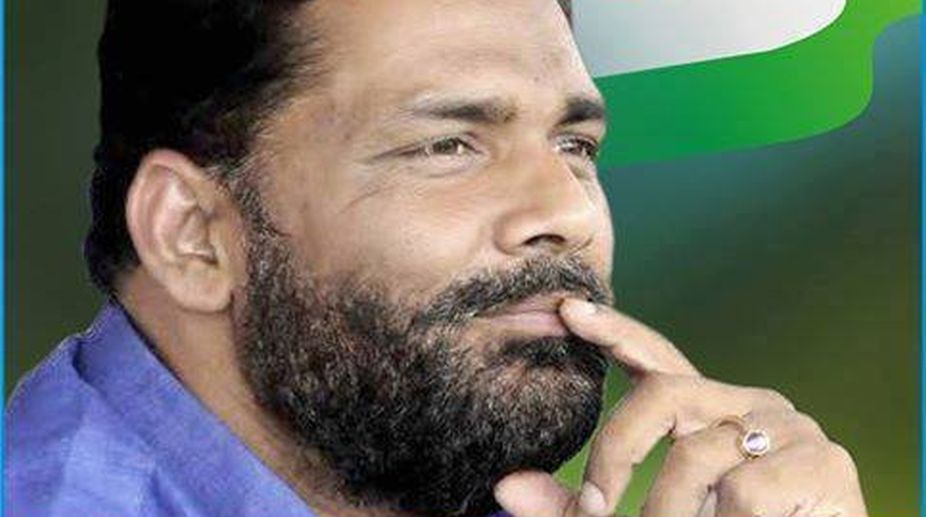
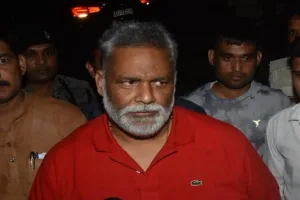
Madepura MP Pappu Yadav arrested

PTI | Patna |

Patna police on Monday arrested Madhepura MP Rajesh Ranjan alias Pappu Yadav in a two-month case of creating law and order problem here.

The MP was arrested from his residence at Mandiri area in Patna after acquiring arrest warrant from the CJM's court, Deputy Superintendent of Police Kailash Prasad said.

The case in which the Janadhikar Party MP was arrested was registered with Gandhi Maidan police station in January this year.

The step against Pappu Yadav apparently triggered by a clash by his party workers with police during the day while they were staging a dharna over various issues including the proposed power hike and paper leak in BSSC examination

Bengal to form Scheduled Caste Advisory Council soon

IANS | Jalpaiguri (West Bengal) |

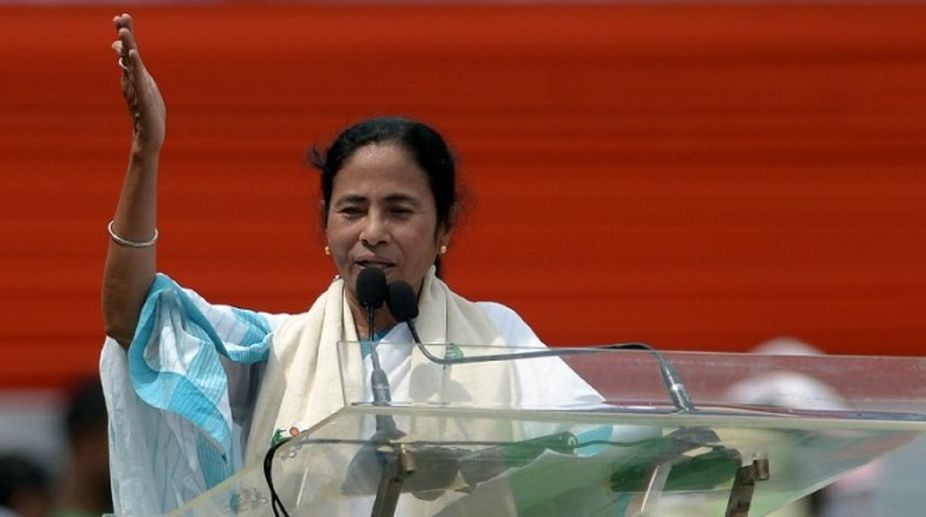
 The West Bengal government will soon set up a Scheduled Caste Advisory Council, Chief Minister Mamata Banerjee announced here on Monday.

Briefing newspersons after a meeting of the Tribal Development Council, Banerjee said the new body would be set up for development of the Scheduled Caste population in the state and function on the lines of the existing tribal advisory council. 

There are 66 assembly seats in Bengal reserved for the Scheduled Caste candidates.

Banerjee said her government would renovate around 1,000 Hindu cremation grounds every year. "In all, we will renovate around 5,000 such cremation grounds," she said, adding the state government has already developed around 2000 Muslim burial grounds.

Banerjee said her government has published books in the Alchiki script used by the Santhal tribe. A 25,000 word dictionary in Alschiki script is also ready.

Congress alleges Rs.20,000-crore scam in ‘Ujala’ bulb scheme

IANS | New Delhi |

Pointing a finger at the ruling NDA government at the Centre, the Congress party on Monday alleged that the process of procurement and distribution of 'Ujala' LED bulbs has given birth to a Rs.20,000-crore scam.

The party charged that the central government was using "dubious and questionable practices" for procurement and distribution of LED bulbs and demanded an independent inquiry by a retired Supreme Court judge.

"Prime Minister Narendra Modi, who claims that his government has distributed more than 21 crore LED bulbs, does not tell people that in the process, the government itself is making a mockery of its much-publicised 'Make in India' drive. 

"Crores of these LED bulbs, LED street lights, pumps and fans are made in China or in Taiwan," said Congress spokesperson Shaktisinh Gohil.

Gohil alleged that there was no transparency in the tendering and procurement of these LED bulbs, street lights, pumps and fans, among others.

"Cost of one such LED street light is about Rs 2,000. If we take into account the irregularities and fraud in the tendering process, this turns out to be a scam of at least Rs 20,000 crore," he said.

"While the Vigilance Commission mandates that such procurement should be publicised for RFQ (request for quotation) on the basis of merit and should be put on a government website, the Energy Efficiency Services Ltd (the procuring agency) puts it on their own private platforms for a short period, thus manipulating the entire process of tendering," said Gohil.

"Although there are four Power Ministry PSUs involved in this entire process, the companies neither manufacture nor procure any part, not even a diode of the LED bulb. Instead, they procure from Chinese and other foreign companies," he added.

The Congress also pointed out that the Vigilance Commission guidelines categorically state that a third party audit has to be done after such procurement.

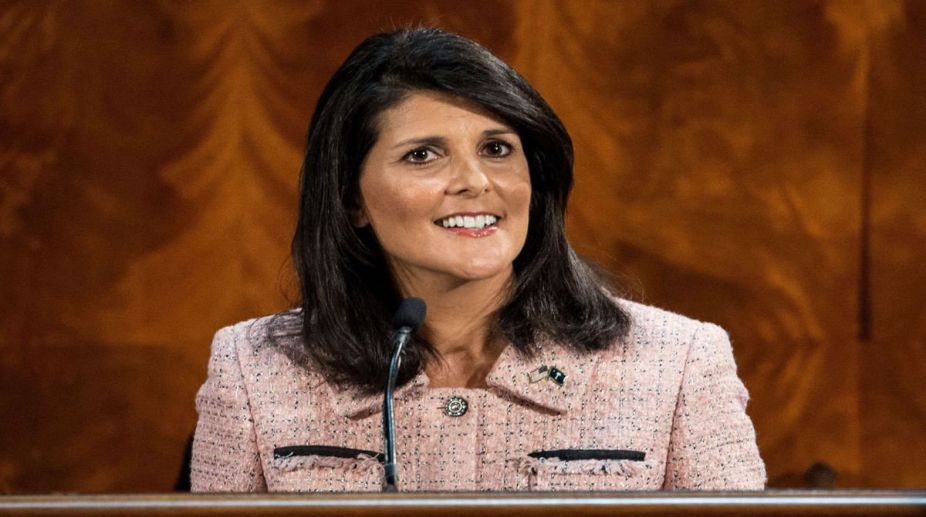
Can’t allow ‘bad actors’ to have nuclear weapons, says Nikki Haley

PTI | United Nations |

American envoy to the UN Nikki Haley on Monday opposed a conference convened by the General Assembly to negotiate a legally-binding instrument to prohibit nuclear weapons, saying "bad actors" cannot be allowed to have the weapons as other nations try to maintain peace and safety.

"We would love to have a ban on nuclear weapons but in this day and time we cannot honestly say that we can protect our people by allowing the bad actors to have them and those of us who are good trying to keep the peace and safety not to have them," Haley told reporters here.

Haley, joined by UK's Ambassador to the UN Matthew Rycroft and her French counterpart Francois Delattre, spoke just before the General Assembly convened its first substantive session to negotiate the legally-binding instrument to ban nuclear weapons, leading towards their total elimination.

She said the assembly "suddenly" wants to have a hearing to ban nuclear weapons and while "as a mother and daughter" she wants a world with no nuclear weapons, one also has to be "realistic".

"Is there anyone who believes that North Korea would agree to a ban on nuclear weapons? So what you would see is that the General Assembly would go through, in good faith, trying to do something but North Korea would be the one cheering and all of us and the people we represent would be the ones at risk," she said.

She said Washington believes in the Nuclear Non-Proliferation Treaty and had reduced its weapons by 85 per cent since the treaty went into place. She added that while the US would want to see a world without nuclear weapons, the time for it is not today and it will defend its citizens as well as its friends and allies.

"One day we will hope we no longer need nuclear weapons.

But today, in this day and time, in the situations that we are in, we unfortunately don't have the ability to do that," she said.

About 40 countries are not participating in the General Assembly session that will run until March 31.

Permanent Representative of Costa Rica to the UN Office in Geneva Elayne Whyte G mez will preside over the conference. It will be taking place in the context of an absence of concrete outcomes from two decades of multilateral nuclear disarmament negotiations within the framework of the United Nations.

The UN said the conference represents the first multilateral negotiations on nuclear disarmament in more than 20 years.

As of 2016, it is estimated that more than 15,000 nuclear warheads remain in global stockpiles. The world body said in a statement that while that represents a considerable reduction from the inventories maintained during the cold war, there has been growing frustration in recent years over the declining pace of reductions, continued reliance on nuclear weapons in security doctrines and continuing programmes to modernise and improve nuclear weapons.

"Supporters of a legally-binding instrument to prohibit nuclear weapons consider that it would be an interim or partial step towards nuclear disarmament because it would not include measures for elimination matters that would be left for future negotiations. Rather, it would be aimed at contributing to the progressive stigmatisation of nuclear weapons," the UN statement said.

Petroleum products will come under GST, says Pradhan

IANS | New Delhi |

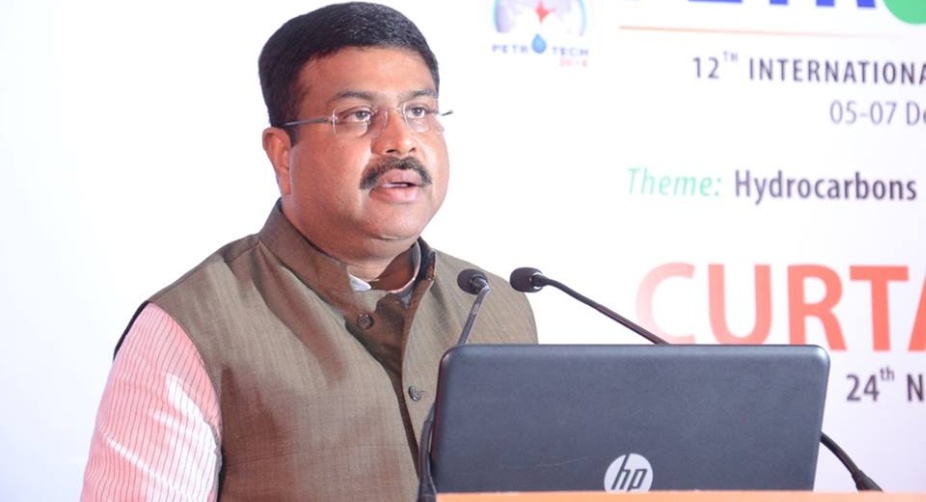
Petroleum Minister Dharmendra Pradhan on Monday pitched for petroleum products to be included in the purview of the Goods and Services Tax as the GST Bills were tabled in Parliament.

"We expect all petroleum products to be part of GST in a few days. We will push for that," Pradhan said at the contract signing ceremony here for winners of the auction of discovered small fields. 

"States have concerns about what will happen to their service tax and VAT. But I believe that GST will be advantageous for states. We are confident that petroleum products will be under the GST regime," he said.

Finance Minister Arun Jaitley had said last week that petroleum products, which will be within the purview of GST, slated to be implemented from July 1, would, however, continue to be taxed as per the current taxation regime until the GST Council agrees on applying GST to these products.

Pradhan also said India will soon launch the second round of auction of discovered oil and gas fields of state-run ONGC and Oil India.

"Discovered Small Fields (DSF) round-II is coming soon," he said.

The government on Monday signed contracts with 22 companies that won 31 contract areas in the recently concluded DSF round I auctions.

"It has been estimated that the indicative gross revenue over economic life would be approximately Rs 46,400 crore of which royalty collection and government's revenue share is expected to be around Rs 5,000 crore and Rs 9,300 crore, respectively," Pradhan said regarding the contracts signed. 

As many as 46 contract areas designated for 67 discovered small fields across nine sedimentary basins were on offer under the DSF Bid Round 2016, bids for which came in from majors like Cairn India and Hindustan Oil Exploration Company, along with from five smaller foreign firms. 

The government had put up for bidding for production under a new revenue sharing model these small fields originally discovered by state-run explorers Oil and Natural Gas Corp. (ONGC) and Oil India. They, however, could not develop these because of their small size. 

The auction was under the new Hydrocarbon Exploration and Licensing Policy (HELP) approved in March last year, which is based on a revenue-sharing model as opposed to cost-and-output-based norms earlier.

China promises $1 mn for Nepal polls during Xi-Prachanda meet

PTI | Beijing |

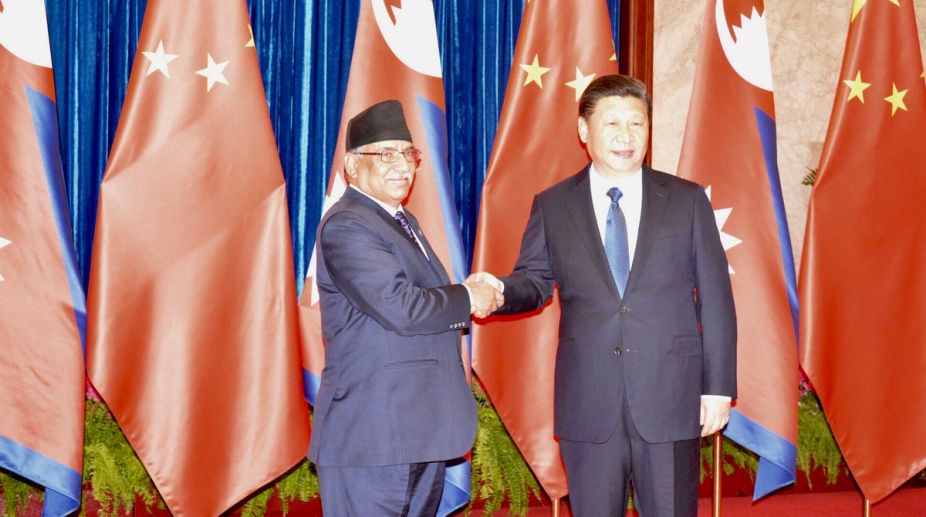
China will provide $1 million to Nepal for the May 14 local elections, President Xi Jinping announced on Monday as he discussed ways to step up ties with Prime Minister Prachanda, who is here on a fence-mending visit.

President Xi committed to provide the 9 million yuan at a meeting with Prachanda, who is visiting China for high-level talks, Nepal's official Rastriya Samachar Samiti reported from Beijing.

During the meeting held at the Great Hall of the People, Prachanda urged Beijing to reopen the Tatopani border point, the only major trade route with China which was closed after the April 2015 earthquake that rattled the Himalayan nation.

Xi assured Prachanda that China was serious about opening the Tatopani and other border points, the report said.

The leaders also discussed the construction of a railway line in Nepal with Chinese investment during the meeting that lasted for 35 minutes.

Xi said friendly ties between China and Nepal were in the fundamental interest of the two countries and the two peoples.

"We've steadily pushed forward connectivity, post-disaster reconstruction as well as advancing infrastructure and people-to-people exchanges. I'm glad to see this progress. We should work together to create new momentum in friendly cooperation," Xi was quoted as saying by China's official CGTN network.

Recalling his meeting with Prachanda in Goa on the sidelines of the BRICS Summit last year, Xi said he was pleased that both the countries had moved forward with plans made there.

The two countries should particularly make the most of the opportunities presented by the infrastructure building under the ambitious Belt and Road (Silk Road) Initiative, Xi said.

Ahead of Prachanda's visit state-run Chinese media had vented its ire against him saying Beijing-Nepal ties have fallen to a "low ebb" with most of the Chinese projects stuck due to his "pro-India" policies.

"For quite some time, Pushpa Kamal Dahal, better known as Prachanda, prime minister of Nepal and chairman of the Communist Party of Nepal (Maoist-Centre), had been friendly towards China," an article in the state-run Global Times had said pointing to his past association with Beijing and his anti-India rhetoric.

"However, since assuming office for the second time as prime minister in August last year he has visited India twice and warmly welcomed Indian President Shri Pranab Mukherjee in Kathmandu last November," it had said.

Prachanda said Nepal has appreciated China's support in reconstruction since the earthquake in 2015, adding that his country will continue to stick to the 'One China' policy on Tibet and Taiwan.

He said Nepal supports the Belt and Road Initiative and will pursue cooperation with China in trade and investment, transportation, tourism and aviation.

Prachanda said his meeting with Xi was fruitful, and added that this kind of high-level discussion has added a new dimension to Nepal-China ties, according to a statement published on the Nepalese premier's website.

He described the meeting as "exciting, open and clear" and said the Chinese president was positive to all the issues discussed by him.

"Apart from the positive response, the Chinese president talked about Nepal's political stability, development, prosperity, infrastructure development, railway and resumption of Tatopani border crossings," Prachanda said after the meeting.

Issues of Nepal-China bilateral relations and other mutual interests figured in the meeting. Xi expressed his happiness over the announcement of date for local election in Nepal and pledged to extend an assistance of RMB 9 million for the same.

The May 14 local elections is being opposed by Madhesis, who say the polls should be conducted only after their demands regarding the re-demarcation of provincial boundaries and other issues are addressed by an amendment to the new Constitution.

Prachanda, who succeeded the pro-China K P Sharma Oli as Nepal's premier, is on a five-day visit to China since March 23. He attended the China-led Boao Forum for Asia.

For China, the fall of the Oli government was a big disappointment and a setback to its planned push into Nepal through Tibet with rail and highway linkages to expand its influence in the landlocked country dependent on India for most of its supplies.

During his visit here in August, Oli had signed a transit treaty with China to reduce dependence on India and sought a rail link through Tibet.

China promises $1 mn for Nepal polls during Xi-Prachanda meet

PTI | Beijing |

China will provide $1 million to Nepal for the May 14 local elections, President Xi Jinping announced on Monday as he discussed ways to step up ties with Prime Minister Prachanda, who is here on a fence-mending visit.

President Xi committed to provide the 9 million yuan at a meeting with Prachanda, who is visiting China for high-level talks, Nepal's official Rastriya Samachar Samiti reported from Beijing.

During the meeting held at the Great Hall of the People, Prachanda urged Beijing to reopen the Tatopani border point, the only major trade route with China which was closed after the April 2015 earthquake that rattled the Himalayan nation.

Xi assured Prachanda that China was serious about opening the Tatopani and other border points, the report said.

The leaders also discussed the construction of a railway line in Nepal with Chinese investment during the meeting that lasted for 35 minutes.

Xi said friendly ties between China and Nepal were in the fundamental interest of the two countries and the two peoples.

"We've steadily pushed forward connectivity, post-disaster reconstruction as well as advancing infrastructure and people-to-people exchanges. I'm glad to see this progress. We should work together to create new momentum in friendly cooperation," Xi was quoted as saying by China's official CGTN network.

Recalling his meeting with Prachanda in Goa on the sidelines of the BRICS Summit last year, Xi said he was pleased that both the countries had moved forward with plans made there.

The two countries should particularly make the most of the opportunities presented by the infrastructure building under the ambitious Belt and Road (Silk Road) Initiative, Xi said.

Ahead of Prachanda's visit state-run Chinese media had vented its ire against him saying Beijing-Nepal ties have fallen to a "low ebb" with most of the Chinese projects stuck due to his "pro-India" policies.

"For quite some time, Pushpa Kamal Dahal, better known as Prachanda, prime minister of Nepal and chairman of the Communist Party of Nepal (Maoist-Centre), had been friendly towards China," an article in the state-run Global Times had said pointing to his past association with Beijing and his anti-India rhetoric.

"However, since assuming office for the second time as prime minister in August last year he has visited India twice and warmly welcomed Indian President Shri Pranab Mukherjee in Kathmandu last November," it had said.

Prachanda said Nepal has appreciated China's support in reconstruction since the earthquake in 2015, adding that his country will continue to stick to the 'One China' policy on Tibet and Taiwan.

He said Nepal supports the Belt and Road Initiative and will pursue cooperation with China in trade and investment, transportation, tourism and aviation.

Prachanda said his meeting with Xi was fruitful, and added that this kind of high-level discussion has added a new dimension to Nepal-China ties, according to a statement published on the Nepalese premier's website.

He described the meeting as "exciting, open and clear" and said the Chinese president was positive to all the issues discussed by him.

"Apart from the positive response, the Chinese president talked about Nepal's political stability, development, prosperity, infrastructure development, railway and resumption of Tatopani border crossings," Prachanda said after the meeting.

Issues of Nepal-China bilateral relations and other mutual interests figured in the meeting. Xi expressed his happiness over the announcement of date for local election in Nepal and pledged to extend an assistance of RMB 9 million for the same.

The May 14 local elections is being opposed by Madhesis, who say the polls should be conducted only after their demands regarding the re-demarcation of provincial boundaries and other issues are addressed by an amendment to the new Constitution.

Prachanda, who succeeded the pro-China K P Sharma Oli as Nepal's premier, is on a five-day visit to China since March 23. He attended the China-led Boao Forum for Asia.

For China, the fall of the Oli government was a big disappointment and a setback to its planned push into Nepal through Tibet with rail and highway linkages to expand its influence in the landlocked country dependent on India for most of its supplies.

During his visit here in August, Oli had signed a transit treaty with China to reduce dependence on India and sought a rail link through Tibet.

Bangladesh army kills 4 militants inside Sylhet building

PTI | Dhaka |

Heavily-armed commandos neutralised all four "well-trained" Islamist militants, including a woman, who were holed up in a building, during four days of siege that saw powerful blasts claimed by the Islamic State that killed six people in Bangladesh's northeastern Sylhet city.

"We've found four bodies inside the building. All are with suicide vests," Brig General Mohammad Fakhrul Ahsan told reporters at a news briefing on the fourth day of the security siege of the five-storey building 'Atia Mahal'.

"Our intelligence earlier suggested four militants, one being a woman, were inside the building…So we assume that no militant was alive anymore," he said.

He, however, said the 'Operation Twilight' has not ended.

Sylhet-based 17 Infantry Division's Major General Anwarul Momen is leading the operation, assisted by police's SWAT and counter-terrorism units.

Of the four militants, two including a woman were killed today, Ahsan said, adding that the bodies of female militant and one man were handed over to police but two others were inside as they were wired or surrounded by explosives.

The army is planning how to recover the bodies, he said.

The slain militants were yet not identified. However, officials had earlier indicated that Jamaat-ul-Mujahideen Bangladesh chief Musa could be inside the building.

The neo-JMB, said to be inclined to the Islamic State, was behind the July 1 terror attack on a Dhaka cafe in which 22 people, including 17 foreigners, were killed.

"The militants we found were well-trained," Ahsan said.

"Our operation will take some more time. We will proceed with instructions from our superiors." 

The building is very risky as a huge cache of explosives including improvised explosive devices have been found scattered inside its premises, he said, adding that "the building will collapse if all these were to explode." 

The development came shortly after Home Minister Asaduzzaman Khan Kamal told reporters in Dhaka that the commandos could wrap up their ongoing assault anytime after neutrilising the militants.

"We expect the operation to end anytime, defeating the militants there," he said, adding that the para-commandos "proceeded slowly to minimise casualties" at the scene.

Earlier, fire broke out at the building occupied by the militants. Large gusts of smoke were seen coming out of the ground floor around 3:40 PM (local time). Fire fighters rushed to the scene and controlled the flames.

Army quickly moved in from the rear preparing for what it seemed like another assault, it said.

Around noon, the army used megaphones to ask the militants, who were holed up in the building, to surrender.

However, there was no response from the other side.

After a relative lull since last night, sporadic gunfire and explosions were heard this morning from the building.

The military operation was launched after a suicide bomber on Friday night blew himself up at the international airport in Dhaka in an attack claimed by the ISIS. It came a week after an identical attack on a RAB camp in Dhaka.

Authorities called out commandos on Saturday morning, two days after a security siege to the building.

On Saturday evening, two powerful bombs ripped through a crowd near the building, killing six people, two being police officers and injuring about 50, including two army officers.

Elite Rapid Action Battalion (RAB) Intelligence Wing chief Lt Col Abul Kalam was seriously wounded in blasts and flown to Dhaka for treatment. He was later flown to Singapore.

The attacks were carried out by the extremists from outside who were mixed up with onlookers, police said.

Hours later the Islamic State claimed responsibility for the attack through its propaganda news agency 'Amaq'.

Home Minister Khan, however, rejected the ISIS claim, saying that there was no presence of any foreign terrorist group in the country.

The encounter continued into Sunday, when army commandos shot dead two militants at the building.

The commandos located the militants wearing suicide vests on the ground floor of the building and shot them dead.

The militants were equipped with small arms, explosives and grenades and laid out booby traps at different corners of the building, slowing down the military operation.

The commandos earlier evacuated 78 ordinary residents including children from the building.

Meanwhile, residents who lived in the building said they were virtually taken hostage by militants who warned them of bombs implanted on their way out. The commandos brought them out from the top of the building making their way there from the rooftop of an adjacent structure.

Bangladesh has been witnessing a spate of attacks on secular activists, foreigners and religious minorities since 2013. The country launched a massive crackdown on militants specially after the Dhaka cafe attack.

BJP trying to destabilise our govt in Delhi, says AAP

PTI | New Delhi |

The Aam Aadmi Party on Monday accused the BJP of destabilising the Arvind Kejriwal government in the city after its MLA Ved Prakash joined the saffron party.

Senior AAP leader Sanjay Singh said the BJP is "rattled" with its "imminent defeat" in the civic body elections– where polling is scheduled for April 23– after Kejriwal's decision to do away with residential house tax.

Talking to reporters outside the CM's residence, Singh alleged the BJP had resorted to horse-trading before the 2015 Assembly polls as well.

The BJP had taken the then AAP MLAs Vinod Kumar Binny, Ashok Chauhan, Rajesh Garg and Maninder Singh Dhir into the party fold.

"The people, however, gave a befitting reply and the AAP won 67 out of 70 seats. The MCD will also see similar results.

"The BJP does not believe in democracy and its action in Arunachal Pradesh and Uttarkhand to destablise the (the Congress) governments is well known. It is now trying to destablise the Arvind Kejriwal government," he said.

AAP's Bawana legislator's decision to quit the party, and the MLA post, came as a surprise to its top brass.

The Party's Delhi unit convenor Dilip Pandey was to address the media on the residential house tax issue, but cancelled it as the top brass gathered for an emergency meeting at Kejriwal's residence.

Earlier, AAP's Rajouri Garden MLA, Jarnail Singh, had rsigned to contest the Punjab Assembly poll. And Ved Parkash' resignation has brought down the AAP's tally to 65 (from 67) in the 70-member Delhi Legislative Assembly.

There are also four rebel MLAs — Devinder Sehrawat, Pankaj Pushkar and former ministers Sandeep Kumar and Asim Ahmed Khan.

Singh also rubbished reports of more AAP MLAs quitting the party.

"We are in touch with all our MLAs and no one is quitting the party," he said.

The party also paraded Madanlal, its MLA from Kasturba Nagar, after buzz that he too was planning to quit it.

Madanlal, who was formerly a parliamentary secretary with the Delhi government, dismissed the claims of his quitting and said he will approach the Press Council of India against those who ran such reports.