Actor-cum-business woman Shilp Shetty, along with her husband, was chosen a brand ambassdor for Yakult Danone India, a joint venture of Yakult Honsha, Japan and Groupe Danone, France in the Capital. The celebrity couple also launched the probiotics drink, and talked about its various health benefits of the drink. Excited about associating with Yakult, Shilpa Shetty remarked, "I was overawed by the scientific revelation about probiotics and intrigued to know that a healthy intestine is the key to good health not only because it is responsible for absorption of nutrients but also for the fact that more than 70 per cent of the immune cells are found there." During the launch the actor informed that she is very careful about her association with brands and, therefore, she visited the Yakult factory first before giving her nod.
New brand ambassador

Shilp Shetty (PHOTO: TWITTER)



Beyond Twilight

Kristen Stewart (PHOTO: FACEBOOK)
When Personal Shopper’s director Olivier Assayas declared his star Kristen Stewart the “best actress of her generation”, you could probably hear the smack from eyebrows rising so high they hit the ceiling. Stewart’s detractors are forceful, they are unforgiving, and they somehow have enough time on their hands to make extensive YouTube compilations on the subject.
Yet, this isn’t 2008 anymore. Her critics may not have moved past Twilight, but Stewart certainly has, quietly been trying to shrug off those parasitic “worst actress” labels that still so obstinately cling to her. Adventureland, Camp X-Ray, Certain Women — it’s all work that speaks for itself far more eloquently than the expectation that an actress will deliver lines about sparkling vampire flesh with absolute sincerity. If only those critics would listen. Star power may have gotten her in the room, but it’s pure talent that has made her the critical and creative obsession she’s increasingly becoming; now the first American actress to win the highly esteemed French César for her work in Assayas’ previous project, Clouds of Sils Maria.
Both her collaborations with Assayas, in fact, have proved perfect showcases for what Stewart has to offer the world; their quiet, unobtrusive reflections — Personal Shopper’s on the ghostly nature of modern communication and Sils Maria’s on the art of acting — allow Stewart to luxuriate in her most essential element: truth.
Critics can poke fun at her lip-biting, her hair-touching, her stuttering; but Stewart is the kind of actress with the centredness not to try and stifle those tics and twitches, understanding that it’s that kind of awkwardness that defines humanity at its most honest. Nothing is suppressed with her, since she makes herself entirely available to the camera. Stewart’s never really declared herself an adherent to any of the established schools of acting (Meisner, Strasberg, Adler), but she’s at least let slip a few revelatory indicators of her approach. She told Elle magazine in 2014, for example, that: “Some people try to do that thing where you craft a character. I cannot be anyone other than who I am. If I can’t empathize with something (my character) does, it’s a problem. And sometimes I’ve had directors be like, It’s not you, Kristen, it’s the character. And I’m like, that’s the laziest thing you can possibly say to me. It is me. It’s definitely me.”
Stewart has a certain affection for the modern obsession with method acting — of actors immersing themselves so fully in the character that they actually ‘become’ the character as opposed to just playing it. For her role in Welcome to the Rileys, Stewart deprived herself of sleep, ate endless amounts of junk food, and chain-smoked for the role of a young stripper who was never taught how to take care of herself.
However, Stewart displays a much stronger sense of self in her work than those who focus on the transformative aspect of their roles. Rather than leaving herself behind, she opens herself up to new conditions and perspectives.
By stressing that she can’t perform if she can’t empathise with the motivations of her character, Stewart seems almost to hint that she readjusts her own personality with each new role — that she remains essentially herself, but changed.
One of the greatest issues with cinematic acting and the star system is that the two almost always bleed into each other, and affect the way we receive and digest film. Physical, technical, and emotional transformations on the actor’s part can certainly help, but there’s still an unwavering part of us that sees Leonardo DiCaprio — not his character Hugh Glass — eating bison liver or sleeping inside a horse.
Conversely, there’s something quite freeing for an audience to see an actor who’s not insistent on going to increasing lengths to “lose” themselves within a part as completely and outrageously as possible, but instead focuses on losing themselves in the truth of the moment and lives the material as authentically and as honestly as possible.
In Personal Shopper, we may just see Stewart as Stewart receiving mysterious texts that may come from her deceased twin but, boy, are we concerned for Stewart’s wellbeing in that moment.
Interestingly, Stewart’s really only done the whole ‘celebrity biopic’ deal once, the most demandingly transformative role out there, since an actor must imitate, at least to a degree, the real life person in the public eye.
Yet, what’s fascinating about Stewart’s take on rocker Joan Jett in 2010’s The Runaways is that it’s a perfect portrait without needing to betray the actress’ core mantra; as if she’s approached the character by finding the kinship between herself and Jett, instead of trying to launch herself into Jett’s mind-set. The result manages to be both quintessentially Jett and quintessentially Stewart, and it somehow works perfectly.
Certainly, Stewart’s flaw is that she won’t ever be a Meryl Streep; there’s no launching her into any role out there and expecting it all to magically fit into place. But it’s her almost stubborn commitment to absolute authenticity that makes her so utterly unique as a talent, and an absolutely mesmerising presence onscreen. There are plenty of other actors to put on the masks. Kristen Stewart lives truth.
The Independent


Beyond Twilight
Kristen Stewart (PHOTO: FACEBOOK)
When Personal Shopper’s director Olivier Assayas declared his star Kristen Stewart the “best actress of her generation”, you could probably hear the smack from eyebrows rising so high they hit the ceiling. Stewart’s detractors are forceful, they are unforgiving, and they somehow have enough time on their hands to make extensive YouTube compilations on the subject.
Yet, this isn’t 2008 anymore. Her critics may not have moved past Twilight, but Stewart certainly has, quietly been trying to shrug off those parasitic “worst actress” labels that still so obstinately cling to her. Adventureland, Camp X-Ray, Certain Women — it’s all work that speaks for itself far more eloquently than the expectation that an actress will deliver lines about sparkling vampire flesh with absolute sincerity. If only those critics would listen. Star power may have gotten her in the room, but it’s pure talent that has made her the critical and creative obsession she’s increasingly becoming; now the first American actress to win the highly esteemed French César for her work in Assayas’ previous project, Clouds of Sils Maria.
Both her collaborations with Assayas, in fact, have proved perfect showcases for what Stewart has to offer the world; their quiet, unobtrusive reflections — Personal Shopper’s on the ghostly nature of modern communication and Sils Maria’s on the art of acting — allow Stewart to luxuriate in her most essential element: truth.
Critics can poke fun at her lip-biting, her hair-touching, her stuttering; but Stewart is the kind of actress with the centredness not to try and stifle those tics and twitches, understanding that it’s that kind of awkwardness that defines humanity at its most honest. Nothing is suppressed with her, since she makes herself entirely available to the camera. Stewart’s never really declared herself an adherent to any of the established schools of acting (Meisner, Strasberg, Adler), but she’s at least let slip a few revelatory indicators of her approach. She told Elle magazine in 2014, for example, that: “Some people try to do that thing where you craft a character. I cannot be anyone other than who I am. If I can’t empathize with something (my character) does, it’s a problem. And sometimes I’ve had directors be like, It’s not you, Kristen, it’s the character. And I’m like, that’s the laziest thing you can possibly say to me. It is me. It’s definitely me.”
Stewart has a certain affection for the modern obsession with method acting — of actors immersing themselves so fully in the character that they actually ‘become’ the character as opposed to just playing it. For her role in Welcome to the Rileys, Stewart deprived herself of sleep, ate endless amounts of junk food, and chain-smoked for the role of a young stripper who was never taught how to take care of herself.
However, Stewart displays a much stronger sense of self in her work than those who focus on the transformative aspect of their roles. Rather than leaving herself behind, she opens herself up to new conditions and perspectives.
By stressing that she can’t perform if she can’t empathise with the motivations of her character, Stewart seems almost to hint that she readjusts her own personality with each new role — that she remains essentially herself, but changed.
One of the greatest issues with cinematic acting and the star system is that the two almost always bleed into each other, and affect the way we receive and digest film. Physical, technical, and emotional transformations on the actor’s part can certainly help, but there’s still an unwavering part of us that sees Leonardo DiCaprio — not his character Hugh Glass — eating bison liver or sleeping inside a horse.
Conversely, there’s something quite freeing for an audience to see an actor who’s not insistent on going to increasing lengths to “lose” themselves within a part as completely and outrageously as possible, but instead focuses on losing themselves in the truth of the moment and lives the material as authentically and as honestly as possible.
In Personal Shopper, we may just see Stewart as Stewart receiving mysterious texts that may come from her deceased twin but, boy, are we concerned for Stewart’s wellbeing in that moment.
Interestingly, Stewart’s really only done the whole ‘celebrity biopic’ deal once, the most demandingly transformative role out there, since an actor must imitate, at least to a degree, the real life person in the public eye.
Yet, what’s fascinating about Stewart’s take on rocker Joan Jett in 2010’s The Runaways is that it’s a perfect portrait without needing to betray the actress’ core mantra; as if she’s approached the character by finding the kinship between herself and Jett, instead of trying to launch herself into Jett’s mind-set. The result manages to be both quintessentially Jett and quintessentially Stewart, and it somehow works perfectly.
Certainly, Stewart’s flaw is that she won’t ever be a Meryl Streep; there’s no launching her into any role out there and expecting it all to magically fit into place. But it’s her almost stubborn commitment to absolute authenticity that makes her so utterly unique as a talent, and an absolutely mesmerising presence onscreen. There are plenty of other actors to put on the masks. Kristen Stewart lives truth.
The Independent
Inimitable charisma
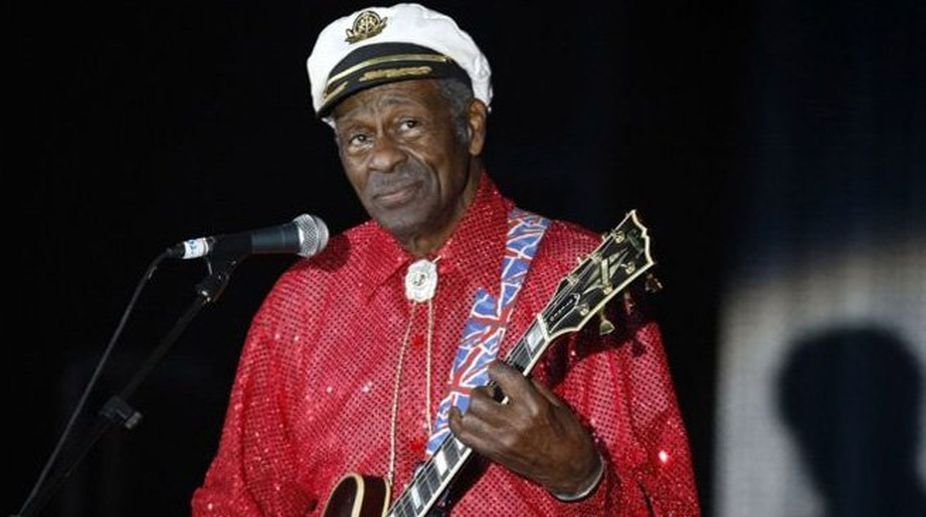
Chuck Berry (PHOTO: TWITTER)
Even if Chuck Berry never sang all of those beautiful words about V8s, jitneys, limousines and Coupe de Villes, it was obvious that he was making a new kind of car music. His songs started like engines. A guitar riff would stutter like a crankshaft, then the beat would kick in, and suddenly everything smelled like motor oil and hormones.
This new vroom-vroom music was dubbed rock ‘n’ roll, and its founding father — who died in Missouri at 90 — made it with an electric guitar, a surplus of charisma and the knowledge that teenage hearts have always pumped desire. And so Berry instantly became one of civilisation’s finest songwriters, offering marvelously detailed accounts of anticipation, possibility and mobility — social, sexual and the like. That meant, lots of odes to fast girls and faster cars, but ultimately Berry was teaching America’s post-war babies how to best live in a democracy. You had choices. Having “no particular place to go” meant you could go anywhere.
Berry was zooming toward reverie most of the time. In 1958, he invites “Carol” to “climb into my machine so we can cruise on out” to a juke joint specialising in a new kind of euphoria. In 1957’s Rock and Roll Music, he takes his flame “across the tracks” to listen to the delirious thump of that still-unshakable backbeat.
Berry was driving the rest of us in the direction of ecstasy, too — often on a smooth ribbon of beautiful blacktop. In the unflinchingly patriotic Back in the U.S.A., his narrator returns from a trip overseas and practically drops to his knees to kiss “the long freeway.”
He occasionally found paradise on foot. Over the jingle-and-bounce of School Days, Berry recounts eagerly bolting out of a classroom and casually strolling onto a dance floor, a sacred place where everyone is “feeling the music from head to toe.” It’s one of his many tutorials on how to let the rhythms of rock ‘n’ roll take full possession of your body. Or maybe he’s just explaining what this music seems to do to our hips against our volition.
Either way, Berry wasn’t singing to his peers — he was just shy of 30 years old when he embarked on his recording career in 1955, but while he considered himself more of a businessman than a medium, neither his age nor his entrepreneurship dimmed the magic of the music he made in the first 10 years of his career. In his durable rock history book, Awopbopaloobop Alopbamboom, Nik Cohn wrote that Berry’s music taps directly into “the Teendream myth that’s right at the heart of all pop.” And we still haven’t outgrown it.
Berry was zooming toward reverie most of the time. In 1958, he invites “Carol” to “climb into my machine so we can cruise on out” to a juke joint specialising in a new kind of euphoria. In 1957’s Rock and Roll Music, he takes his flame “across the tracks” to listen to the delirious thump of that still-unshakable backbeat.
That’s because mobility and desire still occupy such massive swaths of the American psyche, and our pop music proves it. We’ve enjoyed a glorious pile-up of lusty car songs in Berry’s wake — from Prince’s Little Red Corvette, to Bruce Springsteen’s Pink Cadillac, to the traffic jam of luxury cars that populate the great rap songbook.
Even the misadventures aboard Parliament-Funkadelic’s fabled Mothership seem to echo Berry’s visionary machine music. During “You Can’t Catch Me”, Berry imagines evading the police on the New Jersey Turnpike in a “brand new airmobile” that takes flight with the push of a button. “Bye-bye, New Jersey,” he sings. “I’ve become airborne.”
Berry never sounded more sly and imaginative than he did in that aerial moment, but it was Johnny B Goode, his signature slab of selfmythology, that was chosen for the long ride across the final frontier. In 1977, Nasa etched the song onto a golden disc, loaded it onto Voyager 1, and Voyager 2, and sent it off into space. It’s currently headed toward the constellation Camelopardalis on Voyager 1, no particular place to go.
Like the rest of Berry’s music back here on Earth, it can’t stop moving around.
DAWN/ ANN



Inimitable charisma
Chuck Berry (PHOTO: TWITTER)
Even if Chuck Berry never sang all of those beautiful words about V8s, jitneys, limousines and Coupe de Villes, it was obvious that he was making a new kind of car music. His songs started like engines. A guitar riff would stutter like a crankshaft, then the beat would kick in, and suddenly everything smelled like motor oil and hormones.
This new vroom-vroom music was dubbed rock ‘n’ roll, and its founding father — who died in Missouri at 90 — made it with an electric guitar, a surplus of charisma and the knowledge that teenage hearts have always pumped desire. And so Berry instantly became one of civilisation’s finest songwriters, offering marvelously detailed accounts of anticipation, possibility and mobility — social, sexual and the like. That meant, lots of odes to fast girls and faster cars, but ultimately Berry was teaching America’s post-war babies how to best live in a democracy. You had choices. Having “no particular place to go” meant you could go anywhere.
Berry was zooming toward reverie most of the time. In 1958, he invites “Carol” to “climb into my machine so we can cruise on out” to a juke joint specialising in a new kind of euphoria. In 1957’s Rock and Roll Music, he takes his flame “across the tracks” to listen to the delirious thump of that still-unshakable backbeat.
Berry was driving the rest of us in the direction of ecstasy, too — often on a smooth ribbon of beautiful blacktop. In the unflinchingly patriotic Back in the U.S.A., his narrator returns from a trip overseas and practically drops to his knees to kiss “the long freeway.”
He occasionally found paradise on foot. Over the jingle-and-bounce of School Days, Berry recounts eagerly bolting out of a classroom and casually strolling onto a dance floor, a sacred place where everyone is “feeling the music from head to toe.” It’s one of his many tutorials on how to let the rhythms of rock ‘n’ roll take full possession of your body. Or maybe he’s just explaining what this music seems to do to our hips against our volition.
Either way, Berry wasn’t singing to his peers — he was just shy of 30 years old when he embarked on his recording career in 1955, but while he considered himself more of a businessman than a medium, neither his age nor his entrepreneurship dimmed the magic of the music he made in the first 10 years of his career. In his durable rock history book, Awopbopaloobop Alopbamboom, Nik Cohn wrote that Berry’s music taps directly into “the Teendream myth that’s right at the heart of all pop.” And we still haven’t outgrown it.
Berry was zooming toward reverie most of the time. In 1958, he invites “Carol” to “climb into my machine so we can cruise on out” to a juke joint specialising in a new kind of euphoria. In 1957’s Rock and Roll Music, he takes his flame “across the tracks” to listen to the delirious thump of that still-unshakable backbeat.
That’s because mobility and desire still occupy such massive swaths of the American psyche, and our pop music proves it. We’ve enjoyed a glorious pile-up of lusty car songs in Berry’s wake — from Prince’s Little Red Corvette, to Bruce Springsteen’s Pink Cadillac, to the traffic jam of luxury cars that populate the great rap songbook.
Even the misadventures aboard Parliament-Funkadelic’s fabled Mothership seem to echo Berry’s visionary machine music. During “You Can’t Catch Me”, Berry imagines evading the police on the New Jersey Turnpike in a “brand new airmobile” that takes flight with the push of a button. “Bye-bye, New Jersey,” he sings. “I’ve become airborne.”
Berry never sounded more sly and imaginative than he did in that aerial moment, but it was Johnny B Goode, his signature slab of selfmythology, that was chosen for the long ride across the final frontier. In 1977, Nasa etched the song onto a golden disc, loaded it onto Voyager 1, and Voyager 2, and sent it off into space. It’s currently headed toward the constellation Camelopardalis on Voyager 1, no particular place to go.
Like the rest of Berry’s music back here on Earth, it can’t stop moving around.
DAWN/ ANN
Chance for Seoul to review THAAD
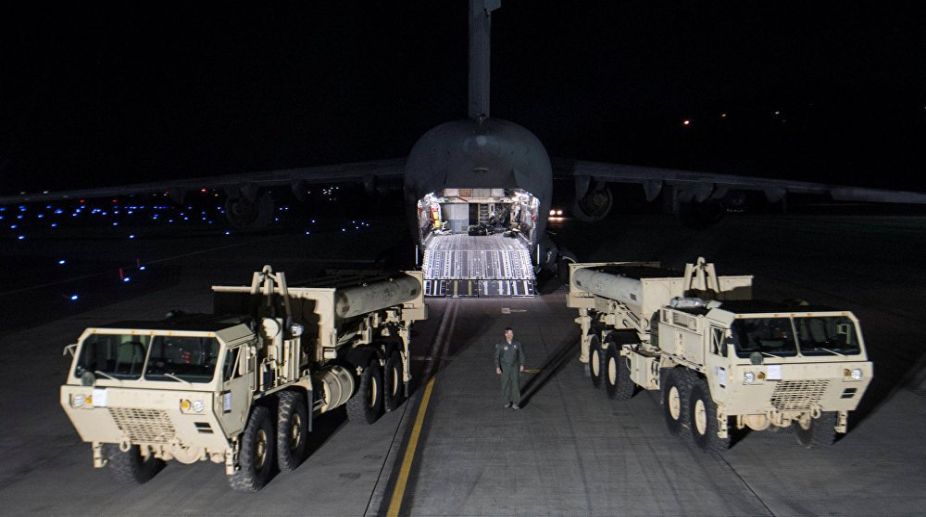
Representational Image (PHOTO: TWITTER)
The unprecedented ruling of the constitutional court of the Republic of Korea (ROK) on March 10 made Park Geun Hye the first president to be removed from office after impeachment.
The ROK has to complete a presidential by-election within 60 days, and the next president faces the formidable task of righting the wrongs of the Park administration.
From a geopolitical perspective, the decision to deploy an advanced US missile defence system tops the series of mistakes committed by Park during her four years in office.
The move caused the relationship between Beijing and Seoul to plummet to its lowest level since the establishment of diplomatic ties in 1992.
On February 28, the ROK’s retail giant Lotte Group agreed to a land swap deal with the government, paving the way for the deployment of the Terminal High Altitude Area Defense (THAAD) anti-missile system in the country.
In fact, a part of the THAAD battery and other related equipment have already reached the country – on March 6, to be precise.
With Seoul expediting the process of deploying the US missile shield under the pretext of guarding against the military threat from the Democratic People’s Republic of Korea (DPRK), its ties with Beijing have soured further.
As China was forced to take necessary counter measures, more and more Chinese consumers have shunned retail stores operated by Lotte on the Chinese mainland as well as the company’s duty-free shops in the ROK.
Chinese have also cancelled tourist trips to the neighbouring country, and Korean celebrities found their concerts and television appearances in China cancelled one after another. However, Chinese officials publicly denied a ban on the entertainers was in place.
The tense atmosphere between the two countries is now being felt even in some remote areas in China, while ROK officials talked about taking countermeasures to China’s countermeasures.
To the Chinese, the antiROK sentiment is justified. Take Lotte’s dilemma in China as an example. By jumping on the government’s bandwagon to help deploy THAAD, Lotte is seen to have crossed the bottom line of business operations and ethics.
It has acquired the hallmark of a company out to harm another country’s security interest. Therefore, it is only natural that its businesses in China have been dealt a heavy blow.
Worse, the severe consequences of THAAD’s deployment go far beyond the economic and trade fields, for it poses a threat to the security of countries in the region, including China.
Some in the ROK deem the introduction of THAAD an internal affair, to which China cannot possibly agree.
One country’s security apparatus should never threaten, let alone sabotage, those of other countries. This is the overriding principle defining international relations. And history warns us that even one misstep in this regard could push friendly countries to the brink of war.
The excuse used by the ROK and the United States to deploy THAAD does not hold water either. Even ROK citizens know the US anti-missile system can only intensify tensions with their neighbour in the north and thus make the country more insecure.
The developments on the Korean Peninsula in recent months show that responding to an arms threat with a counter-threat will not ease the long-standing hostility between the two neighbours. It also generates more reasons for the DPRK to continue its nuclear ambitions and missile program.
Although both Washington and Seoul refuse to concede that the deployment of THAAD poses a severe threat to China’s security interests, there is no denying that it could be used to spy on Chinese territory.
The anti-missile system can detect the launch of missiles as far as 3,000 kilometers away, George Nelson Lewis, a physicist and expert on missile defence at Cornell University in New York, was quoted on March 9 by the London-based Financial Times as saying.
If that were even half true, it would mean a large part of Chinese territory would be under THAAD’s surveillance. No country will tolerate such an act of blatant infringement on its national security.
More seriously, many in China believe the US anti-missile system, as part of the ‘pivot’ to Asia policy implemented by the previous US administration, serves as the US strategic hedging against China.
In response to potential missile threats from the DPRK, Japan has also openly showed its interests in introducing the THAAD system. In recent years, the US has strengthened its military alliances in the Asia Pacific in an apparent move to counter China’s rise. No doubt, its military alliance with the ROK and Japan has assumed a rising importance in implementing its regional strategy. By placing the anti-missile system in China’s neighborhood, Washington can fill the missing link of its global missile defense system and contribute to its strategic maneuvering in the Asia Pacific as well. But its regional allies will have to face the backlash and even take the risks. Seoul's icy-cold relationship with Beijing is a case in point. Thanks to efforts by both neighbours, China has become the ROK’s largest trading partner, the largest destination of its overseas investment and its largest source of overseas students. At the same time, the country is one of China’s most important partners in investment and trade and people-topeople exchanges.
The current difficulty in bilateral ties has been the result of the ROK’s cooperation with the US in deploying the missile defense system on its soil in disregard of China’s rightful concerns and legitimate interests. Beijing has repeatedly demanded Seoul value bilateral ties, take anti-THAAD voices from people on both sides seriously and stop the process of deployment.
The ball is now in the ROK’s court. Given that a political transition could naturally lead to major policy changes, the ouster of Park has created an opportunity to change the THAAD policy. The next ROK president should seize this opportunity so that ties with China can be repaired, because amiable Beijing-Seoul relations will benefit both countries.
A sensible approach for Seoul would be to mitigate the THAAD security threat to China by canceling the wrong decision or at least postponing its deployment permanently.
As China’s Foreign Minister Wang Yi has put it, the stubborn deployment of the THAAD system by the US and the ROK is now the biggest issue affecting Beijing-Seoul ties.
China strongly advised the ROK to halt the deployment and not stray further down the wrong path, otherwise it will only end up hurting itself and others, Wang warned.
The ROK presidential election is due to be held on May 9. Moon Jae-in, the liberal politician tipped to become the next president, is a well-known advocate of a “sunshine policy” of engagement with the DPRK. He has said that if elected, he would review how the government would deploy the US missile defence system and would consult China.
As the presidential election unfolds, the outside world will have a clearer idea about the policy orientation of the ROK’s next leader. For whoever wins the election, how to improve ties with Beijing will be a major challenge ahead.
It is hoped he or she will come up with a solution that could address the concerns of both countries through peaceful negotiations.
After all, the relationship between China and the ROK has bilateral and regional significance because both play an important role in stabilising the situation on the Korean Peninsula as well as in East Asia cooperation and development.
The writer is Senior Editorial Writer, China Daily (Asia), Hong Kong. This is a series of columns on global affairs written by top editors and columnists from members of the Asia News Network and published in newspapers and websites across the region.


Chance for Seoul to review THAAD
Representational Image (PHOTO: TWITTER)
The unprecedented ruling of the constitutional court of the Republic of Korea (ROK) on March 10 made Park Geun Hye the first president to be removed from office after impeachment.
The ROK has to complete a presidential by-election within 60 days, and the next president faces the formidable task of righting the wrongs of the Park administration.
From a geopolitical perspective, the decision to deploy an advanced US missile defence system tops the series of mistakes committed by Park during her four years in office.
The move caused the relationship between Beijing and Seoul to plummet to its lowest level since the establishment of diplomatic ties in 1992.
On February 28, the ROK’s retail giant Lotte Group agreed to a land swap deal with the government, paving the way for the deployment of the Terminal High Altitude Area Defense (THAAD) anti-missile system in the country.
In fact, a part of the THAAD battery and other related equipment have already reached the country – on March 6, to be precise.
With Seoul expediting the process of deploying the US missile shield under the pretext of guarding against the military threat from the Democratic People’s Republic of Korea (DPRK), its ties with Beijing have soured further.
As China was forced to take necessary counter measures, more and more Chinese consumers have shunned retail stores operated by Lotte on the Chinese mainland as well as the company’s duty-free shops in the ROK.
Chinese have also cancelled tourist trips to the neighbouring country, and Korean celebrities found their concerts and television appearances in China cancelled one after another. However, Chinese officials publicly denied a ban on the entertainers was in place.
The tense atmosphere between the two countries is now being felt even in some remote areas in China, while ROK officials talked about taking countermeasures to China’s countermeasures.
To the Chinese, the antiROK sentiment is justified. Take Lotte’s dilemma in China as an example. By jumping on the government’s bandwagon to help deploy THAAD, Lotte is seen to have crossed the bottom line of business operations and ethics.
It has acquired the hallmark of a company out to harm another country’s security interest. Therefore, it is only natural that its businesses in China have been dealt a heavy blow.
Worse, the severe consequences of THAAD’s deployment go far beyond the economic and trade fields, for it poses a threat to the security of countries in the region, including China.
Some in the ROK deem the introduction of THAAD an internal affair, to which China cannot possibly agree.
One country’s security apparatus should never threaten, let alone sabotage, those of other countries. This is the overriding principle defining international relations. And history warns us that even one misstep in this regard could push friendly countries to the brink of war.
The excuse used by the ROK and the United States to deploy THAAD does not hold water either. Even ROK citizens know the US anti-missile system can only intensify tensions with their neighbour in the north and thus make the country more insecure.
The developments on the Korean Peninsula in recent months show that responding to an arms threat with a counter-threat will not ease the long-standing hostility between the two neighbours. It also generates more reasons for the DPRK to continue its nuclear ambitions and missile program.
Although both Washington and Seoul refuse to concede that the deployment of THAAD poses a severe threat to China’s security interests, there is no denying that it could be used to spy on Chinese territory.
The anti-missile system can detect the launch of missiles as far as 3,000 kilometers away, George Nelson Lewis, a physicist and expert on missile defence at Cornell University in New York, was quoted on March 9 by the London-based Financial Times as saying.
If that were even half true, it would mean a large part of Chinese territory would be under THAAD’s surveillance. No country will tolerate such an act of blatant infringement on its national security.
More seriously, many in China believe the US anti-missile system, as part of the ‘pivot’ to Asia policy implemented by the previous US administration, serves as the US strategic hedging against China.
In response to potential missile threats from the DPRK, Japan has also openly showed its interests in introducing the THAAD system. In recent years, the US has strengthened its military alliances in the Asia Pacific in an apparent move to counter China’s rise. No doubt, its military alliance with the ROK and Japan has assumed a rising importance in implementing its regional strategy. By placing the anti-missile system in China’s neighborhood, Washington can fill the missing link of its global missile defense system and contribute to its strategic maneuvering in the Asia Pacific as well. But its regional allies will have to face the backlash and even take the risks. Seoul's icy-cold relationship with Beijing is a case in point. Thanks to efforts by both neighbours, China has become the ROK’s largest trading partner, the largest destination of its overseas investment and its largest source of overseas students. At the same time, the country is one of China’s most important partners in investment and trade and people-topeople exchanges.
The current difficulty in bilateral ties has been the result of the ROK’s cooperation with the US in deploying the missile defense system on its soil in disregard of China’s rightful concerns and legitimate interests. Beijing has repeatedly demanded Seoul value bilateral ties, take anti-THAAD voices from people on both sides seriously and stop the process of deployment.
The ball is now in the ROK’s court. Given that a political transition could naturally lead to major policy changes, the ouster of Park has created an opportunity to change the THAAD policy. The next ROK president should seize this opportunity so that ties with China can be repaired, because amiable Beijing-Seoul relations will benefit both countries.
A sensible approach for Seoul would be to mitigate the THAAD security threat to China by canceling the wrong decision or at least postponing its deployment permanently.
As China’s Foreign Minister Wang Yi has put it, the stubborn deployment of the THAAD system by the US and the ROK is now the biggest issue affecting Beijing-Seoul ties.
China strongly advised the ROK to halt the deployment and not stray further down the wrong path, otherwise it will only end up hurting itself and others, Wang warned.
The ROK presidential election is due to be held on May 9. Moon Jae-in, the liberal politician tipped to become the next president, is a well-known advocate of a “sunshine policy” of engagement with the DPRK. He has said that if elected, he would review how the government would deploy the US missile defence system and would consult China.
As the presidential election unfolds, the outside world will have a clearer idea about the policy orientation of the ROK’s next leader. For whoever wins the election, how to improve ties with Beijing will be a major challenge ahead.
It is hoped he or she will come up with a solution that could address the concerns of both countries through peaceful negotiations.
After all, the relationship between China and the ROK has bilateral and regional significance because both play an important role in stabilising the situation on the Korean Peninsula as well as in East Asia cooperation and development.
The writer is Senior Editorial Writer, China Daily (Asia), Hong Kong. This is a series of columns on global affairs written by top editors and columnists from members of the Asia News Network and published in newspapers and websites across the region.
‘UP result will give investors confidence’

Representational Image (PHOTO: GETTY IMAGES)
Dr Bimal Jalan is a renowned economist who served as Governor of the Reserve Bank of India between 1997 and 2003. He previously held several positions in government, including those of Finance Secretary and Chairman of the Economic Advisory Council to the Prime Minister. Mr Jalan was a nominated Member of Parliament from 2003 to 2009. During his tenure as RBI Governor, he successfully managed the impact of the East Asian crisis and strengthened the country's balance of payments position. Dr Jalan has written several books, including India's Economic Crisis ~ the way ahead, and India Politics ~ A view from the Backbench, among others. He is associated with a number of prestigious institutions like Indian Statistical Institute, Kolkata. He also has a penchant for Indian classical music and loves vocal music in particular. In an interview to Prashant Mukherjee, Dr Jalan shared his insights on the economy and the way ahead. Excerpts:
Q. Is there any change in your viewpoint on demonetisation after the Narendra Modi-led BJP government achieved a landslide victory in the recent elections?
A: When demonetisation was introduced in November last year, it caused significant inconvenience, particularly to sections of the people who did not have credit cards or other means to make monetary transactions. After the initial period of two months, the impact of demonetisation has been much more favourable and the economic situation has become more or less normal. During the initial period of demonetisation, various estimates about GDP growth varied between 1 to 2 per cent of reduction. Now, the projected estimate of GDP is close to 7 per cent, which is consistent with pre-demonetisation estimates. The huge ‘stock’ of black money has been substantially reduced. As far as the ‘flow’ of black money is concerned, at present there are no clear signs that it will effectively become much lower than was the case earlier.
Q. Do you think, once the next quarter numbers come in, the CSO numbers will be changed and the actual impact of demonetisation can be witnessed?
A: Over time, as you know, the CSO estimates change when more data becomes available. At present, it is difficult to say what the actual change in CSO numbers will be, say, after three months.
Q. A lot of criticism has been faced by a reputed institution like the RBI. Its credibility and autonomy were under the scanner. And with the recent development of several banks imposing arbitrary charges on transactions it has been alleged that the RBI is working against the interest of people and has become the mouthpiece of government and banks. Your take?
A: I do not think so. An important point to remember is that all central banks across the globe have to take into account two factors when they make monetary decisions. One is the overall economic situation, and the second important issue is that monetary decisions over time need to be taken in consultation with government which is in charge of fiscal, as well as overall economic policies. As far as charges imposed by banks are concerned, the RBI has already initiated action to ensure that citizens of the country do not face significant inconvenience. Banks are working out a feasible model on the basis of cost of funds and their cash requirement to meet credit demand as well as reduce the size of their NPAs.
Q. How do you see the crisis of huge non-performing assets of banks being tackled? Is the 'bad bank' suggested by the chief economic advisor a solution or does ARC continue to be the preferred route?
A: A host of measures have already been initiated to reduce the size of NPAs. Banks have become more strict in their lending norms. Overall, a positive situation is that inflation at present is low. However, aggregate demand for credit has also been affected because investment has been relatively low, and global conditions are unfavourable. A positive development is the result of the UP elections, which has generated confidence that the present government will be in office for its full term. The investors, as well as banks, can now take a long-term view and hopefully credit growth would pick up with decline in NPAs.
Q. We haven't seen much of a reduction in interest rate by RBI being passed on to existing home loan consumers by banks. How do you view this situation?
A: One has to wait and see. The handling of overall financial system, with stability, is a difficult issue. In the present case, for example, with high NPAs, it has not been feasible to reduce the base rate by banks, but over time this situation should certainly improve.
Q. Only 1.5 lakh jobs have been created in 2016, whereas two crore labour force is added every year. Are we heading towards jobless growth?
A: No, not at all. The government is putting a lot of emphasis on creation of jobs and skill development. It is also trying to provide access to banking and finance through use of technology. Over time, hopefully manufacturing sector growth would also pick up. This will help in creating higher employment.
Q. At a time when the country is not prepared for digital or cashless economy, do you think this concept is feasible?
A: The process of a relatively less cash and higher digital economy will take some time. Over time, it will be of great benefit to the people in general. We can already notice some improvement in the size of the digital economy.
Q: Despite the Supreme Court order, the government has almost made Aadhaar mandatory for every purpose. How do you view this move?
A: The number of Aadhaar cards already covers a vast percentage of our total population. Over time, the expansion of Aadhaar cards is likely to be just as large as the availability of mobile phones all over the country. To increase better access to all public services and programmes, use of Aadhaar cards is likely to become as extensive as is the case with mobile phones today.
Q. What are your projections of growth rate?
A: There is not much doubt that the economy is likely to grow close to 7 per cent or more during the next fiscal. Most of the factors which contribute to growth, including availability of investments and credit, should not be a problem for achieving this rate of growth next year and an even higher rate over time.



‘UP result will give investors confidence’
Representational Image (PHOTO: GETTY IMAGES)
Dr Bimal Jalan is a renowned economist who served as Governor of the Reserve Bank of India between 1997 and 2003. He previously held several positions in government, including those of Finance Secretary and Chairman of the Economic Advisory Council to the Prime Minister. Mr Jalan was a nominated Member of Parliament from 2003 to 2009. During his tenure as RBI Governor, he successfully managed the impact of the East Asian crisis and strengthened the country's balance of payments position. Dr Jalan has written several books, including India's Economic Crisis ~ the way ahead, and India Politics ~ A view from the Backbench, among others. He is associated with a number of prestigious institutions like Indian Statistical Institute, Kolkata. He also has a penchant for Indian classical music and loves vocal music in particular. In an interview to Prashant Mukherjee, Dr Jalan shared his insights on the economy and the way ahead. Excerpts:
Q. Is there any change in your viewpoint on demonetisation after the Narendra Modi-led BJP government achieved a landslide victory in the recent elections?
A: When demonetisation was introduced in November last year, it caused significant inconvenience, particularly to sections of the people who did not have credit cards or other means to make monetary transactions. After the initial period of two months, the impact of demonetisation has been much more favourable and the economic situation has become more or less normal. During the initial period of demonetisation, various estimates about GDP growth varied between 1 to 2 per cent of reduction. Now, the projected estimate of GDP is close to 7 per cent, which is consistent with pre-demonetisation estimates. The huge ‘stock’ of black money has been substantially reduced. As far as the ‘flow’ of black money is concerned, at present there are no clear signs that it will effectively become much lower than was the case earlier.
Q. Do you think, once the next quarter numbers come in, the CSO numbers will be changed and the actual impact of demonetisation can be witnessed?
A: Over time, as you know, the CSO estimates change when more data becomes available. At present, it is difficult to say what the actual change in CSO numbers will be, say, after three months.
Q. A lot of criticism has been faced by a reputed institution like the RBI. Its credibility and autonomy were under the scanner. And with the recent development of several banks imposing arbitrary charges on transactions it has been alleged that the RBI is working against the interest of people and has become the mouthpiece of government and banks. Your take?
A: I do not think so. An important point to remember is that all central banks across the globe have to take into account two factors when they make monetary decisions. One is the overall economic situation, and the second important issue is that monetary decisions over time need to be taken in consultation with government which is in charge of fiscal, as well as overall economic policies. As far as charges imposed by banks are concerned, the RBI has already initiated action to ensure that citizens of the country do not face significant inconvenience. Banks are working out a feasible model on the basis of cost of funds and their cash requirement to meet credit demand as well as reduce the size of their NPAs.
Q. How do you see the crisis of huge non-performing assets of banks being tackled? Is the 'bad bank' suggested by the chief economic advisor a solution or does ARC continue to be the preferred route?
A: A host of measures have already been initiated to reduce the size of NPAs. Banks have become more strict in their lending norms. Overall, a positive situation is that inflation at present is low. However, aggregate demand for credit has also been affected because investment has been relatively low, and global conditions are unfavourable. A positive development is the result of the UP elections, which has generated confidence that the present government will be in office for its full term. The investors, as well as banks, can now take a long-term view and hopefully credit growth would pick up with decline in NPAs.
Q. We haven't seen much of a reduction in interest rate by RBI being passed on to existing home loan consumers by banks. How do you view this situation?
A: One has to wait and see. The handling of overall financial system, with stability, is a difficult issue. In the present case, for example, with high NPAs, it has not been feasible to reduce the base rate by banks, but over time this situation should certainly improve.
Q. Only 1.5 lakh jobs have been created in 2016, whereas two crore labour force is added every year. Are we heading towards jobless growth?
A: No, not at all. The government is putting a lot of emphasis on creation of jobs and skill development. It is also trying to provide access to banking and finance through use of technology. Over time, hopefully manufacturing sector growth would also pick up. This will help in creating higher employment.
Q. At a time when the country is not prepared for digital or cashless economy, do you think this concept is feasible?
A: The process of a relatively less cash and higher digital economy will take some time. Over time, it will be of great benefit to the people in general. We can already notice some improvement in the size of the digital economy.
Q: Despite the Supreme Court order, the government has almost made Aadhaar mandatory for every purpose. How do you view this move?
A: The number of Aadhaar cards already covers a vast percentage of our total population. Over time, the expansion of Aadhaar cards is likely to be just as large as the availability of mobile phones all over the country. To increase better access to all public services and programmes, use of Aadhaar cards is likely to become as extensive as is the case with mobile phones today.
Q. What are your projections of growth rate?
A: There is not much doubt that the economy is likely to grow close to 7 per cent or more during the next fiscal. Most of the factors which contribute to growth, including availability of investments and credit, should not be a problem for achieving this rate of growth next year and an even higher rate over time.
Assault on Africans
Representational Image (PHOTO: TWITTER)
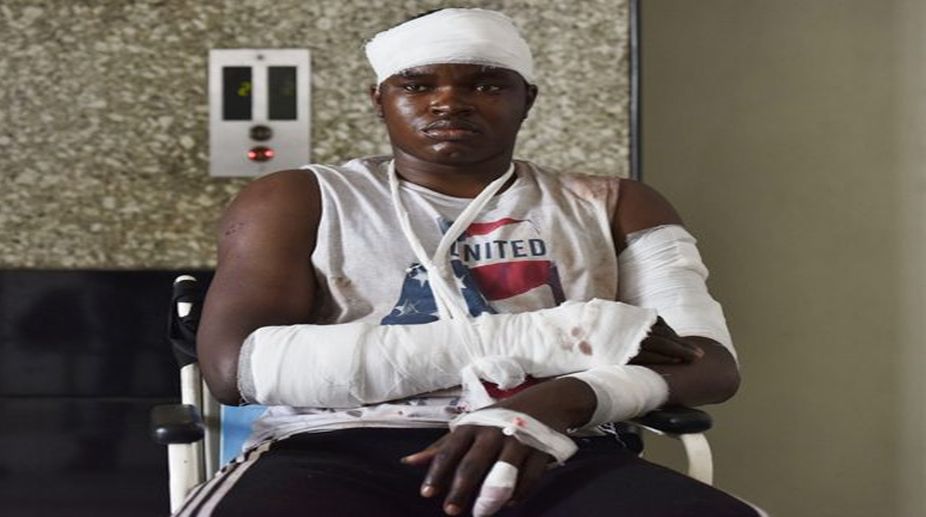
The incident of 28 March of attacks on students of African origin at a shopping mall in Greater NOIDA has shocked everybody in India and has created a serious image problem for the country, especially in Africa. Clearly a manifestation of racial prejudice, it is also of a piece with deepening prejudices in India, be they linguistic, communal, casteist, regional or in any other form. Looking at it another way, it is also a manifestation of a vast underbelly of lawlessness and crime which has developed in our large, not easily governable urban conurbations. The city authorities and the grassroots’ level police or the magistracy are overworked, under-resourced and are in a constant firefighting mode. This abhorrent incident fits into that larger picture.
The incident took place against a background of simmering tension between the local residents and the African students. The relationship has been fraught for some time and the unfounded accusations of complicity of Nigerian nationals in the death of a local teenager became a flashpoint leading to a candlelight march by the agitated residents, on 27 March. It was accompanied by stray incidents of attacks and followed the next day by a violent attack on some Nigerian students who were out shopping. The police and the district magistrate brought the situation under control and followed it up with meetings with the Nigerian Students Association, the Nigerian High Commission and others, including the universities concerned as well as RWAs, to prevent future flare-ups. The African Students Association has threatened to write to all African Heads of State about “barbaric racism” practised in India and that they should all, collectively, downgrade relations with India. The External Affairs Minister spoke to the UP Chief Minister to bring the situation under control and to punish the guilty expeditiously. At a subsequent meeting with the District Magistrate, RWA representatives have reiterated their accusation against the afore-mentioned Nigerian students and have alleged that the police is being unfair to them. The situation has become further aggravated following the registration of an FIR by a Kenyan woman on 29 March, about being beaten by some unknown assailants in the township; the Association of African Students in India has cautioned African nationals in Greater NOIDA to stay indoors until the situation calms down.
Violent incidents of any kind, in the final analysis, boil down to issues of maintenance of law and order and the management of the passions of the parties involved. They also put the spotlight on the functioning of the systems in place and their ability to prevent violence from breaking out. In the Greater NOIDA incidents, the spotlight has been more on the police, the magistracy, the RWAs and the African students and their associations. However, the formal arrangements concerning the stay and the welfare of foreign students are much more extensive as they involve different units of the Ministry of External Affairs, The Indian Council for Cultural Relations (ICCR), the various university authorities as well as the concerned diplomatic representations in India; all of these agencies remain in touch with the students as well as the local authorities to coordinate their welfare.
As evident in the media reports, the action to bring the situation under control appears to be confined to the law and order machinery, the RWAs and the students. There is no media report about the role and the arrangements put in place by the concerned universities where the African students are studying. The deans of the universities, dealing with foreign students, need to be especially proactive in ensuring that their foreign students are staying in safe residential areas if they cannot be accommodated on the university campus itself. If the students are staying outside the campus, the deans ~ as well as student representatives of the universities at responsible levels ~ need to maintain close and continuous contact with the RWA concerned so that the perception issues on both sides can be properly addressed. Suitable advisories about lifestyle adjustments on the part of the foreign students go a long way in ensuring that there are better relations and easier communications between them and the larger host communities. The deans need to be proactive in ensuring that, when a situation is boiling over as in this particular incident, proper advisories are issued and acted upon so that foreign students are particularly careful in their movements outside the campus for their various requirements.
They are also the nodal points for the diplomatic missions, the foreign office officials as well as the higher and grassroots’ authorities to sort out any adjustment issues for young foreigners coming to live in India. They alert the local authorities about any possible signs of danger. They also ensure that the students do not indulge in any illegal and unbecoming activity and that they have a continuing legal residential status. It is a universal practice for ambassadors to call on high dignitaries in the state where the students from their countries are studying. The government as well as foreign missions, in coordination with their home governments, need to ensure that no educational institution accepts foreign students if it does not have suitable arrangements to ensure their welfare.
There is no doubt that such recurring incidents will negatively impact on India-Africa relations and, possibly, the interest of the vast Indian diaspora in that continent. Diplomats and other expatriates from India, who have lived in various African countries, find their experience as pleasant, as India is held in very high esteem both in the larger communities as well as at higher levels of government. In the interest of keeping IndiaAfrica relations in good repair, it is necessary that there is a concerted effort involving the government, the various educational institutions, the ICCR, business chambers and others to expose the wider Indian community to the ‘rainbow’ culture that Africa represents. This can be in the form of music festivals, various academic seminars involving scholars from Africa as well as promoting tele-serials from Africa on our TV channels as they do in respect of other foreign countries. One cannot close without recalling the haunting comment made by one African student ~ “In India, guests are considered gods, all we want is to be treated as humans!” Emblematic of the larger problem of urban governance, it is critical that this problem be addressed both at the local management level as well as the perception level.
The writer is former High Commissioner to Namibia.


Assault on Africans
Representational Image (PHOTO: TWITTER)
The incident of 28 March of attacks on students of African origin at a shopping mall in Greater NOIDA has shocked everybody in India and has created a serious image problem for the country, especially in Africa. Clearly a manifestation of racial prejudice, it is also of a piece with deepening prejudices in India, be they linguistic, communal, casteist, regional or in any other form. Looking at it another way, it is also a manifestation of a vast underbelly of lawlessness and crime which has developed in our large, not easily governable urban conurbations. The city authorities and the grassroots’ level police or the magistracy are overworked, under-resourced and are in a constant firefighting mode. This abhorrent incident fits into that larger picture.
The incident took place against a background of simmering tension between the local residents and the African students. The relationship has been fraught for some time and the unfounded accusations of complicity of Nigerian nationals in the death of a local teenager became a flashpoint leading to a candlelight march by the agitated residents, on 27 March. It was accompanied by stray incidents of attacks and followed the next day by a violent attack on some Nigerian students who were out shopping. The police and the district magistrate brought the situation under control and followed it up with meetings with the Nigerian Students Association, the Nigerian High Commission and others, including the universities concerned as well as RWAs, to prevent future flare-ups. The African Students Association has threatened to write to all African Heads of State about “barbaric racism” practised in India and that they should all, collectively, downgrade relations with India. The External Affairs Minister spoke to the UP Chief Minister to bring the situation under control and to punish the guilty expeditiously. At a subsequent meeting with the District Magistrate, RWA representatives have reiterated their accusation against the afore-mentioned Nigerian students and have alleged that the police is being unfair to them. The situation has become further aggravated following the registration of an FIR by a Kenyan woman on 29 March, about being beaten by some unknown assailants in the township; the Association of African Students in India has cautioned African nationals in Greater NOIDA to stay indoors until the situation calms down.
Violent incidents of any kind, in the final analysis, boil down to issues of maintenance of law and order and the management of the passions of the parties involved. They also put the spotlight on the functioning of the systems in place and their ability to prevent violence from breaking out. In the Greater NOIDA incidents, the spotlight has been more on the police, the magistracy, the RWAs and the African students and their associations. However, the formal arrangements concerning the stay and the welfare of foreign students are much more extensive as they involve different units of the Ministry of External Affairs, The Indian Council for Cultural Relations (ICCR), the various university authorities as well as the concerned diplomatic representations in India; all of these agencies remain in touch with the students as well as the local authorities to coordinate their welfare.
As evident in the media reports, the action to bring the situation under control appears to be confined to the law and order machinery, the RWAs and the students. There is no media report about the role and the arrangements put in place by the concerned universities where the African students are studying. The deans of the universities, dealing with foreign students, need to be especially proactive in ensuring that their foreign students are staying in safe residential areas if they cannot be accommodated on the university campus itself. If the students are staying outside the campus, the deans ~ as well as student representatives of the universities at responsible levels ~ need to maintain close and continuous contact with the RWA concerned so that the perception issues on both sides can be properly addressed. Suitable advisories about lifestyle adjustments on the part of the foreign students go a long way in ensuring that there are better relations and easier communications between them and the larger host communities. The deans need to be proactive in ensuring that, when a situation is boiling over as in this particular incident, proper advisories are issued and acted upon so that foreign students are particularly careful in their movements outside the campus for their various requirements.
They are also the nodal points for the diplomatic missions, the foreign office officials as well as the higher and grassroots’ authorities to sort out any adjustment issues for young foreigners coming to live in India. They alert the local authorities about any possible signs of danger. They also ensure that the students do not indulge in any illegal and unbecoming activity and that they have a continuing legal residential status. It is a universal practice for ambassadors to call on high dignitaries in the state where the students from their countries are studying. The government as well as foreign missions, in coordination with their home governments, need to ensure that no educational institution accepts foreign students if it does not have suitable arrangements to ensure their welfare.
There is no doubt that such recurring incidents will negatively impact on India-Africa relations and, possibly, the interest of the vast Indian diaspora in that continent. Diplomats and other expatriates from India, who have lived in various African countries, find their experience as pleasant, as India is held in very high esteem both in the larger communities as well as at higher levels of government. In the interest of keeping IndiaAfrica relations in good repair, it is necessary that there is a concerted effort involving the government, the various educational institutions, the ICCR, business chambers and others to expose the wider Indian community to the ‘rainbow’ culture that Africa represents. This can be in the form of music festivals, various academic seminars involving scholars from Africa as well as promoting tele-serials from Africa on our TV channels as they do in respect of other foreign countries. One cannot close without recalling the haunting comment made by one African student ~ “In India, guests are considered gods, all we want is to be treated as humans!” Emblematic of the larger problem of urban governance, it is critical that this problem be addressed both at the local management level as well as the perception level.
The writer is former High Commissioner to Namibia.
Voice of Beijing
Representational Image (PHOTO: GETTY IMAGES)
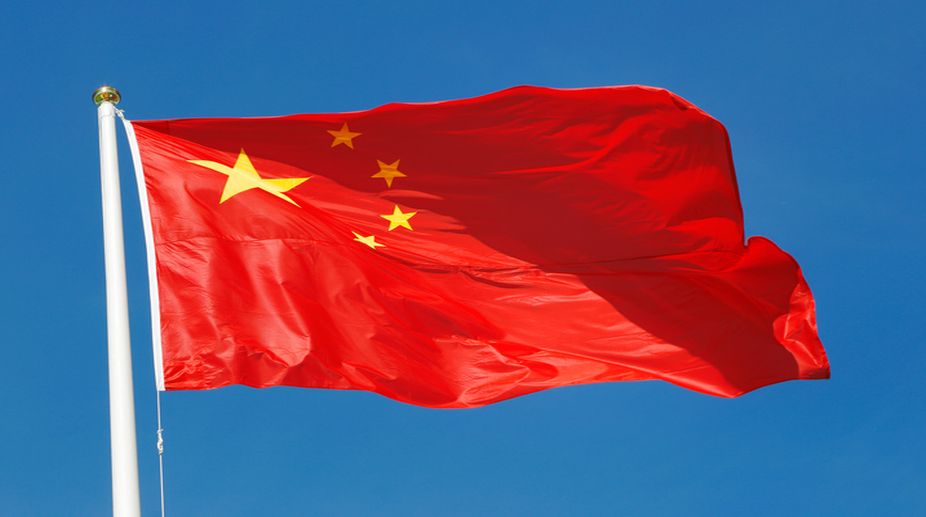
China has reinforced its authority over Hong Kong with the choice of Beijing-backed civil servant Carrie Lam as the new Chief Executive who plays a pivotal role in the affairs of the protectorate. The Umbrella Movement of 2014, the spirited people’s upheaval for independence from China’s overbearing tutelage, has been reduced to irrelevance. It is Hong Kong’s misfortune that exactly 20 years after Britain gave up its control, it is still floundering in its quest for freedom in terms of governance. The new leader lacks the support of the people. Small wonder that Ms Lam’s appointment has been greeted with charges of China’s interference and not least in the region’s financial hub. The 1200-member “election committee” is stacked with Beijing loyalists and is, therefore, anything but an independent entity. The choice of a loyalist Chief Executive reaffirms the deference to the Beijing establishment. True independence still eludes Hong Kong; its population of 7.3 million does not have a say in deciding their leader. This is the quirk of geopolitics that has for the past two decades been manifest to suit the strategy of the mainland’s inherently expansionist design. The formula of “one country, two systems” remains a signal of intent that was emitted by China in 1997 as does the promise of universal suffrage. In the event, Hong Kong boasts neither which is perhaps the worst of both worlds. And judging by ground realities, it is doubtful if the new Chief Executive will have a free hand to execute her agenda ~ “Hong Kong, our home, is suffering from quite a serious divisiveness. My priority will be to heal the divide and to ease the frustration. Hong Kong needs new thinking.” On the surface, her victory speech has not played to the Beijing gallery. In terms of diagnosis, she has hit the bull’s eye; but as she sets about to implement her plan of action, it is open to question whether she will be able to fulfill the promise to “defend the rule of law and freedom of expression”. Ms Lam will, above all, have to countenance the prodemocracy activists who have ratcheted up the pressure since last Sunday, when the result of the election was announced.
Indeed, the scale of Ms Lam’s victory beggars belief ~ she has won 777 votes, against 365 scored by her closest rival, John Tsang. The activists have denounced what they call Beijing’s “interference” amidst reports of lobbying of voters to back Ms Lam, instead of Mr Tsang. In a word, Hong Kong’s dilemma persists ~ to balance the agenda of China’s Communist Party leaders with the wishes of the people, indeed to preserve the global financial hub’s liberal values and the rule of law.


Victory of underdog

Photo: Twitter
With the recent announcement of Odisha’s Industry Minister Devi Prasad Mishra that South Korea’s POSCO had confirmed its withdrawal from the steel project near Paradip, forest dwellers, fisherfolk and peasants in the area engaged in a long struggle to protect their land, livelihood and environment can breathe a sigh of relief. The Rs 52,000-crore project, considered the largest investment by any multinational in the country, violated the Forest Rights Act, 2006, as no forest land can be allotted to anyone until all the rights of the people are protected and their consent obtained. The environment clearance given by the Ministry of Environment and Forest on 31 January 2011 was suspended by the National Green Tribunal on 30 March 2012. The project would not have brought much benefit to the local people or to the country.
On the contrary, it was a plunder of the country’s natural resources and deprivation of the people’s livelihood. The government was committed to hand over to POSCO 4,000 acres of land for the steel plant, 2,000 acres for a township near the plant and 25 acres in Bhubaneswar for its offices. The plant would have drawn 12,000 crore litres of water a day from the Mahanadi, posing a threat to drinking water supply to Bhubaneswar and Cuttack. The government was to allocate captive mines to exploit 600 million tonnes of iron ore on a pittance as royalty which alone would have given POSCO an estimated net profit of Rs 96,000 crore. According to POSCO, the company would have provided 13,000 jobs while land acquisition would have displaced 40,000 people and 20,000 of them would have lost their employment. This was considered ‘development’ by the UPA government at the Centre and the state government in Odisha.
While pulling out of the project by POSCO is to be welcomed, the Odisha government’s decision to fence the land transferred to POSCO and keep it in its Land Bank is to be condemned. The land acquired by coercion or intimidation should be returned gracefully to owners so that they can resume cultivation and reconstruct their demolished homes. The Supreme Court of India has set a healthy precedent by ordering the West Bengal government to return the land acquired from farmers for Tata’s Nano plant to their original owners. In Odisha, forest dwellers and betel farmers whose lands were illegally acquired for POSCO have been agitating peacefully for the last 12 years to protect their habitats for future generations. The Jagatsinghpur district administration and the Industrial Development Corporation of Odisha had let loose a reign of terror to force people to part with their lands. Four people were killed and scores injured in the violence unleashed by the authorities. About 2,000 warrants were issued and 400 false cases registered. More than 800,000 trees were cut down to clear the land for the POSCO plant, rendering the people vulnerable to cyclones. The government should compensate families of those killed in the agitation and withdraw all false cases registered against protesters. Also the people whose betel vines were destroyed should be paid adequate compensation.
India believes in globalisation not protectionism: NITI Aayog
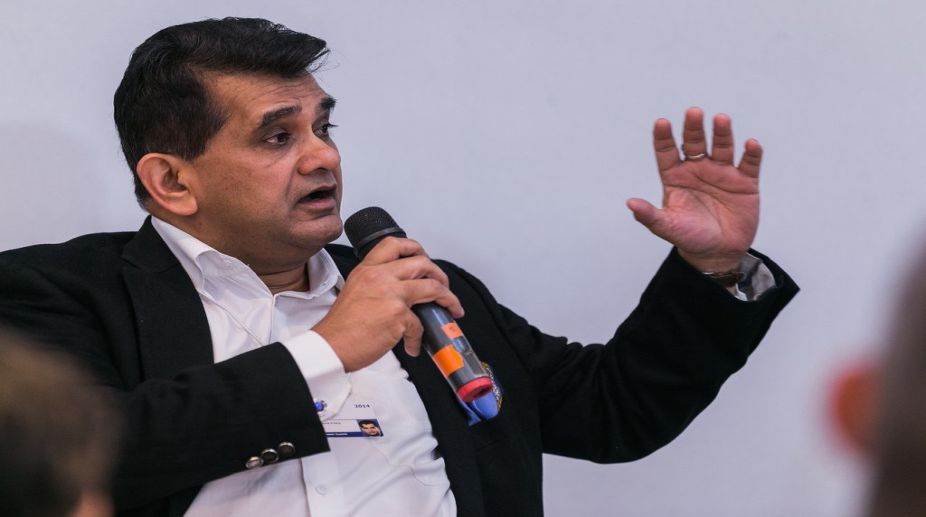
Amitabh Kant (PHOTO: Twitter)
India believes in globalisation and foreign direct investment in the country will grow "unabated" despite talks on "protectionist" policies in the West, NITI Aayog CEO Amitabh Kant said.
Addressing a gathering of senior diplomats from various countries and business leaders at the annual Ambassador's Meet here, he also asserted India is young and ambitious and it wants to keep the growth rate target of 9 per cent.
"We have seen Brexit, and (US President Donald) Trump talking of protectionism. But, we believe in globalisation and we have opened up India's economy.
"Our FDI growth has gone up by 60 per cent while the world FDI has fallen by 16 per cent. So, our FDI regime will grow unabated despite trends to do the reverse being seen globally, at places elsewhere," Kant said.
The NITI Aayog CEO also said India has become a centre of "frugal engineering" and technology will help it "leapfrogg" in multiple sectors, including health and innovation and make the country more prosperous.
Kant also emphasised on the economic roadmap of India, saying, "mobile telephony and biometric-driven services" would be the future.
A Trade and Investment Facilitation Service (TIFS), a one-stop-shop portal set up by the PHD Chamber of Commerce, was also launched on the occasion.
High Commissioner of Canada to India Nadir Patel said Indo-Canadian ties were "booming, thriving and getting stronger".
"All metrics are going in the right direction but Canada and India can do more together. And also collectively with multilateral cooperation. I also hope business chambers in both countries would work closely together," he said.
Acting Deputy Chief of Mission, US Embassy, George N Sibley, said, America wants to be "player and not a spectator" in helping India on its growth story.
"Prosperity of India is in our national security interest. And, growing ties in trade and other areas is in our interest.
Amar Sinha, Secretary, Economic Relations, MEA, said, "Energy security, food security, and defence production were three main sectors in which India seeks cooperation with other counties."
The meeting hosted by PHD Chamber was attended among others by about 5-10 Ambassadors and nearly 50 other senior diplomats from the European Union and African countries, a senior official if the chamber said.
At Iraq camp, UN chief urges more aid for people of Mosul
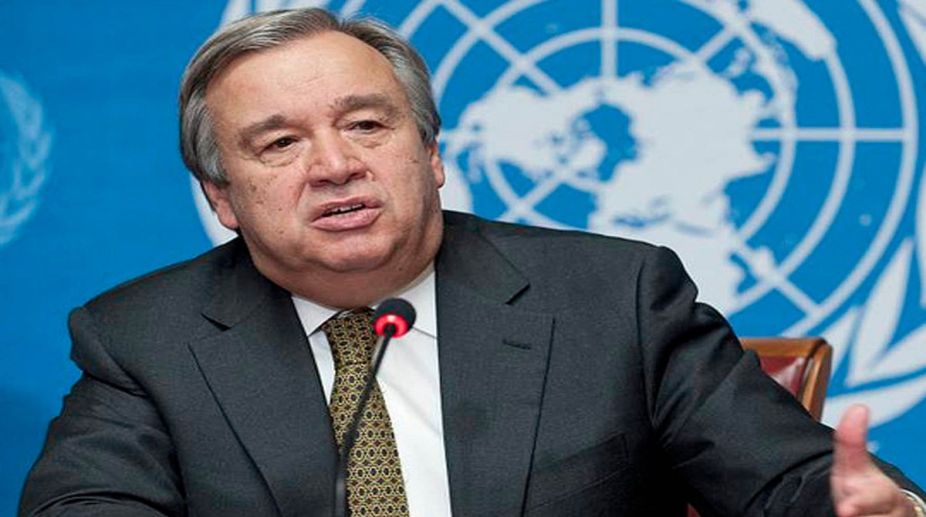
UN chief Antonio Guterres (PHOTO: TWITTER)
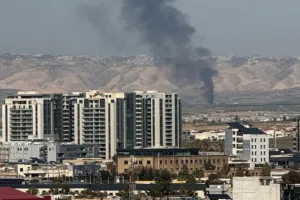
UN chief Antonio Guterres appealed today for more aid for the people of Mosul, as he visited a camp for Iraqis displaced by the battle to retake the second city from jihadists.
Iraq is nearly six months into the operation to oust the Islamic State group from its most populous bastion — a battle that has sparked major humanitarian concerns.
More than 200,000 civilians have fled IS-held west Mosul since last month, while the fighting has taken a devastating toll among the hundreds of thousands more still trapped in the battleground.
"We don't have the resources that are necessary to support these people and we don't have the international solidarity that is needed," Guterres told journalists during a visit to the Hasan Sham Camp.
"Unfortunately, our programme here is only funded at eight percent. That shows how limited our resources are," he said.
"These people have suffered enormously, and they go on suffering. We need more solidarity from the international community."
Guterres said there were not enough resources available to provide acceptable living conditions for the people of Mosul or for the reconciliation efforts that will need to follow when the city has been fully recaptured.
Whether or not real reconciliation occurs in Mosul and elsewhere will play a major role in determining whether Iraq moves towards stability or further violence.
Guterres is on the second day of a visit to Iraq, after meeting top officials, including Prime Minister Haider al-Abadi, on Thursday.
As he began his visit in Baghdad, Guterres called for the protection of civilians to be the "absolute priority," after the battle for Mosul resulted in numerous civilian deaths and widespread privation.
The UN said earlier this month that around 600,000 civilians were still in west Mosul, 400,000 of them trapped in siege-like conditions in the Old City.
Remaining in the city has posed deadly danger to residents, with the UN human rights office saying more than 300 civilians were killed in west Mosul in little over a month.
Gunfire, shelling, bombs and air strikes have all taken their toll.
The Iraqi government has sought to blame the jihadists for the deaths.
Colonel Joe Scrocca, a spokesman for the US-led coalition against IS, has also accused the jihadists of trying to provoke strikes that would kill civilians in order "to take advantage of the public outcry and the terror.


At Iraq camp, UN chief urges more aid for people of Mosul
UN chief Antonio Guterres (PHOTO: TWITTER)
UN chief Antonio Guterres appealed today for more aid for the people of Mosul, as he visited a camp for Iraqis displaced by the battle to retake the second city from jihadists.
Iraq is nearly six months into the operation to oust the Islamic State group from its most populous bastion — a battle that has sparked major humanitarian concerns.
More than 200,000 civilians have fled IS-held west Mosul since last month, while the fighting has taken a devastating toll among the hundreds of thousands more still trapped in the battleground.
"We don't have the resources that are necessary to support these people and we don't have the international solidarity that is needed," Guterres told journalists during a visit to the Hasan Sham Camp.
"Unfortunately, our programme here is only funded at eight percent. That shows how limited our resources are," he said.
"These people have suffered enormously, and they go on suffering. We need more solidarity from the international community."
Guterres said there were not enough resources available to provide acceptable living conditions for the people of Mosul or for the reconciliation efforts that will need to follow when the city has been fully recaptured.
Whether or not real reconciliation occurs in Mosul and elsewhere will play a major role in determining whether Iraq moves towards stability or further violence.
Guterres is on the second day of a visit to Iraq, after meeting top officials, including Prime Minister Haider al-Abadi, on Thursday.
As he began his visit in Baghdad, Guterres called for the protection of civilians to be the "absolute priority," after the battle for Mosul resulted in numerous civilian deaths and widespread privation.
The UN said earlier this month that around 600,000 civilians were still in west Mosul, 400,000 of them trapped in siege-like conditions in the Old City.
Remaining in the city has posed deadly danger to residents, with the UN human rights office saying more than 300 civilians were killed in west Mosul in little over a month.
Gunfire, shelling, bombs and air strikes have all taken their toll.
The Iraqi government has sought to blame the jihadists for the deaths.
Colonel Joe Scrocca, a spokesman for the US-led coalition against IS, has also accused the jihadists of trying to provoke strikes that would kill civilians in order "to take advantage of the public outcry and the terror.
Virbhadra may challenge Delhi HC order
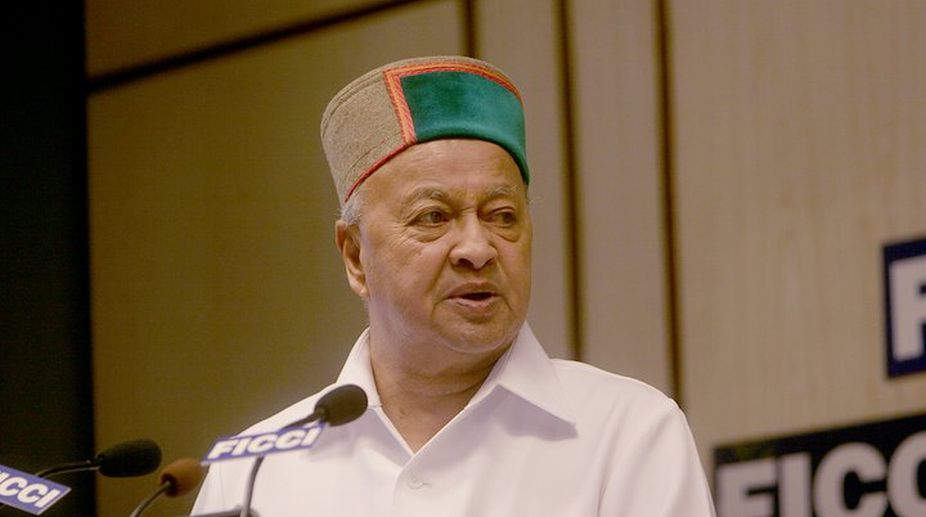
Himachal Pradesh Chief Minister Virbhadra Singh (PHOTO: FACEBOOK)
Himachal Pradesh Chief Minister Virbhadra Singh on Friday said that he will challenge the order of the Delhi High Court dismissing his petition to quash disproportionate assets case filed by the CBI against him.
“I will take legal opinion and challenge it before the double bench of the High Court or in Supreme Court,” Singh told reporters on Friday.
Singh called the corruption cases against him as political vendetta. “Three agencies are separately probing the same case. Earlier, the case was being investigated by Income Tax, then CBI filed a FIR in the case, and later the Enforcement Directorate,” he said.
He said he had full faith in judiciary. “The harassment by the investigating agencies will only win me more support of people of the state,” he said.
Singh said the assembly elections in the state will be held on scheduled and not at the whims and fancies of the BJP.