Logo

Justin Bieber cosies up with Brazilian model

IANS |

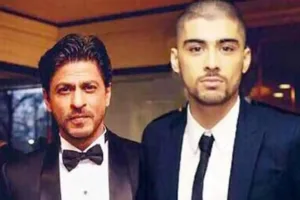
Singer Justin Bieber, who was in an on and off relationshiip with Selena Gomez, has been photographed cosying up with a Brazilian model.

The Baby singer was spotted spending a lot of time with the model named Luciana Chamone. They were all up in each other's arms in the backseat of his ride on Thursday, reports tmz.com.

On the work front , Bieber and Zayn Malik are reportedly planning to collaborate for a new single and the rumours of them working together started coming up after Bieber retweeted a link of Malik's new single from his upcoming album featuring rapper PARTYNEXTDOOR.
 

400 CRPF jawans taken ill after consuming fish curry

PTI | Thiruvananthapuram |

At least 400 jawans attached to the CRPF camp at Pallipuram were taken ill due to suspected food poisoning, the police said.

They were admitted to various hospitals in the city following complaints of diarrhoea and vomiting after consuming food yesterday, they said.

Initial investigations suggested that the jawans fell ill after consuming fish curry.

109 jawans are under observation at Trivandrum Medical College Hospital. State Health Minister K K Shylaja visited them at the hospital last night.


400 CRPF jawans taken ill after consuming fish curry

PTI | Thiruvananthapuram |

At least 400 jawans attached to the CRPF camp at Pallipuram were taken ill due to suspected food poisoning, the police said.

They were admitted to various hospitals in the city following complaints of diarrhoea and vomiting after consuming food yesterday, they said.

Initial investigations suggested that the jawans fell ill after consuming fish curry.

109 jawans are under observation at Trivandrum Medical College Hospital. State Health Minister K K Shylaja visited them at the hospital last night.


Landslide kills 127 people in Colombia

IANS | Bogota |

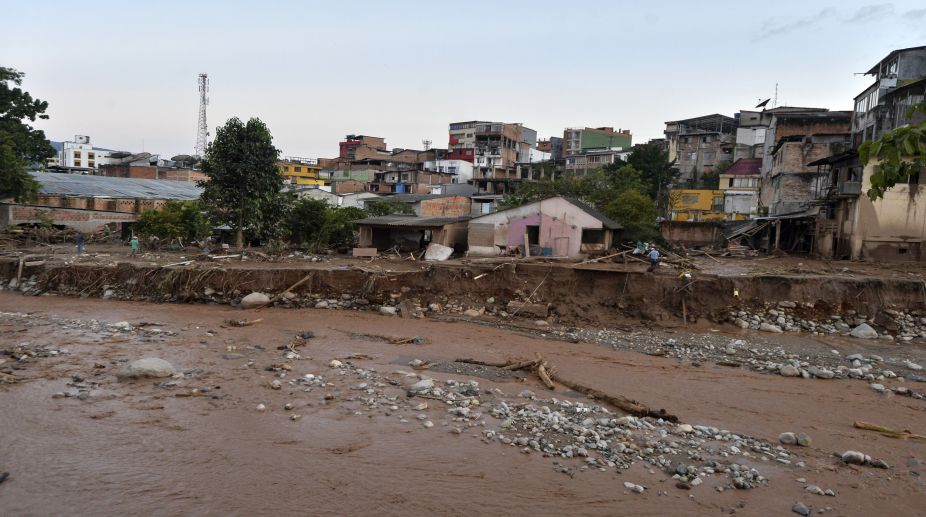
Colombian Red Cross said on Saturday that at least 127 people were killed in a landslide in southern Colombia's Mocoa city.

The tragedy occurred on Friday night when heavy rains caused rivers to overflow, devastating several neighbourhoods in the provincial capital of Mocoa, Xinhua news agency reported.

Colombian President Juan Manuel Santos arrived in Mocoa on Saturday morning and ordered immediate assistance to all the affected population.

He said he would send several aircrafts to deliver humanitarian aid for those affected in Mocoa, a city located in the middle of the jungle of the Amazon region.

Santos said earlier that at least 112 people were killed in the landslide in Mocoa.

The country's fire department said earlier on Saturday that 102 people were killed and 185 wounded in the landslide.

Landslide kills 127 people in Colombia

IANS | Bogota |

Colombian Red Cross said on Saturday that at least 127 people were killed in a landslide in southern Colombia's Mocoa city.

The tragedy occurred on Friday night when heavy rains caused rivers to overflow, devastating several neighbourhoods in the provincial capital of Mocoa, Xinhua news agency reported.

Colombian President Juan Manuel Santos arrived in Mocoa on Saturday morning and ordered immediate assistance to all the affected population.

He said he would send several aircrafts to deliver humanitarian aid for those affected in Mocoa, a city located in the middle of the jungle of the Amazon region.

Santos said earlier that at least 112 people were killed in the landslide in Mocoa.

The country's fire department said earlier on Saturday that 102 people were killed and 185 wounded in the landslide.

India, Malaysia keen to take bilateral trade to $15 billion

IANS | New Delhi |

India and Malaysia have expressed keenness to take their bilateral trade to $15 billion in the "immediate future", with the CEO's Forum identifying infrastructure, healthcare, education and SMEs as key areas of furthering cooperation.

A joint statement of the India-Malaysia CEO's Forum issued on April 1 called for a balanced Regional Comprehensive Economic Partnership (RCEP) and its conclusion at an early date. 

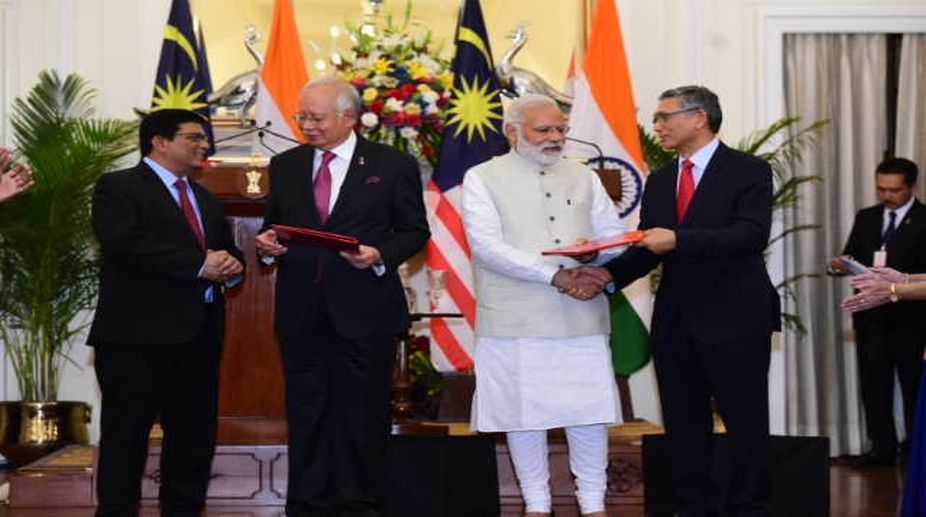
The forum's meeting held on Friday coincided with the visit of Malaysian Prime Minister Najib Razak. The Malaysian leader is on a five-day visit to India. 

The statement said that Malaysia is India's third largest trading partner in Asean (Association of Southeast Asian Nations). Bilateral trade between Malaysia was $12.8 billion in 2015-16 as against $16.9 billion in 2014-15 and the trade balance is in favour of Malaysia.

"The prime ministers have expressed their aspiration to see this trade increase to $15 billion in the immediate future," it said. 

The statement said there has been significant growth between the two nations in various sectors. "The total investments from Malaysia stood at around $7 billion or more as against total investments of around $2.5 billion from the Indian side."

At present, there are around 120 Indian companies, including 61 Indian joint ventures, seven Indian Public Sector Undertakings and 60 Indian IT companies operating in/from Malaysia.

The CEO's Forum noted that there exists knowledge deficit on the opportunities available in both countries and underscored the need for greater business to business exchanges, regular meetings of the CEO's Forum and organising trade and investment promotion events.

It said both trade and investment will benefit from RCEP, which aims to be a deep integration agreement covering trade in goods, trade in services, investment, economic and technical cooperation, intellectual property, competition, dispute settlement/legal and institutional issues, among others. 

"Therefore, the forum calls for a balanced RCEP, which will address both trade and services and be concluded at an early date." 

The statement said India offers good opportunity for Malaysian Pension and Provident Funds to invest in Indian Infrastructure assets, especially brownfield assets in various sectors like roads, aviation and power. Investments could also be made in Indian Infrastructure Funds. 

The forum noted that there has been an upsurge of Indian investments in the healthcare sector in Malaysia. 

Noting that Malaysia with 3.2 million diabetics has one of the highest diabetes prevalence rates amongst adults worldwide, the statement said experience from India will be used to work with the local communities in Malaysia to improve screening, early detection, awareness and management of diabetes. 

It said Indian and Malaysian governments must form a Joint Healthcare Taskforce to deliberate and ease processes that would permit doctors to practice in either nation after necessary licensing. 

The statement said a joint cord-blood repository between India and Malaysia for both private and public users must be considered as Cord Blood Stem Cell Therapy is a greatly preferred option for treating blood disorders. 

The forum members welcomed the move of the Government of Malaysia to invite Ayurveda and Siddha practitioners to Malaysia. 

On education, the forum members called for early signing of a MoU to recruit Indian teachers for English language education in Malaysia.

Referring to tourism, the members emphasised on the need to encourage visa-free travel for Indians and Malaysians.

It said Malaysia should support and champion the introduction of the Asean Common Visa for travellers from outside the region. 

The forum said there is a need to review the bilateral Air Services Agreement.

The two sides agreed that separate working groups would be set up on infrastructure, healthcare and education to suggest recommendations and strategies.

The statement said meetings of the CEO's Forum would be held bi-annually, alternatively in India and Malaysia. 
 

India, Malaysia keen to take bilateral trade to $15 billion

IANS | New Delhi |

India and Malaysia have expressed keenness to take their bilateral trade to $15 billion in the "immediate future", with the CEO's Forum identifying infrastructure, healthcare, education and SMEs as key areas of furthering cooperation.

A joint statement of the India-Malaysia CEO's Forum issued on April 1 called for a balanced Regional Comprehensive Economic Partnership (RCEP) and its conclusion at an early date. 

The forum's meeting held on Friday coincided with the visit of Malaysian Prime Minister Najib Razak. The Malaysian leader is on a five-day visit to India. 

The statement said that Malaysia is India's third largest trading partner in Asean (Association of Southeast Asian Nations). Bilateral trade between Malaysia was $12.8 billion in 2015-16 as against $16.9 billion in 2014-15 and the trade balance is in favour of Malaysia.

"The prime ministers have expressed their aspiration to see this trade increase to $15 billion in the immediate future," it said. 

The statement said there has been significant growth between the two nations in various sectors. "The total investments from Malaysia stood at around $7 billion or more as against total investments of around $2.5 billion from the Indian side."

At present, there are around 120 Indian companies, including 61 Indian joint ventures, seven Indian Public Sector Undertakings and 60 Indian IT companies operating in/from Malaysia.

The CEO's Forum noted that there exists knowledge deficit on the opportunities available in both countries and underscored the need for greater business to business exchanges, regular meetings of the CEO's Forum and organising trade and investment promotion events.

It said both trade and investment will benefit from RCEP, which aims to be a deep integration agreement covering trade in goods, trade in services, investment, economic and technical cooperation, intellectual property, competition, dispute settlement/legal and institutional issues, among others. 

"Therefore, the forum calls for a balanced RCEP, which will address both trade and services and be concluded at an early date." 

The statement said India offers good opportunity for Malaysian Pension and Provident Funds to invest in Indian Infrastructure assets, especially brownfield assets in various sectors like roads, aviation and power. Investments could also be made in Indian Infrastructure Funds. 

The forum noted that there has been an upsurge of Indian investments in the healthcare sector in Malaysia. 

Noting that Malaysia with 3.2 million diabetics has one of the highest diabetes prevalence rates amongst adults worldwide, the statement said experience from India will be used to work with the local communities in Malaysia to improve screening, early detection, awareness and management of diabetes. 

It said Indian and Malaysian governments must form a Joint Healthcare Taskforce to deliberate and ease processes that would permit doctors to practice in either nation after necessary licensing. 

The statement said a joint cord-blood repository between India and Malaysia for both private and public users must be considered as Cord Blood Stem Cell Therapy is a greatly preferred option for treating blood disorders. 

The forum members welcomed the move of the Government of Malaysia to invite Ayurveda and Siddha practitioners to Malaysia. 

On education, the forum members called for early signing of a MoU to recruit Indian teachers for English language education in Malaysia.

Referring to tourism, the members emphasised on the need to encourage visa-free travel for Indians and Malaysians.

It said Malaysia should support and champion the introduction of the Asean Common Visa for travellers from outside the region. 

The forum said there is a need to review the bilateral Air Services Agreement.

The two sides agreed that separate working groups would be set up on infrastructure, healthcare and education to suggest recommendations and strategies.

The statement said meetings of the CEO's Forum would be held bi-annually, alternatively in India and Malaysia. 

 

Mendes, Gosling’s marriage in trouble?

IANS |

Actors Ryan Gosling and Eva Mendes's marriage is reportedly fractured beyond repair.

The La La Land actor and Mendes's marriage is at "breaking point" after having a fight following the Oscars, reports okmagazine.com

Gosling is angry with Mendes for lack of support.

Instead of accompanying him at the award-giving ceremony, Mendes chose to work on her new clothing line. The father of two walked the red carpet alone and took his sister Mandi to the show. 

"He's mad she didn't want to support him for his big Oscars night, but somehow it's a priority for her to support a retail store," said a source.

"He was yelling, 'What the f**k kind of priorities are those?' If it wasn't for the kids, I don't think they would have any kind of relationship right now. In public he has to say nice things about her. Privately though, he says that she is being selfish. Ryan doesn't want to ruin his relationship with Eva, he has tried hard to make things work," the source added. 

Ed Sheeran cheaper than anyone else: James Blunt

IANS |

Singer-songwriter James Blunt has quipped that he brought Ed Sheeran on board for his latest album The Afterlove only because he is cheap.

The album features two songs with Sheeran.

"He's cheaper than anyone else, he produces and did backing vocals. I need to work with other composers or I write the same four chords over and over again," Blunt told The Daily Star.

Sheeran has produced and sings on autobiographical track Make Me Better.

Blunt said: "It was brilliant working with him. After my first album, I kind of closed down a little bit. But he said to me: ‘Come on, it's your job as a songwriter to open up.'

"He forced me into a corner. The result is something I was uncomfortable with but glad for because it's magical."

Another song Time Of Our Lives, which they co-wrote, is about Blunt's wedding day.

A scourge of our times

Andrew MacLeod | New Delhi |

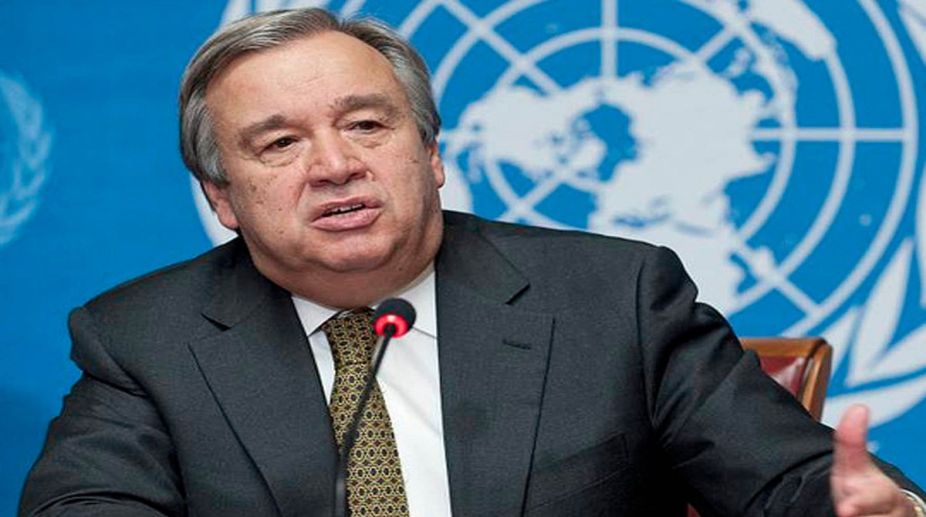
The United Nations is raping children. The facilitation of these child rapes is in part funded by the UK taxpayer. You think this is “fake news”? Well, let’s go right to the top and check the facts.

Earlier this month, UN Secretary General António Guterres in releasing the 2016 UN annual review said that there were 145 cases of sexual exploitation and abuse involving troops and civilians across all UN peace missions in 2016 alone. The United Nations Secretary General is talking about his own organisation. These 145 cases involved 311 victims and even the UN recognises that this is the tip of the iceberg. Many of the victims, by the UN’s own admission, are children.

UN Peacekeepers and staff raping children is not a right-wing conspiracy or fake news, it is admitted by the UN itself.

But is the UN repeating the mistakes of the Catholic Church by obfuscation and minimisation of the problem, not taking it head on and stamping it out? The UN’s language is interesting here. It is wishy-washy as if child rape were a problem that needed to be minimised, not wiped out. “I fully recognise that no magic wand exists to end the problem of sexual exploitation and abuse,” Guterres said. “Nevertheless, I believe that we can dramatically improve how the United Nations addresses this scourge.” “Dramatically improve” the situation? He is kidding, right? What about wiping it out? The Secretary General proposed a four-part strategy: putting “the rights and dignity for victims at the forefront of UN efforts”; working “relentlessly” to end impunity for those guilty of sexual abuse and exploitation; building a network to support UN efforts including civil society, external experts and organisations; and raising worldwide awareness of the problem to address the stigma victims face.

I have a much better idea. Let’s start with the language that is used here. Let us not hide behind large concepts. Let me be blunter. What is a better term than “sexual abuse” of the 14-year-old child, together with her 18-year-old friend, set upon by UN peacekeepers near Bambari airport in Central African Republic late in 2015? This is not “sexual abuse”. This is the gang rape of a child. It is neither “sexual abuse” nor an “indiscretion”. It is not something to be “minimised”. It is something to be wiped out with brutal efficiency. If this is not shocking enough, the 14-year-old child became pregnant (as many others who are abused do) and her rape was paid for and facilitated by you, the reader. You paid for this gang rape through your taxpayer funds to the UN.

Have you ever wondered why countries like Democratic Republic of Congo and Pakistan send so many peacekeeping soldiers? It is because the UN pays for these countries to send soldiers. It is a huge export earner for their militaries and it is paid for by the net contributing countries like the UK, the US and Australia. And this is not a surprise or unknown. Google “food for sex” and “UN sexual abuse” and see just how much comes up and for how long it comes up. See for how long Kofi Anan, Ban Ki Moon and now António Guterres have been saying “something must be done”.

I am not a right-wing UN basher – I used to work for the UN. As my close friends will tell you, one of the reasons I left the UN is because I call them the second largest harbourer of paedophiles behind only the Catholic Church. But maybe I am wrong. Maybe the UN is worse. How bad could this problem be?

Well, the UN has well in excess of 100,000 staff and Peacekeepers at any given time. Often the number is higher. Approximately two thirds are male – at least 66,000. The National Crime Agency in Britain estimates one in 35 (almost three per cent) of the male population have paedophilia tendencies. If the UN’s staffing profile was similar to the broader population that would mean that there are about 2,000 men with paedophilia tendencies working for the UN. And many of them are in positions of authority, with diplomatic immunity and impunity to act. And the UN wants us to believe that the number of victims is in the hundreds?

Here is what I think should be done. The UN and large international NGOs need to put specific paedophile checks and filters in place in the recruitment process. I know few NGOs that do. Second, the International Criminal Court should be empowered to criminally charge UN staff, Peacekeepers and international NGO staff for crimes involving children.

Thirdly, the UN knows which soldiers were deployed in areas where the children were raped. Those soldiers should all be DNA tested and matched against the children born of rape. The rapists should then be charged, if not in their home courts then elsewhere. Fourthly, all UN agencies and NGOs should have independent and robust confidential whistle-blowing procedures to identify the paedophiles. The UN should be given six months to implement this mechanism – failing which all funds should be withheld from the agency.

What can you do to help? Do not donate a single cent or pound to any organisation unless it satisfies you that it has a process to eliminate paedophilia. And how can you tell? Here is a good test: ask the agency how many of its staff they have referred to the police. Because if the answer is “none” then they are not taking this problem seriously.

Is this too extreme? People have been using soft words about paedophilia in the UN and large NGOs for decades. None of this is secret. None of this is surprising. But never have we actually put pressure for something to be done.

This is child rape, perpetrated in our name, using our money and it must stop. Now.

Andrew MacLeod worked as an aid worker for the Red Cross in Yugoslavia and Rwanda in the 1990s and for the UN in Pakistan, Afghanistan and other locations in the 2000s. He is the author of A Life Half Lived. The Independent.

An exciting ride

Krishnan Srinivasan | New Delhi |

These two books are of high quality. Jerry Pinto is a prize-winning writer and there is no question of his considerable abilities. In this serial-murder mystery, Pinto weaves an intricate plot around the male homosexual/gay community in Mumbai, and where a retired journalist joins hands with a police inspector in search of the culprit or culprits. The narrative moves easily enough and some of the best scenes are when the two protagonists are together, which gives Pinto a chance to introduce some humour into the proceedings at the expense of Inspector Jende.

Nevertheless, there are serious flaws that Pinto would do well to correct. His long and quasi-intellectual digressions into the nature of homosexuality and the sale of sex are tedious, unnecessary and stall the momentum; there are no physical descriptions of the main characters, not even by implication; his female characters are mere stick-people or cut-outs with no personality whatever, and the most convincing lines are written for the minor walk-on parts.

The leading gay character is a caricature ad absurdum, which does not do the author or the gay community any favours. If Pinto meant this to be a humorous aspect, it does not succeed. He would do better to leave his good cause campaign and soap-box elsewhere than in his writing. Having said all that, Pinto is a writer with talent and the fact that he obviously has the skill to iron out these defects make it possible to look forward to his next book, whether of the same crime fiction genre or another. On the other hand, Ken Liu is a USbased, much nominated writer for various prizes, and this book of short stories fully substantiates his reputation. His imagination is boundless, his fantasy is tremendous and his recitation is swift, concise and telling with abundant humanity and sentiment. Above all, his fiction embarks on a new voyage, that of the world of tomorrow and the use of advanced and scarcely imaginable technology. When one considers the prospect of the development of the novel, from the age of Lawrence Sterne through Jane Austen to Evelyn Waugh, Doris Lessing and the grit of Jose Saramago, where indeed are we headed? Possibly the next generation of fiction writers may well focus on the new world of informatics, implants and physical enhancements, not through drugs but by way of voluntary surgery. Crime may be committed through Whatsapp messages and Facebook posts, and Ken Liu takes us boldly into this world, with his characters just on the right side of credibility. This book of short stories is worth reading for a glimpse of the future, or at least, the future of novel-writing. So it is an exciting ride.

The reviewer is India’s former Foreign Secretary.

On the South Asian stage

Somdatta Mandal | New Delhi |

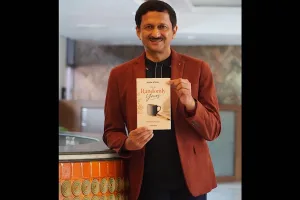
As the title of the book suggests, this volume is a collection of plays from South Asia, which deal with the social and political performance of Islam in the region after 1947. It distinguishes between Islam as faith and Islam as political ideology; however connected the two might be in the constantly evolving narrative of jihad at home and abroad. The first of its kind, the anthology puts together six play-texts from Bangladesh, India and Pakistan, which offer insights into a situation where the performance of political Islam refers to both the constructions about the myths about the religion, and their deconstruction through a variety of theatrical modes.

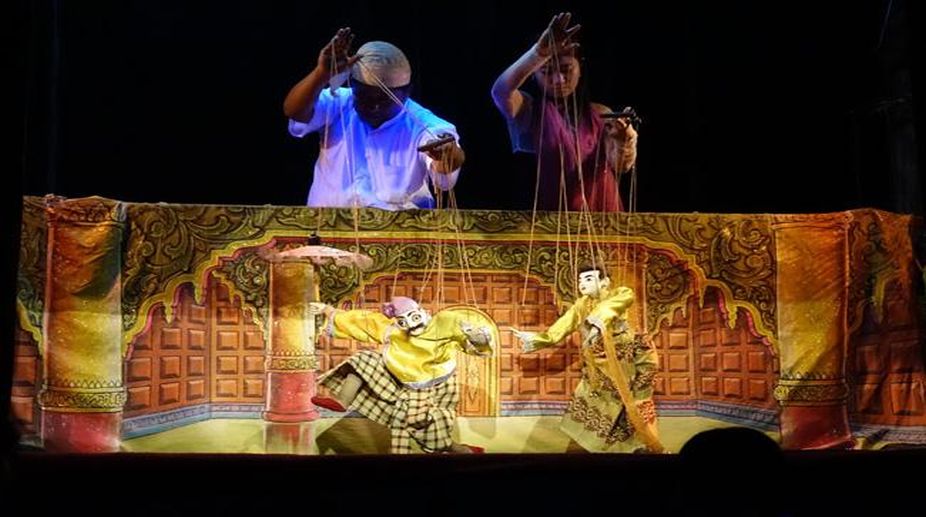
The first play, At the Sound of Marching Feet (Payer Awaj Pawa Jai) is from Bangladesh and written by Syed Shamsul Haq. The same text is translated into English by the author himself. The other entry from Bangladesh is called Life of Araj (Araj Charitamrita), written by Masum Reza and translated by Bina Biswas and Sayantan Gupta. Of the two entries from India we have The Djinns of Eidgah by Abhisekh Majumdar and The Far-Reaching Night (Bahut Dur Tak Raat Hogi) by Zahida Zaidi and translated by Ameena Kazi Ansari. The two plays from Pakistan are We Shall Resist(Hum Rokaen Gae) by Anwer Jafri, translated into English by Sheema Kermani, and Watch the Show and Move On(Dekh Tamasha Chalta Ban) by Shahid Nadeem, translated by Shuby Abidi. All these six plays seem to be in conversation with one another in contexts of competing nationalist narratives predicated on Islam in South Asia. The playwrights may or may not be much aware of one another’s works, although their plays sometimes cross borders to take part in the region’s annual theatre festivals and seminars.
As the editor makes it clear, the book hopes to establish a connection between the plays, thus creating a complex framework of South Asian theatre around the narrative of Islam —a pattern that broadly hinges on the plays’ abiding as well as changing contours of relationship with society and politics. Islam, as a spiritual worldview, is, therefore, less the theme of any of the plays here, and more of a trope which, tempered within the crucible of divisive politics in colonial and postcolonial South Asia, has been used to breed and foster narratives of nation-making that continue to largely affect the state of affairs in the region. On the other hand, the targeting of Islam —or unequal treatment of its followers in places where they are the minority —becomes an equally significant aspect of this anthology. The concerns addressed in the plays in this book go beyond the clichéd frame of communalism to incorporate much wider patterns of life woven circuitously around the political and personal exploitation of a faith, as much by its professed followers as by its detractors.

This anthology further demonstrates how theatre, in its different forms, supplements conventional history, which cannot often help leaving out of its purview the intangibles of the past —such as feeling, belief, and memory —and thus betrays its own inadequacies and erasures. The plays invite comparison with one another, engaging with this situation from perspectives of the three countries concerned — the idea of azadi countering the performance of state-sponsored nationalism and the predicament of life in the Kashmir Valley today (The Djinns of Eidgah, 2012); Hindutva politics shaking the long-held principles of a plural India, and often threatening to erase the religious “Other” (The Far-Reaching Night, 2006); sectarian violence and abuse of Pakistan’s blasphemy laws by self-professed guardians of Islam (We Shall Resist, 2009); Islamisation of Pakistan at the expense of political governance, and persecution of non-Muslim minorities (Watch the Show and Move on, 1992); the clash between ethno-linguistic and religious nationalism, culminating in Bangladesh’s Liberation War (At the Sound of Marching Feet, 1976); and censorship of production/dissemination of scientific knowledge and threat to the lives of secular liberals in the country (Life of Araj, 2001).

As nation-building in South Asia remains a continuous, unfinished product, trouble keeps brewing around the contesting constructions of the “Muslim” subject by Muslims as well as non-Muslims of a geo-political and cultural space that they have co-inhabited historically. The plays also underscore the need to resist violence in the name of faith, and uphold the ideals of plurality and hospitality across the region. Widely performed but largely unpublished, these six plays with their geographic and stylistic range provide a good spectrum of some of the best writing in contemporary South Asian drama. The editor, who has in his lengthy introduction offered us a framework for studying the plays as both texts and performance pieces, needs to be congratulated for clearing the reader’s mind of a lopsided understanding of Islam related to be the source of all political malaise and other forms of religious fundamentalism.

The reviewer is professor of English at Visva-Bharati University.

Swarajya Bhoomi Trust wants Jinnah House for Tilak memorial

PTI | New Delhi |

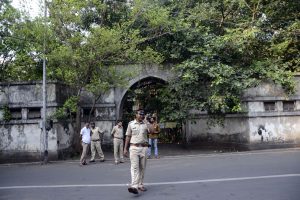
The Lokmanya Tilak Swarajya Bhoomi Trust on Saturday demanded that the Jinnah House in Malabar Hill be handed over to it for creating a mural depicting the legacy of Tilak.

In a statement issued here on Saturday, founder president of the trust, Prakash Silam said it had written to the Public Works Department on January 29, 2016 that the Jinnah House premises be handed over to it.

‘Jinnah House’ was the residence of Pakistan’s founder Mohammad Ali Jinnah in Malabar Hill of south Mumbai.

Recently, BJP MLA Mangal Prabhat Lodha had demanded that the Jinnah House be pulled down and a cultural centre be constructed in its place.

Criticising the BJP MLA, Silam said the iconic Jinnah House is now an heritage structure and that pulling it down will not erase the "bitter history".

“Barrister Jinnah upon learning of the sad demise of Lokmanya Tilak rushed to Mumbai from Pune to pay his last respects to the leader” he stated. He added that late Muhammad Ali Jinnah had great respect for Lokmanya Tilak.

He further stated that two years ago the trust had written to the state government that they wanted to have a mural depicting the history of ties between Lokmanya Tilak, Jinnah and Mahatma Gandhi at the bungalow.

Silam accused Lodha of deliberately trying to create obstacles in the process of having a mural at the Jinnah House.

He said that the trust had expected that Lodha being the local MLA would help them in their efforts. Silam said that people will not tolerate any attempts by the government to take any decision favouring its party MLA.

Pakistan on Friday had expressed concern over the safety of ‘Jinnah House’ and said India should show respect towards it, after BJP MLA Mangal Prabhat Lodha last week demanded that the building be demolished and a cultural centre built in its place.

Medical cards for fighting breast cancer

PTI | New Delhi |

The Ministry of Women and Child Development has recommended introducing a compulsory medical card for women for getting their breasts and ovaries examined for cancer.

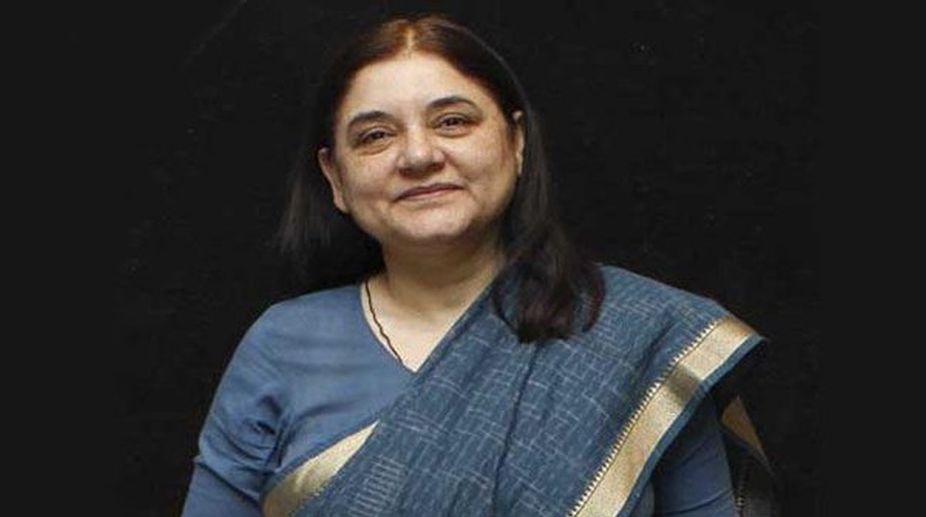
Addressing a gathering at an event at the Sir Ganga Ram Hospital (SGRH) here,WCD Minister Maneka Gandhi on Saturday said mammography scares women and underlined the need to fight the stigma attached to cancer.

“Women are either scared or are prevented from going for medical examinations. So, my ministry has recommended for a compulsory medical examination card for women, which will contain data on check-up of breasts, ovaries, and detection of TB and anaemia.

“I hope this will help in prevention of diseases in women,” she said.

The hospital hosted the day-long event on breast cancer awareness and experts interacted with a group of women, which included breast cancer survivors or those who had someone in their families affected by the disease. The minister urged the media to create greater awareness on breast cancer and said, her ministry may think of making a campaign film with a celebrity.

“Early detection by various techniques including self- examination, healthy lifestyle and avoiding alcohol and smoking can go a long way in prevention of breast cancer,” she said. Later in the evening, the hospital in statement said the minister also advocated research to assess if there is a link between breast cancer and diet, including cattle milk.

Dr Bipin Batra, Executive Director of the National Board of Examinations, said a Breast Imaging Fellowship programme has been started under the NBE. “In India, breast cancer is the leading (type of) cancer with 1.5 lakh new cases being diagnosed every year and approximately 75,000 deaths per year,” the hospital stated.

Breast cancer in urban areas makes up for 15-25 per cent of all the cancer cases in women, it said.

“The National Health Policy 2017, in its non-communicable diseases section envisages screening for breast cancer as one of its thrust areas,” said Madhavi Chandra, Senior Consultant, Department of Radiology at the SGRH.

“In multiple studies across the world, it has been proved that regular screening with mammography reduces death due to breast cancer by 20- 30 per cent,” the SGRH said.

Argument is acceptable, but not intolerance: President

PTI | New Delhi |

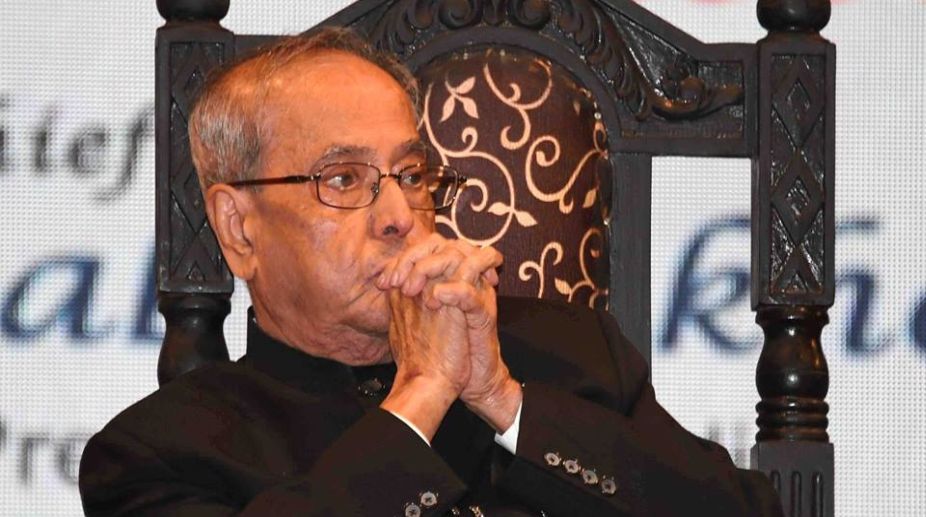
President Pranab Mukherjee on Saturday put a premium on debate and discussions, exhorting the student community to be argumentative, but not intolerant.

Referring to first Prime Minister Jawaharlal Nehru as the one who built modern India, Mukherjee said he had helped build an atmosphere of free debate and discussions and not conflict and confrontation.

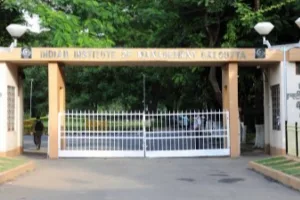
“As Amartya Sen had said, an Indian can be argumentative, but not intolerant,” Mukherjee said at the 52nd Annual Convocation of IIM Calcutta today. ”India is a land of tolerance, land of Buddha, land of Chaitanya, but not land of intolerance,” he said further, adding that “please excuse me if I have hurt any sentiment by saying so”.

The President also made the point that management education, in order to be world class, needs to be able to embrace contrasting pedagogical approaches, multi-disciplinary allegiances, and contemporary skills and capabilities.

“A plural mode of thought leadership in education enables the simultaneous pursuit of multiple paths to excellence,” Mukherjee stressed. Such plurality is evident in the priorities and practices of IIM-C, Mukherjee pointed out, saying the institute has shown the way and it will assume leadership in innovative refinements in pedagogy.“Let hundreds of ideas blossom in universities and let there be debate, not confrontation,” Mukherjee went on to say. “Accept criticism as argument and not as intolerance.”He also spoke of making management education holistic to instil sensitivity of socio economic surroundings in learners.

“Management education like education in other professional streams cannot be divorced from the socio-economic reality facing the nation,” Mukherjee said. “Skilled and socially sensitive professionals will not only build Indian leadership in global business and industry, but carry on their shoulders the developmental priorities of the nation.”

Will hang cow killers: Raman

PTI | New Delhi |

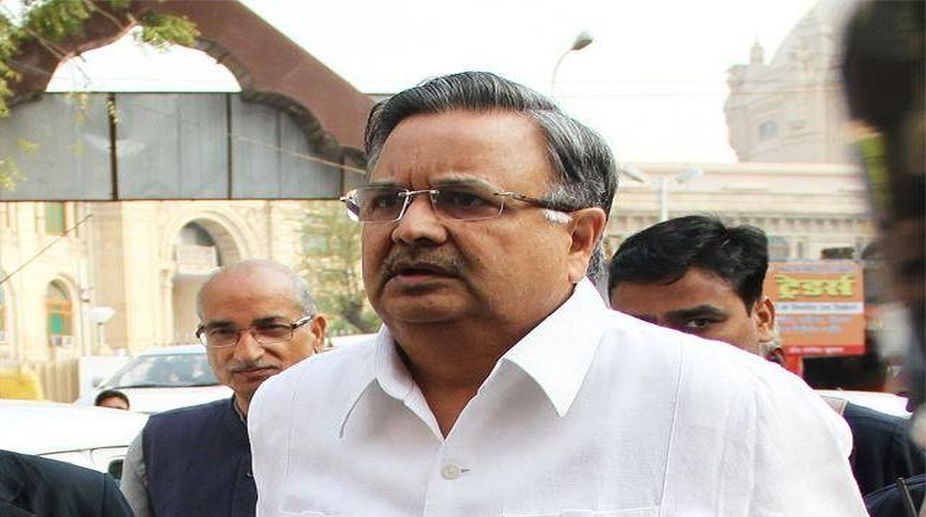
“We will hang those who kill cows,” Chhattisgarh chief minister Raman Singh declared today as no end seemed in sight to the row over enforcement of beef ban and crackdown on illegal slaughter houses in Uttar Pradesh.

“Does such a thing happen in Chhattisgarh? I don't think it has happened in the last 15 years (of BJP rule). If it happens, we will hang those who dare do it,” Singh told reporters in Raipur. He was responding to queries by journalists whether his government would, like Yogi Adityanath's in UP, take a tough stand on cow slaughter.

Slaughter of cow, buffalo, bull, bullock, calf, and possession of their meat is banned in Chhattisgarh. Transport, export to other states for slaughter is also banned. These offences attract same punishment of 7 years jail and fine up to Rs 50,000. Meanwhile, amid shortage of meat in UP following the clampdown on illegal abbatoirs and retail shops running without licences, AIMIM leader Asaduddin Owaisi accused the BJP of “hypocrisy” over beef ban. “In UP, cow is mummy, and in the northeastern states it’s yummy. This shows BJP's hypocrisy. While they are talking about beef ban in UP, they have said there would be no such thing in the northeast.

“Assembly elections are going to be held in three states in the northeast. Beef is easily available in (BJP-ruled) Goa. You tell me what is this,” he told a TV news channel.

Uttar Pradesh health minister Siddharth Nath Singh, meanwhile, said the crackdown on illegal slaughter houses was aimed at making them compliant with the court guidelines and questioned why the erstwhile Akhilesh Yadav government sat on the issue for three years.

“We are bemused to hear Akhilesh Yadav’s complaint that carnivorous animals in zoos of UP are suffering because of shortage of meat. He should tell the people of the state why he failed to make slaughter houses compliant with the guidelines issued by the Supreme Court and the National Green Tribunal,” Singh told reporters in Allahabad. The minister said the guidelines were issued in 2014. “Akhilesh Yadav's Samajwadi Party lost power only last month. They had three years to fix the abattoirs running across the state. In that case, there would have been no reason for us to spend our energy on this matter. But they did nothing. So, the responsibility fell on our shoulders,” he said.

On the crackdown affecting those employed in the meat industry, the minister said, “Slaughter houses will be allowed to resume business the moment they get due licences. Moreover, retail meat sellers have not been hit. This I say on the basis of my own observation as my Assembly constituency Allahabad (West) is home to a number of meat shops,” he said.

Senior IS leader killed in airstrike: Iraqi intelligence

IANS | Baghdad |

Iraqi intelligence networks on Saturday said one of the Islamic State's highest-ranking leaders has been killed in an airstrike near the border with Syria.

Known as IS' number two, Ayad Hamid Khalaf al-Jumaili was killed in the town of al-Qaim in Anbar province, located on Iraq's border with Syria, Efe news service quoted Iraqi intelligence as saying. 

Al-Jumaili was dubbed the IS minister of war.

The Iraqi authorities pointed out that the bombing also claimed the lives of IS military leader in al-Qaim, Turki Jamal al-Dulimi, known as Abu Hajar, and Salem Muzfer al-Ajami, an IS administrative official in that town.

The intelligence added that the aviation directed "a precise blow" against a position of IS leaders in that Iraqi town.

However, the intelligence gave no further details regarding the time of the attack or whether it was carried out by aircraft of Iraqi air forces or the US-led international coalition.

IS leader Abu Bakr al-Baghdadi talked to his supporters one month ago through a written speech distributed in the Iraqi city of Mosul, acknowledging the defeat of his forces against Iraqi government troops, according to military officials.

Mohamed Ibrahim al-Bayati, head of Security Council of Nineveh province, saids that IS prominent leaders move aimlessly on the borders between Iraq and Syria.

Iraqi forces, backed by the international coalition, launched a major offensive in Mosul to drive IS extremists out their main stronghold, where al-Baghdadi proclaimed the caliphate on June 29, 2014.