Logo

Smoking causes one in 10 deaths worldwide: Study

IANS | London |

Smoking causes one in 10 deaths worldwide, half of them in just four countries — China, India, the US and Russia, a new study revealed on Thursday.

The Global Burden of Diseases Report was based on smoking habits in 195 countries and territories between 1990 and 2015, the BBC reported.

It found that nearly one billion people smoked daily in 2015 — one in four men and one in 20 women.

Despite decades of tobacco control policies, population growth has seen an increased number of smokers, it warned.

Researchers said mortality could rise further as tobacco companies aggressively targeted new markets, especially in the developing world.

"Despite more than half a century of unequivocal evidence of the harmful effects of tobacco on health, today, one in every four men in the world is a daily smoker," said senior author Emmanuela Gakidou. 

"Smoking remains the second largest risk factor for early death and disability, and so to further reduce its impact we must intensify tobacco control to further reduce smoking prevalence and attributable burden," the BBC quoted Gakidou as saying. 

The number of tobacco-related deaths — more than 6.4 million in 2015 — increased by 4.7 per cent, the study showed. 

Some countries have succeeded in efforts to help people quit, mostly through a combination of higher taxes, warnings on packages and education programmes.

Over the 25-year period, Brazil saw the percentage of daily smokers drop from 29 to 12 per cent among men and from 19 to 8 per cent among women.

But, the report said, Bangladesh, Indonesia and the Philippines saw no change from 1990 to 2015.

The report was published in the medical journal The Lancet.
 

US launches military strike against Syria

IANS | Washington |

The US has launched a military strike on a Syrian government target in retaliation for their chemical weapons attack on civilians earlier in the week, President Donald Trump told the media.

"Tonight (Thursday), I ordered a targeted military strike on the air field in Syria from where the chemical attack was launched," Trump told reporters at Mar-a-Lago. 

The US launched 59 cruise missiles into Syria in the first direct military attack by the country on President Bashar al-Assad's regime since the civil war began.

The strike came in response to a chemical weapons attack that struck a town in northern Syria, Efe news reported on Thursday.

The US fired the Tomahawk missiles at the Shayrat air base in the Syrian city of Homs, from which the aircraft that carried out the chemical strikes earlier this week took off.

Trump confirmed that he ordered the unilateral military action against the Syrian government in response to gas attack that killed nearly 100, including many children and injured several hundreds.

"It is in this vital national security interest of the US to prevent and deter the spread and use of deadly chemical weapons," he said.

The attack came days after reports of a chemical weapons attack emerged from the battleground in Syria, which the West said the Syrian government should be blamed for, Xinhua news agency reported.

Trump also called on "all civilised nations" to work to end the "slaughter and bloodshed" in Syria.

He added: "There can be no dispute that Syria used banned chemical weapons, violated its obligations under the Chemical Weapons Convention and ignored the urging of the UN Security Council." 

"Years of previous attempts at changing Assad's behaviour have all failed and failed very dramatically."

A US defence official said the strike was targeted on runway, aircraft and fuel points. The missiles were launched from warships in the Eastern Mediterranean, CNN reported.

Strikes were over "until another decision is made," the official said.

Just minutes before the missile attack, Russia warned the US of the "negative consequences" of military strikes on Syria.

"We have to think about negative consequences and all the responsibility if military action occurred will be on shoulders of those who initiated such doubtful and tragic enterprise," Russia's Deputy Ambassador to the UN, Vladimir Safronkov said, Efe news reported.

Members of the UN Security Council were still negotiating a resolution in response to the chemical attack.

The US Ambassador to the Council, Nikki Haley, had already warned in the previous meeting that Washington could initiate a unilateral strike on Syria if the UN still refrained from taking military action.

Thursday's attack marked Trump's first military order since his inauguration in January, as other US military operations in Syria, Yemen and Iraq were carried out under the authority of his commanders.

Chinese GP 2017: Max Verstappen tops rain-hit FP1 session

Let's hope the second session isnt as truncuated as the first was!

SNS | New Delhi |

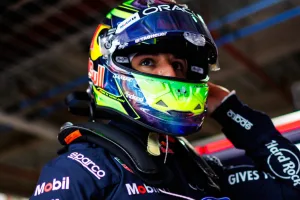
Red Bull driver Max Verstappen topped the leaderboard in the first practice session of the 2017 Chinese Grand Prix on Friday, a session which was called to a premature halt as conditions were deemed to be too dangerous to continue.

Only fifteen drivers managed to complete a flying lap, with Lewis Hamilton, Kimi Raikkonen and Sebastian Vettel among the big names who could only competed formation laps.

While the teenaged Verstappen impressed in the difficult conditions to top the leaderboard despite managing just four flying laps, the Wiliams duo of Felipe Massa and Lance Stroll acquitted themselves well, churning out seven flying laps each.

The Red Bull driver’s time of 1:50.491 was almost 1 and half seconds faster than the Williams of Massa, suggesting he may just benefit from the overcast conditions and while it is too early to predict, a repeat of his heroics at the 2016 Brazil GP may be on the cards.

Kevin Magnussen and Romain Grosjean were the two drivers who managed to get into a spin during their flying laps and as the mist descended, the race officials decided to shut off the session for good.

Force India’s drivers, Sebastian Ocon and Sergio Perez, were among the five drivers who could only manage a formation lap.

The next practice session is at 2pm local time, roughly two and a half hours later.

The top 10 drivers after the session:

1. Max Verstappen Red Bull
2. Felipe Massa  Williams
3. Lance Stroll Williams
4. Carlos Sainz Toro Rosso
5. Romain Grosjean Haas
6. Daniil Kvyat  Toro Rosso
7. Fernando Alonso McLaren
8. Daniel Ricciardo Red Bull
9. Valterri Bottas Mercedes
10. Kevin Magnussen Haas

Seven easy to make healthy breakfast

Deepa Gupta | New Delhi |

Eating breakfast is the most beneficial habit of the three basic meals of the day in terms of good health. Impacting every dimension of our being, morning breakfast helps maintain weight, helps weight loss, provides radiant skin, better immune system, reduces obesity, high blood pressure, prevents heart disease and diabetes. To reap all of the benefits of breakfast, here is the list of few healthy foods which can be easily and quickly prepared. Start your day right off.

1 Vegetable and oats: Cut the vegetables (onions, carrot, bean) in small cubes. Heat one teaspoon of olive oil in a pan. Saute onion. Add all vegetables and little salt, turmeric powder and chilli powder. Let the vegetables get cooked keeping the pan covered. Add one and a half cup of water. Give a boil. Add half cup of oats. Stir till water is dried. Have it with coriander chutney.

2 Grilled vegetable and paneer sandwich: Take two pieces of whole grain bread. Spread coriander chutney on one bread slice and tomato ketchup on another. Place thin slices of cucumber, tomato and paneer on the chutney piece. Cover it with ketchup bread piece. Grill it in sandwich maker for few seconds without adding butter.

3 Poha: Wash one cup of poha. Drain water. Keep aside for 15 – 20 minutes. Meanwhile, chop onion and carrot. Heat little olive oil. Add half teaspoon of mustard seeds. When they pop up, add onion and saute for five minutes. Add carrot and peas. Cook them till tender. Add soaked poha. Add little salt, turmeric powder, red chilli powder, little bit of sugar and lemon juice. Saute for 10 minutes, it’s ready to eat.

4 Milk and porridge: Pressure cook porridge adding four times of water in respect of the quantity of raw porridge. Add little sugar after it is cooked. Add hot milk. Stir and eat hot.

5 Besan or sooji cheela: Chop onion, green chillies and fresh coriander leaves. Grate carrot and cauliflower. Add these vegetables, salt, red chilli powder and water to besan or sooji to make a thick batter. Heat non-stick pan. Add little olive oil. Spread the batter and cook from both sides. Have it with coriander chutney.

6 Boiled masala eggs: Boil eggs. Cut in two halves. Sprinkle finely chopped onions, coriander leaves, green chillies, salt and chat masala on it.

7 Moong beans sprouts: Soak them in water in the night. In the morning drain the water. Put the swelled beans in a bowl with a lid and keep aside for two days. Wash them after seven to eight hours so that it does not stink. After two days you will see beautiful sprouts from moong beans. Put them in a pressure cooker. Add half cup of water. Add little salt and turmeric powder. Give a pressure and take the beans out of the cooker. You may eat them plain, adding little lemon juice or you may add finely chopped onion, tomato and cucumber in it to enhance the taste and health benefits.

Take good care of yourself. Make a habit of eating just right and together as a family in the morning, regardless of how busy you are. These breakfast options are a complete meal with whole grains, protein and fibre. Be healthier and happier!

IPL 2017: When MS Dhoni trolled Kevin Pietersen!

Some light-hearted banter between the ex-teammates!

IANS | Pune |

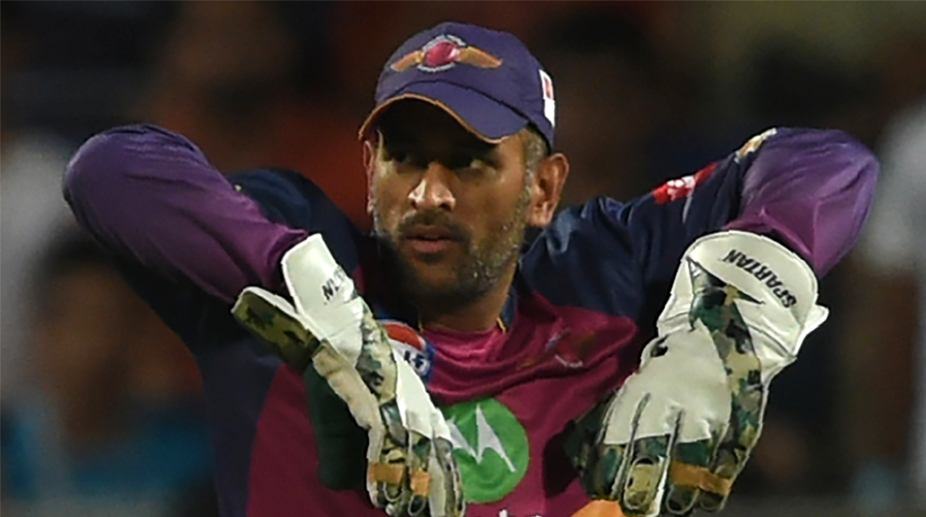
 Friendly banters have always been a part and parcel of cricket and this time it was two former Rising Pune Supergiant (RPS) teammates — Mahendra Singh Dhoni and England's Kevin Pietersen — taking shots at each other in the 2017 Indian Premier League (IPL) match against Mumbai Indians here on Thursday.

In the second over of the match, Pietersen, who skipped playing this edition of the IPL and instead is at the commentator's box asked Pune's Manoj Tiwary on the microphone to tell Dhoni that the former England batsman is a better golfer than the Ranchi stumper.

After insisting, Tiwary, who was fielding at slips went to Dhoni, and passed Pietersen's message to which Dhoni retorted: "He's still my first Test wicket," which triggered laughter in the commentary box as well as to the viewers.

Dhoni, however, forgot that his appeal to get Pietersen caught behind during the 2011 tour to England was turned down by umpire Billy Bowden.

India should aim to be consistent in coming years: Sunil Chettri

Since Chhetri's debut, this is the highest India have climbed in the FIFA ladder.

IANS | Bengaluru |

Bengaluru FC striker Sunil Chhetri said consistency is not just a fillip in FIFA rankings, which is what Indian football will be seeking for the next few years.

India on Thursday achieved their best-ever ranking of 101 in over two decades leaving behind Euro 2004 participants Latvia and Asian heavyweights DPR Korea.

"In my opinion, rankings are a very fickle measurement of one's success and it is best to not get carried away by it," Chhetri said in a statement issued by his club Bengaluru FC. 

"You lose one game, you slide down 40 places, you win one, and you climb up 50. The real achievement will be when we cling on to this position or better it over the next three to four years. 

"I've just had a look at the updated rankings put out by FIFA and ‘very happy' is the simplest but most honest way to describe how I feel about India being placed at 101. This achievement belongs to the team, the team behind the team, the coaching staff, the media, the fans and most importantly, to the country," the mercurial striker said.

Since Chhetri's debut, this is the highest India have climbed in the FIFA ladder.

"On a personal note, the joy is a little more given this is the highest ranking we've achieved during my time playing for the nation. But while we should celebrate every success, big or small, we also need to realise that the real test begins now," Chhetri said.

"We will need to play more games with better opponents and keep performing well consistently at home and more importantly, away.

"This change in ranking also pushes us up on the Asian circuit and working our way up further will give us favourable draws when lots are drawn in continental competitions. That said, our biggest task at the moment is to make it out of the qualifiers of the AFC Asian Cup," he added.

Chhetri signed off by saying that the team is moving in the right direction.

"Everything said, we are moving in the right direction and like I always say, it will take a mammoth effort from all of us involved with football to reach where we want to be," Chhetri concluded.

Jesse Lingard signs contract extension with Manchester United

He has made 70 appearances and has scored 11 goals for United since making his debut in 2014.

SNS | New Delhi |

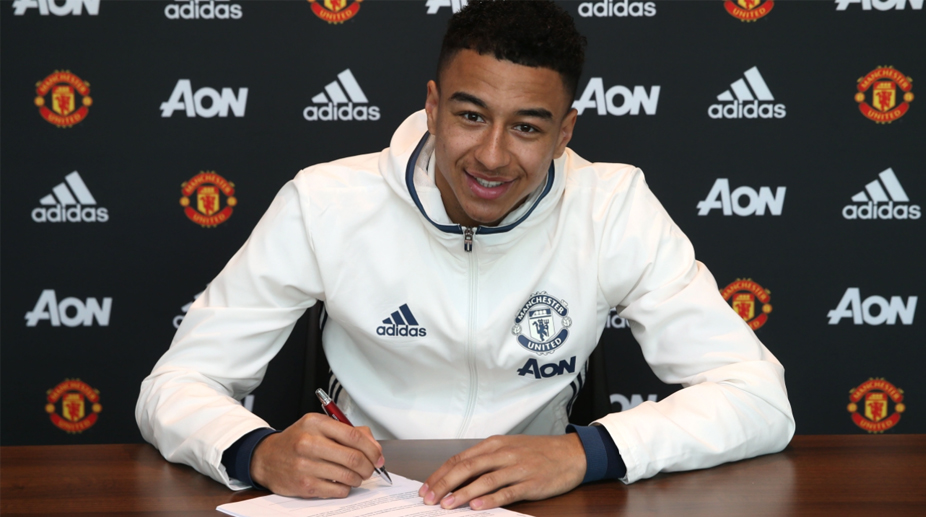
Winger Jesse Lingard has signed a new contract at Manchester United which keeps him at the club until June 2021 with the option to extend for a further year, according to a report on the club website.

The 24-year-old is a product of the club’s Academy system and has been at the club since the age of seven. The Warrington-born player made his senior debut at Old Trafford against Swansea City on the opening day of the 2014/2015 English Premier League season.

He has gone on to make 70 appearances and has scored 11 goals for the Red Devils, three of which came at Wembley Stadium to help secure three trophies. While he isn't a sure-shot starter under Jose Mourinho, his high work-rate make him an important squad member as United are generally competing in several competitions each season.

Jesse Lingard said: “Manchester United has always been a big part of my life. I have been with the club since the age of seven and I feel great pride every time I pull the shirt on. To have scored in two cup finals for my boyhood club were immensely proud moments for me and my family.
"As a team, we have already won a major trophy this season and I look forward to helping us win many more under this great manager. I would like to say a special thank you to the fans for the great support they have always given me and the team.”

United manager Jose Mourinho said: "Jesse has been with the club since the age of seven. He has good intelligence which, when combined with his energy and ability, makes for a player with a great future ahead of him. Jesse is a popular member of the squad and I am delighted he has signed a new contract."

Managing global workforce

Amit Goyal | New Delhi |

International trade officer is typically an interdisciplinary field of study leading to a variety of potential scopes. This field has immense opportunities in different industries, from government to private sector, financial organisations to manufacturing companies.

Specialists are usually responsible for analysing foreign trade information, evaluating market and economic factors that may impact trade and participating in developmental programmes. 

They are similar to world economists and work full-time, although irregular hours may be required because of time changes around the globe. They usually work by themselves in an office setting. Depending on the project some collaboration with other specialists in related fields may be necessary.

An officer in this field, studies the development and distribution of a wide array of goods and services for which transactions take place between countries. This job requires analysing the financial market closely and has to work with different tax policies of the countries. They are expected to make presentations, provide interpretations of the data, make recommendations, work efficiently with the available resources for the growth and profitability of the organisation. 

One must have at least a Bachelor's degree before starting up in this profession. A degree related to international trade, such as international business, global public policy, political science, international trade, business administration, economics or marketing will add as a bonus. A Master's degree or doctorate may be required for more prominent positions. Employers often desire candidates with extensive training for in-depth research and analysis. 

One should focus on a curriculum highlighting advanced mathematics and statistics, as well as general principles of business and finance. You'll likely want to engage in internships and related entry-level business positions. They are responsible for coordinating credit and financial activities, obtain payments for import/ export operations. The employee acts as an advisor on matters of tariffs markets, federal and foreign regulations.

International trade specialist ensures that paperwork and letters of credit are according to trade laws. They get to work on the variety of field's concept, practices and procedures giving them a great professional exposure. They closely work with managers or the head of a unit/ department and expected to have a wide degree of creativity and latitude. 

One must have excellent written and verbal communication skills to be a part of this field. Some other skills required are strong problem solving skills, ability to prioritise and multitasking, and organisational skills. These along with the familiarity in the foreign trade programmes and regulations, knowledge of international trade issues and tariff structures, and familiarity with foreign market research and import/export laws are some of the added advantage. 

The writer is Director, TKWS Institute Of Banking And Finance.

To adapt and grow rapidly

Abhishek Aggarwal | New Delhi |

Becoming an entrepreneur is not a part-time job. It is rather a lifestyle change that affects your day-to-day living. You have to work wisely and take decisions with a lot of responsibility to overcome every obstacle. Making strategies to achieve your company's goals and objectives is not a cake walk. It is a process that requires complete attention and innovative ideas. And your job does not end with just an idea or the execution plan as you have to prove yourself at every stage from impressing the angel investors to luring the potential customers. In fact, planning and strategy development is just a fraction of your massive responsibilities being the steward of a young organisation. While implementing these ideas, marketing them well and managing every core activity of the business with utmost perfection and efficiency demand a lot of dedication and hard-work. 

Stay healthy for healthy returns:

You need to stay physically fit to resolve various day activities that an entrepreneur pursues round-the-clock and especially in the hours of emergency. And yes, it goes without saying that you need to be psychologically well-poised and passionate while chasing your business goals and targets. In such a challenging scenario maintaining physical health and keeping the mind at peace should be one of your prime objectives. You can quit a job if you want a change in industry or feel dissatisfied as an employee, but being an entrepreneur, the term give-up is out of your dictionary. You obviously cannot quit from a venture in which you have invested your time, energy, and lots of other precious resources.

Be confident to win others' confidence:

It is important to come out of your comfort zone as there will be a lot of situations that you might have to handle which you have never been in before. A common example can be of public speaking and most of the people want to run away from it and feel extremely uncomfortable doing it. You must stay confident while addressing the investors, clients, employees, and the media to get success in every business endeavour. A good beginning would be by looking good in order to feel good and confident.

Listen to your gut feelings but make well-informed decisions:

Making association with like-minded and intelligent people is the soul of business partnership. A point that can bring you to doom is a lack of managerial skills in the key people of your organisation. Choosing the right people to work with you and especially the right co-founder is crucial for the company. Some entrepreneurs end up picking a co-founder based on friendship, or an old work relationship, but that does not always seem to work.  Listen to your gut feelings but make well-informed decisions. 

Many a time, it happens such that in the excitement of starting a new venture, you may ignore the person you are about to pick who does not have enough managerial competence and would eventually pay a heavy price for it. Think if he or she will be a great helping hand or not, as someone weak on strategic thinking can be disastrous. Instead of aiding you in your weaknesses and obstacles, they compound them over the time. 

The writer is senior Vice President, Judge Group.

Pushing the envelope for re-employability

Sameer Bora | New Delhi |

A woman employee can avail a maternity break of three months before getting back to work. Well, it is not as easy as it sounds. She may choose to split her break into two halves. In such scenarios, they ask organisations for an additional month of unpaid leave, which is something that most offices readily accept.

The Lok Sabha passed the historic Maternity Benefit (Amendment) Bill, 2016, extending maternity leave from 12 week to 26 weeks. This progressive bill calls for celebration. However, this move may not have been received well by a lot of small firms. Unlike many established MNCs and private companies, these firms do not have the buffer resources needed to take up the role of women on maternity leaves. It is saddening to note that this kind of short-sightedness leads to some firms as a bump in the career of women.
The contribution of female employees to the economy is substantially less than that of males. Women take up a career early in their lives. However, because of familial responsibilities, they tend to quit their jobs as they get older. Hence, the percentage of older women in the workforce is quite low. Does this mean that they lack aspirations and a drive to prosper in their career? Absolutely not! The truth is that the system has not been accommodative of their aspirations. Organisations are often apprehensive of assigning women with strict deadlines, and challenging work doesn't seem to come their way. Such circumstances may eventually result to quitting their jobs.

Managing a job and home is not an easy task. Women have the right to unapologetically take a break if they think that they are unable to manage balance. However, planning can help them have a fulfilling professional life. Many established organisations allow employees to go on a sabbatical of almost two years if they have served tenure of a certain period. Furthermore, during their break, they can pursue professional courses and upgrade their skill sets. 

Employers need to be driven by logic and not apprehensions. If a woman employee is a good performer at work, she should be provided with full workplace support. Once an organisation realises that a female employee is important for its growth, efforts need to be made to keep her employed for a long time. They need to realise that women can be adept at handling responsibilities at work. 
Working from home for a few days won't hamper their productivity. With coordination, they can work comfortably over calls and e-mails. Moreover, the work of coders, writers, and members of several other professions is such that it can be carried out comfortably sitting at home. Employers should also consider allowing mothers with children staying at home to work on break shifts. Working on break shifts would mean that they can come to the office at 8 o'clock in the morning, work till noon and go home. They can attend their children till 4 o'clock in the evening, after which they can work till 8 o'clock. 

However, if a woman decides to go on a long break of two or three after delivery, an accelerated training session can be arranged for her in case continuous learning is crucial to her job role. 

The four-hour-long debate at the Indian Parliament on the new bill has brought up the issue of paternity leave too. A few members argued that men need to take care of their kids too since most present-day families are nuclear. Although nothing fruitful came out of the debate on this subject, having such debates is a positive step towards a gender-sensitive workplace that allows new dads to enjoy flexible working hours too.

Organisations do women no favour by bringing them back to work after their pregnancy. Every organisation has its own aligned interests. Hiring new employees, training and making them job-ready can be of a long and strenuous process. Hence, welcoming back an employee who had taken a break by extending support is more profitable and desirable than hiring new employees. Maternity leave is a woman's right, and an extended break should be entirely her choice.

The writer is Executive Vice-President, Corporate, Next Education.

Pakistan’s lucrative diplomacy

F S Aijazuddin | New Delhi |

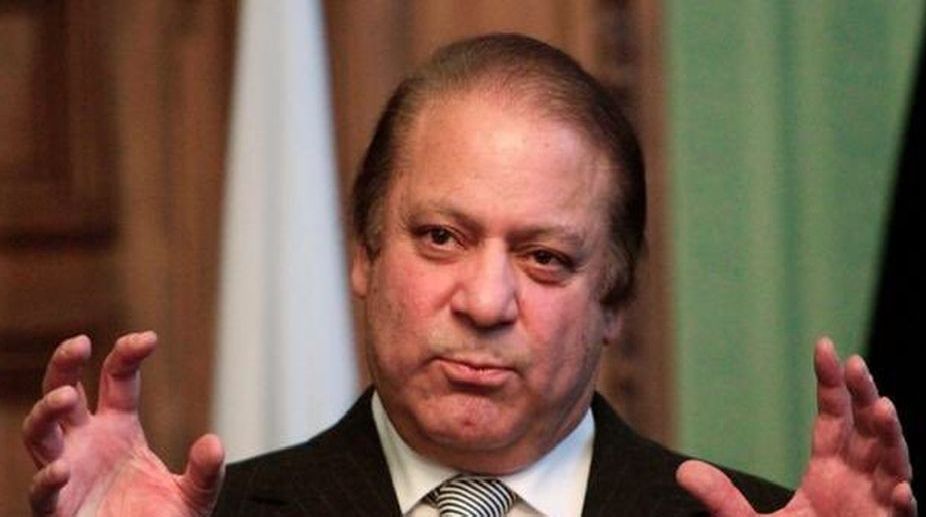
Prime Minister Nawaz Sharif has a kidney stone. It is his second. The first is an equally painful obstruction called Imran Khan.  

This latest disclosure of the prime minister’s medical problems has released yet another flurry of snowflake speculation. These will soon melt, as have all previous prognoses about his imminent departure on health grounds. Nawaz Sharif has no intention of quitting his post. As long as there is a country to be visited (even if it is Ruritania), a guard of honour to be inspected, a photo-op with a head of state to be had, another framed trophy to be added to the galaxy of dignitaries grinning from the walls of his Raiwind estate, he will preserve his fitness — in the supreme national interest.

His peripatetic travels have shown that nothing is as dear to him as the cause of international diplomacy. One suspects he has made more visits abroad than appearances on the floor of the National Assembly. MNAs are less familiar with his features than foreign hosts are.

One should not cavil about his obsessive interest in foreign policy. He is no different to any other leader of our hapless country. To them, foreign policy is a synonym for a personal insurance policy.

For example, haven’t the Sharif brothers been rescued repeatedly by Saudi largesse and Qatari amnesia?  Doesn’t Altaf Hussain continue to enjoy the hospitality of the United Kingdom? Doesn’t former president Asif Zardari feel more at home in Dubai than in Karachi? Even their nemesis, retired Gen Musharraf, feels no embarrassment admitting that the plush property in London was a personal gift from a Saudi monarch. Nor does he blush when he discloses that organisers of lecture tours in the United States are eager to pay him $150,000 a pop for the sort of vacuous speeches he gave for free as president. 

Musharraf has followed the example of illustrious names like Tony Blair, Margaret Thatcher and Ronald Reagan who charged enviably high fees after they left office. One recent Pakistani ambassador to the US took pains to hair-split his windfall income as a speaker. He drew a distinction between the fees he received when speaking as an ambassador from those he pocketed when speaking his mind. Needless to say, such talent did not go unnoticed in a country that appreciates innovation and initiative.

The most recent example of such lucrative diplomacy is the sinecure the Saudis have offered former Chief of Army Staff Gen Raheel Sharif. After plucking petals for days — ‘Should I? Shoudn’t I?’ — he reached the final one. He decided to head the Saudi-led 39-nation coalition. The impression is that it is not against Yemen but against terror/the militant Islamic State group/Iran. Never has the ummah stood so united against an enemy of fellow Muslims. 

Last week, it was reported that a spokesman for the coalition, the Saudi general Ahmed Asiri, while visiting the UK had an egg thrown at him.  Many Pakistanis might feel that the former COAS in accepting this appointment in Saudi Arabia, has smeared egg on the face of the nation.

It was not all that long ago that the Pakistani people through their representatives in parliament voted against joining this coalition. Of course, it will be argued that permission to Gen Raheel Sharif has been granted by the competent authority. Authority does not presume competence, nor propriety. What will never be assuaged are the feelings of Pakistanis at this inexplicable volte face, this self-serving acceptance of a gilded sinecure.

One is reminded of the anguished words of remonstrance written by Queen Mary to her son King Edward VIII, after he announced his abdication in 1936.  Even though they were written 80 years ago and in a different context, they are still poignantly applicable: “You did not seem to be able to take any point of view but your own”, she told her love-smitten son. “It seemed inconceivable to those who had made such sacrifices during the war that you, as their King, refused a lesser sacrifice.”  Countless Pakistani martyrs have made the ultimate sacrifice for their country. It is sad that our leaders find it impossible to make lesser sacrifices.

There may come a time when foreign policy will be transacted in the interest of the nation, not in the personal interest of rulers.  There may come a time when the National Assembly and the provincial assemblies shall be treated by elected representatives as the dock of accountability, not as a springboard of unbridled opportunity, nor as pulpits of feigned piety. There may come a time when the dignity of service is regarded as its own reward. Until then, Pakistan is being treated like some Masai cow: milked daily and bled to sustain its ravenous masters. 

Dawn/ANN.

There’s no need to feel doomed

Vijaykumar Harbishettar | New Delhi |

The focus of the World Health Organisation (WHO) for 2017 on World Health Day is Depression with a theme “Depression, Let’s Talk”. Depression is a common mental illness that affects 16 to 20 per cent of people in their lifetime. Approximately 300 million people suffer depression worldwide. Disability is measured to quantify the impact of an illness. It is found that depression is now the most disabling of all illnesses including all physical illnesses put together and hence has made WHO take steps and advise its members to create awareness. Depression can occur in any age group, affect people of any socio-economic status, urban or rural lifestyle, cultural or ethnic background.  

Depression, known in ancient literature as melancholia, a word derived from Greek, may have affected people from King Henry VI of England to King Louis XVI of France to Abraham Lincoln. Designated as the consequence of a weak mind in some cultures, such attitudes hinder recovery and lead to further isolation from society, more stigma.

As with the body, the mind can be diseased or ill or strained. With physical illnesses, people talk of pain or swelling. But if the person feels low, is unable to function or is not sleeping well, he may not talk about it because of worry of not being acknowledged or taken seriously. He may even worry that others might say he is making up the ailment. But there is truly no health without mental health.
Depression in adolescents and consequently suicides are on the rise. Elderly persons with physical ailments, bereavement of close friends or relatives or even spouse leading to loneliness may suffer depression in silence. Unemployed unmarried or separated individuals in their early adult age and middle age, are victims. It is not uncommon for woman to suffer from repeated bouts of depression with irritability around monthly periods, termed Pre-Menstrual Dysphoria.  

Woman during pregnancy and specifically in the first few months after childbirth can suffer intense feelings of sadness, tiredness and hopelessness which leads to severe depression that can be detrimental to their own self and their baby. Similarly feeling doomed can be part of the woman’s mental state around menopause.

A person has unintended or slowed down thoughts as an initial sign of reacting to stress. Thoughts in a depressed individual predominantly are of adverse assumptions of the future or one’s own surroundings, family and friends and about one’s own self. Anger may be related to ongoing frustrations from feelings of sadness. These adverse thoughts and emotions will then affect the individual’s activities and functioning.

The individual has a sense of being stuck in a closed tunnel, with no optimism of being able to get out of this situation. The person may feel life is not worth living; may get tired easily; feel he/she can’t carry on because everything is a burden, and lose interest in everything. A person who once enjoyed music or cricket does not get any joy from these anymore. The person may keep away from social gatherings, isolate oneself, see no future, feel no one can help, and sees oneself as the most miserable person on earth. There may even be feelings of guilt or a belief that the victim deserves to be punished.

Depression can affect body and brain functions, by affecting sleep and eating patterns, and causing changes in weight and concentration. One can see the change in the belief system, when this illness takes over the person. Suicides are on the rise, and nearly 150,000 people in India commit suicide every year. Most common cause for suicide is depression. Thus many suicides can be prevented by simply detecting depression. This can be done by creating awareness, and ensuring the person gets the right help. The illness is like a cloud or early morning mist, creating a sense of haziness in the thinking process. It is like driving in a fog; it slows the person down and forces him to be cautious.

Adverse experiences from the past or even from childhood would have helped evolve a personality. Some learn to shout, scream or argue and that leads to fights between family members. Or people develop habits of smoking and alcohol misuse while some develop depression or anxiety. Healthy distractions include yoga and meditation, spiritual work, playing sports, gym and exercise and doing charity work. One can make these as their hobby.

More than everything occupying oneself deeply in employment and enjoying it can itself help to develop the sense of tolerance to overcome effects of stress. A person not occupied by work is likely to have intrusive adverse thoughts which can be gateway to depression. Having no goals, aims or direction are sufficient to create a platform for depression to set in.

The person supporting such individuals can reiterate “The problem is the problem. You are not the problem!”; explain this is a simple illness called depression that can be dealt with and overcome, or if severe, be treated by a psychiatrist.

Nineteenth century biologist Charles Darwin says the species that can adapt to change are the ones that will survive. Nothing is permanent and everything is bound to change. The human being is expected to adapt or in simple terms make necessary adjustments to changing circumstances and situations. It is better to re-train the mind to focus on positive ideas.

Thoughts impact on an individual’s behaviour. Spiritual gurus preach about need for clarity and nurturing of thoughts. Generally they teach how important it is to remain aware of one’s own self, and examine them. There is a saying “what you think, you become”. Getting involved in spirituality, religious rituals, learning and practising yoga could be preventive. Learning any one technique of meditation, practising mindfulness, doing regular exercise and eating healthy all go a long way to maintain physical as well as mental wellbeing.

Individuals should ensure they strengthen their support system, and not keep isolating themselves by pushing their relatives or friends away. Employment is a must. In India, youth population is on the rise. Occupying oneself in meaningful activities can itself prevent depression and other mental illness. 

Consulting a psychiatrist if your family doctor suggests this may help to clear your doubts about underlying causes of depression. In some cases, this simple consultation and support may be sufficient for treating milder forms of depression. Treatments such as Cognitive Behaviour Therapy and Supportive Psychotherapy can be very effective. In a few cases, a psychiatrist may need to prescribe an anti-depressant. Myths exist among general public that medications are dangerous or addictive. Like any medication, anti-depressants will have side effects; however most of them are mild and seen in early days.

Engaging depressed individuals in a dialogue is the most important thing. It is suggested that the person talk to a trusted friend or relative. It is alright to put your hand up and say, “I need help or support or I need to talk”. It is imperative to make someone aware, so you can be guided back quickly to your track. The World Health Day theme enhances awareness about this disabling illness. It is important to seek treatment, recover and thus promote overall health.
 
The writer is a consultant psychiatrist based at Bengaluru. He has worked in UK and India.

Waiting for the Begum

Salman Haidar | New Delhi |

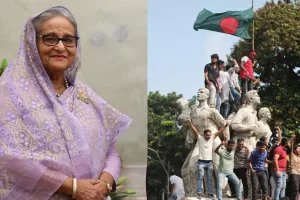
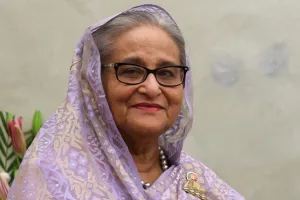
The long anticipated visit by Sheikh Hasina is an opportunity to freshen and re-animate ties between India and its important neighbour to the east. Not that there is any pressing need for new initiatives: relations are good, there is plenty of cooperation between India and Bangladesh, and few outstanding issues that demand attention. The closest there is to a dispute is the division of the waters of the Teesta, and that too need not be an insuperable problem, for the basic groundwork has been done, with extensive negotiations yielding an agreement in principle that former Prime Minister, Dr. Manmohan Singh, was all set to sign in Dhaka but was forced to delay owing to unexpected backing off by the West Bengal Chief Minister, whose support was ~ and is ~ crucial. Thus the technical basis of a balanced agreement has been established but the uncertainties of Centre-State relations in India have stood in the way of a final settlement. 

Since the earlier near-miss on Teesta, much has changed, in that India is under a different leadership which is widely perceived as being more decisive, and certainly is much stronger in Parliament, hence expectations about river-sharing have revived, for New Delhi could well be in a better position today to come to terms on the water-sharing agreement that Bangladesh has been seeking. Another factor to be noted is that while India has undergone sweeping political change Bangladesh has remained under the same leadership ~ that of Sheikh Hasina ~ and this continuity could be helpful when it comes to reviving the earlier effort on the Teesta.
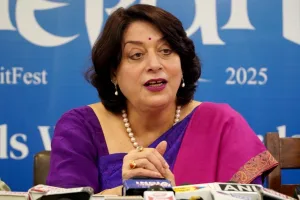
Sheikh Hasina’s exceptional record as a discerning leader who has transcended differences and established meaningful cooperation with India should also be acknowledged. It was under her leadership that the landmark agreement on sharing of the Ganga waters at Farakka was concluded; indeed, it can be argued that without her the Ganga would have remained the biggest obstacle to good relations, as it was for the previous half-century. At that time, too, there were strong differences on water-sharing between Kolkata and New Delhi, which were ruled by parties that had strong political differences, but yet they were able to come together in the shared cause of peace and development. If Sheikh Hasina gave the lead from Dhaka, she was able to count on the participation and support of the State Government in Kolkata under Chief Minister Jyoti Basu, and of PM I.K.Gujral’s government in New Delhi. The agreement on the Ganga waters, as it turned out, was a prelude to other water-related issues, of which the Teesta is currently the most prominent, though there are others that may well move up when Teesta is sorted out. As past experience indicates, sharing the river waters is always politically fraught and needs consistent high-level consideration, for problems can keep arising in dealing with the numerous trans-border rivers between India and Bangladesh.
As the lower riparian, Bangladesh may feel that its concerns tend to be overlooked: this was the case when the Ganga agreement was being negotiated, and echoes of the same sentiment are to be heard today when another water agreement is being put together. As a means of giving itself some leverage in dealing with its larger and geographically better placed neighbour Bangladesh has spoken of the possibility of a broader regional water-sharing agreement that would include China among the negotiating parties. The upper waters of the Teesta rise in Tibet so there is some apparent logic in the suggestion, even though India has never favoured third party association with bilateral issues of this nature and there can be little realistic expectation of bringing third parties into the Teesta discussion.

Apart from the rivers issue, there are several other matters that can be advanced during Sheikh Hasina’s visit, some being projects to be financed out of a substantial loan that India is to provide. Infrastructure development and better connectivity have long been on the list of joint activities to which both countries are committed though the follow-up has remained insufficient. For India, revival of the route across Bangladesh is the most efficient way of getting across to the North-East, and it would make a big difference to the development of that region. Conceivably, should trans-border communications improve, Chittagong could resume its role as the port for the eastern part of the sub-continent and Bangladesh become a central element in the evolution of India’s ‘Make East’ policy. The possibilities are unending. Some of these themes figure in the large number of bilateral agreements that are to be signed during Sheikh Hasina’s visit and they could give real substance to the relationship.

An MOU on cooperation in defence manufactures is also part of the expected outcome from the visit, and this has drawn some criticism in Bangladesh from elements that do not welcome closer ties with India.That the Prime Minister of Bangladesh has not permitted such groups to call the tune indicates the firmness of her conviction in the matter. She has been a consistent advocate of better India-Bangladesh ties and has helped steer the relationship in a positive direction.

After long initial travail, Bangladesh has succeeded in overcoming many of its early problems and is today rightly to be regarded as a significant partner in India’s growth and development plans. In some respects Bangladesh has moved ahead of India, as for instance in its progress in programmes for poverty reduction, health, and education: India may have something to gain from closer interaction in these sectors. India’s constant effort to combat terrorism and to lead the international community in that direction is an important area of mutual interest. At one stage the authorities in Dhaka were reluctant to press too hard against religious extremists who often targeted India but ever since Sheikh Hasina came to power there has been none of the former ambiguity in this matter. Bangladesh itself has been targeted and is a resolute opponent of terrorism in all its manifestations.

One must also recall that Bangladesh has a fine record as a creative source of many significant regional initiatives. The most important of these is the setting up of SAARC, which is now an established part of the regional architecture but could scarcely have come into existence without Dhaka’s persistence and its creative diplomacy. Bangladesh has promoted projects of long distance connectivity and has drummed up multilateral support for development projects like new bridges and roads to bind the region closer.
India’s recent initiative to establish a rail link between Dhaka and Istanbul is in some respects an updating of an earlier Bangladeshi concept. Maybe this imaginative idea will receive a decisive boost from the meeting of the two Prime Ministers. 

The writer is India’s former Foreign Secretary.

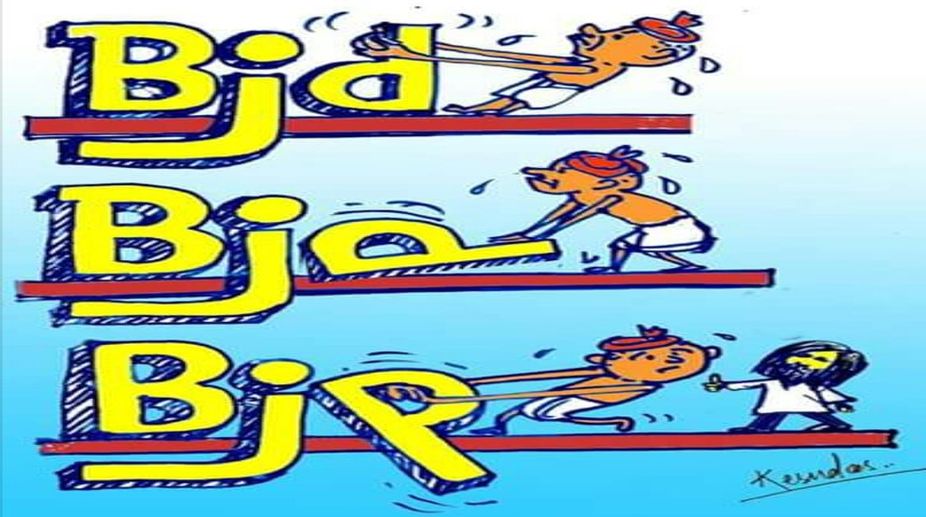
BJD’s double whammy

Editorial | New Delhi |

The Biju Janata Dal is going through a rough patch; the applecart has been rocked after 17 years at the helm in Odisha. It has been one jolt too many since February when the Bharatiya Janata Party swept the panchayat elections in a predominantly rural and poverty-stricken state. The party's strength in the quangos has risen from 30-odd seats in 2012 to 294 seats this year.  In psephological terms, there has been an unnerving drop in the BJD's percentage of votes, suggestive of a severe erosion in what had once seemed to be its almost invincible support base.

There is little doubt that the ruling party is as demoralised as it is disoriented. Over the past few days, the internal turmoil has been still more aggravated with the four-term MP, Baijayant Panda, shrilling for "introspection by the party" with the focus on its dismal performance in the panchayat elections, on corruption, and on bureaucratic dominance. It is a quirky irony of Odisha politics that though the MP from Kendrapara has been a member of the Lok Sabha for 20 years, he has been marginalised within the organisation for the past four years.

Nonetheless, the ranting at the party leadership has caused a flutter in the BJD roost. And not least  because of his proximity to some BJP leaders in Delhi. In the political corridors of Bhubaneswar, fears that a section of the ruling party might switch over to the BJP in due course of time are not wholly unfounded.  Indeed, Tathagata Satpathy, the BJD's Chief Whip in the Lok Sabha, is reported to have expressed fears that the BJP might engineer a split in the BJD.

The BJD's rise and growth since the year 2000 was embedded in its anti-Congress regional plank. Now that the Congress is decimated, the BJP would appear to have taken its space and with a degree of aggressiveness that has bamboozled the state's ruling party.

In the net, the BJD has been floundering in search of its moorings and particularly in the context of the BJP's national executive 
meeting, scheduled to be held in Odisha on 15 and 16 April… markedly coinciding with naba barsha.

Significant must be the choice of the venue ~ two months after the saffronite sweep in the local elections. However, it is early days to speculate whether the party has fixed its sights on the next Assembly elections.

Suffice it to register that Mr Panda has played into the hands of the BJP. By baring his angst in the public domain,  Panda has made the  waters murkier.

And it may not be easy for the Biju Janata Dal to shore up its image before the Assembly elections, let alone play a role in the national perspective in league with other regional party leaders.

‘DUI’ overdrive

Editorial | New Delhi |

It is getting contagious ~ this malaise of negating the “noble” by trying to enforce it through mechanisms not fully “thought through”. With the added danger of a needless sense of prestige that risks exacerbating rather than easing complexities that had been overlooked in the initial “orders”. Though many might be irked by the comparison, there is a degree of commonality to the fall-out of demonetisation and the apex court’s order restricting the sale and service of alcoholic beverages along highways.

Who dare quarrel with efforts to curb black money and reduce traffic mishaps resulting from drunken driving? Yet just as not all cash was dubious as was made out to be, there is a huge difference between having a drink and “driving under the influence” (DUI). And only over an extended period of time will it be possible to determine if either move had the desired effect. For it is only in the realm of the romantically-philosophical that the theory of short-term pain for long-term gain acquires relevance.

Worse is when a “moral dimension” is injected into the equation: the personnel behind the 8 November bombshell spoke of doing what governments had avoided for decades, a member of the bench of the apex court responded to a senior counsel’s query with “we don’t have to stop every ill before we stop one ill”. Is that not reflective of a mindset almost as worrisome as members of the infamous Anti-Romeo squads cracking down on courting couples?

A number of legal technicalities are likely to be raised if the moves for a review petition or a Presidential Reference materialise. It is contended that the sale of alcohol at vends is not to be clubbed with the serving of hard drinks at bars, marriage receptions, etc.
Then there is confusion over the point from which distance from highways is to be measured: is that the length of the road to be travelled or “as the crow flies”. Hotels have started using their rear gates to extend the distance, some states have opted to de-notify sections of the highway to “beat the ban”. Clearly the loss of excise revenue is hurting, and efficient governance does not include such fanciful thinking as arguing that social costs outweigh financial gains. Then there is the view that social maladies ~ like dowry ~ cannot be legislated or “policed” away. 

Many suggest that statistics do not point to drunken driving being responsible for a majority of traffic mishaps ~ or has the publicity triggered by the antics of a few rich brats with high-speed vehicles created a distorted picture? Has the judiciary encroached upon the legislature’s domain? Hopefully doubts will soon be resolved and there will be an end to this DUI overdrive.

27 children killed in Syria chemical attack: Unicef

IANS | United Nations |

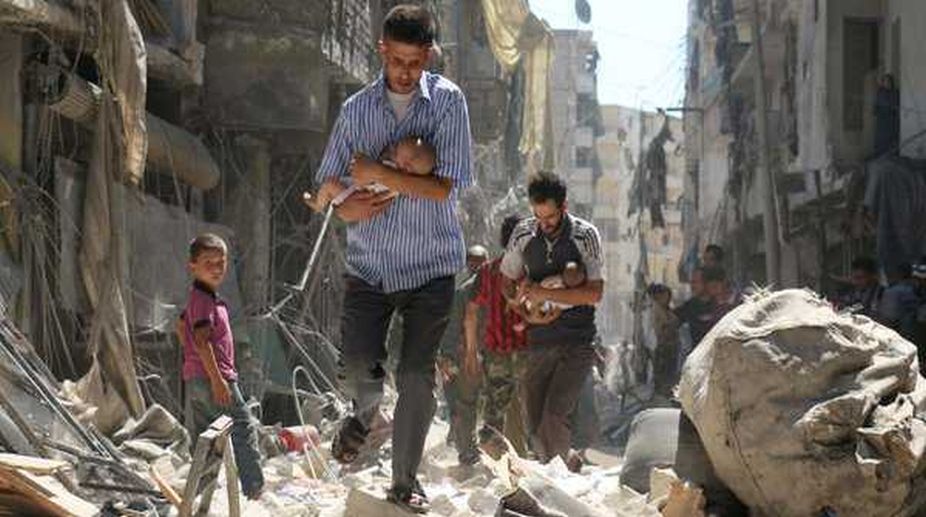
At least 27 children were killed in the chemical attack in Idlib province of Syria, the UN Children's Fund said here on Thursday.

A further 546 people, among them many children, have been injured, the UN agency said in a press release. "Casualty figures are expected to rise."

"The killing of children in Syria cannot be allowed to continue," said the Unicef Regional Director, Geert Cappelaere, demanding: "All parties to the conflict and those with influence on them must immediately put an end to this horror."

UNICEF and partners continue to respond to the attack by supporting three mobile clinics and four hospitals to provide first aid and treatment, and nine ambulances to refer and transport patients to hospitals in the area.

UNICEF is also delivering critical medical supplies and working with health partners to raise awareness about medical response to chemical attacks, the press release added. 

UN Secretary-General Antonio Guterres on Tuesday said he is deeply disturbed by reports of alleged use of chemical weapons in an airstrike in Idlib.

Media reports said about 70 persons were killed and 200 others were wounded Tuesday in a gas attack in a rebel-held area in southern Idlib.

Also on Tuesday, a senior Syrian military officer denied reports of military toxic attack on rebel-held area in Idlib. The senior officer, who spoke on condition of anonymity, said the rebels were the ones using the toxic gas against civilians to frame the Syrian army.

Earlier in the day, the Syrian Observatory for Human Rights said warplanes carried out intensive airstrikes on the rebel-held town of Khan Sheikhoun in the countryside of Idlib province, killing dozens of people, mostly civilians.

RBI raises ARCs’ capital requirement to Rs 100 cr

IANS | Mumbai |

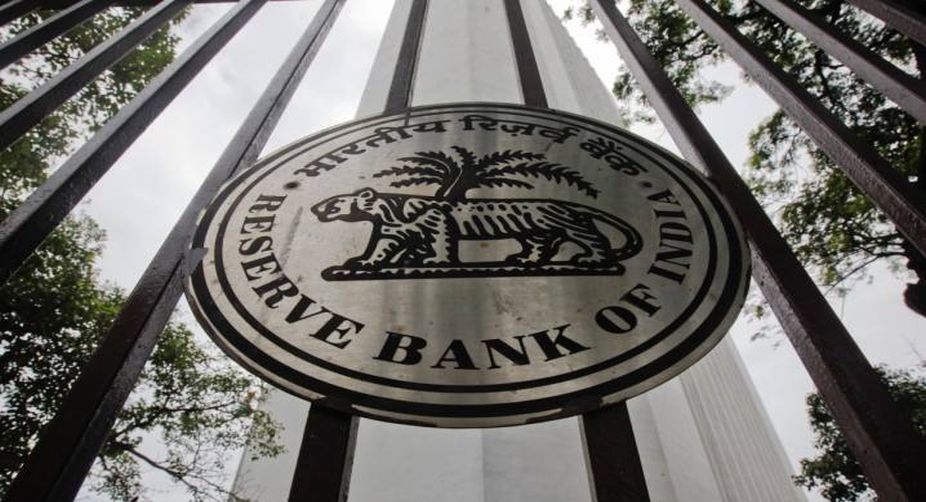
The Reserve Bank of India (RBI) has raised the capital requirement for asset reconstruction companies (ARCs) to Rs 100 crore, from the current Rs 2 crore, it has announced.

This move was necessitated by the higher amount of cash required to buy bad loans from the current fiscal, RBI said in note accompanying its first bi-monthly monetary policy statement of the current fiscal presented here on Thursday.

The enhancement in capital requirements comes after new norms notified by the RBI in September last said if security receipts (SRs) make more than 50 per cent of the value of the asset under consideration, banks have to continue to provide for these loans as if the loans continue in the books of the bank.

These norms were aimed at forcing banks to sell more such non-performing assets (NPAs), or bad loans, at cash.

"In view of the enhanced role of ARCs and greater cash-based transactions, it is proposed to stipulate a minimum NOF (Net Owned Fund) of Rs 100 crore for ARCs. The necessary instructions will be issued by end-April, 2017," the RBI said.