Logo

10,000 women to drive Saudi taxis

IANS | Dubai |

Ride-hailing applications in Saudi Arabia are preparing to hire Saudi female chauffeurs, months ahead of lifting a ban that prevents women from driving or owning driving licenses in the country, a CNN report said.

The ride-hailing applications Uber and Careem recruited their first female drivers in Saudi Arabia after the Kingdom announced plans to lift the ban on women driving by June 2018.

Female customers currently represent 80 per cent of Uber’s Saudi rider base and 70 per cent of business for its Dubai-based counterpart Careem, according to statistics shared with CNN by both companies.

The apps are a lifeline to women with no independent way to get around the Kingdom.

All drivers employed by the two firms are male — mostly Saudi nationals driving their privately-owned vehicles.

Following the ground-breaking royal decree that announced plans to lift the ban on women driving in September 2017, both companies have been preparing to hire their first female drivers.

Liverpool forward Roberto Firmino bids tearjerking farewell to Philippe Coutinho

The 25-year-old on Monday became Barcelona’s most-expensive signing of all-time!

SNS | New Delhi |

Philippe Coutinho was officially unveiled as Barcelona’s record signing on Monday, ending a six-month-long saga that left a bitter taste in the mouth for many Liverpool fans despite the €160 million the club netted in the transfer and Reds forward Roberto Firmino penned a touching farewell message for his compatriot on Instagram.


The post, when translated, reads:

“Hey, Liverpool is no longer the same without the magical wizard.

Bro, I wish infinite success for you, that you enjoy life. And realise all your dreams brother!

God is always protecting you and your whole family!

It was an honour, El Wizard, to play together with you”.

A vast majority of players, past and present, had paid tributes to the twinkle-toed midfielder on Tuesday and while Firmino was a little late in wishing his former club colleague, his wish was perhaps the most striking of all.

Must read: Liverpool players, former and present, react to Philippe Coutinho’s departure

Firmino, Coutinho, Sadio Mane and Mohamed Salah had formed a part of Liverpool’s vaunted ‘Fab Four’ this season as the Reds terrorised Premier League defences but with Coutinho’s departure, the quartet has split to leave Reds fans worried about the strength of Jurgen Klopp’s squad.

Coutinho was on the verge of moving in the summer, with Barcelona making several offers but Liverpool held firm on their no-sale policy. A reported bid of €105 million was rejected and the Brazilian stayed in Merseyside beyond the summer deadline.

Don’t miss: Chelsea, Arsenal cancel each other out in 1st leg

According to reports, Jurgen Klopp offered Coutinho a vastly-improved deal and even offered to make him captain of the club in a desperate bid to stay but the South American had set his heart on a move to the Nou Camp and eventually got his way once the winter transfer window opened.

Despite handing in a transfer request, however, Coutinho continued to perform at a level expected of him and his farewell message to Liverpool fans was, by and large, well-received.

Also read: Philippe Coutinho posts message for Liverpool fans on Instagram after Barcelona move

Riyad Mahrez of Leicester City and Thomas Lemar are two high-profile names that have been linked to replace Coutinho’s void, but it remains to be seen whether their respective clubs will agree to let their prized assets depart mid-season.

Emre Can is another player expected to depart Anfield either in January or after the end of the current season as he is in the final few months of his contract and will be available as a free agent in the summer.

After Agnyaathavaasi, eyes set on Jai Simha’s release

SNS | New Delhi |

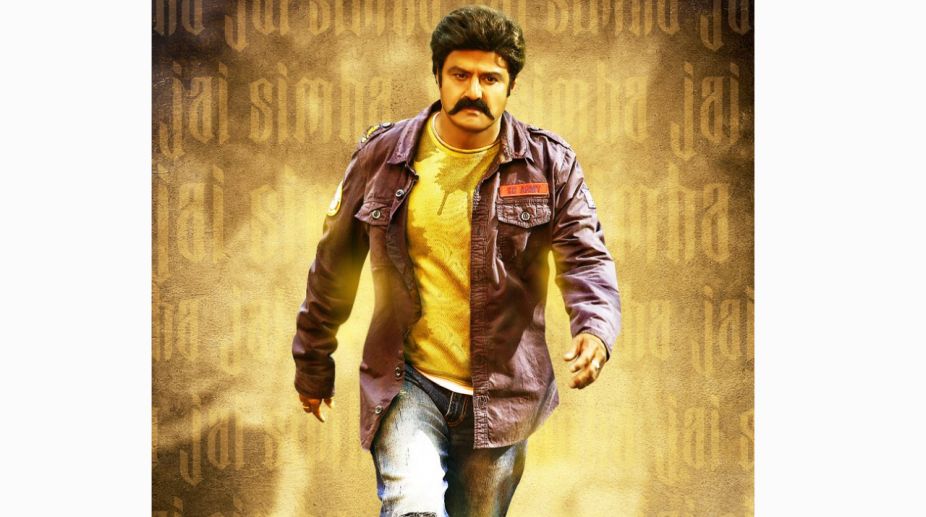
After Agnyaathavaasi was released in cinemas and grabbing great responses, the sights of all fans are set on the release on the Balakrishna starrer ‘Jai Simha’.

Jai Simha, starring Balakrishna as the lead actor and Nayanatara as the leading lady, will be released in the cinemas on January 12, 2018.

Even though there have not been any grand promotions for the film, the expectations are high. It is said to be the rehash of old Tamil movies and relies on mass moments and sentiments.

Jai Simha is directed by K S Ravi Kumar and produced by C Kalyan.

Indian cities need integrated development agenda

IANS |

One of the fastest-growing economies in the world, India has grown at a rate of above seven per cent over the last decade. Much of this growth can be explained by the growth of its cities. Cities have emerged as economic powerhouses that have defined job growth within the country.

While prosperity has increased in cities, so have the challenges they face. The challenges are of inequality, unplanned urbanisation, mass migration, poverty, unemployment and the like. Some cities have even witnessed a fall in their quality of life.

The challenges that our cities face can be managed if looked at from the lens of competitiveness.

Competitiveness depends on the long-term productivity of a region. A competitive city is a city that successfully facilitates its firms and industries to create jobs, raise productivity, and increase incomes of its citizens over time.

The City Competitiveness Report 2017 represents the competitive performance of 50 Indian cities on different parameters. It uses the framework of Michael Porter’s Diamond Model which defines competitiveness as the sum total of factor conditions, demand conditions, context for firm strategy and rivalry, and related and supporting industries.

Bengaluru has emerged as the most competitive city in India. Mumbai and Pune closely follow. Patna, on the other hand, has emerged as the least competitive city.

The analysis brings out some interesting insights. First, the population of a city has a direct bearing on its level of competitiveness, i.e., big Indian cities are also the most competitive. This suggests that either the population acts as an active resource (as a factor of production) and positively impacts the competitiveness of a city or that competitive cities tend to be more attractive to the general population.

The literacy rates in these cities are substantially higher than India’s national average. This, coupled with their high population densities, creates the best demand conditions in the country, thus adding to their competitiveness levels.

The presence of quality educational institutions in the big cities helps them attract the best talent from all over the country. This, coupled with job opportunities they offer, help them retain such talent. The presence of such diverse talent helps in sustaining the growth, productivity and economy of these cities. Sound financial infrastructure and relatively higher financial literacy levels further add to their competitiveness.

But a large population is not always a boon. It creates challenges pertaining to the movement of people and goods and in the provision of basic services. Governments respond to such problems by improving service delivery and spending on infrastructure. It is not a coincidence that all these cities have operational Metro rail networks and some of the best hospitals and airports in the country. These factors significantly impact the competitiveness of cities.

Secondly, prevailing environmental conditions impact the competitiveness of a city by affecting its labour productivity. While other big cities like Mumbai, Kolkata, Chennai and Hyderabad have managed to retain their competitiveness levels, Delhi has of late witnessed a drop in competitiveness mainly because of its worsening environmental landscape. A similar loss was also witnessed by the neighboring cities of Noida and Gurugram.

Thirdly, the level of industrialisation in a state impacts the competitiveness of its cities. In India, most of the highly competitive cities belong to a small group of industrialised states (including Maharashtra, Tamil Nadu, Gujarat and Karnataka) while the least competitive cities belong to less industrialised states like Jharkhand, Bihar, Chhattisgarh and Jammu and Kashmir, among others. In other words, industrialisation as a policy tool is required to make cities from less industrialised states more competitive.

In the short run, some cities may witness substantial improvements in their competitiveness levels. This may be because of improvement in their factor conditions and demand conditions. But in order to sustain or further improve their competitiveness levels, they must act on the other two pillars of Porter’s Diamond model, i.e., context for strategy and rivalry, and related and supporting industries. It is worth noting that these two pillars are directly related to the level of industrialisation, which cannot be increased overnight.

So, the policymakers in the less industrialised states should look at industrialisation as a long-term solution to make their cities more competitive. Cities in the states of Gujarat, Karnataka, Maharashtra, and Delhi perform well on these pillars. At the city level, old industrial and trade hubs such as Surat, Mumbai, Ahmedabad and Delhi perform well on these pillars.

Lastly, the level of cleanliness and sanitation and competitiveness are positively correlated. Cities in Madhya Pradesh, which have shown exceptional cleanliness performance of late, have seen a rise in their competitiveness levels. Indore was in the news recently for deciding to name and shame people for spitting on roads. Tier 2 and Tier 3 cities like Chandigarh, Vadodara, Coimbatore, Surat, Mysore and Rajkot have witnessed a similar fate. Big cities like Delhi, Bengaluru, and Chennai have not performed well on this front. Massive population, urban sprawl and limited public infrastructure are the possible reasons.

Our cities have focused only on a few parameters of development and have ignored the others. For instance, despite being the most competitive cities in the country, the performance of big cities on certain parameters (such as environment, cleanliness and administration) is not up to the mark.

This probably signifies a lack of clear vision, as also an integrated development agenda. Planning and development should take place with a clear set of priorities. One of the ways to tackle the problem at hand would be to strengthen municipalities by giving them more political and financial powers. China, which has some of the world’s most competitive cities, owes its success to such devolution of power. Participation of the local population in the planning and development process is another important aspect which is ignored in India. How India strengthens its cities will determine the strength of India’s growth story in the future.


Photo

  • img
  • img
  • img
  • img
  • img
  • img

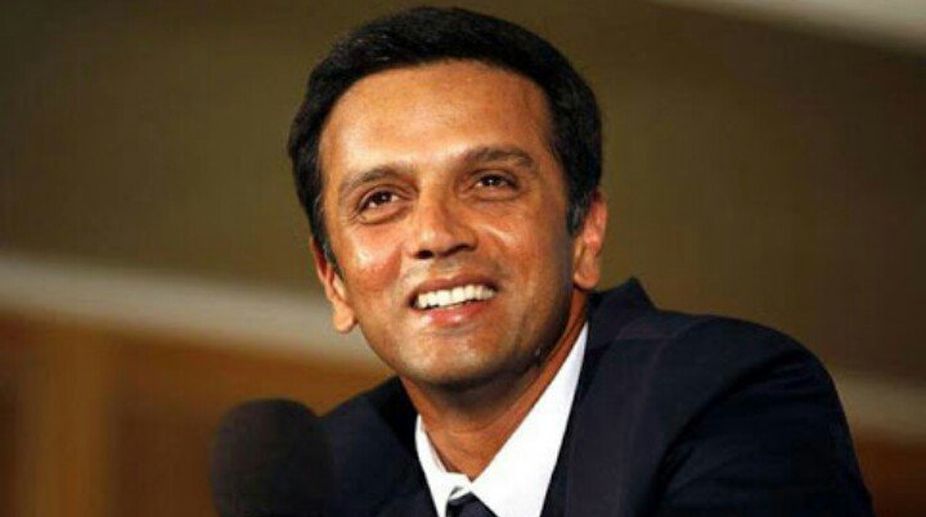
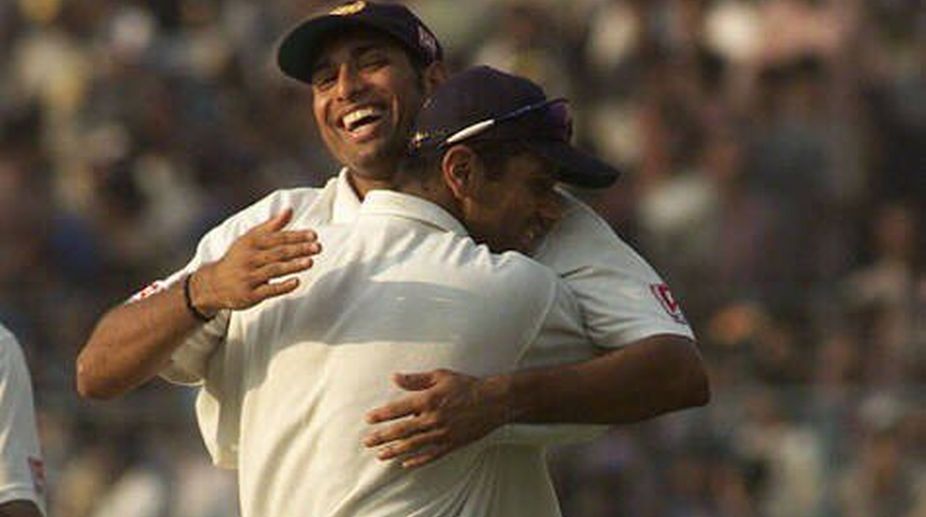
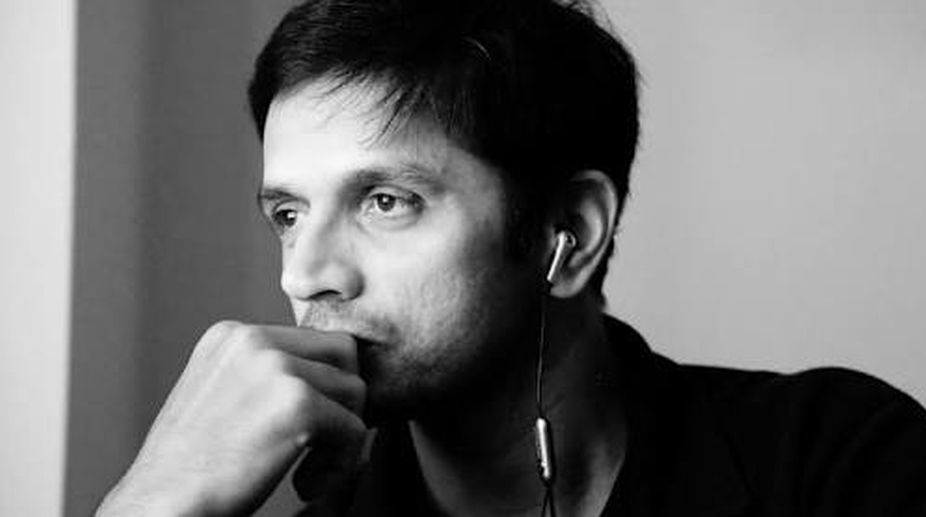
Rahul Dravid: 5 lesser known facts about ‘The Wall’ of Indian cricket team

Rahul Dravid: 5 lesser known facts about ‘The Wall’ of Indian cricket team

MORE Photo STORIES

CBSE Class X, XII board examinations from March 5; see full date sheet

SNS | New Delhi |

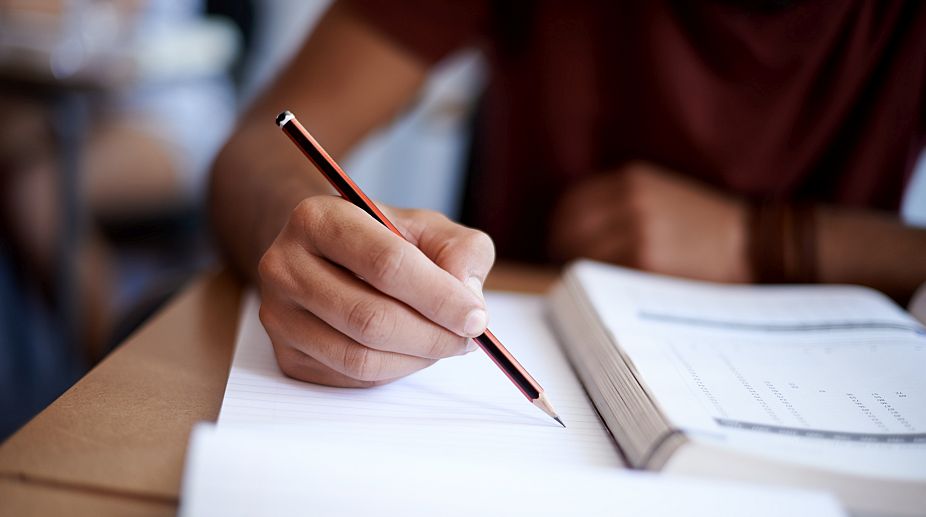
The Central Board of Secondary Education (CBSE) will conduct its annual examinations of Classes X and XII from March 5 and date sheets for the annual exams are available on the CBSE website.

Here are links to access 2018 Class XII and Class X date sheet:

Class XII date sheet 2018

Class X date sheet 2018

The CBSE class X examinations, in which 16,38,552 students are expected to appear, would end on April 4.

The Class XII annual examinations, for which 11,86,144 students are expected to appear, would go on till April 12.

While the first exam in Class X is of the subject Information and Communication Technology, Class XII students will be appearing for the English paper.

As per the CBSE guidelines, the CBSE affiliated schools will be conducting the practical exams from mid-January and complete it by January 31.

This will be the first batch to appear for Class X board examination after the board decided to junk the Continuous and Comprehensive Evaluation (CCE) and reintroduce the board exams.

Death threat: Salman Khan’s Race 3 shoot disrupted as three armed men ‘storm sets’

SNS | New Delhi |

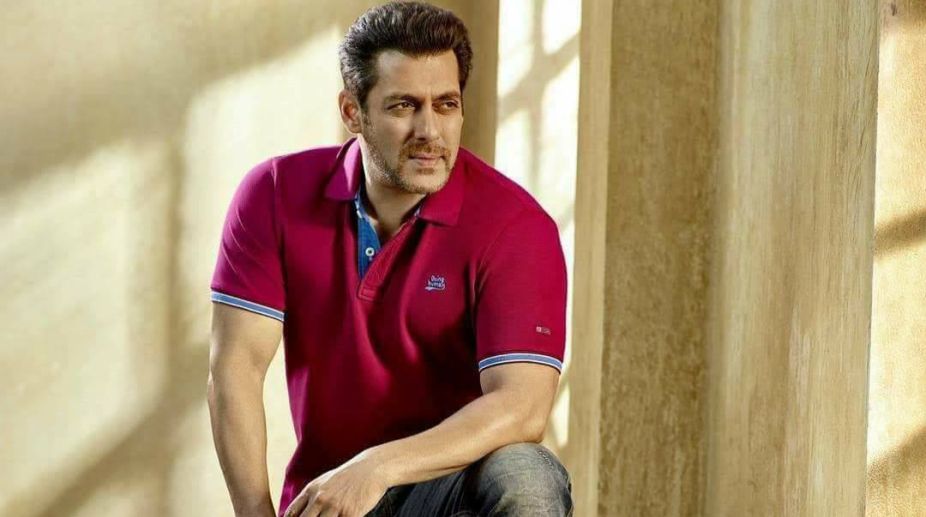
Bollywood superstar Salman Khan has been issued a death threat by a Rajasthan based gangster, Lawrence Bishnoi, recently. He said, “Salman Khan will be killed here, in Jodhpur… Then he will come to know about our real identity.”

The threat was in the context of the two-decade-old blackbuck poaching case, as the Lawrence belongs to the Bishnoi community who worship the animal. The actor received the threats a day after he reached Jodhpur for the hearing of the case. However, he is not fully safe even in Mumbai now. On Tuesday, three men entered the sets of ‘Race 3’ in Film city, Salman’s upcoming movie, supposedly to hurt him, as per a report in the Mumbai Mirror. The police sensed the danger and warned the actor about the situation due to which he canceled the shooting and left.

According to media reports, “The police arrived at the Race 3 set in Film City and told Salman and producer Ramesh Taurani that the shoot needs to be stopped immediately as the actor needed to head home as soon as possible. Salman was escorted in another car by six cops, while his own car was driven back to his residence by another group of cops.” Police have updated that along with Bishnoi, three other men are also planning to kill him and vandalize the film sets. Salman Khan has been provided extra security after the trail of incidents that have been happening.

A senior police officer said, “This is not the first time a threat has been issued against Salman or a member of his family, and the actor is often spotted about town without security or even his bodyguard, Shera, but anticipating an unprecedented attack, he has been asked to be extra safe.”

Salman Khan has been avoiding his cycling sessions since then and will not be updating anything on the social media platforms too.

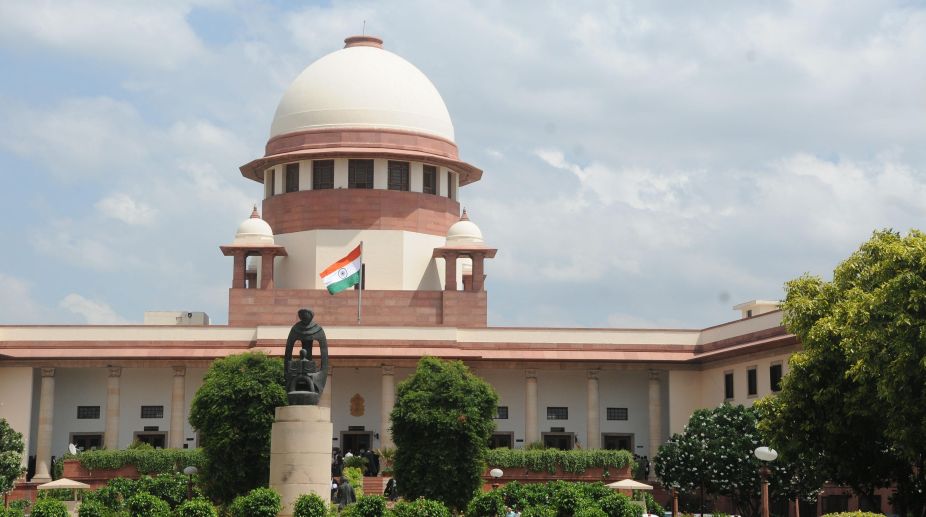
Supreme Court sends notice to Kerala CM in graft case

IANS | New Delhi |

The Supreme Court on Thursday issued a notice to Kerala Chief Minister Pinarayi Vijayan and others on a plea by the CBI challenging their discharge in an alleged corruption case involving three hydel power projects in the state.

A bench of Justice N.V. Ramana and Justice S. Abdul Nazeer also stayed the trial of the case involving the award of contracts for the renovation of the three hydel power projects in Kerala.

The Central Bureau of Investigation (CBI) had moved the top court challenging a Kerala High Court order discharging Vijayan and six others while allowing trial of the remaining three accused.

The matter related to late 1990s when Vijayan was Power Minister in Kerala.

Three accused, who were asked to face trial by the High Court too, had moved the top court challenging the High Court’s verdict asking them to face trial.

Sussanne Khan attends Hrithik Roshan’s birthday bash

SNS | New Delhi |

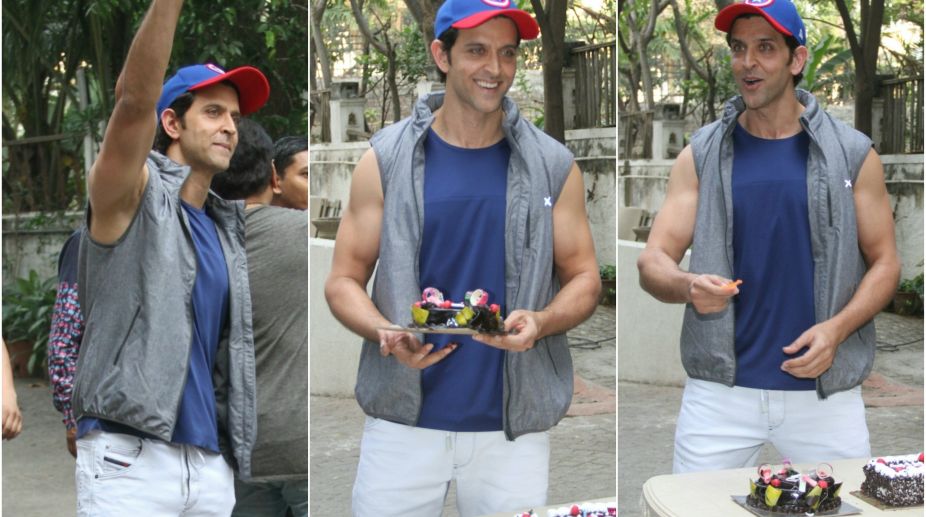
Hrithik Roshan, who turned 44 on January 10, hosted a party for friends and family at his residence in Mumbai. Among the celebrities who joined the party were his ex-wife Sussanne Khan; Sonali Bendre and her husband Goldie Behl, Kunal Kapoor and his wife Naina Bachchan and Zayed Khan.

Sussanne looked pretty in a black dress and completed her look with minimal make-up. While the birthday boy kept his look causal.

Hrithik also cut the cake in the company of media persons while daddy Rakesh Roshan made his day extra special by announcing the release date of Krrish 4.

Wishes poured in for the style icon from celebrities, fans, and co-stars. Actress Ameesha Patel posted a photo of him while wishing him on her Twitter handle: “Happy bday my first n darling superhero @iHrithik”.

Sonali Bendre, who was also a part of the birthday bash, shared a video of him playing with the kids and wrote, “Happy happy birthday to the best babysitter in town & one of the nicest people I know. Wishing that this year brings you all that you hope for @hrithikroshan. Lots of love always…”

On the professional front, Hrithik will next be seen on the silver screen as an educationist, Anand Kumar, in the biopic ‘Super 30.

India’s only on-record gay prince opens his palace doors for LGBT people

SNS | New Delhi |

The people of the LGBT group have been living inside a shell since ages in India. While the country is battling with issues like crime against women, corruption, unemployment, it seems like fight for justice for the LGBT people has taken a back seat.

Earlier this week, the LGBT group was gifted a ray of hope when the Supreme Court declared that it will reconsider its 2013 decision to criminalise gay sex.

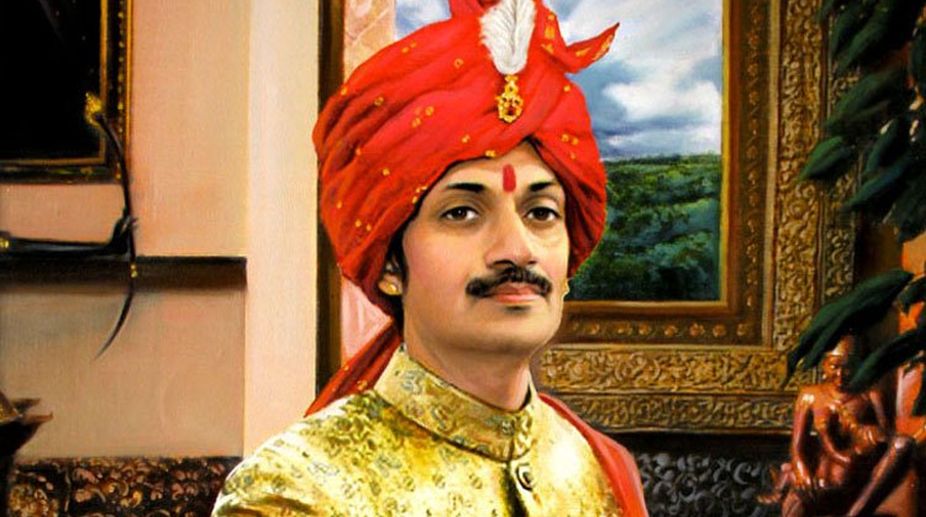
In a highly orthodox country like India, the path of coming out of the closet for LGBT section is only donned with difficulties. Giving in to the societal pressure, these people often tend to cover their real selves to have a shot at the normal life like other people. Some people, from time to time, beat the odds and go on to become the social activists for the rights of gay people and one such person is Prince Manvendra Singh Gohil, heir apparent to the throne of Rajpipla in western Gujarat state.

Breaking all the norms, Prince Gohil took a decision of coming out to his parents a decade ago and now the openly gay prince is all set to help other LGBT people.

According to reports in Reuters, the 52-year-old prince is building a centre for lesbian, gay, bisexual and transgender (LGBT) people on the grounds of his ancestral palace.

In an interview with the Thomson Reuters Foundation, Gohil said, “People still face a lot of pressure from their families when they come out, being forced to marry, or thrown out of their homes. They often have nowhere to go, no means to support themselves.  I am not going to have children, so I thought, why not use this space for a good purpose?”

Apart from offering accommodation to the LGBT group, the center will also have a medical facility and training in English and vocational skills.

Reuters added that the palace, which was built in 1927, is being renovated and solar panels are being installed for power. According to the reports, an online crowd-funding campaign and donations will finance the centre.

Samit gives best birthday present to his father Rahul Dravid

Earlier, Samit had grabbed everyone’s attention when he struck a 125 in U-14 school cricket two years ago.

SNS |

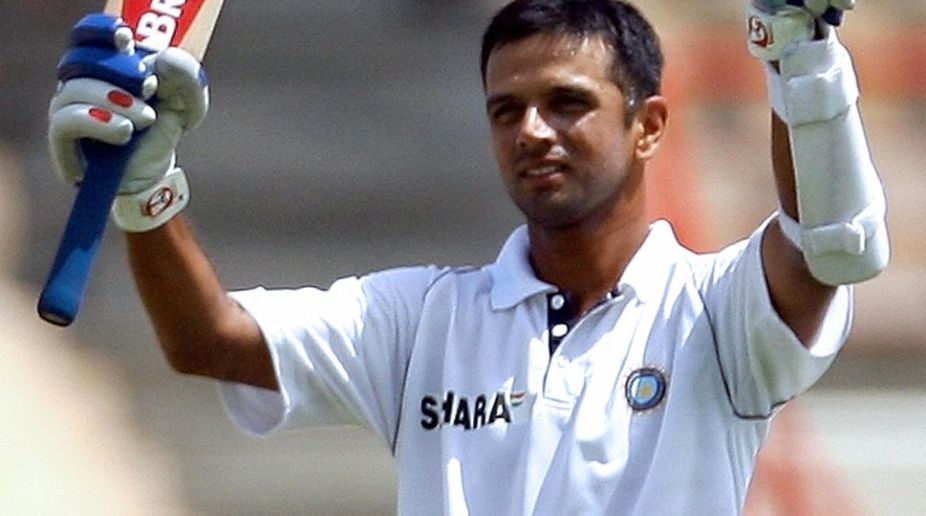
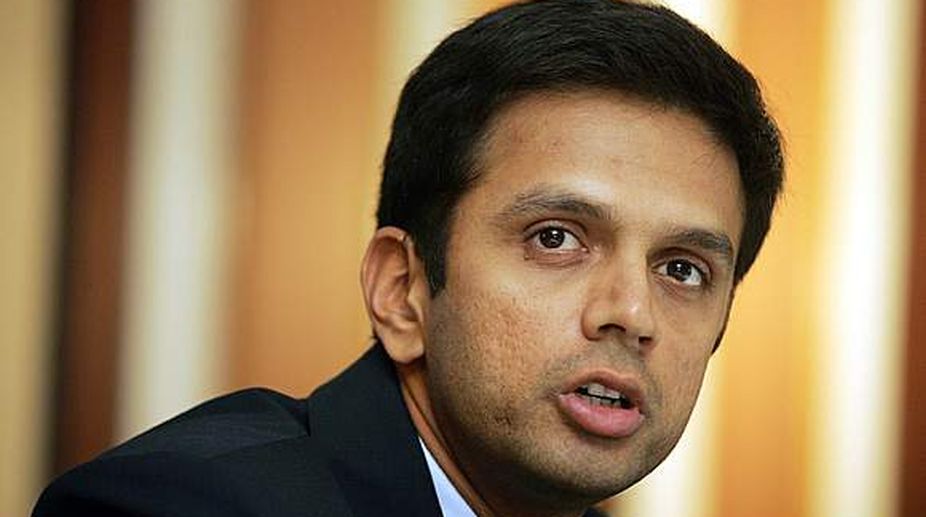
‘The Wall’ of Indian cricket and former Indian skipper Rahul Dravid turned 44 today. As Dravid, head coach of India Under-19 cricket team, is preparing the Men-In-Blue for the upcoming U-19 World Cup in New Zealand, following his footsteps, his son Samit, too, is doing wonders with his bat that will make his father proud.

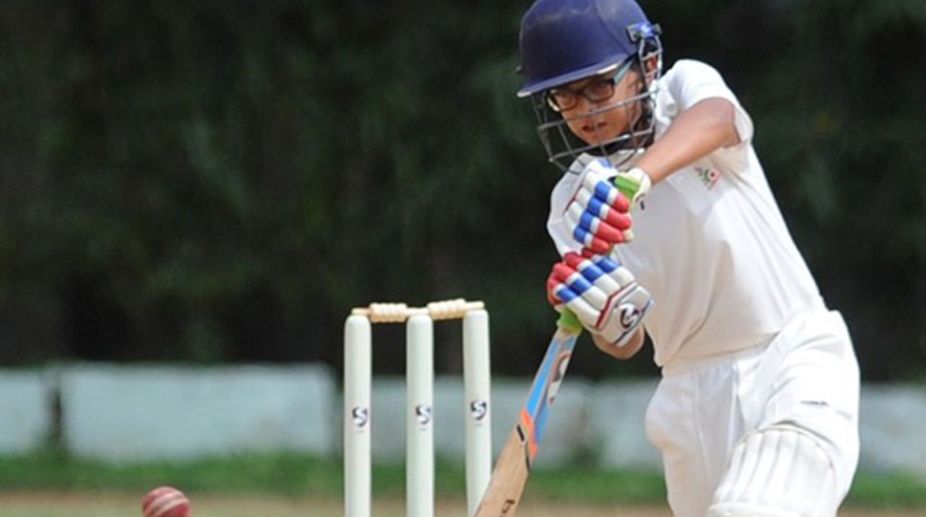
Just a day before Rahul Dravid’s birthday, his son Smait gave him best early birthday present. During a match between Mallya Aditi International School and  Vivekananda School, in Karnataka State Cricket Association (KSCA) BTR Cup Under-14 tournament, Samit went on to hammer 150 runs for his team.

In the same match, spinner Sunil Joshi’s son Aryan Joshi scored 154 runs. The duo took the score of Mallya Aditi International School to 500/5 and the team beat Vivekananda School for 412 runs.

Earlier, Samit had grabbed everyone’s attention when he struck a 125 in U-14 school cricket two years ago.

Of mother and daughter: Bond of poems and sketches

IANS |

For two-and-a-half months, a creative 54-year-old woman worked on illustrations to mirror poems crafted by her daughter. They spent the days and nights in a specially-designated room to work on the joint project of art and poetry.

“These 40-50 days were like a blessing. I got great time with my daughter who lives abroad and I don’t get to see enough of her,” the mother said.

She felt the book gave her a chance to discover more of her daughter.

The efforts of the duo resulted in the production of “When Love Lived Alone”, a book authored by Jessica Singh with sketches made by her mother Neena Singh.

It brings across Jessica’s driving thought — how love lives alone as “it chooses itself — always”.

“While it is often dismissed as a weakness, it is so powerfully pervasive that it trumps all else. We feel love but what does love feel?” Jessoca writes in the introduction.

The mother said that she was the right person to do the job of putting across the visuals of these emotions.

“I know what is going on with my daughter (better than others). Had she hired some artist to do it, the expression would not have been the same,” Neena told IANS in an interview.

The book deals with the subject of love, certainly making the mother curious about the daughter’s romantic interests.

“I told her you will have to reveal a lot of secrets but she said there will be no questioning and I will have to work like a professional,” Neena laughed.

The daughter knew that the mother could figure out what went on in her mind.

“She did guess the embedded meaning but it’s not that each poem or the entire book is for one particular person. It could be for anyone — who you love or who loves you — be it your romantic interest, your family or your friends,” Jessica noted.

“This book is talking about love as an entity… the personification of love.

“For me, love is more important (than the person). This book is about love that is felt and also about the love that is its own being,” Jessica said.

The title sums up what the poet wishes to say through her work. She said she did not frame the title. “I did not craft the title. It just appeared in my mind as a phrase. When I wrote it down, it made sense.”

She felt the emotion is “so complete” that it can live alone.

Illustrations parallel to poems is a very unique concept. Was it done to market the book well?

“Not at all. I had visuals in my mind while I was writing poems, though they were vague. I had to put them out there, although it was an intense exercise,” Jessica said.

“I wanted them to be hand-made and not the ones created through a computer.”

The mother said that she surely understood the emotions of her daughter well, but to bring the exact expression out was a tough job.

“It was difficult for me to understand her creative mind. The illustrations are in black and white. They look simple but they are not. I have put in a lot of hard work to it.

“She approved of many at first go, but many had to be worked on again and again.”

Poetry, Jessica felt, is hard to sell.

“When I myself visit the bookstore, I buy novels and that’s why I know the gloomy section of poems is not that sought after… but this was not a commercial thing. I was just writing. I never thought I would be writing poems or prose.”

“One day, I just thought maybe I should publish them.”

Facebook testing “Today In” local news and events section in some parts of U.S.

SNS |

Facebook is reportedly testing a new feature where it will have city-specific local news, events and announcements available on its platform. The test is currently live for a new section called “Today In” in six US cities, CNET reported on Thursday. Users in test markets will be able to access the feature through the bottom-right menu button on Facebook.

A machine learning (ML) software will power the “Today In” section, helping a team find local content. Local news publishers will be approved by Facebook’s News Partnerships team.

The move comes as part of Facebook’s Journalism Project announced in January last year to curb the spread of fake news on its platform and build out local news partnerships.

Last year, the social media giant also tested products to connect its users to local news.

On Wednesday, a report came out suggesting social media giant’s plan to launch a home video chat product titled “Portal” in May that will compete with Amazon’s Echo Show and Google Assistant-enabled touchscreens.

According to the report, “Portal” will be the first finished hardware product from Facebook’s secretive Building 8 lab and may see the light of the day in May – the time when Facebook organises its annual F8 developer conference.


The “Portal” is said to be equipped with a wide-angle lens that is capable of recognising individual faces and associating them with their Facebook accounts. The social media giant also intends to let “Portal” access outside streaming services like Spotify and Netflix.

(Written with inputs from IANS)

Indian-origin shopkeeper beaten to death in UK

PTI | London |

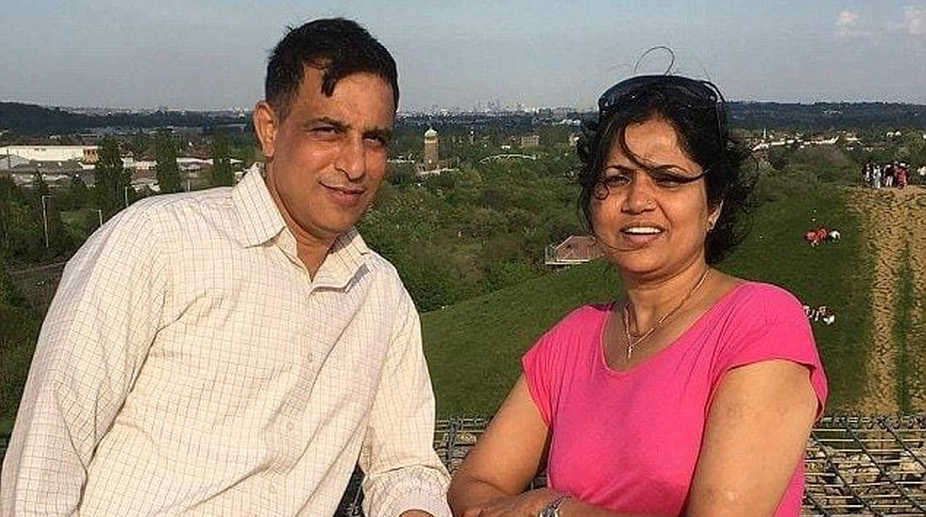
An Indian-origin shopkeeper was killed after he was punched for refusing to serve cigarette paper to under-age UK teenagers at his shop in north London.

Vijay Patel, 49, was attacked in Mill Hill area of the city on Saturday night and rushed to the hospital, where he died of head injuries on Monday.

Patel’s deathbed photograph, hooked up to a life-support machine, has been released by his family as part of an appeal to hunting for suspects involved in the attack.

A 16-year-old boy appeared in court today and was charged with murdering Patel, the father of two.

“The Homicide and Major Crime Command continue to investigate an appeal for information about the events leading up to the incident which resulted in Patel’s death. It is believed that three persons were involved in the incident,” Scotland Yard said in a statement.

Detective Inspector Ian Lott, from the Metropolitan Police Homicide and Major Crime Command, described the attack as an “unprovoked spontaneous incident sparked entirely by refusal to let the suspects buy what they wanted”.

“A man has lost his life for no reason other than trying to uphold the law,” he said.

Patel was struck in the chest and fell backwards, hitting his head as he landed.

He was found lying injured on the pavement outside his local convenience store named Rota Express by London Ambulance Service, who rushed him to St. Mary’s Hospital in London.

Patel had moved to London with his family from India in 2006 and his wife, Vibha, was visiting relatives in India at the time of the fatal attack.

“We are shocked and heartbroken. He was such a kind person. We are all very close because his children are out of the country studying,” said the victim’s brother, Prakash.

The shopkeeper’s friends described him as “honest” and “hard-working”.

An online fundraising page set up for his family and has so far raised more than 15,000 pounds.

Just before the attack, a shop worker had asked a group youths for identification to prove they were over 18 years age the legal age limit for purchase of tobacco and alcohol in the UK.

When they could not provide it, the group became “became aggressive, threatening to vandalise the shop”, the Met Police said.

Patel, who lived in Colindale area of north London, came to the aid of his colleague and was punched to the floor outside before the teenagers fled.

The shop worker was also punched and suffered minor injuries.

“Vijay was the best human being you could have seen in the world. He was my right arm,” said Abdullah Rahimzai, the owner of the shop who was also hurt during the attack.

“He fell unexpectedly with his head on the ground,” he recalled.

The Met Police are appealing for witnesses to track down the remaining suspects in the case.

Vice President Naidu offers prayers at Tirumala hill temple in AP

SNS | New Delhi |

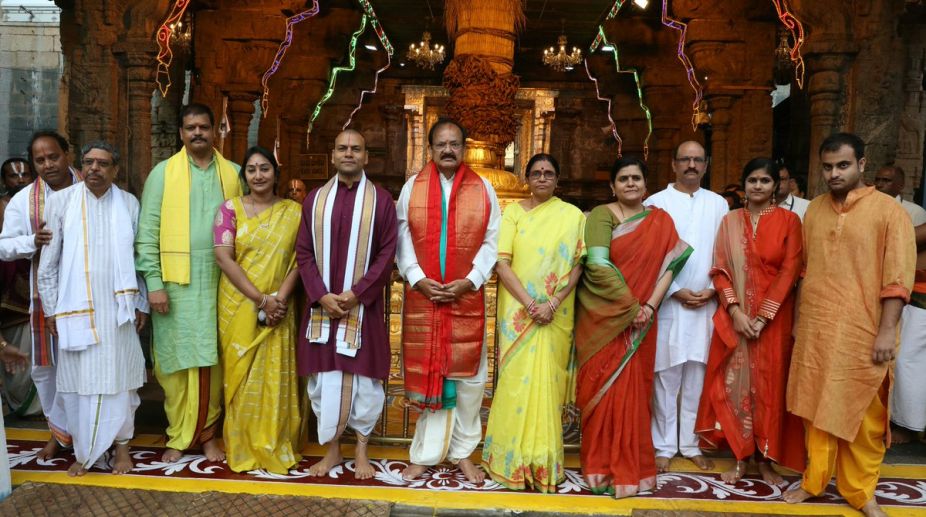
Vice President M Venkaiah Naidu offered prayers at Tirumala’s the famous hill shrine of Lord Venkateswara in Andhra Pradesh on Thursday.

Naidu arrived here by an Indian Air Force (IAF) aircraft on Wednesday evening and stayed at a heavily-guarded Tirumala Tirupati Devasthanams (TTD) guest house on the hills.

His family members too came here separately from Nellore and accompanied the Vice President to the shrine on the hills.

On his maiden visit after assuming office as Vice President on August 11 last year, Naidu was accorded a warm welcome with full temple honours and conducted to the sanctum sanctorum by priests amid Vedic hymns.

Naidu was in the shrine for about half an hour, according to media reports.

After offering prayers at the Sri Ranganayaka Mandapam inside the temple, Naidu was honoured with sacred silk cloth and holy prasadams while a group of priests bestowed divine blessings upon the him.

Later, speaking to reporters outside the temple, he said all countries were keenly watching ancient Hindu practices, culture and spirituality that taught how to lead a meaningful life.

Quoting Swami Vivekananda and other Hindu personalities, Naidu said Hinduism should not be treated as a religion or a way of worship but as a way of great kind of living that harms none.

Naidu also took to Twitter saying, “Our ancestors have always taught us to be helpful to everyone. We believe in the concept of “Sarve Janah Sukhino Bhavantu”.

Institutional inflows help HDFC MF regain top spot

IANS | Mumbai |

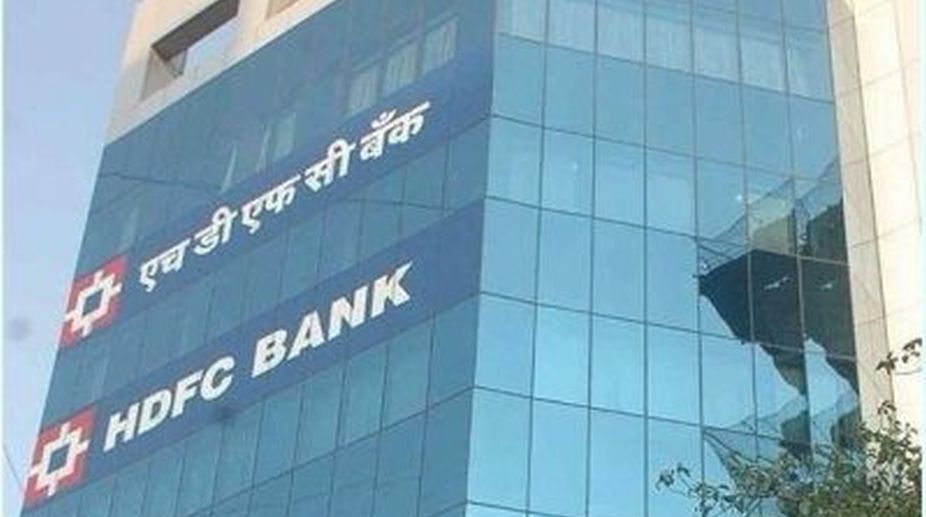
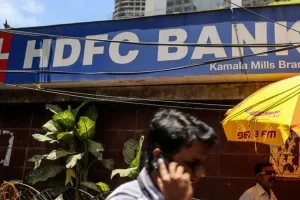
Helped by institutional inflows, HDFC has regained the top spot in mutual fund rankings, overtaking ICICI mutual fund.

As per the December 31 end of period (EOP) assets under management (AUM), HDFC had assets worth Rs 2,93,011 crore, ahead of ICICI with Rs 2,82,068 crore.

Industry sources, however, said that rankings traditionally have been based on Q-AAUM, or the quarterly assets under management, published by the Association of Mutual Funds in India (AMFI) at the end of each quarter.

Also, EOP AUM ranking could again change as it accounts for AUM on a particular day and is largely dependent on the outflows on the last day of the period.

The sources said that, as per Q-AAUM for the quarter to December 31, 2017, ICICI MF, with Rs 2,93,338 crore, still holds the top position, ahead of HDFC MF with Rs 2,89,168 crore.

Industry saw outflows of an estimated Rs 1,27,000 crore in liquid funds in the quarter to December 31, 2017. Liquid assets were at Rs 3,55,408 crore at start of the quarter and stood at Rs 2,97,253 crore at its end.

As short-term institutional money is primarily invested in liquid funds, its outflow also affects relative ranking of MF players.

Institutional money decides ranking of mutual fund players as it accounts for Rs 11,00,000 crore, or over 50 per cent of the total MF industry assets of Rs 21,37,000 crore.

The bulk of the MF industry has been focusing on profitability as key criteria for ranking mutual fund players, as it factors in stable AUM growth with more sticky and retail assets rather than building top line by accessing large corporate money.

Post-demonetisation, the MF industry has gained a lot of momentum, but it remains divided among those focusing on the topline for higher AUM growth and those emphasising retail assets and seeking profitable growth.

Potato price fall worrying Punjab’s farmers

IANS | Jalandhar |

Even as a new harvesting season has begun, Punjab’s farmers are staring at bleak prospects with potato prices, that had hit rock-bottom last year, not showing signs of returning to previous levels.

About 10 per cent of the current season’s total harvest has been sold and the prices have stuck somewhere between Rs 150 and Rs 300 per quintal, according to the Punjab Horticulture Department. Farmers are apprehensive about the remuneration this year too, though the production is expected to be higher owing to favourable climatic conditions. About 80 per cent of the harvest in Punjab comes during the peak season of February and March.

Potato prices had slumped to just Rs 10 for a bag of 100 kg (one quintal) last year, leaving farmers in tears — and most of them chose to throw their produce on the roads to rot.
According to the Punjab government, production this year is expected to be over 2.5 million tonnes.

“If the weather is congenial and potato plants are not infected by the blight, overall yield will be good. Currently the rates are not good, I heard,” Gulab Singh Gill, Deputy Director (Horticulture) told IANS.

What concerns the farmers more is uncertainty over remunerative prices for their harvest when it hits the market during the peak season, said Gurinder Singh Kang, a potato grower from Jalandhar’s Lallian Kalan village.

“There is neither much fog nor initiation of blight disease. The climate is quite favorable for optimum output. However, there is an apprehension among farmers and traders whether they will get a fair price as current rates are at below Rs 3 for a kg,” Kang said.

Despite the fall in prices last year, land under potato cultivation has increased this year as farmers used a certain amount of the unsold crop for sowing.

“It is not just the decline in consumption or rise in production that led to the price drop, but several policy-related reasons such as demonetisation, high tax rate for cold storage, lack of export facilities are also responsible,” an official of the Jalandhar Potato Growers Association (JPCA) said.

“It is like multi-organ failure. After demonetisation, traders have become hesitant to procure any agricultural produce in excess. Earlier, we had to pay 14 per cent tax for cold storage but post-GST it has become 28 per cent,” said JPGA Secretary Jagat Gill Thamanwal.
“Also, there are no facilities for exports. Punjab is land-locked and exports to Pakistan are banned via the Wagah border. As the sea route is not cost-effective, our superior potato crop fails in the competition,” Thamanwal added.

Thus, farmers had thrown about 80 per cent of their crop on the roads due to the drastic fall in prices last year.

It is not just the potato growers who have been hurt but the vibrant seed industry has also been significantly impacted, claimed JPCA President Gururaj Nijjar.

“We fulfill almost 33 per cent of the country’s demand and we provide good quality seeds to other states. However, the seeds we produced were not sold this year. We could not even store them in cold storage as the seed’s life is just two months,” Nijjar said.

Potato seeds grown in the Doaba region — the land between the Sutlej and Ravi rivers — are in huge demand across the country for being disease-free and of superior quality.

Nijjar produced 15,000 bags (each 50 kg) of potato seeds in 2016-17 and Gill produced 35,000 bags.

Farmers in the region have sought government assistance, including a minimum support price (MSP), to bring them out of the financial distress.

Including potatoes in the MSP scheme is, however, not possible as it is a cash crop and prices will be decided by the markets, asserted a senior government official, who requested anonymity.