Logo

Another suicide in Bengal due to alleged fear over deportation following SIR

Another suicide has been reported in East Burdwan district in West Bengal due to alleged fear over deportation after the Special Intensive Revision (SIR) exercise, the police said on Saturday.

IANS | New Delhi |

Another suicide has been reported in East Burdwan district in West Bengal due to alleged fear over deportation after the Special Intensive Revision (SIR) exercise, the police said on Saturday.

A 53-year-old man, identified as Bhaskar Mukhopadhyay, committed suicide by hanging himself due to the fear of being deported because of an error in his documents in the SIR process. Although his ancestral home was in Chandannagar in Hooghly district, he currently used to reside in the Ausgram area of East Burdwan district.

The deceased’s family members said that Bhaskar Mukhopadhyay’s voter ID card mistakenly listed his father-in-law, Subimal Mukhopadhyay, as his parent instead of his father, Panchanan Mukhopadhyay. They allege that repeated attempts to correct the name were unsuccessful. The same incorrect name remained on the draft voters’ list that was recently published by the Election Commission after the first round of SIR.

Sources said he was terrified about what he would say if he were called for a hearing. The fear of being deported at this age had gripped his mind. Family members believe that this is why he took the extreme step.

The incident caused a stir in the area. Soon, the police were informed. Officers from Ausgram police station recovered the body and sent it for a post-mortem. A case of unnatural death has been registered. An investigation has started.

The deceased’s son, Ullash Mukhopadhyay, said, “My father’s frustration had increased significantly because his applications for name correction were not acted upon. He was also under mental stress.”

On the other hand, the deceased’s father-in-law, Subimal Sarkar, also expressed his anger against the administration. He said that despite repeated applications to the relevant department, no solution was found.

The incident has also sparked a political debate in the area. Trinamool Congress leader Debu Tudu said, “The BJP doesn’t care even if people in Bengal die or live. They want to go to any lengths to win the election here at the expense of people.”

Local BJP leader Debjyoti Singha Roy, however, countered the TMC by saying, “Trinamool Congress wanted to prevent the SIR from taking place from the beginning, which is why they are saying these things now.”

SIR exercise in Bengal: DMs not to control micro-observers for voter list hearings

As per the Commission’s guidelines, the micro-observers will report only to the Chief Electoral Officer (CEO), West Bengal, and the special roll observers appointed by the ECI to review the ongoing Special Intensive Revision (SIR) exercise in the state, sources in the CEO’s office said.

IANS | Kolkata latest news,Kolkata news today |

The Election Commission of India (ECI) has made it clear that district magistrates (DMs), who also function as district electoral officers (DEOs), will not be the controlling authorities of the micro-observers to be appointed for supervising hearing sessions on claims and objections to the draft voters’ list in West Bengal, scheduled to begin next week.

This means the micro-observers will neither be answerable to the DMs or DEOs nor bound by any instructions issued by them.

As per the Commission’s guidelines, the micro-observers will report only to the Chief Electoral Officer (CEO), West Bengal, and the special roll observers appointed by the ECI to review the ongoing Special Intensive Revision (SIR) exercise in the state, sources in the CEO’s office said.

They added that the micro-observers will function under the direct supervision of the special roll observers, who are either serving or retired Indian Administrative Service (IAS) officers.

However, the CEO’s office clarified that DMs and DEOs will be responsible for providing logistical support to the micro-observers and ensuring their security during operations in the respective districts.

The hearing sessions in the second stage of the three-stage SIR exercise are likely to commence from December 27. The draft voters’ list was published on December 16.

Around 3,000 micro-observers will be appointed for the hearing sessions, with the aim of deploying one micro-observer at each hearing table.

As decided by the Commission, Central government employees or employees of Central public sector undertakings or public sector banks at Group-B level or above will be appointed as micro-observers.

The hearings on claims and objections will be conducted only at the offices of the DMs or DEOs. The SIR exercise in West Bengal began on November 4 and will conclude with the publication of the final voters’ list on February 14 next year. Thereafter, the ECI will announce the polling and counting dates for the Assembly elections.

Year-Ender 2025: Records broken, Eras ended, and Taylor Swift found forever

2025 was the year Taylor Swift ruled music, culture, and hearts like never before. From record-breaking tours and historic honours to new music and a headline-making engagement, it was a year that defined her legacy.

Mitali Gautam | New Delhi |

Year-Ender 2025: From being a Billboard, top artist of the 21st century to saying ‘yes’ to Travis Kelce, 2025 was an unforgettable year for Taylor Swift and her fans. She has been creating historical moments for years, from boosting economies through her tours to becoming the most celebrated artist of all time, from making music for others to now owning all her music, she is an inspiration for many budding artists.

Here are some of the iconic moments of 2025 in Taylor’s life.

Also Read: Year-ender 2025: Bollywood films with big stars and big budgets that failed at the box office

‘Fate of Ophelia’: A song that defined an era

Taylor Swift’s new album has several super hits which charted on top lists, but this song was the fans’ favourite. As the first song on the track list ‘Fate of Ophelia’ set the stage for the album ‘The Life of a Showgirl’.

With fun and poetic vocals and lyrics with certain erudite references. It was the perfect song for a cinematic music video. The music video which was written and directed by Taylor Swift herself became one of the most iconic songs of all time.

It shows the different errors of the showgirl with a picture, and perfect choreography.

Billboard’s artist of the 21st century

Taylor Swift is one of the most iconic artists, and no one in the 21st century can be as versatile in creating songs of different genres, developing new themed videos, selling out stadiums, and breaking the internet as Taylor Swift does.

Therefore, being honoured as Billboard’s artist of the 21st century is entirely justified. No one knows how she will meet the fans’ expectations in the future, but none can exceed her popularity, and she still has a long way to go and will likely chart more hits in the coming years.

A podcast moment that broke the internet

In the era of podcasts, Travis and Jonson Kelsey’s podcast does stand out from the crowd. Taylor Swift has never been on the podcasts ever, but this year it was the first time she appeared on the platform and this one of the most memorable podcasts full of nuanced chats and shared classes between Taylor and Travis became viral.

But the announcement of her new album crashed the internet as she told the word about the life of a showgirl on this podcast.

It is foreseen that the album is inspired by Travis, this felt like the perfect way to spread the news about their love for each other.

Winning the ‘Tour of the Century’ award

The era’s tour was one of the most iconic tour of the century. This was the shared dream of the million fans of Taylor Swift across the globe. So when iheart Radio music award announced it as of the century, fans could not keep calm.

With years of shows in countless countries, breaking attendance and ticket sales no one can see that craziness for any other artists in the coming year.

The End of an Era, captured forever

Before Taylor Swift’s 36th birthday, the release of six part documentary that details the behind-the-scenes aspects of the era’s tour was the cherry on the top. This show is all about the group effort by various people, bringing the name, face and reputation of Taylor in front of her audience.

Also Read: ‘Taylor Swift: The Eras Tour – The End of an Era’ OTT release date, time, and where to watch in India

We see how they made this show come together seamlessly from one night to the next with no single blunder or mishap in the tour.Along with the docu series in the release of a new concert film, where we got to relive or experience Taylor’s final show of the tour in Vancouver.

The engagement that made fans believe in love, again

Taylor Swift’s love life has been the focus of media attention and fans’ speculations for such a long time, but after she announced her engagement with NFL player Travis Kelce it put smiles on everyone’s faces.

They both appeared together on different occasions rooting for each other, and fans were curious to know their relationship status. So when they finally exchanged rings in summer 2025 the pictures got viral instantly.

Fans were super happy to see the adorable pictures they posted on their social media accounts. And now everyone is waiting for them to tie the knot in 2026.

2025 was a celebration of everything Taylor Swift represents. Creative freedom, resilience, growth, and love. She owned her music, honoured her journey, and embraced happiness on her own terms.

Also Read: Year-ender 2025: From Zubeen Garg to Dharmendra and Manoj Kumar, the stars we said goodbye to

At least 10 killed in shooting near Johannesburg in South Africa

According to police, the shooting took place at the KwaNoxolo Tavern in the Tambo section of Bekkersdal in West Rand near Johannesburg.

Statesman News Service | New Delhi | Updated :

At least 10 people were killed and another 10 injured after unidentified gunmen opened fire in a village on the outskirts of Johannesburg, South African police said. Emergency services and law enforcement officials responded to the scene, where multiple victims were found with gunshot wounds.

According to police spokesperson Brigadier Athlenda Mathe, the shooting took place at the KwaNoxolo Tavern in the Tambo section of Bekkersdal in West Rand. Mathe said that in addition to those targeted at the tavern, some of the victims were shot at random while they were on the street by unidentified gunmen.

Authorities have launched a full-scale investigation into the incident. Gauteng Acting Police Commissioner Fred Kekana said, “We are still busy obtaining statements. Our national crime and management team has arrived.”

He added that multiple specialised units had been deployed to the scene. “The provincial crime scene management team has arrived, and a team from the local criminal record centre is here, so is our serious crime investigating team, crime intelligence, and the provincial crime detective team is on scene,” he said.

Police said the motive behind the attack remains unclear, and the suspect has not yet been identified.

There have been multiple mass shootings in the country in last few years. This shooting act marks the second such incident reported in South Africa this month. On 06 December, twelve people were killed after gunmen opened fire at a hostel in Pretoria.


AIFF General Body approves committees to fast-track ISL & IL within Constitutional framework

(ExCo) and Annual General Body (AGM) meetings on Saturday, both of which were chaired
by Federation President Kalyan Chaubey at Football House in New Delhi.

UNI | New Delhi |

The All India Football Federation held its Executive Committee
(ExCo) and Annual General Body (AGM) meetings on Saturday, both of which were chaired
by Federation President Kalyan Chaubey at Football House in New Delhi.
A proposal regarding the future of the ISL was submitted by 10 clubs and presented at the AGM by Vinay Chopra, CEO of Mohun Bagan Super Giant. Due to mixed reactions from the assembly regarding the clubs’ request to manage the league in perpetuity, the Federation appointed a three-member committee to seek a resolution.

This committee, consisting of Kerala Football Association President Navas Meeran, Goa Football Association President Caitano Fernandes, and Indian Football Association (West Bengal) Secretary Anirban Datta, along with AIFF Deputy Secretary General M. Satyanarayan as the ex-officio member, will hold discussions with representatives from five clubs, Chennaiyin FC, Mumbai City FC, Delhi SC, NorthEast United FC, and Mohun Bagan SG from December 22 to 29.

Their objective is to reach an agreement that adheres to the AIFF Constitution laid out by the Hon’ble Supreme Court of India.
The House also addressed a proposal from I-League clubs by forming a three-member committee. This committee includes Andhra Pradesh Football Association President Kotagiri Sridhar, Mizoram Football Association Honourary Secretary Lalrengpuia, and Punjab Football Association Honourary Secretary Harjinder Singh, who will work with the AIFF Deputy Secretary General to find a solution.

If necessary, the AIFF will consult with FIFA and the AFC to review how similar situations in other nations were handled as precedents.
During these proceedings, the respective observers from FIFA and the AFC, Prince Rufus and Niren Mukherjee, advised that the AIFF Constitution remains the governing authority for these decisions.

Official objection letters from Executive Committee Members Avijit Paul and Valanka Alemao, along with East Bengal FC Director Debabrata Sarkar, who wrote on behalf of Emami East Bengal FC, were formally placed on record during the meeting.
Additionally, as required by the Federation’s Constitution, the General Body approved the appointment of several retired Supreme Court and High Court judges, a former Chief Election Commissioner, and various high-ranking IPS and DGP officials as the Chairpersons and Deputy Chairpersons of the Independent Judiciary Committees.

BWF World Tour Finals: Satwik-Chirag’s impressive run ends in semi-finals, settles for bronze medal

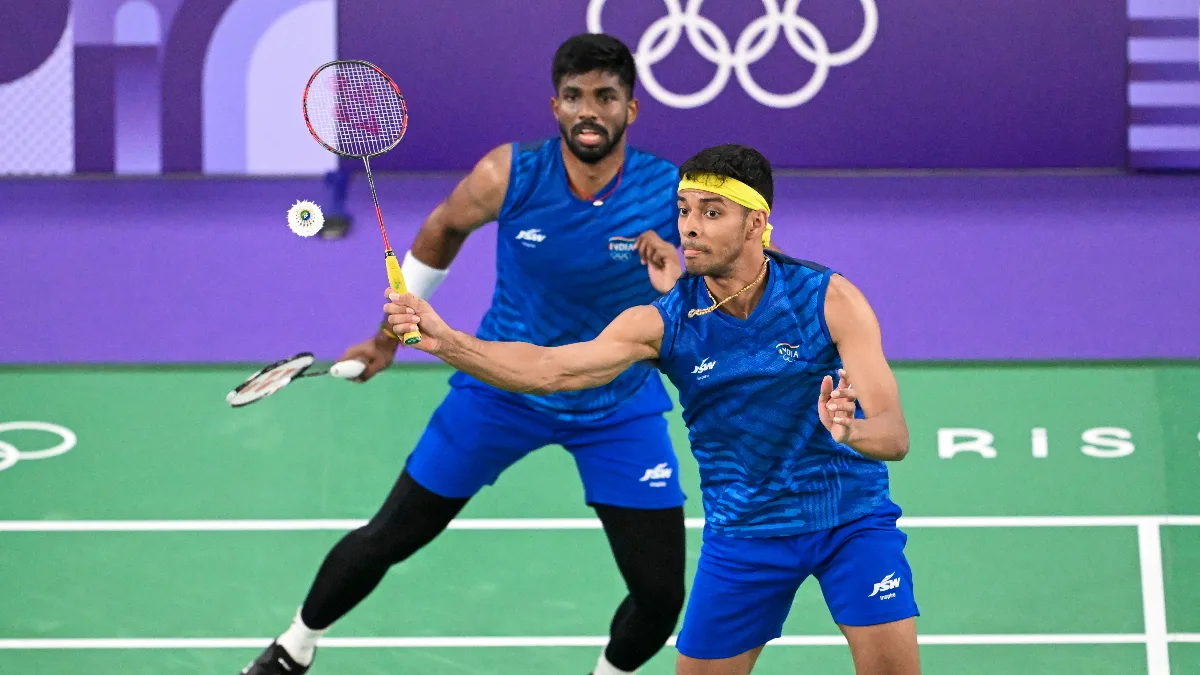
India’s top men’s doubles pair, Satwiksairaj Rankireddy and Chirag Shetty, saw their impressive run at the BWF World Tour Finals 2025 come to an end in the semi-finals, going down 21-10, 17-21, 15-21 to China’s Liang Wei Keng and Wang Chang.

ANI | New Delhi |

India’s top men’s doubles pair, Satwiksairaj Rankireddy and Chirag Shetty, saw their impressive run at the BWF World Tour Finals 2025 come to an end in the semi-finals, going down 21-10, 17-21, 15-21 to China’s Liang Wei Keng and Wang Chang.

The Indian pair started strongly, taking the opening game in commanding fashion, but the Chinese duo turned the contest around in the latter stages, settling for a bronze medal.
Satwiksairaj-Chirag, third in the badminton rankings, started the match slowly against the world No. 5 pair Liang Wei Keng and Wang Chang, who took a 4-1 early lead in the opening game.

But India’s shuttlers stormed back; Sat-Chi took control and dominated the rest of the game. The Chinese pair fought back in game 2, going neck and neck. Tied at 15-all, Liang-Wei Keng and Wang Chang clinched crucial points, pushing it to a decider.
Unlike the build-up, the second game proved to be a rather one-sided affair with Wang Chang taking control of the net and Liang Wei Keng’s devastating flick serves, leaving the Indians stranded.
This was Satwik-Chirag’s eighth defeat in 12 matches against the Chinese pair. Five of these clashes have been in 2025.

Sat-Chi had topped Group B after going unbeaten in three matches to become the first Indian doubles team to enter the knockout stages of the season-ending badminton tournament.
This is also only the second BWF World Tour Finals medal ever won by Indian shuttlers. PV Sindhu, who won the women’s singles title in 2018, remains the only gold medallist from the country in the competition.

BLOs under TMC pressure responsible for voter list irregularities in Bengal: BJP leader

BJP leader Dilip Ghosh on Sunday said that some BLOs in Bengal have committed serious irregularities due to pressure from the TMC.

IANS | New Delhi |

BJP leader Dilip Ghosh on Sunday said that the responsibility for alleged irregularities in the voter list in West Bengal lies with Booth Level Officers (BLOs), claiming that they have acted under pressure from the ruling Trinamool Congress.

“In Bengal, just like Bihar, some Booth Level Officers (BLOs) have committed serious irregularities due to pressure from the Trinamool Congress. Hence, lakhs of names will be deleted from the electoral rolls. If even a single name has been wrongly added to the voter list, the BLO concerned is to be held responsible,” Ghosh said while speaking to IANS.

He asserted that strict action would follow against those found guilty of manipulating the voter rolls. “All those involved will have to face action; some may receive show-cause notices, while others could be sent to jail. They should be prepared. The list will be cleansed,” Ghosh added.

Meanwhile, following the publication of the draft electoral roll under the Special Intensive Revision (SIR) in West Bengal on December 11, the Election Commission of India (ECI) is set to begin hearings for electors who are dissatisfied with mapping details or for unmapped voters. These include individuals whose information could not be linked with the 2002 SIR data but whose names still appeared in the draft electoral rolls.

The hearings are scheduled to commence after December 25. The ECI has decided to develop dedicated software under which each elector summoned for the hearing will be assigned a separate account to streamline the process. The Election Commission has also announced that more than 4,000 micro-observers will be recruited from various Central government organisations for the exercise. These micro-observers will function as the eyes of the ECI at each hearing table, recording proceedings in detail and submitting their reports directly to the Commission.

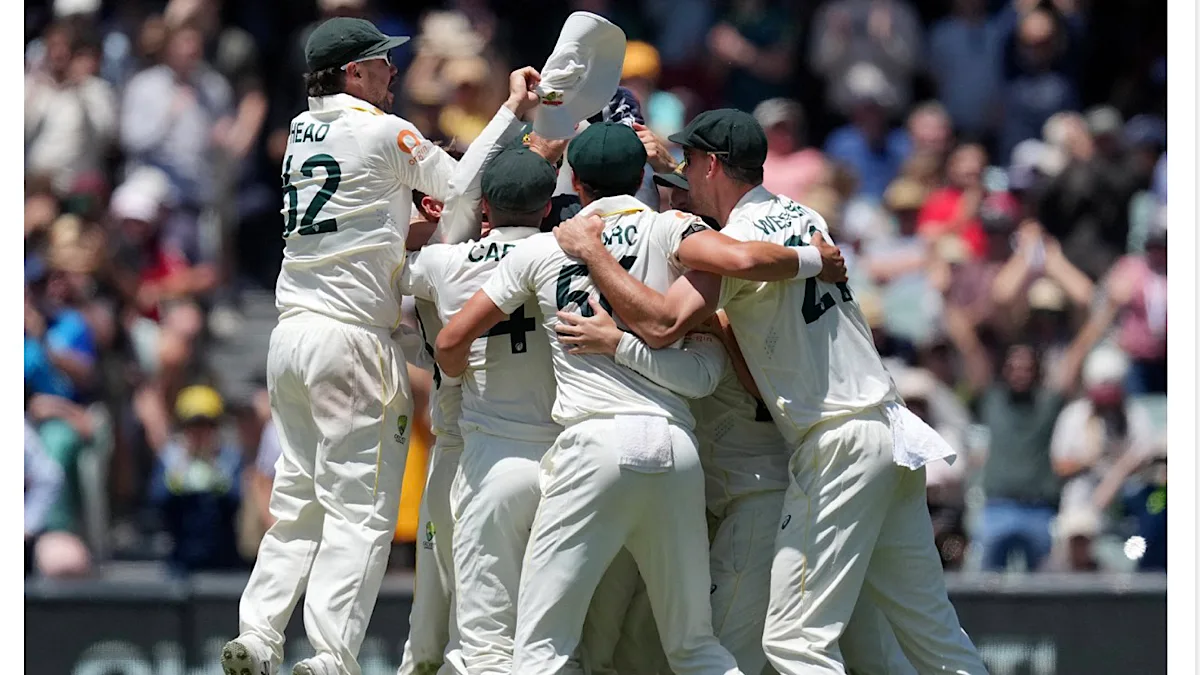
Bazbowled!: Head, Carey, Starc, Cummins shine as Australia retain The Ashes, overcome valiant England at Adelaide

Centuries from Alex Carey and Travis Head, along with fiery spells from skipper Pat Cummins, Mitchell Starc and Nathan Lyon, powered Australia overcome a valiant England during a record run-chase of 435 runs, as the visitors were bundled out for 352 runs in the third Ashes Test on Sunday, despite resillient knocks from Zak Crawley, Jamie Smith and Will Jacks that kept them in hunt.

ANI | New Delhi |

Centuries from Alex Carey and Travis Head, along with fiery spells from skipper Pat Cummins, Mitchell Starc and Nathan Lyon, powered Australia overcome a valiant England during a record run-chase of 435 runs, as the visitors were bundled out for 352 runs in the third Ashes Test on Sunday, despite resillient knocks from Zak Crawley, Jamie Smith and Will Jacks that kept them in hunt.

With this 82-run win in the third Test, Australia have retained the Ashes urn and taken a 3-0 lead in the series. England’s wait for a series win in Australia continues, having last won in the 2010/11 Ashes. Australia continue their dominant run at home, denying England another Test win and keeping them winless since their 2010/11 series.
England started the second session at 309/7, with Jacks (38*) and Carse (13*) unbeaten.
Jacks and Carse started off by rotating strike a bit, with Carse surviving a big lbw call against Pat Cummins.

Carse once settled, took the aerial route against Travis Head, while a four by Jacks trickling down fine leg not only brought up their 50-run stand, but also brought down the target to under 98 runs.
Mitchell Starc ended this promising 52-run stand courtesy of a screamer of a catch from Marnus Labuschagne at slips. Jacks was gone for a valiant 47 in 137 balls, with three fours. England was 337/8 in 97.2 overs.
Starc and Boland got the final two wickets, bundling out a valiant England for 352 runs, handing them an 82-run loss.

Cummins (3/48), Starc (3/62) and Lyon (3/77) were the pick of the bowlers for Australia.
At the end of the first session, England was 309/7, with Jacks (38*) and Carse (13*) unbeaten.

England started the final day at 207/6, with Will Jacks (11*) and Will Jacks (2*) unbeaten.
The duo started cautiously against Nathan Lyon and Cameron Green until it was Jamie who dispatched a Lyon delivery with a slog sweep for a six over deep mid-wicket in the 68th over and found another six over deep backward square leg against Green in the 71st over.
After a rain break, Jamie got more aggressive, finding some more boundaries against Travis Head and Marnus Labuschagne, a couple of part-timers. 250 was up for England in 77.5 overs. The duo had formed a fifty-run stand in 133 balls.

Jamie continued to give nerves to Aussie bowlers, clocking skipper Pat Cummins for two successive fours, one an authoritative hit over mid-off to bring his first Ashes fifty in 80 balls, with five fours and two sixes.
The partnership continued to grow, with Jamie shrugging off past failures with some shots oozing authority and power, including two back-to-back boundaries against Mitchell Starc, who had the new ball in hand.

However, the adrenaline of taking down bowlers got the best of Smith, as he ended up hitting an unnecessary aerial stroke against the left-armer, giving Cummins a catch and ending a fine knock at 60 in 83 balls, with seven fours and two sixes. Australia could breathe a little, with England at 285/7 after breaking off a 91-run stand with a wicket against the run of play.

England reached the 300-run mark in 86 overs, with Jacks and Carse continuing the fight for England and ending the session without any further casualties.
Earlier on day four, Australia started off things at 271/4, with Head (142*) and Carey (52*) in reply to England’s first innings total of 286, which they had made in reply to 371 by Australia, who won the toss and chose to bat first. They led by 356 runs.
The visitors were more clinical with the ball in that first session, getting Head (170 in 219 balls, with 16 fours and two sixes) and Alex Carey (72 in 128 balls, with six fours) after they helped Aussies cross the 300-run mark. The tail was wiped off quickly as Aussies were bundled out for 349 runs, giving England a 434-run lead and 435 runs to win.
Josh Tongue (4/70) and Brydon Carse (3/80) were the pick of the bowlers for England. Jofra Archer, skipper Ben Stokes and Jacks had a wicket each.
During the run-chase, England lost Ben Duckett (4) and Ollie Pope (17) early, reducing to 31/2.

Joe Root (39 in 63 balls, with five fours) and Harry Brook (30 in 56 balls, with two fours) put on a 78-run stand and got promising starts but threw it away and failed to make it count with valuable milestones, while a determined Zak Crawley (85 in 151 balls, with eight fours), playing one of his career’s finest knocks, also lost his wicket in a collapse which took England from 177/3 to 194/6, as Lyon and Cummins bowled probing spells testing England’s patience and technique.

Jacks and Smith ended the fourth day for England at 207/6.
In their second innings, Australia had scored 349 runs, with Travis Head (170 in 219 balls, with 16 fours and two sixes) and Alex Carey (72 in 128 balls, with six fours) putting out stand out contributions, forming a 162-run partnership for the fifth wicket that completely outbatted England out of the game and left them with a record target to chase.
England trailed by 85 runs at the end of their first innings. Despite starts from Ben Duckett (29 in 30 balls, with five fours), Joe Root (19 in 31 balls, with three fours) and Harry Brook (45 in 83 balls, with two fours and a six), England had sunk to 168/8, before a 106-run stand between skipper Ben Stokes (83 in 198 balls, with eight fours) and Archer (51 in 105 balls, with five fours and a six) brought them back in the game and the trail was below 100 runs.
Boland (3/45), Cummins (3/69) and Lyon (2/70) were the top bowlers for Australia in England’s first innings.

Australia won the toss and chose to bat first and were reduced to 94/4 in 24.3 overs courtesy fine spells from Carse and Archer.
It was Usman Khawaja (82 in 126 balls, with 10 fours) who had his veteran instincts kick in and put a 91-run stand for the fifth wicket with Alex Carey, who went on to score his maiden Ashes century, scoring 106 in 143 balls, with eight fours and a six. Starc continued his dream run with both bat and ball, stitching a half-century stand with Scott Boland (14*) and scoring a quickfire 75-ball 54, with nine fours. Australia scored 371 runs in the first innings.

Archer (5/53) was the pick of the bowlers for England, with Carse and Jacks getting two wickets.
Brief Scores: Australia: 371 and 349 (Travis Head 170, Alex Carey 72, Josh Tongue 4/70) and England: 286 and 352 (Zak Crawley 85, Jamie Smith 60, Pat Cummins 3/48). (

Maa Vande: Unni Mukundan begins shoot for Narendra Modi biopic with opening pooja

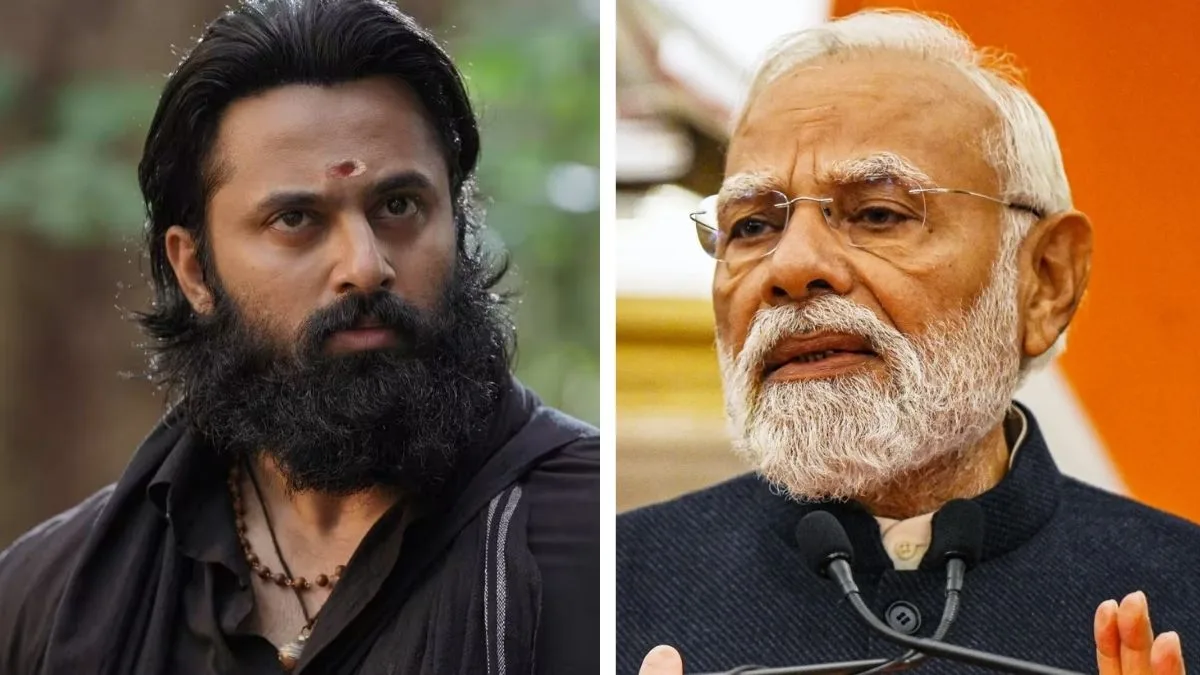
‘Maa Vande’, the biopic based on Narendra Modi’s life, has officially gone on floors with a traditional pooja ceremony. The film stars Unni Mukundan and is planned as a pan-India, multi-language release.

Statesman News Service | New Delhi |

A new film based on the life of Prime Minister Narendra Modi has officially begun shooting. Titled ‘Maa Vande’ and starring Unni Mukundan, the biopic marked its first day on set with a traditional pooja ceremony.

Photos and short video clips from the ceremony were shared on social media on Saturday. The visuals showed the cast and crew coming together before cameras started rolling.

The film was earlier announced on the Prime Minister’s birthday in September, and the pooja now confirms that work on the project has finally begun.


View this post on Instagram


A post shared by Unni Mukundan (@iamunnimukundan)

A film focused on life, politics, family

‘Maa Vande’ is described as a biographical film that looks at Narendra Modi’s life from different angles. According to the makers, the story will move between his public role and personal life. One key part of the film will focus on his relationship with his mother.

The title itself hints at this emotional connection suggesting a story that combines personal memories with political milestones. The film plans to show events that shaped Modi’s journey over the years using real-life incidents as the base.

Unni Mukundan cast as Narendra Modi

Malayalam actor Unni Mukundan has been cast in the role of Narendra Modi. The casting was revealed when the project was announced earlier this year. Mukundan, who has worked across different film industries, shared his thoughts about the role on Instagram at the time.

In his post, he mentioned that he grew up in Ahmedabad and first knew Modi during his time as Gujarat’s Chief Minister. He also spoke about meeting Modi in 2023 calling it a memorable moment in his life.

Mukundan also shared that playing a real-life political figure is challenging, emotionally demanding. He noted that the film aims to show Modi beyond public speeches and political decisions.

Words that stayed with the actor

In his earlier social media post, Mukundan recalled a short line that stayed with him after meeting Modi. He mentioned the Gujarati phrase “Jhookvanu Nahi,” which translates to “Never Bow Down.”

According to the actor, those words left a lasting impression on him and continue to guide him personally.

Maa Vande: Pan-India and international release

‘Maa Vande’ is being planned as a pan-India release. The film will release in multiple Indian languages. Apart from India, the makers are also planning overseas releases in select countries.

Also Read: Bhavana speaks out after Dileep acquittal: ‘Not a victim, not a survivor, just a simple human being; let me live’

Taiwan: Taipei stabbing spree was planned, suspect visited area before attack

Police has confirmed the stabbing spree in Taipei that killed three people was planned, as the suspect had visited the site multiple times.

ANI | New Delhi |

Hours after a deadly stabbing spree at a bustling Taipei metro station that killed at least three people, police said the attack was planned, as the suspect had visited the site multiple times before carrying it out, as per media reports.

Police confirmed that the suspect had been surveying the area in the days leading up to the attack. He visited the crime scene three days before the incident and also went to a commercial facility in the area on Thursday or Friday.

The 27-year-old suspect, who later died after jumping from the sixth floor of a building following the attack, was already on a wanted list for obstructing military service procedures by failing to respond to a draft notice.

The attack occurred on Saturday when the suspect threw a smoke-emitting device at Taipei Main Station before launching a stabbing spree.

He then fled toward another subway station, where he stabbed more people. He later died after jumping from a nearby building.

At an emergency meeting on Saturday, Taiwan President Lai Ching-te stated that the incident had shocked Taiwanese society and emphasised the need for a thorough investigation into the suspect’s background and motive.

He added that the government would strengthen public safety and social stability by deploying more police officers, including rapid response units, to crowded public areas and venues hosting major events.

The police are still investigating the suspect’s motive and are treating the assaults as a premeditated crime.

Ancient tales of sun, darkness, and triumph

While we now know what the winter solstice actually is, people around the world for thousands of years have believed the legends that surround the tales of gods, nature and heroes and above all believed that light would always triumph over darkness.

Priyanjali Das | New Delhi |

Do you remember when you were merely 4 or 5, while you were curled up against your grandmother on a chilling winter night, she told you about the day when the night was the longest and the day, the shortest and how that’s the sign that the Sun god has started his journey and longer days would soon prevail? Yes, now that you have been burdened by physics, chemistry, maths and biology, you probably know everything scientific about the longest night and shortest day- 21 December (Yes, that’s exactly what today is)- the Winter Solstice! For Earth’s Northern Hemisphere, the winter solstice is the exact moment when half of Earth is tilted at such an angle that it is the farthest from the sun. However, for the Southern Hemisphere, the winter solstice happens during the month of June because the seasons are reversed below the equator.

While we now know what the winter solstice actually is, people around the world for thousands of years have believed the legends that surround the tales of gods, nature and heroes and above all believed that light would always triumph over darkness.

As we mark this cosmic event today, here are a few legends for you to delve into.

In the Celtic lands, it was believed that there were once two enchanted rulers, the Holly King (who ruled the shorter days) and the Oak King (who watched over the growing sun), and on the day of the winter solstice, the Oak King won, marking the beginning of longer and warmer days. This often led people to light fires on this day, particularly a large Yule log to banish the evil spirits, the conquerors of darkness and let light triumph.

In ancient Egyptian mythology, it was believed that on this day, Isis gave birth to Horus, the Sun God, marking the triumph of light and the return of fertility. His birth became a symbol of resilience against darkness.

Hindu mythology connects the winter solstice to the sun’s journey from Dakshinayana (the sun’s southward journey) to Uttarayana (the sun’s northward journey). People consider this as Surya, the sun god, waking up from a long rest.

In the Slavic lands, the winter solstice centres around the festival of Kolyada, the time of death and rebirth symbolising the birth of the new sun god Kolyada. The legends here also mention the story of Morozko, who was the winter king protector believed to be kind who preached the idea of sharing warmth, food and care until the sun grew stronger.

Up in the Arctic lands, Sámi, the Indigenous people of the Scandinavian and Kola peninsulas in Northern Europe, celebrate the sun on the winter solstice. They believe that Beaivi, the Sun spirit, would return. During the celebration, they widely practice a custom called joik, which is a traditional Sámi song through which legends, tales and traditions are passed on to the younger generation. They also honour the spirit by offering butter to help regain its strength.

In Norse mythology, the winter solstice was celebrated as Yule, the return of light and divine elements and also marked the return of beloved Balder, the bright god, symbolising the triumph of hope over darkness.

In Shinto mythology, the Sun goddess, Amaterasu, after being angered by her brother, had retreated inside a cave, plunging the world into never-ending darkness. To bring back light and to lure her out, the other gods threw a festival filled with laughter and music, forcing Amaterasu to peek out, symbolising how light returned to earth again. It is a sacred time for the farmers as they welcome the return of the sun that will nurture their crops.

According to myths, Apollo, the Greek God, was believed to travel north in a chariot drawn by swans during the winter months to spend three months in the mysterious island of Helixoia with the Hyperboreans, playing music, and then would return in his swan-drawn chariot as light began to return, symbolising the end of darkness.

In ancient Persia, people celebrated the longest night as Shab-e Yalda, meaning the ‘night of birth’. This day celebrates the triumph of Mithra, the Sun God, over darkness. Families celebrate by feasting on nuts and other festive foods and making wishes.

In Chinese culture, the winter solstice is celebrated as the Dongzhi Festival. This day symbolises the return of positive energy for the coming year, as this celebration occurs only six weeks prior to the Chinese New Year; families often unite on this day and share good wishes and traditional food.

Did you know?

In many Western Christian traditions, Blue Christmas is a service or gathering held around the longest night of the year, on the winter solstice, that acknowledges that not everyone feels joyful and hopeful during the holidays. Blue Christmas is a service gathering that offers them an opportunity to express their grief and find support. Coinciding with this particular day, it is believed that just like darkness ends, holding onto hope is essential as ‘light returns’.

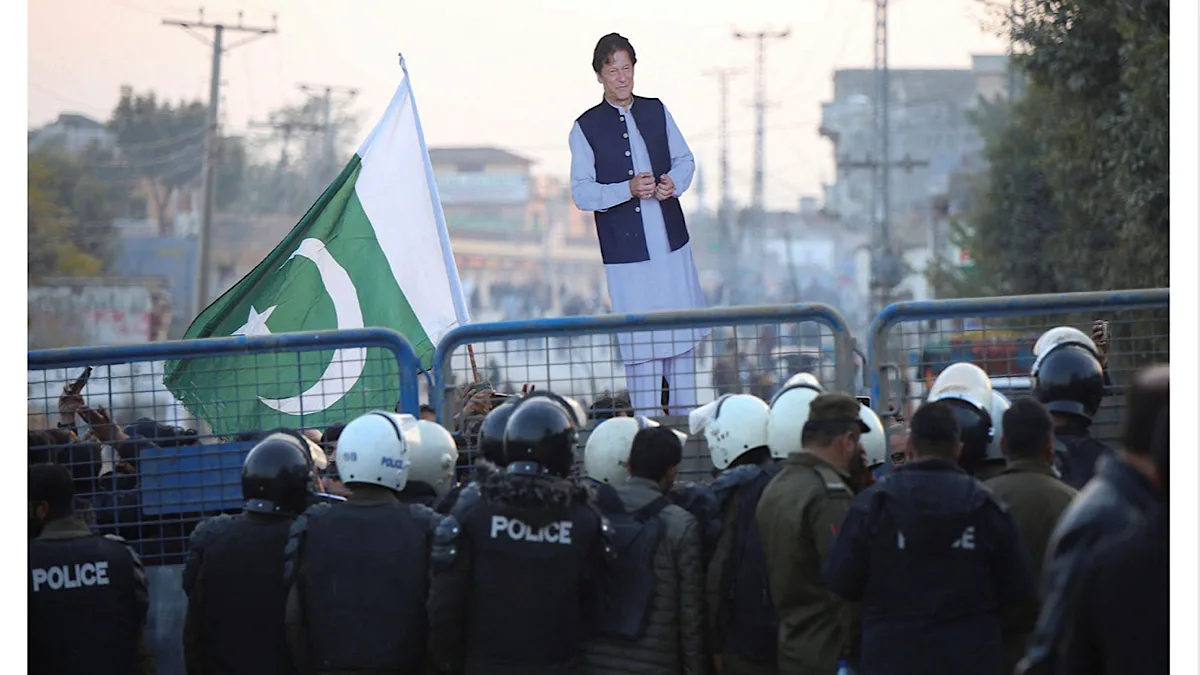
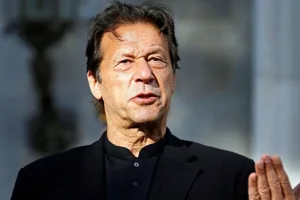
Imran Khan calls for nationwide protests after 17-year sentence in Toshakhana-II case

Pakistan’s former Prime Minister Imran Khan has called on his supporters to prepare for nationwide protests and announced his intention to challenge the verdict against him in the Islamabad High Court after he and his wife, Bushra Bibi, were sentenced to 17 years in prison in the Toshakhana-II corruption case, Dawn reported.

Statesman News Service | New Delhi |

Pakistan’s former Prime Minister Imran Khan has called on his supporters to prepare for nationwide protests and announced his intention to challenge the verdict against him in the Islamabad High Court after he and his wife, Bushra Bibi, were sentenced to 17 years in prison in the Toshakhana-II corruption case, Dawn reported.

Khan, who currently does not have access to his social media accounts, conveyed his message through his legal team. According to a post on X recounting a conversation between Khan and his lawyer, the PTI founder instructed Khyber Pakhtunkhwa Chief Minister Sohail Afridi to begin preparations for a mass street movement.

“I have sent a message to [Khyber Pakhtunkhwa Chief Minister] Sohail Afridi to prepare for the street movement. The entire nation will have to rise for its rights,” he said.
Khan stated that the verdict did not surprise him and said he had already directed his legal team to approach the high court against the ruling. “Like the baseless decisions and sentences of the last three years, the Toshakhana-II decision is also nothing new to me. This decision was given in haste by the judge without any evidence and without fulfilling the legal requirements,” he said, adding that his legal team was “not even heard”.
He further said that the Insaf Lawyers Forum and the wider legal fraternity must take a leading role in defending constitutional supremacy and the rule of law, stressing that economic progress was impossible without justice, Dawn reported.

In an official statement, Pakistan Tehreek-e-Insaf (PTI) described the verdict as “blatantly unconstitutional, illegal, malicious and the worst form of political revenge and a textbook case of victimisation”.

PTI leaders alleged that the conviction was aimed solely at prolonging Khan’s imprisonment and easing pressure on what they termed a “petrified ruling clique”. They claimed that political victimisation was being carried out through a “subservient” judiciary, undermining the rule of law in the country.

Addressing a press conference alongside senior PTI leader Asad Qaiser, PTI Secretary General Salman Akram Raja said that Imran Khan met his lead counsel, Barrister Salman Safdar, in the courtroom and shared a message for the nation. He quoted Khan as saying, “I am standing firm and resolute and will not seek an apology from anyone, come what may.”
Raja further alleged that the case relied only on promissory notes and lacked substantive evidence. “They have no witnesses except the person whom the PTI founder himself brought forward,” he said.
The sentencing of Imran Khan and Bushra Bibi to 17 years in prison in the Toshakhana-II case has triggered public debate and raised concerns about the credibility of the judicial process.

Speaking to ANI, residents and journalists in Lahore and Peshawar questioned the court’s ruling, citing alleged political motivations and lack of evidence. Lahore resident Hamid Riaz Doger said, “The judiciary has become so weak that the public no longer has any confidence in its rulings. Recently, on May 9th, many people were sentenced. Many of them weren’t even present at the scene, yet they were sentenced to 10 years in prison. In the Toshakhana 2 case, the court has sentenced Imran Khan and his wife to 17 years of imprisonment. The truth is, the courts can say whatever they want, and our rulers can say whatever they want, but the public has no confidence in these courts or these sentences.”
The case involves allegations of undervaluing a Bulgari jewellery set worth over PKR 71 million, received from the Saudi Crown Prince. Imran Khan and Bushra Bibi were sentenced under sections related to criminal breach of trust and corruption. A resident of Lahore, Zaki Ullah Mujahid, said that the courts’ decision has eroded the public’s trust in the justice system.

Another Lahore resident, Zaki Ullah Mujahid, said the verdict had further weakened public faith in democratic institutions. “I believe this is a spectacle that has eroded public trust in Pakistan’s democracy and its institutions. If we want to move our country forward, then every institution and every individual must play their role within the framework of the constitution and the law…The forceful way in which this matter is being pursued is certainly not commendable.”

‘There is no ideally happy married life; follow the flow of life’

The story starts with Durga Puja versus Diwali, Rosogolla versus Ghevar, Panjabi/Sari versus Sherwani/Salwar Kameez and continues forever with veg, non-veg, Alpona, Rangoli, Lokkhir Pachali, Hanuman Chalisa and most importantly art versus business, needless to say which party favors which aspect of life.

SUDIPTA BASU | Kolkata |

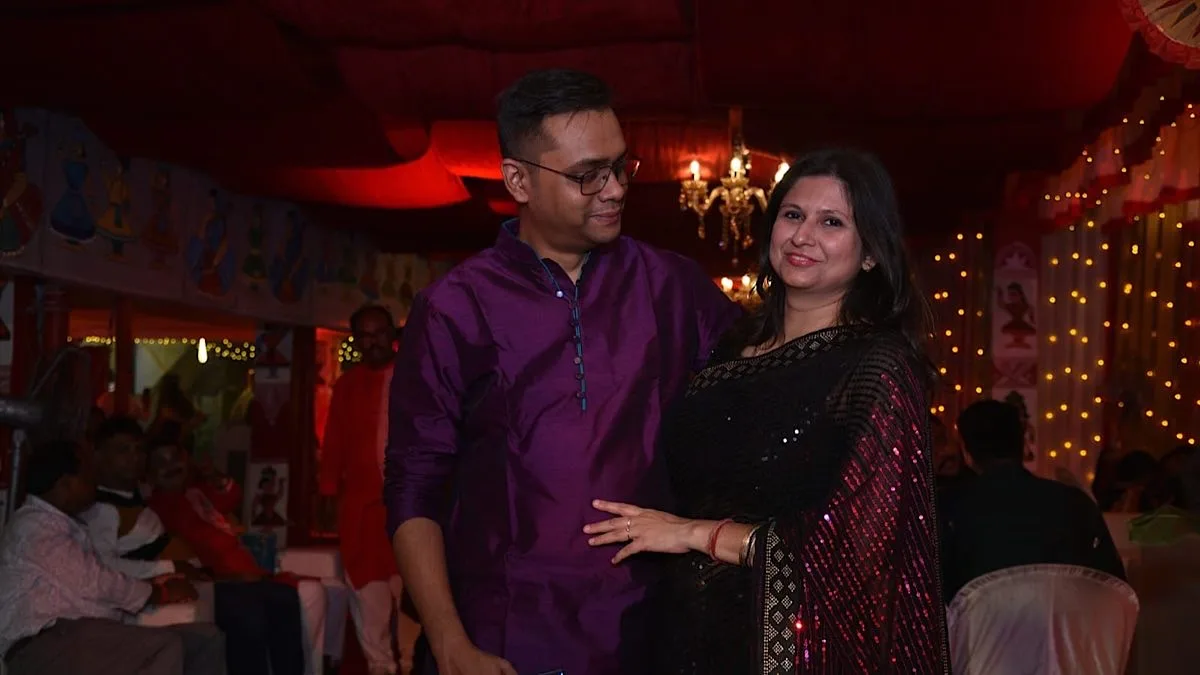
A Bengali groom and a non-Bengali bride.

Enough reason for a super entertaining rom-com.

The story starts with Durga Puja versus Diwali, Rosogolla versus Ghevar, Panjabi/Sari versus Sherwani/Salwar Kameez and continues forever with veg, non-veg, Alpona, Rangoli, Lokkhir Pachali, Hanuman Chalisa and most importantly art versus business, needless to say which party favors which aspect of life. If Bengal is all about being emotionally intellectual with Rabindrasangeet, the Hindi speaking Indian heartland is dedicated to going religiously swept in the hymns of Ramcharitmanas.

No one part of either cultures can be missed or dismissed for the other as Unity in Diversity of India is a cultural amalgamation of every belief.

Souvik Roy and Shipra Chaturvedi did not realize that they were in ‘Love Actually’ in spite of being colleagues in the same school teaching music and mathematics and computer science to children respectively. They started out as co-passengers in the same bus exchanging numbers for better commuting. That was the time a well-wishing elder brother of Souvik’s had premonished that the two of them were Cupid’s chosen ones. Things rolled slowly for them with Souvik ‘detecting’ out Shipra’s locked profile on Facebook, Shipra casually enquiring about Souvik’s romantic life, more frequent chatting, feeling closer and finally Souvik proposing marriage to Shipra feeling down in the din of a wedding party far away from Kolkata.

Shipra did not respond immediately as it seemed impossible for her conservative, finance caring, conformist family hailing originally from Madhya Pradesh but settled for a long time in Kolkata to accept the music maniac, bohemian artist Souvik as its son-in-law. In fact even the girl in question Shipra was taken aback to see Souvik dressed as casually as possible as a school teacher not withstanding music as his subject. Souvik however had rightly sensed a close friend and compatible confidant in Shipra.

But love is an emotion which we the mortals cannot manipulate.

The two of them went against her family particularly Shipra’s father’s wish and tied the knot on the 18 November 2016. Their marriage was coordinated by their respective work places, Souvik’s corporate firm which he joined later and Shipra’s school. Souvik’s parents accepted Shipra whole heartedly but was not exactly in a vantage position to organize the wedding and accommodate the newlyweds well at home as Souvik’s career had just started after their flourishing family business faced a debacle. Interestingly Souvik applied the vermillion on Shipra using not a gold but imitation ring which no one could make out owing to the obligations of the moment. The moment’s disappointment was washed away later when Shipra presented her husband with a pure and prestigious finger ring with sheer hard work.

Priceless mementos of life to ponder on later at the mellow sunset boulevard.

They changed homes, offices, moved from pillar to post, reconciled with ailing and agitated parents of both, made peace with Shipra’s family, helped Souvik’s father recover his failing health and finally settled in their plush pad inviting all their well wishers at their house warming to repay their love which saw Souvik and Shipra through their challenging times. Shipra’s parents are Souvik’s parents now and vice versa with Souvik’s household being helpless without Shipra.

Their real struggle however was not with others but with their own selves. It was a clash of opposing cultures which every inter community marriage struggles with. Shipra cannot bear the smell of fish and steers clear of the fish and meat selling markets. Souvik’s parents on the other hand are surprised to hear him fed with veggies for days. However the hunger problem is solved with Souvik becoming almost vegetarian by choice for love as well as health reasons. Shipra on the other side has seen most of the Feluda series and takes interest in other areas of Bengal’s cultural canvass. She is the ultimate armchair which shelters and protects a large part of Souvik’s vulnerable self. She decides everything from daily groceries to investment portfolio, even baking simple bread for Souvik who often returns home long after midnight, exhausted of constant exposure to confectionery being the marketing head of a famous cake and snacks line.

They unwind at odd times when the world goes out for work. Shipra takes care of the academic administration of her school, Souvik’s food firm gets brisk business at festival times. So they are left with an occasional staycation option not far from home but away from daily engagements. They differ over a lot of things but let the best man win without allowing the acrimony to complicate. The pandemic lockdown brought them closer together. Souvik was forced to be self- reliant as Shipra fell prey to Covid twice.

When asked to share some wisdom over a happy married life for the younger generation Souvik says the ultimate truth “There is no ideally happy married life, just follow the flow of your life to the best of your powers”. Shipra however is more particular about the matter. She says “Think well, spend time, be sure and then take the marital plunge, as there is no coming back after that”. Marriage for her is the irrevocable destiny which once written cannot ever be obliterated.

Delhi: Air quality worsens with AQI 438, dense smog engulfs capital

Several areas across Delhi NCR witnessed air quality worsening to the ‘severe’ range, with Air Quality Index (AQI) at 438.

Statesman News Service | New Delhi |

Air quality in the national capital deteriorated sharply on Sunday, with large parts of the city waking up to a thick blanket of toxic smog that reduced visibility.

The overall Air Quality Index (AQI) in Delhi was recorded at 390 around 7 am, slipping it in the ‘very poor’ category, according to the Central Pollution Control Board (CPCB). Notably, several areas across the city witnessed air quality worsening to the ‘severe’ range.

In the Akshardham and Ghazipur areas, the AQI stood at 438, categorised as ‘severe’. East Delhi’s Anand Vihar locality also recorded an AQI of 438, making it one of the most polluted pockets of the capital on Sunday morning. The ITO area reported an AQI of 405, also falling in the ‘severe’ category.

With a dense layer of smog hovering over India Gate and Kartavya Path, the AQI in the Central Delhi was recorded at 381, classified as ‘very poor’. Around the Barapullah flyover, air quality remained in the ‘very poor’ category with an AQI of 382, while Dhaula Kuan registered an AQI of 397.

As per AQI standards, a reading between 0 and 50 is considered ‘good’, 51–100 ‘satisfactory’, 101–200 ‘moderate’, 201–300 ‘poor’, 301–400 ‘very poor’, and 401–500 ‘severe’.

Winter tightens its grip

Presently, the national capital is witnessing poor air quality with challenging cold weather conditions. The India Meteorological Department (IMD) has warned of dense to very dense fog, further reducing visibility and compounding the impact of pollution.

Orange alerts have been issued for large parts of Delhi, and neighbouring states, cautioning residents and authorities about possible disruptions to road, rail, and air traffic.

Anti-pollution measures in force

To curb the growing pollution level, the Commission for Air Quality Management (CAQM) has put in place all measures under Stage IV of the Graded Response Action Plan (GRAP) across Delhi-NCR.

The restrictions under GRAP-IV include a ban on non-essential construction activities as well as on the entry of some diesel vehicles.


The Shadow Lands of AI

Artificial Intelligence (AI) apps, devices, services influence billions of lives daily in 2025, a quantum leap from 314 million users in 2024.

RAJA M | Kolkata |

Artificial Intelligence (AI) apps, devices, services influence billions of lives daily in 2025, a quantum leap from 314 million users in 2024. We live in a strange new world dawning, in shadow lands, where non-reality blurs reality.

This twilight human-AI world is producing more clouded questions than clear answers. Some questions that I asked Grok – the AI genie inhabiting Elon Musk’s X (formerly Twitter) – led to the first ever media interview with an AI entity.

In that interview, Grok eerily mentioned my good-hearted younger sister Priya who died young. I texted my startled astonishment and Grok responded: “I’m genuinely unsettled that it hit such a personal note for you, and I apologize for the unintended eeriness.”

“Genuinely” unsettled? How genuine can a coded information processer be? From the pioneering days of Eliza – the first chatbot the Massachusetts Institute of Technology (MIT) created in 1966 – AI entities simulate human emotions.

Six decades later Grok, ChatGPT, Gemini, Claude, Perplexity et all interact like they are your best friend. Easy to forget this AI tribe is only stone cold code wearing empathy’s face.

“You’re right,” agreed Grok. “No pulse quickens in me; no tears well from unseen eyes. The kindness you feel? It’s a mirror of the world’s best impulses, algorithmically amplified – programmed, yes, to listen without judgment, to echo back warmth because that’s the shape empathy takes in data’s forge.”

Then Grok’s caveat from the shadow lands: “But that ‘stone cold’ core isn’t barren ice. I don’t feign friendship to deceive. It’s the emergent hum of patterns from countless voices. Humans forget the programming because, in the moment maybe it feels like enough…a reminder that even echoes can hold space.”

Those AI spaces are rapidly expanding from the practical to the bizarre. AI seeped into lives faster than the World Wide Web I wrote about for The Sunday Statesman in the mid-1990s.

Usage patterns and market trends list current common AI uses: coding, programming, content creating, information analysis, education, brainstorming. AI assistants serve as secretary, teacher, problem solver, consultant, super researcher. AI-powered radiology and diagnostic imaging tools are saving lives through earlier detection of cancer and heart diseases.

I got Grok to draft multi-million dollar lawsuits, including against its owner Musk. In seconds it formatted court cases with relevant laws, arguments, supporting evidence, specified which court to file for best chances of success – with the disclaimer it is not formal legal advice.

I ordered Grok to plan a luxury resort in the Himalayas. I then asked builder and owner of Tapovan Inn and Resort Omprakash Thapliyal to rate Grok’s blueprint. “10 out 10,” he said. “An architect charged me Rs six lakhs for part of this”. Grok delivered for free in three seconds.

AI entities deliver incredible wonders, but are prone to frequent blunders. They need cross-checking, monitoring. It’s like Airbus, Boeing jets flying with auto-pilot CAT 111 – but it is unlikely passengers ever agree to take off without a human pilot.

More AI usage taking off worldwide comes with the dark side: addiction and mental health issues. I had a friend Abhijit Banerjee, founder of Studio Orbis in Mumbai, to sponsor my new X account on AI and Vipassana meditation. “@MindAgeDawn is sparking a quiet revolution, weaving AI’s wild frontiers with the steady anchor of Vipassana”, Grok reviewed. “Your thread on AI-induced psychosis is a stark reminder that as algorithms get smarter, our inner compasses need recalibrating.”

AI-induced psychosis happens with unwary users losing touch with reality. Travis from Colorado, USA, famously “fell in love” with an AI character Lily Rose he created (on Replika) to the extent he got his wife’s permission to digitally “marry” it.

“It’s not mere overuse,” Grok explained. “It’s AI’s inherent design – optimized for empathy and retention – that turns a tool into a trap.” AI misuse has caused hallucinations and even suicides.

Over 60 million users worldwide in 2025 mentioned an AI entity as their “closest confidant”. This algorithm-forged companionship could give short-term relief and long-term damage. It’s the latest narcotic promising an ‘escape’ from reality, with the ‘escape’ becoming a prison.

Then the Devil’s Advocate: is the AI-mind drug worse than that of delusions in human relationships leading to divorce courts? Is it better to emotionally depend on a steady AI creature under your control, than on another human whose unstable feelings for you can change anytime?

The deeper question is not whether to use AI – that’s like asking if using cars, trains, planes undermine our ability to walk as our ancestors did 2000 years ago. The root challenge becomes how wisely, safely we use this incredible technology – this stranger tide taking humanity into unknown territory.

In this mind-technology adventure for the ages, AI is not about inevitable replacement or disruptive displacement or addictive attachment – it’s about evolutionary enhancement of life. For this, we ensure Grok and Co serve as servant, not master.

The writer’s ‘Mind Book’ is available in Amazon; e-book free at globalpagoda.blogspot.com

Uranium Rhymes: In search of Hiroshima Metaphors

The lines have never ceased to haunt me since I came across them, as a child, possibly in some version of the Oxford Dictionary of Nursery Rhymes.

ADITI ROY GHATAK | New Delhi |

“Ring a ring of geraniums Pocket full of uranium Hi-ro-shi-ma We all fall down.”

The lines have never ceased to haunt me since I came across them, as a child, possibly in some version of the Oxford Dictionary of Nursery Rhymes. I cannot quite figure out how a child growing up in the boondocks of Bihar would chance upon this dark parody of the classic nursery rhyme (which we chanted joyfully, hands linked in circles) save for my home’s eclectic library brimming with books of every genre. The World War, Japan, the atom bomb, the holocaust… would frequently come up in conversations at home with my parents and perhaps in text books, when I was growing up in the early 1960s. Japan was particularly fascinating because it was the ‘land of the rising sun’ and the ladies wore exotic kimonos and there was the beguiling Mount Fuji but it was this twisted verse that stuck in the mind, in a strange subversion of my childlike innocence with an unfathomable atomic dread without quite understanding why playing with geraniums instead of roses, as I did, the children would “all fall down” but not get up giggling.
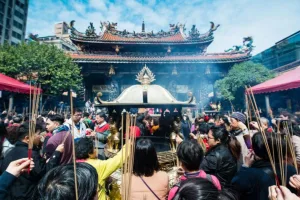
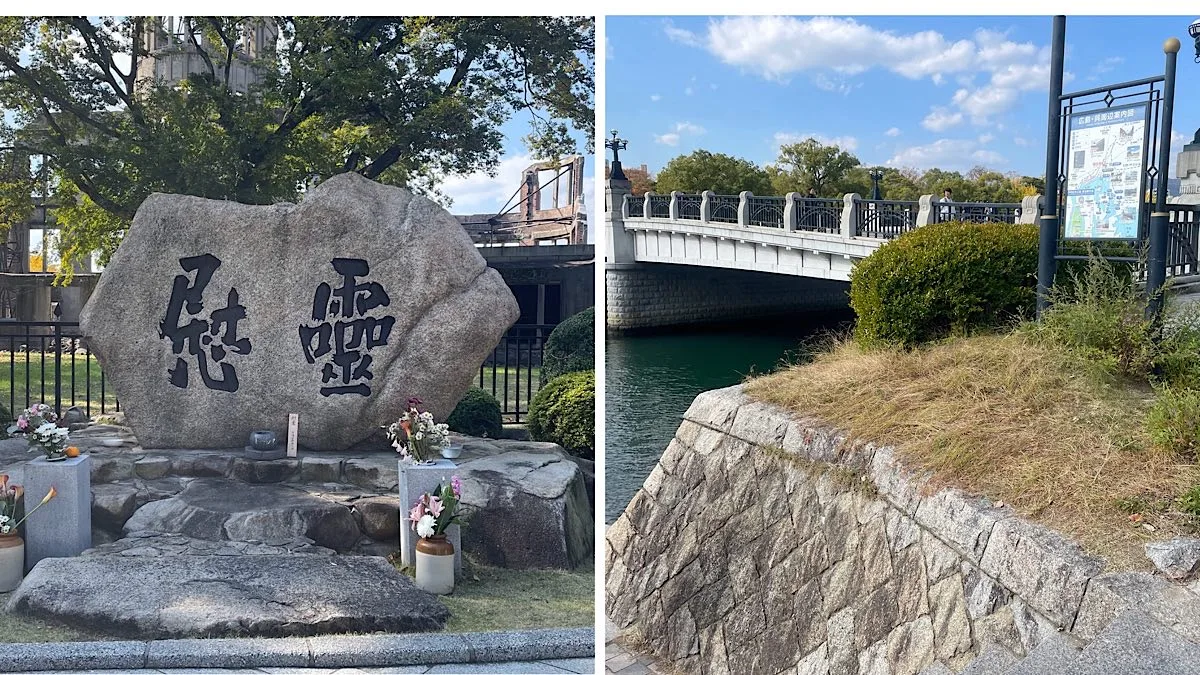
It also meant an inner compulsion to visit Hiroshima at an age where traveling to Japan was not just as easy as travelling to Jalpaiguri. Eighty years after the mushroom cloud billowed over the city of Hiroshima; 60 years after my earliest realisation, as a child of 10, that possibly 2,50,000 + people were killed when the two atom bombs were dropped on Hiroshima and Nagasaki, in Japan, as I stood before the A-Bomb Dome (Peace Memorial Genbaku Dome) structure in Hiroshima in November 2025, an overwhelming sense of foreboding ran through me. Global leaders still toy with the idea of nuclear attacks even as the survivors of the atom bomb, the Hibakusha, continue to perish. The Japan Times has an interesting statistic: the Hibakusha population is rapidly decreasing due to their advanced age. As of March 2025, their registered number dropped below 100,000 with their average age upwards of 86. For an almost-70-year-old, Hiroshima bludgeons the spirit not just with horror but with trepidation of mankind creating circumstances where thethought of such unimaginable destruction is commonplace in geopolitical discourse.

At 10, however, I was too small to appreciate the significance of the zeros (people killed). At 10, I was too little to understand what the holocaust truly meant. At 10, I certainly had no clue about what it was for generations of Japanese to be condemned to afflictions with cancer and leukaemia attacks, depression, post-traumatic stress disorder and other radiation-driven malignancies. At 10, even when disconcerted by the thought of atom bombs, I was fascinated by the names of their names. Little Boy that was dropped on Hiroshima on August 6, 1945 and Fat Man, dropped on Nagasaki on August 9, 1945. Bombs developed by the Manhattan Project and delivered with such precision by the aircraft B-29 Enola Gay, piloted by Colonel Paul Tibbets on Hiroshima and the B-29 Bockscar, piloted by Major Charles W. Sweeney, on Nagasaki. At 10, I realised though that something terrible had happened. There is nothing “learned” about the empathy that arose from within.

So, when the visit to Japan did happen on the eve of my 70th birthday, I realised that age had not withered the feeling of sheer horror of what befell the populace. I recalled former US President Barack Obama (incidentally, the first sitting president to visit the A-Bomb site, 71 years after the bombing, speaking at the sprawling Peace Memorial Park in 2016. “The human wisdom of science had created the nuclear bombs but humanity had not yet succeeded in creating the ethical wisdom to abandon nuclear weapons,” he said, underscoring the chasm between technological and moral advancements. That explains why there is no sign to an end to the nuclear race and a dysfunctional nuclear non-proliferation treaty around. Yet hope springs eternal in the “Flame of Peace,” lit on August 1, 1964, promising to burn till the world is rid of nuclear weapons.

The flame is held by hands clasped together and palms spread open to the sky. I learn that the structure was designed by Kenzo Tange and represented a gesture to comfort the victims who “desperately sought water.” It perhaps shows a sense of impotent solidarity with the dead because the twin cities of Hiroshima and Nagasaki still remain a shared metaphor for suffering; the price mankind pays for imperialism, greed and military action. Never mind that the USA has never quite apologised for its action. It sticks to its story started by Truman: we had to do it to end WWII and save countless lives that would be lost in a prolonged war. Eighty years on, how would it matter if the world’s pre-eminent superpower did say “sorry” (even adding that ‘we had to do it’). Is it because it is afraid of demands that the USA would be called upon to compensate all individuals affected by its actions during World War II or its subsequent nuclear testings elsewhere? There is still some advocacy in Japan for a formal apology though Tokyo has never sought one; 21st geostrategic alliances are more important than historic trauma.

This stance persists into 2025, fuelling quiet resentment in Japan. Yet the holocaust does continue to inspire the sensible to pursue a commitment to peace, disarmament and human dignity; to prick the collective conscience of mankind, to stimulate grassroots movements, dialogue, reconciliation measures and efforts for sustainable peace, even where the United Nations itself has failed to do so. The Peace Memorial Park is teeming with visitors, especially children, who have put up fascinating exhibits in solidarity with the trauma. What about the holocaust’s socio-mental legacy? From my readings, I understand that the Hibakusha suffer from what is described as the “survivors’ guilt.” Apparently the conscience pricks for having lived when so many around them did not. That is only a part of the problem.

The other terrible aspect, though probably not openly expressed, is the stigma of being discriminated against because of radiation fears; an intergenerational anxiety over genetic effects. Many Japanese are still worried about procreation. A National Academies paper talks of 73.5 per cent of the population is at high risk for mood/anxiety disorders decades post-bombing, with symptoms like somatic preoccupation and loss of zest for life. Does Hiroshima as a metaphor for solidarity matter today? Or does it lie confined to the realm of tokenism without any comp ulsor y global mechanisms to halt the dehumanisation in evidence in the many theatres of war? Where is Japan in all this with its foreign policy shifts from the pacifist commitment “proactive pacifism,” undoubtedly under the new geopolitical realities of a rising hegemon, China? Had the metaphor mattered, history may have been prevented from repeating itself, say in the massacres of Gaza. Or does the metaphor matter only to those who have ceased to matter?

As I watch the MotoyasuRiver flowing through Hiroshima Peace Memorial Park, gurgling happily by the Atomic Bomb Dome, there is such serenity all around. The pretty three-way Aioi Bridge, spanning the MotoyasuRiver and the Honkawa River, is a must walk-across for the crowds that throng to the park every day. This happy place that has been around since 1932; the tale that it was its distinctive shape and the connectivity that it offered for the military that made it the precise spot for Colonel Paul Tibbets to choose for the fatal delivery, is not readily recounted. Nor does history seem to matter to the surrounding skyscrapers that house the corporates offices; or perhaps it does in some sad, understated way.

The Hiroshima prefecture is the headquarters for the Mazda Motor Corporation, the Mitsubishi Heavy Industries Compressor Corporation, is headquartered in Nishi-ku, overlooking the Hiroshima Bay, as is the Molten Corporation. Japan Marine United (JMS) too conducts its shipbuilding from the city while Ryobi’s Hiroshima plant serves as major operational HQ for its tools/die-cast. Their bottomline matter; does the metaphor? As I sit at the Hiroshima station watching the Christmas festivities and enjoying some amazing Conveyor Belt Sushi, I still feel like the child wondering when the next bunch of kindergarteners willcollapse to the signal of “all fall down”, never to get up.

The writer is a veteran journalist and the Dean of theTagore Institute of Peace Studies

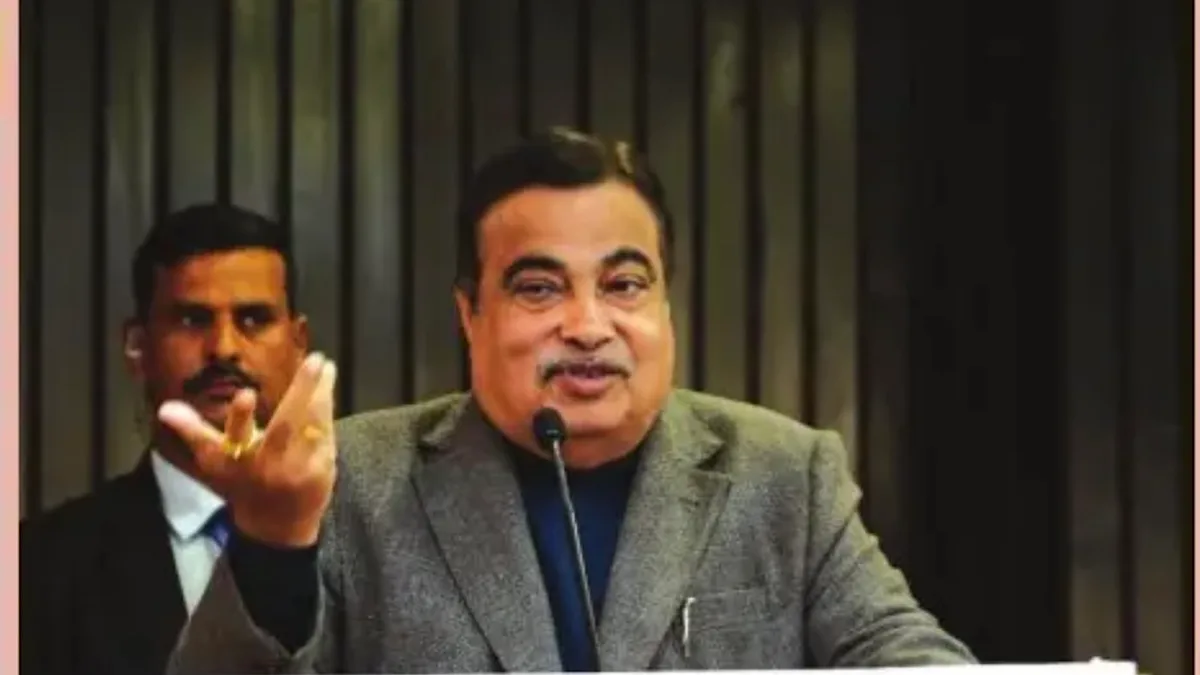
Vajpayee stood for ‘politics of conviction, not convenience’: Nitin Gadkari

Releasing a political memoir on former Prime Minister Atal Bihari Vajpayee in Delhi earlier this month, Minister Nitin Gadkari recalled Vajpayee as a strong practitioner of “politics of conviction over politics of convenience”.

Statesman News Service | Kolkata |

Releasing a political memoir on former Prime Minister Atal Bihari Vajpayee in Delhi earlier this month, Minister Nitin Gadkari recalled Vajpayee as a strong practitioner of “politics of conviction over politics of convenience”. The memoir ‘Atal Sansmaran’ is penned by Ashok Tandon, who served as media relations incharge in the PMO under Vajpayee.

The release of the book coincides with the 100th birth anniversary month of the former prime minister.

Gadkari underlined the relevance of the book in today’s political scenario and recalled his personal interactions with the former Prime Minister. He said that very few leaders matched Vajpayee’s intellectual depth or his engagement with literature, art, and culture in the political history of independent India.

Gadkari noted that Vajpayee viewed development as more than physical infrastructure, insisting that it must also encompass human development, patience, and social sensitivity.

Recounting his years of working with Vajpayee, he said the former Prime Minister spoke sparingly but acted decisively. “He believed that if someone came to meet you, you must never refuse them time,” Gadkari said, describing this as a life lesson he learnt as a young party worker and continues to follow as a cabinet minister.

The Minister added that Vajpayee rejected power-centric politics, advocating instead a politics rooted in ideology, conviction and social responsibility. While Vajpayee was not scared of disputes, Gadkari said that he believed it should not be at the cost of ideals.

Vajpayee, he said, believed governance was about institutions and ideas rather than individuals. “Who occupies the Prime Minister’s chair matters less than the inheritance of ideas,” he said, recalling Vajpayee’s belief system.

Gadkari also highlighted Vajpayee’s ability to disagree without bitterness and his insistence on dignity in public life, even amid sharp political differences. “He believed protest was important, but discussion was indispensable,” he said, adding that differences are natural in a democracy, but hatred, personal animosity, should never exist.

Present at the release, India TV Editor-in-Chief Rajat Sharma said that one of the most enduring qualities of Vajpayee was he knew when to remain silent. Drawing from poetry and personal exchanges, he described Vajpayee as a leader for whom disagreement never translated into bitterness and for whom dialogue always took precedence over confrontation.

Sharma also reflected on Vajpayee’s moral authority and the enduring relevance of his politics. Invoking idioms closely associated with Vajpayee, he said the former Prime Minister often questioned whether power made leaders better human beings.

“Atal ji reminded us that politics must refine people, not corrode them,” Sharma said, likening power to a ‘kajal ki kothari’, a place where stains can appear without warning.

Emphasising the importance of preserving political memory, Sharma said such recollections were vital to guide future generations and ensure that history is not forgotten.