Logo

Delhi Police successfully maintaining peace & security, will be more empowered with C4I: Shah

He further said due to many national and international events held in the national capital, where the offices and residences of the President and the Prime Minister are also located, the responsibility of the Delhi Police increases significantly, adding that the force has always remained at the forefront and discharged its responsibilities with excellence and success.

Statesman News Service | New Delhi |

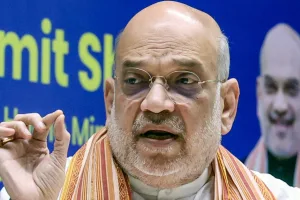
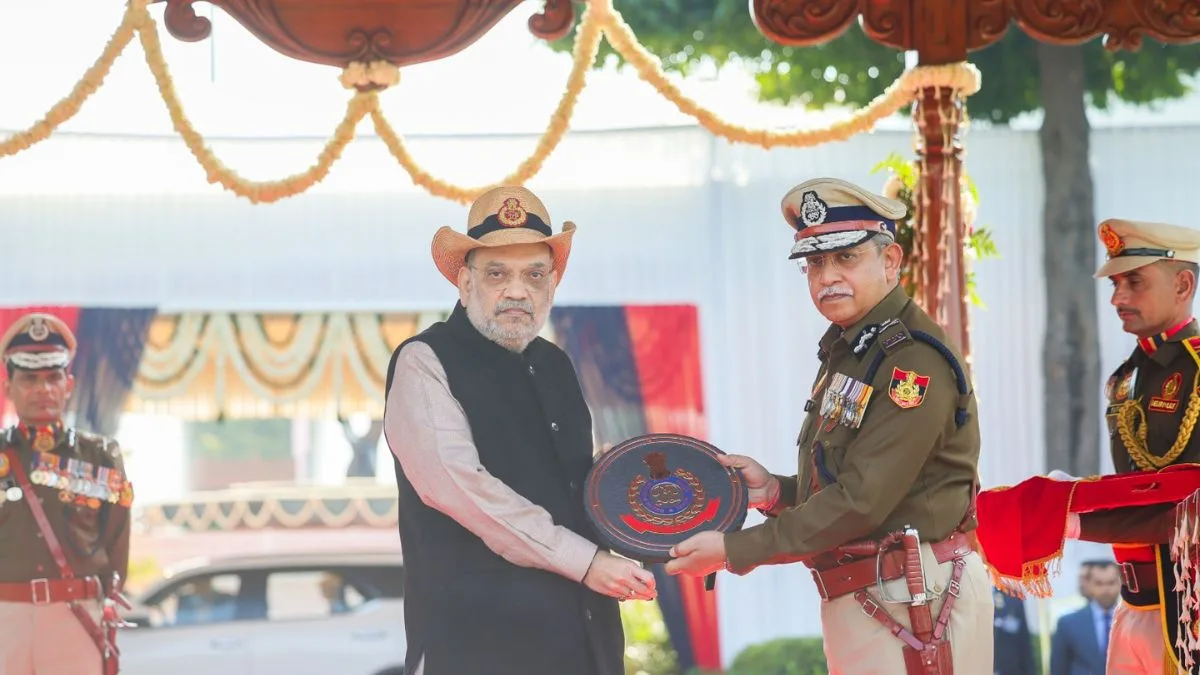
Home Minister Amit Shah on Monday lauded the Delhi Police for successfully tackling complex crimes and issues like the drug syndicates, counterfeit currency rackets, cybercrimes, or organized crime, while maintaining peace and security in the national capital.

Shah, who was speaking on the occasion of Delhi Police’s 79th raising day, stated that the Delhi Police has never left any stone unturned in fulfilling its commitment to peace, service, and justice as the city, besides being the capital of the country, is the heartbeat of the nation’s democracy. “As the national capital, it is extremely important that Delhi’s security meets the highest global standards,” he added.

He further said due to many national and international events held in the national capital, where the offices and residences of the President and the Prime Minister are also located, the responsibility of the Delhi Police increases significantly, adding that the force has always remained at the forefront and discharged its responsibilities with excellence and success.

Shah also praised the Delhi Police’s Special Cell for playing a successful and crucial role in probing narcotics syndicates, fake Indian currency notes, complex cybercrimes, organized crime, and several major terrorist incidents not only in Delhi, but across the nation.

On the occasion, the HM also laid the foundation stone for the Integrated Headquarters of the Delhi Police’s Special Cell, being built at a cost of Rs 368 crore, touted to be an effective means to deal with terrorism and crime, Shah stated.

According to the HM, over the past decade, under Prime Minister Narendra Modi’s leadership, several milestones have been achieved, one of them being the introduction of three new criminal laws. It is for the first time in the country’s laws that ‘terrorism’ has been defined, and a provision for trial in absentia has been made for fugitives who flee the country.

He said provisions have been made to attach the properties of declared offenders located outside India.

Meanwhile, Shah inaugurated the first phase of the Safe City project, adding that the modern Integrated Command Control Communication and Computer Centre, (C4I) built at a cost of approximately 857 crore rupees, is being dedicated to the people of Delhi.

He said under the first phase of the program to connect Delhi with 10,000 cameras, 2,100 cameras are already operational and live, and the work of integrating more than 15,000 existing cameras with the system has been completed.

According to Shah, the Safe City Project would significantly enhance Delhi’s security in the coming days.

The home minister said in the coming time, the MHA will weave a network of CCTV cameras across the entire nation to create a new security system, with a focus on modernizing security system at every land border of the country, which is going to make the nation free from infiltrators.
Hesson urges Pakistan to regroup after India setback

Pakistan slumped to a 61-run defeat against their arch-rivals in Colombo on Sunday, a result that has left them needing a victory over Namibia in their final Group A fixture to retain any realistic hope of progressing to the Super Eights.

Statesman News Service | New Delhi |

Pakistan head coach Mike Hesson has called on his players to swiftly move on from their humiliating loss to India at the ICC Men’s T20 World Cup and refocus on keeping their campaign alive.

Pakistan slumped to a 61-run defeat against their arch-rivals in Colombo on Sunday, a result that has left them needing a victory over Namibia in their final Group A fixture to retain any realistic hope of progressing to the Super Eights.

While clearly frustrated by the performance against India, Hesson stressed the importance of perspective in a multi-team tournament and urged his squad to regroup ahead of Wednesday’s crucial clash.

“We’re really disappointed we didn’t play as well as we could, but we’re also part of a tournament and we know in tournament play that it’s not always going to go your way,” Hesson said.

“So, our job is to pick ourselves up and make sure that we’re very good in two or three days.”

Pakistan’s bowlers had done a fair job in containing India to 175/7 from their 20 overs, but the chase unraveled quickly after they lost four wickets inside the Powerplay, effectively derailing any serious attempt at a comeback.

Hesson acknowledged that the magnitude of the occasion may have influenced some of his players and said handling pressure situations better will be key if Pakistan are to advance further in the competition.

“Look it’s very much when a guy’s putting you under pressure, it’s – are you going to stick to your basics or are you going to go away from that,” Hesson said.

“And I think that’s going to be a real challenge because as the tournament progresses, we’ll be put under pressure again. And it’s how we respond when we’re under the pump. All these guys are international players, they’re all good players, but when the pressure comes on, are they going to trust the decision making or are they going to probably go outside that?

“That’s something that for us to progress further in this tournament it’s something we’re going to have to get better at,” he added.

Governor’s address opens Madhya Pradesh Assembly Budget Session amid Opposition uproar

In his address, Madhya Pradesh Governor Mangubhai Patel highlighted the achievements of the Dr Mohan Yadav-led Bharatiya Janata Party state government and outlined its future plans to make the state developed.

Statesman News Service | Bhopal |

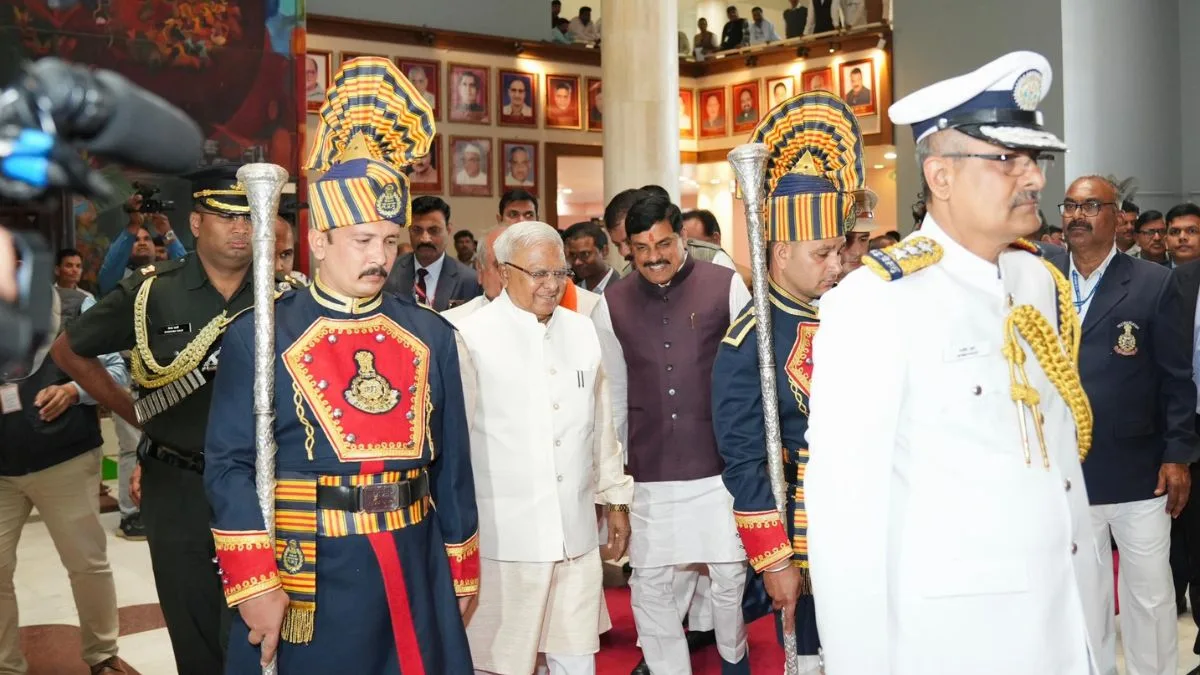
The budget session of the Madhya Pradesh Legislative Assembly began on Monday with the Governor’s address to the House, which witnessed repeated interruptions and noisy protests by opposition Indian National Congress MLAs.

In his address, Madhya Pradesh Governor Mangubhai Patel highlighted the achievements of the Dr Mohan Yadav-led Bharatiya Janata Party state government and outlined its future plans to make the state developed.

He informed that the state government had designated this year as the Year of Industry and Employment. Patel said the government organised the Global Investors’ Summit and several regional industry summits, receiving remarkable success in the form of investment proposals and the signing of MoUs.

He also provided details regarding the government’s achievements in the River Linking Project and the work being carried out in tribal areas.

However, the main opposition Congress created pandemonium during the Governor’s address.

“The pages of the speech that include points on clean potable water have not been read,” Leader of Opposition Umang Singhar alleged.

Other Congress members supported him. Sohanlal Valmiki charged that the microphones of Congress members were switched off.

Notwithstanding the disruptions, after the address, Speaker Narendra Singh Tomar set 17 February as the date for discussion on the Motion of Thanks to the Governor’s speech. The motion was presented by senior member Ajay Vishnoi and supported by member Archana Chitnis, both senior MLAs and former cabinet ministers of the BJP government.

This session is scheduled to comprise a dozen sittings and conclude on 6 March.

Finance Minister and Deputy Chief Minister Jagdish Devda will present the state Budget on 18 February.

The Congress is likely to create further disruptions and corner the BJP government throughout the session over several serious issues.

These include fatalities caused by contaminated drinking water in Indore, the deaths of children in Chhindwara due to the consumption of poisonous cough syrup, and the opposition’s continuing demand for the dismissal of three ministers.

These include Urban Administration Minister Kailash Vijayvargiya over the Indore drinking water deaths, Health Minister and Deputy Chief Minister Rajendra Shukla over the cough syrup deaths, and Tribal Welfare Minister Vijay Shah over an FIR filed against him for alleged derogatory remarks against an Indian Army Colonel in connection with ‘Operation Sindoor’.

Australia vs Sri Lanka T20 World Cup 2026 Preview: Toss time, live streaming, pitch report and more

With qualification on the line, both sides will view this fixture as a must-win, setting the stage for a fascinating contest between Australia’s power-hitters and Sri Lanka’s spin-heavy attack.

Neha Buswal | New Delhi |

Australia will look to revive their ICC Men’s T20 World Cup 2026 campaign when they take on Sri Lanka in a high-stakes Group B clash at the Pallekele International Cricket Stadium in Kandy. With Travis Head, Glenn Maxwell and Adam Zampa expected to play pivotal roles, the former champions are under pressure after their shock defeat to Zimbabwe.

Head’s aggressive starts and Zampa’s control in the middle overs could be crucial on a surface expected to aid spin, while Maxwell’s all-round impact remains key for Australia.

Sri Lanka, meanwhile, will rely on Pathum Nissanka and Kusal Mendis at the top, with Wanindu Hasaranga and Maheesh Theekshana expected to exploit the conditions with the ball. Matheesha Pathirana’s pace at the death and Charith Asalanka’s leadership add further balance to a Sri Lankan side that can seal Super 8 qualification with a win.

With qualification on the line, both sides will view this fixture as a must-win, setting the stage for a fascinating contest between Australia’s power-hitters and Sri Lanka’s spin-heavy attack.

Australia vs Sri Lanka T20 World Cup: Match Details

Match: Australia vs Sri Lanka, ICC Men’s T20 World Cup 2026
Date: Monday, February 16, 2026
Venue: Pallekele International Cricket Stadium, Kandy, Sri Lanka

When will the toss happen for the Australia vs Sri Lanka T20 World Cup match?

The toss for the Australia vs Sri Lanka T20 World Cup match will happen at 6:30 PM IST, and the match will shortly start at 7:00 PM.

Australia vs Sri Lanka T20 World Cup: Live Streaming Details

Where to watch Australia vs Sri Lanka T20 World Cup on TV in India?

The Australia vs Sri Lanka T20 World Cup match will be broadcast live on the Star Sports Network.

Where to watch Australia vs Sri Lanka T20 World Cup on live streaming in India?
The Australia vs Sri Lanka T20 World Cup will live stream on the JioHotstar app and website.

Australia vs Sri Lanka T20 World Cup: Pitch Report

The pitch at Pallekele is expected to be slightly slow and two-paced, offering increasing assistance to spinners as the match progresses. Batters will need to spend time at the crease, while pacers using cutters and variations could be effective in the middle overs.

A first-innings score of 160–180 could prove competitive, depending on dew.

Australia vs Sri Lanka T20 World Cup: Head-to-Head in T20Is

Total Matches: 26

Australia Wins: 16

Sri Lanka Wins: 10

Australia vs Sri Lanka T20 World Cup: Predicted Playing XIs

Australia:
Mitchell Marsh (c), Travis Head, Josh Inglis (wk), Cameron Green, Tim David, Matt Renshaw, Marcus Stoinis, Xavier Bartlett, Nathan Ellis, Adam Zampa, Matt Kuhnemann.

Sri Lanka:
Pathum Nissanka, Kusal Perera/Kamil Mishara, Kusal Mendis (wk), Pavan Rathnayake, Kamindu Mendis, Dasun Shanaka (c), Dushan Hemantha, Dunith Wellalage, Dushmantha Chameera, Maheesh Theekshana, Matheesha Pathirana.

Greater Gen Z adoption, near-universal merchant acceptance, govt push: How UPI overtook cash as India’s top payment mode

According to an independent study commissioned by the Finance Ministry, UPI accounted for 57 per cent of total transactions, while the cash stood at 38 per cent.

Statesman News Service | New Delhi |

Unified Payments Interface (UPI) has emerged as the most preferred mode of payment among Indians, overtaking cash, reshaping transaction behaviour across age groups.
According to an independent study commissioned by the Finance Ministry, UPI accounted for 57 per cent of total transactions, while the cash stood at 38 per cent. Digital payments have surged over 11 times in the last four years with UPI accounting for 80 per cent of them.
The finding are based on a survey of 10,378 respondents across 15 states, including users, merchants, and service providers. The survey was carried out by an independent third-party research agency in consultation with the NPCI.
UPI adoption leads the shift
 
As per the study, the use of UPI payments is particularly high among the Gen Z generation, with 66 per cent adoption in the 18-25 years age group. Some 52 per cent of respondents said that cashback incentives motivated them to adopt the UPI.
Sixty-five per cent UPI users reported multiple daily transactions and 90 per cent admitted that their confidence in the digital payments increased after using UPI.
 
Small traders embrace the digital payments
One of the key factors behind the UPI’s success in India has been its near universal acceptance among merchants. From major hotels to the smallest neighbourhood tea vendors, ubiquitous UPI acceptance has embedded digital payments into everybody commerce. According to the study, 94 per cent of small merchants have adopted the UPI.
Seventy-two per cent reported satisfaction due to faster transaction speed, improved record-keeping and operational convenience.
The study highlighted that incentives have played a critical role in reducing cost barriers for merchants and acquiring banks, accelerating merchant onboarding, and building trust in digital payment systems across income groups and geographies.
Coordinated efforts of the govt, NPCI and banks key to UPI success
Coordinated efforts of the government, the National Payments Corporation of India (NPCI), banks, fintech players, and payment service providers have collectively strengthened India’s digital payments ecosystem and advanced the vision of a less-cash, digitally empowered economy.
The Government’s budgetary support of Rs 8,276 crore for the scheme has been significant, with incentive disbursements of Rs 1,389 crore in FY 2021–22, Rs 2,210 crore in FY 2022–23, Rs 3,631 crore in FY 2023–24, and Rs 1,046 crore in FY 2024–25. These disbursements supported banks, payment system operators, and app providers in scaling low-value digital transactions across the country.
India showcases UPI at AI Summit
The NPCI has rolled out its “UPI One World” wallet for visitors from over 40 countries attending the India AI Summit inaugurated by Prime Minister Narendra Modi on Monday.
During the five-day global summit, international delegates will be able to use the UPI One World wallet to make seamless, real‑time person‑to‑merchant (P2M) payments during their stay.

Digital transactions jump 11-fold under RuPay–BHIM-UPI incentive scheme: DFS Report

The study was conducted by an independent third-party research agency in consultation with the National Payments Corporation of India (NPCI).

Statesman News Service | New Delhi |

The Department of Financial Services (DFS), under the Ministry of Finance, has released a report titled “Socio-Economic Impact Analysis of the Incentive Scheme for Promotion of RuPay Debit Card and low-value BHIM-UPI (Person-to-Merchant) transactions”.

The study was conducted by an independent third-party research agency in consultation with the National Payments Corporation of India (NPCI). It evaluates the effectiveness of the Government’s incentive framework in promoting digital payments, strengthening payment infrastructure, and advancing financial inclusion across the country.

The Incentive Scheme, introduced in FY 2021–22 and continued through FY 2024–25, was conceptualised to accelerate universal adoption of digital payments, reduce dependence on cash, and formalise routine economic activity.

The scheme provided structured budgetary support to acquiring banks and ecosystem participants to keep digital payments affordable, accessible, and sustainable for citizens and merchants.

The socio-economic impact analysis is based on a primary survey of 10,378 respondents across 15 States, comprising 6,167 users, 2,199 merchants, and 2,012 service providers.

The survey covered urban and semi-urban areas across five geographical zones — North, South, East, West, and North-East. Fieldwork was conducted between July 22 and August 25, 2025, using face-to-face Computer Assisted Personal Interviews (CAPI), the Ministry of Finance said in a statement sharing the report insights.

According to the report, there has been a significant and sustained increase in digital payment adoption across socio-economic segments.

Among surveyed users, BHIM-UPI emerged as the most preferred mode of transaction at 57 per cent, surpassing cash transactions at 38 per cent, primarily due to ease of use and instant fund transfer capability.

The study noted that 65 per cent of UPI users reported making multiple digital transactions per day. Adoption was particularly strong among younger users aged 18–25 years, where usage stood at 66 per cent.

The evaluation further indicated that 90 per cent of users reported increased confidence in digital payments after using UPI and RuPay cards. Cashback incentives were identified as a key adoption driver by 52 per cent of users, while 74 per cent cited speed of payment as the primary advantage.

Among merchants, 94 per cent of small businesses reported adopting UPI.

Around 72 per cent expressed satisfaction with digital payments, highlighting faster transactions, improved record-keeping, and operational convenience. Additionally, 57 per cent of merchants reported an increase in sales following digital adoption.

The report highlighted that government incentives played a critical role in reducing cost barriers for merchants and acquiring banks, accelerating merchant onboarding, and building trust in digital payment systems.

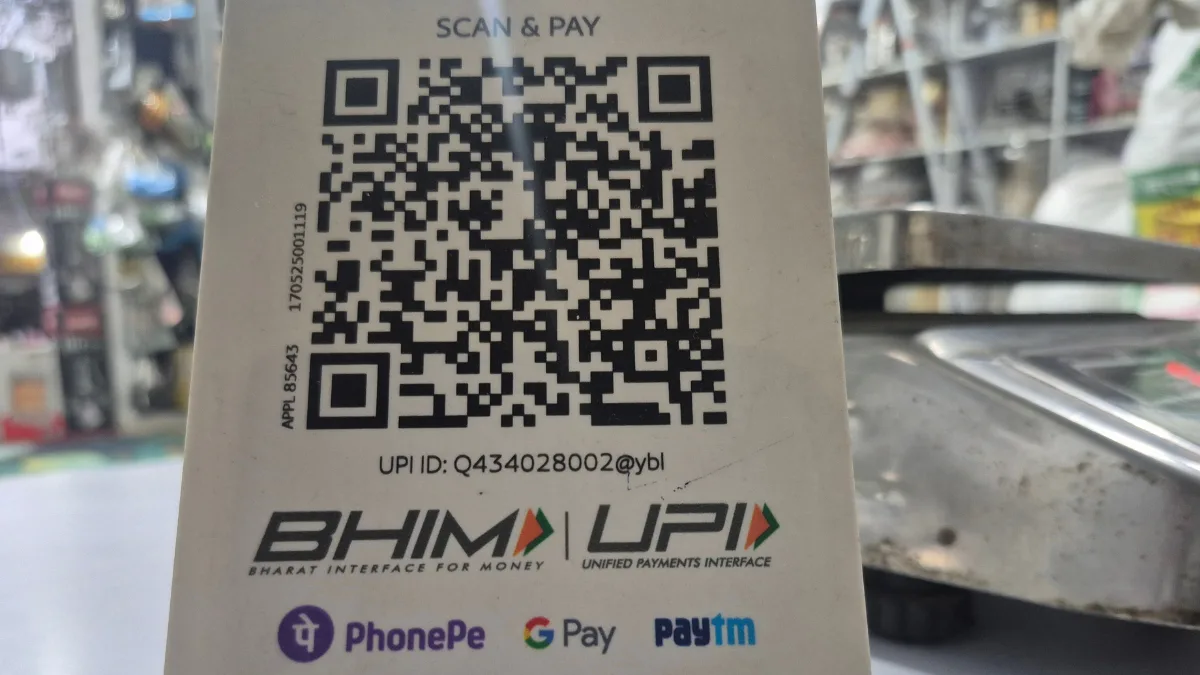
During the implementation period of the scheme, digital transactions increased nearly 11 times. UPI’s share in total digital transactions surged to approximately 80 per cent, establishing it as the primary payment rail. UPI QR code deployment expanded from 9.3 crore to about 65.8 crore, while the number of banks operational on the UPI platform rose from 216 in March 2021 to 661 by March 2025. Third-party app providers also increased from 16 to 38.

The period also witnessed a decline in the share of lower-denomination currency notes and ATM withdrawals, reflecting a behavioural shift toward low-ticket digital transactions.

The Government allocated Rs 8,276 crore in budgetary support for the scheme. Incentive disbursements stood at Rs 1,389 crore in FY 2021–22, Rs 2,210 crore in FY 2022–23, Rs 3,631 crore in FY 2023–24, and Rs 1,046 crore in FY 2024–25.

Beyond transactional growth, the study underscored broader socio-economic benefits of digital payments, including increased formalisation of the economy through digital footprints, enhanced transparency, improved business efficiency, and stimulus to fintech innovation.

The report stated that coordinated efforts by the Government, NPCI, banks, fintech players, and payment service providers have strengthened India’s digital payments ecosystem and advanced the vision of a less-cash, digitally empowered economy.

Priest killed in wild elephant attack at Katarniaghat Wildlife Sanctuary in Bahraich

According to forest officials, the incident took place at Katiyara Baba Kutia, located under the Katarniaghat forest division on Sunday night .

Statesman News Service | Bahraich |

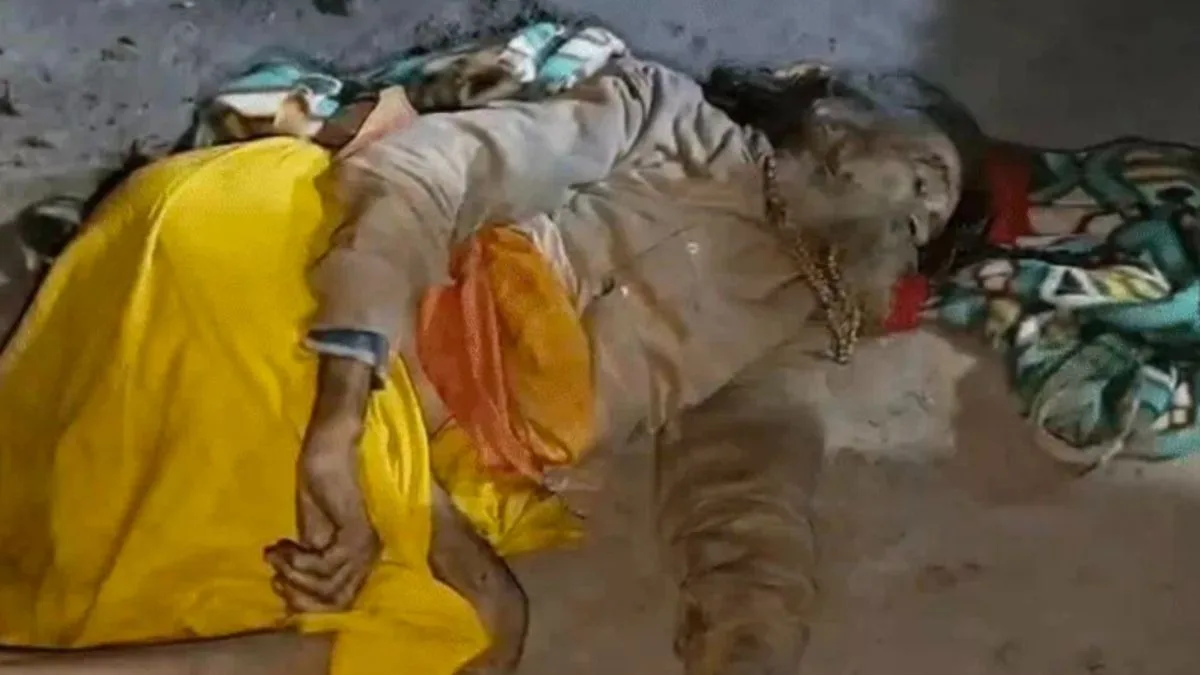
Panic gripped villages around the Katarniaghat Wildlife Sanctuary in Uttar Pradesh’s Bahraich district after a wild elephant killed a 100-year-old priest, officials disclosed on Monday.

According to forest officials, the incident took place at Katiyara Baba Kutia, located under the Katarniaghat forest division on Sunday night .
The deceased has been identified as Suresh Das, a resident of Hazaripurwa village in the Karikot area. He had been living at the hut for the past 15 years, devoted to worship and leading the life of a celibate priest.

Reports said that around 8:30 pm on Sunday, Suresh Das was having dinner with his associate Ram Lakhan. After the meal, Ram Lakhan went outside to wash utensils, while the priest remained inside the hut. During this time, a tusker entered the hut and began damaging the structure.

Ram Lakhan said when he returned, he saw the elephant inside and stepped back to fetch a torch. Meanwhile, the priest reportedly confronted the animal, saying, “Will you destroy everything? Where will we live?” The elephant then chased him. After he fell a short distance away, the animal lifted him with its tusks, flung him to the ground, and trampled him to death.

Village head Shyam Lal was informed about the incident, following which Sujauli Station House Officer Prakash Chandra Sharma reached the spot with a police team. Forest department officials also arrived to assess the situation.

Katarniaghat Ranger Ashish Gond said that elephant movement in the area has increased in recent days, making it difficult for teams to reach the spot at night. Forest staff and trained volunteers have been put on alert. Residents of villages bordering the forest have been advised to remain cautious at night, carry torches, and avoid venturing alone towards forested areas.

Notably, this is the second fatal elephant attack in the area within two days. On Friday, a woman riding a motorcycle on the Bichhiya–Mihipurwa road was attacked and killed by an elephant, while her two sons sustained serious injuries. The repeated incidents have created an atmosphere of fear across the region.

Congress slams India-US Trade Pact, says it binds New Delhi on Russian, Iranian oil commitments ‎

Surjewala highlighted public statements by US officials, including Marco Rubio, who said India had committed to stop buying Russian oil as part of broader discussions tied to the trade framework. Rubio’s remarks came at the Munich Security Conference, where he said Washington had “gotten their commitment to stop buying additional Russian oil” following talks with Indian officials.

Statesman News Service | New Delhi |

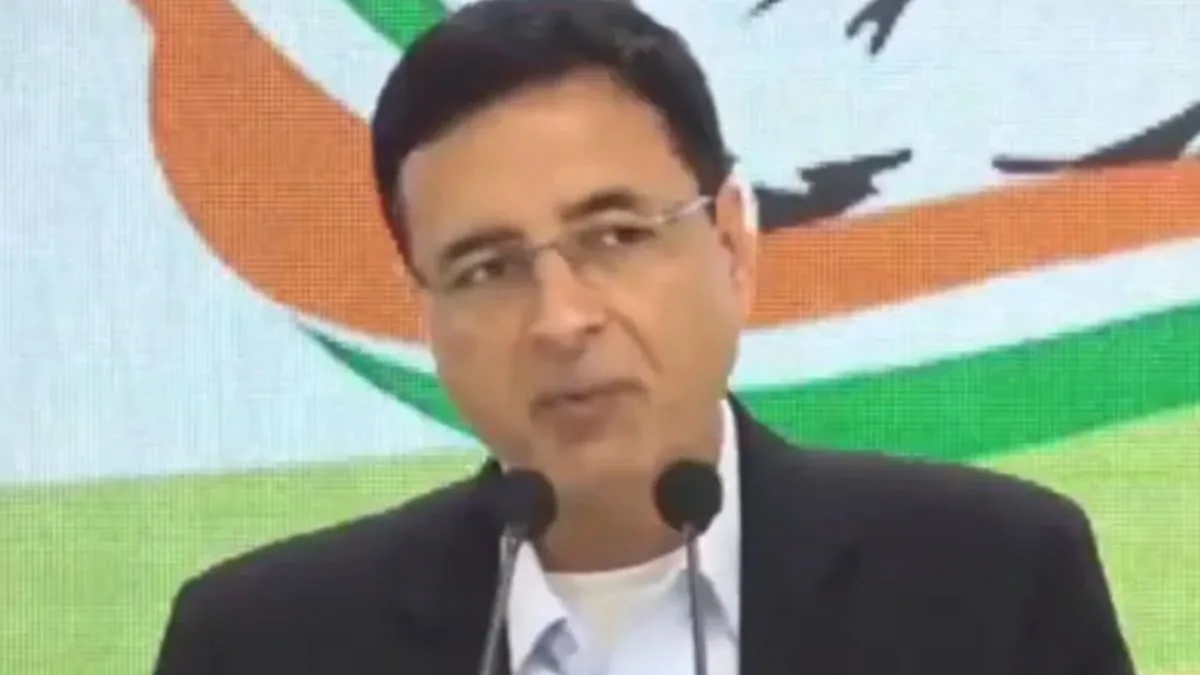
‎In a scathing critique of the recently announced India-United States trade agreement, Congress leader and MP Randeep Singh Surjewala accused the government of compromising India’s sovereignty and energy security by acquiescing to pressure to curb crude oil purchases from Russia and Iran.

‎Surjewala highlighted public statements by US officials, including Marco Rubio, who said India had committed to stop buying Russian oil as part of broader discussions tied to the trade framework. Rubio’s remarks came at the Munich Security Conference, where he said Washington had “gotten their commitment to stop buying additional Russian oil” following talks with Indian officials.

‎“Now, under the US trade agreement, India will be forced to buy crude oil from America and Venezuela at much higher prices… This is a direct compromise of India’s sovereignty and self-reliance,” Surjewala alleged, asserting that such commitments undermine India’s traditional energy procurement strategy.

‎India is one of the world’s largest crude oil importers, and since early 2022 has sourced significant volumes from Russia and Iran, benefiting from discounted rates. Under pressure from the United States to align its energy purchases with Western sanctions regimes, New Delhi has faced growing scrutiny, though Indian officials have repeatedly emphasised that energy decisions are guided by national interest and strategic autonomy rather than external dictates.

‎Surjewala also questioned provisions of the trade agreement reportedly requiring India to purchase US goods worth about $100 billion annually over the next five years—a total of $500 billion—without equivalent reciprocal commitments from the United States.

‎“In 2024, India exported $81 billion worth of goods to America and imported $43 billion, resulting in a trade surplus. Is this new agreement based on equality or coercion?” he asked, reiterating concerns among Opposition leaders that the pact may disproportionately benefit American exporters.

‎The Congress leader criticised the government for shifting the focus of the trade deal from mutual market access to what he described as one-sided obligations, raising questions about whether the agreement truly reflects India’s economic priorities.

‎The criticism comes amid broader political debate about the contours of India’s evolving trade and strategic ties with the United States. While the government has defended the deal as a step toward greater market access for Indian goods and diversification of energy and technology supplies, critics have argued that details around oil import conditions and tariff commitments need clearer articulation from New Delhi.

‎The government has stressed that India maintains a commitment to “strategic autonomy” in foreign and energy policy, with decisions on crude procurement continuing to be shaped by cost, supply reliability and national interest rather than external pressure.

‎Surjewala posed a pointed critique of the government’s stance: “Is this a ‘strong government’ or a meek, weak, helpless government? Is it ‘Atmanirbhar Bharat’ or ‘America-dependent Bharat’?” His comments reflect intensifying debate over the implications of the trade pact for India’s domestic economy, energy strategy and sovereign decision-making.

10 months after Pahalgam terror attack, LG orders reopening of 14 tourist destinations across J&K

Announcing this, the LG wrote on X; “After a thorough security review and discussion, I’ve ordered reopening of more tourist spots in Kashmir and Jammu Divisions, which were temporarily closed as precautionary measures”.

Statesman News Service | Jammu |

After a thorough security review, Lt. Governor Manoj Sinha on Monday ordered immediate reopening of 14 tourist spots across Jammu and Kashmir that were shut ten months ago after the Pahalgam terror attack on 22 April last year when 26 civilians were killed.

Eleven of these reopened tourist spots are in the Kashmir valley and three in the Jammu division.

Announcing this, the LG wrote on X; “After a thorough security review and discussion, I’ve ordered reopening of more tourist spots in Kashmir and Jammu Divisions, which were temporarily closed as precautionary measures”.

“11 tourist spots in Kashmir Division- Yousmarg, Doodhpathri in Budgam, Dandipora Park in Kokernag, Peer Ki Gali, Dubjan & Padpawan in Shopian, Astanpora, Tulip Garden in Srinagar, Thajwas Glacier, Hung Park in Ganderbal & Wullar/ Watlab in Baramulla to be reopened immediately”.

“3 tourist spots in Jammu Division- Devi Pindi in Reasi, Mahu Mangat in Ramban and Mughal Maidan in Kishtwar to be reopened immediately. 3 sites in Kashmir Division- Gurez, Athwatoo, Bangus and 1 site in Jammu Division- Ramkund in Ramban will be reopened once snow gets cleared”, the LG said.

It is worth mentioning that during the recent visit here of the Home Minister Amit Shah, Chief Minister Omar Abdullah raised the issue of reopening tourist destinations in Jammu and Kashmir that were closed after the Pahalgam terror attack.

The CM said several tourist locations in the Kashmir Valley were shut following security concerns, but the situation now warrants a review. “Some areas were closed, and the time has come to reopen them,” the chief minister said, adding that discussions with the Centre on the matter were ongoing.

Omar said that every part of Jammu and Kashmir is directly or indirectly connected with the tourism sector. While some districts have high tourism potential and others relatively less, tourism remains an integral component across the entire Union Territory.


Is Adityanath copying PM Modi’s ‘Gujarat model’ playbook in the race to Delhi

Given the fact that his own party — the BJP — governs Delhi under a “triple-engine sarkar” (central government, state, and municipal corporations) in the party’s parlance the CM’s remarks naturally drew interest as well as buzz.

VIBHA SHARMA | New Delhi |

Uttar Pradesh Chief Minister Yogi Adityanath recently described Delhi as a “gas chamber” during a speech in Gorakhpur, criticising the national capital’s air quality while lauding his own government’s “balanced” approach to development.

Adityanath, who is also perceived as one of the successors to Prime Minister Narendra Modi, contrasted Gorakhpur’s clean environment with Delhi, where he said the Air Quality Index often exceeds 400. “You feel suffocated there… the old, the unwell, and children are advised not to venture out,” he said, highlighting breathing difficulties, irritation, and other health risks caused by pollution.

Given the fact that his own party — the BJP — governs Delhi under a “triple-engine sarkar” (central government, state, and municipal corporations) in the party’s parlance the CM’s remarks naturally drew interest as well as buzz.

Some party leaders suggested that Adityanath may be genuinely highlighting his administration’s work in UP, while others saw a strategic motive — projecting a “development model” akin to Modi’s Gujarat strategy to strengthen his profile in the race for the PMO in 2014.

“You protect the environment, and it will protect you. Mother Earth will bless you if you fulfill your responsibilities towards her,” Adityanath said drawing sharp reactions from Aam Aadmi Party (AAP) leader Sanjay Singh.

“Yogi Adityanath has exposed the BJP on the issue of pollution,” the AAP MP posted on X, adding: “Did Adityanathji forget that there is a BJP government in Delhi, or did he make this statement deliberately against Modi and (Delhi chief minister) Rekha Gupta government?”

Incidentally, this is not the first time Adityanath promoted his state as a national model. A couple of months back, he declared that UP had “successfully established itself as a model state in law and order,” citing zero tolerance for hooliganism, extortion, and mafia influence. Robust security measures had created a safe and orderly environment, portraying UP as a benchmark for governance, he said

In Adityanath’s words, observers are noting parallels to Modi’s “Gujarat Model,” which underpinned his 2014 campaign to transform him from a regional leader into a national figure.

Modi’s strategy emphasised high economic growth, infrastructure development, private sector investment, and streamlined administration to overcome national “policy paralysis” under Congress-led UPA government. The model appealed to the aspirational middle class and youth, and supported by a high-tech high-decibel campaign helped the BJP secure a majority in Delhi after 30 years.

Observers believe Adityanath’s statements may be aimed at crafting a similar narrative, showcasing UP’s governance and development successes to position himself as a potential prime ministerial contender.

The Chief Minister could also be sending subtle signals to the top leadership, especially after the appointment of a state BJP president who is said to be an adversary. Whether this approach translates into political advantage remains to be seen but the UP CM’s “development model” mirrors the playbook that elevated Modi from state leadership to the national stage, they add.

WPI inflation rises to 10-month high of 1.81% in January on costlier manufactured goods

The month-on-month change in WPI for January 2026 stood at 0.51% compared to December 2025.

Statesman News Service | New Delhi |

The Wholesale Price Index (WPI)-linked inflation stood at 1.81% in January, rising to a 10-month high from 0.83% in December 2025, according to data released by the Ministry of Commerce and Industry.

The month-on-month change in WPI for January 2026 stood at 0.51% compared to December 2025.

The positive rate of inflation in January 2026 was primarily due to an increase in the prices of manufactured basic metals, other manufactured products, non-food articles, food articles, and textiles, among others, the ministry added.

The Food Index, consisting of ‘Food Articles’ from the Primary Articles group and ‘Food Products’ from the Manufactured Products group, decreased from 196.0 in December 2025 to 194.2 in January 2026. However, the rate of inflation (year-on-year), based on the WPI Food Index, increased to 1.41% in January 2026.

Inflation in Manufactured Products, which carry the highest weight of 64.23% in the index, rose to 2.86% in January 2026, compared to 1.82% in December 2025. The index for manufactured goods increased to 147.5, up from 145.6 in December.

The Fuel and Power category continued to show deflation, with inflation at (-4.01%) in January 2026. The index for the group declined to 145.9 from 148.3 in December, reflecting lower prices of electricity and mineral oils.

Last week, data from the Ministry of Statistics and Programme Implementation (MoSPI) showed that India’s retail inflation eased to 2.75% in January 2026. The inflation rate is based on the newly introduced Consumer Price Index (CPI) series with the base year 2024.

Rural inflation stood at 2.73%, while urban inflation was marginally higher at 2.77%, reflecting stable price trends across both segments.

Clash over reservation in Bihar Assembly as Opposition demands 85% quota

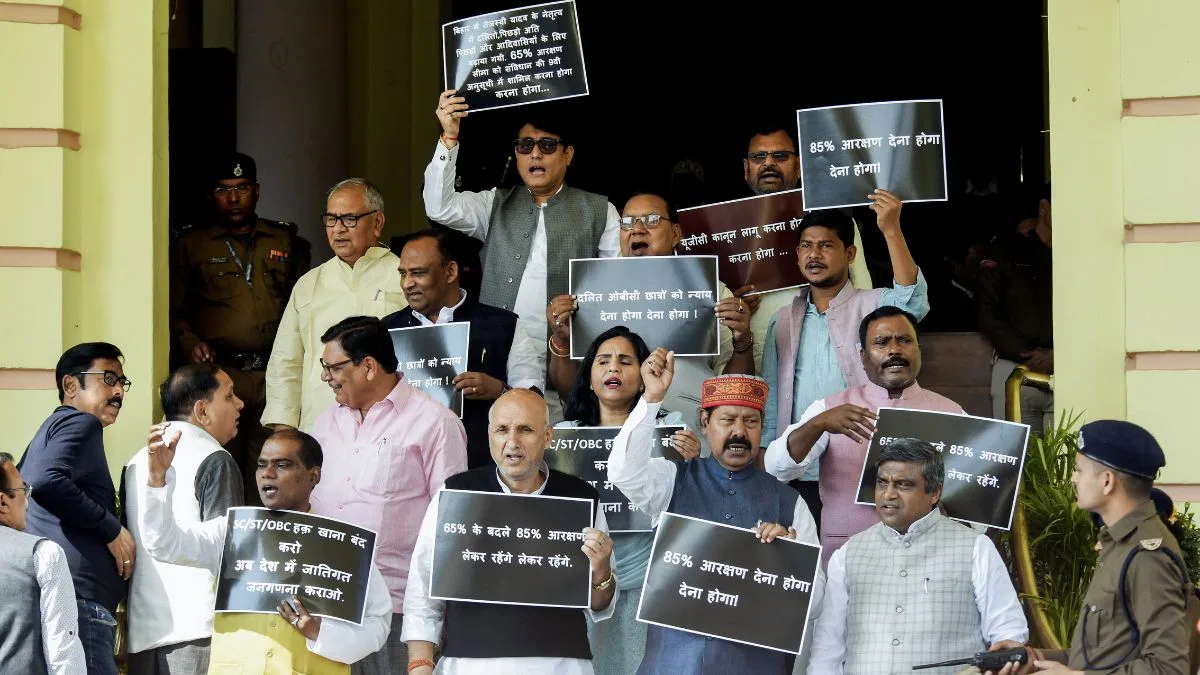
The Opposition opened a front against the state government in the Bihar Legislative Assembly on Monday accusing the Nitish Kumar government of being “anti-reservation”. Holding posters and banners, Opposition legislators reiterated their demand to implement 85% reservation.

Imran Mojib | Patna |

The Opposition opened a front against the state government in the Bihar Legislative Assembly on Monday accusing the Nitish Kumar government of being “anti-reservation”. Holding posters and banners, Opposition legislators reiterated their demand to implement 85% reservation.

MLAs from the RJD and other Opposition parties demanded that as per the caste-based survey conducted in the state by the Mahagathbandhan (Grand Alliance) government in 2023, the scope of reservation should be expanded in proportion to the population. The legislators alleged that the NDA government is depriving backward communities of their rights by adopting a double standard on the issue of reservation.

They staged a sit-in at the main door of the Assembly. As soon as the proceedings began, they rushed into the Well of the House, carrying posters with slogans reading “Implement 85% Reservation.”

They said until the government increases the reservation limit to 85% and takes concrete steps to include it in the Ninth Schedule of the Constitution, their protest will continue. They termed it an injustice against the majority population of Bihar.

After the caste census in 2023, the Bihar government had approved 65% reservation for the SCs, STc and OBCs, apart from the 10% EWS reservation provided to Economically Weaker Sections not covered under SC, ST, and OBC categories in Central government jobs and educational institutions.

In November 2023, the Bihar government issued a gazette notification announcing an increase in reservation from 50% to 65%. Subsequently, the Bihar Legislative Assembly unanimously passed the Bihar Reservation Amendment Bill to implement 65% reservation.

However, after hearing a Public Interest Litigation (PIL) filed against this decision, the Patna High Court struck down the Bihar government’s decision to increase reservation from 50% to 65%. The High Court stated that 65% reservation violates the 50% cap set by the Supreme Court.

Additionally, the court noted that after adding 10% reservation for Economically Weaker Sections (EWS), the total reservation would reach 75%, which is not in accordance with the Constitution.

Frustrated over delays, Rajnath Singh sets five-year deadline for India’s Indigenous Aero Engines

Rajnath Singh further said that India must start working on sixth-generation and advanced technologies, to stay ahead of the curve.

Statesman News Service | New Delhi |

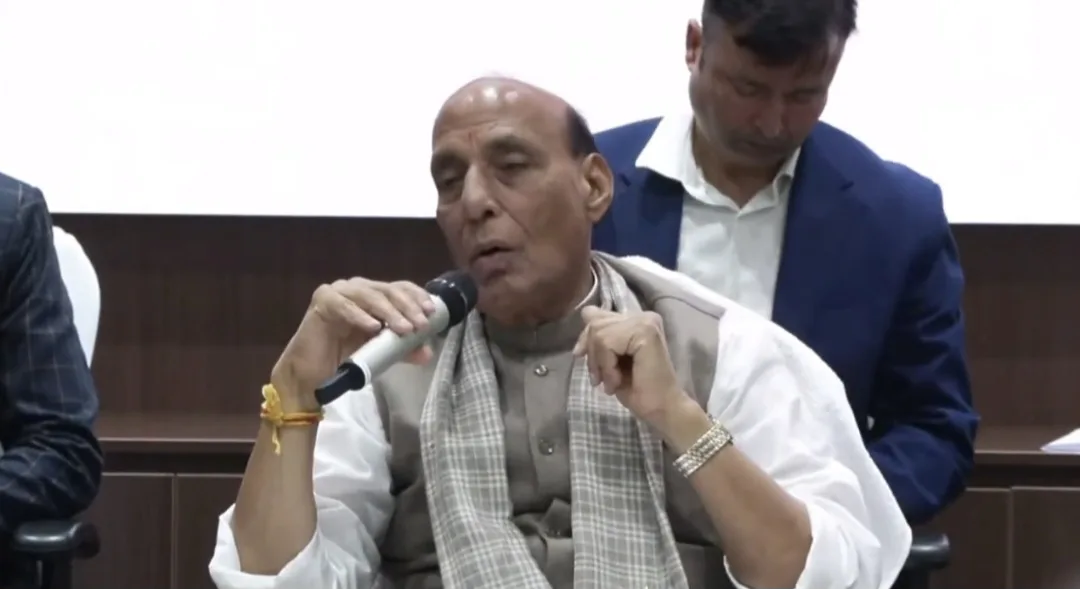
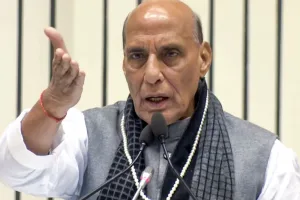
Amid reports of further delays in India’s Advanced Medium Combat Aircraft (AMCA) programme, Defence Minister Rajnath Singh on Monday set a five-year deadline for the DRDO scientists to develop the country’s Indigenous Aero Engines.

Speaking at the Gas Turbine Research Establishment (GTRE) in Bengaluru, Singh expressed his frustration, saying “If it’s taking 25 years to develop an engine, then India’s current situation, our strategic needs, and our ambitions are such that you should assume that your 20 years have already ended and now you have only 5 years left.”

Singh further stated that the deadline should not come as a “shock or surprise”. “It’s a challenge. “We have to achieve in these 5 years what other countries take 20 years to do. We have to give it our best,” he said.

Singh further highlighted collaborations with the UK and France, a shift to a dry variant for unmanned vehicles by 2026, and the need to aim for sixth-generation tech with AI and advanced materials.

The ambitious timeline supports Atmanirbharta goals, backed by a 15 per cent defence budget rise to Rs 7.85 lakh crore, while addressing past funding gaps compared to rivals like China.

Referring to the AMCA development, Singh said that the time has come to complete the efforts. “We are also moving rapidly towards the design and development of the Advanced Medium Combat Aircraft (AMCA). In the past, we have made several attempts to achieve mastery in the field of aero engines. Now the time has come to complete our efforts that remained incomplete and were not yet complete,” he added.

Rajnath Singh further said that India must start working on sixth-generation and advanced technologies, to stay ahead of the curve.

“The technology you are developing today for fighter planes can bring a revolution to the world of civil aviation tomorrow. The high-temperature-resistant composite materials you are creating can also be used in power plants or spaceships,” the Defence Minister stated.

He cited global political uncertainties to highlight the need for self-reliance in such technologies.

“The world’s geopolitical scenario is changing very rapidly. Supply chains are breaking, and new ecosystems are developing. In such a situation, only the country that has its own technology will remain safe, secure, and able to sustain itself,” he added.

Children return to Odisha anganwadi after 3-month boycott, signalling end to caste dispute

The unsavoury dispute arose in Nuagaon village under Ghalimala Gram Panchayat, where residents had boycotted the centre for nearly three months.

Statesman News Service | BHUBANESWAR |

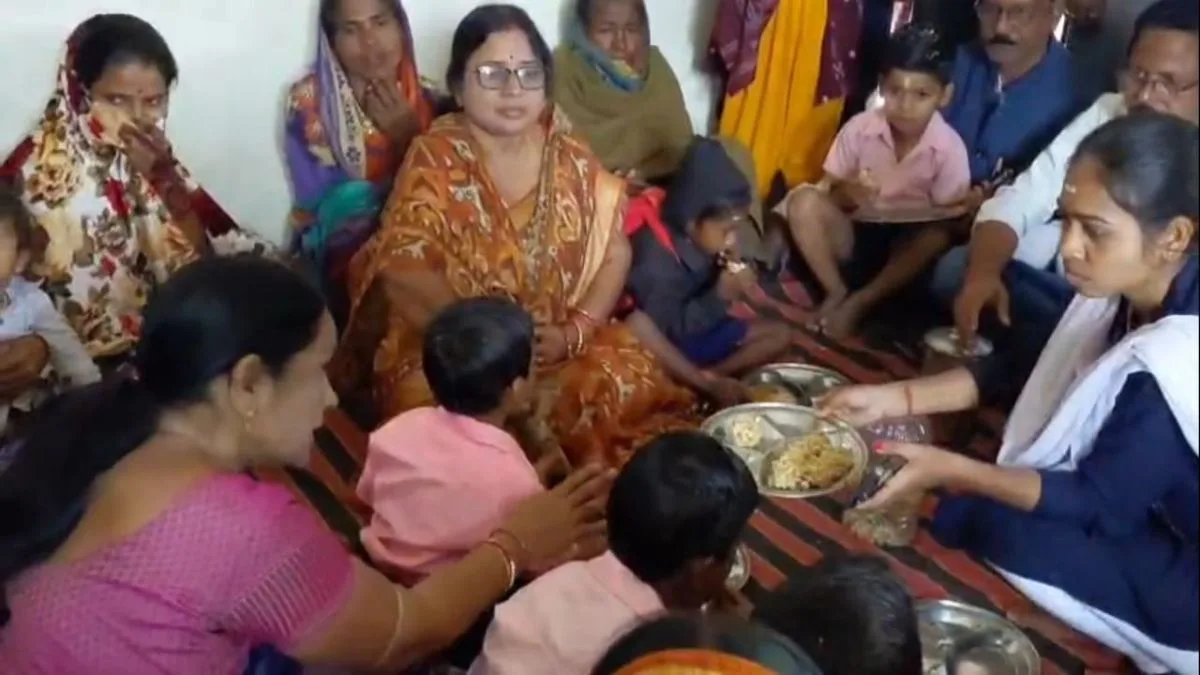
On a foggy and hazy Monday morning, tiny tots dressed in colourful attire arrived at an Anganwadi pre-learning centre with their parents, joyfully receiving ragi ladoos from a Dalit woman. This marked a refreshing turnaround in a remote village in Odisha’s Kendrapara district, which had been caught in a caste conflict for almost three months and had grabbed national headlines.

The unsavoury dispute arose in Nuagaon village under Ghalimala Gram Panchayat, where residents had boycotted the centre for nearly three months. They also refused to receive nutritious food meant for pregnant women, and parents stopped sending their children to the centre in protest against the appointment of Sharmistha Sethy, a Dalit woman, as a helper.

It was Sharmistha Sethy, whose appointment in November last year had prompted upper-caste parents to withdraw their children, who became the centre of attraction as the Anganwadi resumed full-fledged operations with the children’s return.

“I served ragi ladoos to the children. Later, I served rice and dalma (vegetable curry). As the children ate, I was overjoyed. They also played with toys, bringing life back to the centre, which had remained deserted for around three months. The three hours I spent at the centre mingling with the children were the most memorable moments of my life. I am optimistic that the caste row will not raise its head in the village again,” Sharmistha said gleefully.

“Children, accompanied by their parents and guardians, had joyous moments as they arrived at the Anganwadi centre. For almost three months, the centre functioned without children due to villagers’ disagreement over Sharmistha Sethy’s appointment as helper. The centre had lost its vibrancy as parents chose not to send their children. Now, the lively sounds of playful children have returned,” said Dipali Mishra, Child Development Project Officer (CDPO), who is responsible for implementing Integrated Child Development Services in Rajnagar block of Kendrapara district.

Of the 20 enrolled children, 16 attended the centre, while four were absent due to illness. “We are hopeful they will return from tomorrow onwards as the dispute was resolved on Saturday. The settlement of the issue and people’s decision to put aside their differences is a heartening moment that I will cherish for the rest of my life,” she said emotionally.

Rajnagar MLA Dhurba Charan Sahoo, who visited the centre, said, “I am happy that the conflict has become a thing of the past with children returning to the Anganwadi centre. I hope the villagers’ camaraderie will remain intact in the coming days.”

It may be noted that the Anganwadi centre in Kendrapara district had remained non-functional since 21 November after Sharmistha’s appointment, as locals had reportedly opposed it on caste grounds. Incidentally, she was the lone applicant for the contractual post advertised by the district administration.

The caste conflict had triggered nationwide outrage. The All India Congress Committee president and Leader of Opposition in the Rajya Sabha, Mallikarjun Kharge, had raised concerns on February 12 over caste discrimination at workplaces, citing the Kendrapara incident.

Sujata Nayak, Member of the State Commission for Protection of Child Rights (SCPCR), expressed relief over the children’s return and said the Commission would launch periodic awareness initiatives to safeguard children’s rights.

“Instructions are being issued to district-level government agencies to ensure that the constitutional rights of children are safeguarded and protected,” she added.

Can Australia still qualify? T20 World Cup Group B scenarios explained

At the halfway stage of Group B, Sri Lanka and Zimbabwe lead with four points each from two matches, while Australia and Ireland are tied on two points, although Ireland have already played three games.

Neha Buswal | New Delhi |

Australia’s T20 World Cup 2026 campaign has reached a critical juncture after their shock defeat to Zimbabwe, leaving their Super 8 qualification hopes hanging in the balance. With two group matches remaining, the former champions are still alive in the race—but the margin for error has narrowed considerably.

At the halfway stage of Group B, Sri Lanka and Zimbabwe lead with four points each from two matches, while Australia and Ireland are tied on two points, although Ireland have already played three games. With only the top two teams progressing to the Super 8s, Australia now face a must-win scenario.

Group B Standings (Current Situation)

Sri Lanka: 2 matches, 4 points

Zimbabwe: 2 matches, 4 points

Australia: 2 matches, 2 points

Ireland: 3 matches, 2 points

With only the top two teams advancing to the Super 8s, Australia find themselves in a must-win situation.

Scenario 1: Australia win both remaining matches (vs Sri Lanka, Oman)

If Australia win their last two matches, they will finish on six points. However, qualification will still depend on other results:

If Sri Lanka beats Zimbabwe and Zimbabwe beats Ireland, Australia, Sri Lanka, and Zimbabwe will all finish on six points, with net run rate deciding the top two.

Australia will be guaranteed qualification only if either Sri Lanka lose to Zimbabwe or Zimbabwe lose to Ireland, ensuring only one other team reaches six points.

Scenario 2: Australia lose to Sri Lanka but beat Oman

If Australia lose to Sri Lanka, they will have four points (assuming they beat Oman).

In this case:

Zimbabwe must lose both their remaining matches (to Ireland and Sri Lanka).

This would leave Sri Lanka on eight points, and Australia, Zimbabwe, and Ireland tied on four points, with net run rate deciding the second qualifier.

This is a low-probability and NRR-dependent scenario.

Scenario 3: Australia win only one match or lose both

If Australia win just one or lose both of their remaining games, their chances of qualification will be extremely slim or effectively over, depending on other results.

Zimbabwe and Ireland’s impact on Australia’s fate

Zimbabwe can qualify directly by beating Sri Lanka.

Ireland remain long shots but could complicate the group by defeating Zimbabwe, creating multi-team ties on points.

Multiple three-way ties are possible, meaning net run rate could play a decisive role in determining who advances.

What Australia must do

  1. Beat Sri Lanka and Oman to reach six points.
  2. Improve their net run rate significantly to stay ahead in potential tie-breakers.
  3. Hope for at least one favourable result involving Sri Lanka or Zimbabwe.

Bottom Line

Australia’s Super 8 hopes are still alive, but they are no longer in full control. Victory in both remaining matches is crucial, while net run rate and other group results could ultimately determine their fate.

Five Indian startups highlight AI-powered gaming at India AI Impact Summit

Five pioneering Indian startups namely Yesgnome, Metasports (Hitwicket), Koyozo, Youth Buzz (Ourcadium), and Evivve showcase cutting-edge AI-powered solutions, highlighting India’s growing leadership at the intersection of AI, gaming, immersive media and enterprise transformation.

Statesman News Service | New Delhi |

Indian AI and gaming startups take centre stage at the India AI Impact Summit 2026 with five companies set to showcase innovations powered by Artificial Intelligence.

Five pioneering Indian startups namely Yesgnome, Metasports (Hitwicket), Koyozo, Youth Buzz (Ourcadium), and Evivve showcase cutting-edge AI-powered solutions, highlighting India’s growing leadership at the intersection of AI, gaming, immersive media and enterprise transformation.

Yesgnome showcased Sketly AI, its AI-powered art creation platform designed for game studios and creative teams. The platform enables rapid generation of production-ready assets, including character designs, environments, UI elements, storyboards and animation components. A proprietary style-training system allows studios to maintain visual consistency across large-scale productions.

Metasports presented Hitwicket, its competitive multiplayer cricket game with more than 18 million users worldwide. At the summit, the company demonstrated its Generative AI-powered real-time commentary engine, which analyses live gameplay, generates contextual narration, and converts it into expressive voice output to enhance immersion and personalisation.

Koyozo demonstrated its integrated handheld mobile gaming ecosystem aimed at transforming smartphones into console-grade gaming devices. Its flagship hardware, Koyozo One, features hall-effect joysticks and triggers, Type-C and Bluetooth connectivity, haptic feedback, modular accessory support, and pass-through charging.

The ecosystem is supported by Koyozo Club, an intelligent platform layer offering button mapping, game discovery, remote play integration, and performance insights.

Youth Buzz, through its immersive platform Ourcadium, introduced “Man vs. GPT”, an interactive showcase exploring human-AI competition. The experience features AI-powered opponents capable of learning and adapting across rounds using behavioural patterning and real-time decision systems, translating complex AI concepts into an audience-friendly format.

Evivve, a global behavioural intelligence and organisational transformation lab, debuted its Enterprise Cognitive AI Readiness Tool. Built on its neuroscience-based AFERR Model, the tool evaluates leadership and organisational preparedness for AI adoption. Evivve also presented its “State of Cognition: India AI Snapshot 2026” at the summit.

Further, a special panel discussion titled “The New Gold Rush: Investing in India’s AI-Powered Gaming Future”, curated in collaboration with the Game Developers Association of India, convened global investors and industry leaders.

The session examined investment trends, AI-enabled production models, skilling initiatives, and policy frameworks shaping India’s AI gaming ecosystem.

Why leading AI firm Anthropic has opened an office in India, its second in entire Asia-Pacific

India has become Anthropic’s second-biggest market for its artificial intelligence assistant, Claude.ai.

Statesman News Service | New Delhi |

Just weeks after Anthropic appointed Irina Ghose as its Managing Director of India, the Artificial Intelligence firm has officially opened its first office in the country.

The leading AI firm’s India office, located in Bengaluru, is its second in the Asia-Pacific region after Tokyo, Japan. Irina Ghose will be in charge of the India office.

The news also comes close on the heels of India becoming Anthropic’s second-biggest market for its artificial intelligence assistant, Claude.ai.

According to the company, the Indian developer community is involved in accomplishing some of the most technically intense AI work anywhere across the world.

Further, the Claude.ai assistant is being used in India to build applications and modernise systems.

Anthropic’s launch of its India office follows the company’s report of a 100% increase in run-rate revenue in India since October 2025.

The launch of the India office also coincides with the company forging deals with companies across the enterprise, education and agriculture sectors. These include Air India, Cognizant, Razorpay and CRED, which are using the AI tool for various tasks, including software development and empowering employees to modernise legacy systems.
At AI Impact Summit, Govt envisions global AI service provider role for India

10 Indian languages’ support for Claude.ai

Understanding the needs of Indian consumers who speak multiple languages, Anthropic is also training its assistant in at least 10 widely-spoken Indian languages.
“More than a billion people in India speak one of over a dozen officially recognised languages, but AI models continue to perform better in English than they do in other languages. Six months ago, we launched a company-wide effort to narrow this gap by curating higher-quality, more representative training data in 10 of the most widely spoken languages throughout India: Hindi, Bengali, Marathi, Telugu, Tamil, Punjabi, Gujarati, Kannada, Malayalam, and Urdu. This resulted in improvements to our models, and we continue to work on enhancing their fluency,” the company said in its announcement.

In the education sector, Claude.ai is making inroads in India, with the company saying educational and instructional tasks make up 12 per cent of the assistant’s use in the country.

“Pratham, one of India’s largest education nonprofits, chose Anthropic as its first strategic AI lab partner because of our shared focus on safety and educational rigour. Their Anytime Testing Machine, powered by Claude, is currently being piloted with 1,500 students across 20 schools, with plans to expand to 100 schools by the end of 2026,” said the company.

Supporting a legal information revolution

Anthropic is also helping litigants in accessing information about their pending court cases, which total about 5 crore pending court cases.

“Accessing case information typically requires repeated court visits or intermediaries to navigate paper files and legal jargon. Anthropic is supporting Adalat AI to improve access to judicial services with a national WhatsApp helpline, launching today. Using Claude, it provides instant case updates as well as translation, document summarisation, and interactive querying of legal documents in native Indian languages,” a company release said.

Speaking on the developments, Ghose said, “India represents one of the world’s most promising opportunities to bring the benefits of responsible AI to vastly more people and enterprises. Already, it’s home to extraordinary technical talent, digital infrastructure at scale, and a proven track record of using technology to improve people’s lives. That’s exactly the foundation you need to make sure this technology reaches the people who can benefit from it most.”