Logo

Rahul Gandhi equates Mamata with Modi on corruption plank

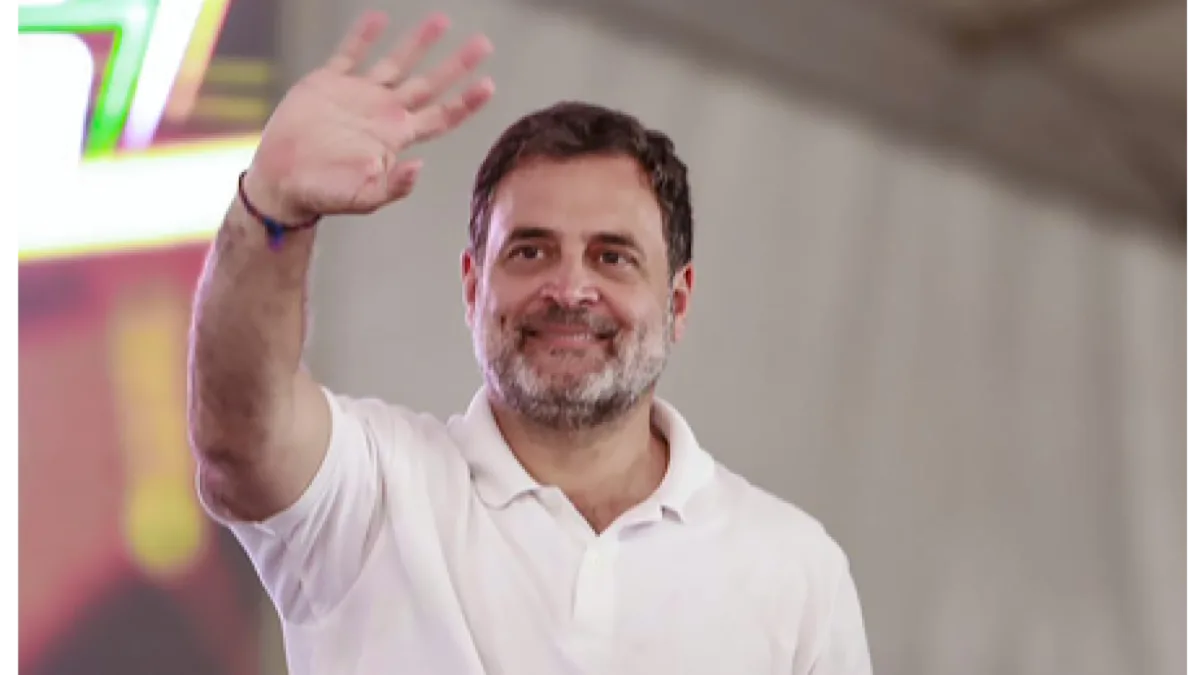
Congress leader Rahul Gandhi on Saturday launched a sharp attack on the ruling Trinamul Congress (TMC) during campaign rallies in Hooghly’s Serampore and later at Kolkata’s Shaheed Minar, accusing the party of corruption, patronage politics and fostering violence in the state.

Statesman News Service | Kolkata |

Congress leader Rahul Gandhi on Saturday launched a sharp attack on the ruling Trinamul Congress (TMC) during campaign rallies in Hooghly’s Serampore and later at Kolkata’s Shaheed Minar, accusing the party of corruption, patronage politics and fostering violence in the state.

In a combative speech, he also drew a parallel between Prime Minister Narendra Modi and Chief Minister Mamata Banerjee, alleging that both regimes thrive on similar practices. Addressing a gathering in Serampore, Mr Gandhi claimed that corruption at the Centre under the BJP and in West Bengal under the TMC were “two sides of the same coin”. “If Narendra Modi spreads hatred in the country, the Trinamul does the same in Bengal. If Modi is involved in corruption, Mamata Banerjee is no less,” he said, escalating his attack on both parties. The Congress leader alleged that the rise of the BJP in Bengal was facilitated by the TMC’s governance failures. “It is because of Trinamul that the BJP has found space in Bengal. Had there been no corruption and had incidents like RG Kar been handled properly, BJP would not have gained ground here,” he said, referring to recent controversies that have triggered political debates in the state.

Mr Gandhi reiterated that the Congress was the only party fighting the BJP on ideological grounds. “We are fighting the RSS and the BJP. Trinamul does not fight them directly,” he claimed, adding that there exists a tacit understanding between the two parties. He alleged that Central agencies such as the CBI and the ED are selectively used against opposition leaders, while sparing the TMC leadership.

Referring to his own legal battles, Mr Gandhi said he continues to face multiple cases and repeated questioning. “I am out on bail. My Lok Sabha membership was taken away. There are 36 cases against me. I have been interrogated for over 50 hours. But how many cases has Narendra Modi filed against Mamata Banerjee? How many hours has she been questioned?” he asked, questioning the perceived disparity in investigative action.

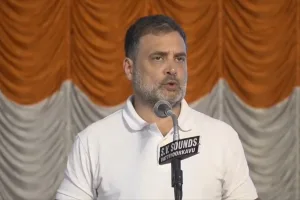
At the Shaheed Minar rally, Mr Gandhi sharpened his rhetoric further, accusing both the BJP and the TMC of spreading violence and undermining democratic institutions. “We undertake a Bharat Jodo Yatra, while the BJP is engaged in a Bharat Todo Yatra. Violence is their politics, and the same is being replicated by Trinamul in Bengal,” he said. He also invoked historical figures to underline his point, referring to leaders like Netaji Subhas Chandra Bose and others, who, he said, never compromise their principles. The Congress leader emphasised that his party’s fight was rooted in ideology and aimed at protecting constitutional values.

Targeting the state government on economic and industrial issues, Mr Gandhi alleged that Bengal, once a major industrial hub, has witnessed a steady decline. “Factories have shut down, jobs have vanished, and the industrial belt along the Ganga is struggling,” he said.

He further accused the TMC of running a “syndicate raj”, where benefits and opportunities are accessible only through political connections. Raising concerns over women’s safety, he alleged that crimes against women continue under both BJP-ruled states and in West Bengal. He cited recent incidents to argue that governance failures have left women vulnerable. Mr Gandhi concluded by asserting that only the Congress has the capability to defeat the BJP nationally, while also holding regional parties like the TMC accountable.

BJP lacks a credible face in Bengal: Bratya Basu

Ridiculing the BJP’s claim that a Bengali-speaking person would become Chief Minister if it forms the government in West Bengal, Trinamul Congress leader Bratya Basu says the saffron outfit lacks a credible face and will have to import someone if such a situation ever arises in the state.

Statesman News Service | Kolkata |

Ridiculing the BJP’s claim that a Bengali-speaking person would become Chief Minister if it forms the government in West Bengal, Trinamul Congress leader Bratya Basu says the saffron outfit lacks a credible face and will have to import someone if such a situation ever arises in the state.

Exuding confidence of his party retaining power with a comfortable majority, state education minister Basu said that the BJP has no leader, who can match the political stature of Trinamul Congress chief Mamata Banerjee.

“The BJP has been mum about launching a specific ‘face’ suited for the chief minister’s post in West Bengal simply because they have nobody whom people can accept here,” said the eminent actor-playwright-turned politician, who is contesting the polls from the Dum Dum constituency, that has elected him to the state Assembly on the last three occasions (2011, 2016 and 2021).

The Union home minister, Amit Shah recently said the party will give the state a chief minister who is from Bengal and has studied in a Bengali-medium institution.

Dismissing Shah’s remarks, Basu said: “On the contrary, they will import someone and make him or her the chief minister if they come to power in West Bengal.”

Basu also accused Shah and other BJP leaders of spreading “Islamophobia” and using hate speeches to tear apart the secular fabric and tolerance Bengal is known for.

He was responding to Shah’s promise that if voted to power, the BJP will implement the Uniform Civil Code and effectively abolish practices such as Triple Talaq and instances of four marriages among the Muslims in the state.

“They are spreading Islamophobia and delivering hate speeches in a bid to bring about a Hindu-Muslim polarisation. This is dangerous.

However, it will not help them (BJP) much,” said Basu, winner of the prestigious Sahitya Akademi Award in 2021 for his compilation, Mir Jafar O Onyanya Natak (Mir Jafar and other plays).

The 56-year-old Presidency College alumnus ruled out any anti-incumbency against the ruling party, saying allegations of corruption, including those related to land and job scams, would not impact the election outcome.

“These are not going to affect the poll results at all. People will vote for us, and we will win. I will not comment on the number of seats we will get. However, I can say that we will again form the government with a comfortable majority,” he said.

Basu termed the widespread agitation after the rape and murder of a postgraduate trainee at RG Kar Medical College and Hospital here in 2024 as a “BJP-led movement”.

“Irrespective of what the protestors were saying at the time, these protests were politically motivated. The victim’s mother is contesting from the Panihati Assembly constituency. Nothing more needs to be said. It was a clear BJP-led movement aimed to reap political benefits in West Bengal,” he said.

Basu described the Special Intensive Revision (SIR) of electoral rolls as a ‘’genocide of voters carried out by the Centre and the Election Commission of India.”

“They have omitted 91 lakh people who have valid documents. This was done solely to let the BJP have an electoral edge in this election,” stated Basu, formerly a professor of Bengali at City College, Kolkata.

He also warned that if the BJP comes to power, detention camps like those in Assam could be set up.

“They will create detention camps for those people left out from the electoral polls. On the other hand if we come to power we will fight for those who have been purposefully left out of the electoral process,” Basu added.

‘It won’t deter me from winning Iran war’: Trump issues blunt warning after shooting scare at White House Correspondents’ Dinner

Trump used the moment to project confidence in the country’s security apparatus, declaring that the swift response to the incident demonstrated the strength of American security systems.

Statesman News Service | New Delhi |

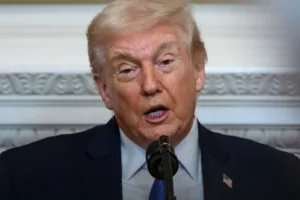
The shooting scare at the White House Correspondents’ Dinner in Washington has drawn a defiant response from US President Donald Trump, who said the incident would not deter him from the ongoing military operation linked to Iran, even as tensions in the region remain high under a fragile ceasefire.

Addressing reporters in the Press Briefing Room shortly after the incident, Trump struck a combative tone, linking the moment to broader geopolitical stakes. “It’s not going to deter me from winning the war in Iran.” However, he added that there was no immediate evidence tying the shooting to the conflict. “I don’t know if that had anything to do with it; I really don’t think so, based on what we know. But we’re going to continue to do a great job…”


The incident unfolded during the annual White House Correspondents’ Dinner, a gathering of political leaders, media figures, and officials. Security personnel moved swiftly to neutralise the threat, preventing what could have escalated into a major attack at one of Washington’s most high-profile events.

Officials have yet to establish a clear motive, and investigations are ongoing into whether the act was politically driven or the result of an isolated individual.

‘We have the greatest security, proven tonight’: Trump

Trump used the moment to project confidence in the country’s security apparatus, declaring that the swift response to the incident demonstrated the strength of American security systems.

Speaking shortly after the disruption at the dinner event, Trump highlighted the speed and precision with which security personnel handled the situation, framing it as proof of preparedness at a time of heightened global uncertainty.

When asked for a message to the world, Trump delivered a forceful endorsement of US security forces. “We have the greatest security in history. We have the best people. It was proven tonight.”

He underscored that the incident, while alarming, showcased the capability of trained personnel to act decisively under pressure. “It was very impressive the way they got him,” Trump said.

He added that the professionalism of the officers stood out during the tense moments. “They looked like somebody who knew what they were doing… it doesn’t happen to people that don’t do anything.”


Remarks come amid Iran tensions and fragile ceasefire

Trump’s comments come at a sensitive time, with the United States engaged in heightened tensions with Iran following recent hostilities. Although a ceasefire is currently in place, it remains fragile, with both sides trading warnings and maintaining military readiness.

Against this backdrop, the President’s insistence that the shooting would not alter US strategy signals an attempt to project stability and resolve, even as questions linger over security threats at home and geopolitical risks abroad.

Authorities continue to investigate the incident, while security protocols around major public and political events are expected to face renewed scrutiny.

Infiltrators entering Bengal spill into other states: Assam CM

Assam Chief Minister Himanta Biswas Sarma on Saturday said the West Bengal Assembly election is important as its outcome will have an impact on the security of all northeastern states of the country.

Statesman News Service | Kolkata |

Assam Chief Minister Himanta Biswas Sarma on Saturday said the West Bengal Assembly election is important as its outcome will have an impact on the security of all northeastern states of the country.

Biswa Sarma, a senior BJP leader, said infiltration is a known issue plaguing West Bengal.

“These illegal infiltrators who can freely cross over into West Bengal often end up spilling over to neighbouring states such as Assam, Tripura and Jharkhand, among others. Still, the Trinamul Congress government does nothing about it,” Sarma said.

According to Sarma, this puts the security of the country, particularly that of the northeastern states at grave risk.

“The Mamata Banerjee-led government in Bengal is actively slowing down the border fencing project because of its vote bank politics,” Sarma said.

He said that out of a planned 456 km stretch, land has been made available for only 77 km, delaying progress compared to neighbouring states, where fencing is advancing more rapidly.

Citing figures, Sarma said that the increase in voters in districts such as North Dinajpur and Malda was because infiltrators had been granted voting rights by the TMC government in Bengal.

“TMC is a party that actively supports infiltrators and even cross-border smuggling for its own benefit,” Sarma said.

He also added that demographic patterns in West Bengal’s border districts have shifted significantly over the past few decades and linked sharp increases in voter numbers in such areas to cross-border infiltration.

“The cultural heritage of Bengal and its identity is at risk from infiltrators. If this keeps on happening for the next 20 years, then it can wipe out the heritage of Bengal completely,” Sarma said.

ECI puts additional police observers on job for second phase polls

After successfully conducting the first phase of the election in West Bengal, the Election Commission of India, to make the second phase scheduled on 29 April violence and intimidation free, has deployed 11 more police observers in the state.

Statesman News Service | Kolkata |

After successfully conducting the first phase of the election in West Bengal, the Election Commission of India, to make the second phase scheduled on 29 April violence and intimidation free, has deployed 11 more police observers in the state.

The move comes as part of efforts to tighten surveillance and prevent any recurrence of sporadic disturbances reported during the first phase.

According to Commission sources, the decision to increase the number of police observers aims to eliminate even the slightest possibility of unrest in the upcoming phase of polling.

Earlier, the commission had deployed 84 police observers in West Bengal which is already higher than in previous elections.

With the addition of 11 more observers ahead of the second phase, the Commission has further intensified monitoring.

Sources in the Commission said that sensitive areas have been identified, and instructions have been issued for enhanced vigilance.

All newly-appointed police observers will be drawn from outside the state, while their security will be handled by the state police.

Polling for the first phase was held on 23 April across 152 constituencies, while the remaining 142 seats will go to polls on 29 April.

The first phase was largely peaceful, witnessing a record voter turnout of 92.88 per cent.

Chief Election Commissioner Gyanesh Kumar congratulated voters, stating that such a high turnout had not been seen in the state since Independence.

He also urged voters to participate in even larger numbers in the second phase.

However, some incidents of scattered violence were reported during the first phase. Allegations ranged from obstruction of polling agents and malfunctioning EVMs to preventing supporters of certain political parties from casting their votes.

Union home minister Amit Shah said that the BJP had flagged several such issues before the Commission.

There are also claims from a section that the high turnout was influenced by concerns over the Special Intensive Revision (SIR) of electoral rolls, with fears that non-participation could lead to deletion of names. Many migrant voters are also reported to have returned to cast their votes.

This election marks a departure from previous trends, with polling being conducted in just two phases after a long time.

On the day of announcing the schedule, the ECI had asserted that despite fewer phases, all measures would be taken to ensure a peaceful election.

In line with that commitment, a general observer has been appointed for each of the 294 constituencies, alongside an increased number of police and expenditure observers.

The addition of more police observers after the first phase underscores the Commission’s focus on ensuring a free and fair second phase of polling.

‘Violence has no place in democracy’: PM Modi condemns shooting incident at Trump’s event in Washington

Reacting swiftly after reports of gunfire disrupted the high-profile gathering, Modi expressed relief that US President Donald Trump, First Lady Melania Trump, and other senior leaders were safe following the security scare.

Statesman News Service | New Delhi |

Prime Minister Narendra Modi on Sunday strongly condemned the shooting incident at the White House Correspondents’ Dinner in Washington DC, calling it a direct affront to democratic values and stressing that “violence has no place in a democracy.”

Reacting swiftly after reports of gunfire disrupted the high-profile gathering, Modi expressed relief that US President Donald Trump, First Lady Melania Trump, and other senior leaders were safe following the security scare.

‘Unequivocal condemnation’ from India

In a message posted on X, the Prime Minister made India’s position clear, offering both reassurance and a firm denunciation of the incident.

“Relieved to learn that President Trump, the First Lady and Vice President are safe and unharmed following the recent security incident at a Washington DC hotel. I extend my best wishes for their continued safety and well-being. Violence has no place in a democracy and must be unequivocally condemned,” he said.

His statement underlined India’s consistent stand against political violence while extending solidarity with the United States leadership.


Chaos at Washington Hilton

The shooting scare unfolded on Saturday evening at the Washington Hilton, where the annual White House Correspondents’ Dinner was underway. Panic spread after gunshots were reported in the lobby, triggering an immediate security response.

US President Donald Trump and several top officials were swiftly evacuated from the venue as authorities moved in to secure the area.

The incident caused widespread alarm at one of Washington’s most closely watched political and media events, drawing global attention and prompting reactions from leaders worldwide.

Security breach at Washington Hilton: Trump releases CCTV footage, photos of armed intruder

According to the President, the assailant attempted to force entry into the venue with multiple weapons before being apprehended by security personnel.

Statesman News Service | New Delhi |

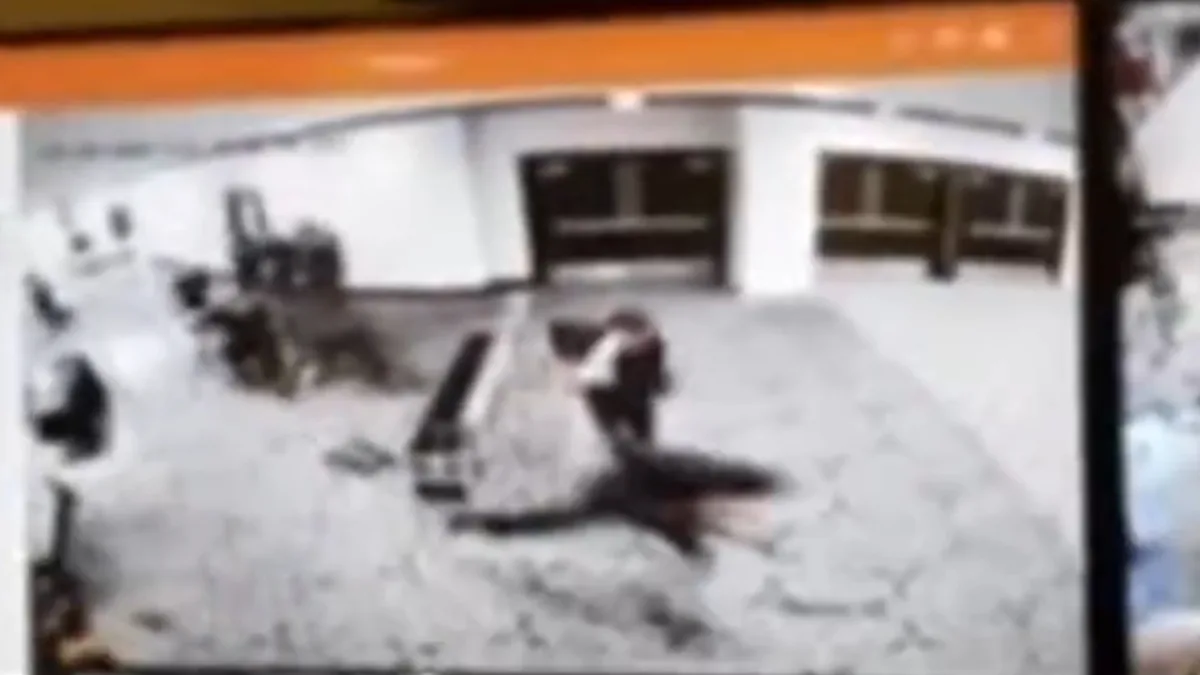
Amid heightened security concerns following a shooting scare at the high-profile White House Correspondents’ Dinner, US President Donald Trump on Saturday released CCTV footage and images of the man accused of attempting an armed breach, shedding light on the swift and dramatic response by security agencies.

In a post on Truth Social, Trump shared a video clip showing the suspect entering the venue and termed the incident ‘an attack on the nation’s constitutional order’, while praising the swift intervention by security agencies.

“A tape showing the violence of this thug who attacked our Constitution, and also showing how quickly the Secret Service and law enforcement acted on our country’s behalf…”


Armed suspect stopped at security checkpoint

According to the President, the assailant attempted to force entry into the venue with multiple weapons before being apprehended by security personnel.

“A man charged a security checkpoint armed with multiple weapons, and he was taken down by some very brave members of the Secret Service… One officer was shot, but saved… the vest did the job. I just spoke to the officer, and he’s doing great,” Trump said.

He confirmed that the suspect had been taken into custody and was being questioned by investigators.

“The shooter has been apprehended.”


‘Lone wolf’ theory under probe

Addressing questions about the motive behind the attack, Trump indicated that investigators were treating the suspect as a possible lone actor.

“No… he was a guy who looked pretty evil when he was down… He was, in my opinion, a sick person… They seem to think he was a lone wolf, and I feel that too.”

He added that more details about the suspect, believed to be from California, would soon be made public as authorities continue questioning.

Was Trump the target?

The President said it remained unclear whether he was the intended target, noting the layered security presence inside the venue.

“I guess… these people are crazy… You never know. It was very far away from me. We had resources all over… even in disguise… He had a long way to go. That was really the first line of defence, and they got him.”

Trump also said there had been no prior intelligence warning about the threat.

“No… There was no notification. We had no idea… He is in custody. They are already at his apartment… They are asking him a lot of questions.”


Secret Service response praised

Trump repeatedly commended the response of the United States Secret Service and other law enforcement agencies, calling their actions “quick” and “brave.”

“Secret Service and Law Enforcement did a fantastic job. They acted quickly and bravely.”

According to the press pool accompanying the President, chaos erupted when an agent shouted “Shots fired,” prompting officers to rush in and secure the area.


‘Not first attack on our republic’: Trump flags repeated threats after shooting scare at White House Correspondents’ Dinner

Trump, First Lady Melania Trump and Vice President JD Vance were rushed out of the ballroom by tactical teams and taken to a secure location. Other senior officials, including members of the Cabinet and FBI Director Kash Patel, were also confirmed safe.

Statesman News Service | New Delhi |

A shooting scare at the high-profile White House Correspondents’ Dinner on Saturday night triggered panic, forced the evacuation of US President Donald Trump and top officials, and drew a stark warning from the President about the pattern of threats against the country.

Addressing reporters hours after the incident, Trump said the attacker, now in custody, is a resident of California and described him as “sick”, while linking the episode to past assassination attempts.


Gun scare sparks chaos, President evacuated within seconds

The evening descended into chaos after gunshots were reported in the lobby of the Washington Hilton, where hundreds of journalists, political leaders and officials had gathered.

Trump, First Lady Melania Trump and Vice President JD Vance were rushed out of the ballroom by tactical teams and taken to a secure location. Other senior officials, including members of the Cabinet and FBI Director Kash Patel, were also confirmed safe.

According to reports, the shots were fired outside the banquet hall, not inside the main ballroom. An armed individual, stopped at a magnetometer, allegedly opened fire before being subdued by security personnel.

In a dramatic response, Secret Service agents stormed the stage with weapons drawn, shielded the President and evacuated him. Inside the hall, guests took cover under tables as confusion spread.

“The First Lady, plus the Vice President [JD Vance], and all Cabinet members, are in perfect condition,” Trump said later. “Quite an evening in DC.”

‘Not first attack on our republic’: Trump cites pattern of threats

Linking the incident to past attacks, Trump said the country had faced similar threats in recent years.

“The law enforcement and DC police just spoke with the mayor… You see the attacker in different positions, but you also see the attacker totally subdued and under control… This is not the first time in the past couple of years that our republic has been attacked by a would-be assassin who sought to kill in Butler, Pennsylvania, less than two years ago… and in Palm Beach, Florida, a few months after that, we came close. We really had, again, some great work done by law enforcement…,” he said.

‘They go after impactful people’: Trump on repeated threats

Reflecting on why such incidents recur, Trump said high-profile leaders are often targeted.

“I’ve studied assassinations, and I must tell you, the most impactful people that do the most… that make the biggest impact, they’re the ones that they go after… I hate to say I’m honoured by that, but I’ve done a lot. We’ve done a lot.”

Authorities continue to investigate the motive behind the attack as security agencies review protocols following the scare that rattled one of Washington’s most prominent annual events.

‘He was a sick person’: Trump on attacker, lone wolf angle

Speaking in the Press Briefing Room, Trump said the suspect was in custody and under questioning, with early indications pointing to a lone attacker.

“No… he was a guy who looked pretty evil when he was down… He was, in my opinion, a sick person… I think you’re going to find out everything about him… but tomorrow at this time, long before this time, you’re going to know a lot of things about him. They (law enforcement officials) seem to think he was a lone wolf, and I feel that too,” he said.

He added that there had been no prior warning. “No… There was no notification. We had no idea… Maybe we will be able to tell you tomorrow. He (the attacker) is in custody. They (law enforcement officials) are asking him a lot of questions… They are already at his apartment. It is California…”

‘We were whisked away’: Trump recounts tense moments

Trump described the seconds after the gunshots were heard, saying the situation unfolded rapidly.

“It was so shocking that something like that happened. It’s happened to me… That never changes. The fact that we were sitting right next to each other, the First Lady and I… I heard a noise and… I thought it was a tray going down… I’ve heard that many times, and it was a pretty loud noise. It was from quite far away. He hadn’t breached the area at all. They really got him,” he said.

“Melania was very cognizant of what happened. I think she knew immediately what had happened. She was saying, ‘That’s a bad noise.’ And we were whisked away along with other people… All of the law enforcement was really good. It was very quick. There wasn’t a lot of time to think because it was a matter of seconds before we were out the door.”

Event halted despite push to continue

Trump said he initially wanted the event to go on despite the scare.

“I have recommended that we ‘LET THE SHOW GO ON’ but, will entirely be guided by Law Enforcement,” he said, later adding that the dinner would be rescheduled within 30 days.

“We very much wanted to continue it because I don’t like to let these sick people, thugs, horrible people change the fabric of our life… But we’re going to be doing one, hopefully, within the next 30 days or sooner.”

Praising the response, he said, “Secret Service and Law Enforcement did a fantastic job. They acted quickly and bravely.”

Call for unity, push for stronger security

Trump urged Americans to respond with restraint and unity.

“In light of this evening’s events, I ask that all Americans recommit with their hearts to resolving our differences peacefully… There was a tremendous amount of love and coming together. I watched, and I was very impressed by that.”

He also raised concerns about venue security and called for enhanced infrastructure.

“We looked at all of the conditions that took place tonight, and I say it’s not a particularly secure building… It’s got drone-proof and bulletproof glass. We need the war room… today we need levels of security that probably nobody’s ever seen before,” he said.


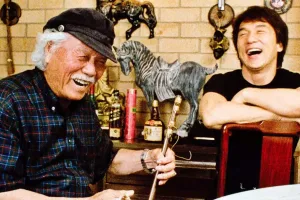
Bruce Lee hit Jackie Chan For real during a fight scene, left him seeing stars. But the pain turned into a big payday

A resurfaced video shows Jackie Chan sharing a surprising on-set moment that went far beyond acting. What started as a painful accident turned into an unexpected lesson, and a bigger paycheck.

Statesman News Service | New Delhi |

It sounds like a regular behind-the-scenes story at first until you realise it involves two of the biggest martial arts legends ever, Jackie Chan and Bruce Lee. And what happened on that film set? Let’s just say… it hurt. A lot.

A resurfaced old video is now making fans smile and wince at the same time, as Jackie Chan recalls a moment when a fight scene went a little too real, and oddly enough, a little more profitable too.

When a fight scene stopped feeling like acting

Back in the day, film shoots were very different. No quick edits, no multiple cuts. Just long, continuous shots where everything had to go perfectly. And that’s exactly where things went sideways.

Jackie Chan shared how working with Bruce Lee meant stepping into a completely intense zone. The moment someone shouted “action,” Bruce Lee would get so deeply into the scene that he almost forgot it was acting.

Chan described standing behind the camera, patiently waiting for his cue. Timing was everything. But when his moment finally came, it didn’t go as planned.

Bruce Lee hit him. For real.

Chan recalled seeing “stars” instantly after the impact. The hit wasn’t staged. It was powerful, direct, and painful. But instead of reacting, he stayed on the ground, completely still, even though he was genuinely hurt.

Bruce Lee’s unexpected reaction after the cut

What happened next adds a surprising emotional twist to the story.

As soon as the director called “cut,” Bruce Lee snapped out of his intense focus. He dropped what he was holding and rushed straight to Jackie Chan.

Concern replaced intensity in seconds.

Bruce Lee apologised immediately, checking on Chan and making sure he was okay. It was a quick but sincere moment that showed a softer side of the martial arts legend — far from the fierce on-screen persona fans are used to.

But Chan, even while in pain, had a different way of looking at the situation.

Painful hit, but a profitable day

Here’s where the story takes an unexpected turn.

Jackie Chan joked that getting hurt as a stunt performer actually had its benefits, more money. Instead of complaining, he told Bruce Lee that the pain was worth it because injured stuntmen were paid extra.

And that’s exactly what happened.

The production extended the shoot into overtime, and more stunt work was needed. Jackie Chan was asked to stay back and continue working. Looking back, Chan even suggested half jokingly, that Bruce Lee might have done it on purpose to help him earn more.

By the end of the day, Chan had made $250. A big amount at that time.

For a young stuntman, that was a memorable milestone.

Also Read: What is Rihanna doing in India? Surprise Mumbai arrival ignites wild speculation and fan chaos

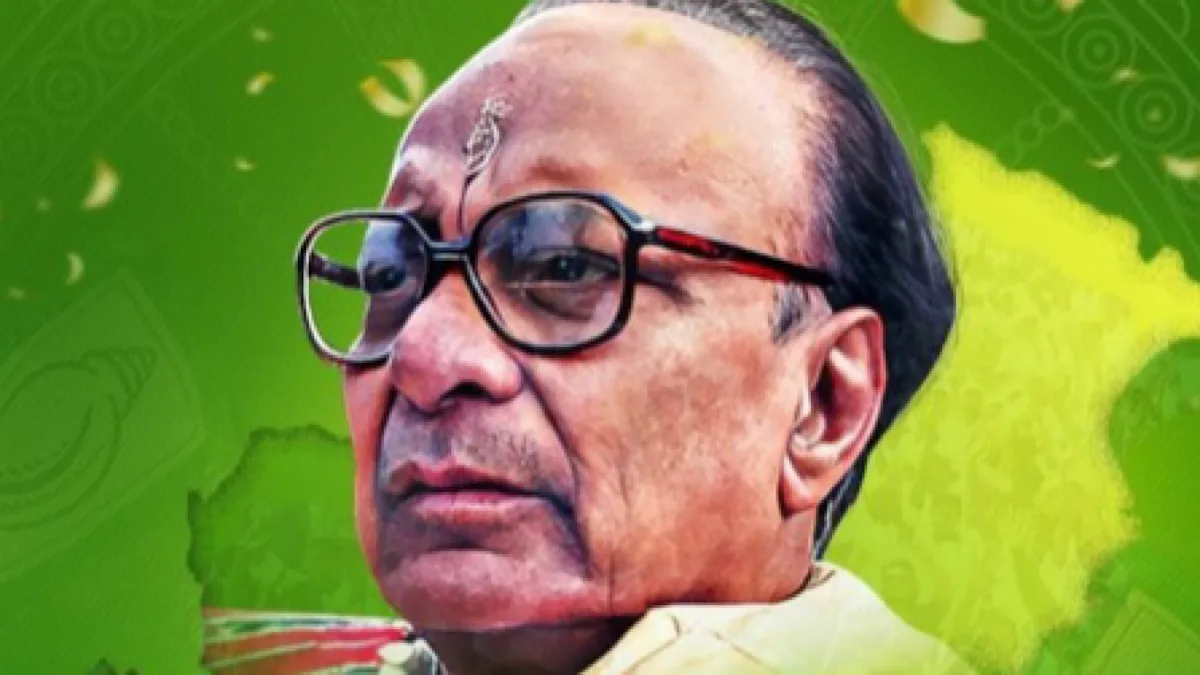
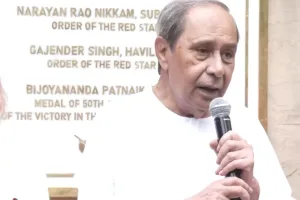
The Last Buccaneer: Why India Will Never Produce Another Biju Patnaik

On his 29th death anniversary, a remembrance not of what he did — but of the audacious, irreverent, magnificent way he did it.

CHARUDUTTA PANIGRAHI | Kolkata |

On his 29th death anniversary, a remembrance not of what he did — but of the audacious, irreverent, magnificent way he did it. In 1938, a young pilot from Cuttack decided to get married. The bride was Gyanwati Sethi of Rawalpindi — a Kinnaird College alumna from Lahore, no less — and the groom’s idea of a wedding procession was, naturally, to fly his entire baraat to Rawalpindi by aircraft.

No horses. No band. Just a squadron of friends descending from the skies onto the plains of Punjab. The bride herself held a commercial pilot’s licence — the first Indian woman to do so. Together, they would go on to dodge Dutch anti-aircraft fire over Indonesian skies, evacuate civilians from Japanese-occupied Burma, and raise three children, one of whom would govern Odisha for a quarter century, quite different from his father’s flair. That groom was Biju Patnaik. And the airborne baraat was, by his standards, a quiet Thursday. Twenty-nine years ago today, on 17 April 1997, Bijayananda Patnaik died in New Delhi.

He was eighty-one, a sitting Member of Parliament, and not the wealth creator that he was once. His coffin was draped in the flags of three nations — India, Russia, Indonesia. No Indian leader, before or since, has been claimed by three countries in death. The image is operatic, but Biju would have preferred the word “dramatic.” He was, after all, a man who idolised Napoleon. The Boy Who Cycled to Peshawar Before we get to the world wars, the rescued prime ministers, and the Pentagon briefings, consider the sixteen-year-old. In 1932, young Biju and two friends— Amar and Bhramarbar — climbed onto bicycles in Cuttack and pedalled 4,500 miles to Peshawar, on what they grandly called a “Visit India Mission.” No support vehicles. No sponsors.

Just three Odia boys on a quixotic journey across undivided India, spreading, as they put it, “the message of humanity.” Most teenagers collect stamps. Biju Patnaik collected horizons. He arrived at Ravenshaw College already too large for it. Captain of the football team. Captain of the hockey team. Captain of the cricket team. Captain of the athletics team. Science student. And then, abruptly, he quit. Because he had seen an aeroplane, and nothing else would do. He enrolled at the Delhi Flying Club, trained as a pilot, joined Indian National Airways, and never looked back at the ground.

Absconder’s Paradise His Delhi house during the freedom struggle earned a nickname that tells you everything: Absconder’s Paradise. Jayaprakash Narayan hid there. Ram Manohar Lohia passed through. Aruna Asaf Ali took shelter at his Anand Bhawan in Cuttack . Biju was simultaneously flying for the British as head of the Air Transport Command — and using every sortie to smuggle Congress leaders between safe houses, air-drop Quit India leaflets over Indian soldiers in Burma, and distribute Azad Hind Fauj pamphlets behind enemy lines. The British Intelligence Bureau compiled a long, exasperated dossier on him, eventually concluding that flying was his “normal way of making a living” and that even if they grounded him, the Tatas would hire him.

They arrested him anyway in January 1943. He spent nearly two years in prison, unbowed. What the British never quite grasped was that Biju Patnaik was not a man playing two sides. He was a man who simply refused to recognise the existence of sides. He would fly your planes, rescue your civilians, supply your allies — and simultaneously undermine your empire. The cognitive dissonance was entirely yours to manage. The Man Who Gave Indonesia Its President’s Name The Indonesia mission of July 1947 has been told often, but rarely with the detail it deserves. The Dutch had sealed all air and sea routes. Indonesian Prime Minister Sutan Sjahrir was under house arrest.

Nehru needed someone mad enough to fly a Dakota into hostile airspace with no refuelling options and no diplomatic cover. He needed Biju. Patnaik’s reply to the Dutch warning that he would be shot down was pure swagger: India did not recognise Dutch sovereignty over Indonesia, and if his plane went down, Dutch aircraft over India would follow. The Dutch fired. He dodged. He landed on an improvised strip near Jakarta, scooped up Sjahrir and Mohammad Hatta, refuelled from abandoned Japanese military dumps, and flew them to Delhi via Singapore. Indonesia’s independence followed. A grateful nation awarded him the Bhoomi Putra — Son of the Soil — one of its highest honours, an almost unheard-of distinction for a foreigner. But for the honour, he declined the other largesse offered to him in Indonesia. But here is the detail that turns history into fable: Biju and his wife Gyan grew close to President Sukarno’s family.

When Sukarno’s daughter was born, it was Biju Patnaik who suggested the name Meghavati — daughter of clouds. That child grew up to become Megawati Sukarnoputri, Indonesia’s first woman president. A man from Cuttack, in a sense, named the future leader of one of the world’s largest democracies. The clouds, one might say, remembered. Nehru’s Shadow Defence Minister This is perhaps the least explored chapter of Biju Patnaik’s life, and the most cinematic. During the 1962 India-China war, Nehru — shaken and desperate — turned to the one man he trusted with the nation’s military strategy who was not a general. While still serving as Chief Minister of Odisha, Biju was given an office next to Nehru’s own in Delhi and tasked with overseeing India’s defence effort.

His son Naveen, then about thirteen, later recalled his father’s fury at the Chinese incursion and his tireless work to repel it. In March 1963, Patnaik carried out a one-man covert mission to Washington. He held discussions at the Pentagon. He gave interviews to the Washington Post and the Baltimore Sun that caused a political storm back home. There are credible reports he visited CIA headquarters at Langley. He was India’s b uccane er- diplomat: to o important to ignore, too unpredictable to control, too effective to sideline.

An American journalist, Welles Hangen, included him in a book titled After Nehru, Who? — a question that tells you how seriously Washington took this pilot-turned- Chief-Minister from a state most Americans could not find on a map. He was among the frontrunners for Prime Minister in 1989, when Rajiv Gandhi’s Congress fell. But Biju Patnaik stepped back. V.P. Singh was chosen instead. Later, it was Biju who played kingmaker in installing H.D. Deve Gowda as PM. The throne was always within reach; he preferred the cockpit. The Industrialist Who Gave It All Away Here is the great inversion of Indian public life. Politicians enter poor and leave rich.

Biju Patnaik entered rich and left with nothing. In the 1950s, he built an industrial empire that would have been the envy of any Bombay magnate. Kalinga Tubes — Asia ‘ slargest pipe-manufacturing plant. Kalinga Airlines — whose pilots later became the heads of Air India and Indian Airlines. The first refrigerator factory in Odisha. Textile mills. Iron works. Manganese mines. Iron ore from Malangtoli, the finest grade in the world. A daily newspaper. All bearing the name Kalinga — his private salute to Odisha’s ancient glory. But politics consumed his wealth like a furnace.

He poured money into causes, institutions, and visions. At thirty-five, he funded the Kalinga Prize for the Popularisation of Science and handed it to UNESCO. It became the world’s most prestigious science communication award after the Nobel. He lured J.B.S. Haldane — one of the greatest biologists of the twentieth century — to Bhubaneswar when the rest of India’s bureaucracy had driven the man to despair. He built Paradip Port with state funds when Delhi dithered, then watched the Centre take it over. He set up IDCOL, OMC, airstrips across Odisha, engineering colleges, agricultural universities.

He spent himself bankrupt in the service of a state that, at the time, barely registered on India’s political map. The Maverick’s Creed Biju Patnaik rode a bicycle to the State Secretariat. He danced at Navy Balls. He told off bureaucrats in language that would make a sailor blush. He spoke to college students about population control with a candour no politician today would dare: “I will give you a thousand jobs, but by the time I do, you stupid chaps will give birth to ten thousand kids.” He introduced 33 per cent reservation for women in panchayats — making Odisha the first state in India to do so — with a confidence born of observation, not ideology: mothers who ran households, he said, would run zilla parishads just as well. He advocated confiscation of assets for corrupt officials decades before anti-corruption became fashionable.

He demanded fiscal autonomy for states and full convertibility of the rupee when economists in Delhi thought these were lunatic ideas. And when he lost elections — which he did, spectacularly — he accepted the verdict and went home. No court cases. No sulking. No allegations of rigged machines. Democracy, to Biju, was a game. You played hard, you played fair, and when the whistle blew, you walked off the field. In 1963, he resigned as Chief Minister under the Kamaraj Plan — voluntarily giving up power to strengthen the party. Name one Indian politician today who would do the same. He once said: “I would like to die instantly — just fall down and die.” He did not get his wish.

But the words he left behind in 1992 remain the closest thing Odisha has to a founding scripture: “In my dream of the 21st century for the State, I would have young men and women who put the interest of the State before them. They will not be at anybody’s mercy, except their own selves. By their brains, intelligence and capacity, they will recapture the history of Kalinga.” India’s political class today is a carefully curated spectacle of caution, calculation, and hesitation.

Biju Patnaik was none of these things. He was reckless where others were prudent. Generous where others hoarded. Blunt where others equivocated. Global where others were parochial. And yet, at the end, he belonged entirely to Odisha — a state he could have outgrown but chose instead to build. When they named a minor planet Kalinga in 1997, the year he died, it was fitting. Biju Patnaik always belonged to a slightly larger orbit than the rest of us. Superman did not wear a cape. He flew a Dakota, rode a bicycle, and told the truth. The author writes on Indian politics and history. Views are personal.


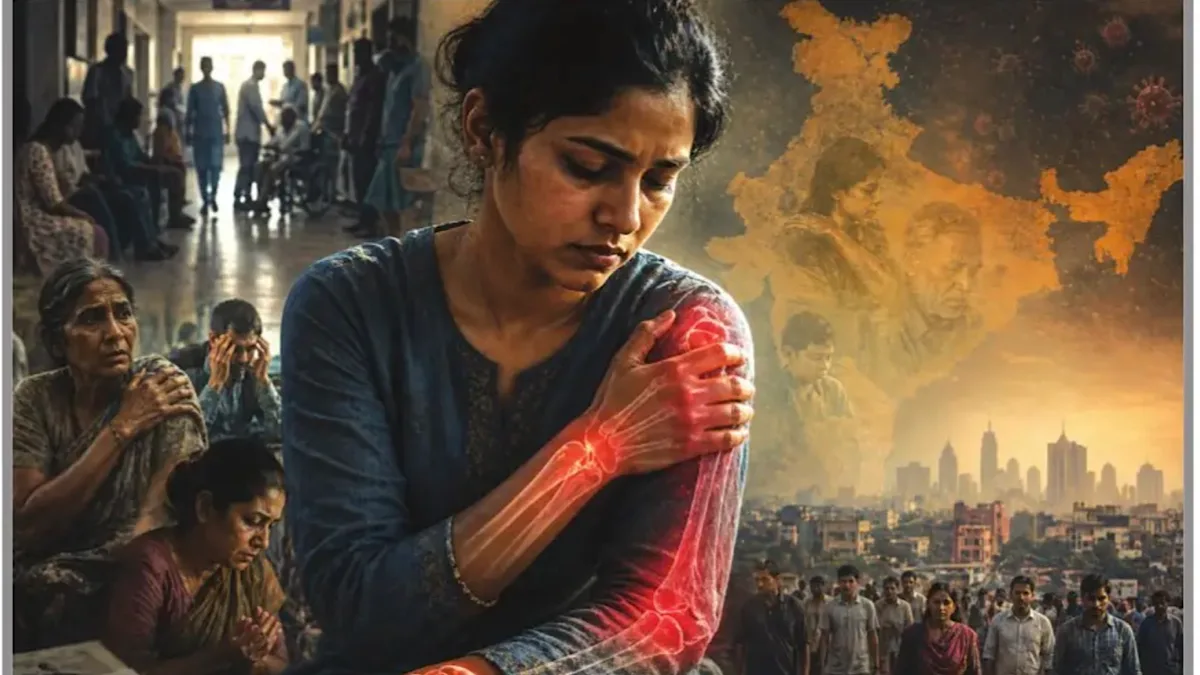
The Silent Epidemic: India’s Urgent Battle Against Autoimmune Rheumatic Diseases

Every morning across India, millions of citizens wake up to a grueling ritual of pain, stiffness, and profound fatigue that most will spend years trying to name.

DR. ARGHA CHATTOPADHYAY | Kolkata |

Every morning across India, millions of citizens wake up to a grueling ritual of pain, stiffness, and profound fatigue that most will spend years trying to name. In response to this growing public health crisis , the Indian Rheumatology Association (IRA) celebrates April as Rheumatology Awareness Month to address the “silent epidemic ” of Autoimmune Rheumatic Diseases (ARDs). These conditions, which occur when the immune system mistakenly attacks healthy tissues, represent one of the most under-recognized yet disabling categories of illness in modern medicine. Despite their prevalence, the journey of a typical patient in India is marked by a devastating diagnostic delay that often lasts five years or more.

During this time, patients frequently cycle through different specialities – often getting symptomatic treatment – only to reach a rheumatologist after a significant amount of disease progression. The scale of the problem is staggering, with Rheumatoid Arthritis alone affecting an estimated 5 to 10 million people in India. While these diseases affect all ages, women bear a disproportionate burden; for instance, Systemic Lupus Erythematosus (SLE) affects women nearly nine times more often than men, frequently striking during their most productive childbearing years.

This demographic focus creates a significant economic ripple effect, as ARDs are leading causes of work disability, lost productivity, and caregiver burden globally. The challenge is fur ther compounded by a severe healthcare deficit, with very few rheumatologists for such a huge population, leaving those in rural or tier-2 or tier-3 cities very limited access to specialist care. However, the IRA emphasizes that this narrative can be changed through early intervention and public education. Unlike many chronic illnesses, ARDs can be managed effectively with modern disease-modifying antirheumatic drugs (DMARDs) and biologics that halt progression and preserve function.

The “window of opportunity” to prevent permanent damage is narrow, making it vital for the public to recognize early warning signs such as persistent joint pain and swelling for more than 6 weeks, morning stiffness lasting over 30 minutes, unexplained fever, fatigue, skin rash, oral ulcer, muscle weakness or even a stroke in young, a kidney problem, a recurring red eye or a liver problem. By training primary care physicians to refer patients sooner and advocating for better access to care, Rheumatology Awareness Month seeks to bridge the gap between a life limited by disability and a life fully lived. Ultimately, the IRA’s message is clear: early diagnosis does more than just treat a disease—it saves joints, organs, and lives.

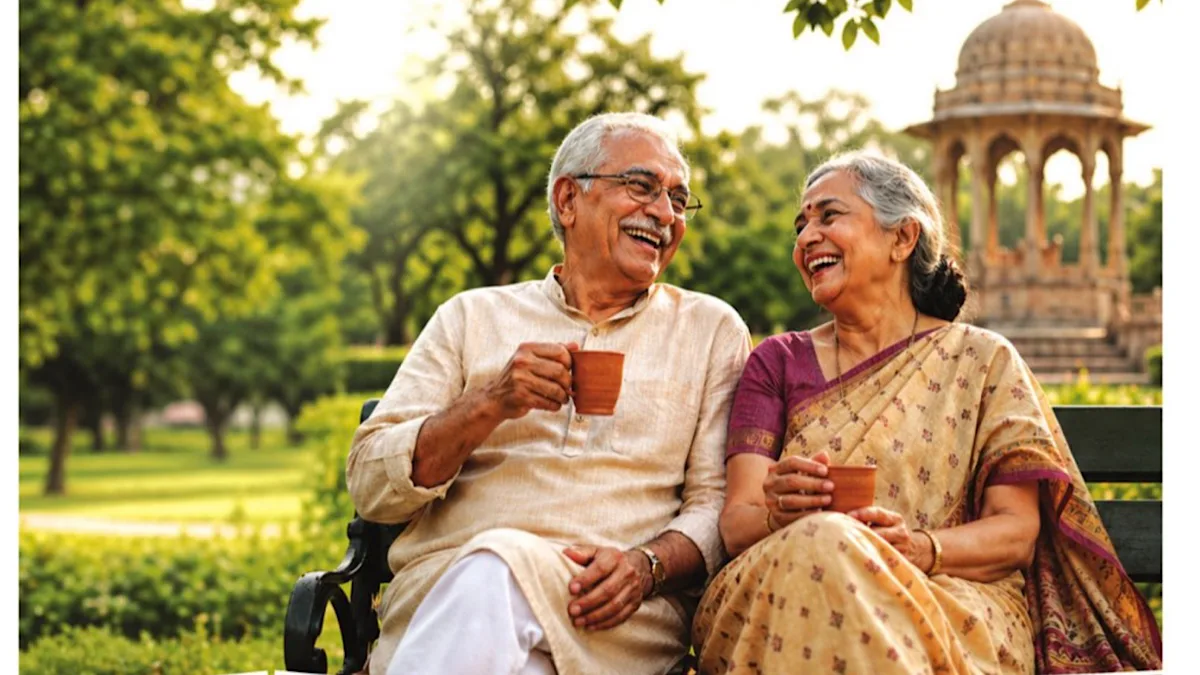
The Joy of Becoming a “Senior” Indian

In India, turning 60 isn’t just a birthday; it is a promotion. You are officially inaugurated into the elite club of ‘Senior Citizens’—a designation that offers unparalleled perks, the supreme right to complain, and the freedom to finally stop caring about what the neighbors think.

PRABHU DAYAL | Kolkata |

In India, turning 60 isn’t just a birthday; it is a promotion. You are officially inaugurated into the elite club of ‘Senior Citizens’—a designation that offers unparalleled perks, the supreme right to complain, and the freedom to finally stop caring about what the neighbors think. It is a magical twilight zone where you become the family consultant, the WhatsApp University dean, and the undisputed master of the TV remote. Being a senior citizen in India is basically a lifelong internship that finally pays off in perks, pensions, and the absolute right to be the most opinionated person in the room. It’s not the sunset of life; it’s just the longest, loudest, and most comfortable after-party. Here is a look at the fun of being a “Senager” (Senior Teenager) in India.

1. The Power of “Seniority” The moment you turn 60, you gain a mystical aura that makes young people stand up on metro trains. Even if you are perfectly capable of sprinting, if you look vaguely elderly, a young person will forfeit their seat with profound reverence. Furthermore, at banks and railway stations, you get a dedicated queue. In India, where “line-breaking” is a competitive sport, having a separate, shorter line is equivalent to holding a royal pass. It means you can walk to the front of a bank queue with the confidence of a Bollywood star. You don’t even have to say anything. You just lean slightly on your walking stick, let out a performative sigh about your “BP,” and the crowd parts like the Red Sea.

2. WhatsApp: The New Workplace Post-retirement, many Indian seniors find a new, fulfilling career: forwarding Good Morning messages, “healing” videos, and occasionally, fake news. The sheer joy of being in five different family WhatsApp groups and sending a “Good Morning! Have a Blessed Day” picture to your 35-year-old son at 5:00 AM—who is definitely not awake—is a feeling of immense power. The family WhatsApp group is your kingdom. You have the sovereign right to forward unverified medical advice involving turmeric and ginger for everything from a common cold to a broken Wi-Fi router. If your son or daughter corrects you, you simply remind them that you changed their diapers. Argument over.

3. The Right to Critique Suddenly, your opinion matters—or rather, you share it whether it matters or not. You are now authorized to critique everything from the price of tomatoes, the decay of modern culture, and the “disgraceful” lack of ghee in your daughter-in-law’s cooking. It is a wonderful time to give advice that nobody asked for, yet everyone must listen to respectfully. Socially, the transformation is complete. You are now a Senior Consultant on Everything. You can walk up to a complete stranger in a park and critique their jogging form or the way the municipal corporation is laying pipes. In your 30s, this is called “being a nuisance.” In your 60s, it’s “blessing them with experience.”

4. The “Discount” Game The Indian government, banks and airlines are quite accommodating to the 60+ crowd. The “Senior Citizen Savings Scheme” is a marvelous excuse to sit in the bank and talk about interest rates with other senior comrades, often for hours. Airlines offer up to 25% or more off base fares, making traveling to visit relatives (to bug them) a cheap hobby. Free wheelchair assistance at airports and priority boarding are available for senior citizens upon request. It is truly a modern medical marvel to witness the “Airport Miracle,” where a perfectly able-bodied traveler suddenly develops an extreme, temporary inability to move upon reaching the check in counter. They approach the counter with a look of profound, staged exhaustion to request a wheelchair. They treat the wheelchair not as a medical necessity, but as a “VIP mobility limo” designed to bypass long lines and secure priority boarding. They sit comfortably, browsing their phone and laughing at reels while a dedicated attendant pushes them through the crowded terminal.

5. Managing the “Next Generation” It is also the time when you get to enjoy the Grandparent Loophole. You get to be the “Bad Influence.” You become passionate about feeding your grandchildren the exact sweets their parents (your children) forbade, and then watch the sugar-induced chaos with a serene smile. When your son complains, you just sip your tea and say, “They’re just kids, don’t be so strict. You were much worse.”

6. Health as a Social Hobby In India, senior citizens often turn health checkups into social outings. “Oh, your knee is paining? You must try this oil!” or “My blood pressure is higher than yours!” are common conversation starters at local parks. It’s a community-driven, often humorous, exchange of medical tips, where everyone is a doctor, and everyone has a “slight” issue. For the modern senior citizen, “maintaining health” is less about boring exercise and more about extreme social networking. A doctor’s appointment is rarely a solitary endeavor; it is a high-stakes social event requiring weeks of anticipation, a carefully curated outfit, and a detailed gossip debrief with fellow patients in the waiting room. Even taking daily vitamins has become a group activity, often performed over chai, where sharing a new prescription feels like recommending a hit Netflix show, ensuring that loneliness is kept at bay by a competitive, shared dedication to staying upright and active.

7. Finally… The Power In India, hitting 60 isn’t just a birthday; it’s a strategic promotion. You officially transition from the person who does the work to the person who provides the “expert commentary” while others do the work. Being a senior citizen in India is less about a rocking chair and more about mastering the art of the Systemic Eye-Roll. Perhaps the greatest joy is having absolutely zero obligation to be polite. If a relative visits and you don’t like them, you can politely ignore them, or complain loudly about your arthritis, effectively ruining their visit. You don’t have to work; you have your own “pad” (house), you have your own savings, and you have no curfew. Conclusion Being a senior citizen in India is a beautiful mix of being honored, ignored, respected, and treated like a child all at once. It is a time to eat early, sleep early, complain about everything, and laugh louder. It’s a golden phase where the body may slow down, but the sarcasm and the urge to manage everyone’s lives only grow stronger. The writer is a retired officer of the Indian Foreign Service (1976 Batch). He served in a number of countries, including as Ambassador in Kuwait and Morocco and as Consul General in Dubai and New York.

Bitter Battle for a Sweet State

West Bengal has been described by ruling Trinamool as “the sweetest part of India”. It is inarguably a fitting epithet for a state which boasts some of the best desserts in the entire country – namely the delectable “roshogolla” – that spongy ball of cottage cheese marinated in sugar syrup which have often inspired rhymes and poems.

DOLA MITRA | Kolkata |

West Bengal has been described by ruling Trinamool as “the sweetest part of India”. It is inarguably a fitting epithet for a state which boasts some of the best desserts in the entire country – namely the delectable “roshogolla” – that spongy ball of cottage cheese marinated in sugar syrup which have often inspired rhymes and poems. Moreover, its people, language, culture, etc. are supposed to exude a kind of sophisticated, well, “sweetness”. But currently the region is gripped in the throes of a bitter battle as political parties fighting it out in the ongoing Assembly Elections 2026.

Being held in two phases, the first phase saw 152 constituencies go to the polls on Thursday, April 23. The next phase will take place on Wednesday, April 29. The results are scheduled to be declared on May 4. The first day of polling witnessed a voter turnout of over 91 percent. While the Election Commission (EC) has called it an almost unprecedented success, political commentators and election officers are attributing it chiefly to the intensive nature of the recently conducted SIR 2026 (Special Intensive Revision of Electoral Rolls). “Unlike other election years, this year the SIR process entailed that the electorate get involved in a highly intensive exercise in terms of documentation, etc.” says Sudipt Banerjee, a BLO (booth level officer).

Congress leader and former Member of Parliament Adhir Ranjan Chowdhury, told this correspondent in an interview, “The SIR process introduced a sense of urgency in the electorate which is seeing the SIR as a kind of proof of citizenship rather than only an electorate roll. So casting their vote and exercising their franchise has become very important for them this election.” The question that is raging across the state currently and is the topic of discussion everywhere from rural vegetable markets to urban living rooms is whether Trinamool will be able to retain power or whether chief contender BJP would be able to snatch it from them.

“In my over four decades of covering politics in India and West Bengal, I have never seen the kind of aggression that the Opposition, namely BJP is demonstrating in trying to wrest power in the state,” veteran journalist, editor and political analyst Jayanta Ghoshal tells me in an interview. Interestingly the BJP’s strategy in trying to capture Bengal has changed in successive elections Assembly and Parliamentary. “Initially the emphasis was on trying to consolidate the Hindu vote which has succeeded in some states in the Hindi belt where religion and caste are issues,” says Chandra Kumar Bose, former Bengal BJP Vice President. “However that strategy did not work in a state like West Bengal where the voters, possibly due to there decades of uninterrupted Communist rule, are largely secular and are unlikely to consider religion or caste to be issues of priority.”

The BJP’s key focus has shifted to trying to establish its roots in the state. From repeatedly pointing out that it was a celebrated Bengali, Shyama Prasad Mookerjee, to whom the party’s origins (its relationship with the RSS) are traced back to, BJP leaders including Prime Minister Narendra Modi have praised Bengal’s icons from spiritual leaders (Swami Vivekananda) to India’s great freedom fighters (Netaji Subhas Chandra Bose) in public rallies and speeches in an effort connect with the Bengali voters. “Bengali” both the people and their language in fact, is a central issue in the 2026 Assembly elections. “Winning Bengal has always been on BJP’s agenda,” says Jayanta Ghoshal. “Though it has gained a lot of ground over the past decade since it came to power in 2015 at the Centre, capturing power has been elusive so far and the party has tried a range of methods. Currently it is endeavoring to establish itself as a party with deep roots in and respect for Bengal and Bengalis.”

The voters by and large are unwilling to disclose their preferences. However, a few random interviews on city roads or village paths in the districts do reveal a range of views. “We are happy with this administration especially schemes like Laxmi’r Bhandar,” says a vegetable vendor, a woman who openly declares that she will vote for Didi. Another voter, a toto driver says he wants a change because he wants to see what it is like to have a “double engine” government where the same party which rules at the Centre also rules the state. The battle is indeed bitter. The countdown to May 4 has begun and it is only a matter of time before we know who will taste sweet success.

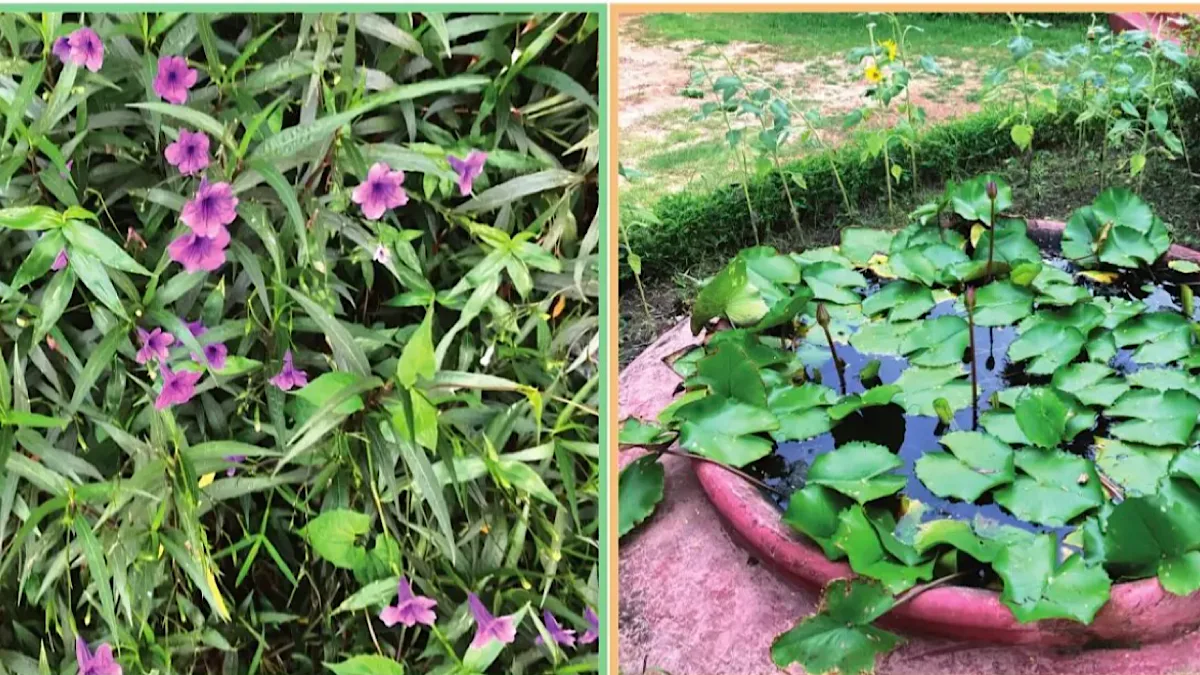
The writer is a political journalist and Editor, Features. All photos are by the author.

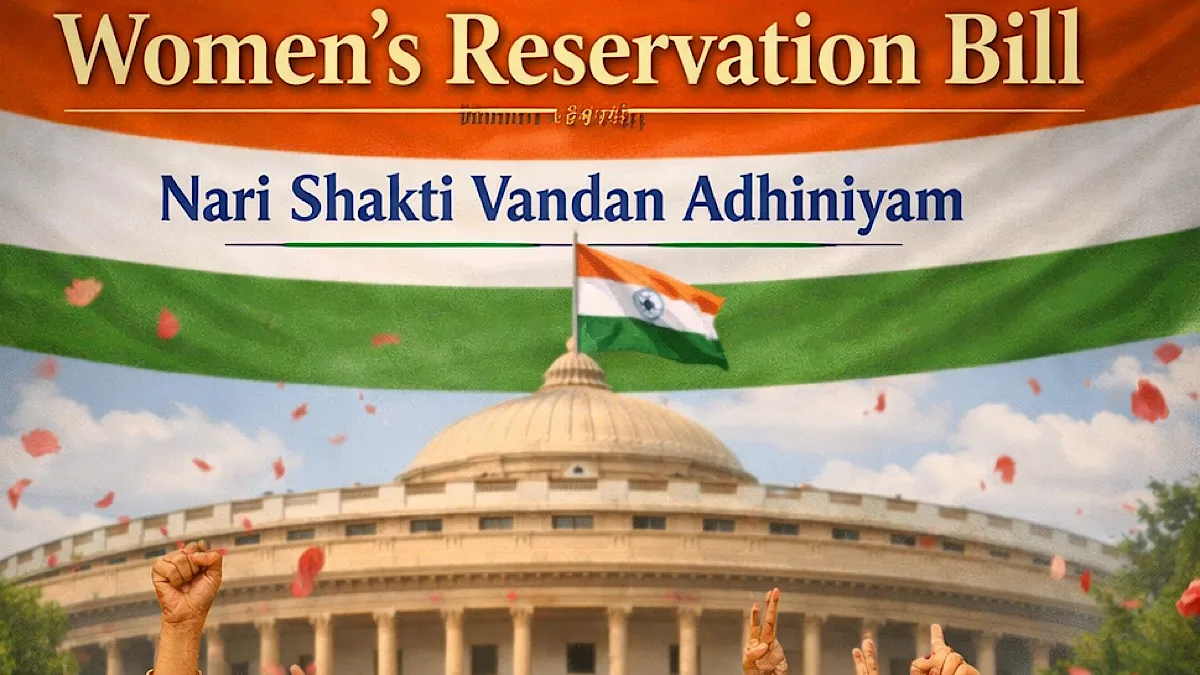
Nari Shakti must go beyond laws

Women’s empowerment is often spoken of in the language of legislation-laws passed, quotas reserved, and rights guaranteed.

O. PRASADA RAO | New Delhi |

Women’s empowerment is often spoken of in the language of legislation-laws passed, quotas reserved, and rights guaranteed. Yet empowerment cannot be reduced to laws alone. Legal frameworks provide a necessary foundation, but they remain incomplete unless accompanied by a transformation in social attitudes. True Nari Shakti demands that men shed outdated gender biases and accept equality as a shared responsibility, while women must be encouraged to assert their rights without guilt or hesitation.

Families, too, play a decisive role: supportive households instil confidence and independence, while restrictive ones discourage women from entering politics or fields traditionally considered male-dominated. Empowerment thrives when women are seen not as secondary earners or caregivers but as equal partners in decision-making. Family respect, workplace equality, and educational opportunities matter just as much as legal measures. Without empathy and consideration from men, empowerment risks remaining a slogan. When men listen without prejudice, share responsibilities, and value women’s contributions, they become allies rather than obstacles.

This empathy, combined with institutional support, creates an environment where women can thrive as confidently as men. Importantly, empowerment must extend beyond politics into education, science, medicine, engineering, defence, judiciary, and policing. While access to education is formally equal, the reality is that fewer girls opt for disciplines such as mechanical or mining engineering, often deterred by perceptions of harsh working conditions. This imbalance not only limits women’s opportunities but also deprives industries of diverse perspectives.

Setting benchmarks, such as ensuring at least 33 per cent women in engineering and medicine, would help normalize their presence and encourage institutions to actively support female students. Mentorship programmes, scholarships, and institutional reforms can dismantle barriers that discourage women from pursuing demanding disciplines. At the same time, men must be sensitised to view women as colleagues and leaders, not anomalies. A society that values women’s intellectual and professional contributions alongside their family responsibilities will move closer to genuine empowerment.

True Nari Shakti means women are visible in every sphere: designing machines, performing surgeries, leading laboratories, serving as judges, maintaining law and order, and shaping policies. Families and society must reinforce that these choices are not unusual but natural. Restricting women to childbearing roles reflects a narrow mindset that must evolve for genuine equality. Empowerment is complete only when women’s participation is woven into all fields, making equality a lived reality rather than a rhetorical slogan. The workplace is another arena where empowerment must be realised. Equal pay, safe environments, and opportunities for leadership are essential.

But beyond policies, what matters is the culture: whether women’s voices are heard, whether their ideas are respected, and whether their ambitions are supported. Empathy from male colleagues and consideration from institutions can transform workplaces into spaces of genuine inclusion. In the family sphere, empowerment re quires a rebalancing of responsibilities. Women should not be burdened with the expectation of managing careers and households single-handedly. Shared domestic responsibilities, respect for women’s choices, and encouragement of their ambitions are crucial.

Empowerment is not a favour granted to women but a recognition of their rightful place in society. It is about dismantling outdated stereotypes, challenging conservative hierarchies, and creating an environment where women can flourish without barriers. Laws may provide the scaffolding, but the structure of empowerment is built through mindset change, empathy, and equal participation across all fields.

Nari Shakti is realized when society collectively shifts its mindset-where men champion equality, women embrace leadership, and families foster dignity. Empowerment must be visible in classrooms, laboratories, hospitals, factories, and boardrooms, not just in legislative assemblies. Only then will empowerment move from paper to practice, becoming a lived reality across generations.

(The writer is a retired Scientist, CSIR.)

Cooperation is now a global imperative

From early 2025 to now, the world has faced a dangerous new reality. Conflicts between countries are growing rapidly, and many of them are no longer fought only with guns and missiles.

RAJDEEP PATHAK | New Delhi |

From early 2025 to now, the world has faced a dangerous new reality. Conflicts between countries are growing rapidly, and many of them are no longer fought only with guns and missiles. Instead, nations are using powerful economic weapons that experts are now calling ‘economic terrorism.’ These tactics include sudden – and calculated – trade bans, harsh sanctions, blocking important supply routes, hacking financial systems, destroying health care systems and deliberately making prices of oil, food, and raw materials shoot up.

As a result, global trade is getting badly disrupted, the cost of everyday goods is rising sharply for common people, and businesses everywhere are struggling. Countries that once worked together for mutual benefit through open globalization are now putting their own national security first. They are forming new alliances based on protection and self-interest rather than friendship or free trade. The consequences are visible everywhere. Global trade is being disrupted, the cost of essential goods is rising, and businesses are struggling to stay afloat.

The era of smooth globalization – built on cooperation and open markets – is giving way to a fragmented world driven by national security and self-interest. Economic terrorism is when a government or group intentionally sabotages another country’s economy to cause chaos and fear. Instead of using traditional weapons, they target things like jobs, trade, and money systems to weaken the nation and force it to give in to their demands. Essentially, it is a way to bully and destabilize a country by making life difficult for its citizens and businesses without necessarily starting a physical war.

Nations and rebel groups often use the global economy as a weapon, creating ripple effects that hurt everyday people. Whether through government sanctions that freeze bank accounts, cyber attacks on power grids, or rebel groups attacking shipping routes to hike up prices, these actions disrupt the flow of goods and energy. By cutting off essential resources like natural gas or slapping high taxes on imports, countries force businesses to move and prices to spike. Ultimately, these tactics – ranging from digital sabotage to physical blockades – lead to higher costs, job losses, and global shortages.

When pirates or armed groups attack ships, ports, and oil pipelines, they make it much more expensive and dangerous to move goods around the world. To stay safe, companies have to pay for extra security or take longer, costlier routes, eventually making everyday items more expensive for everyone. By destroying infrastructure or burning oil fields, these groups don’t just cause immediate damage. They wreck the economy and keep people living in fear for a long time.

Armed conflicts around the world are now at their highest level since World War II. After a relatively calmer period following the Cold War, fights between countries have started rising again. According to a survey by the Council on Foreign Relations, the most serious threats to U.S. interests fall into “Tier I,” meaning they could cause major damage. At the top of this list is the ongoing Russia-Ukraine War, which has worsened with attacks on power plants and key infrastructure, even health, thereby badly affecting everyday life. In the Middle East, the situation is becoming more dangerous.

Fresh violence in Gaza and the West Bank, along with rising tensions between Iran and Israel, is creating severe humanitarian crises, including hunger and displacement, while destabilizing the entire region. What some call the “US-Iran war” is actually a major escalation of a long-standing conflict rather than a short-term crisis. In March 2026, the United States and Israel carried out large airstrikes on Iranian military and government sites, including in Tehran, killing top leaders like Ayatollah Ali Khamenei. Iran responded with missile attacks on Israel and put its forces on high alert.

The U.S. also increased pressure by enforcing a naval blockade in the Persian Gulf and launching further strikes. This situation now looks like an open war, and with peace talks failing in Islamabad, tensions could rise further. Experts say this conflict is driven by a mix of security concerns, ideology, and domestic politics. The U.S. and Israel say their goal is to weaken Iran’s military strength, stop any nuclear weapons programme, and reduce its support for groups like Hezbollah and the Houthis.

However, critics argue that Iran was not an immediate nuclear threat and that diplomatic solutions were ignored, turning the conflict into something closer to a regime-change effort. This war has made the Middle East even more unstable. It has increased attacks by proxy groups, threatened oil supply routes in the Gulf, and raised tensions with other global powers like China. Most importantly, it has led to heavy human suffering and fears of long-term instability in the region. Beyond this, there are “Tier II” risks that are adding to global instability. In Yemen, Houthi attacks on ships in the Red Sea are disrupting global trade and pushing the country closer to collapse.

In Sudan, the ongoing civil war continues to cause widespread death and instability in nearby regions. In Asia, China has taken an increasingly aggressive approach toward Taiwan, treating it as a core national interest. Instead of launching a direct invasion, it is using ‘gray-zone’ tactics and an ‘anaconda strategy’ to gradually tighten pressure on the island. This includes frequent air and naval incursions, aimed at wearing down Taiwan’s military capabilities over time and weakening the morale of its people. Moreover, North Korea’s continued nuclear weapons development and missile testing have raised serious global concerns. Each test not only heightens tensions in East Asia but also increases the chances of direct or indirect involvement by the United States and its allies, especially given existing security commitments to countries like South Korea and Japan.

This creates a fragile situation where even a minor miscalculation could escalate into a larger conflict. At the same time, Sub-Saharan Africa is witnessing a surge in instability. Regions such as the Sahel and parts of Mozambique are str ug gling with growing insurgencies, weak governance, and economic hardship. Extremist groups have taken advantage of these conditions, leading to increased violence, displacement of people, and a rise in terrorism across borders. Peace today is more of a hopeful idea than a practical reality. The world continues to face conflicts due to political tensions, competition over resources, and deep ideological differences. History shows that peace agreements are often temporary, as nationalism and power struggles keep causing new conflicts.

Even global institutions like the United Nations have struggled to stop crises, while military spending has crossed $2 trillion worldwide. Modern technology, including AI and cyber warfare, has added new risks instead of bringing people together. As economic weapons redefine security, nations must pivot from confrontation to cooperative safeguards, revitalizing institutions like the UN, forging inclusive trade pacts, and investing in cyber resilience.

The world now faces a critical choice. Countries must move from confrontation to cooperation. Strengthening global institutions, creating fair trade agreements, and investing in cyber security are essential. Without bold diplomacy, 2026’s disruptions risk entrenching a divided, impoverished world. Protecting economies isn’t just policy. It is the frontline of survival.

(The writer is Programme Executive, Gandhi Smriti and Darshan Samiti.)

Deferred Belonging

In the border districts of West Bengal, citizenship is not an abstract legal status; it is a lived uncertainty.

Statesman News Service | New Delhi |

In the border districts of West Bengal, citizenship is not an abstract legal status; it is a lived uncertainty. For thousands of Matua families, many of whom trace their migration to the upheavals of Partition and the 1971 war, the promise of belonging has remained frustratingly incomplete. Decades after resettlement, the line between resident and citizen is still being negotiated. This uncertainty has now acquired a sharper political edge.

The intersection of electoral roll revisions and the slow, uneven implementation of the Citizenship Amendment Act have created a situation where the right to vote appears contingent rather than guaranteed. When individuals who have lived in the same village for generations find their names excluded from voter lists, sometimes while their family members remain included, the system sends a troubling signal. It suggests that citizenship, instead of being a settled fact, is subject to administrative interpretation. The political stakes are significant.

The Matua community, concentrated in districts like North 24 Parganas, has long been courted by both the Bharatiya Janata Party and the Trinamool Congress. Electoral outreach has ranged from symbolic gestures to welfare initiatives and legislative promises. Yet the core demand ~ legal recognition and documentation ~ remains unevenly addressed. This gap between promise and delivery has deepened a sense of being politically visible but institutionally insecure. Compounding this is the climate of apprehension surrounding the citizenship process itself. The requirement to provide documentation of origin, including past residence across the border, has generated fears that are not easily dismissed as mere misinformation.

For communities with histories shaped by displacement and vulnerability, bureaucratic procedures can appear less like pathways to inclusion and more like potential risks. When trust in the process weakens, even well-intentioned policies struggle to achieve their purpose. Leadership fragmentation has further complicated the picture. Divisions within influential Matua institutions have translated into competing political alignments, diluting the community’s collective leverage. Instead of negotiating from a position of unity, the electorate is increasingly segmented, its concerns filtered through partisan loyalties rather than articulated as a common demand. The result is a form of political participation marked by uncertainty.

Voting, which should represent the most basic expression of democratic agency, becomes conditional on documentation, timing, and administrative clarity. In such a context, electoral politics risks shifting from representation to regulation, where the state not only counts votes but determines, in effect, who gets to be counted. This raises a broader question about the nature of democratic inclusion. If citizenship remains unresolved for significant segments of the population, the legitimacy of the electoral process itself comes under strain. Democracy depends not only on participation but on the assurance that participation is secure, equal, and unconditional.
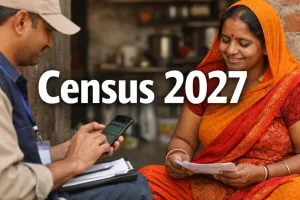
The Matua experience points to a deeper institutional challenge: the cost of deferring resolution on foundational rights. In West Bengal’s electoral landscape, the question is no longer just how communities will vote. It is whether they can do so with the certainty that their place in the polity is no longer in doubt.
Fed Crossroads

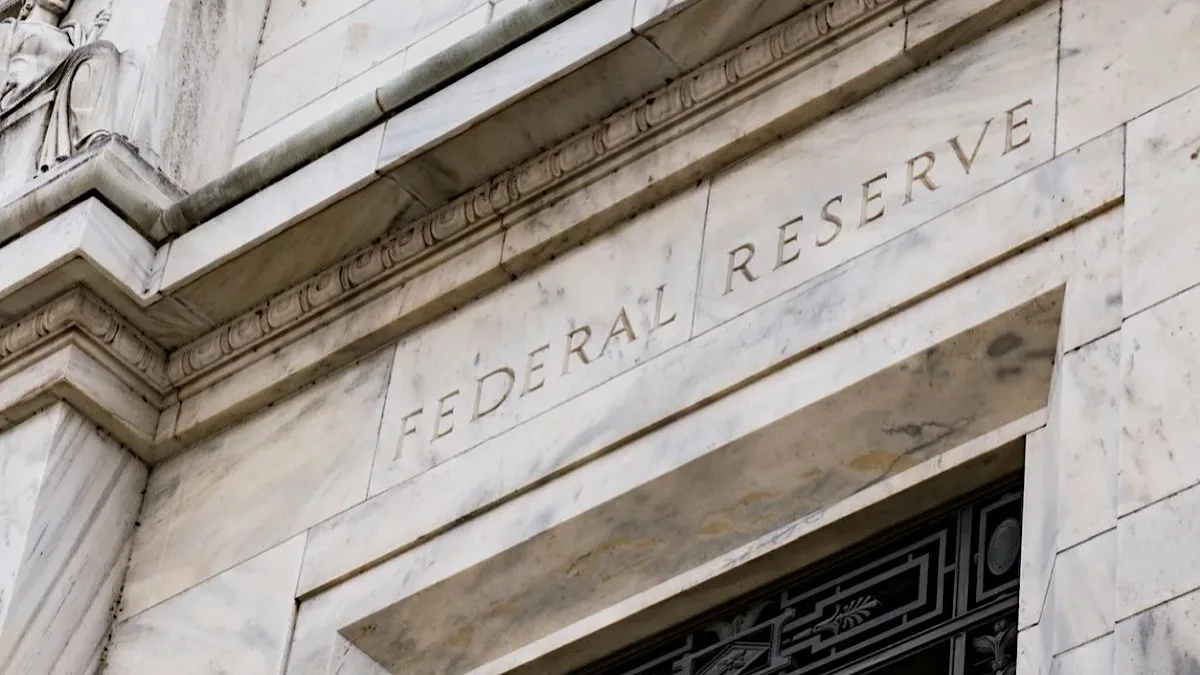
The contest over who leads the United States Federal Reserve is no longer a technocratic exercise.

Statesman News Service | New Delhi |

The contest over who leads the United States Federal Reserve is no longer a technocratic exercise. It has become a proxy battle over the meaning of institutional independence in an era when political power increasingly seeks to shape economic outcomes in real time. The nomination of Kevin Warsh brings this tension into sharp focus ~ not because of his résumé, but because of the expectations surrounding him.

A central bank derives its credibility not from electoral legitimacy, but from distance ~ distance from short-term political pressures and proximity to long-term economic stability. That compact is now under visible strain. President Donald Trump has made little secret of his preference for lower interest rates, framing monetary policy as an instrument of growth rather than restraint. In doing so, he has recast the role of the Federal Reserve as an extension of executive intent, rather than an independent arbiter of economic risk. Mr Warsh’s insistence that he would not serve as a political proxy is therefore necessary, but insufficient. Independence is not asserted in testimony; it is demonstrated in decisions that resist immediate political reward.

The real test lies not in what a nominee promises under oath, but in how they act when markets wobble, inflation surprises, or electoral cycles tighten the screws. At the same time, the debate around Mr Warsh reveals a second, less discussed shift: the politicisation of credibility itself. Questions around financial disclosures and past associations ~ however tenuous ~ are no longer peripheral concerns. They are central to how authority is contested. In a hyper-polarised environment, even the appearance of opacity can erode confidence, not just in an individual, but in the institution she or he seeks to lead.

Yet focusing solely on personalities risks missing the deeper transformation underway. Mr Warsh’s call for a “regime change” within the Fed ~ rethinking inflation metrics, abandoning predictable forward guidance, and embracing a less scripted communication style ~ signals dissatisfaction with the post-2008 monetary consensus. For over a decade, central banks have relied on transparency and signalling to anchor expectations. To deliberately move towards ambiguity is to accept greater short-term volatility in exchange for longer-term flexibility. This is a consequential gamble. Markets function on expectations as much as on data.

A Federal Reserve that communicates less clearly may regain tactical freedom, but it also risks unsettling the very stability it is designed to preserve. The question, then, is not whether change is needed, but whether disruption at this moment serves the broader economic interest. What emerges from this moment is a convergence of pressures ~ political, institutional, and intellectual ~ bearing down on a single office. The choice of Fed chair is no longer about continuity versus reform. It is about whether the United States is willing to redraw the boundary between economic governance and political ambition. That boundary, once blurred, is rarely restored.