Logo

Tapping art for tolerance

Tapping art for tolerance

Rafia Zakaria |

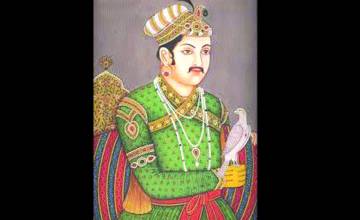
Somewhere late in the 1500s after he had been king for many years Emperor Akbar asked one of the Jesuit priests then in the Mughal Empire for a copy of the Holy Bible. It was this act that led to the commissioning of a manuscript known as the Mirat-ul-Quds or the lsquo;mirror of holinessrsquo; that tells of the life of Jesus.

Historical records suggest that the illustrations in Mirat-ul-Quds were painted by Basavan one of the 17 renowned artists residing at Akbar’s court. The text of the Mirat was written by a priest named Father Jerome Xavier a descendant of the Catholic saint Francis Xavier the founder of the Jesuit order.

Emperor Akbar it is rumoured was dyslexic. At that time this meant that despite his best efforts he could not learn to read and write. This however did not cause his curiosity or love of beauty to abate. The Mirat was only one of the many books he commissioned and its illustrations are a testament to an empire that was not afraid of religious difference but rather one that embraced it. The remarkable illustrations in the book show an indigenised Jesus figure dark-skinned and often seated on a Mughal throne. Mary while not dressed in Mughal clothing wears a bindi and her hands are stained with henna. Both are emblems of a pre-colonial age when an eastern empire the Mughal Empire was curious about things Western and sated its intellectual hunger in its own particular way.

Beyond its importance in the Mughal age Mirat-ul-Quds poses questions for the current era. If intellectual and spiritual curiosity was the trademark of those days suspicion scepticism and destruction are what define the present age. The burden of the notion of a clash of civilisations is such that all corners of the world have divested from engagement; misguided ideas of purification justify the extermination of hundreds even thousands. When they do not kill these quests for purity whetted as they are by robust greed and indefatigable hatred sustain suspicion and exclusion.

For their part the Mughal painters of Akbar’s court when creating illustrations for Mirat-ul-Quds often painted Christian figures with books in their hands. They wished to remind their audience that these alien others the people that followed Hazrat Isa and who came to court in odd costumes speaking in alien tongues were nevertheless People of the Book. Intolerance of course did not have to wait hundreds of years to rear its ugly head and end the age of dialogue and interchange. Mughal emperors following Akbar although it is difficult to tell which one did the job themselves.

The artists that create are known by the beauty of their handiwork by small signatures at the ends of painting; those that destroy leave only the marks of vengeance and rage vestiges of the beauty that once was.

Some surviving versions of Mirat-ul-Quds bore the brunt of this successors of emperors rubbing out the faces of carefully drawn figures the painstaking handiwork of artists long gone. It takes forever to make something beautiful and only moments to tear it apart.

Only 19 manuscripts of the text were commissioned by Emperor Akbar prepared in the last decade of the 16th century and completed and presented in 1602. In the Mughal era books were not easily available and were the provenance of the elite and of royalty removed and perused carefully in select gatherings to entertain and inform. It would have been the royals and descendants of royals existing leaders or leaders to be who would be educated in the knowledge of other lands the beauty of art the detail and symbolism inherent in every figure its gaze and gesture telling the many stories that come together to make up the human story.

Only one of the surviving manuscripts of the Mirat-ul-Quds is in Pakistan housed at the Lahore Museum. It is not known whether this version is the completed manuscript which portions are currently on display and how the remaining manuscript is being stored. As many Pakistani art historians have pointed out Mughal art used many natural pigments and improper storage or even display under bright lights can wreak its own destruction.

One of the most complete manuscripts was recently acquired by the Cleveland Museum of Art in Cleveland Ohio. There it became part of the lsquo;Mughal Paintings: Art and Storiesrsquo; exhibit for the institution’s centenary. Scores of Americans are said to have visited the exhibit looked at the carefully displayed pages of Mirat-ul-Quds mdash; its pages underscoring the message that the opposition between faiths and cultures is neither inherent nor long-standing.

The capacity of art to imbue tolerance among the enraged and suspicious the belligerent and martial is often untapped in Pakistan. If the history of the Mughal Empire is pointed out as a template for all history then Pakistan remains stuck in the moment of destruction when faces and figures are rudely rubbed out their existence a threat their beauty an assault.

Against this reality it is perhaps best that the most complete version of the Mirat-ul-Quds manuscript is now in the archives of the Cleveland Museum of Art and that its cousin in Lahore is not being exhibited celebrated presented and touted with too much fanfare.

In this present age of rubbing out such attentions are risks a provocation to the determined lot devoted to destruction. Hope in this regard can only be located in the postulate that history is cyclical and that all the rest of us who cannot avail ourselves of the legacy of what was left to us will one day see a resurgence of past tolerance captured in art.nbsp;

DawnANN
Black, white and the American reality

Black, white and the American reality

Basab Dasgupta |

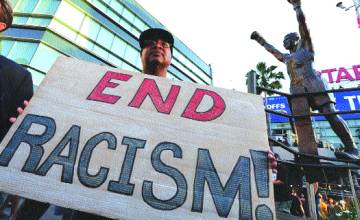
My early exposure to racism came from all those history books I read and movies I saw about Indian leaders struggle for freedom from British rule. It was clear from those accounts that the British looked down upon us simply because of our skin colour and a primitive lifestyle. The stories of various types of torture and injustice seemed so unfair that the significance of skin colour made a profound impression on me as a child. I had read books like Uncle Tom’s Cabin and stories of Abraham Lincoln’s fight against slavery in the USA. The pictures of black athletes in the Mexico City Olympics with their fists raised in the air in protest against racial discrimination in the USA remained etched in my mind. I developed the belief that it was a quot;black and whitequot; world. The whites lived in more prosperous countries in the world considered themselves to be superior and basically ruled the rest of the world inhabited by people of darker skin colour for decades if not centuries.

It was only after coming to the USA that I was exposed to many different races and the differences in their cultures customs physical appearance and specific areas they excelled in. In fact contrary to my expectation that I would identify more with blacks because of my dark skin colour I found very little in common with them. They seem to live in a world of their own in a way that is even more segregated compared to other racial groups. It is not just me; I am yet to meet another Indian who lives in a predominantly black neighbourhood or has invited black friends to a party I attended or whose children have black spouses.nbsp;

I now have a different view of racism in the USA. It is not racism but almost a distorted interpretation of patriotism. I believe that most if not all white Americans consider the United States to be not only their country but expect that everything should function their way because the white folks built this nation. One might argue that it is a false premise because they literally eliminated the occupation of the native Indians and Mexicans in order to force their dominance but this is the present reality. They feel that people coming from other countries should learn to speak English dress in western attire get used to American food and other aspects of American culture develop quot;Americanquot; values celebrate Christmas at least as a social occasion etc. nbsp;When they do not the differences become obvious.

Whites get annoyed by that; they do not like the sound of a foreign conversation which they do not understand they get frustrated by the heavy accents in any communication they do not like the strange smells of different kinds of cooking they get puzzled when quot;foreignersquot; do not behave the way they expect and feel that there is not a whole lot to talk about with these people. To me this is not quot;racismquot; in the text-book sense that whites consider themselves to be superior to other races but a manifestation of their reasonable expectation: if people come to this country from other countries in search of a better life then those people should make an effort to get adjusted if not assimilated with quot;Americanquot; society.

It is conceivable that many white folks conclude that since all these quot;foreignersquot; come here to seek a better life they must not have had as good a life as the Americans in their own countries which is largely true and therefore might extend the impression to believe in their own superiority. However my point is that they were not born with that as an inherent belief. In fact unlike Caucasians of other countries the ones in the USA are by and large quot;colour blindquot; as far as skin colour is concerned. Their acceptance of foreign immigrants is highly dependent on accent and mannerisms. That is why I have no doubt that the next generations of Indians our children and grandchildren would be as American as anyone else.

However the whites have a special frustration with the black people. Unlike the Asians Eastern Europeans and Latinos who came to this country of their own will and with their own ambitions and dreams and struggled to establish a good life for themselves the blacks came here because their ancestors were forcefully brought here as slaves. So the blacks have been around almost as long as the whites have in this country. nbsp;Even though slavery is long gone it seems the blacks never really changed their mindset nor embraced quot;white culturequot; even though the whites have accepted many of their cultural contributions most notably in music and dance.

The black population still feels that white America owes them for all the past unjust treatment. There is a general attitude among blacks that they are still entitled to preferential treatment because there is an quot;inequalityquot; in the social system even now — be it the educational system or justice system or work arena. Furthermore they feel they deserve the right to follow a system exclusively devoted to black culture and history.

Other minorities do not feel that way even if they perhaps wish for a system geared more towards their own culture and are advancing in various strata of society whether such inequalities exist or not. In my opinion the perceived or imagined racism that exists now between blacks and whites will only disappear if and when a vast majority of the black people embrace the mainstream quot;Americanquot; social culture practiced not only by whites but various other ethnicities.

Actually many black people in all areas of society already behave like that at least in their external demeanour think of Collin Powell James Earl Jones Ben Carson and Morgan Freeman among the celebrities as examples and we do not even notice them as black people. Unfortunately it seems that even successful black people cannot resist the temptation of somehow delivering the message quot;Don’t forget that I am blackquot; by a physical gesture or some comment. nbsp;A vast majority of blacks would rather make fun of white people — be it their dancing abilities or other mannerisms — than emulate them.

If the black community does not accept the idea of assimilation the alternative might be complete segregation. Blacks could live in completely black cities governed by black mayors educated by black teachers work in black-owned companies and institutions be entertained by black performers and be protected by a black police force. I am certain that no one would want that. It seems that blacks want to live alongside the whites without any desire to get integrated into white society and continue to complain about lack of opportunities and recognition.

Perhaps black comedians can hammer this point home. In general black people seem to have a keen sense of humour and they are not at all hesitant to express it. The black population at large will get this message when it comes from one of their own.

How can black people behave more like white people and get assimilated into a predominantly white society? In my opinion there is only one way: by following a determined career path with high values on education family unity and pride in our country. This can only be achieved by making post-high school education mandatory just like high school education and very affordable if not free. President Obama had floated the idea of free community colleges but I think it should be extended to the first two years of education at all colleges and trade schools.

College education will offer that balanced view of world history different cultures and lifestyles as well as opportunities available. Currently it seems the only view of the world available to young blacks is through the rhetoric of leaders like Al Sharpton and Jesse Jackson. This should also quot;level the playing fieldquot; by changing the attitude of superiority among the predominantly white college graduates. I also believe that college education can be made more affordable by college administrators drastically reducing the expenses as opposed to just pouring government money obtained through tax increases.

Without this the blacks will remain the proverbial quot;frogquot; that the white serpent can neither swallow nor spit out!

The writer a physicist who worked in academia and industry is a Bengali settled in America.

Chinese business model – II

Chinese business model – II

Shantanu Basu |

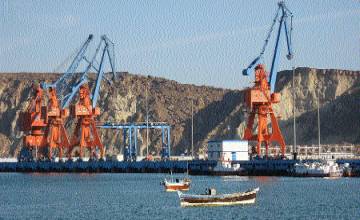
There are gains too for the People’s Republic of China and the recipients of CPEC-like investment. Low-cost PRC imports would flood the recipient country’s markets. These countries would gain by physical infrastructure somewhat greater low-wage employment and relatively cheaper and deeper access to markets old and new. However repayment defaults could cause concessions for establishing EPZs in recipient countries for PRC manufacturing and distribution hubs that in turn would cause a situation akin to indigo cultivation by the British nbsp;in India in the 18th century. Access to several ports stretching from Chittagong to Bandar Abbas and Gwadar combined by 46-lane network of motorways from port and rail heads and dotted with international airport and tax-free EPZs will no longer remain a pipe dream for PRC and its client countries. Backing PRC’s business pincer movement is the rapidly modernising People’s Liberation Army.

What do the PRC’s investments imply for India’s strategic policy? For one India has neither the financial muscle nor industrial and military wherewithal to rival PRC. Prime Minister Modi’s offer of a 2 billion line of credit to Bangladesh pales in comparison to PRC’s recent 24 billion. Second given the short-term political attractions of PRC investments for recipients most Indian diplomatic sops will remain insignificant. Equally India may find itself increasingly isolated from its extended neighbourhood as no recipient country will sacrifice PRC’s politico-economic savvy offers for supporting India in its bilateral strategic disputes with Pakistan and PRC or for NSGSCO membership. For those would imperil PRC’s ‘generosity’ given its steadfast refusal to go along with India in condemning Pakistan for its alleged support to terror strikes in Kashmir. India’s ‘surgical strikes’ have therefore predictably not caught the fancy of the BRICS summiteers in their recent joint statement in Goa nor brought any pressure to bear upon PRC to remove its UN embargo on declaring Hafiz Sayeed a wanted terrorist.

Third India’s vast littoral advantage may be negated by overland transit arrangements that PRC’s OBOR contemplates leaving India a bit player in South Asia. Fourth India’s 10:1 trade imbalance with PRC undermines the integrity of India’s recent overtures to the US. India’s pronounced inability to stop non-essential imports from PRC including decorative Diwali lights and mosquito swatters would be at the cost of the trade deficit widening with retaliatory measures by PRC. Let us also not forget the 50000 Indian nationals who live in PRC and another 15000 students. Fifth India’s recent Western bias particularly in defence cooperation is not much different from the PRC investment model since the Americans French and other western powers see the relationship in purely commercial terms something they seldom did with Pakistan. Finally India shares an extensively disputed border with PRC and Indian defence services currently are not in the pink of fighting health notwithstanding protestations to the contrary. With CPEC cutting through Pakistan-occupied Indian territory PRC has virtually announced its commitment to retain the status quo ante and upping the stakes in Ladakh and Arunachal Pradesh to keep the pot boiling as a counterfoil to India. Moreover slow construction progress on Chabahar just a 6-hour and 356 km drive from Gwadar may drive more shipping to Gwadar and Bandar Abbas 956 km and make Chabahar a commercial millstone around India’s neck unless this port becomes fully operational by 2018-19.

OBOR has found a new client in Bangladesh very recently. China Railway Group one of the world’s largest construction companies won a 3.10 billion project to build a rail network in Bangladesh connecting Dhaka to Jessore. Among other projects contemplated are a coastal expressway a satellite township a railway line and port expansion including ports like Chittagong and Cox’s Bazar. Other probable projects are the Padma Bridge Rail Link 3.30 billion Marine Drive Expressway 2.80 billion strengthening power networks 3.36 billion Dhaka-Sylhet motorway 1.60 billion etc. Bangladesh has strongly backed both PRC’s geo-economic initiatives like OBOR and Maritime Silk Route even as India has reacted to these warily. Bangladeshi ministers have also been strongly advocating the Bangladesh-China-India-Myanmar BCIM trade corridor another Chinese initiative to which the Indian reaction has been muted. On 14 October Bangladesh and China signed 40 agreements totalling about 20 billion including CPEC-like infrastructure projects.

On a different plane Beijing has concluded a series of contracts with Kazakhstan worth 30 billion 31 agreements of 15 billion value with Uzbekistan and natural gas transactions with Turkmenistan in 2013 which reached about 16 billion. China has also provided loans and aid worth 8 billion to Turkmenistan and is expected to provide at least 1 billion to Tajikistan. Turkmenistan which has the world’s fourth largest gas reserves is the biggest supplier of natural gas to China accounting for more than 50 per cent of the total imports. CNPC has already beaten India’s ONGC in a 4.18 billion bid for Petro Kazakhstan. PRC has expended 48 billion in Kazakhstan. In Tajikistan CNPC and France’s TOTAL in June 2013 agreed with Tethys Petroleum Ltd to develop oil and gas assets under the country’s Bokhtar project which is estimated to have 3.22 trillion cubic metres of gas and 8.50 billion barrels of oil. Tajikistan’s reserves could meet China’s natural gas consumption for an estimated 24 years.

SINOPEC bought a portion of Russian producer Udmurtneft in 2006. In 2013 PRC acquired 12.50 per cent of Russia’s Uralkali the biggest producer of potash and CNPC agreed to prepay OAO Rosneft about 70 billion as part of a 270 billion 25-year supply deal. That was followed by Rosneft’s 85 billion 10-year accord with China Petrochemical Corp and CNPC’s purchase of 20 per cent of an Arctic gas project from Novatek for an undisclosed sum. A Russia-China pipeline would double pipe capacity from 300000 to 600000 bpd by end-2016. In fact in 2014 China overtook Germany as Russia’s biggest buyer of crude oil thanks to Rosneft securing deals to boost supplies via the East Siberia-Pacific Ocean pipeline and another crossing Kazakhstan. PRC and Russia also signed a 400 billion mega gas deal for 30 years for 1.3 trillion cubic feet of natural gas per year starting from 2018. In 2015 CNPC acquired 20 per cent of a 27 billion LNG project in Russia’s far north and is now looking at Russian equity offers in oil licence blocks in the Arctic and East Siberia.

Having taken care of its energy and deep-water Arabian Sea port needs nbsp;China nbsp;has also sought to develop high-speed rail links with Russia. Among recently signed projects is the construction of an ambitious high-speed rail link from Moscow to Beijing that would cut the journey from six days on the Trans-Siberian Railway to just two. The project would cost more than 230 billion and run over 7000 km with Chelyabinsk Ekaterinburg and Kazakhstan en route. China will participate in financing the railway’s construction as well as in geological research. The China Railway Corporation will finance and construct the Samara-Togliatti railroad in SE Russia. Russia’s Far East to China is proposed to be covered in a 250 km high-speed rail link.

Earlier this year China agreed to provide a 6.20 billion loan for East-Central Russia’s Moscow-Kazan High Speed Rail Project. Going further the 11000 km long Yiwu-Teheran line saw the first freight train chug into Teheran in mid-January 2016. PRC-Iran trade rose from 4 billion in 2003 to 53 billion in 2013. nbsp;In January 2016 during the visit of President Xi Jinping to Iran the two sides agreed to increase trade to 600 billion over the coming decade. While building a railway over the Karakoram is a major engineering challenge China’s Iran corridor only needs to modernise the existing road and rail links between China Central Asia and Iran for access up to Bandar Abbas and Chabahar and beyond to Europe.

The PRC’s strategic business model deserves accolades as it treads though a minefield of corruption ethnic strife inhospitable terrain competing intra-national claims international border disputes militancy and terrorism and many more adversities yet adding to that country’s wealth and political significance. India has therefore many lessons to learn from the Chinese experience. nbsp;This country has tremendous internal strength and resilience natural resources and favourable climate a 6000 km littoral frontier and a young labour force. Regrettably historical apathy of its political and economic stewardship has been and remains India’s greatest failure as also the lack of any long-term strategic vision. India has to get its domestic economy ticking again and await an anti-PRC sentiment to emerge when default and dissension in the recipient countries emerge. Till then grandstanding would remain its sole virtue and vice.

Concluded

nbsp;

Naga students urge NSCN-IM to stop ‘tax collection’

Naga students urge NSCN-IM to stop ”tax collection”

IANS |

A student body has urged the NSCN-IM to stop its unlawful quot;tax collectionquot; from various educational departments in Arunachal Pradesh.

At a meeting with the National Socialist Council of Nagaland – Isak-Muivah NSCN-IM the Arunachal Naga Students Federation ANSF said the tax collection was creating hurdles in the development of education in many districts according to an ANSF statement.

The ANSF pointed out that the tax collection by NSCN-IM in three economically and socially backward districts of the state — Tirap Changlang and Longding — had led to financial problems in the operation of several schools and colleges.

quot;This appeal got necessitated due to problems faced by the teaching staff department’s officers and authorities of schools and colleges in Tirap Changlang and Longding. Not just that the lives of the upcoming youths is also getting ruined due to lack of educationquot; the statement addd.

According to the ANSF Tirap Changlang and Longding were economically weak districts where poor parents cannot afford to send their wards to schools that charge more.

In spite of being rich in natural resources these three districts are economically and socially-deprived. They are also considered to be housing camps of extremist groups such as National Socialist Council of Nagaland – Khaplang and United Liberation Front of Assam.

Naga students urge NSCN-IM to stop ‘tax collection’

Naga students urge NSCN-IM to stop ”tax collection”

IANS |

A student body has urged the NSCN-IM to stop its unlawful quot;tax collectionquot; from various educational departments in Arunachal Pradesh.

At a meeting with the National Socialist Council of Nagaland – Isak-Muivah NSCN-IM the Arunachal Naga Students Federation ANSF said the tax collection was creating hurdles in the development of education in many districts according to an ANSF statement.

The ANSF pointed out that the tax collection by NSCN-IM in three economically and socially backward districts of the state — Tirap Changlang and Longding — had led to financial problems in the operation of several schools and colleges.

quot;This appeal got necessitated due to problems faced by the teaching staff department’s officers and authorities of schools and colleges in Tirap Changlang and Longding. Not just that the lives of the upcoming youths is also getting ruined due to lack of educationquot; the statement addd.

According to the ANSF Tirap Changlang and Longding were economically weak districts where poor parents cannot afford to send their wards to schools that charge more.

In spite of being rich in natural resources these three districts are economically and socially-deprived. They are also considered to be housing camps of extremist groups such as National Socialist Council of Nagaland – Khaplang and United Liberation Front of Assam.

JNU students detained outside Parliament

JNU students detained outside Parliament

thestatesman.com |

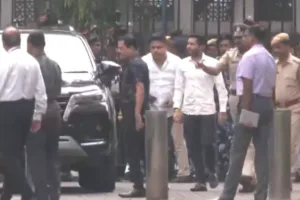
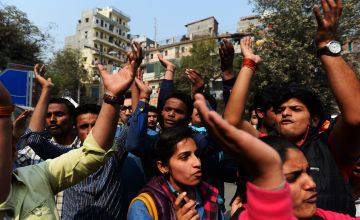
Over 50 students of the Jawaharlal Nehru JNU University were on Friday detained near the Parliament House as they tried to march towards the Home Ministry protesting the disappearance of student Najeeb Ahmed police said.

The students raised slogans against the government and police accusing them of failing to trace Ahmed who went missing on October 15 night from the university hostel Mahi-Mandvi after a brawl with ABVP students.

The agitating students attempted to carry out a protest march towards the home ministry but were detained by Delhi Police and bundled into waiting buses before being taken to Jantar Mantar.

Security had been beefed up in New Delhi district in anticipation of the protest by JNU students in front and vehicular movement was blocked on Raisina Road while police and paramilitary forces were deployed in the area.

Union Home Minister Rajnath Singh had on Thursday ordered the Delhi Police to set up a special team to trace Ahmed even as the agitating students kept the vice chancellor and some other top officials under siege for over 20 hours.

JNU students detained outside Parliament

JNU students detained outside Parliament

thestatesman.com |

Over 50 students of the Jawaharlal Nehru JNU University were on Friday detained near the Parliament House as they tried to march towards the Home Ministry protesting the disappearance of student Najeeb Ahmed police said.

The students raised slogans against the government and police accusing them of failing to trace Ahmed who went missing on October 15 night from the university hostel Mahi-Mandvi after a brawl with ABVP students.

The agitating students attempted to carry out a protest march towards the home ministry but were detained by Delhi Police and bundled into waiting buses before being taken to Jantar Mantar.

Security had been beefed up in New Delhi district in anticipation of the protest by JNU students in front and vehicular movement was blocked on Raisina Road while police and paramilitary forces were deployed in the area.

Union Home Minister Rajnath Singh had on Thursday ordered the Delhi Police to set up a special team to trace Ahmed even as the agitating students kept the vice chancellor and some other top officials under siege for over 20 hours.

Wipro Q2 net profit dips 7.6% at Rs.2,070 cr

Wipro Q2 net profit dips 7.6% at Rs.2,070 cr

PTI |

Country’s third largest software services firm Wipro on Friday reported 7.6 per cent decline year-on-year in consolidated net profit at Rs 2070.4 crore for the September quarter of the current financial year.

Stating that it foresees a quot;mixedquot; demand environment Wipro said it expects its IT service revenue for the October- December quarter of 2016-17 to be in the range of 1916 million to 1955 million.

With IT services revenue at 1916 million in the September quarter Wipro missed its guidance of 1931 million to 1950 million given at the beginning of the quarter.

quot;As we look forward the demand environment is mixed in a seasonally weak quarter affected by furloughs and lower number of working daysquot; Wipro Chief Financial Officer Jatin Dalal said in a statement.

The city-headquartered firm had posted a net profit after tax minority interest and share of profit of associates of Rs 2241 crore in the year-ago period.

Total income from operations rose by 10.5 per cent to Rs 13897 crore in July-September quarter of this fiscal from Rs 12567 crore in the same period a year ago it added.

The IT services segment had a headcount of 174238 as of September 30 2016.

Wipro’s IT products segment delivered revenue of Rs 770 crore 115 million in the reported quarter.

Wipro Q2 net profit dips 7.6% at Rs.2,070 cr

Wipro Q2 net profit dips 7.6% at Rs.2,070 cr

PTI |

Country’s third largest software services firm Wipro on Friday reported 7.6 per cent decline year-on-year in consolidated net profit at Rs 2070.4 crore for the September quarter of the current financial year.

Stating that it foresees a quot;mixedquot; demand environment Wipro said it expects its IT service revenue for the October- December quarter of 2016-17 to be in the range of 1916 million to 1955 million.

With IT services revenue at 1916 million in the September quarter Wipro missed its guidance of 1931 million to 1950 million given at the beginning of the quarter.

quot;As we look forward the demand environment is mixed in a seasonally weak quarter affected by furloughs and lower number of working daysquot; Wipro Chief Financial Officer Jatin Dalal said in a statement.

The city-headquartered firm had posted a net profit after tax minority interest and share of profit of associates of Rs 2241 crore in the year-ago period.

Total income from operations rose by 10.5 per cent to Rs 13897 crore in July-September quarter of this fiscal from Rs 12567 crore in the same period a year ago it added.

The IT services segment had a headcount of 174238 as of September 30 2016.

Wipro’s IT products segment delivered revenue of Rs 770 crore 115 million in the reported quarter.

Modi govt trying to impose UCC: Imam

Modi govt trying to impose UCC: Imam

PTI |

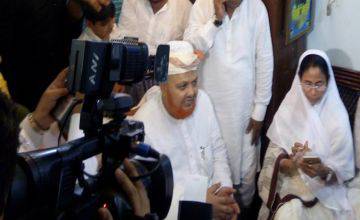
Joined by two Trinamool Congress MPs Shahi Imam of the Tipu Sultan Mosque here Syed Mohammad Nurur Rahman Barkati on Friday charged the Narendra Modi government with trying to quot;polarise the nationquot; by quot;imposingquot; the Uniform Civil Code.

Alleging that the Modi government was trying to quot;imposequot; UCC on the Muslims the Imam called all the Muslims as well as the Hindus the Christians the Dalits and other communities to come together to oppose the move.

He was addressing a protest demonstration in front of the Tipu Sultan Mosque at busy Dharamtala area in which two TMC MPs– Sultan Ahmed and Idris Ali– were present.

Sultan Ahmed told reporters quot;I have come to attend the programme to oppose UCC.quot;nbsp;

quot;There cannot be any uniform civil code in the country.nbsp;It will disturb the unity of the country. Muslims in the country have been targeted and the Centre is trying to impose UCC on the Muslims. We have inherited the law and we will not allow any interferencequot; Sultan Ahmed said.

Asked whether it is his party’s view the MP said quot;This is not the TMC office. You ask our party’s national spokesperson about it.quot;nbsp;

Modi govt trying to impose UCC: Imam

Modi govt trying to impose UCC: Imam

PTI |

Joined by two Trinamool Congress MPs Shahi Imam of the Tipu Sultan Mosque here Syed Mohammad Nurur Rahman Barkati on Friday charged the Narendra Modi government with trying to quot;polarise the nationquot; by quot;imposingquot; the Uniform Civil Code.

Alleging that the Modi government was trying to quot;imposequot; UCC on the Muslims the Imam called all the Muslims as well as the Hindus the Christians the Dalits and other communities to come together to oppose the move.

He was addressing a protest demonstration in front of the Tipu Sultan Mosque at busy Dharamtala area in which two TMC MPs– Sultan Ahmed and Idris Ali– were present.

Sultan Ahmed told reporters quot;I have come to attend the programme to oppose UCC.quot;nbsp;

quot;There cannot be any uniform civil code in the country.nbsp;It will disturb the unity of the country. Muslims in the country have been targeted and the Centre is trying to impose UCC on the Muslims. We have inherited the law and we will not allow any interferencequot; Sultan Ahmed said.

Asked whether it is his party’s view the MP said quot;This is not the TMC office. You ask our party’s national spokesperson about it.quot;nbsp;

Chinese reality TV series shows lives of corrupt officials

Chinese reality TV series shows lives of corrupt officials

IANS |

For the first time in China a reality TV series that provides a peek into the lives of allegedly corrupt senior party officials and attempts to show their journey to the wrong side of the law has begun airing this week on state broadcaster CCTV.

Produced in collaboration with China’s main anti-corruption watchdog and titled quot;Always on the Roadquot; the first of its eight episodes telecast on October 17 grabbed millions of eyeballs and sparked over half a million comments on social media platforms Efe news reported on Friday.

The first episode revolved around the lives of three disgraced officials including a senior party official from Hebei province who were tried for bribery and were now awaiting the verdict.

quot;I never dreamed of coming to this end… I come from a poor family and have always hated corrupt officials but I myself have become one now. This is extremely sadquot; confesses Zhou Benshun former party secretary of northern China’s Hebei Province on the programme.nbsp;

The episode revealed how Zhou lived in an over 8600 sq.ft. house and employed a secretary a driver two cooks and two maid servants — one of them hired solely to look after his pet tortoise.

Also featured was Bai Enpei former party secretary from Yunnan province in far southwest China who was candid about the reasons that led him to embezzle funds and accept bribes.

He explained how his way of thinking changed after he saw quot;other people living in luxurious homes driving around in expensive cars and even owning private jetsquot; and he told himself that he too wanted that life.

It took the Central Commission for Discipline Inspection — the ruling party’s anti-graft body and sponsor of the series — ten days just to inspect and prepare an inventory of the wealth amassed by Bai including precious jade jewellery expensive tea sets and mahogany furniture.

Bai was sentenced to jail for over a decade of corrupt practices.

The programme also provides a rare peek into the anti-corruption campaign led by President Xi Jinping which punished 336000 high-ranking officials in 2015.

One viewer Zhu Changyao said the cases in the series have made an impact.

Another commenting under the pseudonym Huozhe Hutu complained against the censorship remarking that it was contradictory to show the fight against corruption and yet forbid expression of views.

Chinese reality TV series shows lives of corrupt officials

Chinese reality TV series shows lives of corrupt officials

IANS |

For the first time in China a reality TV series that provides a peek into the lives of allegedly corrupt senior party officials and attempts to show their journey to the wrong side of the law has begun airing this week on state broadcaster CCTV.

Produced in collaboration with China’s main anti-corruption watchdog and titled quot;Always on the Roadquot; the first of its eight episodes telecast on October 17 grabbed millions of eyeballs and sparked over half a million comments on social media platforms Efe news reported on Friday.

The first episode revolved around the lives of three disgraced officials including a senior party official from Hebei province who were tried for bribery and were now awaiting the verdict.

quot;I never dreamed of coming to this end… I come from a poor family and have always hated corrupt officials but I myself have become one now. This is extremely sadquot; confesses Zhou Benshun former party secretary of northern China’s Hebei Province on the programme.nbsp;

The episode revealed how Zhou lived in an over 8600 sq.ft. house and employed a secretary a driver two cooks and two maid servants — one of them hired solely to look after his pet tortoise.

Also featured was Bai Enpei former party secretary from Yunnan province in far southwest China who was candid about the reasons that led him to embezzle funds and accept bribes.

He explained how his way of thinking changed after he saw quot;other people living in luxurious homes driving around in expensive cars and even owning private jetsquot; and he told himself that he too wanted that life.

It took the Central Commission for Discipline Inspection — the ruling party’s anti-graft body and sponsor of the series — ten days just to inspect and prepare an inventory of the wealth amassed by Bai including precious jade jewellery expensive tea sets and mahogany furniture.

Bai was sentenced to jail for over a decade of corrupt practices.

The programme also provides a rare peek into the anti-corruption campaign led by President Xi Jinping which punished 336000 high-ranking officials in 2015.

One viewer Zhu Changyao said the cases in the series have made an impact.

Another commenting under the pseudonym Huozhe Hutu complained against the censorship remarking that it was contradictory to show the fight against corruption and yet forbid expression of views.

Mizoram minister atttributes cooking gas crisis to drive to give tamper-free LPG

Mizoram minister atttributes cooking gas crisis to drive to give tamper-free LPG

PTI |

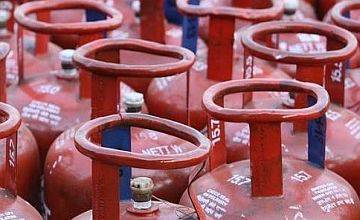
Mizoram Food Civil Supplies and Consumer Affairs Minister John Rotluangliana on Friday said that the present scarcity of cooking gas in the state was due to the efforts made by the state government and the Young Mizo Association YMA to provide unadulterated and tamper-free cooking gas to the general public.

Addressing the ruling party workers at the Congress Bhavan here Rotluangliana said that some drivers tampered the gas cylinders while trying to earn extra money as they were underpaid.

He said that the present carrying contractors bid the tender at Rs.12 per kilometre while the earlier rate was Rs.17 per kilometre.

quot;The rate quoted by the present carrying contractors was not a workable rate forcing the contractors to pay minimum wages to their drivers which in turn force the latter to tamper the LPGquot; he said.

He said that the state government has already earmarked a land for establishment of a new Gas Bottling Plant at Sihhmui near Aizawl and the ball is now with the Indian Oil Corporation IOC.

The Minister and the Congress government have been under severe attack from the opposition parties due to acute shortage of cooking gas in the last four months.

People could not find a gas cylinder even at the cost of Rs.3000 in the black market due to acute scarcity.

Mizoram minister atttributes cooking gas crisis to drive to give tamper-free LPG

Mizoram minister atttributes cooking gas crisis to drive to give tamper-free LPG

PTI |

Mizoram Food Civil Supplies and Consumer Affairs Minister John Rotluangliana on Friday said that the present scarcity of cooking gas in the state was due to the efforts made by the state government and the Young Mizo Association YMA to provide unadulterated and tamper-free cooking gas to the general public.

Addressing the ruling party workers at the Congress Bhavan here Rotluangliana said that some drivers tampered the gas cylinders while trying to earn extra money as they were underpaid.

He said that the present carrying contractors bid the tender at Rs.12 per kilometre while the earlier rate was Rs.17 per kilometre.

quot;The rate quoted by the present carrying contractors was not a workable rate forcing the contractors to pay minimum wages to their drivers which in turn force the latter to tamper the LPGquot; he said.

He said that the state government has already earmarked a land for establishment of a new Gas Bottling Plant at Sihhmui near Aizawl and the ball is now with the Indian Oil Corporation IOC.

The Minister and the Congress government have been under severe attack from the opposition parties due to acute shortage of cooking gas in the last four months.

People could not find a gas cylinder even at the cost of Rs.3000 in the black market due to acute scarcity.

Signature campaign against Uniform Civil Code

Signature campaign against Uniform Civil Code

IANS |

A signature campaign by the All India Muslim Personal Law Board against the Uniform Civil Code gathered pact on Friday with thousands of Muslims in Telangana and Andhra Pradesh signing it.

Muslim families signed the forms prescribed by AIMPB opposing any move to interfere with Sharia or Islamic laws.

The forms were distributed at all the mosques during Friday prayers. Responding to appeals by imams and Muslim groups people took home the forms signed them along with family members and submitted them to the respective mosques.

Each form can be signed by eight adult family members along with their names and addresses.

The filled-in and signed forms will be forwarded to AIMPB which propose to submit them to the President and the Law Commission.

AIMPB the apex body of Indian Muslims comprising organisations representing all schools of Islamic thought has taken up the signature campaign while boycotting the questionnaire sent by the Law Commission.nbsp;

It argues that the questionnaire is heavily loaded in favour of Uniform Civil Code UCC.

Signature campaign against Uniform Civil Code

Signature campaign against Uniform Civil Code

IANS |

A signature campaign by the All India Muslim Personal Law Board against the Uniform Civil Code gathered pact on Friday with thousands of Muslims in Telangana and Andhra Pradesh signing it.

Muslim families signed the forms prescribed by AIMPB opposing any move to interfere with Sharia or Islamic laws.

The forms were distributed at all the mosques during Friday prayers. Responding to appeals by imams and Muslim groups people took home the forms signed them along with family members and submitted them to the respective mosques.

Each form can be signed by eight adult family members along with their names and addresses.

The filled-in and signed forms will be forwarded to AIMPB which propose to submit them to the President and the Law Commission.

AIMPB the apex body of Indian Muslims comprising organisations representing all schools of Islamic thought has taken up the signature campaign while boycotting the questionnaire sent by the Law Commission.nbsp;

It argues that the questionnaire is heavily loaded in favour of Uniform Civil Code UCC.