Logo

Foreign degrees ~ Made in India!

AK Ghosh |

The  Centre intends to allow foreign universities to open campuses in India. Though the government allows 100 per cent foreign investment in the higher education sector through the automatic, the granting of degrees by foreign institutions is not permitted as that authority rests with the universities established through central or state acts. However, several foreign institutions have been offering various courses since 2000  through joint ventures in the form of twining arrangement, franchises, and  online courses.

However, it is feared that the India-made foreign degrees may not be a genuine ticket to a global career and the institutes dispensing them will prove to be nothing more than dodgy degree shops selling fancy dreams.

The innovation of courses offered in India by foreign universities suffered  a setback with a Madras High Court ruling in 1977. Responding to a petition, the court issued an interim injunction restraining foreign universities or institutions  with  offices in India from conferring degrees on students in this country. The court intervention showed that these institutions could expect such resistance from several quarters. This  used to be  the general pattern with most foreign and multinational initiatives in India during the 1990s ~ initial outrage and protests followed by gradual acceptance.

In order to regulate their operations, the  government introduced in Parliament “The Foreign Educational Institutions (Regulation of Entry and Operation, Maintenance of Quality and Prevention of Commercialisation) Bill, 2007”. The objective was to provide “an ideal regulatory framework…in which reputed institutions are able to enter and operate in terms of India’s national policy,  and at the same time check and control sub-standard or fly-by night operators”. The revised version the  “Foreign Educational Institutions (Regulation of Entry and Operation) Bill, 2010 was introduced to facilitate the opening up of the higher education sector to foreign investors as well.

Among provisions in the Bill is the requirement of setting up a corpus fund of Rs 50 crore and withholding of  permission to repatriate any part of the surplus revenue. This might seem to be too restrictive to the foreign providers, and could make them opt for foreign direct investment through the automatic route. There would be no difficulty as such to offer training or vocational programmes leading to certificates of proficiency. At a time when there is a demand to delink jobs from degrees, the foreign providers would be able to exploit the situation.

The University Grants Commission Act states  that only universities set up by Parliament or a state legislature, and those declared deemed universities by the government, can award degrees. The Centre can have the UGC Act amended to allow foreign campuses that will operate as full-fledged universities in India, or introduce a new bill allowing them to function as deemed universities. In 2010, the government unsuccessfully introduced a bill in Parliament to allow foreign campuses. However, in 2013, the UGC notified rules allowing foreign universities to set up campuses  and award degrees.  In 2014, the HRD  ministry did prepare a bill in favour of foreign campuses, but it was not sent to the cabinet.
It should not be taken for granted that the foreign institutions can ensure quality. There are a large number of universities that are chronically suffering from mediocrity. It will be  difficult for these centres of learning  to face the competition with quality foreign universities in  the most developed countries. The dynamics of foreign universities in India would lead to commercialisation without enhancing competitiveness.

Many of the renowned off-shore universities are willing to invest in campuses abroad, and, in practice, it is hard to replicate the standards of the home country in some other country. Other related problems are: returns from the investment made in establishing and running of campuses, non-repatriation of profits as mentioned, the regulatory mechanism of the host country in regard to the fee-structure, faculty salaries, curriculum to be offered, and issues pertaining to research and intellectual property rights etc.

The University of New South Wales had shut down its campuses in Singapore within months of being established. The John Hopkins Centre also packed up its activities as it did not meet the performance benchmark in Singapore. A foreign university cannot enter China without a local university as partner. In Malaysia, private institutions could  enter into twinning and franchising arrangements with partners of their choice prior to 2000, but subsequently new foreign partnerships and branch campuses have been allowed to be set up only on invitation from the Ministry of Education to the foreign institutions.

In India, we have been in the process of encouraging FDI not only in the development sectors, but in retail segment as well in order to enhance foreign funds with incidental advantages of technology transfer, job opportunities and benefits to domestic firms and consumers. But since education is not a tradeable commodity, the implications of FDI in the higher educational sector call for reflection.

It should not be taken for granted that the number of students intending to go abroad can be brought down by setting up offshore-campuses in India. The motivation of the students in such cases is mainly towards getting jobs and  migrating at a later stage. The presumption that the cost of foreign education at home will be cheaper is also not based on reason. The idea that the foreign programmes will  reduce the outflow of Indian currency is not realistic because the lion’s share will go to the foreign partners. It is also doubtful whether the quality of the off-shore institutions will be better than many of our internationally renowned  institutions. The highly reputed foreign institutions would be interested in investment for developing or fostering centres of excellence in joint research programmes, faculty exchange and the like.

The foreign universities are very likely to focus on the market-oriented and demand-driven professional and technical disciplines. No foreign provider has shown any inclination in introducing courses in Humanities and Social Sciences. This is a major area of concern. This may have a negative effect on the future of these disciplines. Also, they may employ Indian faculty offering more attractive pay packets that would enhance the shortage of faculty in our universities. This has been noted by a  parliamentary committee.

The standing committee on human resource development in its 237th report on the Foreign Educational Institutions (Regulation of Entry and Operations) Bill, 2010 said that the entry of foreign universities into the country would aggravate the shortage of qualified teachers in Indian educational institutions both government and private. Foreign Direct Investment (FDI) in higher education is certainly harmful for home-grown institutions.  It  is an educational invasion on the principle that the superior party will win. The rational approach is to improve the standards of  our institutions.

It is only reasonable that any foreign university that intends to set up a campus should undergo certain checks and balances. Strict norms for permitting them to offer programmes either on their own or in collaboration with Indian counterparts or through online or in the distance mode should be followed.

The  fact that students make a beeline for degrees offered by foreign universities is a sad commentary on the state of higher education in our country. Professor Venkatraman Ramakrishnan, the 2009 Nobel Prize winner,  has  doubts as to  whether foreign campuses in India would be able to “reproduce the culture of the original place”, as similar campuses in South-east Asia and the Middle East have failed to live up to the people’s expectations.  If  foreign universities with an indifferent record at home are allowed to set up shop in India, the whole process will  be counter-productive.

The writer is former Associate Professor, Dept. of English, Gurudas College, Kolkata

Sacrificial lamb

Editorial |

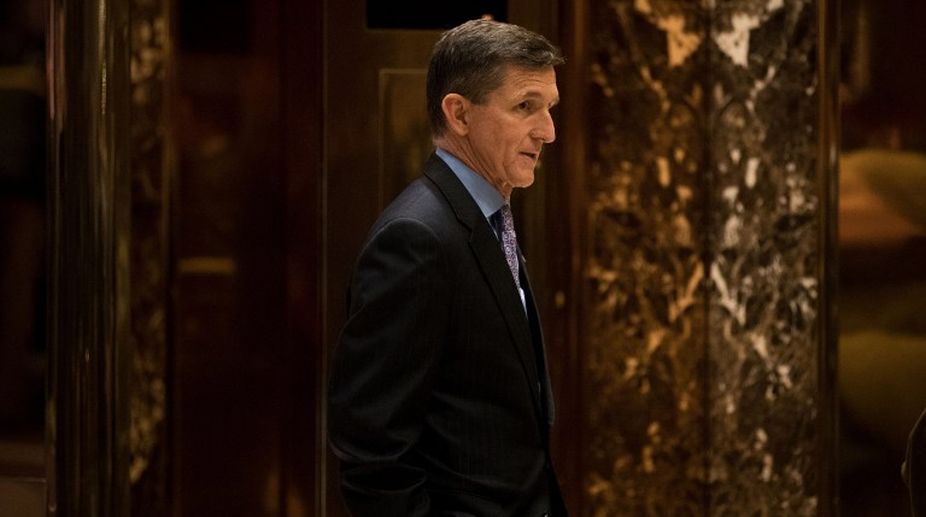
It is hard not to wonder whether Michael Flynn, the National Security Adviser of the United States of America, is the sacrificial lamb for having played the honest broker between Donald Trump and Vladimir Putin… much to the consternation of the world. On the face of it, by putting in his papers he has acknowledged his suspected “culpability”, which scarcely condones the incumbent’s calculated flirtation with the Kremlin. Flynn has resigned because of his contacts with the Russian ambassador to Washington and his subsequent attempts to cover up the exact nature of those contacts. Tuesday’s development in the wake of the President’s serial debacles in the courts over the immigrants issue does not imply curtains on an embarrassing chapter of Trump’s pre-election machinations. Rather it could deepen suspicions that he had played footsie with Putin to ensure the defeat of Hillary Clinton. It is the Russian intervention in US Elections 2016 that has been enormously damaging for the Trump presidency. The crisis of the President’s legitimacy over its relationship with Moscow is likely to persist. That relationship has already had an impact on Trump’s cabal. On closer reflection, Flynn has resigned after the new administration assumed office.

He is in fact he third Trump acolyte who appears to have been forced out over links to the Russian government on an issue so sensitive as the presidential elections. It bears recall that Paul Manafort, the former campaign manager, and Carter Page, a businessman who doubled up as Trump’s adviser, had resigned last summer in the face of reports that they were in contact with the Kremlin. It is Trump and no other who will have to answer for the post-Cold War trans-Atlantic electoral coordination, and the spate of resignations shall not airbrush the fundamentals though the apple-cart has been rocked fair and square. The equation with Putin had hung over Trump’s campaign and the Republican convention; the presidency per se is now under a cloud.

“Flynn’s resignation validates the suspicions of many in Washington that something is seriously amiss with regard to President Trump’s ties to Russia. This is the third member of Trump’s circle to be pushed out over Russia-linked scandals,” was the immediate summing up by Susan Hennessey, a former NSA lawyer, of yet another jolt that the administration has suffered in less than a month in office. Well might Trump imagine that he has got Flynn out of harm’s way; but the resignation will only ramp up the pressure from both the public and Congress, with both demanding a full account of the nature of Trump’s connections to Russia both now and during the campaign. Much has been revealed to the world; much also alas has not. Which precisely is the inherent puzzle of America’s 45th presidency.

Audience ‘issues’

Editorial |

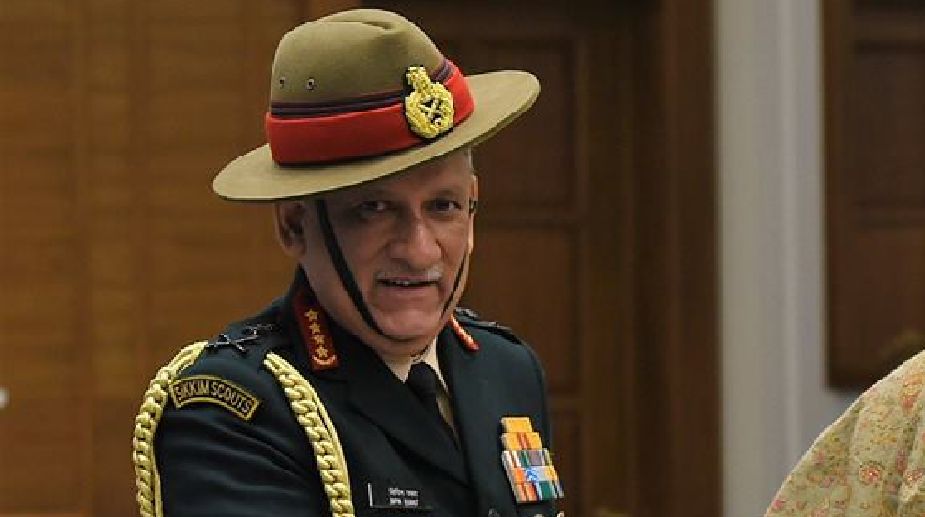
Operational effectiveness, as always, will be determined by the realities of the situation on the ground. So only “developments” in the Kashmir Valley will testify to whether the stern caution from the Army Chief will deter sections of the civil populace from hampering the efforts of the security forces when tackling militant activity; or, whether they will provoke even more determined bids to hinder the troops in their bid to preserve national security by bringing the militants to book. There is reason to suspect that those master-minding the unrest (not necessarily from across the border) will exploit General Bipin Rawat’s no-holds-barred warning and observations to further the feeling of alienation that has spread across the Valley after the killing of Burhan Wani, and further the resentment against what they viciously project as an “occupation army” committed to denying the people of J&K the right to self-determination. The Chief’s use of “soldier talk” could also be cited as evidence that the security forces were “hurting”: further encouraging the recent trend of some “locals” complicating, possibly derailing, the anti-militant missions of the Army and paramilitary. It is also possible that the Chief’s warning will be used to “sell” the international community the mischievous theory that India was using excessive military force to subjugate the folk in the Valley.

It is rather apparent that once again has been exposed the vastly different interpretations that could be given to comments made in and “outside” the Valley. What is music in one place rankles in the other. Gen Rawat’s plain-speaking would certainly serve as a morale-booster to his men who have been facing severe difficulties in having to thwart militants, yet also having to keep an eye on what may be happening behind their backs. The increasingly jingoistic electronic media certainly “played up” the remarks. That Gen Rawat’s tough talk came at a homage ceremony also attended by the Prime Minister also lends itself to questionable interpretation. Since actions “speak” louder than words, the various counter-measures the Chief mentioned might have paid better dividends if implemented on the ground rather than articulated in New Delhi. The “audience” he was addressing could not “hear” him, and media accounts have hardly deterred those bent on “keeping up the heat” through a harsh winter. The larger question that keeps “popping up” is whether military action alone (restrained and professional though it is) can reverse the ugly trends in the Valley. There are few signs of a game-plan to turn the economic situation around, defuse tensions, foster peace and tranquillity, and win over minds and hearts. Gen Rawat and the men in uniform are paying a heavy price for the sustained incompetence and indifference of the political leadership in New Delhi and Srinagar.

Audience ‘issues’

Editorial |

Operational effectiveness, as always, will be determined by the realities of the situation on the ground. So only “developments” in the Kashmir Valley will testify to whether the stern caution from the Army Chief will deter sections of the civil populace from hampering the efforts of the security forces when tackling militant activity; or, whether they will provoke even more determined bids to hinder the troops in their bid to preserve national security by bringing the militants to book. There is reason to suspect that those master-minding the unrest (not necessarily from across the border) will exploit General Bipin Rawat’s no-holds-barred warning and observations to further the feeling of alienation that has spread across the Valley after the killing of Burhan Wani, and further the resentment against what they viciously project as an “occupation army” committed to denying the people of J&K the right to self-determination. The Chief’s use of “soldier talk” could also be cited as evidence that the security forces were “hurting”: further encouraging the recent trend of some “locals” complicating, possibly derailing, the anti-militant missions of the Army and paramilitary. It is also possible that the Chief’s warning will be used to “sell” the international community the mischievous theory that India was using excessive military force to subjugate the folk in the Valley.

It is rather apparent that once again has been exposed the vastly different interpretations that could be given to comments made in and “outside” the Valley. What is music in one place rankles in the other. Gen Rawat’s plain-speaking would certainly serve as a morale-booster to his men who have been facing severe difficulties in having to thwart militants, yet also having to keep an eye on what may be happening behind their backs. The increasingly jingoistic electronic media certainly “played up” the remarks. That Gen Rawat’s tough talk came at a homage ceremony also attended by the Prime Minister also lends itself to questionable interpretation. Since actions “speak” louder than words, the various counter-measures the Chief mentioned might have paid better dividends if implemented on the ground rather than articulated in New Delhi. The “audience” he was addressing could not “hear” him, and media accounts have hardly deterred those bent on “keeping up the heat” through a harsh winter. The larger question that keeps “popping up” is whether military action alone (restrained and professional though it is) can reverse the ugly trends in the Valley. There are few signs of a game-plan to turn the economic situation around, defuse tensions, foster peace and tranquillity, and win over minds and hearts. Gen Rawat and the men in uniform are paying a heavy price for the sustained incompetence and indifference of the political leadership in New Delhi and Srinagar.

Movie review: ‘Running Shaadi’ keeps you smiling

IANS |

Movie review: 'Running Shaadi' keeps you smiling 

Film: Running Shaadi

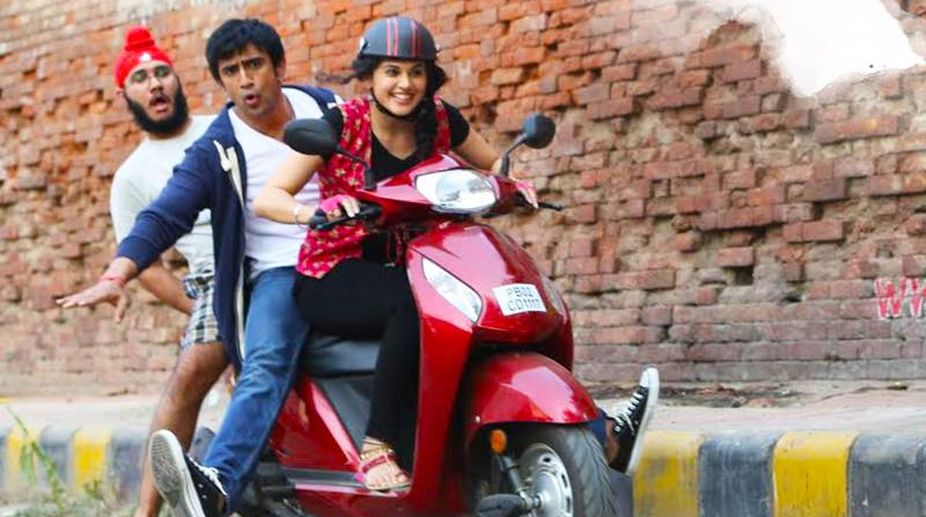
Starring Amit Sadh, Tapsee Pannu

Directed by Amit Roy

Rating: *** and a half (3 and a half stars)

What do you call these? Haan, the Pheelgoood type of film. Running Shaadi keeps the proceedings running at a hectic pace. With a shaadi happening every ten minutes you'd expect a certain strain monotony to waft into the proceedings. But no. Debutant director Amit Roy knows how to make every shaadi look freshaor freessss, as our Bihari hero would say.

And hey, this is as good a place as any to tell you, Amit Sadh's Bihari accent is bang-on. Neither overdone, nor too casual it fits the character's lackadaisical personality like a hand in glove. Ram Bharose yup, that's our Bihari Baba's name Bihari migrant in Amritsar, loves the feisty Punjabi girl Nimmi.

She is the doughty Sardarni who at the beginning of the film asks her father's helpful employee to help her with an abortion.

Ahem.

Did I tell you? Running Saadi breaks a lot of rules regarding how the Hindi film's lead should behave. He is a weakling and a doormat, a full-on phattu. She is a user-friendly clever little chick always alert about what the guy friends ,the Bihari and his buddy Cyberjeet (Arsh Bajwa, a full-on fun-toosh) are up to. The trio gets together to set up a website that helps couples to elope.

The screenplay (written jointly by director Roy and Navjot Gulati) will remind you strongly of Maneesh Sharma's Band Baaja Baaraat and Imtiaz Ali's Jab We Met. Funny, how every Punjaban who wants to elope reminds us of Kareena Kapoor, with or without the Khan. 

Though Tapsee Pannu's accent is a tad over-the-top she brings her own individual sassiness to her part. Neither a prototype nor too eccentric to lose her charm Tapsee plays Nimmi with a verve that draws her close to the audience.

Amit Sadh is the "perfect" foil. Foolish and flawed he is the kind of sucker who falls into a pit because well, it is there. These two fatally flawed characters are run through the grinder with a glorious whirr in a plot that relentlessly weaves whimsical adventures around their unfinished personalities.

The finest segment of the plot moves to Patna where -what else? a wedding is about to occur. The preparations are in full bloom. It is here that director Amit Roy captures the flavor and fervor of the festivities that festoon the Great Indian Muddle Class to a tenuous brand of cultural grounding.From the girl's officious brother (played brilliantly by Pankaj Jha) to the bride's makeup girl (who takes umbrage when her skills are questioned by Tapsee) and is pacified with icecreamAby the bride's bro, every character falls into place with a thundering rightness of tone.

Running Shaadi has its share of flaws. The beeped-out 'com' from Running Shaadi is an irksome speedbreaker. Also, the effort to keep the goings-on constantly brisk-paced gets exhausting at some point in the narrative. I am really not sure when. It all happens so swiftly and happily and fluently.

This is a rom.com with a dot between the 'rom' and 'com' reminding us that the traditional romantic comedy has come a long way.

And dot's the whole truth.

Movie review: ‘Running Shaadi’ keeps you smiling

IANS |

Movie review: 'Running Shaadi' keeps you smiling 

Film: Running Shaadi

Starring Amit Sadh, Tapsee Pannu

Directed by Amit Roy

Rating: *** and a half (3 and a half stars)

What do you call these? Haan, the Pheelgoood type of film. Running Shaadi keeps the proceedings running at a hectic pace. With a shaadi happening every ten minutes you'd expect a certain strain monotony to waft into the proceedings. But no. Debutant director Amit Roy knows how to make every shaadi look freshaor freessss, as our Bihari hero would say.

And hey, this is as good a place as any to tell you, Amit Sadh's Bihari accent is bang-on. Neither overdone, nor too casual it fits the character's lackadaisical personality like a hand in glove. Ram Bharose yup, that's our Bihari Baba's name Bihari migrant in Amritsar, loves the feisty Punjabi girl Nimmi.

She is the doughty Sardarni who at the beginning of the film asks her father's helpful employee to help her with an abortion.

Ahem.

Did I tell you? Running Saadi breaks a lot of rules regarding how the Hindi film's lead should behave. He is a weakling and a doormat, a full-on phattu. She is a user-friendly clever little chick always alert about what the guy friends ,the Bihari and his buddy Cyberjeet (Arsh Bajwa, a full-on fun-toosh) are up to. The trio gets together to set up a website that helps couples to elope.

The screenplay (written jointly by director Roy and Navjot Gulati) will remind you strongly of Maneesh Sharma's Band Baaja Baaraat and Imtiaz Ali's Jab We Met. Funny, how every Punjaban who wants to elope reminds us of Kareena Kapoor, with or without the Khan. 

Though Tapsee Pannu's accent is a tad over-the-top she brings her own individual sassiness to her part. Neither a prototype nor too eccentric to lose her charm Tapsee plays Nimmi with a verve that draws her close to the audience.

Amit Sadh is the "perfect" foil. Foolish and flawed he is the kind of sucker who falls into a pit because well, it is there. These two fatally flawed characters are run through the grinder with a glorious whirr in a plot that relentlessly weaves whimsical adventures around their unfinished personalities.

The finest segment of the plot moves to Patna where -what else? a wedding is about to occur. The preparations are in full bloom. It is here that director Amit Roy captures the flavor and fervor of the festivities that festoon the Great Indian Muddle Class to a tenuous brand of cultural grounding.From the girl's officious brother (played brilliantly by Pankaj Jha) to the bride's makeup girl (who takes umbrage when her skills are questioned by Tapsee) and is pacified with icecreamAby the bride's bro, every character falls into place with a thundering rightness of tone.

Running Shaadi has its share of flaws. The beeped-out 'com' from Running Shaadi is an irksome speedbreaker. Also, the effort to keep the goings-on constantly brisk-paced gets exhausting at some point in the narrative. I am really not sure when. It all happens so swiftly and happily and fluently.

This is a rom.com with a dot between the 'rom' and 'com' reminding us that the traditional romantic comedy has come a long way.

And dot's the whole truth.

Ashton Kutcher stresses use of technology to eradicate sex trafficking

IANS | Washington |

Actor Ashton Kutcher, who during his 2012 visit to India had met sex trafficking victims and has been batting for their cause for long, says there's need to understand the importance of using technology as a tool to eradicate slavery.

Kutcher testified on his anti-sex trafficking efforts before the Senate Foreign Relations Committee in a hearing on progress in combating modern slavery.

The actor spoke on behalf of Thorn: Digital Defenders of Children, an organisation he co-founded with former wife Demi Moore in 2009 that builds software to fight human trafficking, CNN reported.

He called his "day job" his work as chairman of Thorn and also as a father — he and wife-actress Mila Kunis welcomed son, Dimitri Portwood, in November, and daughter, Wyatt, is two years old. 

"As part of my anti-trafficking work, I've met victims in Russia, I've met victims in India, I've met victims that have been trafficked from Mexico, victims from New York and New Jersey and all across our country. I've been on FBI raids where I've seen things that no person should ever see," Kutcher said.

"I've seen video content of a child that's the same age as mine being raped by an American man that was a sex tourist in Cambodia. And this child was so conditioned by her environment that she thought she was engaging in play," he added.

Kutcher emphasised the importance of using technology as a tool that can be used to disable slavery, citing specific progress.

"It's working. In six months, with 25 per cent of our users reporting, we've identified over 6,000 trafficking victims, 2,000 of which are minors. This tool has enhanced 4,000 law enforcement officials in 900 agencies. And we're reducing the investigation time by 60 percent," he said of a software tool called 'Spotlight'.

Another tool called 'Solis' has taken investigation times from dark web material from three years to three weeks, Kutcher said.

He spoke on the issue and called for specific actions, including additional funding for the technology, fostering public-private sector relationships, looking into the pipeline for victims, including working with the foster care system and the mental health system, and differentiating solution sets for sex trafficking and labour trafficking with enforcement and legislation initiatives.

Ashton Kutcher stresses use of technology to eradicate sex trafficking

IANS | Washington |

Actor Ashton Kutcher, who during his 2012 visit to India had met sex trafficking victims and has been batting for their cause for long, says there's need to understand the importance of using technology as a tool to eradicate slavery.

Kutcher testified on his anti-sex trafficking efforts before the Senate Foreign Relations Committee in a hearing on progress in combating modern slavery.

The actor spoke on behalf of Thorn: Digital Defenders of Children, an organisation he co-founded with former wife Demi Moore in 2009 that builds software to fight human trafficking, CNN reported.

He called his "day job" his work as chairman of Thorn and also as a father — he and wife-actress Mila Kunis welcomed son, Dimitri Portwood, in November, and daughter, Wyatt, is two years old. 

"As part of my anti-trafficking work, I've met victims in Russia, I've met victims in India, I've met victims that have been trafficked from Mexico, victims from New York and New Jersey and all across our country. I've been on FBI raids where I've seen things that no person should ever see," Kutcher said.

"I've seen video content of a child that's the same age as mine being raped by an American man that was a sex tourist in Cambodia. And this child was so conditioned by her environment that she thought she was engaging in play," he added.

Kutcher emphasised the importance of using technology as a tool that can be used to disable slavery, citing specific progress.

"It's working. In six months, with 25 per cent of our users reporting, we've identified over 6,000 trafficking victims, 2,000 of which are minors. This tool has enhanced 4,000 law enforcement officials in 900 agencies. And we're reducing the investigation time by 60 percent," he said of a software tool called 'Spotlight'.

Another tool called 'Solis' has taken investigation times from dark web material from three years to three weeks, Kutcher said.

He spoke on the issue and called for specific actions, including additional funding for the technology, fostering public-private sector relationships, looking into the pipeline for victims, including working with the foster care system and the mental health system, and differentiating solution sets for sex trafficking and labour trafficking with enforcement and legislation initiatives.

Assamese singer Sadananda Gogoi gets bail in Saradha scam

IANS | Kolkata |

Assamese singer Sadananda Gogoi on Thursday got bail from the Calcutta High Court in the multi-billion rupee Saradha ponzi scam after spending over 29 months in prison since his arrest by the Central Bureau of Investigation (CBI).

A high court division bench comprising Justice Nishita Mhatre and Justice Tapash Mookherjee granted bail to Gogoi, who has spent 889 days in custody since his arrest on September 12, 2014, for alleged conspiracy and misappropriation of funds.

However, the court barred him from leaving the Kolkata police commissionerate area and directed him to call on the investigating officer every month.

Gogoi allegedly made a television commercial for the Saradha Group.

Assamese singer Sadananda Gogoi gets bail in Saradha scam

IANS | Kolkata |

Assamese singer Sadananda Gogoi on Thursday got bail from the Calcutta High Court in the multi-billion rupee Saradha ponzi scam after spending over 29 months in prison since his arrest by the Central Bureau of Investigation (CBI).

A high court division bench comprising Justice Nishita Mhatre and Justice Tapash Mookherjee granted bail to Gogoi, who has spent 889 days in custody since his arrest on September 12, 2014, for alleged conspiracy and misappropriation of funds.

However, the court barred him from leaving the Kolkata police commissionerate area and directed him to call on the investigating officer every month.
Gogoi allegedly made a television commercial for the Saradha Group.

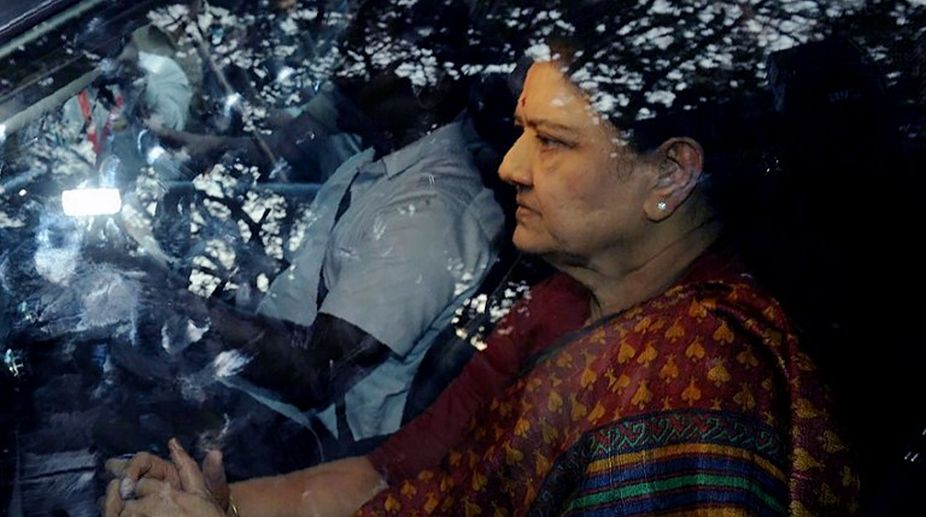
Sasikala sees Palaniswami take oath from Bengaluru jail

IANS | Bengaluru |

AIADMK General Secretary V.K. Sasikala on Thursday watched on television K. Palaniswami taking oath as the new Chief Minster of Tamil Nadu at Raj Bhavan in Chennai from the Central Jail on the city's southern outskirts, said sources.

"Sasikala watched live Palaniswami and 30 lawmakers taking oath as the Chief Minister and Cabinet ministers in the prison's woman barracks, along with her sister-in-law Elavarasi and other inmates," a jail official told IANS on the condition of anonymity.

Sasikala, 60, Elavarasi and her nephew V.K. Sudhakaran returned to the prison on Wednesday and surrendered to resume the four-year term they were sentenced to after being held guilty of corruption in the two-decades old illegal assets case.

The main convict — late Tamil Nadu J. Jayalalathaa — passed away on December 5 after a prolonged illness in a private hospital in Chennai.

"Palanaswami is likely to visit the prison on Friday along with his cabinet colleagues to take blessings of Chinnamma (Sasikala) before assuming charge," party's Karnataka unit Secretary V.A. Pugazhendi told reporters here.

Police stepped up security and put up barricades outside the jail complex at Parapanna Agrahara area to prevent the ruling party's factions from crowding and causing law and order problem.

"In view of Wednesday's clashes between the cadres of the party's two factions when Sasikala came from Chennai by road, we have decided to restrict the entry of people to the prison to prevent any untoward incident," said a police official.

Returning to the jail after 21-day stay from September 27 to October 18, 2014, as the apex court Tuesday upheld their conviction by the trial court, Sasikala had a hard time in the cell as she could not sleep and was said to be restless at night.

"Chinnamma could not sleep well and was restless as she had to lie down on the floor in a 10×8 feet cell in the women's barracks after jail officials denied her request for a mattress," lamented Pugazhendi earlier in the day.

As the trial court denied Sasikala's demand for some privileges, including home food, she refused to have supper on Wednesday though she was served two rotis, one ragi ball, 200 gm rice and 150 gm sambar (lentil) like all other inmates.

"When Elavarasi cajoled her to have food in view of her weak health, she took rice with sambar and butter milk," recalled the jail source.

The judge (Ashwath Narayana) also rejected Sasikala's request for a special room for prayers and yoga, A-class facilities and an attached toilet-cum-bathroom. She was given a plate, a tumbler and a blanket.

Before entering the cell, she deposited her valuables at the counter and recorded the three weeks she spent in the prison in 2014, as per the procedure.

Expressing anguish over her plight and harsh conditions in which women inmates live in prisons, Pugazhendi said Sasikala woke up early (5 a.m.), did yoga and walked in the barracks for a while.

"She also read a couple of Tamil newspapers, had tamarind rice for breakfast at 7.30 a.m. and a frugal meal (sambar rice) for lunch at 12.30," said Pugazhendi.

Saskiala, 59, surrendered before the trial court here on Wednesday evening and entered the jail premises before 6 p.m after the Supreme Court declined her plea for more time to give herself up./Eom/545 words.

Sasikala sees Palaniswami take oath from Bengaluru jail

IANS | Bengaluru |

AIADMK General Secretary V.K. Sasikala on Thursday watched on television K. Palaniswami taking oath as the new Chief Minster of Tamil Nadu at Raj Bhavan in Chennai from the Central Jail on the city's southern outskirts, said sources.

"Sasikala watched live Palaniswami and 30 lawmakers taking oath as the Chief Minister and Cabinet ministers in the prison's woman barracks, along with her sister-in-law Elavarasi and other inmates," a jail official told IANS on the condition of anonymity.

Sasikala, 60, Elavarasi and her nephew V.K. Sudhakaran returned to the prison on Wednesday and surrendered to resume the four-year term they were sentenced to after being held guilty of corruption in the two-decades old illegal assets case.

The main convict — late Tamil Nadu J. Jayalalathaa — passed away on December 5 after a prolonged illness in a private hospital in Chennai.

"Palanaswami is likely to visit the prison on Friday along with his cabinet colleagues to take blessings of Chinnamma (Sasikala) before assuming charge," party's Karnataka unit Secretary V.A. Pugazhendi told reporters here.

Police stepped up security and put up barricades outside the jail complex at Parapanna Agrahara area to prevent the ruling party's factions from crowding and causing law and order problem.

"In view of Wednesday's clashes between the cadres of the party's two factions when Sasikala came from Chennai by road, we have decided to restrict the entry of people to the prison to prevent any untoward incident," said a police official.

Returning to the jail after 21-day stay from September 27 to October 18, 2014, as the apex court Tuesday upheld their conviction by the trial court, Sasikala had a hard time in the cell as she could not sleep and was said to be restless at night.

"Chinnamma could not sleep well and was restless as she had to lie down on the floor in a 10×8 feet cell in the women's barracks after jail officials denied her request for a mattress," lamented Pugazhendi earlier in the day.

As the trial court denied Sasikala's demand for some privileges, including home food, she refused to have supper on Wednesday though she was served two rotis, one ragi ball, 200 gm rice and 150 gm sambar (lentil) like all other inmates.

"When Elavarasi cajoled her to have food in view of her weak health, she took rice with sambar and butter milk," recalled the jail source.

The judge (Ashwath Narayana) also rejected Sasikala's request for a special room for prayers and yoga, A-class facilities and an attached toilet-cum-bathroom. She was given a plate, a tumbler and a blanket.

Before entering the cell, she deposited her valuables at the counter and recorded the three weeks she spent in the prison in 2014, as per the procedure.

Expressing anguish over her plight and harsh conditions in which women inmates live in prisons, Pugazhendi said Sasikala woke up early (5 a.m.), did yoga and walked in the barracks for a while.

"She also read a couple of Tamil newspapers, had tamarind rice for breakfast at 7.30 a.m. and a frugal meal (sambar rice) for lunch at 12.30," said Pugazhendi.

Saskiala, 59, surrendered before the trial court here on Wednesday evening and entered the jail premises before 6 p.m after the Supreme Court declined her plea for more time to give herself up./Eom/545 words.

Bansal case accused TV actor Anuj Saxena surrenders in court

IANS | New Delhi |

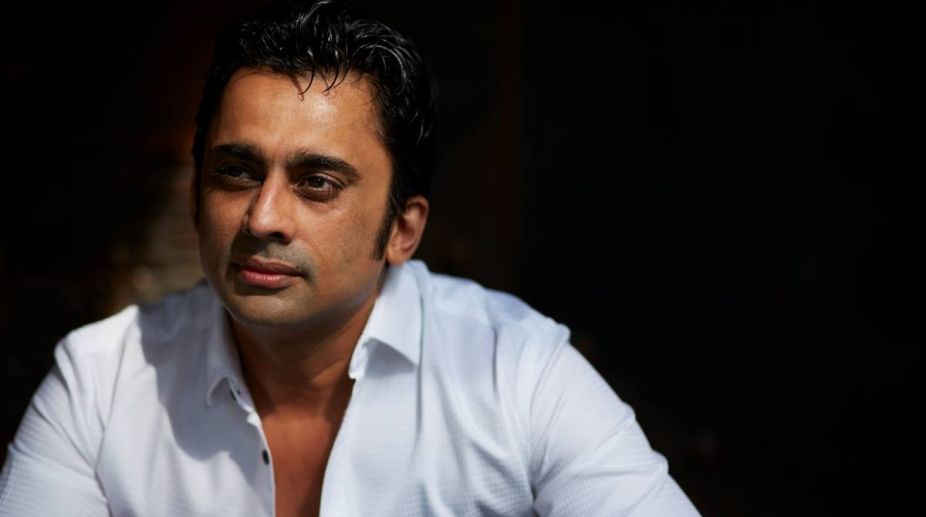
TV actor and COO of Elder Pharmaceuticals Anuj Saxena, accused of bribing former Ministry of Corporate Affair official B.K. Bansal who committed suicide, surrendered himself before a Delhi court on Thursday.

Central Bureau of Investigation (CBI) Special Judge Gurdeep Singh directed the Chief Operating Officer (COO) to mark his presence on Friday, the next date fixed for hearing.

Saxena was directed by the Delhi High Court on February 13 to surrender himself before trial court by February 17.

The High Court had also directed him to withdraw his anticipatory bail plea and move it afresh before the trial court concerned.

The CBI has alleged that Saxena had contacted another co-accused Vishwadeep Bansal to negotiate with a senior Corporate Affairs Ministry official for not recommending the matter to Serious Fraud Investigation Office (SFIO) for probe against his company.

The investigating agency has also alleged that Corporate Affairs Ministry officer Bansal was dealing with the violations by Elder Pharmaceuticals.

The court observed that Saxena's role is direct, as he was the beneficiary from the alleged offence.

Key accused B.K. Bansal and and his 31-year-old son Yogesh committed suicide on September 27, 2016, by hanging themselves at their house in east Delhi. His wife Satyabala, 57, and daughter Neha, 27, committed suicide on July 19 last year.

Bansal, an Additional Secretary-rank Director General in the ministry, was arrested by the CBI on bribery charges on July 16. Later, he was granted bail.

He was accused of receiving Rs 9 lakh from Mumbai-based Elder Pharmaceuticals.

Bansal case accused TV actor Anuj Saxena surrenders in court

IANS | New Delhi |

TV actor and COO of Elder Pharmaceuticals Anuj Saxena, accused of bribing former Ministry of Corporate Affair official B.K. Bansal who committed suicide, surrendered himself before a Delhi court on Thursday.

Central Bureau of Investigation (CBI) Special Judge Gurdeep Singh directed the Chief Operating Officer (COO) to mark his presence on Friday, the next date fixed for hearing.

Saxena was directed by the Delhi High Court on February 13 to surrender himself before trial court by February 17.

The High Court had also directed him to withdraw his anticipatory bail plea and move it afresh before the trial court concerned.

The CBI has alleged that Saxena had contacted another co-accused Vishwadeep Bansal to negotiate with a senior Corporate Affairs Ministry official for not recommending the matter to Serious Fraud Investigation Office (SFIO) for probe against his company.

The investigating agency has also alleged that Corporate Affairs Ministry officer Bansal was dealing with the violations by Elder Pharmaceuticals.

The court observed that Saxena's role is direct, as he was the beneficiary from the alleged offence.

Key accused B.K. Bansal and and his 31-year-old son Yogesh committed suicide on September 27, 2016, by hanging themselves at their house in east Delhi. His wife Satyabala, 57, and daughter Neha, 27, committed suicide on July 19 last year.

Bansal, an Additional Secretary-rank Director General in the ministry, was arrested by the CBI on bribery charges on July 16. Later, he was granted bail.

He was accused of receiving Rs 9 lakh from Mumbai-based Elder Pharmaceuticals.

Give priority to cases of children, Delhi Police told

IANS | New Delhi |

Union Minister of State for Home Hansraj Gangaram Ahir on Thursday asked the Delhi Police to give top priority to the cases related to women, children and senior citizens and stressed on "friendly policing".

On Delhi Police's 70th Raising Day here, the minister conferred 44 medals on its personnel, including for gallantry, President Medal for Distinguished Service and Police Medal for Meritorious Service.

"Delhi is at the centre stage of all political, social, cultural and commercial activities across the country. Delhi Police has to be well prepared to face and control any event on a large scale, besides performing regular duties like maintaining law and order and containing crime," Ahir said on the occasion.

He stressed on friendly policing and advised the force to give "top priority to the cases of women, children and senior citizens". 

The minister cautioned the citizens against "internal terrorism" but at the same time expressed confidence in Delhi Police, saying it is a "well-equipped force to fight any kind of contingency". 

Ahir assured of the Home Ministry's positive outlook towards modernisation and digitisation of the 84,000-strong Delhi Police and announced enhancement of the Nirbhaya Fund by around Rs 25 crore. 

The fund is expected to support initiatives by the government and non-governmental organisations working towards safety of women in India. It was first announced by the government in its 2013 Union Budget. 

Delhi Police Commissioner Amulya Patnaik said: "I am determined to make Delhi Police people-friendly and more digitised to cope up with changing nature of crime in the metropolis. The force is well equipped and in high morale to face any eventuality." 

Give priority to cases of children, Delhi Police told

IANS | New Delhi |

Union Minister of State for Home Hansraj Gangaram Ahir on Thursday asked the Delhi Police to give top priority to the cases related to women, children and senior citizens and stressed on "friendly policing".

On Delhi Police's 70th Raising Day here, the minister conferred 44 medals on its personnel, including for gallantry, President Medal for Distinguished Service and Police Medal for Meritorious Service.

"Delhi is at the centre stage of all political, social, cultural and commercial activities across the country. Delhi Police has to be well prepared to face and control any event on a large scale, besides performing regular duties like maintaining law and order and containing crime," Ahir said on the occasion.

He stressed on friendly policing and advised the force to give "top priority to the cases of women, children and senior citizens". 

The minister cautioned the citizens against "internal terrorism" but at the same time expressed confidence in Delhi Police, saying it is a "well-equipped force to fight any kind of contingency". 

Ahir assured of the Home Ministry's positive outlook towards modernisation and digitisation of the 84,000-strong Delhi Police and announced enhancement of the Nirbhaya Fund by around Rs 25 crore. 

The fund is expected to support initiatives by the government and non-governmental organisations working towards safety of women in India. It was first announced by the government in its 2013 Union Budget. 

Delhi Police Commissioner Amulya Patnaik said: "I am determined to make Delhi Police people-friendly and more digitised to cope up with changing nature of crime in the metropolis. The force is well equipped and in high morale to face any eventuality." 

Tata Sons chief designate Chandrasekaran aims to make an impact

IANS | Mumbai |

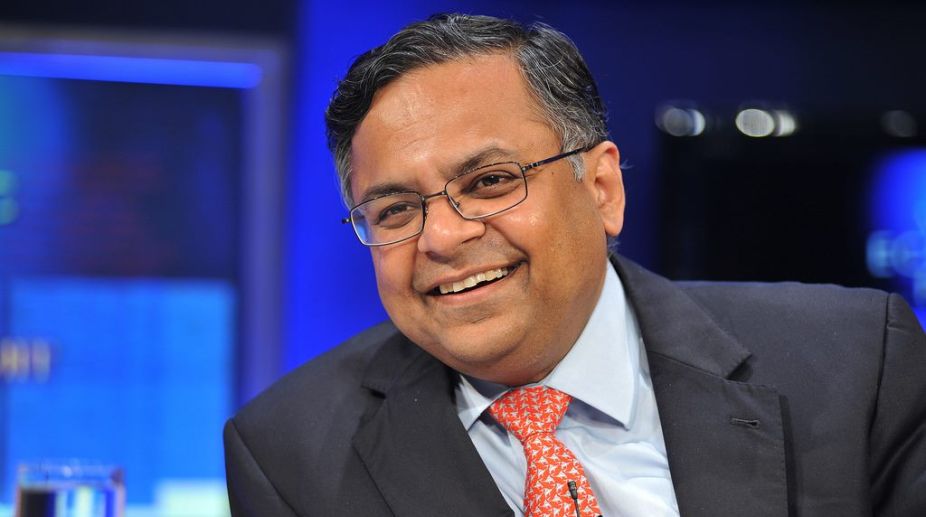
Ahead of taking charge as the Executive Chairman of Tata Sons from next Tuesday, Natarajan Chandrasekaran on Thursday said he is hopeful to make an impact and a difference.

"Well frankly I think it's a very big job but the canvas is large. And a lot of exciting things to do and there are challenges and opportunities. I'm looking forward to it and I hope I can make an impact, make a difference," he told CNBCTV 18 in an interview.

On January 12, Chandrasekaran, 53, was appointed as the Executive Chairman-elect of Tata Sons — the first non-Parsi to head the $103-billion global empire with a 148-year history.

Expressing confidence on a smooth transition for Rajesh Gopinathan to his new CEO role at Tata Consultancy Services (TCS), he said, "Rajesh commands respect, and understands the strategic nature of the business."

"If you look from the company's bench perspective, this is one of the strongest teams, and we have people below Rajesh managing anywhere from USD 1 billion to USD 5 billion end to end. So, the strength of the company is very solid, but for myself, yes, I am going to be around. I am going to be associated with TCS," Chandrasekaran said.

He was extremely positive on the IT giant's prospect in 2017 and did not foresee any "de-growth" happening in any of its core units.

Chandrasekaran said that TCS would give enormous emphasis on cloud.

"There will be a tremendous focus brought in, in cloud. We have thought about it, we have discussed and debated our business model around cloud and we have some ideas on how we want to go about cloud, so we will put enormous emphasis on cloud."

Speaking on the possibility of declaring dividend and share buyback policy, given that the company sitting on huge cash reserves, Chandrasekaran said that the company was looking for the right opportunity to come along.

"Every tech company has a large cash balance, not only Indian companies, but every tech company internationally has got large piles of cash because we don't know in this market, suddenly something shows up and we want to invest in the business," he said.

Chandrasekaran further said, "However I would agree with those who say that we have to return back lot of cash to the shareholders. I would agree with the view to the extent that we need to decide what is the safe number we should retain, and we can't be infinitely saying I want to keep growing this. So, we need to have comfort."

Ruling out major concerns for the company and the industry on the H1B1 US visa regulation, he said, "The solution lies in what is the business model — so it will not be a simple change, the availability of visas on one hand, there may be minimum wage on the other one – so that will be a combination of changes that can come."

Whether the IT major is up for M&A opportunities, he said, "If there is an opportunity, we will take it. But that is only because strategically it will create long-term value accretion for the company, long-term growth for the company, not because the target for us in a particular year. It has come to come from our revenue growth."