Logo

President calls for sharing joy with needy on Holi

IANS | New Delhi |

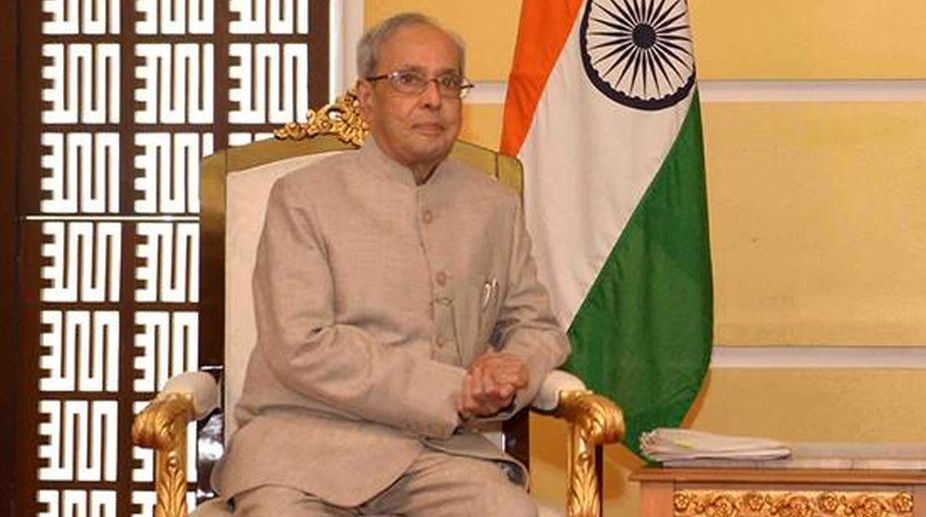
President Pranab Mukherjee on Monday greeted citizens on the occasion of Holi and urged to "spread happiness and share joy with the needy and downtrodden".

"Warm greetings and best wishes to all my fellow citizens on the auspicious occasion of Holi. Let us on this day spread happiness and share joy with the needy and downtrodden," the President tweeted. 

The President also wished that the spring festival bring together the diverse hues of India and strengthen brotherhood. 

"Holi is a harbinger of hope and fulfilment in our lives. May this festival of colours bring together the diverse hues of India's culture in a rainbow of unity and strengthen brotherhood and harmony amongst all our people. 

"Let this year's Holi mark the beginning of a new phase of peace and prosperity in the country," he added. 

Holi: Prime Minister Modi urges nation to spread joy

IANS | New Delhi |

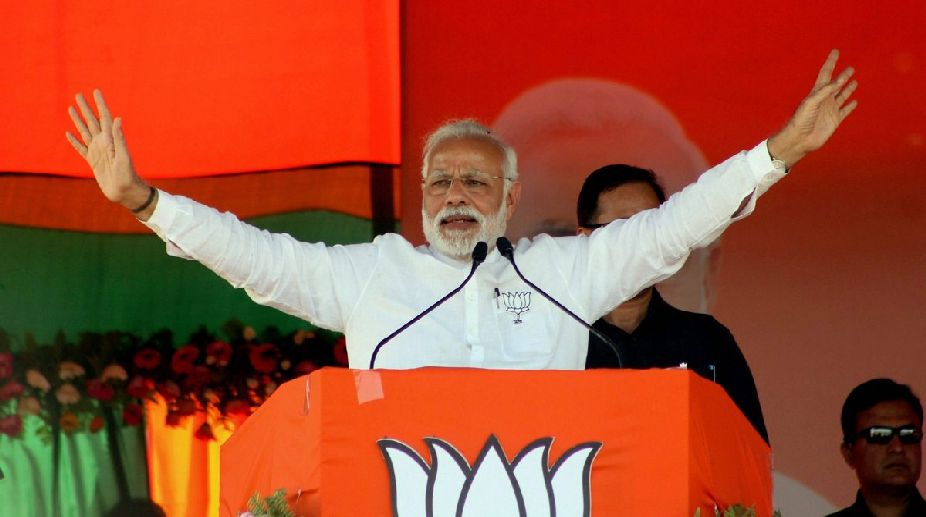
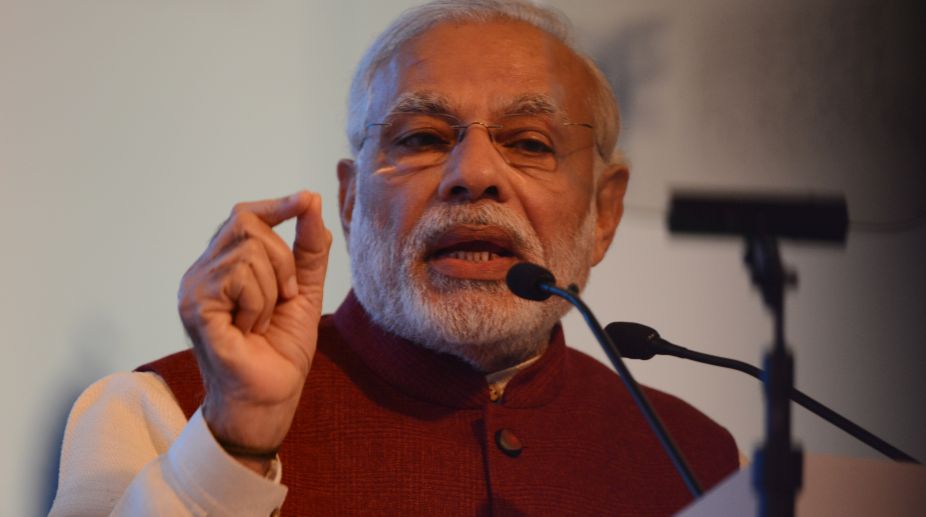
Prime Minister Narendra Modi on Monday extended his greeting to the countrymen on the occasion of Holi, wishing the festival "spread joy and warmth everywhere".

"Greetings on the festival of colours, Holi. May the festival spread joy and warmth everywhere," Modi tweeted. 

Union Home Minister Rajnath Singh also wished Holi to the people. 

"Wishing you and your family a Happy Holi," the minister tweeted. 

Holi is a Hindu spring festival in India, Pakistan and Nepal, also known as the "festival of colours" or the "festival of love".

Prime Minister Narendra Modi greets people on Holi

IANS | New Delhi |

Prime Minister Narendra Modi on Monday extended his greeting to the countrymen on the occasion of Holi, wishing the festival "spread joy and warmth everywhere".

"Greetings on the festival of colours, Holi. May the festival spread joy and warmth everywhere," Modi tweeted. 

Union Home Minister Rajnath Singh also wished Holi to the people. 

"Wishing you and your family a Happy Holi," the minister tweeted. 

Holi is a Hindu spring festival in India, Pakistan and Nepal, also known as the "festival of colours" or the "festival of love".

For 25 years, I’ve been the only woman on set: Reese Witherspoon

IANS | Los Angeles |

Actress Reese Witherspoon says she has had enough of being the only woman on set, and wants to change it.

Witherspoon, who became a household name with 2001's "Legally Blonde", is one of Hollywood's top-earning actresses. But it's her latest project, "Big Little Lies" that is making her proud as she co-produced it with fellow Oscar-winner Nicole Kidman, reports mirror.co.uk.

The show, aired in India on Star World Premiere HD, centres on three mothers who get caught in a murder mystery.

"For 25 years, I've been the only woman on set, so no other women to talk to. They call it the Smurfette Syndrome: There's 100 smurfs around but she's the only girl. So it's refreshing to get to spend time with women," Witherspoon said.

She added: "We have to start seeing women as they really are on film, we have to, and not just in movie theatres on a tiny budget. We need to see real women's experience, whether it involves domestic violence, sexual assault, motherhood, romance, infidelity or divorce. These are the kinds of shows that shift consciousness."

Witherspoon says she "wants to be able" to "express" herself, to show how important women are in our world. We should be telling more stories like this".

Asus launches VR-ready gaming graphics cards in India

IANS | Taiwan |

Taiwanese electronics giant ASUS has launched VR-ready gaming graphics cards — Strix GeForce GTX 1080 Ti and ASUS Turbo GeForce GTX 1080 Ti — under its Republic of Gamers (ROG) series in India.

ROG Strix GeForce GTX 1080i and ASUS Turbo GeForce GTX 1080 Ti will be available by end of March in India. Prices will be announced soon, the company said in a statement. 

These gaming graphics cards feature the latest NVIDIA GeForce GTX 1080 Ti graphics processing units (GPU) that deliver 35 per cent faster performance than GeForce GTX 1080 and outperformes the NVIDIA Titan X during gaming. 

The cards also feature the industry-exclusive Auto-Extreme technology for premium quality and reliability with GPU Tweak II for intuitive performance tweaking and XSplit Gamecaster for instant gameplay streaming. 

ROG Strix GeForce GTX 1080 Ti has 40 per cent more surface area for heat dissipation compared to previous designs and is packed with exclusive ASUS technologies, including the all-new MaxContact, an industry-first GPU cooling technology that features an optimised copper spreader that is in direct contact with the GPU for improved thermal transfer. 

MaxContact, together with three patented wing-blade 0dB fans, ensure ROG Strix GeForce GTX 1080 Ti delivers 30 per cent cooler and three-times (3X) quieter performance than reference cards. 

The fans are IP5X dust resistant for improved reliability and a longer life span. 

ROG Strix GeForce GTX 1080 Ti features synchronized ASUS Aura Sync for complete RGB LED customisation and personalisation. 

ASUS Turbo GeForce GTX 1080 Ti features a dual-ball-bearing fan for up to two-times (2X) longer card lifespan. 

A VR-friendly design with two HDMI ports lets gamers keep a VR headset connected to their system for immersive virtual-reality gaming any time.

Much ado about Kaziranga

Nava Thakuria | New Delhi |

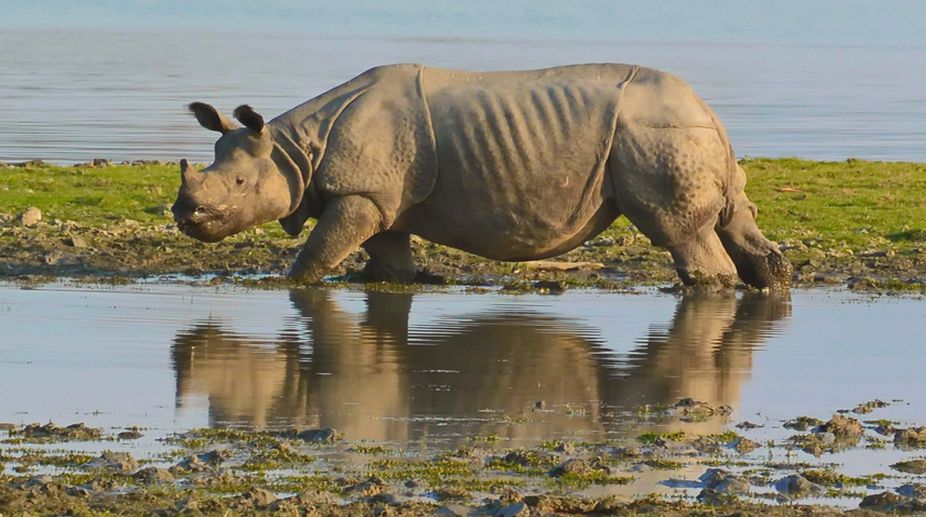
Kaziranga National Park, known as a success story across the globe in the conservation of the one-horned rhinoceros, suddenly got shocking news from abroad stating that a tribal rights body has given a call for boycott of the world heritage site claiming that it has turned into a killing field of innocent tribal people in the name of conservation.

Survival International, the London-based tribal rights organisation, issued a statement a year ago expressing its concern that the forest guards of Kaziranga were using extreme power with impunity to kill poachers in the name of protecting endangered single-horn rhinos. The organisation asserted that many tribal people were also killed by armed forest wardens even on suspicion. It claimed that the park authorities were so busy celebrating the success story of preserving almost two thirds of world’s one- horn rhino population, that there were few to listen to their protests.

Besides rhinos, the central Assam-based forest reserve is also home to royal Bengal tigers, Asiatic elephants and buffalos, different species of deer and other wildlife. The poaching of rhinos in Assam’s forest reserves makes regular news. According to state forest minister, Pramila Rani Brahma, Assam lost 22 rhinos to poachers (18 in Kaziranga alone) last year, adding that 123 died in various parks and wildlife sanctuaries during 2016. Talking about the anti-poaching initiatives, the minister revealed that park security personnel arrested 90 poachers from different parts of Assam since 1 January 2016. The Kaziranga authority also helped in arresting over 70 poachers from the vicinity of the park during the same period.

Termed a success story, Kaziranga today gives shelter to 2,431 rhinos (as per the latest census in 2015). It also houses 167 tigers (2014), 5,620 elephants (2011), 1,169 swamp deer (2011), 248 leopards (2000) along with other wild animals.

The issue of killing people in the name of wildlife conservation gained momentum after the British Broadcasting Corporation beamed a news-feature recently, where journalist Justin Rowlatt interviewed responsible forest officials and frontline guards to justify that they were mentally prepared to kill anyone unwanted inside the Kaziranga territory. Once the BBC aired the item titled, “Our World: Killing for Conservation” on 11 February, the government and people of Assam raised serious concerns over its content, arguing that the Kaziranga guards were legally empowered to take stern action against poachers. Various protection groups came forward criticising the news channel for propagating a wrong image of Kaziranga to international viewers. They organised public meetings in favour of the Kaziranga authorities, which is trying to protect the rhinos with whatever resources they have at their disposal.

Encouraged by this, the government banned BBC journalist Justin Rowlatt from filming in any of India’s tiger projects. Earlier, the National Tiger Conservation Authority of India clarified that Rowlatt “misled government officials into giving permission to film by submitting a false synopsis. They then went on to produce a documentary, which shows Indian conservation efforts in poor light, contrary to the synopsis submitted,” asserted the NTCA, adding that the BBC and Rowlatt violated four pre-conditions.

But the NTCA claimed that global news channel filmed in Kaziranga after sunset, did not screen the documentary before a committee of the Union environment, forests and climate change ministry, and deviated from the original synopsis, which was submitted to the external affairs ministry and the tiger conservation authority.

Banning the BBC was not a quick-fix solution to the authorities. Rather it tempted Survival International to launch a campaign to boycott the park as long as it retains its shoot-at-sight policy. In a statement on 2 March, Survival International argued that over 100 people were killed at Kaziranga over the last 20 years. It also highlighted the case of Akash Orang, a minor tribal boy, who received bullet injuries by accident from a forest guard in Kaziranga in July 2016. Akash received serious injuries to his legs and is still under treatment. Following the local peoples’ outcry, the Kaziranga authorities suspended two guards.

Besides Akash, there are a few more victims of the shoot-to-kill (rather than to apprehend) policy in Kaziranga. The inhuman policy has already attracted severe criticism from conservation charities for encouraging violence, rather than effectively tackling the criminal networks behind poaching. The Survival International statement also added that it was writing to over 130 international tour operators in 10 countries for pursuing their Kaziranga boycott campaign. Its director Stephen Corry asserted that the Kaziranga authorities were practicing extra-judicial killing for years and they can’t ignore the matter anymore.

In the meantime, Assam’s tourism minister, Himanta Biswa Sarma has vowed to carry out a vigorous drive to attract foreign tourists to various forest reserves in the backdrop of Survival International’s boycott of Kaziranga. He told the state assembly recently that the government would continue its “zero tolerance”policy against poaching and nature-loving people across the globe would support the endeavour.

Meanwhile, a few leading wildlife non-government organisations have condemned the allegation that the Kaziranga authorities were using excessive force to protect the rhinos. The NGOs, which are working in and around Kaziranga, came out with a statement that the state government had to strengthen protection measures to ensure the conservation of its pride — rhinos. Aaranyak, Assam Elephant Foundation, Bhumi, Wildlife Trust of India and the Corbett Foundation, in a press statement argued that the continuous pressure from citizens to protect wildlife compelled the Kaziranga authorities to take satisfactory action against poachers.

It continued, “The propaganda launched by the international organisation to boycott Kaziranga is unfair and totally uncalled for. Be it Kruger or Kaziranga, or any other rhino harbouring areas in the world, to protect their rhinos all of them have to strengthen their security and by no means is Kaziranga the only rhino-bearing area where gun battles between protection forces and well-armed poachers occur and casualties are accounted due to such occurrences,” said the statement.

However, local residents living at the periphery of Kaziranga extended moral support to Rowlatt and demanded the unnecessary ban on the BBC journalist to be lifted immediately. Jeepal Krisak Sramik Sangha, a farmer-labourers’ body based in the vicinity of Kaziranga, while criticising the harsh conservation methods, urged the government to institute a high level probe into the reported deaths of tribal people till date in and around the park.

JKSS advisor Soneswar Narah argued that the Kaziranga authorities were hiding a lot of information. He alleged that the forest department was silently violating human rights in the name of conservation.

“We demand adequate compensations for the families of victims, who either got killed or sustained major injuries. Moreover, the forest department must understand that in the process of conservation, the fringe villagers should be taken into confidence,” added Narah.

Despite all this, the forest department is yet to contradict the content of the BBC news-feature.

The writer is the Guwahati-based special representative of The Statesman.

Fragile linguistic balance

Prasenjit Biswas and Suraj Gogoi | New Delhi |

Assam’s multilingual social fabric runs into rough weather as and when dominance of any language is thrust upon its people. The recent governmental diktat ordering compulsory introduction of Sanskrit at the school level up to Class VIII created ripples of dismay across all the linguistic communities of Assam. Although the state government has back-tracked from introducing it as a compulsory medium of learning by citing lack of sufficiently qualified teachers, it left its uncut disruptive mark on the consciousness of Assam’s educated middle class.

The precarious language scenario of Assam is well-known. The imposition of Assamese as the only medium of instruction in the 1960s led to widespread protests across Assam resulting in an ethnic, cultural and linguistic divide. A similar situation repeated itself in 1972, when Gauhati University declared Assamese as the only medium of higher education.Peace and goodwill prevailed by evolving what is called the Lal Bahadur Shastri formula,which resolved the issue by declaring Assamese as the main official language with two of its subsidiaries — Bodo for Bodo areas and Bengali for the Barak valley of Assam.

In the pre-1979 Assam movement period, one could see the emergence of a neo-Asomiya language identity, as a large number of Bengali Muslims from East Bengal and East Pakistan had settled in Assam from the early decades of the 20th century and declared their mother tongue to be Asomiya. This has contributed to the maintenance of linguistic balance in the state, as Asomiya could retain its place as the dominant language of Assam,somewhat upholding the creation of States within the Union of India on a linguistic basis in 1956. The threat of demographically losing its higher place to Bengali, nevertheless, remained as a major source of political and linguistic angst in the social psyche of the dominant Asomiya cultural and linguistic identity.

After the Assam accord, the situation remained stable, as constitutional recognition of Asomiya as the state language remained permanent under both the Shastri formula and in terms of demographic superiority of Asomiya as a language. It is in this context of permanently shelving any fear of loss of cultural superiority of Asomiya as a language and as a culture, that the recent move by the BJP-led Government of Assam in introducing Sanskrit assumed a greater significance.

In one reading, the threat of dislodgement of official superiority of Asomiya as a language came from some sources internal to Asomiya linguistic and cultural identities, as these forces wanted to re-establish the language’s umbilical lineage with the great Indian tradition of Sanskrit.

The responses and reactions to this move started with the age-old debate about Asomiya being gradually marginalised in the privately-run English medium schools and also by the new generation, as they take to English as the medium of instruction. As recognition to this reaction of angst, fear and apprehension, the Assam government, by another diktat, made Asomiya compulsory as a language to be studied by all the students in private-run schools of Assam. The Tower of Babel reappears with its fragile structure only to be a spectral guarantee to the state’s fragile linguistic balance.

The larger context of using Sanskrit as a mother language to create a sense of “Hindu identity” cannot be missed. At the same time, the discomfiture of the conglomerate ethnic, cultural and very local components and blocs of people within the Asomiya linguistic identity, comprising many tribal and indigenous groups far removed from Indo-Aryan races and languages, became more than evident.The presence of a large number of NeoAsomiya speakers constituting almost 30 per cent of roughly 20 million Asomiya speakers, who are of East Bengali origin, became even more challenging as it could have invoked a sense of alienation from the Asomiya linguistic domain for these people, referred to as Miyas by nationalists of a certain variety. Although Assam’s Muslim groups did not express any overt reaction to the idea of their children learning Sanskrit, yet the state’s cultural elite expressed their awareness of such a possibility. Added up with Asomiya’s fragile tribal, poly-ethnic and polyglot interior, these Neo-Asomiya speakers, a minority within a minority for all practical purposes, for the first time, got a silent recognition of their number from the Asomiya mainstream as a significant component within Asomiya speakers. Assam’s cultural elite cannot write them off given their sheer number, as other tribal and poly-ethnic constituents also show a certain veering towards their pre-original languages such as Tai Ahom, Matak, Khamti, Tangsa, Tai-Phake or Moran or any other such pristine language forms. This is a process of ethnic and linguistic fragmentation,which is going to spell trouble for Asomiya as a modern Indian language and as a growing and developing language of the state of Assam.

It is in this paradigm of unstable and yet determined trajectory of forging a linguistically modern and progressive language and literature such as Asomiya — whose place in the world is recognised and appreciated — faces a topsy-turvy situation with a variety of diktats. Sanskrit, supposedly the mother of all Indo-Aryan group of languages such as Asomiya, Hindi, Oriya and Bangla construct a mainstream, which Asomiya already belongs to and does not require a fresh entry and re-inscription. Yet, the Assam government with its attempt to forge a larger Hindu identity ran against a slow and steady historical process of creating a firm and sustainable Asomiya linguistic form, which created a sense of insecurity in the very people whom it intended to Sanskritise. The unintended institutional and cultural impact is of such a grave nature that it is rolled back like a dry leaf in the wind.

Herein comes a historic moment of self-realisation, if one could call it so. The realisation that Asomiya does not need a certification from a supposed Sanskritic linguistic tradition, rather it needs consolidation from within by building up a bulwark of committed Asomiya speakers, who identity it as their mother tongue in the steeply contested ethnic and linguistic mosaic of the state.

Assam is the only home of the Satriya tradition, a fledgling syncretic tradition of religiosity, cultural harmony and linguistic sublimity that brings diverse ethnic groups together and bridges the Sankardev, Ajan Fakir and Guru Teg Bahadur-led traditions.The state also retains its pre-Sanskritic and Sanskritic influences at the same time. Therefore, introduction of Shastric Sanskrit cannot cut much ice within this indigenously developed tradition of harmonisation. Asomiya as a language can boast of this enriching and engulfing tradition of cultural and communal melting ground that floats above any narrowly conceived re-routing into a mono-litihic Sanskritic tradition. Assam’s cult of female deity worshipping, its Tantric heritage, its magical performances and its multifarious rituals of an ethnic origin celebrating femininity, is simultaneously inside and outside the pan-Indian pan-ethnic religious culture. The little tradition of ethnic Asomiya groups assumes a larger role than mere learning of a greater tradition like Sanskrit. In microcosm, the ritualised everyday lives of small-time practitioners of faith create the sense of parampara or honouring ancient traditions in Assam and not the Purana Sahstra dham-based mainstream Hindu tradition. A Bodo dance form called Bagadumba or stoning of the idol of Lord Shiva at Chatrasaal in Goalpara, the formless deity at Kamakhya, Khampti’s Sautantrika Buddhist tradition, Wihu Khu of Tangsas, Jonbil fair of tribes of hills and plains,offering of rice beer at every invocation of God of the village by Mishings, Hazrat Shah Miran’s Vasihnavite poetic forms and hundreds of such little and different traditions cannot be captured within the dragnet of mainframe religiosity of the Indo-Gangetic Himalayan origin.

To a large extent, if Sanskritic roots have supplied succour to the Asomiya language,there is this other reality of cultural de-Sanskritisation and emergence of creative forms of re-conceptualisation of the entire Sanskritic tradition in new syncretic terms. In this context, the joining up of people from different ethnic origins and neo-Asomiya groups within the fold of Asomiya is a laudable cultural achievement that mainstream India is not aware of. The talk about a nationality formation of Asomiya and the rise of Asomiya linguistic nationalism is a lived reality of Assam that cannot be underwritten by the state. Else, the state will mismanage its immensely rich cultural diversity and will stifle and trample the growth of home-grown cultural syncretism, supposed to be the bridge between different groups and identities.

Last but not the least,the place of Asomiya as a language within modern Indian languages needs to be strengthened and augmented not by imposing institutional rules, but by encouraging existing little traditions that do a bottom-up integration of cultural identities into a common linguistic “form of life”. Any deviation from this process of integration by committing an epistemic violence to the rich internal diversity of Asomiya as a home of language and culture would create a rift and dissonance of the deadliest kind and so, better it be integration without Sanskrit.

Prasenjit Biswas is with the North Eastern Hill University, Shillong and the author of Between Philosophy and Anthropology, and Suraj Gogoi is a Sociologist based at the National University of Singapore.

Boon or Bane

Nurul Sarkar, R V Smith, Rakesh Kumar and Surender Rathi. | New Delhi |

Smartphones have come as a great boon for most people. But like all good things, it has also been misused, a colleague rued. Blessed with many features, a smartphone can replace the computer, camera, watch and much more. However, it has also helped create a distance between people, our colleague argued as he narrated an incident at a betel shop in North Delhi. A tipsy lady was creating a scene at the shop as she screamed and abused the shopkeeper, apparently for no reason. She also threatened to tear her clothes. Seeing this commotion, people started gathering around and some tried in vain to intervene. Soon, our colleague noticed some men in the crowd who began filming the scene, apparently enjoying the woman's antics. He then wondered why so much insensitivity prevailed in society. Rather than helping someone, people today are quick to film a person's misery and then put it out on social media. In this context, one is reminded of a video of a Delhi Police personnel, who fell down in the Metro. Somebody shot it and put it on social media, titled, A Drunk Policeman. It hardly took any time to go viral and the cop became the butt of jokes. It transpired later that he was not drunk and it was because of his illness that he fell down. But by then the damage was done.

Take the recent case of noted writer Shobhaa De, who posted a picture of a very fat policeman on Twitter reading, "Heavy police bandobast in Mumbai today". However, it was later revealed that the policeman was suffering from some ailment; he didn't belong to Mumbai Police but Madhya Pradesh Police. Such fake and insensitive information hardly takes time to circulate. Should we then blame the smartphone for propagating insensitivity or should there be some introspection? Surely, people need to press the "Pause" button before putting out such damaging messages.

CHAPPAL CULTURE

Changing social values are reflected in a number of ways, a colleague mused as he narrated how he noticed a group of labourer women teasing one of their mates. It transpired that the woman's slipper had broken and she picked up her footwear and was walking barefoot. Her friends were heard laughing at her and, gesturing with their fingers on their mouths, teased, "Oh! You are so penniless that there is not evena chappal on your feet?" The group then stopped at a cobbler's nearby and got the slipper mended.

Our colleague got to thinking that decades ago, most Indians would walk barefoot. Then wearing of wooden sandals was in vogue, that too in the morning and evening. Poverty was one of the reasons for this. When slippers first appeared in the market some began to use them while others looked at the wearer's feet in awe and would say, "What a time has come that people are wearing chappals!" At that time slippers were considered an item that only the rich could afford. The situation has changed and now one can rarely see people walk barefoot. Rather, if someone is seen walking without any footwear, it is thought that the person is living a life of penury. Verily, transformation of social culture is a continuous process.

TRADITIONAL CURE

With rapid strides made by modern medicine, one has all but forgotten traditional cures and some age-old practices to treat several ailments. A few generations ago, there was a dearth of doctors and people would frequently visit faith healers, who would incant charms and treat minor physical troubles. Surprisingly, those who practise these "traditions" are either little educated or illiterate persons. A colleague recalled one such faith-healing incident.

An acquaintance, a middle-aged man in his 50s, was playing with some children when he felt a shooting pain in his hips. Forced to lie down on the ground, he was unable to get up. People around him helped him up and, thinking that there was some serious problem, took him to the doctor. However, even after a couple of days, there was no relief from the debilitating pain. A lady relative, who visited him, heard out his problem and suggested calling in an old woman to treat him. A car was sent to fetch the old woman and she duly arrived. In her 90s, with walking-stick in hand and wearing highpowered spectacles, she observed the man and then, murmuring something, kicked his back thrice. Then, saying the treatment was over she made her way out. To the utter surprise of all, a little while later, the man stood up and even began to walk. Apart from such incidents of faith-healing ~ which has some rational explanation ~ there is a repertoire of traditional cures that are handed down from one generation to another. Though much of this knowledge has been lost, a lot still survives. The country's traditional system is not yet passé, insisted our colleague.

TAILPIECE

Our inhouse wisecrack feels a Union Territory begins to go downhill the moment it is granted statehood; Central rule is better than petty politics fought in the lanes.

Contributed by: Nurul Sarkar, R V Smith, Rakesh Kumar and Surender Rathi.

The twin tombs

Statesman News Service | New Delhi |

The twin tombs of Hazrat Nizamuddin Auliya and Amir Khusru, the saint and the poet situated close to each other, are a reminder of the deep bond of friendship that existed between the two, who died within six months of each other, the saint first. The great Mexican poet Octavio Paz, of "Hungry Generation" fame, visited Nizamuddin, while an envoy in Delhi a long time back, and recorded his impressions in a moving poem. It was rediscovered by Adil Hasan, a Delhi-based photographer, famous for his photo-book, When Abba was ill, published two years ago.

A piece written by him has two photographs ~ one of an old man with a white beard, sitting on a grave and a woman pottering behind him and the other of a neglected tomb with a single flower growing on it above a long stem, overlooked by two windows of a building built close by. The poem is worth quoting as it shows Octavio Paz's poetic imagination, about which Adil Hasan said, "A poem Led Me to A Saint".

Trees heavy with birds hold the afternoon up with their hands. Arches and patios.

A tank of water, poison green, between red walls.

A corridor leads to the sanctuary:

beggars, flowers, leprosy, marble.

Tombs, two names, their stories: Nizam Uddin, the wandering theologian,

Amir Khusru, the parrot's tongue. The saint and the poet.

A grim star sprouts from a cupola.

Slime sparkles in the pool. Amir Khusru, parrot or mockingbird:

the two halves of each moment, muddy sorrow, voice of light.

Syllables, wandering fires, vagabond architectures:

every poem is time, and burns.

The Tomb of Amir Khusru, Octavio Paz

Amir Khusru, known as Tutie-Hind, or the sweet singing bird of India, was a great soldier, administrator, poet and wit of the 13th and 14th centuries, who served seven kings and is credited with introducing the qawwali into India and also inventing a number of musical instruments (some say). A handsome man, to whom even villages belles were attracted, he is justly famous for coining riddles. Such a genius and philanthropist, over whom Jawaharlal Nehru went ga-ga, is eulogised by posterity as though he passed away only yesterday, not 700 years ago.

Brighter Than a Thousand Suns

Manish Nandy | New Delhi |

Iam fortunate. I have a very good friend right next door.

I am a pre baby boomer: in common parlance, as old as the hills. She is not Generation X, not even Millennial, but Generation Z – she is just eight, yet to join school.

She does home studies and reads quite well now, though words of multiple syllables are a challenge for her. She does additions and multiplications too, but I am not sure she is enamoured of doing them.

What is no challenge for her are the iPad and iPhone, which she manipulates like a pro and has no compunction pointing out my ineptitude. She uses drawing programs to sketch animals and angels, and plays an array of video games, from sprinters that race winding castle alleys to choleric birds that fight and shoot and play havoc in pig fortresses.

To keep company I have occasionally tried to learn these games, but my skill level hardly rises after abundant instruction and diligent practice. My scores leave my young teacher disgusted and in despair. “You have to practice more,” she advises.

She has a pixie face, crystal-bright eyes and long hair, usually in a braid, but sometimes bound in a bun to let her do gymnastics. Oh, yes, gymnastic skill is another of her many accomplishments, in dramatic contrast to my gauche ways. She underlines the contrast by cartwheeling effortlessly in the living room and sitting on the kitchen floor to display nimble contortions.

The more important skill is the readiness with which she proceeds to prepare tea for me the moment I tread into their home. She will get on a stool to reach the water heater on the counter and then stir the tea vigorously and serve in exactly the china I prefer. Most of the time she even remembers to retrieve the empty cup from my hand.

As if this were not enough, she runs to open the door for me and switches on a radiant smile before her parents have had a chance to say, “Come in, please.” That smile is, as the ancient Indian texts say, brighter than a thousand suns, and enough to keep me warm on the coldest fall day. I am really a fortunate neighbour.

(The writer is a Washington-based international development advisor and had worked with the World Bank. He can be reached at mnandy@gmail.com.)

100 years after the Balfour Declaration

Robert Fisk | New Delhi |

Theresa May told us that Britain will celebrate the centenary of the Balfour Declaration this summer with “pride”. This was predictable. A British prime minister who would fawn to the head-chopping Arab autocrats of the Gulf in the hope of selling them more missiles – and then hold the hand of the insane new anti-Muslim president of the United States – was bound, I suppose, to feel “pride” in the most mendacious, deceitful and hypocritical document in modern British history.

As a woman who has set her heart against immigrants, it was also inevitable that May would display her most venal characteristics to foreigners – to wealthy Arab potentates, and to an American president whose momentary love of Britain might produce a life-saving post-Brexit trade agreement. It was to an audience of British lobbyists for Israel a couple of months ago that she expressed her “pride” in a century-old declaration which created millions of refugees. But to burnish the 1917 document which promised Britain’s support for a Jewish homeland in Palestine but which would ultimately create that very refugee population – refugees being the target of her own anti-immigration policies – is little short of iniquitous.

The Balfour Declaration’s intrinsic lie – that while Britain supported a Jewish homeland, nothing would be done “which may prejudice the civil and religious rights of existing non-Jewish communities in Palestine” – is matched today by the equally dishonest response of Balfour’s lamentable successor at the Foreign Office. Boris Johnson wrote quite accurately two years ago that the Balfour Declaration was “bizarre”, a “tragicomically incoherent” document, “an exquisite piece of Foreign Office fudgerama”. But in a subsequent visit to Israel, the profit-hunting Mayor of London suddenly discovered that the Balfour Declaration was “a great thing” that “reflected a great tide of history”. No doubt we shall hear more of this same nonsense from Johnson later this year.

Although the Declaration itself has been parsed, desemanticised, romanticised, decrypted, decried, cursed and adored for 100 years, its fraud is easy to detect: it made two promises which were fundamentally opposed to each other – and thus one of them, to the Arabs (aka “the existing non-Jewish communities”), would be broken. The descendants of these victims, the Palestinian Arabs, are now threatening to sue the British government over this pernicious piece of paper, a hopeless and childish response to history. The Czechs might equally sue the British for Chamberlain’s Munich agreement, which allowed Hitler to destroy their country. The Palestinians would also like an apology – since the British have always found apologies cheaper than law courts. The British have grown used to apologising – for the British empire, for the slave trade, for the Irish famine. So why not for Balfour? Yes, but….Theresa May needs the Israelis far more than she needs the Palestinians.

Balfour’s 1917 declaration, of course, was an attempt to avoid disaster in the First World War by encouraging the Jews of Russia and America to support the Allies against Germany. Balfour wanted to avoid defeat just as Chamberlain later wanted to avoid war. But – and this is the point – Munich was resolved by the destruction of Hitler. Balfour initiated a policy of British support for Israel which continues to this very day, to the detriment of the occupied Palestinians of the West Bank and the five million Palestinian refugees living largely in warrens of poverty around the Middle East, including Israelibesieged Gaza.

This is the theme of perhaps the most dramatic centenary account of the Balfour Declaration, to be published this summer by David Cronin (in his book Balfour’s Shadow: A Century of British Support for Zionism and Israel), an Irish journalist and author living in Brussels whose previous investigation of the European Union’s craven support for Israel’s military distinguished him from the work of more emotional (and thus more inaccurate) writers. Cronin has no time for Holocaust deniers or anti-Semites. While rightly dismissing the silly idea that the Palestinian Grand Mufti, Haj Amin al Husseini, inspired the Holocaust of the Jews of Europe, he does not duck Haj Amin’s poisonous alliance with Hitler. Israel’s post-war creation as a nation state, as one Israeli historian observed, may not have been just – but it was legal. And Israel does legally exist within the borders acknowledged by the rest of the world.

There lies the present crisis for us all: for the outrageous right-wing government of Benjamin Netanyahu is speeding on with the mass colonisation of Arab land in territory which is not part of Israel, and on property which has been stolen from its Arab owners. These owners are the descendants of the “non-Jewish communities” whose rights, according to Balfour, should not be “prejudiced” by “the establishment of a national home for the Jewish people” in Palestine. But Balfour’s own prejudice was perfectly clear. The Jewish people would have a “national home” – i.e, a nation – in Palestine, while the Arabs, according to his declaration, were mere “communities”. And as Balfour wrote to his successor Curzon two years later, “Zionism … is … of far profounder import than the desires and prejudices [sic] of 700,000 Arabs who now inhabit that ancient land”. Cronin’s short book, however, shows just how we have connived in this racism ever since. He outlines the mass British repression of Arabs in the 1930s – including extra-judicial executions and torture by the British army – when the Arabs feared, with good reason, that they would ultimately be dispossessed of their lands by Jewish immigrants. As Arthur Wauchope, the Palestine High Commissioner, would write, “the subject that fills the minds of all Arabs today is … the dread that in time to come they will be a subject race living on sufferance in Palestine, with the Jews dominant in every sphere, land, trade and political life”. How right they were.

Even before Britain’s retreat from Palestine, Attlee and his Cabinet colleagues were discussing a plan which would mean the “ethnic cleansing” of tens of thousands of Palestinians from their land. In 1944, a Labour Party statement had talked thus of Jewish immigration: “Let the Arabs be encouraged to move out as the Jews move in.” By 1948, Labour, now in government, was announcing it had no power to prevent money being channelled from London to Jewish groups who would, within a year, accomplish their own “ethnic cleansing”, a phrase in common usage for this period since Israeli historian Illan Pappe (now, predictably, an exile from his own land) included it in the title of his best-known work. The massacre of hundreds of Palestinian civilians at Deir Yassin was committed while thousands of British troops were still in the country. Cronin’s investigation of Colonial Office files show that the British military lied about the “cleansing” of Haifa, offering no protection to the Arabs, a policy largely followed across Palestine save for the courage of Major Derek Cooper and his soldiers, whose defence of Arab civilians in Jaffa won him the Military Cross (although David Cronin does not mention this). Cooper, whom I got to know when he was caring for wounded Palestinians in Beirut in 1982, never forgave his own government for its dishonesty at the end of the Palestine Mandate.

Cronin’s value, however, lies in his further research into British support for Israel, its constant arms re-supplies to Israel, its 1956 connivance with the Israelis over Suez – during which Israeli troops massacred in the Gaza camp of Khan Younis, according to a UN report, 275 Palestinian civilians, of whom 140 were refugees from the 1948 catastrophe. Many UN-employed Palestinians, an American military officer noted at the time, “are believed to have been executed by the Israelis”. Britain’s subsequent export of submarines and hundreds of Centurion tanks to Israel was shrugged off with the same weasel-like excuses that British governments have ever since used to sell trillions of dollars of weapons to Israelis and Arabs alike: that if Britain didn’t arm them, others would.

In opposition in 1972, Harold Wilson claimed it was “utterly unreal” to call for an Israeli withdrawal from land occupied in the 1967 war, adding that “Israel’s reaction is natural and proper in refusing to accept the Palestinians as a nation”. When the Palestinians first demanded a secular one-state solution to Palestine, they were denounced by a British diplomat (Anthony Parsons) who said that “a multinational, secular state” would be “wholly incompatible with our attitude toward Israel”. Indeed it would. When the PLO opposed Britain’s Falklands conflict, the Foreign Office haughtily admonished the Palestinians – it was “far removed” from their “legitimate concerns”, it noted – although it chose not to reveal that Argentine air force Skyhawk jets supplied by Israel were used to attack UK forces, and that Israel’s military supplies to Argentina continued during the war.

A year later, Margaret Thatcher, according to a note by Douglas Hurd, included “armed action against military targets of the occupying power” as a definition of “terrorism”. So the Palestinians could not even resist their direct occupiers without being criminals.

On an official visit to Israel in 1986, Thatcher said that she regarded discussion of Jerusalem as “internal politics”. In 2001, Tony Blair’s government granted 90 arms exports licences to Israel for “defensive” weapons – including torpedoes, armoured vehicles, bombs and missiles. There is much, much more of this in Cronin’s book, including Blair’s useless and disgraceful period as “peace” envoy to the Middle East and the growing business contracts between British companies and Israeli arms providers – to the extent that the British army ended up deploying Israeli-made drones in the skies of Afghanistan and Iraq. Outside the EU, Theresa May’s Britain will maintain its close relations with Israel as a priority; hence May’s stated desire less than a month ago to sign a bilateral free trade agreement with Israel. This coincided with an Israeli attack on Gaza and a Knesset vote to confiscate – ie, steal – yet more lands from Palestinians in the West Bank. From the day that Herbert Samuel, deputy leader of the Liberal Party and former (Jewish) High Commissioner for Palestine, said in the House of Commons in 1930 that Arabs “do migrate easily”, it seems that Britain has faithfully followed Balfour’s policies. More than 750,000 Palestinians were uprooted in their catastrophe, Cronin writes. Generations of dispossessed would grow up in the camps. Today, there are around five million registered Palestinian refugees. Britain was the midwife of that expulsion.

And this summer, we shall again be exhorted by Theresa May to remember the Balfour Declaration with “pride”.


211 hostages from Boko Haram rescued

IANS | Lagos |

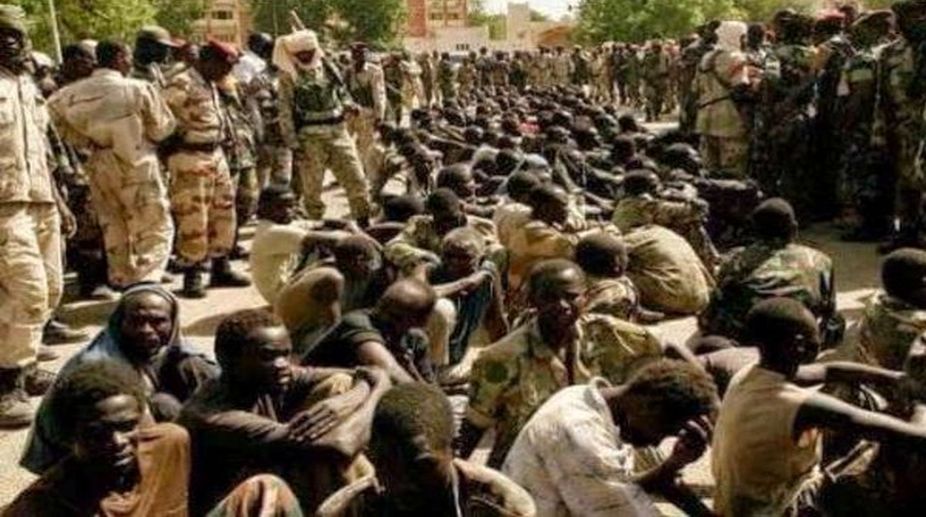
Nigerian government forces in the northeastern state of Borno have rescued 211 civilians from the Boko Haram group, the army authorities said on Sunday.

Troops of 22 Brigade Garrison, Operation Lafiya Dole, rescued the victims during an operation in Cingal Murye and Maja villages on Saturday, Xinhua quoted army spokesman Sani Usman as saying.

One the terrorist was neutralised, 11 bicycles were recovered from the fleeing terrorists, he added, noting that security team also escorted two heavy-duty trucks and 18 pickup vans to recover Internally Displaced Persons' food stuff from Mala Maja.

The Boko Haram insurgency has been blamed for more than 20,000 deaths and displacement of 2.3 million people since 2009. 

Nigeria has made a considerable gain on the Boko Haram front, with its security forces operating in the restive region dislodging the Boko Haram fighters from the Sambisa Forest, the group's largest training camp in the country, last December.

Over 100,000 civilians flee homes in Mosul

IANS | Baghdad |

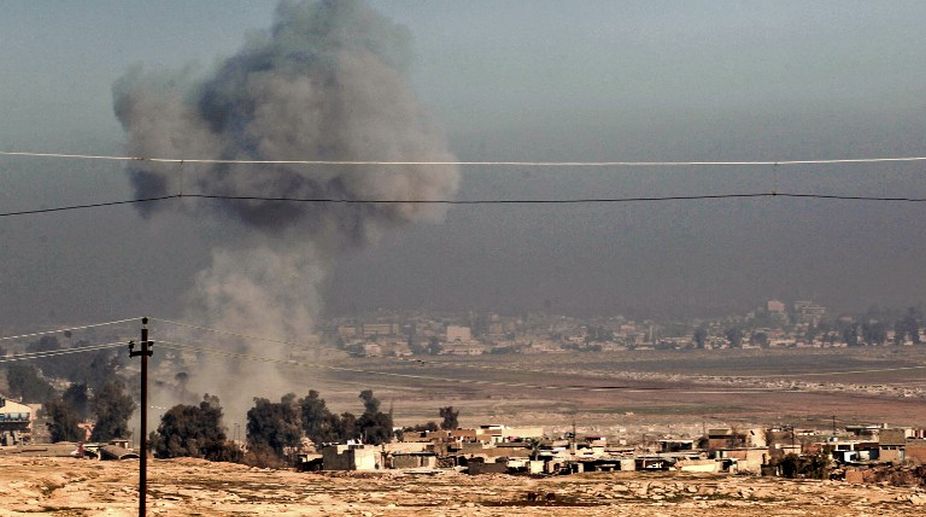
The ongoing operations to free the western side of Mosul from Islamic State (IS) terrorists have pushed up to 100,000 civilians to flee their homes, the Iraqi Government said on Sunday.

"The latest statistics of the Iraqi Ministry of Migration shows 99,852 displaced people since the launch of operations to free the neighbourhoods of Mosul's right bank (western side)," Xinhua quoted a statement by Jassim Mohammed al-Jaf, Minister of Migration and Displaced.

On Sunday, teams affiliated to the ministry received 10,607 civilians who left their homes from the battleground of the neighbourhoods of western Mosul, Jaf said.

The migration ministry prepared appropriate places to shelter the displaced people and provided emergency supplies, including food and medicine, Jaf added.

The announcement came as the Iraqi security forces were pushing deeper into the IS-held western side of Mosul, locally known as right bank of Tigris River, which bisects the city.

The troops dislodged IS terrorists from several neighbourhoods in the southern part of Mosul's western side, including the main government buildings in the old city centre.

Filthy and fatal

Parthasarathi Chakraborty | New Delhi |

The report titled ‘Indians choking on dirty air’ (The Statesman, 20 February) highlights the poor quality of air in India coupled with appalling mismanagement of the environment. The air that Indians breathe is becoming increasingly toxic and there are, on an average, two deaths each day due to air pollution, according to the reputed medical journal, The Lancet. More than a million Indians die or are at the point of death due to air pollution and India is home to some of the world’s worst polluted cities, including its Capital.

The exposure to sub-particulate matter ~ PM 2.5 ~ is to be blamed for this menace and climate change is associated with this phenomenon. The smog, fog and smoke contamination in northern India is also taking a heavy toll. In all the major cities ~ New Delhi, Patna, Kolkata. Mumbai, Chennai ~ the index of air pollution is deeply distressing.

The Lancet has contradicted Indian reports and has pointed out that coalfired power plants contribute to 50 per cent of the air pollution. The emissions from vehicles are also responsible. The contaminated polynuclear aromatic hydrocarbons (PAH) are extremely carcinogenic. The Lancet report mentioned the potential risk to human health and the need for effective and meaningful environment management.

Air pollution in Kolkata, as reported by the World Health Organization and UNEP (United Nations Environment Programme) has assumed alarming proportions, indeed second to Delhi. Although certain measures have been initiated in the Capital, such as the use of natural gas (CNG) and tree plantation, Kolkata has done virtually nothing to counter the menace. The air we breathe is poisoned with anthropogenic and natural emissions.

However, air pollution is not a new problem. As long as man has lived in cities, he has developed a propensity to pollute the environment. It is a problem of the ever-expanding technological society. Artificial impurities are largely injected into the atmosphere at or near the earth’s surface. Therefore, what is critical about air pollution is its scope and severity. It is well known that for most pollutants the troposphere cleanses itself within a very short period of time because of the so-called “vertical missing tendency”. The rainfall also helps in removing the impurities to a certain extent, but acid rain damages the environment, and this is now a matter of grave concern. Therefore, any substance that is not part of air’s gaseous make-up is regarded as a pollutant. Air-borne suspended particulate matter (SPM), respiratory particulate matter (RPM), and contaminant gases exist in the atmosphere in various degrees. Air pollution is not confined to a particular territory but it is a trans-boundary phenomenon. In the major urban cities, the quality of the air has been deteriorating rapidly over the past two decades.

The problem is particularly acute in cities and suburbs where the air is unclean, according to standards fixed by WHO. The city’s burgeoning population, expected to be around 15 million by 2020, is posing a serious problem. Emission from vehicles has been identified as the major source of pollution in the Kolkata metropolitan region. It is responsible for nearly 60 per cent of the city’s total pollution level. The situation is appalling owing to the increasing number of vehicles and the limited space for their movement.

Domestic consumption of fossil fuels, sometimes out in the open and pollutants from small industries and godowns are further accentuating the problem. These pollutants vary from one place to another. Its intensity is most dense in the heart of the city. The common air pollutants in Kolkata are sulphur dioxide, oxides of nitrogen, carbon monoxide, hydrocarbons, heavy metals and traces of carcinogenic polynuclear aromatic hydrocarbons (PAH).

In order to minimise the effect of air pollution and make Kolkata a better place to live, work and invest in, the British Overseas Development Administration had advanced certain recommendations, called the Calcutta Environment Management Strategy and Action Plan (CEMSAP), decades ago. It has identified auto-emissions from vehicles of outmoded technologies as solely responsible for environmental hazards. The CEMSAP has also pointed out that the 24-hour average concentration of SPM, sulphur dioxide, nitrogen oxides, carbon monoxide and hydrocarbons in some places of Kolkata in its maximum level are far above the limits of the Central and State Pollution Control Boards. The air pollution index (API), according to CEMSAP, is the highest at the Howrah Bridge approach, followed by the BBD Bag area. The CEMSAP envisaged that autoemission control, air quality monitoring and dissemination are inter-related.

In its consolidation phase document, CEMSAP has put forward its proposal for effective and meaningful implementation. The road-side air quality is far worse than the air quality standards for all pollutants.

The poor and the weaker sections of society are acutely affected by pollution. The pavement dwellers, underprivileged and vulnerable groups are exposed to direct health hazards. In addition, the heavy air pollution leads to higher rates of mortality and morbidity. Lead petrol has been banned in most developed countries. But unleaded petrol has other disadvantages which need to be addressed.

Lead-free petrol releases a higher level of aromatic organic compounds and a high concentration of benzene which is known to be potentially carcinogenic. According to WHO, the risk of cancer is substantial. Suitable measures need to be taken immediately to eliminate the emission of toxic benzene into the air.

Given the horrifying level of air pollution, how is it that millions still manage to survive? One probable explanation is that the ambient air pollutants are shared by the people and they act as biological filters. The body doesn’t immediately suffer any symptoms of danger, but they do arise after a prolonged period of time.

As the pollutants are chiefly the outcome of auto-emissions, the entire regulatory process needs to be revamped immediately. Reduction of vehicular emissions through continuous checks, strict enforcement of the law and periodical checks of the emission control equipment are absolutely necessary. The air quality monitoring process should be strengthened.

Vehicles, that are run on outdated technology, should be immediately discarded. Special emphasis should be given to the use of natural gas (CNG) effectively and meaningfully. The use of catalytic converters inside a car exhaust system also has its benefits. The use of lead-free petrol in cars without converters poses a risk to public health. Personal exposure to benzene at service stations should be minimised. All service stations must display warnings about the risk of benzene exposure.

Some years back the Green Bench of Kolkata High Court directed that no fuel, be it petrol or diesel, will be given to any vehicles of the city unless they furnish pollution control certificates. It also raised a pertinent question as to why compressed natural gas (CNG) is not used in Kolkata, and slammed the authorities for their lackadaisical attitude towards air pollution in the city.

Planting more trees can cleanse the air. The quality of fuel can also curb air pollution. Its samples need to be analysed regularly. The infrastructure must be suitably developed. The equipment for continuous auto-emission control, including mobile laboratories, need to be utilised properly. Display of air quality information boards in the prime areas of the city can also lead to awareness.

Finally, the success of mitigating air pollution depends largely on people’s involvement and awareness of the environmental health hazards emanating from autoemission.

The writer, a former reader in chemistry at Presidency College, kolkata, was associated with the University Grants Commission and UNICEF.

Danda democracy

Editorial | New Delhi |

Headline writers come up with catchy “tags” like “dance of democracy” and “peoples’ preference”, but the Chief Election Commissioner lays much emphasis on the role of the policeman wielding the big stick to keep the poll process immaculate. Not just any policeman, but members of the central paramilitary since local forces are presumed compromised. And in an interview with a respected contemporary, Dr Nasim Zaidi was candid enough to confess that the hassles involved in mastering adequate central forces for election duties militated against compressing the poll process, or the simultaneous conduct of parliamentary and assembly elections ~ which are being increasingly demanded by a people tired of constantly being in election-mode. In fact his stress on “muscle” being a pre-requisite to the successful management of election might invite criticism of the Election Commission’s inability to inject and inspire cleanliness into the system.

Expressing satisfaction over the non-violent tenor of the recent polls, the CEC said, “Overall the elections have gone off smoothly…regarding the seven phases in UP we would also like to have had it in the shortest number of days… Our elections have become heavily dependent on central forces as people have their own reservations about the state police”. Expanding on those reservations and the complexities of deployment, he said that phased polls were inevitable, adding that “our voters have shown unprecedented enthusiasm, so they are, at least not fatigued by the length of the polls.” He said that an amendment to the Constitution was necessary for mandatory simultaneous parliamentary and assembly elections, and there was need for a political debate on the subject. However he reverted to his pet theme when he explained, “it is a huge logistical exercise in terms of mobilising the election machinery. A lot of money would be required. If you have simultaneous elections and they are dependent on forces, the elections will have to be multi-phased. I guess it may take a minimum of two months.” There can be little quarrel with the “huge logistics” argument but queries must be asked if there was no alternative to central forces: particularly since the impartiality of “crack” agencies like the CBI and NIA was no longer taken for granted. The day might not be far away when the CAPF are accused of functioning in accordance with the Centre’s diktat. What then? True there was little physical violence during the recent campaigns, but is violence only physical? What about the sinister, calculated splitting of the electorate on religious, caste and community lines? Is the EC powerless against campaigning on cemeteries and crematoria? Can polls be permitted to polarise society? Nirvachan Sadan must rise above police bandobast. Voters deserve better.


Knee-jerk reaction

Editorial | New Delhi |

India’s immediate reaction to the Sri Lankan Navy’s shooting dead one fisherman and injuring two in the Palk Strait off the coast of Rameswaram last Monday was to apprehend a Sri Lankan trawler registered in Trincomalee fishing off the coast of Nagapattinam on Tuesday, arrest its crew numbering 10, and have the Coast Guard seize the boat. When the Rameswaram fishermen surrounded by the Sri Lankan Navy sent a distress call to the Coast Guard station, there was no response, according to P Sesuraja, president of the Rameswaram Fishermen’s Association. During Mahenda Rajapaksa’s presidentship of Sri Lanka and when the Eelam war was on, his Navy was in the habit of shooting at fishing boats from Tamil Nadu without let or hindrance. More than 600 Indian fishermen had fallen victim with hardly any adequate response from New Delhi. While the reformist government of Maithripala Sirisena put an end to shooting of Tamil Nadu fishermen by his Navy, his Prime Minister Ranil Wickremesinghe had publicly defended their government’s right to shoot at Indian fishermen poaching in their territorial waters. It is to Wickremesinghe that the Indian High Commissioner in Colombo made a representation expressing New Delhi’s “deep concern” at the killing of the Tamil Nadu fisherman, the first since the new Sri Lanka government assumed office in January 2015. Wickremesinghe admitted authorising the Navy to “counter poaching activities” of fishermen from Tamil Nadu by arresting them and seizing their boats, but maintained it was not authorised to open fire on them.

Only on 2 January both India and Sri Lanka agreed to prevent “physical harm” to fishermen found poaching in each other’s territorial waters and to open a hotline for quick discussion and response to crises. Such measures are not going to solve the problem. What is needed immediately is for New Delhi to read out the text of the 1974 treaty under which India ceded a part of Rameswaram district, the uninhabited tiny islet of Kachchathivu, to Sri Lanka, with full authority to fishermen from Tamil Nadu to fish in and around its waters in perpetuity and to use its land to dry their nets. This right was not negated by the subsequent 1976 agreement redrawing the maritime boundary between the two countries under which much of the Palk Strait, where Kachchathivu is located, comes under Sri Lanka. The reiteration of Tamil Nadu fishermen’s rights in waters around the islet in the preamble of the 1976 agreement indicates Sri Lanka’s right is not absolute. The cession of Kachchathivu has been challenged in the Supreme Court of India as the government of the day violated Article 3 of the Constitution by not seeking approval of Parliament. J Jayalalithaa, the late Chief Minister of Tamil Nadu, won the 1991 Assembly election on the promise of, among other things, taking back Kachchathivu from Sri Lanka.

I am being harassed: Jayalalithaa’s niece

PTI | Chennai |

Deepa Jayakumar, the niece of J Jayalalithaa, today alleged that she is being harassed to prevent her from contesting bypoll in R K Nagar Assembly seat to be held on April 12.

Apparently referring to AIADMK chief V K Sasikala's camp, she said, "Right from the day I announced that I will be contesting in R K Nagar Assembly constituency, I am being harassed in several ways indirectly." 

"I could not even stay at my house and goons are being sent against me. I do not know who (goons) they are…," Jayakumar told reporters.

"Several conspiracies are being hatched to prevent me from contesting in the bypoll," she alleged.

Jayakumar alleged that was prevented from visiting the hospital where Jayalalithaa was admitted last year and was also kept away from taking part in the last rites of the leader.

In an unexpected move, she paid homage at Jayalalithaa's memorial at the Marina Beach here at around 10 PM and sat there in meditation for sometime.

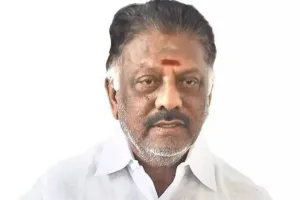
Former Chief Minister O Panneerselvam had also sat in meditation on February 7 at the memorial before revolting against Sasikala.

Announcing the founding of MGR Amma Deepa Peravai on February 24, Jayakumar had said she will contest from R K Nagar Assembly constituency that fell vacant following the death of Jayalalithaa on December 5 last year.